




Blog
Why Does My Acne Keep Coming Back? Causes and What Helps

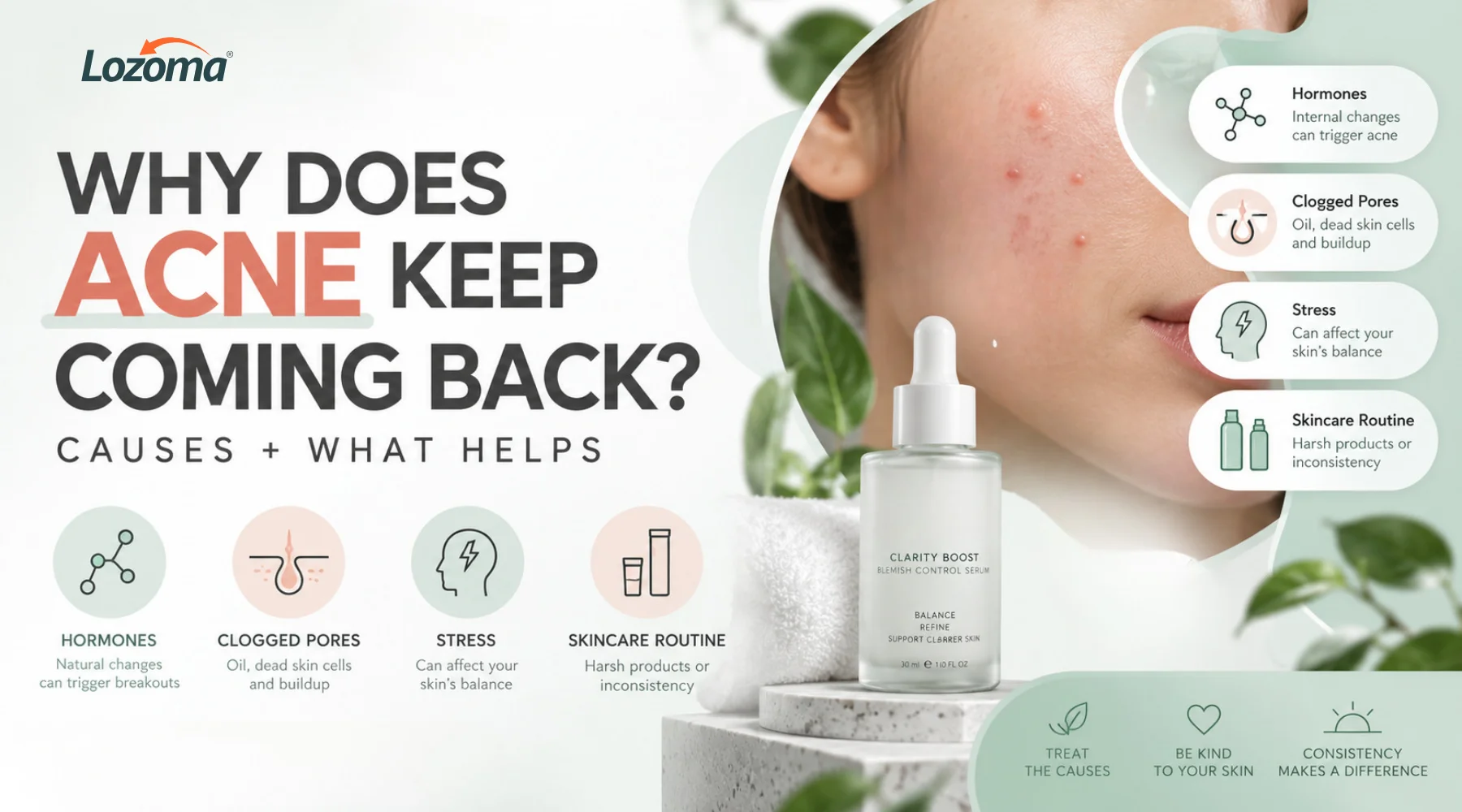
When a breakout goes away, but new spots appear shortly after, it can feel like your skincare isn’t working. You might change cleansers, try new acids, avoid certain foods, or dry out pimples, yet the problem keeps coming back.
If you’re wondering why your acne keeps returning, the key answer is that acne is often not just random spots. It’s a long-term condition involving hair follicles and oil glands. Factors like excess oil, dead skin cells, inflammation, bacteria, and hormones can build up underneath the skin, even as old blemishes fade.
This understanding changes how to manage acne. While treating visible pimples can reduce their size, preventing new ones means examining patterns: where spots appear, how often, what type they are, what changes triggered the flare-up, and whether your routine is preventing blockages.
Recurring acne is usually less about finding a stronger product and more about figuring out what’s missing in your current routine.
Why Does My Acne Keep Coming Back Even After It Clears?
A spot can go away while acne still appears in other areas of the skin.
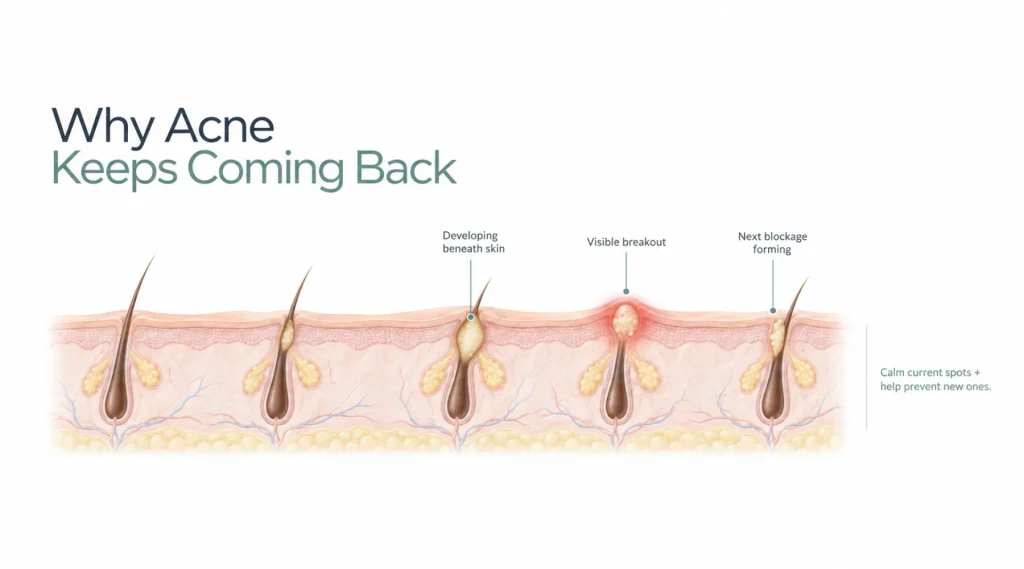
Acne starts in the hair follicle and its oil gland. Oil and dead skin can build up in the follicle, causing blockages before you see a blackhead, whitehead, or pimple. This buildup leads to the red, swollen spots linked to active acne.
This explains why spot treatments may seem effective but don’t stop recurring acne. They target one blemish while other pores are becoming visible breakouts.
To understand recurrence, think of it this way: Today’s pimple shows a process that began earlier.
Effective acne management has two goals:
- Calm existing lesions
- Prevent new ones from forming
Skincare that only calms current spots often leads to a frustrating cycle of breakouts.
NICE acknowledges acne relapse and suggests more treatment when acne returns after it has improved. Ongoing treatment may also help those who frequently relapse.
The Pattern of Your Breakouts Often Tells You More Than the Number of Spots
Before buying another acne treatment, observe your skin for a few weeks.
Notice where the acne shows up. Does it come back at certain times? Is it mostly small bumps or deep, painful lumps? Does it happen after exercise, your period, shaving, washing your hair, or using a new product?
These details may not diagnose your acne on their own, but they can help you identify possible triggers more easily.
| Pattern | Possible explanation to investigate |
| Chin and jawline breakouts at similar times each month | Hormonal influence |
| Tiny forehead bumps near the hairline | Hair products, sweat, occlusive skincare or comedonal acne |
| Spots after workouts | Sweat, friction and occlusion |
| Back and shoulder acne | Sweat, tight clothing, friction or difficult-to-treat truncal acne |
| Pimples where a helmet, strap or mask sits | Acne mechanica or irritation |
| New breakout after starting several actives | Irritation or barrier disruption |
| Whiteheads that repeatedly return | Persistent follicular congestion |
| Deep, sore nodules in the same areas | Inflammatory or hormonally influenced acne |
| Spots after changing moisturiser, sunscreen or makeup | Product-related congestion or irritation |
| Acne that rapidly returns after stopping treatment | Underlying acne tendency may still be active |
A breakout’s location is a clue, not a direct map of your health. A pimple in one spot doesn’t always mean there’s an issue with a specific organ.
Instead, consider the timing, type of lesion, and repeated patterns for more useful insights.
Why Acne Returns After Treatment
Many people stop their acne treatment too soon when their skin improves. This makes sense because, without visible spots, treatment can seem unnecessary. However, just because the skin looks clearer doesn’t mean the causes of acne are gone.
NICE suggests a 12-week course of standard acne treatments and recommends maintenance therapy for those who often have breakouts. Maintenance options include adapalene with benzoyl peroxide or other treatments like azelaic acid alone.
Not everyone needs ongoing treatment. NICE also clarifies that maintenance therapy isn’t always required. However, people with recurring acne may find it helpful to prevent breakouts instead of waiting for them to happen again.
A typical pattern looks like this:
- Acne becomes frustrating.
- A routine starts.
- Skin improves over weeks.
- Treatment stops right away.
- Congestion builds up again.
- Spots return.
- A new routine begins.
Restarting treatment can be more disruptive than sticking with a simple, effective plan.
Hormones Can Keep Restarting the Acne Cycle
Hormonal factors are important to consider when acne affects the lower face, feels deep or painful, and follows a clear pattern. Androgens affect oil production in the skin so that hormonal changes can lead to acne during puberty, menstrual cycles, pregnancy, and adulthood. Adult acne can also last well into the 30s and 40s.
Here are some signs to watch for:
- Breakouts that appear before or around your period
- Repeated spots on the chin, jawline, or lower cheeks
- Deep, tender spots that show up before visible acne
- Acne returning to the same areas
- Worsening after starting or stopping hormonal medications
- Breakouts that improve with skincare but don’t stay controlled
Understanding the difference between hormonal and regular acne is important since skincare products can’t fix hormonal issues directly. However, treatments like retinoids, benzoyl peroxide, and azelaic acid can help lessen the impact of hormones on your skin. Persistent hormonal acne may also need medical treatment.
If adult acne comes with irregular periods, excess facial or body hair, hair thinning on the scalp, or other hormonal signs, consult a GP or dermatologist instead of relying solely on cosmetic products.
Treating Only Visible Spots Can Keep You Stuck in Reactive Skincare
Spot treatments are helpful, but they serve a different purpose than preventive acne treatments. Treating one red pimple can lessen swelling or protect that spot, but it won’t stop nearby pores from getting clogged later.
This is especially important for people with:
- frequent whiteheads
- repeated blackheads
- many small bumps
- ongoing forehead congestion
- breakouts that move around the face
In these cases, applying treatment to the entire acne-prone area is often more effective than targeting individual spots.
Topical retinoids are a great example of this approach. They don’t just dry out spots; they help regulate skin cell turnover and prevent clogged pores. The American Academy of Dermatology recommends topical retinoids along with treatments like benzoyl peroxide.
This preventive approach is a key difference between treating a single pimple and treating acne overall.
Skincare Mistakes That Can Cause Acne to Keep Flaring
People with acne-prone skin often use complicated routines. However, these complexities can make it difficult to see what works and what causes more issues.
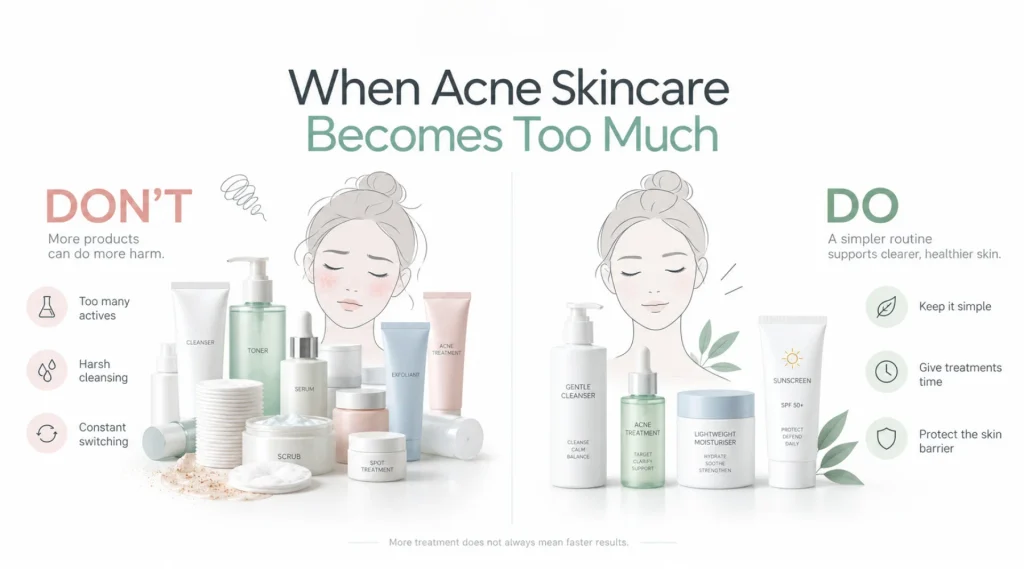
Changing products before they have had time to work
Treating acne usually takes longer than a week. Products that help with pores and inflammation need time to work on spots forming under the skin. NICE suggests starting with a 12-week treatment period for main acne therapies.
Changing treatments every ten days can prevent you from using an effective product long enough to see results. It also makes it harder to identify irritation causes.
Adding several acne actives at once
A typical over-treatment routine might include:
- A salicylic acid cleanser
- Glycolic acid toner
- Niacinamide serum
- Retinol
- Benzoyl peroxide
- A strong clay mask
- An exfoliating scrub
Each product can help on its own. But using them all together without thinking about skin tolerance can lead to dryness, burning, peeling, and inflammation. Applying more active ingredients won’t make acne improve faster.
Trying to remove every trace of oil
Oily skin and acne often go hand in hand, but you shouldn’t completely remove sebum from your face.
Harsh cleansers and washing too much can make your skin feel uncomfortable without fixing deeper issues in your pores. DermNet recommends avoiding rough skincare and too much exfoliating, as this can irritate already inflamed skin.
Your skin should feel clean, not squeaky, tight, or painful.
Skipping moisturiser because your skin is oily
Moisturiser doesn’t directly cause acne. If a moisturiser is too heavy, it might clog your pores, but skipping moisturiser can make it harder to use treatments like retinoids or benzoyl peroxide. An irritated skin barrier may lead you to use these treatments less often, which can worsen recurring acne. Using a lightweight moisturiser designed for acne-prone skin can help make your skincare routine easier to maintain.
Treating irritation as “purging”
Purging is often misunderstood in skincare.
Retinoids and certain exfoliants can speed up the process of bringing microcomedones to the surface. However, if you experience severe burning, intense redness, cracks, or unexpected spots, it’s not always a sign that the treatment is effective.
Sometimes, irritated skin is just that irritated. If every acne treatment makes your skin more inflamed, try using fewer active ingredients and reassess your routine instead of constantly increasing their strength.
Does Niacinamide Help With Acne That Keeps Returning?
Niacinamide can help acne-prone skin, especially when it is oily, red, or has a weak barrier. However, it shouldn’t replace proven acne treatments.
Niacinamide, also known as nicotinamide, is a form of vitamin B3. It reduces inflammation and strengthens the skin barrier, making it useful when stronger acne treatments dry out or irritate the skin.
Some small studies show that topical niacinamide can improve inflammatory acne. However, the overall research is limited compared to established treatments.
Niacinamide works well as a support ingredient but may not control moderate or severe acne on its own.
It might be right for you if:
- Your skin gets easily red
- Your T-zone is oily
- Your acne routine causes dryness
- You want an ingredient that layers easily
- You have uneven skin from past breakouts
Using more niacinamide doesn’t always help. High concentrations can irritate sensitive skin. A moderate, consistent formula is often better than using higher amounts repeatedly.
Does Retinol Help With Acne or Do You Need a Retinoid?
Topical retinoids are proven treatments for acne. Cosmetic retinol can improve mild skin issues but isn’t as effective as acne medications like adapalene or prescription tretinoin.
Retinoids help by regulating how skin cells shed in hair follicles. This is great for treating blackheads and whiteheads and preventing new clogged pores. They also reduce inflammation. The AAD highly recommends using topical retinoids for acne.
If you use retinol for cosmetic purposes, be patient. Using a lot every night from the start won’t speed up results; it might just irritate your skin.
A better way to start is to:
- Use it on two non-consecutive nights each week.
- Apply a small amount to the affected area, not a thick layer on blemishes.
- Moisturise well.
- Gradually increase how often you use it if your skin feels comfortable.
- Avoid using strong acids on the same night initially.
- Use sunscreen every day.
Topical retinoids should not be used during pregnancy or when planning to get pregnant. NICE advises against using them in these situations.
If your acne is severe and you’re thinking about stronger retinoids, consult a pharmacist, GP, or dermatologist for the right treatment.
Is Glycolic Acid Good for Acne That Keeps Coming Back?
Glycolic acid can help some people with acne, but it often gets more credit than it deserves. It is an alpha-hydroxy acid that mainly exfoliates the skin’s surface. It can improve rough texture, mild congestion, and uneven skin after acne.
Clinical studies show that glycolic acid peels can help with acne, especially certain types of bumps. However, research on these peels is limited and inconsistent. They should be seen as an optional treatment rather than a necessary part of an acne routine.
Does glycolic acid help with acne? It can, especially for mild congestion and texture issues. But it might not be the best choice if deep, inflamed acne is your main concern.
If your skin is already red or irritated from other products, adding glycolic acid can make it worse. For oily skin with whiteheads and blackheads, salicylic acid or retinoids are often more effective. The American Academy of Dermatology recommends salicylic acid for acne treatment.
Why Azelaic Acid Works Well in Recurring Acne Routines
Azelaic acid is a helpful option for skin care. It can reduce blocked pores and inflammation while improving dark spots left by past acne. This is especially useful for those who struggle with both new breakouts and old blemish marks.
The NHS recognises azelaic acid as a treatment for acne and suggests it can be used for ongoing care when needed. A moderate-strength cream, like 12% azelaic acid acne cream, can be part of a routine focused on controlling blemishes without heavy exfoliation.
If you have sensitive skin, introduce it slowly. Mild tingling is normal, but if you feel burning or irritation, use it less often or stop. The key is to be consistent; no treatment works well with a changing routine.
Tea Tree Products Can Help Individual Blemishes, but “Natural” Does Not Mean Irritation-Free
Tea tree oil fights germs and reduces swelling, so it’s common in acne skincare.
If you have slight oiliness or occasional pimples, a tea tree facial serum might be easier to use than pure essential oil.
I don’t recommend applying pure tea tree oil directly on acne. Essential oils can irritate the skin, especially if it’s already sensitive from acids, retinoids, or benzoyl peroxide.
It’s important to be careful with your products. Using a tea tree serum, exfoliating toner, benzoyl peroxide, retinol, and a drying mask all at once doesn’t guarantee better results.
The best approach is to use the fewest products that target your specific issues while still being gentle enough for daily use.
How to Get Rid of Forehead Acne That Keeps Returning
Forehead acne has different causes than jawline acne. The forehead has many oil glands and gets exposed to hair products, hats, sweat, and sunscreen.
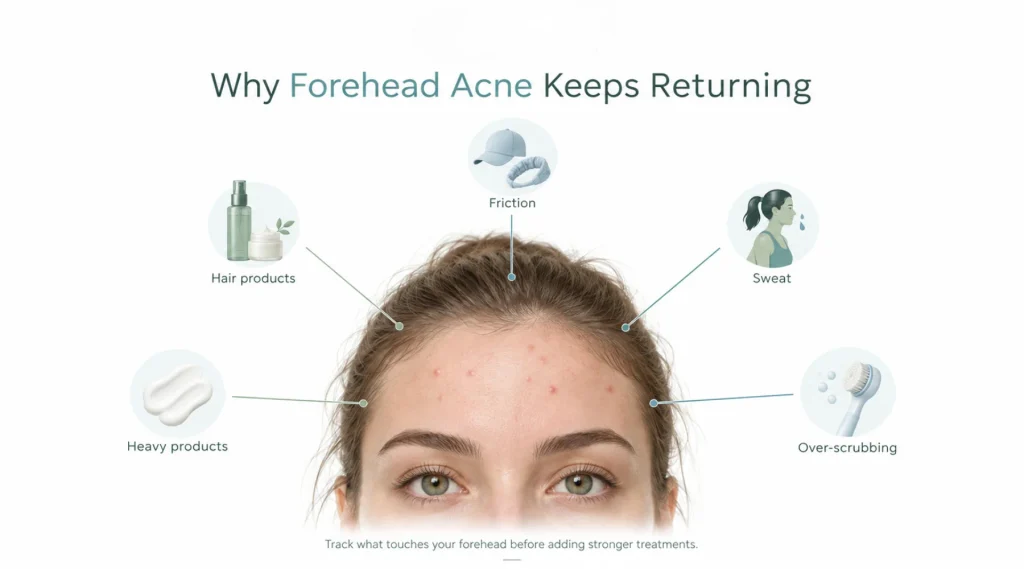
To get rid of forehead acne, look beyond your skincare products. Ask yourself:
- Is your hair covering your forehead all day?
- Are hair oils or conditioners touching your hairline?
- Do you often wear helmets, caps, or headbands?
- Do you leave sweat on your forehead after working out?
- Did the bumps appear after using a new sunscreen or moisturiser?
- Are you scrubbing your forehead too hard because it feels bumpy?
Small bumps near the hairline might improve if you stop using heavy hair products. Inflamed forehead acne can often be treated with ingredients like salicylic acid, benzoyl peroxide, azelaic acid, or a suitable retinoid, depending on your skin type.
Don’t assume every bump is acne; folliculitis can look similar. If you have itchy bumps that don’t improve, get a professional opinion.
Tracking when the bumps started is often more helpful than just getting a stronger exfoliant.
How to Get Rid of Bacne When It Returns After Every Workout
Back acne can be hard to treat because the area has a lot of oil, faces friction, and is difficult to care for consistently.
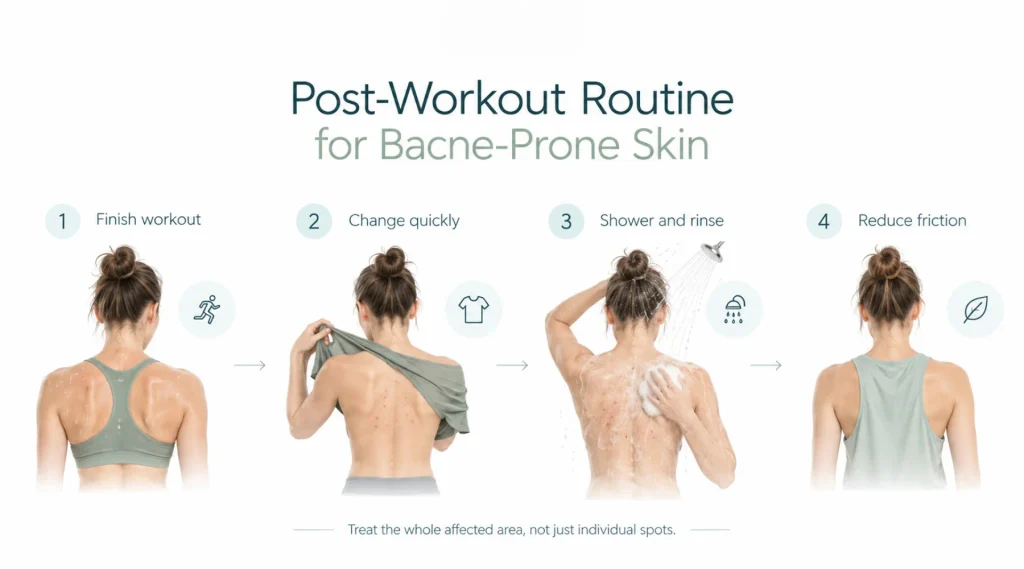
To tackle bacne, first ask two questions:
- What helps the hair follicles?
- What irritates them?
DermNet suggests practical steps like:
- Reducing sweat
- Changing out of sweaty clothes
- Avoiding bags or clothes that rub on your back
Topical treatments for back acne include benzoyl peroxide, azelaic acid, salicylic acid, and retinoids like adapalene or tretinoin. If the acne is widespread or resistant, consult a healthcare professional for systemic treatment.
Helpful habits include:
- Showering after workouts
- Changing out of damp gym clothes
- Wearing breathable clothing during exercise
- Rinsing hair conditioner off your back
- Avoiding thick body oils on acne-prone areas
- Washing frequently worn sports clothes
- Rethinking backpacks or straps that rub inflamed areas
- Applying acne treatment over the entire affected area instead of just on spots
Using a body wash can help distribute the treatment on your back more easily than a small spot cream.
However, if you have painful bumps, widespread inflammation, or scarring, seek medical help. Treating acne early is better than waiting for permanent scars to form.
Friction and Occlusion Can Produce Breakouts Even When Your Products Are Fine
Sometimes, your skincare routine isn’t the main issue.
Heat, pressure, friction, and trapped sweat can worsen acne under things like:
- Helmets
- Tight collars
- Sports bras
- Backpack straps
- Masks
- Headbands
- Protective work gear
- Tight workout clothes
You don’t always have to stop your activities.
Instead, try to reduce unnecessary pressure when you can. Wash reusable gear, change out of sweaty clothes, and ensure your acne treatment reaches the affected skin.
If the same area keeps breaking out where equipment touches, it can provide helpful clues.
Product-Related Acne Is Often About the Whole Routine, Not One “Bad” Ingredient
The internet often makes people think of ingredients as either comedogenic or safe. However, real products are more complex. A product that suits one person with acne may not work for another because factors like ingredient concentration, total formula, amount used, climate, and what is applied under it all matter.
DermNet points out that some heavy cosmetics can trigger acne flare-ups. If your acne worsens after changing your skincare, avoid overhauling your entire routine. Instead:
Identify what changed in the four to six weeks before the breakout. Remove the most suspicious new product first. Keep the rest of your routine simple. Allow your skin time to adjust. If needed, reintroduce products slowly.
This approach is especially useful for breakouts on the forehead and cheeks after using a heavy moisturiser, makeup primer, sunscreen, or facial oil. A good skincare routine should help your acne treatment, not become another cause of irritation.
Picking Makes Recurring Acne Look More Persistent Than It Really Is
Picking at acne causes two main problems. First, it harms the already inflamed follicle. Second, it can leave redness and dark spots that last long after the acne is gone. This can make your face look like it always has acne, even when some marks are just from previous breakouts. Picking also raises the risk of scarring, so DermNet recommends avoiding it.
Pimple patches can help in this situation. A basic acne patch or a more absorbent hydrocolloid patch acts as a barrier, keeping your fingers away from the blemish. This protects the spot and absorbs fluid, providing practical benefits.
Acne Patches Help Certain Pimples: They Do Not Prevent Acne on Their Own
Hydrocolloid patches work best when they can absorb fluid from a pimple, like a pustule or opened whitehead. They are less effective on deep, solid nodules under the skin. This is important if your acne keeps coming back. Using patches on visible pimples without a preventive plan is like mopping up a spill without fixing the leak.
There are different types of acne patches. Regular hydrocolloid patches help with surface pimples, while microneedle patches may contain active ingredients and are designed differently. Regardless of the type, patches target specific blemishes but are not a complete solution for ongoing acne.
Use patches to:
- Stop yourself from touching a pimple
- Protect a draining spot
- Absorb surface fluid
- Cover a pimple overnight
Do not rely on patches to:
- Fix hormonal issues
- Prevent widespread pimples
- Treat severe nodulocystic acne
- Replace medical treatment for scarring acne
Understanding how to use acne patches effectively can make them much more beneficial.
Stress Can Worsen Acne Without Being the Sole Cause
Stress is often linked to acne, but it’s not just in your head. Not every stressful week causes breakouts. Acne involves inflammation, hormones, and oil production, and stress can affect these. Many adults notice more acne during stressful times.
Stress can also lead to habits that worsen acne. During stressful periods, people may:
- Sleep less
- Pick at their skin
- Ignore their routine
- Wear makeup while exercising
- Change their diet
- Keep sweaty clothes on too long
- Touch their face more often
If breakouts happen during tough times, think about both physical and behavioural factors. Skincare shouldn’t be more aggressive during stress; sticking to a consistent routine is usually more effective.
Diet and Acne: Look for Patterns Rather Than Creating a Restrictive Food List
Diet can be a complicated topic when it comes to acne. Some studies link acne to high-sugar diets and dairy for some people. However, diet is hard to study and is often not the only reason for acne. DermNet mentions these links but also points out that the evidence isn’t strong.
Don’t rush to cut out multiple food groups just because you have a breakout. Instead, watch for any patterns in your diet.
If you think a certain food is causing your acne:
- Change just one thing at a time, not everything.
- Track your skin for several weeks.
- Keep your skincare routine the same.
- Focus on balanced eating.
- Get professional advice before making big diet changes.
Acne shouldn’t make eating stressful.
Some Medicines and Supplements Can Trigger Acne-Like Breakouts
If acne appears suddenly after a stable routine, check your medications, supplements, and skincare products. Some steroids, hormones, and medications can trigger acne. DermNet lists these as common causes of acne flare-ups.
Don’t stop any prescribed medicine just because you think it might be causing your acne. Talk to the healthcare provider who prescribed it. They may suggest changing the medication, adjusting the dose, or treating your skin while you continue the medicine.
Timing is important. If you experience a sudden breakout after starting a new medication, focus on that rather than blaming your cleanser.
How to Stop Acne Coming Back With a Routine You Can Actually Maintain
The best routine for treating recurring acne isn’t usually the longest. It should target the cause, protect the skin barrier, and be simple enough to follow for three months.
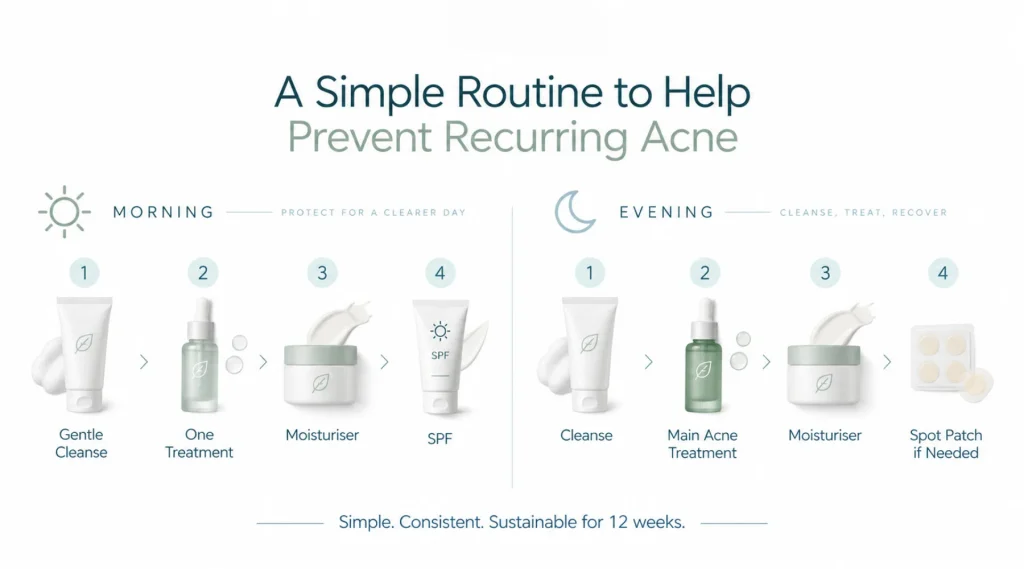
Here’s a practical plan:
Morning
1. Cleanse gently
Use a gentle cleanser if your skin is oily or sweaty. If your skin is very dry or sensitive, you might not need to cleanse it twice a day.
2. Add one supportive or acne-focused treatment
Based on your skin, you might use niacinamide, azelaic acid, or another acne treatment. You don’t need to use three serums just because they have different labels.
3. Moisturise
Pick a comfortable texture that doesn’t make your skin feel oily or clogged.
4. Apply broad-spectrum sunscreen
This is especially important when using retinoids or exfoliants and when acne leaves dark marks.
Evening
1. Remove makeup and sunscreen
Clean thoroughly without scrubbing.
2. Apply your main preventive acne treatment
You might use a retinoid, benzoyl peroxide, azelaic acid, salicylic acid, or another treatment based on how severe your acne is.
Current acne guidelines suggest using treatments that work in different ways instead of relying on just one weak method.
3. Moisturise
If your acne treatment is drying out your skin, try using more moisturiser or slowly increasing the treatment frequency instead of stopping it right away.
4. Patch individual spots if useful
Apply a patch to a small blemish after cleansing your skin but before using any slippery skincare products. This ensures the patch sticks well.
Having a clear plan for your acne routine can prevent damage to your skin barrier, especially when using multiple products at night.
Give Your Routine a Fair Trial Before Declaring It a Failure
Acne encourages daily checks. This is normal, but it can make it hard to see treatment progress. One new pimple on Tuesday can make a whole month feel like a failure.
Focus on trends instead. Take photos of your skin in the same lighting every two to four weeks and note if:
- You have fewer new pimples
- The pimples are smaller
- They heal faster
- Fewer deep spots appear
- Your skin is less congested
- Your skin is handling the treatment well
Having a routine can help, even if you still get occasional pimples.
Experts suggest checking your first treatment after about 12 weeks, not just after a few days. If your acne gets worse, causes serious irritation, or leads to scars, don’t wait for 12 weeks. Get professional help.
Acne Triggers to Avoid and Which Ones Are Often Overblamed
Some acne triggers are worth looking into. Others are talked about online more than the evidence supports.
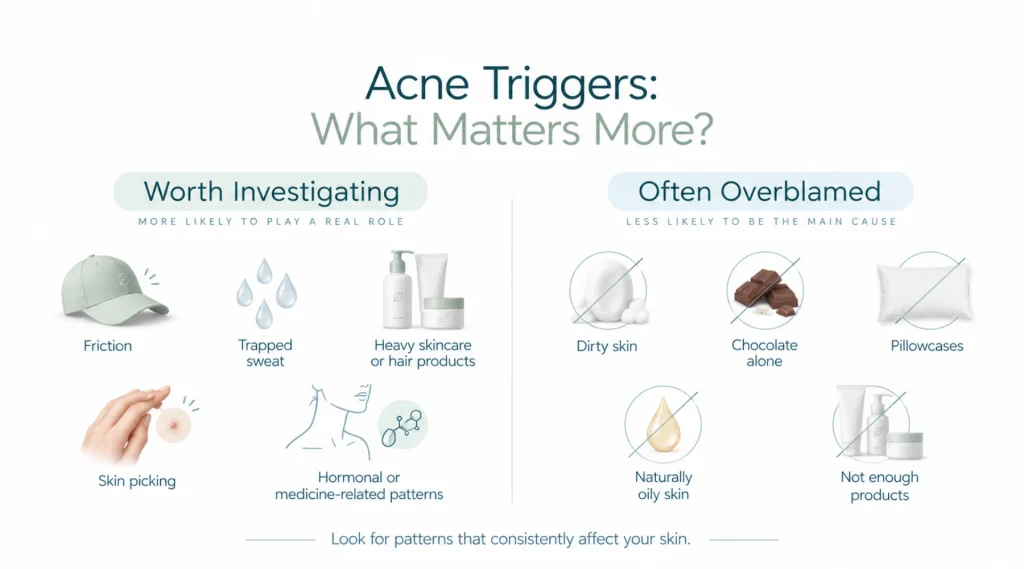
Worth investigating
- new occlusive skincare
- oily hair products touching the face
- repeated friction
- sweat trapped beneath clothing
- frequent skin picking
- stopping successful treatment
- hormonal patterns
- certain medicines
- excessive irritation from skincare
Often overblamed
Dirty Skin: Acne develops in hair follicles and isn’t a sign of bad hygiene.
Chocolate Alone: The link between diet and acne is complicated; one food doesn’t automatically cause breakouts.
Not Changing Pillowcases: Keeping your bedding clean is important, but buying new pillowcases won’t clear up severe acne.
Naturally Oily Skin: Oily skin can lead to acne, but producing natural oil is not a flaw.
Not Using Enough Products: Acne can get worse from using too many products or not enough; balance is key.
Goal: Instead of trying to eliminate all triggers, focus on identifying the patterns that affect your skin.
When Recurring Acne Needs More Than Over-the-Counter Skincare
Buying more serums is often not as helpful as getting a proper diagnosis.
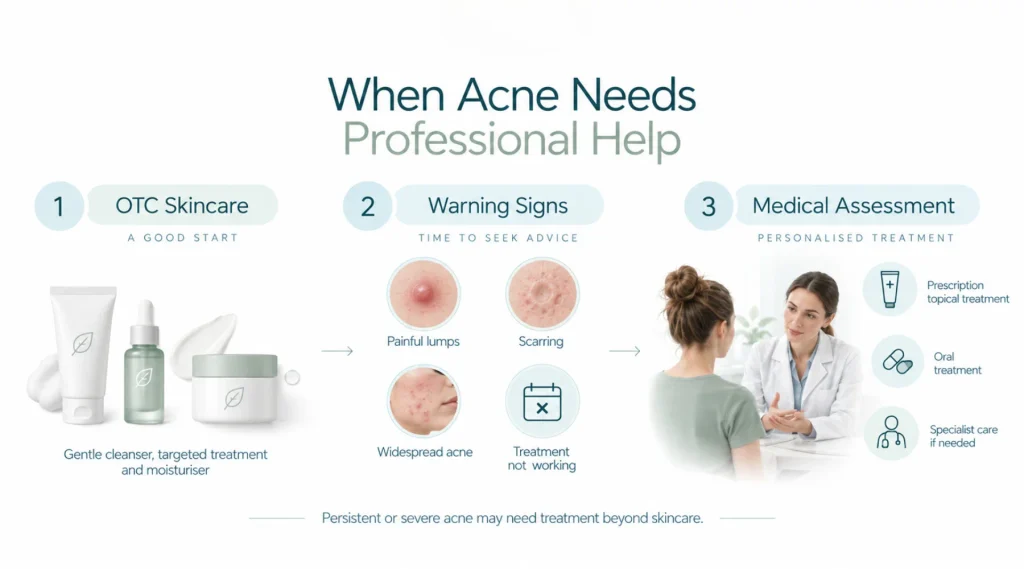
See a doctor or dermatologist if:
- Your acne is painful or creates lumps.
- You are developing scars.
- Large areas of your face, chest, or back are affected.
- Acne is hurting your confidence or mental health.
- Over-the-counter treatments haven’t worked.
- Breakouts return after prescription treatments.
- Acne suddenly appears and is severe.
- You think a medication might be causing it.
- You notice signs of a hormonal issue.
Moderate-to-severe acne may need prescription treatments like topical combinations, oral antibiotics, hormonal therapy, or isotretinoin. Current guidelines recommend limiting antibiotic use and combining them with topical treatments instead of using antibiotics alone.
Isotretinoin can effectively treat severe or hard-to-treat acne, but it needs medical supervision and strict precautions for pregnancy. NICE updated its acne guidelines in April 2026 to include the latest recommendations for isotretinoin use.
Seeking medical help does not mean skincare has failed; some acne needs treatments that skincare products can’t provide.
The Questions People Ask Most About Acne That Keep Returning
Why does my acne keep coming back in the same spot?
Acne can come back in the same area because it is prone to blockage or inflammation. Deep lesions might look like they go away but can still be under the skin.
Squeezing, rubbing, or using heavy products on the same spot can make it worse.
If you keep getting painful deep lesions in the same place, it’s important to see a professional, especially if they leave scars.
Why does acne return after treatment?
Acne can come back because the reasons for blocked pores and inflammation remain after treatment ends.
NICE suggests considering more treatment when acne recurs and advises ongoing therapy for people who often experience relapses.
This doesn’t mean everyone needs to stay on treatment forever. Those who frequently relapse might do better with a preventive plan rather than starting over after each breakout.
How long should I use an acne treatment before deciding it does not work?
Most acne treatments are tested for about 12 weeks. You might see some improvement earlier, but aiming for perfect skin in a week can lead to switching products too often. If you experience significant swelling, blistering, severe burning, or any worrying reactions, stop using the product and ask for advice.
Does niacinamide help with acne?
Niacinamide can help reduce inflammation, support the skin barrier, and assist people with oily or blemish-prone skin. Small studies show promise, but the evidence is still not as strong as for well-known acne treatments.
Consider niacinamide as a helpful ingredient, but not a sure fix for severe acne.
Does retinol help with acne?
Retinol can help with mild congestion and skin texture. However, stronger prescription retinoids like adapalene and tretinoin are more effective for treating acne.
Topical retinoids help keep pores clear and are strongly recommended in acne treatment guidelines.
Do not use topical retinoids during pregnancy or if you are planning to become pregnant.
Is glycolic acid good for acne?
Glycolic acid can help with mild congestion, rough skin, and unevenness from acne. Professional glycolic acid peels have shown improvements in studies, but the evidence is not as strong or consistent as for regular acne treatments.
It may not be the best choice for very inflamed, sensitive skin or skin that has already been over-exfoliated.
Does glycolic acid help with hormonal acne?
Glycolic acid can make your skin feel smoother and help with hormonal acne, but it doesn’t change the hormones causing the acne.
If you have deep acne spots on your jawline or chin that come back regularly, skincare can help lessen the breakouts. However, you might also need medical or hormonal treatment.
How do I get rid of forehead acne?
Check for clogged pores and things that irritate your skin.
Avoid heavy hair products on your forehead. Cleanse after sweating, wash hats and headbands often, and simplify your skincare routine if a breakout started after using a new product.
Treatments like salicylic acid, azelaic acid, or a suitable retinoid can help, depending on the type of skin issue.
How do I get rid of bacne?
Reduce sweat and friction by treating the affected areas regularly.
Change out of sweaty clothes and shower after exercise when you can. Rinse out hair products from the back of your head. Consider acne treatments with benzoyl peroxide, salicylic acid, azelaic acid, or a suitable retinoid.
If you have widespread, painful, or scarring back acne, see a doctor.
Can moisturiser make acne come back?
A specific moisturiser can cause congestion if it doesn’t match your skin type, but moisturisers themselves aren’t bad.
Acne treatments can cause dryness, and not using moisturiser can make them tougher to stick with.
Pick a lightweight, non-greasy formula and note if breakouts started after you began using it.
Can sunscreen cause recurring acne?
Some sunscreens can feel too heavy for acne-prone skin, but skipping sunscreen isn’t a good choice. Instead, try a lighter formula. Sunscreen is important, especially when acne treatments make your skin more sensitive, and it helps prevent dark spots after acne.
Why do I get acne even though I wash my face twice a day?
Acne isn’t just caused by dirt on the skin.
Washing your face removes sweat, makeup, sunscreen, and extra oil, but it doesn’t fix issues like cell turnover, hormone effects, or serious inflammation.
Washing more doesn’t mean better results. Too much washing can irritate the skin.
Can pimple patches stop acne from returning?
Pimple patches can protect and soak up fluid from single pimples, but they can’t stop the causes of widespread acne. Use them as part of a good skincare routine, not as a replacement.
Why did my acne suddenly return as an adult?
Adult acne can be caused by hormones, stress, changes in skincare, medications, and other factors. It can also continue long after teenage years.
If you notice sudden or severe acne, especially with changes in your menstrual cycle, unwanted hair growth, or thinning hair, see a doctor.
When should I get help for recurring acne?
See a doctor if your acne is painful, causes scars, spreads a lot, affects your mental health, or doesn’t get better with treatment.
Ask for help if you have deep nodules, sudden severe acne, think you have hormone issues, or if your acne comes back after treatment.
Start treatment early, especially if you notice scarring.
Why Does My Acne Keep Coming Back and What Finally Breaks the Cycle?
If you’re wondering why your acne keeps coming back, don’t judge your skin just by today’s pimple. Look for patterns.
Acne might return because you stop treatment once your skin clears, hormones keep stimulating oil glands, follicles stay clogged, sweat and friction irritate the same area, or a complicated routine causes irritation, preventing effective treatment.
Punishing your skin with more products usually isn’t the answer. Instead, understand what’s causing the acne. Choose one or two treatments that address the issue, protect your skin barrier, and give your routine time to work.
Use patches for the right type of pimples and exfoliating acids only when they help. Keep supportive ingredients like niacinamide in perspective. If painful or scarring acne persists despite reasonable care, seek medical treatment instead of just trying random products.
Managing recurring acne becomes easier when you focus on preventing future breakouts rather than just getting rid of today’s pimple.