





Blog
How to Get Rid of Acne: Skincare Steps That Help

Acne can feel very personal. Some people get a small blemish before their period, others wake up with bumps after changing hair products, and some have painful breakouts that keep coming back despite careful cleansing. There isn’t one perfect product or routine to eliminate acne because it’s not just one problem.
Acne occurs when pores get blocked with oil, dead skin, and inflammation. Bacteria can contribute, hormones may boost oil production, and harsh products can irritate the skin. The best acne routine isn’t always the strongest; it’s one that reduces congestion, calms inflammation, supports healing, and can be used consistently to see results.
Dermatologists recommend ingredients like benzoyl peroxide, topical retinoids, salicylic acid, and azelaic acid for managing acne. Treatment options depend on the type of acne, its severity, skin tolerance, and each person’s situation.
What acne is really telling you about your skin
Acne isn’t caused by dirty skin. Most often, it happens when pores can’t clear out properly.
Each pore connects to an oil gland that makes sebum. Sebum is essential for keeping skin soft and protected. Problems arise when too much sebum combines with dead skin cells and gets trapped in the pore. This can lead to blackheads, whiteheads, red spots, pustules, or larger, inflamed bumps.
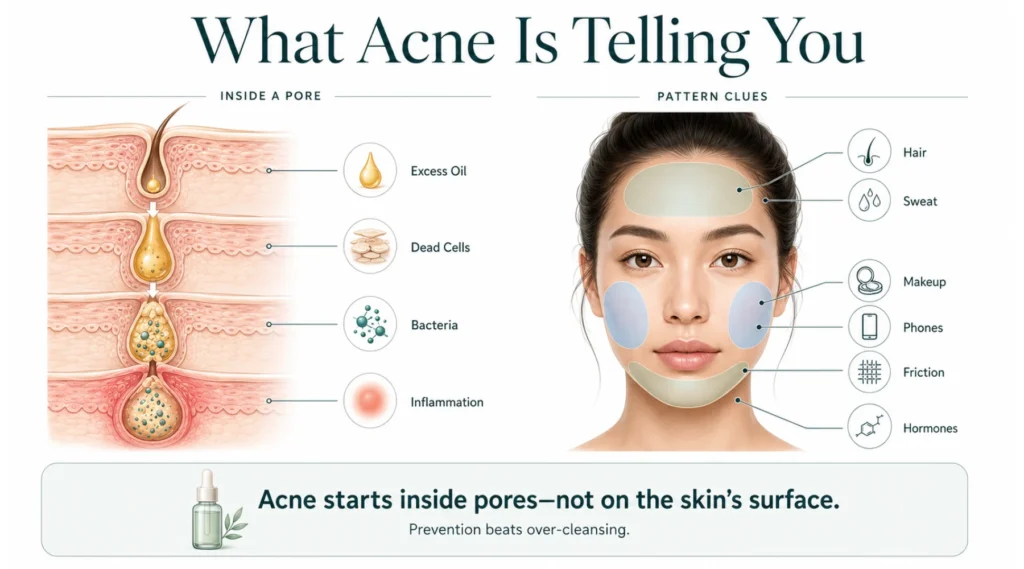
Acne usually involves four main factors:
| Acne factor | What happens in the skin | What it can look like |
| Excess oil | Sebaceous glands produce more oil than the pore can manage | Shiny skin, clogged pores, recurring spots |
| Sticky dead skin cells | Skin cells do not shed evenly inside the pore | Whiteheads, blackheads, rough texture |
| Bacterial imbalance | Cutibacterium acnes can thrive inside blocked follicles | Inflamed red spots, pustules |
| Inflammation | The immune system reacts inside and around the pore | Tender, swollen, painful blemishes |
A cleanser alone rarely solves acne. It cleans oil and dirt from the skin, but acne starts deeper in the pores. A good skincare routine should do more than just wash the face. It needs to control congestion, reduce irritation, and protect the skin while active ingredients work.
If you have breakouts in the same areas, look at the bigger picture. Acne often follows patterns: forehead acne may be caused by hair products, sweat, or heavy skincare; chin and jawline acne may be hormonal; cheek acne can worsen from makeup, dirty pillowcases, phones, shaving, or picking. By paying attention to when and where breakouts happen, you can identify triggers.
How to get rid of acne without damaging your skin barrier
Many people make the mistake of treating their skin too harshly when dealing with acne. They often use strong cleansers, exfoliating toners, drying spot gels, and multiple active ingredients all at once. This can make the skin feel tight, flaky, and sore, leading to more irritation. Pimples can look worse, makeup doesn’t apply well, and the skincare routine becomes hard to stick with.
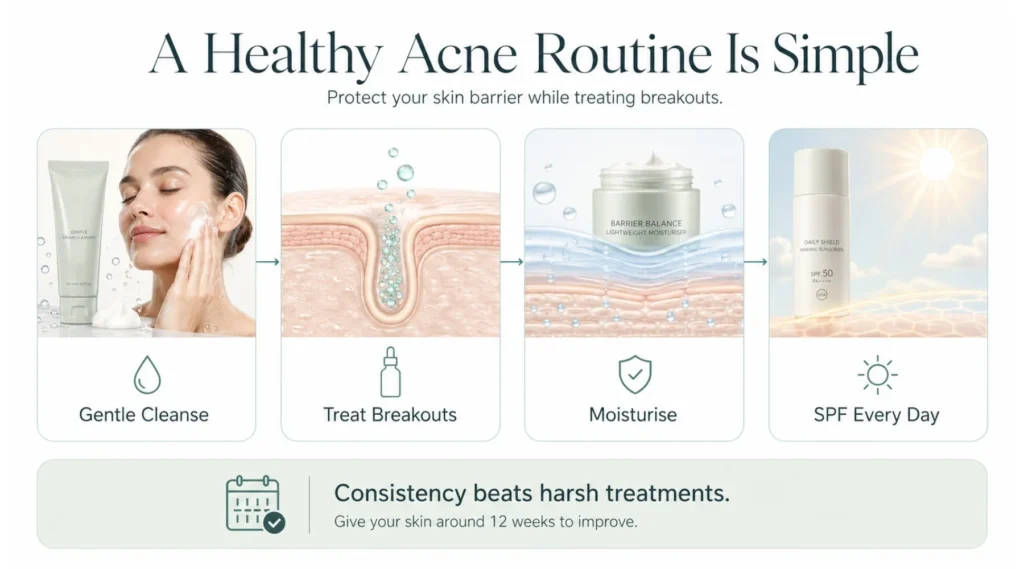
Acne-prone skin needs barrier support, often more than other skin types. A damaged barrier makes acne harder to manage because the skin becomes more sensitive. Ingredients that should help can sting, moisturisers may feel uncomfortable, and redness can linger after spots heal. This can lead to a cycle of using stronger products because the skin appears worse, while the real problem is inflammation and over-treatment.
A good acne routine should do four things:
- Cleanse without stripping the skin.
- Treat clogged pores and inflammation.
- Moisturise without feeling heavy.
- Protect against UV damage during the day.
While this seems simple, being consistent is more important than using complicated products. Mild-to-moderate acne treatments usually need about 12 weeks for the skin to show results since it takes time for the skin to renew. The NICE guidelines also suggest a 12-week check for acne treatment response.
The best routine to get rid of acne for beginners
If you’re creating a routine, don’t start with six products. Begin with a simple plan so you can see what works and what causes irritation.
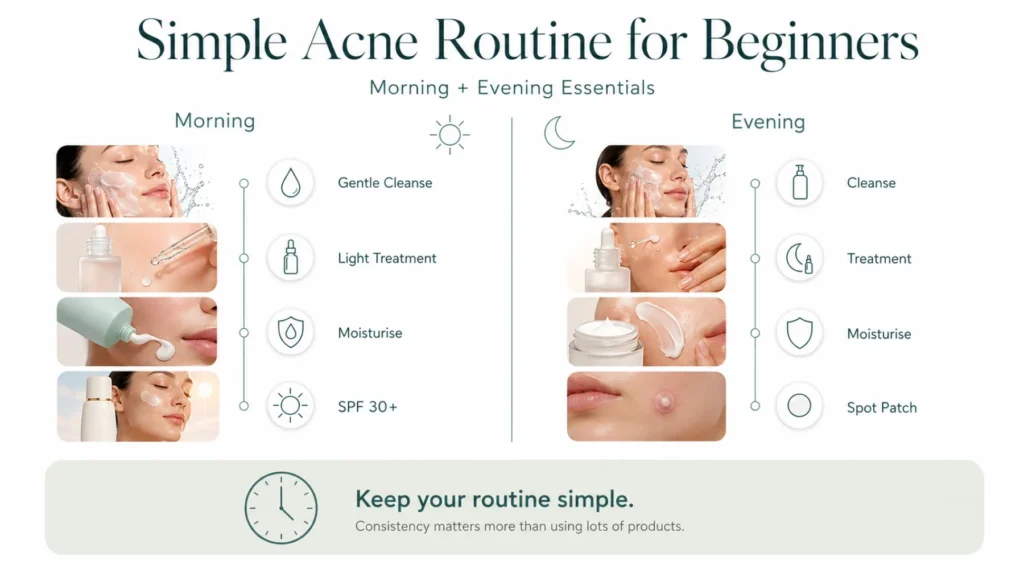
Morning routine for acne-prone skin
- Start with a gentle cleanse. If your skin is dry or sensitive, rinsing with water or using a mild cleanser may be enough. If your skin is oily or sweaty, or if you used heavy products overnight, cleanse thoroughly.
- Follow with a lightweight treatment. If your skin can handle it, apply niacinamide, azelaic acid, or a gentle acne serum. These are easier to layer than strong exfoliants.
- Use a light moisturiser. Acne-prone skin doesn’t need a heavy cream but still requires hydration. Choose a texture that feels good and isn’t greasy.
- Finish with sunscreen. This step is important, especially if you use exfoliating acids or retinoids. UV rays can darken post-acne marks and make them last longer.
Evening routine for acne-prone skin
- Cleanse your skin well, especially if you wear sunscreen or makeup. Most people only need a gentle cleanser, but double cleansing can be helpful for heavy makeup and long-wear products.
- Apply your main acne treatment next. This could be a retinoid, azelaic acid, salicylic acid, benzoyl peroxide, or another product suited to your skin and type of acne.
- Moisturise after the treatment. If the treatment irritates your skin, use the moisturiser sandwich method: apply moisturiser, then treatment, and finish with more moisturiser. This helps reduce dryness while keeping the treatment effective.
- Use a spot patch on pimples when needed. Hydrocolloid patches work best on whiteheads or spots that are ready to drain, as they absorb fluid and protect against picking.
Does niacinamide help with acne?
Yes, niacinamide can help with acne, especially when it’s linked to excess oil, redness, uneven skin tone, or a weak skin barrier. It’s not usually a main treatment for moderate or severe acne, but it’s a great support in an acne routine.
Niacinamide is a type of vitamin B3. It helps control oiliness, support the skin barrier, reduce redness, and improve uneven skin tone after breakouts. It also works well with many other acne treatments, making it easy to add to your routine.
Niacinamide is especially helpful if your acne treatments are drying or irritating. A stronger skin barrier can help you tolerate these treatments better.
You can use a niacinamide product in your morning routine before moisturiser or at night when you’re not using stronger exfoliants. The best concentration isn’t always the highest; many people do well with moderate-strength formulae. High percentages can feel sticky, warm, or irritating on sensitive skin.
Does retinol help with acne?
Retinol can help with acne, but how we describe it matters. Topical retinoids are well-known treatments for acne in dermatology. They help skin cells shed evenly, which reduces clogged pores and improves skin texture over time. The AAD recommends these retinoids for acne treatment.
Retinol is a cosmetic version, while prescription retinoids like adapalene or tretinoin are stronger and more targeted. Retinol can improve mild congestion, uneven texture, and post-acne skin, but it works slowly.
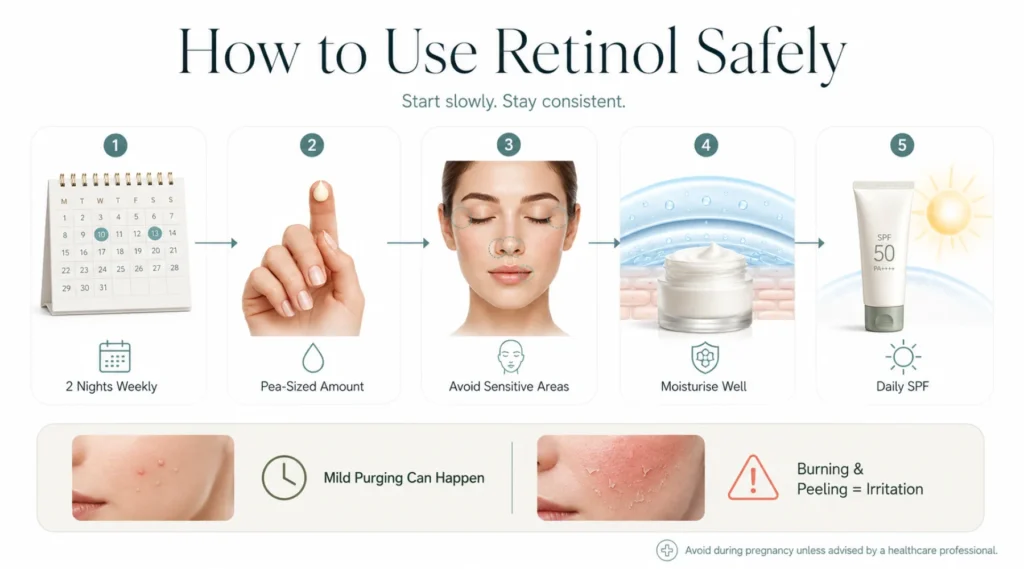
Many beginners make the mistake of using retinol every night right away. While acne-prone skin can eventually handle it, it’s best to start slowly.
A good retinol routine looks like this:
- Use it two nights a week for the first few weeks.
- Apply a pea-sized amount to your whole face.
- Avoid the eyes, nose corners, and mouth.
- Moisturise well.
- Don’t use strong exfoliating acids on the same night unless your skin is used to it.
- Wear sunscreen every day.
Some people may notice small bumps when they start using retinoids. This is often called purging, but not all breakouts are purging. If your skin burns, peels a lot, or breaks out in strange places, you may be experiencing irritation.
Retinoids are not for everyone. They should generally be avoided during pregnancy. If you’re pregnant, trying to conceive, or breastfeeding, talk to a healthcare professional before using retinoid acne products, as some treatments aren’t safe during pregnancy.
Is glycolic acid good for acne?
Glycolic acid can help some acne-prone skin, but it’s not my top choice for every breakout. It is an alpha-hydroxy acid that mainly exfoliates the skin’s surface. It can improve dullness, rough texture, and post-acne marks, but it doesn’t penetrate oily pores as well as salicylic acid.
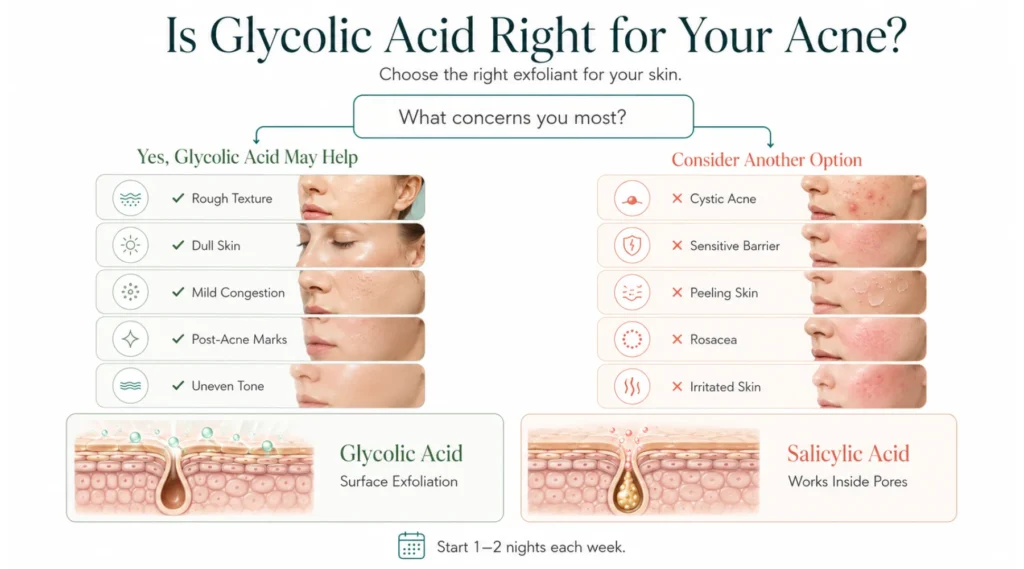
This is where confusion often arises. Many wonder if glycolic acid helps with acne, and the answer is: sometimes, depending on the type of acne.
Glycolic acid may be beneficial if your skin has:
- Rough texture
- Dullness after breakouts
- Mild congestion
- Post-acne marks
- Uneven tone
It might not be ideal if your skin has:
- Inflamed cystic acne
- A very sensitive barrier
- Active stinging or peeling
- Rosacea-prone redness
- Frequent irritation from other products
For oily, clogged pores and blackheads, salicylic acid is usually better because it is oil-soluble and can work inside the pore. The American Academy of Dermatology notes that salicylic acid helps open clogged pores and exfoliate the skin, especially for whiteheads and pimples.
If you decide to use glycolic acid, start with once or twice a week. Using it too often can make acne worse by damaging the skin’s barrier and increasing irritation.
Why azelaic acid deserves a place in acne routines
Azelaic acid is a great but often overlooked ingredient for treating acne. It helps with clogged pores, redness, blemishes, and marks left after acne. According to NHS guidance, it’s a good option for people who find benzoyl peroxide or topical retinoids too harsh. It works by removing dead skin and killing bacteria.
This acid is especially helpful for those whose acne leaves behind marks. Some blemishes heal quickly, while others leave red, brown, or purple spots that can last for months. Azelaic acid effectively treats both active blemishes and the uneven skin tone that can follow.
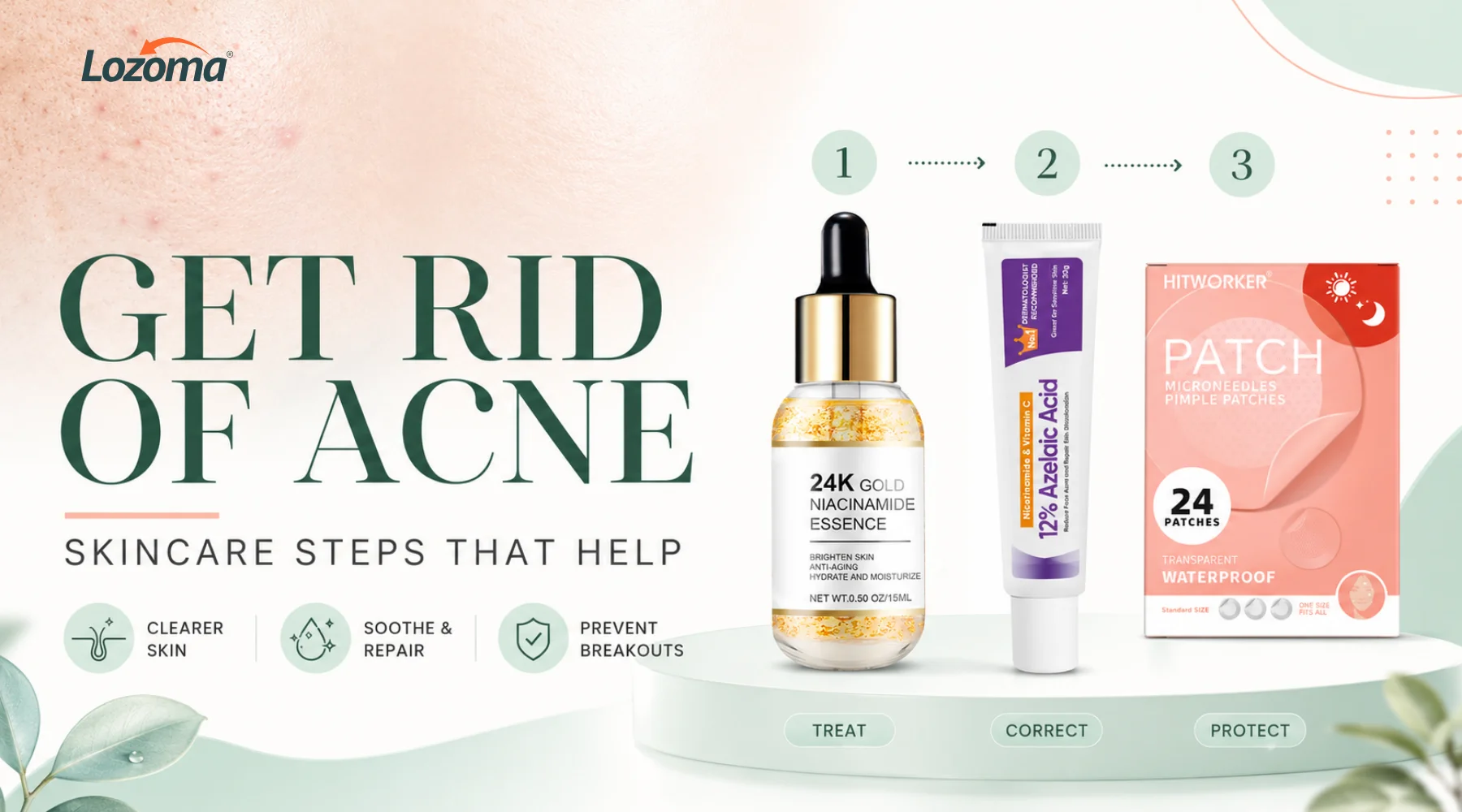
A product like 12% Azelaic Acid Acne Cream can be a good addition to your skincare routine if you want to calm blemish-prone skin without relying on harsh treatments. Use it regularly, start slowly, and don’t combine it with too many strong ingredients at first.
Keep in mind that azelaic acid does not provide instant results. Like most acne treatments, it takes time. Many people notice calmer skin after a few weeks, with more changes in tone and texture after using it longer.
Tea tree, blemish serums, and the careful use of natural actives
Tea tree oil has been used for a long time to help with blemishes because it fights germs and reduces inflammation. It can be good for oily or blemish-prone skin, but don’t assume it’s completely safe just because it’s natural.
Pure tea tree oil can irritate the skin if used directly, leading to redness, dryness, or rashes, especially for sensitive skin. It’s safer to use a product made with tea tree oil rather than mixing essential oils at home.
A lightweight Tea Tree Facial Serum can help oily areas, occasional blemishes, or congested skin that can’t handle harsh drying products. The key is to use it in moderation. Avoid using tea tree oil along with strong acids, retinoids, and spot treatments all at once, even if you have breakouts.
Acne improves best with a clear routine for each product. If all products are trying to be the strongest treatment, the skin can get irritated before it starts to clear up.
How acne patches help, and when they do not
Acne patches won’t cure acne, but they help manage individual pimples.
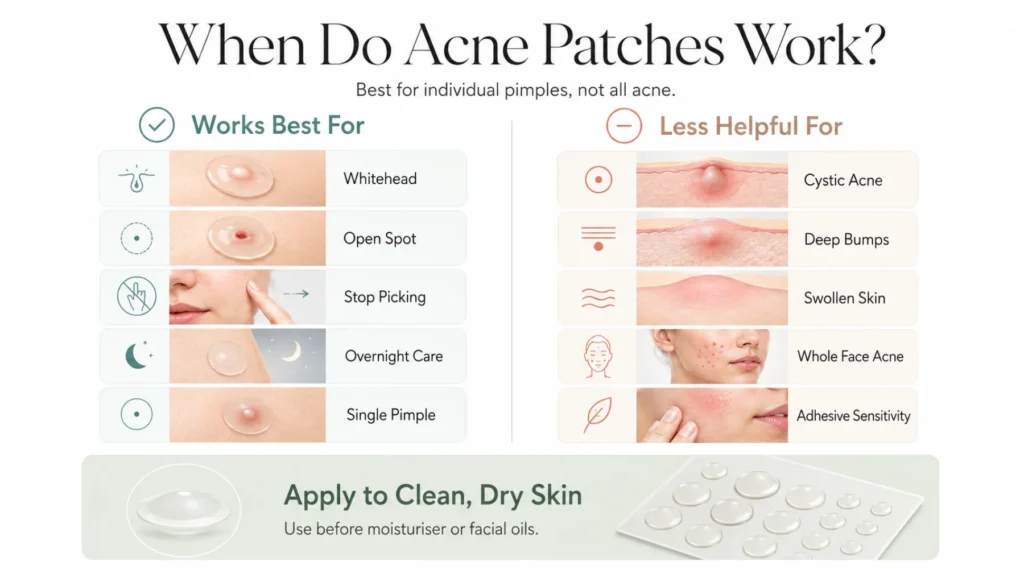
Most pimple patches use hydrocolloid, a material that helps with wounds. It absorbs fluid from a blemish and covers it. This can make a whitehead flatter, reduce mess, prevent touching the spot, and protect it while it heals.
Use a patch when:
- The pimple has a whitehead.
- The blemish is slightly opened.
- You can’t stop touching the area.
- You want to protect a spot overnight.
- You need a cleaner way to deal with one pimple.
Patches are less helpful when:
- The pimple is deep and cystic.
- There’s no fluid at the surface.
- The area is very swollen.
- You expect them to stop all acne.
- The skin reacts badly to adhesives.
The Acne Patch The Original is best for targeted spots, not as your entire acne treatment. For regular breakouts, patches help healing while your daily routine tackles the cause of the spots. Different shapes of acne patches can also help with various sizes and areas of your face.
Tip: Apply patches on clean, dry skin before moisturisers or oils. If the skin is slippery, the patch won’t stick well.
How to get rid of forehead acne
Forehead acne looks different from acne on cheeks or jawlines. It can show up as small bumps, clogged pores, or inflamed spots. Since the forehead is close to the hairline and produces a lot of oil, it can be affected by products and habits that people don’t think cause acne.
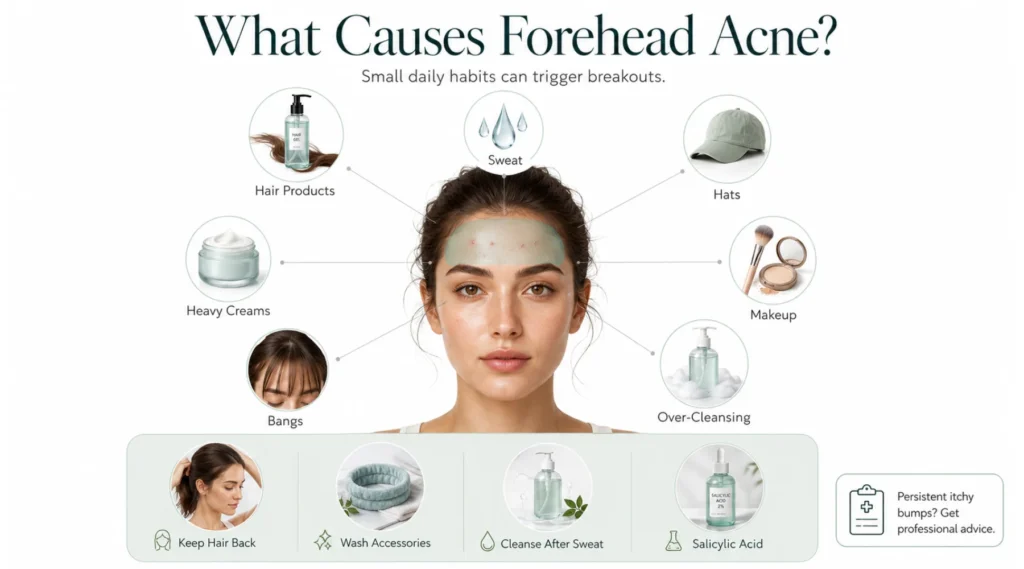
Common causes of forehead acne include:
- Hair oils, leave-in conditioners, gels, or waxes.
- Heavy sunscreen or moisturiser that irritates the skin.
- Sweat left on the skin after exercise.
- Hats, helmets, scarves, or headbands.
- Bangs that transfer oil and styling products.
- Over-cleansing the skin.
- Comedogenic makeup or primers.
To manage forehead acne, simplify what comes into contact with your forehead. Keep hair products away from the hairline. Wash hats and headbands regularly. Cleanse your skin after working out. Avoid heavy oils on the forehead if you notice bumps.
For small clogged bumps, use salicylic acid a few times a week. For inflamed spots, try benzoyl peroxide or azelaic acid. If the bumps are consistent, itchy, and don’t improve with regular acne treatments, consult a pharmacist, GP, or dermatologist to check for other conditions.
How to get rid of bacne
Back acne, or bacne, can be harder to treat than facial acne. This is because the skin on the back is thicker, and sweat and friction are common. Many people want to know how to get rid of bacne since it can affect their confidence and comfort.
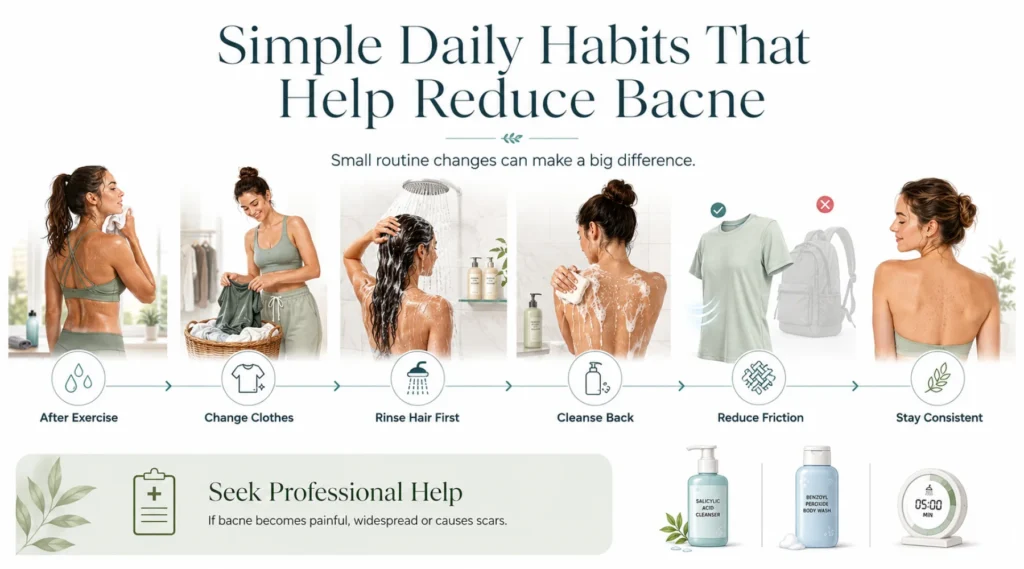
Bacne often comes from:
- Sweat trapped under clothing
- Tight gym clothes
- Backpacks or sports gear rubbing against the skin
- Hair conditioner running down during a shower
- Body oils or heavy lotions
- Not showering soon after exercising
- Hormonal changes
- Genetics
To improve your shower habits, wash your hair first, rinse out your conditioner well, and then cleanse your back last. This helps prevent conditioner buildup on acne-prone skin.
Using a body wash with salicylic acid or benzoyl peroxide can help. Let it sit on your skin briefly before rinsing, but don’t scrub too hard as this can worsen irritation.
After working out, change out of sweaty clothes quickly. Choose breathable fabrics and wash your gym clothes regularly. Avoid re-wearing tight tops that hold sweat and oil.
Be patient with body breakouts. Since the back has thicker skin, it may take longer to see improvement compared to the face. If bacne is painful, spreads widely, causes scarring, or doesn’t get better with care, consider seeking professional help.
How to get rid of acne naturally without falling for myths
Many people look for natural ways to get rid of acne because they prefer gentler methods. This is understandable. Traditional acne treatments can be harsh, and not everyone wants to use prescription medications. However, “natural” shouldn’t mean using lemon juice, toothpaste, baking soda, or strong essential oils on irritated skin.
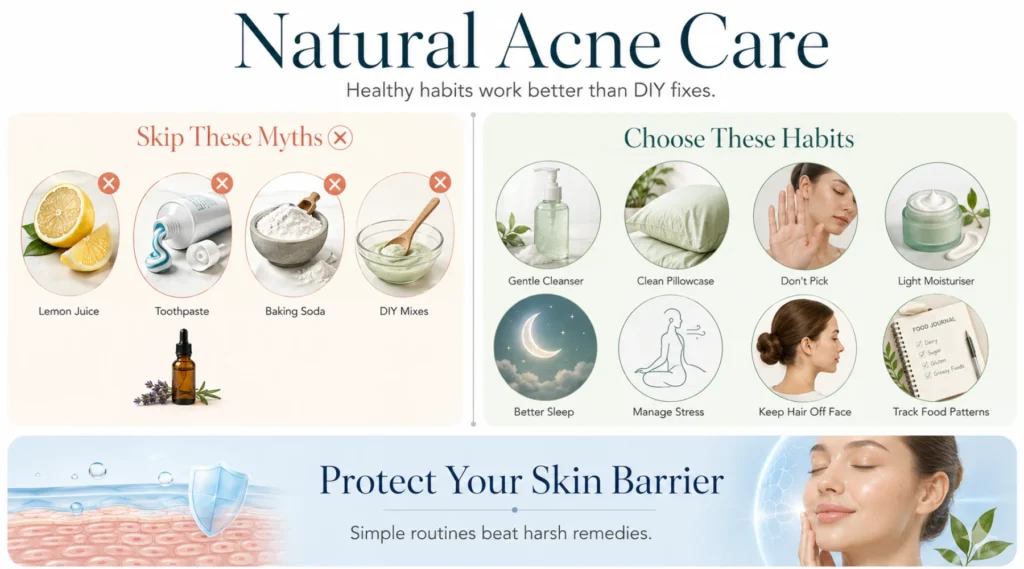
To improve skin naturally, it’s better to adopt gentle, consistent habits instead of relying on home remedies. Here are some effective tips:
- Cleanse without overly drying your skin.
- Keep towels and pillowcases clean.
- Avoid picking at your skin.
- Minimise friction from masks, helmets, and tight clothes.
- Use non-greasy moisturisers.
- Prioritise good sleep.
- Manage stress realistically.
- Stay away from heavy hair oils near acne-prone areas.
- Choose well-made products instead of harsh DIY mixtures.
Diet may affect some people, but it varies for everyone. High-glycaemic foods and certain dairy products might influence acne, but it’s not just about eating chocolate or lacking self-control. If you think your diet could be linked to your acne, monitor your food patterns instead of cutting out entire food groups suddenly.
The safest “natural” acne advice is often more straightforward than social media suggests: keep your skin barrier calm, reduce pore-clogging substances, avoid irritation, and use trusted ingredients when needed.
How to get rid of acne at home
You can handle mild acne at home, like blackheads, whiteheads, and occasional inflamed pimples. Instead of harshly treating each spot, focus on preventing clogged pores and helping blemishes heal with minimal damage.
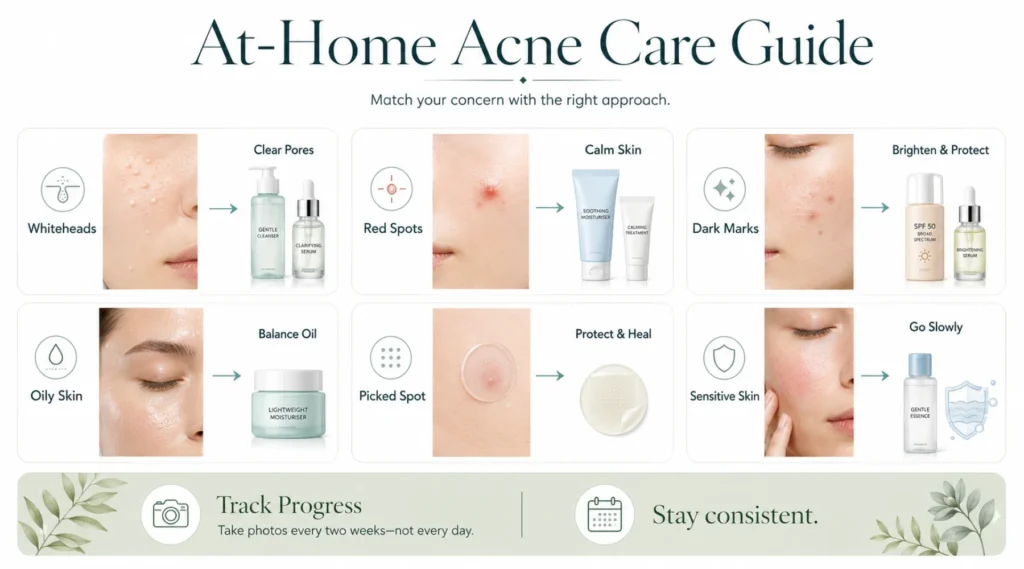
Here’s a simple at-home acne plan:
| Skin concern | At-home step that may help |
| Whiteheads and clogged pores | Salicylic acid, retinoid, gentle cleansing |
| Red inflamed spots | Benzoyl peroxide, azelaic acid, calming moisturiser |
| Post-acne marks | Sunscreen, azelaic acid, niacinamide, cautious exfoliation |
| Oily shine | Niacinamide, lightweight moisturiser, non-stripping cleanser |
| Picked spots | Hydrocolloid patches, barrier repair, no harsh acids on broken skin |
| Sensitive acne-prone skin | Slow introduction, fewer actives, fragrance-aware choices |
Don’t apply treatments to broken skin unless they are meant for it. A picked pimple is more like a wound than a clogged pore. It needs protection, not strong acids.
If you’re using over-the-counter acne products, stick with them for a while. Changing products too often makes it hard to know what works. Take photos in the same light every two weeks. It’s easier to notice skin changes when you compare photos rather than looking in the mirror every day.
Common mistakes when trying to get rid of acne
People rarely make acne mistakes because they don’t care about their skin. Most of the time, it’s because they want quick results.
Using too many activities at once
Using salicylic acid, glycolic acid, retinol, benzoyl peroxide, tea tree oil, and vitamin C all at once is not a good acne treatment. It can irritate your skin. Pick one main treatment and add others slowly over time.
Changing products too quickly
Acne treatments take time. If a product hasn’t improved your skin in five days, it might still work. Unless you have a bad reaction, evaluate acne treatments over weeks, not days.
Skipping moisturiser
Many people with oily, acne-prone skin skip moisturiser because they worry it will clog their pores. However, the right moisturiser won’t make your skin greasy. Instead, it helps keep moisture in and makes acne treatments easier to use.
Picking spots
Picking can lead to scabs, infections, lasting redness, and acne marks. If you find yourself picking without knowing, use a patch to cover the spots that tempt you.
Treating marks like active acne
Post-acne marks are different from active pimples. After the bump fades, drying spot treatments are less effective. Instead, sunscreen, azelaic acid, niacinamide, and gentle resurfacing are better options.
Ignoring hair and body products
Conditioner, hair oils, styling creams, and body lotions can cause breakouts on the hairline, forehead, shoulders, and back. If you have acne in these spots, look at what comes into contact with your skin.
How long does it take to get rid of acne?
Most acne doesn’t go away quickly. Single pimples may shrink in a few days, especially with spot treatments, but stopping new acne takes more time.
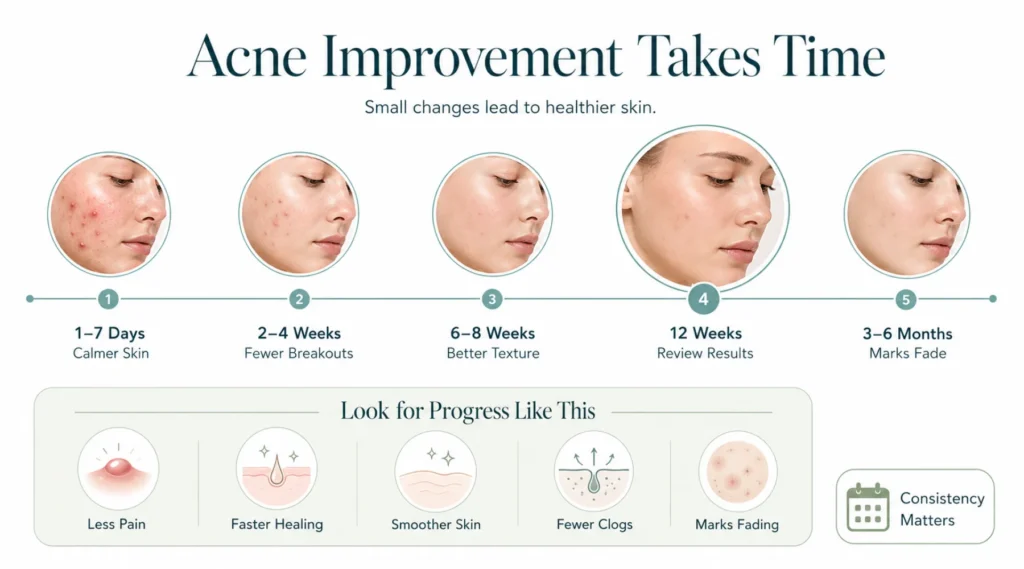
A typical timeline often looks like this:
| Timeframe | What may happen |
| 1–7 days | Some spots flatten; irritation may calm if harsh products are removed |
| 2–4 weeks | Fewer new clogged pores may begin forming, but breakouts can still appear |
| 6–8 weeks | Texture, oiliness and inflammation may start looking more controlled |
| 12 weeks | A fair point to judge whether a consistent routine is working |
| 3–6 months | Post-acne marks and deeper congestion often need longer-term care |
How long it takes to clear acne depends on severity, hormones, genetics, product tolerance, and whether there is scarring or pigmentation. Mild acne can improve in several weeks with a consistent routine. Moderate acne usually requires a longer treatment plan. Cystic acne often needs medical help.
Instead of judging progress by the absence of spots, look for better signs. These include fewer painful pimples, faster healing, less picking, smoother skin texture, fewer new clogged pores, and more even fading of marks.
When acne keeps coming back in the same places
Recurring acne often means that the cause isn’t fully addressed. This doesn’t mean you’re doing everything wrong; it indicates that your skin is still reacting to the same internal or external factors.
Jawline breakouts may be caused by hormonal changes. Forehead acne could come from hair products or sweat. Cheek breakouts might be linked to makeup, pillowcases, phones, shaving, or friction. Back acne is often due to sweat, clothing, and thicker skin.
When breakouts keep coming back, look at the overall pattern rather than just the individual spots. Timing is important. Do breakouts happen before your period, after workouts, or after using a new sunscreen or shampoo?
Your skin’s history can tell you more than product labels. Acne can have specific triggers, from hormonal changes and damaged skin barriers to products that block pores. It’s easier to manage breakout triggers when you don’t view every pimple as random.
Hormonal acne, and when skincare alone may not be enough
Hormonal acne usually shows up around the chin, jawline, and lower cheeks, but can appear in other areas too. It often feels deeper and more painful and tends to come and go. Many people notice it before their period, during stress, after stopping certain birth controls, or alongside issues like irregular periods or more facial hair.
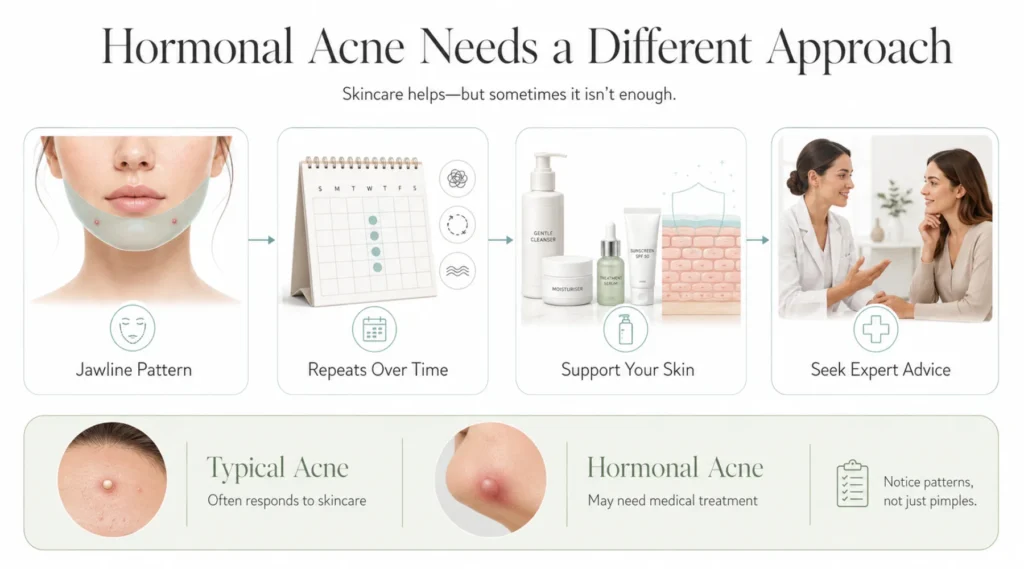
Skincare can help with hormonal acne, but it may not fully address the hormonal causes. Products like azelaic acid, retinoids, benzoyl peroxide, and gentle moisturisers can improve skin health. However, if hormonal acne persists, medical treatments like prescription creams, pills, or hormonal therapy might be necessary.
It’s important to differentiate between cyclical hormonal spots and typical clogged-pore acne because treatment varies. Someone with a couple of pimples from a heavy moisturiser might see quick improvement by changing products. In contrast, a person with deep nodules on the jawline may need a longer plan and expert advice. Recognising hormonal patterns early can save time and avoid unnecessary treatments.
Professional acne treatments worth considering
At-home skincare can be helpful, but seeking professional treatment is perfectly fine. Acne is a medical issue, not just a beauty problem.
You should talk to a pharmacist, doctor, or dermatologist if:
- Your acne is painful or forms cysts.
- Spots leave scars.
- Breakouts harm your mental health.
- Over-the-counter products haven’t worked after a while.
- Acne is widespread on your face, chest, or back.
- You suddenly have adult acne.
- You have acne along with irregular periods or other hormonal signs.
- You are pregnant, trying to get pregnant, or breastfeeding.
- You’re not sure if the bumps are acne.
Professional treatments may include stronger medications like retinoids, benzoyl peroxide, topical antibiotics, oral antibiotics, hormonal treatments, or isotretinoin for severe cases. Health guidelines suggest different treatments based on severity and caution against long-term antibiotic use.
Dermatologists can also provide treatments for acne scars or persistent marks, such as chemical peels, microneedling, and laser treatments. These are not usually for active acne, but can be useful once breakouts are under control.
How to fade post-acne marks while treating breakouts
Many people say they still “have acne,” but they often just have marks left from it. This is important to understand. Active acne appears as raised or inflamed spots, while post-acne marks are the discolouration that remains after the inflammation goes away.
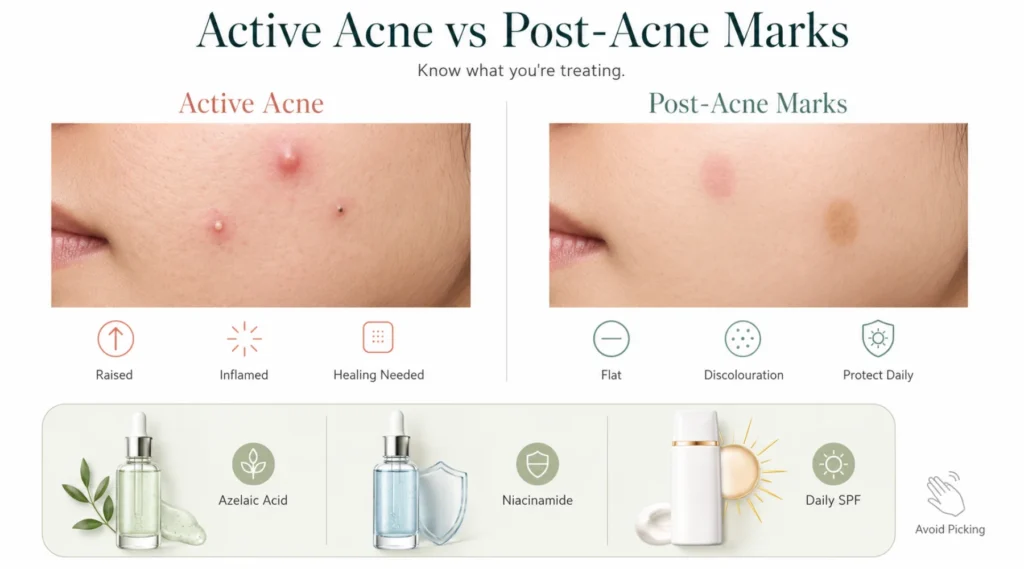
There are two main types:
| Mark type | What it looks like | More common in |
| Post-inflammatory erythema | Pink, red or purple marks | Fair to medium skin tones, redness-prone skin |
| Post-inflammatory hyperpigmentation | Brown or grey-brown marks | Medium to deep skin tones, skin that pigments easily |
Marks fade slowly because they result from the skin’s response to inflammation. Picking at them can make them worse. Sun exposure can darken them and make them last longer.
To care for marks, use daily sunscreen, azelaic acid, niacinamide, and gentle exfoliation if your skin can handle it. Retinoids can help improve skin over time by speeding up cell turnover. Avoid scrubs and harsh peels, especially if you still have active acne.
The challenge is treating active acne and marks without irritating the skin. Azelaic acid helps because it works for both blemishes and skin tone. Niacinamide supports the skin barrier and improves uneven skin. Sunscreen protects your skin from the effects of UV exposure.
A simple routine map by acne type
Different types of acne need different care. Many routines fail because they treat all acne the same.
| Acne type | What to prioritise | What to be careful with |
| Blackheads | Salicylic acid, retinoid, light moisturiser | Scrubbing and pore strips too often |
| Whiteheads | Retinoid, salicylic acid, non-comedogenic textures | Heavy oils and frequent product switching |
| Red pimples | Benzoyl peroxide, azelaic acid, calming barrier care | Too many drying spot treatments |
| Cystic acne | Professional advice, prescription options, gentle routine | Picking, squeezing, aggressive exfoliation |
| Forehead bumps | Hair product changes, salicylic acid, sweat management | Heavy hair oils and occlusive styling products |
| Bacne | Body acne wash, shower timing, loose clothing | Scrubbing hard or leaving conditioner residue |
| Hormonal acne | Consistent actives, medical support if persistent | Expecting skincare alone to control all flares |
You don’t need a different product for every type of acne. Your routine should focus on your biggest problem. If you struggle with blackheads, concentrate on clearing your pores. If you have painful cysts, don’t spend months just exfoliating the surface.
Acne is a question people ask when their skin will not settle
How to get rid of acne for beginners?
Start with a gentle cleanser, a light moisturiser, daily sunscreen, and one acne treatment. Don’t use multiple strong products at the same time. Pick your treatment based on your acne type: use salicylic acid for clogged pores, benzoyl peroxide for inflamed spots, azelaic acid for red marks, and retinoids for ongoing congestion. Stick to the routine for 8–12 weeks unless irritation gets worse.
How to get rid of acne at home safely?
Stick to a regular routine and avoid picking at your skin. Keep your skincare simple and add new active ingredients slowly.
At home, you can treat mild breakouts with salicylic acid, azelaic acid, benzoyl peroxide, retinoids, niacinamide, and acne patches.
Stay away from toothpaste, lemon juice, baking soda, and harsh scrubs.
How to get rid of acne naturally?
To keep your skin safe, reduce irritation, and help it heal. Use clean pillowcases and towels, wash your skin after sweating, avoid heavy products that clog pores, manage friction, and choose gentle skincare. Remember, natural doesn’t always mean safe; undiluted essential oils and homemade acids can irritate acne-prone skin.
Does niacinamide help with acne or just redness?
Niacinamide helps acne-prone skin by supporting the skin barrier, reducing redness, and balancing oiliness. Although it may not be enough for severe acne on its own, it works well with many acne treatments and can make routines easier to follow.
Does retinol help with acne if I still get spots?
Retinol can help with clogged pores, skin texture, and repeated breakouts, but it requires regular use and a gradual introduction. Prescription retinoids work better for treating acne. If retinol causes burning, severe peeling, or breakouts in new spots, it may be irritating your skin.
Is glycolic acid good for acne-prone skin?
Glycolic acid improves skin texture, dullness, and post-acne marks. However, it’s not ideal for inflamed acne or very oily pores. Salicylic acid works better for blackheads and clogged pores because it targets oily areas inside the pore.
Does glycolic acid help with acne scars?
Glycolic acid can improve the appearance of acne marks and skin texture over time. However, it won’t eliminate deep scars. For indented acne scars, professional treatments like microneedling, laser therapy, or chemical peels from qualified experts are usually necessary.
How do I get rid of bacne without irritating my skin?
Wash your back after rinsing out conditioner. Shower after sweating. Wear breathable clothing and use a body wash with salicylic acid or benzoyl peroxide. Don’t scrub hard. If your back acne hurts, spreads, or leaves scars, talk to a healthcare professional.
How can I get rid of bacne marks?
Apply sunscreen to exposed skin and avoid picking at blemishes. Consider using products with ingredients like azelaic acid, niacinamide, or gentle exfoliating acids. Bacne marks can take months to lighten because the skin on your body is thicker and experiences more friction.
How to get rid of forehead acne fast?
Avoid oils, gels, and conditioners on your forehead. Cleanse your skin after sweating, and don’t use heavy products near your hairline. For active pimples, try a targeted acne treatment or patch. For small bumps, salicylic acid can help if your skin can handle it.
Can acne patches get rid of acne overnight?
Acne patches can reduce some whiteheads overnight by soaking up fluid and covering the area. They won’t stop all acne and aren’t as effective on deep cystic bumps. It’s best to use them as part of a larger skincare routine.
Why does my acne keep coming back after it clears?
Recurring acne often means one or more triggers are still present. These can include hormones, clogged pores, hair products, stress, friction, makeup, sweat, or an inconsistent routine. To address repeated breakouts, it’s important to track patterns rather than just rely on stronger spot treatments.
Can moisturiser make acne worse?
Yes, if a moisturiser is too heavy or has pore-clogging ingredients, it might not be good for your skin. However, skipping moisturiser can worsen acne by causing dryness and irritation. Opt for a lightweight, non-greasy moisturiser that protects your skin without feeling heavy.
Should I stop using makeup if I have acne?
You don’t have to stop wearing makeup entirely. Pick non-comedogenic products, cleanse your face well at night, clean your brushes and sponges regularly, and skip heavy primers and oils on active breakouts. If your acne gets worse with a certain product, stop using it and watch how your skin reacts.
When should I see a dermatologist for acne?
Get professional help if your acne is painful, cystic, causes scars, appears suddenly, spreads widely, or affects your confidence and mental health. Also, seek advice if over-the-counter products haven’t worked after regular use or if you are pregnant, breastfeeding, or unsure about safe treatments.
Making acne care work beyond the first clear week
Getting rid of acne isn’t just about making today’s pimple go away. It’s also about stopping new pimples from forming and helping the skin heal with less scarring and irritation.
The best acne routine isn’t always the harshest one. It usually involves gentle cleansing, one or two effective ingredients, support for the skin’s barrier, sunscreen, and better habits regarding sweat, hair products, picking, and friction. Niacinamide can help oily and irritated skin. Retinoids can reduce recurring breakouts. Azelaic acid is useful for blemishes and scars. Glycolic acid can improve skin texture if used carefully. Acne patches can protect spots when you feel the urge to pick.
Clearer skin comes from using the right treatment for your acne type, not from trying every new product. When your skin is calmer and better supported with a consistent routine, managing acne becomes easier, and following the routine feels more manageable.