





Blog
What Causes Acne? Main Triggers and Skincare Fixes

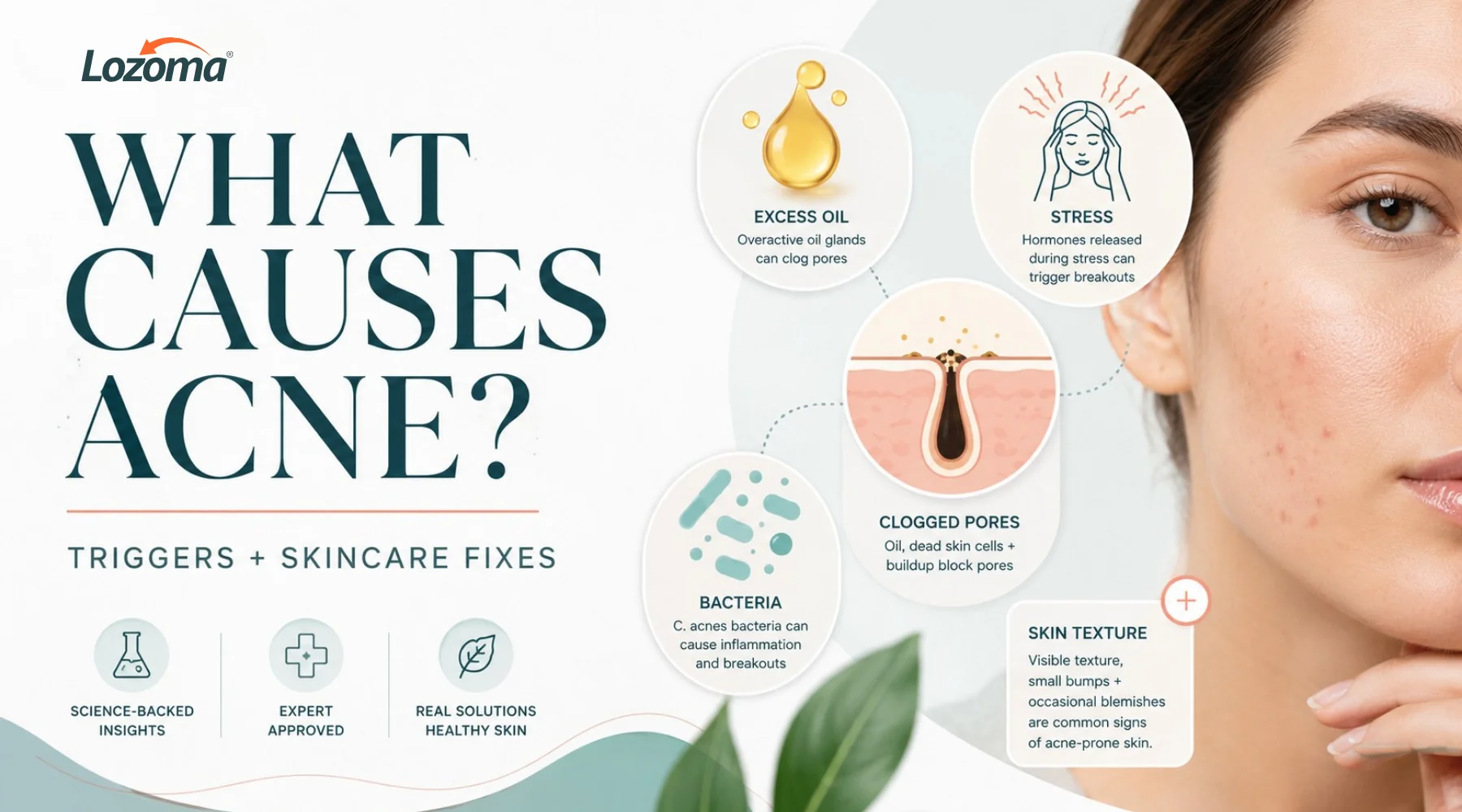
Acne is often blamed on dirty skin, chocolate, or not washing enough. However, the real causes are more complicated and less personal. What causes acne is when oil, dead skin cells, bacteria, inflammation, and hormones interact in the pores.
This is why acne looks different for everyone. One person may have small bumps on their forehead, while another has painful cysts on their jawline before their period. Others may see spots on their back after sweating in tight clothes. All these can be acne, but the triggers vary.
Medically, acne is a long-term inflammatory condition affecting hair follicles and oil glands. It can show up as blackheads, whiteheads, red bumps, pus-filled spots, nodules, or deep cysts. The main causes are excess oil, blocked pores, Cutibacterium acnes bacteria, and inflammation.
The good news is that acne doesn’t mean your skin is dirty. It often indicates that your pores are easily blocked, your oil glands are very active, your skin is inflamed, or your skincare routine isn’t right for your skin’s needs.
What Causes Acne in the First Place?
Acne starts in the pores, where hair follicles and oil glands are located. The oil glands produce sebum, which keeps the skin soft and protected. Issues arise when too much sebum mixes with dead skin cells and clogs the follicle.
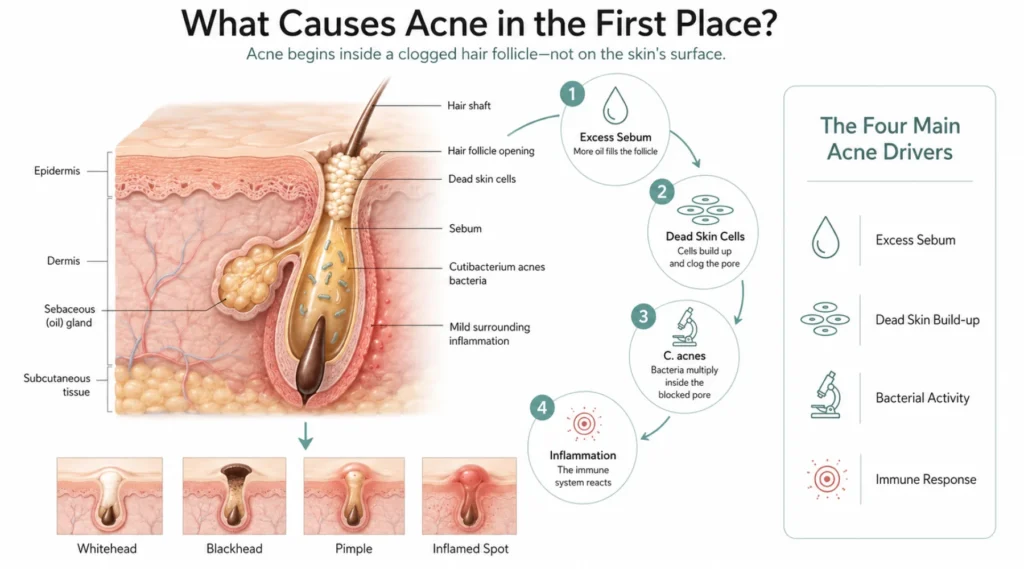
According to the NHS, acne occurs when hair follicles are blocked by oil from sebaceous glands, mixing with dead skin cells, leading to spots. The British Association of Dermatologists adds that oil glands can react strongly to hormones, even if hormone levels are normal, resulting in excess oil and thicker pore linings.
In simple terms, acne usually needs four main factors to develop:
| Acne driver | What happens in the skin | What it may look like |
| Excess sebum | Oil glands produce more oil than the pore can comfortably manage | Shiny skin, enlarged-looking pores, clogged T-zone |
| Sticky dead skin cells | Cells do not shed cleanly and collect inside the follicle | Whiteheads, blackheads, rough bumps |
| Bacterial activity | Cutibacterium acnes thrives in blocked, oily follicles | Red, swollen, tender spots |
| Inflammation | The immune system reacts inside and around the pore | Papules, pustules, nodules, cyst-like breakouts |
A spot is not just “oil”. It is a small biological event. The follicle blocks, pressure builds, bacteria and inflammatory signals increase, and the skin reacts.
Why Some Skin Types Break Out More Easily
Two people can use the same cleanser, eat the same foods, and live similar lives, yet only one may suffer from acne. This is because acne-prone skin acts differently at the follicle level.
In acne-prone skin, dead cells can stick together instead of falling off easily. Sebum might be produced more or get trapped more often, and pores can become inflamed quickly. This is why someone can wash their face twice a day and still get breakouts.
Genetics plays a role, too. If your family has a history of acne, your skin may produce more sebum, react strongly to hormonal changes, or clog pores more easily. This doesn’t mean acne can’t be treated; it means the skin needs consistent, targeted care rather than just occasional treatments.
What Causes Acne for Beginners: The Skin Biology Made Simple
To understand acne, think of a pore as a narrow opening. When it’s clear, oil flows out onto the skin easily. But when dead skin cells build up, oil gets trapped inside.
If the blockage is near the surface and open, it turns into a blackhead. The black colour is from oxidation, not dirt. If the blockage is covered by skin, it becomes a whitehead. If bacteria and inflammation grow around it, it can turn into a red pimple, a pus-filled spot, or a painful lump.
That’s why the best acne treatments do more than just dry out spots. They help keep pores clear, reduce inflammation, support the skin barrier, and stop new blockages from forming.
Hormones Are One of the Biggest Acne Triggers
Hormones affect oil glands. This explains why acne often starts during puberty, worsens before periods, changes during pregnancy, and can show up in adulthood around the chin and jawline.
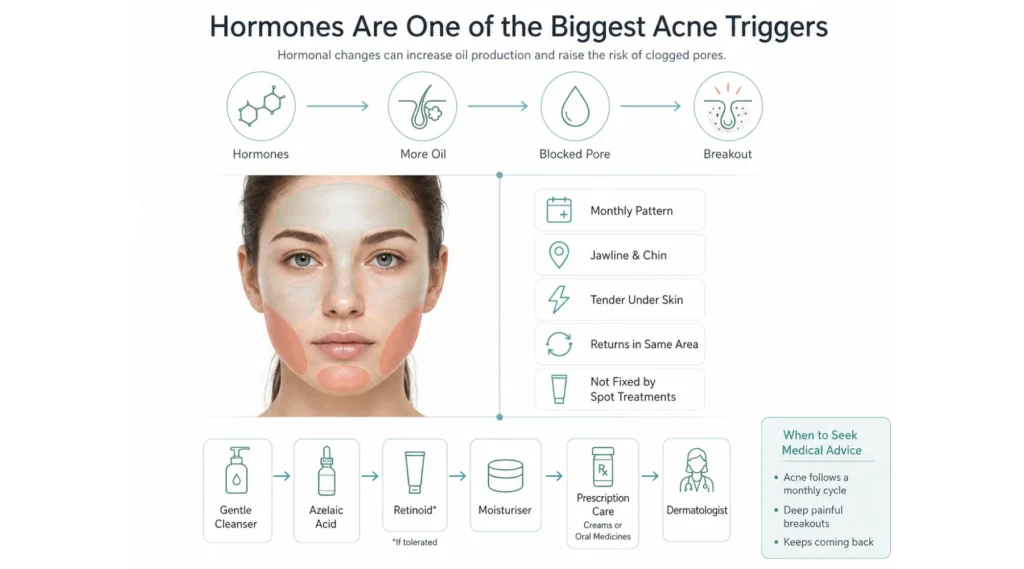
Androgens, including testosterone, can boost oil production. More oil doesn’t always mean you will get acne, but it increases the risk of blocked pores, especially with dead skin cells and inflammation.
Hormonal acne often appears as:
- Tender spots around the jawline, chin, or lower cheeks
- Breakouts that happen at the same time each month
- Sore spots before they become visible
- Acne that keeps coming back in the same areas
- Breakouts that don’t improve with drying spot treatments alone
Not every spot on the chin is due to hormones, and not all hormonal acne is cystic. However, if acne follows a cycle, feels deep, or comes with other hormonal signs, it may need a different approach than just basic skincare.
A good routine can still help. This includes gentle cleansing, azelaic acid, retinoids (if tolerated), and a non-comedogenic moisturiser. However, stubborn hormonal acne may require medical help, such as prescription creams, oral medications, or hormone treatments. The American Academy of Dermatology recommends using topical retinoids, benzoyl peroxide, antibiotics, salicylic acid, and azelaic acid for treatment. Severe or treatment-resistant acne may need oral isotretinoin.
Oil Is Not the Enemy, but Excess Sebum Can Set the Stage
Sebum protects the skin by reducing water loss and keeping the surface soft. It also supports the skin’s natural barrier. Oily skin does not mean it is bad; the problem arises when oil becomes too much or gets trapped.
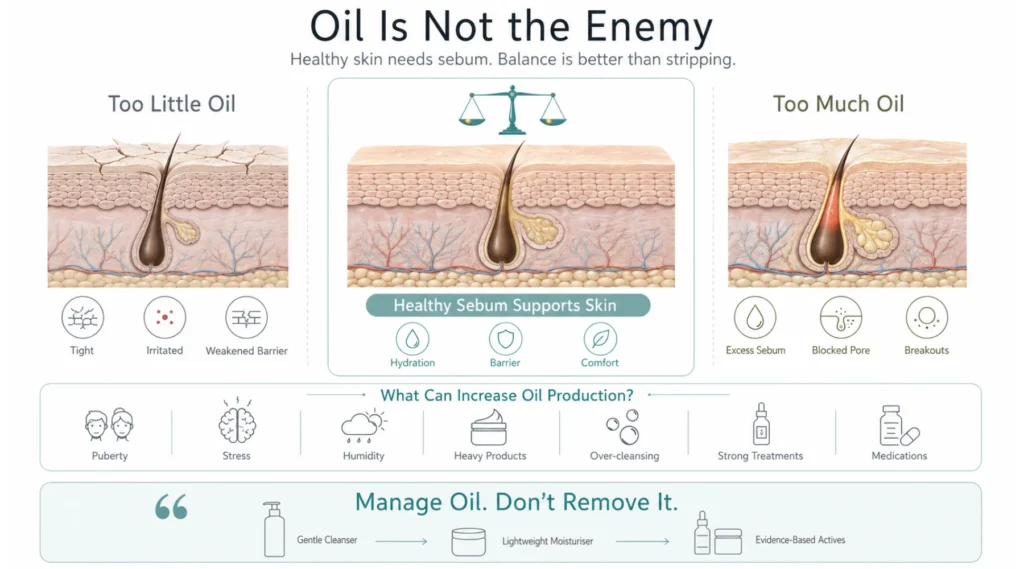
Skin may feel oilier due to:
- Puberty or hormonal changes
- Stress and lack of sleep
- Hot, humid weather
- Heavy products that trap moisture
- Over-cleansing, which can dry out the skin
- Using strong treatments too often
- Certain medications or health conditions
Many people try to eliminate all oil from oily skin, but this often backfires. Stripping the skin can make it feel tight, stingy, and shiny. This combination can cause more irritation, redness, and less tolerance for acne treatments.
A better approach is oil management, not oil punishment. Use a gentle cleanser, a lightweight moisturiser, and one or two evidence-based actives. Skin that feels comfortable usually responds better than skin that is constantly being dried out.
Clogged Pores Are Often the Step Before Visible Spots
A clogged pore can take days or weeks to become noticeable. That’s why preventing acne is more important than just treating individual pimples.
Clogging occurs when sebum, dead skin cells, and sometimes leftover products gather in the follicle. Before redness appears, the skin may feel bumpy. Under bright light, you might see tiny closed bumps on your forehead, chin, or cheeks.
Ingredients that help clear clogged pores work by promoting better shedding or reducing blockages. Salicylic acid exfoliates inside oily pores. Retinoids help normalise skin cell turnover. Azelaic acid reduces inflammation and supports clearer pores. According to DermNet, azelaic acid is good for both types of acne and may help with post-inflammatory dark spots.
Patience is key. A routine for clogged pores needs weeks to show results. If you frequently switch products when new bumps appear, it’s hard to know what works.
Bacteria Play a Role, but Acne Is Not Simply a Skin Infection
Cutibacterium acnes lives on our skin and isn’t harmful by itself. Problems happen when oily pores get blocked, leading to more bacteria and inflammation.
This is important because people often try to clean their skin harshly to fight acne. Strong cleansers and alcohol-based toners may reduce surface oil for a short time, but they don’t address the blocked follicles. Such products can irritate the skin barrier and make treatments harder to use.
Benzoyl peroxide is a common acne treatment that helps reduce bacteria and inflammation. It’s good for red, angry spots, but can also dry out and irritate the skin and bleach fabrics. It’s best to start using it slowly.
Tea tree oil is also popular for acne because of its antibacterial and anti-inflammatory effects, but it should be used with caution. Essential oils can irritate sensitive skin if not used properly. A well-balanced tea tree serum is better than applying pure tea tree oil directly to spots.
Inflammation Turns a Blocked Pore Into an Angry Spot
Inflammation causes acne to be red, swollen, painful, and slow to heal. A blocked pore with little inflammation may look like a blackhead or whitehead. When the immune system reacts strongly, the area becomes more noticeable and uncomfortable.
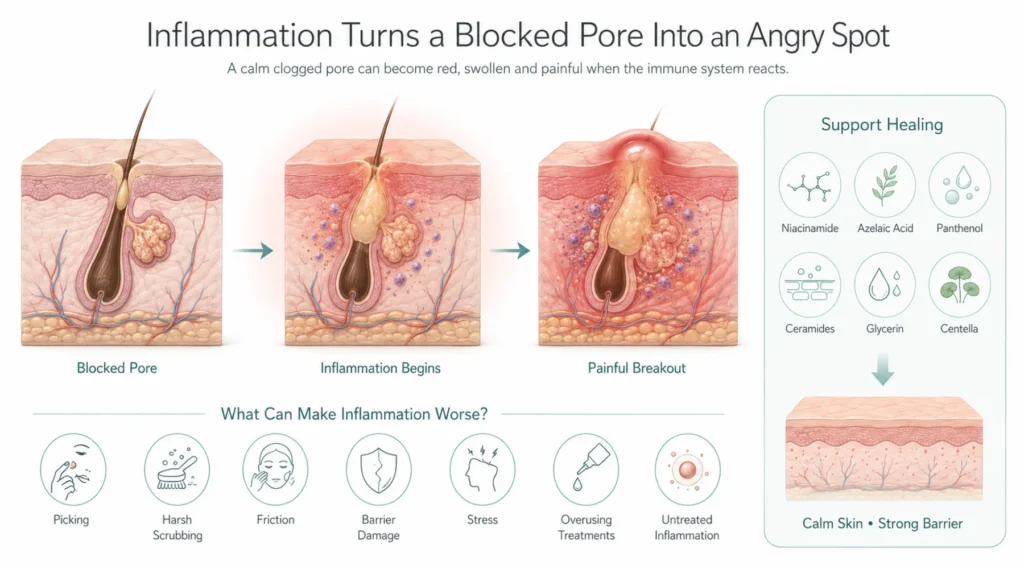
Inflammation can worsen due to:
- Picking or squeezing
- Harsh scrubbing
- Friction from masks, helmets, collars, or tight clothes
- Damage to the skin barrier
- Stress
- Strong products are used too often
- Untreated inflammatory acne
The goal isn’t to completely stop the skin’s immune response but to reduce irritation so the skin can heal better.
This is why calming ingredients are important in acne treatments. Ingredients like niacinamide, azelaic acid, panthenol, glycerin, ceramides, and centella help soothe the skin and support its barrier while the acne-fighting ingredients work.
Does Niacinamide Help With Acne?
Niacinamide can help acne-prone skin, but it shouldn’t be the only treatment.
Niacinamide is a type of vitamin B3. It is helpful in skincare because it supports the skin’s barrier, reduces redness, improves skin tone, controls oiliness, and makes other treatments easier to use. For acne, it mainly creates a calmer skin environment.
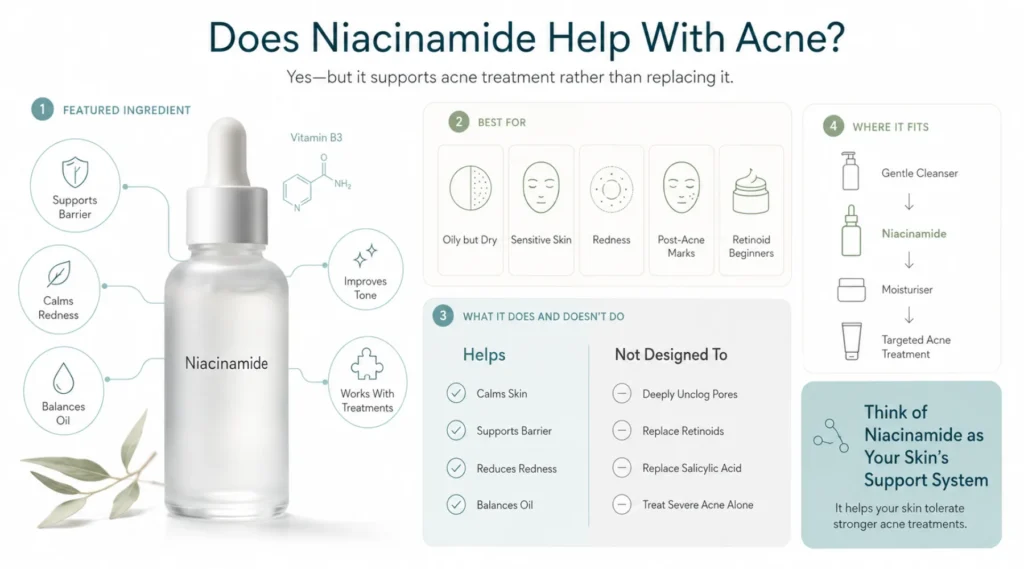
A study in the Journal of Clinical and Aesthetic Dermatology found that using 2.5% benzoyl peroxide with 5% niacinamide worked better for mild to moderate acne than benzoyl peroxide alone. This suggests that niacinamide can be a good addition to acne treatments.
Niacinamide is especially useful if your acne-prone skin is:
- Oily but dry
- Red and sensitive
- Easily irritated by acids or retinoids
- Prone to marks left by acne
- Sensitive to strong spot treatments
Don’t expect niacinamide to clear pores as well as salicylic acid, retinoids, or azelaic acid. It’s more of a stabiliser than a strong pore cleanser.
Does Retinol Help With Acne?
Retinol can help with acne by promoting healthy cell turnover, which prevents dead skin cells from clogging pores. Retinoids are key in treating acne because they address clogged pores early.
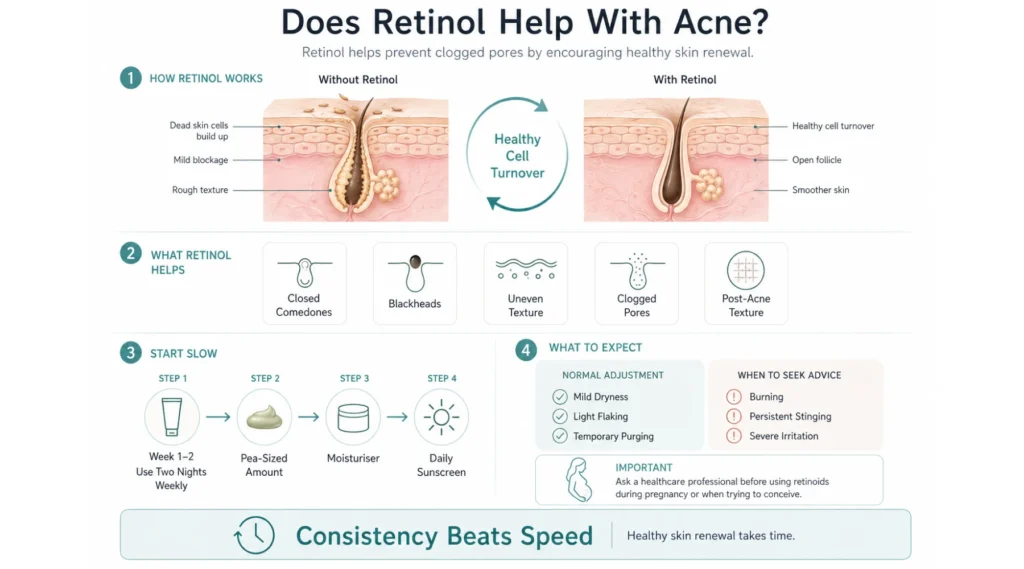
Retinol and prescription retinoids are different. Retinol is found in many skincare products and works more slowly. Prescription retinoids, like tretinoin or adapalene, are stronger and more effective for acne treatment.
Retinoids can help with:
- Closed comedones
- Blackheads
- Uneven skin texture
- Frequent clogged pores
- Improving post-acne texture over time
- Maintaining clear skin after acne clears
However, they can irritate the skin if used too quickly. This may cause dryness, flaking, or a “purge,” where existing blemishes come to the surface. Irritation may also lead to burning, stinging, or sudden sensitivity in certain areas.
A good retinoid routine starts slowly: use it two nights a week with a pea-sized amount, plus moisturiser and daily sunscreen. Retinoids aren’t safe for everyone, especially during pregnancy or if trying to conceive, so it’s important to get medical advice in those cases.
Is Glycolic Acid Good for Acne?
Glycolic acid can help with some acne types, like dullness, rough texture, and clogged pores, but it may not be the best choice for inflamed or sensitive skin.
Glycolic acid is an alpha-hydroxy acid that exfoliates the skin. It can improve texture, brightness, and post-acne marks. Unlike salicylic acid, which gets deep into oily pores, glycolic acid mainly works on the skin’s surface.
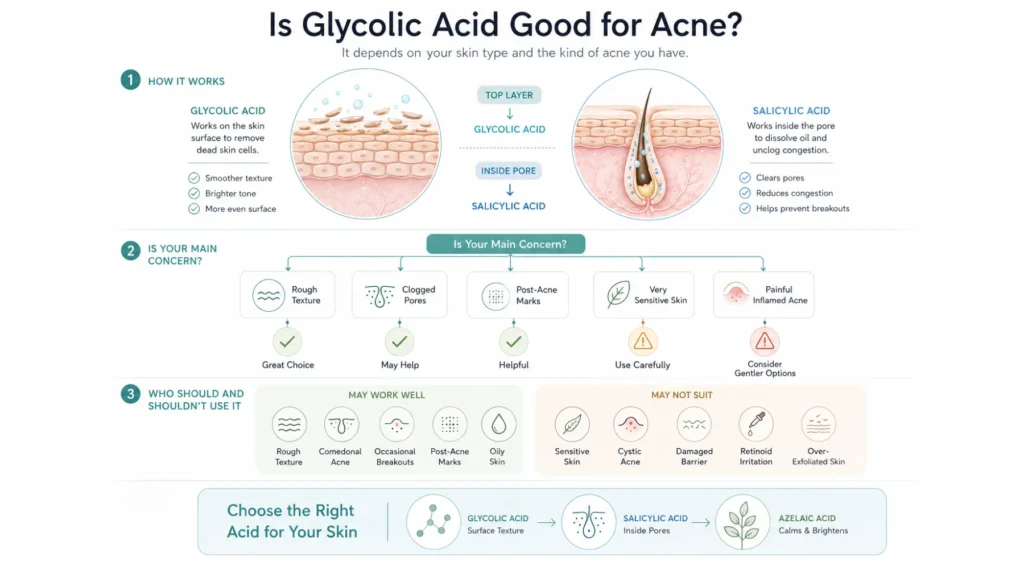
So, does glycolic acid help with acne? Yes, especially if acne is related to uneven shedding and rough texture. DermNet lists it as a treatment for comedonal acne. However, if your skin is red, sore, or is being treated with retinoids, glycolic acid might be too harsh.
Glycolic acid may work well for:
- Rough, bumpy skin
- Mild comedonal acne
- Dull skin with occasional breakouts
- Post-acne marks without inflammation
- Oily skin that handles exfoliation well
It may not be suitable for:
- Very sensitive skin
- Active cystic acne
- Damaged skin barriers
- Skin irritated by retinoids or benzoyl peroxide
- Over-exfoliated skin that feels shiny, tight, and sore
For many people with acne, using azelaic acid or salicylic acid may be a gentler starting option than glycolic acid.
Why Forehead Acne Happens So Often
Forehead acne is common due to many oil glands and influences from hair products, sweat, hats, and certain skincare products.
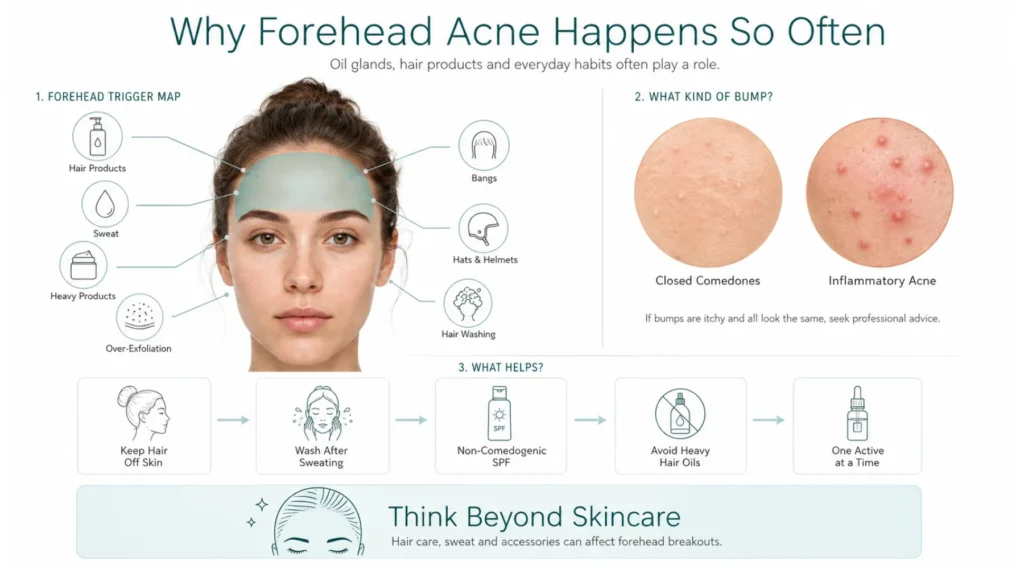
To get rid of forehead acne, first, check the type of bumps. Tiny bumps may be closed comedones, irritation, sweat buildup, or folliculitis, which isn’t the same as acne. Larger red spots are usually inflammatory acne.
Common causes of forehead acne include:
- Hair oils and styling products
- Bangs that trap oil and sweat
- Not washing hair enough
- Heavy sunscreens or moisturisers near the hairline
- Helmets, caps, or headbands
- Sweating and not cleansing it off
- Over-exfoliating the forehead
To care for your forehead, keep hair products away from your skin, wash after sweating, use non-comedogenic sunscreen, avoid heavy oils at the hairline, and introduce one pore-focused product at a time.
If bumps are itchy, uniform, or worsen with oily products, seek professional advice. Yeast-related folliculitis can look like acne and needs a different treatment.
Bacne Has the Same Roots, With Extra Friction and Sweat
Back acne, or bacne, forms like facial acne: blocked follicles, oil, bacteria, and inflammation. However, the back has specific triggers. Its skin is thicker, clothing creates friction, sweat lingers longer, and hair products can run down onto the back.
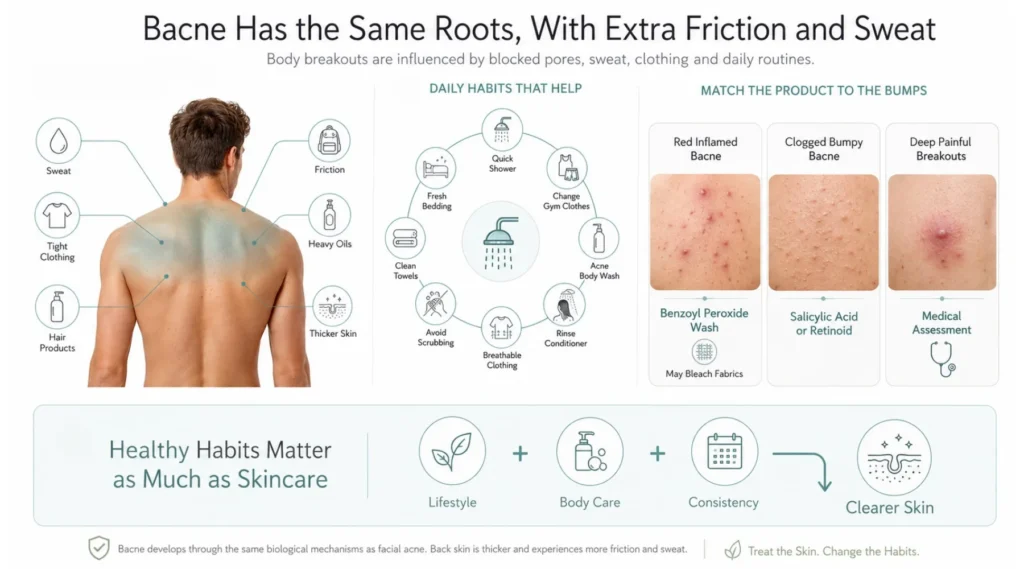
To get rid of bacne, you need both good skincare and healthy habits. A facial routine won’t fix body breakouts if sweat, tight clothes, and pore-clogging products keep causing issues.
Here are helpful steps for treating bacne:
- Shower soon after sweating.
- Change out of gym clothes quickly.
- Use a gentle body wash or acne-focused wash a few times a week.
- Avoid heavy body oils on breakout-prone areas.
- Rinse out conditioner thoroughly before washing your hair.
- Wear breathable fabrics when possible.
- Don’t scrub aggressively with rough tools.
- Use clean towels and change bedding regularly.
For red, inflamed bacne, a benzoyl peroxide wash might help, but it can bleach fabrics. For clogged, bumpy bacne, consider using salicylic acid or a retinoid product. Deep painful nodules or widespread inflammation may require medical treatment.
What Causes Acne for Sensitive Skin?
Sensitive acne-prone skin can be very frustrating. Many treatments can cause stinging, peeling, or redness. This skin type often has a mix of acne and a weak skin barrier.
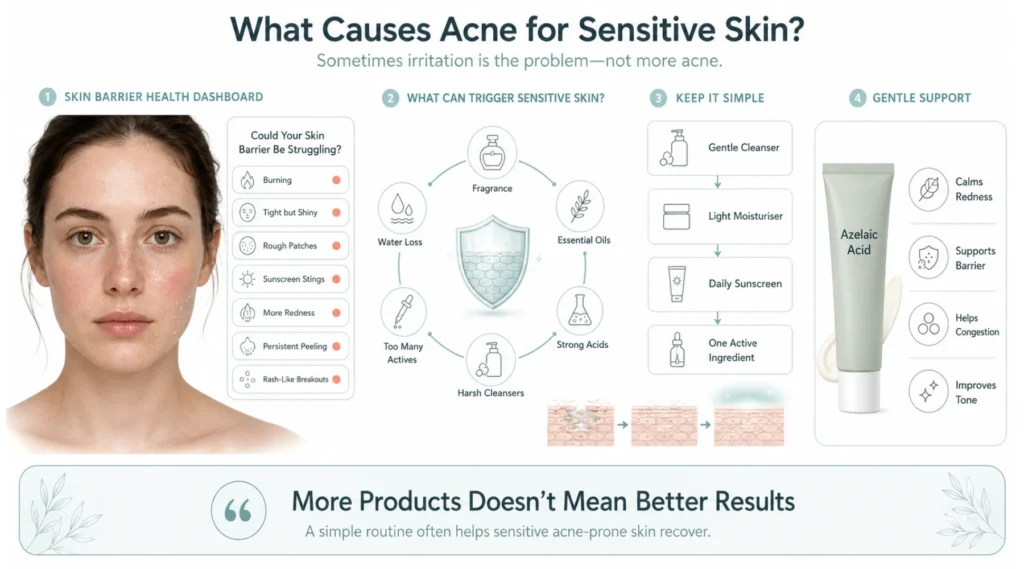
Sensitive skin may break out due to acne, but can also react to fragrances, essential oils, strong acids, harsh cleansers, or too many active ingredients. When the skin barrier is weak, it loses water and reacts more easily. This inflammation can make breakouts look worse and slow down healing.
Signs that your acne routine is too harsh include:
- Burning after applying moisturiser
- Skin that looks shiny but feels tight
- Sudden rough patches in areas that didn’t break out before
- Stinging from sunscreen
- More redness than usual
- Persistent peeling
- Breakouts that look like rashes instead of typical acne
For sensitive acne, I usually suggest using fewer products. A gentle cleanser, light moisturiser, sunscreen, and one active ingredient can work better than a complicated routine.
Azelaic acid is helpful for sensitive, acne-prone skin. A mild formula, like a 12% azelaic acid cream, can reduce congestion and uneven tone without aggressive exfoliation.
Skincare Products Can Trigger Acne When They Do Not Suit the Skin
A product doesn’t need to be “bad” to not suit your skin. Thick creams, heavy oils, fragrant balms, thick sunscreens, and long-lasting makeup might work well for one person but cause problems for another.
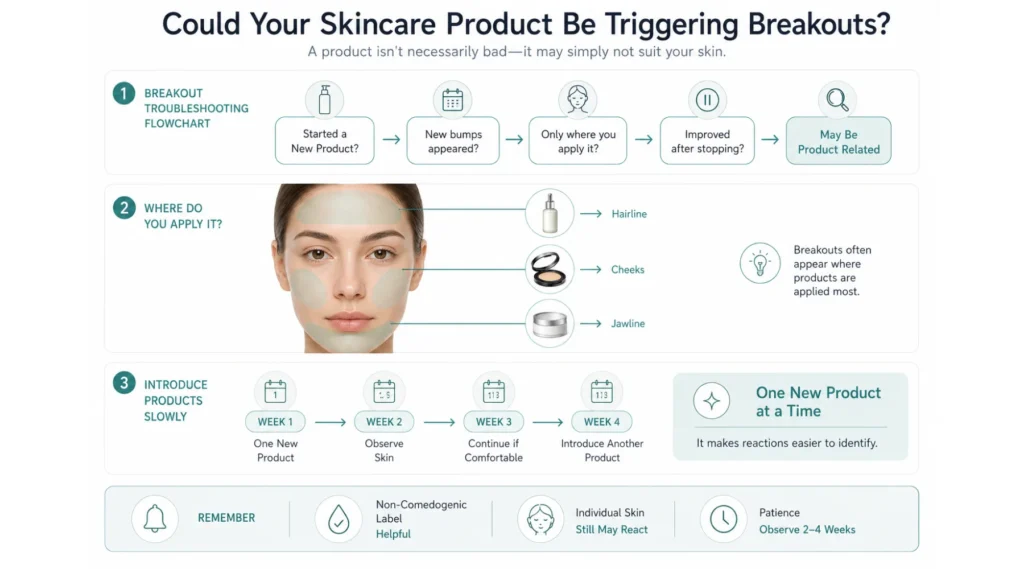
Acne related to products often shows up where you use the product the most. For example, acne at the hairline can come from hair products, while cheek acne might result from makeup, touching your phone, or heavy moisturisers. Breakouts on the jawline may worsen if thick night creams slide down during sleep.
Look for these signs:
- New bumps after starting a product
- Breakouts in the areas where you apply the product
- Closed comedones instead of just inflamed spots
- Skin improves when you stop using the product
- Spots reappear when you use the product again
The term “non-comedogenic” is useful, but it’s not a guarantee. It means the product is made to minimise pore-clogging, but your skin may still react.
When trying new skincare, introduce one product at a time. Wait two to four weeks to see how your skin reacts, unless irritation occurs quickly. If you start a cleanser, serum, moisturiser, and sunscreen all at once, you won’t know which one caused an issue.
Over-Cleansing Can Make Acne Harder to Treat
Cleansing is important, especially if you wear sunscreen or makeup or live in a polluted area. However, cleansing too much is a common mistake in acne care.
Over-cleansing can dehydrate and irritate the skin barrier, making acne treatments sting and increasing redness. This can also leave your skin feeling oily yet delicate.
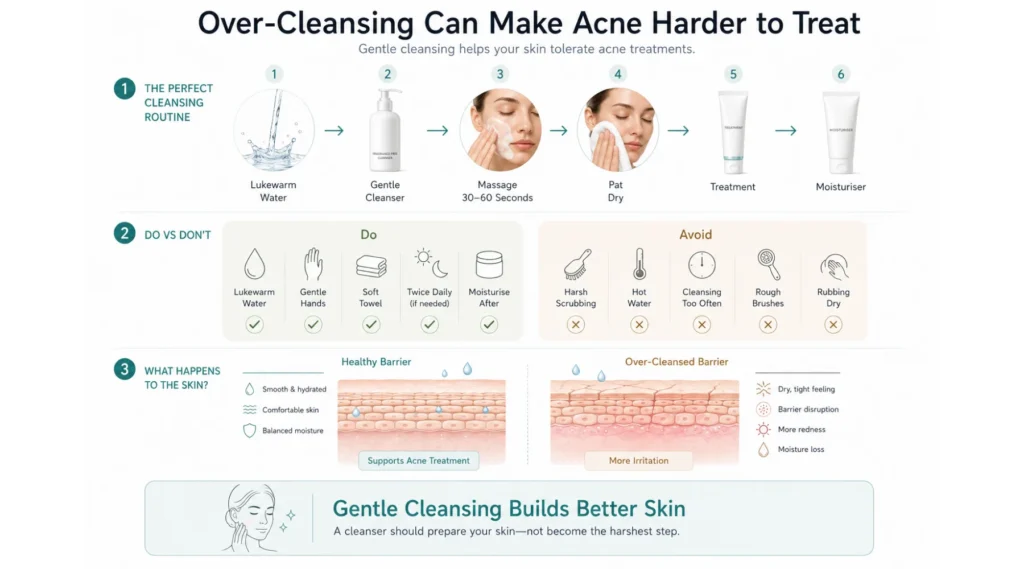
A good acne cleanser should clean the skin without leaving it too dry. People with dry or sensitive skin may skip morning cleansing, while those with oily skin might cleanse gently twice a day. Always remove makeup and water-resistant sunscreen at night, but avoid scrubbing.
Here’s a simple cleansing routine:
- Use lukewarm water
- Massage gently for 30–60 seconds
- Avoid harsh brushes on inflamed acne
- Pat the skin dry instead of rubbing
- Follow with your treatment and moisturiser
- Don’t cleanse multiple times a day unless necessary
Remember, the cleanser supports your routine but shouldn’t be the harshest step.
Picking and Squeezing Make Acne Last Longer
Picking at pimples is tempting, but it can cause more problems. Squeezing can push inflammation deeper, damage the skin, and lead to scars.
The safest pimples to treat at home are whiteheads that are already draining. However, even these can be risky to force. Deep cysts should never be squeezed, as they are inflamed beneath the skin and rarely clear out completely.
Hydrocolloid patches can help by protecting the pimple from your fingers and absorbing fluid. They create a moist environment for healing. Thin patches are good for stopping repeated touching. For larger areas, use bigger patches that fit the shape of the breakout instead of one small sticker.
Patches don’t work for all types of acne; they are best for superficial spots with fluid. They won’t make deep hormonal nodules disappear overnight. Their main benefits are protection, absorption, and reducing the urge to pick.
Diet Can Influence Acne, but It Is Rarely the Only Cause
Diet is a hot topic when it comes to acne. Some people see links between certain foods and breakouts, while others change their diets and notice no change at all.
Research shows that high sugar diets may make acne worse for some, as they can affect blood sugar and oil glands. Dairy may also trigger acne for some people, but this isn’t true for everyone. Greasy foods don’t directly cause oily skin.
The best approach is to observe your skin rather than panic. Keep track of your skin over six to eight weeks. Pay attention to any patterns with high-sugar foods, skim milk, whey protein, stress eating, or lack of sleep. Don’t cut out major food groups unless there is a good reason.
Healthy nutrition for your skin typically includes:
- Regular balanced meals
- Enough protein
- High-fibre carbohydrates
- Omega-3-rich foods
- Lots of colourful fruits and vegetables
- Hydration
- Moderation in sugary foods
Food can influence acne, but it shouldn’t cause shame.
Stress and Sleep Affect the Skin More Than People Realise
Stress doesn’t cause acne, but it can make it worse. Stress hormones affect oil production, inflammation, sleep, and skin-picking. When stressed, people might skip their skincare routine, sleep with makeup on, eat poorly, or touch their faces more.
Not getting enough sleep can make skin look more inflamed and slow to heal. The skin repairs itself while we sleep, so bad sleep can lead to ongoing irritation.
A good anti-acne lifestyle doesn’t have to be perfect; it just needs to ease pressure on the skin. This means washing your face before you get too tyred, keeping acne patches by your bed to avoid picking, changing pillowcases often during breakouts, or showering quickly after exercising.
Makeup Can Fit Into an Acne Routine
Acne-prone skin can use makeup. The key is to choose the right products and remove them properly. Problems often arise when heavy, long-wear makeup stays on the skin too long or is removed roughly. Many people layer on makeup to hide texture and then use harsh cleansers, which can clog pores and cause irritation.
Makeup tips for acne-prone skin:
- Choose non-comedogenic products when possible.
- Avoid heavy oils that can clog pores.
- Clean brushes and sponges regularly.
- Remove makeup completely each night.
- Don’t share makeup tools.
- Avoid putting concealer on open or picked spots.
- Use acne patches on affected areas before applying makeup if touching is an issue.
The goal isn’t to have completely bare skin. It’s about reducing friction, leftover product, and irritation.
Forehead, Cheeks, Chin, and Back: What Location Can Tell You
Acne mapping is often made too simple online. A pimple on your chin doesn’t always mean a specific organ is having problems. However, where you break out can still provide useful hints.
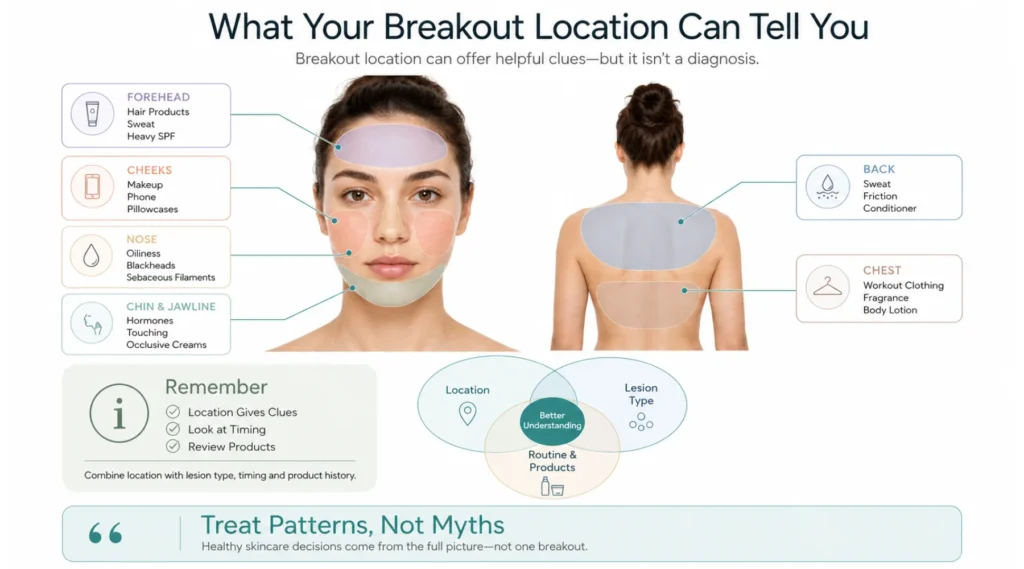
| Breakout area | Possible triggers to consider |
| Forehead | Hair products, sweat, hats, helmets, closed comedones, heavy sunscreen |
| Cheeks | Makeup, phone contact, pillowcases, mask friction, skincare mismatch |
| Chin and jawline | Hormonal patterns, touching, occlusive products, shaving irritation |
| Nose | Oiliness, blackheads, sebaceous filaments, heavy sunscreen |
| Back and shoulders | Sweat, tight clothing, friction, hair conditioner, body oils |
| Chest | Sweat, fragrance, workout clothing, body lotions, folliculitis-like eruptions |
Location is just a hint, not a final answer. The best results often come from combining location clues with the type of lesion, timing, and product history.
The Best Routine for What Causes Acne Is Usually Simple
A good acne routine should focus on the cause without stressing the skin. Many people try to fix oil, pores, bacteria, marks, and texture at the same time with too many strong products, which is a mistake.
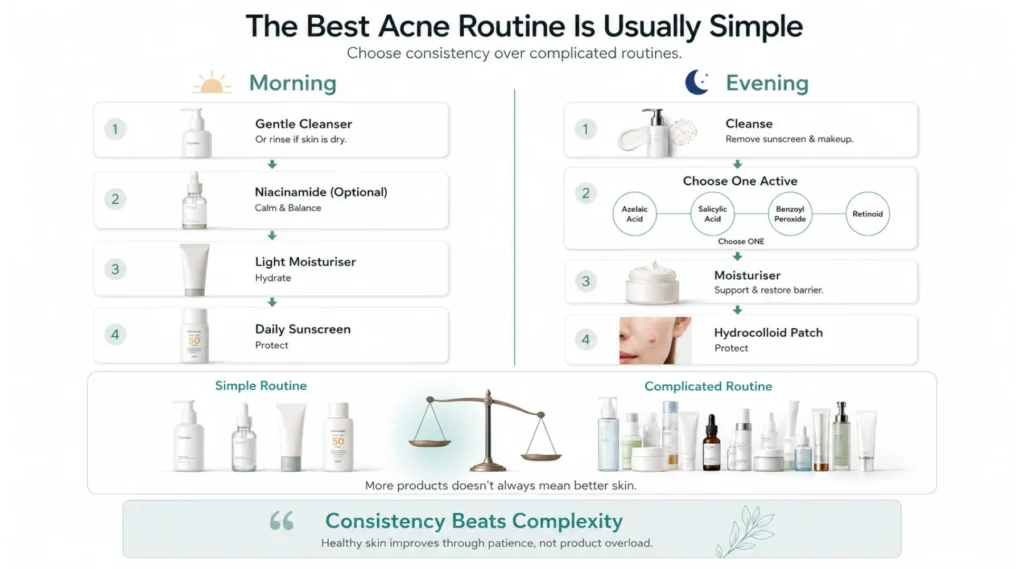
A balanced routine can include:
Morning
- Gently cleanse or rinse your skin if it’s dry or sensitive.
- If needed, apply a calming serum. Niacinamide helps with oiliness, redness, and skin barrier support.
- Use a light moisturiser, as oily skin still needs hydration.
- Always apply sunscreen in the morning. Acne treatments can make your skin more sensitive to the sun, and UV rays can darken acne scars.
Evening
- Cleanse your skin well, especially if you have sunscreen or makeup on.
- Use one acne treatment. Choose from options like azelaic acid, salicylic acid, benzoyl peroxide, or a retinoid based on your type of acne and how your skin reacts.
- Moisturise. This helps you stick to your treatment plan.
- Apply a patch on visible spots to prevent picking and protect them.
The best routine is simple. It’s the one your skin can handle long enough to see results.
Matching Ingredients to Acne Types
Different acne patterns need different ingredient priorities.
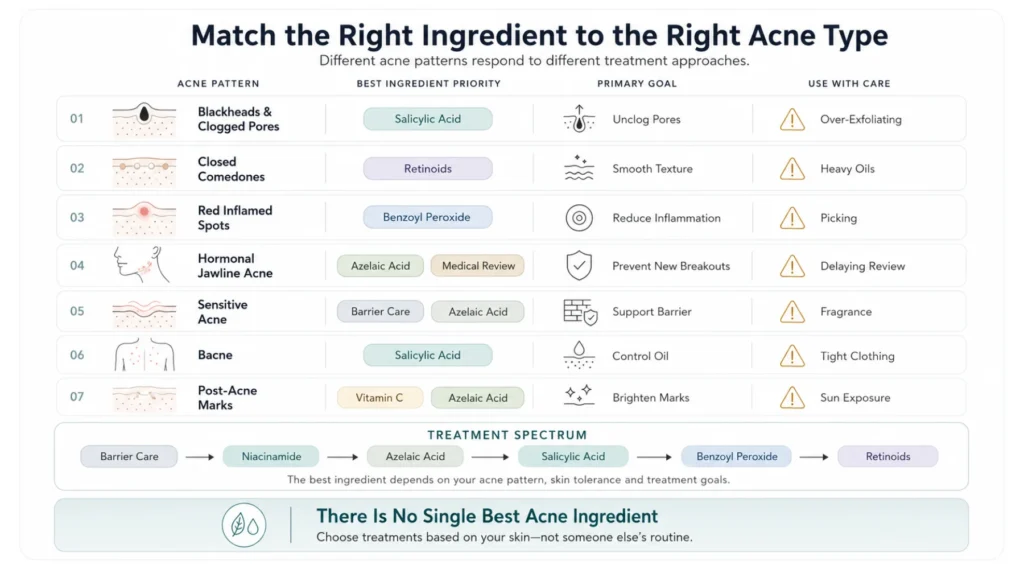
| Acne pattern | Ingredients that may help | What to be careful with |
| Blackheads and clogged pores | Salicylic acid, retinoids, azelaic acid | Over-exfoliating |
| Closed comedones | Retinoids, azelaic acid, gentle exfoliation | Heavy creams and oils |
| Red inflamed spots | Benzoyl peroxide, azelaic acid, soothing barrier care | Picking and harsh scrubs |
| Hormonal jawline acne | Retinoids, azelaic acid, medical options if persistent | Relying only on drying spot treatments |
| Sensitive acne | Azelaic acid, niacinamide, barrier support | High-strength acids and fragrance |
| Bacne | Benzoyl peroxide wash, salicylic acid body care, shower habits | Tight sweaty clothing |
| Post-acne marks | Azelaic acid, retinoids, sunscreen, vitamin C if tolerated | Sun exposure and irritation |
DermNet mentions benzoyl peroxide, azelaic acid, salicylic acid, and retinoids as topical treatments for acne. The choice of treatment depends on how severe the acne is and its type.
Causes and Fixes for What Causes Acne: A Practical Breakdown
Acne usually has multiple causes, so the solution should match the most likely one.
- If your skin is oily by midday, focus on gentle oil control instead of drying it out. Use niacinamide, a light moisturiser, and a mild cleanser.
- If your skin feels bumpy with many closed pores, work on cell turnover. A retinoid or azelaic acid can be more effective than using clay masks repeatedly.
- If your spots are red and inflamed, try to reduce bacteria and inflammation. Benzoyl peroxide, azelaic acid, and avoiding picking can help.
- If you mainly get breakouts monthly on your jawline, hormones might be affecting your skin. Skincare helps, but deep hormonal acne may require a visit to a doctor or dermatologist.
- If your acne got worse after using new products, simplify your routine. Stop the most likely irritants, rebuild your skin barrier, and slowly reintroduce products one by one.
- If you get back acne after exercising, sweat and friction might be the cause. Make sure to shower, wear breathable clothing, and use a body acne wash, as these steps can be just as important as any active ingredient.
Common Acne Myths That Keep Skin Stuck
“Acne means your skin is dirty”
Acne forms in the hair follicle. Cleansing removes surface oil, sweat, sunscreen, and makeup, but dirt alone does not cause acne. Washing too frequently can irritate the skin.
“Toothpaste dries spots safely”
Toothpaste is not meant for skin. It can cause irritation, burns, and make marks worse.
“The stronger the treatment, the better”
Stronger treatments can often cause more irritation. Acne-prone skin responds better to treatments that are both effective and gentle.
“Moisturiser causes acne”
Using the wrong moisturiser can clog your skin, but not using one can make treatments tougher to handle. Lightweight, non-comedogenic moisturisers are often necessary.
“You can get rid of acne overnight”
A pimple can disappear overnight with a patch or spot treatment, but treating acne takes weeks to months of regular care.
“Natural ingredients are always safer”
Natural ingredients can still cause irritation. Tea tree oil, citrus oils, and scented plants require careful mixing.
When Acne Keeps Coming Back in the Same Place
Recurring acne usually means the cause is still there. A spot may heal, but if the pore gets clogged again or the same friction occurs, another spot can appear nearby.
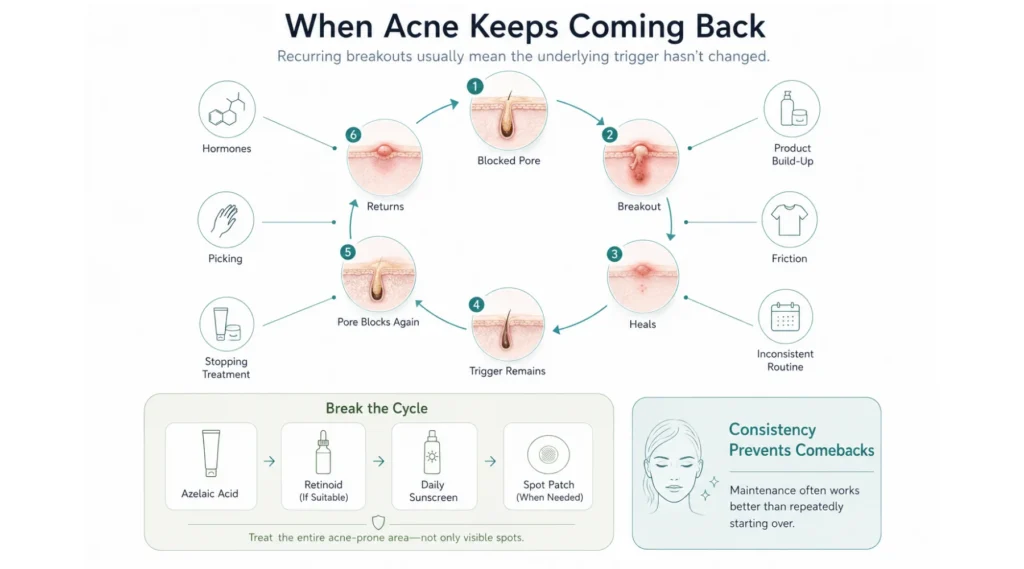
Common reasons acne keeps coming back include:
- Hormonal changes
- Not fully treating clogged pores
- Product buildup
- Picking at the skin
- Friction
- Stopping treatment too soon
- Inconsistent use of active ingredients
- Treating only visible spots, not the entire acne-prone area
This is why ongoing care matters. Many people stop their routine once their acne improves, which allows clogged pores to return. A gentler, long-term routine often works better than intense short treatments.
A simple maintenance plan may include using azelaic acid a few nights a week, a retinoid if it works for you, sunscreen every morning, and patches only when necessary.
When Acne Needs Professional Treatment
Home skincare can help with mild to moderate acne, but it has limits. If your acne is painful, causes scars, is widespread, or deeply affects your confidence, you should seek professional treatment.
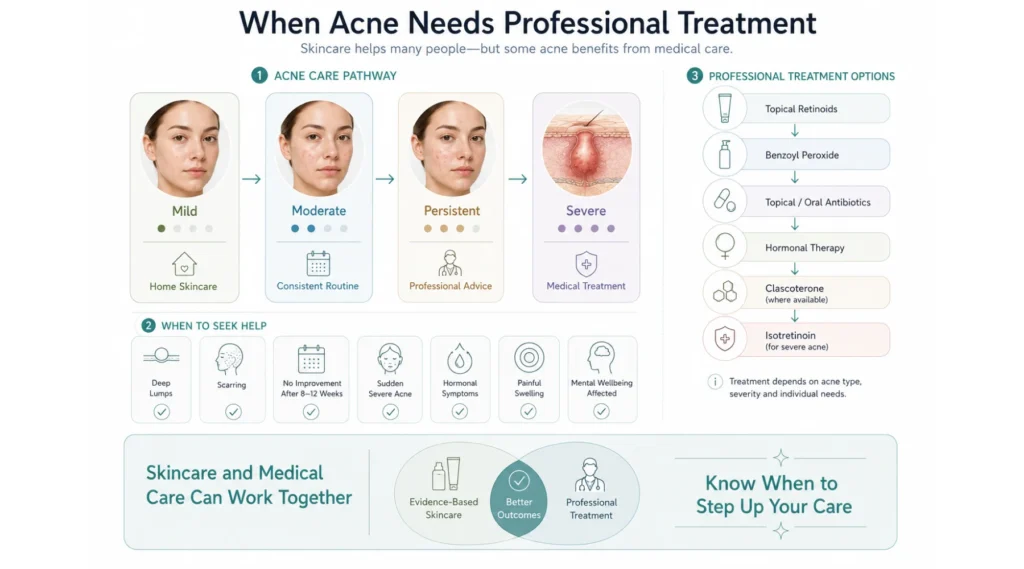
Get medical help if you have:
- Deep lumps or cysts
- Scarring or pitted marks
- Acne that doesn’t improve after 8–12 weeks of treatment
- Severe acne that appears suddenly
- Acne linked to irregular periods, excess facial hair, or other hormonal issues
- Significant redness, swelling, or pain
- Acne that affects your mental health
Prescription treatments may include topical retinoids, benzoyl peroxide, topical or oral antibiotics, hormonal therapies, clascoterone (if available), or isotretinoin for severe cases. Current guidelines strongly recommend isotretinoin for severe acne, scarring, social difficulties, or if standard treatments fail.
Skincare is helpful, but it should not delay necessary care for severe acne.
Acne Questions People Ask When Breakouts Feel Confusing
What causes acne most often?
Acne usually comes from too much oil, clogged pores, Cutibacterium acnes bacteria, and inflammation. Hormones, genes, skincare habits, friction, stress, and certain lifestyle choices can affect these factors.
What causes acne in sensitive skin?
Sensitive skin can get acne just like other skin types due to clogged pores, but irritation can make it worse. Strong acids, harsh cleansers, fragrances, over-cleansing, and too many active ingredients can cause redness and breakouts in sensitive skin.
Does niacinamide help with acne?
Niacinamide helps acne-prone skin by strengthening the barrier, lowering redness, and reducing oiliness. It is more of a supportive ingredient than a full acne treatment. It often works well with other ingredients like benzoyl peroxide, azelaic acid, or retinoids, as long as the skin can handle them.
Does retinol help with acne?
Retinol and stronger retinoids can help acne by promoting cell turnover and unclogging pores. They are particularly effective for comedonal acne, stubborn congestion, and rough skin texture. Start using them gradually, as they may cause dryness, peeling, and irritation.
Is glycolic acid good for acne?
Glycolic acid is helpful for mild acne, rough skin, and dullness from past acne. However, it’s not the best for inflamed or sensitive skin. For clogged pores or inflammation, salicylic acid, azelaic acid, or retinoids are better options.
Does glycolic acid help with acne scars?
Glycolic acid can help reduce post-acne marks and improve skin texture over time, especially when combined with sunscreen. However, it won’t completely fix deep pit scars. Indented scars typically require professional treatments like microneedling, laser therapy, subcision, or chemical peels by trained specialists.
How to get rid of forehead acne?
To treat forehead acne, start by checking your hair products, sweat, hats, and heavy skincare near your hairline. Keep styling products away from your forehead. Clean your skin after sweating, avoid picking at acne, and use treatments like salicylic acid, azelaic acid, or a retinoid if your skin can handle them.
How to get rid of bacne?
To treat bacne, start by reducing sweat and friction. Shower after workouts, change out of tight clothes, rinse conditioner off your back, and avoid heavy body oils. Use benzoyl peroxide washes, salicylic acid products, or retinoid treatments based on whether your bacne is inflamed or clogged.
How do I get rid of bacne if my skin is sensitive?
Use a mild body wash most days and slowly add acne treatments. A benzoyl peroxide wash can help, but it may dry out your skin, so start by using it a few times a week. Avoid harsh scrubs, scented body oils, and tight clothing that traps sweat. If your bacne hurts or leaves scars, see a doctor.
How can I get rid of bacne marks?
Bacne marks fade over time. Use sunscreen when the area is exposed to sunlight. Reduce inflammation with products like azelaic acid, niacinamide, or gentle exfoliating acids. Avoid scrubbing the marks hard. If the marks are indented or raised, you may need professional treatment.
Can acne be caused by moisturiser?
Some moisturisers can clog pores if they are too heavy or have ingredients that don’t suit your skin. However, the moisturiser itself isn’t the problem. Acne-prone skin usually responds better to lightweight, non-comedogenic options rather than going without moisturiser.
Why does acne get worse when I start treating it?
Acne can get worse for a short time if a treatment speeds up skin cell turnover and brings hidden pimples to the surface. This is known as purging. However, if you experience burning, stinging, or unusual bumps, it may signal irritation instead of purging.
What causes acne skincare tips to fail?
Acne skincare often doesn’t work well when you start too many products at once, use active ingredients too often, irritate your skin barrier, or stop treatment too early. Another problem is focusing only on treating visible spots rather than preventing new clogged pores.
Can acne go away permanently?
Some people stop having acne as their hormones become stable, while others continue to have acne as adults. The goal is usually to manage acne over time instead of finding a permanent cure. Regular skincare, avoiding triggers, and using medical treatments when necessary can help reduce breakouts.
What is the best routine for what causes acne?
The best acne routine focuses on the main causes: clogged pores, oil, bacteria, and inflammation. A gentle cleanser, a lightweight moisturiser, daily sunscreen, and one effective active ingredient like azelaic acid, salicylic acid, benzoyl peroxide, or a retinoid work better than having many products.
Understanding What Causes Acne Makes Treatment Less Frustrating
Once you know what causes acne, you can deal with breakouts more calmly. Acne isn’t a sign of poor hygiene or a flaw; it’s a skin issue related to oil, dead skin, bacteria, inflammation, hormones, and daily triggers.
The best skincare works with your skin’s needs, not against it. It helps keep pores clear, reduces inflammation, protects your skin barrier, and stops new breakouts. Different skin types may need different treatments, like salicylic acid, azelaic acid, or retinoids. Some people may benefit from simpler routines and more consistency.
A good acne plan should make your skin feel calmer in a few weeks, not sore or irritated. When the right treatment is used, acne care focuses on helping your skin stay healthy over time instead of just reacting to every new spot.