






Blog
What is Hyperpigmentation? Benefits, Risks, and Tips


Hyperpigmentation can feel more annoying than dramatic. Your skin may be smooth and clear, but the marks stay: a brown patch on the cheekbone, a dark spot after a pimple heals, a shadow around the mouth, or uneven tone that looks worse in daylight.
Hyperpigmentation means some areas look darker because they have more melanin, the pigment that gives skin its colour. It’s usually harmless but can be stubborn, especially when sun, inflammation, hormones, or irritation keep triggering more pigment.
Hyperpigmentation is not dirt or poor hygiene. You can’t wash dark spots away. They fade when you protect your skin, calm inflammation, control pigment production, and support your skin’s natural renewal.
Anyone can get hyperpigmentation. It often lasts longer and feels more noticeable in medium to deep skin tones because pigment cells react more strongly to inflammation and UV light. Post-inflammatory hyperpigmentation is darkening after irritation or injury, such as acne, eczema, burns, or harsh products.
The good news: many dark spots can fade.
The catch: it takes time.
A steady, gentle routine helps; harsh routines often make it worse.
What Is Hyperpigmentation in Skincare Terms?
Hyperpigmentation means there is too much melanin in one area of the skin. Melanocytes make melanin and pass it to nearby skin cells. When this process speeds up or becomes uneven, some spots look darker.
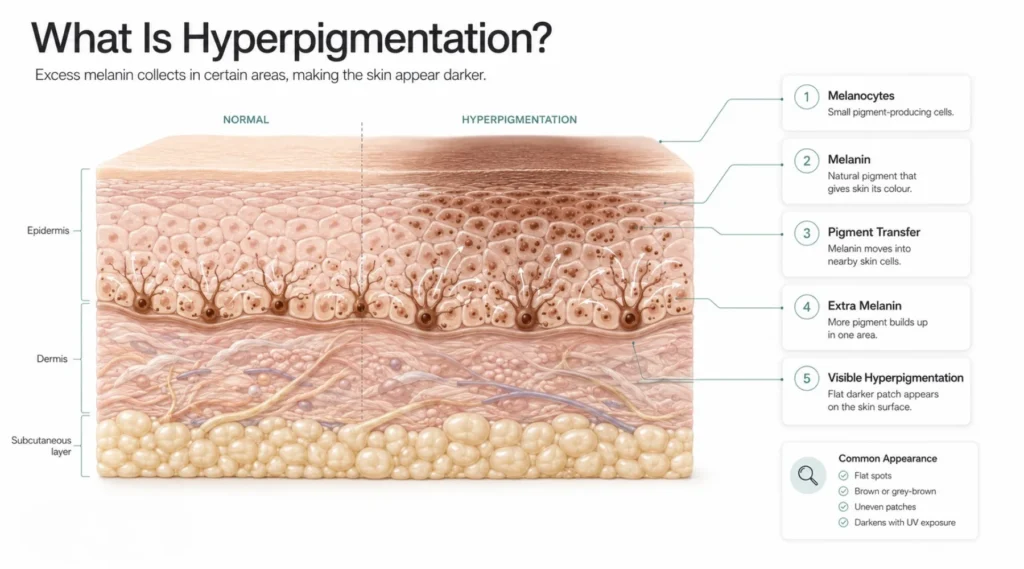
From a skincare view, hyperpigmentation is not one single condition. It is a visible change with different causes. A dark acne mark, a sun spot, melasma on the cheeks, and a shadow after irritation are all extra pigment, but they act differently.
This is why one brightening serum can work well for one person and do little for another. Results depend on how deep the pigment is, what triggered it, your skin tone, your daily sun exposure, and how strong your skin barrier is.
Hyperpigmentation often looks like:
- Flat brown, tan, grey-brown, or dark spots
- Uneven patches rather than raised bumps
- Spots that get darker after sun exposure
- Marks left by acne, picking, shaving rash, or irritation
- Pigment around the mouth, forehead, cheeks, or jawline
- Dark areas that do not feel rough or dirty
See a qualified healthcare professional if a spot changes quickly, bleeds, itches a lot, becomes raised, has an irregular border, or looks very different from your other spots. Do not treat these as ordinary pigmentation.
Why Skin Produces Extra Pigment
Melanin protects the skin. It absorbs and scatters UV rays, reducing damage. Darker skin has more melanin for this reason. The problem isn’t melanin; it’s uneven production, when extra pigment builds up in some spots.
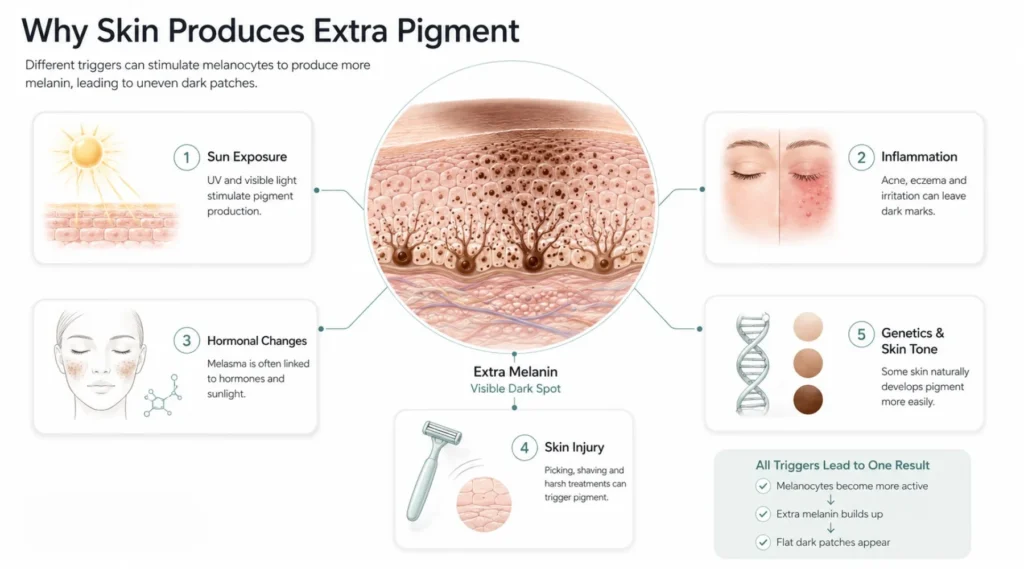
Many things can signal melanocytes to make more pigment.
Sun Exposure
UV light is a major cause of hyperpigmentation. Even on cloudy days, UVA rays reach your skin and fuel dark spots and photoaging. Visible light can also worsen some types, especially melasma and pigmentation in deeper skin tones.
Dark spots often fade in winter and return in spring or summer. Brightening products work poorly without daily sunscreen.
The American Academy of Dermatology says melasma improves most when you combine sun protection with topical treatment, because light keeps triggering pigment.
Inflammation
Inflammation often causes post‑inflammatory hyperpigmentation. Triggers include acne, eczema, insect bites, shaving, waxing, over‑exfoliation, allergic reactions, and picking.
When skin gets inflamed, melanocytes make extra pigment. This is common in skin of colour, where acne can leave dark marks long after pimples heal.
To fade dark spots, control the trigger first. If acne or irritation continues, new marks form faster than old ones fade.
Hormonal Influences
Melasma is a hormone‑linked pigmentation disorder. It shows as symmetrical brown or grey‑brown patches on the cheeks, forehead, upper lip, or jawline. Pregnancy, hormonal birth control, and hormone therapy can play a role, and sun exposure usually makes it worse.
The British Association of Dermatologists reports that melanocytes make too much melanin in melasma, with pregnancy, hormonal medicines, and sun as key factors.
Melasma is not dangerous but often stubborn. It needs steady, long‑term care, not harsh, short bursts.
Skin Injury and Irritation
Injuries and irritation can leave marks. Causes include chemical burns from strong acids, friction from masks or tight clothes, razor bumps, bad peels, at‑home microneedling errors, and picking.
A common cycle is: pigmentation appears, strong active irritants irritate the skin, then more pigmentation follows. The routine becomes part of the problem.
For pigment‑prone skin, gentle, consistent care beats aggressive treatments.
Genetics and Skin Tone
Some people are more prone to hyperpigmentation. Deeper skin tones have more active melanin systems, which protect the skin but can leave more visible marks after inflammation.
Family history matters, especially with melasma. If close relatives have melasma or stubborn dark marks, use a preventive routine even when your skin looks calm.
The Main Types of Hyperpigmentation
Know the type of pigmentation to set realistic treatment goals. One ingredient can help several types, but adjust expectations based on the cause.
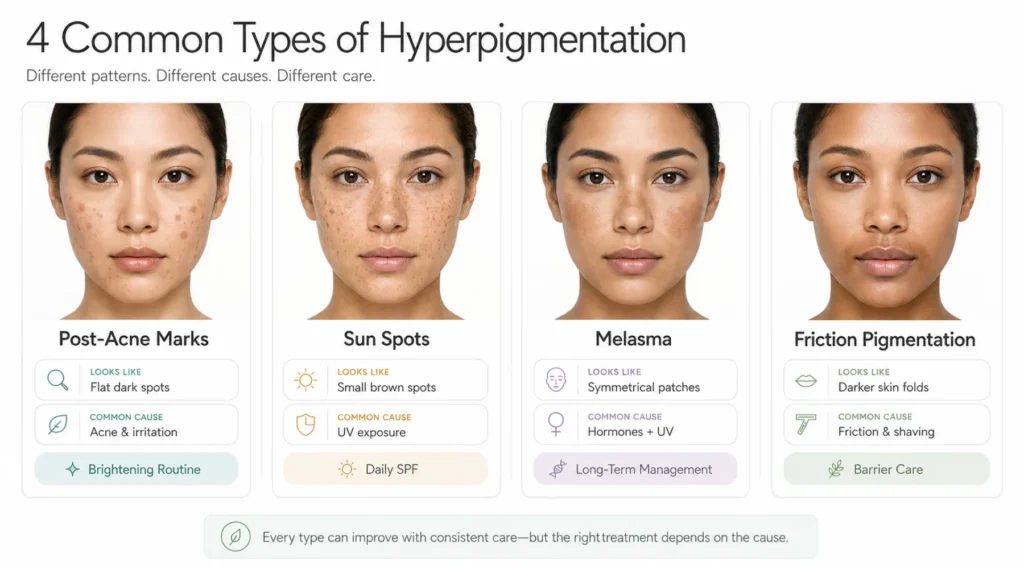
| Type of pigmentation | Common appearance | Common triggers | What usually helps |
| Post-inflammatory hyperpigmentation | Flat brown or dark marks after spots, eczema, bites or irritation | Acne, picking, inflammation, shaving, cosmetic irritation | Sunscreen, azelaic acid, niacinamide, vitamin C, gentle exfoliation |
| Sun spots | Small brown spots on sun-exposed areas | Long-term UV exposure | Daily SPF, antioxidants, retinoids, professional treatments |
| Melasma | Symmetrical brown or grey-brown patches | Hormones, UV, visible light, heat, genetics | Strict sun protection, pigment-regulating ingredients, dermatologist-led treatments |
| Friction-related pigmentation | Darker areas around mouth, neck, underarms or body folds | Rubbing, shaving, tight clothing, irritation | Reducing friction, barrier repair, gentle brightening care |
| Medication or medical-related pigmentation | Diffuse or unusual darkening | Certain medicines or health conditions | Medical review before cosmetic treatment |
Post-Inflammatory Hyperpigmentation
Post-inflammatory hyperpigmentation (PIH) is a common cause of dark marks on the face. It often follows acne, especially inflamed, picked, or slow-healing spots.
The mark is flat. Its colour can be brown, tan, purple-brown, or grey-brown, depending on skin tone and how deep the pigment sits. If the skin texture feels smooth, it is not a true scar, though it can appear with acne scars.
PIH can fade, but it may take months. Pigment in the top layer (epidermis) fades faster than deeper (dermal) pigment. Topicals that may help include azelaic acid, vitamin C, retinoids, niacinamide, kojic acid, and glycolic acid peels.
Sun Spots
Sun spots (solar lentigines) show up on areas with repeated sun exposure, like the face, hands, chest, and shoulders. They usually look more defined than melasma and appear as small brown patches or freckles that rarely fade on their own.
They become more common with age, but they mainly reflect lifetime sun exposure. Someone in their thirties who gets a lot of sun may have more sunspots than an older person who protects their skin.
Melasma
Melasma is a complex type of facial pigmentation. It looks patchy, often appears on both sides of the face, and can improve, relapse, or deepen with sun, heat, or hormonal changes.
Melasma can be epidermal, dermal, or mixed, depending on where the extra pigment sits. Epidermal melasma usually responds better to topicals. Dermal and mixed types are more stubborn.
With melasma, the goal is long-term management, not a permanent cure. Results are possible, but maintenance is key.
Dark Areas Around the Mouth
Many people seek help for dark skin around the mouth, chin, or upper lip. This area is easy to irritate with toothpaste residue, lip licking, waxing, threading, shaving, strong actives, and friction.
The skin here can also be naturally darker, especially in deeper skin tones. Over-treating can make the contrast look worse.
Are There Any Hyperpigmentation Benefits for Skin?
The phrase “hyperpigmentation benefits for skin” sounds odd. Most people want to fade dark spots, not praise them. Hyperpigmentation is not a benefit; it means your pigment is uneven.
Still, biology has a protective side. Melanin shields skin from UV. After sun or inflammation, your skin makes more pigment as a stress response. But this can become uneven, too strong, or last too long.
The balanced view: melanin helps, but unwanted hyperpigmentation shows that the skin was triggered. Skincare should not erase your natural colour. It should reduce uneven pigment, prevent extra darkening, and keep skin calm so it can heal.
This difference matters. “Brightening” should never mean bleaching past your natural tone. Good pigment care respects your base colour while fading uneven patches and marks.
Hyperpigmentation Side Effects: What Can Go Wrong?
Hyperpigmentation is usually harmless, but treatment can cause problems. Side effects often come from over-treating, using the wrong ingredients, skipping sun protection, or using strong products without protecting the skin barrier.
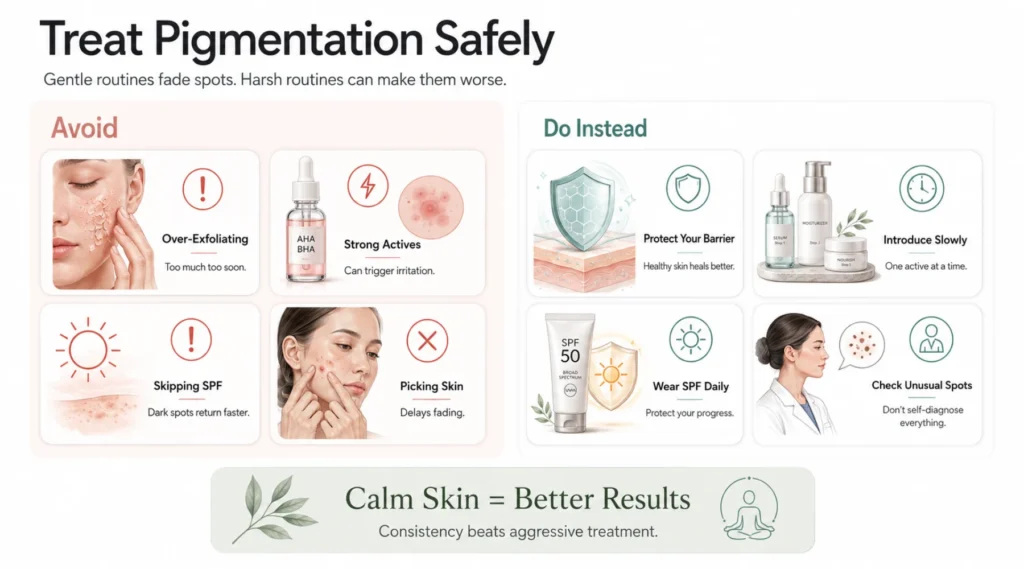
Irritation can cause more pigment.
The biggest risk is irritation. If a product burns, over-peels, or leaves your skin red and sore, the inflammation can make dark spots worse. This risk is higher for deeper skin tones and sensitive skin.
Uneven lighting can happen.
Some brightening products can lighten the skin around a dark spot if you apply them too widely, especially strong prescription treatments. This can make the spot look darker by contrast.
Use products carefully
Apply precisely, follow medical advice for prescription products, and use sunscreen well.
Your skin barrier can weaken.
When your barrier is damaged, your skin loses water faster and reacts more. Vitamin C may sting, azelaic acid may feel harsher, exfoliating acids may become too strong, and even sunscreen may feel uncomfortable.
Build routines on calm skin.
Pigmentation routines work best when your skin feels stable — not tight, burning, or constantly flaking.
Delayed diagnosis can happen.
Not every dark mark is cosmetic. Some need medical care. A changing mole, an uneven patch, a bruise-like mark without a cause, or sudden widespread darkening should not be self-treated.
Watch and check unusual changes.
Notice the pattern, trigger, and behaviour over time. If something looks or acts unusual, get it checked.
Is Hyperpigmentation Good for Sensitive Skin?
Don’t ask if hyperpigmentation is good for sensitive skin. Ask if pigmentation treatments suit sensitive skin. Hyperpigmentation isn’t good, but you can treat it on sensitive skin with a careful routine.
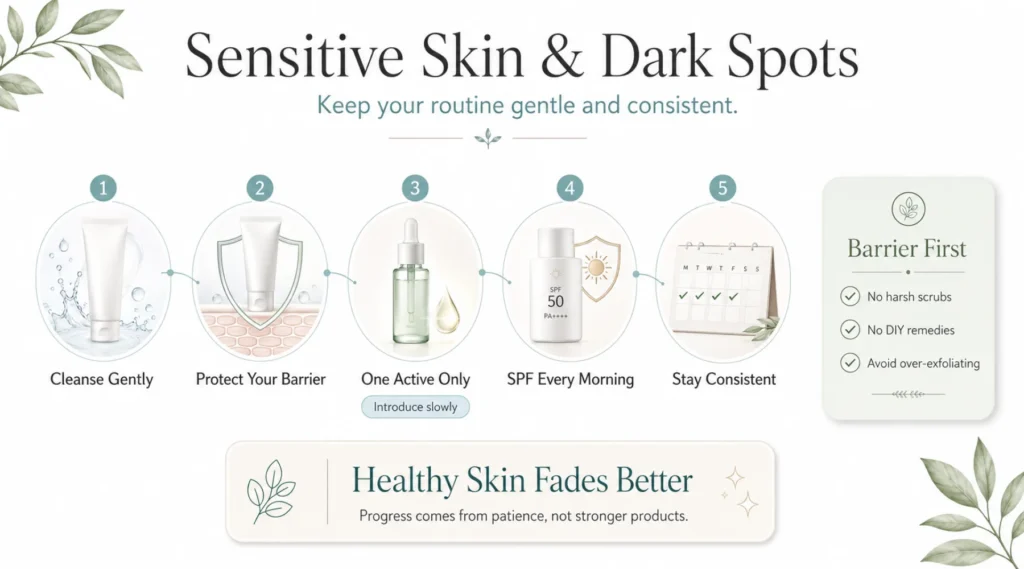
Sensitive skin often reacts to strong actives, fragrance, harsh exfoliation, and frequent routine changes. Because irritation can worsen dark marks, go slow and protect the skin barrier.
Start with:
- Daily broad-spectrum sunscreen
- A gentle cleanser
- A barrier-supporting moisturiser
- One pigment-targeting active at a time
- Introduce new products slowly
- No scrubs or harsh DIY remedies
Azelaic acid, niacinamide, and well-formulated vitamin C can help, but tolerance varies. A 12% azelaic acid cream may help both breakouts and post-acne marks; add it slowly. Azelaic acid can even tone and help acne-prone skin, but dryness or tingling may happen at first.
Sensitive skin doesn’t need a weak routine. It needs a disciplined one.
How to Use Hyperpigmentation in Skincare Without Overdoing It
People often ask how to use hyperpigmentation in skincare. Hyperpigmentation isn’t an ingredient. They usually mean how to build a routine to treat dark spots.
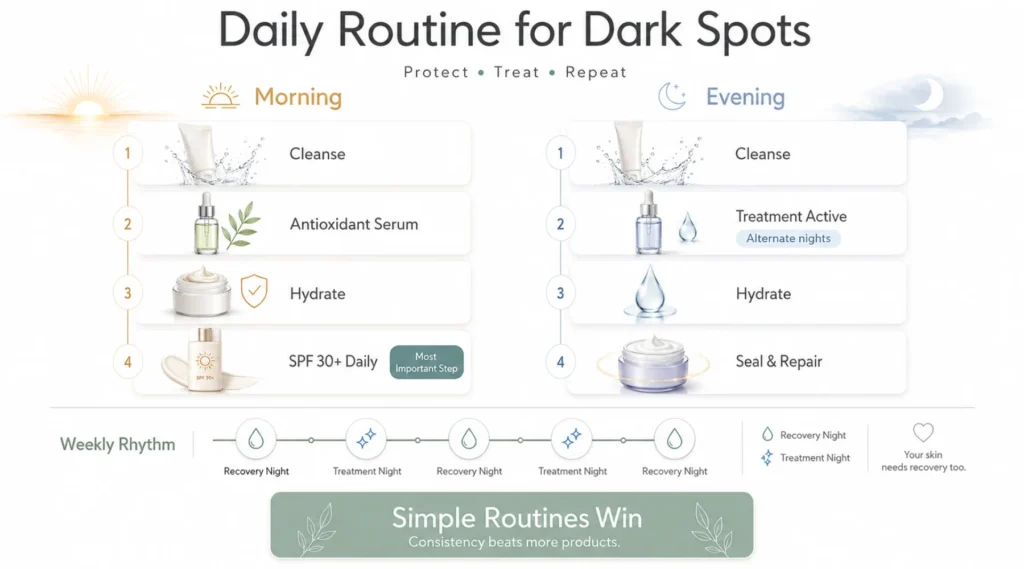
An effective routine does three things: prevents new pigment, calms the triggers, and fades existing marks. Use sunscreen, soothing anti-inflammatory care, pigment-regulating ingredients, and gentle skin renewal.
Morning Routine for Pigmentation-Prone Skin
Morning is for protection. Light can darken pigment, so your morning routine should lower oxidative stress and guard against UV.
A simple morning routine:
- Gentle cleanser or water rinse
- Antioxidant serum
- Hydrating or barrier-supporting layer
- Broad-spectrum sunscreen
Use vitamin C in the morning for antioxidant support and a brighter, more even tone. A 20% Vitamin C Serum suits experienced users who tolerate strong actives. A Vitamin C Face and Body Serum helps when dark spots appear on the neck, chest, arms, or other areas.
The key: use vitamin C consistently, layer sunscreen over it, and avoid pairing it with many irritating steps.
Evening Routine for Pigmentation-Prone Skin
Evening is the best time to repair skin and use targeted treatments. Your skin doesn’t need everything at once.
A simple evening routine:
- Gentle cleanse
- On some nights, use a pigment-fighting active or a gentle exfoliant
- Hydrating essence or serum
- Moisturiser
Niacinamide helps strengthen the skin barrier and even out tone.
A 24k Gold Niacinamide Essence Moisturiser suits skin that needs hydration, comfort, and tone support without heavy layers.
Weekly Rhythm Matters More Than a Crowded Shelf
A pigmentation routine should have rhythm. For example:
| Skin type | Morning | Evening | Extra care |
| Sensitive skin | Gentle cleanse, hydrating serum, sunscreen | Azelaic acid 2–3 nights weekly, moisturiser | Avoid harsh exfoliation |
| Acne-prone skin | Vitamin C or niacinamide, sunscreen | Azelaic acid or retinoid alternate nights | Treat active acne to prevent new marks |
| Dry skin | Cream cleanser, hydrating serum, sunscreen | Niacinamide, moisturiser, occasional gentle active | Prioritise barrier repair |
| Oily skin | Lightweight antioxidant, sunscreen | Azelaic acid or gentle exfoliant | Avoid stripping cleansers |
| Melasma-prone skin | Antioxidant, tinted or broad-spectrum sunscreen | Pigment-regulating active, moisturiser | Be strict with sun and heat exposure |
The best routine is one you can repeat without irritation.
Ingredients That Help Fade Dark Spots
There is no single best ingredient for all pigmentation. The most useful ingredients either reduce pigment production, slow pigment transfer, calm inflammation, increase cell turnover, or protect against environmental triggers.
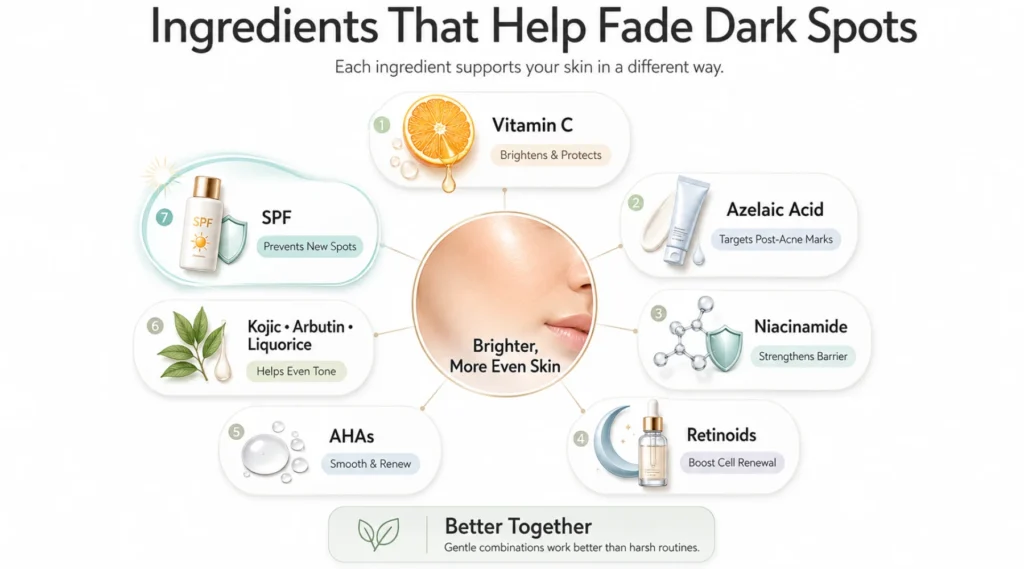
The strongest routines often combine several gentle mechanisms rather than relying on one harsh product.
Vitamin C
Vitamin C is an antioxidant that protects against damage from free radicals and helps make your skin look brighter. It can also slow down melanin production, which is linked to dark spots. It works well for dull skin, uneven tones, and early blemish marks. Results take time, so expect brightness before complete fading.
However, strong or unstable vitamin C products can irritate the skin, so it’s important to know how your skin reacts. If your skin is sensitive, start by using it a few mornings a week instead of every day. Understanding how vitamin C works on dark spots is essential, as results depend on the product’s type, strength, packaging, and regular use of sunscreen.
Azelaic Acid
Azelaic acid is effective for skin prone to pigmentation, acne, and redness. It helps reduce uneven skin tone and is great for dark spots after blemishes. It is generally better tolerated than some stronger brightening agents, but it can still cause dryness or mild irritation when first used.
Azelaic acid is ideal for post-acne marks because it helps with both blemish-prone skin and the discolouration those blemishes leave behind.
Niacinamide
Niacinamide is a form of vitamin B3 that strengthens the skin barrier and helps reduce uneven skin tone. It’s good for sensitive skin. While it may not work as quickly as other brightening ingredients, it is easy to incorporate into your routine. It works well with vitamin C, azelaic acid, retinoids, and moisturisers if the overall formula suits your skin.
For pigmentation-prone skin, niacinamide focuses on building skin resilience over time, helping it become less reactive rather than providing immediate results.
Retinoids
Retinoids help skin cells turn over, which can reduce superficial pigmentation over time. They are also good for acne-prone skin and early signs of ageing. However, they can cause irritation, such as dryness and peeling, if used too quickly. This can lead to more dark spots on pigmentation-prone skin. Use a low-strength, pea-sized amount two to three nights a week, and pair it with a moisturiser. Avoid aggressive exfoliation on those nights.
Exfoliating Acids
Glycolic, lactic, and mandelic acids help remove dead skin cells and improve brightness. Glycolic acid is strong but can irritate. Mandelic acid is gentler and better for blemish-prone or darker skin. Exfoliation can reduce dullness and pigmentation, but should not be overused. More exfoliation doesn’t speed up fading; it can weaken your skin barrier.
Kojic Acid, Alpha Arbutin, and Liquorice Extract
These ingredients are often in brightening products. They work through different ways to regulate pigment and provide antioxidants. Kanoji acid can irritate some skin, while alpha arbutin is generally well-tolerated. Liquorice extract is soothing and brightening. These ingredients work best in balanced serums, not as standalone solutions.
Sunscreen
Sunscreen isn’t a brightening agent, but it is crucial for any pigmentation routine. Without it, dark spots can return. Choose a broad-spectrum SPF 30 or higher. For melasma or darker skin, a tinted sunscreen with iron oxides can shield against visible light and UV rays. No brightening serum can replace daily sun protection.
How to Remove Dark Spots on Face Safely
To safely remove dark spots on your face, treat your skin like it’s healing, not dirty or damaged.
Dark spots fade when you do three things consistently:
- Control the cause.
- Protect your skin from UV and visible light.
- Use gentle pigment-regulating ingredients.
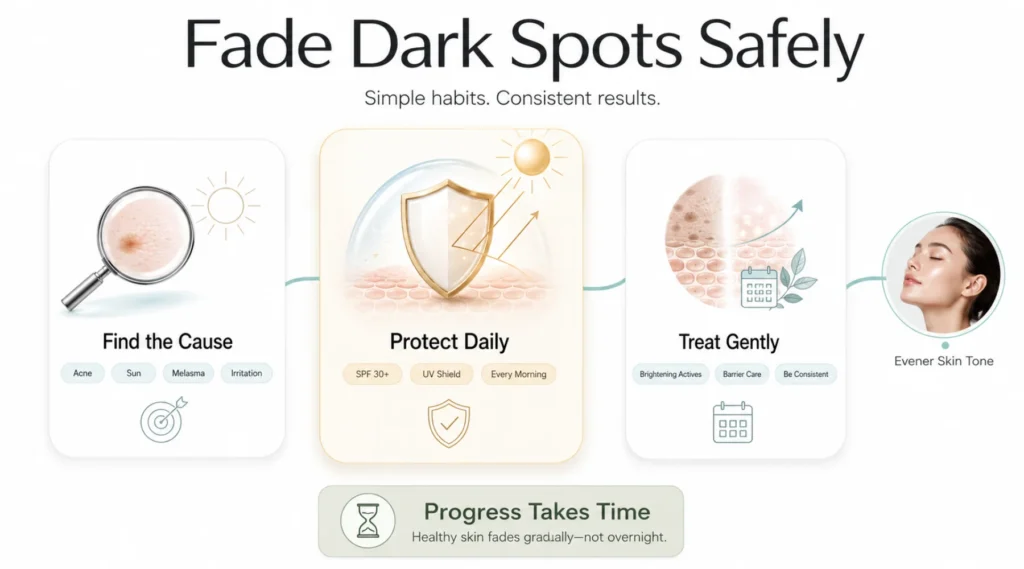
For acne marks, control breakouts. For sun spots, use sun protection and long-term brightening care. For melasma, seek professional help if over-the-counter products don’t work.
A simple routine for dark spots may include:
- Broad-spectrum sunscreen every morning.
- Vitamin C or niacinamide in the morning.
- Azelaic acid or a retinoid in the evening.
- A gentle moisturiser to protect your skin barrier.
- Exfoliate once a week, if you can handle it.
- Avoid picking, scrubbing, or using lemon juice.
The phrase “how to get rid of dark spots” can sound urgent, but pigmentation doesn’t respond well to haste. If a routine claims to show dramatic results in a few days, be cautious. Surface brightness may improve quickly, but true fading can take weeks or even months.
How to Reduce Dark Spots Without Making Skin Reactive
To reduce dark spots, it’s important to lower inflammation. Skin prone to pigmentation needs a calm environment to heal. This means avoiding things that cause irritation.
Do Not Scrub Dark Spots
Scrubbing doesn’t get rid of pigment in live skin. It can cause irritation, especially if you use rough scrubs. If a spot gets darker after scrubbing, your skin is telling you it’s too harsh.
Do Not Use Too Many Brightening Products Together
Using a lot of brightening products, like acidic cleansers, vitamin C serums, exfoliating toners, retinol, azelaic acid, and brightening creams, may seem effective, but can be overwhelming. If your skin feels tight, shiny, stings, or flakes, you’re probably overdoing it.
Do Not Skip Moisturiser
Those with oily skin often skip moisturiser, but dehydrated oily skin can react negatively. A light moisturiser can soothe irritation from other products and keep your skin comfortable. Remember, fading pigmentation takes time.
Do Not Treat All Marks the Same
Different marks, like brown acne spots, red spots, sun spots, and melasma, need different care. Red or purple marks might be post-inflammatory, not excess pigment. Real indented scars require treatments focused on collagen, not just brightening.
How to Clear Dark Spots on Face: A Realistic Timeline
When people ask how to clear dark spots on their face, they often want a straight answer. The honest answer depends on pigment depth and trigger control.
| Pigmentation type | Possible improvement timeline | Notes |
| Fresh post-acne marks | 8–12 weeks for visible improvement | Faster if breakouts stop and SPF is consistent |
| Older post-inflammatory marks | 3–6 months or longer | May need stronger actives or professional care |
| Sun spots | Several months | Often slow without procedures |
| Melasma | Ongoing management | Can improve, relapse and require maintenance |
| Deep dermal pigmentation | Many months to years | Topicals may only partially improve it |
Some marks fade naturally, especially if they are mild and the skin is cared for. Others require treatments like chemical peels, lasers, microneedling, or prescription creams.
For older and deeper marks, it takes more time and careful planning to treat them.
Professional Treatments for Stubborn Pigmentation
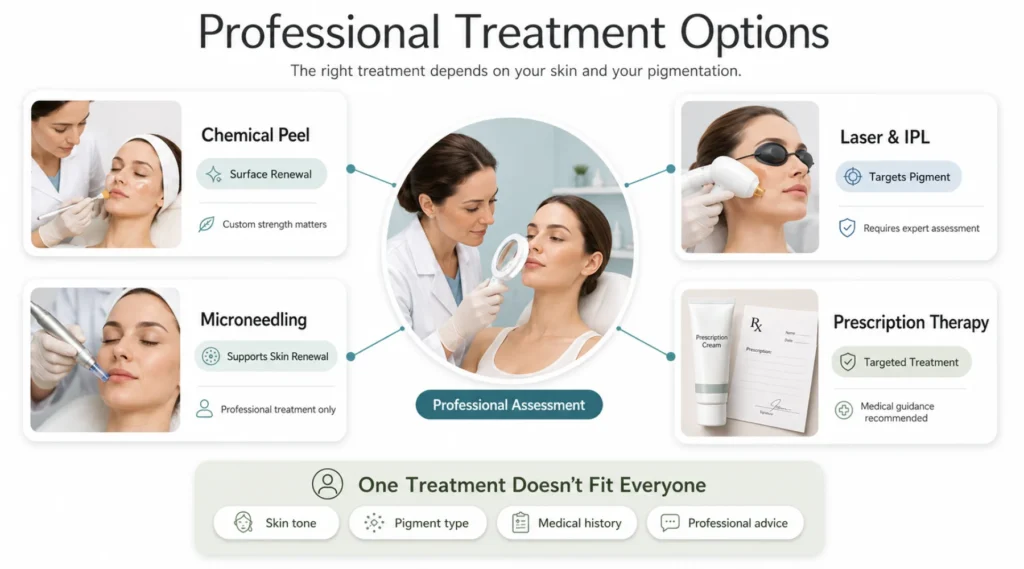
Professional treatments can be useful, but they aren’t always better or safer. The best treatment depends on your skin tone, pigmentation type, medical history, and the skill of the practitioner.
Chemical Peels
Chemical peels can improve skin disation by removing the top layers of skin and promoting new skin growth. Different acids, like glycolic, lactic, mandelic, and salicylic, may be used based on skin type. For deeper skin tones, choosing the right peel and strength is crucial, as a strong peel can lead to dark spots.
Laser and IPL
Laser and IPL treatments use light to target pigment and blood vessel changes. They can help with sun spots and other types of disation, but need careful evaluation. Melasma can be difficult to treat with lasers, as heat and irritation might make it worse. It’s essential that experienced practitioners work with deeper skin tones.
Microneedling
Microneedling can improve certain pigment and texture issues by promoting skin renewal. However, improper technique or at-home use can lead to inflammation and dark marks. Professional microneedling should follow strict hygiene, use the right needle depth, and include careful aftercare.
Prescription Creams
Dermatologists may prescribe treatments like hydroquinone, tretinoin, or azelaic acid based on individual needs. Hydroquinone can be effective but should be used carefully, as improper use can lead to irritation or uneven skin tone. Professional help is crucial when pigmentation is widespread, persistent, or emotionally distressing, especially if over-the-counter products aren’t effective.
Lifestyle Factors That Influence Pigmentation
Skincare matters, but pigmentation is affected by daily behaviour too.

Sun Habits
Using sunscreen daily is crucial, but how you apply it matters. Many people don’t use enough. You need to reapply sunscreen if you’re in the sun for a long time, sweating, or being active outdoors. Hats, sunglasses, and seeking shade also help protect your skin. Don’t rely on sunscreen alone for skin care.
Heat
Heat can make melasma worse, even without sun exposure. Activities like hot yoga, saunas, cooking, and living in warm climates can trigger flare-ups. This doesn’t mean you should avoid these activities; just watch for patterns. If melasma gets darker after being in the heat, cooling methods may help.
Picking and Squeezing
Picking at spots can turn a temporary blemish into a lasting mark. It increases inflammation and pushes pigment deeper into the skin. If you have acne-prone skin, focus on preventing breakouts. A good skincare routine can help reduce both spots and pigmentation.
Hair Removal
Threading, waxing, and shaving can cause pigmentation around the upper lip, chin, or jaw if your skin gets inflamed. Use gentle techniques and soothing aftercare, and avoid strong products right before or after hair removal to lower the risk.
Friction
Rubbing from masks, collars, scarves, tight clothes, or scrubbing too hard can darken certain skin areas over time, especially around the mouth, neck, and body folds. If friction is the cause, using brightening products alone is not enough. Reduce the rubbing to see improvement.
Common Myths About Hyperpigmentation
Pigmentation advice is full of myths, many of which make skin worse.
“Dark Spots Mean Skin Is Dirty”
Dark spots are not dirt; they are pigment. Cleansing removes oil, sunscreen, makeup, and pollution, but it doesn’t get rid of melanin deposits.
If you want to treat dark spots on your face, focus on keeping your skin calm and protected instead of trying to scrub them away.
“Natural Remedies Are Always Safer”
Lemon juice, baking soda, toothpaste, and undiluted essential oils can irritate the skin. They may harm the skin barrier and make you more sensitive to sunlight.
Just because something is natural doesn’t mean it’s safe. It’s more important to look at the evidence and the way a product is made than whether an ingredient sounds natural.
“Higher Strength Always Works Faster”
Strong vitamin C, strong acids, or strong retinoids can help some skin types, but using powerful products can irritate the skin. When the skin gets irritated, it can produce more pigment.
The best routine for reducing pigmentation is not necessarily the strongest one. It’s the routine that your skin can handle comfortably over time.
“Once Dark Spots Fade, You Can Stop Everything”
Pigmentation can come back if the cause returns. Sun spots can get darker again. Melasma can come back. Acne marks can reappear if breakouts continue.
To maintain success, keep using sunscreen, antioxidants, and a gentle skincare routine even after the marks improve.
“All Brightening Products Bleach the Skin”
Good brightening skincare should fix uneven skin tone without changing your natural . Ingredients like niacinamide, vitamin C, and azelaic acid help even out pigmentation and promote healthy skin. The aim is to achieve clear skin, not a lighter complexion.
Building a Hyperpigmentation Skincare Routine
A good hyperpigmentation skincare routine should be simple enough to follow and targeted enough to make progress.
Start with the basics before adding more.
Step 1: Protect Every Morning
Use sunscreen every day. This is essential for preventing pigmentation. Apply enough and reapply as needed.
If you spend time near windows, outside, or in bright light, wear hats and seek shade as part of your routine.
Step 2: Choose One Main Brightening Active
Choose one active based on your skin type:
| Skin concern | Good starting active |
| Acne marks | Azelaic acid or niacinamide |
| Dull uneven tone | Vitamin C |
| Sensitive pigmentation-prone skin | Niacinamide or low-frequency azelaic acid |
| Sun damage and texture | Retinoid or vitamin C |
| Melasma-prone skin | Dermatologist-guided pigment care plus strict sunscreen |
The serums in a skincare routine are the best place for ingredients that target pigment. Serums are made to deliver active ingredients in light layers. However, it’s important that the serum also suits your skin’s sensitivity, not just your concerns.
Step 3: Keep the Barrier Strong
A pigmentation routine needs barrier care. Use a moisturiser to keep your skin comfortable. If basic products sting your skin, stop using strong actives and focus on repairing your barrier first. Healthy skin heals marks better than inflamed skin.
Step 4: Add Exfoliation Only When Needed
Exfoliation can make your skin glow, but it’s not necessary. If you use retinoids or azelaic acid, you might not need to exfoliate much.
If you decide to exfoliate, once a week is usually enough. Pick gentle acids instead of harsh scrubs.
Step 5: Review Progress After 12 Weeks
Judge pigmentation slowly. Take photos in the same light every four weeks. Checking in the mirror daily can make progress hard to see.
If there’s no improvement after three to four months of using sunscreen and the right products, seek professional advice.
Ingredient Pairings That Make Sense
Pigmentation routines often work best when ingredients support each other.

Vitamin C and Sunscreen
Using Vitamin C in the morning with sunscreen is a great combo. Vitamin C adds antioxidant protection, while sunscreen helps prevent pigmentation from UV rays. This duo is effective for improving uneven skin tone.
Niacinamide and Azelaic Acid
Niacinamide strengthens the skin barrier, while azelaic acid targets blemishes and uneven tone. Together, they work well for those dealing with acne scars and sensitive skin.
Retinoids and Moisturiser
Retinoids need a moisturiser to work effectively. Moisturiser reduces dryness and helps the skin handle retinoids, allowing you to see better results.
Exfoliating Acids and Rest Nights
Don’t use exfoliating acids every night. Restful nights help your skin recover. Taking breaks is important for reducing inflammation and improving pigmentation.
Ingredient Pairings to Approach Carefully
Some combinations can work for experienced users, but they are not always beginner-friendly.
Strong Vitamin C and Strong Acids
Strong vitamin C and glycolic acid can irritate sensitive skin. If you use both, try to use them on different days or use acids less often.
Retinoids and Exfoliating Acids
Using retinoids with exfoliating acids can be overwhelming, especially for beginners. It’s safer to use them on alternate nights.
Multiple Brightening Products at Once
Using vitamin C, kojic acid, arbutin, retinoids, and azelaic acid together may seem advanced, but it can irritate the skin. If you’re prone to pigmentation, be careful with combinations.
What to Do When Dark Spots Are From Acne
To tackle acne-related pigmentation, you need to do two things: stop new breakouts and reduce dark marks. If new pimples keep coming, dark spots will keep showing up. Your skincare routine should include ingredients like azelaic acid, niacinamide, or retinoids that fight both acne and pigmentation.
Don’t pick at your skin. Use pimple patches to avoid touching your spots. Cleanse gently; don’t dry out your entire face trying to get rid of blemishes.
Once your acne is under control, it will be easier to fade the pigmentation.
What to Do When Pigmentation Is Around the Mouth
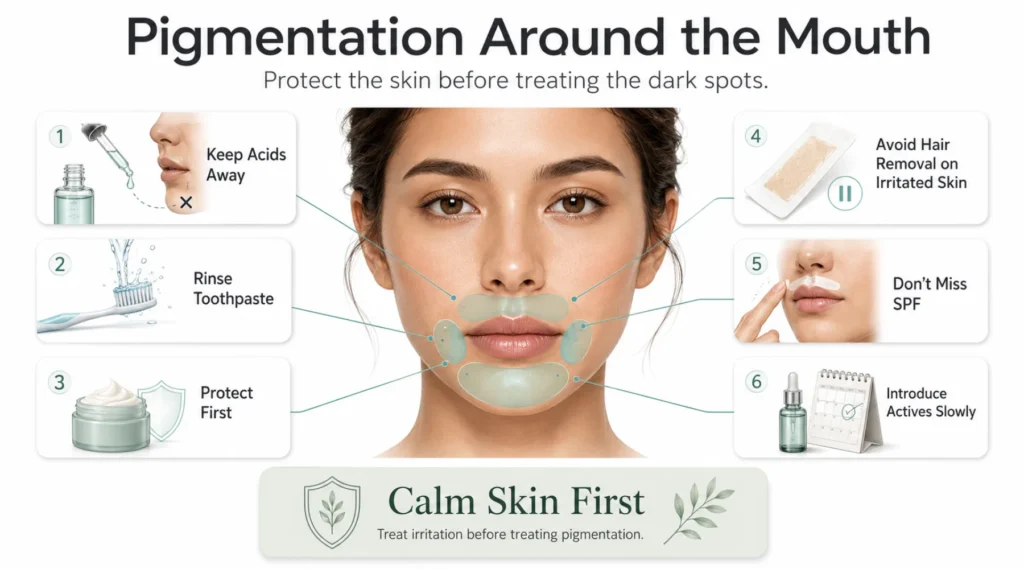
Pigmentation around the mouth can be stubborn because the area moves often, gets exposed to saliva, toothpaste, food, hair removal, and friction.
Try these steps:
- Avoid applying strong acids too close to the corners of the mouth.
- Rinse toothpaste residue properly.
- Use a bland moisturiser around the mouth before strong activities.
- Avoid waxing or threading when the skin is irritated.
- Use sunscreen carefully around the upper lip.
- Introduce pigment activities slowly.
If the area is itchy, scaly, sore, or cracked, treat irritation first. Pigment products on inflamed skin can backfire.
What to Do When Pigmentation Is on the Body
Body spots can occur from ingrown hairs, acne, friction, insect bites, or eczema. They often show up on the back, chest, arms, inner thighs, underarms, and knees.
The body can usually handle stronger products than the face, but irritation can still happen. A Vitamin C Face and Body Serum can help with uneven skin tone, especially when used with moisturiser and sun protection on exposed skin.
To reduce marks from friction or ingrown hairs, first address the cause. Wear breathable clothing, avoid harsh shaving, moisturise regularly, and exfoliate gently.
When Pigmentation Needs a Dermatologist
Skincare can do a lot, but not everything should be handled at home.
Consider professional advice if:
- Pigmentation appears suddenly without a clear cause
- The mark changes shape, colour, size, or texture
- Pigmentation is widespread or rapidly worsening
- Melasma is persistent or emotionally distressing
- Over-the-counter products have not helped after several months
- Pigmentation follows a burn, peel, or cosmetic procedure
- You are pregnant, breastfeeding, or using medication that affects the skin
- The area is itchy, painful, bleeding, or raised
A dermatologist can determine if the pigmentation is from the skin’s outer layer, deeper skin layers, hormones, inflammation, or something else. This diagnosis can save you months of uncertainty.
Why Some Dark Spots Do Not Fade
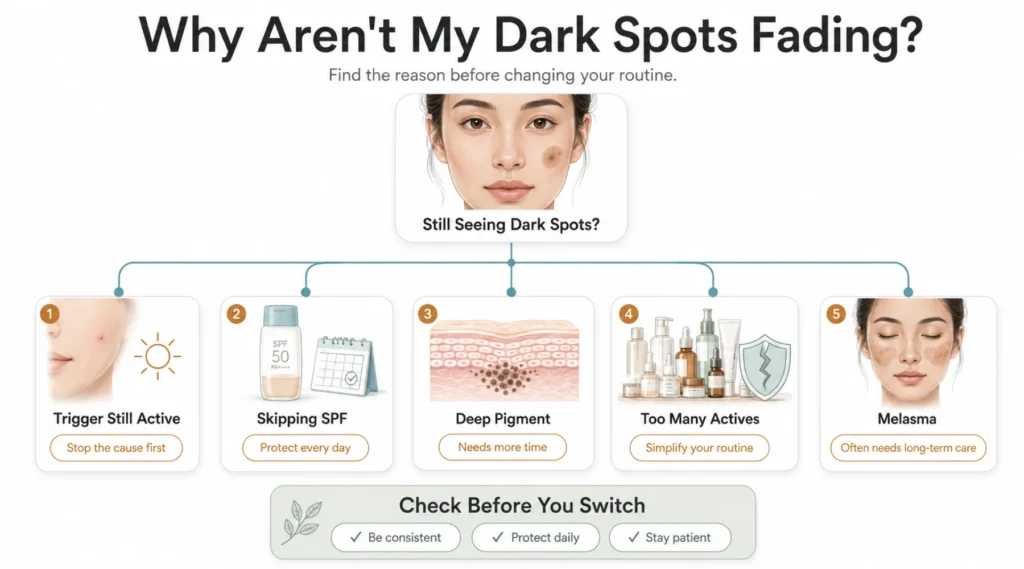
Pigmentation may not fade for several reasons.
The Trigger Is Still Active
If you keep experiencing acne, sun exposure, heat, friction, or irritation, your skin will keep producing pigment. Your routine might be helping old marks, but new ones can still appear.
Sunscreen Is Inconsistent
Using sunscreen only on sunny days isn’t enough to tackle stubborn pigmentation. Daily exposure to light can keep pigment in your skin.
The Pigment Is Deeper
Deeper pigment fades slowly because it sits in layers that don’t renew quickly. While skincare products can help, they may not fully clear it.
The Routine Is Too Irritating
This is very common. A routine meant to reduce pigmentation can irritate the skin more, leading to more pigmentation. People often then use stronger products, creating a cycle.
The Condition Is Melasma
Melasma acts differently from regular post-blemish marks. It often requires long-term management, strict sun protection, and sometimes prescription treatment.
How to Fade Dark Spots Without Losing Your Natural Skin Tone
The safest approach to skin care focuses on evening out skin tone, not lightening it. Instead of asking, “How can I make my skin lighter?” ask, “How can I match dark spots to my natural skin tone?”
This change encourages sun protection, care for the skin barrier, soothing ingredients, and patience. It also avoids the risks of unsafe bleaching products.
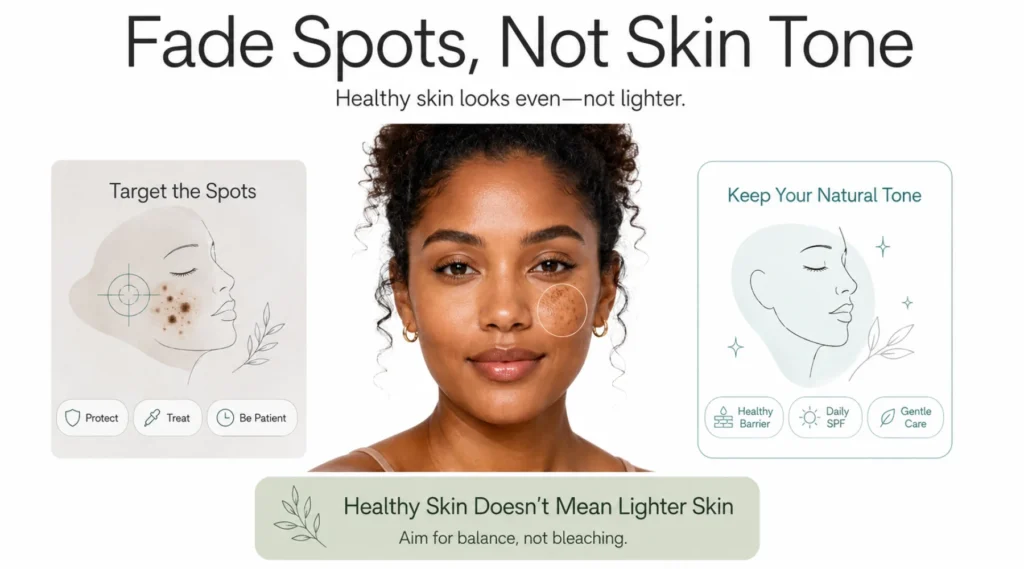
To reduce dark spots, look for ingredients that clarify skin tone without harm. Common choices include Vitamin C, niacinamide, azelaic acid, and gentle exfoliants. For more intense treatments, consult a professional, especially for deeper skin tones or melasma.
By understanding how to fade dark spots safely, you can distinguish between safe methods and harsh brightening techniques. This difference is important.
The Best Skincare Mindset for Hyperpigmentation
Pigmentation improves with consistency, not stress. The skin needs time to move pigment cells up, reduce inflammation, and prevent new pigment from forming.
A solid routine might seem dull at first since it doesn’t cause peeling or drama, but that’s often positive. Calm skin can better handle active ingredients and gain their benefits.
An effective routine generally includes:
- Protection in the morning
- Correction at night
- Gentle care every day
- Patience for a few months
- Adjustments if the skin gets irritated
Good pigmentation care focuses on encouraging the skin to behave evenly, not on attacking it.
Questions People Ask About Hyperpigmentation
What is hyperpigmentation, and is it dangerous?
Hyperpigmentation is when some areas of skin get darker due to too much melanin. It’s usually not harmful, especially after acne, sun exposure, or irritation. However, if a mark changes quickly, becomes raised, bleeds, itches a lot, or looks strange, see a doctor.
How do I get rid of dark spots on my face?
To remove dark spots, use broad-spectrum sunscreen every day, avoid picking at your skin, and slowly add ingredients like vitamin C, azelaic acid, niacinamide, or retinoids to your routine. Most spots fade in weeks to months, but deeper ones may need professional help.
How can I remove dark marks on my face naturally?
The safest natural method is not using lemon juice or harsh mixtures. Focus on reducing inflammation, protecting your skin from the sun, keeping the skin barrier healthy, and allowing your skin to renew. Some plant-based ingredients, like liquorice extract in well-made products, can help brighten, but homemade remedies can irritate.
How long does hyperpigmentation take to fade?
New marks can start to improve in 8 to 12 weeks with consistent care. Older or deeper marks may take months or longer. Melasma often needs ongoing care because it can return with sun exposure, heat, or hormonal changes.
Why do spots leave dark marks after acne?
Acne causes skin inflammation, which can lead to extra melanin production, leaving flat brown or dark marks after healing. Picking or squeezing can worsen this.
Can sunscreen really help clear dark spots?
Yes, sunscreen helps by preventing UV rays from darkening existing spots and creating new ones. While it doesn’t bleach marks, it allows brightening ingredients and natural skin renewal to work better.
Is vitamin C good for hyperpigmentation?
Vitamin C can help with dark spots and uneven skin tone. It acts as an antioxidant and slows down melanin production. It works best when used regularly with sunscreen. People with sensitive skin should start slowly to avoid irritation.
Is azelaic acid good for dark spots?
Azelaic acid is effective for dark spots, especially those caused by acne. It helps even out skin tone and supports blemish-prone skin. Some may feel tingling or dryness initially, so it’s best to use it gradually.
Can niacinamide fade hyperpigmentation?
Niacinamide improves uneven skin tone and strengthens the skin barrier. It may fade dark spots more slowly than stronger treatments, but it is usually gentle and works well for long-term use.
How do I clear dark spots on my face if I have sensitive skin?
For sensitive skin, start with sunscreen, a mild cleanser, and a moisturising barrier cream. Introduce one active ingredient at a time, like niacinamide or azelaic acid, a few times a week before using it more often. Avoid scrubs, strong peels, and multiple brightening products at once.
Why are my dark spots getting worse?
Dark spots can worsen due to sun exposure, heat, acne, picking, friction, irritation from products, or inconsistent sunscreen use. If they darken despite treatment, simplify your skincare routine and identify the cause.
Can exfoliation remove hyperpigmentation?
Exfoliation can brighten superficial pigmentation by encouraging cell turnover. However, it won’t instantly remove deeper pigment. Over-exfoliating can irritate the skin, leading to more pigmentation, so use it gently and infrequently.
Is melasma the same as hyperpigmentation?
Melasma is a type of hyperpigmentation, but not all hyperpigmentation is melasma. Melasma appears as symmetrical brown or grey-brown patches and is often linked to hormonal changes.
Understanding What Is Hyperpigmentation Before Treating It
To treat pigmentation, it’s essential to understand it first. So, what is hyperpigmentation? It’s not dirt or a flaw in your skin . It’s uneven pigment production, often caused by light, inflammation, hormones, friction, or injury.
Once you grasp this, your routine becomes clearer. Protect your skin from light. Calm any inflammation. Avoid picking or scrubbing. Use brightening ingredients gently and consistently. Strengthen your skin’s barrier so it can handle treatment. Be patient; give it time to work.
Hyperpigmentation can be tough, but it’s not hopeless. The skin often improves with patience, not pressure. The best results come from a routine that cares for both the pigment and the underlying skin.