






Blog
What Does Vitamin C Serum Do? Benefits and Routine Tips


Choosing a vitamin C serum can be confusing. Each bottle promises something different, like glowing skin, dark spot correction, or help with collagen and pollution. So, what does vitamin C serum really do for your skin?
A good vitamin C serum can brighten dull skin, improve uneven tone, support collagen production, and protect against environmental damage. It’s not a substitute for sunscreen, a bleaching agent, or a quick fix for pigmentation. It works best when used regularly and matched to your skin’s needs.
Vitamin C is valuable because it does many beneficial things. It acts as an antioxidant, helps reduce certain dark spots, and supports collagen formation. Reviews highlight its roles in protection, anti-aging, and reducing pigmentation. However, the quality of the formula is essential since vitamin C can be unstable and hard to absorb.
This is important: vitamin C is effective only when the formula, concentration, packaging, and routine are right, not just because it claims to brighten.
What Does Vitamin C Serum Do for Skin?
Vitamin C serum makes skin look brighter, smoother, and stronger. It reduces oxidative stress, supports collagen production, and controls excess pigment. It is commonly used for dull skin, early signs of aging, post-blemish marks, uneven skin tone, and loss of radiance.
Think of vitamin C as a protective and corrective ingredient. It doesn’t exfoliate like glycolic acid, resurface like retinoids, or hydrate like hyaluronic acid. Instead, it helps skin cope with the visible effects of sun exposure, pollution, inflammation, and aging.
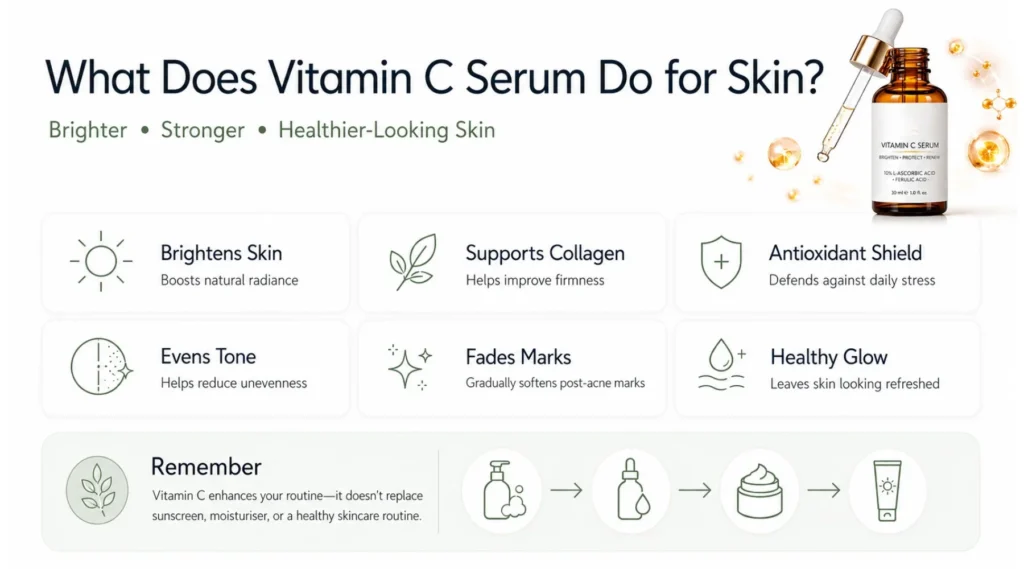
Vitamin C serum can help with:
| Skin concern | What vitamin C may help with | What it cannot do alone |
| Dull skin | Improves radiance and freshness over time | Replace sleep, hydration or exfoliation completely |
| Dark spots | Helps soften the look of some pigmentation | Remove deep pigmentation overnight |
| Uneven tone | Supports a more balanced-looking complexion | Change your natural skin colour |
| Fine lines | Supports collagen-related skin firmness | Work like injectables or prescription retinoids |
| Sun exposure | Adds antioxidant support under sunscreen | Replace SPF |
| Post-acne marks | Helps fade the look of brown marks gradually | Treat active acne by itself |
| Tired-looking skin | Gives skin a brighter, more awake appearance | Fix dehydration or irritation instantly |
Vitamin C improves how your skin works and looks. However, it should be part of a broader routine that includes cleansing, moisturizing, and wearing sunscreen daily.
Why Vitamin C Became Such a Staple in Modern Skincare
Vitamin C is found in the skin, where it helps protect against damage and supports collagen production. Research shows that healthy skin has high levels of vitamin C, which plays an important role in making collagen and defending against UV damage.
However, the skin faces many stressors. UV rays, pollution, smoking, lack of sleep, inflammation, and aging can all make the skin look less fresh, even, and firm. DermNet states that UV exposure can lower vitamin C levels in the skin, but applying vitamin C can help restore these levels and reduce harmful free radicals.
This is why vitamin C is popular in morning skincare routines. It works well with sunscreen, as both protect against environmental damage, but in different ways. Sunscreen blocks UV rays from harming the skin, while vitamin C combats some of the free radicals caused by UV and pollution.
This doesn’t mean vitamin C replaces sunscreen; rather, they complement each other well.
How Vitamin C Works Beneath the Surface
Vitamin C is known for making skin look brighter, but that’s just one part of its benefits. It works in multiple ways to provide value.
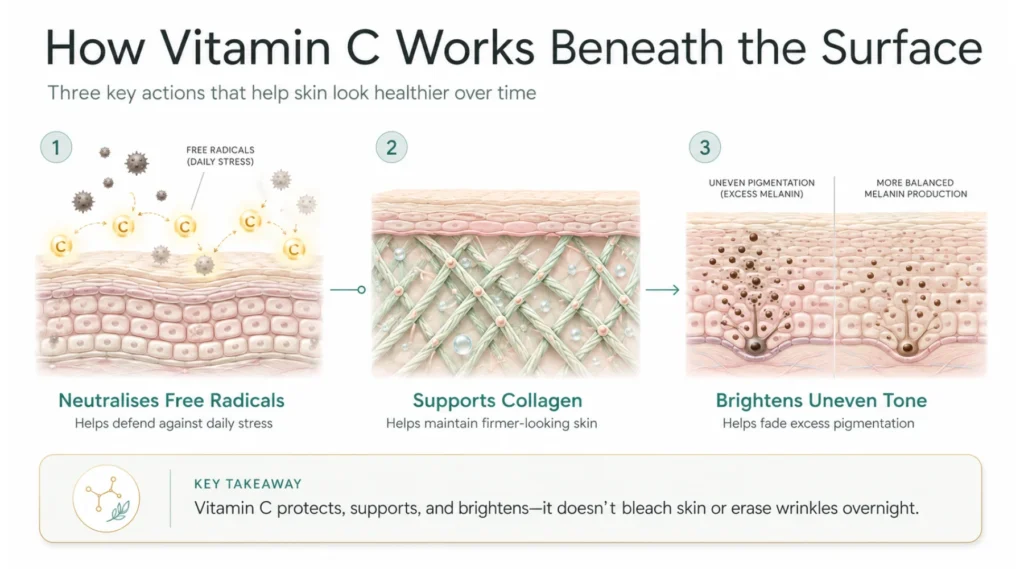
It acts as an antioxidant.
Free radicals are unstable molecules created by UV rays, pollution, and normal body processes. When there are too many free radicals, they can overpower the skin’s natural defenses, leading to oxidative stress. This can cause dull skin, uneven tone, rough texture, and visible aging signs.
Vitamin C helps by giving electrons to neutralise free radicals. According to DermNet, antioxidants are molecules that protect healthy cells by donating electrons to free radicals, reducing their damage.
That’s why vitamin C is commonly used in the morning. It provides an antioxidant layer for the skin before the day begins.
It supports collagen formation.
Collagen is a protein that helps keep skin firm and structured. As we age and are exposed to the sun, collagen decreases, making skin look less firm, smooth, and elastic.
Vitamin C helps produce collagen. It doesn’t work the same way as applying collagen directly to the skin. Collagen in skincare mainly hydrates and improves surface texture, while Vitamin C actually supports collagen processes in the body.
A vitamin C serum won’t make wrinkles disappear completely. Instead, it can help skin look firmer and smoother over time, especially when used with sunscreen and a gentle skincare routine.
It helps brighten uneven tone.
Vitamin C is popular for treating pigmentation because it affects how melanin, the skin’s color pigment, is made. When the skin produces too much melanin, it can lead to dark spots and uneven patches.
The American Academy of Dermatology lists vitamin C as an effective over-the-counter option for fading dark spots but stresses the importance of using sunscreen during treatment for hyperpigmentation.
Many people misunderstand vitamin C. It doesn’t bleach the skin or change your natural color. Instead, it helps lessen the look of excess pigment, making it better described as brightening rather than whitening.
Does Vitamin C Lighten Skin or Brighten Skin?
Vitamin C brightens skin more than it lightens it, which is an important difference.
When people ask if vitamin C lightens skin, they usually mean one of two things: they want to know if it fades dark spots or if it makes their skin pale. Vitamin C doesn’t bleach healthy skin. Instead, it helps reduce excess pigmentation and gives a clearer, more even skin tone.
“Brightening” means the skin looks fresher and more even. “Lightening” can imply changing your natural skin color, which isn’t the goal of good skincare.
Vitamin C can improve the appearance of:
- Brown marks from acne
- Mild sun spots
- Uneven tone from sun exposure
- Dullness from oxidative stress
- Patchy areas on the face or body
It is less effective for deeper pigmentation, stubborn melasma, or long-standing dark patches without additional treatments. Some pigmentation is deeper in the skin and can take longer to fade. The American Academy of Dermatology (AAD) notes that dark spots slightly darker than your natural skin color may fade in 6 to 12 months if the cause is addressed, while deeper discolorations can take years.
This timeline may not be ideal, but it’s realistic.
Vitamin C Serum Benefits for Skin
Vitamin C serum is great for dull skin, uneven skin tone, damage from the environment, and early signs of aging. While it won’t fix every skin issue, it can be very helpful in your daily routine if you choose the right one.
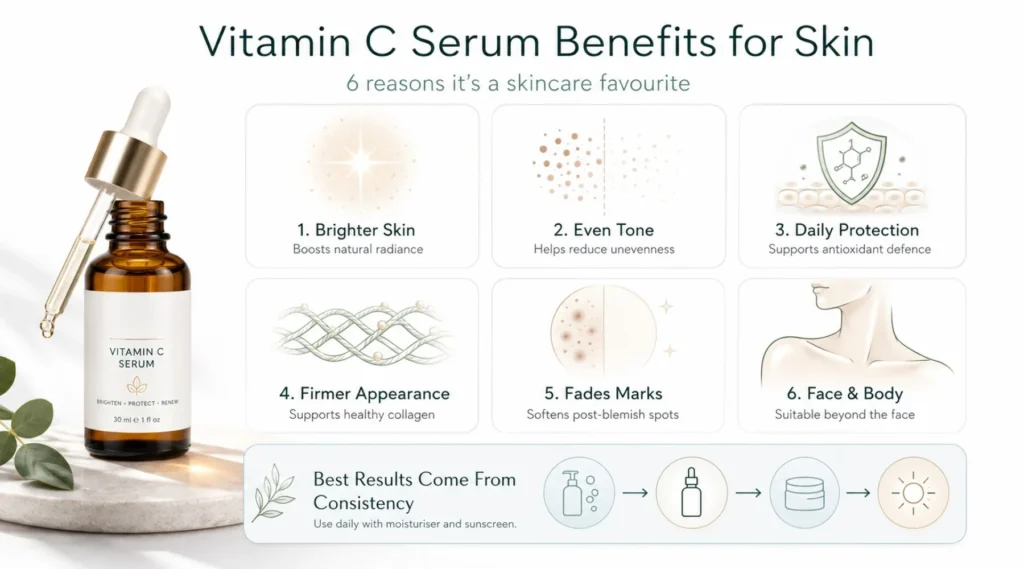
Brighter-looking skin
The biggest early benefit is often a brighter look. Skin may seem fresher even before dark spots go away because antioxidants and hydration help the skin look more alive. That’s why many say vitamin C gives a “glow.” This glow isn’t just one big change; it comes from smoother light reflection, better color, and less dullness.
More even-looking tone
Using vitamin C regularly can help reduce patchiness and dark marks, especially for those with dark spots from acne.
However, the cause of the marks is important. If acne is still active, new marks will keep showing up. Inconsistent sunscreen use can make old marks darker. If a product irritates the skin, it can lead to more pigmentation, especially in deeper skin tones.
Antioxidant support against daily stress
Modern skin faces many challenges before lunch, such as sunlight, pollution, temperature changes, indoor heating, air conditioning, and stress. A vitamin C serum can’t protect against everything, but it helps the skin’s antioxidants.
This is why vitamin C is often included in daytime skincare. It doesn’t just treat the skin; it also prepares it.
Support for firmer-looking skin
Vitamin C helps form collagen, making it helpful for addressing early signs of aging. While it doesn’t show results as quickly as retinoids, laser treatments, or injectables, it can help your skin look firmer and smoother over time.
For many, using vitamin C in the morning and a retinoid at night is a smart long-term combination, as long as the skin can handle both products.
Better-looking post-blemish marks
Vitamin C isn’t mainly for treating acne, but it can help after pimples heal. Brown marks from blemishes need care that focuses on pigmentation. Brightening serums, sunscreen, and gentle skincare are usually better than harsh scrubs or frequent drying treatments.
If the skin is inflamed, picking at it, over-exfoliating, or using too many active ingredients can make the marks worse.
Fresher-looking body skin
Vitamin C isn’t just for the face. It can help even out skin tone on the chest, shoulders, arms, and knees. Using it with moisturiser and sunscreen is important for exposed skin. A Vitamin C serum for both face and body works well for dull or uneven skin.
Body skin can handle products better than facial skin, but it still requires care. Rough, dry, or bumpy spots may need exfoliation and moisturizing, not just Vitamin C.
What Vitamin C Cannot Realistically Do?
The best skincare advice often focuses on limits. Vitamin C is helpful, but unrealistic expectations can cause disappointment and irritation.
Vitamin C cannot:
- Replace sunscreen
- Safely bleach the skin
- Remove pigmentation overnight
- Cure melasma alone
- Treat active acne effectively
- Reverse deep wrinkles
- Replace prescription treatments for tough pigmentation
- Works well if it’s oxidised
- Fix a routine that often irritates the skin
Many people wrongly think they need stronger products, while the real issues are inconsistency, poor sunscreen use, or a damaged skin barrier. A stronger serum isn’t always the best choice.
Different Forms of Vitamin C in Skincare
Not all vitamin C serums contain the same type of vitamin C. This type affects how strong it is, how stable it stays, how likely it is to cause irritation, and how fast you see results.

L-ascorbic acid
L-ascorbic acid is the purest and most studied form of vitamin C. It is known for brightening skin and providing antioxidant benefits. However, it can be unstable and irritating, especially in high concentrations or with low pH levels.
Research shows that L-ascorbic acid works best at a pH below 3.5. A 20% concentration is the highest recommended for effective absorption into the skin.
Not everyone should start with a 20% serum. The right concentration depends on your skin type. A 20% serum is good for strong skin, uneven tone, or dullness. Sensitive skin may require a milder formula.
A 20% Vitamin C serum is ideal for people who are used to active skincare and want more brightness. Beginners or those with reactive skin should start slowly with this type of product.
Vitamin C derivatives
Vitamin C derivatives are modified versions that enhance stability and reduce irritation. Examples include sodium ascorbyl phosphate, magnesium ascorbyl phosphate, ascorbyl glucoside, and tetrahexyldecyl ascorbate.
These derivatives can benefit sensitive skin but may act more slowly or need conversion in the skin. They aren’t always weaker, and L-ascorbic acid isn’t always the best option for everyone. The right choice depends on the product and the individual’s skin.
Ampoule-style vitamin C formulas
Ampoules are made to deliver focused treatments. They work well when your skin needs specific brightening, instead of just a general glow. A 20% Vitamin C Ampoule Serum is ideal for simple routines and when your skin isn’t already irritated by acids, retinoids, or acne treatments.
The same idea applies to ampoule formulas: if you’re using a strong product, keep other treatments gentle.
How to Use Vitamin C Serum in Skincare
To use vitamin C serum effectively in your skincare routine, apply it after cleansing and before moisturiser and sunscreen. Most people use it in the morning, as it helps protect against daytime exposure, but some prefer using it at night.

A simple morning routine looks like this:
- Gentle cleanser
- Vitamin C serum
- Hydrating serum (if needed)
- Moisturiser
- Broad-spectrum sunscreen
This order is important because vitamin C works best on clean skin before applying heavier creams or sunscreen.
For a detailed routine, remember three key points: use a small amount, avoid mixing with strong actives, and always apply sunscreen to protect your skin.
How much vitamin C serum should you apply?
Use two to four drops to cover your entire face, depending on the product’s thickness. More product won’t give you faster results. Using too much can make your skin sticky, cause pilling, or lead to irritation.
Your skin only benefits from what it can handle and absorb. A thin, even layer is sufficient.
How to apply vitamin C serum without irritation
Apply vitamin C to dry skin after cleansing. Using it on damp skin can increase absorption, which may be too strong for sensitive skin.
Gently press or smooth the serum over your face. Avoid rubbing hard. Keep it away from your lash line and the corners of your nose if those areas are sensitive.
If your skin reacts easily, apply moisturiser first around sensitive areas, then use vitamin C where needed. This method can lower irritation while still allowing you to use vitamin C.
How often should you use vitamin C serum?
Start using the product three mornings a week. If your skin feels good, you can switch to using it every day. If you have sensitive skin, you might want to use it every other morning in the long run. You don’t have to use vitamin C every day for it to be effective.
It’s better to use the serum regularly, four times a week, than to use a strong one daily and irritate your skin. Consistency is more important than intensity.
When to Use Vitamin C Serum: Morning or Night?
Most people should use vitamin C serum in the morning because it works well with daytime sunscreen. You can also use it at night if your skin is sensitive, the serum feels sticky under SPF, or you have other products in your morning routine.

When to use vitamin C serum is more about how your skin reacts than strict rules.
Use it in the morning if:
- You want protection from free radicals during the day.
- The serum goes on smoothly under sunscreen.
- You are treating dull skin or uneven tone from sun exposure.
- Your skin handles active ingredients well.
Use it at night if:
- Your serum feels uncomfortable under sunscreen.
- Your skin stings when used in the morning.
- You’re already using other antioxidant products during the day.
- You prefer applying retinoids less often and want vitamin C on alternative nights.
In summary, morning is the traditional time to use vitamin C serum, but nighttime is also fine. The best time is the one that works well for your skin.
Can You Use Niacinamide with Vitamin C?
Yes, you can use niacinamide with vitamin C. The old belief that they cancel each other out is no longer true and comes from concerns that don’t apply to today’s cosmetic products.
In fact, niacinamide and vitamin C can work well together. Vitamin C helps with antioxidants and brightening the skin, while niacinamide supports the skin barrier, evens out tone, manages oil, and reduces redness. When combined, they can help with dull skin, blemish marks, and a weak skin barrier.
Instead of asking if you can use them together, ask if your skin likes the combination. Some people can use both in the same routine, while others prefer using vitamin C in the morning and niacinamide at night. If your skin is sensitive, try one ingredient first before adding the other.
A gentle routine could involve using vitamin C serum in the morning and a niacinamide serum or moisturiser later. A 24K Gold Serum can also fit well into a routine focused on radiance and smoothness, as long as you keep the rest of the routine gentle.
Can You Use Hyaluronic Acid with Vitamin C?
Yes, you can use hyaluronic acid with vitamin C. This is a great combination for your skin.
Hyaluronic acid pulls in water to keep your skin hydrated. Vitamin C brightens the skin and protects it. They have different functions, so they work well together.
This mix is especially helpful if vitamin C makes your skin feel tight. Adding a hydrating serum or moisturiser can make your routine more comfortable and help you stick with vitamin C.
A simple skincare order is:
- Cleanser
- Vitamin C serum
- Hyaluronic acid serum or hydrating essence
- Moisturiser
- Sunscreen in the morning
If your hyaluronic acid serum is very thin and your vitamin C serum is thicker, you can switch the order. Thin products usually go before thicker ones.
Can You Use Vitamin C with Retinol?
You can use vitamin C and retinol together, but it’s best to avoid using them at the same time, especially if you’re just starting out.
It’s common to use vitamin C in the morning and retinol at night. This way, your skin gets the benefits of both without being overloaded.
Here’s a balanced routine you might follow:
| Morning | Night |
| Cleanser | Cleanser |
| Vitamin C serum | Retinol or retinal |
| Moisturiser | Moisturiser |
| Sunscreen | Barrier-supporting cream |
If your skin is dry, sensitive, or new to active ingredients, don’t start vitamin C and retinol together. Start with one, let your skin get used to it, and then slowly add the other.
I usually suggest using one active at a time. Your skin can improve without having all the strong ingredients at once.
Can You Use Vitamin C with Exfoliating Acids?
You can use both, but it’s not always a good idea. Vitamin C and exfoliating acids like glycolic, lactic, and salicylic acid can brighten and smooth skin, but using them together might cause stinging, dryness, and skin barrier issues. This is especially true for low-pH L-ascorbic acid.
If you want to use both, do it separately:
- Use Vitamin C in the morning.
- Use exfoliating acid at night, once to three times a week.
- Apply moisturiser every day.
- Apply sunscreen every morning.
Don’t use acids every day just because of pigmentation. Inflammation can make pigmentation worse, especially in medium and darker skin tones. Gentle care is usually better than aggressive exfoliation.
Can You Use Vitamin C with Benzoyl Peroxide?
It’s best to keep vitamin C and benzoyl peroxide separate. Benzoyl peroxide treats acne but can irritate the skin, while vitamin C is an antioxidant. Using them together can cause irritation and complicate your routine.
Here’s a simple plan:
- Apply benzoyl peroxide at night or as directed.
- Use vitamin C in the morning on non-irritated skin.
- Add moisturiser to protect your skin.
- Wear sunscreen every day.
If acne is your main issue, focus on treating that first. Fixing skin color works better once the inflammation goes down.
Is Vitamin C Serum Good for Sensitive Skin?
Vitamin C serum can help sensitive skin, but you need to pick the right type, strength, and use it correctly. Sensitive skin can react badly to strong L-ascorbic acid, especially if it’s very strong or too acidic.
If your skin reacts easily, try using a lower strength vitamin C serum. Start with it two or three times a week and keep other products gentle.
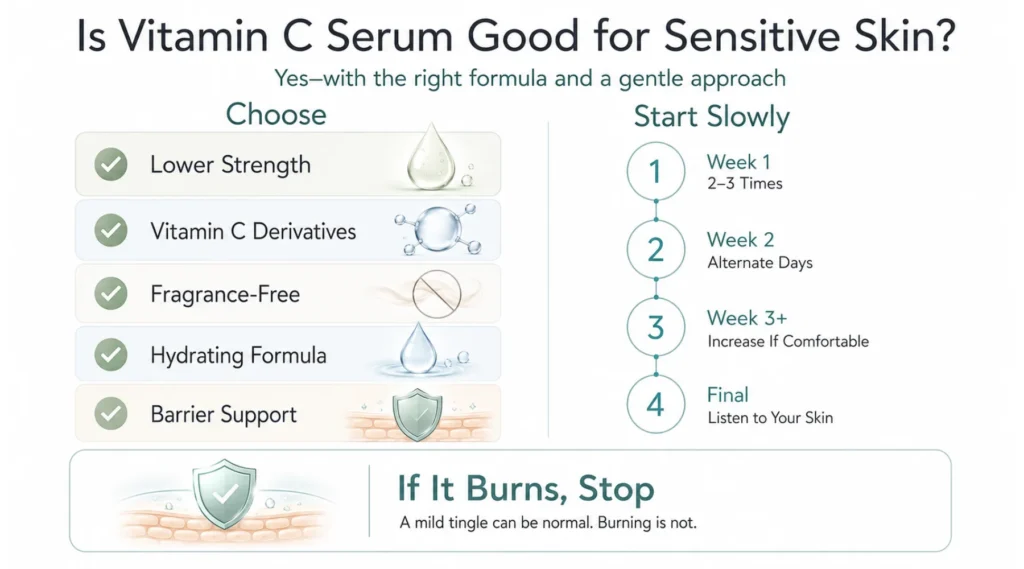
Sensitive skin usually benefits from:
- Lower concentrations of vitamin C
- Vitamin C derivatives
- Fragrance-free products
- Hydrating ingredients like glycerin or hyaluronic acid
- Moisturisers that support the skin barrier
Introduce vitamin C slowly. At first, avoid using it with scrubs, peeling solutions, strong acids, or retinoids.
A little tingling is normal with acidic products, but if you feel burning, it means your skin is not happy.
Vitamin C Serum Side Effects
Vitamin C serum can cause irritation, not serious harm. Common problems include stinging, redness, dryness, tightness, peeling, itching, and breakouts from unsuitable formulas.

Possible side effects are:
- Mild tingling
- Redness
- Dry patches
- Flaking
- Increased sensitivity
- Pilling under moisturiser or SPF
- Breakouts from heavy or mismatched products
- Irritation around the nose, mouth, or eyes
If your skin burns, swells, gets a rash, or feels raw, stop using the serum. If irritation continues, see a dermatologist or healthcare professional.
It’s wise to do a patch test, especially if you have sensitive skin. Apply a small amount near your jaw or behind your ear for a few days before using it on your face.
How to Choose a Vitamin C Serum That Makes Sense
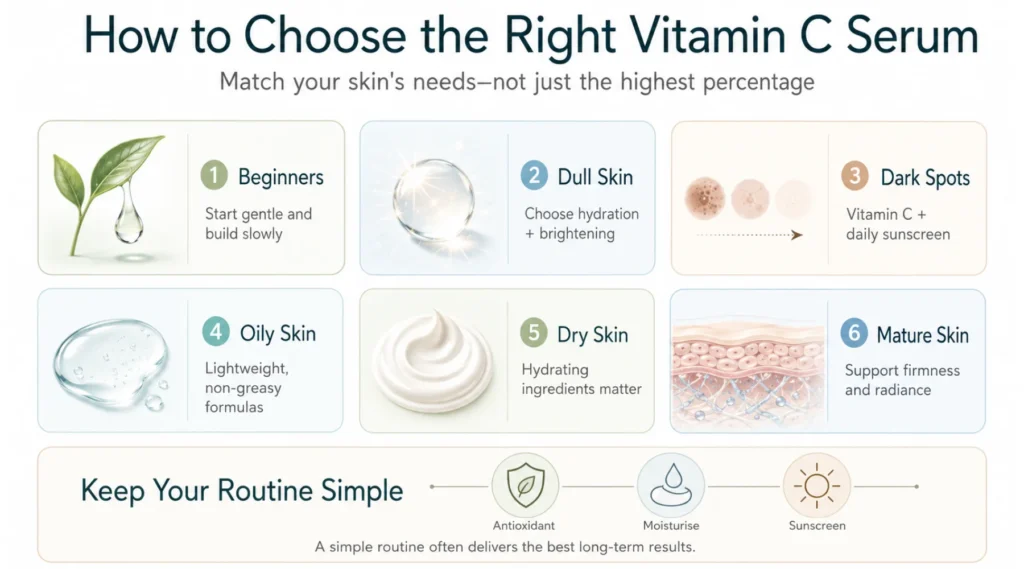
When choosing a vitamin C serum, it’s not just about the highest percentage. A good serum should suit your skin type, address your concerns, and fit your routine.
For beginners
Start with a gentle formula and use it three mornings a week. Don’t mix it with retinoids or acids at first. Focus on sunscreen and moisturiser.
A beginner doesn’t need the strongest serum. They need one that is easy to use.
For dull skin
Choose vitamin C products that also hydrate. Dull skin often results from dryness, poor light reflection, and rough texture, not just a lack of color.
A brightening serum combined with a moisturiser can make your skin look fresher without being harsh.
For dark spots
Using a strong vitamin C product can help, but sunscreen is a must. The American Academy of Dermatology says that the best way to treat dark spots is by using sunscreen. It also includes vitamin C as a good ingredient for fading spots.
For tough pigmentation, vitamin C works well with ingredients like azelaic acid, retinoids, kojic acid, or gentle exfoliants, depending on what your skin can handle.
For oily or acne-prone skin
Choose light textures. Stay away from heavy oils that might block your pores. Vitamin C can help with acne marks, but can’t replace salicylic acid, benzoyl peroxide, or prescription acne treatments when needed.
For dry skin
Use vitamin C with humectants and moisturiser. Dry skin can look dull because it reflects light unevenly. Vitamin C helps, but staying hydrated makes the skin look softer and feel better.
For mature skin
Vitamin C helps improve skin firmness, treat sun damage, and even out skin tone. Use it with sunscreen in the morning and a retinoid at night, if you can handle it.
A simple routine of serums can be effective. Avoid using too many treatment products at once. Usually, one antioxidant, one hydrating product, and one moisturiser are enough.
Vitamin C for Dark Spots and Hyperpigmentation
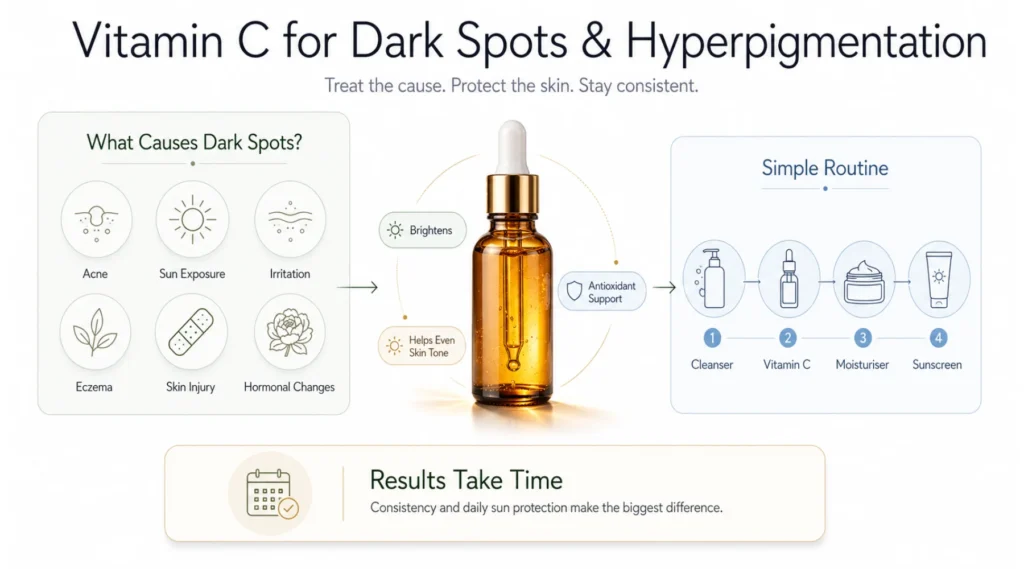
Vitamin C helps with hyperpigmentation and brightens the skin while providing antioxidant benefits.
Dark spots can develop after:
- Acne breakouts
- Sun exposure
- Irritation from harsh products
- Eczema flare-ups
- Cuts, burns, or insect bites
- Hormonal changes, like melasma
The AAD notes that medium to dark skin tones can get dark spots from excess melanin due to factors like acne, injury, irritating products, and hormonal shifts.
To get the most from vitamin C, it’s important to manage the underlying problems. If acne keeps causing new marks, relying only on pigment treatments will be slow. If harsh cleansers irritate the skin, brightening serums may not work well. Skipping sunscreen will also let dark spots worsen.
For treating pigmentation, keep the routine simple: use a gentle cleanser, vitamin C or another brightening agent, a moisturiser, sunscreen, and be patient.
Vitamin C for Face and Body: When It Makes Sense Beyond the Cheeks
Most vitamin C advice focuses on the face, but uneven skin tone can also affect the chest, shoulders, arms, back, knees, and elbows. These areas can develop dullness, sun spots, post-acne marks, or discoloration from friction.

Body skin requires a different approach. It can handle stronger products, but it often gets overlooked. If the skin is dry or rough, vitamin C should be paired with moisturizing ingredients and occasional exfoliation.
For example:
- Chest and shoulders need sunscreen like the face.
- Back acne marks need targeted acne treatment first.
- Knees and elbows need moisturizing and gentle exfoliation.
- Inner thighs and underarms can darken from friction, so avoid harsh, brightening products.
A vitamin C formula designed for the body can enhance radiance, but don’t apply strong facial products to freshly shaved, waxed, or irritated skin.
The Role of Sunscreen in Any Vitamin C Serum Skincare Routine
Vitamin C and sunscreen should go hand-in-hand. If you use vitamin C to improve your skin’s glow, tone, or dark spots, sunscreen helps keep those benefits.
Without sunscreen, it’s tougher to reduce dark spots. UV and visible light can increase melanin production, which is especially problematic for skin that tends to hyperpigment. The AAD advises using sunscreen for dark spots and suggests tinted sunscreen with iron oxides to protect against visible light, which can worsen dark spots for some skin tones.
Always use sunscreen every morning, even in the UK. Cloudy days still expose you to UVA rays, which can lead to skin aging and pigmentation issues.
A good vitamin C routine is incomplete without sunscreen, and sunscreen is beneficial even without vitamin C. Together, they work better.
Common Mistakes That Stop Vitamin C from Working Well
Vitamin C often gets the blame, but the problem is really how it’s used.
Starting too strong
A 20% vitamin C serum can work well, but not all skin types need that much right away. Starting with a high concentration might cause irritation, which can make pigmentation problems worse.
Using too many activities
You don’t need to use vitamin C, retinol, glycolic acid, salicylic acid, benzoyl peroxide, and exfoliating toners all in one week. Your skin gets better when it has time to recover.
Skipping sunscreen
This is a big mistake. Vitamin C can brighten your skin, but sunscreen keeps those results safe.
Applying too much
Using more drops doesn’t make your skin glow more. Applying too much can lead to clumps, stickiness, and irritation.
Ignoring oxidation
Vitamin C can break down when it’s exposed to air, light, and heat. If a serum changes color, has a strange smell, or becomes very dark, it’s likely not safe to use. DermNet highlights that L-ascorbic acid is unstable in oxygen, and many products may not work well if they don’t penetrate the skin properly.
Expecting instant dark spot removal
Pigmentation takes time to improve. Even with good skincare, you will see changes slowly.
Using vitamin C on compromised skin
If your skin barrier is damaged, vitamin C might hurt. First, fix your skin with moisturiser, gentle cleansing, and fewer active ingredients.
Myths About Vitamin C Serum That Need Retiring
“Tingling means it is working”
Not always. Tingling can indicate acidity. Burning suggests irritation. A product can work well without causing pain.
“Higher percentage is always better”
Higher strength can cause more irritation. The best vitamin C serum is one that your skin can tolerate regularly.
“Vitamin C replaces sunscreen”
It doesn’t. Vitamin C helps protect against damage. Sunscreen lowers UV exposure.
“Vitamin C bleaches skin”
Vitamin C skincare brightens uneven skin tone without bleaching your natural color.
“You cannot use vitamin C with niacinamide”
You can. Modern formulas make this combination common and easy to handle.
“Vitamin C is only for anti-ageing”
It can help with dull skin, uneven tone, marks from blemishes, and damage from the environment at any age.
“All vitamin C serums are the same”
The serum’s performance depends on its formulation, pH, concentration, packaging, and supporting ingredients.
How Long Does Vitamin C Serum Take to Work?
Vitamin C can make your skin look fresher in a few weeks. However, dark spots and uneven skin tone may take longer to change. Most people see their skin’s brightness improve first, followed by changes in tone and texture.

A realistic timeline:
| Timeframe | What you may notice |
| First few uses | Skin may feel smoother or look fresher if the formula hydrates well |
| 2–4 weeks | Dullness may look reduced; skin may appear more radiant |
| 6–8 weeks | Uneven tone and post-blemish marks may begin to look softer |
| 3–6 months | More visible improvement in pigmentation and overall clarity |
| 6–12 months | Some dark spots may fade significantly if triggers and sun exposure are controlled |
These timelines depend on skin tone, how deep the pigmentation is, sunscreen use, the strength of the product, and whether there is still inflammation.
Vitamin C Serum Skincare Routine by Skin Type
For normal or combination skin
Morning Routine: Use vitamin C after cleansing. If needed, apply moisturiser and sunscreen.
Night Routine: Use a gentle cleanser and moisturiser. Only add retinol or exfoliation if your skin feels balanced.
For oily skin
Choose a light serum and gel moisturiser. Vitamin C can improve post-acne marks, but oily skin may still need salicylic acid or other acne treatments.
If you’re prone to congestion, avoid using too many products at once.
For dry skin
After cleansing, apply vitamin C, then add a hydrating serum and moisturiser. For dry skin, look for products with ceramides, glycerin, squalane, or hyaluronic acid along with vitamin C. Don’t depend on vitamin C alone in the morning.
For sensitive skin
Start using vitamin C two or three times a week. Apply moisturiser generously. Don’t use strong exfoliants on the same day. If vitamin C stings, work on repairing your skin barrier before trying it again.
For pigmentation-prone skin
Use vitamin C regularly, but keep your routine gentle. Apply sunscreen every day. You can try adding niacinamide, azelaic acid, or retinoids later; just add one at a time.
A simpler skin care routine often works better for pigmentation-prone skin than using many strong treatments.
Professional Treatments and When Skincare Is Not Enough
Vitamin C can be useful, but you may need professional help in certain situations.
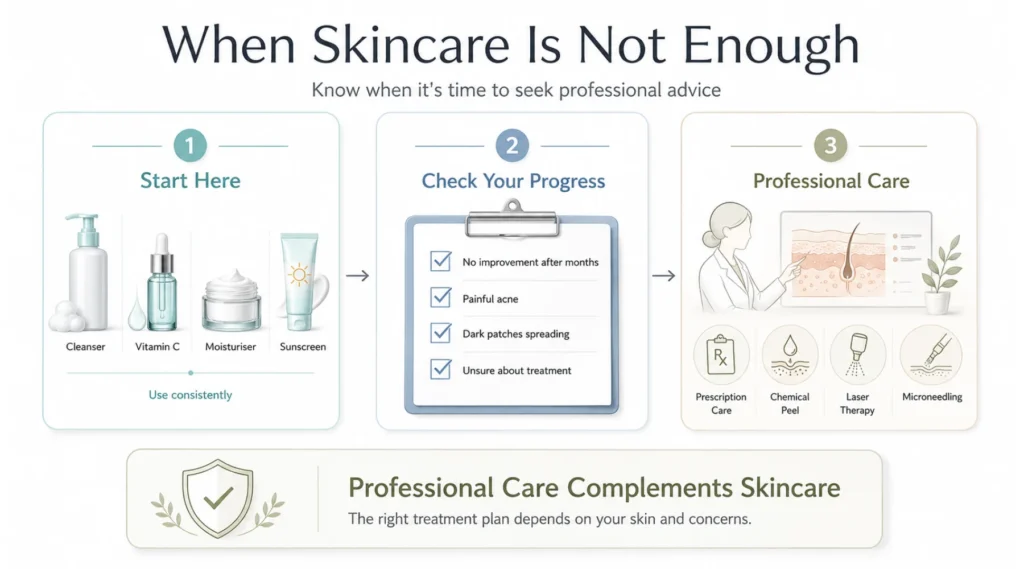
See a dermatologist or skin expert if:
- Pigmentation is spreading or changing quickly.
- Dark patches are grey, blue, or very dark brown.
- You think you have melasma.
- Acne is persistent or painful.
- Dark spots appear after small irritations.
- Over-the-counter products haven’t worked after several months.
- You are pregnant, breastfeeding, or using prescription skin medication and are unsure about safety.
Professional options may include prescription creams, chemical peels, laser treatments, microneedling, or combination plans. Choose treatments carefully, especially for darker skin tones, as aggressive methods can worsen pigmentation if not done correctly.
Vitamin C can help, but it shouldn’t replace a prescription or treatment for more complicated conditions.
Lifestyle Factors That Affect Vitamin C Results
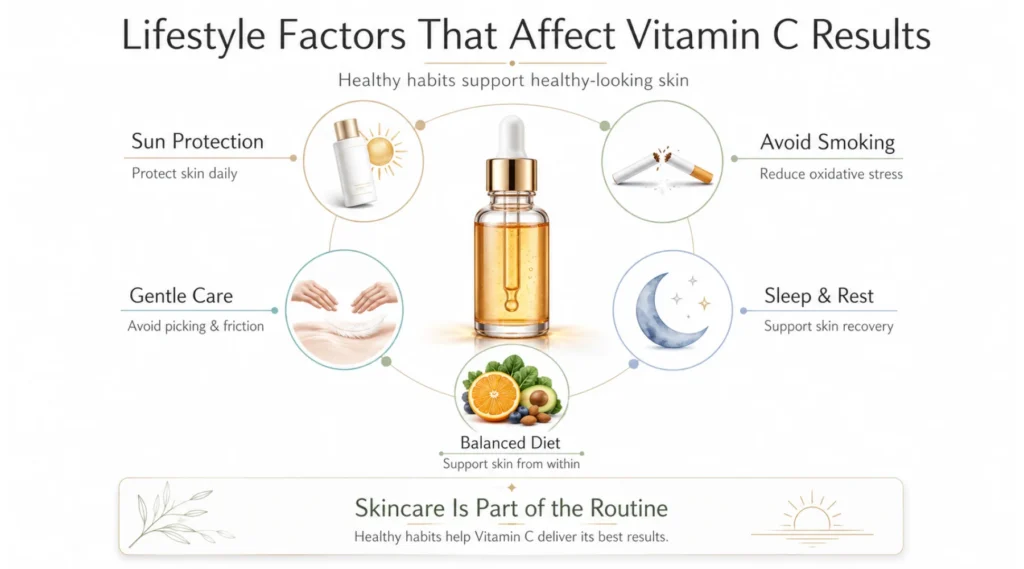
Skincare works better when the skin isn’t stressed. A healthy lifestyle won’t replace a serum, but it can affect how your skin looks.
Sun exposure
Sun exposure is the main cause of skin darkening and aging. Wearing sunscreen every day, seeking shade, wearing hats, and reapplying sunscreen are more important than any brightening product.
Smoking
Smoking increases oxidative stress and can speed up skin aging. Since vitamin C helps with antioxidants, smoking goes against the benefits of your skincare routine.
Sleep and stress
Lack of sleep and ongoing stress can make skin look dull and weak. Vitamin C can brighten the skin, but tired skin also needs time to heal.
Diet
Vitamin C helps keep you healthy and supports skin function, but eating oranges isn’t the same as using a specialised serum. Both can work together. One boosts your body from the inside, while the other focuses on the skin’s surface.
Picking and friction
Picking at your skin, rubbing it too hard, using strong cleansers, and applying friction can cause inflammation. For skin that tends to get dark spots, inflammation can lead to lasting marks.
The Questions People Ask Before Starting Vitamin C
What does vitamin C serum do for your face?
Vitamin C serum makes your face look brighter and more radiant. It protects against free radicals, softens dark spots, and helps improve skin firmness. For best results, use it with sunscreen and a simple skincare routine.
How do you apply vitamin C serum correctly?
Apply vitamin C serum after you cleanse your face and before you use moisturiser. Use a few drops on dry skin, spread a thin layer over your face and neck, and then follow with moisturiser and sunscreen in the morning.
When should you use vitamin C serum?
Morning is the best time to use vitamin C because it helps protect your skin throughout the day. You can also use it at night if your skin likes it better or if it doesn’t work well under sunscreen.
Can you use niacinamide with vitamin C?
Yes, you can use niacinamide with vitamin C. They work well together to brighten dull skin, even out tone, reduce redness, and support the skin barrier. If you have sensitive skin, it might be better to use them at different times of the day.
Can I use niacinamide with vitamin C every day?
You can use both vitamin C and niacinamide if your skin handles it well. If you’re new to active skincare, start gradually. Try using vitamin C in the morning and niacinamide at night if using them together is too strong for you.
Can you use hyaluronic acid with vitamin C?
Yes. Hyaluronic acid works well with vitamin C. It adds moisture while vitamin C helps with dull skin, uneven tone, and provides antioxidants. Apply vitamin C first, then hyaluronic acid, unless the product instructions say otherwise.
Does vitamin C lighten skin?
Vitamin C brightens uneven skin tone and helps reduce dark spots. It does not bleach or change your natural skin color. Its aim is to create a clearer, more even complexion.
Does vitamin C brighten skin?
Vitamin C can brighten skin by reducing dullness, boosting antioxidant protection, and evening out skin tone. Results take time and depend a lot on using sunscreen.
Is vitamin C serum good for sensitive skin?
If you have sensitive skin, start with lower strengths or gentler versions of vitamin C. Strong L-ascorbic acid can sting or irritate reactive skin. Begin slowly and avoid mixing vitamin C with strong acids or retinoids at first.
What are common vitamin C serum side effects?
Common side effects include stinging, redness, dryness, tightness, peeling, and irritation. These side effects are more likely with strong formulas, low-pH products, or routines that use too many active ingredients.
Can vitamin C serum remove dark spots?
Vitamin C can help lighten dark spots, especially from acne and sun damage. For deeper spots, you may need months of regular care or professional help.
Can vitamin C serum cause breakouts?
Vitamin C usually does not cause breakouts, but the base of a product might. Heavy oils, fragrances, or mixing products incorrectly can lead to issues. If you have acne-prone skin, opt for lighter textures.
Should vitamin C serum be used before or after moisturiser?
Use vitamin C serum before your moisturiser. Apply serums to clean skin first. Moisturiser locks in moisture and reduces irritation.
Can I use vitamin C serum under makeup?
Yes. Let it soak in completely. Then, apply moisturiser, sunscreen, and makeup. If it pills, use less serum or wait longer between layers.
How long should I wait after applying vitamin C serum?
Typically, you only need to wait about one minute for the serum to absorb. You don’t need to wait longer unless the product clumps under your next step.
Making Vitamin C Work for Your Skin Rather Than Against It
What does vitamin C serum do? It brightens skin, evens out tone, and helps protect against daily stress. It supports firmness and reduces dark spots while reviving dull skin over time.
The best vitamin C routines are simple and steady. Use a good serum, a gentle moisturiser, daily sunscreen, and be patient. This approach is more effective than a harsh, rushed routine.
Vitamin C is great if your skin looks dull, uneven, or tired, or if you have marks from blemishes. It’s also a good addition if you already have a basic routine and want an antioxidant for the day. The right product should improve your skin over time without causing irritation.
Pick a strength that suits your skin. Use it regularly and protect your skin from the sun. This is how vitamin C becomes a valuable skincare habit, rather than just a trend.