





Blog
How to Decrease Pores on Face for Smoother Skin

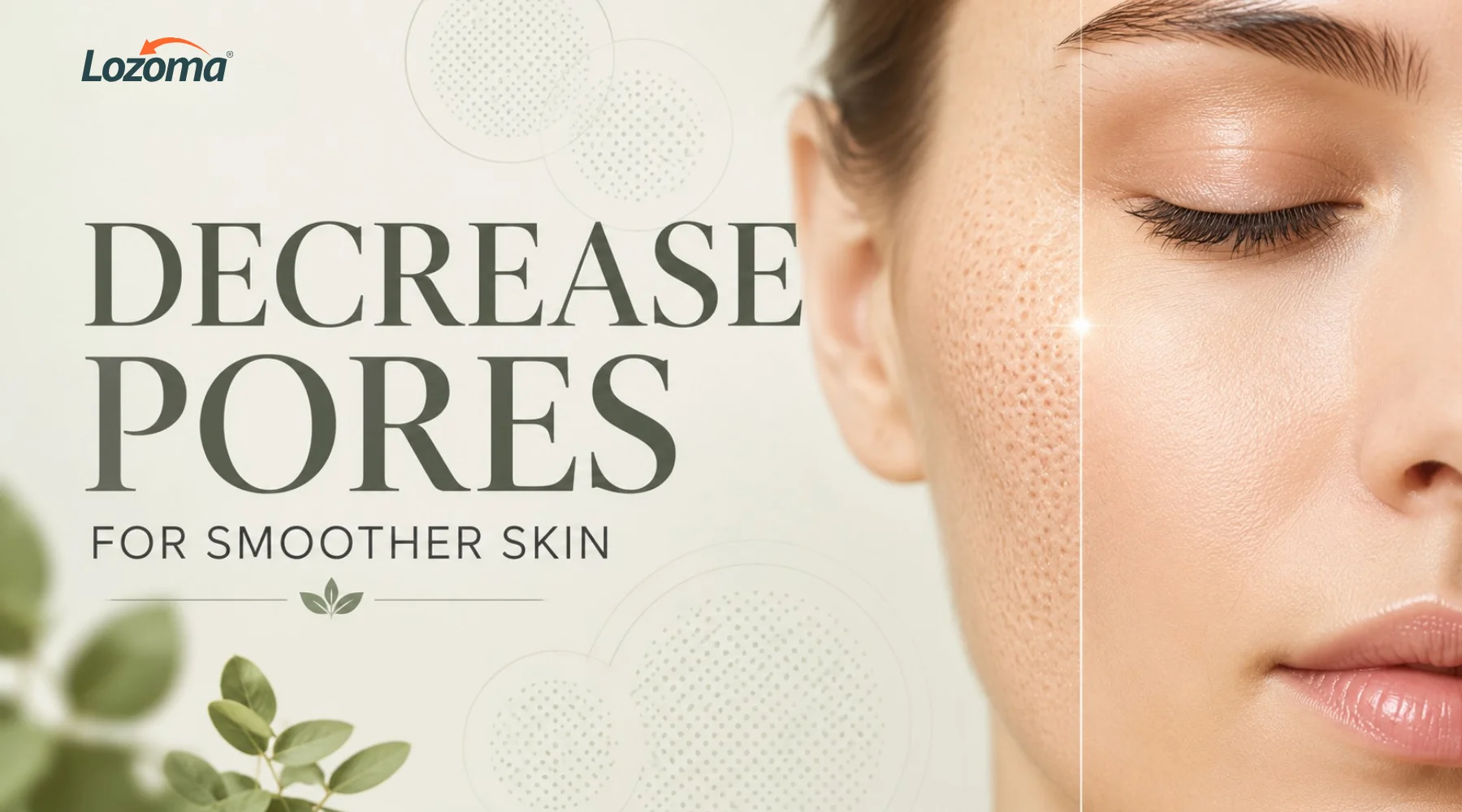
Large pores can make healthy skin look uneven, oily, or rough, especially on the nose, cheeks, chin, and forehead. It’s important to know that pores are not dirt, scars, or something you can close with cold water. Every face has them.
The real question is not how to erase pores completely. It is how to decrease pores on face safely by reducing the things that make them look stretched, dark, clogged or more obvious. Excess oil, dead skin build-up, blackheads, sun damage, dehydration and loss of firmness can all make pores appear larger than they actually are.
A good routine for your skin is about balance, not punishment. Your skin needs cleansing, oil control, gentle exfoliation, support, sunscreen, and time. When you combine these steps, pores can look clearer and less noticeable without harsh scrubs or unrealistic promises.
Why Pores Become More Visible in the First Place
Pores are small openings linked to hair follicles and oil glands that release sebum, the skin’s natural oil. Sebum helps protect and soften the skin. When sebum flows normally, pores may still be visible, but they usually look calmer and less clogged.
Pores appear larger when they stretch or get filled with oil, dead skin, and dirt. This is why visible pores are often near blackheads, whiteheads, and uneven skin texture. Clogged pores and enlarged pores are related but not the same. More oil can lead to clogged pores, and factors like age, sun damage, skin products, and hair follicles can make pores look larger.
Genetics plays a role, too. Some people have oil glands that work harder or have larger openings. If your parents had oily skin or noticeable pores, you might have the same traits.
However, genetics isn’t everything. How you clean, exfoliate, moisturise, and protect your skin from UV damage can affect how visible your pores are each day.
Can You Actually Get Rid of Pores?
No skincare product can remove pores because they are a normal part of the skin. Pores help release oil, regulate temperature, and keep skin healthy. Claims about closing pores permanently often exaggerate what skincare can do.
You can make pores appear smaller by:
- Clearing oil and dead skin from inside them
- Reducing shine
- Supporting the skin’s barrier
- Improving texture with regular exfoliation
- Protecting collagen with daily sunscreen
- Using ingredients that balance oil and smooth rough areas
- Avoiding habits that stretch or irritate pores
This matters because when people ask how to get rid of pores, they often want smoother skin, not to remove pores completely. The best goal is to make pores less noticeable, not to eliminate them.
Your skin often looks better when you manage what makes pores noticeable. A face with visible pores can still look healthy, fresh, and well cared for.
How to Decrease Pores on Face Without Damaging Your Skin
To reduce facial pores safely, focus on treating the causes. You don’t need a long routine, just the right steps done consistently.
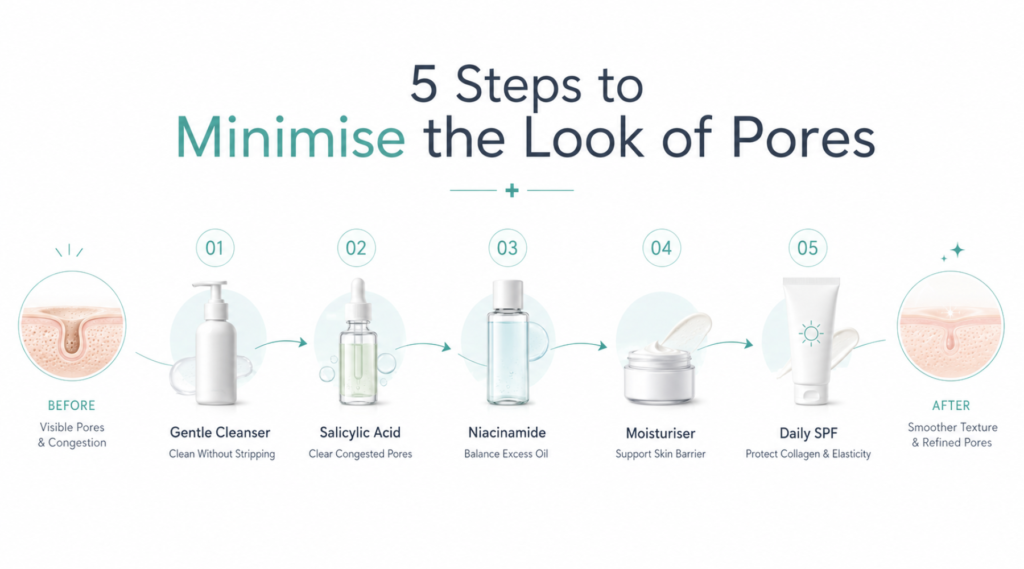
Start with a cleanser that removes oil without stripping the skin.
Cleansing is the first step in any skincare routine, but many people make mistakes here. A good cleanser should remove sunscreen, makeup, sweat, oil, and dirt without making your skin feel tight.
If your skin feels squeaky, hot, or stretched after washing, your cleanser may be too harsh. This can lead to more oiliness and weaken your skin’s barrier, making your pores look rough and inflamed.
For oily or congested skin, a gentle gel cleanser works well. For dry or sensitive skin with visible pores, a creamier cleanser is better. The goal is to have clean skin, not stripped skin.
At night, cleansing is especially important. Sunscreen, makeup, and pollution mix with oil and can clog your pores. If you use heavy sunscreen or makeup, start with a balm or micellar cleanser, then follow with a gentle wash to clean without scrubbing.
Use salicylic acid when pores are clogged.
Salicylic acid is great for unclogging pores because it dissolves in oil. This allows it to penetrate oily skin better than water-based exfoliants. It helps break down dead skin cells and oil inside the pores, making it effective for blackheads and whiteheads.
The American Academy of Dermatology says salicylic acid helps open clogged pores and exfoliate skin, especially for whiteheads and pimples.
Beginners should start using salicylic acid slowly. A leave-on BHA toner or serum, two or three times a week, can work well. Some prefer a salicylic acid cleanser since it may feel gentler due to shorter contact time.
Avoid using strong exfoliating acids every day. Overuse can lead to dryness, stinging, and skin damage. When the skin barrier is irritated, pores can look worse because the skin around them becomes rough and inflamed.
Add niacinamide for oil balance and barrier support.
Niacinamide is a great ingredient for pores because it addresses several skin issues at once. It helps protect the skin barrier, even out skin tone, reduce redness, and lessen oiliness.
A clinical study on 2% niacinamide showed its effect on facial oil production in various groups. Other reviews found that 2% to 5% niacinamide can lower oil production according to different studies.
Niacinamide won’t completely erase pores, but it can help when extra oil makes them look bigger. A lightweight niacinamide essence can be used after cleansing and before moisturising. It’s especially helpful for those who want smoother skin without using strong exfoliants every day.
Keep moisturiser in the routine, even if your skin is oily.
Many people with visible pores avoid moisturiser, fearing it will make their faces oily. However, dry oily skin often appears shinier and rougher. The skin feels tight, but oil still comes through, making pores look larger and the texture uneven.
A good moisturiser for this skin type should be light, non-greasy, and comfortable. Look for humectants like glycerin, hyaluronic acid, or sodium hyaluronate, along with barrier-supporting ingredients like niacinamide, ceramides, or panthenol.
The right moisturiser does not “close” pores. Instead, it helps the skin reflect light better. Hydrated skin looks smoother because it reduces fine lines and rough patches.
Use sunscreen as a pore-care product, not just an anti-ageing step
UV exposure harms collagen and elastin, which support the skin around pores. When skin loses firmness, pores can appear stretched, especially on the cheeks. This is one reason pores may look bigger as we age.
Sunscreen won’t shrink pores overnight, but it protects the skin structure that keeps them from appearing larger over time. If you use exfoliating acids, retinoids, or brightening ingredients, sunscreen becomes even more essential because these can make your skin more sensitive and uneven in tone.
Using a broad-spectrum SPF every morning is one of the best ways to improve the long-term appearance of your pores.
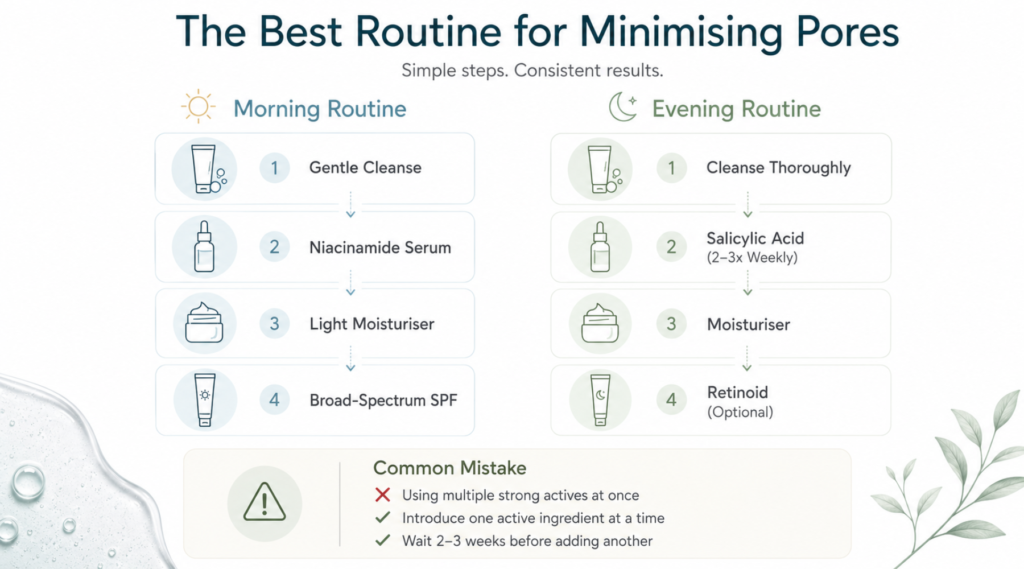
The Best Routine to Decrease Pores on Face
A pore-refining routine should be easy to follow. Skin reacts better to consistent care than to sudden changes in products.
| Time | Step | Purpose |
| Morning | Gentle cleanse or rinse | Removes overnight oil without stripping |
| Morning | Niacinamide or lightweight serum | Helps with oil balance, barrier support and smoother texture |
| Morning | Light moisturiser | Keeps the surface hydrated and comfortable |
| Morning | Broad-spectrum SPF | Protects collagen and prevents UV-related texture changes |
| Evening | Cleanse thoroughly | Removes sunscreen, makeup, oil and pollution |
| Evening | Salicylic acid 2–3 times weekly | Helps unclog pores and smooth congestion |
| Evening | Moisturiser | Reduces dryness and supports barrier repair |
| Optional evening | Retinoid on alternate nights | Supports cell turnover and long-term texture improvement |
The biggest mistake is using all active ingredients at once. Instead, start with one active ingredient and watch how your skin reacts for two to three weeks. Add another only if necessary.
Using a few skin care serums can be helpful, but you don’t need multiple strong treatments at the same time. To reduce visible pores, one oil-balancing serum and one exfoliating step are usually sufficient.
How to Unclog Pores Without Scrubbing Your Face Raw
Clogged pores form when oil and dead skin cells build up in hair follicles. If the blockage stays below the surface, it appears as a whitehead. If it reaches the surface and turns dark, it looks like a blackhead. Sebaceous filaments, often confused with blackheads, are normal oil structures in pores and usually show up as tiny grey or yellow spots, especially on the nose.
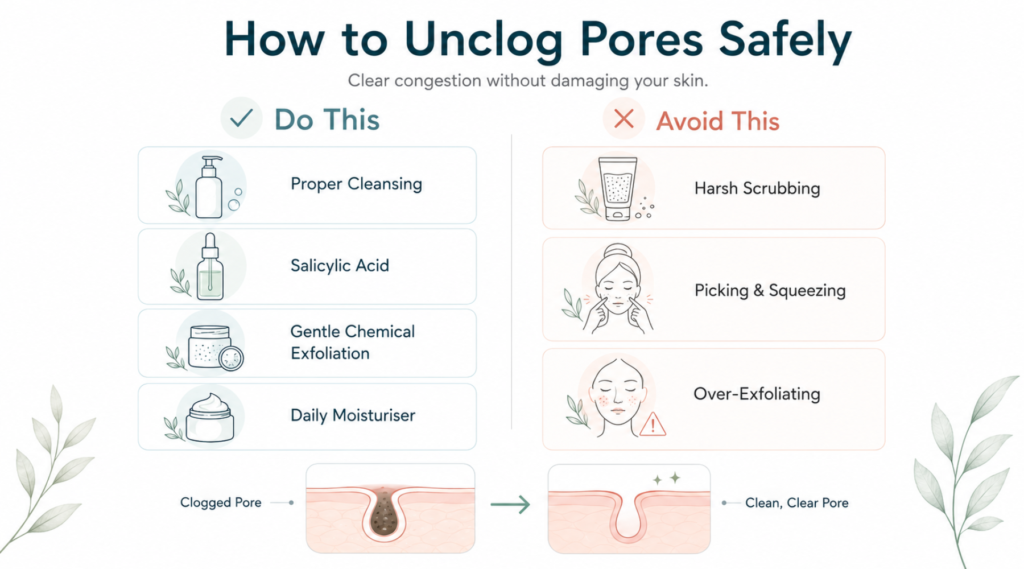
To safely unclog pores, follow these steps:
- Cleanse properly. If you don’t remove sunscreen and makeup well, treatments won’t work effectively.
- Use a chemical exfoliant instead of a rough scrub. Salicylic acid is best for oily areas prone to blackheads. Lactic or mandelic acid works well for dull or rough skin.
- Don’t squeeze too hard. Picking at your skin can bruise your pores, increase inflammation, and leave lasting marks.
- Keep your skin moisturised. When your skin is dry and irritated, dead cells shed unevenly, making clogs more likely.
A tea tree serum can be helpful for oily skin, but it may irritate sensitive skin if overused. Always perform a patch test, especially if your skin reacts easily.
How to Decrease Pores on Face for Beginners
Beginners do best with a simple routine and fewer products. This helps identify what works and what causes irritation.
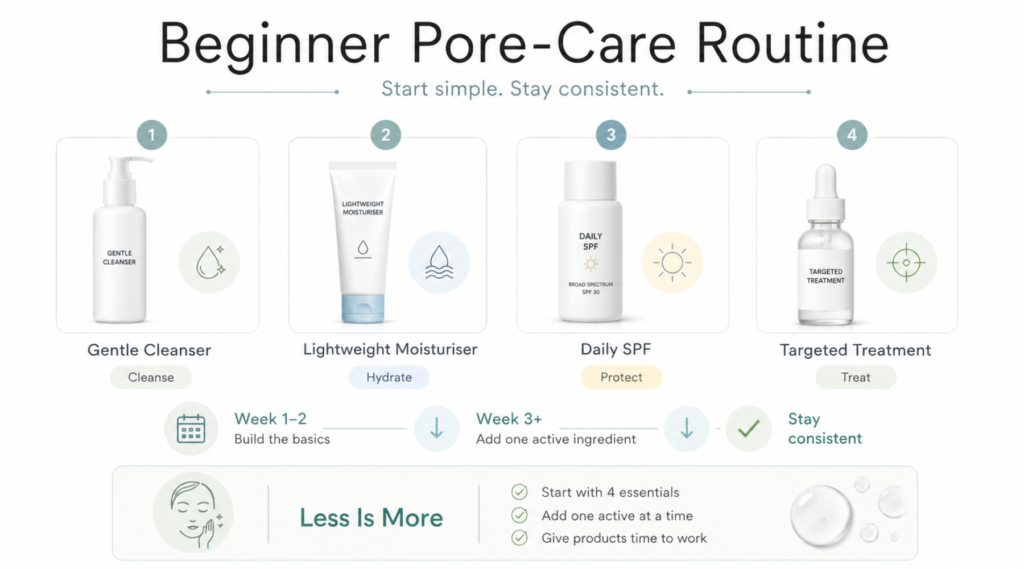
- Start with these four basics:
- Gentle cleanser
- Lightweight moisturiser
- Daily sunscreen
- One targeted treatment (like niacinamide or salicylic acid)
Use the cleanser, moisturiser, and sunscreen every day for two weeks before adding stronger treatments. This creates a stable base for your skin.
If your skin is oily, add salicylic acid at night twice a week. If your skin is sensitive or dull, begin with niacinamide instead.
Avoid scrubs, acid toners, retinoids, and clay masks in the same week when starting out. This may seem effective, but it often irritates the skin and makes pores look bigger.
A beginner routine should help your skin feel calmer in a few weeks. However, improving pore clarity takes more time.
How to Decrease Pores on Face Naturally
Natural pore care is often misunderstood. Using lemon juice, baking soda, toothpaste, and harsh DIY masks isn’t always safe or gentle. These can upset your skin’s pH, cause burns, irritate, or worsen dark spots.
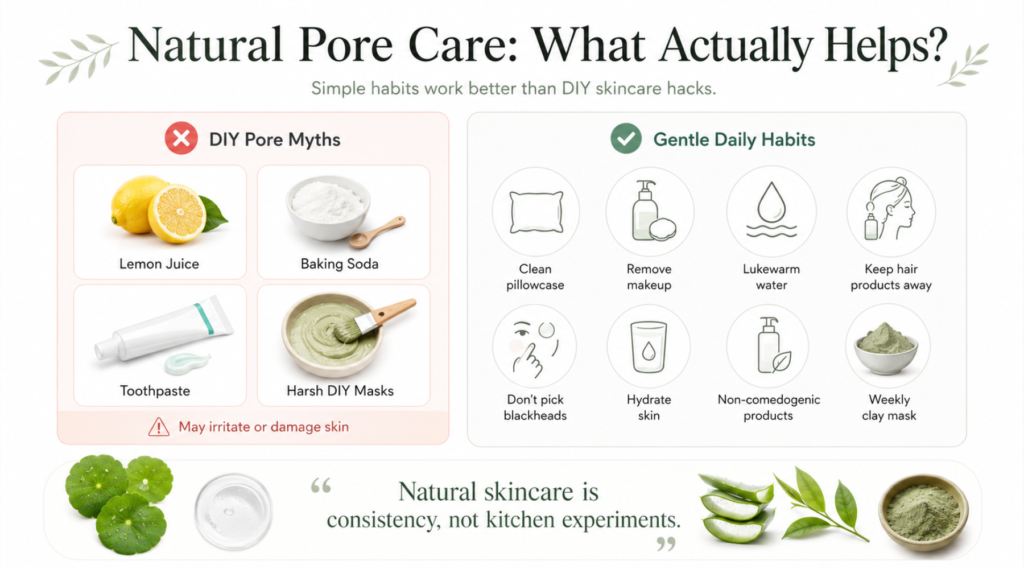
A safer, natural approach includes simple daily habits:
- Wash pillowcases often.
- Remove makeup before sleeping.
- Avoid heavy sunscreen or foundation at night.
- Keep hair oils and styling products away from your face.
- Use lukewarm water instead of hot.
- Don’t pick at blackheads or squeeze your nose.
- Choose non-comedogenic products when possible.
- Keep your skin hydrated instead of drying it out.
Clay masks can help absorb excess oil, but don’t use them so much that your skin feels tight or flaky. Once a week is enough for many with oily skin.
Products with green tea, aloe vera, and centella can soothe your skin, but they won’t shrink pores. They can help reduce redness and irritation around the pores.
The best natural pore care isn’t about kitchen experiments; it’s about consistent and gentle skin care.
How to Decrease Pores on Face at Home
At-home skincare can greatly improve the appearance of your pores, especially if you’re dealing with oiliness, blackheads, rough texture, or dull skin. While it won’t match the results of professional treatments like laser or microneedling, it can make your skin look and feel better.
At home, concentrate on three main goals.
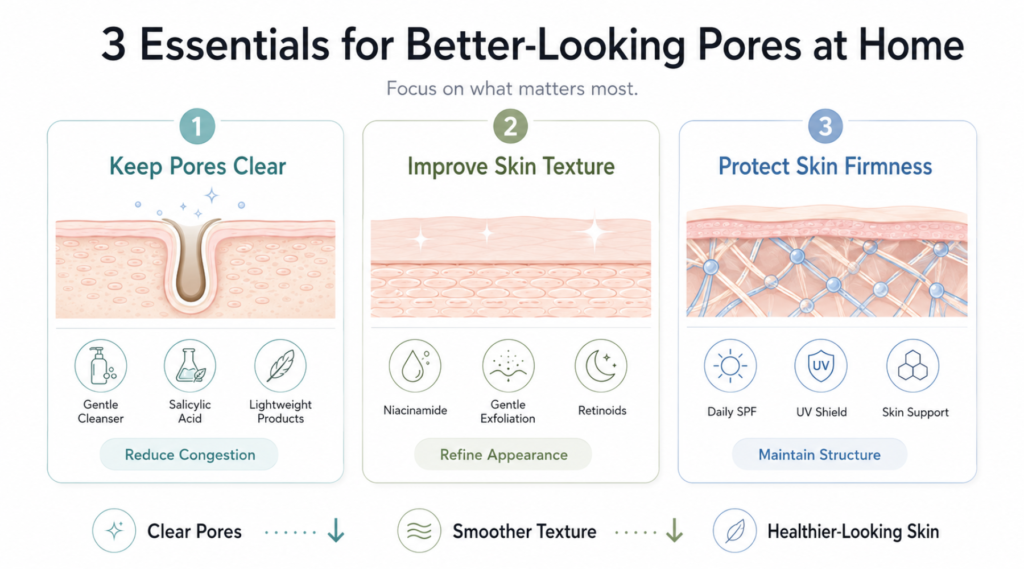
Keep the pore opening clear
Use salicylic acid, gentle cleansers, and light textures. Avoid thick balms, rich creams, and heavy oils on areas that easily clog.
Improve the skin surface
Niacinamide, mild exfoliating acids, and retinoids can make your skin smoother over time. People often use topical retinoids for acne because they help clear clogged pores and promote skin renewal. Recent acne guidelines recommend using topical retinoids to manage acne, unclog pores, and reduce swelling.
Protect firmness
Use sunscreen every morning. UV damage breaks down collagen, making pores appear larger.
At-home care works best when it is simple and consistent. Focus on gentle routines that you can repeat easily.
Ingredients That Actually Help Pores Look Smaller
Different ingredients help pores in various ways. Picking the right one depends on why your pores are noticeable.
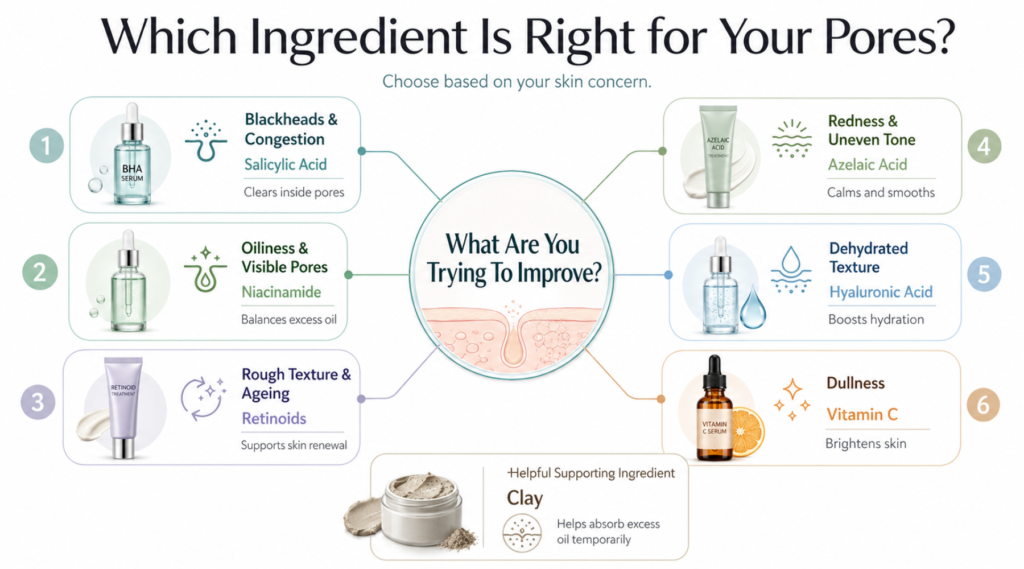
| Ingredient | Best for | How it helps | Watch-outs |
| Salicylic acid | Blackheads, oily congestion | Exfoliates inside oily pores | Can dry or irritate if overused |
| Niacinamide | Oiliness, redness, uneven tone | Supports barrier and may help reduce sebum | High percentages may tingle for some |
| Retinoids | Texture, comedones, ageing-related pores | Supports cell turnover and long-term smoothness | Start slowly; can cause purging or dryness |
| Clay | Temporary shine | Absorbs surface oil | Overuse can dehydrate skin |
| Hyaluronic acid | Dehydrated texture | Plumps surface hydration | Needs moisturiser over it in dry climates |
| Azelaic acid | Bumps, redness, uneven tone | Helps refine texture and calm blemish-prone skin | Can tingle at first |
| Vitamin C | Dullness and collagen support | Antioxidant support and brightening | Some forms can irritate sensitive skin |
Salicylic acid vs glycolic acid for pores
Salicylic acid is great for oily skin with clogged pores because it targets oil. Glycolic acid helps with dull skin, rough texture, and uneven tone. Some people find both acids useful, but they shouldn’t use them on the same night if their skin is sensitive.
Niacinamide vs retinol for pores
Niacinamide is gentle and helps control oil and the skin barrier. Retinol and other retinoids improve skin texture over time but need patience and a gradual start.
For many, using niacinamide in the morning and a retinoid or salicylic acid a few nights a week is a good routine.
Tea tree vs salicylic acid for clogged pores
Tea tree oil is often linked to blemish-prone skin because it is known for its cleansing qualities. However, it works differently from salicylic acid, which is more effective for clearing clogged pores. Tea tree oil can be helpful for oily or spot-prone skin as a supporting ingredient, but it should be used in a good formulation and not applied directly to the skin.
How Long Does It Take to Decrease Pores on Face?
Pores don’t change quickly, but your skin can look clearer soon if you manage congestion and oil well.
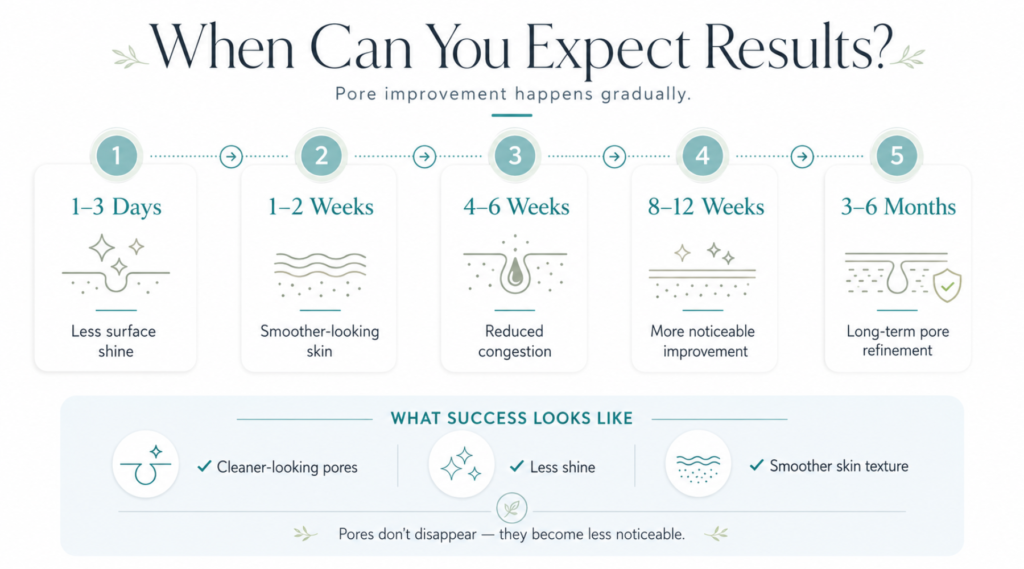
| Timeframe | What may improve |
| 1–3 days | Less surface shine, fresher feel after cleansing |
| 1–2 weeks | Smoother texture, fewer new clogged bumps if routine suits the skin |
| 4–6 weeks | Blackheads and congestion may look reduced with consistent salicylic acid |
| 8–12 weeks | More visible improvement in texture with retinoids or steady exfoliation |
| 3–6 months | Better long-term refinement when sunscreen, actives and barrier care are consistent |
Timelines can differ. Oily skin, hormonal breakouts, heavy makeup, humid weather, stress, and irregular routines can slow down progress. If your pores appear larger due to collagen loss or acne scars, skin care products can improve texture, but might not be enough alone.
The best indicator isn’t that pores vanish. Instead, look for cleaner, smoother, less shiny skin that appears more even in natural light.
Common Mistakes When Trying to Decrease Pores on Face
Pore care gets a lot of bad advice. The biggest mistakes often come from wanting fast results.
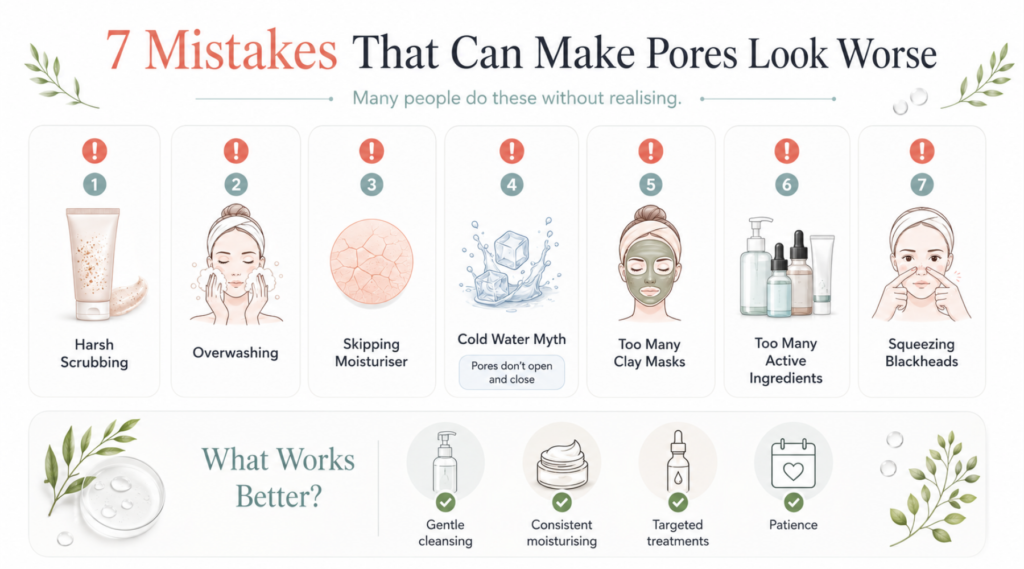
Using harsh scrubs on the nose and cheeks
Scrubs can make your skin feel smoother for a short time, but the rough particles can irritate your pores and cause inflammation. If your skin looks red or shiny after scrubbing, that’s not a sign of tightening; it’s irritation.
Washing the face too often
Washing your face four or five times a day can damage your skin’s barrier. Even oily skin needs protection. Most people only need to wash their face twice a day, with an extra gentle wash after heavy sweating if necessary.
Skipping moisturiser
Dehydrated skin isn’t smooth. It often appears rough, tight, and shiny.
Expecting cold water to close pores
Cold water can make skin feel tighter for a short time, but it doesn’t close pores. Pores don’t open and shut like doors. Heat can soften oil, while cold can reduce puffiness, but neither changes the pore structure for good.
Overusing clay masks
A clay mask is helpful before an event or for a very oily T-zone. However, using it too often can dry out the skin and cause irritation.
Layering too many activities
Using salicylic acid, glycolic acid, retinol, vitamin C, benzoyl peroxide, and a scrub might seem strong. However, it can actually irritate the skin. When the skin is irritated, it usually doesn’t look smoother.
Squeezing blackheads with fingernails
Squeezing can hurt capillaries, increase redness, and stretch pores. If you need extractions, it’s safer to have a trained professional do them.
Why Pores Look Worse Some Days
Pores can look different daily, but that doesn’t mean your skincare routine isn’t working.
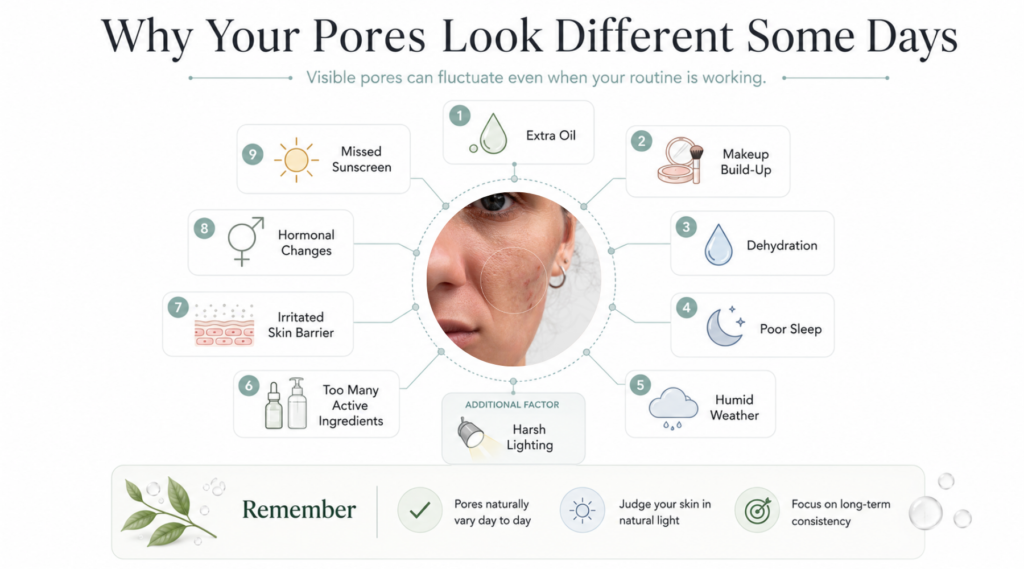
They may appear more visible when:
- Your skin is oilier than usual
- Makeup settles into your skin
- You are dehydrated
- You didn’t sleep well
- The weather is humid
- You used too many active products
- Your skin barrier is irritated
- You’re close to a hormonal breakout
- You skipped sunscreen, causing inflammation
- You look in harsh overhead lighting
This is why using a magnifying mirror isn’t helpful for checking pores. Pores look normal up close. It’s better to assess your skin at a conversational distance in natural light. A consistent routine should decrease the number of “bad pore days” rather than make your skin completely poreless every morning.
Professional Treatments for Enlarged-Looking Pores
Professional treatments can improve enlarged pores caused by collagen loss, acne scars, texture changes, or stubborn congestion. They’re not necessary for everyone, but they can help when regular skincare isn’t enough.
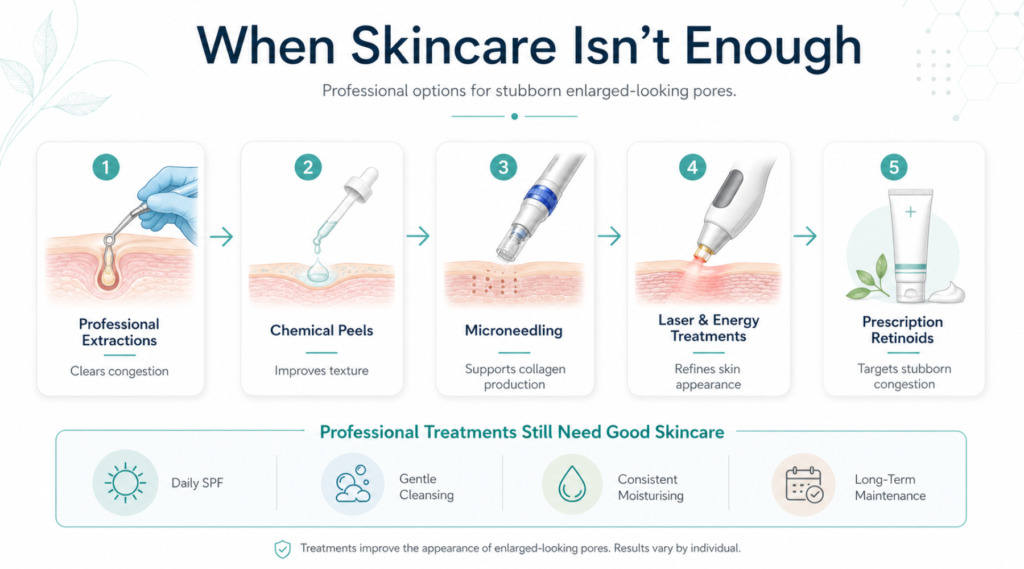
Professional extractions
Extractions can effectively remove blackheads and blockages when done correctly. They aren’t a permanent solution, but they can help reset clogged areas if you follow up with good home care.
Chemical peels
Light chemical peels with salicylic, lactic, mandelic, or glycolic acid can improve skin texture and reduce congestion. The best peel for you depends on your skin tone, sensitivity, acne history, and risk of pigmentation.
Microneedling
Microneedling makes tiny injuries to boost collagen production. It can improve skin texture and reduce the appearance of stretched pores over time. However, it is important to have it done cleanly and by a professional, especially for those with acne-prone or darker skin.
Laser and energy-based treatments
Some lasers and radiofrequency treatments can boost collagen and improve skin texture. It’s important to talk to a qualified dermatologist or experienced practitioner, as using the wrong settings can lead to burns, discolouration, or lasting irritation.
Prescription retinoids
When acne, blackheads, or stubborn comedones affect pores, a dermatologist might suggest strong retinoids. These can work well but must be used carefully, especially on sensitive skin.
Professional treatments also require ongoing care. Without sunscreen, gentle cleansing, and oil control, pores can get clogged again.
How Makeup Can Make Pores Look Better or Worse
Makeup doesn’t enlarge pores, but the wrong products can make them stand out. Heavy matte foundations can settle around the nose and cheeks, while shimmery products can emphasise uneven skin. Thick primers may blur imperfections temporarily, but can clog pores if not cleaned off well.
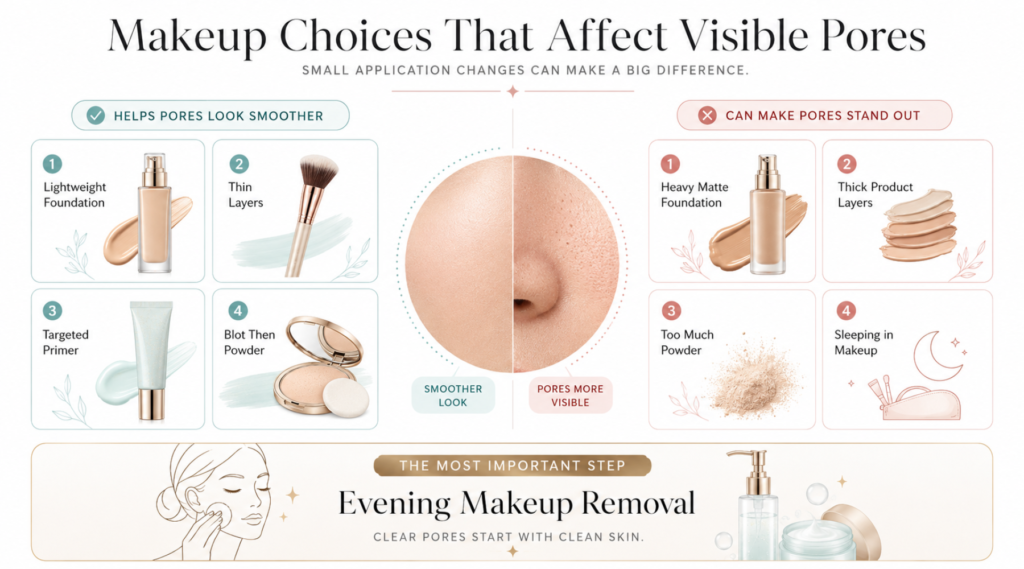
For skin prone to pores, it’s better to use thin layers than one thick layer. A lightweight primer in just the right spots, followed by a small amount of foundation, looks more natural.
Powder can reduce shine, but too much can gather around pores and look spotty. Blotting first and then lightly applying powder usually gives a smoother look.
The most crucial step in your makeup routine is removing it. Sleeping on your foundation or skipping sunscreen removal can clog pores and dull your skin. Consistently cleansing in the evening is important for keeping pores clear, not just for makeup hygiene.
Lifestyle Habits That Help Pores Look Less Noticeable
Skincare is important, but daily habits also affect how your pores look. Your skin is connected to the rest of your body.
Sleep, stress, sweat, diet, hormones, and your environment all impact oil flow and inflammation. You can’t solely rely on lifestyle choices to achieve poreless skin, small habits can help or hurt your skincare routine.
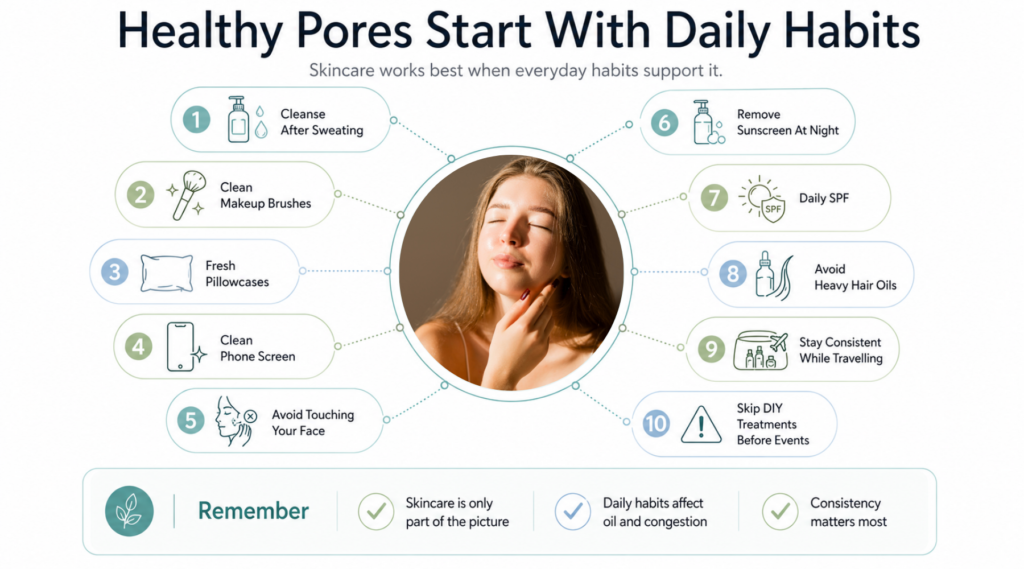
Helpful habits include:
- Cleansing after sweating
- Avoiding heavy hair oils near your face
- Regularly cleaning makeup brushes
- Changing pillowcases often
- Keeping phone screens clean
- Avoid touching your face frequently
- Properly removing sunscreen at night
- Using sunscreen even on cloudy days
- Staying consistent with your routine while travelling
- Skipping harsh DIY treatments before events
Every day habits play a big role in keeping your pores clear. A good serum can’t make up for sleeping in makeup, squeezing your skin, or skipping sunscreen for long periods.
If your skin stays clogged despite using good products, reviewing your daily habits may help.
Why Some Pores Stay Large Even with Good Skincare
Some pores stay visible for reasons beyond clogging. Larger skin follicles, long-term oiliness, acne scars, or loss of collagen with age can all play a role. Skincare can improve their appearance, but it might not shrink them.
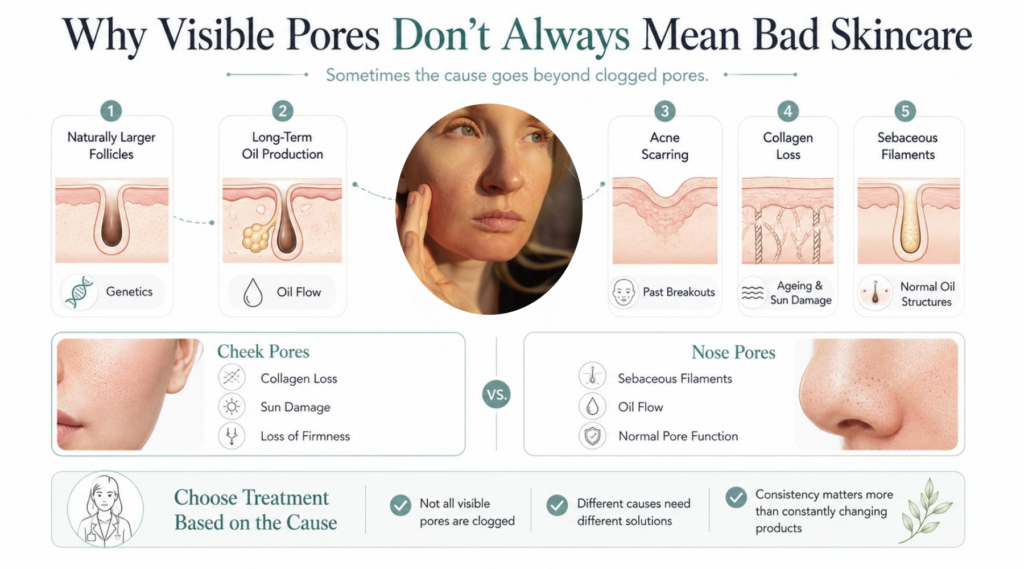
Cheek pores often look large due to lost firmness and sun damage, not just blackheads. In these cases, salicylic acid alone might not help. Other options like sunscreen, retinoids, peptides, vitamin C, and professional treatments for collagen may be better.
Nose pores are often sebaceous filaments, not true blackheads. Salicylic acid can help them look clearer, but they often refill because they are part of the normal oil flow.
Knowing why pores appear larger helps you choose the right treatment and reduces the need to switch products frequently.
Myths About Closing Pores
Pore myths endure because they sound appealing, but many can irritate the skin.
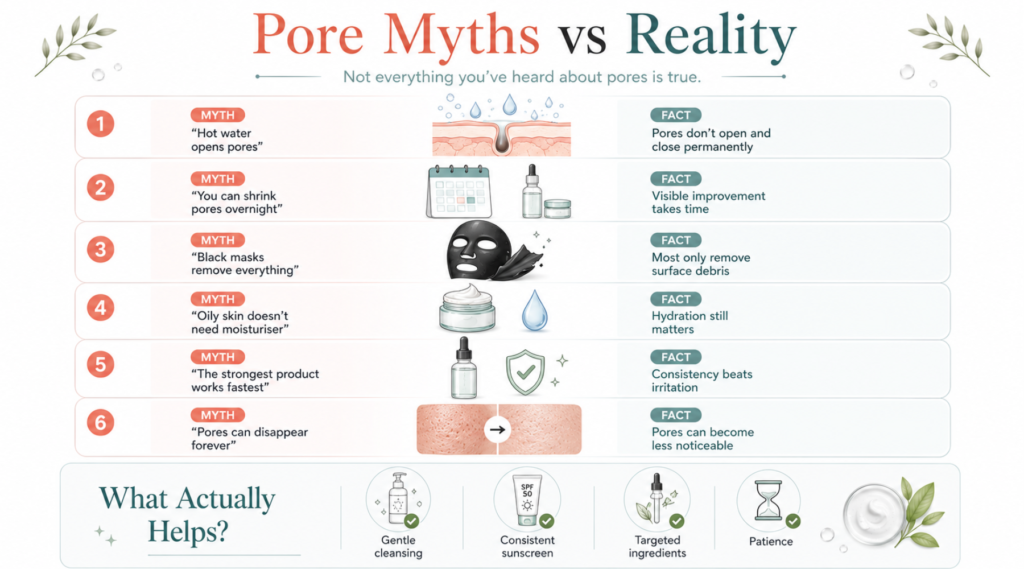
“Hot water opens pores and cold water closes them”
Warm water can soften oil and make cleaning easier, while cold water can temporarily tighten skin. However, neither affects pore size for long.
“You can shrink pores overnight”
You might reduce shine or calm swelling overnight, and your skin can look smoother before makeup. But real pore refinement takes weeks to months.
“Black masks pull out all the dirt”
Peel-off masks may remove surface dirt and fine hair, but they can irritate the skin, especially strong ones that can hurt sensitive skin.
“Oily skin does not need moisturiser”
Oily skin can still be dehydrated. Skipping moisturiser may lead to an unbalanced and rough appearance.
“The strongest product works fastest”
The best product for pores is the strongest one that your skin can handle regularly. Irritation can slow results.
“Pores can permanently disappear”
Pores cannot disappear completely. A better question is whether they can shrink permanently or if the goal should be long-term refinement.
Questions People Ask When Trying to Make Pores Look Smaller
How can I get rid of pores on my face naturally?
You can’t remove pores because they are a normal part of your skin. However, you can make them less noticeable by gently cleansing your skin, using sunscreen, avoiding heavy products that clog pores, keeping your skin hydrated, and using friendly ingredients like niacinamide or salicylic acid.
How do I close pores on my face after cleansing?
Pores don’t close after washing. If your skin looks tighter after cold water or toner, it’s just a temporary effect. To make pores appear smaller after cleansing, use a lightweight hydrating serum, moisturiser, and sunscreen in the morning.
What is the best ingredient to unclog pores?
Salicylic acid is a top choice in drugstores for unclogging pores. It helps remove dead skin and is effective in oily spots. It’s especially good for treating blackheads, whiteheads, and congestion.
How long does it take to decrease pores on the face?
The surface shine may improve in a few days, but clogged pores and rough skin usually need four to twelve weeks of regular care. Long-term texture changes, especially from collagen loss, can take several months.
Can beginners use salicylic acid?
Beginners should start slowly. Many people can begin with two or three nights a week. If you notice dryness, stinging, or flaking, cut back on use and focus on moisturising until your skin feels comfortable again.
Is niacinamide good for large pores?
Niacinamide helps when pores appear larger due to oiliness, redness, or weak skin barriers. It promotes a smoother surface and may reduce oil, but it won’t eliminate pores.
Why do my pores look bigger after exfoliating?
After exfoliating, pores might appear larger if the skin is irritated, dry, or inflamed. Over-exfoliating can cause redness and roughness around the pores, making them more noticeable.
Can ice shrink pores?
Ice can help reduce puffiness and make skin feel tighter, but it won’t permanently shrink pores. When using ice on the skin, do so carefully. Wrap it up and use it for a short time to avoid irritation or damage to sensitive skin.
Do clay masks reduce pores?
Clay masks can temporarily reduce surface oil, making pores look smaller for a short time. They do not permanently shrink pore size. Using them once a week is usually enough for oily skin.
Why are the pores on my nose always visible?
The nose has many oil glands, so sebaceous filaments are common. These small dots are normal and can refill even after you clean or exfoliate your skin. Salicylic acid can help make them look clearer, but they typically won’t go away completely.
Can retinol help large pores?
Retinol and other retinoids can help make pores appear smaller by improving skin texture and promoting cell turnover. They work well for pores associated with blackheads, roughness, or early signs of firmness loss. Begin with a low dose to prevent irritation.
Is it possible to reduce pores on the face permanently?
You can make your pores look smaller over time, but you can’t completely remove them or close them permanently. Achieving good results relies on regular skincare, using sunscreen, controlling oil, and sometimes getting professional treatments.
What skincare should I avoid if I have visible pores?
Avoid harsh scrubs, drying products with alcohol, and frequent use of pore strips. Don’t sleep in makeup, use heavy creams on oily areas, or layer too many active ingredients at once.
Can diet affect pores?
Diet doesn’t directly change pore size, but some people notice more oiliness or breakouts from certain foods. If a food often causes problems, consider keeping track of it. However, skincare and hormones usually have a bigger impact.
Should I use serum or moisturiser first for pores?
Apply serum first, then moisturiser. Serums are lighter and focus on delivering specific ingredients. Moisturiser locks in hydration and keeps your skin barrier healthy.
Making “How to Decrease Pores on Face” a Realistic Skin Goal
To reduce the appearance of pores on your face, focus on creating a routine that keeps them clear, calm, and healthy instead of trying to achieve poreless skin. Pores look smaller when you manage excess oil, prevent dead skin buildup, keep the skin hydrated, and protect it from UV damage.
You don’t need a harsh routine. Cleanse your skin well, use salicylic acid for clogged pores, add niacinamide to address oiliness and uneven texture, moisturise even if your skin is oily, and apply sunscreen every morning. A good skincare routine should make your skin feel healthier, and smoother-looking pores will often follow.
Visible pores are normal and not a flaw. The goal is not to eliminate them but to balance and clear the skin around them so that pores are less noticeable.