





Blog
How to Fade Dark Spots on Face: Skincare Tips That Help

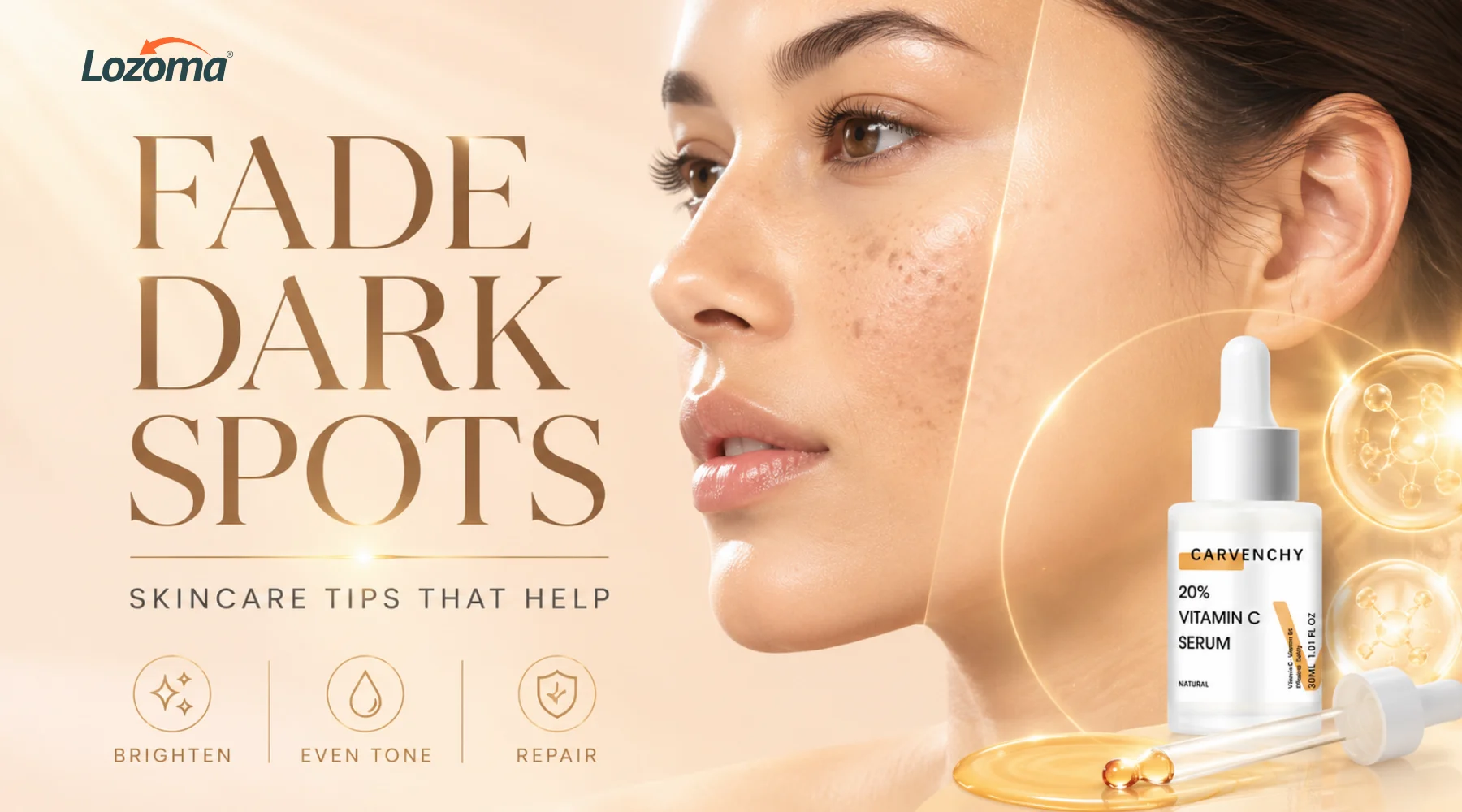
Dark spots can make skin look uneven long after a breakout, rash, scratch, or sunburn has healed. They often lead people to change their skincare routine, but it’s easy to over-treat them. Many try to scrub, peel, and use too many products at once, which can make dark spots harder to remove, especially on sensitive skin.
To fade dark spots, think of them as a response of pigment rather than a surface stain. Most dark spots form when melanocytes, the cells that produce pigment, become overactive. This can happen after inflammation, sun exposure, hormonal changes, irritation, or injury. You might see brown marks after acne, darker areas around the mouth, sun spots on the cheeks, or uneven patches on the face.
The good news is that many dark spots can fade. However, it takes regular care, sunscreen, and patience. A good serum can help, but it won’t be effective if you have daily sun exposure, pick at your skin, use harsh exfoliants, or have a damaged skin barrier. The best skincare routine is usually the gentler one that your skin can handle over time.
What Dark Spots on the Face Usually Mean
Dark spots are areas where the skin has more pigment than the surrounding skin. Dermatologists call this hyperpigmentation, which means skin darkening due to excess melanin. The best way to treat dark spots depends on their cause.
Post-inflammatory hyperpigmentation is common after acne, eczema, shaving irritation, burns, insect bites, or harsh skincare products. These marks appear where the skin was inflamed, often after the redness or swelling has healed. They can get darker when exposed to sunlight.
Sun-induced pigmentation usually shows up on areas that get regular sun exposure, like the cheeks, forehead, nose, and upper lip. These can look like freckles, sun spots, or uneven brown patches. They often worsen over time, so many people don’t connect them to years of sun exposure.
Melasma is another common cause of dark spots on the face. It appears as symmetrical brown or grey-brown patches, often on the cheeks, forehead, upper lip, or jawline. Factors like hormones, pregnancy, certain contraceptives, heat, UV rays, and visible light can all contribute. Melasma can be harder to treat than post-acne marks, requiring gentler, long-term methods.
Not all dark patches should be treated at home. If a mark changes shape, bleeds, raises up, itches, crusts, looks very different from your other marks, or appears suddenly without a clear cause, see a doctor.
How to Fade Dark Spots Without Making Them Worse
To fade dark spots, the best method is to stop new pigment formation and promote regular skin renewal. This requires three main components: sun protection, pigment-regulating ingredients, and good barrier care.
A dark spot routine should avoid irritation. Irritated skin sends signals that can lead to more melanin production, worsening dark spots. This is why aggressive treatments like strong peels or harsh scrubs can make dark marks worse.
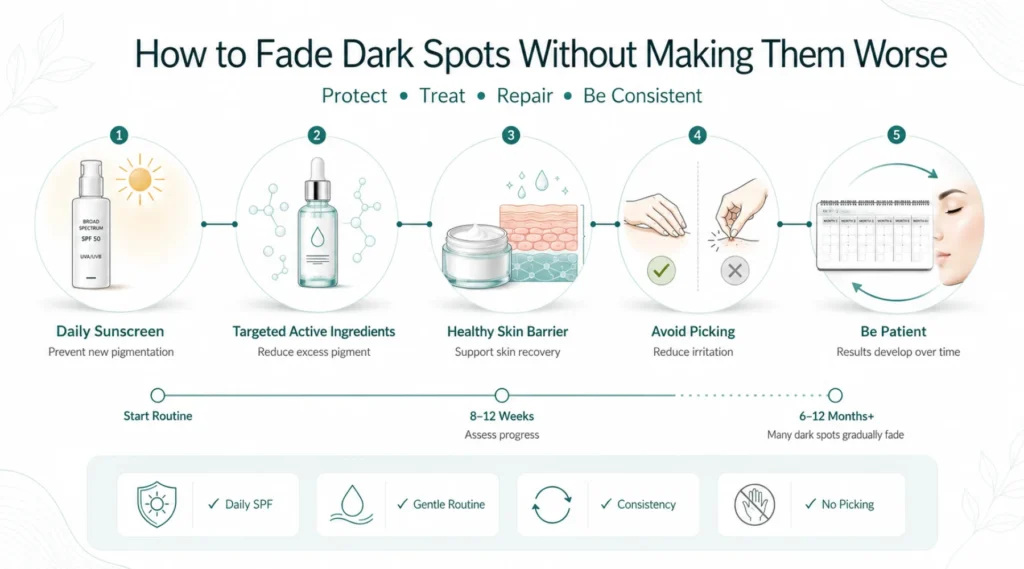
Instead, take a slower, but more reliable approach:
- Apply broad-spectrum sunscreen every morning.
- Use one or two targeted active ingredients consistently.
- Keep the skin barrier healthy with moisturiser.
- Avoid picking or squeezing the skin.
- Wait 8–12 weeks before assessing results.
Once the triggers are removed, many dark spots will fade gradually. According to the American Academy of Dermatology, spots slightly darker than your natural skin tone may fade in 6 to 12 months, while deeper spots may take years. Although the process may seem slow, it’s a realistic expectation. Skincare can help speed up fading, but it won’t eliminate pigment in just a few weeks.
Why Sunscreen Is the Most Important Dark Spot Treatment
Sunscreen is not just for protection; it’s also part of the treatment for skin prone to dark spots. UV rays activate melanocytes, the cells that produce pigment. When your skin is trying to lighten a dark mark, sun exposure tells those cells to stay active. That’s why dark spots may look lighter in winter but return or worsen in spring and summer.
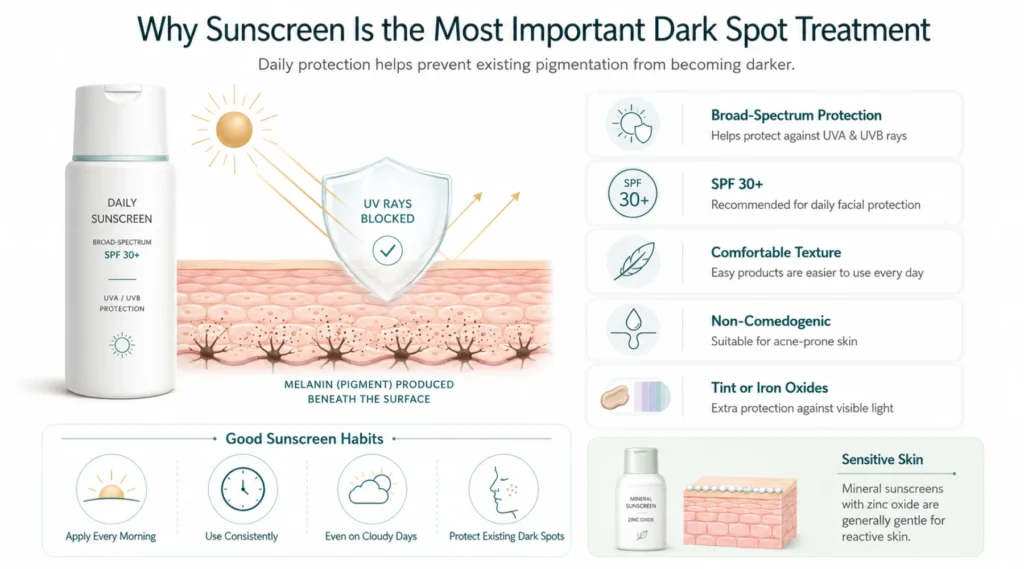
Dermatologists stress the importance of sunscreen in managing dark spots. The American Academy of Dermatology says that effective treatment for these spots starts with sunscreen. They recommend using tinted sunscreen with iron oxides, SPF 30 or higher, broad-spectrum protection, and water resistance for those treating dark spots.
For daily facial use, choose:
| Sunscreen feature | Why it matters for dark spots |
| Broad-spectrum protection | Helps protect against UVA and UVB rays |
| SPF 30 or higher | Provides a practical baseline for daily use |
| Comfortable texture | Makes daily use more likely |
| Non-comedogenic formula | Helpful for acne-prone skin |
| Tint or iron oxides | Helps protect against visible light, which can worsen pigmentation in some skin tones |
A zinc oxide sunscreen works well for sensitive or reactive skin because mineral filters are generally gentle. A sunscreen made with beef tallow and zinc oxide may be good for those who want a thicker feel, especially if their skin is dry or easily irritated. The key is not the popularity of the ingredients, but how well the sunscreen protects your skin every day and feels comfortable to use.
Why Tinted Sunscreen Can Matter for Dark Spots
Many people use sunscreen regularly, but still don’t see improvement in their pigmentation. This can be due to how much sunscreen they apply or how often they reapply it. Another factor to consider is protection from visible light.
Visible light from the sun can darken skin, especially in darker skin tones. The American Academy of Dermatology states that tinted sunscreens with iron oxide help protect against the harmful effects of visible light. The British Association of Dermatologists also mentions that sunscreens with iron oxides offer extra protection against visible light for melasma.
Not everyone needs to wear tinted SPF, but it’s a good option if:
- Your pigmentation reappears despite using sunscreen daily.
- You have melasma.
- Your dark spots worsen in summer.
- You have medium, olive, brown, or dark skin.
- Your marks become more visible with heat and light.
- You want light coverage while treating pigmentation.
To effectively use sunscreen for dark spots, apply it every morning as the last step of your skincare routine. Use enough to cover your face and neck, and reapply if you’re outdoors, sweating, or in direct sunlight for a long time. A wide-brimmed hat and seeking shade can also help since sunscreen isn’t foolproof.
The Best Ingredients to Reduce Dark Spots on Face
The best routine to fade dark spots uses a few key ingredients. Each one has a different effect. Some slow down melanin production, while others stop pigment transfer. Some help remove pigmented cells from the surface, and some reduce inflammation to prevent new marks from forming.
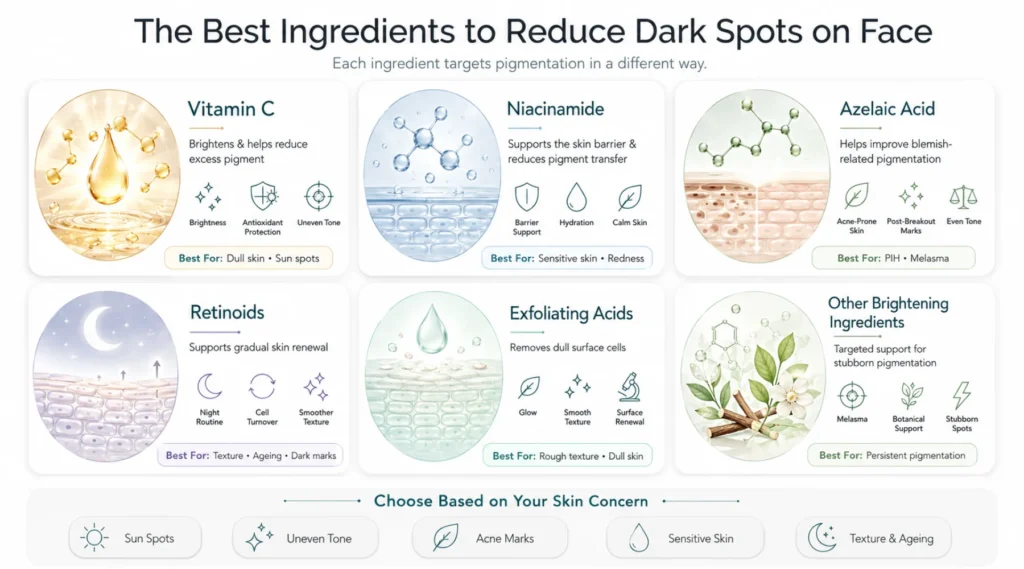
Vitamin C for Brighter, More Even-Looking Skin
Vitamin C is a popular ingredient for brightening skin. It helps make your skin look more radiant and protects it from damage. People often use it in the morning under sunscreen.
Vitamin C can reduce dark spots by disrupting melanin production. It pairs well with sunscreen but should not replace SPF. You can use it under your sunscreen.
A 20% vitamin C serum is good for skin that tolerates strong products. For beginners, focus on how your skin reacts rather than the percentage. A strong serum that causes irritation is not more effective. If your skin is sensitive, start using it every other morning or mix it with moisturiser.
Vitamin C needs time to work. You may see brightening effects before dark spots fade. Stubborn marks from acne, upper lip pigmentation, and sun spots require consistent use for several months.
Niacinamide for Pigment Transfer and Barrier Support
Niacinamide is a popular skincare ingredient because it is flexible and gentle on the skin. It helps with uneven skin tone, oily skin, and redness. For dark spots, it reduces the transfer of pigment from skin cells, making it effective without causing dryness or peeling.
While it may not be the fastest at brightening, it fits easily into daily routines. A hydrating product, like a 24k gold niacinamide essence moisturiser, can provide both tone support and moisture. Niacinamide works best as part of a full skincare routine rather than as a strong standalone treatment.
Azelaic Acid for Blemish-Prone and Pigmentation-Prone Skin
Azelaic acid is great for treating dark spots caused by breakouts. It helps even out skin tone and is safe for acne-prone skin. It’s often recommended for post-inflammatory hyperpigmentation and melasma, and many find it gentle compared to stronger acids.
The American Academy of Dermatology includes azelaic acid as a top ingredient for fading dark spots, alongside glycolic acid, kojic acid, retinoids, and vitamin C. The British Association of Dermatologists also lists it as a helpful over-the-counter option for melasma.
Azelaic acid may cause a slight tingling sensation at first. This isn’t usually a bad sign, but if you experience burning, long-lasting redness, or scaling, you should adjust your routine.
Retinoids for Slow, Steady Skin Renewal
Retinoids help normalise skin cell growth, create a smoother texture, and improve uneven skin tone over time. They are especially helpful for dark marks, clogged pores, post-acne texture, and early signs of skin ageing.
Retinol, retinal, and prescription tretinoin are different strengths but belong to the same group. It’s a mistake to think that stronger is always better. For skin prone to pigmentation, especially darker skin, irritation can worsen dark spots. A moderate retinoid used regularly is usually more effective than a strong one used too aggressively for a short time.
Use retinoids at night, starting two or three times a week. Don’t mix them with strong exfoliating acids unless your skin is very resilient. Avoid retinoids during pregnancy, and get medical advice for prescription retinoids.
Exfoliating Acids for Surface Dullness and Stubborn Marks
Alpha hydroxy acids, like glycolic and lactic acid, can brighten dull skin by removing dead cells. They are great for rough or tyred-looking skin, but can be easy to overuse.
Exfoliation doesn’t remove pigment from deeper skin layers. It can make the surface brighter and help other products work better, but too much can harm the skin barrier and cause inflammation.
For most people, using one exfoliating product once or twice a week is enough to treat dark spots at home. Those with sensitive skin might find lactic or mandelic acid gentler than strong glycolic acid. People with acne-prone skin might prefer salicylic acid, especially for clogged pores.
Tranexamic Acid, Kojic Acid, Liquorice, and Cysteamine
Some newer brightening ingredients can be very effective. Tranexamic acid is great for melasma because it targets how the skin makes pigment. Kojic acid brightens but can irritate sensitive skin. Liquorice extract is gentler and is often found in calming, brightening products. Cysteamine works on pigmentation but has a strong smell and needs careful application.
Choosing the right ingredient depends on your skin’s sensitivity, the type of pigmentation, and your current skincare routine. A good serum can help when you want to focus on a specific issue, while broader skincare products like cleansers, moisturisers, and sunscreens help keep your skin calm.
How to Fade Dark Spots for Beginners
Beginners should avoid starting with the strongest serum, a weekly peel, and a retinoid all at once. This can make it hard to tell what is working and what is irritating the skin.
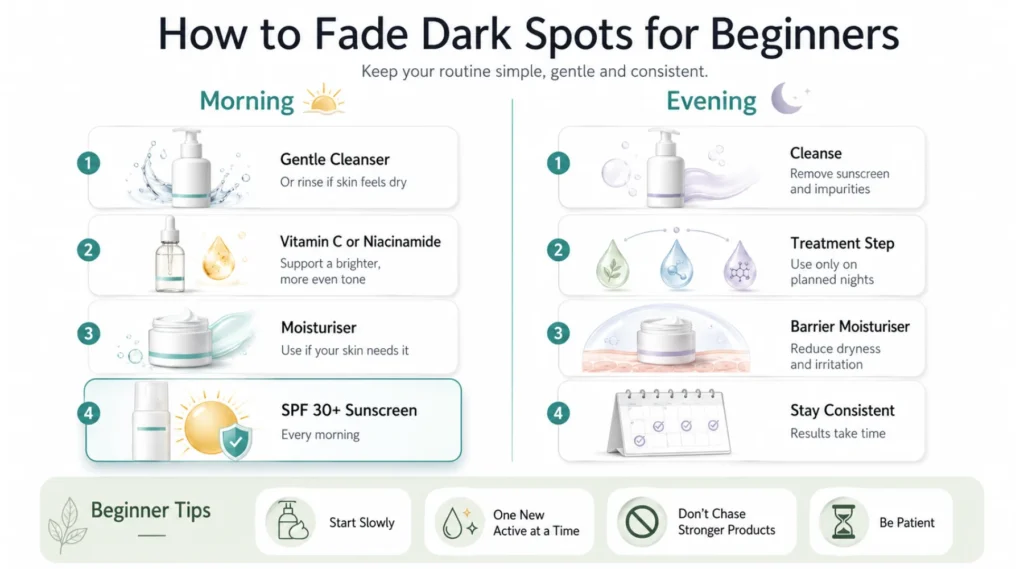
A basic routine for beginners is often more effective:
Morning
- Use a gentle cleanser or just rinse if your skin feels dry.
- Apply a vitamin C or niacinamide serum.
- Use a lightweight moisturiser if necessary.
- Put on broad-spectrum sunscreen with SPF 30 or higher.
Evening
- Use a mild cleanser.
- Apply azelaic acid, niacinamide, or retinoids on chosen nights.
- Use a moisturiser that supports your skin barrier.
If your skin is sensitive, start with niacinamide and sunscreen before using stronger ingredients. If your dark spots come from acne, focus on controlling breakouts first. It’s hard to lighten old marks if new ones keep appearing.
Using a barrier-supporting moisturiser, like 345 relief cream for all skin types, can reduce dryness and irritation that may interfere with brightening treatments. While moisturiser doesn’t fade pigment like vitamin C or azelaic acid, it helps your skin handle those ingredients better.
How to Fade Dark Spots Naturally Without Falling for Myths
Many people want to fade dark spots naturally for a gentler and safer method, which is understandable. However, “natural” products online often include ingredients that are not well-studied and can irritate or harm facial skin.
Common examples include lemon juice, baking soda, toothpaste, turmeric pastes, apple cider vinegar, and harsh DIY scrubs. Lemon juice can irritate skin and increase sun sensitivity. Baking soda disrupts the skin’s natural balance. Toothpaste is meant for teeth, not skin. Rough scrubs can inflame skin and worsen dark spots.
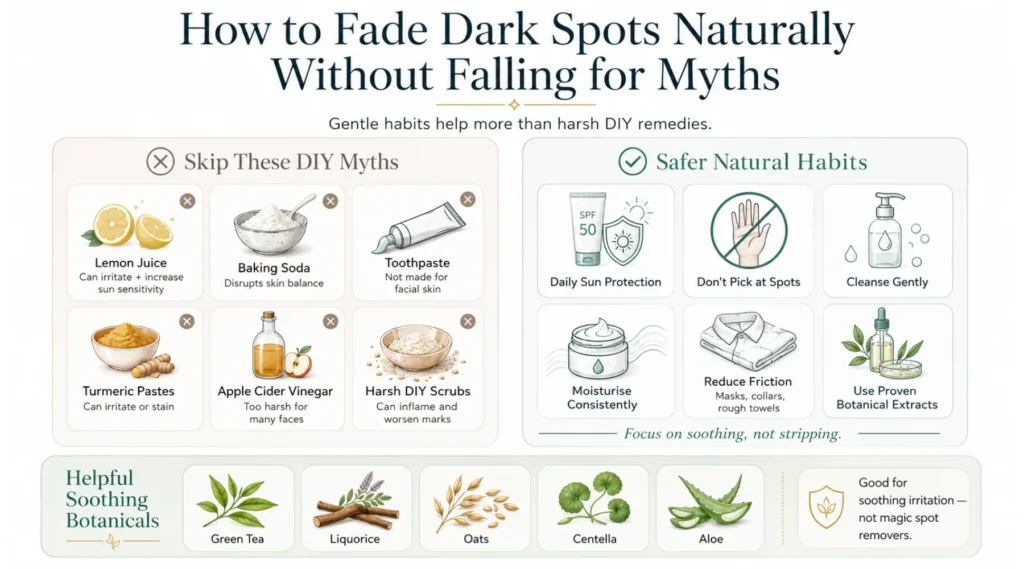
A safer, natural approach emphasises habits instead of kitchen remedies. Here are some key practises to follow:
- Use daily sun protection.
- Don’t pick at spots.
- Cleanse gently.
- Moisturise consistently.
- Reduce friction from masks, collars, or rough towels.
- Use products with proven botanical extracts.
Ingredients like green tea, liquorice, oats, centella, and aloe can soothe skin, but they won’t magically remove spots. They work best when irritation is involved in the pigmentation cycle.
How to Fade Dark Spots at Home Safely
At-home skincare can help reduce dark spots, but it’s important to be cautious. Don’t use unlabelled whitening creams, strong acids from unknown brands, or products that promise quick results.
In the UK, Trading Standards has warned about illegal skin-lightening products sold in stores and online. Some of these contain harmful ingredients like hydroquinone, mercury, and strong corticosteroids, which can cause serious health issues such as skin damage and infections.
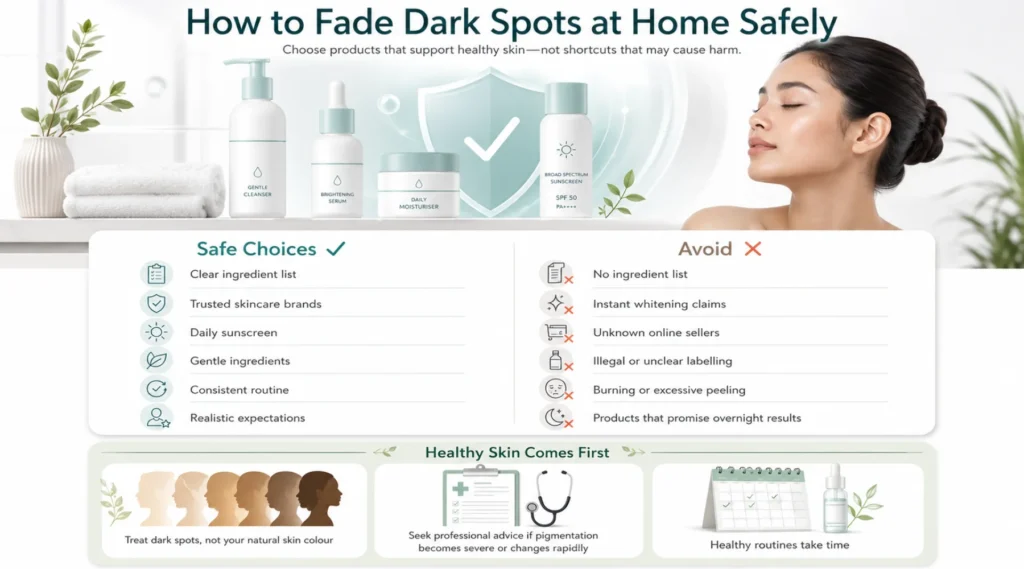
It’s important to understand the difference between treating dark spots and lightening skin. A good skincare routine should help even out your skin tone without changing its natural colour.
At Home: Avoid These Products
- Products without a complete ingredient list.
- Items that promise “instant whitening.”
- Products without clear UK labels.
- Items containing hydroquinone, mercury, clobetasol, betamethasone, or unknown steroid-like ingredients.
- Products sold by unverified social media sellers.
- Items that cause burning, peeling, or thinning, but are claimed to be effective.
If your pigmentation is severe, getting worse quickly, or causing emotional distress, see a dermatologist instead of using risky home treatments.
Best Routine to Fade Dark Spots
A good dark spot routine should be focused, not cluttered. The skin needs just a few key tasks done right: protect, control pigment, gently renew, and repair.
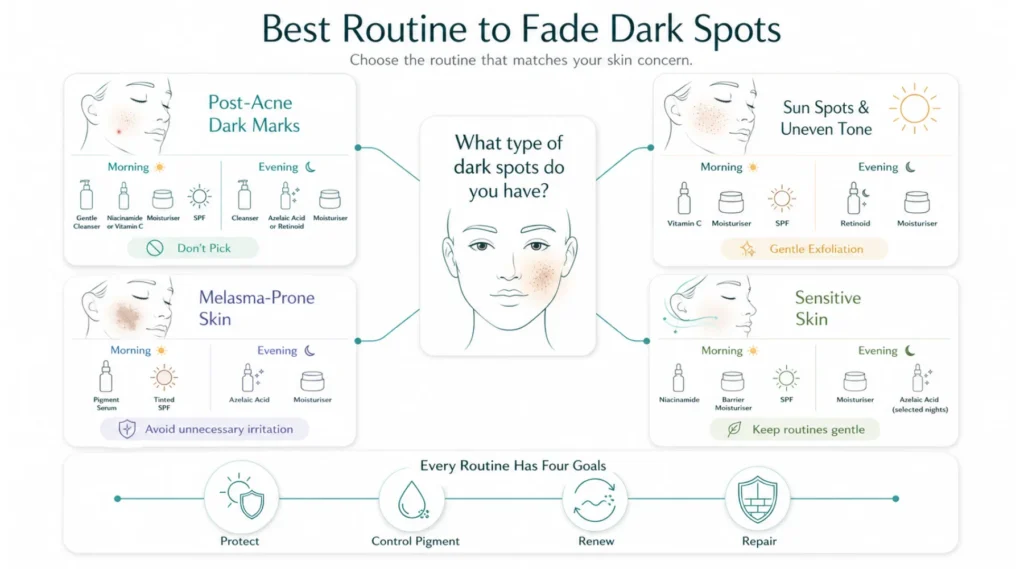
Routine for Post-Acne Dark Marks
Post-acne marks need two main goals: prevent new breakouts and lighten old marks.
Morning routine: Use a gentle cleanser, then apply niacinamide or vitamin C. Add moisturiser if needed, and finish with sunscreen.
Evening routine: Cleanse your face, then use azelaic acid or a retinoid, and apply moisturiser.
If you still have active breakouts, consider using salicylic acid or benzoyl peroxide, but introduce them slowly. Avoid picking or squeezing acne, as this can make dark marks last longer.
Routine for Sun Spots and Uneven Tone
Sun spots improve when you always use sunscreen.
Morning Routine: Use vitamin C, moisturiser, and broad-spectrum SPF.
Evening Routine: Apply a retinoid every other night, followed by moisturiser.
Use a gentle exfoliating acid once a week to brighten your skin, but treating sun spots takes time. Some stubborn spots may need professional help.
Routine for Melasma-Prone Skin
Melasma requires careful management because it can worsen from sunlight, visible light, heat, and irritation.
In the morning: Start with a gentle cleanser, then apply a pigment serum like vitamin C, niacinamide, or tranexamic acid. Finish with a tinted sunscreen that contains iron oxides.
In the evening: Use azelaic acid or a treatment recommended by your dermatologist, followed by a moisturiser.
Avoid strong peels, heat-based treatments, and mixing many active products. The British Association of Dermatologists warns that procedures like chemical peels, microneedling, and lasers can make pigmentation worse or cause scarring if not done carefully by skilled professionals.
Routine for Sensitive Skin With Dark Spots
Treat inflammation first for sensitive skin.
Morning Routine:
- Rinse or use a gentle cleanser.
- Apply niacinamide.
- Use a barrier moisturiser.
- Apply sunscreen.
Evening Routine:
- Cleanse your face.
- Use a moisturiser.
- Apply azelaic acid two or three nights a week if it feels okay.
You can use Vitamin C and retinoids, but don’t use them at the same time. Avoid products with heavy fragrances, alcohol-based toners, and strong exfoliating masks as they can irritate sensitive skin.
How Long Does It Take to Fade Dark Spots?
Dark spot fading depends on how deep the pigment is, what caused it, your skin tone, sun exposure, inflammation, and how consistently you follow your routine.
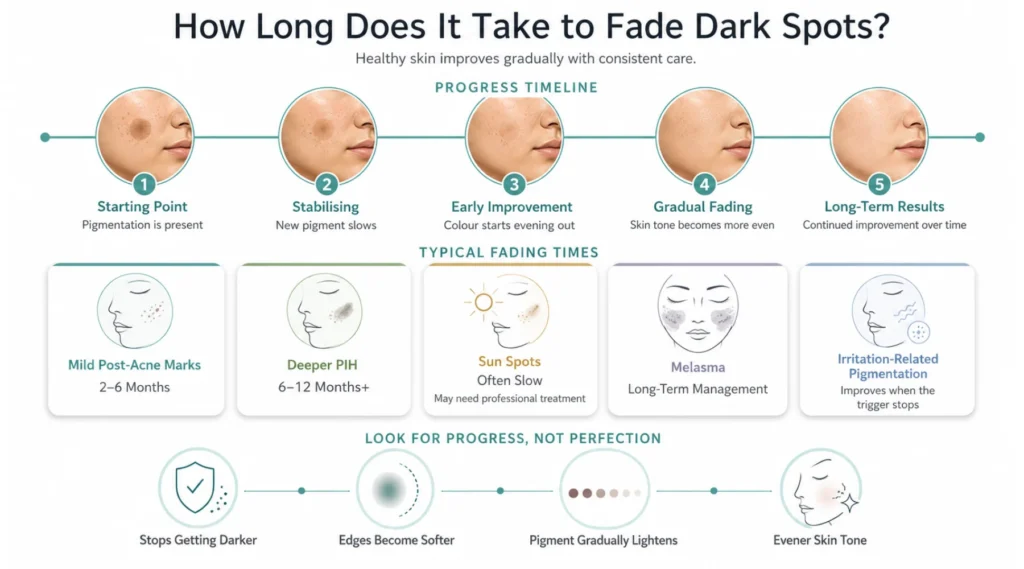
| Type of mark | Typical fading pattern |
| Mild post-acne marks | Often improve in 2–6 months with good skincare |
| Deeper post-inflammatory hyperpigmentation | May take 6–12 months or longer |
| Sun spots | Often slow to fade and may need professional treatment |
| Melasma | Usually chronic and relapse-prone |
| Pigmentation from irritation | Improves when the trigger stops, but can recur if irritation continues |
The AAD provides a clear guideline: after identifying and stopping the cause, a dark spot may lighten within 6 to 12 months, while deeper spots can take years to fade.
People should focus on early signs rather than expecting quick results. First, the mark may stop getting darker. Next, its edges might soften, and then the colour will become lighter. Complete fading usually happens last.
Common Mistakes When Trying to Fade Dark Spots
Using Brightening Products Without Sunscreen
This is a major mistake. Active ingredients can lighten pigment, but UV exposure keeps it active. Without sunscreen, you’re forcing your skin to both fade and darken.
Scrubbing the Skin to “Clean” Dark Spots
A dark spot is not dirt. People often look for ways to clean dark spots on their face and turn to scrubs, cleansing brushes, and harsh soaps. However, pigmentation is located in the skin’s pigment system. Over-cleansing can irritate the skin and make the spots worse.
Trying Too Many Activities Together
You don’t have to use Vitamin C, retinoids, exfoliating acids, azelaic acid, and brightening masks all in the same week. Using more products can cause irritation instead of speeding up results.
Picking Spots Before They Heal
Picking at acne makes it worse. It increases inflammation and can lead to lasting marks from what started as a small blemish.
Expecting Natural Remedies to Be Automatically Safe
Natural ingredients can still irritate or burn the skin. Lemon juice and vinegar can be harsh, even though they are from food.
Stopping Too Early
Pigmentation routines often don’t work because people give up after four weeks. Most dark spots take at least 8 to 12 weeks to show real improvement, and some need even more time.
Ignoring Heat and Friction
Heat can make melasma and dark patches worse. Friction from masks, razors, tight collars, or rubbing can also aggravate post-inflammatory marks.
How to Remove Dark Spots on Face: What Skincare Can and Cannot Do
The phrase “how to remove dark spots on the face” is clear, but it’s important to know that removal isn’t always possible. Skincare can help fade marks, lessen contrast, and stop new pigmentation, but it might not fully erase every sun spot, deep patch, or long-term melasma.
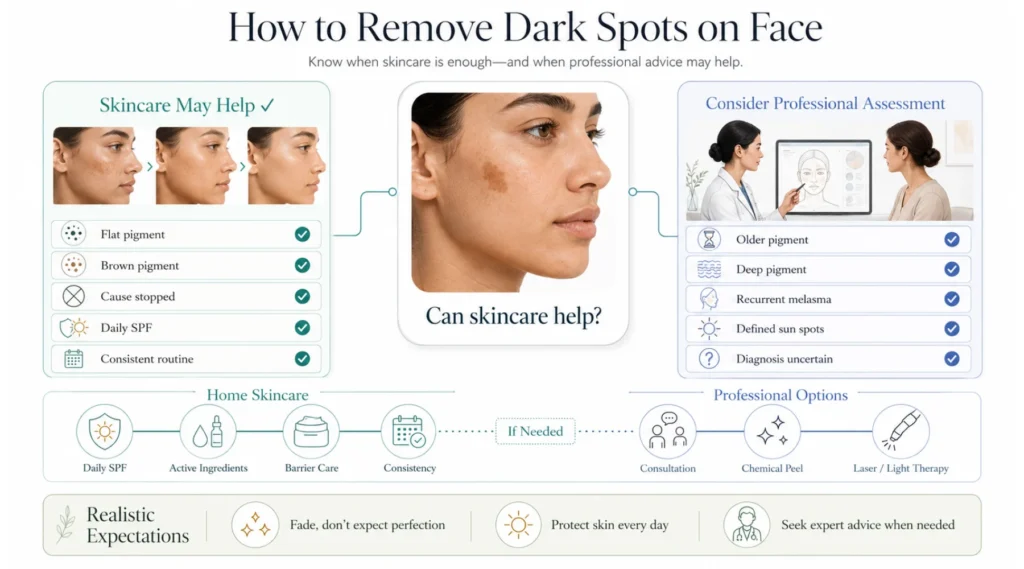
Skincare is likely to help when:
- The mark is flat.
- The pigment is brown, not blue-grey.
- The cause has stopped.
- Sunscreen is used daily.
- The routine is consistent for several months.
Professional treatments might be necessary when:
- Marks are very old.
- Pigmentation is deep.
- Melasma keeps coming back.
- Sun spots have clear edges.
- At-home products cause irritation.
- There’s confusion about the diagnosis.
DermNet says that chemical peels, lasers, and intense pulsed light may help with surface pigmentation. However, these treatments can sometimes make pigmentation worse by damaging the skin and may not work for deeper pigmentation. This is why it’s important to choose an experienced practitioner, especially for deeper skin tones.
Professional Treatments for Stubborn Dark Spots
Professional treatments can work well, but they aren’t quick fixes. They need good aftercare and sun protection.
Chemical Peels
Superficial chemical peels can improve uneven skin tone and pigmentation. They often use acids like glycolic, lactic, mandelic, or salicylic. However, using a peel that’s too strong or not preparing the skin can cause irritation, burns, or worsening pigmentation.
For people with darker skin, it’s important to use milder peels and have an experienced practitioner.
Prescription Creams
Dermatologists might recommend treatments like hydroquinone, retinoids, or combination creams for skin pigmentation issues. In the UK, you should only use hydroquinone with a doctor’s guidance. The British Association of Dermatologists says that only doctors can prescribe hydroquinone. It can cause skin irritation and should only be used for a short time to prevent over-lightening.
Prescription treatments aren’t for everyone. The British Association of Dermatologists advises that pregnant women should avoid hydroquinone and retinoid creams.
Microneedling
Microneedling can help with some skin spots and texture, but it has risks. The British Association of Dermatologists mentions potential pain, swelling, infection, and scarring, such as keloids. If you’ve had keloid scars or skin changes after injuries, be cautious with this treatment.
Laser and IPL
Lasers and IPL can help with certain pigmentation issues, but they can sometimes make them worse if the wrong equipment, settings, or skin prep is used. Melasma is particularly tricky with heat treatments.
A good practitioner will check if the pigment is in the upper or deeper skin layers, talk openly about the risks, and require strict sunscreen use before and after treatment.
Lifestyle Factors That Influence Dark Spots
Skincare is important, but your daily habits really affect whether pigmentation fades or comes back.
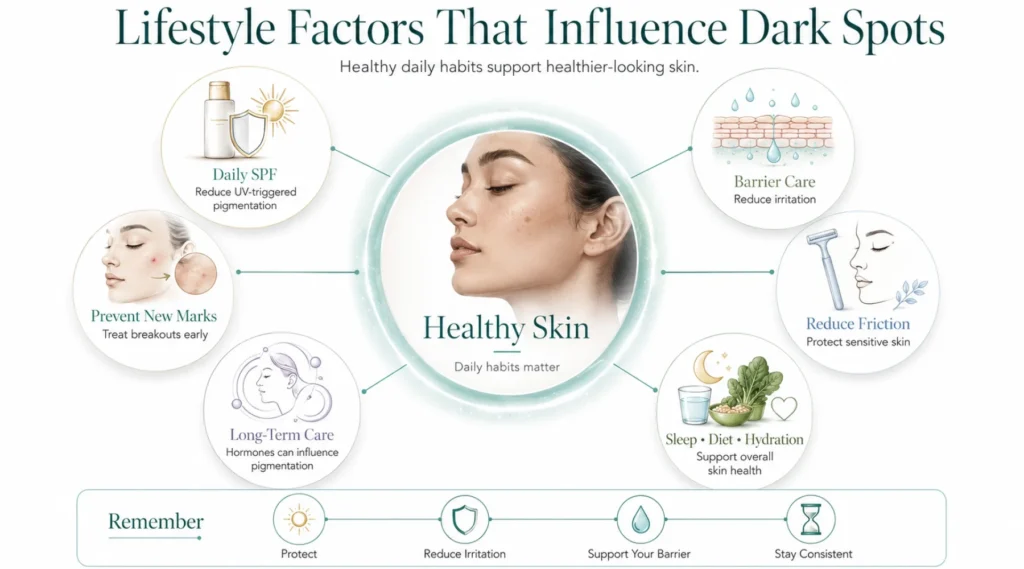
Sun Habits
Every bit of sun exposure matters. Walking to your car, sitting by a sunny window, running errands, or having lunch outside all contribute. If you have skin that is prone to pigmentation, using sunscreen every day is important. It should be a regular habit, not just something for the beach.
Acne Control
If acne keeps coming back, dark marks will keep appearing. A pigmentation routine should address the breakout cycle. Often, the best way to reduce dark spots is to treat acne more effectively.
Skin Barrier Health
A strong barrier helps the skin handle active ingredients. A damaged barrier causes stinging, flaking, and sensitivity, leading to more inflammation and pigmentation.
Shaving and Hair Removal
Pigmentation on the upper lip and jaw may come from waxing, threading, shaving irritation, or ingrown hairs. To help reduce friction, use soothing aftercare, and avoid hair removal on irritated skin.
Hormonal Triggers
Melasma can be affected by pregnancy, birth control, or hormone therapy. Skincare can help, but treating hormonal pigmentation usually requires long-term care.
Sleep, Stress, and Diet
No one food can get rid of dark spots. However, lack of sleep, stress, and an unhealthy lifestyle can make acne, eczema, or irritation worse, leading to more marks on the skin. Eating a balanced diet with enough protein, colourful plant foods, and staying hydrated helps your skin, but these foods shouldn’t be seen as cures for pigmentation issues.
Myths About Getting Rid of Dark Spots
“Dark Spots Mean the Skin Is Dirty”
Dark spots are not dirt and can’t be washed away. Cleansing removes oil, sunscreen, and pollution, but pigmentation comes from melanin in the skin.
“The Strongest Peel Gives the Fastest Result”
A strong peel can cause more damage than the original mark. This is particularly risky for those with medium to deep skin tones and for people who are prone to dark spots after skin injuries.
“Sunscreen Is Only Needed on Sunny Days”
UVA rays can still reach you on dull days, and visible light can affect skin that easily darkens. It’s better to use daily protection than to guess the weather.
“If It Burns, It’s Working”
Burning does not mean your skin colour is fading. It usually shows irritation, which can make dark spots worse.
“Natural Remedies Are Safer Than Skincare Actives”
Some natural remedies can irritate the skin more than well-made skincare products. Safety relies on the ingredient’s concentration, pH, and how it is used.
“Dark Spots Can Always Be Removed Completely”
Some can fade a lot. Others only lighten. Melasma can come back. Sunspots might need professional care. Having realistic expectations helps you make better choices.
A Practical Ingredient Pairing Plan
Dark spot routines work best when ingredients are carefully combined.
| Morning focus | Evening focus | Best for |
| Vitamin C + sunscreen | Retinoid + moisturiser | Sun spots, dullness, early ageing |
| Niacinamide + sunscreen | Azelaic acid + moisturiser | Sensitive skin, post-acne marks |
| Tranexamic acid + tinted SPF | Azelaic acid or prescribed treatment | Melasma-prone skin |
| Gentle serum + sunscreen | Barrier cream only | Damaged or reactive skin |
| Vitamin C + sunscreen | Exfoliating acid once weekly | Surface dullness and uneven tone |
Don’t use all active ingredients at the same time. A good skincare routine should feel simple and steady. If your skin is often tingling, peeling, or red, the routine is too harsh.
When Dark Spots Need Medical Advice
You can usually manage post-acne marks and mild uneven skin tone with skincare. However, some cases need a doctor’s help.
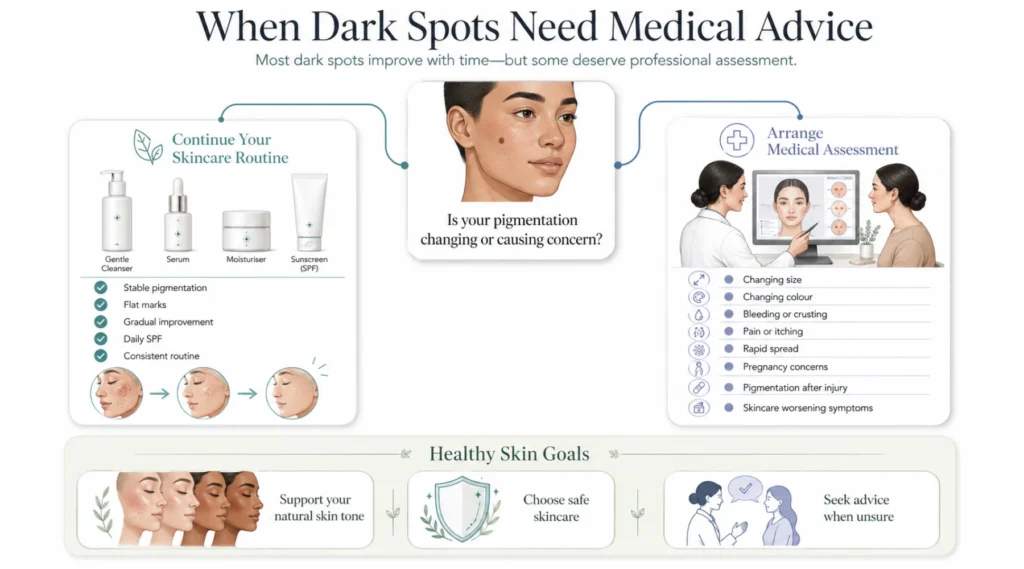
See a GP, dermatologist, or qualified medical practitioner if:
- A pigmented mark changes in size, shape, or colour.
- A mole bleeds, crusts, itches, or hurts.
- Pigmentation appears suddenly without an obvious reason.
- Dark patches spread quickly.
- You are pregnant and unsure about safe ingredients.
- Pigmentation occurs after a burn, procedure, or strong reaction.
- Over-the-counter products worsen your skin.
- Melasma is affecting your confidence and doesn’t respond to skincare.
If dark spots push you towards unsafe products, seek help. It’s normal to want even skin, but the pressure to lighten your natural colour isn’t healthy. Good skincare should respect your natural tone while reducing unwanted unevenness.
Questions People Ask Before Starting a Dark Spot Routine
How do I get rid of dark spots on my face without damaging my skin?
Start with sunscreen every morning. Then add one ingredient for skin colour support, like vitamin C, niacinamide, or azelaic acid. At first, avoid scrubs, lemon juice, and strong peels. The best routine is one your skin can handle regularly.
How can I remove dark marks on my face after acne?
Treat active acne first to prevent new marks. Use sunscreen daily, avoid picking, and consider using azelaic acid, niacinamide, vitamin C, or a gentle retinoid. Post-acne marks can take a few months to fade.
How long does it take to fade dark spots?
Light marks may fade in a few months, but dark spots often take 6 to 12 months to improve. Deeper spots may need even more time. Using sunscreen regularly can speed up this process.
Can vitamin C fade dark spots?
Vitamin C can brighten uneven skin tone and reduce dark spots by blocking pigment formation. It works best when used regularly with sunscreen. People with sensitive skin may need a milder formula or to use it less often.
Is niacinamide good for dark spots?
Niacinamide can help even out skin tone and support the skin barrier. It’s great for people who can’t handle strong acids or retinoids. It works slowly and steadily.
Does sunscreen really help clear dark spots?
Yes. Sunscreen stops dark spots from getting darker and helps fade them by reducing UV-triggered pigment. For melasma or sensitive skin, tinted sunscreen with iron oxides gives extra protection against visible light.
How do I clean dark spots on my face?
Dark spots can’t be removed like regular dirt. Use a gentle cleanser to keep your skin comfortable. Then, use sunscreen and ingredients that target pigmentation to help fade the spots over time.
Can dark spots fade naturally?
Some dark spots fade on their own once the cause stops, like marks from acne or irritation. But UV exposure can slow down this fading, so wearing sunscreen is still important, even if you’re not using brightening treatments.
What is the best routine to fade dark spots?
A good skincare routine includes gentle cleansing, a vitamin C or niacinamide serum in the morning, daily sunscreen, and azelaic acid or a retinoid at night if your skin can handle it. Use moisturiser whenever your skin feels dry or irritated.
Why are my dark spots getting darker?
Dark spots can get darker from sun exposure, visible light, heat, picking, irritation, hormone changes, or ongoing acne. If your routine uses many strong ingredients, irritation might worsen the pigmentation.
Can I fade dark spots at home?
Many mild to moderate dark spots can get better with regular home skincare. Use safe products, avoid illegal skin-lightening creams, and be patient with your routine. For stubborn melasma, deep pigmentation, or changing marks, see a professional.
Are professional treatments faster than skincare?
They can be effective, but they also have risks. If used incorrectly, chemical peels, lasers, and microneedling can worsen pigmentation. After professional treatments, you still need to use sunscreen and maintain your skincare routine.
Is retinol good for dark spots?
Retinol can improve uneven skin tone by helping the skin renew itself. Start using it slowly at night. Using too much can irritate the skin and make pigmentation worse, so more isn’t always better.
How can I reduce dark spots if I have sensitive skin?
Use sunscreen, niacinamide, and products that repair the skin barrier. Introduce azelaic acid slowly. Avoid products with strong fragrances, harsh acids, and exfoliating too often. Sensitive skin can lighten dark spots better when it is calm.
Can dark spots come back after they fade?
Yes. New acne, sun exposure, hormones, heat, and irritation can make pigmentation come back. It’s important to maintain your skin, especially for melasma and dark spots caused by the sun.
Making Skincare Work When You Want to Fade Dark Spots
To fade dark spots effectively, focus on stopping the signals that keep pigment active instead of attacking your skin. Use gentle ingredients that your skin can handle to support slow renewal.
Sunscreen is crucial. Ingredients like Vitamin C, niacinamide, azelaic acid, retinoids, and mild exfoliating acids can help, but they work best when your skin barrier is calm and protected. A routine with targeted serums, good moisturisers, and daily sunscreen will usually be better than a harsh routine that causes peeling and irritation.
Dark spots require patience because pigment fades slowly. Slow improvements, like softer edges or lighter colours, are steps in the right direction. Stay consistent, avoid over-treating, and focus on protecting your natural skin tone rather than trying to change it.