






Blog
How to Use Vitamin C Serum Correctly for Better Results


Vitamin C serum is a great addition to your skincare routine, but it’s easy to use incorrectly. A few drops can make dull skin look brighter over time, but using it the wrong way, too often, or storing it poorly can lead to disappointment.
Using vitamin C serum is not just about where you apply it. You need to know what it does, how your skin reacts, and which other products will help it work without causing irritation.
Think of vitamin C as something to support your skin daily, not a quick fix. It protects against environmental damage, improves skin tone, and helps with collagen production, but it doesn’t replace sunscreen, professional treatments, or a consistent routine. Experts say vitamin C is an antioxidant that helps with skin protection, ageing signs, and pigmentation when used regularly and properly.
For the best results, follow this simple routine: cleanse your face, apply vitamin C serum correctly, moisturise, and finish with sunscreen every morning. Once you have this routine down, you can adjust how often and how much you use based on your skin type.
Why Vitamin C Serum Works Best When the Routine Around It Makes Sense
Vitamin C is naturally found in the skin. It helps protect against damage and supports collagen. Sunlight, pollution, and everyday stress can harm the skin, making vitamin C important in skincare. Studies show that topical vitamin C has benefits like antioxidant properties, sun protection, anti-ageing effects, and reducing pigmentation. However, results can vary based on the product, skin type, and how regularly it is used.
A vitamin C serum doesn’t fix damage overnight. Its effects are gradual. When used correctly, it can make skin look fresher and more even. If used incorrectly, it can cause stinging, redness, dryness, or breakouts, making the skin look worse before any improvements appear.
One common mistake is seeing vitamin C as a quick fix rather than a precise treatment. Using more of it isn’t always better, and a higher concentration isn’t always the best choice. Tingling doesn’t mean it’s working. Also, applying it without sunscreen can lessen its benefits, especially if you’re worried about pigmentation.
A good vitamin C routine should address four key questions:
| Question | Best everyday answer |
| When should you use vitamin C serum? | Usually in the morning, although evening use can suit sensitive skin or complex routines. |
| How should you apply vitamin C serum? | After cleansing, before moisturiser and sunscreen, using a small amount on dry skin. |
| How often should you use vitamin C serum? | Start a few times a week, then build up if your skin stays calm. |
| What should you apply after vitamin C serum? | Hydrating serum if needed, moisturiser and broad-spectrum sunscreen in the morning. |
A simple routine helps vitamin C work best. If your skincare already has acids, retinoids, acne treatments, and fragrances, irritation can mask the results you want.
How to Use Vitamin C Serum for Beginners Without Upsetting Your Skin
The beginner approach should be careful, even if your skin is usually fine. Vitamin C serums are very different. Some use pure L-ascorbic acid, which is strong but can be harsh. Others use gentler forms that may take longer to work.
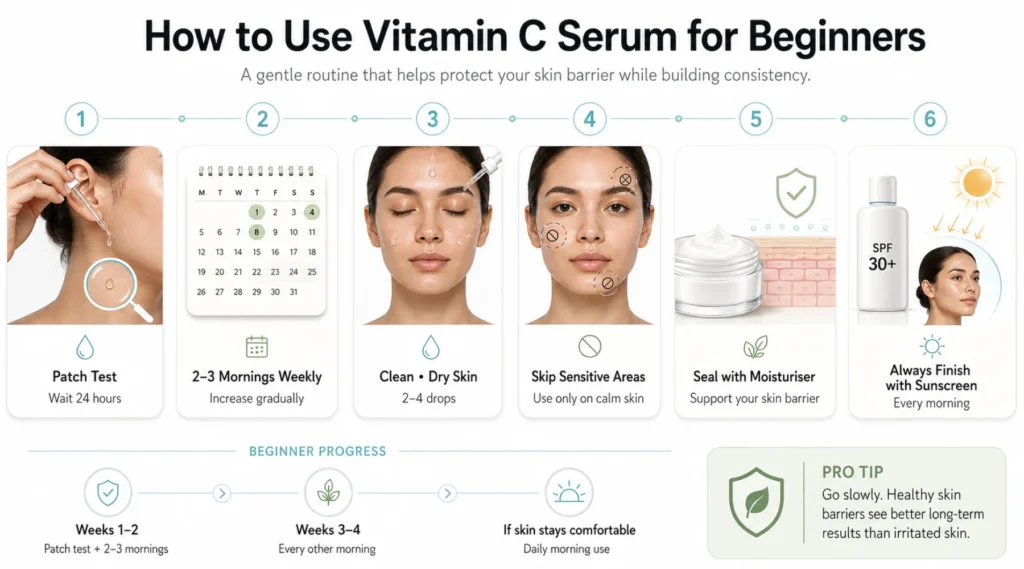
To start safely, add vitamin C as the only new product in your routine for at least two weeks. This helps you see if your skin responds well to it.
Start with a patch test.
Apply a small amount of serum to a hidden spot, like behind your ear or along your jawline. Leave it on for 24 hours and monitor the area. A slight warmth for a few seconds may occur, but if you notice ongoing burning, swelling, itching, rash-like bumps, or strong redness, stop using it.
Patch testing is important if you have eczema, rosacea, a damaged skin barrier, have recently over-exfoliated, or have a history of reacting to active skincare products.
Use it two or three mornings a week at first.
You don’t need to use the product every day from the start. If you’re just beginning, try using it two or three mornings a week to see how your skin reacts. If you feel good after two weeks, you can move to every other morning. If that goes well, you might be able to use it every morning.
Taking it slow doesn’t mean the serum is weak. It helps protect your skin barrier, so you can keep using it regularly.
Apply it to clean, dry skin.
After washing your face, gently dry it and wait a moment before using vitamin C. Damp skin can help ingredients absorb better, but that’s not always good with strong or acidic formulae.
Use a small amount. Two to four drops or a thin layer the size of a pea is enough for most faces. Spread it evenly over your face instead of focusing too much on one spot.
Keep it away from irritated zones.
Avoid putting vitamin C on broken skin, freshly picked spots, raw areas, recently waxed skin, or peeling skin from retinoids or acids. It’s best to use vitamin C on calm skin. If your cheeks are sensitive but your forehead and dark spots can handle it, apply it only where your skin reacts positively.
Follow with moisturiser
Moisturiser helps lessen dryness and makes your routine easier. It does not stop vitamin C from working if you wait a bit after applying the serum. A moisturiser that supports your skin barrier is especially useful if you’re using a strong serum, like a 20% Vitamin C Serum or Ampoule.
Finish with sunscreen in the morning.
Vitamin C and sunscreen are both important for skin care, but they serve different purposes. Vitamin C boosts your skin’s protection against free radicals, while sunscreen blocks UV rays. Dermatologists suggest using broad-spectrum sunscreen with an SPF of 30 or higher every day.
If you’re using vitamin C to treat uneven skin tone, acne marks, or sun spots, wearing sunscreen is essential. Without it, dark spots can become more pronounced, overshadowing the effects of brightening ingredients.
How to Apply Vitamin C Serum Step by Step
A vitamin C serum should be applied first in your skincare routine, before thicker creams and oils. This allows the serum to reach your skin directly without having to go through heavier products.
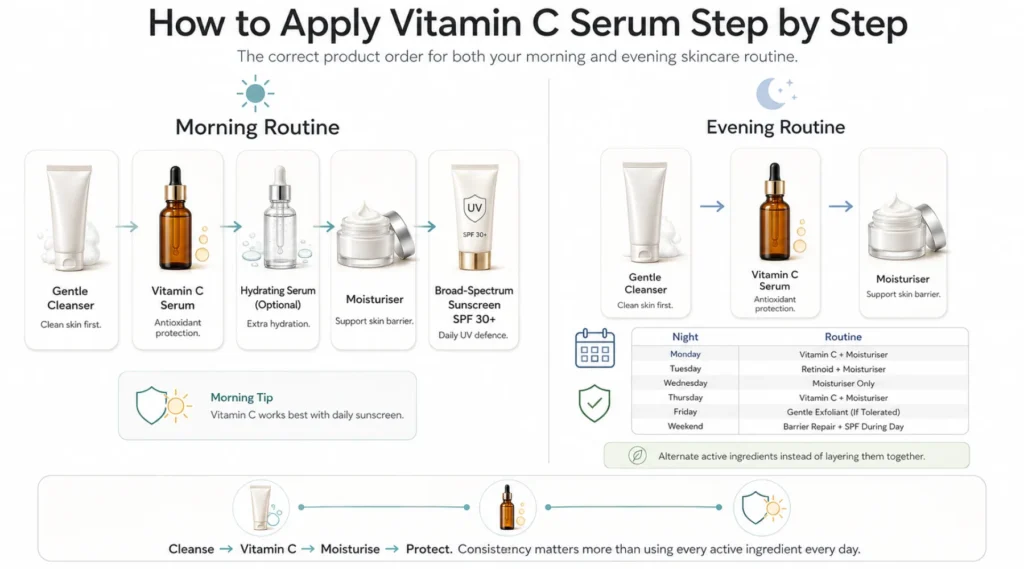
Morning routine with vitamin C
| Step | Product | Why it matters |
| 1 | Gentle cleanser | Removes sweat, oil and residue without stripping the skin. |
| 2 | Vitamin C serum | Delivers antioxidant and brightening support on clean skin. |
| 3 | Hydrating serum, if needed | Adds comfort, especially for dehydrated or tight skin. |
| 4 | Moisturiser | Supports the skin barrier and reduces dryness. |
| 5 | Sunscreen | Protects against UV exposure that worsens ageing signs and pigmentation. |
A simple morning routine could be:
- Clean your face with a gentle wash.
- Pat it dry.
- Apply vitamin C serum and wait until it’s dry.
- Put on moisturiser.
- Finish with sunscreen.
If you have oily skin, choose a light moisturiser or a hydrating sunscreen. If your skin is dry, use both a hydrator and a thicker cream.
Evening routine with vitamin C
You can use Vitamin C at night if your skin doesn’t handle it well in the morning or if you want to keep your daytime routine simple. Nighttime is also good for people who use many products in the morning and want to avoid layering too much before makeup or sunscreen.
A nighttime routine might be: cleanse, apply vitamin C serum, then add moisturiser. If you use retinoids or exfoliating acids, don’t use them together at first. Alternating nights is usually better for your skin.
For example:
| Night | Routine focus |
| Monday | Vitamin C and moisturiser |
| Tuesday | Retinoid and moisturiser |
| Wednesday | Moisturiser only |
| Thursday | Vitamin C and moisturiser |
| Friday | Gentle exfoliant, if tolerated |
| Weekend | Barrier repair and sunscreen during the day |
This spacing works better than using all active ingredients at the same time.
When to Use Vitamin C Serum: Morning, Night, or Both?
Most people are advised to use vitamin C serum in the morning. This is because it works well with sun protection. UV light and pollution create free radicals in the skin, and vitamin C helps fight this damage. DermNet says that vitamin C can lower free radicals from UV exposure, but it should not replace sunscreen.
Using vitamin C in the morning is especially good if you want to improve dull skin, uneven tone, early signs of ageing, or visible spots. A routine that considers the use of vitamin C serum should also think about sunscreen, makeup, skin sensitivity, and other products you use.
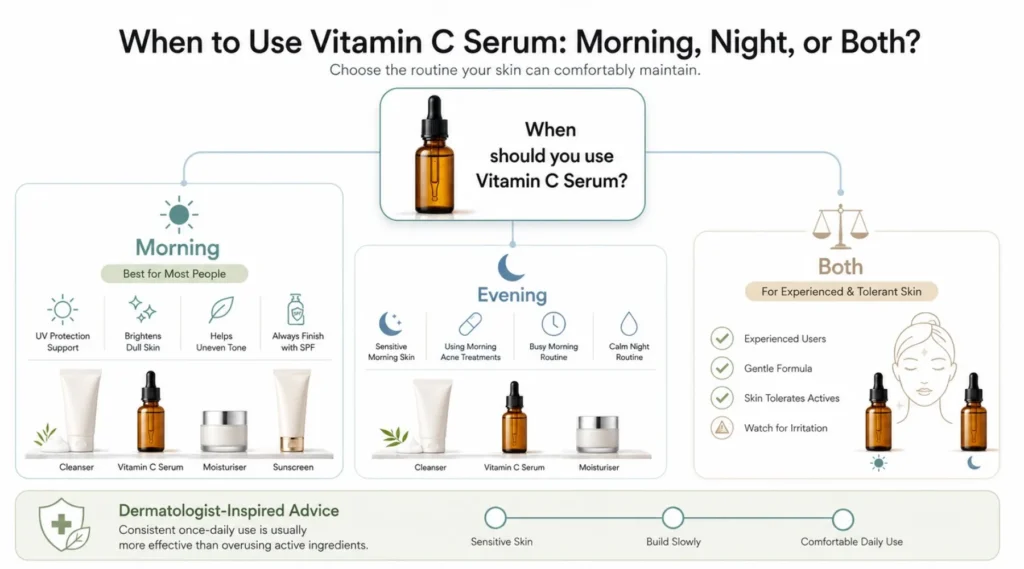
Using vitamin C at night can be better for reactive skin if it feels tingly or if you apply acne medications in the morning. Some people prefer it at night because they feel rushed in the morning. Regular use is more important than finding the “perfect” time.
Beginners usually don’t need to use vitamin C serum both morning and night. Using it twice a day can cause irritation without offering much extra benefit. If your skin is used to active ingredients and the formula is gentle, using it twice may be fine, but most people do well with once a day.
The key question is not just when to use vitamin C serum, but when your skin can handle it regularly. A calm routine five mornings a week is usually better than an ambitious one that leaves your skin red and flaky.
How Often Should You Use Vitamin C Serum?
You don’t need to use vitamin C serum every day right away. How often you use it depends on the formula, your skin type, and your overall routine.
| Skin type or situation | Sensible starting frequency |
| Normal, resilient skin | Every other morning |
| Oily skin with few sensitivity issues | Three to five mornings a week |
| Dry skin | Two or three mornings a week, with moisturiser |
| Sensitive or rosacea-prone skin | Once or twice a week at first |
| Damaged barrier | Wait until the skin is calm before starting |
| Retinoid users | Use vitamin C in the morning or on alternate nights |
| Exfoliating acid users | Keep acids and vitamin C separate at first |
If your skin feels good, you can increase use gradually. If your face feels tight, hot, itchy, or shiny, cut back. These signs usually mean your skin barrier is stressed.
Check how your skin feels the next morning, not just when you apply products. Irritation can show up later as roughness, sudden dryness, extra sensitivity, or stinging with moisturiser.
Vitamin C works best with regular use. A large amount once a week won’t be as effective as applying a small, manageable amount consistently.
What to Apply After Using Vitamin C Serum
The products you use after vitamin C affect how pleasant your routine is. Vitamin C doesn’t require a complicated activation step. It just needs clean skin, a formula that works for you, and layers that minimise irritation instead of causing it.
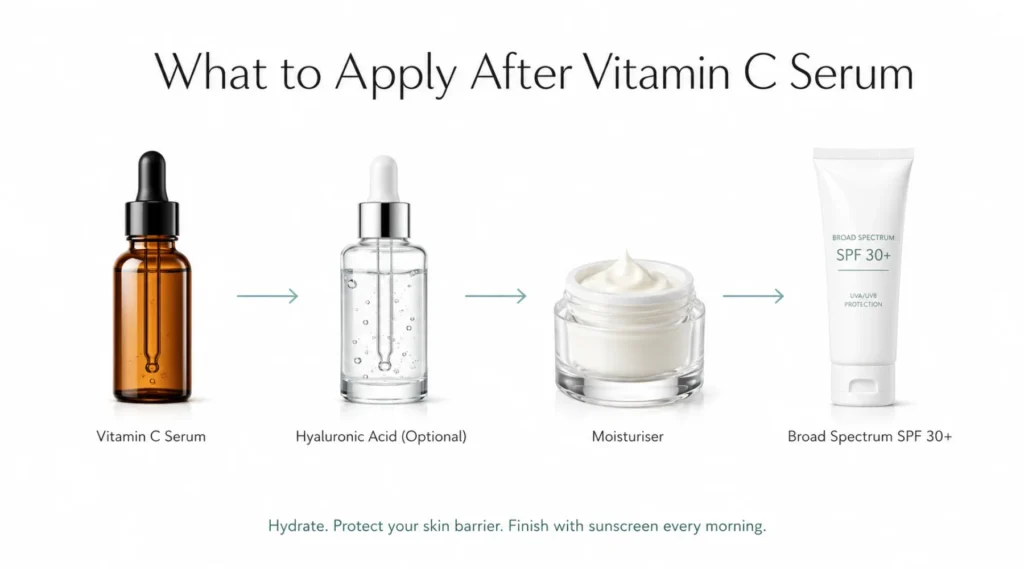
Hyaluronic acid can add comfort.
Many people wonder if they can use hyaluronic acid with vitamin C. The answer is yes. Hyaluronic acid attracts and holds water in the skin. Reviews and studies show that it can improve skin hydration and comfort.
If your vitamin C serum feels a bit drying, you can apply hyaluronic acid after it and before moisturiser. This is especially helpful for dehydrated skin that looks dull due to a lack of water, not just pigmentation.
Remember to seal in moisture with a moisturiser. Hyaluronic acid works best as part of a balanced skincare routine, not by itself on dry skin in low-humidity conditions.
Moisturiser helps protect the barrier.
Moisturiser is essential if your skin often feels dry or tight. Choose products with glycerin, ceramides, panthenol, squalane, or fatty acids to help support your skin barrier.
If you use a strong serum, it’s even more important to have a gentle moisturiser. A routine with a 20% Vitamin C ampoule serum may require fewer exfoliants and more barrier care compared to a routine with a milder option.
Sunscreen protects the skin.
Sunscreen is the last step in your morning routine. Vitamin C can brighten skin, but UV rays cause uneven skin tone, sun spots, and early ageing. The American Academy of Dermatology recommends a broad-spectrum sunscreen with SPF 30 or higher that is water-resistant if needed.
If you have dark marks, consider using tinted sunscreen with iron oxides. This is especially useful for skin prone to melasma or pigmentation from visible light. The AAD says iron oxide in tinted sunscreen helps protect against dark spots caused by visible light.
Can You Use Niacinamide with Vitamin C?
Most people can use niacinamide with vitamin C. The old belief that they cancel each other out is outdated and doesn’t apply to modern skincare.
The main question is whether you need both in your routine. Vitamin C and niacinamide can work well together because they help with uneven skin tone in different ways. Vitamin C is known for its antioxidant benefits, boosting collagen, and reducing dark spots. Niacinamide strengthens the skin barrier, improves tone, and can lessen pigmentation by influencing how pigment moves into skin cells.
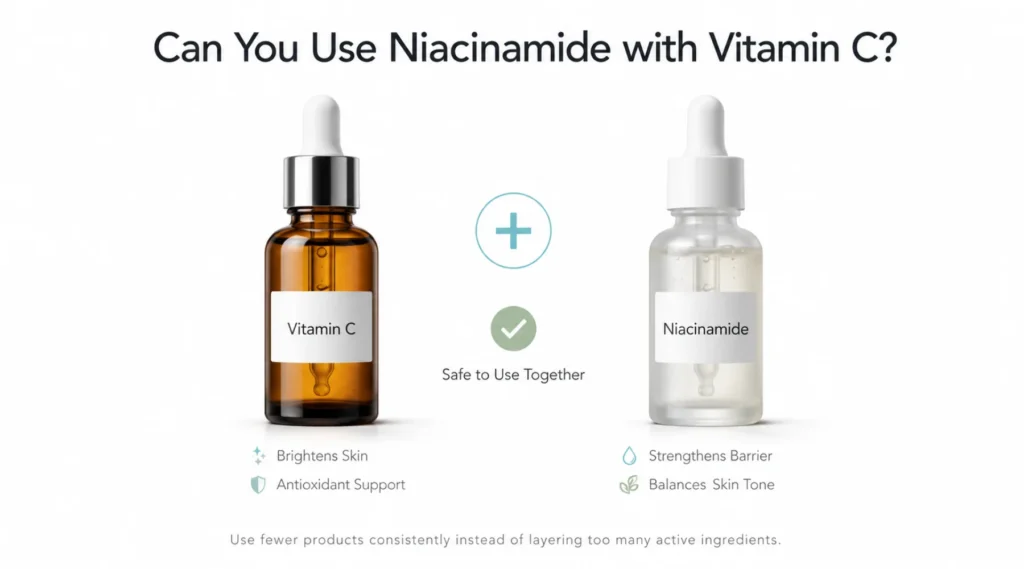
If your skin is strong, you can apply vitamin C first, followed by niacinamide, and then moisturiser. If your skin is sensitive, use vitamin C in the morning and niacinamide at night. This allows you to enjoy both without overwhelming your skin.
A simple routine might look like this:
| Concern | Morning | Evening |
| Dullness and mild uneven tone | Vitamin C, moisturiser, sunscreen | Niacinamide, moisturiser |
| Sensitive skin with redness | Gentle hydration, sunscreen | Niacinamide, moisturiser; vitamin C twice weekly |
| Post-acne marks | Vitamin C, moisturiser, sunscreen | Niacinamide or azelaic acid, moisturiser |
| Oily skin | Lightweight vitamin C, gel moisturiser, sunscreen | Niacinamide serum, light moisturiser |
The main risk isn’t the pairing of ingredients, but using too many products. Many cleansers, toners, serums, moisturisers, and sunscreens contain niacinamide. This can lead to using it multiple times without knowing it. Dermatologists say that niacinamide is mostly safe, but using it too often can irritate some people’s skin.
So, can you use niacinamide with vitamin C? Yes, but you don’t need five niacinamide products along with a strong vitamin C serum. Stick to one or two essential steps in your routine.
Can You Use Hyaluronic Acid with Vitamin C?
Hyaluronic acid pairs well with vitamin C. It doesn’t clash and makes your skincare routine feel better.
Start with vitamin C if it’s a light serum, then apply hyaluronic acid for hydration. Finish with moisturiser. In the morning, add sunscreen last.
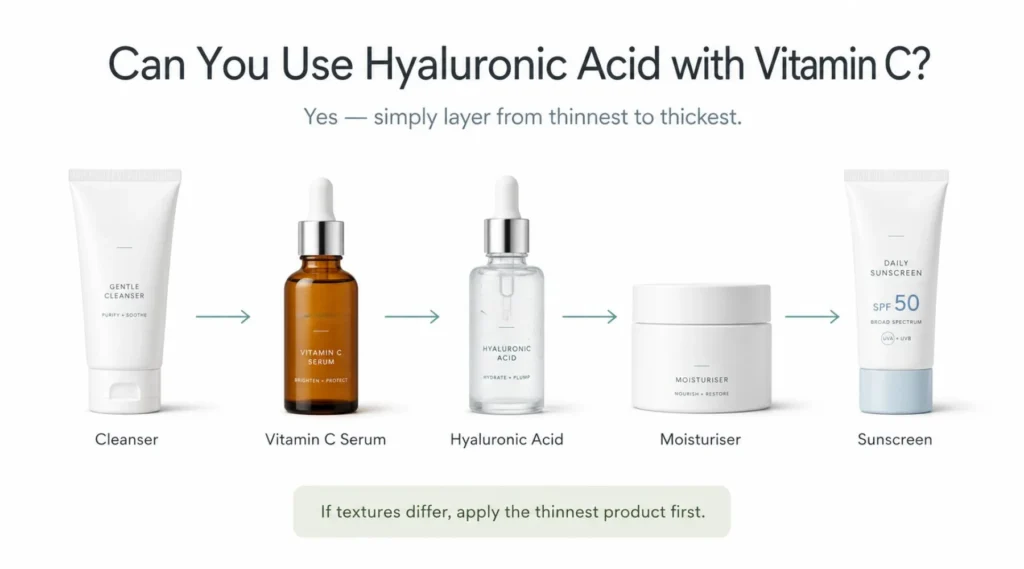
Your routine should look like this:
- Cleanser
- Vitamin C serum
- Hyaluronic acid serum
- Moisturiser
- Sunscreen
If your hyaluronic acid is watery and your vitamin C is thicker, switch their order based on texture. Use the thinnest product first and the thickest last.
For dry skin, using a hydrating serum with vitamin C makes the routine more pleasant. Healthy, hydrated skin reflects light better, giving it a nice glow.
Does Vitamin C Lighten Skin or Brighten Skin?
Vitamin C is a brightening ingredient that helps even out skin tone. It can reduce dark spots and uneven pigmentation, but won’t change your natural skin colour.
Does vitamin C lighten skin? It can make dark spots less noticeable over time, making your overall complexion look clearer, but it won’t alter your natural tone.
Does vitamin C brighten skin? Yes, it can make dull skin look fresher by improving uneven tone and giving skin a smoother appearance. The American Academy of Dermatology (AAD) states that vitamin C serum or cream can reduce signs of ageing and dark spots. Reviews also highlight its benefits for pigmentation and sun damage.

Pigmentation issues are complex. Post-acne marks, sun spots, and melasma respond differently. The AAD notes that fading dark spots can take months, especially for deeper discolouration.
That’s why vitamin C works best as part of a complete routine for evening skin tone.
| Step | Why it matters for pigmentation |
| Sunscreen | Helps prevent marks from darkening further. |
| Vitamin C | Supports brightness and antioxidant defence. |
| Niacinamide or azelaic acid | May help stubborn uneven tone and barrier support. |
| Gentle exfoliation | Can improve surface dullness if tolerated. |
| Dermatology care | Important for melasma, deep pigmentation or changing marks. |
If a dark spot changes shape, bleeds, itches, crusts, grows quickly, or looks different from your other spots, don’t treat it as a normal mark at home. See a dermatologist.
Choosing the Right Vitamin C Formula for Your Skin
The term “vitamin C serum” refers to different types of formulae. The ingredients are important.
L-ascorbic acid
L-ascorbic acid is the purest type of vitamin C and is commonly studied for skincare. It can be very effective but may sting, especially in higher concentrations or lower pH levels.
Experienced vitamin C users often prefer this form for its strong antioxidant and brightening effects. A product like a 20% Vitamin C Serum might work well for tough skin, but it may be too much for beginners with sensitive skin.
Vitamin C derivatives
Derivatives are forms of vitamin C that are changed to be more stable, easier to tolerate, or flexible for different products. Some examples are ascorbyl glucoside, sodium ascorbyl phosphate, magnesium ascorbyl phosphate, and ethyl ascorbic acid.
These derivatives can be gentler on the skin, but they may need to be converted in the skin and can take longer to show results. For those with sensitive skin, this can be a good option.
Oil-based vitamin C formulae
Some vitamin C products are thicker and more moisturising. These work well for dry skin, but people with acne should be careful about the texture. If a product feels heavy, greasy, or clogs pores, it might not be suitable, even if it has good vitamin C.
Ampoules and concentrated treatments
Ampoules are made to feel stronger. They can help when your skin is used to vitamin C, but you should start using them slowly. The term “ampoule” doesn’t mean it’s better; it means you need to be careful with how your skin reacts.
Multi-benefit serums
Some products mix vitamin C with gold-like ingredients, peptides, plant antioxidants, or moisturising agents. A 24K Gold Serum is good for those who want a glowing look and antioxidant support. A Vitamin C Face and Body Serum is better for uneven skin tone on areas like the chest, shoulders, and arms, or for marks left after blemishes.
Choosing the right product should focus on how your skin reacts after two weeks of use, not just the marketing.
Common Mistakes When Using Vitamin C Serum
Using Vitamin C is easy, but small mistakes can have a big impact.
Using too much product
Using more serum won’t give you faster results. It can lead to stickiness, pilling, or irritation. A thin, even layer is all you need.
Starting with a high strength too soon
A 20% formula can work for some, but beginners might benefit from lower strength or milder options. Sensitive skin isn’t “weak.” It just needs a gentler approach.
Applying it to damp, freshly exfoliated skin
Using exfoliating acids or scrubs can increase skin sensitivity. If you’ve just exfoliated, your skin may react more. Wait to use vitamin C until you’re sure how your skin tolerates it.
Mixing too many activities in one routine
Vitamin C, glycolic acid, salicylic acid, retinoids, and benzoyl peroxide can be helpful, but they don’t always work well together. When irritation occurs, people often point to one ingredient as the cause, but it’s usually the combination of all the ingredients that’s the problem.
Skipping sunscreen
The biggest mistake people make when using vitamin C for dark spots or brightness is not using sunscreen. Sunscreen is essential for protecting your skin. Without it, dark spots may return.
Using an oxidised serum
Vitamin C, especially pure L-ascorbic acid, is known to be unstable. Air, light, and heat can harm its effectiveness. Dermatologists point out that vitamin C is tricky to use, which is why stable formulations and packaging are important.
If your serum has changed a lot in colour, smell, or texture — especially to dark orange or brown — it may not work as well. Some products have a natural tint, so check how it looked when you first opened it.
Expecting dark spots to fade in a week
Pigmentation improves gradually. Surface dullness may improve faster, but dark marks take time to fade. Expect to see early improvements in about eight to twelve weeks, while deeper pigmentation may require more time.
How to Store Vitamin C Serum So It Stays Effective
Storage is crucial for vitamin C compared to other skincare ingredients. The more unstable the formula, the more careful you must be.
Keep the bottle tightly closed and store it away from direct sunlight. Avoid placing it near hot showers, radiators, or sunny windows. Dark, air-tight packaging helps because vitamin C can break down with light, air, and heat.
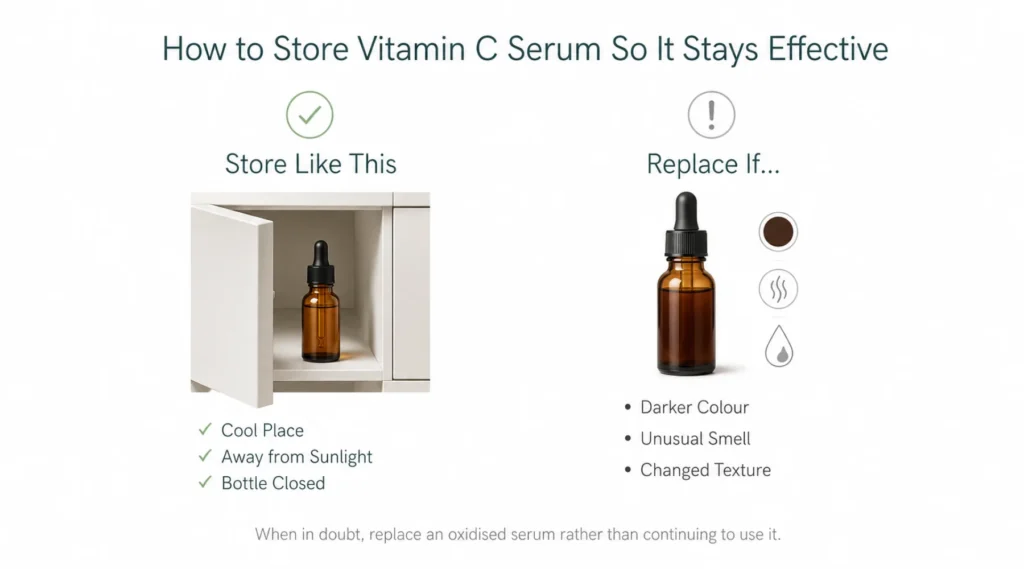
A bathroom cabinet is better than an open shelf. A drawer in your bedroom may work even better if your bathroom gets warm and humid. Some people refrigerate vitamin C, but only if the instructions say so and temperature changes are controlled.
Signs that a serum might be expired include:
- A darker colour than when first opened
- A metallic, sour, or unusual smell
- A change in texture
- Increased stinging from a product your skin usually tolerates
- Less visible freshness despite regular use
Do not try to use a questionable serum on irritated skin. If you think it has oxidised, throw it away.
How Vitamin C Fits with Retinol, Acids, and Acne Treatments
Vitamin C works well with other active ingredients, but you should space them out in your routine.
Vitamin C and retinol
Vitamin C and retinol can help your skin look smoother and more even, but it’s best to use them at different times. A common method is to use vitamin C in the morning and retinol at night. This helps reduce irritation and allows each ingredient to do its job. Vitamin C protects your skin during the day, while retinol helps it renew at night. If you’re new to either ingredient, wait to start the second one until you’re used to the first.
Vitamin C and exfoliating acids
Glycolic acid, lactic acid, and salicylic acid can brighten skin and improve texture. However, using them with vitamin C may irritate sensitive skin. Both types of ingredients can be harsh, depending on how they’re made.
Use exfoliating acids at night once or twice a week. If your skin is sensitive, use vitamin C in the morning on different days.
Vitamin C and benzoyl peroxide
Benzoyl peroxide helps with acne but can dry out your skin, especially when used with vitamin C. If you use benzoyl peroxide, try applying it at night or every other day. Save vitamin C for mornings when your skin feels calm.
Vitamin C and azelaic acid
Azelaic acid is good for uneven skin tone, redness, and blemishes. It works well with vitamin C, but if you have sensitive skin, it’s better to use them separately. A good routine is to use vitamin C in the morning and azelaic acid at night.
Vitamin C and peptides
Peptides work well with vitamin C, especially in moisturisers or hydrating serums. If your peptide product clumps when used with vitamin C, wait longer between applying them. You can also use one product in the morning and the other at night.
Vitamin C Serum for Different Skin Types
The best way to use vitamin C serum depends on your skin’s condition before applying it.

Oily skin
Oily skin usually handles vitamin C well, but the product’s texture is important. Choose light, non-greasy serums that feel good under sunscreen. Don’t use too much, as extra serum can ball up or feel sticky.
If you have acne, watch for irritation instead of thinking vitamin C is causing breakouts. A strong acidic formula can irritate your skin barrier, making blemishes appear worse.
Dry skin
Dry skin usually needs vitamin C with extra moisture. First, apply vitamin C. Then use a hydrating serum if needed, followed by a moisturiser. Skip vitamin C on mornings when your skin feels tight or flaky.
A thicker serum or cream-based vitamin C is often more comfortable than a thin, watery formula.
Sensitive skin
If you have sensitive skin, start slowly. Use vitamin C once or twice a week with a gentle moisturiser. Avoid products with strong fragrances, harsh exfoliants, and routines that cause daily tingling. A milder vitamin C derivative might be better than strong L-ascorbic acid.
Combination skin
Use vitamin C where you need it. You don’t have to treat your whole face the same way. If your cheeks are sensitive but your forehead has sun spots, focus the serum on your forehead and outer face.
Mature skin
Vitamin C helps brighten mature skin and improve uneven tone and signs of ageing from the sun. Use it with sunscreen, moisturiser, and a retinoid at night, if you can handle it.
Skin of colour
Vitamin C can help with dark spots and uneven skin tone, but avoid irritation since it can make dark marks worse. Sunscreen is crucial for deeper skin tones, and tinted sunscreens with iron oxides are great for skin prone to pigmentation.
How Long Does Vitamin C Serum Take to Show Results
Vitamin C effects appear gradually.
Some people see a fresher glow in just a few days, especially with formulae that hydrate well or add shine. However, this doesn’t mean pigment correction is happening yet.
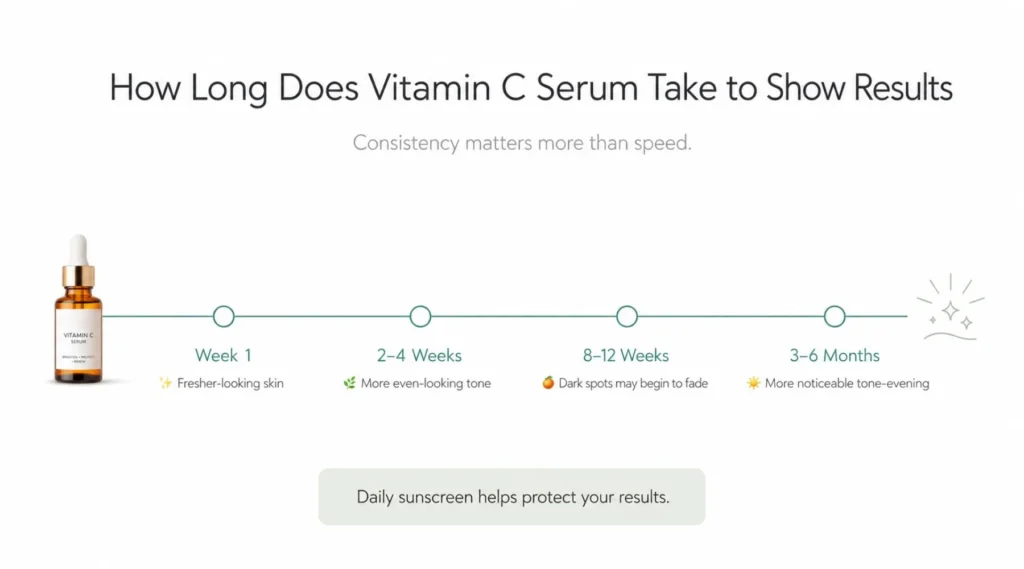
Uneven skin tone and dark spots usually require several weeks of regular use to improve. Issues like fine lines, skin texture, and sun damage take more time because they involve bigger changes and collagen support.
Here’s a realistic timeline:
| Timeframe | What you may notice |
| First week | Skin may look fresher if the formula suits you; irritation may appear if it does not. |
| Two to four weeks | Dullness may improve; skin may look more even in tone. |
| Eight to twelve weeks | Early changes in dark marks and brightness may become more visible. |
| Three to six months | More meaningful tone-evening results may develop with sunscreen consistency. |
If nothing gets better after three months and you have a good sunscreen routine, look at the product you’re using, the type of pigmentation, and if you need a different ingredient.
Melasma, deep post-inflammatory pigmentation, and old sun spots usually need more than just vitamin C.
Body Use: Can Vitamin C Serum Help Beyond the Face?
Vitamin C is great for areas of the body that look dull, have sun damage, or show post-pimple marks. Common spots include the chest, shoulders, upper arms, backs of hands, and legs.
Using a Vitamin C Face and Body Serum can help for larger areas. Body skin can usually handle products better than facial skin, but it can still react, especially after shaving, waxing, or exfoliating.
Here are some simple steps to follow:
- Apply to clean, dry skin.
- Avoid broken or freshly shaved areas.
- Use moisturiser if needed.
- Apply sunscreen on exposed areas.
- Introduce it slowly if your skin is sensitive.
For dark spots from friction, ingrown hairs, or acne, Vitamin C can help brighten skin, but prevention is important too. Reduce friction, avoid picking at spots, moisturise regularly, and treat active blemishes properly.
When Vitamin C Serum Is Not the Right First Step
Vitamin C is popular, but it may not be what your skin needs right away. If your skin burns when you use regular moisturiser, wait before trying vitamin C. Focus on repairing your skin first. If your face is peeling from using too much retinoids or acids, take a break from these products. If you have active eczema, dermatitis, rosacea flare-ups, or any unknown rash, vitamin C could make things worse.

To reset your skin, try:
- A gentle cleanser or just rinsing in the morning
- A fragrance-free moisturiser
- Sunscreen during the day
- Avoiding scrubs, acids, or strong active ingredients for one to two weeks
- Seeing a dermatologist if symptoms continue
Once your skin feels normal, you can slowly reintroduce vitamin C. This step is crucial for effective skincare. Remember, your skin responds to consistency, patience, and good timing, not pressure.
Professional Treatments and When to Ask a Dermatologist
Vitamin C can help brighten your skin, but it can’t replace professional care for stubborn or sudden pigmentation issues. See a dermatologist if:
- Pigmentation appears suddenly or spreads quickly.
- A mark changes shape, colour, size, or texture.
- Dark patches are grey, blue, or very dark brown.
- You think you may have melasma.
- Post-acne marks return because acne is still active.
- Over-the-counter products haven’t worked after several months.
- Your skin reacts to most products.
Professionals may offer treatments like prescription creams, azelaic acid, retinoids, chemical peels, or laser therapy, depending on your skin condition and type. Not all treatments work for every skin type. Aggressive peels or improper laser settings can worsen issues in deeper skin tones, so it’s important to choose experienced professionals.
Use at-home vitamin C as part of your skincare routine, especially with sunscreen, but for ongoing pigmentation issues, a proper diagnosis is essential.
Questions People Ask Before Opening a Vitamin C Bottle
How do I use vitamin C serum correctly?
Apply vitamin C serum after cleansing and before moisturising. In the morning, apply sunscreen last. Use a small amount on dry skin, starting a few times a week. Increase use only if your skin feels comfortable.
When should you use vitamin C serum?
Morning is the best time to use vitamin C since it works well with daytime sunscreen. You can also use it at night if your skin is sensitive, your morning routine is busy, or if you like to keep it separate from other products.
How often should you use vitamin C serum?
Beginners can start exercising two or three times a week. If you don’t see any irritation after a few weeks, try increasing to every other morning, and then daily if it feels good. People with sensitive skin might prefer to use it less often.
How do you apply vitamin C serum without pilling?
Use less product on dry skin and let it absorb before applying moisturiser or sunscreen. Pilling often occurs when you use too much serum or layer silicone-heavy products too quickly.
Can you use niacinamide with vitamin C?
You can usually use vitamin C and niacinamide together. If you have sensitive skin, use vitamin C in the morning and niacinamide at night. When layering, apply the thinner product first or put on vitamin C first if both serums are light.
Can I use niacinamide with vitamin C every day?
You can use both if your skin can handle it, but you don’t need to use them every day. Look out for dryness, redness, or stinging, especially if you use other products with niacinamide.
Can you use hyaluronic acid with vitamin C?
Yes. First, apply vitamin C. Next, use hyaluronic acid, then finish with moisturiser. Hyaluronic acid can make your vitamin C routine feel more hydrating and comfortable.
What should I apply after the vitamin C serum?
Apply moisturiser after using vitamin C serum. In the morning, finish with sunscreen. If your skin feels dry, add hyaluronic acid between the vitamin C and moisturiser.
Does vitamin C lighten skin?
Vitamin C can help lighten dark spots and even out skin tone, but it doesn’t bleach your natural colour. It is best called a brightening and tone-evening ingredient.
Does vitamin C brighten skin?
Vitamin C can make skin look brighter by protecting against free radicals and improving dullness and uneven skin tone. The results depend on the product used, how often you apply it, and whether you use sunscreen.
Can I use vitamin C serum at night?
Yes. Night use is great for sensitive skin or routines with many morning steps. Just be careful not to mix it with strong retinoids or exfoliating acids until you are sure your skin can handle it.
Should vitamin C go before or after moisturiser?
Vitamin C is applied before moisturiser. Serums go on first because they absorb better into the skin. Moisturiser locks in moisture and supports the skin barrier.
Can vitamin C serum cause purging?
Vitamin C isn’t a typical purging ingredient like retinoids or exfoliating acids. If you get breakouts, stinging, or rough bumps after starting vitamin C, the irritation might be due to the formula, its texture, or another product in your routine.
How long should I wait after applying vitamin C serum?
You don’t have to wait long. As soon as the serum feels dry, apply the next layer. This takes about 30 seconds to a few minutes, depending on the formula.
Is vitamin C serum good for sensitive skin?
It can be effective, but the formula and how often you use it are important. Sensitive skin usually responds better to lower strengths, fragrance-free options, and a gradual introduction. If your skin barrier is damaged, fix that first before starting vitamin C.
Making Vitamin C Work for Your Skin Rather Than Against It
To use vitamin C serum effectively, think of it as a daily support, not a quick fix. It should be part of a skincare routine that protects the skin barrier, includes sunscreen, and avoids too many ingredients.
A simple routine works best for most people: gently cleanse, apply a small amount of vitamin C serum, moisturise well, and use broad-spectrum sunscreen. If you want a more targeted approach, pick quality serums and build your routine based on how your skin reacts, not on trends.
Vitamin C can brighten dull skin, improve uneven tone, and promote a healthier complexion over time. However, it can’t overcome daily sun exposure, strong exfoliation, poor storage, or an irritated skin barrier.
When used patiently, vitamin C is a great skincare ingredient. Used too aggressively, it can stress your skin. The key lies not just in the product you choose, but also in how you apply it.