





Blog
Why Are My Pores So Large? Causes and Fixes


Large pores can seem unfair because they don’t always mean someone has “bad skin.” Some people clean their skin well, avoid heavy creams, use masks, drink plenty of water, yet still see visible pores on their nose, cheeks, chin, or forehead. The causes of large pores often lie beneath the surface, including oil flow, pore size, genetics, sun exposure, clogged pores, ageing, and how light hits uneven skin.
Pores are normal openings in the skin that let oil and sweat reach the surface, helping protect the skin. The issue is not the presence of pores but that they can become stretched, dark, clogged, or more noticeable as surrounding skin loses firmness. Enlarged pores are often linked to increased oil production, larger hair follicles, heavy products, decreased skin elasticity, and sun damage.
The truth is, you cannot permanently remove pores or achieve “poreless” skin. However, you can make pores look smaller, clearer, and less shadowed by controlling oil, preventing clogged pores, protecting collagen, improving skin texture, and soothing the skin barrier.
Why Are My Pores So Large Even When My Skin Looks Clean?
Clean skin can still show visible pores because pore size isn’t just about dirt. A pore is part of the pilosebaceous unit, which includes hair follicles and oil glands. If the oil gland is more active, the pore may look wider. Dead skin cells inside the pore can make it look darker or raised. If the collagen around the pore weakens, the shape can become oval or stretched.
This is why people often say their pores look worse in certain light, after a long day, with makeup on, during hormonal changes, or after sun exposure. The pore hasn’t changed overnight; what has changed is oil levels, swelling, shadows, dehydration, skin texture, or firmness around it.
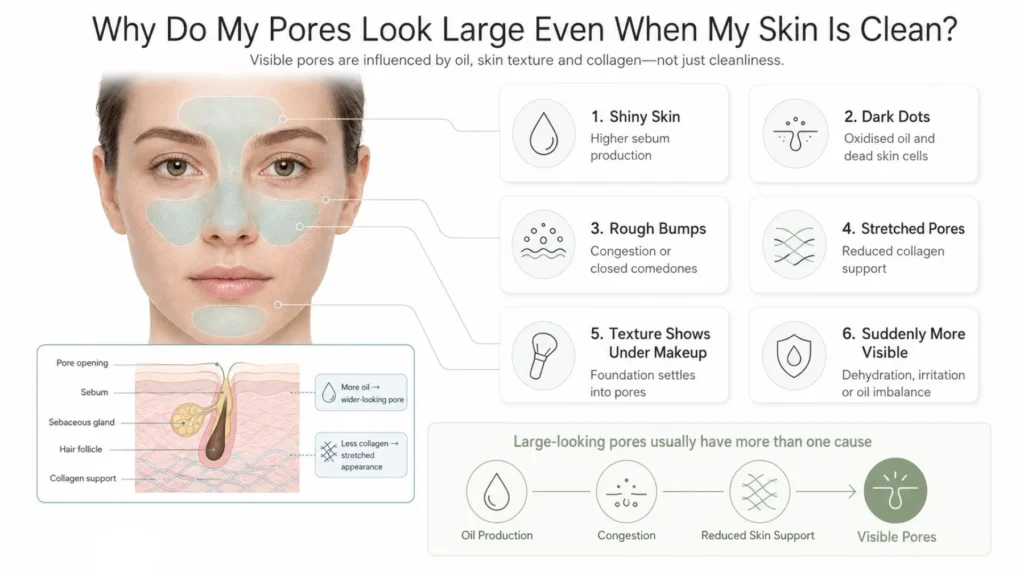
Visible pores are most common in the centre of the face because the nose, inner cheeks, forehead, and chin usually produce more oil. Cheeks can also show larger pores as collagen and elastin decrease with age or UV exposure.
A simple way to think about it:
| What you see | What may be happening underneath |
| Shiny skin and visible pores by midday | Higher sebum production |
| Dark dots on the nose | Oxidised oil and dead cells in open comedones |
| Rough bumps around the chin or forehead | Congestion or closed comedones |
| Pores that look stretched on the cheeks | Loss of elasticity or sun damage |
| Pores that look worse under foundation | Product settling into texture |
| Sudden pore visibility | Dehydration, irritation, heat, oil surge or barrier disruption |
Large pores usually have multiple causes. Most visible pore issues come from a mix of oil, clogged pores, and skin texture.
The Main Causes of Large Pores on the Face
The main reasons for large pores on the face are excessive oil, genetics, ageing, sun damage, congestion, past acne, and products that clog pores. Some of these issues can be improved with skincare, while others, like the size of hair follicles you inherit, can only be managed by appearance.
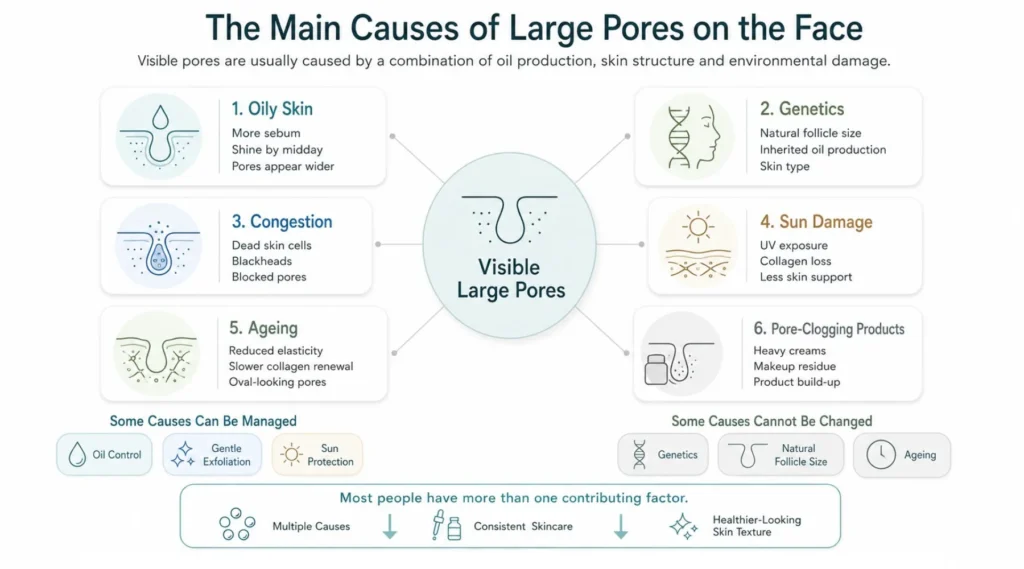
1. Oily Skin and Enlarged Pores
Oily skin and big pores often go together because oil needs to move through the pores to reach the surface. When the sebaceous glands make too much oil, the pores can look larger, especially around the nose and cheeks.
Oil isn’t bad. It helps protect the skin and stops it from getting too dry. The problem is when too much oil mixes with dead skin cells. This mix can clog the pores and make them appear bigger, darker, or rougher.
Many people with oily skin make a mistake by trying to remove all the oil. Strong cleansers, alcohol-based toners, and heavy scrubbing can make the skin feel tight while still keeping the pores clogged. This can lead to skin that feels both oily and dry, worsening texture.
A better solution is to manage oil, not eliminate it. Ingredients like niacinamide, salicylic acid, retinoids, and light moisturisers are often more effective than harsh products.
A niacinamide essence is great for shiny, uneven, or rough skin that can get irritated easily. Studies show that 2% niacinamide can help reduce facial oil production, making it a popular choice for oily skin care routines.
2. Genetics and Natural Follicle Size
Some people have larger pores because of their skin type, which they inherit from their parents. If your parents have oily skin or acne, you might face similar issues.
Genetics can affect:
- Oil production in your skin
- The size of your pores
- How easily pores get clogged
- How quickly your skin shines
- How your skin reacts to hormones
- When changes in skin elasticity appear
This is why two people can use the same skincare routine and see different results. One person may look smooth easily, while another needs to work harder to manage oil and exfoliate.
Having larger pores isn’t a flaw. It just means you should set realistic goals: aim for clearer pores, smoother skin, less shine, and better quality overall, instead of trying to eliminate pores completely.
3. Dead Skin Cells and Congestion
Clogged pores appear larger because the trapped material expands the opening and creates shadows. When dead skin cells, oil, or dirt block the pore, it becomes clogged. According to the Cleveland Clinic, clogged pores can cause whiteheads, blackheads, pimples, and more severe acne.
Many people confuse “large pores” with “dirty pores.” Blackheads aren’t dark because the skin is dirty; they appear dark because the contents of the pore are exposed to air and oxidise. Cleveland Clinic says the dark colour comes from a reaction with oxygen, not dirt.
Congested pores may look like:
- Dark dots on the nose or chin
- Tiny flesh-coloured bumps
- Rough texture under makeup
- Stretched but not inflamed pores
- Recurring blackheads in the same spots
- A dull or uneven skin surface
For visible pores caused by congestion, use a gentle cleanser, a sensible leave-on exfoliant, lightweight hydration, and a non-comedogenic moisturiser or SPF.
4. Sun Damage and Large Pores
Sun damage and large pores are linked because UV rays harm collagen and elastin. These proteins keep skin firm. When they weaken, the skin around the pores loses tightness, making pores look bigger or stretched. This is common on the cheeks. The nose may show larger pores due to oil and blackheads, while the cheeks often have them from a loss of elasticity. If your pores look larger as you age, sun exposure is likely a factor.
Broad-spectrum sunscreen isn’t just for preventing sunburn or dark spots. It’s vital for keeping pores looking refined because it protects the skin’s supportive structure. The American Academy of Dermatology recommends using broad-spectrum, water-resistant sunscreen with SPF 30 or higher on exposed skin.
Daily SPF won’t close your pores but helps prevent collagen breakdown that can make them appear looser over time.
5. Ageing and Loss of Elasticity
Pores can appear larger as you age, even if your skin is less oily. This change happens because your skin’s structure changes. Collagen production slows, elastin loses its bounce, and the skin doesn’t cling as tightly around each pore.
As a result, pores may not look like small dark dots anymore. Instead, they can seem like tiny stretched openings or an uneven surface, especially on the cheeks. Makeup can make this look worse by settling into the pores.
Retinoids are often recommended because they help with cell turnover and can improve the appearance of aged skin over time. According to DermNet, using topical tretinoin for a long time may reduce fine lines and other signs of sun damage.
However, using retinoids requires patience. They can irritate your skin if you start using them too quickly, and some should not be used during pregnancy.
6. Comedogenic Products
Some products may feel rich and luxurious, but can still be wrong for skin prone to breakouts. Heavy oils, thick creams, and certain long-lasting makeup can trap oil and dead skin in pores.
Breakouts don’t always look angry. They can show as small bumps, blackheads, dull skin, or pores that seem larger over time.
Common triggers include:
- Using heavy oils too often
- Applying thick creams to oily areas
- Not properly removing thick sunscreen
- Sleeping in makeup
- Hair oils are transferred to the forehead
- Using heavy balms on acne-prone areas
- Layering too many products
The answer isn’t to skip moisturiser; it’s to choose the right type. Oily skin still needs hydration, but does better with gels, light lotions, water-based serums, and breathable moisturisers.
Why Pores Look Bigger Suddenly
Pores can appear larger quickly due to changes in the skin’s surface, even if the pore structure hasn’t actually changed. Factors like heat, humidity, dehydration, irritation, hormonal changes, excessive exfoliation, and makeup buildup can make pores look more noticeable in a short time.
Common reasons include:
| Sudden change | Why pores may look larger |
| Hot weather | More sweat and oil increase shine |
| Dehydrated skin | Skin looks tight, papery and textured |
| Over-exfoliation | Irritation makes texture more visible |
| Hormonal changes | Oil production can rise |
| Heavy makeup | Product settles into pores |
| Poor cleansing | Sunscreen and sebum accumulate |
| Lack of sleep | Skin looks dull and less firm |
| Sun exposure | Temporary inflammation and long-term collagen stress |
| New skincare product | Comedogenic or irritating ingredients may trigger congestion |
A sudden change in your skin doesn’t mean your pores are permanently stretched. It usually means your skin needs a gentler routine for a few days: use mild cleansers, moisturisers, sunscreen, and fewer active ingredients.
If you notice sudden visible pores with redness, burning, scaling, painful acne, or unusual spots, talk to a dermatologist instead of trying stronger products yourself.
How to Tell Whether Your Pores Are Oily, Congested, or Age-Related
Before asking how to reduce pores on your face, it’s important to understand the issue. Taking care of your pores works better when your routine addresses the cause.
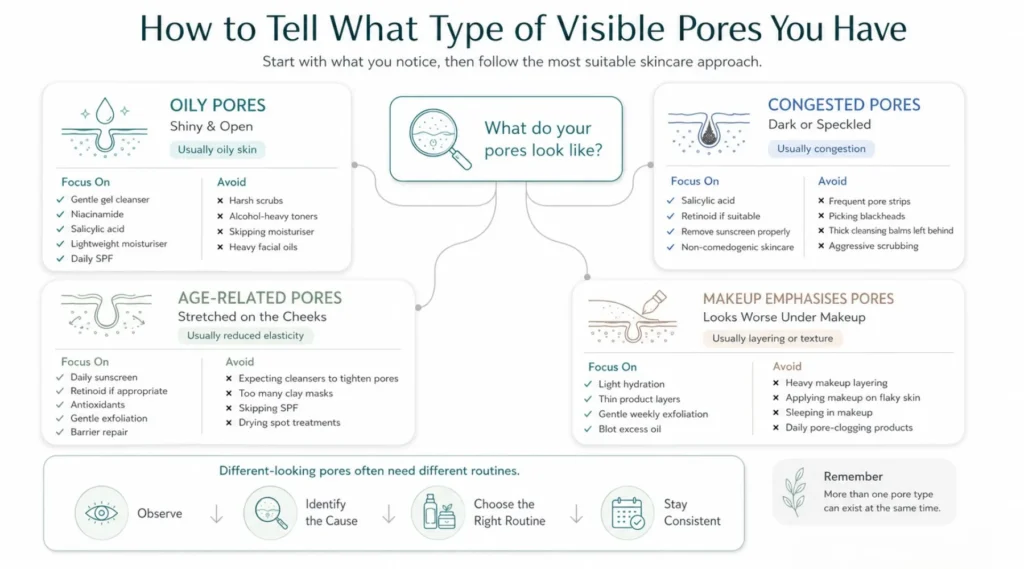
If Your Pores Look Shiny and Open
Oily skin often shines during the day. Makeup may separate, and pores can look bigger, especially in the T-zone.
Focus on:
- Gentle gel cleanser
- Niacinamide
- Salicylic acid 1 to 3 times a week
- Lightweight moisturiser
- Daily sunscreen
- Clay mask once a week, if you can tolerate it
Avoid:
- Harsh scrubs
- Alcohol-heavy toners
- Skipping moisturiser
- Using heavy oils on oily areas
If Your Pores Look Dark or Speckled
Congestion usually causes clogged pores filled with oxidised sebum, dead skin cells, and keratin.
Focus on:
- Salicylic acid to clear pores
- Retinoids or retinol, if appropriate
- Properly removing sunscreen
- Using non-comedogenic products
- Staying consistent instead of squeezing blemishes
Avoid:
- Using pore strips too often
- Picking at blackheads
- Applying thick balms without cleaning
- Scrubbing the skin until it’s raw
The American Academy of Dermatology says salicylic acid unclogs pores and exfoliates skin, making it effective for acne treatment.
If Your Pores Look Stretched on the Cheeks
Elasticity affects the skin’s look. Pores can appear more oval, and you might notice fine lines, dullness, or sun damage.
Focus on:
- Daily sunscreen (SPF)
- Retinoid or retinol, if suitable
- Antioxidants
- Gentle exfoliation
- Repairing the skin barrier
- Professional treatments to boost collagen, if needed
Avoid:
- Expecting cleansers to improve elasticity
- Overusing clay masks
- Skipping sunscreen
- Using drying spot treatments on your cheeks
If Your Pores Look Worse Under Makeup
This issue usually happens because of the texture and how products layer. Foundation can sink into pores if your skin is dry, oily, flaky, or too layered with products.
Focus on:
- Light hydration before makeup
- Thin layers of products
- Silicone-free or non-comedogenic products if your skin clogs easily
- Gentle exfoliation once or twice a week
- Blotting instead of adding powder repeatedly
Avoid:
- Using a heavy primer, foundation, and powder together
- Applying makeup on flaky skin
- Skipping cleansing at night
- Using pore-clogging products every day
Can You Actually Close Pores on Face?
You can’t close your facial pores like a door. Pores don’t have muscles to open or shut. Steam doesn’t permanently open them, cold water doesn’t permanently close them, and ice only makes them feel tighter for a short time.
Instead, you can make pores look smaller by addressing things that make them appear larger:
- Clear congestion
- Reduce excess oil
- Remove dead skin
- Protect collagen
- Support skin elasticity
- Hydrate your skin
- Avoid products that clog pores
- Reduce inflammation
That’s why asking “how to get rid of pores” is misleading. Healthy skin needs pores. A better goal is to lessen the appearance of pores while keeping your skin healthy.
So, instead of asking “how can I get rid of pores?” ask, “how can I make my pores less visible without harming my skin?” This change leads to smarter skincare choices.
How to Fix Large Pores Without Damaging Your Skin
To fix large pores, don’t harshly treat your skin. Instead, create a routine that targets oil, congestion, and elasticity together.
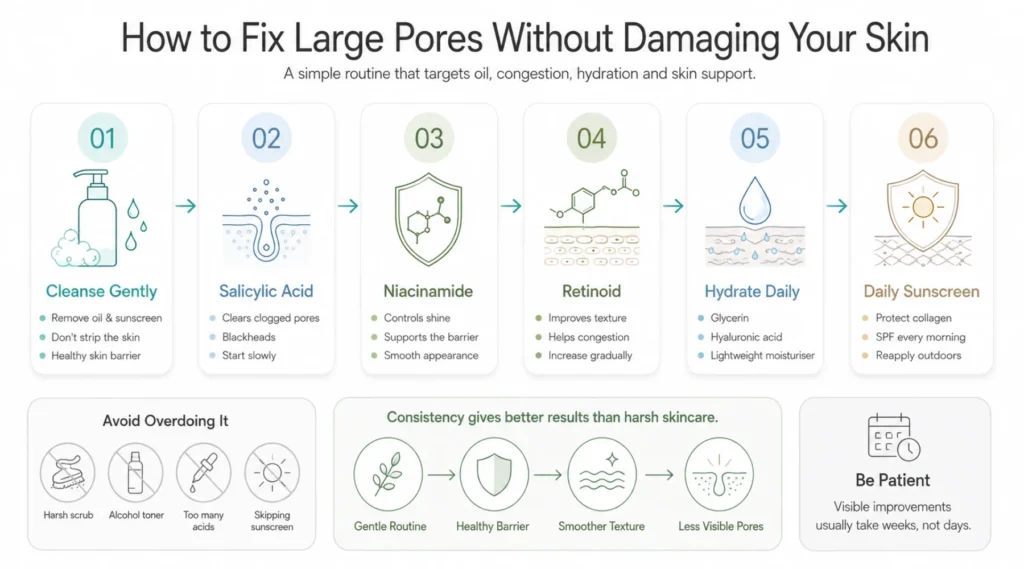
Step 1: Cleanse Without Stripping
Cleansing is important, but doing it too much can make pores look worse. A good cleanser should wash away sweat, sunscreen, makeup, and extra oil without leaving your skin feeling tight.
If you have oily or clogged skin, a gentle gel cleanser usually works best. For dry or combination skin, a cream or low-foam cleanser may be preferable. If you use long-lasting sunscreen or makeup, try double cleansing at night: start with a cleansing balm or oil, then follow with a gentle water-based cleanser.
Clean skin should feel fresh, not tight. A solid cleansing routine helps prevent buildup, but it won’t shrink pores on its own. Think of cleansing as the starting point, not the whole solution.
Step 2: Use Salicylic Acid for Clogged Pores
Salicylic acid is a beta-hydroxy acid (BHA) that can dissolve in oil. This makes it great for oily areas. It helps remove dead skin cells and clears up dark or bumpy pores.
It’s helpful for:
- Blackheads
- Oily T-zones
- Rough nose texture
- Chin congestion
- Forehead bumps
- Clogged pores
Start using it slowly, about one to three times a week. Some people with oily skin can use it daily, but this may lead to dryness, stinging, or skin damage if overused.
When starting, avoid using strong exfoliating acids and retinoids on the same night. Irritated skin often looks bumpier, not smoother.
Step 3: Add Niacinamide for Oil and Barrier Support
Niacinamide is a great ingredient for those wanting to reduce facial pores, as it addresses multiple skin issues at once. It helps strengthen the skin barrier, even out skin tone, reduce redness, control shine, and make the skin look smoother.
You can apply a light niacinamide essence after cleansing and before moisturising. It’s especially helpful for oily skin that is easily irritated or feels dry from exfoliating acids.
Niacinamide won’t instantly erase pores. Its benefits come from regular use. Over several weeks, your skin may appear calmer, smoother, and less shiny.
Step 4: Consider a Retinoid for Texture and Congestion
Retinoids are forms of vitamin A used in skin care for acne, dull skin, and ageing signs. According to DermNet, topical retinoids are a key treatment for both types of acne, but it may take 12 weeks or more to see results. They help reduce clogged pores and improve skin texture over time.
Not everyone can use retinoids. They may cause dryness, peeling, sensitivity, or breakouts if started too quickly. They are also usually not recommended during pregnancy or while trying to conceive unless a doctor says otherwise.
Here’s a sensible approach to using them:
- Start with two nights a week
- Use a pea-sized amount for your whole face
- Apply moisturiser before or after if your skin feels sensitive
- Don’t use exfoliating acids on the same night at first
- Use sunscreen every day
- Increase use slowly only if your skin can handle it
Patience is key with retinoids; gradual use is often more effective than using them aggressively.
Step 5: Hydrate So Texture Looks Softer
Dehydrated skin makes pores appear larger. It becomes less flexible, fine lines are more noticeable, and makeup settles in uneven spots.
Hydration doesn’t shrink pores but changes how light reflects off the skin. Hydrated skin looks smoother and more even.
Good hydrating ingredients include:
- Glycerin
- Hyaluronic acid
- Sodium hyaluronate
- Panthenol
- Aloe vera
- Betaine
- Ceramides
People with oily skin often skip moisturiser because they worry about shine. This can backfire. A light gel-cream or fluid moisturiser can hydrate without making skin greasy.
Step 6: Wear Sunscreen Every Morning
To reduce pores on your face over time, using sunscreen is essential. Without daily sun protection, collagen breaks down, and the skin around your pores loses support.
Pick a sunscreen that suits your skin type:
| Skin type | Sunscreen texture that often works best |
| Oily | Gel, fluid, matte or lightweight lotion |
| Dry | Creamy, moisturising SPF |
| Sensitive | Mineral or fragrance-free formulae |
| Acne-prone | Non-comedogenic, oil-free formulae |
| Deeper skin tones | Sheer chemical, hybrid or tinted mineral SPF |
Sunscreen works best when you apply enough and reapply it frequently if you spend a lot of time in the sun. Make sure to remove it properly at night, especially if it’s water-resistant.
Best Skincare for Visible Pores
The best skincare for visible pores is straightforward, consistent, and balanced. It should focus on cleansing, controlling oil, managing congestion, providing hydration, supporting the skin barrier, and protecting against the sun.
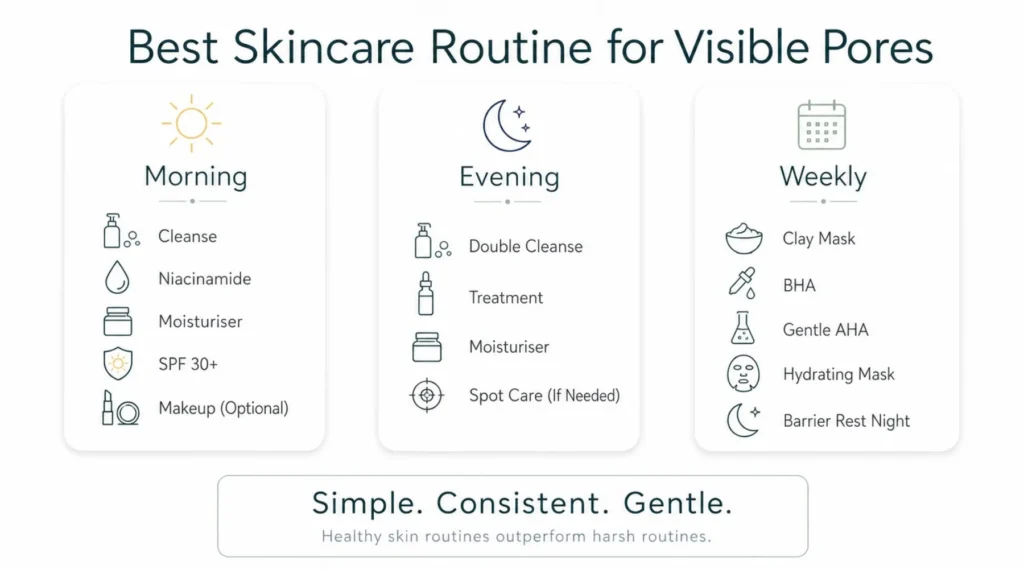
Morning Routine for Large-Looking Pores
Gentle Cleanse
- In the morning, use a mild cleanser or rinse your face with water if your skin is dry or sensitive.
Niacinamide or Lightweight Serum
- This helps strengthen your skin barrier and reduce shine.
Light Moisturiser
- Pick a non-greasy moisturiser that keeps your skin flexible.
Broad-Spectrum Sunscreen
- Use SPF 30 or higher, especially if you’re using exfoliating acids or retinoids.
Makeup (if worn)
- Apply in thin layers. Thick makeup can make pores more noticeable.
Evening Routine for Large-Looking Pores
Remove Sunscreen and Makeup
- Use a cleansing balm, micellar water, or oil cleanser, then follow up with a gentle cleanser.
Treatment Step
- Apply salicylic acid on some nights, retinoid on others, and use niacinamide on calmer nights.
Moisturiser
- Choose a moisturiser that strengthens your skin’s barrier to handle active ingredients.
Spot Support if Needed
- A tea tree facial serum can help if your skin is oily, prone to breakouts, or congested. Use it as part of a simple routine instead of mixing too many active products.
Weekly Additions That Can Help
A routine does not need many extras, but some weekly steps can be useful.
| Weekly step | Best for | How often |
| Clay mask | Oiliness and shine | Once weekly |
| BHA exfoliant | Blackheads and congestion | One to three times weekly |
| Gentle AHA | Dull surface texture | Once weekly |
| Hydrating mask | Dehydrated texture | As needed |
| Barrier rest night | Irritated or overtreated skin | One to three nights weekly |
The best routines are not the strongest routines. They are the routines your skin can tolerate for months.
How to Unclog Pores Without Squeezing Them
Learning to unclog pores safely can lead to lasting skin improvement instead of just short-term fixes.
Squeezing blackheads might feel good, but it can hurt the skin, cause inflammation, worsen redness, and leave marks. Doing it often can also stretch your pores.
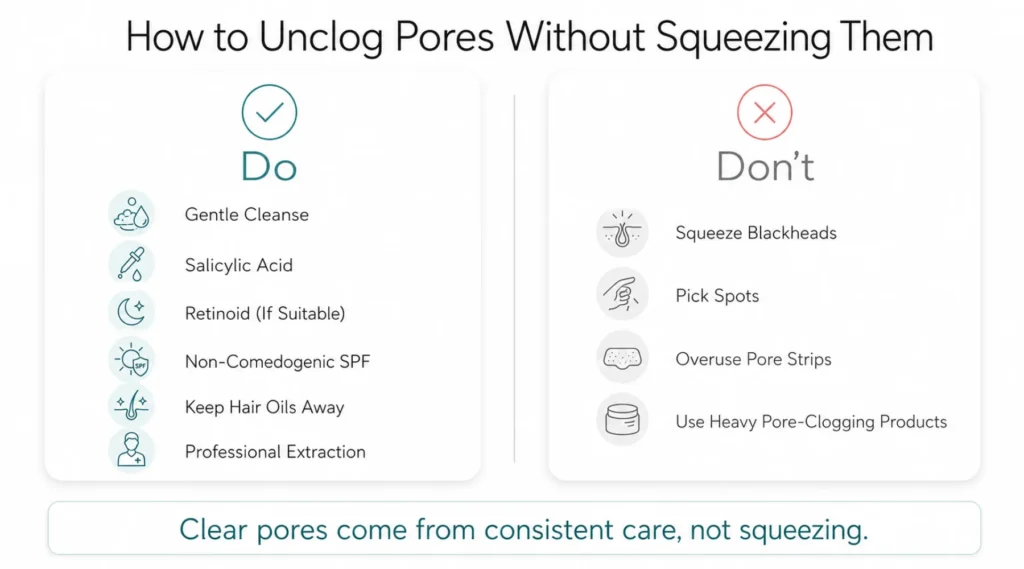
To safely unclog pores, follow this routine:
- Cleanse gently every evening.
- Use salicylic acid regularly.
- Add a retinoid if it’s right for you.
- Avoid heavy products that clog pores.
- Use non-comedogenic sunscreen.
- Keep hair oils away from your face.
- See a professional for extractions if blackheads persist.
- Don’t pick at inflamed spots.
Pore strips can clear some surface dirt, but don’t fix the main cause of blackheads. If used too much, they can irritate your skin and worsen redness.
If your breakouts don’t clear up, it’s safer to have professional extractions by a trained expert than to keep squeezing at home.
Common Mistakes When Trying to Reduce Pores on Face
Many skincare routines don’t work because they are too harsh. This can irritate the skin, making it dry and inflamed, which makes pores look even bigger.
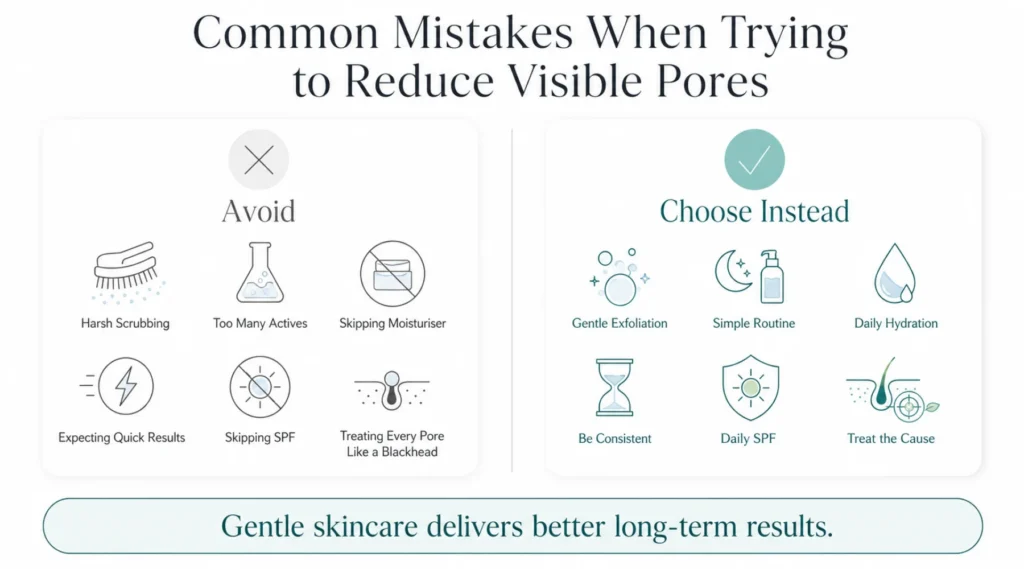
Mistake 1: Scrubbing the Skin Roughly
Scrubs can make skin feel smooth temporarily, but rough particles can irritate it. Pores don’t like friction. If your skin turns red or sensitive after scrubbing, it may look worse once the smoothness fades.
Chemical exfoliants, when used carefully, are usually gentler and more effective than harsh scrubs.
Mistake 2: Using Too Many Activities Together
Using a routine with salicylic acid cleanser, glycolic acid toner, retinol serum, vitamin C, clay masks, and acne treatments may seem great, but your skin might not handle it well.
Too many active ingredients can lead to:
- Burning
- Flaking
- Tightness
- More visible texture
- Redness
- Breakouts from irritation
- Increased sensitivity to sunscreen or makeup
A good skincare routine should include nights for active treatments and nights for recovery.
Mistake 3: Skipping Moisturiser
Oily skin needs water and protection, too. When skin is dry, pores can appear larger. A light moisturiser can make skin look smoother without clogging it.
The main point is to pick the right type of moisturiser instead of skipping it entirely.
Mistake 4: Expecting Instant Results
Congestion might get better in a few weeks, but changes in texture and elasticity will take longer. Retinoids usually need 12 weeks or more to show real results for acne-prone skin.
Here’s a realistic timeline:
| Timeframe | What may improve |
| 1 week | Less surface oil, fresher feel |
| 2–4 weeks | Fewer clogged pores, smoother makeup |
| 6–8 weeks | Better texture, less visible congestion |
| 12 weeks | More noticeable change from retinoids |
| 3–6 months | Better firmness and more refined skin quality |
Pore care takes time because you’re changing how oil works, how skin cells renew, and how the skin stays strong. It’s not just about washing things away.
Mistake 5: Ignoring Sunscreen
Many people buy serums but forget to use the product that protects collagen. Enlarged cheek pores can be partly caused by sun damage, so no skincare routine will be effective without daily sunscreen.
Mistake 6: Treating Every Pore Like a Blackhead
Not all visible pores are clogged. Some appear large because the skin around them is less firm. In these cases, using clay masks and pore strips won’t help. The skin needs sunscreen, retinoids if suitable, hydration, and maybe professional treatments to boost collagen.
Myths About Large Pores That Keep People Stuck
“Hot Water Opens Pores and Cold Water Closes Them”
Hot water helps dissolve oil, making it easier to cleanse your skin, but it doesn’t actually open or close pores. Cold water can momentarily reduce swelling and make your skin feel tighter, but this doesn’t last long.
Extreme temperatures can irritate the skin. It’s best to use lukewarm water for daily cleansing.
“Blackheads Mean Your Skin Is Dirty”
Blackheads occur when oil and dead skin cells in a pore oxidise. They aren’t caused by poor hygiene. Washing too much won’t help and can irritate your skin.
“You Can Get Rid of Pores Permanently”
You can’t eliminate pores because they are a natural part of healthy skin. Treatments can make them less noticeable, but they can’t make them go away for good.
“Clay Masks Shrink Pores”
Clay masks soak up oil and can make pores look cleaner and tighter for a short time. They do not permanently reduce pore size. Using them once a week can help oily skin, but using them too much can dry out and irritate the skin.
“Only Oily Skin Has Large Pores”
Oily skin often has visible pores. Dry or mature skin can also have enlarged pores because of the loss of collagen, sun damage, or insufficient moisture.
“Makeup Causes Large Pores”
Makeup itself doesn’t cause large pores. Issues arise from sleeping in makeup, using pore-clogging products, applying thick layers every day, or not cleaning your face properly. Some makeup can highlight existing skin texture.
Professional Treatments for Large Pores
At-home skincare can really help with oily skin and clogged pores. You might need professional treatments for issues like acne scars, loose skin, sun damage, or rough texture.
DermNet suggests several treatments for enlarged pores, including chemical peels, topical niacinamide, topical retinoids, oral acne medications, laser therapy, and radiofrequency microneedling.
Chemical Peels
Professional peels can improve congestion, dullness, uneven skin tone, and rough texture. Salicylic acid peels are good for oily or acne-prone skin. Glycolic or lactic acid peels can help with dullness and roughness, depending on your skin’s tolerance.
Peels need to be done carefully, especially on sensitive skin or deeper skin tones, as irritation can lead to pigmentation issues.
Microneedling
Microneedling creates small, controlled injuries to trigger the body’s healing process. It helps improve skin texture, reduce acne scars, and boost collagen. According to the Cleveland Clinic, professional microneedling can increase collagen production, which helps support the skin around pores.
At-home microneedling rollers are not the same as professional treatments. They may not work as well and can be unsafe if used improperly or without good hygiene.
Radiofrequency Microneedling
Radiofrequency microneedling uses tiny needles and heat. It can help with large pores, loose skin, and acne scars. A qualified professional should do this treatment because the right settings, skin type, and aftercare are important.
Laser Treatments
Laser treatments can enhance the look of pores by addressing texture, boosting collagen, and improving signs of ageing from the sun. Various lasers work better for different skin types and issues. Some lasers may increase the risk of pigmentation in darker skin tones, so it’s important to choose an experienced practitioner.
Prescription Treatments
If enlarged pores are linked to acne, a dermatologist might prescribe topical retinoids, azelaic acid, hormonal treatments, or other acne medications. The American Academy of Dermatology says azelaic acid can unclog pores, keep them clear, target acne bacteria, and lower inflammation.
Prescription treatments are especially helpful for painful acne, cysts, scarring, or stubborn blackheads that don’t improve with over-the-counter products.
Lifestyle Factors That Make Pores Look Worse
Skincare is important, but daily habits also impact oiliness, congestion, and skin texture.
Heat and Humidity
Warm weather can make you sweat more and look shiny, which can make your pores appear larger. In humid weather, heavy moisturisers and makeup can feel thick and uncomfortable. Use lighter products when the weather changes.
Sleep and Stress
Poor sleep and stress can lead to more inflammation, oily skin, and slower skin healing. Stress doesn’t directly create pores, but it can make breakouts worse, increase the urge to pick at skin, and heighten sensitivity.
Diet and Oiliness
Diet impacts skin differently for everyone. Some people get skin issues from high-glycaemic foods or certain dairy, while others don’t notice any change. It’s better to pay attention to how your own skin reacts rather than sticking to strict diet rules.
Exercise and Sweat
Exercise isn’t bad for your pores. The problem is not cleaning off sweat, sunscreen, and makeup afterwards. Be sure to wash your skin gently after working out, especially if you wore SPF or foundation.
Hair Products
Hair oils, leave-in conditioners, and styling creams can get onto your forehead, temples, and cheeks. If you notice clogged pores near your hairline, your hair products might be causing it.
Pillowcases and Phone Screens
These factors usually don’t create large pores on their own, but they can lead to breakouts and clogged pores if oil, sweat, and product buildup occur. Cleaning regularly helps.
How to Build a Routine Based on Your Pore Type
A good skincare routine should fit your skin’s needs, not follow trends.
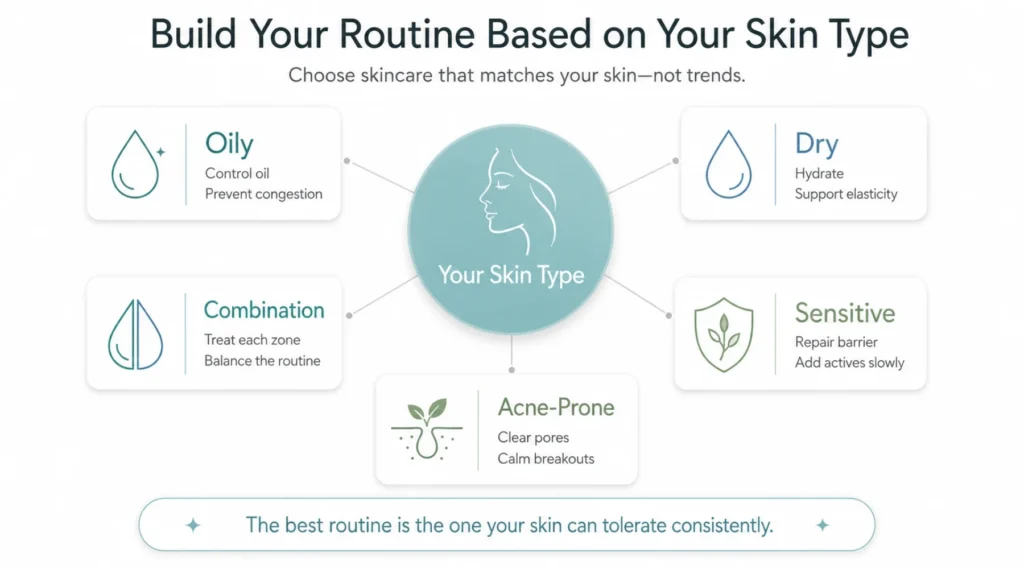
For Oily Skin With Visible Pores
Morning:
- Cleanse with a gentle gel.
- Apply niacinamide serum or essence.
- Use a lightweight moisturiser.
- Finish with matte or fluid sunscreen.
Evening:
- Cleanse thoroughly.
- Use salicylic acid two to three nights a week.
- Apply retinoid two nights a week if suitable.
- Use a lightweight moisturiser.
Weekly:
- Use a clay mask once a week.
The aim is to control oil and prevent clogged pores without drying out the skin.
For Dry Skin With Visible Pores
Morning:
- Use a creamy cleanser or rinse with water.
- Apply a hydrating serum.
- Put on moisturiser.
- Finish with sunscreen.
Evening:
- Cleanse gently.
- Use a low-strength retinoid one to two nights a week if you can handle it.
- Apply a barrier moisturiser.
- Exfoliate gently from time to time.
The aim is to soften your skin and keep it elastic without drying it out.
For Combination Skin
Treat each area of your face based on its needs. The nose might need salicylic acid, while the cheeks may require hydration and retinoids. Using the same strong treatment everywhere can irritate dry areas.
For Sensitive Skin
Start by repairing the skin barrier. For two to four weeks, use a gentle cleanser, moisturiser, and sunscreen. After that, add one active ingredient at a time.
A basic skincare routine works best when it’s focused on what your skin needs. More products don’t guarantee better skin.
For Acne-Prone Skin
Acne-prone skin needs both pore-clearing and anti-inflammatory treatment. Common options include salicylic acid, azelaic acid, retinoids, and non-comedogenic moisturisers. However, for painful or cystic acne, it’s best to see a dermatologist.
Lightweight serums are helpful because they deliver targeted ingredients without the heaviness of thick creams.
How Long Does It Take to Reduce the Appearance of Pores?
The timeline for improving visible pores depends on the cause.
- Oiliness: You may see quick results by using the right cleanser, niacinamide, and lighter products.
- Congestion: This usually takes weeks to improve as the skin needs time to clear out blockages.
- Texture and Elasticity: These aspects take longer since collagen support changes slowly.
Realistic Timeline:
- A few days: Less shine if you stop using heavy products.
- Two weeks: Skin may feel smoother with gentle exfoliation.
- Four weeks: Fewer new clogs if your routine suits your skin.
- Six to eight weeks: Blackheads and rough texture may look reduced.
- Twelve weeks: Retinoids may show clearer improvement.
- Three to six months: Overall skin quality improves with SPF and consistent care.
Be cautious of products claiming poreless skin overnight. While you might see temporary tightening, real improvement takes time.
When Large Pores May Need Professional Advice
Visible pores are usually not a problem, but some signs need a doctor’s help.
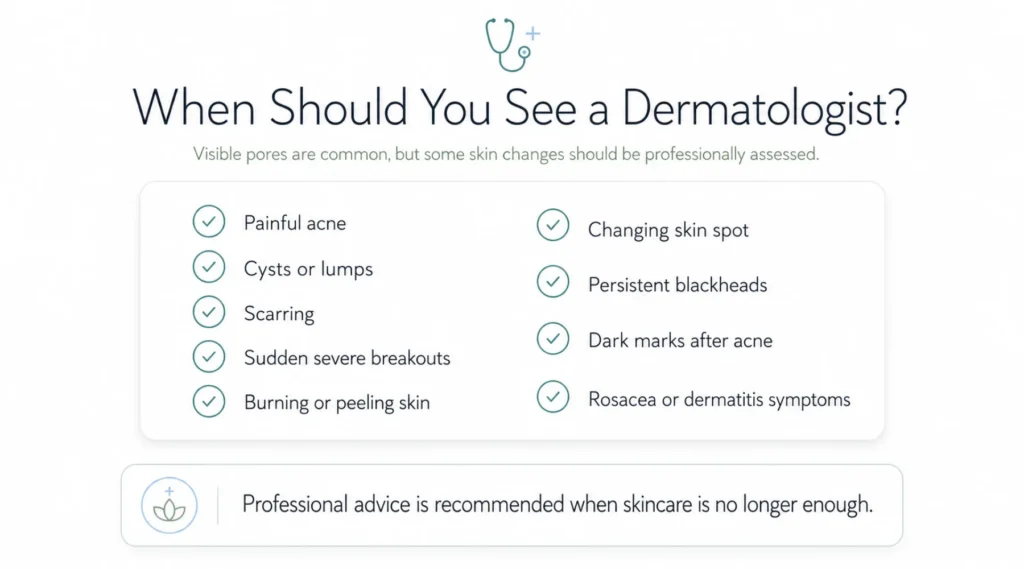
See a dermatologist or healthcare professional if you have:
- Painful acne
- Cysts or lumps
- Scarring
- Sudden severe breakouts
- Red, burning, or peeling skin
- A changing spot that looks like a pore but acts differently
- Blackheads that won’t go away with skincare
- Dark marks after breakouts
- Suspected rosacea, dermatitis, or allergies
The Cleveland Clinic recommends seeing a doctor for painful, swollen, infected, or pus-filled acne, or if you notice unusual growths or spots on your skin. Self-treatment has limits. Stronger treatments aren’t always safer, especially with inflamed skin.
Ingredient Pairings for Pore-Prone Skin
Good pore care often means using ingredients wisely together.
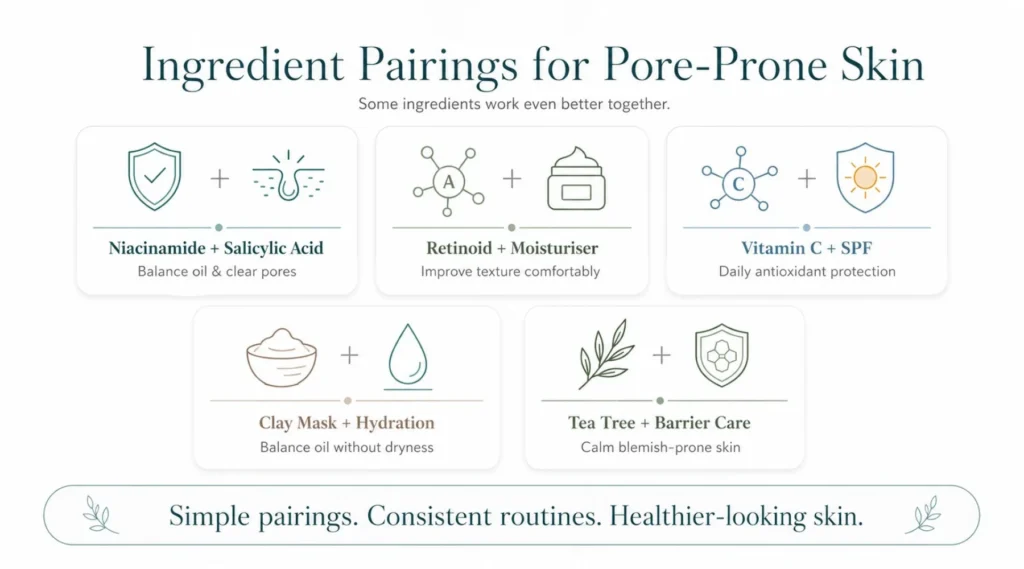
Niacinamide and Salicylic Acid
This combination works well for oily, clogged skin. Salicylic acid clears away excess oils, while niacinamide helps keep the skin comfortable and less shiny.
Apply salicylic acid a few nights a week and use niacinamide daily, if your skin tolerates it.
Retinoid and Moisturiser
Moisturiser and retinoid work well together to improve skin texture and reduce congestion. Moisturiser can calm irritation, allowing you to use retinoid regularly.
If your skin is sensitive, apply moisturiser before the retinoid. If your skin handles it well, use moisturiser afterwards.
Vitamin C and Sunscreen
This combination helps with dull skin and uneven tone caused by the sun. Vitamin C provides antioxidant protection, and sunscreen protects against UV damage. While it won’t close pores directly, it improves overall skin quality.
Clay Mask and Hydration
Clay absorbs oil, and hydration stops your skin from feeling tight afterwards. Only use clay where it’s needed, like on your T-zone.
Tea Tree and Barrier Support
Tea tree can work in some routines for acne, but don’t mix it carelessly with strong ingredients. If you use a tea tree serum, keep the rest of your products gentle and watch for any dryness or irritation.
The Difference Between Reducing Pores and Blurring Pores
Some products help reduce the causes of visible pores. Others make them look less noticeable. Both types can be helpful, but they work differently.
| Approach | What it does | How long it lasts |
| Primer | Temporarily fills or blurs texture | Until removed |
| Powder | Reduces shine | Hours |
| Clay mask | Absorbs oil temporarily | Hours to a day |
| Salicylic acid | Helps clear clogged pores | Weeks with consistency |
| Niacinamide | Supports barrier and shine control | Weeks |
| Retinoid | Improves congestion and texture | Months |
| Sunscreen | Prevents collagen breakdown | Long-term prevention |
| Microneedling or laser | Targets texture and support | Varies by treatment plan |
A pore-blurring primer can help before applying makeup. However, it should not be seen as a treatment. For lasting improvement, use regular skincare and protect your skin from the sun.
Natural Ways to Make Pores Look Smaller at Home
Many people look for natural ways to reduce pores because they prefer gentle methods. However, natural doesn’t always mean safe, and synthetic doesn’t always mean harsh.
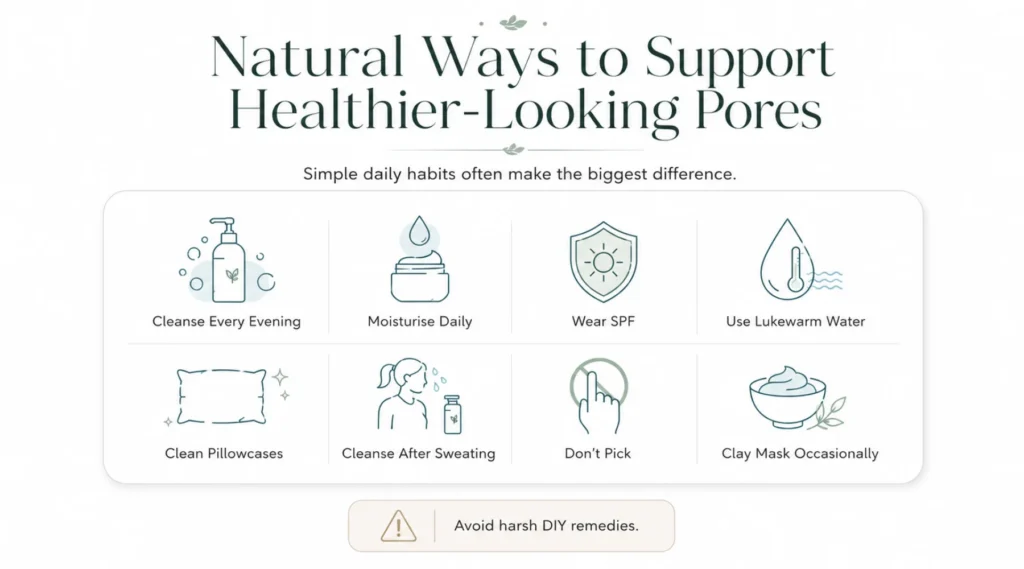
Here are some simple habits that can help:
- Clean your face every evening.
- Use lukewarm water instead of hot.
- Apply a lightweight moisturiser.
- Wear sunscreen daily.
- Avoid heavy oils on your T-zone.
- Change your pillowcases often.
- Clean your face after sweating.
- Don’t pick at blackheads.
- Use a clay mask occasionally.
- Keep your skincare routine consistent.
Be careful with lemon juice, baking soda, toothpaste, undiluted essential oils, and DIY scrubs. They can irritate your skin and make pores look bigger.
Why Makeup Sometimes Makes Pores Look Larger
Makeup can make pores look bigger if it clings to dry patches, mixes with oil, or settles into skin texture. This often happens with oily and dehydrated skin.
To make pores look smoother under makeup:
- Lightly hydrate your skin before foundation.
- Let your skincare products soak in before applying makeup.
- Use thin layers of makeup.
- Don’t add too much powder too soon.
- Blot oil before adding more powder.
- Remove makeup completely at night.
- Gently exfoliate before applying makeup.
If your foundation separates around your nose, it might be due to oil and product issues. If it gathers on your cheeks, dehydration or texture could be the problem.
Why Pores Look Different Across the Nose, Cheeks, and Chin
Pores act differently in different places.
Nose
The nose has many oil glands, which can lead to blackheads, sebaceous filaments, and shine. Using salicylic acid and regular cleansing can help.
Sebaceous filaments are normal oil structures in pores. They appear as tiny grey or yellow dots. Unlike blackheads, they refill quickly after removal because they are part of how pores function.
Cheeks
Cheek pores can be caused by elastic skin, sun damage, acne scars, or dryness. Using sunscreen, retinoids, staying hydrated, and professional treatments may be better than pore strips.
Chin
The chin can get clogged from hormones, touching, lip products, toothpaste, or mask friction. Retinoids, salicylic acid, and gentle cleansing can help, but if chin acne keeps coming back and is painful, you may need medical help.
Forehead
Forehead texture can be caused by hair products, sweat, helmets, hats, or skincare that clogs pores. Pay attention to what comes into contact with your forehead every day.
What to Stop Doing This Week If Your Pores Look Worse
Improvement can start by removing triggers instead of adding products.
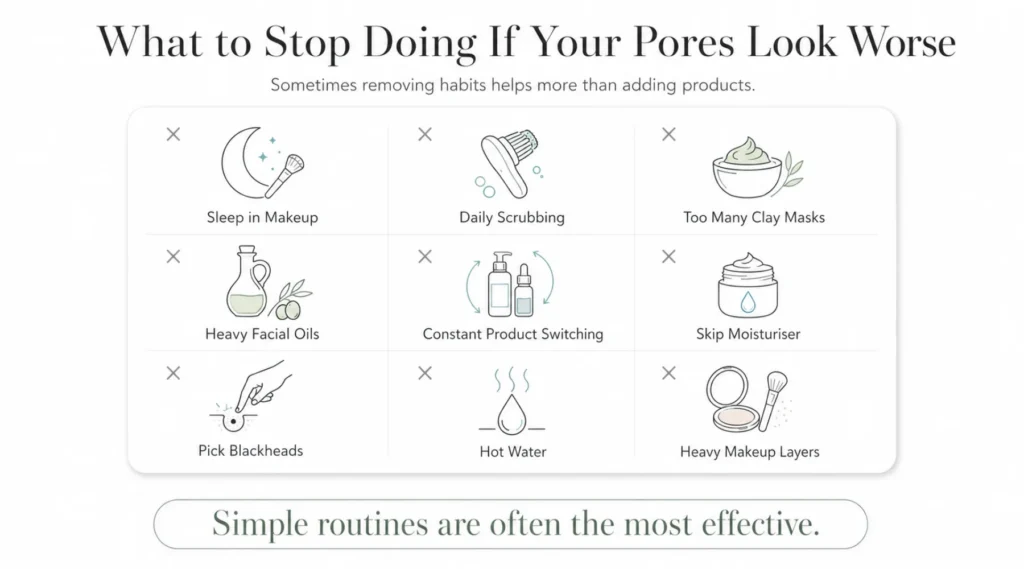
Stop or reduce:
- Sleeping with sunscreen or makeup on
- Scrubbing your nose daily
- Using clay masks several times a week
- Applying facial oils to clogged areas
- Trying new products every few days
- Skipping moisturiser because your skin is oily
- Picking at blackheads with your nails
- Using hot water to “open” pores
- Layering heavy primer over thick moisturiser
- Forgetting sunscreen on cloudy days
A simpler routine can often improve pore appearance before a more complicated one.
The Best At-Home Plan for the First 30 Days
A 30-day pore plan needs to be tracked. The aim is to lessen irritation, remove buildup, and understand what your skin can handle.
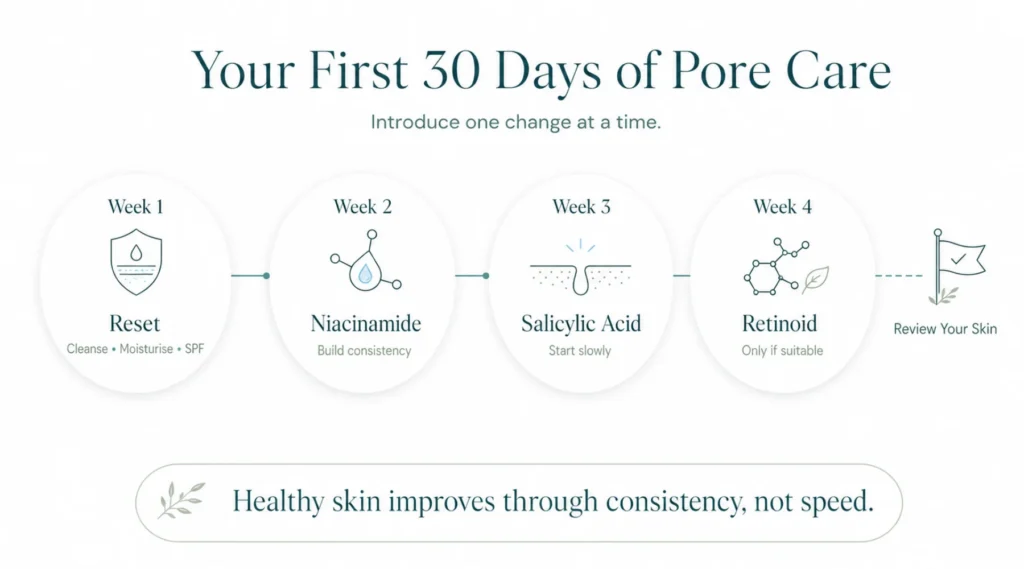
Week 1: Reset the Barrier
Use:
- Gentle cleanser
- Lightweight moisturiser
- Sunscreen every morning
Avoid:
- Scrubs
- Strong acids
- New masks
- Picking
This is your starting point.
Week 2: Add Niacinamide
Start using niacinamide once a day. Pay attention to how your skin reacts. If it feels good, keep using it.
Now is a good time to check if your moisturiser, sunscreen, or makeup is blocking your pores.
Week 3: Add Salicylic Acid
Use salicylic acid once or twice a week, especially on oily or blocked areas. Don’t use it every night at first.
If your skin feels tight or flaky, use it less often.
Week 4: Decide Whether You Need a Retinoid
If you still have bumps or rough spots, try adding a retinoid slowly. Use it on a night different from when you use salicylic acid.
If your skin is sensitive, you’re pregnant, breastfeeding, trying to conceive, or have eczema or rosacea, ask a professional for advice first.
To reduce the size of your pores, focus on treating the underlying cause instead of following every trend.
Questions People Ask When Pores Look Larger Than Usual
Why are my pores so large all of a sudden?
Pores can appear larger due to too much oil, heat, humidity, dehydration, irritation, hormonal changes, heavy makeup, over-exfoliation, or a new product that clogs pores. The pore itself might not have changed; the skin around it could just be shinier, drier, inflamed, or rougher.
Can large pores go back to normal?
Large pores can appear smaller when congestion is cleared, oil levels are balanced, and the skin barrier gets stronger. If pores are naturally large due to genetics or stretched from collagen loss, they might not become tiny again. However, with regular care, they can look more refined.
How can I get rid of pores on my face?
You can’t eliminate pores since they are normal skin openings. However, you can make them look smaller. Use sunscreen to protect your skin, wash your face gently, and try salicylic acid to clear clogged pores. Niacinamide helps with oil control and skin barrier support. If it’s right for your skin, use retinoids to improve texture, and choose a non-comedogenic moisturiser.
How do I unclog pores without damaging my skin?
Use a gentle cleanser and salicylic acid a few times a week. Choose non-comedogenic skincare and cleanse your face properly each evening. Avoid squeezing, harsh scrubs, and frequent pore strips. If blackheads persist, seek professional help for safe extraction instead of picking at them.
Does oily skin make pores bigger?
Oily skin can make pores appear larger because more oil flows through them. Oil can combine with dead skin cells, creating plugs that stretch or darken pores. It’s important to control oil gently, as harsh treatments can irritate the skin more.
Does sun damage make pores larger?
Sun damage can make pores appear larger because it weakens the collagen and elastin around them. This is why cheek pores may look more noticeable as we age. Using broad-spectrum sunscreen every day helps protect the skin’s structure.
Can niacinamide reduce pore size?
Niacinamide can make pores appear smaller by strengthening the skin barrier, evening out skin tone, and reducing oiliness. It doesn’t remove pores, but it’s gentle and effective for oily or textured skin.
Is salicylic acid good for large pores?
Salicylic acid helps when pores look large due to clogging, oil, or blackheads. It clears out oily areas and removes buildup. Start using it gradually to prevent dryness and irritation.
Can retinol shrink pores?
Retinol and other retinoids can make your pores look better over time. They help new skin cells grow, clear out clogged pores, and create a smoother texture. However, they don’t permanently shrink pores and require regular use for a few months. Also, they may not be safe for everyone, especially during pregnancy.
Why do my pores look bigger after washing my face?
Your cleanser might be too strong, or your skin could be dry. If your skin feels tight after washing, it can look rough. Try using a milder cleanser and put on moisturiser while your skin is still a little wet.
Are pore strips bad for your skin?
Pore strips are not always bad, but using them too much can irritate your skin. They only remove some surface dirt and do not stop pores from getting clogged again. They also don’t fix oil production, dead skin cells, or skin elasticity.
What is the best skincare for visible pores?
To reduce visible pores, use a gentle cleanser, niacinamide, salicylic acid if your skin is congested, a suitable retinoid, a lightweight moisturiser, and daily sunscreen. Your specific routine will depend on whether your pores are oily, clogged, or related to skin elasticity.
Why do my pores look worse with makeup?
Makeup can clog pores if your skin is oily, dry, flaky, or has too much heavy skincare. Using thin layers, light hydration, gentle exfoliation, and good cleansing can help the foundation go on more evenly.
Can I lessen pores naturally at home?
You can make your pores look smaller at home by following these steps:
1. Clean your face gently.
2. Avoid products that block pores.
3. Use sunscreen.
4. Stay well-hydrated.
5. Don’t pick at your skin.
6. Use clay masks sometimes if your skin is oily.
Steer clear of harsh DIY treatments like lemon juice, baking soda, or rough scrubs.
When should I see a dermatologist for large pores?
Visit a dermatologist if you have painful acne, cysts, scars, constant blackheads, sudden severe breakouts, burning irritation, or changing skin spots. Get professional advice if over-the-counter products have not worked after several months.
Why Are My Pores So Large, and What Should I Do Next?
Your large pores can come from different reasons. They might be more visible due to genetics, produce excess oil, or trap dead skin cells. Sun damage or ageing can stretch them, while dehydration, irritation, or makeup can make them more noticeable.
The best solution isn’t a product that promises to erase pores. It’s a skincare routine that understands your skin’s needs.
Keep your pores clean without drying them out. Use salicylic acid for congestion and niacinamide for oiliness and uneven texture. Be cautious with retinoids for persistent blackheads, bumps, or ageing texture. Always apply sunscreen in the morning to support collagen and care for your pores. Ensure your skin is well-hydrated so it looks smooth.
Pores don’t need to vanish for your skin to appear healthy. When oil is balanced, congestion is managed, and your skin barrier is calm, pores become a normal part of healthy skin, not the first thing you see in the mirror.