




Blog
Hormonal Acne vs Regular Acne: Key Differences

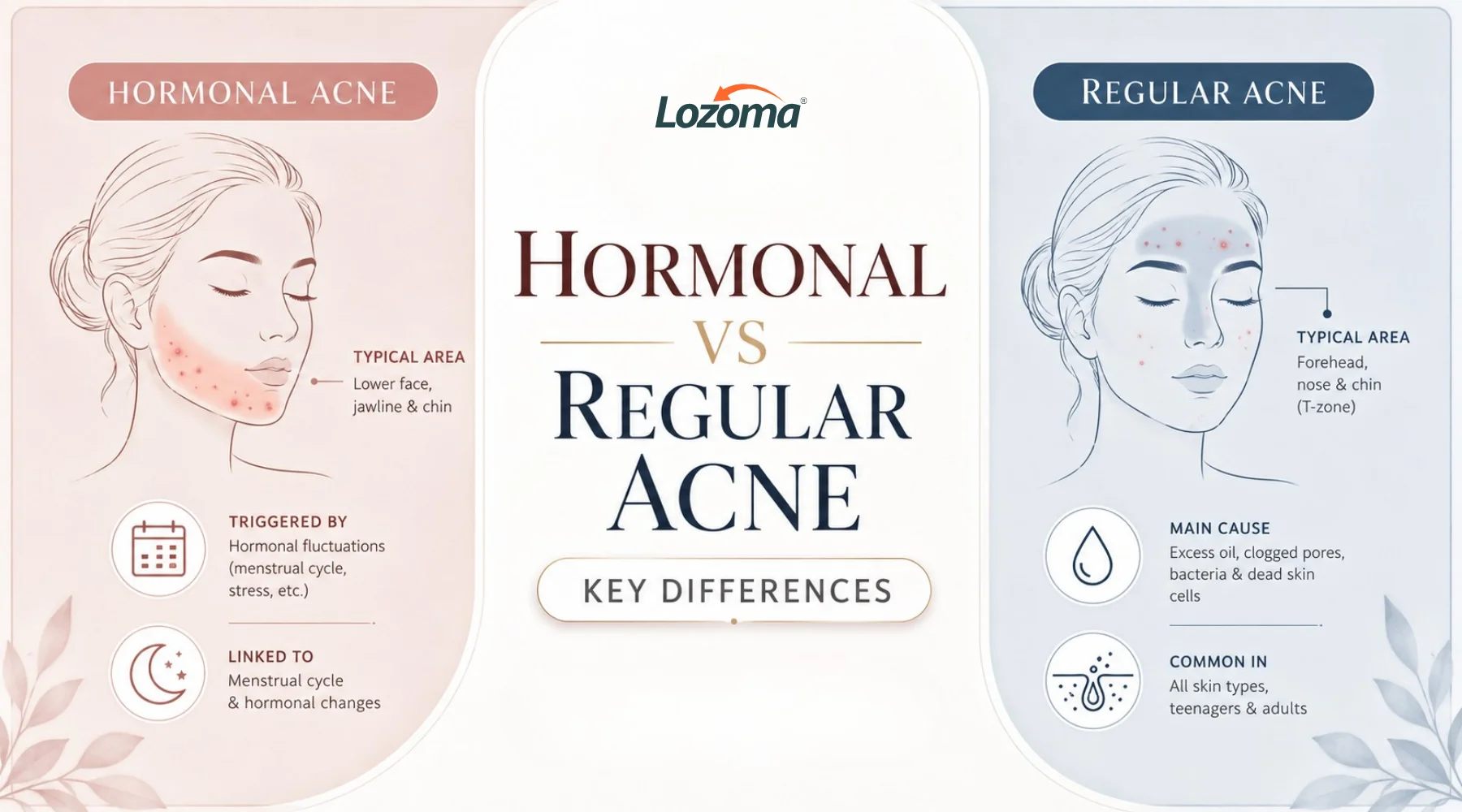
People often confuse hormonal acne with regular acne because they can look alike. You might notice a painful cyst on your chin before your period or bumps on your forehead after using a heavy moisturiser. Spots along your jaw, blackheads on your nose, and stubborn back acne after workouts also feel like regular acne, but the reasons behind them can differ.
Understanding this difference is important. Acne isn’t just one problem with one solution. It involves blocked pores, too much oil, inflammation, and bacteria, but the causes can vary. Hormonal acne is usually triggered by hormonal changes, especially androgens, which affect oil production. Regular acne refers to breakouts caused by clogged pores, excess oil, bacteria, sweat, friction, irritating products, or a combination of these factors.
For effective skincare, don’t rush to label every breakout. Instead, examine where the acne appears, when it happens, what it feels like, how often it returns, and how your skin reacts to treatments.
Hormonal Acne vs Regular Acne: The Core Difference
Hormonal acne is affected by hormone changes. It usually shows up as painful, swollen bumps around the chin, jawline, lower cheeks, and neck. It often flares up before periods, during stress, or when starting or stopping hormonal medications. It can also occur during puberty, pregnancy, perimenopause, and menopause.
Regular acne is a broader term that doesn’t always have a hormonal cause. You may see blackheads, whiteheads, clogged pores, papules, pustules, or occasional inflamed spots. It can appear on the forehead, cheeks, nose, chest, back, and shoulders. Regular acne is often linked to oiliness, clogged pores, sweaty skin, friction, inconsistent cleaning, or irritation from too many active ingredients.
Dermatologists define acne as a condition with clogged pores, inflamed spots, and sometimes nodules or cysts. Treatment varies based on severity and type of lesions. Common treatments include topical retinoids, benzoyl peroxide, azelaic acid, salicylic acid, and prescription oral medications for more severe cases.
| Feature | Hormonal acne | Regular acne |
| Common areas | Chin, jawline, lower cheeks, neck | Forehead, nose, cheeks, chin, chest, back, shoulders |
| Typical spot type | Deep, sore, inflamed bumps or cyst-like lesions | Blackheads, whiteheads, small pimples, pustules, clogged pores |
| Timing | Often cyclical or linked with hormonal changes | Often linked with products, sweat, oil, friction or routine changes |
| Pattern | Same area repeatedly, especially lower face | Can be more random or product-related |
| Skincare response | May improve but often needs consistency and sometimes medical support | Often responds well to targeted topical skincare |
| Main mistake | Treating deep flares only with drying spot products | Over-exfoliating or using pore-clogging products |
The Difference Between Hormonal Acne and Regular Acne in Real Skin
Hormonal acne and regular acne can look similar because both types often appear together. For example, a person might have hormonal acne on their chin and regular acne on their forehead. Oily skin can also cause hormonal breakouts, while dry skin can get clogged from heavy products.
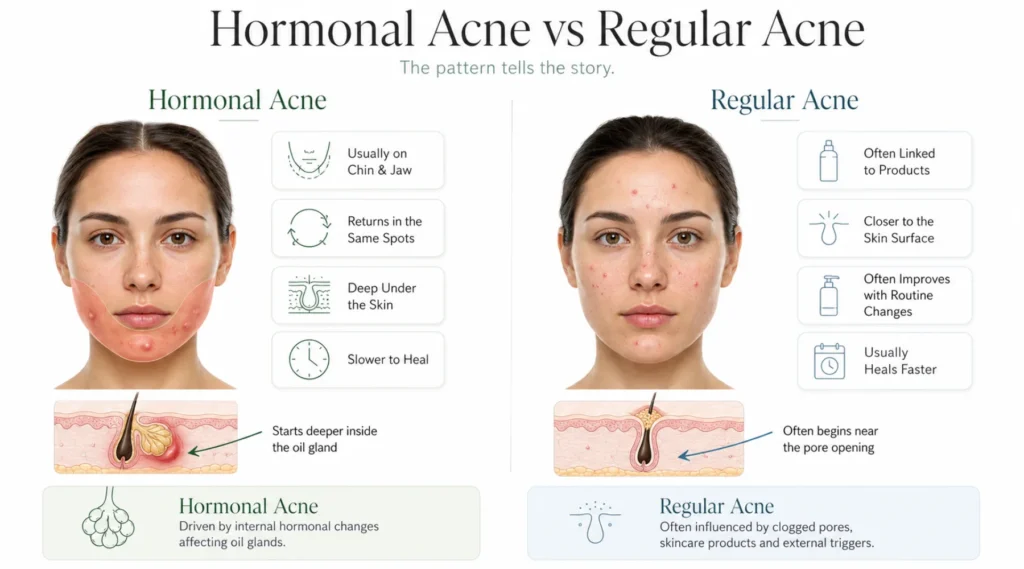
The main difference lies in the pattern. Hormonal acne tends to come back in the same spots on the lower face, feels deeper under the skin, is tender before it fully appears, and takes longer to heal. Regular acne often responds better to changes in routine. If the breakout is caused by a pore-clogging sunscreen, greasy hair products, sweat from tight clothes, or heavy moisturiser, it may improve once those issues are addressed.
A useful way to think about it is this:
- Hormonal acne comes from the oil gland inside the skin.
- Regular acne is often caused by issues at the pore opening.
This doesn’t mean skincare is useless for hormonal acne. It just means we need to be realistic. A cleanser, serum, or cream can’t actually “balance hormones,” but a good skincare routine can help reduce pore blockage, calm inflammation, support the skin barrier, and lessen the severity of hormonal breakouts.
Why Hormonal Acne Often Appears on the Chin and Jawline
Hormonal acne often shows up on the chin, jawline, and lower cheeks because these areas react to changes in oil due to androgens, which are hormones that affect oil glands. When oil production rises, and dead skin cells don’t shed properly, pores can clog. Clogged pores can become inflamed, leading to painful red bumps or cyst-like spots.
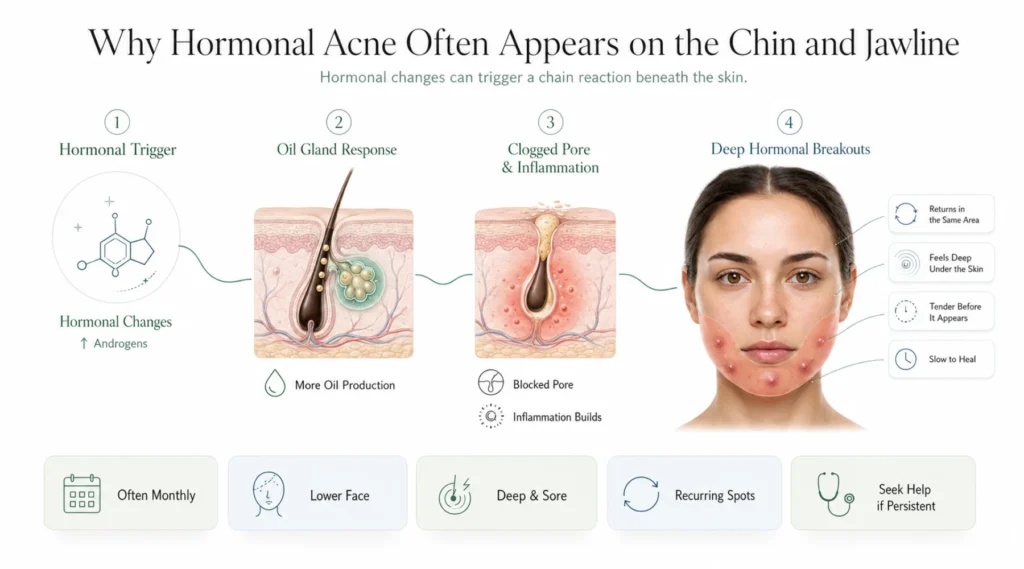
This type of acne feels different from regular whiteheads. The bump may stay beneath the skin for days and can feel bruised, swollen, or hot. It may not develop a visible head. Trying to squeeze it usually makes it worse because the inflammation is deeper than it seems.
Several signs suggest a hormonal pattern:
- Breakouts happen at the same time every month.
- Pimples focus on the chin, jawline, lower cheeks, or neck.
- The bumps feel deep, sore, or like cysts.
- The same area clears up, but then breaks out again.
- Acne gets worse after hormonal changes.
- Over-the-counter spot treatments help a little.
Adult female acne is commonly linked to hormones, but hormonal acne can affect anyone, regardless of gender or age. If you have acne that is persistent, painful, causes scarring, or appears suddenly, you should see a doctor. This is especially important if you also have irregular periods, more facial hair, hair thinning, or other signs of hormonal issues.
Why Regular Acne Can Appear Almost Anywhere
Regular acne happens when pores get clogged, there’s too much oil, bacteria grow, inflammation occurs, and environmental factors come into play. It can show up on the face, chest, shoulders, and back, since these areas have many oil glands.
Forehead acne often looks different than jawline acne caused by hormones. People often ask how to get rid of forehead acne and may be dealing with sweat, hair products, helmets, hats, thick sunscreen, oily skin, dandruff irritation, or small clogged pores. Greasy hair products can move to the forehead, and heavy sleeping masks can trap oil. Caps worn during workouts can create heat, sweat, and friction.
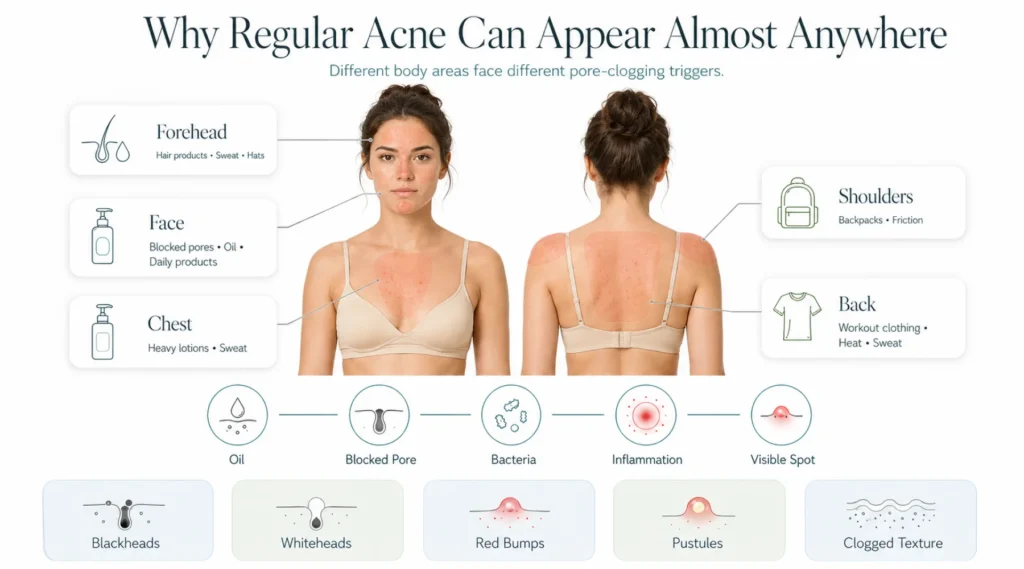
Body acne is also common. When people ask how to get rid of bacne, the answer usually requires more than just a face routine. Bacne can come from sweat, tight clothes, gym wear, backpacks, body oils, heavy lotions, and not showering after exercise. Since the back has thicker skin than the face, it may react differently to skincare products.
Regular acne may show as:
- Blackheads on the nose, chin, back, or chest
- Whiteheads and closed comedones
- Small red bumps
- Pustules with a visible white centre
- Rough forehead texture
- Breakouts after new products
- Spots where skin meets sweat, friction, or occlusive clothing
Regular acne often improves when you simplify your routine and find the cause. Using a gentle cleanser, a non-comedogenic moisturiser, consistent sunscreen, and one or two effective treatments can lead to clear results over time.
Hormonal Acne or Regular Acne for Sensitive Skin: Why the Label Matters Less Than the Barrier
Hormonal acne and regular acne on sensitive skin require a careful approach. Sensitive skin isn’t just skin that reacts poorly to strong products. It often has a delicate barrier, making it prone to stinging, redness, peeling, itching, or inflammation.
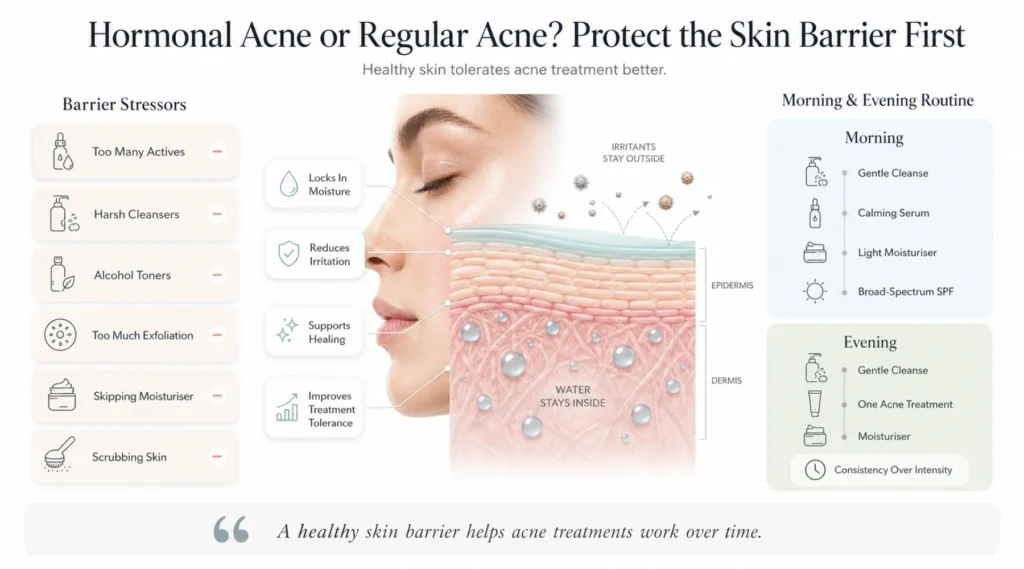
This is important because many acne treatments don’t work because the ingredients are ineffective, but also because the skin can’t handle how they are applied.
Sensitive acne-prone skin often struggles with:
- Too many active ingredients at once
- Harsh foaming cleansers
- Alcohol-heavy toners
- Frequent exfoliating acids
- Strong spot treatments are used over large areas
- Skipping moisturiser because the skin is oily
- Starting retinoids too often
- Scrubbing inflamed breakouts
If your skin is sensitive, start with a gentle routine instead of a strong acne treatment. A consistent routine helps avoid irritation. When your skin gets irritated, it can make acne look worse, as inflamed skin appears red, rough, and more reactive.
A sensitive-skin acne routine may look like this:
- Morning: Cleanse or rinse your face, apply a calming serum, use a lightweight moisturiser, and finish with broad-spectrum sunscreen.
- Evening: Cleanse your face, use one acne treatment on chosen nights, and apply moisturiser.
That may sound easy, but simple is often key to consistency. Acne treatments typically take weeks, not days. If the skin barrier breaks down after one week, the routine won’t be effective long enough to work.
Does Niacinamide Help with Acne?
Does niacinamide help with acne? Yes, it can be useful, especially for oily, irritated, or red skin. Niacinamide, or vitamin B3, isn’t a classic acne treatment like benzoyl peroxide or retinoids, but it can enhance your acne care routine in helpful ways.
Niacinamide may help by:
- Supporting the skin barrier
- Reducing the look of redness
- Helping regulate the appearance of excess oil
- Improving uneven tone after breakouts
- Making active routines more tolerable
Niacinamide is great for ingredients that cause dryness or peeling. It works well with azelaic acid, salicylic acid, or retinoids if the formula isn’t too heavy or pore-clogging.
Be careful with the concentration. More isn’t always better. Some people do well with moderate levels of niacinamide, but high percentages can feel sticky or irritating. If your skin is sensitive, start with a lower strength or use it once a day instead of combining it with other active ingredients.
For hormonal acne, niacinamide can improve skin condition, but won’t address hormonal causes. For regular acne, it helps when excess oil and stressed skin are issues.
Does Retinol Help with Acne?
Does retinol help with acne? Yes, it can, but we need to clarify what “retinol” means. Retinol belongs to the retinoid family, but prescription retinoids and over-the-counter retinol are not the same. Topical retinoids are useful for acne because they clear clogged pores, speed up cell turnover, and reduce inflammation. The American Academy of Dermatology strongly recommends topical retinoids as effective acne treatments.
Retinoids are especially useful for:
- Closed comedones
- Blackheads
- Rough texture
- Recurrent clogged pores
- Post-acne unevenness
- Long-term acne maintenance
Hormonal Acne: Retinoids can help decrease clogged pores that cause inflammation during hormonal flare-ups. They might not prevent all deep chin cysts, but they can improve skin texture, reducing the chance of breakouts.
Regular Acne: Retinoids are a valuable long-term treatment, especially for congested skin rather than simply irritated skin.
The problem is tolerance. Retinoids can cause dryness, peeling, and breakouts if you use them too quickly. I recommend starting slowly:
- Use a pea-sized amount for your whole face.
- Begin by applying it two nights a week.
- If your skin is sensitive, use a moisturiser before or after.
- Don’t use exfoliating acids on the same nights at first.
- Wear sunscreen every morning.
- Wait at least 8 to 12 weeks to see results.
Retinoids aren’t right for everyone. Most pregnant or breastfeeding people should avoid them unless a doctor says otherwise. Those with eczema, rosacea, or weak skin barriers should seek professional advice before starting.
Is Glycolic Acid Good for Acne?
Is glycolic acid good for acne? Sometimes, but it’s not the best for all types. Glycolic acid is an alpha-hydroxy acid that exfoliates the skin. It can smooth rough areas, brighten dull skin, and improve post-acne marks. It may help with some clogged pores, but it doesn’t work as well as salicylic acid for oily areas and isn’t ideal for deep hormonal acne.
Does glycolic acid help with acne? Yes, it can help with acne caused by surface buildup, dullness, uneven texture, or post-acne marks. However, it may not be effective for deep, cystic breakouts that are very inflamed or driven by hormones.
Glycolic acid can be helpful for:
- Rough texture
- Dullness after acne
- Mild congestion
- Uneven tone
- Some non-inflamed bumps
It can be too much for:
- Sensitive, stinging skin
- Active peeling
- Inflamed cystic acne
- Damaged barrier
- Skin is already using retinoids frequently
Many people make the mistake of using glycolic acid every night because their skin feels smoother at first. However, this can lead to over-exfoliation. When skin is over-exfoliated, it may feel tight, shiny, hot, easily irritated, and more likely to break out. Instead of relying solely on glycolic acid, it should be used as a helpful addition, not the main part of an acne treatment plan.
Azelaic Acid: A Useful Middle Ground for Hormonal and Regular Acne
Azelaic acid is important in the discussion of hormonal acne versus regular acne because it effectively addresses both. It helps with clogged pores, redness, breakouts, and post-acne marks. DermNet describes azelaic acid as a topical treatment for mild to moderate acne, effective for both comedonal (blackheads and whiteheads) and inflammatory acne.
A 12% azelaic acid cream is a good choice for those wanting acne treatment that also improves uneven skin tone after breakouts. It is usually gentler than harsh exfoliating methods, but may cause some tingling or itching when first used.
Azelaic acid may be useful when:
- Breakouts leave brown or red marks.
- Skin is sensitive to strong acids.
- Acne includes clogged pores and inflamed spots.
- The skin appears uneven after flare-ups.
- You need a product that works well with other active ingredients.
Azelaic acid can help with hormonal acne by reducing scars and promoting calmer skin. For regular acne, it can ease mild congestion and redness.
Start using it slowly. Apply it once a day or every other day, based on how your skin reacts. Use it with a moisturiser. Don’t use it right after applying exfoliating acids or retinoids if your skin is sensitive.
Tea Tree: Helpful for Some Spots, Too Irritating for Others
Tea tree oil is an ingredient that people either love or misuse. It has a long history in treating blemishes, but it should be used carefully. A good tea tree serum can refresh oily, blemish-prone skin when used in a simple routine instead of as a harsh treatment.
The issue comes from using undiluted tea tree oil. Pure essential oils can irritate the skin, especially on inflamed areas. This irritation can make acne appear worse, not better.
Tea tree-based formulae may suit:
- Oily skin
- Occasional blemishes
- Surface-level spots
- People who prefer a lightweight serum texture
They may not suit:
- Very sensitive skin
- Eczema-prone skin
- Deep cystic hormonal acne
- Skin is already using several strong actives
- Anyone reacting to fragrance or essential oils
Hormonal Acne: Tea tree oil shouldn’t be the main treatment. It can help with surface spots, but deep, recurring nodules usually need more effective solutions.
Regular Acne: Tea tree oil can be helpful for mild spots, especially if the skin isn’t easily irritated.
Acne Patches: Where They Fit in Both Acne Types
Acne patches can be helpful if you have realistic expectations. Most hydrocolloid patches absorb fluid from pimples that have already come to a head. They also protect the acne from picking, rubbing, and germs from your fingers.
However, they aren’t as effective for deep hormonal cysts that don’t have a visible head. While a patch can prevent you from touching the area, it won’t remove a deep cyst overnight.
Patches are best for:
- Whiteheads
- Spots with fluid
- Picked blemishes that need protection
- Preventing touching
- Reducing friction from masks or pillows
They are less effective for:
- Deep under-skin hormonal bumps
- Blackheads
- Closed comedones
- Large painful cysts
- Widespread acne
Apply a patch after cleansing your skin, when it is dry, and before using moisturisers or oils. If your skin is wet or has serum on it, the patch might not stick well. People who pick at their breakouts should have acne patches handy, as they can help prevent damage and reduce the chance of lasting marks.
Understanding how hydrocolloid patches work on active spots can help you decide if you should include a patch in your routine or if your breakout needs a different treatment.
Hormonal Acne vs Regular Acne for Beginners
Hormonal acne and regular acne can be confusing for beginners. Skincare terms often make it seem like every ingredient is necessary. Instead of using ten products, beginners should focus on recognising patterns and staying consistent.
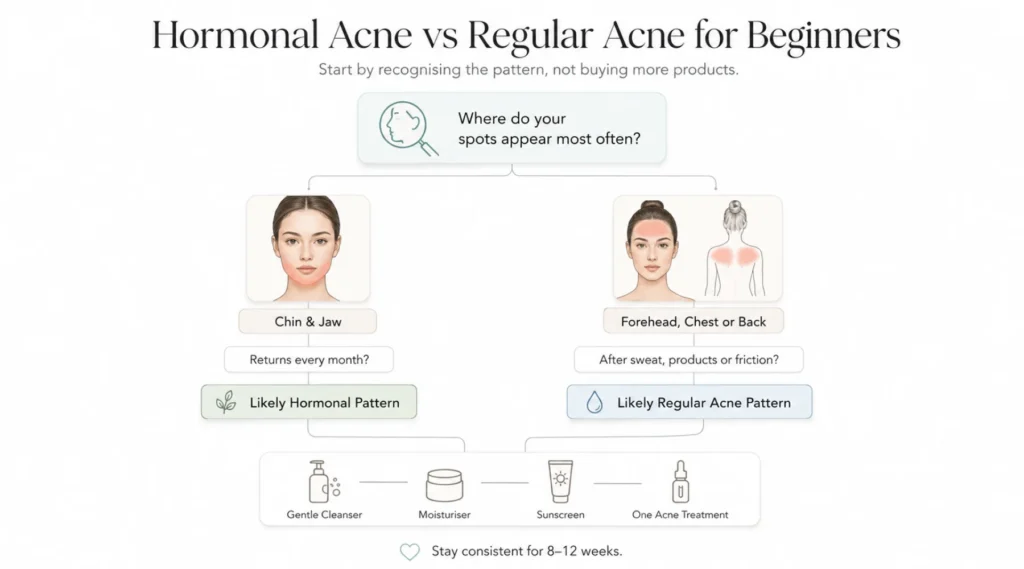
Start by tracking four things for one month:
- Where do spots appear?
- What type of spots are they?
- When do they flare?
- What changed before they appeared?
If you get acne around your chin and jaw every month before your period, hormones are probably the cause. If acne shows up on your forehead after using a new hair oil, it’s likely regular acne or clogged pores from the product. If back acne gets worse after working out and wearing tight clothes, sweat and friction may be the main triggers.
A beginner routine should be simple:
Morning:
- Cleanse gently or rinse with water.
- Apply a lightweight, non-comedogenic moisturiser.
- Use sunscreen.
Evening:
- Cleanse properly.
- Use one acne active.
- Moisturise.
Choose one main active based on the acne pattern:
- Clogged pores: retinoid or salicylic acid
- Inflamed spots: benzoyl peroxide or azelaic acid
- Post-acne marks: azelaic acid or carefully used glycolic acid
- Sensitive skin: niacinamide support plus slow introduction of actives
- Whiteheads: acne patches as a protective add-on
The biggest mistake beginners make is changing their routines too often. Acne treatments need time to work. Most topical products should be evaluated over 8 to 12 weeks, unless they cause irritation or an allergic reaction.
Can You Use Hormonal Acne and Regular Acne Treatments Together?
The biggest mistake beginners make is changing their routines too often. Acne treatments need time to work. Most topical products should be evaluated over 8 to 12 weeks, unless they cause irritation or an allergic reaction.
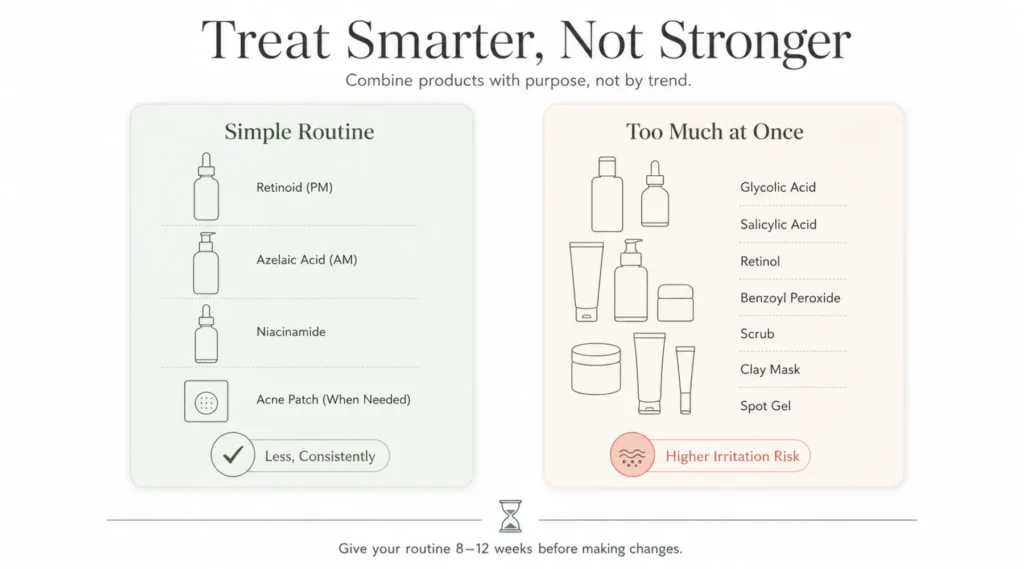
The goal is to combine treatments by function, not by trend.
For example:
- Night Routine: Use retinoids to clear clogged pores and prevent future breakouts.
- Morning Routine: Apply azelaic acid to reduce redness and fade post-acne marks.
- Barrier Support: Use niacinamide to strengthen the skin barrier.
- Acne Treatment: Apply patches to appropriate whiteheads only.
- Targeted Treatment: If you can tolerate it, use benzoyl peroxide for short periods on specific spots.
What you do not want is a routine that looks like this:
- Glycolic acid toner
- Salicylic acid serum
- Retinol
- Benzoyl peroxide
- Scrub
- Clay mask
- Drying spot gel
This routine isn’t effective. It often irritates the skin, making it flaky, shiny, sore, and more likely to break out.
If acne keeps showing up in the same spots, it’s better to understand why it’s happening instead of just adding more products.
The Best Uses for Common Acne Ingredients
The best acne ingredient varies based on your needs. There is no one ingredient that works for every breakout.
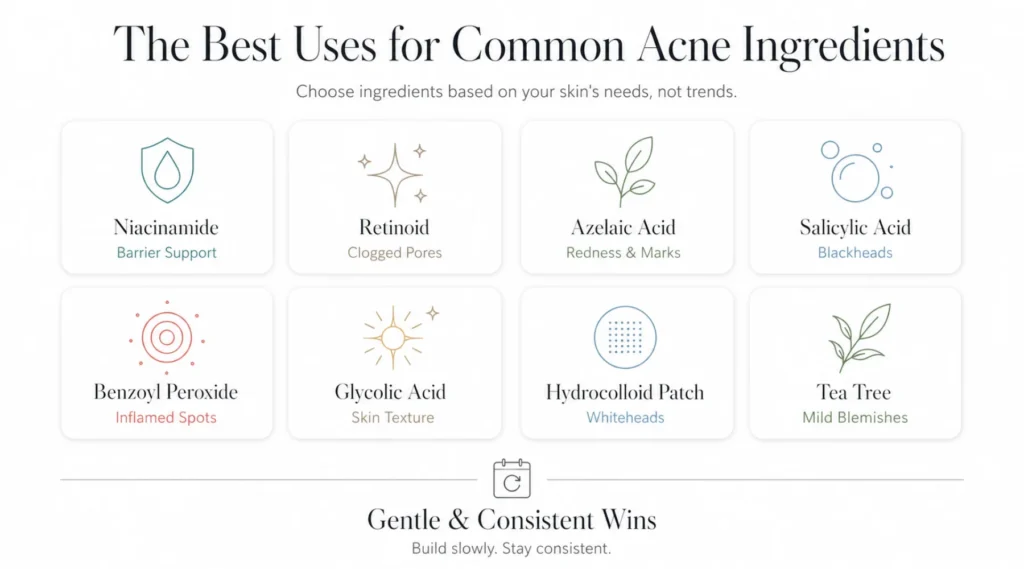
| Ingredient | Best use | Better for hormonal or regular acne? | Main caution |
| Niacinamide | Barrier support, oil appearance, redness | Both | High strengths may irritate some skin |
| Retinoids/retinol | Clogged pores, texture, prevention | Both, especially recurring congestion | Dryness, peeling, pregnancy caution |
| Glycolic acid | Texture, dullness, post-acne marks | Mostly regular acne support | Over-exfoliation |
| Azelaic acid | Redness, marks, mild-moderate acne | Both | Tingling or dryness at first |
| Benzoyl peroxide | Inflamed spots, acne-associated bacteria | Both, especially inflammatory acne | Dryness, bleaching fabric |
| Salicylic acid | Oily clogged pores, blackheads | Mostly regular acne | Irritation if overused |
| Hydrocolloid patches | Whiteheads, picked spots | Both as spot support | Not effective for deep cysts |
| Tea tree formulae | Mild oily blemishes | Mostly regular acne support | Essential oil sensitivity |
The best way to use active ingredients is in a way that your skin can handle over time. A gentle and consistent routine is often better than a harsh one that you stop using after a few days because it causes irritation.
How to Tell Whether Your Breakout Is Product-Related
Product-related acne can look like regular acne and can even make hormonal acne worse. Timing and where the acne appears can be clues.
A new moisturiser might cause small bumps after a few weeks. Hair oil can lead to bumps on the forehead or temples. A thick sunscreen may clog pores on the cheeks. A heavy cleansing balm might leave residue along the jaw. Not removing makeup properly can worsen skin texture and block pores.
Signs a product may be contributing:
- Breakouts started after trying a new product.
- Bumps form where you apply it.
- Your skin feels waxy and clogged.
- Closed comedones increase.
- Acne improves when you stop using the product.
- The breakout pattern doesn’t match your usual hormone cycle.
Not every oil, balm, or cream is bad for your skin. Acne-prone skin varies from person to person. Some people can handle richer products, while others may break out from those labelled “non-comedogenic.” This label can help, but it’s not a promise.
When trying a new product, only test one at a time. Use it for at least two to four weeks unless you notice irritation right away. If you change your cleanser, serum, moisturiser, and sunscreen all in one week, it will be hard to figure out what’s causing any breakouts.
How to Get Rid of Forehead Acne Without Over-Stripping the Skin
Forehead acne is usually regular acne, but it can sometimes be hormonal. The forehead tends to collect sweat, oil, hair products, and friction from hats, helmets, and headbands.
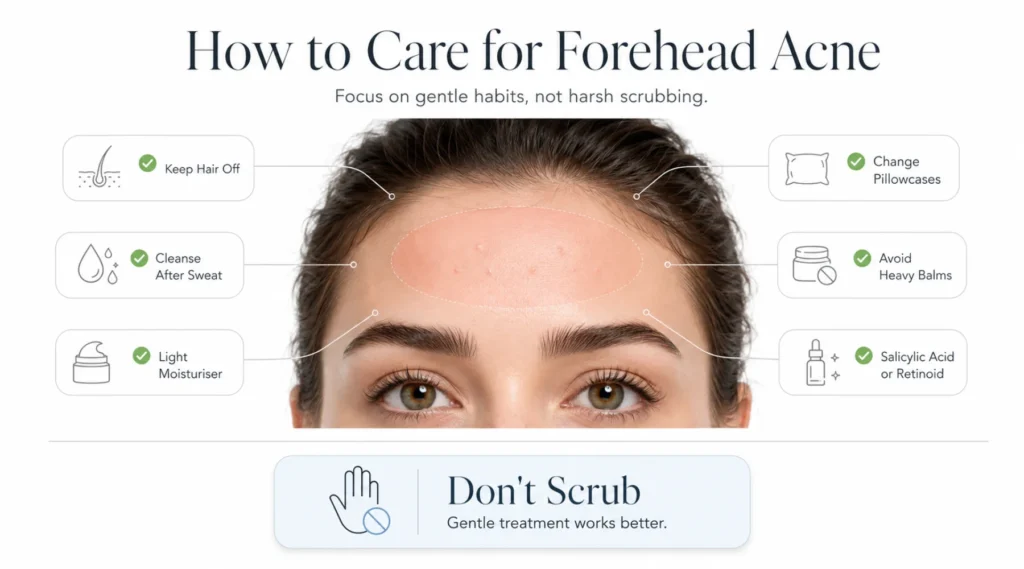
To improve forehead acne:
- Keep hair products off the hairline.
- Wash bangs and oily roots often.
- Cleanse after sweating.
- Avoid thick balms on your forehead.
- Change pillowcases frequently.
- Use a light moisturiser.
- Try salicylic acid or a retinoid for comedones.
Tiny bumps on the forehead aren’t always acne. They can be caused by yeast folliculitis, irritation, heat rash, or dermatitis. If the bumps are uniform, itchy, and don’t respond to regular acne treatments, consult a pharmacist, GP, or dermatologist for help.
Don’t scrub the forehead. Scrubbing can irritate inflamed acne and increase redness. Using a leave-on treatment consistently is usually more effective than scrubbing.
How to Get Rid of Bacne When Body Skin Has Different Needs
Bacne can be annoying because it’s tough to reach and takes longer to treat. It is also influenced by clothes and sweat. The back has thicker skin and bigger oil glands than the face, so treating body acne might require different habits.
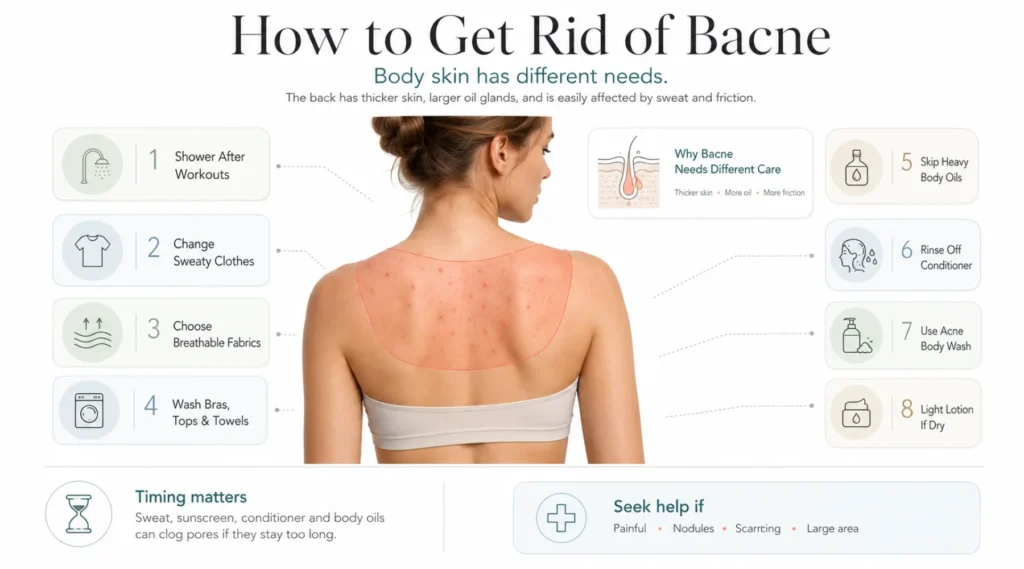
To reduce back acne:
- Shower soon after your workout.
- Change out of sweaty clothes quickly.
- Wear breathable fabrics when you can.
- Wash sports bras, gym tops, and towels often.
- Avoid heavy body oils on areas that break out.
- Don’t let conditioner sit on your back.
- Use a body wash with acne-fighting ingredients if it suits your skin.
- Moisturise with a lightweight lotion if your skin feels dry.
When people ask how to eliminate bacne, timing is key. Allowing sweat, sunscreen, body oil, and conditioner to stay on the skin for too long can clog pores. Rinsing your hair after using conditioner is a simple habit that can help.
If bacne is painful, forms nodules, causes scarring, or covers a large area, consider seeing a professional. Back acne can leave scars, and scarring is harder to treat than active breakouts.
Why Hormonal Acne Can Keep Coming Back Even with Good Skincare
Hormonal acne can come back even with good skincare because the cause goes deeper than skin. If hormone changes boost oil production every month, the skin may continue to become clogged and inflamed.
Why Hormonal Acne Needs Multiple Solutions:
- Use skincare to clear clogged pores.
- Support the skin barrier to lessen irritation.
- Be consistent to stop flare-ups from getting worse.
- Stay aware of how sleep, stress, and diet affect your skin.
- Seek medical help if acne is ongoing, painful, or leaves scars.
Hormonal acne can be managed, but a cleanser or serum won’t always cure it. This doesn’t mean your skincare isn’t working; it likely means there’s an internal cause that needs more than just topical treatment.
A good goal for skincare is to reduce how bad the acne is, how often it happens, and how long it takes to heal. If you used to have six painful cysts and now have two smaller bumps that heal faster, that is progress.
Lifestyle Factors That Can Influence Both Types of Acne
Lifestyle doesn’t cause all acne, and people with acne shouldn’t feel blamed for it. However, some habits can affect breakouts, especially in those already prone to acne.
Stress
Stress can impact sleep, cause inflammation, increase oiliness, and lead to skin-picking. Many people find their acne gets worse during busy times, exams, emotional stress, or lack of sleep. Managing stress won’t eliminate acne, but it can help relieve some pressure on the skin.
Sleep
Lack of sleep can make your skin look dull, heal slowly, and become more inflamed. Sticking to a regular sleep routine helps your skin recover, even if it doesn’t directly heal acne.
Diet
Diet and acne affect people differently. Some notice breakouts after eating high-glycaemic foods or certain dairy products, while others don’t see any connection. Instead of drastic restrictions, it’s best to observe your own eating habits for a few weeks and note any patterns.
Exercise
Exercise is healthy, but sweat and friction can cause acne if they stay on your skin. Showering after workouts, wearing breathable clothes, and washing gym gear often can help prevent this.
Skin picking
Picking can quickly turn a small spot into a lasting mark. Patches can help by acting as a barrier and reducing the desire to pick.
Common Mistakes That Make Hormonal and Regular Acne Worse
Acne routines can get complicated as people want quick results. However, skin typically responds better to regular care rather than harsh treatments.
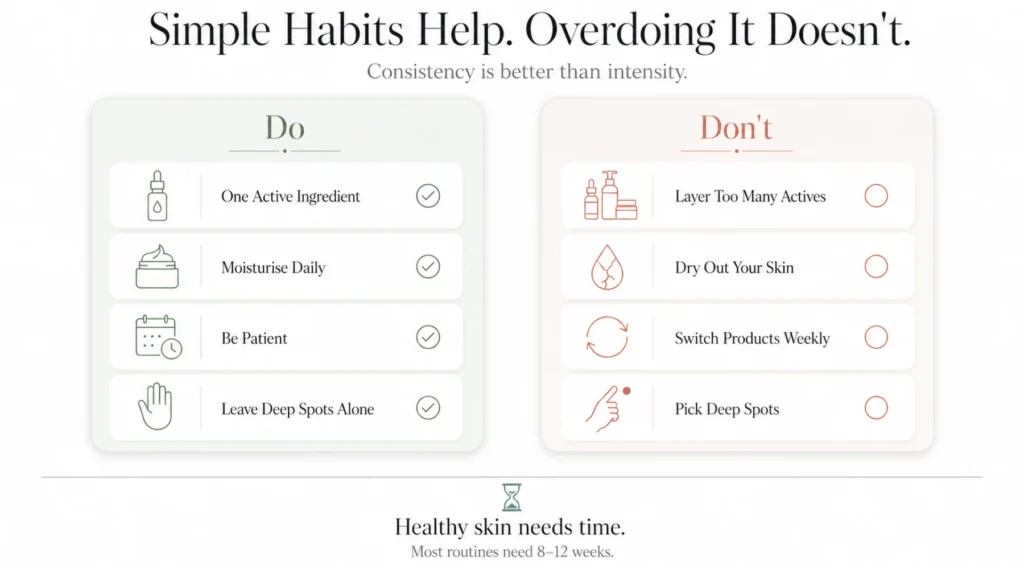
Using too many activities at once
Using multiple acids, retinoids, and strong spot treatments can harm your skin barrier. When the barrier is irritated, acne can worsen, and products may cause stinging.
Drying out oily skin
Oily skin still needs moisture. If you dry it out too much, it can feel tight and may produce more oil. A light moisturiser can help make acne treatments more comfortable.
Treating every bump the same way
Different skin issues need different treatments. Acne patches work for whiteheads but not deep cysts. Glycolic acid improves skin texture but doesn’t help painful hormonal nodules.
Stopping treatment too soon
Most acne treatments take 8 to 12 weeks to work. Changing treatments every week slows progress and causes more irritation.
Ignoring hair and body products
Conditioner, styling creams, oils, and heavy lotions can cause breakouts on the hairline, back, shoulders, and chest.
Squeezing deep spots
Deep hormonal bumps should not be squeezed. Squeezing can cause more swelling and increase the chance of scarring.
Myths About Hormonal Acne vs Regular Acne
“Hormonal acne only happens to teenagers”
Hormonal acne can affect adults as well. While puberty is a time of hormonal change, menstrual cycles, pregnancy, perimenopause, menopause, and hormonal medications can also impact acne.
“Regular acne means dirty skin”
Acne isn’t caused by uncleanliness. Washing your face helps get rid of oil, sweat, sunscreen, and makeup. However, washing too much can irritate the skin and make breakouts worse.
“If it is hormonal, skincare cannot help”
Skincare can help with hormonal acne by clearing clogged pores, reducing inflammation, and strengthening the skin barrier. While it may not address the underlying causes, it can still improve how your skin looks and feels.
“Natural ingredients are always safer”
Natural doesn’t always mean gentle. Essential oils, citrus extracts, and harsh DIY treatments can irritate skin that’s prone to acne.
“Acne patches remove every spot overnight”
Patches help with whiteheads and pimples. They do not cure cystic acne, blackheads, or widespread congestion.
“Purging means every reaction is normal”
When you start using ingredients that boost skin cell turnover, like retinoids or exfoliating acids, you might notice some clogged pores. Symptoms like burning, swelling, intense itching, or breakouts in unexpected places may indicate irritation or intolerance, not purging.
When Professional Treatment Makes Sense
Professional help isn’t just for severe acne. It’s wise to seek assistance when acne is painful, causes scarring, affects your emotions, or doesn’t improve with your regular routine.
A GP, pharmacist, or dermatologist may recommend:
- Prescription topical retinoids
- Benzoyl peroxide combinations
- Topical or oral antibiotics when needed
- Prescription-strength azelaic acid
- Hormonal treatments for certain patients
- Oral isotretinoin for severe or tough cases of acne
- Procedures for scars or stubborn lesions
NICE guidance helps with managing acne in both primary and speciality care. It offers advice on using creams and pills based on how severe the acne is.
See a doctor sooner if your acne is causing scars, deep painful lumps, appears suddenly in adulthood, or comes with symptoms like irregular periods, extra facial hair, or hair thinning.
A Practical Routine for Hormonal Acne
A hormonal acne routine should prioritise prevention over just treating spots when they appear.
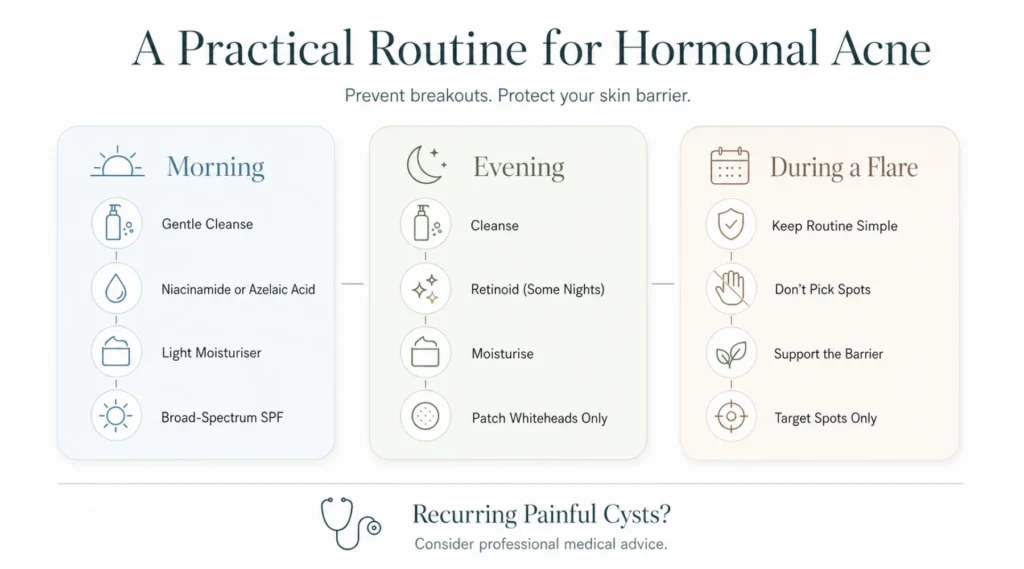
Morning:
- If your skin is dry, use a gentle cleanser or rinse.
- Try niacinamide or azelaic acid if your skin can handle it.
- Use a light moisturiser.
- Put on broad-spectrum sunscreen.
Evening:
- Cleanse well.
- Apply a retinoid on some nights if it works for you.
- Moisturise enough to keep your skin safe.
- Use acne patches only on whiteheads or spots you’ve picked.
During flare-prone days:
- Avoid adding many new products.
- Don’t squeeze deep bumps.
- Use a calming barrier.
- Try a benzoyl peroxide product if you can.
- Stick to a consistent routine.
If painful cysts come back every month, skincare might help lessen the pain, but you may need medical support to tackle the hormonal cause.
A Practical Routine for Regular Acne
A good acne routine depends on the type of breakouts you have: comedonal, inflamed, or on your body.
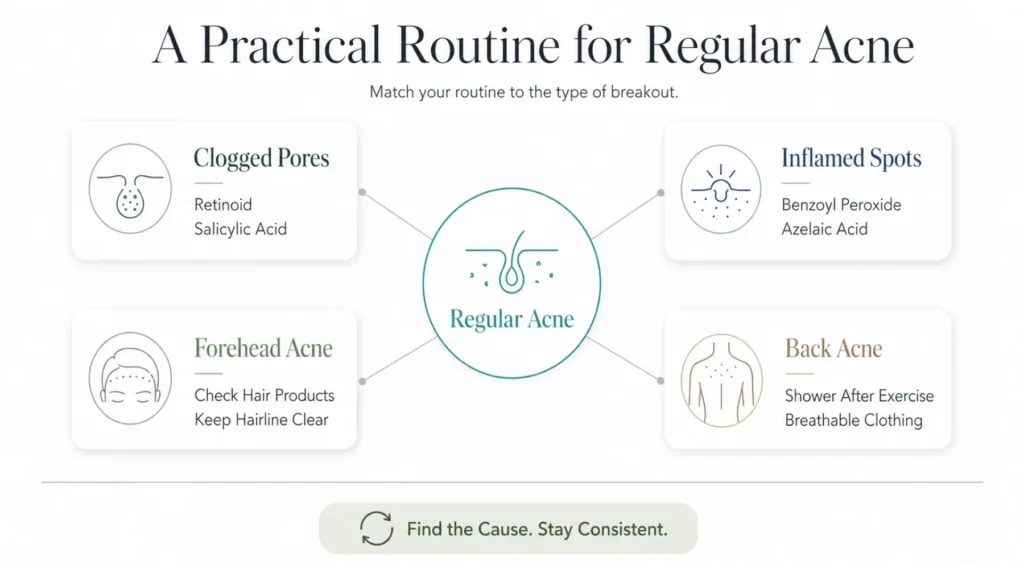
For clogged pores:
- Use a retinoid or salicylic acid.
- Stay away from thick creams in areas that break out easily.
- Be patient as your skin texture changes.
For inflamed spots:
- Benzoyl peroxide or azelaic acid can help.
- Always use moisturiser.
- Apply patches to suitable whiteheads.
For forehead acne:
- Check hair products.
- Wash your hair after sweating.
- Don’t use thick products close to your hairline.
For bacne:
- Shower after workouts.
- Rinse conditioner thoroughly.
- Use breathable clothing.
- Consider an acne-focused body wash or leave-on treatment if tolerated.
Regular acne often gets better when you find the cause. The treatment doesn’t have to be harsh; it just needs to be consistent and suited to the cause.
Skin Barrier Care Is Not Optional
The skin barrier is key to treating acne because many acne treatments can cause irritation. If the barrier is damaged, acne can appear redder, products may sting, healing can take longer, and you may be more likely to stop treatment.
Barrier-friendly acne care includes:
- Gentle cleansing
- Daily moisturiser
- Sunscreen
- Slow active introduction
- Rest nights from strong treatments
- Avoiding scrubs on inflamed acne
- Not layering multiple exfoliants
A good moisturiser won’t cause acne if it’s light and well-selected. In fact, using a moisturiser can help acne treatment work better, as it allows the skin to handle active ingredients for a longer time.
Post-Acne Marks: Why They Matter in Both Acne Types
Many people are treating acne and the marks it leaves. These marks can be red, pink, purple, or brown, depending on skin colour and inflammation.
Hormonal acne often causes deeper and more inflamed marks. Regular acne can also leave marks, especially if the spots are picked or irritated repeatedly.
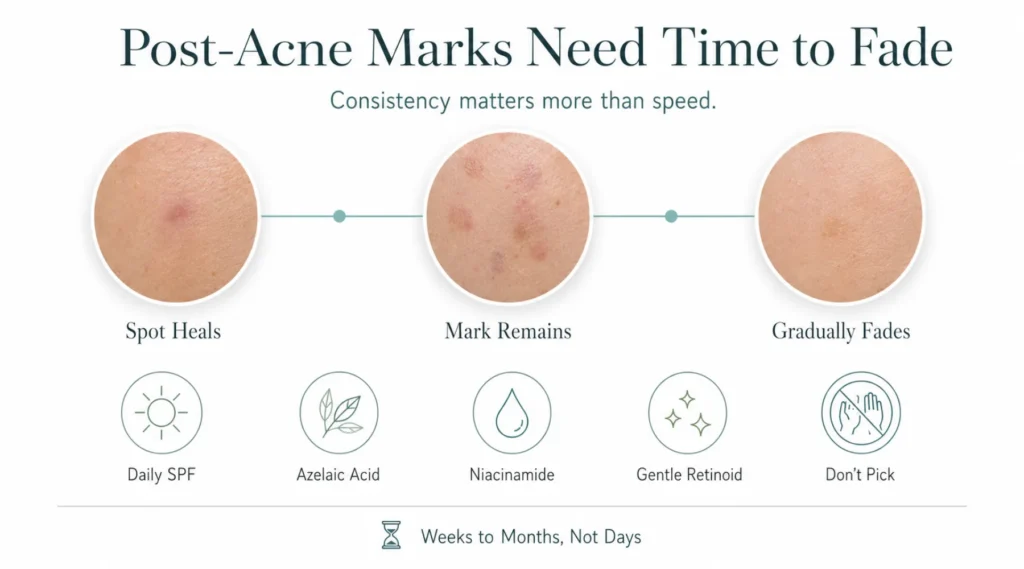
Helpful approaches include:
- Sunscreen every morning
- Azelaic acid
- Niacinamide
- Gentle retinoid use is suitable
- Avoiding picking
- Patience
Post-acne marks can take weeks or even months to fade. Using sunscreen is crucial because UV rays can darken pigmentation and make it last longer.
Is Hormonal Acne Better Than Regular Acne?
Is hormonal acne better than regular acne? No, they are not better or worse; they are just different. Each type has its own causes and treatment needs.
Regular acne is often easier to treat when the cause is clear, like using a pore-clogging product or sweating. Hormonal acne can be tougher because changes in hormones can keep causing breakouts. However, regular acne can be severe, and hormonal acne can sometimes be controlled effectively.
Instead of asking which type is worse, it’s better to ask: what is causing your acne, and how can you best support your skin?
The Questions People Ask Most About Hormonal Acne vs Regular Acne
How to Tell if Acne is Hormonal or Regular
Check the timing, location, and type of lesions. Hormonal acne often appears on the chin, jawline, and lower cheeks. It flares up in cycles and feels deep or sore. Regular acne can show up in various areas and is usually caused by clogged pores, products, sweat, oil, or friction.
Can Hormonal and Regular Acne Happen Together?
Yes, many people have both types. You might have hormonal breakouts on your jawline and regular congestion on your forehead. That’s why a balanced skincare routine often works better than treating all spots the same.
Does Niacinamide Help Hormonal Acne?
Niacinamide can support routines for hormonal acne by improving the skin barrier, reducing redness, and managing oiliness. It doesn’t affect hormone levels, so deeper hormonal acne may need additional treatments.
Does Retinol Help Chin Acne?
Retinol can help with chin acne by reducing clogged pores and preventing future breakouts. If chin acne is deep and hormonal, retinoids may improve overall skin health but might not stop every flare.
Is Glycolic Acid Good for Acne-Prone Skin?
Glycolic acid can improve rough texture, dull skin, and post-acne marks, but it’s not suitable for all acne types. It may irritate sensitive, inflamed, or cystic acne if used too frequently.
Does Glycolic Acid Help Acne Scars?
Glycolic acid may improve surface unevenness and post-acne discolouration over time, but it won’t fully correct deep pits from acne. Textural scarring usually requires professional treatment.
How to Get Rid of Bacne Without Drying Out Skin?
Shower after sweating, change out of tight clothes, rinse conditioner off your back, and gradually use acne-targeted body products. If your skin gets dry or itchy, add a lightweight moisturiser instead of increasing active ingredients.
How to Address Recurring Bacne?
Identify triggers like sweat, tight clothing, and oily products. Make sure to wash gym clothes and towels regularly. Persistent or painful bacne should be checked by a professional.
How to Reduce Forehead Acne?
Start by checking your hair products. Avoid oils, waxes, and heavy creams near your forehead. Cleanse after sweating and keep thick products away from your hairline. For clogged pores, salicylic acid or a retinoid may help.
Are Acne Patches Effective for Hormonal Acne?
They can protect whiteheads or spots you’ve picked, but won’t treat deep hormonal cysts. Use patches as a protective tool rather than the main treatment for hormonal acne.
Can I Combine Treatments for Hormonal and Regular Acne?
Yes, but introduce treatments slowly. You can use azelaic acid, retinoids, niacinamide, and patches, but avoid using too many strong ingredients together to prevent irritation.
What is Best for Hormonal or Regular Acne on Sensitive Skin?
Sensitive skin responds well to a gentle cleanser, a barrier-supporting moisturiser, sunscreen, and one active ingredient. Azelaic acid or niacinamide may be more tolerable than aggressive exfoliants, but everyone’s skin is different.
Why Does Acne Return to the Same Spot?
Recurring acne can happen if a pore remains blocked, the same triggers persist, or hormonal changes repeatedly affect that area. Don’t squeeze deep spots, as this can worsen inflammation.
When Should I See a Dermatologist for Acne?
Consult a dermatologist if your acne is painful, scarring, deep, sudden, emotionally distressing, or doesn’t improve after 8 to 12 weeks of consistent care. Also seek help if acne comes with irregular periods, excess facial hair, or hair thinning.
Making Hormonal Acne vs Regular Acne Easier to Understand on Your Own Skin
Hormonal acne vs. regular acne is more than just names; it helps you understand your skin better.
If your breakouts are deep, painful, and happen around your lower face on a cycle, hormones might be involved. If you mostly have clogged pores, bumps on your forehead, blackheads, or spots from products, regular acne triggers are likely the issue. If you see both types, adjust your skincare routine carefully to avoid overwhelming your skin.
A steady approach works best. Focus on protecting your skin barrier, use ingredients that match your specific breakouts, avoid picking at your skin, allow treatments time to work, and seek professional help if your acne is painful, leaves scars, or doesn’t go away. Managing acne takes time, but when you match the cause with the right treatment, it usually gets easier.