





Blog
Best Ingredients for Hyperpigmentation That Work Safely

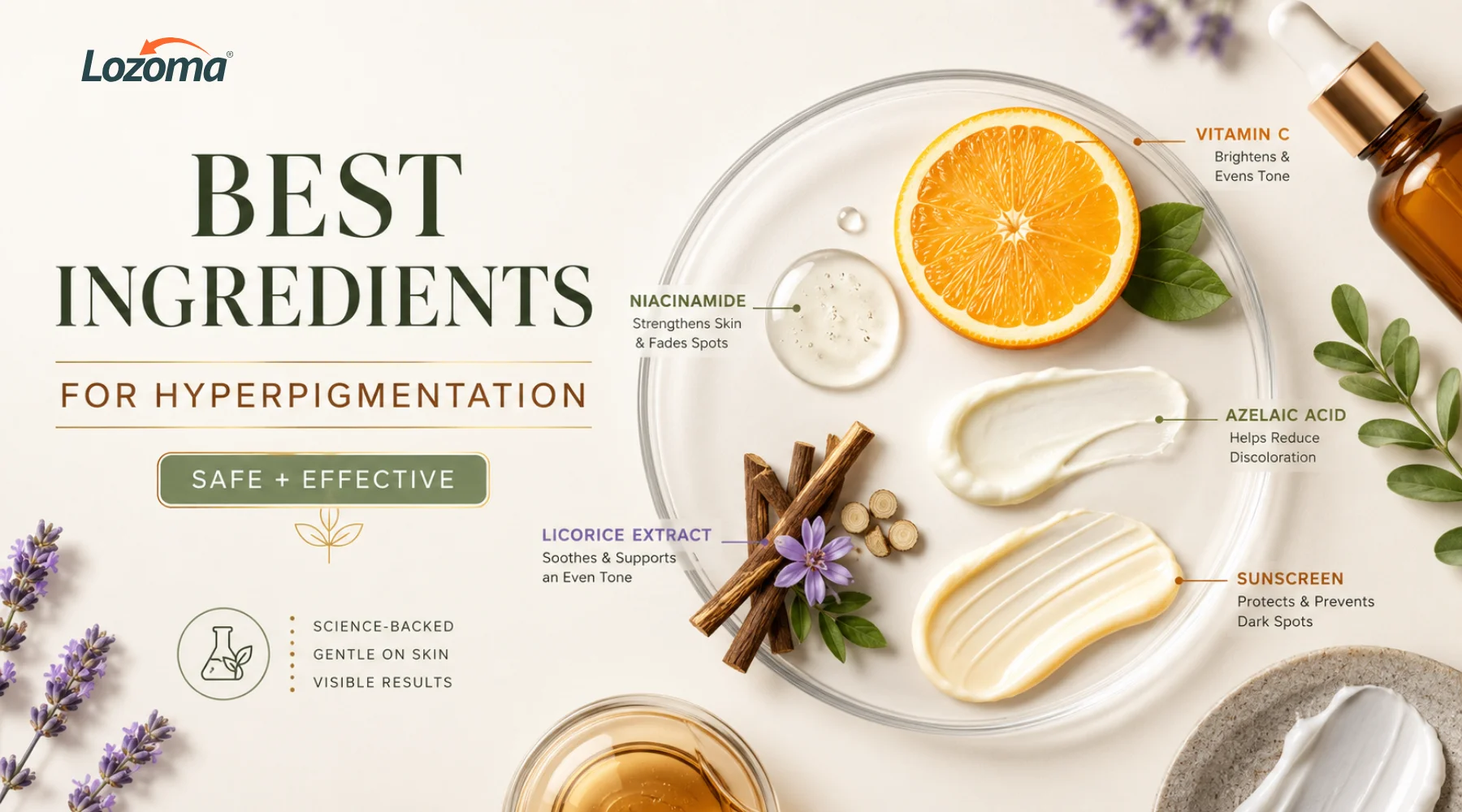
Hyperpigmentation is a common reason people seek products beyond basic moisturisers and cleansers. When a blemish heals, a brown mark may remain. After a summer vacation, uneven skin patches can linger. Even a small area of irritation can take a long time to fade. The best ingredients for hyperpigmentation don’t just brighten; they also control excess pigment without harming the skin barrier that keeps tone even.
Dark spots are caused by too much melanin, the pigment that gives skin its colour. When skin is exposed to UV light, inflammation, hormones, or injury, melanocytes can produce extra pigment. This extra pigment may fade gradually with regular skincare if it’s close to the surface, but deeper pigmentation is harder to treat with topical products. Daily broad-spectrum sunscreen is essential because UV exposure can darken existing spots and lead to new ones.
This confusion over how to remove dark spots or clear them is common. While skincare can improve many dark marks, especially those from blemishes or sun damage, it cannot eliminate all types of pigmentation overnight. The best results usually come from a routine that includes pigment-controlling ingredients, support for the skin barrier, and daily SPF.
Why Hyperpigmentation Needs a Calmer Approach Than Most People Expect
People often think they should do more when dealing with dark marks, like using more exfoliants, stronger acids, or serums. However, this can actually worsen pigmentation.
Hyperpigmentation is often caused by inflammation. When skin gets irritated, it makes more melanin, especially in medium to deep skin tones. This is why dark marks often appear after acne, shaving bumps, eczema, picking, burns, or using harsh treatments.
A good pigmentation routine aims to:
- Reduce extra pigment production.
- Prevent irritation that can cause more pigment.
The second goal is often ignored. The best ingredients for treating pigmentation aren’t always the harshest. Many effective options work slowly by reducing melanin production, calming inflammation, or preventing darkening from UV exposure.
Think of hyperpigmentation as a skin response, not just a stain. A dark mark isn’t dirt, so you can’t scrub it away. That’s why searches like “how to clean dark spots on face” often lead to the wrong solutions. Cleansing can remove oil, sunscreen, makeup, and dirt, but it won’t wash pigment out of your skin.
The Best Ingredients for Hyperpigmentation at a Glance
Different ingredients help with pigmentation in various ways. Some are best for new acne marks, others are good for sensitive skin, and some work best with sunscreen.
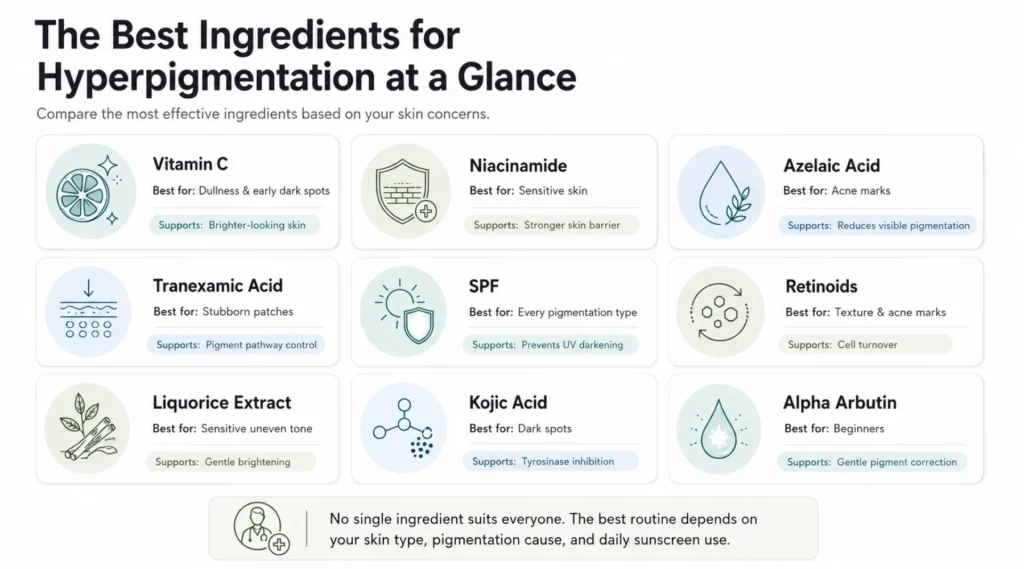
| Ingredient | Best for | How it helps | Use with care if |
| Vitamin C | Dullness, sun-related uneven tone, early dark spots | Supports antioxidant protection and helps brighten the appearance of uneven skin | Your skin stings easily or your barrier is weak |
| Niacinamide | Sensitive skin, redness-prone skin, uneven tone, barrier support | Helps support the barrier and reduce the look of uneven pigmentation | You use very high percentages that cause flushing or irritation |
| Azelaic acid | Post-acne marks, redness, blemish-prone skin, melasma-prone uneven tone | Helps with excess pigment and has anti-inflammatory benefits | Your skin is very dry or easily tingles |
| Tranexamic acid | Stubborn patches, melasma-looking discolouration, recurring uneven tone | Helps reduce pathways involved in pigment formation | You are considering oral tranexamic acid without medical advice |
| SPF | All forms of hyperpigmentation | Prevents UV-triggered darkening and protects results | You apply too little or skip cloudy days |
| Retinoids | Texture, acne marks, slow cell turnover, photoageing | Helps support turnover and long-term skin renewal | You are pregnant, breastfeeding or have a compromised barrier |
| Liquorice extract | Sensitive skin, dullness, mild uneven tone | Helps calm and brighten the look of skin | You expect prescription-level results |
| Kojic acid | Stubborn dark spots, uneven tone | Helps reduce tyrosinase activity | You are prone to irritation or contact sensitivity |
| Alpha arbutin | Beginners, mild dark spots, uneven tone | Helps target excess pigment gently | You need fast results from deep pigmentation |
No single ingredient works for every face. The best routine depends on the type of pigmentation, the skin’s tolerance, and whether the cause is still active.
Vitamin C: The Brightening Classic That Works Best With SPF
Vitamin C is well-known for improving skin pigmentation. It helps fix dullness, uneven skin tone, oxidative stress, and dark spots. It’s especially effective against pigmentation caused by sun exposure or environmental damage.
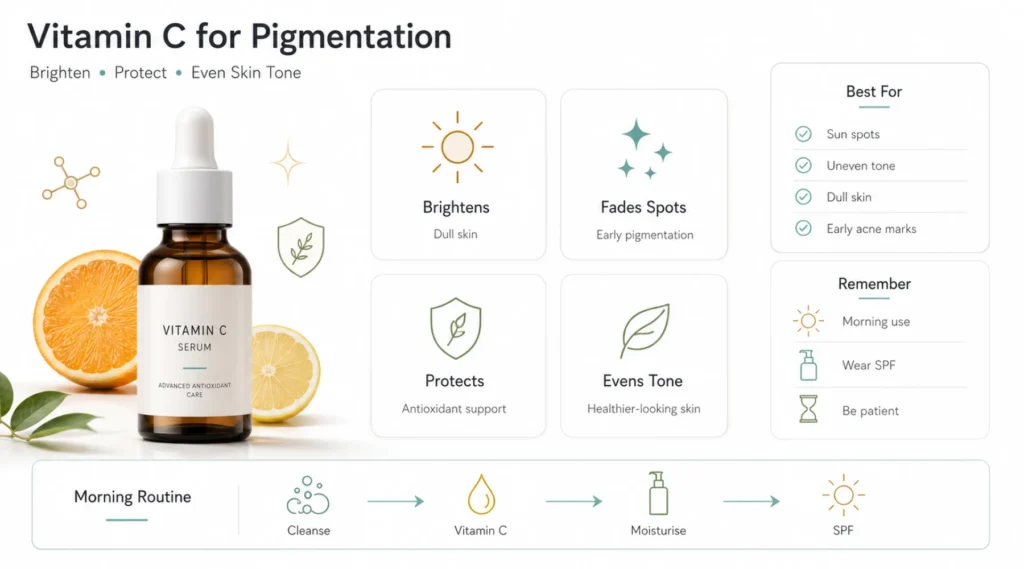
In cosmetic science, vitamin C is prised because it can reduce melanin production and act as an antioxidant. Ascorbic acid and its derivatives are common in products for pigmentation, often used with other ingredients, not alone.
Vitamin C is not a bleaching agent and does not strip your skin’s natural colour. Instead, it helps your skin look more even by gradually reducing excess pigmentation.
What to Look for in a Vitamin C Product
Vitamin C effectiveness depends on its formula. A bad serum can oxidise quickly, irritate your skin, or not work well.
Look for:
- Opaque or sealed packaging
- A formula that doesn’t darken soon after opening
- A texture that applies easily
- Supportive ingredients like vitamin E, ferulic acid, hyaluronic acid, niacinamide, or soothing agents
- A strength that matches your skin type, rather than just a high percentage
A 20% vitamin C serum is good for those used to active ingredients, but beginners or those with sensitive skin should choose lower strengths or use it every other day. Stronger formulae aren’t always better; if a serum causes stinging, peeling, or tightness, it might hinder your skin’s progress by causing irritation.
When Vitamin C Helps Most
Vitamin C helps when your skin looks:
- Dull or tyred
- Uneven after sun exposure
- Marked by light brown spots
- Lifeless even after cleansing and moisturising
- In need of antioxidant support in the morning
If you’re looking to reduce dark spots on your face without using many products, start with vitamin C in the morning and apply sunscreen afterwards. This routine has a clear goal and is gentle on the skin.
When Vitamin C May Not Be Enough
Vitamin C alone might not work for melasma, deep pigmentation, or persistent dark patches. Melasma often requires strong sun protection and sometimes prescription treatment. According to DermNet, topical treatments and procedures can help manage melasma, but it can come back, and responses to treatment vary.
Using Vitamin C takes time. Many people want to see results in two weeks, but fading often takes longer. Fresh post-inflammatory marks may improve in several weeks to months, while older marks may take even longer to fade.
Niacinamide: The Barrier-Friendly Ingredient for Uneven Tone
Niacinamide is popular in skincare because it offers many benefits without being harsh. It helps strengthen the skin barrier, smooth uneven skin tone, reduce redness, and improve stressed skin.
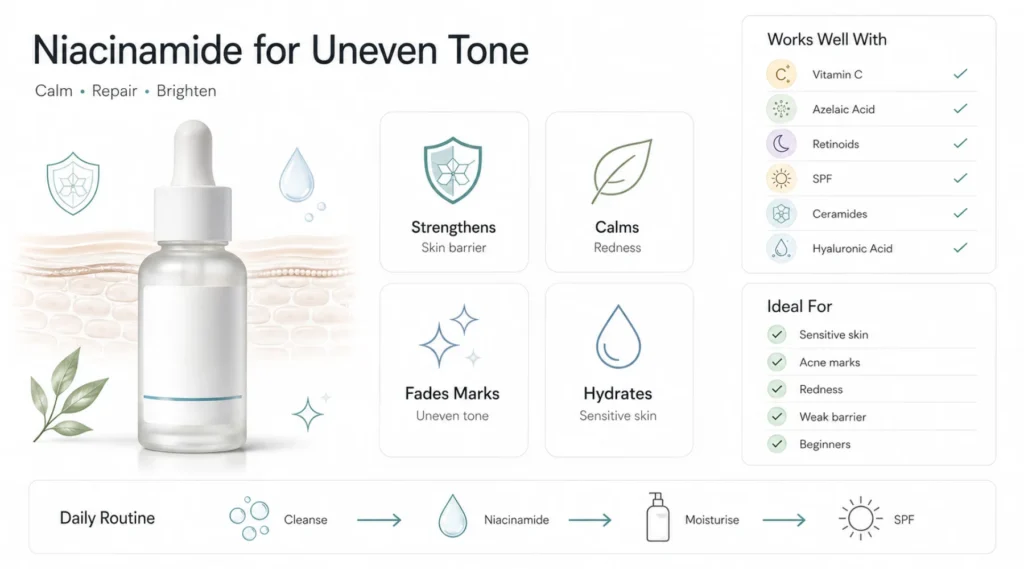
For hyperpigmentation, niacinamide is helpful because it not only brightens the skin but also creates a calm environment that prevents dark marks from blemishes or irritation.
This makes niacinamide a great option for those who can’t handle strong acids or retinoids. It’s effective in routines that focus on both skin barrier health and pigmentation.
Why Niacinamide Is Useful for Sensitive Skin
People seeking the best ingredients for hyperpigmentation on sensitive skin need something gentle that won’t irritate. Niacinamide is a great choice because it works well in moisturisers, essences, and serums, and it blends nicely with other ingredients.
A niacinamide essence moisturiser can hydrate and improve skin tone in one step. It is not a peel or a prescription treatment. Its strength lies in its consistency. Sticking to a simple daily routine can often improve pigmentation care.
How to Use Niacinamide for Dark Spots
You can use niacinamide once or twice a day. It works well with:
- Vitamin C
- Azelaic acid
- Tranexamic acid
- Retinoids
- Sunscreen
- Ceramides
- Panthenol
- Hyaluronic acid
If your skin is sensitive, don’t assume that a 10% formula is always better than a 4–5% one. Some people feel flushing, warmth, or tightness with stronger niacinamide. The best strength is what your skin can handle without reacting.
Where Niacinamide Fits in a Pigmentation Routine
Niacinamide is an effective ingredient for managing pigmentation. While it may not show quick results like stronger actives, it helps fade dark spots over time.
It’s especially helpful for:
- Acne marks
- Weakened skin barrier
- Redness
- Sensitivity
- Over-exfoliated skin
- Uneven texture
- Skin that darkens after irritation
For beginners, niacinamide is a safe first step before using stronger ingredients.
Azelaic Acid: A Smart Choice for Blemish Marks and Uneven Tone
Azelaic acid is a great ingredient for people with blemishes and dark spots. It reduces inflammation, helps unclog pores, and is often used for issues like melasma and post-inflammatory hyperpigmentation. DermNet explains that azelaic acid blocks tyrosinase, making it effective for pigmentation, even in darker skin tones with melasma.
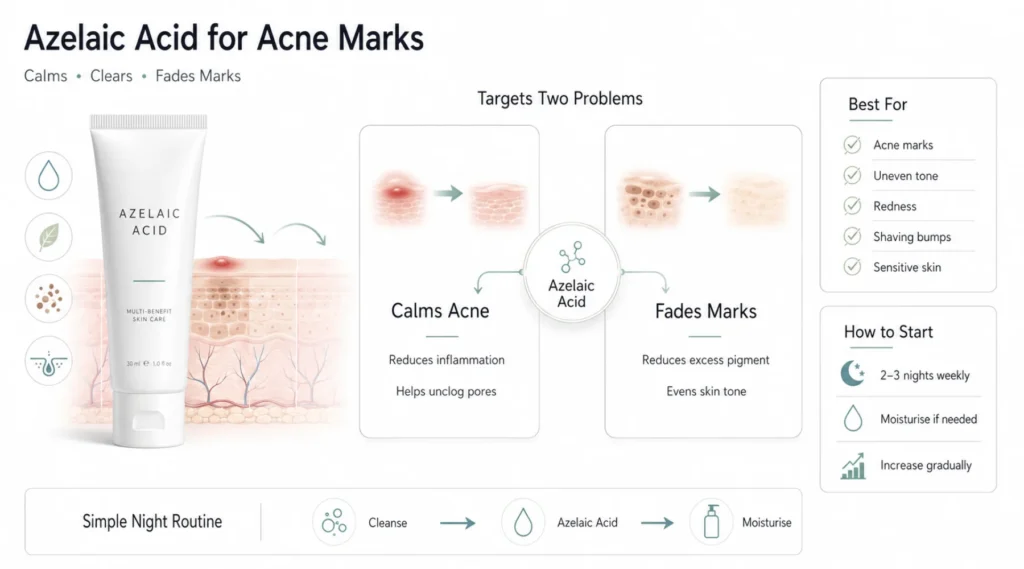
This is important because many people deal with both dark spots and acne, which cause new marks. A brightening serum may fade old marks, but if new blemishes keep appearing, the cycle of pigmentation will keep going.
How Azelaic Acid Works
Azelaic acid helps with pigmentation by reducing the activity of tyrosinase, an enzyme that produces melanin. By calming this process, azelaic acid can gradually lessen excess pigment.
It also soothes acne-prone skin, making it useful for those looking to eliminate dark spots from past breakouts. The aim is not only to fade old marks but also to prevent new inflammation that could create new marks.
Who Usually Benefits From Azelaic Acid
Azelaic acid is a good choice if your skin has:
- Brown marks from acne
- Redness or uneven colour
- Areas prone to blemishes
- Mild roughness
- Dark spots from shaving bumps
- Sensitivity to stronger acids
- A tendency to leave marks after irritation
You can find 12% azelaic acid acne cream in stores, but higher strengths may be available by prescription. Talk to a qualified professional about the best option for your skin.
What Azelaic Acid Feels Like on Skin
Azelaic acid may cause a mild tingle, especially at first. A slight prickly sensation doesn’t always mean the product is harming your skin, but if you feel burning, constant redness, peeling, or increased sensitivity, reduce how often you use it or stop.
Here’s a practical way to start:
- Use it two or three nights a week.
- Apply moisturiser before or after if your skin feels dry.
- Avoid using it with strong exfoliating acids on the same night at first.
- Increase usage gradually if your skin remains comfortable.
Azelaic acid is a good choice for treating hyperpigmentation because it targets both pigment and inflammation, unlike ingredients that only focus on brightening.
Tranexamic Acid: The Ingredient to Consider for Stubborn Patches
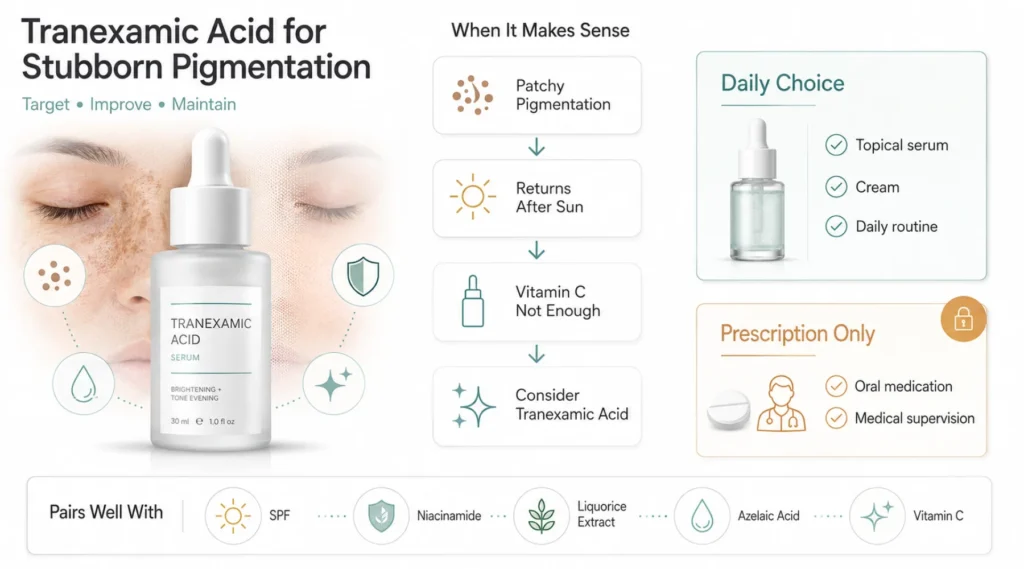
Tranexamic acid is now common in products for pigmentation, especially for tough discolouration and melasma. It is used in creams and taken orally for certain medical issues. In pigmentation care, it is important because it affects how excess melanin is made.
Most research has focused on melasma. A systematic review showed that tranexamic acid reduced melasma severity and melanin levels, with mostly minor side effects. A recent review also highlights its potential for treating melasma, but it notes that the method of treatment, who gets treated, and the risk of relapse are still important factors to consider.
Topical Tranexamic Acid Versus Oral Tranexamic Acid
This distinction is important.
Topical tranexamic acid is found in serums, creams, and treatments. It’s often used with sunscreen and other ingredients that help with pigmentation.
Oral tranexamic acid is a medication that should only be taken under a doctor’s guidance. It may not be safe for people with certain clotting issues, medical histories, or medications. It’s not a beauty supplement.
For daily skincare, topical tranexamic acid is the better choice.
When Tranexamic Acid Makes Sense
Tranexamic acid may be good for people with skin pigmentation:
- Is patchy, not spotty
- Comes back quickly after sun exposure
- Is prone to melasma
- Doesn’t improve with just vitamin C
- It is sensitive to strong acids
- Needs a gentler long-term solution
It is often used with niacinamide, licorice extract, alpha arbutin, vitamin C derivatives, or azelaic acid. The best results generally come from a regular routine instead of relying on one strong ingredient.
What Tranexamic Acid Cannot Do
Tranexamic acid is not a magic solution. It can help lessen uneven skin colour, but conditions like melasma often require ongoing treatment. Using sunscreen, protecting against visible light, avoiding triggers, and sometimes seeking professional help are still important.
It’s important to have realistic expectations. If pigmentation improves by 40–60%, that can still be a big change, even if the skin isn’t completely clear. The goal should be clearer and more even skin, not perfectly blank skin.
SPF: The Ingredient Step That Decides Whether Results Last
Sunscreen is essential for treating pigmentation, even though it isn’t typically seen as a brightening agent. Without daily SPF, brightening serums may not work well.
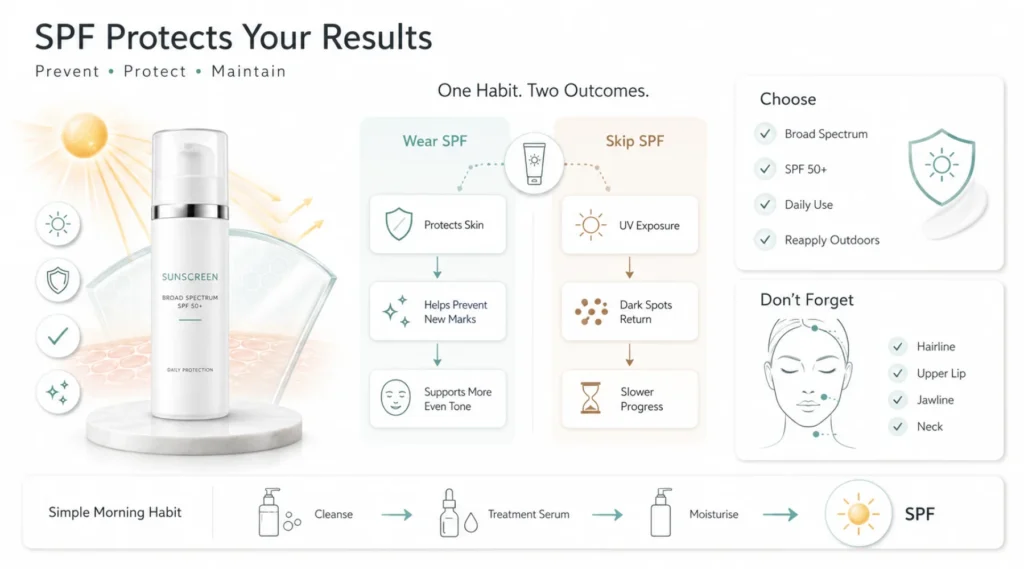
UV exposure increases melanin production, which can darken existing spots, prolong skin discolouration, and trigger melasma. DermNet recommends using broad-spectrum SPF 50+ daily to protect against hyperpigmentation, as UV rays can make dark spots worse. The American Academy of Dermatology also emphasises that effective treatment for dark spots starts with sunscreen, especially for darker skin tones, where pigmentation can be tougher to treat.
Why Sunscreen Matters Even Indoors and on Cloudy Days
UVA rays can go through clouds and glass. Visible light can also affect skin pigmentation, especially in melasma and deeper skin tones. This is why people using brightening serums often see no change if they skip sunscreen.
For facial pigmentation, sunscreen should be:
- Broad-spectrum
- At least SPF 30 (preferably SPF 50 or higher)
- Applied generously
- Reapplied often, especially outdoors or when sweating
- Used even for simple routines
Zinc oxide sunscreen is a good choice for those who like mineral options. It offers broad-spectrum UV protection and is often favoured by those with sensitive skin.
Tinted Sunscreen and Iron Oxides
For skin prone to melasma, tinted sunscreen can be helpful. Many tinted sunscreens have iron oxides that protect against visible light. It’s not necessary for everyone to use tinted SPF, but it’s a good option if pigmentation worsens despite using regular sunscreen.
People are more likely to use the sunscreen they enjoy daily rather than a fancy one for special occasions. The feel, look, and comfort of the sunscreen are important because using it consistently is key.
Common SPF Mistakes That Keep Dark Spots Visible
Many pigmentation routines don’t work due to common sunscreen mistakes:
- Applying too little sunscreen
- Missing areas like the hairline, jawline, and upper lip
- Relying only on SPF in makeup
- Not reapplying while outside
- Using brightening products at night without sunscreen in the morning
- Thinking darker skin doesn’t need SPF
- Stopping SPF once dark spots begin to fade
People often want to know how to reduce dark spots quickly, but a better question is how to prevent them from coming back every day. Sunscreen is more effective for this than any brightening ingredient.
Retinoids: Helpful for Marks, Texture, and Long-Term Renewal
People often overlook retinoids for treating dark spots, but they can help, especially if the spots are from acne, skin texture issues, clogged pores, or slow skin renewal.
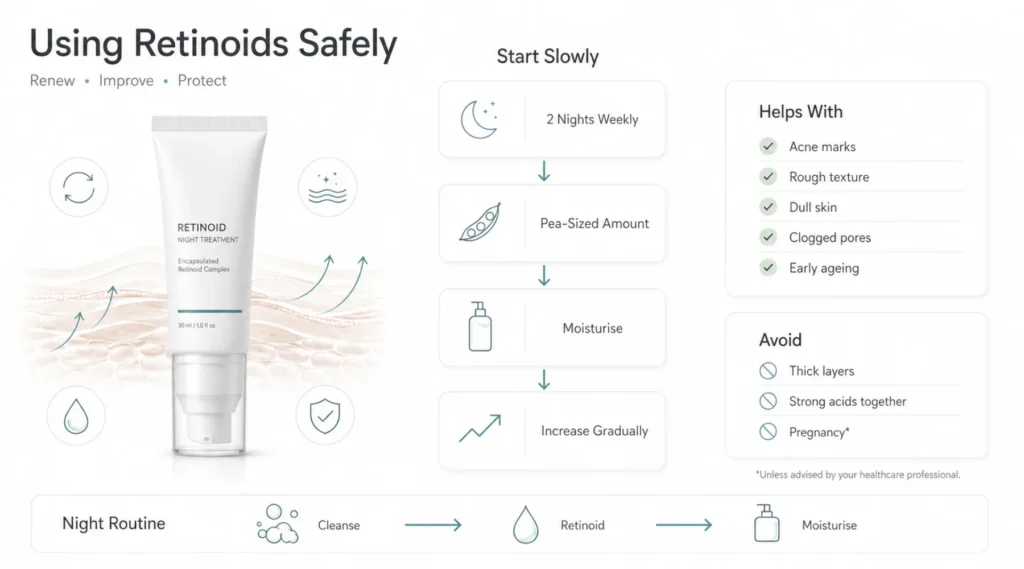
Retinoids boost cell turnover and gradually improve uneven skin tone. They are also commonly used in acne and anti-ageing treatments. For the best results in treating pigmentation, use them with sunscreen and skin barrier-supporting ingredients.
When Retinoids Are Worth Considering
A retinoid can help with:
- Acne marks
- Uneven texture
- Clogged pores
- Dull skin
- Early signs of ageing
- Rough patches
- Slow fading of old marks
However, retinoids aren’t for everyone. They can lead to dryness, peeling, and irritation, especially if used too quickly. This irritation can be harmful for skin prone to pigmentation.
How to Use Retinoids Without Making Pigmentation Worse
Start using a small amount of product, about the size of a pea, for your entire face. Avoid using a thick layer on dark spots. Begin with two nights a week, apply moisturiser, and don’t use strong acids at first. Your skin should feel slightly active, not raw.
Avoid retinoids during pregnancy and breastfeeding unless your doctor gives you the go-ahead.
If you’re looking to remove dark marks from acne, retinoids can help. However, don’t apply them directly to the spots. They work best by improving your skin’s overall health and shedding process.
Liquorice Extract, Alpha Arbutin, and Kojic Acid: Supporting Brighteners That Can Make a Difference
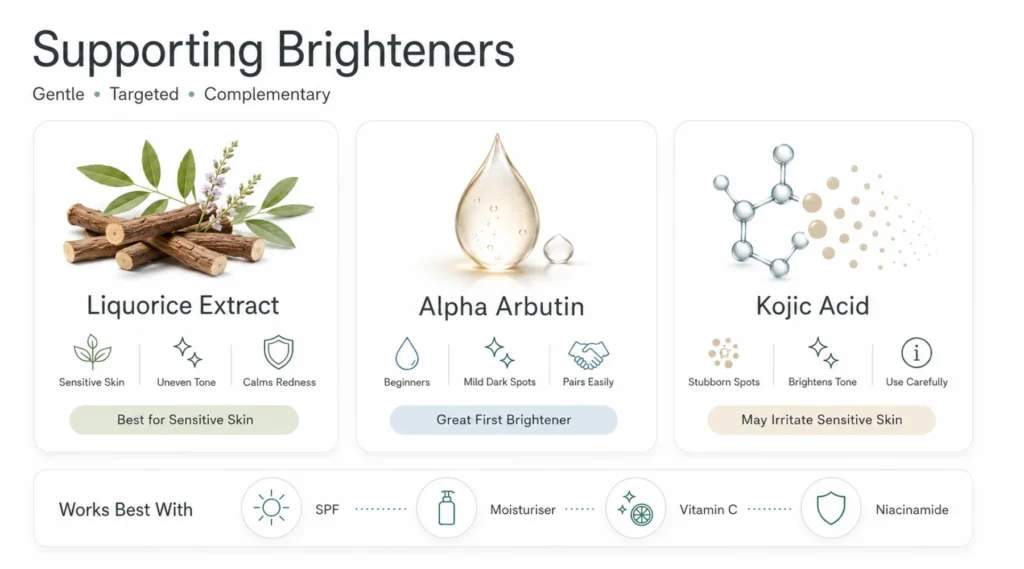
Not every skin treatment needs just the main ingredients. Supportive brighteners can be useful, especially for skin that can’t handle stronger ingredients.
Liquorice Extract
Liquorice extract helps with dull skin, redness, and uneven tone. It’s a good choice for sensitive skin because it calms rather than irritates, as strong acids do.
It works best in combinations with other ingredients instead of on its own. It’s a gentle but effective ingredient.
Alpha Arbutin
Alpha arbutin is a good choice for beginners because it helps with uneven skin tone and is gentle. You can find it in serums and moisturisers, and it often works well with niacinamide or hyaluronic acid.
It’s a great option for those who want to address hyperpigmentation without jumping into stronger exfoliants.
Kojic Acid
Kojic acid can help lighten dark spots by affecting an enzyme called tyrosinase. However, it may irritate some people, so use it carefully, especially in leave-on products.
If your skin itches, turns red, or feels sensitive, kojic acid might not be right for you. Treating pigmentation shouldn’t be painful or uncomfortable.
Exfoliating Acids: Useful, but Often Overused
Glycolic acid, lactic acid, and mandelic acid can boost skin radiance and texture. They also help lighten superficial pigmentation by promoting the even shedding of pigmented skin cells.
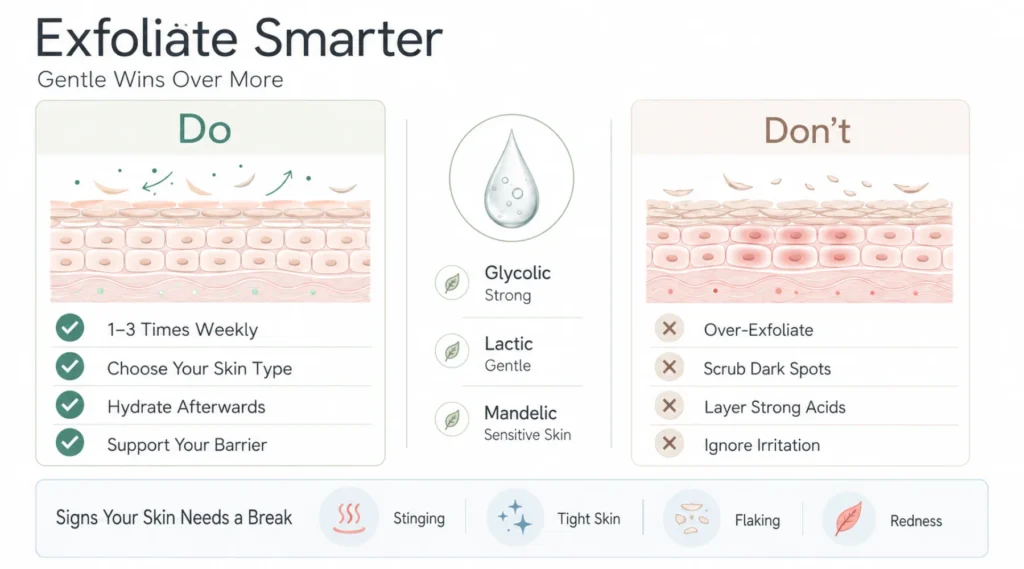
However, exfoliating acids can lead to problems in pigmentation routines. If a dark mark lies beneath the top layer of skin, scrubbing or over-exfoliating won’t help it come out faster. Instead, it might cause irritation and increase pigmentation. This is especially common in people with deeper skin tones or those who have experienced post-inflammatory hyperpigmentation.
Which Exfoliating Acid Is Best for Pigmentation?
It depends on your skin type.
Glycolic acid is small and strong, making it effective but sometimes irritating. Lactic acid is gentler and helps hydrate. Mandelic acid is larger and may be better for sensitive or blemish-prone skin.
For skin prone to pigmentation, exfoliate one to three times a week based on your skin’s tolerance. Most people don’t need to use acids every day.
Signs You Are Exfoliating Too Much
You might be too harsh on your skin if you notice:
- It stings when you use moisturiser
- Shiny, tight skin
- Flaking around your mouth or nose
- More breakouts than normal
- Persistent redness
- Dark marks are appearing more clearly
- Burning from products you used to handle easily
When this occurs, don’t reach for another brightening product. Instead, stop using active ingredients, focus on healing your skin barrier, and start again slowly.
Using a barrier-supporting cream can help during this time because it reduces irritation and helps manage pigmentation safely.
Hydroquinone: Effective, but Not a Casual Skincare Ingredient
Hydroquinone is a well-researched cream used to lighten dark spots on the face. It is especially effective for melasma, according to a dermatology review. DermNet explains that hydroquinone should be applied only to dark areas for a short time, usually three months, with a check-up if there is no improvement. However, it’s important to use it carefully.
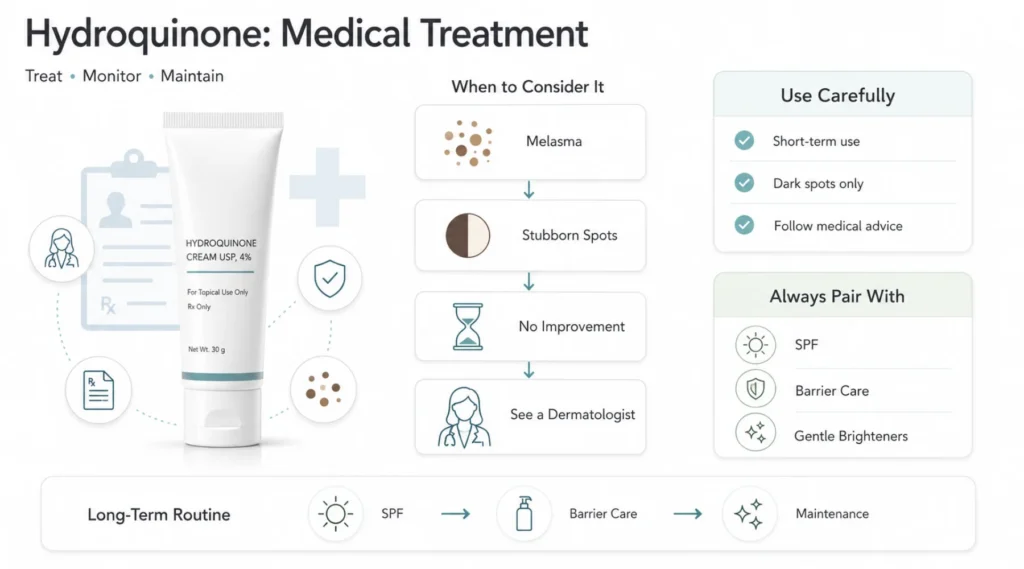
Hydroquinone can irritate the skin, and using it incorrectly or for too long can pose risks. In some areas, you may need a prescription to get it. It should be seen as a medical treatment, not just a trendy product.
When Hydroquinone May Be Considered
Hydroquinone may be used for:
- Melasma
- Tough dark spots
- Severe post-inflammatory hyperpigmentation
- Pigmentation that doesn’t improve with milder treatments
A qualified professional can help decide if it’s suitable, how long to use it, and how to keep the results.
Why Gentler Ingredients Still Matter
Even with hydroquinone, sunscreen, and barrier support, they are still important. Without them, pigmentation may come back. Strong treatments can lighten pigment, but they don’t stop the skin from producing pigment when triggered.
For many, over-the-counter ingredients like vitamin C, niacinamide, azelaic acid, tranexamic acid, and SPF are safer long-term options.
Best Ingredients for Hyperpigmentation for Beginners
Beginners often start with too many active ingredients. A better way is to create a routine that the skin can handle over time.
A simple routine for beginners could be:
| Routine step | Morning | Evening |
| Cleanse | Gentle cleanser | Gentle cleanser |
| Treat | Vitamin C or niacinamide | Niacinamide, azelaic acid or tranexamic acid |
| Moisturise | Lightweight or barrier-supporting moisturiser | Barrier-supporting moisturiser |
| Protect | Broad-spectrum SPF | Not needed |
In the first month, pick one main brightening ingredient and use it regularly. Avoid starting vitamin C, azelaic acid, retinoids, exfoliating acids, and tranexamic acid all at once.
A Sensible Beginner Pairing
Many beginners find this routine easy:
- Use Vitamin C in the morning.
- Use niacinamide or azelaic acid in the evening.
- Apply sunscreen every morning.
This routine helps with uneven skin tone without harming the skin barrier. A good vitamin C serum works well in the morning, while niacinamide or azelaic acid supports your skin at night.
When to Add More
Add a new product only when your skin feels calm. If your skin is stinging, peeling, or breaking out, adding more won’t help.
Wait four to six weeks before changing your skincare routine. Pigmentation fades slowly, and switching products often makes it hard to tell what’s actually working.
Best Ingredients for Hyperpigmentation for Sensitive Skin
Sensitive skin needs a gentle routine. The goal is to reduce inflammation and promote an even skin tone, not to attack pigmentation.
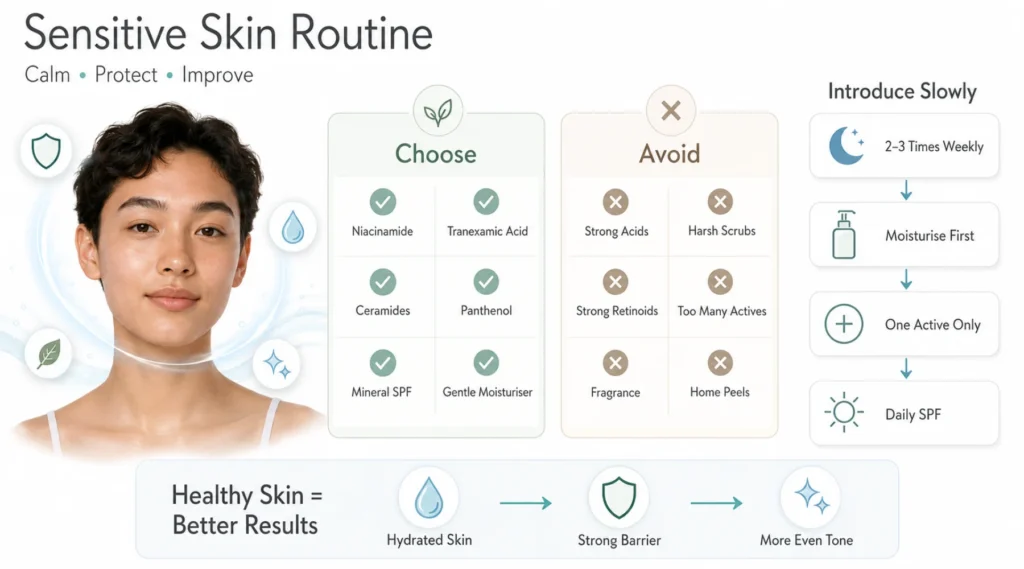
Good options for sensitive skin include:
- Niacinamide
- Tranexamic acid
- Liquorice extract
- Panthenol
- Ceramides
- Azelaic acid (used slowly)
- Mineral sunscreen
- Fragrance-free moisturisers
Sensitive skin should avoid:
- High-strength vitamin C
- Daily exfoliating acids
- Harsh scrubs
- Strong retinoids
- Combining many brightening products
- Fragranced leave-on products
- At-home peels
A simple routine may not sound exciting, but it is often more effective. When your skin feels calm, hydrated, and comfortable, treatments for pigmentation usually work better.
How to Introduce Actives on Sensitive Skin
Patch testing is helpful, but not foolproof. A product might pass a patch test but still cause irritation when used daily on the face.
Start slowly:
- Use the product two or three times a week.
- Apply it over moisturiser if needed.
- Avoid using multiple active products at once.
- Stop if irritation increases over days.
Use sunscreen regularly. For sensitive skin, a moisturising step in your skincare routine is essential for preventing pigmentation, not just for comfort.
What to Look for in Ingredients for Hyperpigmentation
When picking a pigmentation product, don’t just look for a trendy ingredient. The entire formula is important.
Look for a Clear Main Active
A good product should clearly show its purpose. It might focus on ingredients like vitamin C, niacinamide, azelaic acid, or tranexamic acid for brightening. If a product has too many active ingredients in unclear amounts, it can be harder to tell how effective it is and whether it might cause irritation.
Look for Barrier Support
Pigmentation-prone skin often needs soothing. Ingredients like glycerin, panthenol, ceramides, squalane, allantoin, hyaluronic acid, and centella can help make active formulae gentler.
Look for Packaging That Protects the Formula
Some brightening ingredients can react badly to air, light, or heat. Vitamin C is particularly sensitive, depending on its form. Good packaging is more important than many people think.
Look for Realistic Claims
Be careful with products that claim to remove dark spots in just a few days. Skin doesn’t behave that way. A product can quickly make skin look brighter by hydrating and smoothing the surface, but removing dark marks usually takes more time.
Look for Compatibility With Your Routine
The best product is one you can use regularly. If a serum clumps under sunscreen, smells bad, stings, or makes your skin greasy, it might not be the right choice, even if the ingredients seem great.
A good serum can help when you need something specific, but it should also fit well into your routine.
Ingredients for Hyperpigmentation to Avoid When Skin Is Already Irritated
The phrase “ingredients for hyperpigmentation ingredients to avoid” might sound strange, but it addresses an important issue. Some ingredients aren’t always harmful, but they can cause problems when the skin is inflamed, over-exfoliated, or sensitive.
Harsh Physical Scrubs
Rough scrubs can irritate the skin, especially if used too harshly. They may make your skin feel smoother for a day, but they don’t safely remove pigments.
Lemon Juice and DIY Acids
Lemon juice is often suggested as a home remedy, but it isn’t safe for treating skin pigmentation. It can irritate your skin and make it more sensitive to light. Its uneven application and unpredictable acidity make it a bad option.
Undiluted Essential Oils
Essential oils can cause irritation or allergic reactions, especially when left on the skin. This irritation can make pigmentation in sensitive skin worse.
High-Strength Peels Without Guidance
At-home chemical peels can be risky for darker, sensitive, or inflamed skin. Professional peels can address some pigmentation issues, but they require careful choice and aftercare.
Unregulated “Whitening” Creams
Be cautious with products that don’t clearly list their ingredients or promise extreme whitening. Some unregulated creams may have harmful steroids, mercury, or other unsafe ingredients. Treatments for pigmentation should always prioritise skin health.
How to Choose Ingredients for Hyperpigmentation Based on Your Type of Dark Mark
The best ingredient depends on the type and cause of the pigmentation.
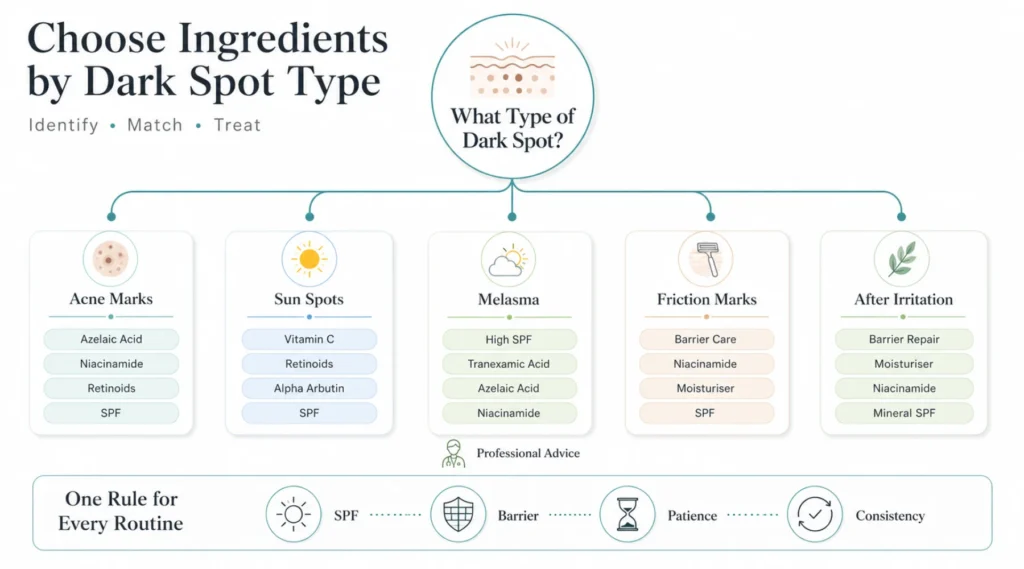
Post-Acne Brown Marks
Here are the best options for treating skin issues:
- Azelaic acid
- Niacinamide
- Retinoids
- Vitamin C
- SPF
Focus on reducing inflammation, preventing new breakouts, and slowly fading marks. Avoid picking at spots; it slows healing. Also, steer clear of harsh acne treatments that irritate the skin.
Sun Spots and Uneven Tone
Here are the best options:
- Vitamin C
- Retinoids
- Alpha arbutin
- Moderate use of exfoliating acids
- Daily SPF
To fight sun-related pigmentation, you need long-term UV protection. Without it, brightening ingredients won’t work well.
Melasma-Looking Patches
Best Options:
- Use a high-protection SPF.
- Choose tinted sunscreen when it’s appropriate.
- Consider tranexamic acid.
- Try azelaic acid.
- Look for niacinamide.
- Get help from a dermatologist if the problem continues.
Melasma can be tough to treat and may come back. DermNet mentions several creams for melasma and says that using a mix of treatments is often more effective than using just one.
Dark Areas From Friction
Best options often include:
- Reducing friction
- Repairing barriers
- Using niacinamide
- Gentle exfoliation
- Moisturising ingredients
- Applying SPF when exposed
Many people looking to reduce dark spots on their faces may experience friction from masks, shaving, rubbing, harsh cleansers, or irritation. It’s important to address both the cause and the dark spots.
Pigmentation After Eczema or Irritation
Here are the best options to consider:
- Repair the skin barrier.
- Use a fragrance-free moisturiser.
- Try niacinamide if it’s suitable for you.
- Apply mineral sunscreen.
- Seek dermatology advice if you have active eczema.
Avoid strong acids or retinoids on active eczema. Focus on calming the inflammation first.
How Long Dark Spots Usually Take to Fade
Pigmentation takes time because melanin doesn’t fade quickly. Fresh marks may begin to look better in 8–12 weeks if you control the cause and use sunscreen regularly. Stubborn spots may take longer. Melasma can improve and come back, especially with sun, heat, hormones, or bright light.
The time it takes to improve depends on:
- How deep the pigment is
- How long has the mark been there
- Your skin tone
- Sun exposure
- Ongoing inflammation
- Consistency with products
- Ingredient strength
- Skin barrier health
- Whether the cause is still there
A common mistake is stopping treatment too soon or changing products too often. You need to give pigmentation routines enough time to be effective.
How to Build a Safe Routine to Reduce Dark Spots
A good routine doesn’t have to be complex. In fact, the more complicated it is, the more likely it is to cause frustration.
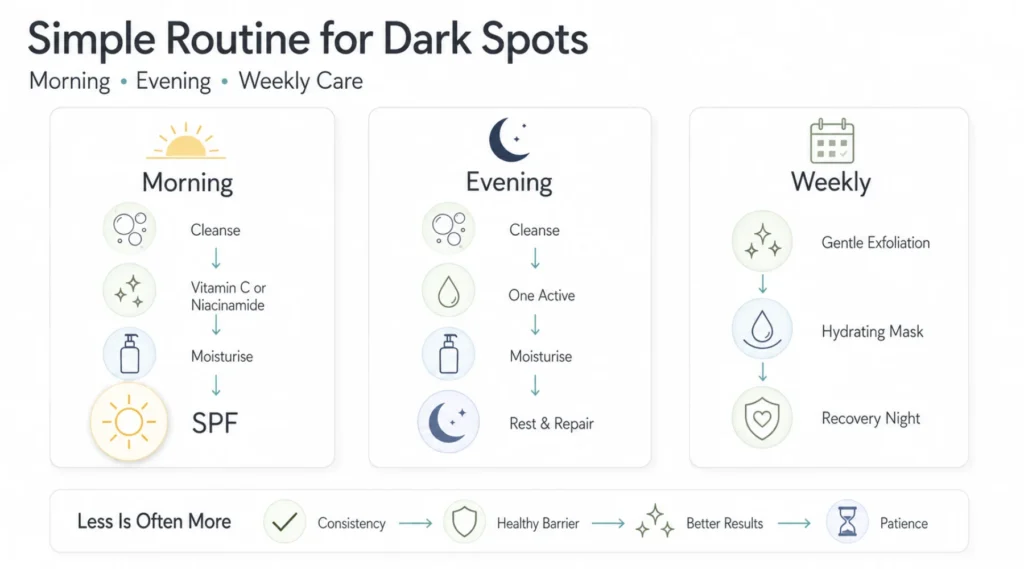
Morning Routine
Start by gently cleansing or rinsing your face based on your skin type. If your skin can handle it, apply vitamin C or niacinamide. Use a moisturiser if necessary. Finally, apply broad-spectrum sunscreen.
Think of sunscreen as the final protective step. Without it, the rest of your routine won’t work as well.
Evening Routine
Cleanse your skin well, especially if you’ve worn sunscreen or makeup. Apply azelaic acid, tranexamic acid, niacinamide, or a retinoid based on your choice. Make sure to moisturise.
Avoid using all active ingredients every night. Your skin improves better with a consistent routine that it can handle.
Weekly Support
Exfoliate only when necessary. Once or twice a week works for many people. Hydrating masks, barrier creams, and rest nights can be more effective than frequent treatments.
A good pigmentation routine includes active days followed by recovery days.
Ingredient Pairings That Usually Make Sense
Some ingredients work well together because they focus on different parts of how pigmentation happens.
| Pairing | Why it works |
| Vitamin C + SPF | Supports brightness while sunscreen prevents UV-triggered darkening |
| Niacinamide + tranexamic acid | Helps uneven tone while supporting a calmer barrier |
| Azelaic acid + niacinamide | Useful for blemish-prone pigmentation and sensitivity |
| Retinoid + moisturiser | Supports renewal while reducing dryness and irritation risk |
| Vitamin C + niacinamide | Helps brightness, tone and barrier support in a balanced routine |
| Tranexamic acid + SPF | Useful for recurring patches and melasma-prone uneven tone |
Don’t try to use all products at once. Focus on your skin’s main problem when choosing what to use.
Ingredient Combinations That Need More Caution
Some combinations can work for experienced users, but they are easy to misuse.
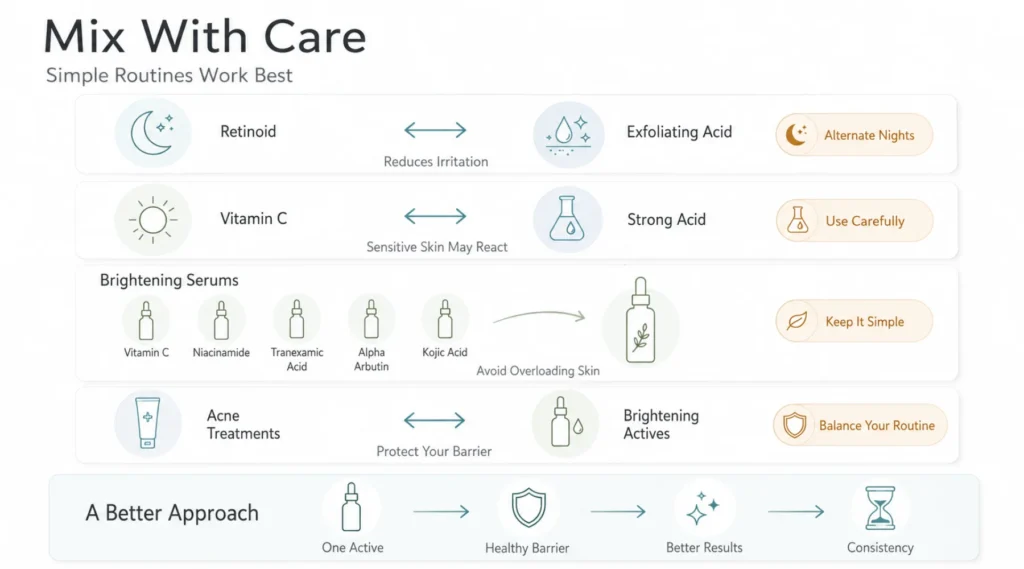
Retinoids and Exfoliating Acids
Using retinoids and strong acids together at night can irritate the skin. While some people handle it well, those with pigmentation-prone skin usually do better if they use them on different nights.
High-Strength Vitamin C and Strong Acids
Sensitive skin may react badly to this, especially in the morning. If vitamin C stings, don’t use it with an exfoliating acid toner.
Multiple Brightening Serums
Using vitamin C, kojic acid, alpha arbutin, tranexamic acid, niacinamide, and exfoliating acids together might seem strong, but it can lead to confusion and irritation. It’s usually better to stick to a simple routine.
Acne Treatments and Pigmentation Actives
Benzoyl peroxide, salicylic acid, retinoids, and azelaic acid can help treat acne. However, using too many drying treatments can harm your skin. When acne leads to dark spots, it’s important to have a routine that works well without being harsh.
Professional Treatments for Hyperpigmentation
Skincare can improve many types of pigmentation, but professional treatment may be needed for stubborn or widespread marks that cause emotional stress.
Options include:
- Prescription azelaic acid
- Prescription retinoids
- Hydroquinone with supervision
- Triple combination creams for melasma
- Chemical peels
- Laser or light treatments
- Microneedling in specific cases
Professional treatments carry risks. If done incorrectly, peels and lasers can make pigmentation worse, especially on darker skin. Choosing a treatment should consider skin type, pigment depth, medical history, and the kind of hyperpigmentation.
If pigmentation changes quickly, looks unusual, appears suddenly without a cause, bleeds, itches, grows, or seems irregular, see a healthcare professional. Not every dark spot is just cosmetic pigmentation.
Lifestyle Factors That Influence Pigmentation
Skincare is important, but your daily habits can help or hurt your results.
Sun and Heat Exposure
The sun is the main cause of skin issues, but heat can also make problems like melasma worse. Wearing hats, staying in the shade, and avoiding strong sunlight can help a lot.
Picking and Squeezing
Picking at blemishes can quickly turn a temporary spot into a permanent mark. If you’re worried about acne marks, trying to pick less can help as much as using another serum.
Friction
Rubbing from masks, rough towels, facial tools, or strong cleansing can cause dark spots. It’s important to handle your skin gently.
Hormonal Triggers
Melasma can be affected by pregnancy, hormonal birth control, or other hormonal changes. Skincare can help, but hormonal factors might keep the pigmentation around longer.
Sleep, Stress, and Skin Recovery
Stress and poor sleep don’t directly cause dark spots, but they can make acne, inflammation, and skin barrier issues worse. These changes can make it harder to manage pigmentation.
Myths About Dark Spots That Slow Progress
“Dark Spots Can Be Scrubbed Off”
They can’t. Pigment is inside the skin, not on the surface like dirt. Scrubbing can actually make pigmentation worse.
“Natural Means Safer”
Some natural ingredients can soothe, while others can cause irritation. Lemon juice, essential oils, and strong DIY mixtures can still be harmful, even if they are natural.
“Darker Skin Does Not Need Sunscreen”
Darker skin has more natural melanin, which offers some protection from the sun. However, it can still get sun damage and dark spots. Sunscreen is important for reducing these dark spots.
“One Strong Serum Is Enough”
A strong serum alone, without sunscreen, moisturiser, or proper control, usually doesn’t give lasting results.
“If It Burns, It’s Working”
Burning doesn’t mean pigmentation treatment is working. It usually shows irritation, which can cause more pigmentation.
Questions People Ask Before Choosing Pigmentation Ingredients
What are the best ingredients for hyperpigmentation?
The best ingredients for treating hyperpigmentation are vitamin C, niacinamide, azelaic acid, tranexamic acid, and daily broad-spectrum sunscreen. Retinoids, alpha arbutin, liquorice extract, kojic acid, and gentle exfoliating acids can also be effective, depending on your skin type and the cause of the pigmentation.
What is the safest ingredient for beginners with dark spots?
Niacinamide is a safe starting ingredient for skin care. It helps strengthen the skin barrier and reduces redness from uneven tone.
Vitamin C and azelaic acid can also be good for beginners if you use them slowly and with sunscreen.
How do I remove dark spots on my face safely?
To safely get rid of dark spots, use sunscreen every day. Pick one or two ingredients that help with skin colour, and avoid anything that irritates your skin. Vitamin C, niacinamide, azelaic acid, and tranexamic acid can help, but it usually takes weeks to months to see results.
How do I get rid of dark spots on my face after acne?
To treat dark spots from acne, work on preventing new breakouts and soothing inflammation. Use azelaic acid, niacinamide, retinoids, and sunscreen. Don’t pick at spots, over-exfoliate, or use harsh drying treatments that irritate the skin.
Can vitamin C fade hyperpigmentation?
Vitamin C can help reduce hyperpigmentation, like dullness, uneven skin tone from sun exposure, and early dark spots. For the best results, use it consistently with sunscreen. However, it might not be enough for melasma or deep, long-lasting pigmentation.
Is niacinamide good for hyperpigmentation?
Niacinamide helps with dark spots by strengthening the skin barrier and evening out skin tone. It’s especially good for sensitive skin that is prone to redness or breakouts and can’t handle harsh, brightening products.
Is azelaic acid better than vitamin C for dark spots?
Azelaic acid works well for dark spots caused by acne, redness, or inflammation. Vitamin C is great for dull skin and uneven tone from the sun. Many skincare routines use both, but if you have sensitive skin, start using them slowly.
Does tranexamic acid work for hyperpigmentation?
Tranexamic acid can improve some types of dark spots, especially stubborn patches and melasma. You can find topical tranexamic acid in skincare products, but take oral tranexamic acid only with a doctor’s guidance.
How can I reduce dark spots without irritating my skin?
Use a gentle cleanser, niacinamide or tranexamic acid, a moisturiser that supports your skin barrier, and daily sunscreen. Avoid scrubs, lemon juice, strong peels, and using too many active ingredients at once. Irritation can worsen pigmentation, so make sure your skin feels comfortable.
What ingredients should I avoid for hyperpigmentation?
Stay away from harsh scrubs, lemon juice, undiluted essential oils, unregulated whitening creams, and strong peels unless advised by a professional. Be careful with strong acids or retinoids if your skin is already irritated.
Can sunscreen fade dark spots?
Sunscreen doesn’t lighten dark spots, but it can stop them from getting worse. It also helps brightening ingredients work better. For many people, using sunscreen daily is essential for improving pigmentation.
How long do ingredients take to work on hyperpigmentation?
Most pigmentation products need 8–12 weeks of regular use to show results. Stubborn spots can take months to fade. For deep pigmentation and melasma, you may need ongoing care or professional help.
Can I use vitamin C and niacinamide together?
Yes, many people can use vitamin C and niacinamide together. If you have sensitive skin or find it too strong, you can use vitamin C in the morning and niacinamide at night.
What should I use for dark areas on the face caused by friction?
First, reduce friction. Then use skincare that supports the barrier, like niacinamide, a gentle moisturiser, and sunscreen. If your skin is irritated, skip strong acids until your skin feels calm again.
Why are my dark spots not fading?
Dark spots won’t fade if you don’t use sunscreen, keep breaking out, pick at your skin, exfoliate too much, use irritating products, or have deeper pigmentation. Conditions like melasma and old patches might also require professional help.
Making the Best Ingredients for Hyperpigmentation Work Safely
The best ingredients for hyperpigmentation work with your skin’s needs and sensitivities. Vitamin C brightens dull skin. Niacinamide supports the skin barrier and reduces discolouration. Azelaic acid helps with blemishes and inflammation. Tranexamic acid targets stubborn dark patches. Daily SPF is essential to make all other ingredients effective.
A safe skincare routine is not always aggressive. Consistency, patience, and prevention are key to improving hyperpigmentation. When the skin is calm and properly treated, dark marks can fade over time. If the skin is often irritated, even good treatments can cause problems.
A good routine doesn’t try to bleach the skin. Instead, it promotes evenness, comfort, and protection to ensure lasting improvement.