






Blog
When to Use Vitamin C Serum: Morning, Night, and Layering

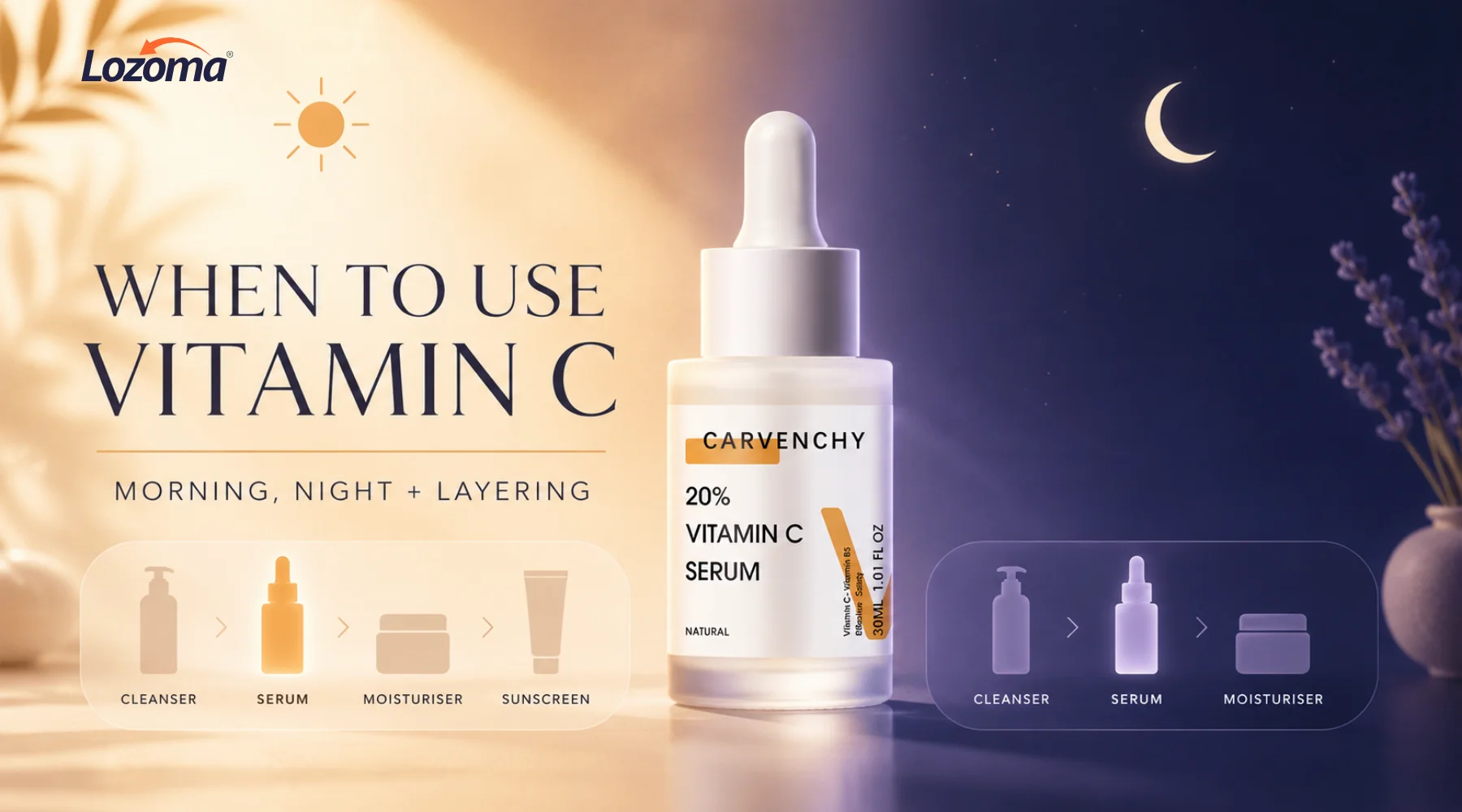
Knowing when to use vitamin C serum can affect your skin’s health. Vitamin C brightens your skin and also helps even out your skin tone, protects against environmental stress, reduces dullness, and enhances your complexion.
Timing matters because vitamin C is an active ingredient. It can react with light, sunscreen, moisturisers, exfoliating acids, retinoids, and other serums. Some people can use it every morning, while others may need to start slowly, use it at night, or avoid mixing it with strong products.
The best time to apply vitamin C serum is usually in the morning after cleansing and before moisturiser and sunscreen. Morning use helps protect against pollution, UV rays, and oxidative stress. However, using it at night can also work well, especially for sensitive skin or beginners.
Ultimately, it’s not just about using it in the morning or at night. It’s about finding the right timing and strength that suits your skin’s needs.
Why Timing Matters With Vitamin C Serum
Vitamin C is a popular skincare ingredient, but it’s often misunderstood. Many expect it to brighten skin quickly and stop using it because it can cause tingling, pill under sunscreen, or feel difficult to layer.
Timing matters for vitamin C. It works best on clean skin before heavier creams and oils that can block absorption. Use it daily with sunscreen, as UV rays can lead to pigmentation, dullness, and uneven skin tone.
A good skincare routine can be simple. Apply vitamin C in this order:
- After cleansing
- After toner or hydrating mist (if used)
- Before moisturiser
- Before sunscreen in the morning
This order helps the serum absorb well while keeping skin hydrated and protected.
The timing also affects comfort. A strong vitamin C serum used right after exfoliation may sting. Combining it with too many other active ingredients can irritate sensitive skin. If used over a thick cream, it may not absorb well. These details can explain why some people see smooth, brighter skin while others experience irritation.
Morning or Night: When Should You Use Vitamin C Serum?
Most people can use vitamin C serum in the morning. It’s effective then because it fights harmful free radicals from the sun and pollution. While it doesn’t replace sunscreen, you can use it under sunscreen for extra protection.
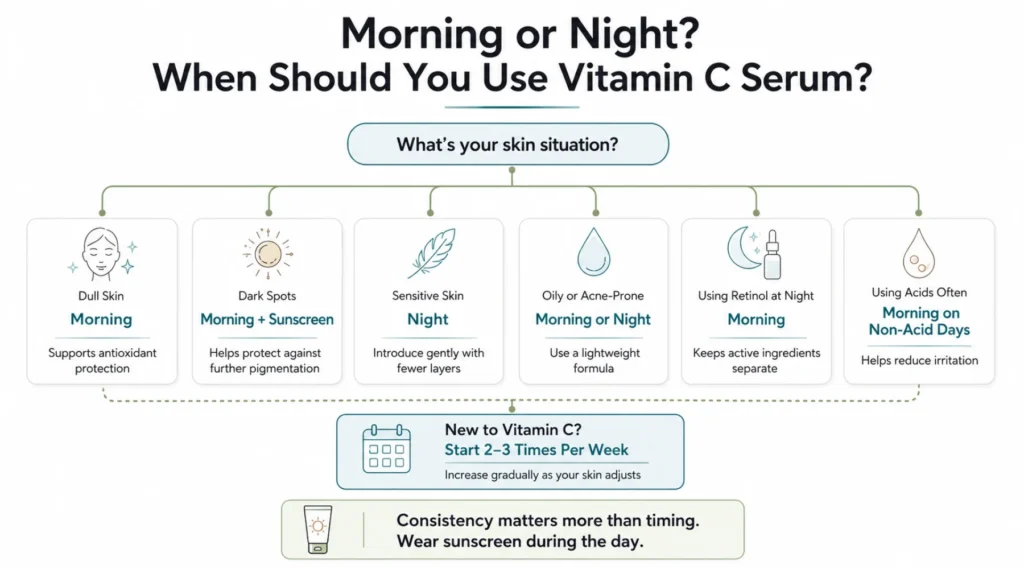
Using it at night can also be helpful. It may suit people with sensitive skin, those who want fewer products in the morning, or those whose makeup and sunscreen don’t blend well with vitamin C. Some gentler vitamin C forms work slowly, making them ideal for nighttime.
The best time to use vitamin C depends on your skin’s needs, your routine, and the product you have.
| Skin situation | Best time to use vitamin C serum | Why it may work |
| Dull skin with no major sensitivity | Morning | Supports daytime antioxidant protection and brightness |
| Dark spots or uneven tone | Morning, with sunscreen | Helps target visible dullness while sunscreen reduces further pigmentation |
| Sensitive or reactive skin | Night at first | Allows slower introduction with fewer daytime layers |
| Oily or acne-prone skin | Morning or night | Choose a lightweight, non-greasy formula |
| Using retinol at night | Morning | Keeps vitamin C and retinoids separate to reduce irritation |
| Using exfoliating acids often | Morning on non-acid days or alternate nights | Reduces the risk of over-exfoliation and stinging |
| Beginner routine | Morning 2–3 times weekly or night 2–3 times weekly | Builds tolerance gradually |
You don’t have to use vitamin C only in the morning. The best approach is to use it whenever you can apply it regularly, easily, and with sunscreen during the day.
The Best Time to Use Vitamin C Serum in the Morning
Morning is the best time to use vitamin C serum if your skin can handle it. Start by cleansing your skin, then apply a small amount of the serum to dry or slightly damp skin. Allow it to absorb before applying moisturiser and sunscreen.
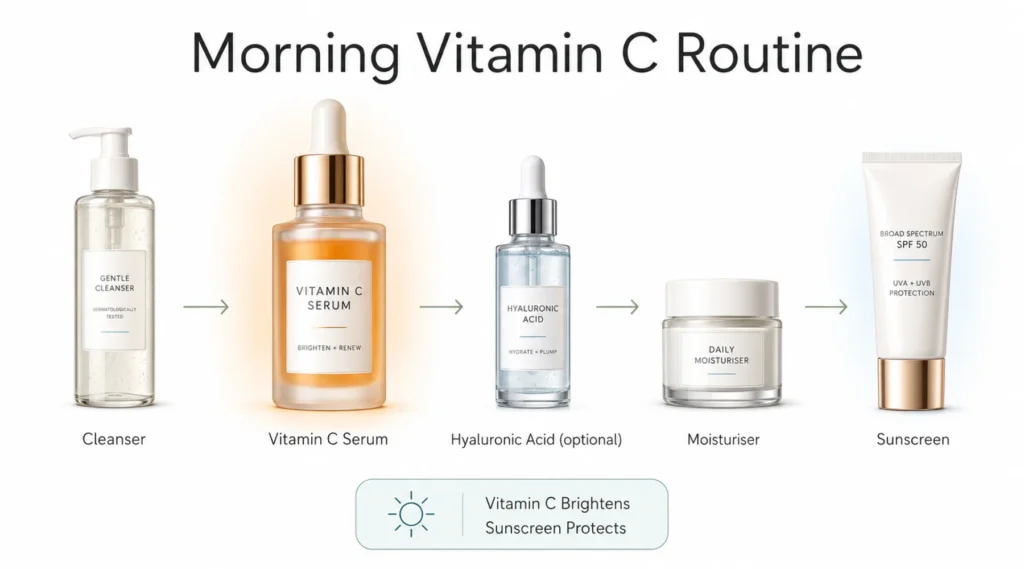
A simple morning routine could include:
- Gentle cleanser
- Vitamin C serum
- Hyaluronic acid serum (if used separately)
- Moisturiser
- Broad-spectrum sunscreen
Some people like to use hyaluronic acid before vitamin C, especially if their skin feels dry. This works well if the hyaluronic acid is light and watery. But with a strong L-ascorbic acid serum, it’s best to apply it directly to clean, dry skin.
A good approach is to apply vitamin C first and then layer on hydrating products. This helps with stronger serums, like a 20% Vitamin C Serum, where too many layers underneath can reduce effectiveness or cause pilling.
Using vitamin C in the morning is great if you want to address dullness, uneven skin tone, post-blemish marks, or early signs of ageing. While vitamin C brightens skin, it doesn’t stop damage; you need sunscreen for protection.
Sunscreen is essential. Vitamin C can help brighten your skin, but sunscreen prevents UV damage from worsening. Without sunscreen, even the best brightening routine will fall short.
Can You Use Vitamin C Serum at Night?
Yes, you can use vitamin C serum at night. It still works even when the sun sets. Nighttime use is a good choice if you want to keep your morning routine simple or if you find vitamin C easier to use without sunscreen and makeup.
Consider using vitamin C at night if:
- Your skin is sensitive in the morning
- Your sunscreen mixes poorly with serums
- You already have many daytime products
- You’re new to vitamin C
- Your skin barrier feels weak
- You like using active serums in the evening
Be cautious about using vitamin C with other nighttime products. Many people use retinol, exfoliating acids, or acne treatments at night. Mixing these with vitamin C can be too strong, especially for sensitive skin.
If you use retinol at night, it’s usually better to use vitamin C in the morning. If you only use retinol a few times a week, you can use vitamin C on alternate nights.
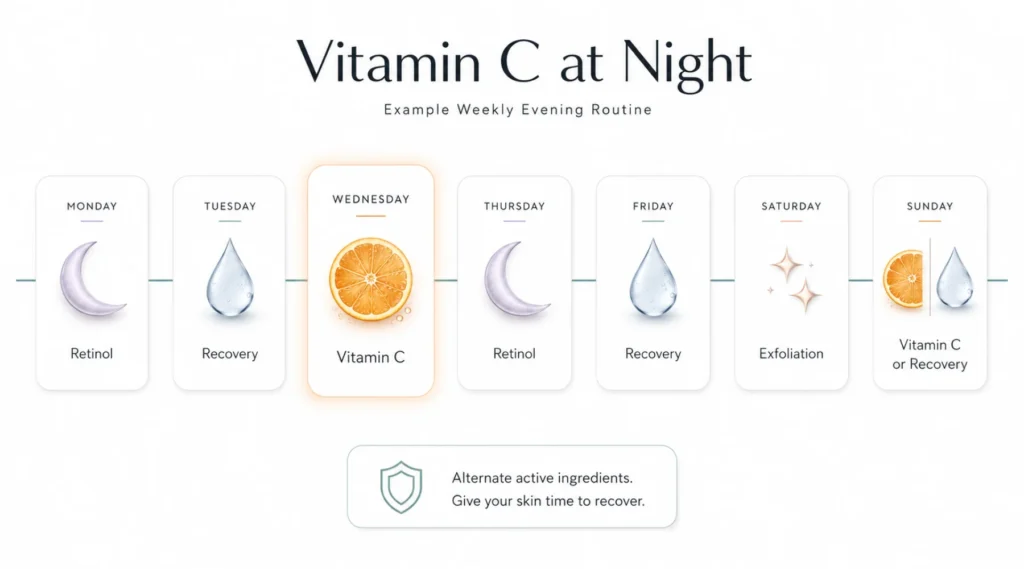
A good weekly evening routine might be:
| Evening | Active focus |
| Monday | Retinol |
| Tuesday | Hydration and barrier support |
| Wednesday | Vitamin C |
| Thursday | Retinol |
| Friday | Hydration and barrier support |
| Saturday | Gentle exfoliation |
| Sunday | Vitamin C or recovery night |
This type of spacing gives the skin time to adapt. It is especially helpful for people who want visible results without constantly provoking redness or dryness.
When to Use Vitamin C Serum for Beginners
For beginners, start using vitamin C serum slowly. A common mistake is applying a strong serum daily right away, which can cause irritation. Then, users may think vitamin C is not suitable for their skin.
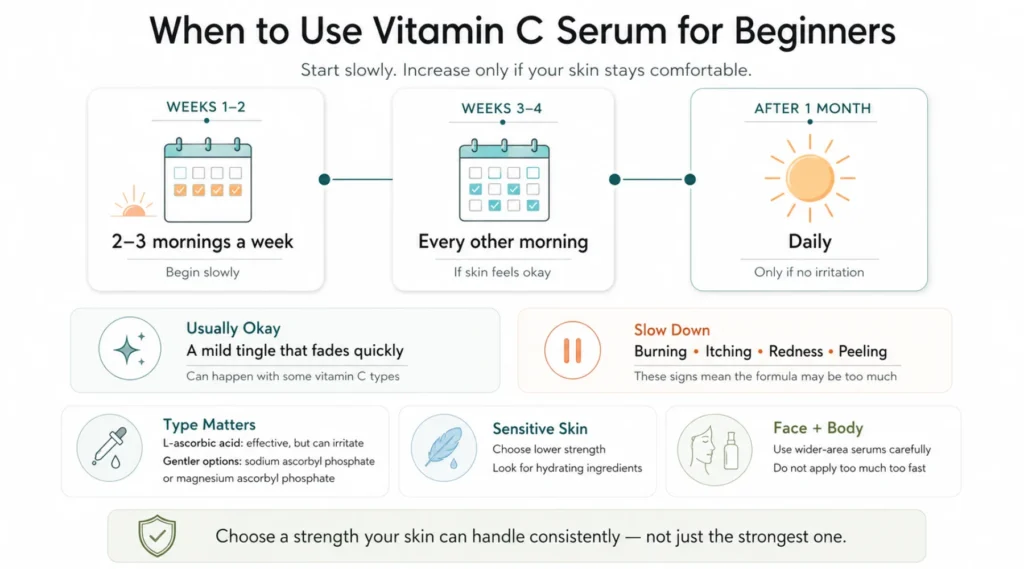
Here’s a beginner-friendly schedule:
- Weeks 1–2: Use vitamin C serum 2–3 mornings a week.
- Weeks 3–4: If your skin feels okay, increase it every other morning.
- After one month: Use it daily if you don’t experience stinging, peeling, or redness.
A mild tingle that fades quickly is normal with some vitamin C types, especially L-ascorbic acid. However, don’t ignore burning, itching, or visible irritation.
Pay attention to the type and strength of vitamin C. L-ascorbic acid is well-researched but can irritate some skin. Gentler options like sodium ascorbyl phosphate or magnesium ascorbyl phosphate may work more slowly but can feel easier on the skin.
If your skin is sensitive, start with a lower-strength formula or a product combined with hydrating ingredients. A Vitamin C Face and Body Serum is good for wider use, but be careful not to apply too much on the body too fast.
Focus on using an effective strength of vitamin C that your skin can handle consistently, rather than the strongest option.
How to Apply Vitamin C Serum Without Irritation
To use vitamin C serum effectively, spread a small amount on clean skin, avoiding the eye area. Wait a moment for it to absorb before applying other products. More serum does not mean better results; using too much can lead to stickiness and irritation.

A pea-sized amount is usually enough, but it may vary based on the product. Apply it evenly on your forehead, cheeks, chin, and jawline without rubbing hard. Just press or smooth it onto your skin.
Here’s a simple method to follow:
- Clean your skin gently.
- Pat your skin dry.
- Apply the vitamin C serum evenly.
- Wait 30–60 seconds for it to settle.
- Apply moisturiser.
- Use sunscreen in the morning.
If the serum feels sticky, you may be using too much. If it stings, your skin might be damp or sensitive.
Do not apply vitamin C serum to broken skin, freshly waxed areas, open blemishes, or skin already peeling from other treatments. Keeping your skin barrier healthy is important. If it’s damaged, even a good serum can irritate your skin.
How Often Should You Use Vitamin C Serum?
Most skin types can eventually use vitamin C serum once daily. Daily use is often ideal for visible brightness and antioxidant support, but it is not required from the first week.
Frequency should depend on tolerance.
| Skin response | What to do |
| No irritation after 2–3 uses weekly | Increase gradually |
| Mild tingling that fades quickly | Continue slowly and monitor |
| Tightness or dryness | Reduce frequency and add barrier support |
| Redness or burning | Stop temporarily and reassess formula |
| Pilling under SPF | Use less product or change layering order |
| Breakouts after starting | Check formula texture, oils, fragrance and other routine changes |
- For sensitive skin: Use vitamin C three times a week.
- For resilient skin: Daily use in the morning is effective.
- For those using multiple products: Apply every other day for better results than trying to use it every day.
Sticking to a routine is more important than using a strong product. A serum used comfortably for six months is better than a potent one used for only two weeks.
When to Use Vitamin C Serum Safely With Sunscreen
Vitamin C and sunscreen are essential for skincare. Vitamin C protects the skin from damage, while sunscreen reduces UV exposure that can cause dark spots, dullness, and early ageing.
The proper order for use is:
- Vitamin C serum
- Moisturiser
- Sunscreen
If your sunscreen is moisturising enough, you might skip the moisturiser in the morning, especially if you have oily skin. However, if you have dry or sensitive skin, it’s good to use a moisturiser between the vitamin C and sunscreen.
Vitamin C doesn’t make sunscreen stronger. It can’t replace the need for enough sunscreen, regular reapplication, or avoiding too much sun. Think of vitamin C as a helpful step, not as a substitute for protection.
This is crucial if you’re using vitamin C to reduce dark spots. Brightening serums can help even out skin tone, but UV exposure can continue to trigger pigmentation. Without consistent sunscreen, your improvements may be slow or uneven.
Can You Use Niacinamide With Vitamin C?
Yes, you can use niacinamide with vitamin C. The old belief that they cancel each other out is no longer true. Modern products are usually stable enough for both ingredients to be used together, and many people find the combination works well.
Niacinamide helps strengthen the skin barrier, controls oiliness, improves uneven skin tone, and reduces redness. Vitamin C brightens dull skin and provides antioxidant support. Together, they can help with uneven tone, post-blemish marks, and tyred-looking skin.
The main concern isn’t whether the ingredients conflict but how your skin tolerates them. If you have sensitive skin, you can use both, but introduce them slowly. Start with one product consistently, then add the other.
Here’s a simple way to layer them:
- Vitamin C serum
- Niacinamide serum or essence
- Moisturiser
- Sunscreen in the morning
If your niacinamide is watery and your vitamin C is thicker, apply the thinner one first. Generally, layer products from thinnest to thickest. However, if your vitamin C is an L-ascorbic acid formula meant for clean skin, use it first.
For oily or blemish-prone skin, niacinamide and vitamin C work well together. They help with uneven tone, shine, redness, and post-blemish scars. A 24K Gold Serum can enhance radiance, but introduce new serums slowly instead of using too many at once.
Can You Use Hyaluronic Acid With Vitamin C?
You can use hyaluronic acid with vitamin C. This combination is gentle and effective. Hyaluronic acid helps your skin hold water, while vitamin C can feel drying, so adding hydration can help.
Here’s a typical routine:
- Cleanser
- Vitamin C serum
- Hyaluronic acid serum
- Moisturiser
- Sunscreen (in the morning)
If your skin feels tight after cleansing, you can use a light hydrating mist or a small amount of hyaluronic acid before vitamin C. Just don’t soak your skin before applying vitamin C, as that can cause irritation.
Hyaluronic acid doesn’t lessen the benefits of vitamin C; it often makes it more enjoyable to use. A routine that includes hydration is usually easier to maintain than one focused only on strong ingredients.
For dry skin, apply vitamin C, then hyaluronic acid, and finish with a rich moisturiser. For oily skin, choose a lightweight hyaluronic serum and a gel-cream moisturiser. For sensitive skin, keep your routine simple and avoid products with strong scents.
Vitamin C and Retinol: Should They Be Used Together?
Vitamin C and retinol can both be part of an effective skincare routine, but they do not need to be applied at the same time. In fact, many people do better when they separate them.
The easiest method is:
- Vitamin C in the morning
- Retinol at night
This lowers the risk of irritation and lets each ingredient fit well in your routine. Use vitamin C with sunscreen during the day. Retinol is best at night since it can make your skin sensitive and works better away from sunlight.
Some people with strong skin can use vitamin C and retinol together, but it’s not a must. If your skin gets dry, flaky, or red, stop using them together right away.
A skincare routine isn’t better just because it has more active ingredients. Often, good skincare is about being careful and not overdoing it.
Vitamin C and Exfoliating Acids: A Pairing That Needs Care
Exfoliating acids like glycolic, lactic, mandelic, and salicylic acids can help improve skin texture, unclog pores, and reduce dullness. Vitamin C also brightens dull skin and evens out skin tone. Since both can address similar issues, many people want to use them together, but this can lead to irritation.
Using strong vitamin C with exfoliating acids can make the skin uncomfortable. Combined, they may cause stinging, redness, dryness, or peeling, especially if your skin barrier is weak.
A safer way to use them is to separate their application:
- Use Vitamin C in the morning.
- Use exfoliating acids at night, 1–3 times a week.
- Use Vitamin C on some days.
- Use exfoliating acids on alternate days.
If you have sensitive skin, don’t apply vitamin C right after an acid toner. If you have oily skin, you might tolerate using them together sometimes, but you rarely need both every day.
When skin looks dull, more exfoliation isn’t always the answer. Sometimes, it just needs antioxidants, hydration, and regular sunscreen.
When to Use Vitamin C Serum for Sensitive Skin
Sensitive skin can use vitamin C, but the type and timing are important. A safe way to start is using it two or three times a week, either in the morning under sunscreen or at night with a basic moisturiser.
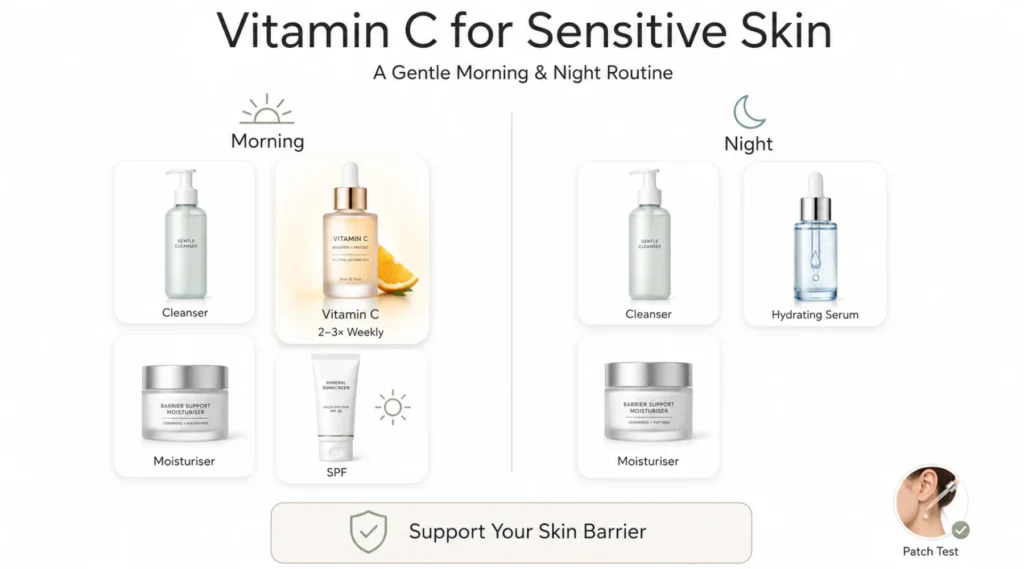
People with sensitive skin should avoid starting with a strong L-ascorbic acid serum unless a professional recommends it. A lower concentration or gentler option is usually better. Look for products that include soothing and hydrating ingredients like panthenol, glycerin, hyaluronic acid, allantoin, centella, or ceramides.
A sensitive-skin vitamin C routine might look like this:
Morning:
- Gentle cleanser or water rinse
- Vitamin C serum, 2–3 times weekly
- Barrier-supporting moisturiser
- Sunscreen
Night:
- Gentle cleanser
- Hydrating serum
- Moisturiser
Don’t use vitamin C during a flare-up, after too much exfoliation, or when your skin feels hot, itchy, or tight. It should help your routine, not add stress.
Patch testing is smart. Put a small amount on your jawline or behind your ear for a few days before applying it to your face. This doesn’t guarantee you won’t have irritation, but it can help spot any sensitivity.
When to Use Vitamin C Serum for Oily Skin
Oily skin benefits from vitamin C, especially for dullness, post-blemish marks, and uneven tone. Choose a lightweight product that feels non-greasy.
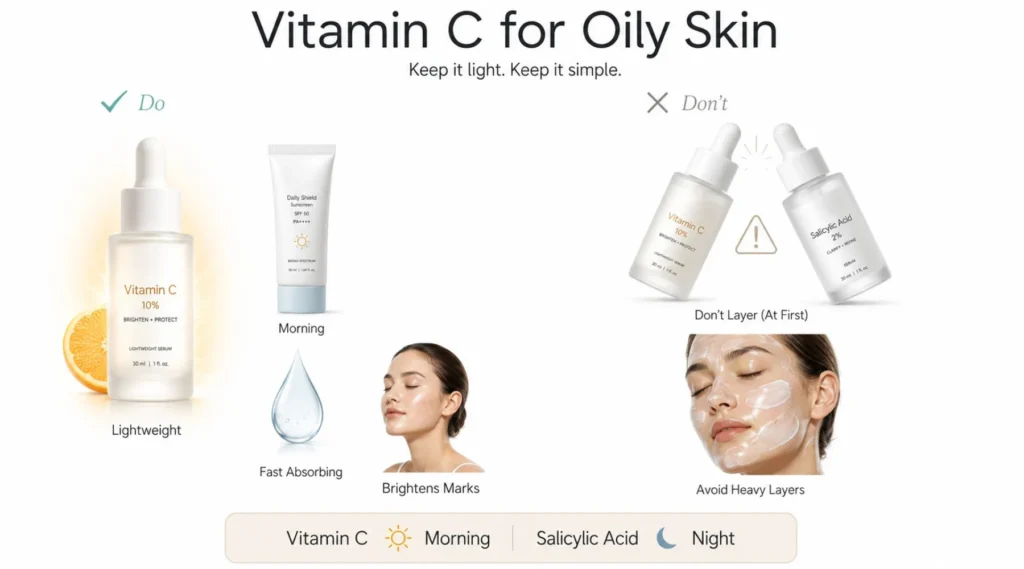
Apply vitamin C serum in the morning after washing your face and before a light moisturiser or sunscreen. If your sunscreen is hydrating, you might not need a separate moisturiser. This helps keep your routine light and prevents pilling.
For oily skin, look for:
- Lightweight serum textures
- Non-greasy finishes
- Water-based or fast-absorbing formulae
- Fragrance-free options for blemish-prone skin
- Packaging that protects the product from air and light
If you use salicylic acid for breakouts, don’t layer it with vitamin C at first. Use salicylic acid at night and vitamin C in the morning. This helps your oily skin without being too harsh.
Vitamin C can brighten and even out post-acne marks, but it doesn’t treat active acne on its own. An acne care routine should include gentle cleansing, non-comedogenic moisturising, sunscreen, and possibly ingredients like salicylic acid, benzoyl peroxide, azelaic acid, adapalene, or niacinamide.
When to Use Vitamin C Serum for Dry Skin
Dry skin can benefit from vitamin C but needs extra moisture. Some vitamin C products can be drying, especially if they are acidic or contain alcohol. The aim is to brighten the skin while also protecting its barrier.
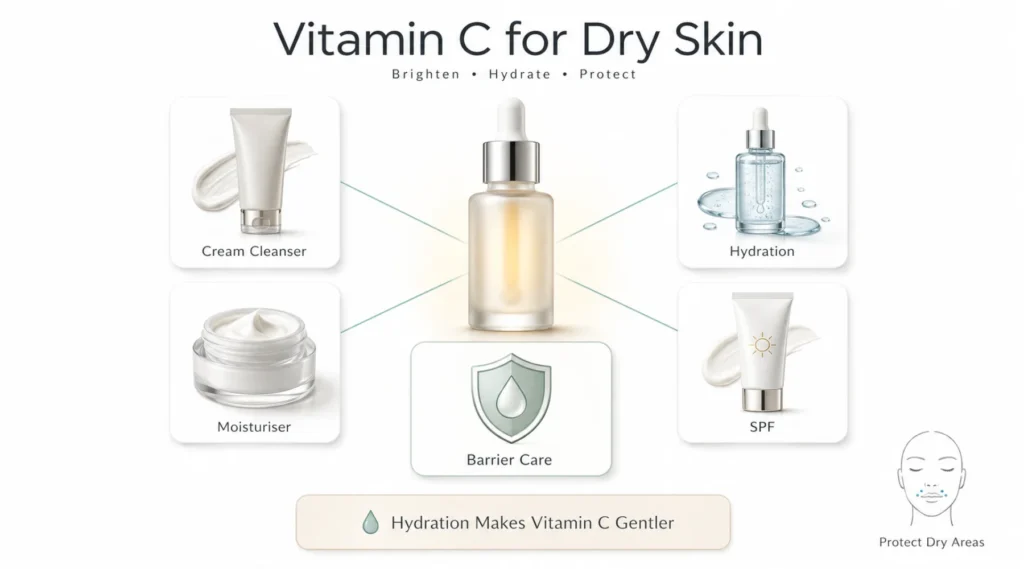
After cleansing, use vitamin C, then follow with hydrating products. Dry skin responds well to hyaluronic acid, glycerin, ceramides, squalane, and a thicker moisturiser.
A morning routine for dry skin can include:
- Cream cleanser
- Vitamin C serum
- Hyaluronic acid serum
- Moisturiser
- Sunscreen
If vitamin C irritates your skin, first apply moisturiser to sensitive areas like the corners of your nose and mouth. Then, apply vitamin C to the rest of your face. This method can help reduce irritation, but may lessen vitamin C’s effect on those areas.
Dry skin should be careful when using strong vitamin C with retinoids or exfoliating acids. A routine that brightens but damages the skin barrier can make the skin look duller over time.
When to Use Vitamin C Serum With Other Skincare Products
Vitamin C is usually not the only serum people use. Many also include hyaluronic acid, niacinamide, peptides, exfoliating acids, retinoids, essences, moisturisers, and facial oils. The difficulty is figuring out how to use them together.
A useful rule is:
- Apply watery products before thicker products
- Apply treatment serums before moisturiser
- Apply oils last at night
- Apply sunscreen last in the morning
- Avoid stacking too many strong actives at once
Here is a practical layering table.
| Product | Use before or after vitamin C? | Notes |
| Gentle cleanser | Before | Vitamin C works best on clean skin |
| Hydrating toner | Usually before | Keep it light; avoid strong acid toners at first |
| Hyaluronic acid | Usually after | Can also go before if very watery and skin is dry |
| Niacinamide | After or before depending on texture | Compatible for most people |
| Peptides | Usually after | Avoid overcomplicating if formula instructions differ |
| Moisturiser | After | Helps reduce dryness and support barrier |
| Sunscreen | After | Essential in the morning |
| Facial oil | After moisturiser, usually at night | Can block absorption if used before vitamin C |
| Retinol | Separate, usually night | Best kept away from vitamin C for sensitive skin |
| Exfoliating acids | Separate | Use on alternate nights or different routines |
A 20% Vitamin C Ampoule Serum is a product many use early in their routine because it’s a concentrated treatment. After applying it, the rest of the routine should focus on calming and support, avoiding too many active ingredients.
Does Vitamin C Lighten Skin?
Vitamin C does not bleach or change your skin colour. When people ask if it lightens skin, they usually mean if it can reduce dark spots and uneven tone.
Vitamin C can brighten the skin and even out pigmentation. It works more as a brightening agent than a skin-lightening one.
This difference is important. Healthy brightening makes skin look fresh and clear, not unnaturally pale.
If pigmentation is deep or related to hormones, vitamin C alone might not be enough. Conditions like melasma often need sunscreen and other treatments with expert advice. Post-acne marks usually improve over time but require patience and consistent sun protection.
Vitamin C is helpful, but it isn’t a quick fix. Most people need to use it consistently for 8–12 weeks to see results, and stubborn pigmentation can take longer.
Does Vitamin C Brighten Skin?
Yes, vitamin C can make your skin look brighter. It helps with dullness, uneven tone, and signs of tiredness. This brightening effect is why vitamin C is popular in skincare.
Skin can look dull for many reasons:
- Dead skin build-up
- Dehydration
- Sun exposure
- Pollution
- Lack of sleep
- Marks from blemishes
- Uneven pigment
- A weak skin barrier
Vitamin C helps with some of these issues, especially uneven tone, and provides antioxidant support. If dullness comes from dehydration, you’ll also need moisturisers. If it’s due to congestion, gentle exfoliation can help. If you’re not using sunscreen, it’s important to make that a priority.
For the best results, use a balanced brightening routine. Vitamin C can be a key step, but hydration, barrier care, and sunscreen will enhance the effects.
How Vitamin C Works on the Skin
Vitamin C is an antioxidant. In skincare, antioxidants help reduce damage from environmental factors. This damage can make skin look dull, uneven, and older.
Vitamin C also helps with collagen, a protein that keeps skin firm and smooth. While it won’t reshape your face overnight, regular use can improve skin over time.
Vitamin C helps manage skin pigment. It can lessen dark spots and uneven tones by reducing excess melanin. This is why it’s often used for dark spots and post-acne marks.
The type of vitamin C matters. L-ascorbic acid is powerful but can be unstable and irritating. Other forms are more stable and gentle but may take longer to work.
Packaging is important too. Vitamin C can lose its effectiveness when exposed to air, light, and heat. A serum that turns dark orange or brown may be damaged. Keep it away from sunlight, close the lid tightly, and avoid storing it in a warm bathroom.
How Long Does Vitamin C Serum Take to Work?
Vitamin C serum doesn’t usually change your skin in just a few days. Some people see a brighter glow within a couple of weeks, especially if the serum hydrates. More noticeable changes, like uneven tone, dullness, and marks after blemishes, usually take longer.
A realistic timeline looks like this:
| Timeframe | What you may notice |
| First few days | Skin may feel smoother or slightly more radiant if formula is hydrating |
| 2–4 weeks | Dullness may start to look less obvious |
| 6–8 weeks | Skin tone may look more even with consistent use |
| 8–12 weeks | Dark spots and post-blemish marks may appear softer |
| 3 months and beyond | Best results with daily sunscreen and consistent routine |
Results depend on the type of pigmentation, how often you use sunscreen, the strength of the formula, your skin type, and your consistency with the product.
Using vitamin C for dark spots won’t be effective if you don’t use sunscreen regularly. If vitamin C irritates your skin, it can make pigmentation worse because inflammation might cause more uneven skin tone for some people.
Common Mistakes When Using Vitamin C Serum
Using Vitamin C is simple, but it can be misused easily. Common issues arise from applying too much, choosing the wrong strength, layering too many products, or forgetting sunscreen.
Starting with a too-strong formula
A 20% vitamin C serum can be useful, but it might not be suitable for sensitive or beginner skin. A stronger formula doesn’t always equal better results. If your skin can’t handle it, your routine won’t work.
Using vitamin C on irritated skin
Don’t use vitamin C on skin that is red, peeling, or burning from retinol, acids, or over-cleansing. Focus on healing your skin barrier first.
Layering too many active ingredients
You don’t need to use vitamin C, retinol, glycolic acid, salicylic acid, and strong acne treatments all at once. Spread them out over different times of the day or on alternate days.
Applying it after heavy creams
Put vitamin C on before moisturisers and oils. Heavy creams under it can block absorption.
Skipping sunscreen
Not using sunscreen is a big mistake when using vitamin C for pigmentation. Brightening ingredients work best when your skin is shielded from UV rays.
Using oxidised serum
If your vitamin C serum changes colour, smells strange, or becomes much darker, it may be oxidised. Some serums have a natural tint, but a noticeable change is a bad sign.
Expecting instant dark spot removal
Vitamin C can help brighten uneven skin tone, but it won’t remove dark spots overnight. Long-standing spots need time, regular use, and protection.
Signs Your Vitamin C Serum Is Not Working for Your Skin
Not every vitamin C serum works for everyone. The timing, formula, or skin barrier might not be right.
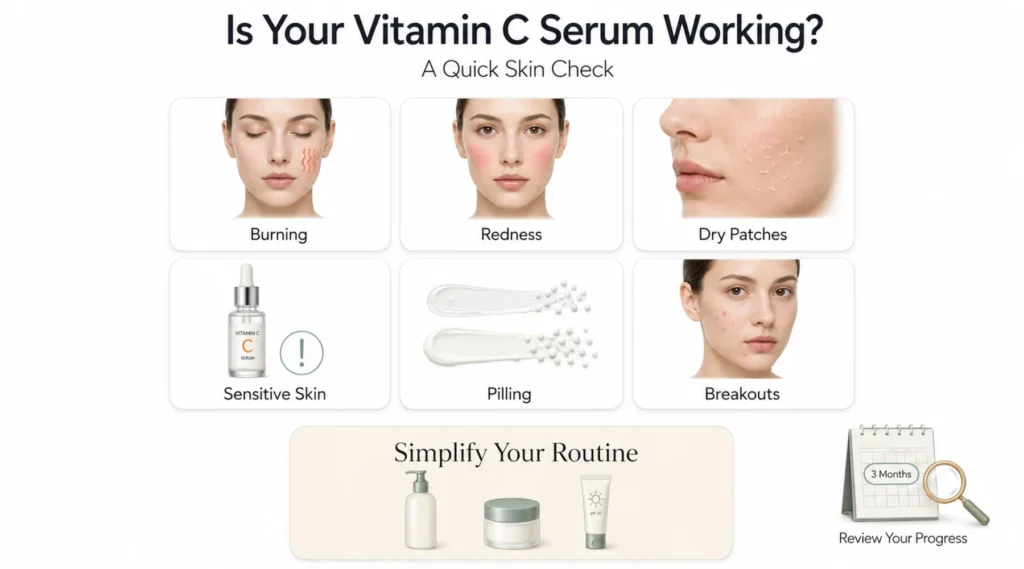
Signs that your serum isn’t effective include:
- Ongoing stinging or burning
- New redness that doesn’t go away
- Dry patches or flaking skin
- Increased sensitivity to other products
- Pilling when you apply sunscreen
- Breakouts from thick or pore-clogging textures
- No visible improvement after three months of use
If you experience irritation, stop using the serum for a few days and simplify your routine. Stick to a gentle cleanser, moisturiser, and sunscreen. Once your skin calms down, try using vitamin C less often, applying it over a light moisturiser, or switching to a gentler formula.
If you see no results after three months, review the basics first. Are you using enough sunscreen? Is the serum fresh? Are you applying it regularly? Is the pigmentation deep or hormonal? Sometimes the vitamin C isn’t ineffective; it may just need more support to work.
How to Choose the Right Vitamin C Serum for Your Routine
The best vitamin C serum isn’t always the strongest or priciest. It’s the one that matches your skin type, fits your routine, and stays effective for regular use.

For normal skin, L-ascorbic acid works well. If you have sensitive skin, try derivatives for comfort. Oily skin benefits from lightweight formulae, while dry skin needs products with humectants and ingredients that support the skin barrier.
Consider these factors before choosing:
| Factor | Why it matters |
| Vitamin C form | Affects strength, stability and irritation potential |
| Concentration | Higher percentages may be more active but less tolerable |
| pH | Low pH formulae can be effective but may sting |
| Packaging | Airless pumps or dark bottles help protect stability |
| Texture | Heavy formulae may not suit oily or acne-prone skin |
| Supporting ingredients | Hydrators and soothing agents improve tolerance |
| Fragrance | Can increase irritation risk for sensitive skin |
A good serum should easily fit into your skin care routine. If it causes pilling, burning, or breakouts, it’s not the right one, no matter how great the ingredients seem.
When looking at different serums, it helps to compare textures and active ingredients. Remember to choose based on your skin’s needs, not on trends.
Vitamin C Serum Routine Examples by Skin Type
A routine should feel realistic. The best skincare plan is one you can repeat without irritation or confusion.
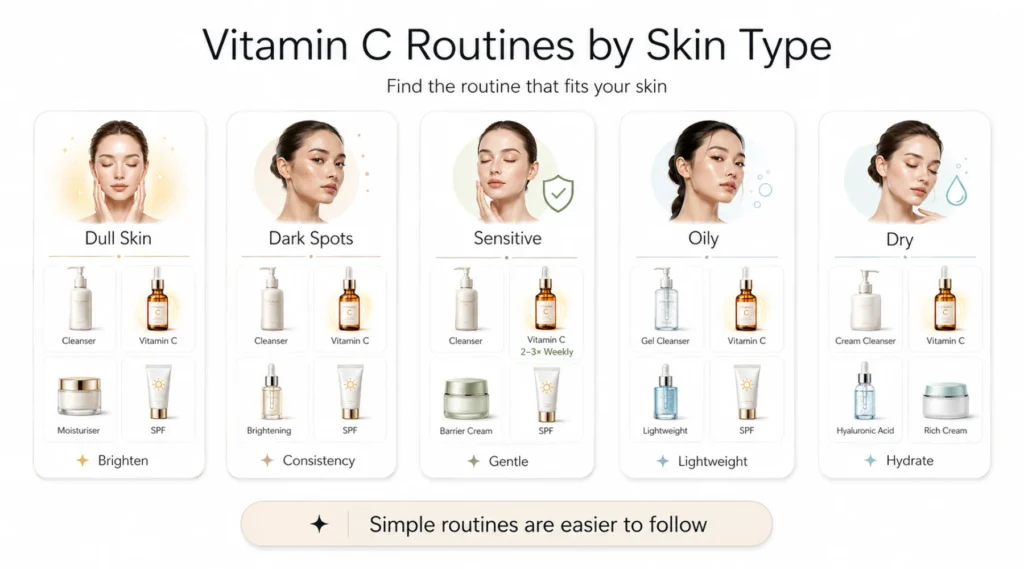
For dull skin
Morning:
- Gentle cleanser
- Vitamin C serum
- Lightweight moisturiser
- Sunscreen
Night:
- Cleanser
- Hydrating serum
- Moisturiser
This routine keeps vitamin C as the main active and avoids unnecessary conflict.
For dark spots and uneven tone
Morning:
- Cleanser
- Vitamin C serum
- Niacinamide or hydrating serum
- Moisturiser
- Sunscreen
Night:
- Cleanser
- Azelaic acid or retinoid on selected nights
- Moisturiser
The key is consistency. Dark spots respond slowly, and sunscreen is essential.
For sensitive skin
Morning:
- Water rinse or gentle cleanser
- Vitamin C serum 2–3 times weekly
- Barrier moisturiser
- Sunscreen
Night:
- Gentle cleanser
- Hydrating serum
- Barrier moisturiser
Avoid exfoliating acids until vitamin C is well tolerated.
For oily or blemish-prone skin
Morning:
- Gel cleanser
- Lightweight vitamin C serum
- Niacinamide serum, if tolerated
- Gel moisturiser or sunscreen
Night:
- Cleanser
- Salicylic acid or acne treatment on selected nights
- Lightweight moisturiser
Keep textures light and avoid using too many activities on the same day.
For dry skin
Morning:
- Cream cleanser
- Vitamin C serum
- Hyaluronic acid serum
- Rich moisturiser
- Sunscreen
Night:
- Cream cleanser
- Hydrating essence or serum
- Moisturiser
- Facial oil, if needed
Dry skin needs vitamin C to be surrounded by hydration and barrier support.
Myths About When to Use Vitamin C Serum
Vitamin C has gathered many myths. Some are due to older product issues, while others come from simple advice on social media.
“Vitamin C can only be used in the morning”
Morning is often best, but you can use it at night too. The right time is when your skin can handle it and fits your routine.
“Vitamin C makes skin sensitive to the sun”
Vitamin C isn’t like glycolic acid and can be used during the day. However, wearing sunscreen is still important because sun exposure can worsen skin issues.
“You cannot use niacinamide with vitamin C”
This myth is outdated. Most people can use both ingredients together if their skincare routine is gentle.
“The strongest vitamin C serum is always best”
A strong serum isn’t helpful if your skin can’t tolerate it. A moderate serum used regularly is usually better than a strong one that harms your skin.
“Vitamin C removes dark spots quickly”
Vitamin C can help even out skin tone, but dark spots take time to fade. You need sunscreen, patience, and a good routine.
“If vitamin C tingles, it means it is working”
A slight tingle can occur, but irritation doesn’t mean it’s effective. Signs like burning, redness, or peeling indicate you should stop or use it less.
Professional Treatments and Vitamin C: How They Fit Together
Vitamin C can help brighten your skin at home, but some issues need professional help. Problems like deep pigmentation, melasma, acne scars, severe sun damage, or ongoing redness may not improve with regular products.
Professional treatments include chemical peels, laser therapy, microneedling, prescription creams, and acne care from a dermatologist. These options might not suit everyone, especially those with darker skin, as stronger procedures can cause dark spots.
You should stop using Vitamin C around certain professional treatments, based on what your practitioner advises. After procedures that affect the skin’s barrier, like peels, lasers, or microneedling, give your skin time to recover with gentle cleansing, moisturiser, and sunscreen.
Don’t rush back into strong active ingredients. Your skin usually heals better in the long run if you allow it time to recover.
Lifestyle Factors That Affect Vitamin C Results
Vitamin C serum can make skin look better, but your daily habits also play a big role in how effective it is.
Sun exposure is the main issue. Even small amounts of UV rays from windows or cloudy days can harm skin that is prone to pigmentation. Using sunscreen every day boosts the benefits of vitamin C.
Sleep is important too. Lack of sleep can make skin look dull and uneven. Hydration, diet, stress, and smoking also impact how skin appears. While vitamin C serum helps, it can’t completely fix problems caused by lifestyle choices. It’s just one part of a larger skincare routine.
Skincare works best when approached as a regular habit, not a last-minute fix. Consistent daily habits are usually more effective than occasional intense treatment.
When to Avoid Vitamin C Serum
Vitamin C is useful, but there are times when it is better to pause.

Avoid or delay vitamin C if:
- Your skin barrier is damaged
- Your face is peeling from retinoids or acids
- You have an active rash or allergic reaction
- You have just had waxing, threading, or strong exfoliation
- You are recovering from a professional peel or laser
- The serum has an oxidised or changed smell dramatically
- Your skin burns every time you apply it
Talk to a healthcare professional about pregnancy and breastfeeding routines, especially if you’re using multiple products. Vitamin C is often used in skincare, but everyone’s routine can be different.
If you have eczema, rosacea, severe acne, or long-lasting pigmentation, getting professional advice can save you time and frustration.
How to Store Vitamin C Serum So It Stays Effective
Vitamin C, especially L-ascorbic acid, can be unstable. Poor storage can make a good serum less effective before you finish it.
Store vitamin C serum:
- Away from direct sunlight
- Away from the heat
- With the lid tightly closed
- In its original packaging
- In a cool, dry place
- Away from the steam in the bathroom, if possible
Some people keep unstable vitamin C serums in the fridge, but this depends on the formula. Always follow the product instructions.
Watch for changes in colour, smell, and texture. A pale yellow tint can be normal, but dark orange or brown may mean it has oxidised. If the serum smells metallic, sour, or unusual, it’s time to replace it.
Buying smaller bottles is a good idea if you don’t use vitamin C daily. A fresh serum used consistently is better than a large bottle that oxidises before you finish it.
Why Sunscreen Decides How Well Vitamin C Works
Vitamin C gets a lot of attention, but sunscreen does important work in brightening your skin. If you’re worried about dark spots, wearing SPF is a must.

UV rays can increase melanin, darken existing spots, and slow your progress. This happens even if you’re using good brightening products. While Vitamin C can help even out skin tone, sunscreen stops the problem from getting worse.
Apply broad-spectrum sunscreen every morning, use enough, and reapply if you’re outside or sweating. If you use Vitamin C in the morning but skip sunscreen, your routine is not complete.
This is crucial for those with medium to deep skin tones, who are more likely to get dark spots from acne, irritation, or cosmetic treatments. The goal is to fade existing spots and prevent new ones from becoming more visible.
Should Vitamin C Be Used Before or After Moisturiser?
Use Vitamin C before your moisturiser. Serums go on clean skin, and moisturisers help keep skin hydrated and support its barrier.
The typical order is:
- Cleanser
- Vitamin C serum
- Moisturiser
- Sunscreen (in the morning)
If you have very sensitive skin, you can apply a light moisturiser first to reduce stinging. But if your skin handles Vitamin C well, apply it before the moisturiser.
Don’t use facial oil before Vitamin C, as it can prevent the serum from absorbing properly. If you use oil, add it as the last step at night.
Should Vitamin C Be Used Before or After Hyaluronic Acid?
Use vitamin C before hyaluronic acid if vitamin C is the main active ingredient. Hyaluronic acid helps with hydration and dryness.
Texture is important. If your hyaluronic acid is thinner than vitamin C, apply it first. If vitamin C is watery and hyaluronic acid is gel-like, apply vitamin C first.
Here are some rules to follow:
- Apply active treatments first, if the texture allows.
- Apply thinnest to thickest for similar products.
- Stop if layering causes pilling or irritation.
For sensitive skin, applying hyaluronic acid on slightly damp skin can make vitamin C feel better. Just don’t use strong acidic vitamin C on very wet skin.
Should Vitamin C Be Used Before or After Niacinamide?
You can use Vitamin C before niacinamide, especially if Vitamin C is your main serum. Niacinamide helps improve your skin barrier and balance tone and oiliness.
A simple morning routine could be:
- Cleanser
- Vitamin C serum
- Niacinamide serum
- Moisturiser
- Sunscreen
If your niacinamide is much thinner than the Vitamin C, you can switch the order. Comfort and texture are important in real life.
If the two products cause redness, stinging, or peeling, try using them separately. Use Vitamin C in the morning and niacinamide at night, or alternate days. What works on paper doesn’t always feel good on your skin.
Should Vitamin C Be Used Before Makeup?
You can use vitamin C before makeup, but it needs time to absorb. After cleansing, apply vitamin C, then moisturiser and sunscreen. Wait a bit for your skincare to settle before putting on primer or foundation.
If your makeup clumps, it might be due to:
- Too much serum
- Too many layers
- A conflict with silicone-based products
- Not enough time for the products to absorb
- Sunscreen texture
Applying the foundation too fast
Use less vitamin C and don’t rub it in. Gently press sunscreen on your skin and wait a few minutes before applying makeup. A lightweight serum works better under makeup than a thick or oily one.
If vitamin C keeps disrupting your makeup, try using it at night. Your skincare routine should make life easier, not harder.
How Vitamin C Fits Into a Minimal Routine
A good vitamin C routine does not need ten steps. In fact, minimal routines often produce better results because the skin barrier stays calm.
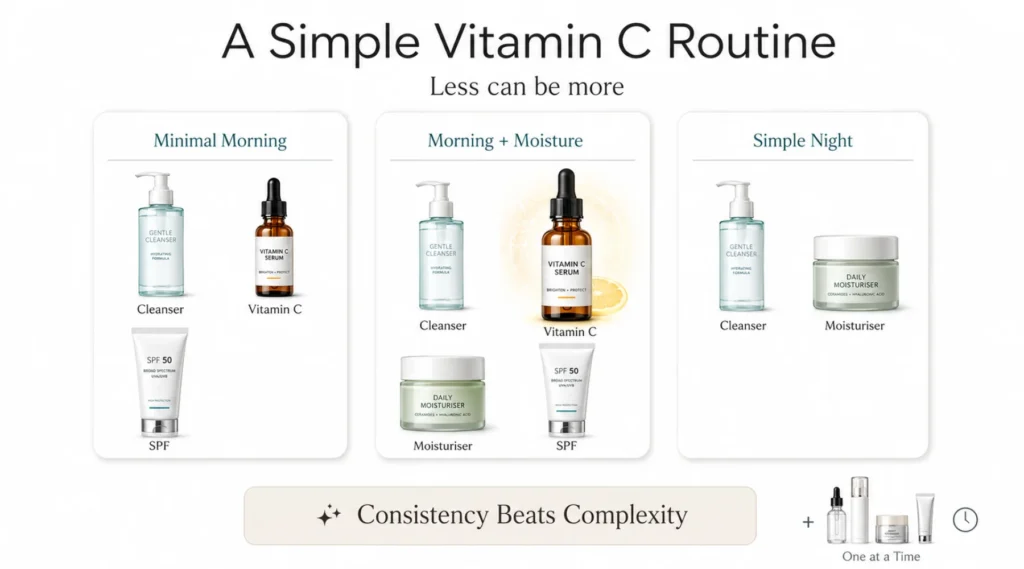
A minimal morning routine:
- Cleanse
- Vitamin C serum
- Sunscreen
A slightly more supportive routine:
- Cleanse
- Vitamin C serum
- Moisturiser
- Sunscreen
A minimal night routine:
- Cleanse
- Moisturiser
Many people find this sufficient. If you want to add niacinamide, hyaluronic acid, retinol, or exfoliating acids, introduce them one at a time. Adding too many products at once makes it tough to see what helps or irritates your skin.
The best routines aren’t always complicated. The best ones are those your skin can handle every week.
How Vitamin C Fits Into an Advanced Routine
An advanced routine needs spacing, not crowding. If you use vitamin C, retinoids, acids, peptides, and ingredients that support skin colour, each product should have a specific purpose.
A balanced advanced routine might be:
Morning:
- Gentle cleanser
- Vitamin C serum
- Niacinamide or peptide serum
- Moisturiser
- Sunscreen
Night, alternating:
- Retinoid nights
- Exfoliation nights
- Recovery nights
- Hydration-only nights
Recovery nights are valuable. They help your skin handle active ingredients better. Without them, even the best routine can make your skin dull, irritated, and uneven.
A good skincare routine doesn’t rely on using every active ingredient every day. It’s about timing each one correctly.
Frequently Asked Questions About When to Use Vitamin C Serum
Is it better to use vitamin C serum in the morning or at night?
Vitamin C serum is best used in the morning. It helps protect your skin from environmental stress and works well with sunscreen. You can use it at night if you have sensitive skin or want to avoid mixing it with makeup. The best time is when your skin reacts well.
When should you use vitamin C serum in your routine?
Apply vitamin C serum after you cleanse your face and before your moisturiser. In the morning, make sure to use sunscreen as the last step. If you use a toner or essence, put on vitamin C after those, unless the formula says otherwise.
How do you apply vitamin C serum correctly?
Put a small amount on clean skin and spread it evenly across your face, avoiding the eye area. Let it absorb before using moisturiser. In the morning, finish with sunscreen. Don’t use too much, and skip it on broken or irritated skin.
Can you use vitamin C serum every day?
Yes, many people can use vitamin C serum daily once their skin gets used to it. Beginners should start with 2–3 times a week and gradually increase. Those with sensitive skin may want to use it a few times a week instead of daily.
When to use vitamin C serum for beginners?
Beginners should apply vitamin C serum two or three mornings a week after cleansing and before moisturiser and sunscreen. If your skin feels fine after two to four weeks, you can use it more often. Starting slowly helps prevent stinging and irritation.
When to use vitamin C serum if you have sensitive skin?
If you have sensitive skin, use vitamin C serum 2–3 times a week at first. Choose a gentle formula, avoid mixing it with exfoliating acids or retinoids, and follow with a moisturising cream. If your skin burns or turns red, stop using it and simplify your routine.
When to use vitamin C serum for oily skin?
Oily skin can use vitamin C serum in the morning after cleansing and before sunscreen. Lightweight, non-greasy formulae usually work best. If you also use salicylic acid, try using it at night and vitamin C in the morning to avoid irritation.
Can you use niacinamide with vitamin C?
Yes, you can mix niacinamide with vitamin C. They work well together in a skincare routine. Apply vitamin C first if it’s your main serum, then use niacinamide, followed by moisturiser and sunscreen. If your skin reacts, use them at different times — morning and night.
Can I use niacinamide with vitamin C if I have acne-prone skin?
Yes, acne-prone skin can benefit from both. Vitamin C helps fade post-blemish marks, while niacinamide strengthens the skin barrier and reduces oiliness and redness. Start using them slowly and avoid thick products that might clog pores.
Can you use hyaluronic acid with vitamin C?
Yes, hyaluronic acid and vitamin C complement each other. Vitamin C brightens the skin, and hyaluronic acid adds moisture. Most people apply vitamin C first, followed by hyaluronic acid, moisturiser, and sunscreen. If your skin is sensitive, using a light hydrating layer before vitamin C can help.
Does vitamin C lighten skin?
Vitamin C does not bleach your skin or change its natural colour. It can help even out skin tone, reduce dark spots, and combat dullness, making your complexion look brighter. Think of it as a brightening ingredient, not a skin-lightening one.
Does vitamin C brighten skin?
Yes, vitamin C can brighten your skin by addressing dullness, uneven tone, and signs of stress. Results take time and are best when you use it regularly, especially with sunscreen.
Can vitamin C serum be used with retinol?
You can use vitamin C and retinol in the same routine, but it’s best to apply them at different times. Use vitamin C in the morning and retinol at night to minimise irritation and maximise their benefits.
Can vitamin C serum be used after exfoliating acids?
It’s best to avoid using vitamin C right after strong exfoliating acids, especially if your skin is sensitive. Use vitamin C in the morning and exfoliating acids at night, or alternate them on different days to protect your skin.
How long should you wait after applying vitamin C serum?
You only need to wait about 30–60 seconds after applying vitamin C serum before putting on moisturiser. If products start to ball up, wait a little longer, use less serum, or simplify your routine.
Making Vitamin C Work at the Right Time for Your Skin
When to use vitamin C serum varies for everyone. Many people prefer using it in the morning because it works well with sunscreen and protects the skin from environmental stress. However, using it at night can also be suitable for sensitive skin, beginners, or anyone who finds daytime use challenging.
The key is being consistent, knowing your skin’s tolerance, and ensuring protection. Apply vitamin C after cleansing, before your moisturiser. Don’t mix it with too many strong products, and always use sunscreen in the morning. If your skin is sensitive, start with a small amount. For oily skin, choose lighter textures, and for dry skin, pair it with hydrating products.
Vitamin C is most effective when it’s part of your regular skincare routine, not just a quick fix. When used correctly and with the right products, it can make your skin look brighter, smoother, and more even without overdoing it.