




Blog
Niacinamide for Hyperpigmentation: Benefits and Use Tips


Dark marks can last longer than the issues that caused them. A spot might heal in a week, but the brown or grey mark left can stay visible for months. Sun exposure can worsen an uneven complexion, while frequent irritation from shaving, picking, or harsh skincare can create new discolouration before the old marks fade.
This is where niacinamide for hyperpigmentation helps. Niacinamide doesn’t remove pigment or lighten your skin tone. Instead, it affects how pigmentation works, supports the skin barrier, and can help create a more even complexion over time.
Its best feature is flexibility. Niacinamide can be used in the morning or evening, works well with many other skincare ingredients, and is usually easier on the skin than stronger treatments. This is especially helpful when pigmentation and skin sensitivity occur together, which is common after acne or irritation.
It’s important to understand what niacinamide can do, how long it takes to see results, the right concentration to use, and how to create a routine that prevents new marks while old ones fade.
Is Niacinamide Good for Hyperpigmentation?
Yes, topical niacinamide can help reduce certain types of dark spots, especially surface unevenness and marks from inflammation.
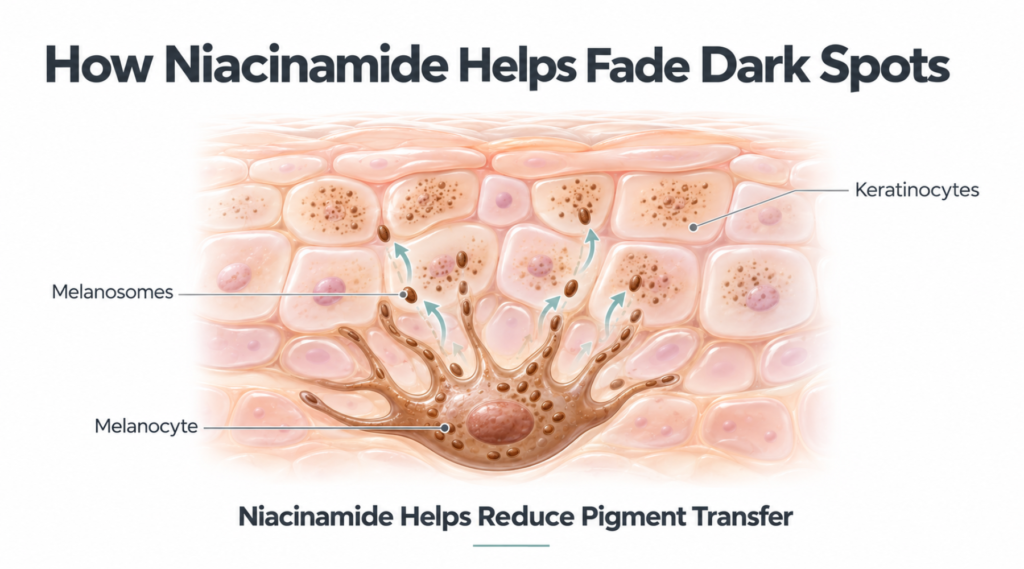
Research shows that niacinamide can lower visible pigmentation. A well-known study found that it reduces how pigment-carrying melanosomes move between skin cells, leading to noticeable improvement after weeks of use.
This is important because pigmentation isn’t just leftover colour on the skin. Melanin is made by special cells called melanocytes. Tiny melanin-filled structures, or melanosomes, are passed to surrounding skin cells called keratinocytes. These pigmented cells eventually rise to the skin’s surface as part of skin renewal.
Niacinamide seems to block this transfer process rather than directly stop the enzyme tyrosinase like some other products do. This is why niacinamide fits well in a pigmentation treatment routine.
It can help reduce extra pigmentation while also supporting the skin barrier and lowering irritation that may cause more discolouration. However, it’s not a one-size-fits-all solution for every dark mark.
Conditions like deep melasma, old sun spots, pigmentation linked to health issues, or suspicious lesions may require a professional evaluation or different treatments.
Knowing why hyperpigmentation occurs helps in choosing the right treatment, rather than just picking a product based on its active ingredient concentration.
What Niacinamide Actually Does to Pigmentation
Niacinamide, or nicotinamide, is a type of vitamin B3 used a lot in skincare.
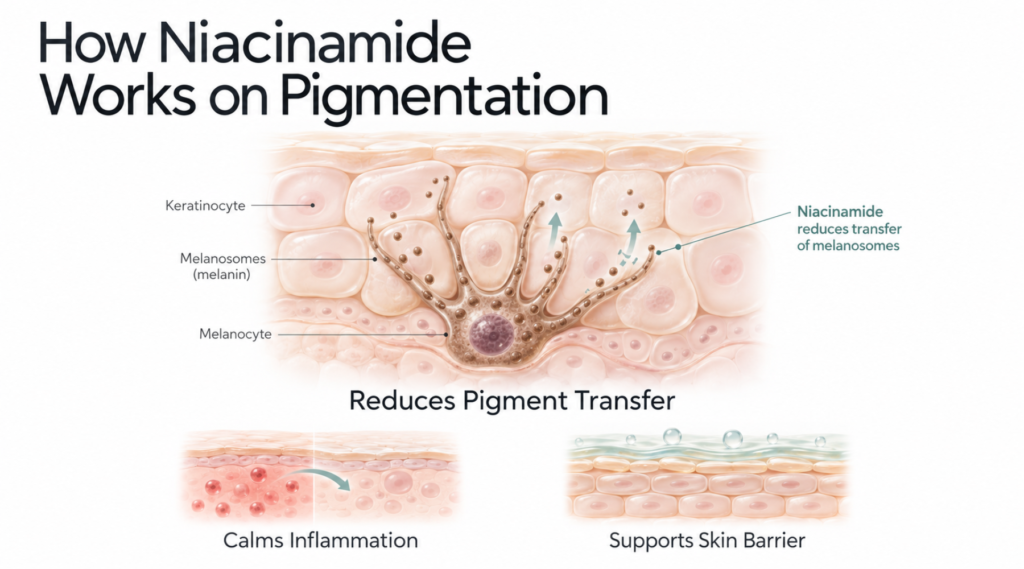
When people ask about niacinamide’s benefits for skin, pigmentation is just one part.
Niacinamide is valuable because it affects multiple skin functions at the same time. It helps strengthen the skin barrier, retains moisture, reduces inflammation, and may control excess oil in some people. It can also improve uneven skin tone.
For those with dark marks, these benefits work together effectively.
It Interferes With Pigment Transfer
Niacinamide affects hyperpigmentation by changing how melanosomes, which carry melanin, are transferred. Melanocytes make melanin, but how it looks depends on its spread among skin cells. Research shows that niacinamide lowers the transfer of melanosomes from melanocytes to keratinocytes. It doesn’t mainly stop melanin production or inhibit tyrosinase. Instead, it influences how pigmentation is delivered. This sets niacinamide apart from other ingredients like azelaic acid, vitamin C, and hydroquinone.
It Helps Keep Inflammation Under Better Control
Inflammation and pigmentation are linked.
When skin gets inflamed from acne, dermatitis, picking, shaving, burns, or harsh treatments, melanocytes produce more pigment. This can lead to darker marks for those prone to post-inflammatory hyperpigmentation, especially after aggressive treatments.
Niacinamide helps reduce inflammation, creating a calmer environment that lowers the chance of more pigment production. While it won’t eliminate all inflammation, it’s a better choice than constantly exfoliating irritated skin.
It Supports the Skin Barrier
A weakened skin barrier loses water and becomes more sensitive to irritants. This is important for pigmentation because irritated skin can lead to more inflammation, which can cause more discolouration afterwards.
Niacinamide can help strengthen the skin barrier and improve lipid production. This makes it beneficial for dry skin when used in a moisturising formula.
While niacinamide doesn’t replace a moisturiser, it works well with ingredients like glycerin, ceramides, fatty acids, and hyaluronic acid.
For someone with pigmentation issues and dry or sensitive skin, using a niacinamide essence moisturiser may be better than a strong serum.
What Kind of Hyperpigmentation Responds Best to Niacinamide?
Not all pigmentation behaves the same way.
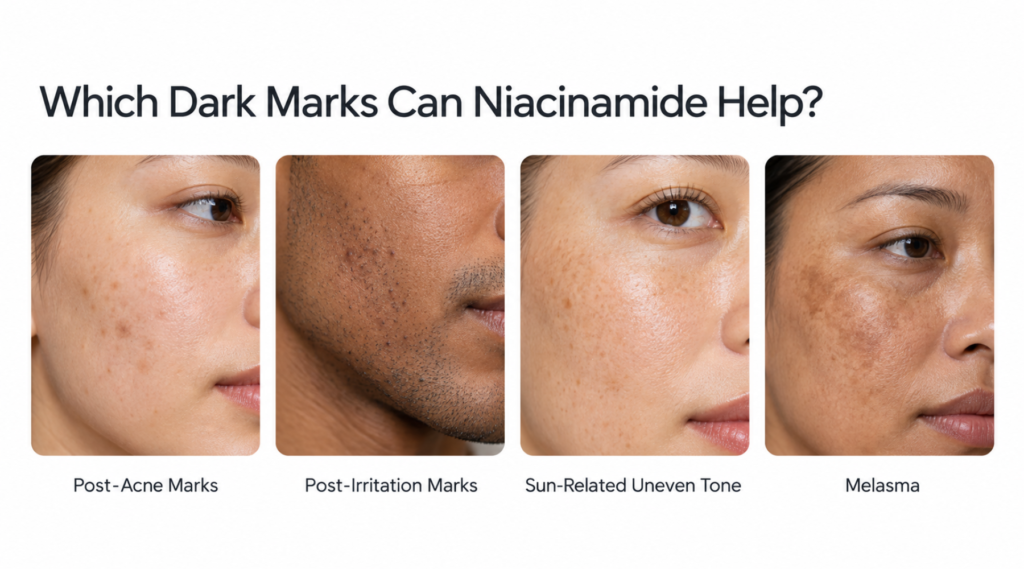
Different types of pigmentation react differently. The colour, depth, cause, and length of a mark can affect how fast topical skincare works.
Post-Acne Dark Marks
Marks that are flat and brown, tan, grey, or darker after acne are usually post-inflammatory hyperpigmentation (PIH). This differs from an acne scar. A dark mark shows a colour change, while a scar indicates a structural change in the skin. Niacinamide can help with the colour, but it cannot fix indented or raised scars. Niacinamide also supports the skin barrier and reduces inflammation, making it beneficial for acne-prone skin. Preventing new inflammation is as important as fading old marks.
Marks Left After Irritation
Irritation from shaving bumps, ingrown hairs, scratching, over-exfoliation, or minor injuries can leave marks. Niacinamide can help improve uneven skin tone after the skin has healed, as it doesn’t rely on harsh exfoliation. However, if the irritation continues, new marks will keep appearing. Treating pigmentation without solving the root cause is ineffective, like mopping a wet floor with a running tap.
Mild Sun-Related Uneven Tone
Niacinamide may help improve uneven skin tones caused by sun exposure. Remember, it is not a substitute for sunscreen. Sunlight can darken existing marks and create new uneven patches. If you have pigmentation concerns, using sunscreen daily is essential, not optional.
Melasma
Niacinamide has been studied for melasma. In a small trial, both 4% niacinamide and 4% hydroquinone showed improvement in pigmentation over eight weeks. 44% of participants on niacinamide reported good improvement compared to 55% on hydroquinone, with fewer side effects for niacinamide. However, niacinamide is not as strong as prescribed treatments for melasma. Melasma is complex and often recurring, influenced by hormones, UV light, and individual factors. Niacinamide can help, but stubborn melasma usually needs a detailed treatment plan from a dermatologist.
Pigmentation That Should Not Be Treated Blindly at Home
Not every brown spot should be treated with a skincare serum. If you notice a new spot that is changing quickly, asymmetrical, bleeding, crusting, itchy, or different from your other marks, seek medical advice. Avoid applying brightening treatments to any unexplained changing lesion just because it looks darker than the surrounding skin.
How to Use Niacinamide for Hyperpigmentation
The best niacinamide routine is easier than what you see on social media.
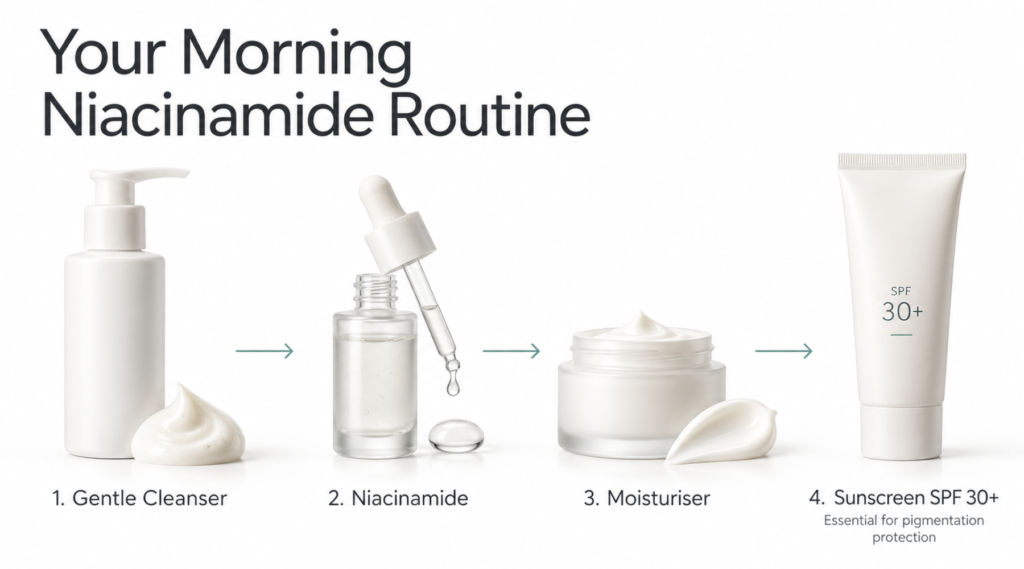
Most people should start by gently cleansing, then applying niacinamide. After that, moisturise based on your skin type and finish with sunscreen during the day.
Where you place niacinamide in your routine depends on its form. A watery serum usually goes on before moisturiser. A moisturising niacinamide essence can act as a hydrating step. If your moisturiser already contains niacinamide, you don’t need an extra niacinamide serum.
Apply It to Clean Skin
Your skin shouldn’t feel squeaky clean. A strong cleanser can strip away too much oil, leading to tightness and irritation before your pigmentation treatment. Choose a cleanser that removes makeup, sunscreen, and excess oil without leaving your skin dry or uncomfortable.
Use a Thin, Even Layer
More niacinamide won’t speed up fading.
Use enough product to cover the area with a thin layer. This could mean a few drops of serum or the amount suggested on the packaging.
Applying many layers of the same product isn’t helpful.
Allow It to Settle, Not “Absorb for Ten Minutes”
Skincare doesn’t need long waits between steps.
Just let the product spread evenly and dry a little before adding the next layer.
If products clump together, a short wait can improve the feel, but waiting too long won’t make niacinamide work better.
Add Moisturiser When Needed
A serum is not the same as a moisturiser.
Dry, sensitive, or retinoid-treated skin needs a good moisturiser with humectants, emollients, and lipids that support the skin barrier.
Skin care lines offer various textures for those who need more moisture than a light serum can give.
Finish the Morning Routine With Sunscreen
This step greatly affects pigmentation results.
Use a broad-spectrum sunscreen with at least SPF 30. Apply enough to all exposed skin.
If you have melasma or pigmentation that darkens easily, a tinted sunscreen with iron oxides can give extra protection from visible light.
Niacinamide may help with excess pigmentation, but sunscreen is key to reducing triggers that cause it to return.
Morning or Night: When Should You Use Niacinamide for Hyperpigmentation?
You can use niacinamide in the morning, at night, or both if your skin handles it well. There’s no rule that limits it to one time of day.
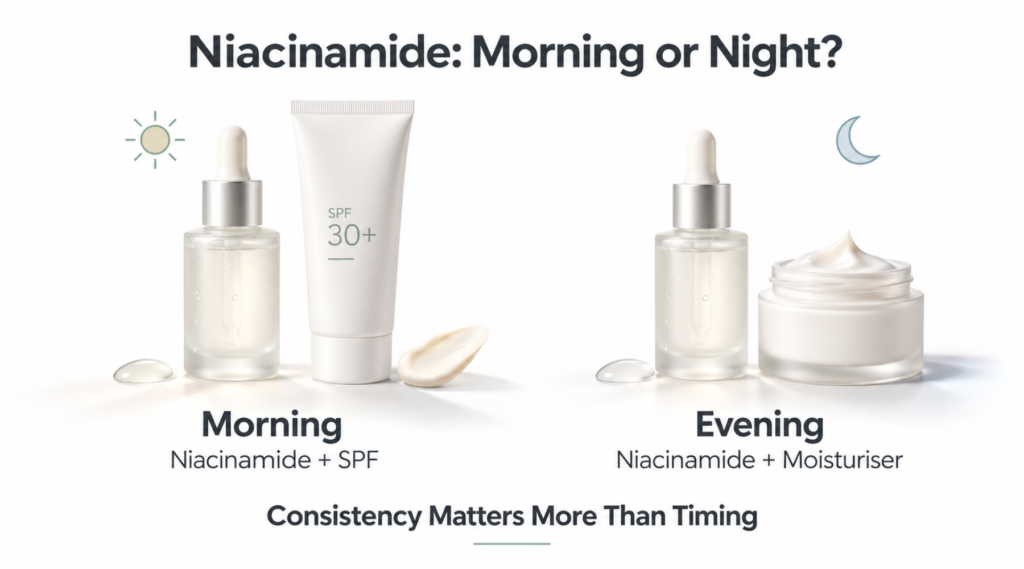
Using it in the morning is great because it sits well under moisturiser and sunscreen. Evening use is fine too, especially for those who want to keep their morning routine simple.
The key is to be consistent. It’s better to use a product comfortably once a day for three months than to try a complicated routine twice a day and stop after ten days because of irritation.
Here’s a simple comparison:
| Timing | Why it can work well | What to consider |
| Morning | Easy to combine with antioxidant skincare and sunscreen | Keep layers lightweight enough that sunscreen applies evenly |
| Evening | Convenient alongside a simple repair-focused routine | Be careful if you also use retinoids, acids or acne treatments |
| Morning and evening | Provides consistent exposure if the formula is gentle | Usually unnecessary for beginners |
| Alternate days | Useful for very sensitive or reactive skin | Results may develop more slowly, but tolerance matters more |
If you are new to niacinamide, starting once daily is usually enough.
The Best Routine Using Niacinamide for Hyperpigmentation
A pigmentation routine should do two things: help fade existing marks and reduce the factors that create new ones. Niacinamide alone cannot achieve both.
A Simple Morning Routine
Start by gently cleansing or rinsing your skin if you don’t need a cleanser in the morning.
Next, apply niacinamide if you’re using a serum. If needed, follow up with moisturiser and then sunscreen.
If you’re also using vitamin C, you can add it to your morning routine as long as the products layer well together.
A stronger 20% vitamin C serum is good for skin used to potent formulae, but a high percentage isn’t always necessary for stubborn pigmentation.
If you prefer single-use doses, you can opt for an ampoule-style vitamin C treatment. However, always consider the complete formula and how your skin responds, not just packaging or percentage.
A Simple Evening Routine
At night, wash your face well to get rid of sunscreen and makeup.
Next, apply niacinamide and then your moisturiser.
If you use a retinoid or azelaic acid, you can either mix them in the same routine or use them on different nights to reduce irritation.
When looking at face serums, compare their textures and ingredients. However, using many serums at once usually doesn’t provide extra benefits.
For pigmentation, it’s better to stick to a simple routine than to use too many products.
How Long Does Niacinamide Take for Hyperpigmentation?
Niacinamide is not a quick fix for dark spots.
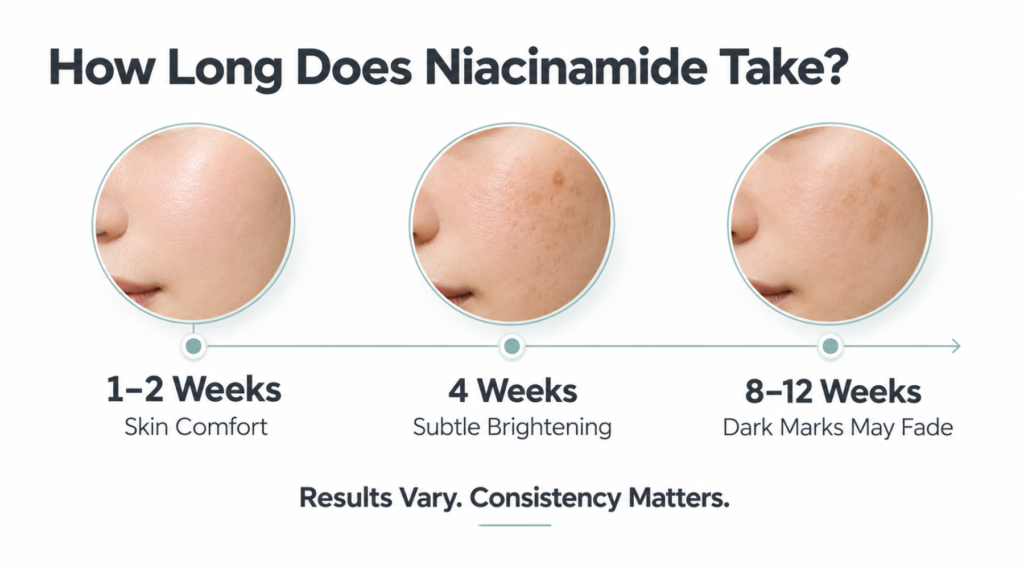
Studies show that you might see some improvement in pigmentation after about four weeks, and results may continue to show up after eight to ten weeks. In daily skincare, it often takes longer.
Changes may start as a brighter, more even complexion.
Individual dark spots can take eight to twelve weeks or even several months to fade significantly, especially if they are old, deeply pigmented, or exposed to sunlight often.
The time it takes also depends on the cause of the spots.
A new post-acne mark may disappear faster than long-lasting melasma or sun damage.
Skin tone plays a role too.
People with medium to deep skin tones may have more stubborn pigmentation after inflammation because their skin cells respond strongly to these signals.
A good timeframe to expect could look like this:
| Time using niacinamide consistently | What you may realistically notice |
| First 1–2 weeks | Improved hydration or comfort may appear before pigment changes |
| Around 4 weeks | Subtle brightening or early reduction in uneven tone may become noticeable |
| 8–12 weeks | Dark marks may look progressively softer or less contrasted |
| 3–6 months | More stubborn pigmentation may show clearer improvement if triggers are controlled |
| No improvement after several months | Reassess the diagnosis, routine, sun protection and treatment approach |
Photographs are better than looking at your face in the mirror.
Take a photo every four weeks in the same light, from the same angle, and without makeup. Checking your face every day makes it hard to see gradual changes.
What Percentage of Niacinamide Is Best for Dark Spots?
Higher concentrations aren’t necessarily better.
Most studies on niacinamide focus on 2% to 5%, with positive results seen at about 4% to 5%.
Cosmetic serums with 10%, 15%, or even 20% niacinamide are now common.
A bigger number on the bottle may seem better, but higher concentration doesn’t always mean better results.
For many, 4% to 5% works well for reducing pigmentation.
Lower concentrations can still help in moisturisers, especially for sensitive skin.
Some users may prefer higher concentrations, but they can cause stinging, redness, or irritation without proving to speed up pigmentation improvement.
If your skin becomes inflamed while trying to reduce hyperpigmentation, it could hinder your progress.
Can Niacinamide Help Hyperpigmentation Safely on Sensitive Skin?
Often, yes.
Niacinamide is good for sensitive skin because it doesn’t use harsh exfoliation. However, not all niacinamide products are gentle. Some may have fragrance, plant extracts, acids, alcohol, or other active ingredients that can affect your skin. If you have sensitive skin, check the entire ingredient list, not just “niacinamide” on the label.
Start by using it once a day or every other day. Don’t use niacinamide, retinoids, acid toners, and vitamin C treatments all in the same week. If you experience burning, redness, itching, swelling, or a rash that looks like eczema, stop using the new product instead of trying to endure it. Skin prone to pigmentation does not benefit from continued inflammation.
Is Niacinamide Good for Dry Skin With Dark Spots?
Yes, the product format is important.
Niacinamide helps improve the skin barrier, making it good for dry skin. However, it’s not enough on its own to moisturise fully. Very dry skin needs ingredients that attract water, soften the skin, and prevent moisture loss.
Ingredients like glycerin, ceramides, petrolatum, squalane, fatty alcohols, shea butter, and hyaluronic acid can be beneficial, depending on the formula.
If dry skin is your main issue, using niacinamide in a hydrating essence or moisturiser can feel better than layering a concentrated serum with another treatment.
Your pigmentation routine should leave your skin feeling normal afterwards. Persistent tightness does not mean the treatment is working more effectively.
Does Niacinamide Help With Acne and Post-Acne Marks?
This is an important point.
When people ask if niacinamide helps with acne, the answer is yes, but it should not replace established treatments for moderate or severe acne. Niacinamide may help acne-prone skin by reducing inflammation, supporting the skin barrier, and possibly lowering oil production. Its main role is supportive.
It can make a skincare routine gentler while other ingredients tackle clogged pores or breakouts. This is important because it can be frustrating when new spots keep appearing while trying to fade post-acne marks.
For someone dealing with both active blemishes and dark spots, azelaic acid is especially helpful as it targets both inflammation and pigmentation in different ways. A 12% azelaic acid cream is one option, and stronger formulations might be available depending on where you live and what a doctor recommends.
To effectively fade dark spots after breakouts, focus on preventing new inflammation, not just on treating old marks.
Can Niacinamide Cause Acne?
Niacinamide is usually not thought of as an ingredient that causes a “purge.” Purging typically happens with ingredients that speed up cell turnover or change how follicles work, bringing microcomedones to the surface. Niacinamide doesn’t generally work this way.
So, why do some people notice new bumps after using it? The issue may come from the entire formula, not just niacinamide. A heavy cream, fragrance, or another ingredient might irritate your skin. Using too many new products at once can also make it hard to figure out what’s causing the problem.
Irritation is another reason. Strong niacinamide products can sting or cause redness in some people. Inflamed skin can appear bumpy and congested, even if it isn’t true acne.
If you start breaking out soon after using a new niacinamide product, simplify your routine. Stop using the new product for a while, let your skin calm down, and see if the bumps improve.
Can You Use Niacinamide With Retinol?
Yes, you can use niacinamide with retinol. This combination helps with uneven skin tone, acne, and signs of ageing.
The two ingredients have different roles. Retinoids speed up cell turnover and support skin health, helping with acne and dark spots over time. Niacinamide helps strengthen the skin’s barrier and improve tone.
The main issue is skin tolerance, not compatibility. If you’re already used to retinol, you can apply niacinamide first and then retinol, or use a niacinamide moisturiser before your retinol.
If you’re new to both, start with one product. Give your skin time to adjust before adding the second one. Starting several products at once can make it hard to know which one causes irritation.
This is especially important for skin prone to dark spots. Retinoid irritation or peeling can worsen dark marks.
Can Niacinamide and Vitamin C Be Used Together?
Yes.
The belief that niacinamide and vitamin C cancel each other out comes from old chemistry ideas and doesn’t reflect today’s cosmetic products. You can use both in your routine if your skin can handle them.
They actually work well together. Vitamin C acts as an antioxidant and affects melanin production, while niacinamide helps reduce melanin transfer and improves skin barrier function. However, using both isn’t necessary.
If you have sensitive skin, it might be better to use niacinamide at night and vitamin C in the morning. This makes your routine easier on your skin.
Stronger vitamin C formulae can sting, especially those with acidic L-ascorbic acid. If vitamin C irritates your skin, adding niacinamide won’t fix that irritation.
A gentler method for using vitamin C for dark spots is often more effective than using several strong products at once.
Niacinamide vs Vitamin C for Hyperpigmentation
There is no one-size-fits-all winner.
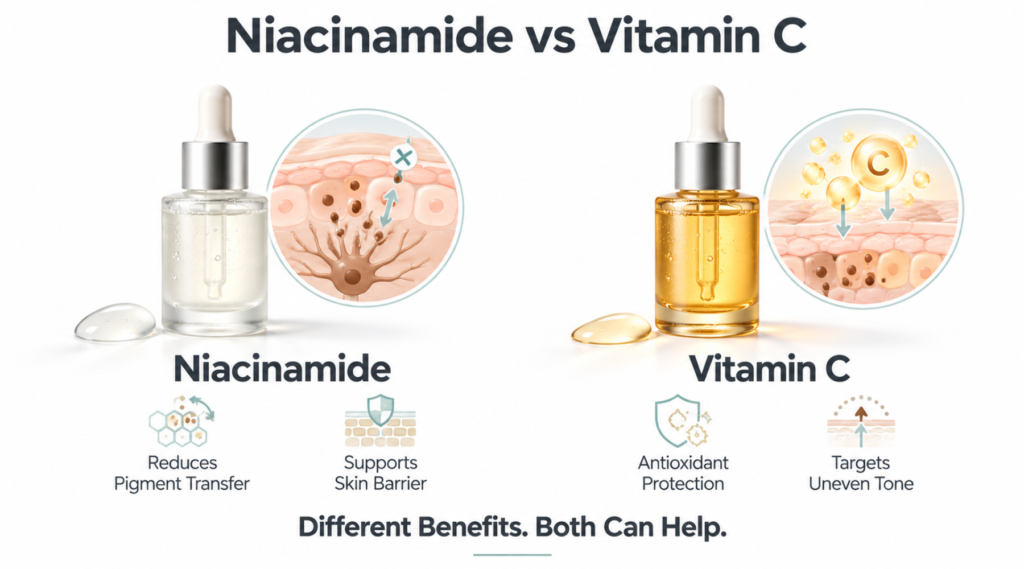
The best option varies based on your skin and the type of pigmentation you want to treat.
| Niacinamide | Vitamin C |
| Helps reduce melanosome transfer | Can influence melanin-producing pathways |
| Supports the skin barrier | Provides strong antioxidant support |
| Often well tolerated by sensitive skin | Acidic forms may sting sensitive skin |
| Useful for post-acne marks and uneven tone | Useful for sun-related dullness and uneven tone |
| Works morning or night | Often popular in morning routines |
| Usually stable and easy to formulate | Some forms, especially L-ascorbic acid, can be unstable |
Many people can use both products.
If you’re new to skincare and have sensitive skin, start with niacinamide.
If you want to combat dullness and signs of ageing, and your skin handles antioxidants well, focus on vitamin C.
You still need to wear sunscreen with both.
Niacinamide vs Azelaic Acid for Post-Acne Hyperpigmentation
Azelaic acid is great for treating both pigmentation and active acne. It reduces inflammation and helps with acne and rosacea.
Niacinamide is gentler and focuses more on supporting the skin barrier. If you have stubborn post-acne marks and your skin can handle it, using both is a good idea.
One option is to use niacinamide in the morning and azelaic acid in the evening. Another way is to apply niacinamide before azelaic acid in the same routine, but make sure they work well together without causing irritation.
You don’t need to use every compatible product at once. When choosing ingredients for hyperpigmentation, think about why the pigmentation happened, not just what’s popular.
Niacinamide and Exfoliating Acids: Do You Need Both?
Not necessarily. Glycolic, lactic, and salicylic acids can help with certain skin issues, but you don’t need to exfoliate for niacinamide to be effective. Many people think they must scrub or peel away dark marks, which can lead to overly harsh treatments.
Alpha hydroxy acids like glycolic acid help to exfoliate and improve uneven texture. Salicylic acid is better for clogged pores and acne. However, too much exfoliation can irritate the skin.
If you already use niacinamide, a retinoid, vitamin C, and an acne treatment, adding a strong acid after three weeks won’t likely improve your routine. Give your current treatments enough time to work, as skin pigmentation changes slowly.
Why Sunscreen Matters More Than Adding Another Brightening Serum
A pigmentation routine needs good sun protection to be effective. UV rays can darken existing marks and create new ones, even during treatment. So, sunscreen is essential, not just for preventing sunburn. For those treating dark spots, sunscreen helps maintain progress. Use a broad-spectrum SPF 30 or higher every day. Apply enough to cover all exposed skin, and reapply after sweating, swimming, or being outdoors for a long time.
Those prone to melasma may benefit from tinted sunscreen with iron oxides, as visible light can worsen pigmentation. Niacinamide doesn’t make skin overly sensitive to sunlight, so it’s important to wear sunscreen. Light itself triggers pigmentation, making sunscreen necessary.
Common Mistakes That Slow Niacinamide Results
The biggest mistake is expecting a pigmentation serum to solve all your skin problems.
Some habits can hurt your progress: using higher niacinamide percentages when you don’t see results in two weeks, using multiple exfoliating products at once, picking at acne or peeling skin, skipping sunscreen on cloudy days, frequently changing products, using brightening ingredients on irritated skin, ignoring the cause of recurring pigmentation, and thinking every dark spot is just hyperpigmentation.
A key skill in skincare is knowing when to stop adding new products. If your routine includes niacinamide, sunscreen, and one targeted treatment, sticking to it might be what you need.
More Niacinamide Does Not Mean Faster Fading
The popularity of high-percentage serums makes people think that a 10% concentration is standard and anything lower is weak. However, research shows otherwise. Studies have found that concentrations of 4% to 5% can be effective.
A serum with 5% niacinamide, especially if used regularly, can work better than a 20% serum that irritates. There’s no need to use niacinamide multiple times in your routine.
Check the ingredient lists of your cleanser, toner, serum, moisturiser, and sunscreen. Niacinamide is in many products. Using it in four layers won’t necessarily make your pigmentation fade faster.
What to Do if Niacinamide Stings
You might feel a mild sensation from a complex formula, but continuous burning is not normal.
First, stop using additional active ingredients.
If your skin feels hot, tight, itchy, or looks red, rinse the product off and switch to a simple moisturiser.
Once your skin feels normal again, think about what happened. The niacinamide concentration might have been too high, or the product may have irritating ingredients. You might have used it on freshly exfoliated skin, or your skin barrier could have been weak beforehand.
Don’t keep testing a product on irritated skin.
If you notice swelling, blisters, severe pain, or a large rash, seek medical help.
Does Diet or Lifestyle Affect Hyperpigmentation?
No specific food helps a niacinamide serum fade pigmentation faster. Instead, lifestyle choices play a more significant role.
Sun exposure is a key factor. Spending long periods outside without protection can worsen pigmentation. Picking at acne is another major cause.
Sleep, stress, and diet can affect acne for some people, which may lead to more pigmentation. Hormonal changes can also impact melasma.
Friction is important too. Tight clothing, rubbing, shaving irritation, and frequent scratching can continue pigmentation in areas like underarms, thighs, neck, and body folds.
The best approach is not to bleach these areas more aggressively but to first address the triggers.
When Skincare Is Not Enough for Hyperpigmentation
Niacinamide is a cosmetic ingredient, not a substitute for dermatology.
Professional care is important when pigmentation is severe, worsening quickly, long-lasting, or resistant to a good routine.
A dermatologist may use prescription treatments like hydroquinone, retinoids, azelaic acid, combination creams, chemical peels, lasers, or other methods based on the diagnosis.
Professional treatments aren’t just stronger versions of home products, and they come with risks.
Peels and lasers can make pigmentation worse if they cause too much inflammation, especially in skin types that are prone to post-inflammatory hyperpigmentation (PIH). The choice of device, treatment settings, and practitioner skills are very important.
Melasma needs special care because aggressive treatments can provide temporary improvement but may lead to a return of the issue.
If you’ve used sunscreen and proper topical treatments for several months without seeing improvement, it’s often more helpful to rethink the diagnosis rather than simply buying another serum.
How Niacinamide Fits Into a Long-Term Dark-Spot Routine
Pigmentation management works best when you think beyond just one miracle ingredient.
Different steps have specific roles.
Sunscreen reduces damage from repeated sun exposure.
Niacinamide helps with pigment transfer and strengthens the skin’s barrier.
Vitamin C provides antioxidant support and influences pigment formation.
Azelaic acid is helpful for inflammation, acne, and pigmentation issues together.
Retinoids can improve acne, aging, and uneven pigmentation, but they need to be introduced carefully.
moisturiser keeps the skin barrier stable, making treatments easier to tolerate.
A strong routine focuses on the causes of pigmentation without causing further inflammation, not just on using many active ingredients.
Questions People Often Have About Niacinamide and Dark Spots
Is niacinamide good for hyperpigmentation?
Yes. Niacinamide can help reduce uneven skin tone, especially superficial hyperpigmentation and post-inflammatory marks. Research shows it works by decreasing the transfer of melanosomes from melanocytes to nearby skin cells. It acts slowly, so it should be paired with daily sun protection.
How do you use niacinamide for hyperpigmentation?
Apply a serum or treatment containing niacinamide after cleansing and before using a thicker moisturiser. During the day, finish with broad-spectrum sunscreen. Many beginners find once-daily use enough. If your skin handles it well, you can use it twice a day.
How long does niacinamide take for hyperpigmentation?
You may start to see early changes in about four weeks. However, noticeable fading usually takes longer — around eight to twelve weeks is better for seeing real improvement. Deeper pigmentation may take several months to improve. Studies have shown visible results in four to ten weeks.
Can niacinamide completely remove dark spots?
Not always. It can reduce some dark marks, but the results vary based on the cause and depth of the spots. Issues like persistent melasma or deep pigmentation may need additional treatments. Aim for gradual improvement rather than expecting every mark to vanish completely.
Can niacinamide help with dark spots safely?
Most people can safely use niacinamide on their skin if they use it correctly. Start with a low dose and frequency. Stop if you experience burning, itching, or swelling. Higher doses are not always safer or more effective.
Should I use 5% or 10% niacinamide for dark spots?
A 4% to 5% concentration has solid evidence for reducing pigmentation and is a good choice for many. A 10% option might also work, but it isn’t guaranteed to be twice as effective. If you have sensitive skin, focus more on product quality rather than percentage.
Can I use niacinamide every day?
Yes, most people can use niacinamide daily. If you’re new to it, start with once a day. You can use it twice daily, but it’s not necessary for good results.
Is niacinamide better in the morning or at night?
Neither time is better. Niacinamide can be effective in both morning and evening routines. Using it in the morning works well with sunscreen, while evening use fits nicely with moisturisers or treatments. Choose a time that helps you stay consistent.
Can I use niacinamide with retinol for hyperpigmentation?
Yes, you can use niacinamide and retinol together. Niacinamide helps protect your skin barrier, while retinol targets issues like acne and dark spots. If you’re new to retinol, start with it alone to spot any irritation.
Can you use niacinamide with vitamin C?
Yes, you can usually use niacinamide and vitamin C together. However, if you have sensitive skin, consider using vitamin C in the morning and niacinamide at night for a gentler routine.
Does niacinamide help with acne and dark marks?
Yes, niacinamide can help acne-prone skin by reducing inflammation and supporting the skin barrier. However, it may not be enough for active acne. If new spots keep appearing, you might need an acne treatment along with niacinamide. To reduce dark marks from acne, it’s crucial to prevent new blemishes.
Can niacinamide cause acne or purging?
Niacinamide usually doesn’t cause purging. If you notice new bumps after starting a product, check for irritation or other ingredients. If the reaction continues, pause the product instead of assuming it’s a necessary phase of worsening acne.
Is niacinamide good for dry skin with dark spots?
Yes. Niacinamide can help strengthen the skin barrier, but dry skin often needs extra moisturiser. A moisturising niacinamide formula is usually more comfortable than a watery serum paired with other treatments.
Can niacinamide worsen dark spots?
Niacinamide aims to improve uneven pigmentation, but products that irritate your skin can make dark spots worse. This is especially true for those who get dark marks easily after skin irritation. If a niacinamide product causes redness or burning, stop using it.
Is niacinamide enough for melasma?
Generally, no. Niacinamide may help, and some studies show it can reduce pigmentation, but melasma is complex and often returns. It’s important to use sunscreen consistently, and stubborn cases might need dermatological treatment.
Making Niacinamide for Hyperpigmentation Work in Real Life
Niacinamide is effective for hyperpigmentation because it evens out skin tone and keeps the skin comfortable for long-term use. This balance is important.
Skin prone to pigmentation can get worse with harsh treatments like acids and peels. These can cause more inflammation and increase pigmentation, turning a solution into a problem.
A niacinamide routine is easier to manage. Choose a gentle formula, use it regularly, protect your skin from the sun, and address any new marks. Only add vitamin C, azelaic acid, or a retinoid if your skin can handle it, and there’s a clear need.
Expect slow improvements instead of quick fixes. This calm approach can lead to more even skin over time without harming the skin’s natural barrier.