




Blog
How Do Acne Patches Work? Benefits, Timing and Skin Tips

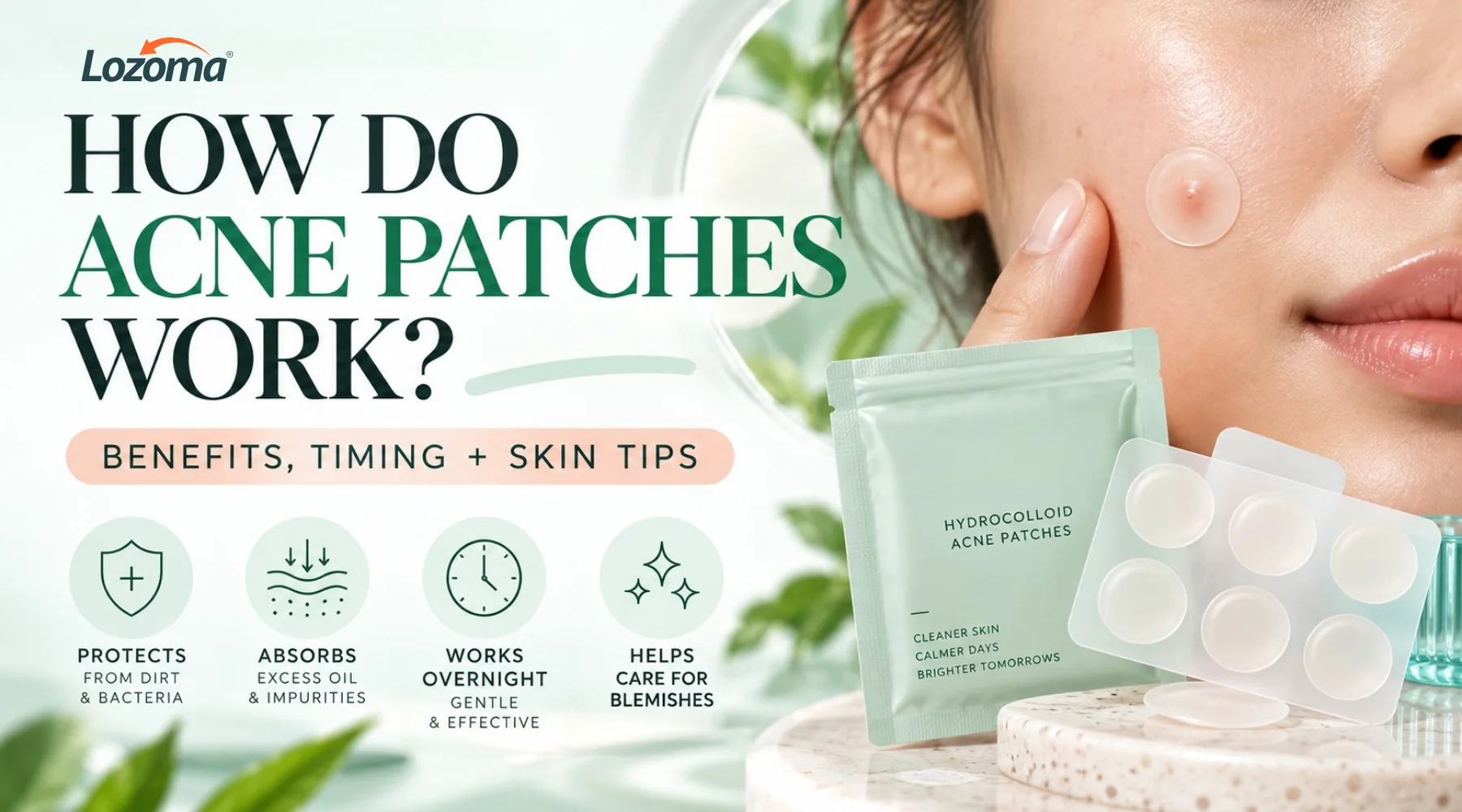
Acne patches are small clear stickers you place on blemishes, usually overnight. They can actually help by absorbing fluid, protecting skin, and keeping you from picking at pimples.
Patches work well on whiteheads but not on deeper, painful bumps. Most patches are made from hydrocolloid, which absorbs moisture. They can’t reach deep into a closed pore to remove the cause of acne.
While patches can help heal individual blemishes, they don’t fix all the issues that cause acne, like excess oil, skin cell buildup, inflammation, and clogged pores.
When used with clear expectations, patches are a simple addition to an acne treatment routine.
How Acne Patches Work Once You Put Them on a Spot
Most acne patches are small hydrocolloid dressings. Hydrocolloid materials help absorb fluid and keep a moist environment around damaged skin. When you place a patch on an acne spot with fluid, it starts to work right away.
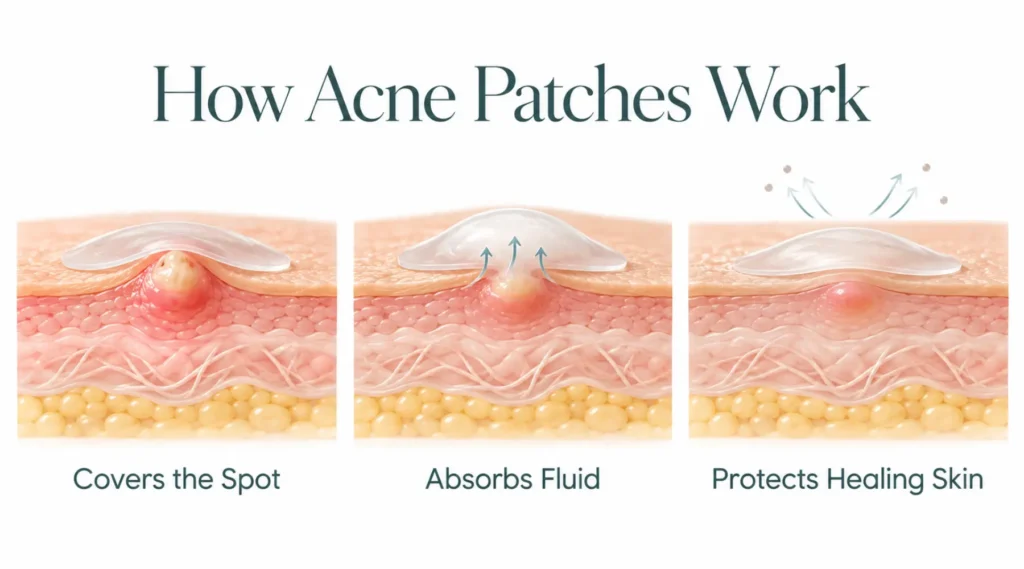
Here’s how it works:
- The patch covers the blemish.
- Hydrocolloid absorbs fluid from the pimple.
- The patch swells as it takes in moisture.
- It protects the area from fingers, makeup, dirt, and friction.
- The covered spot can heal without being disturbed.
The American Academy of Dermatology says that hydrocolloid patches can protect pimples and help them heal, but deeper acne may need more treatment.
There’s a common misconception that the patch “pulls the entire pimple out.” In reality, a pimple is not just a thing under the skin waiting to be removed. Acne forms inside hair follicles due to oil, dead skin cells, and inflammation. A patch cannot extract a blockage from deep within the skin.
What it can do is manage fluid that is near the surface.
What Is the White Material You See Inside an Acne Patch?
Removing a hydrocolloid patch can be satisfying because you see a white area where it was. However, that doesn’t mean the patch has pulled out “toxins.” The white colour usually comes from the patch swelling as it absorbs moisture, which can include fluid from inflammation, wound discharge, or pus from a pimple. The patch also looks different when it absorbs water.
So, the white circle shows that the patch has soaked up moisture, but its size doesn’t indicate how much “infection” has been cleared.
The Protective Barrier Is Just as Important as the Absorption
Absorption often gets the spotlight, but the physical protection of acne patches is very helpful.
Picking at a pimple can damage the skin, cause more swelling, and create a bigger wound. This can lead to longer-lasting redness, dark spots, and even scarring if the damage is serious.
Using a patch makes it harder to touch your skin without thinking. It also lowers friction from masks, clothes, pillows, or your hands. If you tend to touch a bump to see if it has changed, a patch can help break that habit.
That’s why a patch can still be useful, even if it doesn’t flatten a pimple quickly.
Which Types of Acne Actually Respond to Pimple Patches?
The success of a patch relies more on the type and stage of the blemish than on its price. A surface spot with available fluid is a better target than a closed, deep lesion.
| Type of blemish | How useful is a standard hydrocolloid patch? | Why |
| Whitehead | Very useful | Fluid is close to the surface and can be absorbed |
| Pustule | Useful | Hydrocolloid can absorb discharge once it reaches the surface |
| Recently opened spot | Often useful | Protects the area and absorbs moisture |
| Picked pimple | Useful if only superficially damaged | Provides protection while the surface settles |
| Small inflamed papule | Limited | May protect it, but there may be little fluid to absorb |
| Deep cyst-like spot | Usually limited | Inflammation is too deep for ordinary hydrocolloid to reach |
| Nodule | Usually limited | The lesion is deep within the skin |
| Blackhead | Not very useful | There is little fluid for the patch to absorb |
| Closed comedone | Usually limited | The blockage is trapped beneath intact skin |
Predicting if a patch is worth using is simple.
If you see a white or yellow centre, the patch is usually good for the task. If you only feel a painful lump under normal or red skin, a regular hydrocolloid sticker probably won’t create the noticeable white centre people expect from pimple patches.
Whiteheads Are the Classic Acne-Patch Target
A mature whitehead often has fluid near the surface that a hydrocolloid patch can absorb.
Apply the patch to clean, dry skin and leave it alone. After a few hours, the centre might look cloudy or white, and the spot may become flatter.
This doesn’t mean the blemish is gone; the follicle can still be inflamed underneath.
Avoid squeezing what’s left. If the area still produces fluid, it’s smarter to use a fresh patch instead of trying to squeeze it out.
Patches Can Be Particularly Helpful After a Spot Opens
Sometimes, a whitehead pops on its own while you’re cleansing. Other times, even if you avoid picking, damage may already occur.
At this point, your focus shifts. You’re not trying to squeeze out a pimple anymore; you’re caring for a small damaged spot on your skin.
Gently clean the area, pat it dry, and use a plain hydrocolloid patch if needed. Avoid putting strong acids or irritating products on raw skin.
The patch helps keep the area safe from touching as it heals.
Deep Under-the-Skin Pimples Are Different
A painful spot without a visible head is not a good target for a hydrocolloid patch. There’s not much fluid for it to absorb. While the patch can keep you from touching the area, it won’t bring a deep lesion to the surface quickly. For deep, painful acne, dermatologists usually suggest treatments based on acne biology instead of just using a dressing. If you have persistent or multiple deep lesions, it’s best to see a professional, especially if they leave scars.
Standard Hydrocolloid, Medicated and Microneedle Patches Are Not the Same Thing
“Pimple patch” now refers to various types of products. Knowing the differences can help you select the right one for each spot instead of assuming all patches work the same.
Plain Hydrocolloid Patches
Their main jobs are to soak up fluid, protect blemishes, and prevent touching. A basic product like Acne Patch The Original works well for visible whiteheads when you don’t need extra ingredients. This patch is designed for individual blemishes.
Plain patches are also better for sensitive skin. With fewer ingredients, there are fewer chances of a reaction.
The Acne Pimple Master Patch is another targeted hydrocolloid option available in different sizes. It’s helpful because the adhesive should cover the area around the blemish, not just the centre.
Thicker Hydrocolloid Patches
Some patches have a thicker absorbent layer. A thicker acne patch works well for large, fluid-filled spots, while a thin patch is better for discreet wear during the day. Thickness doesn’t mean the patch can treat deeper cysts. It mainly affects how much fluid the patch can hold and how noticeable it feels on the skin.
Medicated Patches
Some acne patches have a covering and ingredients like salicylic acid, niacinamide, or soothing agents.
These patches are not always stronger or better than others.
An ingredient-filled patch might help one specific pimple, but it can irritate sensitive skin since it stays in close contact with that area.
If you use many active treatments already, a simple hydrocolloid patch is usually easier to use.
Microneedle or Microdart Patches
Microneedle patches have tiny dissolving points that deliver ingredients to the skin’s surface. This sets them apart from regular hydrocolloid patches. For example, Microneedles Acne Pimple Patches use salicylic acid and niacinamide. These patches target early or stubborn blemishes, not just fluid-filled whiteheads.
However, they have limits. Cosmetic microneedle patches are not the same as professional microneedling, prescription acne treatments, or cyst injections. If you have deep, painful, or recurring acne, switching patch types might not solve the problem.
Larger Face-Shaped Patches
Individual dots work well for one or two visible spots. Larger shapes are better for several close blemishes.
Pimple patches for the whole face cover bigger areas like the forehead, cheeks, nose, or chin. Face pimple patches have larger sections for specific facial areas.
However, larger patches won’t prevent acne. If your forehead keeps developing clogged pores, you need to tackle the root cause of the blockages.
How Acne Patches Work for Beginners: Skincare Tips That Make a Real Difference
Beginners often worry about how long to wear a patch, but getting ready is usually more important.

Hydrocolloid patches need to stick to clean skin, so avoid water, oil, moisturisers, sunscreen, and serums before using.
Step 1: Wash Your Hands
Always wash your hands before touching your blemish or patch. It’s useless to cover a spot after touching it with dirty fingers.
Step 2: Clean The Area Gently
Use your usual mild cleanser. Don’t scrub the pimple; you want to clean the area. If there’s makeup or sunscreen, make sure to remove all greasy residue.
Step 3: Let The Skin Dry Completely
Dry skin helps hydrocolloid patches stick better. Even damp toner or serum can reduce wear time. After cleansing, pat your skin dry and wait for any remaining moisture to evaporate.
Step 4: Choose a Patch Slightly Larger Than the Spot
Use a patch that is a bit larger than the blemish. The centre should cover the spot, while the edges need to stick to healthy skin to create a good seal. If it’s the same size as the pimple, movement can loosen it.
Step 5: Press It Down Once
Place the patch carefully and press down around the edges. Avoid lifting it multiple times, as this weakens the adhesive and can lead to touching the blemish.
Step 6: Leave It Alone
Don’t keep checking the patch. Give it time to work. Most patches are meant to stay on for several hours or overnight, so follow the instructions on the package.
Step 7: Remove It Gently
Take off the patch slowly. Lift one edge and peel it across the skin. If the area still looks open or is oozing, clean it gently, let it dry, and put on a new patch if needed.
When Should You Apply an Acne Patch in Your Skincare Routine?
For hydrocolloid patches, apply them right after cleaning and drying your skin, but before any skincare products. This ensures the adhesive sticks well to clean skin.
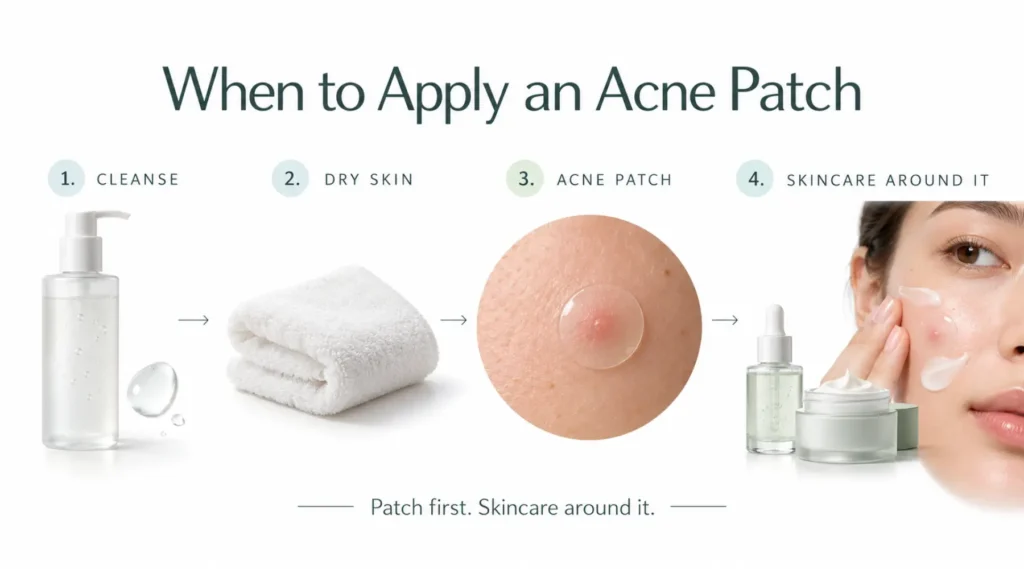
A practical evening routine is:
- Cleanse your face.
- Dry your skin completely.
- Apply the patch.
- Use serum or treatment on the rest of your face.
- moisturise around the patch.
- Leave the patch undisturbed.
Avoid putting moisturiser under the patch unless the instructions say it’s okay. Oils and creams can prevent the patch from sticking and affect how it absorbs.
Should the Patch Go Before or After Serum?
Before Application:
Keep the target area clean and dry when using a hydrocolloid patch on a whitehead. Apply niacinamide, hydrating serum, or other skincare around the patch, not underneath it.
Should an Acne Patch Go Before or After Moisturiser?
First, apply the spot treatment, then moisturise the rest of your skin. moisturiser is great for acne-prone skin, but it doesn’t work well with adhesive.
What About Sunscreen?
For daytime use, put the patch on clean, dry skin first. Next, apply sunscreen around it. Don’t skip sun protection for the rest of your face just because you’re wearing pimple patches. UV exposure can make post-inflammatory marks more noticeable.
Is It Better to Wear Acne Patches During the Day or Overnight?
Both options work well.
Using a patch at night is convenient because it stays in place while you sleep for several hours. It’s especially helpful if you:
- Touch your face without knowing it
- Pick at spots while looking in the mirror
- Want the patch on for six hours or more without interruption
- Don’t want it to show during the day
- Use other products that could affect how well it sticks
Daytime patches also have benefits. They can protect a spot from friction from masks, makeup, hands, or the environment. Thin, clear patches are particularly useful for this.
What matters most is not whether it’s day or night, but that the patch has enough uninterrupted time on the blemish.
How Long Should You Leave a Pimple Patch On?
There is no standard number for patch thickness; adhesive and materials vary.
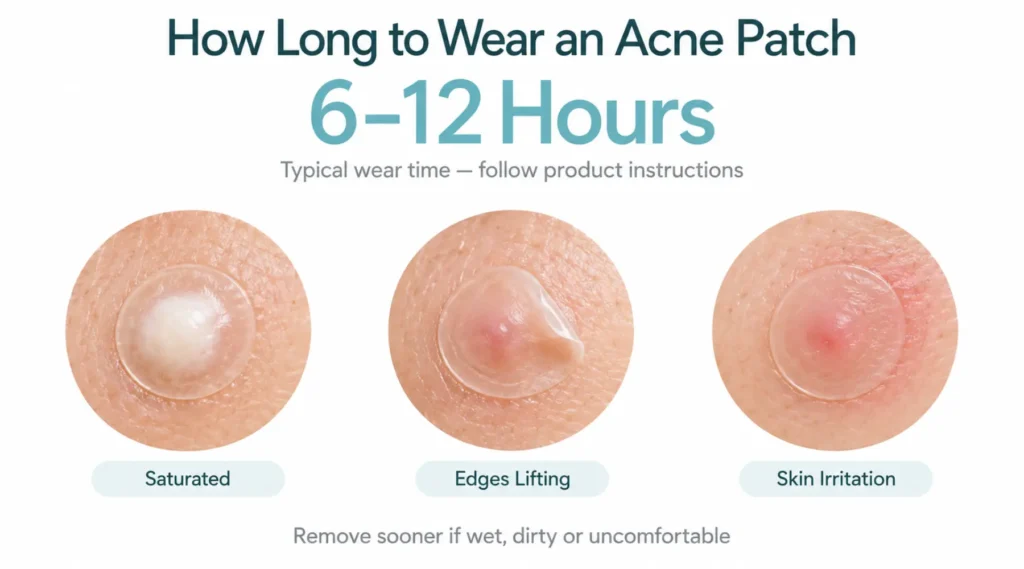
Most hydrocolloid patches are worn for about six to twelve hours, often overnight. Always follow the instructions that come with your product.
Remove or replace the patch if:
- it is visibly soaked;
- the edges are lifting;
- water is trapped underneath;
- it is dirty;
- the area starts itching or burning;
- you notice redness outside the blemish.
A patch that is already saturated won’t work better if you keep it on longer.
Can You Leave a Pimple Patch on for 24 Hours?
Sometimes a patch may stay on for a long time, but that doesn’t mean it’s better.
Your skin sweats and produces oil every day. The patch also moves, gets washed, and faces different environments.
It’s usually smarter to change an old, worn-out patch for a fresh one instead of trying to keep one on forever.
Can You Use Another Patch Immediately?
Yes, you can apply a new patch if the blemish is still leaking fluid and your skin can handle the adhesive.
Gently clean and dry the area before applying the patch.
If the blemish is closed and no fluid is left, covering it won’t help much.
Instead, focus on moisturising gently and preventing another blockage.
How Acne Patches Work for Sensitive Skin
Sensitive skin can often use hydrocolloid patches, but “gentle” doesn’t mean no reactions. The adhesive can irritate some people, and medicated patches might have ingredients your skin doesn’t like.
For sensitive skin, start with the simplest patch without many extra ingredients. Watch for:
- Itching under the patch
- Clearly defined redness in the shape of the patch
- Burning instead of mild pressure
- Skin peeling when you remove the patch
- Swelling beyond the original pimple
- Ongoing irritation with repeated use
If you notice these signs, stop using the product. Don’t keep applying a new patch on irritated skin just because the pimple remains.
Remove Patches Slowly If You Use Retinoids
Retinoids can make your skin more sensitive or flaky, especially when you first start using them.
Quickly pulling off adhesive from peeling skin can remove loose cells and increase irritation.
Gently hold the skin around the patch and peel it off slowly instead of ripping it off.
Be careful if you have recently used strong acids to exfoliate your skin.
What Acne Patches Can Realistically Do
Acne patches are helpful because they have a specific purpose. They can:
- Absorb fluid from pimples
- Reduce touching
- Protect damaged skin
- Lower friction
- Contain discharge from an open spot
- Make picking less tempting
- Offer a clean way to handle whiteheads
- Fit easily into your routine
They can also make a pimple look flatter after a few hours. These benefits are valuable, and the patches don’t need any hype to be effective.
What Acne Patches Cannot Do
A hydrocolloid patch can’t stop every breakout. It doesn’t control oil production permanently, normalise hormones, or clear out all clogged pores. It can’t treat deep scars and shouldn’t replace medical treatment for ongoing acne.
This is why some people think acne patches have “stopped working.” The patches may still be effective, but new pimples can form elsewhere.
If this sounds familiar, consider the causes of your acne instead of just buying stronger patches. Acne develops within the follicle, so prevention often needs a broader approach.
It’s more important to learn how to manage acne without harming your skin barrier than to cover every new bump.
Does Niacinamide Help With Acne Alongside Pimple Patches?
Niacinamide is helpful for acne-prone skin. It’s a type of vitamin B3 that supports the skin barrier and improves redness, uneven tone, and excess oil.
However, niacinamide is not a cure for acne. It can help as part of a good acne routine, especially if your skin is oily, irritated, or has marks.
You can use niacinamide on your face while a hydrocolloid patch covers a specific whitehead.
There’s usually no benefit in putting niacinamide serum under a standard hydrocolloid patch, as it can make the patch stick less.
Some medicated or microneedle patches already have niacinamide, so check the product before adding more active ingredients to the area.
Does Retinol Help With Acne, and Can You Still Use Patches?
Retinoids are great for treating comedonal acne because they change how skin cells act in the follicles.
Cosmetic retinol is part of the retinoid family but is different from stronger acne treatments like adapalene or tretinoin.
So, does retinol help with acne? It can improve mild congestion and help the skin renew itself, but those with ongoing acne may need a stronger retinoid or another proven treatment.
Retinoids and patches have different roles. Retinoids help prevent future blockages in acne-prone skin, while hydrocolloid patches treat existing blemishes.
They can be used together in a skincare routine. If you cover a whitehead with a patch, avoid using retinol on the skin directly underneath it that night. Also, don’t apply retinol to freshly picked, raw, or broken skin.
Is Glycolic Acid Good for Acne When You Are Using Patches?
Glycolic acid is an alpha-hydroxy acid that helps exfoliate the skin’s surface. It can improve rough texture, dullness, and some post-acne marks, but it’s not the best choice for all types of acne.
If you’re asking if glycolic acid is good for acne, think about what your skin needs. It may work well for:
- Mild congestion
- Rough texture
- Dull skin after breakouts
- Uneven skin tone
- Light post-acne marks
However, it’s not suitable for skin that is:
- Raw from picking
- Irritated by retinoids
- Burning or peeling
- Covered in inflamed spots
- Highly reactive
So, can glycolic acid help with acne? Sometimes, but don’t use it to speed up a pimple’s healing. Avoid applying it directly to an open blemish and sealing it with a hydrocolloid bandage, unless the product is specifically designed for that purpose. Occlusion can change how a product feels on your skin.
Why Salicylic Acid and Acne Patches Have Different Jobs
Salicylic acid dissolves in oil, making it great for treating oily, clogged pores. This sets it apart from hydrocolloid products. Salicylic acid can help clear breakouts, while a basic patch cannot.
Hydrocolloid patches protect picked or fluid-filled spots better than salicylic acid serums. You don’t have to pick one; use both based on what they do best.
For example:
- Use salicylic acid for oily, clogged pores if your skin can handle it.
- Apply a hydrocolloid patch for a single whitehead.
- moisturise to keep your skin comfortable.
- Apply sunscreen every morning.
- Adjust your routine if you notice irritation.
This targeted approach works better than trying to make every product battle acne at the same time.
Why Acne Can Keep Coming Back Even When Patches Work
Imagine you put a patch on a whitehead on Monday. By Tuesday morning, it looks flatter. On Thursday, another spot appears. This doesn’t mean the first patch didn’t work; it just means acne is still forming.
If you often find new blemishes every few days, ask yourself why the acne keeps coming back.
Recurring acne may be caused by:
- Pores getting clogged
- Hormonal changes
- Too much oil production
- Skincare or hair products that cause acne
- Sweat and friction
- Stopping preventive treatments too early
- Picking at your skin
- Irritation from harsh routines
- Inconsistent treatment
Patches are for dealing with acne that’s already there. Preventive care is a different approach.
Hormonal Breakouts Need More Than Stickers
If you often get painful spots on your chin or jaw during your menstrual cycle, switching hydrocolloid brands may not help.
It’s important to recognise the difference between hormonal acne and other breakouts, especially when the acne is deep, comes in cycles, or appears in the same places on your lower face.
A patch can prevent you from squeezing a hormonal blemish, but it won’t change the hormones that cause oil production.
If you have ongoing hormonal acne, especially if it’s painful or leaves scars, you may need to see a GP or dermatologist.
How to Get Rid of Forehead Acne When Patches Only Fix Individual Spots
Forehead acne shows why spot patches aren’t always effective. You might flatten one whitehead, only to get three new ones near your hairline days later.
To tackle forehead acne, consider your surroundings.
Common causes include:
- Oily hair touching the skin
- Leave-in conditioners or styling products
- Hair oils and pomades
- Hats, helmets, and headbands
- Sweating
- Heavy sunscreen or moisturisers
- Frequent touching
- Closed comedones needing prevention
Use a patch for an occasional whitehead if it helps. But if your whole forehead is bumpy, treat the area instead of covering each pore. Salicylic acid, azelaic acid, or a suitable retinoid might work better based on your skin type and lesions.
Also, remember not every bump on your forehead is acne. If you have itchy, uniform bumps that don’t improve, consult a professional.
How to Get Rid of Bacne When a Small Patch Is Not Practical
Back acne is a different issue.
The back has a large area, making it hard to reach some spots, and clothes can cause friction. People often ask how to treat bacne, but small facial patches are rarely enough.
Better habits for body acne include:
- Showering after sweating
- Changing out of damp workout clothes
- Wearing breathable fabrics
- Rinsing conditioner away from the back
- Avoiding heavy body oils on problem areas
- Washing sports tops regularly
- Using a body wash made for acne
- Skipping abrasive scrubs
A hydrocolloid patch can help with one large pimple if it sticks well. However, it isn’t effective for widespread breakouts. Severe or scarring back acne needs professional treatment, as it can cause significant scarring.
The Best Routine for Making Acne Patches Work Properly
The Best Patch Routine Made Simple
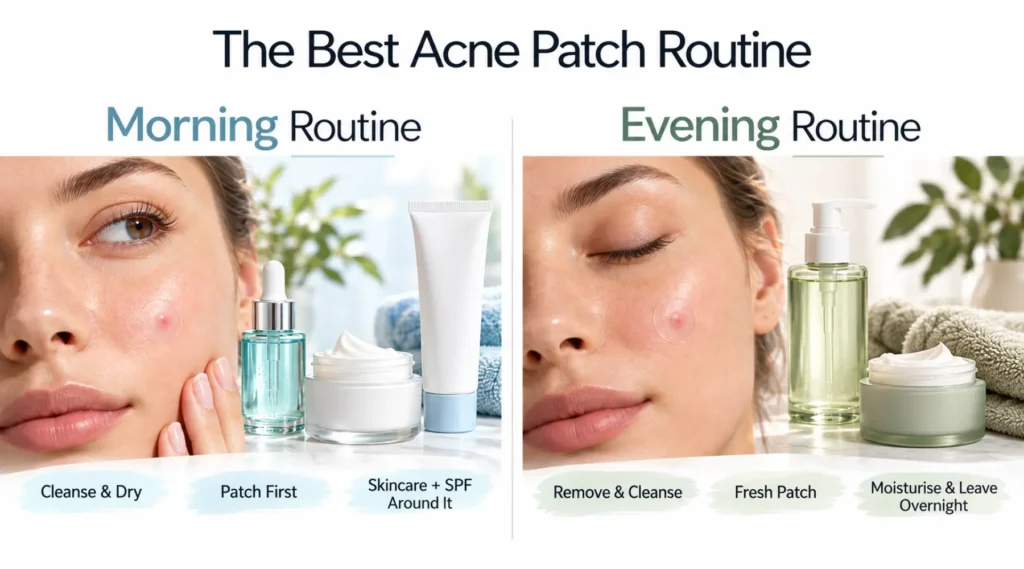
Morning
- Gently cleanse your face if necessary.
- If you have a whitehead to protect, dry the area and apply the patch first.
- Then apply serum around it.
- Use a light moisturiser.
- Finish with sunscreen on exposed skin, being careful around the edges.
Evening
- Thoroughly remove makeup and sunscreen.
- Cleanse without scrubbing.
- Pat your face dry.
- Put a new hydrocolloid patch on any pimples.
- Use your usual acne treatment on other areas if your skin can handle it.
- moisturise.
- Leave the patch on overnight.
- This routine helps each product focus on its purpose.
You can also explore different acne patch types or skincare products based on your skin’s needs instead of just adding more products.
The Most Common Acne-Patch Mistakes
The patch itself is simple, but problems come from its use.
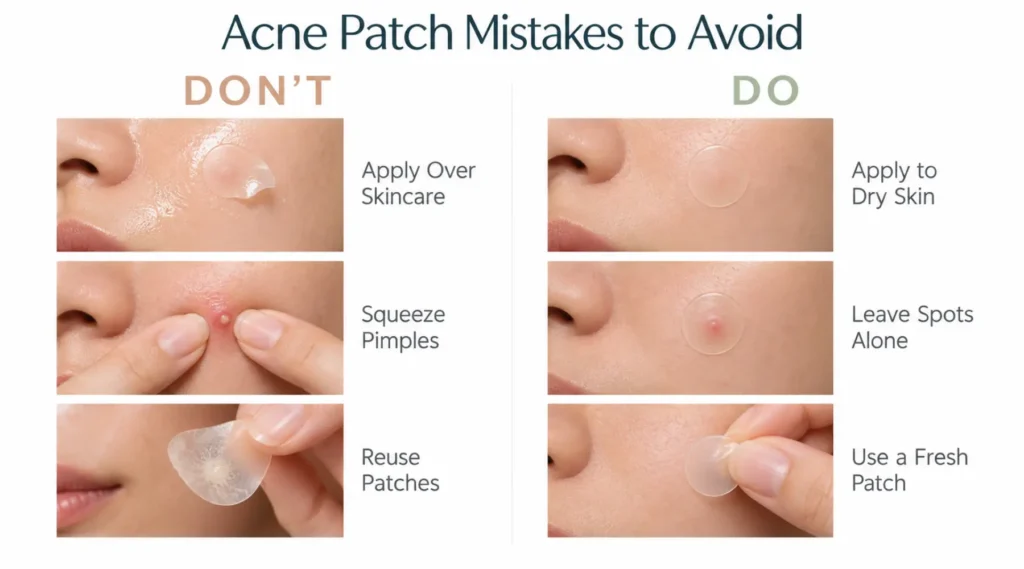
Applying Over Skincare
A shiny layer of moisturiser, oil, or serum can stop the patch from sticking well. Use the patch first, then apply skincare around it.
Putting a Patch on Every Red Bump
Not every red bump has fluid to absorb. If the bump is deep and closed, the patch will keep you from touching it.
Squeezing the Bump for Absorption
Do not squeeze a closed pimple to prepare it for a patch. This can turn a minor issue into an open wound.
Removing the Patch Too Soon
Don’t take off the patch after just thirty minutes. It needs time to work, so follow the manufacturer’s recommended wear time.
Leaving a Saturated Patch on Indefinitely
Replace the patch once it is full, especially if the area still needs protection. Keeping it on longer is not always better.
Applying Acids Underneath It
Don’t apply strong skincare products under the patch unless it’s specially made for that. This can lead to irritation.
Reusing a Patch
Once you take off a patch, throw it away. Do not stick it back on.
Treating Patches as an Acne-Prevention Routine
If you keep getting new pimples every week, don’t assume that using more patches is the solution. Identify what is causing the acne.
Expecting the Patch to Prevent Scarring by Itself
Avoiding picking at your skin can help prevent damage. However, severe acne can leave scars even without touching it. If you notice scars forming, seek medical help for the active acne early.
Do Pimple Patches Cause Purging?
No, they do not. Purging means a temporary rise in blemishes due to treatments that speed up skin cell turnover. A basic hydrocolloid patch doesn’t cause this. If you see new pimples near or under the patches, think about other causes: irritation from the adhesive, sensitivity to an ingredient, blockage, ongoing acne that would have appeared anyway, frequent touching of the area, or products in your skincare routine. If you see itchy bumps matching the shape of the adhesive, it’s likely irritation rather than purging.
Can You Put Makeup Over an Acne Patch?
Yes, often.
Thin patches are commonly used during the day because you can apply makeup over or around them.
For the best results:
- Apply the patch before your makeup.
- Press the edges down firmly.
- Use light layers of makeup.
- Avoid rubbing a sponge hard against the patch.
- Don’t lift and stick the edges repeatedly.
It’s better to put makeup over a patch than to apply concealer directly on a fresh pimple. However, once the patch is full, makeup won’t cover it well. Replace the patch instead of adding more makeup.
When a Larger Patch Makes More Sense Than an Individual Dot
Not every breakout fits neatly within an 8 mm circle. If you have several small blemishes on your forehead, cheek, or chin, using a larger patch can help you avoid applying many dots.
The important part is choosing the right lesions. Don’t expect larger patches to clear an entire area with closed comedones. Think of them as bigger protective covers instead of an acne mask.
This idea also applies to shaped options like Whole Face Pimple Patches: they cover more area, but hydrocolloid works best where there’s moisture to manage.
When Acne Patches Are Not Enough
Acne patches are helpful for self-care but aren’t a replacement for medical advice. Talk to a doctor, pharmacist, or dermatologist if you have:
- Frequent deep bumps or cysts
- Painful acne
- Permanent indented scars
- Raised scars
- Widespread acne on your chest or back
- Acne that affects your confidence or well-being
- Sudden severe acne in adulthood
- Acne with other hormonal symptoms
- Breakouts that don’t improve with your routine
It’s important to treat acne early to prevent scarring. Remember, you can seek help for any level of acne, not just what social media might consider “severe.”
Questions People Ask About How Acne Patches Work
Do acne patches actually pull out pimples?
Not really. Hydrocolloid soaks up fluid from certain skin spots. It doesn’t remove the whole blocked pore or the “root” of a pimple.
The patch can make a whitehead look flatter since it absorbs some of the fluid.
How acne patches work for beginners: what type should I start with?
A plain hydrocolloid patch is a good starting choice.
Select a whitehead or small pimple, clean and dry your skin well, then apply the patch and leave it on for a few hours.
Starting with a basic patch helps you see if your skin reacts well to the adhesive.
How quickly do acne patches work?
A fluid-filled bump might look flatter after a few hours or overnight. Other types of bumps may not change much at all. How they respond depends on the pimple’s stage, the amount of fluid, and how well the patch sticks to the skin.
Why did my pimple patch turn white?
Hydrocolloid turns cloudy when it absorbs moisture. This moisture can come from the blemish itself. As the hydrocolloid absorbs water, it swells and looks different. A white patch means it has absorbed moisture, not that it has cleared out everything in the pore.
Can I use a pimple patch on a pimple with no head?
You can use the patch, especially if it keeps you from touching the pimple, but regular hydrocolloid patches might not flatten a deep closed pimple because there’s not much fluid at the surface.
Microneedle patches work differently, but stubborn deep acne usually requires more thorough treatment.
Should I pop a pimple before using an acne patch?
No.
Don’t squeeze or pierce a spot to make the hydrocolloid work.
If a whitehead opens on its own, clean and dry it gently before applying a patch.
Can you put an acne patch on a popped pimple?
Yes, you can usually use a hydrocolloid patch if the damage is minor and bleeding has stopped. The patch protects the area and soaks up any fluid. Avoid using strong acids or retinoids on the newly damaged skin under the patch.
Can I use acne patches every day?
You can use the patches whenever you find a good spot, as long as your skin can handle the adhesive. If you need many patches each day, it means your acne needs more care. Patches help with single spots but won’t stop new ones from forming.
Does niacinamide help with acne patches?
Niacinamide helps acne-prone skin, but it doesn’t make hydrocolloid patches absorb faster. Use niacinamide serum around the patch, not under it. Some medicated or microneedle patches already have niacinamide.
Can I use retinol and pimple patches together?
Generally, yes, because they can go on different areas. Apply the hydrocolloid patch on clean, dry skin and use retinol on another area as usual. Don’t put retinol on raw, picked, or broken skin.
Is glycolic acid good for acne before a patch?
No, don’t use glycolic acid before applying a patch. The skin needs to be clean and dry, not freshly exfoliated. Putting glycolic acid under a patch can irritate, especially if the blemish is open.
Why does my acne patch do nothing?
The most common reason is that the blemish isn’t right for hydrocolloid patches. Deep pimples, nodules, cysts, blackheads, and closed comedones don’t have fluids on the surface. Also, if you use moisturisers or oily products, the patches might not stick well.
Can acne patches help sensitive skin?
Plain hydrocolloid patches can be useful for sensitive skin because they treat one spot without applying harsh ingredients to your entire face. However, the adhesives and any medicine can still irritate. If your skin gets itchy, swollen, or very red under the patch, stop using it.
Are pimple patches good for forehead acne?
Pimple patches work well for individual whiteheads on the forehead. However, they’re not effective for dealing with widespread closed comedones or recurring forehead issues. If pimples keep coming back near your hairline, check your hair products, sweat, friction, and your acne prevention routine.
Can acne patches treat bacne?
Acne patches can help with individual bumps on the back, but they aren’t effective for treating widespread back acne. It’s better to use body washes with proven acne ingredients, reduce sweat and friction, and seek medical treatment if needed for recurring bacne.
Making How Acne Patches Work Fit the Reality of Your Skin
Knowing how acne patches work helps you use them better. A hydrocolloid patch isn’t a vacuum that pulls out acne. It’s a special dressing that absorbs moisture and protects whiteheads and spots from getting picked at.
Timing is important. Apply the patch on clean, dry skin before using any moisturiser or oil. Leave it on for several hours. Replace it when it’s full, not just to make it last longer.
Make sure to assess the patch based on its purpose. If a whitehead flattens overnight and you don’t pop it, the patch is effective. If a new pimple appears later, that’s a different issue.
Ongoing acne needs both treatment and prevention. Ingredients like retinoids, salicylic acid, azelaic acid, benzoyl peroxide, and niacinamide can help, along with moisturiser and sunscreen to keep your skin comfortable.
Use patches only for the right spots. Manage overall acne differently. If breakouts become deep, painful, widespread, or cause scarring, seek professional help instead of relying solely on patches.