




Blog
Best Ingredients for Large Pores: What Helps and What Hurts

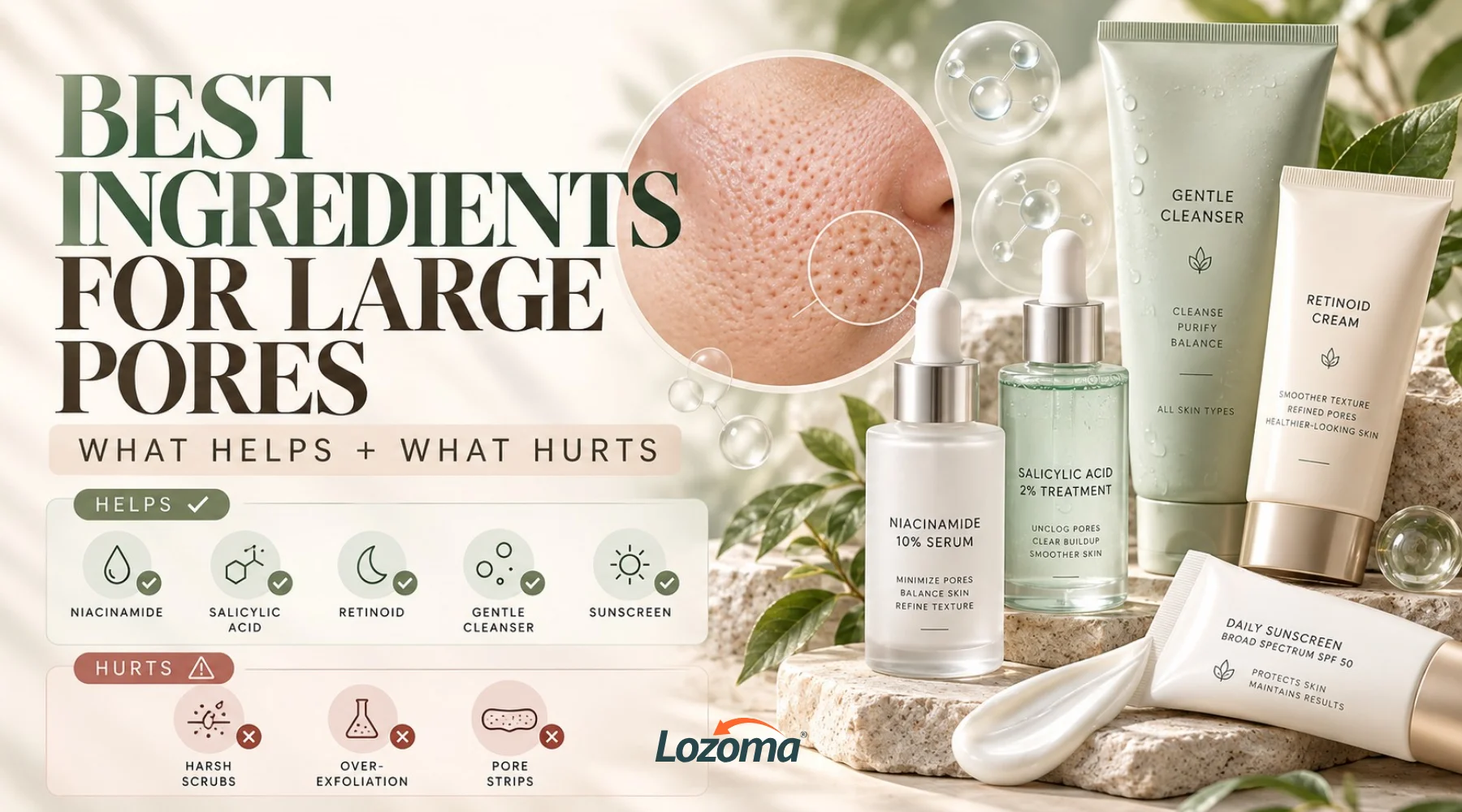
Large pores often appear more noticeable for reasons unrelated to skin cleanliness. Extra oil can darken the pores, dead skin can clog them, sun damage can weaken the skin around them, and irritation can make their texture worse.
The best ingredients for large pores don’t try to “close” or erase them because pores are normal and necessary. Effective ingredients tackle the reasons that make the pores look larger.
For oily or clogged skin, salicylic acid may help. If shine is an issue, niacinamide can assist. Retinoids can improve uneven texture and the skin’s appearance around pores. Clay can temporarily absorb excess oil. Daily sunscreen protects the collagen and elastin that support the skin around pores.
Choosing the right ingredient is important, but so is how you apply it. A good pore treatment can be ineffective if overused or applied with too many other exfoliants, especially on damaged skin.
The goal isn’t to have poreless skin; it’s to achieve clearer, smoother, and more even-textured skin.
Why Some Pores Look Larger Than Others
A visible pore is usually the opening of a hair follicle linked to a sebaceous gland. These glands produce sebum, a natural oil that protects and lubricates the skin.
Some people have larger pores and more active sebaceous glands due to genetics. This is why two people with similar routines can have very different-looking pores.
The amount of oil on the skin also matters. When more sebum reaches the surface, especially on the nose, forehead, cheeks, and chin, pores can look larger.
Congestion is another factor. Oil and dead skin cells can build up in the follicle. When this material gets close to the surface and oxidises, it may turn into a blackhead. Even without blackheads, buildup can make pores look deeper.
Age and sun exposure can change how pores appear. Collagen and elastin support the skin around follicles. As these decrease, especially with sun damage, pores on the cheeks can look more elongated.
There isn’t a one-size-fits-all solution for reducing pores. One person might need help with excess oil, another with congestion, and someone else with loss of firmness.
Identifying the cause is more effective than just buying any product labelled “pore minimiser.”
The Best Ingredients for Large Pores Depend on What Is Making Them Visible
A routine that targets pores is easier to follow when you choose ingredients based on your specific issue instead of current trends.
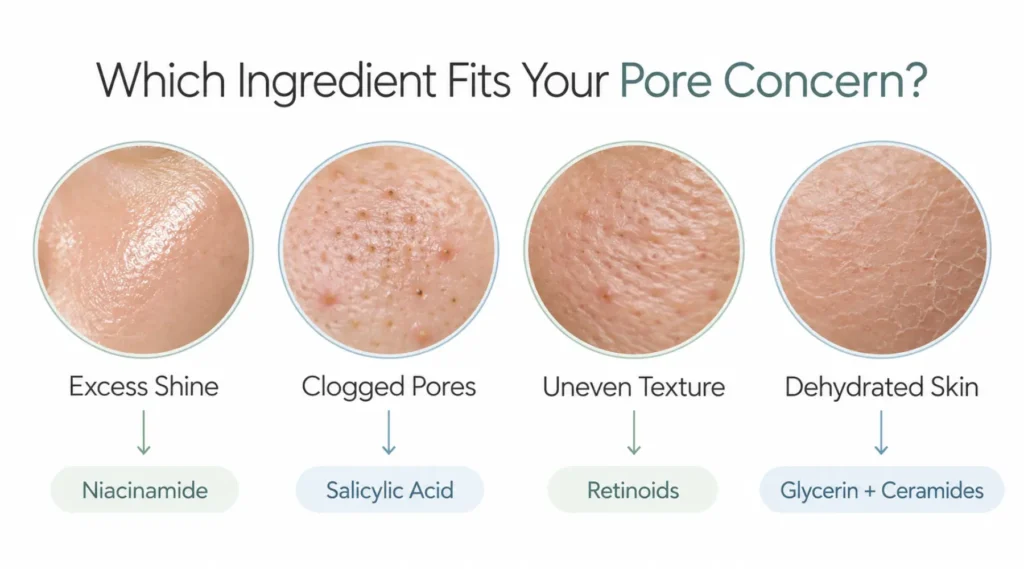
| Ingredient | What it is most useful for | What it cannot do | Main caution |
| Niacinamide | Excess shine, barrier support, uneven texture | Permanently shrink pores | Very high strengths may irritate some skin |
| Salicylic acid | Oily, congested pores and blackheads | Change genetically determined pore size | Overuse can cause dryness and irritation |
| Retinoids | Texture, congestion, signs of photoageing | Produce overnight pore tightening | Can initially cause dryness, peeling and irritation |
| Clay | Temporary oil absorption | Permanently reduce pore size | Frequent use may leave skin dehydrated |
| Broad-spectrum sunscreen | Preventing UV-related loss of skin support | Unclog an existing pore | Needs adequate application and reapplication |
| Azelaic acid | Acne-prone, uneven or sensitive skin | Deeply dissolve oil like salicylic acid | Can tingle when first introduced |
| AHAs | Rough surface texture and dullness | Work deeply inside oily follicles | Too much exfoliation can worsen irritation |
| Glycerin, ceramides and other barrier-supporting ingredients | Dehydration and irritation | Directly clear blackheads | Need to be combined with targeted treatments when congestion is present |
You don’t need to use all of them. Using too many can quickly turn a simple pore issue into a bigger skin problem.
Niacinamide Is Often the Easiest Place to Start
Niacinamide is a type of vitamin B3 and is used widely in skincare.
It doesn’t physically tighten pores, but it can improve how they look. Niacinamide helps the skin’s barrier and controls oiliness. Oily skin reflects light and makes pores more noticeable.
Using niacinamide regularly can also make skin texture smoother. It is especially helpful for people with:
- Oily or combination skin
- Shiny skin during the day
- Uneven texture
- Marks from past breakouts
- Mild sensitivity
- Dryness from harsh products
Niacinamide is easy to add to your routine because it doesn’t exfoliate like salicylic or glycolic acid. A niacinamide essence moisturiser can provide hydration and support for your skin barrier without harsh ingredients.
Do You Need 10% or 20% Niacinamide?
Not always.
Higher percentages don’t always mean better results. Niacinamide works well at lower concentrations, and some people find stronger formulae irritating.
If a 10% serum makes your face red, itchy, or tight, using a 15% or 20% won’t likely help.
Using a lower-strength product regularly can be more effective than a strong one you can only use sometimes. This is important for people with sensitive skin who want to reduce large pores. Tolerance is more important than high percentages.
Salicylic Acid Is Particularly Useful When Pores Are Congested
If your pores look dark, clogged, or have blackheads, salicylic acid is more effective than many “pore tightening” products.
Salicylic acid is a beta-hydroxy acid (BHA) that works well on oily skin because it can dissolve in oil. Instead of closing up pores, it helps break down and remove dead skin cells and oil that cause blockages.
This makes it great for unclogging pores, especially on the nose, forehead, and chin. When the material inside the pores is reduced, they may appear less noticeable. The pores are still there but look clearer and cast less of a shadow.
A tea tree facial serum with salicylic acid is an example of a good choice for oily or blemish-prone skin. However, the whole product formula is more important than just one ingredient.
How Often Should You Use Salicylic Acid?
Daily use isn’t always required.
If you have very oily skin, you might be able to use products more often. But if you have sensitive or combination skin, two or three times a week may be enough.
Beginners should start slowly. Use a leave-on salicylic acid treatment once or twice a week at night. If your skin feels fine after several weeks, you can consider using it more often.
Watch for signs that you might be overdoing it:
- Persistent tightness
- Burning when applying moisturiser
- Flaking skin around the nose or mouth
- New red patches
- Shiny but dehydrated skin
- Increased sensitivity to products you usually handle well
The goal is to have clearer pores, not always exfoliated skin.
Retinoids Target More Than Oil and Blackheads
Retinoids are forms of vitamin A that do more than exfoliate skin. They speed up cell turnover and can help clear clogged pores. Over time, retinoids also improve skin texture and signs of ageing caused by sun damage.
This is especially helpful when pores are visible due to oil and uneven skin texture. Common cosmetic retinoids include retinol and retinal, while prescription options like adapalene have different strengths and uses.
A retinal booster might interest people looking for vitamin A and better skin texture, but it’s important to start using it slowly. Just because it’s marketed as “beginner-friendly” doesn’t mean it won’t irritate.
Why Retinoids Can Make Pores Look Better Over Time
Visible pores are partly caused by congestion and partly by skin structure.
Salicylic acid helps clear out the buildup in hair follicles.
Retinoids assist in normal cell shedding around the pores and gradually improve skin texture.
They are especially helpful for:
- Blackheads
- Closed comedones
- Fine lines
- Uneven skin
- Sun damage
- Loss of firmness
Results take time. Retinoids won’t show immediate changes; they’re a long-term solution.
Starting Retinoids Without Wrecking Your Skin Barrier
Start by using a retinoid two nights a week instead of every night.
Apply a small amount to your face instead of a thick layer over your pores.
Use a moisturiser if you need to.
If your skin is sensitive, putting on moisturiser before and after the retinoid can help make the transition easier.
Don’t use a retinoid, salicylic acid, glycolic acid, and an exfoliating mask all in the same week. This way, you can tell which product might irritate if there’s a problem.
It’s best to avoid topical retinoids during pregnancy. If you are pregnant, planning to get pregnant, or unsure if a retinoid is safe for you, talk to a healthcare professional.
Clay Helps With Oil, but the Effect Is Mostly Temporary
Clay masks are popular for oily skin because they contain ingredients like kaolin and bentonite that soak up excess oil. After using a clay mask, your face may look less shiny, and pores may appear smaller. However, this effect isn’t permanent.
Clay can be helpful if your skin gets oily around the nose or forehead, especially before an event or as a rare part of your routine. It’s a mistake to think that using more clay will make your pores cleaner. Letting a clay mask dry out completely can make your skin feel tight and uncomfortable. Using it too often, especially with acids and retinoids, can worsen skin problems.
For most people, clay masks are an optional addition, not the main solution for minimising pores.
Sunscreen Is One of the Most Underrated Ingredients in a Pore Routine
Sunscreen doesn’t clear blackheads or reduce oil production, but it’s essential for achieving smoother skin over time. UV rays damage collagen and change skin structure, which can make pores appear larger, especially on the cheeks where firmness is important.
Use a broad-spectrum sunscreen every morning, applying it generously. SPF 30 is a good minimum for daily use, with higher SPF recommended for significant sun exposure.
Mineral sunscreens, like those with zinc oxide, are a good choice. Always check the label for a tested SPF and broad-spectrum protection to ensure you’re getting adequate coverage.
The best sunscreen for your pores offers reliable protection without making your skin too oily, irritated, or congested.
Azelaic Acid Is Worth Considering for Acne-Prone or Reactive Skin
Azelaic acid isn’t the first choice for treating enlarged pores, but it’s helpful for acne, redness, or dark spots left after blemishes. It helps normalise skin cell shedding and is often used for acne issues. Unlike salicylic acid, it’s not mainly an oil-based exfoliant. Instead, it helps improve rough or congested skin conditions.
Azelaic acid is great for people seeking effective treatment without harsh acids. However, there may be an adjustment period, and some may experience tingling or mild irritation, especially if they start using it too quickly or with other treatments. Remember, using more ingredients doesn’t always mean better results.
AHAs Can Smooth the Surface Around Visible Pores
Alpha-hydroxy acids (AHAs) like glycolic and lactic acid work on the skin’s surface, unlike salicylic acid, which penetrates oil in pores. AHAs are helpful for issues like rough texture, dullness, or uneven skin around visible pores.
Glycolic acid is effective due to its small size, while lactic acid is gentler, depending on its concentration and formula. If you struggle with blackheads and oily skin, salicylic acid is usually the better choice for exfoliation. However, if your cheeks look rough and enlarged pores are an issue, an AHA could help.
It’s typically unnecessary to use an AHA toner, BHA serum, peeling solution, and exfoliating mask all in one week.
Hydration Can Make More Difference Than People Expect
People with large pores often hear they should remove oil aggressively. This advice leads to using harsh products like foaming cleansers, alcohol-laden toners, acids, and clay masks. Such routines can dry out and irritate the skin, even if it remains oily. When the skin is dehydrated, it may feel rough, and fine lines become more visible. Foundation might settle around pores, making them look bigger.
Hydrating ingredients won’t shrink pores but can make the skin look better overall. Look for ingredients like:
- Glycerin
- Ceramides
- Panthenol
- Hyaluronic acid
- Squalane
- Beta-glucan
- Fatty alcohols
- Cholesterol and skin-friendly lipids
A good moisturiser won’t interfere with salicylic acid or retinoids; it often helps you use those treatments more comfortably. It’s more important to stick to a routine than to try to make it feel “strong.”
What to Look for in Ingredients for Large Pores
Choosing the Right Ingredient for Your Skin
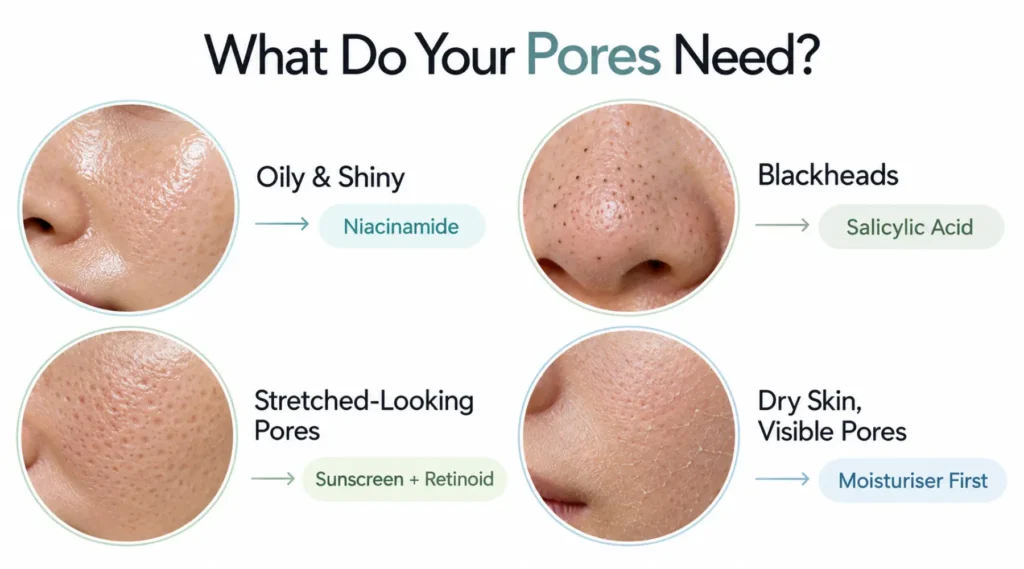
If Your Pores Are Oily and Shiny
Use niacinamide or salicylic acid. Niacinamide helps balance oil and supports your skin barrier. Salicylic acid is good if you have blackheads or clogged pores. Finish your routine with a light moisturiser and a comfortable sunscreen.
If Your Pores Are Full of Blackheads
Start with salicylic acid. Wait before adding another exfoliant. Don’t scrub blackheads every day; squeezing can irritate your skin and leave marks.
If Your Cheek Pores Look Stretched
Focus on more than just oil control. Use sun protection and a mild retinoid. These can help over time, especially if you’re noticing fine lines or less elasticity.
If Your Skin Is Dry but Pores Still Look Large
Don’t rush to exfoliate more. Dry skin can also show large pores. Focus on using a gentle cleanser, moisturiser, and daily sunscreen. Once your skin feels better, you can decide if you need a retinoid, niacinamide, or a mild exfoliant.
If Your Pores Suddenly Look Worse
Think about any recent changes. Did you start using a new acid? Stop moisturising? Spend a lot of time in the sun? Begin a drying acne treatment? Or use a heavy product that clogs your skin? Pores don’t change overnight; instead, temporary issues like oil, hydration, inflammation, and surface texture can make them look bigger. Understanding why your pores appear larger can be more helpful than quickly buying new products.
Best Ingredients for Large Pores for Beginners
Beginners don’t need a full “pore routine.” They need a simple basic routine and one good treatment.
Morning:
- Use a gentle cleanser or rinse your face if it doesn’t need cleansing.
- Apply niacinamide if you want a targeted serum.
- Use moisturiser if necessary.
- Don’t forget broad-spectrum sunscreen.
Evening:
- Cleanse gently again.
- Use one targeted treatment.
- Apply moisturiser.
Your targeted treatment can be niacinamide daily or salicylic acid once or twice a week. Stick to this before trying something stronger.
Having many serums might seem nice, but it doesn’t mean you have a better routine. Focus on what each product does for your skin.
After a few weeks, consider adding a retinoid if you still have issues with texture, blackheads, or signs of ageing.
When introducing new products, add one at a time. This method may seem slower, but it often helps you create a good routine faster since you avoid irritation.
Best Ingredients for Large Pores for Sensitive Skin
Sensitive skin needs care like other skin types but can’t handle as much experimentation.
Start with basic support. Use a gentle cleanser, moisturiser, and daily sunscreen that feel comfortable before adding treatments for pores.
Niacinamide in moderate amounts may work for some people. If you have clogged pores, try using salicylic acid less often instead of avoiding it completely. Applying it once a week may be enough to start.
Be cautious with retinoids, too. Use them sparingly and avoid starting them when your skin is flaky or irritated.
Pay attention to all the ingredients. A gentle ingredient can still irritate your skin if it’s in a heavily scented or complicated formula.
When choosing skin care products, focus on how well they work together rather than how many claims they make. The best pore treatment won’t help if it burns your skin every time you use it.
How to Unclog Pores Without Damaging Your Skin Barrier
Clogged pores happen when oil and dead skin build up. Scraping or squeezing won’t fix the problem effectively.
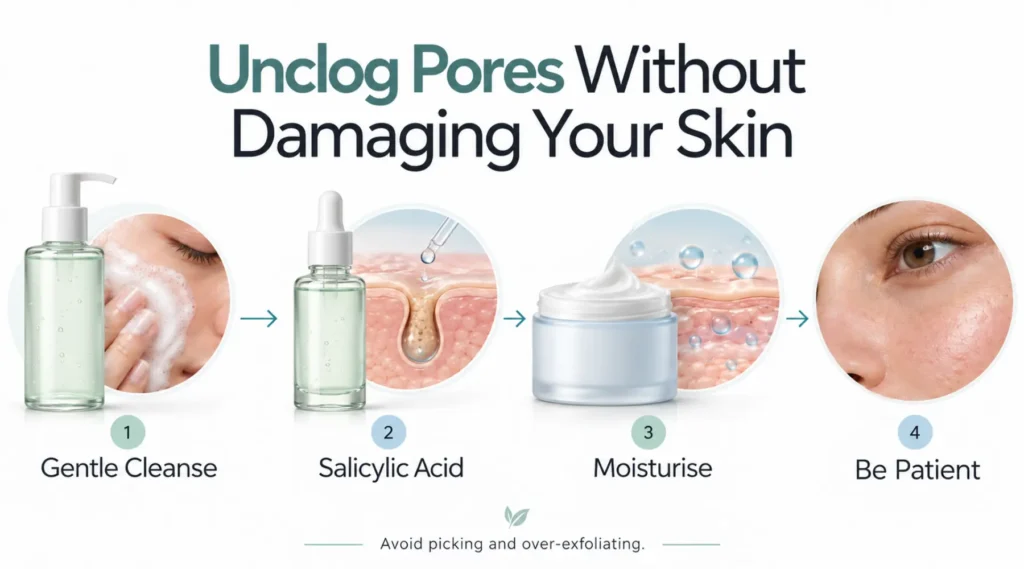
Here’s a better approach:
- Clean Gently: Remove sunscreen, makeup, and oil without aiming for overly clean skin.
- Use Salicylic Acid: Start by using it one or two nights a week.
- moisturise: Keep the surrounding skin hydrated.
- Avoid Picking: Squeezing can lead to more inflammation.
- Consider Retinoids Later: These can help with recurring clogged pores.
- Be Patient: It takes time for pores to clear up; just because a treatment tingles doesn’t mean it works right away.
If you use water-resistant sunscreen or long-lasting makeup, evening cleansing is crucial. This often means starting with an oil-based or balm cleanser, then following with a mild water-based cleanser.
Double cleansing is not necessary for everyone. If one cleanser effectively removes everything without leaving a residue, there’s no need to wash twice.
Ingredients for Large Pores: What to Avoid or Use Carefully
Some ingredients aren’t “bad,” but they can interfere with achieving calm, smooth skin.
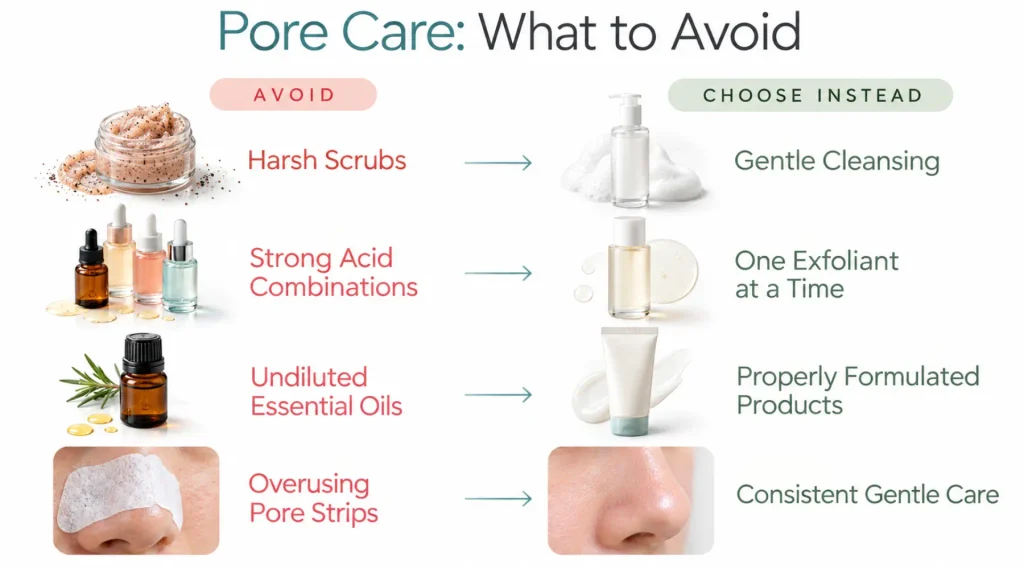
Very Strong Astringents
Astringent toners can make skin feel tight. This tightness might be confused with closed pores. In reality, the pores haven’t actually sealed; instead, the toner makes your skin feel firm. If a product leaves your face dry, tight, or stinging repeatedly, it doesn’t mean your skin is getting cleaner.
High Amounts of Drying Alcohol
Not all alcohols in skincare are harmful. Fatty alcohols like cetyl and stearyl alcohol can be good for moisturising. The problem lies with formulae that use drying alcohols, which can cause constant dryness or irritation for your skin. It’s essential to consider the context rather than just the presence of “alcohol” on the label.
Harsh Facial Scrubs
Scrubs can make your skin feel smoother by removing dead surface cells, but they don’t clean inside the pores. Scrubbing too often or too hard can irritate your skin and make redness and texture worse.
Undiluted Essential Oils
Tea tree oil is studied for acne, but you shouldn’t apply undiluted tea tree oil directly to your face. Essential oils can irritate your skin, especially in high concentrations. Using a properly formulated product is safer than applying pure essential oil straight to your skin.
Strong Acid Combinations
Using a 2% BHA and a 10% glycolic treatment together doesn’t make them three times more effective. Instead, they can irritate your skin a lot more. You usually only need one main exfoliating method at a time.
Pore-Stripping Products Used Constantly
Pore strips can remove some surface debris from your nose and give a satisfying visual effect. However, they don’t fix the reasons why pores get clogged. It’s okay to use them occasionally, but relying on them as your main treatment isn’t effective.
Heavy Occlusive Products That Consistently Break You Out
There’s no one-size-fits-all list of ingredients that clog pores. Whether a product clogs your pores depends on its formulation, concentration, your skin type, and how your skin reacts to it. If a cream repeatedly causes breakouts, try a lighter formula. Remember, your skin’s reactions are more important than generic clogging scores online.
Ingredient Combinations That Make Sense and Those That Need Restraint
Most modern skincare ingredients can be safely used together. The main concern is irritation that builds up over time.
| Combination | Can they be used together? | Practical approach |
| Niacinamide + salicylic acid | Usually yes | Useful for oily, congested skin |
| Niacinamide + retinoid | Usually yes | Niacinamide may complement a barrier-supportive routine |
| Salicylic acid + retinoid | Sometimes | Beginners may prefer alternate nights |
| AHA + BHA | Possible, but often unnecessary | Avoid stacking strong leave-on products |
| Retinoid + AHA | Possible for experienced users | Alternate nights if irritation develops |
| Clay + salicylic acid | Possible | Avoid an aggressive mask immediately after strong exfoliation |
| Retinoid + moisturiser | Yes | Often improves comfort |
| Any active + sunscreen | Sunscreen belongs in the morning routine | Essential when treating texture or photoageing |
Your skin doesn’t care if a product is trending online. It reacts to how much you use, how often, the way it’s made, and how well you tolerate it. If two treatments feel fine on their own but cause burning when used together, use them separately.
A Practical Morning Routine for Large-Looking Pores
Morning skincare shouldn’t harshly treat your pores.
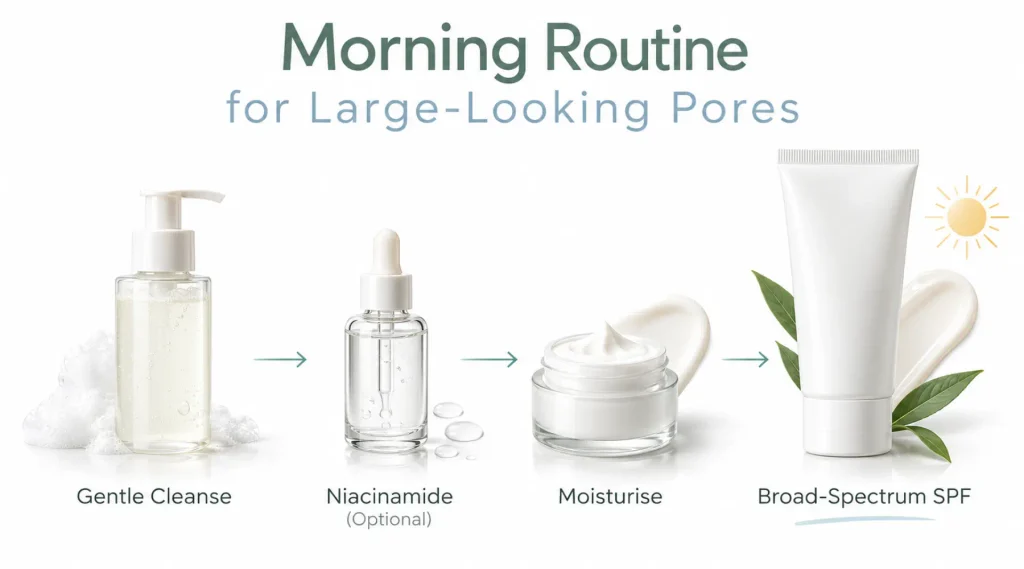
Its main goals are to control shine, support your skin, and protect against UV rays.
Step 1: Cleanse Based on Your Skin Type
If you have oily skin, use a gentle cleanser in the morning. If you have dry skin, water may be enough. Avoid cleansers that leave your face feeling tight; this doesn’t mean they remove oil effectively.
Step 2: Consider Adding Niacinamide
If it works for you, a lightweight niacinamide serum can be helpful. If your moisturiser already has enough niacinamide, you might not need an extra serum.
Step 3: moisturise as Needed
All skin types need hydration. If you have oily skin, choose a lighter moisturiser to avoid shine. If you have dry skin, opt for a richer cream.
Step 4: Use Sunscreen Generously
This is the key step to prevent skin damage. If you use a good retinoid at night but don’t protect your skin from UV rays during the day, you’re working against your goal of keeping your skin smooth and healthy.
A Practical Evening Routine for Congested or Textured Pores
Nighttime is the best time for targeted treatments.
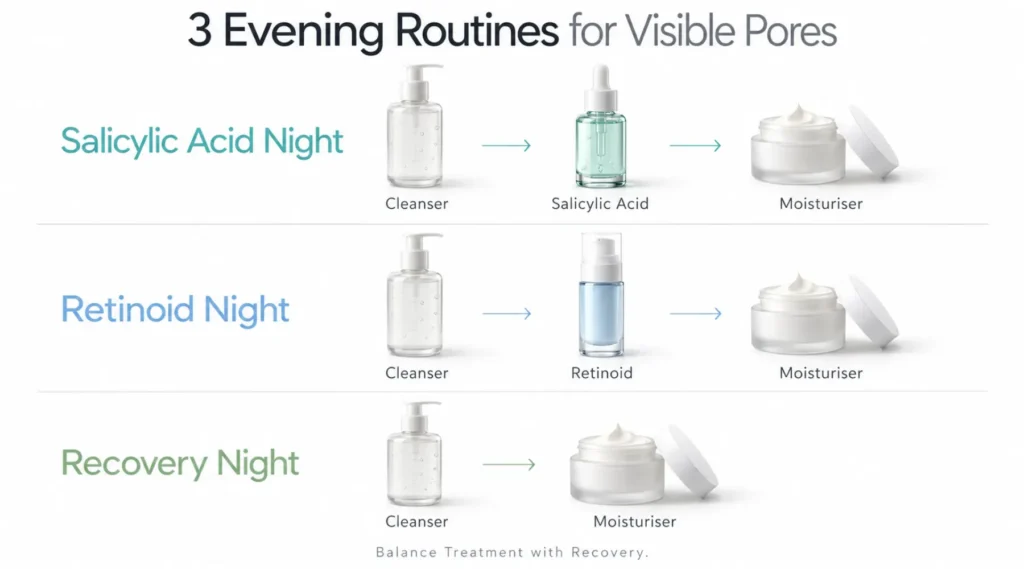
Option One: Salicylic Acid Night
Cleanse your face, apply salicylic acid, and then moisturise. That’s all you need.
Option Two: Retinoid Night
Cleanse your face and let it dry if retinoid stings on damp skin. Apply a small amount, then moisturise.
Option Three: Recovery Night
Cleanse and moisturise. It might seem simple, but recovery nights are important. Your skin doesn’t need active ingredients every night to improve.
Balancing Treatment and Recovery
If you want to reduce the appearance of pores, balancing treatment with recovery is just as important as choosing the right serum.
Why Over-Exfoliation Can Make Pores Look Worse
People who worry about their pores often add more products because their pores still look large. First, they try a BHA, then an AHA toner, a scrub, a retinoid, and a clay mask. Eventually, their skin may feel tight after washing, sting when applying moisturiser, and look shiny while also peeling around the nose. Now, they have a barrier problem too.
Inflamed, dry skin can reflect light poorly and appear rough, making every small flaw more noticeable. If this happens, stop trying to “deep clean” the skin.
For now, only use a gentle cleanser, moisturiser, and sunscreen until your skin feels normal again. Once the burning and flaking stop, slowly add one active product back at a time.
Pores Do Not Open and Close With Hot and Cold Water
One common myth is that hot water opens pores and cold water closes them. Pores don’t have muscles that open and close with temperature changes. Warm water can soften surface oil and make washing easier, but it doesn’t open pores. In fact, very hot water can irritate skin and cause redness. Cold water may make skin feel tighter or reduce redness temporarily, but it doesn’t really close pores. Use lukewarm water and focus on products that treat oil, congestion, skin texture, and UV damage instead.
Steam Is Not a Permanent Pore Treatment Either
Facial steaming softens dirt and oil, making it easier for professional extractions. However, it doesn’t open pores permanently. Too much heat can worsen redness or irritate sensitive skin. You don’t need to steam your face every night before using salicylic acid. A regular cleanse is enough.
Sebaceous Filaments Are Not Always Blackheads
The small grey, beige, or yellowish dots on your nose are usually sebaceous filaments, not blackheads.
Sebaceous filaments are normal parts of the skin that help move oil through the follicle. They can show up more when your skin is oily. Salicylic acid can reduce their appearance by cutting down excess oil. However, they usually come back, which is normal.
Trying to squeeze out every dot can irritate your skin and won’t give you a permanently clear look.
Blackheads are different; they are open comedones filled with keratin and oil. Understanding this difference is important because sebaceous filaments are not a problem that needs fixing.
How to Reduce Pores on the Face When Makeup Makes Them Look Worse
Sometimes the issue is most noticeable after applying foundation. A thick base can sink into pores, especially if your skin is dry or you’ve layered too many skincare products.
Instead of adding another treatment for pores, focus on how you apply your makeup. Keep morning layers light. Let sunscreen settle before you put on foundation. Avoid using too much powder on dry, rough areas.
Silicone primers can help blur skin texture by creating a smooth appearance. This is just a cosmetic effect, but it’s a valid choice if you want smoother makeup.
You don’t need to treat every visible pore medically. Sometimes, a good primer is the simplest solution for the afternoon.
Common Mistakes That Keep Large Pores Looking More Noticeable
Trying to Dry Out Oily Skin Completely
Sebum is a natural oil, not something dirty.
It’s impossible and not good for your skin to remove all oil.
Manage shine without forcing your skin to lose its natural oil.
Adding a Stronger Product Each Week
Changing your skincare routine too often makes it hard to see progress. Stick to a well-designed routine and give it time to work.
Judging Results Right After Cleansing
Your skin may look different right after washing because the oil is gone. Look for changes over weeks, not just minutes.
Squeezing Pores in a Magnifying Mirror
Magnifying mirrors make your skin look much bigger than it is. Constantly squeezing can hurt your skin and cause more irritation.
Skipping moisturiser Because Your Skin Is Oily
Oily skin can still be dehydrated. Just because your skin produces oil doesn’t mean you shouldn’t moisturise.
Ignoring Sunscreen
Not using sunscreen can worsen sagging skin and make pores on your cheeks more visible.
Treating Every Dark Spot as Dirt
Some dark spots are blackheads, some are sebaceous filaments, and others are just shadows from your skin’s structure. Cleansing more won’t necessarily fix them.
Lifestyle Factors Can Change How Noticeable Pores Look
No food can permanently shrink pores, and drinking more water won’t make them disappear.
Lifestyle choices do affect how skin looks. Heat and humidity can cause more sweating and oiliness, making pores appear larger, especially in summer or after workouts.
Not getting enough sleep can affect the overall look of your skin, making it uneven.
Repeated sun exposure is important because it can lead to long-term changes in the skin.
Removing makeup and sunscreen properly is also important. Leaving long-wear products on overnight can clog pores, especially for those prone to breakouts.
Keep your expectations realistic. A healthy diet, good sleep, and hydration help overall health, but they can’t change genetics or replace effective skin treatments.
When Professional Treatments May Be More Effective Than Skincare
Topical skincare can help with congestion, oiliness, and skin texture, but it won’t change deep-set pores or structural issues. If you still see visible pores after a good home routine, consider professional treatments.
Depending on your skin type and concerns, a dermatologist or qualified practitioner may suggest options like:
- Chemical peels
- Microneedling
- Fractional laser treatments
- Resurfacing lasers
- Radiofrequency treatments
- Professional comedone extraction
- Prescription retinoids
- Medical acne treatments
The best treatment depends on your skin tone, risk of pigmentation, acne history, sensitivity, and whether you have congestion or texture issues.
Copying someone’s treatment plan from social media can be risky, as what works for one skin type may not work for another and could cause problems. It’s important to get a professional assessment if you have persistent acne, scarring, or sudden changes that aren’t typical for enlarged pores.
Questions People Ask About Ingredients for Large Pores
What Are the Best Ingredients for Large Pores?
Useful ingredients for skin care include niacinamide, salicylic acid, retinoids, and daily sunscreen.
Niacinamide helps with oiliness and skin protection. Salicylic acid is great for oily, clogged pores. Retinoids improve skin texture over time. Sunscreen protects against UV damage that can harm collagen and elasticity.
Clay can reduce oil temporarily. Azelaic acid and AHAs can also be beneficial based on your skin issues.
The best ingredient mix depends on why your pores are visible.
How Can I Get Rid of Pores Completely?
You can’t eliminate pores. They are natural structures that help move oil and sweat to the skin’s surface.
Skincare can make pores less noticeable by controlling excess oil, reducing buildup, improving skin texture, and protecting the surrounding tissue.
Products that claim to give you permanently poreless skin create unrealistic expectations.
How Do You Close Pores on the Face?
Pores cannot open and close like doors.
Cold water, ice, and astringents can make your skin feel tighter, but they don’t actually close the pores.
To make your pores look smaller, focus on reducing oil and congestion and protecting your skin from UV damage.
What Is the Best Ingredient for Clogged Pores?
Salicylic acid is great for oily, clogged pores because it works well in oily skin. Retinoids can also help if clogged pores keep coming back. It’s best to start with one treatment at a time to see how your skin reacts.
Does Niacinamide Really Reduce Pores?
Niacinamide cannot permanently shrink pore size. However, it can make pores look smaller by controlling oil, strengthening the skin barrier, and improving skin quality. It’s a good long-term support ingredient rather than a quick fix.
Is Salicylic Acid or Niacinamide Better for Large Pores?
It depends on your main concern. Use salicylic acid for blackheads and blockages. Choose niacinamide for greasy skin, mild texture issues, or to support the skin barrier. Many people can benefit from both, as long as their skincare routine feels comfortable.
Which Ingredients Are Best for Large Pores and Sensitive Skin?
Use moderate-strength niacinamide, good moisturisers, and daily sunscreen. If you need salicylic acid for clogged pores, start using it slowly instead of every day right away. Sensitive skin does better with fewer active ingredients to reduce irritation, not by skipping all effective treatments.
How Long Does It Take to Make Pores Look Smaller?
Some changes, like less surface oil after a clay mask, can happen the same day but are only temporary. Improvements in congestion may take weeks. Changes from retinoids in texture and ageing require consistent use over several months. Shrinking pores is a long-term skincare goal, not a quick fix.
Can Retinol Permanently Shrink Pores?
Retinol cannot permanently remove or shrink pores. It can improve cell turnover, reduce some congestion, and gradually enhance skin texture. These changes can make pores less noticeable while you keep using the product.
Can I Use Salicylic Acid and Retinol Together?
Some people can, but using both on the same night may irritate the skin, especially for beginners. A good plan is to use salicylic acid on one or two nights and retinol on separate nights. Once you see how your skin reacts to each, you can adjust your routine.
Does Hyaluronic Acid Reduce Pore Size?
Hyaluronic acid mainly hydrates the skin. It doesn’t clean pores or change their structure. Well-hydrated skin looks smoother, making pores seem smaller. Use hyaluronic acid for hydration, not as a treatment for pores.
Is Vitamin C Good for Large Pores?
Vitamin C doesn’t unclog pores. It helps skin health and fights ageing when used with sunscreen. If blackheads or excess oil are issues, try salicylic acid or niacinamide instead.
Can Clay Masks Get Rid of Large Pores?
No, clay masks cannot remove large pores. They absorb surface oil and can make pores look cleaner temporarily. Use clay masks for oil control, but don’t expect permanent results.
Why Do My Pores Look Bigger After Using Acids?
Your skin might be irritated or dry from too much exfoliation. This can make pores more noticeable. Stop increasing acid strength, reduce exfoliation, keep your skin moisturised, and let your skin barrier heal.
How Do I Choose Ingredients for Large Pores?
Start by figuring out the main cause of your large pores.
- If your pores are oily and clogged, try salicylic acid.
- If your skin is oily but not very congested, niacinamide might work well.
- For rough texture, frequent breakouts, or signs of ageing, use a retinoid.
- If you have extra shine, clay can help absorb it.
- To prevent sun damage, apply broad-spectrum sunscreen daily.
- If your skin is dry or irritated, focus on repairing the barrier before using other pore treatments.
Choosing the Best Ingredients for Large Pores Without Over-Treating Your Skin
To improve large pores, use ingredients that suit your skin’s needs.
Salicylic acid helps when pores are blocked. Niacinamide reduces shine and supports the skin barrier. Retinoids help with congestion and uneven texture over time. Clay controls oil temporarily. Sunscreen protects the skin and keeps it smooth as you age.
Remember, no product can completely erase your pores. This understanding makes skincare easier.
You don’t need to “close” pores or scrub them away. Healthy skin has texture, follicles, and visible pores. Focus on keeping pores clear and skin feeling comfortable. Choose a skincare routine that is easy to follow without creating new problems.
The best routine is usually not the harshest one. It should manage what makes pores noticeable while keeping your skin healthy.