




Blog
Sheet Mask vs Clay Mask: Key Differences and Best Uses


A sheet mask and a clay mask both work for 15 to 20 minutes but serve different purposes.
Sheet masks mainly provide hydration and comfort by delivering water-based essence to the skin. In contrast, clay masks absorb excess oil, reduce shine, and clean congested areas. Neither mask is inherently better; the important question is what your skin needs at the moment.
This distinction is crucial because choosing a mask based on trends can backfire. A clay mask may make dry skin feel tighter, while a sheet mask may not control excess oil for very oily skin. Sensitive skin can also react poorly to either mask if it contains irritating ingredients.
When comparing them, think of sheet masks as moisture treatments and clay masks as oil-control treatments. While the formula is more important than the type of mask, this understanding helps you choose wisely.
Face masks are optional in a skincare routine. Knowing what masks do for your skin helps you differentiate realistic benefits, like temporary hydration or shine reduction, from exaggerated claims, like detoxifying, tightening pores, or transforming skin overnight.
Sheet Mask vs Clay Mask at a Glance
The main difference between a sheet mask and a clay mask is what each type delivers to your skin.
| Feature | Sheet Mask | Clay Mask |
| Main purpose | Hydration, soothing, temporary plumping | Absorbing excess oil and reducing shine |
| Typical base | Fabric, cellulose or hydrogel saturated with essence | Cream, paste or powder containing mineral clay |
| Common ingredients | Glycerin, hyaluronic acid, panthenol, niacinamide, peptides | Kaolin, bentonite, charcoal, zinc and sometimes acids |
| Best suited to | Dehydrated, dry or temporarily dull skin | Oily, shiny or congested areas |
| Immediate effect | Softer, smoother, more hydrated-looking skin | Less surface oil and a cleaner, more matte appearance |
| Main risk | Irritation from fragrance, actives or prolonged occlusion | Excessive dryness, tightness and barrier irritation |
| Typical frequency | Often 1–3 times weekly, depending on formula | Often once weekly or as needed on oily areas |
| Requires rinsing? | Usually no | Usually yes |
| Can help pores look smaller? | Hydration may temporarily soften their appearance | Reduced oil can temporarily make them look less prominent |
| Permanently changes pores? | No | No |
These are general trends, not strict rules. A sheet mask with exfoliating acids can act very differently than a simple hydrating mask. A creamy kaolin mask with moisturising ingredients may be much gentler than a strong bentonite mask.
The ingredient list, how long you leave it on, and your skin type are just as important as the words “sheet” or “clay” on the package.
What a Sheet Mask Actually Does to Your Skin
A sheet mask works by using its ingredients and holding them against your face.
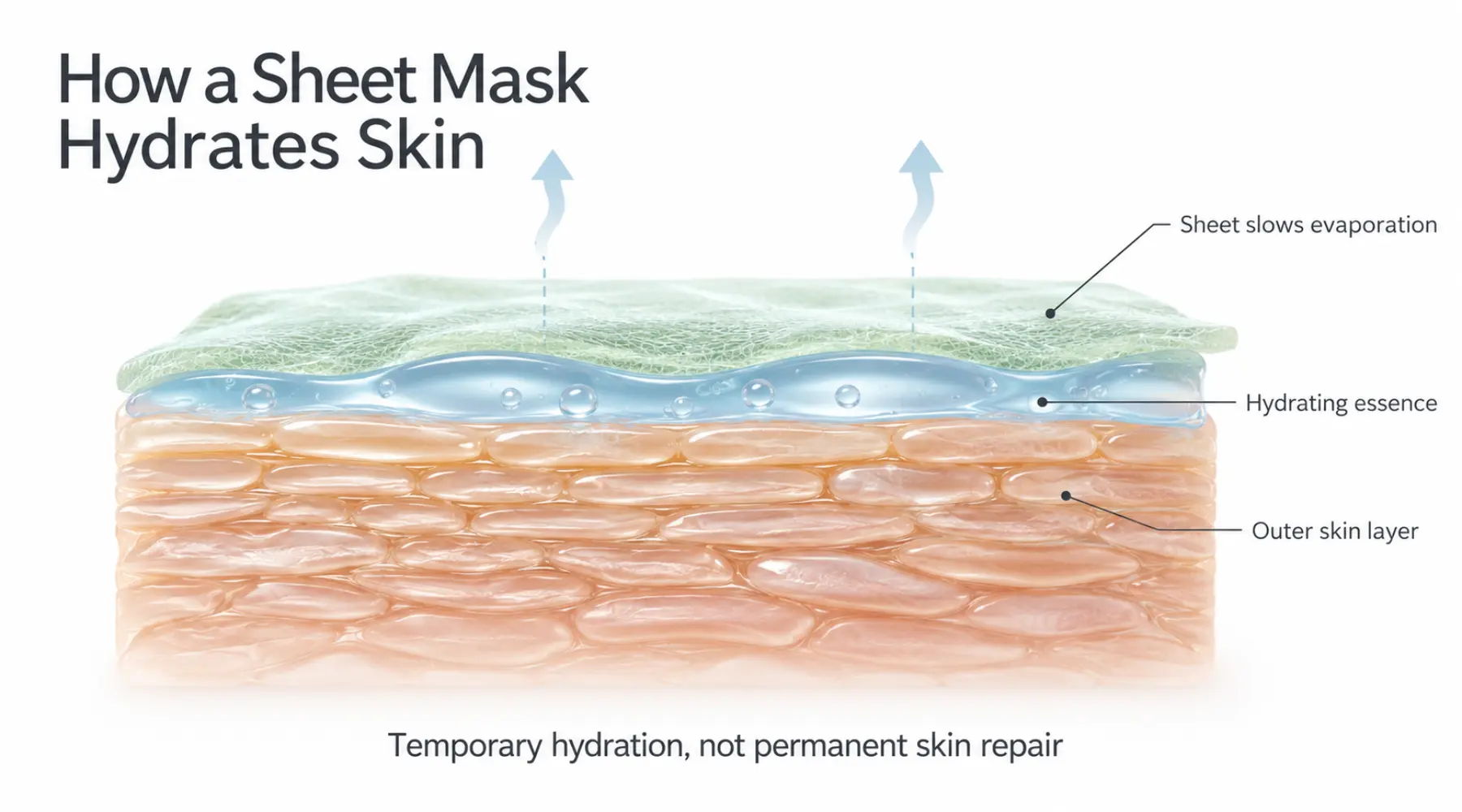
Most masks are made of thin materials soaked in a watery essence. The mask slows down evaporation, keeping ingredients like glycerin, hyaluronic acid, and panthenol close to your skin.
This can temporarily boost hydration in the outer layer of your skin, called the stratum corneum. When this layer has enough water, it becomes more flexible and reflects light better. That’s why your skin may look smoother, bouncier, and more radiant right after using a hydrating mask.
However, these effects are temporary. A sheet mask won’t fix dehydration if your daily routine keeps damaging your skin. It also can’t replace a good moisturiser when your skin barrier needs ongoing support.
Occlusion is part of the effect
The sheet helps reduce water loss while you wear it. This slight barrier can make a hydrating formula work better than just applying a serum without covering it.
However, occlusion is not always good. Keeping a product close to your skin may intensify exposure to ingredients that could irritate your skin. For example, fragrant sheet masks or strong acids can upset sensitive skin, even if they claim to be soothing.
More penetration of ingredients is not always better.
Why skin often looks plumper afterwards
Hydrated skin cells swell a bit when they absorb water, making fine dehydration lines appear softer for a time. This effect is cosmetic, not a repair of the skin’s structure.
A good hydrating sheet mask is great to use before makeup, after travelling in dry air, or when your skin feels a little dry. However, it’s not very helpful for severely inflamed, burning, or damaged skin. In those cases, it’s better to simplify your routine instead of adding more products.
What a Clay Mask Actually Does to Your Skin
Clay masks work in different ways.
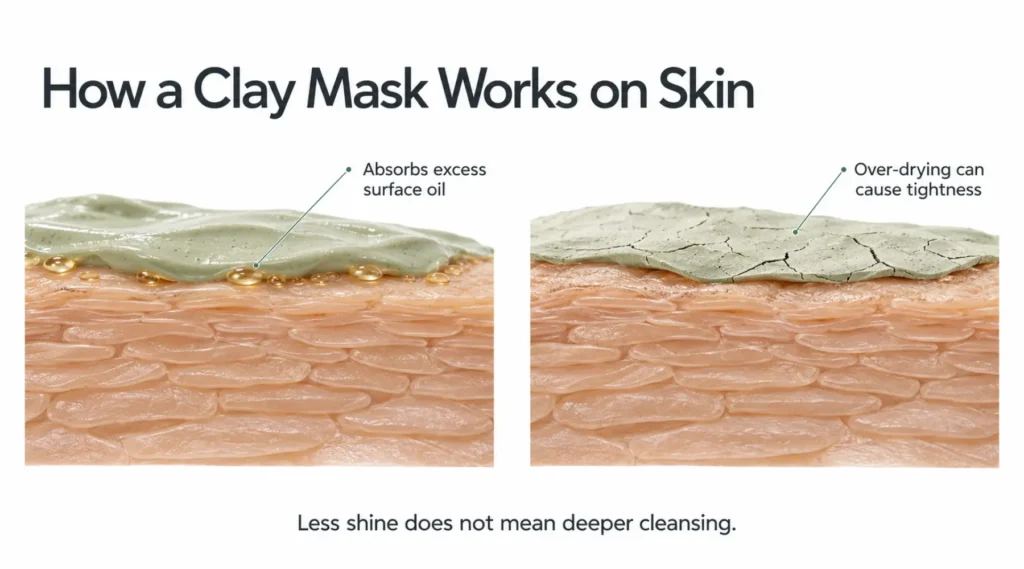
Mineral clays like kaolin and bentonite have a large surface area. They can interact with oils and other substances on the skin’s surface. Depending on the type of clay and its formula, a mask can absorb excess oil.
That’s why oily skin often feels cleaner and less shiny after using a clay mask.
However, this doesn’t mean the clay removes “toxins” from your body. Your liver, kidneys, and lungs are responsible for detoxification. Clay mainly works on the skin’s surface, helping to reduce oiliness and improve the skin’s appearance and texture.
Kaolin and bentonite are not identical
Kaolin is often used in cosmetic masks because it absorbs oil well and feels gentler than some other clays.
Bentonite expands a lot when mixed with water and is usually used in masks for very oily skin. However, it can feel more drying depending on the other ingredients.
Don’t evaluate these clays on their own.
A mask with glycerin, calming ingredients, and moisturisers will feel different than one with strong exfoliating acids or high alcohol content.
Clay does not need to make your face painfully tight
Many people think a clay mask is effective only when it makes your face feel very tight. However, that feeling doesn’t mean it’s doing a better job of cleaning.
As the water in a clay mask dries, it gets tighter. Keeping the mask on too long can take away more moisture than your skin can handle.
If your skin feels sore, very itchy, or painfully tight after using the mask, it didn’t work better; it was likely too drying, left on too long, or not a good match for your skin.
The Biggest Difference Between Sheet Mask and Clay Mask Is Water Versus Oil
To compare the two formats, focus on your current skin issue.
If your skin feels:
- tight
- dull
- dehydrated
- rough from travel
- dry from cold weather
- less flexible than usual
A hydrating sheet mask is a better option.
If your skin feels:
- oily
- greasy in the T-zone
- congested
- shiny
- heavy with oil
A clay mask may work better.
This doesn’t mean dry skin can’t use clay or oily skin can’t use sheet masks. Oily skin can be dehydrated, and dry skin can have a congested nose. Combination skin may need different treatments for different areas. Your skin type is helpful, but your skin’s condition today is often more important.
Sheet Mask vs Clay Mask for Dry or Dehydrated Skin
For dry or dehydrated skin, sheet masks are often beneficial. Dry skin lacks oil, while dehydrated skin has less water. It’s possible to have oily skin that is still dehydrated, so just looking for shine doesn’t tell you everything about your skin.
Hydrating sheet masks may include ingredients like:
- Glycerin
- Hyaluronic acid
- Sodium hyaluronate
- Panthenol
- Beta-glucan
- Aloe
- Ectoin
- Ceramides
- Amino acids
- Certain peptides
Humectants attract and hold water in the outer skin layers. Other ingredients make the skin feel smoother afterwards. An example of a hydrating mask is the Bio-Collagen Real Deep Mask, but its effectiveness depends on the full ingredient list and how your skin reacts.
Be cautious with clay masks if your skin is flaky or uncomfortable. You don’t have to avoid them completely, but using a strong clay mask all over your face can make your skin feel tighter. If you’re only congested on your nose, it’s better to apply clay there only.
Sheet Mask vs Clay Mask for Oily Skin
Clay masks help when you have excess oil on your skin. They absorb some oil, making your skin look matte and reducing the appearance of pores. However, they cannot permanently shrink pores.
Factors like genetics, hormones, age, environment, and skincare habits affect how much oil your skin produces. Using a weekly mask won’t change those factors.
It’s important not to strip your skin of oil completely. Harsh cleansing and drying masks can irritate your skin without fixing the oil problem.
Here’s a better approach:
- Use a gentle cleanser.
- Apply clay masks only as your skin can handle.
- Keep using a lightweight moisturiser.
- Use proven acne or oil-control treatments when needed.
- Wear sunscreen regularly.
Lightweight hydrating sheet masks can also be good for oily skin, as oiliness and dehydration can happen at the same time.
Which Mask Makes More Sense for Combination Skin?
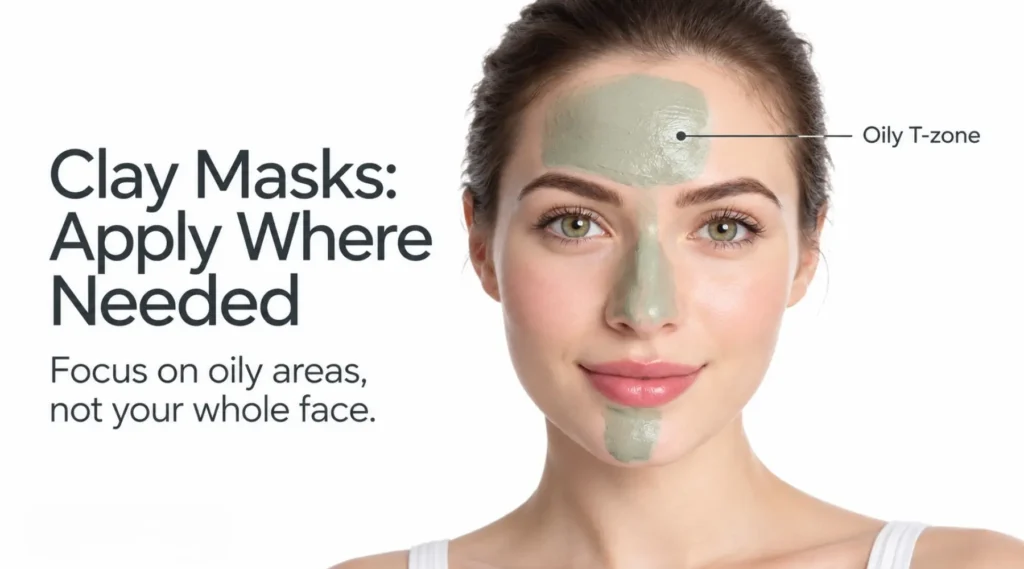
Combination skin makes it hard to use one mask for your whole face. Your forehead and nose may get oily, while your cheeks can stay normal or dry. In this case, apply a clay mask only to the oily T-zone instead of the entire face. This approach, sometimes called multi-masking, focuses on treating each area based on its needs. You can use clay on the oily parts and leave the cheeks alone. You don’t need to apply a second mask just because you are masking. If your entire face feels dry another day, a simple sheet mask might work better. Healthy skincare usually doesn’t need every treatment at once.
Is Sheet Mask Better Than Clay Mask for Acne-Prone Skin?
Neither format should be seen as a standalone acne treatment.
Clay can help acne-prone skin by reducing excess oil. A clay mask may decrease shine and make oily areas feel cleaner.
However, it won’t effectively address the biological causes of acne, which include issues like blocked follicles, excess oil production, inflammation, and bacteria.
For lasting acne, established treatments like salicylic acid, benzoyl peroxide, azelaic acid, or retinoids often work better. If you have moderate, severe, painful, or scarring acne, you may need to see a dermatologist or qualified clinician.
Sheet masks aren’t automatically bad for acne. A gentle hydrating formula can feel good when acne treatments dry out your skin. The key is to ensure the ingredients don’t irritate you and that your skin can handle the mask for a longer time.
Avoid using either type of mask on open, picked, or very inflamed spots, as this can worsen inflammation. Picking and aggressive masking can make things worse.
Sheet Mask or Clay Mask for Sensitive Skin?
There is no one best option for sensitive skin.
A basic hydrating sheet mask might seem gentle, but the sheet can trap irritating ingredients against your skin, making it worse. Clay can dry out sensitive skin, especially if it’s already dry or has conditions like eczema or rosacea.
Keep it simple.
Choose products with fewer fragrances and strong ingredients. Look for gentle ingredients like glycerin, panthenol, beta-glucan, and colloidal oatmeal. However, even mild ingredients can still cause reactions in some people.
Patch testing can help you figure out if a new product is safe, but it doesn’t guarantee that you won’t react.
If your skin is burning, swollen, cracked, blistered, or very sensitive, skip the mask.
Start with a gentle routine of cleansing, moisturising, and sun protection.
People with eczema, rosacea, or a history of serious allergies may need professional advice instead of trying different masks.
Sheet Mask vs Clay Mask for Beginners
Beginners should choose the simplest option that truly solves a problem.
If your face feels mostly fine but sometimes gets dry, start with a basic hydrating sheet mask.
If your main issue is an oily T-zone, use a gentle clay mask instead of buying many “deep-cleansing” products at once.
A common mistake for beginners is trying too many new products at the same time.
For example, if you use an acid toner, a new clay mask, a pore serum, and retinol all in one weekend, you won’t know which product caused any skin irritation.
Trying one new product at a time helps you understand how your skin reacts.
When looking at face masks, read the full ingredients and instructions. Don’t assume similar masks work the same way. Also, make sure the mask fits well with your cleaning, moisturising, and sun protection routine.
Can You Use a Sheet Mask and Clay Mask Together?
Yes, you can combine the masks, but you don’t have to.
The best order is usually: clay mask first, rinse, then the hydrating sheet mask. The clay mask removes excess oil, and the sheet mask adds moisture back into your skin.
This combo works well for oily or combination skin sometimes. However, it’s not ideal for sensitive, dry, or irritated skin, especially if it’s already using strong active ingredients.
Using both masks also increases the number of ingredients your skin gets at once. For example, if your clay mask has salicylic acid and your sheet mask has exfoliating acids, the mix might be harsher than it seems.
You do not need a sheet mask after every clay mask
Most people only need a moisturiser.
After rinsing off clay, dry your skin and apply a regular moisturiser. If your skin feels good, that’s enough.
Using a second mask should be optional, not a required step.
If every clay mask makes you feel like you need to fix your skin, the clay might be too harsh for you.
How to Use a Face Mask Without Irritating Your Skin
Details are important, even if many don’t notice.
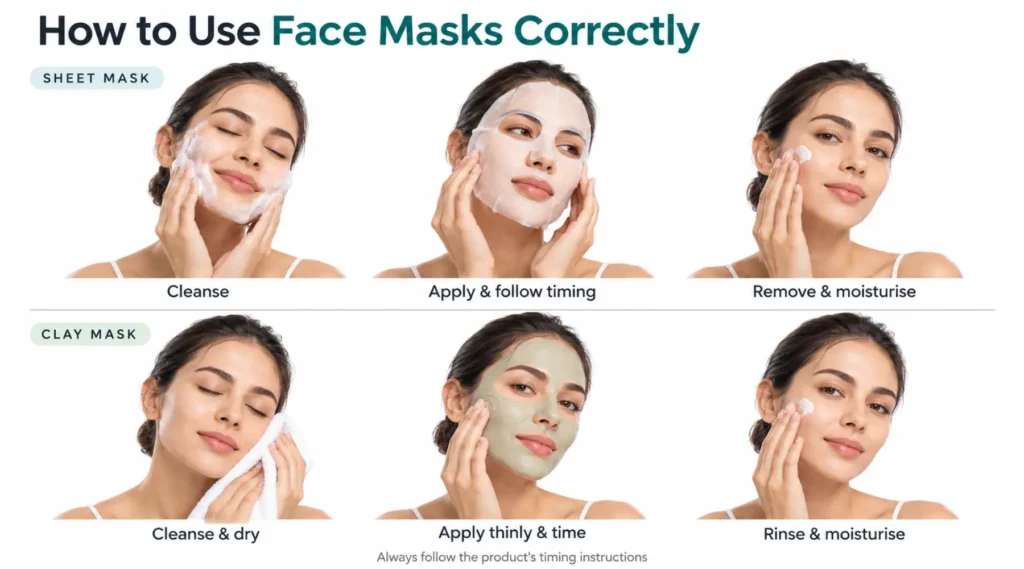
People often see masks as simple, temporary items. However, leaving a strong formula on your face for 10, 20, or even 30 minutes can still irritate your skin.
Before using a face mask, read the instructions. Different masks have different times for how long to wear them. Some new hydrogel masks can be worn longer than regular sheet masks.
Don’t assume the time for one product applies to another.
How to use a sheet mask
- Start with clean skin: Use your gentle cleanser to remove makeup, sunscreen, sweat, and oil.
- If you use a mild hydrating toner and your skin reacts well to it, apply it first. You don’t need a complicated routine just because you’re using a mask.
- Apply the mask: Carefully unfold the sheet and place it on your face. Smooth it out gently, avoiding pulling around your eyes and mouth.
- Follow the instructions: Leave the mask on for the time indicated on the package. When you remove it, pat any remaining essence into your skin. If you need it, apply a moisturiser afterwards.
- No rinsing needed: Usually, you don’t need to rinse after using a hydrating sheet mask unless the instructions say otherwise.
Should you wait until a sheet mask becomes dry?
Usually not.
You should take off a traditional sheet mask when the recommended time is up, not wait until it dries out and gets stiff.
Wearing it longer doesn’t always make it better.
Some hydrogel masks can be worn longer or overnight, but this varies by product. Always follow the manufacturer’s instructions instead of using a one-size-fits-all rule.
How to use a clay mask
- Clean Your Skin: Wash your skin and gently dry it.
- Apply the Mask: Spread a thin layer of the mask where needed. Stay away from your eyes, lips, and nostrils.
- Use the Right Amount: Don’t use a thick layer; it doesn’t help much.
- Follow the Time: Leave the mask on for the time suggested.
- Rinse Off: Wash it off gently with lukewarm water for comfort.
- Avoid Scrubbing: Don’t scrub hard with a rough cloth.
- Dry and moisturise: Pat your face dry and put on moisturiser.
- Check Your Skin: If your face feels tight or red after rinsing, try using less next time or pick a milder mask.
How to Get a Face Mask That Actually Suits Your Skin
Choosing the Right Mask Made Simple
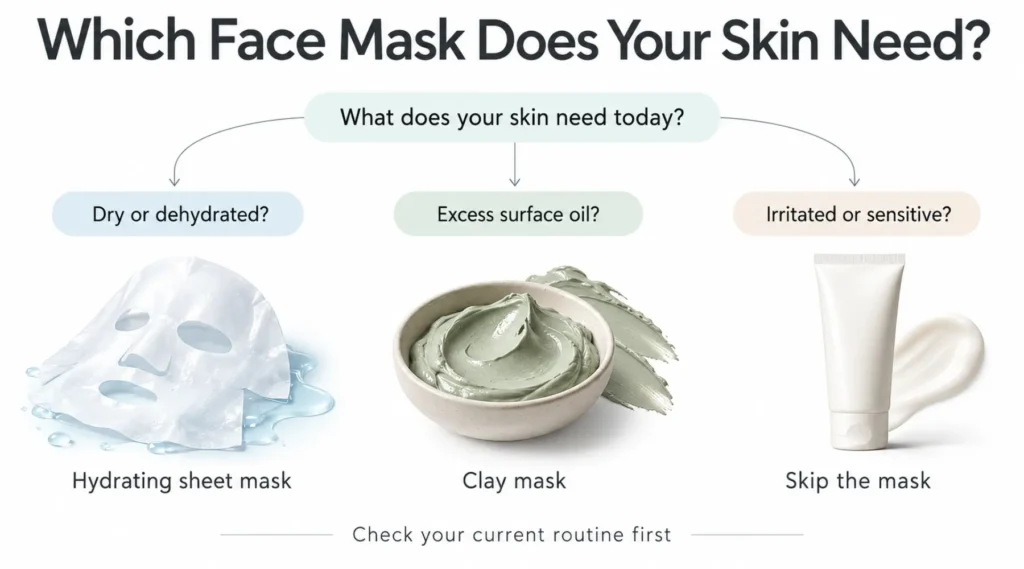
Picking a mask based on packaging is easy, but selecting one based on need is better. Before you buy a mask, ask yourself three questions.
1. What do I want to fix today?
Instead of saying, “I want to improve my skin,” be more specific. For example:
- My skin feels dry.
- My nose is too oily.
- My face looks dull before an event.
- My T-zone is congested.
- My skin feels uncomfortable after travelling.
Knowing your short-term issue will help you pick the right mask.
2. What am I already using?
If you’re using salicylic acid, glycolic acid, or retinoids, a clay mask with exfoliating acids might not be needed. Similarly, avoid strong brightening masks after a peel. Consider how all your products work together, not just each one separately.
3. Does my skin need a mask?
Sometimes, the answer is no. If your face is irritated, it’s better to skip the mask. The effectiveness of a mask depends less on its type and more on how well it fits your needs, routine, and current skin condition.
Ingredients Matter More Than the Shape of the Mask
“Sheet” and “clay” refer to types of masks, not full formulae.
Two sheet masks can work very differently.
One mask might have only water, glycerin, and soothing ingredients. Another might include exfoliating acids, fragrance, and various plant extracts.
Clay masks also vary widely.
Knowing some common ingredient groups can help you guess how a mask will work.
Humectants
Humectants pull in and hold water.
Common examples include:
- Glycerin
- Hyaluronic acid
- Sodium hyaluronate
- Urea
- Panthenol
- Certain amino acids
These ingredients are often found in hydrating sheet masks.
Emollients
Emollients make rough skin smooth by filling gaps between skin cells. They can help a mask make your face feel softer.
Occlusive ingredients
Occlusives help keep moisture in the skin.
Some sheet masks use the sheet to block moisture loss, and the formula may include extra ingredients that form a film.
Mineral clays
Kaolin and bentonite are often used to absorb oil. They are especially useful for oily and combination skin, but how drying they feel depends on the amount and formulation.
Exfoliating acids
Salicylic acid, glycolic acid, lactic acid, and similar ingredients can be found in mask forms. They greatly affect how a product works. For example, an “oily skin clay mask” with salicylic acid does more than soak up oil; it also helps exfoliate the skin.
Fragrance and essential oils
Fragrance doesn’t mean a cosmetic is bad, but it can be a problem for people with sensitive skin or fragrance allergies. A mask on the face for a long time shouldn’t have extra ingredients that might irritate sensitive skin.
Do Collagen Masks Work?
Collagen masks can moisturise the skin, but they don’t actually rebuild collagen deep in the skin. Collagen is a large protein, and putting it on the surface doesn’t replace the collagen fibres in the skin that break down with age and sun damage.
When you apply collagen or hydrolysed collagen, they can help hydrate the skin and create a smoother surface, depending on the product’s formula. This is why someone might feel their skin looks plumper after using a collagen mask, even if it hasn’t restored lost collagen.
This temporary plumpness mainly comes from hydration. To maintain collagen long-term, it’s important to protect your skin from the sun, avoid smoking, and use effective ingredients like retinoids when appropriate.
Many modern collagen masks include more than just collagen. They may also have niacinamide, peptides, humectants, and other ingredients. The overall effect comes from the entire formula, not just one ingredient on the label.
So, if you’re asking, “Do collagen masks work?” a good answer is that they can temporarily hydrate and smooth the skin. However, be cautious of claims that they can replace lost collagen in the skin.
What About Lifting Sheet Masks?
Some sheet masks are made to hold essence close to the skin and fit tightly around areas like the jawline. This changes how they feel, but it doesn’t mean they can permanently change facial features.
The No.9 Nad Bio Lifting-sil Full Face Mask can be seen as a cosmetic treatment. Its formula and fit help improve the skin’s appearance and feel in the short term.
Be cautious about claims of permanent lifting from a mask. Temporary effects like hydration, film formation, and light reflection can make the face look fresher for a bit, but these are not the same as the lasting results from medical or surgical procedures.
What Does a Lip Mask Do?
Lip masks are short-term treatments that focus on the needs of lips, which are different from facial skin.
Most lip masks aim to reduce dryness and make lips softer.
They may contain ingredients like:
- Petrolatum
- Lanolin
- Plant butters
- Oils
- Waxes
- Glycerin
- Hyaluronic acid
- Other film-forming ingredients
Some masks are thick balms meant for overnight use, while others are hydrogel patches for shorter wear.
What do lip masks do? They help keep moisture in and make dry lips feel smoother. They do not make lips permanently larger.
Products that create a tingling “plumping” effect often include ingredients that irritate the area. People with sensitive or cracked lips may not handle these well.
For chronic chapped lips, a simple, fragrance-free balm is often more effective than a complicated lip treatment.
How to Wear Under-Eye Masks Properly
Under-eye patches are small masks for your skin. They are usually made of hydrogel and include ingredients like humectants, soothing agents, caffeine, peptides, or brightening agents.
To use under-eye patches, start with clean skin. Place them under your eyes, avoiding your lash line. Some patches have a narrow end and a wider end; follow the brand’s instructions for placement. Position the wider part over the area you want to cover.
Leave the patches on for the time recommended. After taking them off, gently pat in any leftover serum and then use your usual moisturiser or sunscreen.
Cold patches can feel soothing and may temporarily reduce puffiness by cooling the skin. However, they do not permanently eliminate under-eye bags. Avoid using them on irritated skin and be cautious with scented products near your eyes.
How Often Should You Use Sheet Masks?
There isn’t a one-size-fits-all answer for how often to use sheet masks.
For basic moisturising masks, one to three times a week works for many people. Some can use gentle masks more often, while others may experience redness or irritation from frequent use.
Always follow the manufacturer’s instructions, as different formulae vary in strength. A strong exfoliating mask isn’t the same as a simple glycerin mask, even if they both come in packets.
How often you should mask also depends on your overall skincare routine. If your skin looks and feels good, there’s usually no need to mask more often just because your current routine is working.
How Often Should You Use a Clay Mask?
Many people find that using a clay mask once a week is enough.
Oily skin can handle some clay masks more often, but dry or sensitive skin should use them less frequently, or just on specific areas.
The right frequency helps manage excess oil without causing tightness, flaking, stinging, or irritation.
Pay attention to how your skin feels the day after using a mask. It might look smooth right after, but can feel uncomfortable a few hours later.
Delayed dryness is still a sign to consider.
Can You Use a Face Mask Every Day?
A mild hydrating product can be used often, but daily masks are usually not needed.
Using more skincare does not mean your skin will be healthier.
Daily masking adds more preservatives, fragrances, and active ingredients to your face, depending on the products you choose.
For most people, a basic skincare routine is more important than how often you mask.
A good cleanser, a suitable moisturiser, and daily sunscreen are usually more important for long-term skin health than using four masks a week instead of two.
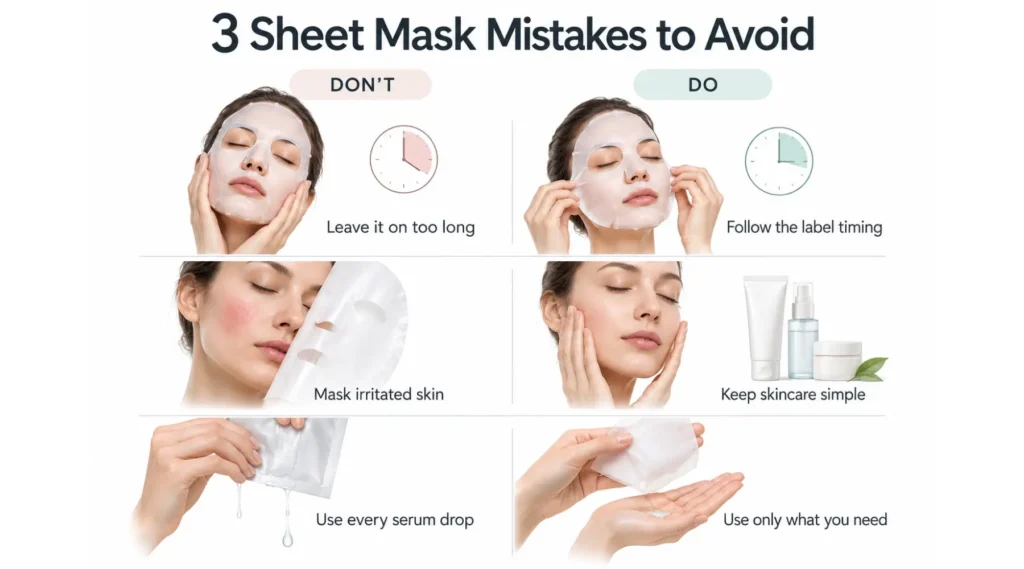
The Most Common Sheet Mask Mistakes
Sheet masks may seem easy to use, but some habits can make them irritating.
Leaving it on too long
People often think the skin keeps absorbing ingredients forever, but that’s not true. Stick to the recommended time unless the label says it’s okay to leave it on longer.
Using it on irritated skin
If your skin stings from over-exfoliation, don’t assume a soothing mask will help. Even gentle masks can irritate damaged skin. A simpler skincare routine is usually safer.
Thinking expensive means better
Price can be affected by materials, packaging, and branding. Focus on the mask’s formula and how it suits your skin, rather than just its price.
Using all the serum in the packet
Don’t feel the need to use all the serum just because it’s in the sachet. Applying too much can feel sticky and may irritate your skin, especially if it has active ingredients.
Combining with many serums
You don’t need to layer multiple serums under a sheet mask. Complicated routines can make it hard to identify reactions and rarely provide extra benefits.
The Most Common Clay Mask Mistakes
Clay masks can cause issues when people mistake discomfort for effectiveness.
Waiting for Cracking
A mask that cracks might seem impressive online, but your skin shouldn’t feel stiff. Follow the recommended timing.
Applying Everywhere
If only your nose and forehead are oily, don’t dry out your cheeks unnecessarily. It’s better to apply the mask where needed.
Using After Exfoliating
Strong exfoliation followed by a clay mask can be too harsh on your skin. Let your skin recover between treatments.
Scrubbing While Removing
Clay masks can already dry your skin. Rubbing too hard when taking it off can create more friction. Just rinse gently.
Believing It Removes Blackheads
Blackheads form when clogged pores are exposed to air. Clay may clean surface oil and make your skin look better temporarily, but it won’t clear out every pore. For long-term acne management, salicylic acid and retinoids are more effective.
When a Face Mask Can Make Your Skin Worse
Let go of thinking about “good masks” and “bad masks” for a moment.
A mask that usually works well can be a poor choice on certain days.
Avoid using masks when your skin has:
- Active sunburn
- Significant peeling
- Open cuts
- Picked or bleeding spots
- Eczema flare-ups
- Severe rosacea
- Unexplained swelling
- Blisters
- Allergic reactions
- Intense burning from other products
Be cautious after professional treatments like chemical peels, microneedling, or laser treatments. Always follow the aftercare instructions from your clinician. Don’t assume a hydrating mask is safe for your skin right after treatment, as contact time and occlusion can affect how ingredients work on sensitive skin.
Signs You May Be Masking Too Often
Your skin shows signs when a treatment is too much.
Look for:
- Tightness after washing
- Stinging from familiar products
- New flaky spots
- Ongoing redness
- Unusual roughness
- Increased sensitivity to warm water
- Itching
- A shiny but dry look
- Clusters of irritated bumps
- More discomfort when you use a mask
These signs don’t definitely mean a mask caused the issue, but they suggest it’s time to simplify your routine.
Stop using exfoliating masks and other optional treatments. Use a gentle cleanser, a basic moisturiser, and sunscreen during the day. When your skin feels truly normal again, not just less red, slowly reintroduce products.
Can Sheet Masks or Clay Masks Shrink Pores?
Not permanently.
Pores are small openings linked to hair follicles and oil glands. Their appearance depends on genetics, oil production, skin congestion, elasticity, and light reflection.
A clay mask can temporarily absorb some oil, making pores look cleaner or smaller.
A hydrating sheet mask can smooth and plump the skin around pores, which may also make them less noticeable.
However, neither type of mask changes your genetic pore structure.
Be wary of masks that claim to “close” pores; they don’t open and close like doors.
Do Clay Masks Remove Toxins?
No serious skincare routine needs clay to detox your body.
Clay can interact with the skin’s surface, making it useful for cosmetic purposes, but it doesn’t replace your body’s organs that remove waste.
The term “detox mask” is more about marketing than real science.
If you enjoy how a clay mask controls shine, use it for that. There’s no need to link it to detoxification when it’s simply good at absorbing oil.
Should a Face Mask Tingle to Show That It Is Working?
No.
Some strong or acidic products might cause a slight, brief tingling feeling, but this doesn’t mean they’re effective for everyone. A hydrating mask can be effective without any feeling at all.
If you experience ongoing burning, intense itching, or increasing pain, it doesn’t mean the product is working.
Take off the mask and rinse your skin if it feels uncomfortable.
Skincare shouldn’t make you suffer to show it’s doing its job.
Is a Sheet Mask Better Before an Event?
For many, a hydrating sheet mask is better than clay before makeup. It helps smooth out dry skin. Use it early so the extra liquid soaks in before you apply makeup.
If the mask leaves your skin feeling slippery or sticky, applying foundation right away can create patches. If you struggle with oily skin, clay can help earlier in your routine. Just don’t try a new clay product an hour before a big event, as it might cause redness that’s hard to cover up.
Stick to skincare products your skin already likes for the best results before an event.
Morning or Night: When Is the Best Time to Use a Face Mask?
Either option can work well.
The best time to mask depends on your reason for using it. A hydrating sheet mask in the morning can help reduce dryness before applying makeup. In the evening, the same mask can feel more soothing and can be followed by moisturiser before bed.
Clay masks are usually easier to use at night.
You have more time to rinse them off and apply moisturiser afterwards. There isn’t a specific time when a face mask becomes a lot more effective.
What matters more is using the right mask regularly.
Can You Use a Mask With Retinol?
Choose your mask carefully.
A hydrating sheet mask can work well with retinoids, especially if you use it on a different night. However, a strong exfoliating mask with retinol can irritate your skin. Clay masks may also dry out your skin while it adjusts to retinol.
If you’ve just started retinol, keep your routine simple. Give your skin time to adjust before adding extra treatments. When irritation happens, adding more products usually doesn’t help.
Can You Use a Mask With Vitamin C or Niacinamide?
Yes, it often depends on the formulae.
Niacinamide is found in many masks and is usually gentle at safe levels.
Vitamin C varies widely because it comes in different forms and formulations. A strong, acidic vitamin C product with an exfoliating mask might irritate sensitive skin.
Consider your entire routine. Just because two ingredients can be used together doesn’t mean your skin will benefit from using them at the same time.
Effective skincare isn’t about using as many active ingredients as possible in one night.
What Facial Masks Do Well and What They Do Not
When people ask what facial masks do, the best answer is that they offer a strong, short-term treatment.

Depending on the type, they can:
- Boost skin hydration
- Alleviate temporary dryness
- Absorb extra oil
- Smooth rough skin
- Make skin look smoother for a short time
- Add soothing ingredients
- Deliver specific cosmetic benefits
- Improve skin feel before an event
However, they generally cannot:
- Permanently shrink pores
- Lift sagging skin for good
- Replace medical acne treatments
- Remove toxins from the body
- Fully restore lost collagen
- Erase deep wrinkles in one use
- Cure chronic skin diseases on their own
This doesn’t mean masks are useless. A product doesn’t need to make permanent changes to be enjoyable or helpful. A moisturising mask that makes dry skin feel good before a wedding has done its job. Problems arise when temporary effects are mistakenly sold as permanent improvements.
Face Masks Should Support Your Routine, Not Become the Routine
A face mask is unique in skincare because it gives quick results. After just 20 minutes, your face can feel much softer. This immediate effect can make masks seem more important than slower routines like using sunscreen. However, long-term skin health works differently. Using sunscreen daily helps prevent UV damage over time. A good moisturiser supports your skin’s barrier consistently. Established acne treatments work on breakouts gradually. Retinoids can change how cells behave and improve collagen with regular use. A face mask is usually an extra step. That’s why it can be fun without high expectations.
Questions People Ask Before Choosing a Mask
Is a Sheet Mask Better than a Clay Mask?
Neither is better overall. A sheet mask is best for quick hydration and softness, while a clay mask absorbs extra oil. Choose based on your skin’s needs.
What is the Main Difference Between Sheet Masks and Clay Masks?
A sheet mask has a water-based essence that hydrates the skin. A clay mask, made of materials like kaolin or bentonite, reduces oiliness and shine.
Can You Use a Sheet Mask and a Clay Mask Together?
Yes, but it’s not often needed. Use the clay mask first, rinse it off, and then apply a hydrating sheet mask. Sensitive or dry skin may do better using them on different days.
Which is Better for Sensitive Skin: Sheet Mask or Clay Mask?
A simple, fragrance-free sheet mask is usually more comfortable than a clay mask. However, not all sheet masks are safe for sensitive skin. If your skin is irritated, avoid both.
Which is Better for Beginners: Sheet Mask or Clay Mask?
Beginners with dry skin can start with a hydrating sheet mask. Those with an oily T-zone might prefer a gentle clay mask once a week. Try one product at a time to see how your skin reacts.
Can a Clay Mask Help with Blackheads?
A clay mask can reduce oil and improve the look of congested areas, but it won’t eliminate blackheads. Salicylic acid and retinoids work better for long-term acne care.
Can Sheet Masks Clog Pores?
Sheet masks don’t automatically clog pores. Whether they cause breakouts depends on your skin and the product. Stop using it if you notice breakouts after applying.
Should I Wash My Face After a Sheet Mask?
Usually not. After removing the sheet, gently pat in any leftover essence and apply moisturiser if needed. Always check the product’s instructions.
Should I Wash My Face After a Clay Mask?
Yes. Most clay masks should be rinsed off with lukewarm water, followed by moisturiser.
Can I Use a Sheet Mask After a Clay Mask?
Yes, a hydrating sheet mask can feel nice after a clay mask, especially if you have oily or combination skin. However, a moisturiser alone is often sufficient.
Are Sheet Masks Good for Dry Skin?
Yes, hydrating sheet masks can help temporarily with dry skin, especially those with humectants like glycerin or hyaluronic acid. They don’t replace regular moisturisers for persistent dryness.
Are Clay Masks Bad for Dry Skin?
Not always, but very absorbent formulae can make dryness worse. If you have dry skin, use clay masks sparingly and only on really oily areas.
Do Collagen Masks Work for Wrinkles?
They may temporarily soften fine lines by making skin look plumper, but they don’t replace collagen deeper in the skin. Don’t expect permanent wrinkle reduction from a mask.
Can You Sleep in a Sheet Mask?
Only if it’s specifically made for overnight use; regular sheet masks should be removed after the suggested time. Longer use isn’t necessarily better.
What Does a Facial Mask Do That a Serum Cannot?
A mask can keep ingredients on the skin longer and create a temporary barrier. Clay masks also absorb oil, which a regular serum may not do. However, a mask isn’t automatically more effective than a good daily treatment.
Sheet Mask vs Clay Mask: Choosing What Your Skin Actually Needs
Choosing between a sheet mask and a clay mask is easier if you focus on the problem you want to fix.
Pick a sheet mask for quick hydration, softness, comfort, or a plumper look. Choose a clay mask for dealing with excess oil, shine, or an oily T-zone. If you have combination skin, use clay masks in specific areas. Sensitive skin should always choose gentle options. For acne-prone skin, masks are a helpful addition but not a main treatment. If your skin is irritated or damaged, it’s best to skip masks until your skin feels better.
Remember, don’t judge a mask’s effectiveness by how intense it feels. A tight feeling from clay doesn’t mean your skin is cleaner, and burning from a sheet mask doesn’t mean it’s working. A collagen mask can hydrate well without fixing deeper skin issues. Reducing the appearance of pores temporarily isn’t the same as making them smaller permanently.
The best mask is one that meets your immediate needs without complicating your skincare routine. Sometimes that means using a hydrating sheet mask, applying clay only on the nose and forehead, or deciding not to use a mask at all.