





Blog
How to Lessen Pores: Daily Tips for Smoother Skin

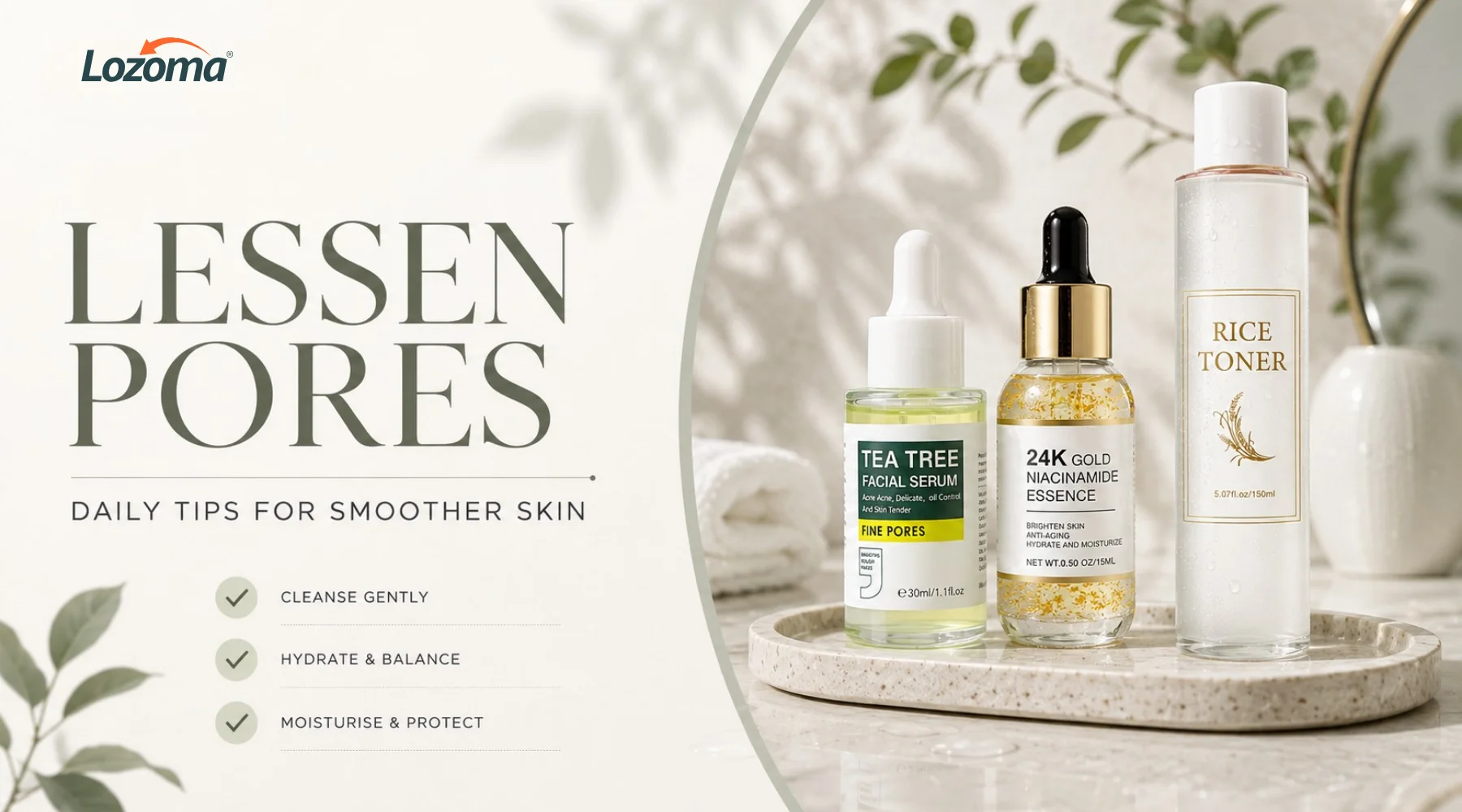
Large pores can make healthy skin look uneven or oily, especially on the nose, cheeks, chin, and forehead. Pores are a common concern because they catch light on the face. When they fill with oil or dead skin, they can look darker. If the skin around them loses firmness, the pores can look wider. Irritated skin can make them more noticeable.
Pores cannot be removed or permanently closed. They are normal openings that let oil and sweat escape. However, you can make your pores appear smaller and cleaner with good daily habits.
The goal isn’t to have poreless skin, this is often achieved with lighting, filters, makeup, or genetics. Instead, aim for balanced skin that looks less congested, less shiny, calmer after cleansing, smoother under makeup, and more evenly textured.
Dermatologists link large-looking pores to several factors: too much oil, less firmness around the pore, clogged follicles, and naturally larger hair follicles in some people. A review highlights that excessive oil, reduced elasticity, and larger hair follicles contribute to visible pore size.
The best routine isn’t about using one harsh product. It’s about making simple daily choices: cleanse gently, exfoliate wisely, control oil, protect collagen, avoid clogging products, and stop harsh “deep cleaning” that can hurt the skin.
The skin biology behind visible pores
A pore is not just a hole; it’s part of a living structure connected to glands and skin renewal. On the face, visible pores connect to pilosebaceous units, where sebaceous glands produce sebum. Sebum isn’t bad; it keeps skin lubricated, supports comfort, and helps defend against damage. Problems arise when oil, dead skin build-up, and slow shedding stretch or darken the pore opening.
DermNet describes enlarged pores as dips in the skin that link to ducts carrying sweat and oil. This means the “pore” you see in the mirror is a mix of the pore opening, its contents, and the firmness of the surrounding skin.
Three things can make pores look bigger:
- Oil volume: When sebum gathers, the pore can appear wider and shinier.
- Congestion: Dead skin and oil can clog pores, which can darken and become blackheads when exposed to air.
- Loss of support: Sun damage, ageing, inflammation, and stress can reduce skin elasticity, making pores look looser.
A study found that pore size relates to more sebum, age, and male gender, with hormonal factors also affecting women. Another study showed that more sebum was linked to larger pores, while better skin elasticity meant smaller pores.
This explains why two people can use the same cleanser and see different results. One may struggle mainly with oil, another with congestion, and another with firmness. Most people have a mix of these issues.
Can you actually lessen pores, or only make them look smaller?
You can make your pores look smaller, but you can’t make them completely disappear. It’s important to know this so you don’t create unrealistic expectations. Many people use harsh products like scrubs, pore strips, and strong toners to try to fix their pores.
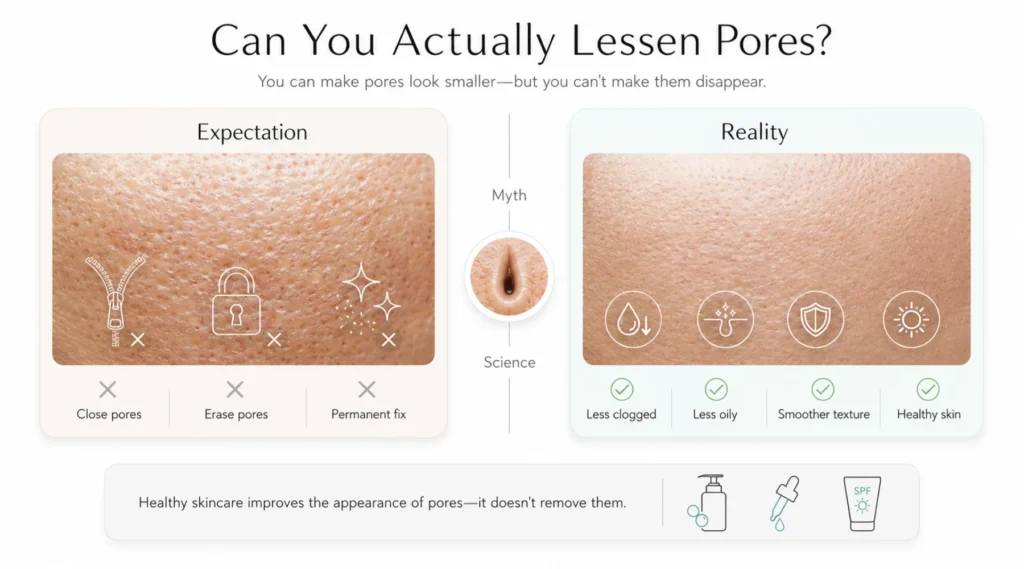
When people ask about closing pores, they usually mean three things:
- They want darker pores to look lighter.
- They want their skin to look smoother under makeup.
- They want the shiny look around their nose and cheeks to go away.
All of these can be improved with regular skincare. However, you can’t make pores open and close like a door. Heat doesn’t open them, and cold water doesn’t close them. Steam can help clear out debris, and cold water can reduce temporary redness, but the pores themselves are not muscles.
The American Academy of Dermatology suggests using products that won’t clog pores, washing your face twice a day, using retinol when needed, treating acne, and applying broad-spectrum SPF. Clogged pores, excess oil, and sun damage can make pores appear larger.
A realistic goal is for pores to look smaller because they are less clogged, less oily, less inflamed, and better supported by healthy skin.
Why do pores start looking larger in the first place?
Visible pores usually don’t have just one cause. They typically become noticeable when several small factors combine.
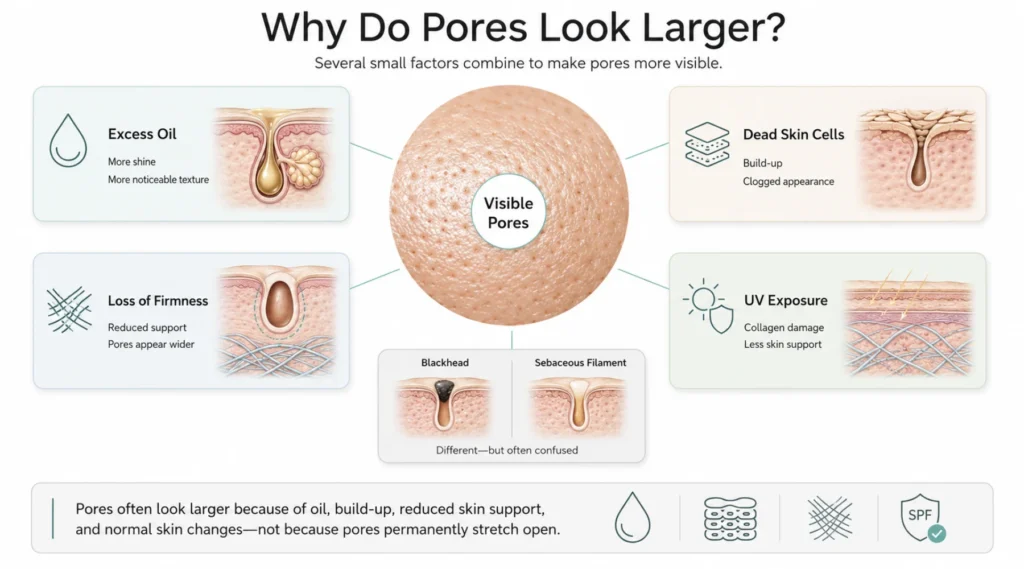
Excess oil makes pores look wider and shinier.
Sebum comes from sebaceous glands. People with oily or combination skin often see larger pores in the T-zone because this area has more oil glands. When oil collects in the pore, it reflects light, making the texture more noticeable.
Oil can mix with dead skin cells. If skin cells don’t shed properly, this mixture can build up inside the pore. This is why oily skin may feel clean right after washing but look clogged a few hours later.
The goal isn’t to eliminate all oil. Over-washing can make skin feel tight, cause irritation, and lead to more oil production. A better approach is managing oil: use a gentle cleanser, a light moisturiser that doesn’t clog pores, and sunscreen suited for your skin. You can also use targeted ingredients like niacinamide, salicylic acid, or retinoids.
Dead skin cells can make pores look darker.
The skin sheds dead cells naturally. When this process slows down or becomes uneven, dead cells can gather around pores. This leads to roughness, dullness, and the look of clogged pores.
Exfoliation can help with this, but it must be done carefully. Salicylic acid is especially effective because it can penetrate oily areas in the pore better than many surface exfoliants. According to the AAD, salicylic acid can unclog pores and is frequently used for acne.
Loss of firmness makes pores look less supported.
As we age, UV exposure and inflammation can make the skin around pores less firm. When the tissue loses elasticity, pores can look oval or stretched. This is why many people notice larger pores on their cheeks in their late twenties and thirties, even with non-oily skin.
Sunscreen plays an important role in caring for pores. Daily SPF doesn’t instantly shrink pores, but it protects collagen and elasticity. Less sun damage helps keep pore openings better supported over time.
Blackheads and sebaceous filaments are often mistaken for the same thing.
A blackhead is an open comedone. It happens when a pore gets blocked with oil and dead skin cells. When the material is exposed to air, it turns dark. Sebaceous filaments are different; they are normal and help move oil through the pores. They often show as small grey, beige, or yellow dots, especially on the nose.
Squeezing sebaceous filaments may feel satisfying at first, but it leads to frustration. They refill because they are part of the skin’s oil flow. Additionally, squeezing can inflame the pore, damage small blood vessels, leave marks, and make the skin texture look rough.
Cleveland Clinic says salicylic acid can dissolve dead skin cells and stop follicles from clogging. Retinoids can also help with sebaceous filaments.
How to lessen pores for beginners without damaging the barrier
A beginner routine should be straightforward and gentle. Many beginners make the mistake of trying to fix visible pores too quickly. They buy multiple products like scrubs, masks, and retinols and use them all at once. This can make the skin dry, shiny, tight, and irritated, making pores look worse.
For beginners, focus on these four essentials:
- A gentle cleanser
- A lightweight moisturiser
- Daily broad-spectrum sunscreen
- One pore-focusing treatment is used regularly
- That’s all you need to start.
If your skin is oily and congested, use salicylic acid two to four times a week. If your oily skin is easily irritated, start with niacinamide. For rough texture and blackheads, a low-strength retinoid at night can help. If your skin is dry and you notice larger pores on your cheeks, focus on hydration, sunscreen, and repairing your skin barrier before exfoliating.
A simple routine often works better than a complicated one. Consistency is key to improving visible pores without harsh treatments.
Daily cleansing habits that make pores look cleaner
Cleansing is the first step in caring for your pores, but many people make mistakes here. The goal is to wash away sweat, sunscreen, makeup, excess oil, and dirt without drying out the skin.
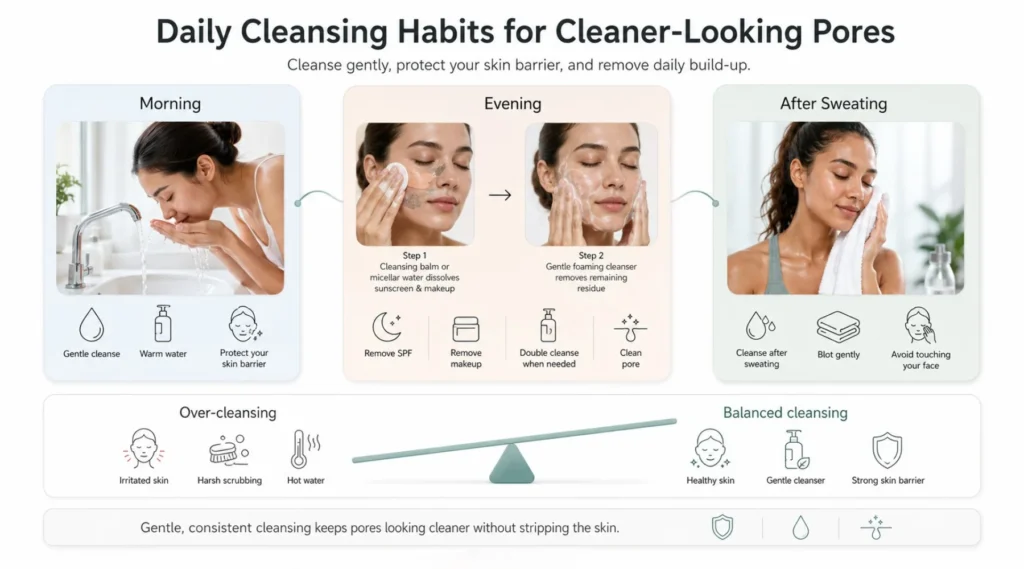
The AAD suggests cleansing twice a day and after sweating. Use warm water, not hot, and wash gently instead of scrubbing. This is important because inflammation can make pores appear larger. If your face looks red, tight, or shiny after cleansing, your cleanser might be too rough, or you might be using too much pressure.
Morning cleansing does not need to be harsh.
If your skin is very oily, use a gentle gel cleanser in the morning to cut down on shine. For dry or sensitive skin, rinsing with water or using a mild cleanser may be enough. The aim is balance, not overly clean skin.
Overly clean skin can mean the natural barrier is damaged. This tight feeling can make fine lines and pores look more noticeable when the skin dries.
Evening cleansing should remove the day properly.
Sunscreen and makeup can clog your pores if not properly removed. If you use long-lasting SPF or foundation, try a two-step cleanse at night. Start with a cleansing balm, oil cleanser, or micellar water, then follow with a gentle water-based cleanser. This isn’t about scrubbing; it’s about melting away products so your treatments can work on your skin, not on leftover makeup and sunscreen.
Cleansing after sweating can help prevent pore congestion.
Sweat isn’t dirty on its own. However, when it combines with oil, bacteria, sunscreen, and friction, it can block pores. After exercising, change out of sweaty clothes and wash your face if you can. If you can’t wash right away, gently blot your skin and try not to touch your face too much.
How to unclog pores without scrubbing your skin raw
To unclog pores, you need to loosen the mix of oil and dead skin cells without hurting your skin. Physical scrubs can make your skin feel smooth, but rough particles can irritate sensitive areas, like the nose and cheeks. For noticeable pores, chemical exfoliation is often more effective.
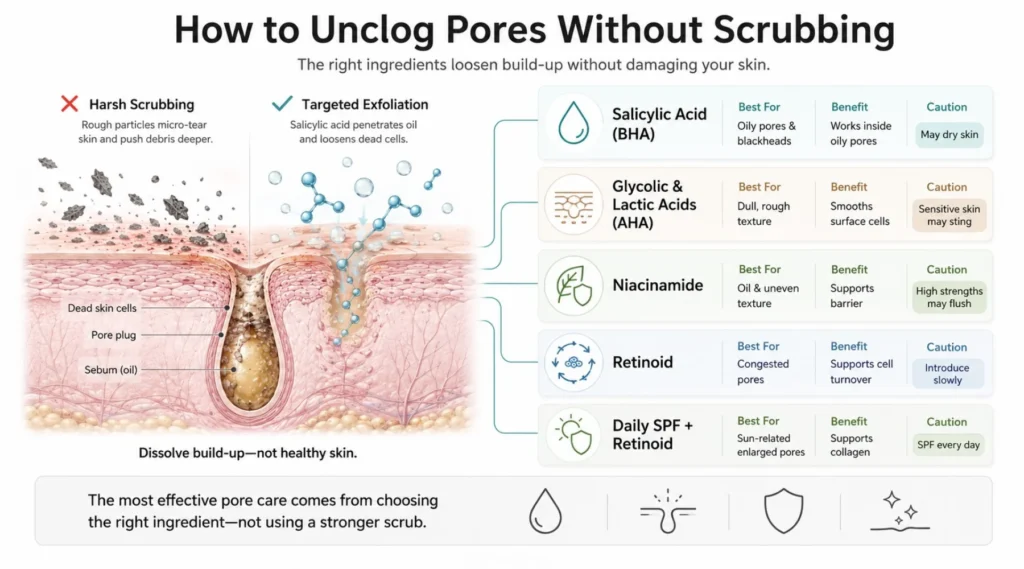
Salicylic acid is often the most useful exfoliant for oily pores.
Salicylic acid is a beta-hydroxy acid that dissolves in oil, making it great for oily and clogged skin. It helps remove dead skin cells, reduce build-up, and loosen blackheads. If you’re wondering how to reduce pores on your face, consider trying salicylic acid.
You don’t need to use it every day. Many people see better results by using it two or three nights a week, especially if they also use retinoids or vitamin C.
Glycolic and lactic acids work more on surface texture.
Alpha hydroxy acids, like glycolic acid and lactic acid, dissolve in water. They mainly work on the skin’s surface and improve dullness, roughness, and uneven tone. These acids can make skin appear smoother, but they might not target pores as effectively as salicylic acid does for oily skin.
Enzyme exfoliants are gentle but limited.
Enzyme exfoliants can soften dead skin cells and enhance your glow. They work well for those who can’t handle stronger acids. However, they might not be effective for stubborn blackheads or deeply congested pores.
| Pore concern | Ingredient type that may help | Why it helps | Caution |
| Oily nose with blackheads | Salicylic acid | Works well in oily pores and helps loosen plugs | Can dry the skin if overused |
| Rough cheeks with dullness | Lactic or glycolic acid | Smooths surface dead cells | May sting sensitive skin |
| Oily shine and uneven texture | Niacinamide | Helps support barrier and may reduce oiliness | Usually gentle, but high strengths may flush |
| Clogged pores with acne | Retinoid | Supports cell turnover and reduces comedone formation | Introduce slowly; avoid during pregnancy unless advised |
| Pores made worse by sun damage | Sunscreen and retinoid | Helps protect and support firmness over time | SPF must be daily |
DermNet lists several topical options for treating comedonal acne, which is caused by clogged pores. These include salicylic acid, glycolic acid, azelaic acid, benzoyl peroxide, and retinoids.
Why niacinamide has become a quiet essential for pore care
Niacinamide is a gentle ingredient that is helpful for the skin. It strengthens the skin barrier, reduces uneven skin tone, improves texture, and may control excess oil. For anyone looking to minimise pores naturally at home, niacinamide is a smart choice.
A study found that 2% niacinamide may reduce facial oil in Japanese participants and lower sebum levels in Caucasians. Recent reviews say niacinamide is a versatile ingredient that helps with oil control, skin barrier support, skin tone, texture, and ageing. It effectively tackles several pore issues at once:
- It makes oily skin look less shiny.
- It strengthens the skin barrier, preventing over-drying.
- It works well with routines that include salicylic acid, azelaic acid, and retinoids.
- It is easier on the skin than stronger exfoliating ingredients.
A lightweight niacinamide essence can be used after cleansing and before moisturising, especially when the skin needs oil balance without dryness from harsh treatments.
The right concentration and regular use are key. Using too much niacinamide can cause flushing or irritation in some people. A moderate, well-formulated product used consistently is often more effective than looking for the highest concentration.
Tea tree, oily skin, and pore-prone routines
Tea tree oil has a long history in skincare for blemishes because it can clear away impurities and fight germs. It works well for oily skin, but you must use it carefully. Never apply pure essential oil directly to your face, as it can irritate the skin and cause more redness.
A diluted tea tree facial serum can help if you have oily skin with blemishes or a heavy T-zone. Use it sparingly: apply a thin layer to oily areas, and add moisturiser if needed.
Tea tree oil shouldn’t replace acne treatments for severe acne that is painful or leaves scars. Don’t mix it carelessly with other acids or retinoids. If you notice stinging, peeling, or heat, use it less often.
Retinoids and the slow improvement of texture
Retinoids are effective long-term treatments for clogged pores, uneven skin texture, and early signs of ageing. They help skin cells turn over and prevent dead cells from building up in pores. In acne treatment, topical retinoids are popular because they stop comedones, which are caused by trapped oil and dead cells.
According to the AAD, retinoids like adapalene can clear pores and reduce oiliness. Dermatologists suggest sticking with a treatment for a while instead of constantly changing products.
Retinoids don’t clear pores overnight; they work slowly to improve skin behaviour. With regular use, many people see fewer clogged pores, smoother makeup application, better texture, and a more polished appearance.
How to start a retinoid without causing irritation
- Begin two nights a week.
- Use a pea-sized amount for the whole face.
- Apply to dry skin.
- Avoid the corners of the nose, mouth, and eyes at first.
- Follow with moisturiser, or apply moisturiser before and after if sensitive.
- Do not combine with exfoliating acids on the same night until your skin is comfortable.
You might notice some dryness or mild flaking in the first few weeks. If you feel burning, swelling, or ongoing stinging, your routine may be too strong.
Avoid retinoids while pregnant or breastfeeding unless your doctor says it’s okay. The AAD also warns against using retinol or retinyl palmitate during pregnancy and breastfeeding.
The barrier-supporting step people underestimate
Many people avoid moisturisers when trying to reduce pores because they worry that it will make them worse. This is understandable, especially if past creams felt heavy or greasy. However, dry skin can look rough, shiny, and uneven. A damaged skin barrier can also make it harder to use active ingredients.
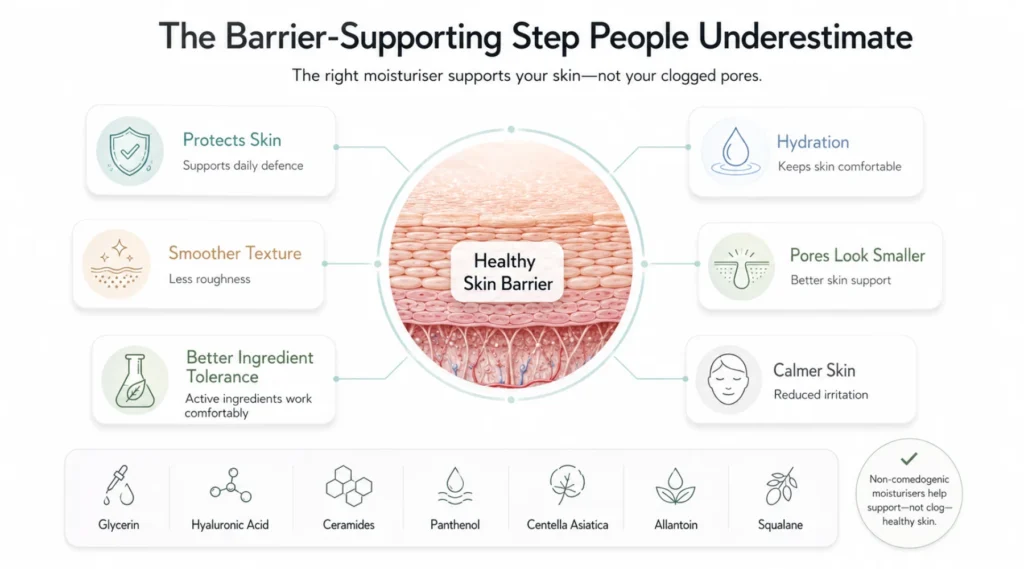
The right moisturiser won’t clog pores. It keeps skin flexible, calm, and less reactive. If you have oily skin, look for lightweight, non-comedogenic options like gel-creams, fluid lotions, or barrier-supporting creams.
Good ingredients for moisturisers include:
- Glycerin
- Hyaluronic acid or sodium hyaluronate
- Panthenol
- Ceramides
- Centella asiatica
- Allantoin
- Small amounts of squalane, if it works for you
A balanced skin care routine should keep your face comfortable after washing. If your skin feels tight without multiple layers, you might need to adjust your cleanser or exfoliation routine.
Sunscreen is a pore product, even if it does not feel like one.
Sunscreen often gets overlooked in discussions about pores because it doesn’t provide instant results like masks or toners. However, UV exposure can break down collagen, cause pigmentation, roughness, and loss of elasticity. When skin loses firmness, pores can appear larger, especially on the cheeks.
Using sunscreen every day helps maintain the skin’s structure around pores and lowers the chance of marks from breakouts, which can make skin look uneven.
The AAD recommends using broad-spectrum, water-resistant sunscreen with an SPF of 30 or higher to prevent sun damage that can make pores more visible. For oily or pore-prone skin, opt for non-comedogenic, oil-free, or acne-friendly formulae. If sunscreen feels greasy, try a fluid, gel, milk, or matte option. The best sunscreen is one you’ll use daily without disliking the feel.
How to lessen pores naturally without falling for harsh home remedies
Many people want to reduce pores naturally for safer and simpler options. This instinct is good. However, “natural” skincare advice often includes raw ingredients that can harm the skin.
For example, lemon juice, baking soda, toothpaste, undiluted apple cider vinegar, and harsh scrubs can irritate the skin. This irritation may temporarily tighten the skin, making some think their pores are smaller. But that tightness is often a sign of skin damage, not improvement.
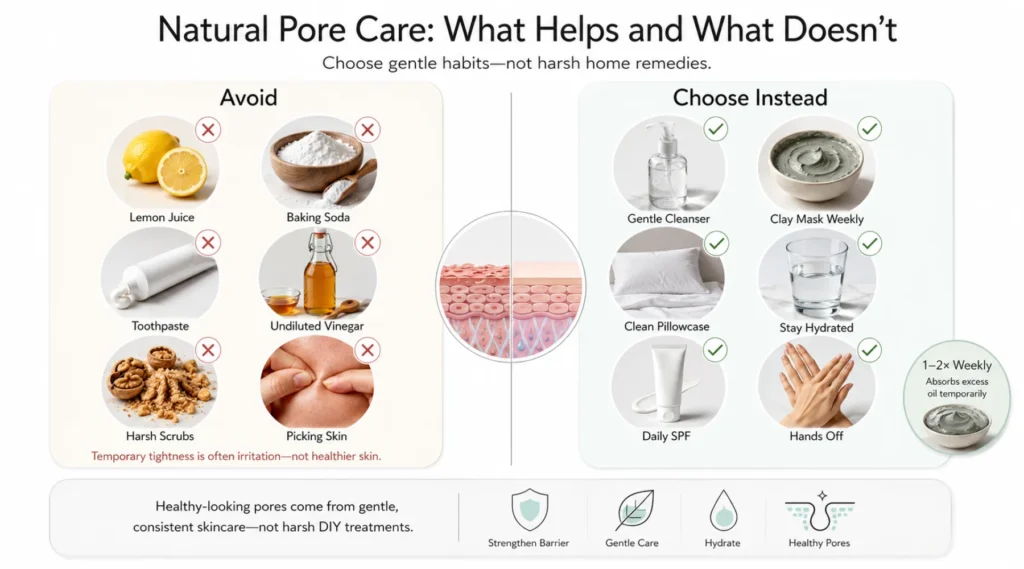
A safer approach includes:
- Use a gentle cleanser instead of soap.
- Choose non-comedogenic oils only if your skin can handle them.
- Use clay masks occasionally, not every day.
- Avoid kitchen acids on your face.
- Keep pillowcases and face towels clean.
- Don’t pick at your skin.
- Stay hydrated.
- Use sunscreen.
Clay can help oily skin by absorbing extra oil for a short time. Masks with kaolin and bentonite can make pores look cleaner for a day or two, but using them daily can dry out the skin and worsen texture. Once a week is enough for most people.
Green tea, aloe vera, and centella can help soothe the skin, but they won’t permanently shrink pores. Natural treatments work best when combined with effective pore strategies: cleansing, sunscreen, non-comedogenic products, and suitable active ingredients.
Best routine to lessen pores in the morning
A morning routine should ready the skin for the day, reduce shine, and keep it firm. It should not overwhelm the skin.
Step 1: Cleanse gently
Choose a mild gel, foam, or cream cleanser based on your skin type. If you have oily skin, use a gel cleanser. If your skin is dry or sensitive, opt for a cream or low-foam cleanser.
Step 2: Apply a balancing serum
Niacinamide is effective for oily or uneven skin. It helps reduce shine and supports the skin’s barrier.
Step 3: Use a lightweight moisturiser
Pick a texture that sinks into the skin and doesn’t leave a greasy layer. Oily skin needs hydration too; it just needs the right type.
Step 4: Apply sunscreen generously
Use SPF 30 or higher. Apply enough to cover your face, ears, and neck. Skipping sunscreen harms your skin over time, making it look and feel worse.
Step 5: Choose makeup that does not clog pores
If you use foundation, primer, or concealer, choose non-comedogenic products. Heavy, long-lasting makeup isn’t always bad, but be sure to remove it completely at night.
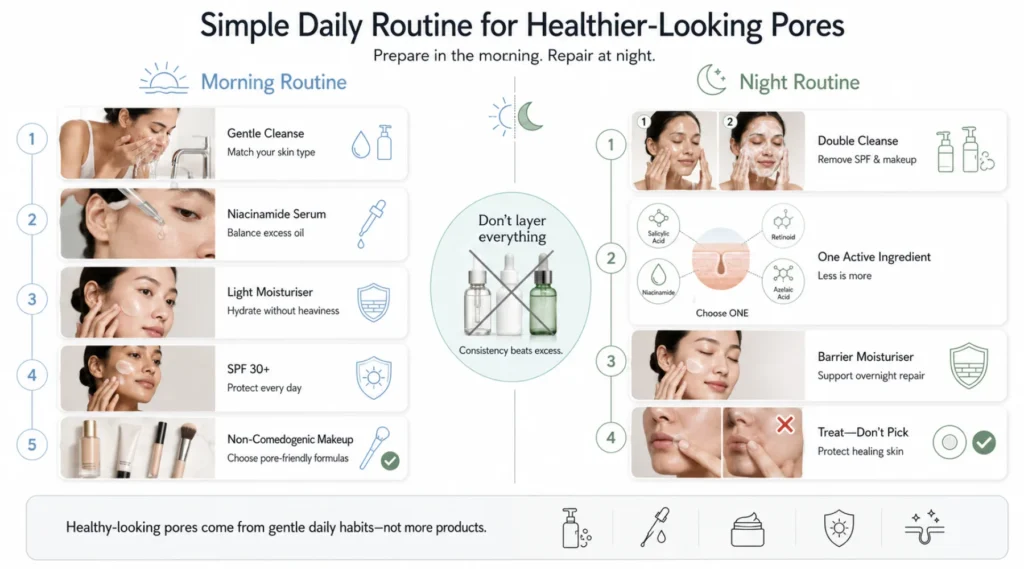
Best routine to lessen pores at night
Night is the time to focus on congestion, texture, and repair. However, many people tend to go overboard.
Step 1: Remove sunscreen and makeup properly
If you wear sunscreen, clean your face well at night. The first wash helps remove makeup and sunscreen, while a second gentle wash gets rid of any leftover residue.
Step 2: Use one active, not three
Choose the right treatment for your main pore issue:
- Salicylic acid: for clogged and oily pores.
- Retinoid: for texture problems, blackheads, and recurring breakouts.
- Niacinamide: for oily but sensitive skin.
- Azelaic acid: for redness, blemishes, and uneven tone.
Tip: As a beginner, avoid using salicylic acid, glycolic acid, and retinoids together at night. More products won’t speed up results.
Step 3: Moisturise enough to keep the barrier calm
A comfortable barrier helps you stay consistent. If your skin gets irritated, you’ll need to stop using active ingredients and begin again.
Step 4: Treat spots without squeezing
If you get a blemish, use a spot treatment or hydrocolloid patch instead of picking at it. Picking can stretch the pore, make inflammation worse, and leave marks.
A weekly rhythm for pore care
- Daily routines are important, but weekly habits improve results.
- Using a clay mask once a week can help with oily areas.
- Using salicylic acid one or two nights a week can clear congestion.
- Using retinoids two or three nights a week can improve skin texture once your skin adapts.
- Having one or two nights of just cleanser and moisturiser can prevent irritation.
View recovery nights as part of your care. Skin that is over-exfoliated can appear shiny, thin, and sensitive. Healthy skin reflects light evenly because its barrier is intact.
A good weekly routine might look like this:
| Day | Evening focus |
| Monday | Retinoid |
| Tuesday | Barrier recovery |
| Wednesday | Salicylic acid |
| Thursday | Barrier recovery |
| Friday | Retinoid |
| Saturday | Clay mask or gentle hydration |
| Sunday | Barrier recovery |
This is just an example. Sensitive skin may need fewer active nights. Oily, strong skin can handle more, but increases slowly.
Common mistakes when trying to lessen pores
Pore care often fails because the routine is too harsh. The skin may look smooth for a few days, but then it can turn red, bumpy, oily, and uneven.
Scrubbing the nose every day
The nose usually has sebaceous filaments, which are not dirt. Scrubbing can remove some oil for a short time, but it won’t stop oil production. It may also irritate the skin around the nostrils and make pores appear larger.
Using pore strips as a routine
Pore strips can clear away some dirt from your skin, but they don’t stop pores from getting dirty again. If you use them too much, they can irritate your skin and damage its protective layer. They are particularly risky for sensitive skin, skin with rosacea, or skin using retinoids.
Skipping moisturiser because the skin is oily
Oily skin can be dehydrated. Without moisturiser, it may feel tight underneath and greasy on top. This mix can make skin texture more noticeable.
Choosing products without checking whether they clog pores
The AAD suggests choosing products labelled as non-comedogenic, oil-free, or “won’t clog pores.” Clogged pores can expand and become more visible. This advice applies to cleansers, moisturisers, sunscreens, primers, foundations, and some hair products that contact the face.
Changing routine every week
Improving your pores takes time. If you keep switching products, you won’t know what works or what irritates your skin. Stick to a simple routine for at least six to eight weeks, unless something clearly irritates your skin.
Treating pores like dirt
Visible pores are not a sign of poor hygiene. Washing too much can actually make them worse. The goal is to maintain balance, not to eliminate all germs.
How long does it take to lessen pores?
The timeline varies based on the issue. Oil control can improve in a few days to two weeks with the right routine. Congestion and blackheads usually take longer, around six to twelve weeks. Changes in skin texture from retinoids can take three months or more. Pores that appear larger due to less firmness need the most time because collagen changes slowly.
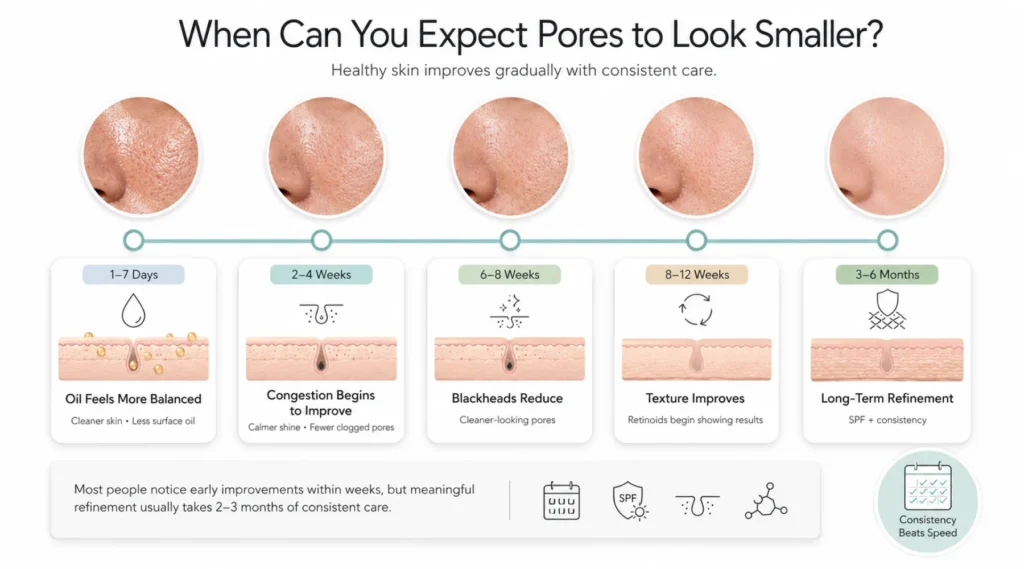
A realistic timeline is as follows:
| Timeframe | What may improve |
| 1–7 days | Less surface oil, cleaner feel, smoother makeup if cleansing improves |
| 2–4 weeks | Fewer new clogged pores, less dullness, calmer shine |
| 6–8 weeks | Blackheads and congestion may begin to reduce visibly |
| 8–12 weeks | Retinoids and consistent exfoliation may improve texture |
| 3–6 months | Better long-term refinement, especially with SPF and retinoid use |
If you’re curious about how long it takes to reduce pores, the answer is: you might see some quick improvement, but lasting results usually take two to three months. One skin cycle is about a month, but this can vary based on age, skin type, and routine.
Professional treatments for stubborn enlarged pores
At-home skincare can help a lot, but it also has limits. If your pores look large due to severe acne scars, sun damage, or decreased skin elasticity, professional treatments might work better.
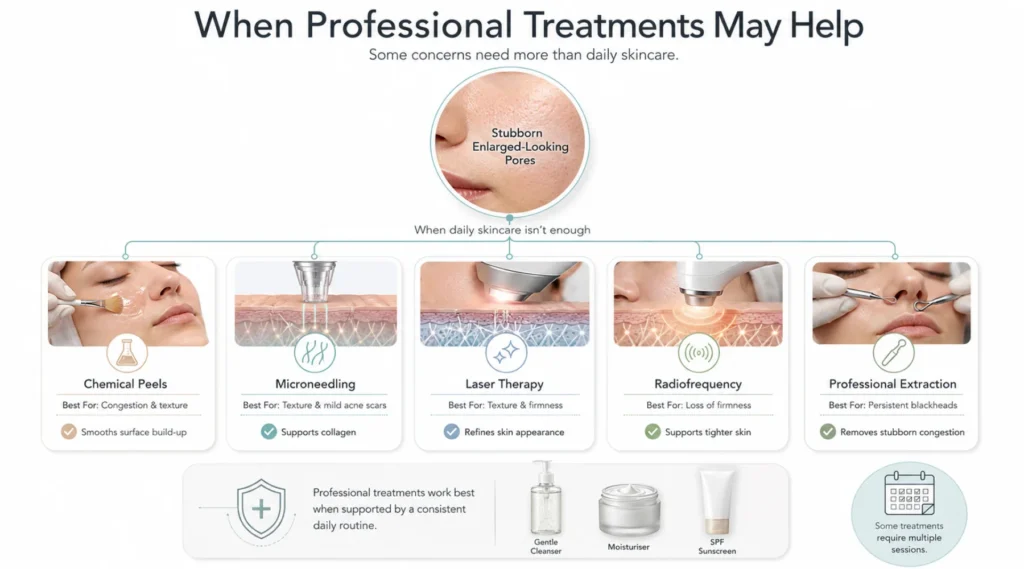
Here are some common options:
Chemical peels
Professional peels can help with congestion, dull skin, and uneven texture. Salicylic acid peels work well for oily, acne-prone skin. Glycolic or lactic acid peels are better for improving surface texture and skin tone.
Microneedling
Microneedling creates tiny injuries to boost healing. It can improve skin texture, reduce mild acne scars, and increase firmness over time. Always have a trained professional do the procedure, especially for deeper treatments.
Laser and light-based treatments
Some lasers can enhance skin texture, boost collagen support, and reduce visible pores. They differ in recovery time, cost, and suitability for various skin tones. Those with darker skin need to choose treatments carefully to minimise the risk of hyperpigmentation.
Radiofrequency treatments
Radiofrequency devices use energy to heat the deeper layers of skin to help tighten it. Clinical reviews mention lasers, radiofrequency, and ultrasound as options for enlarged pores, but results can vary, and multiple sessions might be necessary.
Professional extractions
Extractions can help remove blackheads and closed comedones if done properly. They should be gentle. Bad techniques can lead to broken capillaries, inflammation, and scars.
Professional treatments are most effective when your daily skincare routine is solid. A peel or laser can’t fix problems caused by too much sun, heavy makeup, or frequent picking.
When visible pores may be a sign of acne, not just texture
Pores can become a health issue with ongoing acne. If you have blackheads, whiteheads, inflamed spots, painful cysts, or lasting marks, focus on pore care as part of your acne treatment, not just for beauty.
Cleveland Clinic notes that comedonal acne is tough to treat because comedones are trapped in follicles. Treatments include salicylic acid, retinoids, azelaic acid, benzoyl peroxide, and glycolic acid.
See a dermatologist if:
- You have painful acne in your pores.
- You are getting scars.
- Your breakouts worsen despite good skincare.
- You suddenly have more oiliness or acne as an adult.
- You are pregnant, breastfeeding, or trying to conceive and are unsure about safe products.
- Your skin burns with most treatments.
Getting prescription treatment early can help prevent long-term scars. It’s better to treat acne promptly than to spend years fixing the damage it causes.
Why do your pores look worse some days than others?
Pores can change in appearance from day to day. This doesn’t mean your skincare routine isn’t working.
Pores may look larger when:
- You’re dehydrated.
- You didn’t sleep well.
- You used too much exfoliant.
- You skipped moisturiser.
- You wore heavy makeup without cleansing well.
- The weather is hot and humid.
- Your hormones are changing.
- You’re close to your period.
- You’ve been sweating.
- You’re under harsh overhead lighting.
Skin changes over time. Judge your pore routine over weeks, not just by how it looks in the bathroom at midnight.
Lifestyle habits that quietly affect pore appearance
Lifestyle doesn’t replace skincare, but it can affect oiliness, inflammation, and skin barrier strength.
Sleep affects how textured skin appears.
Lack of sleep can make your skin look dull, puffy, and uneven. When skin is tyred or dry, it doesn’t reflect light well. One night of poor sleep won’t make your pores bigger, but consistently not sleeping enough can make your skin look less healthy.
Diet may influence acne-prone skin in some people.
Diet doesn’t directly cause visible pores, but people with acne might see breakouts from eating high-glycaemic foods or certain dairy. This connection can be different for each person. Instead of making drastic changes, pay attention to how your skin reacts over a few weeks.
Stress can worsen oiliness and breakouts.
Stress can affect hormones, sleep, and behaviours like touching your face. Many people touch their faces more when stressed, which can lead to more congestion and inflammation.
Hair products can clog pores around the forehead.
Thick oils, waxes, pomades, and leave-in conditioners can spread to your forehead and temples. If you have pores or bumps near your hairline, check your hair care products.
Dirty tools can undermine a good routine.
Makeup brushes, sponges, pillowcases, phone screens, and reusable face cloths can hold oil and dirt. Clean them often. This isn’t about being obsessed; it’s about stopping unnecessary buildup.
Myths that keep pore routines frustrating
“Hot water opens pores and cold water closes them”
Pores don’t open and close like doors. Warmth can soften oil and dirt, making it easier to clean. Cold water can temporarily reduce puffiness or redness, but it doesn’t change the pore structure.
“You can get rid of pores completely”
You can’t eliminate pores; they are necessary for your skin. When people ask how to reduce pores, the best advice is to focus on making them look smaller instead of trying to remove them.
“If a product tingles, it is working”
Tingling can indicate activity or irritation. Burning does not mean better results. Inflamed skin can make pores appear larger.
“Oily skin does not need moisturiser”
Oily skin needs the right moisturiser. Not using it can make your skin feel tight, sensitive, and greasy.
“Natural remedies are always safer”
Some natural ingredients can irritate the skin when used directly. Lemon juice and baking soda aren’t gentle for your pores.
“Pores only look large because they are dirty”
Visible pores are affected by oil, genetics, follicle size, skin elasticity, hormones, sun damage, and blockages. Cleanliness is just one part of the issue.
How to decrease pores on face without overcomplicating your routine
The phrase “how to decrease pores on face” often suggests complex routines, but the best method is usually simple and takes time.
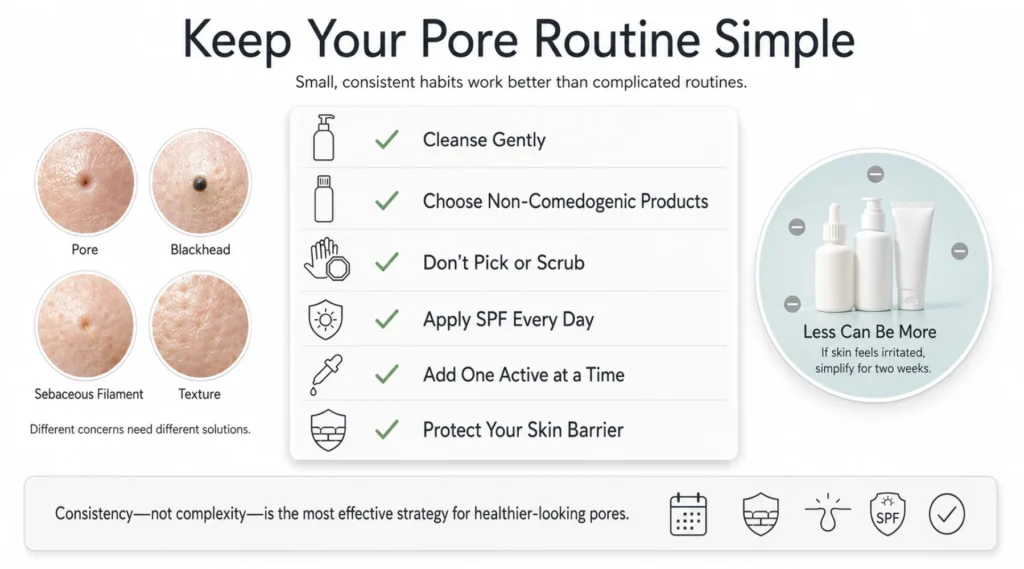
Start by addressing what makes pores look bigger:
- Stop using pore-clogging products.
- Clean your face regularly.
- Avoid scrubbing or squeezing your skin.
- Use sunscreen every day.
- Introduce one active ingredient at a time.
- Keep your skin barrier healthy.
If you’re already using several active ingredients and your pores still look large, simplify your routine for two weeks. Use only a cleanser, moisturiser, and sunscreen. When your skin feels calm, add back one treatment. Skin often looks smoother when irritation is reduced.
For a clearer understanding of how to reduce pore size, it helps to differentiate between pore size, visibility, blackheads, and sebaceous filaments, as they need different treatments.
The difference between diminishing pores and hiding them
Makeup is fine. A good primer or blurring base can instantly smooth your pores. However, cosmetic blurring is different from real skin improvement.
To make pores look smaller with makeup, try these tips:
- Use a lightweight moisturiser.
- Apply a silicone-based primer if it works for you.
- Use thin layers of foundation.
- Apply powder only where needed.
- Choose a lightweight setting spray.
To improve pores over time, use:
- Non-comedogenic skincare.
- Salicylic acid to clear congestion.
- Niacinamide for oil control and skin barrier support.
- Retinoids to improve texture and reduce blemishes.
- Sunscreen for long-term skin firmness.
You can use both methods together. Just remember not to cover congestion with makeup without properly cleansing your skin at night.
How skin type changes the best pore strategy
Oily skin
Focus on oil control and unclogging pores. Key ingredients include salicylic acid, niacinamide, a lightweight moisturiser, and non-comedogenic sunscreen.
Combination skin
Treat the T-zone differently from the cheeks. Apply salicylic acid only where necessary, and provide more support for drier areas.
Dry skin
Visible pores on dry skin often result from rough texture, dehydration, or lack of firmness, not oil. Avoid strong foaming cleansers and too many clay masks. Use gentle exfoliation only when needed.
Sensitive skin
Start with fixing the skin barrier. Use niacinamide carefully, skip fragrance, and add new ingredients gradually. If your routine is making your skin red, it’s not effective.
Acne-prone skin
Use effective acne ingredients instead of just cosmetic pore products. Retinoids, salicylic acid, benzoyl peroxide, and azelaic acid can all be helpful, depending on how bad your acne is and how your skin reacts.
Mature skin
Use sunscreen, retinoids if you can, stay hydrated, and follow routines that support collagen. Mature skin often needs firmness as well as oil control for its pores.
Knowing why pores appear large helps avoid the mistake of treating all pore issues as oil problems.
Product texture matters more than people think.
Even great ingredients can fail if they don’t match your skin’s texture. Heavy creams can feel too thick on oily skin, while drying gels can cause redness on sensitive skin. Sticky sunscreens can make application difficult.
For skin prone to pores, consider these textures:
- Gel cleansers
- Fluid serums
- Light gel-creams
- Non-greasy sunscreens
- Water-light essences
- Thin lotions
The serums step is important for targeting pores without changing all your products. However, don’t choose a serum just because it says “pore minimising.” Check the active ingredients, texture, and how it fits with your routine.
The safest way to build a pore routine from scratch
If your routine is hectic, try a four-week reset.
Week 1: calm the skin
Use only cleanser, moisturiser, and sunscreen. Avoid scrubs, acids, retinoids, and pore strips. Notice if your pores look better when irritation decreases.
Week 2: add oil support
Start using niacinamide once a day. If your skin feels good, keep using it.
Week 3: add congestion support
Use salicylic acid two nights a week. Avoid using it on the same night as a new retinoid.
Week 4: consider a retinoid
If you have ongoing texture issues and blackheads, use a low-strength retinoid twice a week. Always have moisturiser handy.
This slower approach may seem less thrilling than using multiple new products, but it lets your skin adjust and helps you see what really works.
How to lessen pores at home when your skin is already irritated
If your skin is red, flaky, burning, or shiny, take a break from trying to minimise pores. Irritated skin doesn’t get better with more scrubbing.
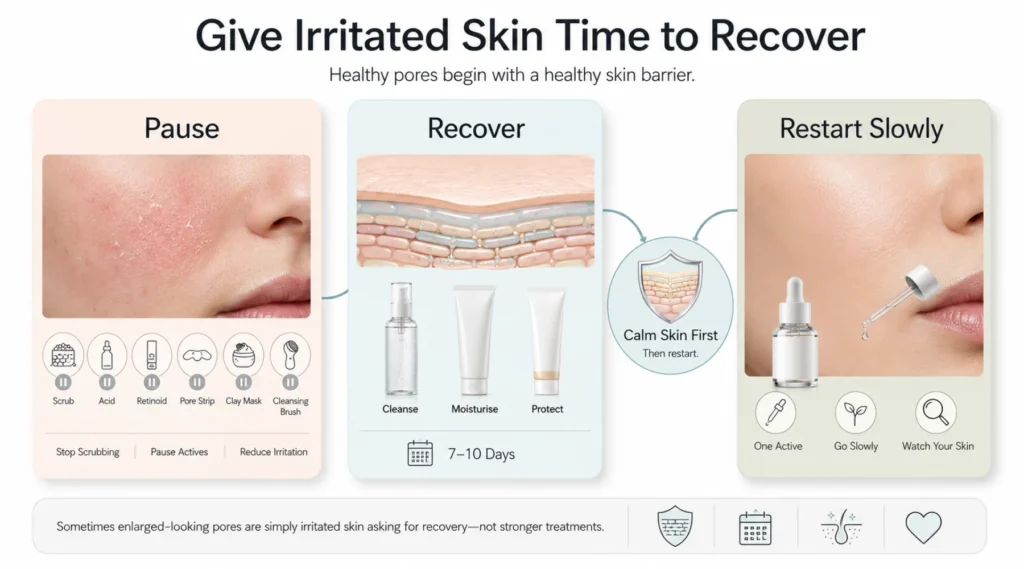
For the next seven to ten days, use:
- A gentle cleanser
- A simple moisturiser
- Sunscreen in the morning
Avoid:
- Scrubs
- Acids
- Retinoids
- Pore strips
- Strong masks
Once your skin feels normal, slowly add active ingredients back into your routine. Many people find that their “large pore problem” is really due to irritation.
Can you permanently shrink pores?
You cannot permanently shrink pores. Their size is affected by genes, oil production, skin structure, age, hormones, and skin elasticity. Some treatments can make pores look smaller for a while, but they can’t change them permanently.
Be wary of claims like “close pores forever” or “erase pores overnight.” While some products may temporarily tighten skin or reduce shine, lasting results need regular care.
The better question is whether you can keep pores looking smaller consistently. In many cases, yes. Using sunscreen, controlling oil, gently exfoliating, and applying retinoids can help make pores appear smoother over time.
Understanding that pores can’t be permanently shrunk protects you from harsh products and false promises.
What to do when pores and blackheads keep coming back
Recurring blackheads usually mean that your pores still create clogs. The answer is not to squeeze them repeatedly but to prevent them.
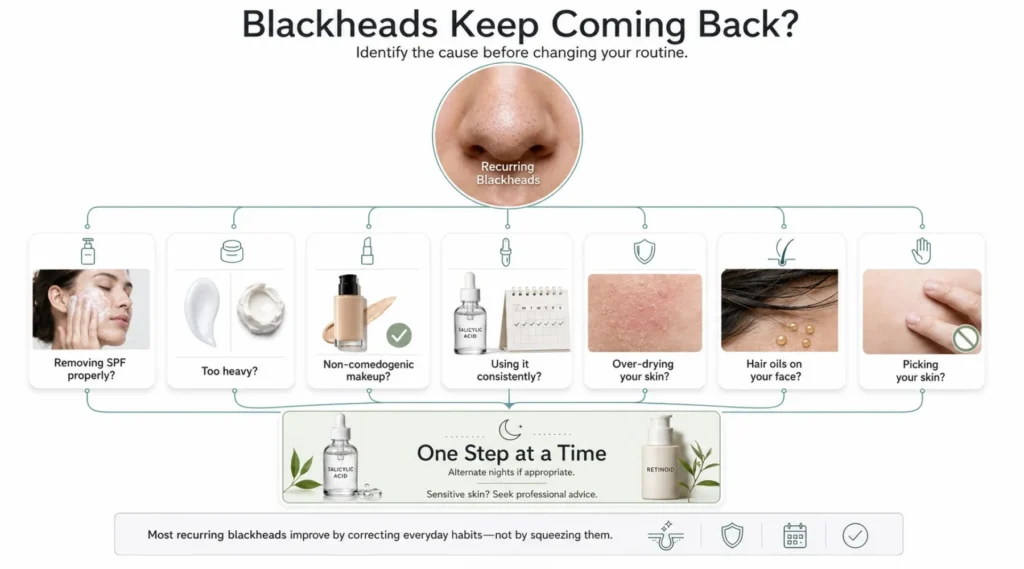
Check these points:
- Are you cleaning off sunscreen properly at night?
- Is your moisturiser too heavy?
- Do your makeup products not cause breakouts?
- Are you using salicylic acid often enough?
- Are you drying out your skin too much?
- Are hair oils touching your face?
- Are you picking at tiny bumps on your skin?
- Are you giving treatments enough time to work?
If blackheads are hard to remove, try using a retinoid with salicylic acid on alternate nights. Start slowly with this combination. If you have sensitive skin, seek professional advice.
Skin of colour and pore care
Pore care for deeper skin tones requires special attention. Inflammation can lead to dark marks. Actions like aggressive extraction, harsh peels, using too many acids, and picking can worsen this pigmentation.
The best approach is to stay calm and consistent:
- Avoid trauma to your skin.
- Use sunscreen every day.
- Treat acne as soon as it appears.
- Introduce active ingredients slowly.
- Avoid strong DIY acids.
- If you want peels or lasers, choose professionals who understand your skin tone.
While pores are a visible concern, it’s just as crucial to prevent dark marks.
Seasonal changes and pore visibility
Pores often look larger in summer due to heat and humidity, which add shine to the skin. Sunscreen can feel heavier during this time. In winter, pores may appear sharper because dry skin is less full.

In warmer months
- Use a lighter moisturiser.
- Pick a sunscreen that breathes better.
- Wash your face after sweating a lot.
- Use clay masks just once a week.
- Limit salicylic acid use.
In colder months
- Reduce exfoliation if skin becomes dry.
- Use more barrier-supporting moisturiser.
- Avoid hot water.
- Use sunscreen daily.
- Do not mistake dehydration lines and roughness for clogged pores.
Your pore routine should adapt to the season rather than remain identical all year.
The pore-care routine we would recommend most often
For people with visible pores and mild oiliness, a balanced skincare routine could be:
Morning:
- Gentle cleanser
- Niacinamide serum or essence
- Lightweight moisturiser
- Broad-spectrum SPF 30 or higher
Evening:
- Remove makeup and sunscreen
- Gentle cleanser
- Salicylic acid two nights a week
- Retinoid two nights a week if your skin can handle it
- Moisturiser every night
- Rest days between active treatments
This routine is enough. Your skin doesn’t need constant fixing; it needs a rhythm.
Questions people ask before starting pore care.
How can I lessen pores quickly before an event?
Gently cleanse your skin. Apply a clay mask to oily areas for ten minutes. Use a light hydrating serum and moisturise lightly. If you wear makeup, add a blurring primer. Avoid trying new peels or retinoids before an event, as irritation is harder to cover than pores.
How to lessen pores for beginners with sensitive skin?
Week 1: Start with a cleanser, moisturiser, and sunscreen.
After Week 1: Add niacinamide a few times a week.
Avoid: Scrubs, pore strips, and strong acids at first.
Note: Sensitive skin needs a stable barrier before treating pores.
How to lessen pores naturally at home?
Use a gentle cleanser, a moisturiser that won’t clog pores, and apply sunscreen regularly. Change your pillowcases often, use clay masks sometimes, and don’t pick at your skin. Remember, natural ingredients like lemon, baking soda, or toothpaste can irritate your skin.
Can ice close pores?
Ice cannot close pores for good. It can temporarily reduce puffiness or redness, making the skin look tighter for a little while. However, do not apply ice directly to the skin for too long, as it can cause irritation or damage.
Is salicylic acid good for pores?
Salicylic acid is a great over-the-counter treatment for oily and clogged pores. It helps remove dead skin and oil from your pores. Start using it slowly and make sure to moisturise well.
Is niacinamide better than salicylic acid for pores?
Niacinamide and salicylic acid serve different purposes. Niacinamide helps balance oil, support the skin barrier, and improve texture. Salicylic acid targets clogged pores and blackheads. You can use both in your skincare routine, but not at the same time of day.
How long does it take to lessen pores?
Oiliness may improve in days or weeks. Clogged pores usually take six to twelve weeks to clear. Changes in texture and firmness can take three months or more, especially with retinoids and sunscreen.
Can I get rid of pores completely?
No, pores are normal parts of the skin. You can make them look smaller by keeping them clean, managing oil, protecting collagen, and avoiding irritation, but you cannot get rid of them.
Why do my pores look bigger after washing my face?
Your cleanser might be too strong, the water too hot, or your skin too dry. Tight, dry skin can make texture more noticeable. Use a gentler cleanser and moisturise right after washing.
Do pore strips make pores bigger?
Pore strips don’t make pores larger permanently. However, using them too often can irritate your skin and harm its natural barrier. They also won’t prevent pores from refilling. It’s better to use them as a rare fix, not as a daily routine.
Should I squeeze sebaceous filaments?
No. Sebaceous filaments often refill, and squeezing them can cause redness, broken blood vessels, inflammation, and marks. Instead, use salicylic acid, retinoids, and oil-balancing products.
What is the best routine to lessen pores?
- A good skincare routine starts with a gentle cleanser.
- Use a non-comedogenic moisturiser and apply daily SPF to protect your skin.
- Incorporate niacinamide to balance oil, and salicylic acid to clear congestion.
- If you still have texture issues or blackheads, add a retinoid.
- Introduce active ingredients slowly.
Can large pores be caused by sun damage?
Yes. Sun damage can make your skin less firm and elastic, which makes pores look bigger. Using sunscreen every day helps keep the skin around the pores strong and improves skin texture over time.
Why are my pores large even though my skin is dry?
Dry skin can still show pores, especially if it’s dehydrated, rough, ageing, or has a history of acne. Instead of removing oil, focus on hydration, sunscreen, and gentle products.
Can professional treatments permanently remove pores?
No professional treatment can remove pores permanently. However, treatments like chemical peels, microneedling, lasers, and radiofrequency can improve how pores look by reducing congestion and enhancing skin texture and firmness.
Making how to lessen pores a daily habit rather than a skin emergency
To reduce the appearance of pores, stop viewing them as flaws. Pores are a natural part of healthy skin. They only become noticeable when oil, irritation, and loss of firmness highlight them.
Focus on daily habits: cleanse gently, remove sunscreen properly, use non-comedogenic products, protect your skin from UV damage, exfoliate carefully, support the skin barrier, and avoid squeezing. Include purposeful ingredients: use niacinamide for balance, salicylic acid for clogged pores, retinoids for texture, moisturiser for comfort, and sunscreen for protection.
Smoother skin comes from a consistent routine, not just one powerful product. When your skin is calm, hydrated, and free of buildup, pores will be less noticeable and won’t be the first thing you see.