




Blog
Can You Permanently Shrink Pores? What Helps and What Hurts

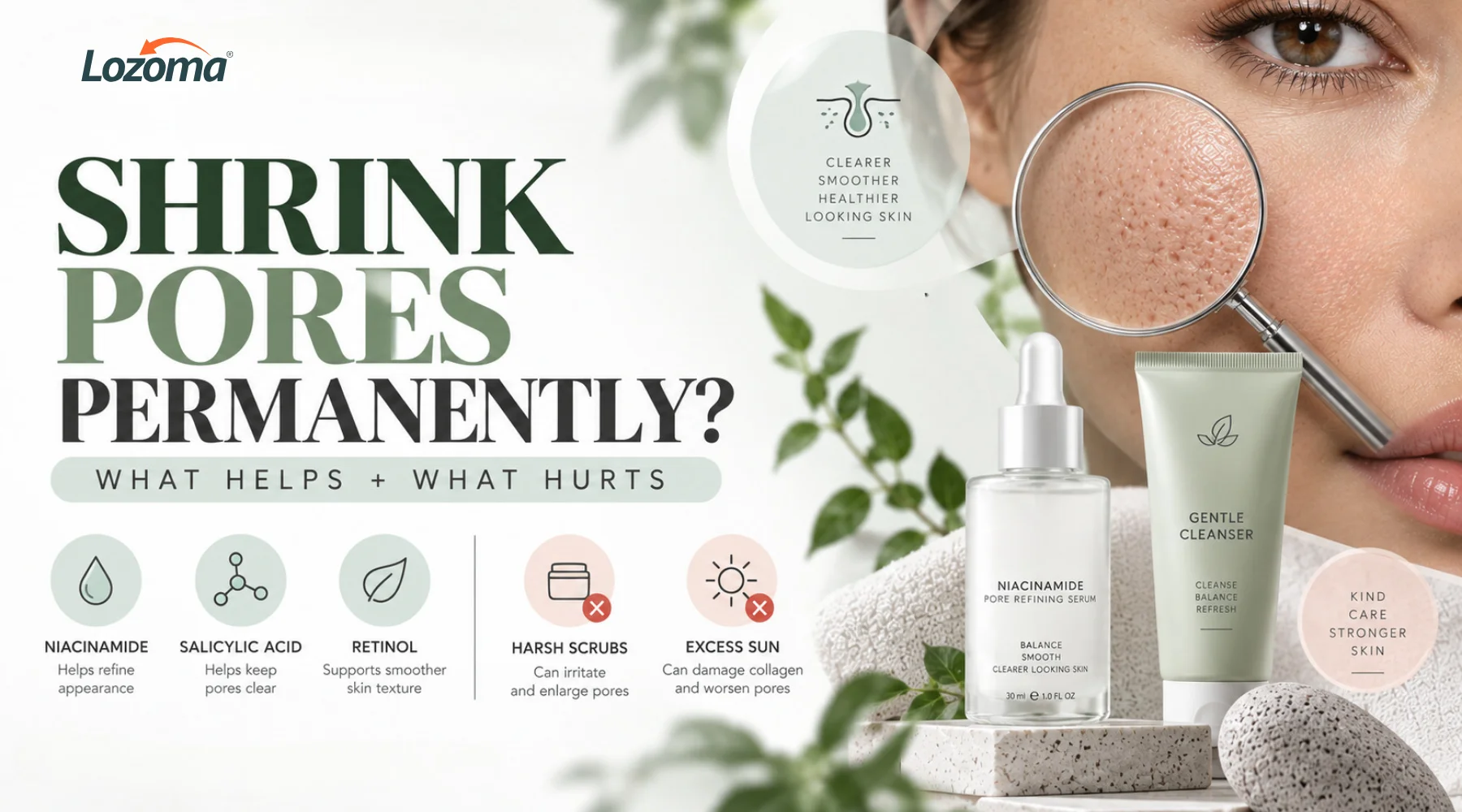
Visible pores can be frustrating because they often resist products meant to close or tighten them. A pore-refining toner may make your skin look smoother for a few hours, but the texture usually returns by the end of the day. Pore strips may remove some debris, but the dots on your nose come back quickly.
So, can you permanently shrink pores? Not exactly. Pores are normal openings linked to hair follicles and glands, and they can’t be closed or removed. However, their appearance can change.
Factors like oil production, congestion, sun damage, and skin elasticity affect how noticeable pores are. By addressing these issues, you can make enlarged pores look smaller and smoother over time.
This distinction is important. Effective pore care isn’t about forcing pores shut. It’s about keeping hair follicles clear, manageing excess oil without drying out the skin, and supporting the collagen and elasticity that help pores look firmer.
Can You Permanently Shrink Pores, or Is “Pore Tightening” Mostly a Myth?
You can’t permanently shrink pores; your skin type mostly determines their size. However, you can make them look smaller.
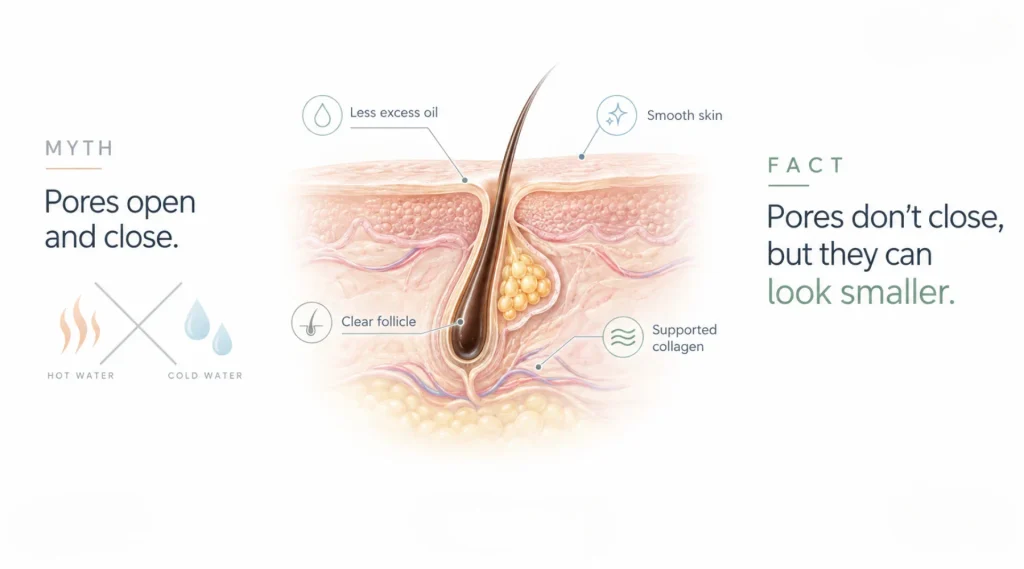
Pores appear smaller when:
- You control excess oil
- You remove blackheads and dead skin
- You keep the follicle clear
- Your skin is well-hydrated
- You protect against sun damage
- You support collagen and elasticity around the pore
- You smooth out rough skin texture
This is why your pores might look finer after using consistent skincare over several months, even though they haven’t actually disappeared.
Think of a pore as a small opening in flexible material rather than a door that opens and closes. When the skin around it is firm and clear, it looks smaller. If it fills with oil and dead skin, or if the surrounding skin weakens, it looks larger.
Be cautious about claims that cleansers, toners, or masks can permanently “close” your pores.
Why pores cannot fully close
Pores don’t have tiny muscles that open in heat and close in cold water. What we call pores are mostly openings of hair follicles that include sebaceous glands, especially on the face. These openings help the skin. Sebum from the glands moves to the skin’s surface through these follicles. Completely removing pores isn’t realistic or desirable.
Cold products can make skin feel tighter for a short time. Astringent ingredients can reduce surface oil, and makeup primers can blur texture. However, none of these actually close the follicles.
A better question is not “how to close pores?” but “what causes pores to look enlarged?”
Why Some Pores Look Much Larger Than Others
Large pores usually don’t have just one cause. For many, their appearance comes from a mix of genetics, oil production, congestion, age, sun exposure, and skin texture.
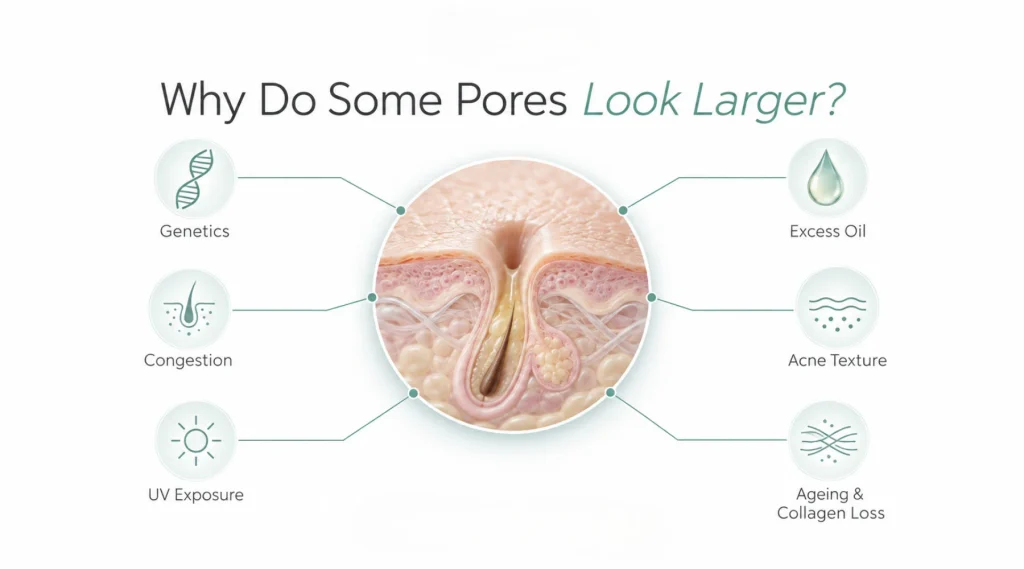
Genetics sets much of the baseline
Some people have more visible pores, especially on the nose, cheeks, forehead, and chin.
If your close relatives have oily skin and large pores, you might notice similar features in yourself.
That’s why skincare can’t make everyone’s pores the same size. The goal is to improve how your pores look, not to make them completely disappear.
Sebum can make pores appear wider
Oilier areas of the face often have bigger pores.
Sebaceous glands release oil into hair follicles. When these glands produce a lot of oil, the openings can look larger, especially when oil mixes with dead skin cells.
Reducing excess oil without drying out the skin can improve how pores look.
This doesn’t mean making the skin completely oil-free. Sebum helps protect the skin, and trying to remove it all can irritate, not smooth, the skin.
Congestion exaggerates the opening
A clear follicle reflects light differently than one filled with sebum and keratin. When material builds up inside the follicle, the opening becomes more noticeable. This is important for unclogging pores on the nose, forehead, or chin. Ingredients like salicylic acid can effectively improve the appearance of these clogged pores.
Skin loses structural support with age
The skin around a pore impacts how sharp its edges appear.
As we age and are exposed to the environment, collagen and elastin change. This can make the skin less firm, causing pores to look larger or more noticeable.
This is why someone with smooth skin in their twenties might see more visible pores in their thirties, forties, or beyond, even if their skin doesn’t become much oilier.
UV exposure can make pore texture more noticeable
Too much sun can break down collagen and cause uneven skin. As the skin loses its support, pores may look looser.
Daily sunscreen is important for a long-term plan to reduce the appearance of pores. While sunscreen doesn’t “shrink” pores, it protects collagen, helping to keep them from looking larger over time.
Acne can change surrounding texture
Repeated inflammatory acne can leave shallow scars or uneven texture around hair follicles.
What appears to be a large pore may actually be a small acne scar, not just an enlarged pore.
This difference is important because acids and oil-control products might not give the expected results. Treatments that promote skin remodelling may work better for acne-related texture issues.
Understanding why pores look larger can help distinguish between congestion, oiliness, ageing, and actual scarring.
Enlarged Pores, Blackheads and Sebaceous Filaments Are Not the Same Thing
Many people try to eliminate pores by starting with the tiny dark or grey spots on their nose. These spots might not be empty pores. They could be blackheads or sebaceous filaments.
Blackheads
Blackheads are open comedones. Oil and keratin build up in the follicle and form a plug. The exposed surface turns dark due to oxidation. Many people mistakenly think the dark colour comes from dirt.
Sebaceous filaments
Sebaceous filaments are normal groups of oil and skin cells in hair follicles. They are most visible on the nose and cheeks, appearing as small beige, grey, or yellow dots. Unlike blackheads, they are a normal part of how follicles work. You can make them less noticeable for a while, but they will come back. Trying to remove them repeatedly can irritate the skin and make it look worse.
Enlarged pores
An enlarged pore may look empty but stays visible due to its size, oil production, or less elastic skin around it. Understanding this can help avoid unnecessary squeezing.
How to Reduce Pores on Face Without Trying to “Close” Them
No product can permanently change pore size.
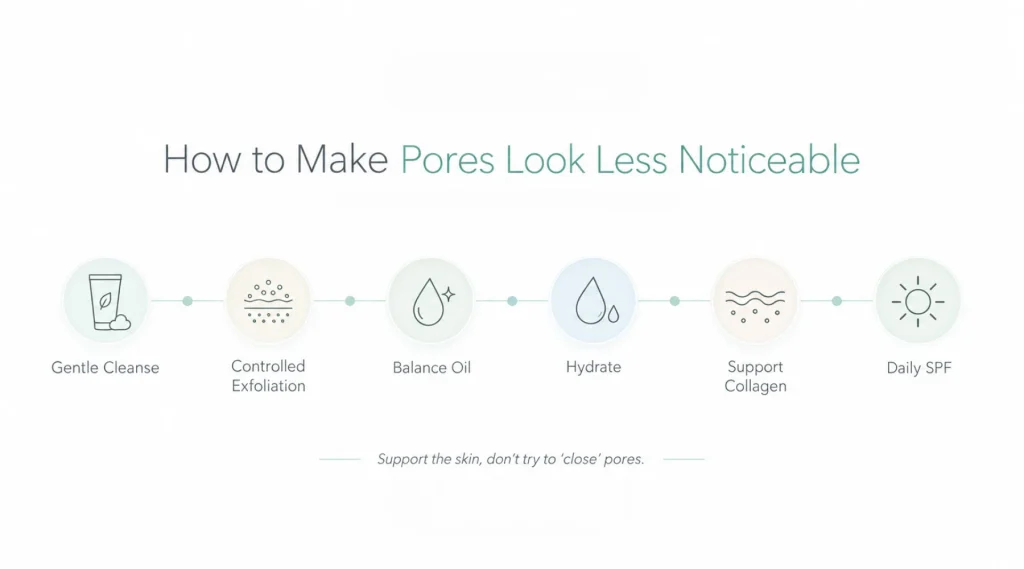
The best approach addresses several factors at once while keeping the skin barrier healthy.
Many people prioritise:
- gentle cleansing
- controlled exfoliation
- oil control
- regular hydration
- collagen-supportive products
- daily sunscreen
The right balance depends on whether your pores are mainly affected by congestion, oiliness, dryness, or loss of firmness.
Salicylic Acid Is Particularly Useful for Congested Pores
For clogged and oily pores, salicylic acid is a top skincare choice.
Salicylic acid is a beta hydroxy acid. It can dissolve in oil, allowing it to penetrate oily pores. This helps break down the mix of oil and dead skin that causes blackheads and blockages.
When pores clear up, their openings may appear less dark and less swollen. This is especially helpful in:
- the nose
- chin
- forehead
- inner cheeks
How often should salicylic acid be used?
More isn’t always better.
If you’re new to exfoliating acids, try using them two or three evenings a week instead of every day. If your skin feels fine, you can increase how often you use the product based on its strength and how your skin reacts.
Signs you may be overdoing it include:
- Constant stinging
- Redness
- Increased sensitivity
- Flaky patches
- Tightness
- More roughness
Over-exfoliating can make your pores look larger because the skin becomes dry, irritated, and uneven.
Retinoids Can Improve Texture Around Enlarged Pores
Retinoids are a key option for reducing enlarged pores over time. They help skin cells turn over and can improve collagen production with regular use.
Their benefits are especially useful for people with:
- Uneven skin texture
- Comedonal acne
- Signs of ageing
- Fine lines
- Loose skin
Patience is essential. Retinoids don’t provide instant results like a tightening mask. Improvements in skin texture happen slowly with consistent use.
Start slowly rather than trying to accelerate results
A common mistake is starting a retinoid every night right away while also using acids and scrubs. This can irritate and make your skin look worse.
A better approach is to:
- Use a small amount.
- Start a few nights a week.
- Apply moisturiser as needed.
- Increase usage gradually if your skin handles it well.
- Use sunscreen every day.
For stronger prescription retinoids, talk to a healthcare professional, especially if you have ongoing acne or noticeable ageing from sun exposure.
Niacinamide Can Help When Oiliness Makes Pores More Obvious
Niacinamide is popular for reducing the appearance of enlarged pores. It helps support the skin barrier and can reduce excessive oiliness for some users. When skin gets less oily and more balanced, pores become less noticeable.
Niacinamide doesn’t physically tighten pores. Instead, it improves the skin’s overall condition, making pores appear smaller. You don’t need to use very high concentrations; too much can irritate some skin types, especially with other strong products.
Using a moisturising product, like a 24k Gold Niacinamide Essence Moisturiser, can be easier. It combines niacinamide with hydration, avoiding the need to layer strong serums.
Glycolic and Lactic Acid Can Smooth the Surface Around Pores
Alpha hydroxy acids (AHAs) like glycolic acid and lactic acid mainly work on the skin’s surface, unlike salicylic acid, which targets oily pores. AHAs help remove dead skin cells and improve rough texture. Smoother skin can make pores look smaller.
Glycolic acid is strong and can irritate if overused. Lactic acid is milder, making it a good option for gentle exfoliation and hydration.
You don’t need both an AHA and a BHA. If blackheads and oil are your main concerns, salicylic acid is a better choice. If you struggle with dull, rough skin, an AHA can help. If you need both, it’s usually better to alternate them instead of using strong formulae together repeatedly.
Moisturiser Matters More Than Many Pore Routines Suggest
People with large pores often believe that moisturisers will worsen the issue. This isn’t always the case. Dehydrated skin can highlight texture because it becomes rough and fine lines show more. A good moisturiser can actually make skin smoother by boosting hydration and supporting its protective barrier.
The key is to choose the right type for your skin. Oily skin might prefer a light gel-cream or lotion, while dry skin may benefit from a richer cream.
Look for hydrating ingredients like:
- Glycerin
- Hyaluronic acid
- Panthenol
- Ceramides
- Beta-glucan
- Squalane
Moisturisers won’t shrink pores, but well-hydrated skin often reflects light better, making skin texture less noticeable.
Daily Sunscreen Helps Protect the Structure Around Pores
Sun protection does not instantly tighten pores. Its job is to prevent damage.
UV rays can break down collagen, cause uneven skin tone, and change skin texture. Over time, this can make skin less firm around hair follicles.
Broad-spectrum sunscreen should be part of your long-term pore care routine, not something you think about separately.
Choose a sunscreen with a high SPF that you can use generously and regularly. A sunscreen you dislike is less effective than one you enjoy using every day.
How to Make Pores Look Smaller: A Practical Daily Routine
A good skincare routine doesn’t need ten active ingredients. Sticking to it regularly is more important than having a complicated routine.
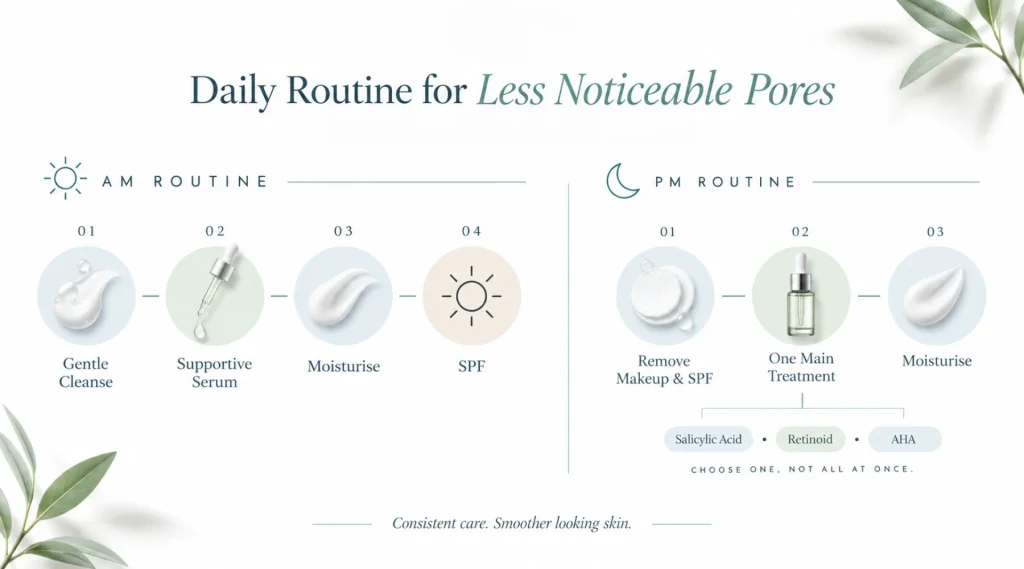
Morning
1. Cleanse gently
If you wake up with oily skin, use a mild facial cleanser. For very dry skin, just water or a gentle cleanser may be enough. Don’t focus on feeling squeaky clean.
2. Add a supportive serum if useful
Niacinamide or a lightweight hydrating formula is effective.
If you like antioxidant or hydrating serums, explore different options that address your broader skin issues instead of picking products just because they say they “tighten pores.”
When considering a product like a 24K Gold Serum, focus on its ingredients, hydration, and how it feels on your skin rather than expecting it to change pore size permanently.
3. Moisturise
Apply enough to keep your skin comfortable without making it too greasy.
4. Use sunscreen
Use a generous amount of broad-spectrum SPF on all exposed skin.
Evening
1. Remove sunscreen and makeup
Many people can use a gentle cleanser. However, if you wear heavy, water-resistant makeup, you might need to double cleanse.
2. Use one main treatment
Here’s a simpler version, broken down by paragraph:
You might use:
- Salicylic acid for congestion
- A retinoid for acne and skin texture
- An AHA for rough skin
Don’t assume you need to use them all in one night.
3. Moisturise
Barrier support is crucial when using active treatments. Simple daily habits that keep pores smooth are often more effective than occasional strong treatments.
How to Diminish Pores on Face When Your Skin Is Very Oily
Oil control should be balanced. We want to reduce excess oil without harming the skin barrier.
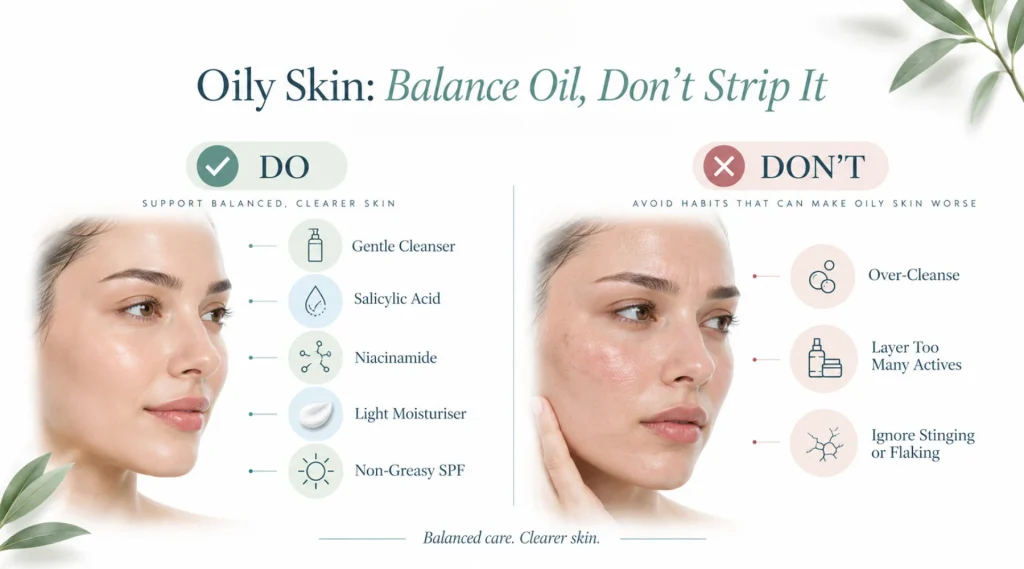
A good routine for oily skin might include:
- Gentle foaming cleanser
- Salicylic acid a few times a week
- Niacinamide
- Lightweight moisturiser
- Non-greasy sunscreen
Some people prefer tea tree products for blemishes. Tea tree oil can fight bacteria, but it may irritate sensitive skin. A well-made Tea Tree Facial Serum can help with blemishes, but it won’t shrink pores.
If your skin stings, flakes, or turns red, using more oil-control products is usually not the solution.
What If Your Skin Is Dry but Your Pores Still Look Large?
Large pores aren’t just for oily skin. Dry or mature skin can also have noticeable pores, especially when it loses elasticity. Using clay masks and strong salicylic acid too often can make the skin feel rougher. Instead, focus on:
- Gentle cleansing
- Moisturising ingredients
- Retinoids if you can handle them
- Occasional exfoliation
- Daily sunscreen
- Lipids that support the skin barrier
Your overall skincare routine is important because the look of your pores shows the condition of your skin, not just what’s inside the pores.
Can Clay Masks Shrink Pores?
Clay masks can make pores look cleaner and less noticeable for a short time. Clays like kaolin and bentonite absorb oil from the skin, which can make it look smoother and less shiny. However, this doesn’t mean pores will stay tight forever.
Using clay masks can be helpful before an event or as a part of a routine for oily skin, but using them too often can lead to dryness and irritation.
Don’t let a clay mask dry until it feels painfully tight. Always follow the product instructions and moisturise afterwards.
Do Pore Strips Actually Reduce Pore Size?
Pore strips can clean some follicles on your skin. The result is often satisfying because your nose looks clearer right away. However, these strips don’t actually shrink the size of your follicles. Sebaceous filaments will fill back up, and blackheads can come back if the same conditions continue. Using these strips too often can irritate your skin. If you like using pore strips occasionally and your skin can handle them, they’re fine to use. Just remember they aren’t a long-term fix.
Does Steaming Open Your Pores?
Heat can soften oils and skin proteins, making it easier to clean or extract impurities. It also boosts blood flow, giving your skin a temporary rosy look. However, pores don’t open like valves.
It might increase redness, rosacea, or sensitivity. If you prefer facial steaming, keep the temperature comfortable and limit the time to avoid intense heat.
Can Cold Water or Ice Close Pores?
Cold temperatures don’t close pores.
Cooling your skin can temporarily reduce swelling and make it feel firmer, which might make you think your pores are tighter. But this effect goes away when your skin warms up again.
Rubbing ice directly on your face for too long can harm your skin, especially if it’s already sensitive.
You don’t need to end every wash with cold water. Lukewarm water is generally better for your skin.
Why Scrubbing Harder Usually Makes Pores Look Worse
Many people believe that visible pores mean their face isn’t clean. This causes them to scrub hard with brushes, rough scrubs, and strong chemicals, thinking it will help. However, pores don’t get bigger just because the skin is dirty.
Scrubbing too hard can damage the skin’s protective barrier and cause inflammation. This inflammation and dryness can make the skin’s surface uneven, making pores look more noticeable.
A gentle skincare routine can sometimes actually reduce the appearance of pores because it keeps the skin from getting irritated.
Extraction Can Help but Technique Matters
Professional extractions can effectively remove some blackheads and clogged pores.
Home squeezing is less reliable.
Pressing too hard can:
- Harm nearby skin
- Cause inflammation
- Leave marks
- Push material deeper
- Raise the chance of scars
Using your fingernails is not helpful. If a blackhead doesn’t pop with gentle pressure, trying harder usually doesn’t work.
For persistent clogging, it’s often better to use salicylic acid, retinoids, or consult a professional.
Are Pores More Visible When Skin Is Dehydrated?
Dehydration means the skin doesn’t have enough water, not just oil.
When the top layers of skin lose moisture, fine lines and rough texture show up more.
This makes the gaps around hair follicles more noticeable.
Harsh routines that claim to minimise pores may work for a week but can make the skin worse. They strip away oil but weaken the skin’s surface.
Good pore care balances cleaning with hydration.
Can Makeup Make Large Pores Look Smaller?
Yes, it’s visible. Silicone primers and blurring products can fill in small imperfections and scatter light, which makes pores less noticeable.
How you apply makeup is important. Using thick layers of foundation can highlight texture instead of hiding it.
To achieve a smoother look:
- Moisturise first
- Let your skincare absorb
- Use primer only where needed
- Apply thin layers of foundation
- Avoid piling on powder in textured areas
Makeup doesn’t fix pores, but using blurring products is fine while you work on longer-term skincare solutions.
Does Diet Affect Pore Size?
No food can permanently shrink pores.
Diet can affect acne and oily skin, but this varies for each person.
Some studies link high-glycaemic foods and certain dairy products to acne, but there isn’t a one-size-fits-all “pore diet.”
Instead of cutting out food groups just for visible pores, aim for a healthy overall diet unless you know specific triggers or have expert advice.
Staying hydrated is important for health, but drinking more water won’t close facial pores.
Stress, Hormones and Oil Production
Hormones greatly affect sebaceous glands. This is why pores and oiliness may become more noticeable during:
- puberty
- certain stages of the menstrual cycle
- hormonal changes
- some medical issues
- medication changes
Stress can also impact acne and inflammation, but it’s usually not the only cause of larger pores.
If you notice a sudden increase in oiliness along with ongoing acne or other hormonal symptoms, talk to a healthcare professional instead of constantly changing your skincare routine.
Can Professional Treatments Reduce Large Pores?
Certain professional treatments can achieve better results than topical skincare, especially for large pores linked to acne scars, ageing, or loose skin.
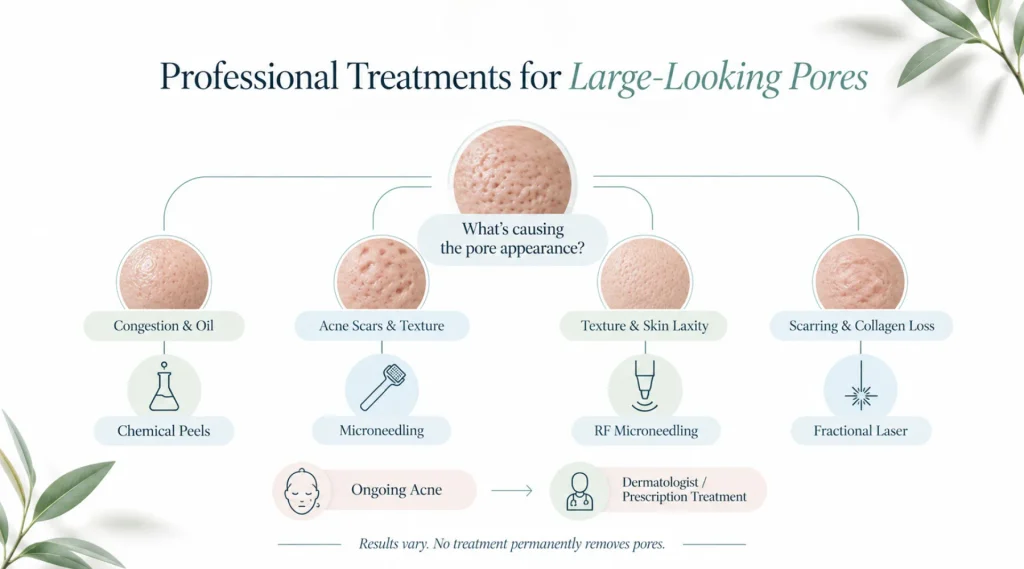
However, none of these treatments can guarantee permanent pore removal.
Results depend on:
- skin type
- pore characteristics
- acne scarring
- treatment depth
- practitioner technique
- number of sessions
- aftercare
- ongoing sun exposure
- natural ageing
Chemical peels
Professional chemical peels use safe acids in specific strengths. They can help with:
- Clogged pores
- Skin discolouration
- Rough texture
- Acne
- Overall skin smoothness
Superficial salicylic or glycolic peels can help if blocked pores are visible. Stronger peels come with more risks and should be chosen carefully based on your skin type and tendency for pigmentation.
Microneedling
Microneedling makes small injuries to the skin to help it heal and create collagen. It can improve uneven skin texture and shallow acne scars that look like large pores. You usually need several treatments to see results, not just one. A professional evaluation is essential, especially for those with darker skin or a tendency to develop dark spots after injury.
Radiofrequency microneedling
Radiofrequency microneedling uses tiny needles and controlled energy to treat the skin. It often helps improve texture, acne scars, and loose skin. It can also reduce the appearance of pores by supporting the skin around hair follicles. However, it is not without risks and should be done by a qualified professional with the right equipment.
Fractional laser treatments
Fractional lasers target specific areas of the skin for treatment.
Some devices can help improve collagen, reduce acne scars, and smooth out uneven texture.
They can also make pores look smaller, especially if they have lost elasticity or are scarred.
Choosing the right laser is important.
You should consider your skin tone, past skin issues, and how much recovery time you can handle before starting treatment.
Prescription retinoids and acne treatment
If you have ongoing acne or too much oil causing large pores, a dermatologist may suggest prescription treatment. Treating the acne can lead to better results than repeatedly buying pore products.
Can Treatments Reduce Large Pores Permanently?
Professional treatments can lead to lasting improvement, but “permanent” is often too strong a word.
Skin keeps ageing. Sebum production can change. Hormones vary. UV exposure continues to impact collagen. Congestion may return.
A person might keep the benefits from collagen-remodelling procedures for a while, but ageing and environmental factors can eventually change the skin again.
Focus on lasting improvement and maintenance instead of thinking about permanent pore elimination.
Common Mistakes That Make Pores Look More Noticeable
Many skincare routines don’t work because they emphasise intensity instead of consistency.
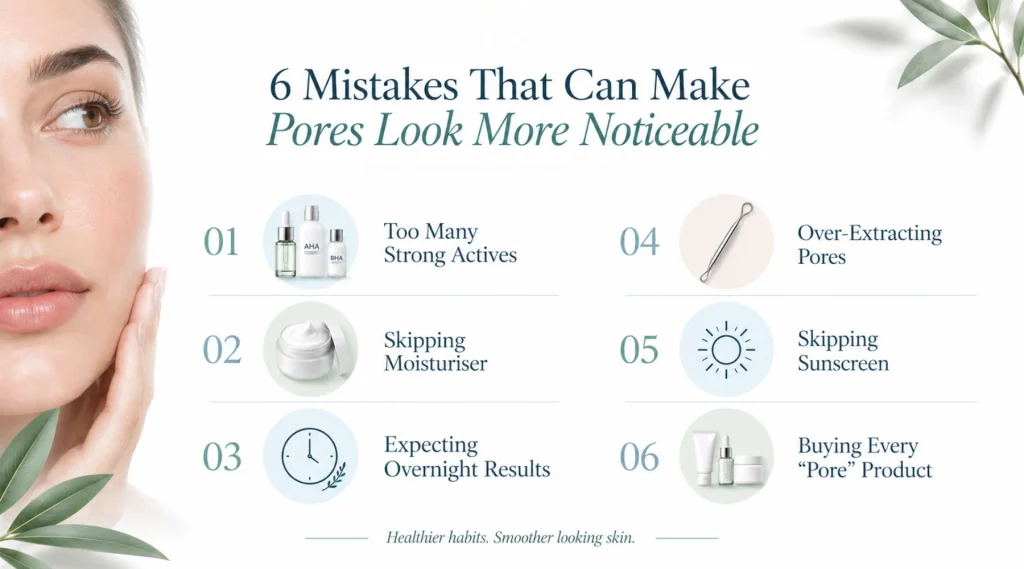
Using several strong exfoliants together
A salicylic cleanser, glycolic toner, peel pads, and retinoid can be effective for your skin. However, using them all at once might irritate your skin. Pick treatments carefully instead of using all the products aimed at treating pores.
Skipping moisturiser because your skin is oily
Oily skin can still be dry.
Taking away moisturiser does not make pores smaller.
Instead, pick a lighter formula.
Expecting overnight results
A clay mask or primer can quickly improve how your skin looks.
Retinoids, regular exfoliation, and better skin barrier health take more time to show results.
Evaluating a skincare routine after just three nights leads to unnecessary changes in products.
Constantly extracting sebaceous filaments
Those tiny dots will come back because sebaceous filaments are normal. Trying to keep your nose completely free of them can cause irritation and broken capillaries without lasting results.
Ignoring sunscreen
Some people spend a lot on collagen skincare but still damage their skin with UV rays. Protecting the skin from more sun damage helps keep it smooth.
Choosing every product labelled “pore minimising”
Marketing categories don’t serve as treatment plans.
One effective ingredient can work better than five products that claim to refine pores.
A simple method to reduce the look of pores is easier to stick with than frequently switching treatments.
How Long Does It Take for Pores to Look Smaller?
The timeline depends on why your pores appear large.
If excess oil is the main issue, using mattifying skincare or niacinamide can improve their look quickly.
If congestion is the problem, salicylic acid can gradually clear pores over several weeks.
Improvements from retinoids take more time and patience.
Collagen changes from professional treatments may take months to develop.
Generally, evaluate a new routine over weeks and months, as long as your skin can handle it.
Stop using a product if you experience significant irritation.
What Results Are Realistic?
Realistic pore improvement can lead to:
- Fewer visible blackheads
- Less oil around the nose
- Smoother makeup application
- Less shadowing around pores
- More even skin texture
- Firmer skin
- Fewer clogged pores
Remember, your skin won’t be completely poreless. Lighting, lenses, editing, and makeup often alter close-up beauty photos. Real skin has natural pores, hairs, and texture.
A healthy look doesn’t have to match a filtered image.
When Large-Looking Pores May Actually Need Dermatological Assessment
Most visible pores are just cosmetic issues.
You should see a professional if you also have:
- ongoing acne
- painful lumps or cysts
- noticeable scarring
- sudden oily skin
- continuous skin redness
- dark spots after breakouts
- possible rosacea
- irritation from many products
- scars that look like big pores
A dermatologist can find out if the problem is clogged pores, acne, scarring, oil production, or something else. This diagnosis can save you from months of trying ineffective home treatments.
Frequently Asked Questions About Shrinking and Closing Pores
Can pores shrink permanently?
Pores can’t be permanently made smaller beyond their natural structure. However, their appearance can look smaller by treating issues like congestion, excess oil, sun damage, and reduced skin elasticity.
Professional collagen-remodelling treatments can provide longer-lasting results, but skin still ages, and pores may become more noticeable again.
Can enlarged pores be reduced?
Yes, enlarged pores can often look smaller.
Salicylic acid helps with congestion, while retinoids, sunscreen, and some professional treatments can improve the skin’s structure and texture.
The level of improvement varies based on genetics and the reasons for enlarged pores.
How can I get rid of pores on my face?
You can’t and shouldn’t try to get rid of facial pores completely. They are normal openings in the skin. Instead, keep them clear by avoiding too much oil, protecting your skin from the sun, and staying hydrated. These steps can make pores much less noticeable.
How do I unclog pores?
Salicylic acid is great because it can penetrate oily pores.
Retinoids can help stop clogged pores.
Gently cleansing, avoiding heavy products, and not squeezing your skin can help.
If blackheads or acne persist, consider seeking professional treatment.
How do you close pores on your face?
You can’t actually close your pores with skincare.
Cold water, ice, toners, and masks may make your skin feel tighter or reduce shine for a short time, but they don’t close the openings.
Products that claim to tighten pores usually improve how they look, not actually close them.
What is the fastest way to make pores look smaller?
To quickly improve your look, use a blurring primer to make pores seem smaller and reduce surface oil. A clay mask can also help reduce shine temporarily. For lasting improvement, be patient and use products with salicylic acid, niacinamide, or retinoids, along with moisturiser and sunscreen.
Does niacinamide permanently shrink pores?
No.
Niacinamide does not permanently change the size of follicles. It can make pores look smaller by improving skin barrier function and reducing excess oil. This makes it a good addition to routines that target pores.
Does salicylic acid shrink pores?
Salicylic acid doesn’t actually make pores smaller. Instead, it clears out oil and dead skin from follicles. When follicles are less crowded, they look smaller and cleaner, which is why salicylic acid can improve how pores appear.
Can retinol make pores smaller?
Retinol helps make pores look better by promoting smoother skin and improving texture over time. It is especially helpful for pores with blackheads or signs of ageing. To see results, you need to use it regularly, not just now and then.
Why do my pores look bigger after cleansing?
A strong cleanser can dry out your skin, making its texture more noticeable.
Using warm water and washing away oil can also make your pores more visible when you look closely in the mirror.
If your skin feels tight after cleansing, try a gentler cleanser.
Why do my pores look larger as I get older?
Collagen and elastin change as we age and with sun exposure.
When the skin around a pore gets less firm, the pore may look wider or longer.
Using daily UV protection and the right retinoid can help make your skin look smoother over time.
Can drinking more water reduce pore size?
Drinking enough water is good for your health, but it doesn’t shrink pores. Using moisturiser helps smooth out dry and rough skin, making pores look less noticeable.
Does squeezing pores make them larger?
Careful extraction may not permanently enlarge a pore. However, frequent aggressive squeezing can lead to inflammation and tissue damage. This irritation can worsen the skin’s texture and increase the risk of scars or dark spots.
Are pore-minimising products worth using?
They can vary based on the ingredients.
Instead of just focusing on “pore minimising,” check what the product has.
Salicylic acid can help with clogged pores. Niacinamide is good for oily skin. Retinoids can improve skin texture. Hydrating ingredients can help smooth dry skin.
A general claim of tightness without the right formula is not very useful.
Can treatments reduce large pores enough to make a visible difference?
Yes.
Chemical peels, microneedling, radiofrequency microneedling, and specific laser treatments can significantly improve skin for the right patients. They are best for issues like acne scars, sun damage, or loose skin, rather than just temporary breakouts.
Can You Really Permanently Shrink Pores?
Pore serums, clay masks, and cold-water rinses often aim to answer this question: Can you permanently shrink pores? The simple answer is no; pores can’t be permanently closed, but you can improve their appearance.
To achieve the best results, understand why your pores look enlarged. Congested pores need to stay clear. Oily skin requires proper sebum management. Dehydrated skin needs a protective barrier instead of harsh treatments. Skin that lacks firmness benefits from sun protection, specific retinoids, and, when needed, professional treatments to boost collagen.
Seeking instant tightness can backfire. Too much exfoliation, frequent extractions, harsh cleansers, and constantly switching products can harm your skin.
Pores are a normal part of healthy skin. The goal is not to remove them, but to keep the surrounding skin clear, comfortable, and well-supported so they aren’t as noticeable.