




Blog
Vitamin C Serum Morning or Night? Best Time to Apply It

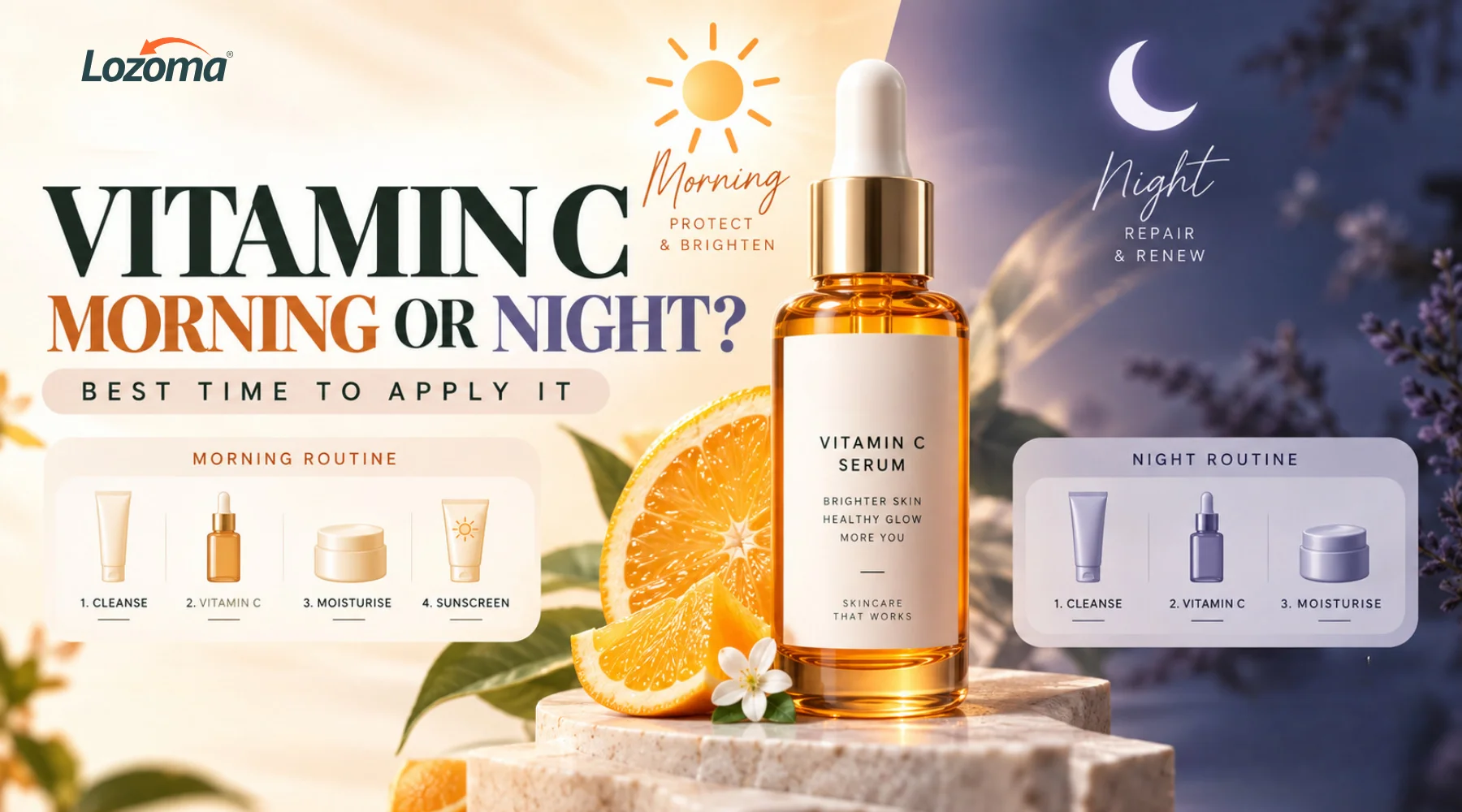
Choosing when to use vitamin C serum, morning or night, can seem confusing. Some routines say to use it under sunscreen during the day, while others suggest using it at night when your skin is resting. Both methods work.
For many people, the morning is the best time for vitamin C serum because it boosts sun protection and defends against UV rays and pollution. Dermatologists recommend applying it after washing your face in the morning, before sunscreen.
However, vitamin C is still effective at night. It can help brighten your skin, support collagen production, and create a more even complexion. Evening use might be better if your morning routine is busy or if you prefer to keep it separate from other products.
The key question isn’t just whether to use it in the morning or at night, but rather when it works best for you and your skin.
Is Vitamin C Serum Better in the Morning or at Night?
Using vitamin C in the morning is beneficial for skincare.
Vitamin C is an antioxidant. It helps neutralise free radicals that damage the skin from sun exposure, pollution, and other stressors. Studies show that vitamin C can protect against ageing and uneven skin tone. This makes using it in the morning a smart choice.
Think of sunscreen and vitamin C as serving different purposes. Sunscreen blocks UV rays from reaching the skin, while vitamin C helps manage some skin damage that can still happen.
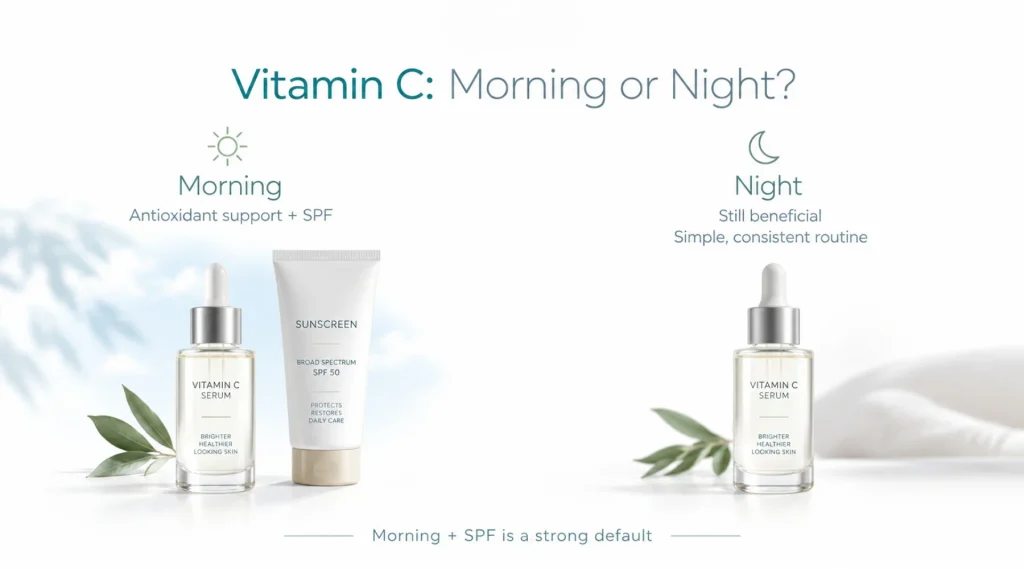
However, vitamin C is not a substitute for sunscreen. It does not provide SPF protection and should not replace shade, protective clothing, or a good broad-spectrum sunscreen. UV rays are a major cause of early skin ageing and skin cancer.
At night, the need for antioxidants is less because there’s no daytime UV exposure. However, vitamin C still offers other skincare benefits, so using it in the evening is still valuable.
A simple comparison looks like this:
| Timing | Main advantage | Particularly useful for |
| Morning | Antioxidant support alongside sunscreen | Most people, pigmentation, photoageing prevention |
| Night | Simpler layering and easier separation from daytime products | Busy routines, makeup wearers, people alternating actives |
| Morning and night | Greater application frequency | Experienced users whose skin comfortably tolerates the formula |
| Alternate days | Better tolerance | Beginners, sensitive or reactive skin |
If you can easily use vitamin C every morning, that’s a good place to start. If you often forget it in the morning but use it every night, applying it in the evening will be more helpful than a perfect routine you don’t stick to.
Why Morning Vitamin C Works So Well With Sunscreen
The main reason to use vitamin C in the morning is not about timing, but how our skin faces challenges during the day.
Sunlight can create harmful molecules in the skin. Pollution and other factors add stress, leading to damage over time. This affects proteins, fats, and cells.
Vitamin C helps by neutralising these harmful molecules and supports collagen production. This is why vitamin C is popular in daytime skincare.
Keep in mind, vitamin C is not a replacement for sunscreen. SPF measures protection against UVB rays, while broad-spectrum sunscreen also protects against UVA rays. Vitamin C works differently, so they complement each other.
A simple morning routine can include:
- Gentle cleanser
- Vitamin C serum
- Hydrating serum (if needed)
- Moisturiser
- Broad-spectrum sunscreen
This order is effective because treatment serums go under thicker creams and sunscreens.
Knowing how to consistently use vitamin C serum is helpful as you add other skincare products.
Vitamin C does not make sunscreen optional
Many people mistakenly believe that antioxidant skincare can replace sunscreen. This isn’t true.
Even the best vitamin C products can’t filter UV rays as a tested sunscreen can. This is especially important if you’re treating dark spots. UV exposure can darken pigments, making brightening treatments less effective.
For daily use in the UK, it’s smart to use SPF 30 or higher with good UVA protection. When you’re outside for a long time, it’s crucial to apply and reapply sunscreen, seek shade, and wear protective clothing.
Can You Use Vitamin C Serum at Night?
Yes, you can use vitamin C serum at night. There’s no reason it stops working after sunset.
Using it at night can be helpful when:
- Vitamin C makes your skin feel sticky during the day.
- Sunscreen is hard to apply over multiple products.
- You wear makeup daily.
- You already use other treatments in the morning.
- Your skin handles products better when used at different times.
- You find it easier to stick to a night-time routine.
A simple evening routine can be:
Cleanser → vitamin C serum → moisturiser
That’s all you need. You don’t have to mix vitamin C with exfoliants, masks, or other treatments to make it effective at night.
Does skin repair at night make vitamin C more effective?
Skin follows daily rhythms, and repair processes change from day to night. Some people claim that skincare works better while you sleep. However, the truth is more complicated.
There’s no strong evidence that a well-made vitamin C serum works significantly better at 10 p.m. than at 10 a.m. The quality of the formula, its stability, concentration, how your skin tolerates it, and regular use are usually more important than the time of day.
Applying it at night should be about fitting it into your routine, not because vitamin C needs darkness to be effective.
Vitamin C Serum Morning or Night for Beginners
For beginners asking if they should use vitamin C serum in the morning or night, morning is usually best.

Start by using it a few times a week instead of applying it twice daily right away.
Morning Routine:
- Wash your face with a gentle cleanser or rinse with water if your skin is dry.
- Pat your face dry.
- Apply a thin layer of vitamin C serum.
- Use moisturiser if needed.
- Finish with sunscreen.
Evening Routine:
- Cleanse your face.
- Moisturise.
- Avoid using too many strong products while your skin adjusts.
This simple routine helps you see if vitamin C works for your skin. Starting multiple strong products like vitamin C, retinoids, and glycolic acid at the same time can make irritation hard to manage.
Begin with frequency rather than chasing strength
High percentages grab attention because they seem more effective, but skin doesn’t always respond that way.
Pure L-ascorbic acid can work well at lower concentrations. Higher concentrations may cause more irritation without better results.
Experienced users might choose a stronger 20% Vitamin C Serum, while beginners should focus on the type of vitamin C, supporting ingredients, and their skin’s tolerance, not just the percentage on the label.
A 20% Vitamin C Ampoule Serum could be good for regular vitamin C users, but the term “ampoule” doesn’t ensure better results. The full formulation is still important.
Vitamin C Serum Morning or Night for Sensitive Skin
Sensitive skin changes how we discuss timing.
People with normal skin can apply vitamin C every morning without issues. However, those with sensitive skin, like rosacea or eczema, might experience stinging and redness from the same routine.
For sensitive skin, it’s better to focus on comfort rather than perfect timing. Start by applying vitamin C once or twice a week.

Choose either a morning or evening routine and avoid adding other active ingredients at the same time. If vitamin C stings in the morning with sunscreen, try using it at night. If vitamin C clashes with your retinoid in the evening, switch it to the morning.
Your schedule should fit your skin’s needs.
Why some vitamin C serums sting
Vitamin C products differ widely.
L-ascorbic acid, the pure form of vitamin C, is often used in many formulations at an acidic pH. This acidity can cause a mild tingling sensation, especially on sensitive skin.
A brief tingling feeling is normal, but it’s not the same as ongoing burning.
Stop using the product if you notice:
- prolonged burning
- noticeable redness
- swelling
- itching
- rash-like bumps
- cracking
- excessive peeling
Vitamin C shouldn’t become increasingly uncomfortable just because someone online claims irritation means it’s effective.
Consider gentler vitamin C derivatives
Not all vitamin C products have L-ascorbic acid.
Some common forms include:
- Sodium ascorbyl phosphate
- Magnesium ascorbyl phosphate
- Ascorbyl glucoside
- 3-O-ethyl ascorbic acid
- Tetrahexyldecyl ascorbate
These forms might be more stable and easier on the skin, but they don’t act the same way as pure ascorbic acid. For sensitive skin, a mild product that you can use regularly may be more helpful than a stronger serum that you can only use occasionally.
How to Apply Vitamin C Serum in the Morning
Knowing when and how to use vitamin C serum is important. Use just enough to cover the area lightly. More serum doesn’t give extra benefits. Usually, two to four drops are enough, but follow the manufacturer’s instructions.
Step 1: Cleanse Gently
Wash off oil, sweat, and leftover skincare with a mild cleanser. If you have very dry skin, a simple water rinse may be enough in the morning. Avoid harsh cleansers that can hurt your skin’s barrier.
Step 2: Apply Vitamin C First
Put the serum on clean skin before any moisturisers or sunscreen. If using strong L-ascorbic acid, drier skin may feel better since too much moisture can increase stinging.
Step 3: Let It Settle
You don’t need to wait a specific amount of time, but give the serum a moment to spread and soak in. This can take less than a minute, depending on the formula.
Step 4: Add Hydration if Needed
If your skin is dry, you can use a hydrating serum after vitamin C. Look for ingredients like glycerin, panthenol, and hyaluronic acid for extra comfort.
Step 5: Moisturise
Choose a moisturiser that suits your skin type. It doesn’t seal in vitamin C chemically; its job is to keep your skin hydrated.
Step 6: Finish with Sunscreen
Sunscreen should be the last step before makeup. Vitamin C should go underneath, not mixed with sunscreen, to ensure even protection.
How to Apply Vitamin C Serum at Night
Night-time skincare is simple:
- Take off makeup and sunscreen.
- Cleanse your face gently.
- Pat your face dry.
- Put on vitamin C serum.
- Add a hydrating layer if you want.
- Finish with moisturiser.
If vitamin C is your only treatment, this routine is easy.
Things get tricky if you use retinoids, exfoliating acids, benzoyl peroxide, or prescription treatments. In that case, it’s often better to separate your products instead of making your routine more complex.
When to Use Vitamin C Serum If You Also Use Retinol
Vitamin C and retinoids can work together, but the main concern is skin tolerance. Retinoids might cause dryness and irritation while your skin adjusts. Acidic vitamin C can also irritate sensitive skin. Using both on reactive skin can make your routine uncomfortable.
For beginners, a simple routine is:
- Morning: vitamin C and sunscreen
- Night: retinoid and moisturiser
This setup keeps products separate, making it easier to troubleshoot. It also lets vitamin C do its antioxidant job during the day.
More experienced users can sometimes combine both products at night, especially if they use gentle formulae. However, there’s usually no need to force them together. Stick to what you can consistently manage instead of complicating things.
Can You Use Niacinamide With Vitamin C?
Yes, you can use niacinamide with vitamin C. The myth that they cancel each other out is outdated.
Niacinamide and vitamin C can work together in your skincare routine and are even in some products. They support different functions: vitamin C is great for antioxidants, pigmentation, and collagen, while niacinamide helps your skin barrier, reduces pigment transfer, and evens out skin tone.
If you’re wondering if you can use niacinamide with vitamin C in the morning, the answer is yes. Here’s a simple routine:
Cleanser → vitamin C → niacinamide serum → moisturiser → sunscreen.
There’s no strict rule about the order, but texture matters. If your niacinamide is much thinner than your vitamin C, use the lighter one first, unless the vitamin C instructions say otherwise.
What if the combination stings?
Compatibility on paper doesn’t mean it will work well with every formula.
A product might have alcohol, fragrance, exfoliating acids, or other ingredients that can irritate your skin.
If your skin feels uncomfortable:
- Use vitamin C in the morning and niacinamide at night.
- Use less vitamin C.
- Simplify your skincare routine.
- Check if your skin barrier is already irritated.
It’s not helpful to mix two compatible ingredients if they don’t feel good together on your skin.
Can You Use Hyaluronic Acid With Vitamin C?
Yes, you can use hyaluronic acid with vitamin C. This combo is great for dry or tight skin.
Each ingredient has a different role. Vitamin C brightens the skin and protects it with antioxidants. Hyaluronic acid helps keep moisture in the upper skin layers.
A simple morning routine is:
Cleanser → vitamin C → hyaluronic acid → moisturiser → sunscreen.
The American Academy of Dermatology recommends applying vitamin C after washing your face and before sunscreen.
If your vitamin C product already has sodium hyaluronate, glycerin, or other humectants, you might not need an extra hyaluronic acid serum. More layers aren’t always better.
For example, a Vitamin C Face and Body Serum often includes vitamin C, sodium hyaluronate, and ceramides. Checking the ingredient list can help you avoid unnecessary steps.
Does Vitamin C Brighten Skin?
Vitamin C can make your skin look brighter and more even over time.
However, brightening and bleaching are different. Vitamin C doesn’t change your natural skin colour; it simply improves uneven skin tone, dullness, and damage. This helps your skin look clearer and more radiant.
DermNet lists L-ascorbic acid among topical treatments for pigmentation issues.
Does vitamin C lighten skin?
Vitamin C helps reduce excess pigmentation, instead of just lightening healthy skin. It affects melanogenesis, the process that produces melanin.
This makes it useful for:
- Dark marks from acne
- Uneven skin tone
- Certain sun-related pigmentation
- Dull, ageing skin
Vitamin C is also used to manage melasma, but melasma is complicated and often needs additional treatments and sun protection. If you want to correct pigmentation, daily sunscreen is as essential as the brightening serum, because sun exposure can worsen the pigmentation you want to minimise.
Morning or Night for Dark Spots?
Morning is a smart time to use vitamin C for dark spots. Here’s why: You want to do two things: reduce the dark spots you have and protect your skin from outside factors that cause more spots. Vitamin C helps with both by influencing pigmentation and providing antioxidant support. Sunscreen is crucial because it protects your skin from the sun.
A morning routine for tackling pigmentation could look like this:
- Gentle cleanse
- Vitamin C
- Niacinamide or extra hydration if needed
- Moisturiser
- Broad-spectrum sunscreen
At night, you can add another ingredient like azelaic acid or a retinoid if your skin can handle it. This method keeps your routine efficient without overloading your skin with products.
Morning or Night for Dull Skin?
Both options can work.
If dull skin is caused by uneven colour or environmental damage, morning use of vitamin C is a great choice.
However, if dullness comes from dehydration, just adding vitamin C might not help. Dehydrated skin can look grey, rough, or tired. In this case, using humectants, moisturisers, and gentler cleansers may improve the skin more than just increasing vitamin C.
It’s crucial to recognise this difference because skincare ads often say that all dullness is a pigmentation issue, but that’s not true.
Dull skin can be affected by:
- Dehydration
- Dry, flaky skin
- Irregular shedding of skin cells
- Sun damage
- Uneven colour
- Irritation
- Lack of sleep or overall tiredness
A vitamin C serum can help with some of these issues, but not all.
Morning or Night for Oily and Acne-Prone Skin?
Oily skin doesn’t need a different application time; texture is more important. A lightweight serum works well under sunscreen in the morning, while a heavy formula might be better used at night.
For acne-prone skin, it’s important to note that vitamin C isn’t a primary treatment like benzoyl peroxide or salicylic acid. Its main benefit is improving the look of dark spots left after blemishes. These spots are affected by inflammation and sun exposure, so it’s crucial to treat the underlying causes and protect your skin from the sun.
Overall, focusing on controlling acne is more important than just adding brightening products.
Vitamin C and benzoyl peroxide
Benzoyl peroxide treats acne by oxidising. It’s better to use it separately from vitamin C instead of applying them together.
A good routine is:
- Morning: vitamin C
- Night: benzoyl peroxide
If your doctor advises a different schedule for benzoyl peroxide, follow their instructions.
Vitamin C With Exfoliating Acids: Timing Matters More Than Compatibility
Glycolic acid, lactic acid, and salicylic acid are often used in brightening routines. However, they don’t have to be used with vitamin C. Acid exfoliants can make your skin dry and irritated. Using an acidic vitamin C serum on freshly exfoliated skin can cause stinging.
A simple routine could be:
- Morning: vitamin C
- Night, once or twice a week: exfoliating acid
If you have sensitive skin, you might need to keep these products further apart. This isn’t just about avoiding chemical reactions; it’s about caring for your skin’s tolerance.
Even if a routine has good ingredients, it can harm your skin if it causes irritation and damages the skin barrier.
What Causes Vitamin C to Feel Better at Night Than in the Morning?
Some people think a better night-time experience means their vitamin C is meant for night-time use.

Usually, there’s a more practical reason for it.
Your sunscreen may be interacting poorly with the serum
Silicones, film-formers, gums, and powders can make products roll or pill if you apply too many layers.
To avoid this:
- Use less serum.
- Let each layer settle.
- Remove unneeded products.
- Try a different sunscreen texture.
Your morning cleanser may leave the skin too dry
Using acidic vitamin C right after a strong foaming cleanser can make it feel more intense.
Trying a gentler cleanser might solve the issue without changing the serum.
You may be rushing your layers
Applying moisturiser while the serum is still wet can cause them to mix. You don’t need to wait long, but giving each layer a moment to settle can enhance the look.
Your morning routine may contain too much
Vitamin C, peptide essence, niacinamide, hyaluronic acid, moisturiser, facial oil, sunscreen, and primer are good products on their own. But using them all together can be too much. Switching one product to the evening can make the routine better right away.
Causes and Fixes When Vitamin C Serum Morning or Night Use Goes Wrong
People often blame timing for problems that actually come from how they focus on the product, its formulation, or their skin’s condition.
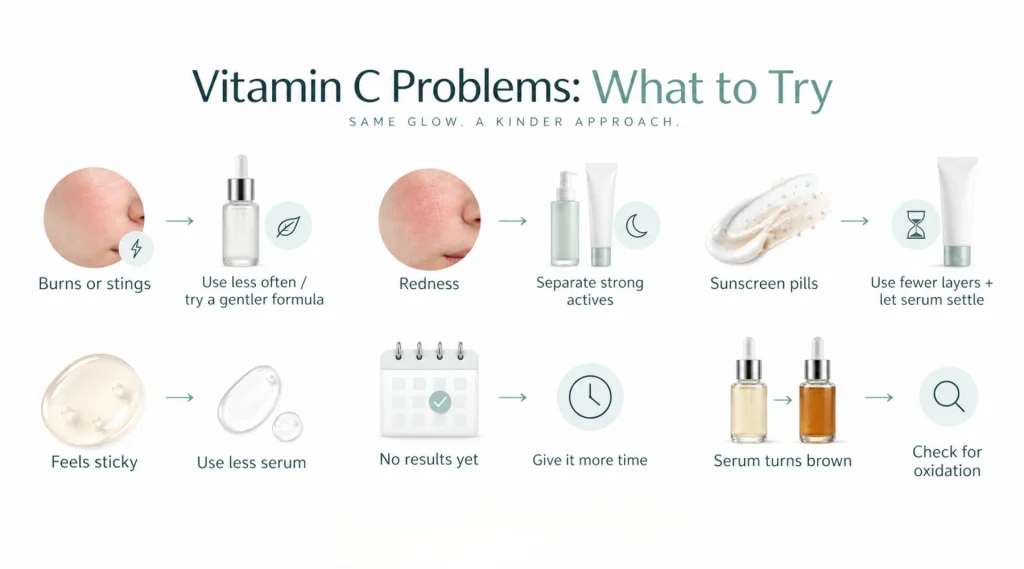
Serum Burns on Application
If the serum burns, it may be too acidic or concentrated, or your skin might be sensitive.
Try this: Use it less often, switch to a gentler version, and focus on using a cleanser, moisturiser, and sunscreen.
Face Turns Red Later
Your face might get red due to irritation from vitamin C combined with exfoliants or retinoids.
Try this: Use treatments at different times — morning and evening — and introduce them one at a time.
Sunscreen Pills Over Vitamin C
If your sunscreen pills over your vitamin C, you might be using too much product or mixing incompatible textures.
Try this: Use fewer drops, skip unnecessary layers, and let the serum absorb before applying sunscreen.
Skin Feels Sticky
If your skin feels sticky all morning, the serum may have too many humectants or films.
Try this: Use less serum or apply it in the evening.
No Changes After Two Weeks
If you see no difference after two weeks, your expectations may be too high.
Try this: Keep using the product consistently if your skin tolerates it. Changes in pigmentation and collagen take time.
Serum Turns Dark Brown
A dark brown serum indicates oxidation. L-ascorbic acid is unstable and can degrade with light, heat, air, and time.
Some colour change is normal, but if it turns orange or brown, smells different, or has changed texture, be cautious. Follow storage and replacement guidelines from the manufacturer. Stability is a key challenge in vitamin C formulations.
How Vitamin C Formulation Changes the Best Time to Use It
“Vitamin C serum” refers to various products that differ chemically. This is why timing rules for using them can be unreliable.
L-ascorbic acid
This is the main form of vitamin C known from research. It has strong antioxidant benefits and is well-studied but can be unstable and irritating. Many prefer using it in the morning for its antioxidant effects, but it’s fine to use it at night if that feels better.
Ascorbyl glucoside
This water-soluble form is gentler and easier to use. It doesn’t need to be applied at a specific time.
Sodium ascorbyl phosphate
This form is often in products for sensitive or acne-prone skin. Consistency and quality of the product are more important than when you apply it.
Magnesium ascorbyl phosphate
This stable form often appears in brightening and moisturising products.
Tetrahexyldecyl ascorbate
This lipid-soluble form is gaining popularity due to its stability and compatibility with oil-based products. Research on vitamin C derivatives is ongoing.
Different vitamin C derivatives have varying evidence, requirements, and characteristics. Don’t assume products with the same “20% vitamin C” label are the same just because the percentages match.
Is 20% Vitamin C Better Than 10%?
Not automatically.
Higher concentration is easy to market but can be confusing for shoppers. A strong serum that causes inflammation might not be as helpful as a moderate serum that you can use comfortably for months.
With L-ascorbic acid, the formulation is very important.
Key factors include:
- concentration
- pH
- solvent system
- antioxidant partners
- packageing
- exposure to air and light
- storage conditions
Vitamin E and ferulic acid are often included with vitamin C in antioxidant products because they can enhance performance. Research shows that ferulic acid helps stabilise vitamin C formulations.
The key is clear: don’t choose vitamin C just based on percentage. When comparing serum formulae, think about the entire formula and how well it works with the skin care products you already use.
Does Vitamin C Need to Be Applied Every Day?
No.
Using vitamin C every day might work well for some people, but it’s not required.
A good schedule for use is:
- Weeks 1–2: Apply two or three times a week.
- Weeks 3–4: Use it every other day if it feels good.
- After that: Use daily if your skin can handle it.
If you have sensitive skin, three or four times a week might be enough. Some people also use it twice a day, but that doesn’t always mean it’s twice as effective.
If one daily application fits your routine, there’s no need to make it more complicated.
Can You Use Vitamin C Morning and Night?
Yes, you can use the product if your skin can handle it. But applying it twice a day shouldn’t be considered normal. The biggest benefit comes from starting vitamin C and using it regularly, rather than switching from once to twice daily.
Think about using it twice a day only if:
- You’ve already used the serum regularly.
- Your skin doesn’t have ongoing irritation.
- The brand says it’s okay.
- Your routine doesn’t include too many other irritating products.
Don’t increase how often you use it just because you’re not seeing fast results. Skin takes time to adjust.
Does Vitamin C Go Before or After Moisturiser?
Usually Before
Serums are meant to go on clean skin, while moisturisers create a thicker layer. The common order to apply products is:
Cleanser → Vitamin C → Moisturiser
However, there are exceptions.
People with sensitive skin may find it easier to use actives if they apply a thin layer of moisturiser first. This can reduce the product’s effectiveness slightly, but better comfort can make it worthwhile.
If your vitamin C is in a moisturising cream, follow the product’s instructions.
Does Vitamin C Go Before or After Hyaluronic Acid?
Vitamin C is usually the first serum in a skincare routine. A common routine is:
Cleanser → vitamin C → hyaluronic acid → moisturiser.
Hyaluronic acid doesn’t deactivate vitamin C. The order is meant to keep the treatment serum in direct contact with clean skin, using the hydrating step for comfort.
Texture can change the order. A watery hyaluronic essence might go under a thicker vitamin C cream.
Skincare layering should help products apply smoothly, not create strict rules.
What Should You Not Use at the Same Time as Vitamin C?
There are fewer strict rules about skincare than social media suggests.
A better question is: which product combinations can irritate your skin or complicate your routine?
Be careful when mixing vitamin C with:
- Strong glycolic or lactic acids
- Frequent salicylic acid exfoliation
- Retinoids during the adjustment period
- Benzoyl peroxide
- Intense at-home peels
- Other low-pH treatments
Not every combination is a chemical no-no. However, using many strong products at once can upset your skin barrier.
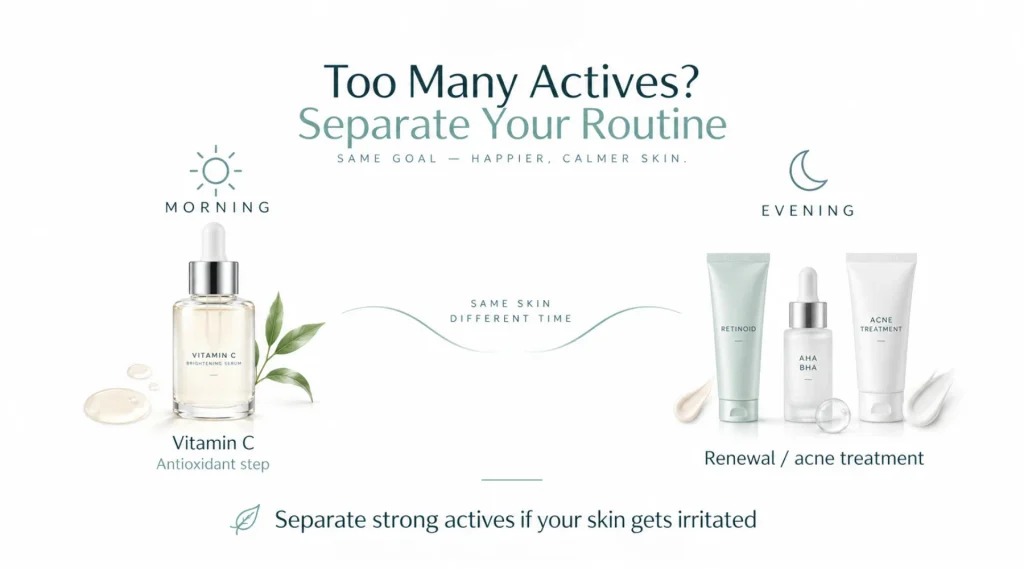
When in doubt, separate your routine:
- Morning: use an antioxidant
- Evening: use a renewal or acne treatment
This approach can solve many skincare issues.
How Long Does Vitamin C Take to Brighten Skin?
Expect Gradual Change
A moisturising formula can make your skin look plumper or fresher right away because it helps light bounce off the skin better. This is different from how vitamin C affects skin colour.
To correct uneven skin tone, you usually need to use products repeatedly over several weeks or months. Stubborn dark spots might take even longer to fade. Experts say vitamin C can help with pigmentation issues, but serious cases often need a combination of treatments, not just one ingredient.
Keep track of your progress by checking for:
- Dark spots getting lighter
- Softer edges around pigment
- Fewer new spots
- A more even skin tone
- Better surface glow
Checking daily in the mirror isn’t reliable. Taking monthly photos in the same lighting is a better way to see changes.
When Vitamin C Is Not the Ingredient Your Skin Needs Yet
Sometimes, the answer to “morning or night?” is neither.

Stop using vitamin C if your skin is:
- peeling
- burning with basic moisturiser
- recovering from too much exfoliation
- having an eczema flare
- experiencing significant rosacea irritation
- sunburned
- cracked or broken
- healing from certain skin treatments
When your skin barrier is weak, many products can sting. Adding antioxidants won’t fix ongoing irritation.
Return to a simple routine:
- Gentle cleanser
- Basic moisturiser
- Sunscreen during the day
Once your skin feels better, you can slowly reintroduce vitamin C.
For persistent rashes, swelling, severe burning, or unexplained skin changes, see a GP, pharmacist, or dermatologist instead of trying new cosmetics.
The Best Routine for Vitamin C Serum Morning or Night
There isn’t one perfect routine, but some structures are very effective.
Routine for beginners
Morning
- Gentle cleanser
- Vitamin C two or three mornings weekly
- Moisturiser
- Sunscreen
Night
- Cleanser
- Moisturiser
When your skin feels good, use vitamin C more often if you need to.
Routine for pigmentation
Morning
- Gentle cleanser
- Vitamin C
- Niacinamide if desired
- Moisturiser
- Broad-spectrum sunscreen
Night
- Cleanser
- Azelaic acid or retinoid if suitable
- Moisturiser
Routine for dry or dehydrated skin
Morning
- Gentle cleanser or water rinse
- Vitamin C
- Hyaluronic acid
- Moisturiser
- Sunscreen
Night
- Cleanser
- Hydrating serum
- Barrier-supporting moisturiser
A Vitamin C Face and Body Serum can reduce the need for extra hydration steps because its texture and formula work well for your skin.
Routine for experienced active users
Morning
- Cleanser
- Vitamin C
- Hydration if needed
- Moisturiser
- Sunscreen
Night A
- Cleanser
- Retinoid
- Moisturiser
Night B
- Cleanser
- Moisturiser
Occasional separate night
- Cleanser
- Exfoliating acid
- Moisturiser
This keeps active ingredients organised instead of crowded.
Routine when glow is the main goal
If you care less about strong pigment treatments and want a serum for radiance, there are many options with different key ingredients. For instance, a 24K Gold Serum is a different type of serum and not a replacement for a good vitamin C antioxidant serum.
It’s better to choose based on the ingredient list rather than buying multiple products just because they claim to make you glow.
Frequently Asked Questions About Vitamin C Serum Timing
Should I use vitamin C serum in the morning or at night?
Morning is usually best because vitamin C helps protect your skin from UV rays and environmental stress. If you find it easier to use at night, that’s fine too.
When should I use vitamin C serum in my skincare routine?
Apply it after cleansing and before heavier moisturisers, oils, and sunscreen. Morning use is common, but evening is also fine.
Can I use vitamin C serum every morning?
Yes, if your skin can handle it. If you’re new or have sensitive skin, start slow and increase use gradually.
Can I use vitamin C serum every night?
Yes. It works well at night too, as long as it doesn’t irritate your skin when combined with other strong treatments.
Is it better to use vitamin C morning and night?
Not necessarily. Twice a day may be good for experienced users, but one daily application is enough for most.
Can I use vitamin C serum before sunscreen?
Yes. This is a great way to use it. Apply vitamin C after cleansing, add moisturiser if needed, then finish with sunscreen.
Does vitamin C replace sunscreen?
No. Vitamin C is an antioxidant and cannot replace a proper sunscreen.
Can I use niacinamide with vitamin C in the morning?
Yes. You can use both together. If they irritate your skin, use one in the morning and the other at night.
Can I use hyaluronic acid with vitamin C?
Yes. Hyaluronic acid hydrates, while vitamin C brightens. Apply vitamin C first, followed by hyaluronic acid, moisturiser, and sunscreen.
Can I use vitamin C serum with retinol?
Yes, but beginners might find it easier to use vitamin C in the morning and retinol at night to reduce irritation.
Can I use vitamin C after glycolic acid?
You can, but it might irritate sensitive skin. It’s better to use vitamin C in the morning and glycolic acid on select nights.
Does vitamin C lighten skin or brighten it?
Vitamin C is mainly a brightening ingredient. It can help with uneven skin tone but shouldn’t change your natural skin colour.
How long should I wait after vitamin C before applying moisturiser?
You don’t need to wait a specific time. Just let the serum settle enough so the next product applies smoothly.
What happens if I accidentally use vitamin C at the wrong time?
Nothing serious. There’s no harmful effect from using it at the “wrong” time. Morning is often better for protection, but night is also okay.
What is the best vitamin C routine for sensitive skin?
Start with a gentle formula once or twice a week. In the morning, use moisturiser and sunscreen. At night, avoid layering with strong products. Increase use only if your skin stays comfortable.
Vitamin C Serum Morning or Night: Choose the Time Your Skin Can Sustain
Most people find that using vitamin C serum in the morning is more practical. When applied under sunscreen, it provides extra protection against UV rays and pollution. A simple routine of cleansing, applying vitamin C, moisturising, and using sunscreen works well.
Using vitamin C at night is also fine. If it doesn’t layer well under your sunscreen, affects your makeup, makes your morning routine too complex, or fits your habits better, then use it in the evening. If you use retinoids or exfoliating acids at night, morning vitamin C helps keep the active ingredients separate.
What matters most is not the exact time but the basics: choose a good formula, add it to your routine gradually, avoid irritation, store it correctly, and use it consistently.
Vitamin C can help brighten your skin, protect against stress, and aid collagen production, but it should be part of your routine rather than a shortcut. Understanding what vitamin C does and when to use it makes the decision simpler.
The best time is when vitamin C, moisturiser, and sunscreen can work together without causing issues for your skin or routine.