




Blog
Redness Prone Skin Routine: Steps for Calmer Looking Skin


Facial redness can be frustrating. Your skin may look flushed after washing, feel uncomfortable under moisturiser or react to products that used to suit it. Redness can come and go, even when you haven’t changed your skincare.
A good routine for redness-prone skin aims to keep it comfortable and protect its natural barrier. Start with gentle cleansing, regular moisturising and daily sun protection. Avoid adding strong treatments or lots of products unless you know your skin can tolerate them.
Redness can have different causes. Flushing, dry or irritated skin, reactions to skincare ingredients and conditions such as rosacea can look similar. This matters because a product that helps dry, irritated skin may not help redness linked to visible blood vessels.
The goal isn’t to remove all natural colour from your face. Healthy skin can flush because of heat, exercise or emotions. Pay attention to redness that comes with discomfort, notice what makes it worse and choose a routine you can use consistently.
Why Does Skin Become Red, Sensitive or Easily Irritated?
Facial redness can have several causes, and how it looks does not always show what is happening beneath the skin.
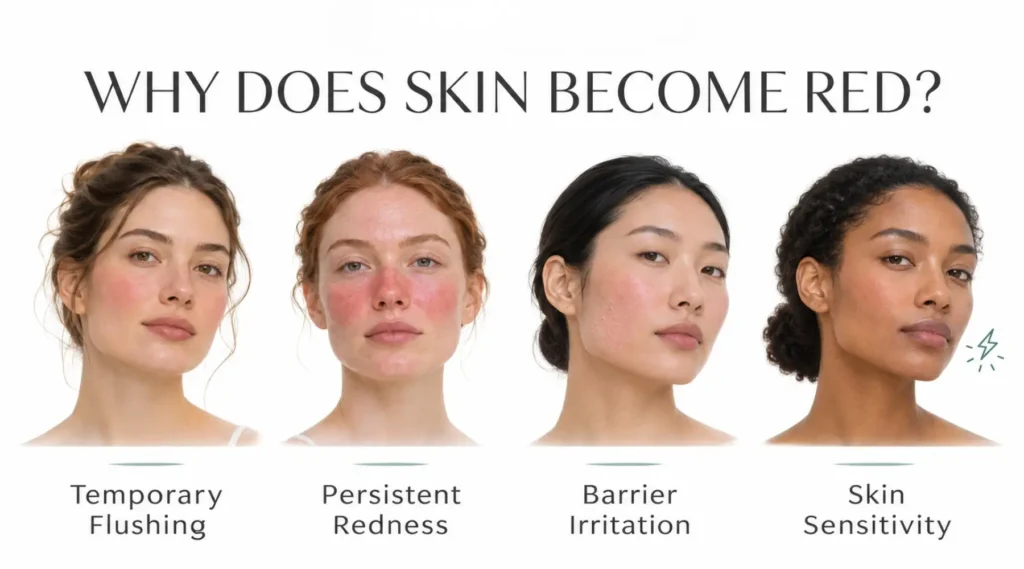
The skin has many small blood vessels. When they widen, more blood flows near the surface and the skin may look flushed. Heat, exercise, stress and changes in temperature can trigger this.
Redness can also happen with inflammation or damage to the skin’s protective barrier. This may be caused by irritating ingredients, too much exfoliation, harsh cleansers or an allergen.
Temporary Flushing and Persistent Redness Are Different
Temporary flushing often starts quickly and fades once the cause passes. For example, your cheeks may feel warm after you come in from the cold. The redness may fade as your body cools down.
Redness that lasts is different. It may last much of the day, keep returning in the same areas, or become more noticeable over time.
Rosacea can cause repeated flushing, sensitive skin and redness that lasts. Contact dermatitis and seborrhoeic dermatitis can also cause redness or irritation.
NHS guidance says rosacea symptoms can include flushing, burning, dryness and visible blood vessels. Colour changes may be harder to see on darker skin. Warmth, stinging and tenderness can also be useful signs.
Knowing the difference can help you understand what may reduce redness. A moisturiser may help if dryness is causing irritation, but it cannot reliably remove permanently enlarged small blood vessels near the skin’s surface.
How a Weakened Skin Barrier Can Make Redness More Noticeable
The outer layer of your skin, called the stratum corneum, helps protect it. It is made of flat skin cells held together by natural fats, including ceramides, cholesterol and fatty acids. Together, they help keep water in and irritating substances out.
If this barrier is disturbed, water can escape from the skin more easily. This is known as transepidermal water loss. The skin may then feel dry, tight or uncomfortable. Products that were once fine to use may start to sting or burn.
Signs that your skin barrier may be irritated include:
- Tightness after washing your face
- Burning when you apply an everyday moisturiser
- Dry patches with visible redness
- Rough or flaky skin around your nose and cheeks
- Greater sensitivity to changes in temperature
- Discomfort after using exfoliating products
These signs do not prove that your skin barrier is damaged, but they may mean a simpler skincare routine would help.
To support the skin barrier, reducing irritation is as important as using moisturising ingredients. Adding several hydrating products while continuing to use harsh exfoliants may not address the cause.
Redness Does Not Always Mean Sensitive Skin
Sensitive skin reacts easily to skincare products, the environment or touch. It may sting, itch, burn or feel tight.
Redness-prone skin tends to show visible colour changes. It may also be sensitive, but not always.
Some people have easily irritated skin without visible redness. Others experience facial flushing without dryness or discomfort.
Skin colour matters too. On deeper skin tones, inflammation may look purple, brown or darker than the surrounding skin, rather than bright pink or red.
A helpful skincare routine considers both what you can see and what you feel, not just redness.
What a Redness-Prone Skin Routine Should Actually Achieve
A good skincare routine has three aims: avoid unnecessary irritation, keep skin comfortably hydrated and protect it from things in the environment that may make it look worse.
These aims are easy to miss when skincare advice focuses on exfoliating, brightening or treating signs of ageing. Skin prone to redness may need a different approach.
Cleanse to remove dirt, sunscreen and excess oil without leaving your face feeling tight or dry. Moisturise to keep skin hydrated and support its protective barrier. Use sunscreen to reduce UV exposure, which can worsen some causes of facial redness.
Serums may help, but they are optional. Add one only if it has a clear purpose.
Why Morning and Evening Skincare Have Different Roles
Morning skincare helps protect your skin from sun, changing temperatures, wind and other everyday conditions. At night, skincare removes the products built up during the day and lets you moisturise without applying sunscreen or makeup over it. Evening products do not need to be stronger. If your skin is sensitive or easily irritated, using similar gentle products morning and night can be a sensible choice over time.
| Routine step | Morning priority | Evening priority |
| Cleansing | Remove overnight oil and residue when needed | Remove sunscreen, makeup and accumulated dirt |
| Hydration | Maintain comfortable moisture levels | Replenish moisture after cleansing |
| Moisturiser | Support the barrier throughout the day | Reduce overnight dryness and tightness |
| Sunscreen | Protect against UV exposure | Not required |
| Active ingredients | Optional if well tolerated | Optional, with careful introduction |
A routine is more likely to work well when you choose the right products, use them properly and stick with them, not when you add more steps.
Redness Prone Skin Routine Morning and Night: The Morning Steps
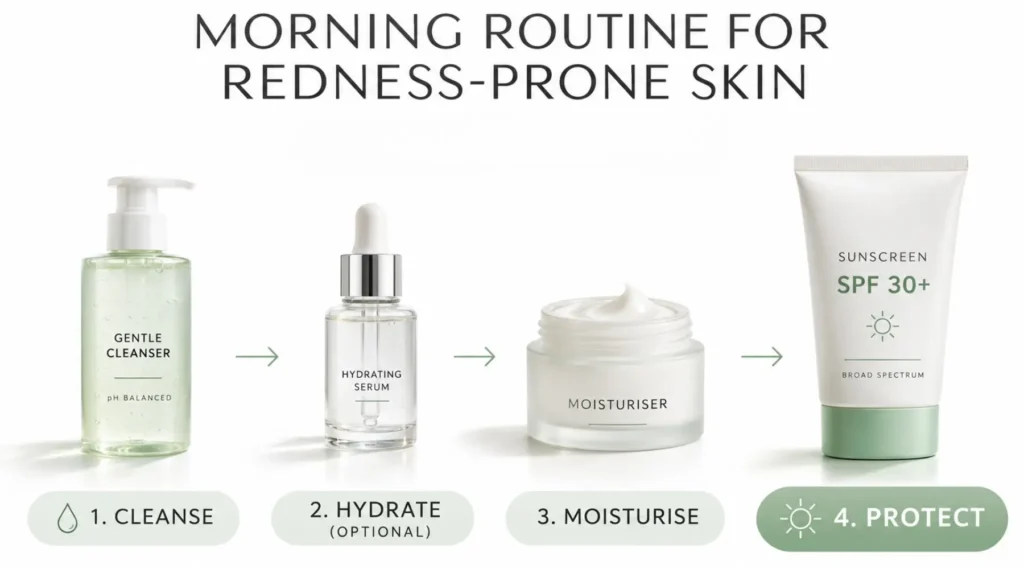
MORNING ROUTINE
- Wash gently with lukewarm water or a mild, fragrance-free cleanser.
- If needed, use a simple hydrating serum that does not exfoliate and suits your skin.
- Apply a comfortable lotion or cream to help protect your skin barrier.
- Finish with a generous layer of broad-spectrum sunscreen with SPF 30 or higher.
Step 1: Cleanse Without Removing Too Much Natural Oil
Your face doesn’t need to feel completely free of oil after cleansing. If your skin is prone to redness, that feeling may mean your cleanser is too harsh.
Choose a mild, fragrance-free cleanser that rinses off without leaving your skin very tight. Cream, milk and low-foaming cleansers often suit dry or sensitive skin, but the texture alone doesn’t tell you whether a cleanser is gentle. A well-made gel cleanser may work just as well.
Use lukewarm water. Gently spread the cleanser over your face with your fingertips, then rinse it off thoroughly. Avoid scrubbing brushes, textured pads and long facial massages.
If your skin feels especially dry in the morning, rinsing with lukewarm water alone may be enough. If your skin is oily, you have treatment residue from overnight, or you have certain skin conditions, you may prefer to use a gentle cleanser.
After washing, your skin should feel comfortable, not painfully tight or noticeably hotter than before.
Step 2: Add a Hydrating Serum Only When Your Skin Needs One
Hydrating serums may make dry or dehydrated skin feel more comfortable, but not everyone needs one.
A simple serum with glycerin, hyaluronic acid, or panthenol may help the skin’s outer layers hold onto water. Hyaluronic acid attracts and binds water. It does not exfoliate the skin.
This can improve hydration at the skin’s surface, but it does not treat the underlying causes of ongoing facial redness.
Usually, a thin layer is enough. Apply it gently; you don’t need to keep rubbing until your skin feels dry.
You can apply some serums to slightly damp skin. But if water or damp skin makes your face sting, let your skin dry first. The serum should feel comfortable. Tingling does not mean it is working.
Step 3: Apply a Barrier-Supporting Moisturiser
Moisturiser is often the most helpful leave-on product in a basic routine for skin prone to redness. A well-made moisturiser can help keep water in the skin, soften rough areas and make skin feel less sensitive to everyday conditions.
Look for ingredients such as ceramides, glycerin, squalane, dimethicone and fatty alcohols. They can help hydrate skin or support its protective surface.
If your skin is dry, a cream may feel more comfortable than a very light gel. If your skin is oily or a mix of oily and dry, a fragrance-free lotion may be enough. But oily skin does not mean you must avoid richer moisturisers.
Apply gently, without rubbing hard, especially on your cheeks and around your nose. Some people with rosacea find moisturiser stings less when applied to completely dry skin. The American Academy of Dermatology includes this in its rosacea skin care advice. Try different application methods carefully and use the one that feels most comfortable.
Step 4: Protect Your Skin with Broad-Spectrum Sunscreen
Sun protection matters because sunlight can cause flushing and worsen some inflammatory skin conditions.
Choose a broad-spectrum sunscreen with SPF 30 or higher. SPF 50 or 50+ may offer extra protection when applied properly.
Mineral sunscreens with zinc oxide, titanium dioxide, or both may suit people whose skin stings with other types. But they are not best for everyone: some can feel drying or contain other ingredients that irritate sensitive skin.
The best sunscreen protects you and feels comfortable enough to use every day. Apply plenty to all exposed skin, including your ears and neck. If you are outdoors for a long time, reapply about every two hours, and after swimming or heavy sweating. Follow the product instructions.
You can also protect your skin by seeking shade, wearing a hat and avoiding strong midday sun. If you are trying to reduce repeated facial redness, these steps may help more than buying another specialised serum.
A Gentle Evening Routine for Skin That Flushes Easily
In the evening, cleanse away the day’s build-up without irritating your skin. It may have been exposed to changes in temperature, the environment, make-up or sunscreen. Nighttime is a chance to help it feel comfortable again.
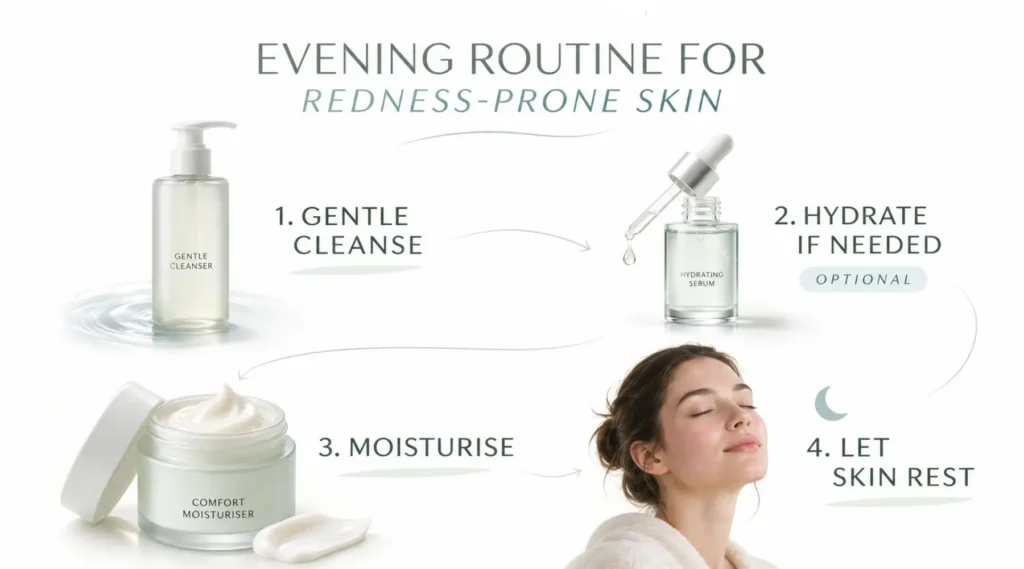
Step 1: Remove Make-up and Sunscreen Without Over-Cleansing
Start with a gentle face wash.
If you wear long-lasting make-up or water-resistant sunscreen, you may need a suitable remover before washing your face.
A fragrance-free cleansing balm, oil, or micellar product may help, as long as it doesn’t irritate your skin.
Double cleansing is optional, not essential for healthy skin. Cleansing more than needed can dry out your skin.
If one gentle wash removes your products, there is little benefit in washing again.
Rinse off micellar product if its instructions say to. Avoid repeatedly wiping your face with cotton pads.
Step 2: Replenish Hydration Without Excessive Layering
After cleansing, notice whether your skin feels dry, comfortable or unusually sensitive. If it feels tight, a fragrance-free hydrating serum may help before you moisturise.
Use a small amount of hyaluronic acid serum, then apply a suitable moisturiser. You don’t need several toners, essences, and serums. Using lots of similar products can make it harder to tell what irritated you. One hydrating product that suits your skin is usually more practical.
Step 3: Use Moisturiser to Reduce Overnight Dryness
You can use the same moisturiser at night as you do in the morning.
If heating, cold weather or dry air makes your skin feel uncomfortable, you might prefer a slightly richer moisturiser at night. Apply enough to cover your skin comfortably, without rubbing too hard.
For very dry patches, you can try a small amount of plain petrolatum over your moisturiser if your skin tolerates it. This may help reduce water loss. Not everyone needs heavy, water-blocking products, and they may feel uncomfortable on skin that reacts to heat or is prone to acne.
Unless a clinician advises you to, don’t apply a thick layer of these products over active ingredients that may irritate your skin; in some cases, this could make irritation worse.
Step 4: Keep Strong Treatments Separate from Recovery Nights
Retinoids, exfoliating acids and acne treatments can help with certain skin concerns, but they may also cause dryness or irritation.
If your skin is burning, peeling or reacting to basic products, adding these ingredients is unlikely to help. You could pause non-essential active skincare products until your skin feels comfortable again.
If you use prescribed treatments, follow your clinician’s advice. Don’t stop or change them without checking first.
Once your skin feels settled, consider whether you need another treatment. Not every skincare routine needs one. If you often have redness and sensitive skin, a simple evening routine of gentle cleanser followed by moisturiser may be enough.
Which Ingredients Work Best in a Redness Prone Skin Routine?
The ingredient most often promoted for redness isn’t always the best choice. If your skin is easily irritated, a moisturiser you can rely on may be more useful day to day than a strong treatment serum. It helps to know whether an ingredient hydrates, supports the skin barrier, soothes the skin or treats a specific condition.
Ceramides: Supporting the Skin’s Protective Structure
Ceramides are fats found naturally in the skin’s outer barrier. They help hold the spaces between skin cells together and reduce water loss.
A moisturiser with ceramides may help when redness comes with dry, rough or tight-feeling skin.
Ceramides do not directly narrow visible blood vessels or eliminate rosacea. Their main benefit is helping support the skin barrier.
Hyaluronic Acid: Improving Hydration and Surface Comfort
Hyaluronic acid draws in and holds water, helping keep the skin’s outer layers hydrated.
Better-hydrated skin may feel softer and more flexible. It may also make dryness-related fine lines look less noticeable.
A simple hyaluronic acid serum may suit people whose redness is more noticeable when their skin is dry. But the whole formula matters: fragrance or exfoliating ingredients may still irritate the skin.
You can apply the serum to slightly damp or dry skin, depending on what feels comfortable. More important than whether your skin is wet or dry is applying a moisturiser afterwards to help reduce water loss.
Glycerin: A Dependable Everyday Humectant
Glycerin is a well-established skincare ingredient that attracts water and helps hydrate the skin’s outer layers. It’s commonly found in cleansers, serums and moisturisers, including many affordable products.
If your moisturiser contains enough ingredients that attract water and keep your skin comfortable, you may not need a separate hydrating serum. A glycerin-based moisturiser can also help keep your routine simple.
Panthenol: Supporting Comfort and Moisture Retention
Panthenol, also called provitamin B5, is often added to moisturisers for dry or sensitive skin. It helps draw in moisture, may make skin feel more comfortable, and supports its protective barrier. It is often used with ingredients such as glycerin or ceramides. However, a product containing panthenol does not guarantee it will prevent redness.
Niacinamide: Useful, but Concentration Matters
Niacinamide is a form of vitamin B3 used in skincare. It can help support the skin’s protective barrier, improve the look of uneven skin tone and help manage oiliness. It may suit people with dryness, blemishes, or uneven texture.
A high-strength serum isn’t always needed. Some people find certain formulae cause flushing, stinging or irritation, particularly if their skin barrier is already weakened. A moisturiser with a modest amount of niacinamide may be a gentler place to start. A 10% formula isn’t necessarily better for sensitive skin than a lower-strength product.
Centella Asiatica, Allantoin and Beta-Glucan
These ingredients are often found in skincare for sensitive or stressed skin.
Centella asiatica contains compounds being studied for their possible soothing and skin-supporting effects. But the evidence is mixed, and lab results don’t guarantee that every skincare product will make a noticeable difference.
Allantoin conditions the skin and may make moisturisers feel more comfortable.
Beta-glucan helps support hydration and condition the skin.
These ingredients may be useful, but they are not guaranteed to fix ongoing facial redness.
Plant extracts can also cause sensitivity in some people, as they may contain fragrance compounds or other triggers. How well the finished product is made for your skin matters more than an appealing ingredient list.
How to Choose the Best Products for Redness Prone Skin Routine
If your skin is prone to redness, shop differently than you would for dryness or dullness. Rather than choosing products with the strongest active ingredients, look for formulae with a clear purpose that are less likely to irritate.
| Product type | What to look for | What to approach cautiously |
| Cleanser | Gentle, non-abrasive, fragrance-free formula | Scrubs, strong fragrance and harsh cleansing agents |
| Hydrating serum | Glycerin, hyaluronic acid or panthenol | Strong acids and heavily fragranced botanical blends |
| Moisturiser | Ceramides, glycerin, squalane or dimethicone | Products that cause persistent stinging |
| Sunscreen | Broad-spectrum SPF 30+, comfortable daily texture | Fragranced or irritating formulae |
| Treatment serum | One clearly identified concern and a tolerable strength | Multiple strong actives introduced together |
| Face mask | Simple moisturising formula | Harsh peeling, strongly scented or excessively drying masks |
Why a Shorter Ingredient List Can Be Helpful
A short ingredients list doesn’t automatically mean a product is safer. Ingredients such as preservatives and stabilisers help products work properly, and a longer list can still suit sensitive skin.
However, products with fewer ingredients that may irritate skin can make it easier to work out what suits you. Fragrance-free products are a good place to start. But “unscented” doesn’t always mean fragrance-free: a product may contain fragrance to cover other smells.
The American Academy of Dermatology advises people managing rosacea-prone skin to avoid common irritants such as fragrance, menthol, camphor and some exfoliating acids. This isn’t a rule that everyone with facial redness must follow. Sensitive skin may be more likely to react to these ingredients.
Where Hydrating Serums and Moisturisers Fit
When choosing a serum, check whether it hydrates, targets a particular concern, or combines several treatments.
You can use a hydrating serum alongside moisturiser, but it may not replace moisturiser if your skin needs help retaining water.
Some moisturisers combine ingredients such as ceramides, beta-glucan and hyaluronic acid to support the skin barrier. Even so, test each product individually, especially if it contains plant extracts.
Skin care ranges include cleansers, moisturisers and targeted treatments. Whether a product suits you depends on its formula, not just its type.
If your skin is prone to redness, choosing a few suitable products is often more reliable than building a complicated routine around popular ingredients.
Redness Prone Skin Routine for Sensitive Skin: Adjustments That Matter
Sensitive skin doesn’t always respond to the same skincare routine. A product that feels fine in one season may irritate your skin in another. Your skin’s tolerance can change because of the weather, recent treatments, hormones or existing skin conditions. Adjust your routine as needed.
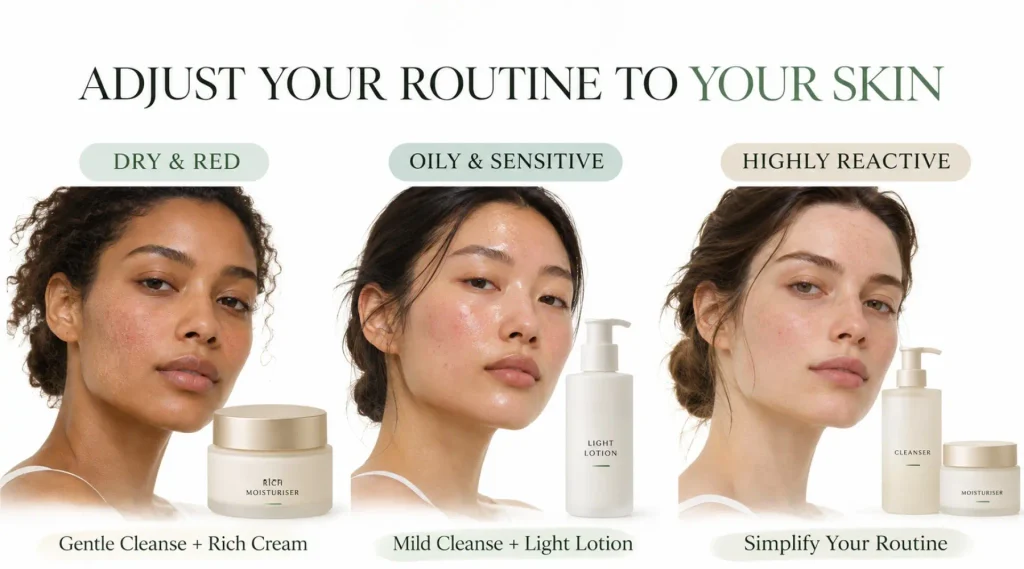
When Your Skin Is Dry and Red
Dryness and redness often appear together, especially in colder months.
Use a mild cream cleanser or another gentle cleanser that won’t strip your skin. Then apply a richer, fragrance-free moisturiser.
You don’t need a separate serum. If you use one, choose a simple formula.
Don’t use exfoliating products just because your skin is flaky. The flakes may signal irritation, not a need for stronger exfoliation.
If your skin stays scaly, itchy or inflamed, consider getting it checked for eczema or another skin condition.
When Your Skin Is Oily but Easily Irritated
Oily skin can still be sensitive or lacking moisture. Extra oil does not mean your skin’s protective barrier is working well. Strong cleansers may make irritation worse.
If you prefer a light feel, try a gentle gel cleanser. Follow with a lotion or gel-cream that does not leave your skin feeling tight. Avoid washing your face repeatedly to cut down on shine.
If you have spots and redness, remember that not all acne-like bumps are acne. Rosacea, for example, can cause inflamed bumps without the blackheads often seen with acne.
When Your Skin Reacts to Almost Everything
If even simple products make your skin burn, temporarily use only the essentials: a cleanser you know your skin tolerates, a basic moisturiser and suitable sunscreen. Avoid trying several new products while your skin is reacting.
If water or a plain moisturiser causes significant discomfort, or the redness continues after you simplify your routine, seek professional advice. Ongoing skin reactions may be due to a skin condition that needs treatment, rather than a missing skincare ingredient.
How to Introduce New Products Without Triggering Unnecessary Irritation
A new skincare product may seem promising, especially if it claims to soothe sensitive skin. But if you start using several new products at once and your skin becomes irritated, it can be hard to tell which one caused it. A more reliable approach is to try one new product at a time.
Test Before Applying a Product Across Your Entire Face
The American Academy of Dermatology recommends testing a skincare product on a small patch of skin, such as the inside of your arm, twice a day for 7 to 10 days before using it more widely.
Follow the product’s instructions. Do not leave wash-off products on your skin.
Stop using the product if you notice itching, swelling, a rash or burning that does not go away.
A home test can help you judge how your skin might react, but it cannot guarantee your face will tolerate the product. Facial skin may react more easily than skin on your arm.
If you have had serious allergic reactions before, a professional patch test may be suitable.
Introduce Products Gradually
After testing the product, add it to your usual routine without changing anything else. Notice how your skin feels over the next few days, as some reactions may take hours or days to appear. If your skin stays comfortable, keep using the product as directed. You may need to introduce stronger active ingredients more slowly. Follow the product instructions and any advice from a professional.
Keep a Simple Record of Reactions
You don’t need a detailed skincare diary. A short note is enough. For example:
Tuesday: Used a new moisturiser in the evening. No stinging. Mild dryness around my nose the next morning.
After a few days, it may be easier to spot patterns. Photos taken in similar lighting can also help. Don’t compare redness in bright bathroom light one day with redness in natural daylight the next. Lighting and camera settings can make normal changes in skin colour look more noticeable.
Common Mistakes to Avoid in a Redness Prone Skin Routine
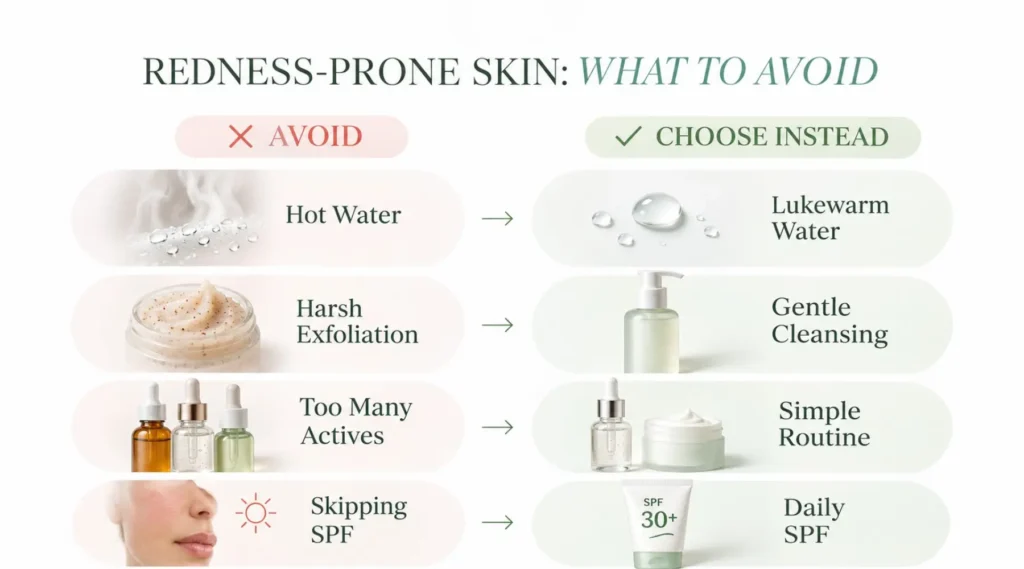
Skincare mistakes often happen when people are trying to help. If someone notices redness, they may try more exfoliation, a stronger brightening serum or several soothing products. But adding more ingredients can make already sensitive skin harder to manage.
1. Washing with Hot Water
Hot water may briefly make your skin look red and feel more uncomfortable. It can also dry your skin, especially when used with harsh cleansers. Use lukewarm water and wash briefly.
2. Exfoliating When the Skin Looks Rough
Rough skin doesn’t always mean you need to remove dead skin. If your skin’s protective barrier is irritated, dryness or inflammation can cause flaking. Repeatedly using glycolic acid, salicylic acid, or facial scrubs may make things worse. Avoid exfoliating while your skin is irritated. Once it settles, consider whether you need to exfoliate at all.
3. Assuming Natural Ingredients Are Always Gentle
Essential oils, plant extracts and scented products can irritate sensitive skin.
Natural ingredients are not always suitable for everyone.
Peppermint, eucalyptus, and some fragrance ingredients may cause discomfort for people prone to flushing or irritation.
Choose products based on all their ingredients and how your skin responds, not just claims such as “pure”, “natural” or “clean”.
4. Using Too Many Redness Serums Together
A busy routine might include niacinamide, centella, vitamin C, an exfoliating acid and several hydrating products. Each may have a useful role, but using them all together can be hard for your skin to tolerate. Start with the basics, and add treatments only when you have a clear reason.
5. Treating Stinging as a Sign of Effectiveness
A tingling feeling doesn’t mean a product is improving your skin. Some ingredients may cause mild tingling, but don’t ignore burning or stinging that lasts. A basic moisturiser or hydrating serum should usually feel comfortable. If a product keeps causing discomfort, stop using it and check how your skin reacts.
6. Skipping Sunscreen Because the Weather Is Cloudy
UV exposure happens all year. If your skin is prone to redness, skipping sunscreen can leave a major trigger in place, even if the rest of your skincare routine is gentle. Choose a sunscreen that feels comfortable and use it regularly when you need protection.
7. Using Steroid Creams Without Medical Advice
Topical steroid creams can help treat some inflammatory skin conditions. But using them on the face for too long or incorrectly can cause problems, such as worsening rosacea or steroid-related facial dermatitis. Don’t use a steroid cream for unexplained facial redness unless a suitable healthcare professional advises you to.
8. Changing Products Before They Have Been Properly Assessed
Changing moisturisers every few days can make it hard to tell what helps. Unless a product irritates your skin, use your basic routine regularly for a reasonable time before deciding whether it makes you more comfortable. If symptoms continue, seek a professional assessment instead of trying different products.
Everyday Triggers That Can Affect Facial Redness
Even a well-chosen skincare routine may not be enough if everyday conditions keep causing flushing or irritation. You don’t need to avoid every possible trigger. Focus on the ones that regularly affect your skin.
Temperature Changes and Indoor Heating
Moving from cold air into a warm room can make your skin look flushed. Cold wind may also dry your skin, especially if it is sensitive. In winter, try using a slightly richer moisturiser and protect your face from direct wind when you can. Keep your face away from radiators, heaters and other strong sources of heat.
Exercise and Overheating
It’s normal for your face to flush when you exercise, as your body warms up. If you have rosacea, getting too hot may also make symptoms last longer. Exercise is still important for your health, so you don’t need to avoid it altogether. If overheating regularly makes you uncomfortable, try exercising somewhere cooler with good airflow, drink water regularly, and reduce the intensity. Afterwards, a cool, damp cloth may help you feel more comfortable.
Food, Drink and Emotional Stress
Hot drinks, spicy food, alcohol and stress can cause flushing in some people, but they do not affect everyone. You do not need to cut out whole food groups without a clear reason. The National Rosacea Society recommends noticing what triggers your symptoms rather than assuming every commonly reported trigger affects you. If a particular drink or environmental condition seems to come before flushing repeatedly, it may help to keep a record.
Makeup, Friction and Facial Treatments
Many people with redness-prone skin can wear makeup safely. Choose products that feel comfortable, and remove them gently at night. A green colour corrector may make pink or red tones look less noticeable. A suitable concealer may give coverage without needing lots of layers. Colour correction only changes how redness looks; it does not treat its cause.
Facial waxing, vigorous massage, dermaplaning and abrasive treatments may irritate sensitive skin. If your face is already irritated, it is usually sensible to postpone non-essential treatments.
What to Do When Your Face Suddenly Becomes Red and Uncomfortable
A sudden flare-up can make your skin feel hot, tight or extra sensitive.
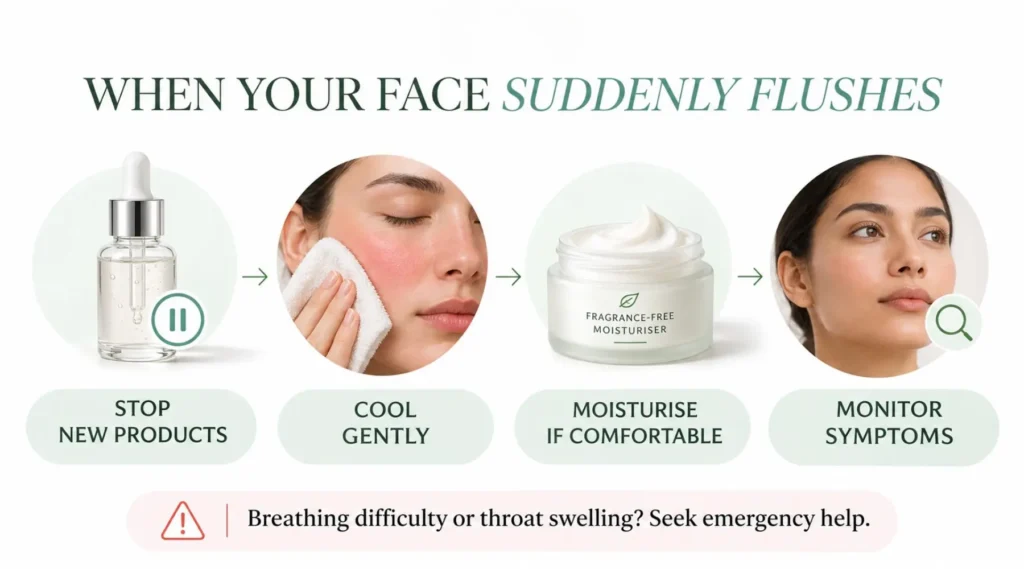
It’s usually best not to add new products straight away.
- Keep your routine simple and think about what might have caused the change.
- Stop using any new cosmetic products that may be irritating your skin.
- Avoid too much heat or direct sunlight if they seem to trigger symptoms.
- If it feels soothing, hold a clean, cool, damp cloth against your skin for a short time. Don’t put ice directly on your face.
- If your skin is dry, use a familiar, gentle moisturiser, as long as it doesn’t sting.
- Avoid exfoliants, scrubs and treatments you don’t need while your skin is uncomfortable.
- Watch your symptoms, especially if redness comes with swelling, pain, or a worsening rash.
If you think you have contact dermatitis, find and avoid the substance causing it. The NHS says it can cause itching, dry or cracked skin, redness or changes in skin colour. Symptoms may appear after contact with certain substances.
Seek medical advice promptly if the reaction is severe, symptoms worsen quickly, or you notice signs of infection. Sudden swelling of the lips, tongue or throat, or difficulty breathing, needs emergency care.
When Skincare Alone Cannot Resolve Facial Redness
Not all facial redness is just cosmetic. Ongoing flushing, visible blood vessels, inflamed bumps, or repeated discomfort may signal a condition that needs diagnosis and treatment.
Rosacea
Rosacea is a long-term skin condition that causes inflammation, usually in the middle of the face.
It can cause repeated flushing, ongoing changes in skin colour, burning, sensitivity and spots that look like acne.
A gentle skincare routine may help make skin more comfortable and avoid some triggers, but it cannot replace medical treatment.
A clinician may suggest creams or gels such as azelaic acid, metronidazole or ivermectin, depending on your symptoms.
Some treatments help with inflamed spots, while others target lasting redness.
Azelaic acid is also used in skincare products. How it is made, its strength and how your skin responds all matter. It may cause stinging or irritation at first, so it is not right for everyone with sensitive skin.
Contact Dermatitis
Contact dermatitis happens when your skin reacts to something that irritates it or causes an allergy. Common triggers include fragrances, preservatives, cleaning products and some ingredients in cosmetics.
Avoid whatever is causing the reaction. A clinician may suggest treatment, such as moisturisers or prescribed anti-inflammatory medicine. If an allergy is suspected, medical patch testing can help identify the specific substances responsible.
Persistent Visible Blood Vessels
Small blood vessels close to the skin’s surface may still be visible, even if the skin feels comfortable. Moisturisers and soothing serums cannot reliably make them go away. A dermatologist may use a vascular laser or certain light-based treatments to reduce their appearance. Results vary, and you may need more than one session. Side effects can include temporary swelling and skin colour changes. A suitably qualified professional should assess people with darker skin tones, as the choice of device and its settings can affect the risk of skin colour changes.
Symptoms That Deserve Medical Attention
Arrange an appointment with a GP or dermatologist if facial redness keeps coming back, doesn’t go away, is painful, has no clear cause, or if you have a rash that isn’t improving.
Get urgent medical help if you have eye pain, blurred vision, sensitivity to light or a painful red eye, especially if you may have rosacea. The NHS advises urgent care because eye problems can sometimes threaten sight.
How Long Does It Take for a Redness Prone Skin Routine to Show Results?
How quickly redness improves depends on the cause. If harsh cleansing or too much exfoliation is the problem, stopping these may help your skin feel more comfortable fairly quickly. Dry, tight skin may feel better after a few days of using a suitable moisturiser. If your skin barrier is irritated, more noticeable improvement may take several weeks. This depends on how severe the irritation is and whether you’ve stopped the cause.
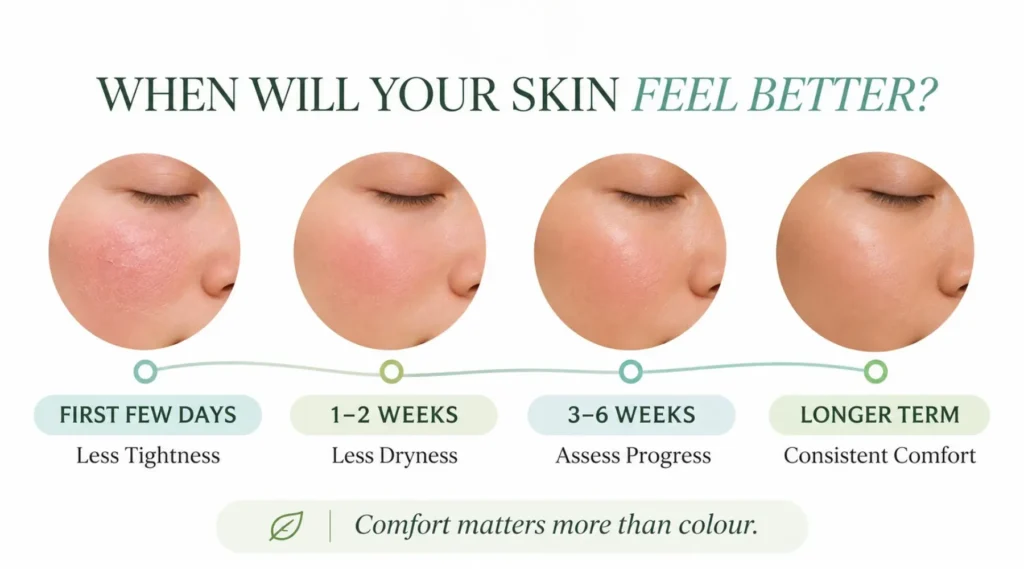
Redness linked to rosacea or visible blood vessels may not improve much with ordinary skincare alone.
| Timeframe | What you might reasonably notice |
| First few days | Less tightness or discomfort if irritating products have been removed |
| One to two weeks | Potential improvement in dryness, roughness and sensitivity |
| Three to six weeks | A clearer indication of whether the routine suits your skin |
| Longer term | More consistent comfort and fewer avoidable irritation episodes |
| Persistent vascular redness | May require assessment and targeted medical treatment |
These are general expectations, not a promise of how long treatment will take. Judge progress by how comfortable your skin feels, not just its colour. If it no longer burns after washing, tolerates moisturiser and feels less dry during the day, that’s meaningful progress, even if some natural redness remains.
Questions People Often Ask About Redness-Prone Skin
1. What is the simplest redness-prone skin routine for beginners?
A simple routine for redness-prone skin needs only a few products.
In the morning, use a gentle cleanser if needed, then moisturiser and broad-spectrum SPF 30 or higher. At night, gently cleanse and apply moisturiser.
Where possible, choose fragrance-free products. Avoid adding several active ingredients at once.
If your skin feels comfortable and settled but still feels dry, you could try a hydrating serum. A more complicated routine is not always more effective.
2. How can I reduce facial redness naturally?
To help reduce redness caused by irritation, avoid harsh cleansers, use lukewarm water, moisturise regularly and protect your skin from too much sun. A cool, damp cloth may ease heat-related discomfort. Noticing triggers, such as hot places or certain skincare products, may help prevent redness from returning. Natural methods cannot reliably clear redness caused by conditions such as rosacea or visible blood vessels. If redness persists, seek professional advice.
3. What is the best morning skincare routine for redness-prone skin?
In the morning, gently cleanse and moisturise your skin, then apply sunscreen.
If your skin feels dry, you can add a hydrating serum with ingredients such as glycerin or hyaluronic acid.
Avoid strong exfoliating treatments while your skin is sensitive.
Choose sunscreen with SPF 30 or higher, and pick a formula that feels comfortable on your skin.
The best routine is one you can stick to without causing unnecessary discomfort.
4. Should I use a serum every day if my skin is red?
Not necessarily.
A basic moisturiser may be enough to keep your skin hydrated and support its protective barrier.
If you use a simple hydrating serum and your skin handles it well, you may be able to use it every day.
Redness doesn’t always mean you need a special serum.
Products with exfoliating acids, retinoids or other strong ingredients need more careful thought.
If your skin is irritated, it’s often better to keep your routine simple rather than add another treatment.
5. Is hyaluronic acid suitable for redness-prone skin?
Hyaluronic acid is usually well tolerated and may help dry or dehydrated skin feel more hydrated. It does not exfoliate or treat ongoing redness caused by visible blood vessels. It helps the skin’s surface hold on to water, which may make it feel softer and more comfortable. Choose a simple serum and apply moisturiser afterwards. Stop using it if it causes burning, itching or ongoing discomfort. Even gentle ingredients may not suit everyone, depending on the formula.
6. Can niacinamide help with redness and sensitive skin?
Niacinamide may help support the skin barrier and improve uneven skin tone. It does not work for all facial redness.
Some people use niacinamide in moisturisers without problems but find strong serums irritating. If you have sensitive skin, a lower-strength product may suit you better.
If your redness is caused by rosacea, eczema or an allergy, niacinamide is not a replacement for proper medical care.
7. Is it better to wash redness-prone skin once or twice a day?
How often you wash your face depends on your skin and the products you use. Some people do well with a gentle cleanser twice a day. Others can rinse with lukewarm water in the morning and cleanse at night. If you wear sunscreen or makeup, evening cleansing is especially important. Avoid washing too often, using very hot water or scrubbing with rough tools. Your skin should feel clean and comfortable, not tight or dry.
8. Can I exfoliate if I have redness-prone skin?
Exfoliating is not always a problem, but it can irritate sensitive skin. Avoid scrubs and exfoliating acids while your face is inflamed, stinging or reacting to basic skincare. If your skin is calm and you have a concern that might improve with exfoliation, ask a dermatologist about suitable options. You do not need to exfoliate just because you have a skincare routine. If you are prone to rosacea, avoiding exfoliation may be more comfortable in the long term.
9. Does sunscreen help prevent facial redness?
Sunlight can worsen redness, especially for people with rosacea, where it is a common trigger. Use plenty of broad-spectrum sunscreen with SPF 30 or higher. If other sunscreens sting, a fragrance-free mineral one may suit you better. Sunscreen won’t clear existing redness or treat every cause, but it can reduce the extra strain sunlight puts on your skin.
10. How do I remove facial redness quickly before an event?
What may help depends on why your face is red. If heat has caused a temporary flush, move somewhere cooler and let your skin settle. A cool, damp cloth may bring short-term comfort. A green-toned corrector or concealer may help make redness less noticeable. Avoid trying strong exfoliants, peeling masks or unfamiliar treatments just before an event. Ordinary skincare cannot reliably clear persistent redness overnight.
11. Can a damaged skin barrier cause red cheeks?
A damaged skin barrier can cause dryness, stinging, irritation and changes in skin colour. This may happen after too much exfoliation, frequent washing or using products that irritate your skin. But red cheeks alone don’t mean your skin barrier is damaged. Rosacea, contact dermatitis and other conditions can cause similar symptoms. If redness appears with new tightness and sensitivity after you change your skincare routine, stop using products you suspect are irritating your skin and switch to gentle products as a reasonable first step.
12. Should redness-prone skin avoid vitamin C and retinol?
Redness-prone skin doesn’t always need to avoid these ingredients forever. Some vitamin C products, especially more acidic ones, and retinoids can irritate the skin. If your skin feels uncomfortable, focus first on gentle cleansing, moisturising and sun protection. You may be able to try these ingredients once your skin feels settled. If you have diagnosed rosacea or use prescription treatments, ask your clinician before adding other active ingredients.
13. Why does my face turn red after applying moisturiser?
There are several possible reasons. Your skin may be reacting to an ingredient, such as fragrance, a preservative or a plant extract. Or your skin may already be irritated, so even products you usually tolerate can feel uncomfortable. Rubbing and temperature changes can also cause temporary redness.
Stop using the product you suspect if redness comes with burning, itching, swelling or a rash that doesn’t go away. If reactions keep happening, consider seeing a healthcare professional to check for contact dermatitis or another skin condition.
14. Can a redness-prone skin routine permanently remove facial redness?
A skincare routine can make skin feel more comfortable, reduce irritation, and help avoid triggers.
If redness is caused by a temporary irritant, removing it may help the redness clear. But ongoing redness linked to rosacea, visible blood vessels, or another medical condition may need further treatment.
No cosmetic product can permanently remove every kind of facial redness. A realistic aim is to keep skin comfortable, reduce avoidable flare-ups and seek suitable care if symptoms continue.
Building a Redness Prone Skin Routine That Works for Your Skin
A skincare routine for redness-prone skin does not need to be complicated. Often, it helps more to remove unnecessary steps than to add more products.
Start with gentle cleansing, regular moisturising and daily sun protection. Ingredients such as glycerin, hyaluronic acid and ceramides can help keep skin comfortable. Test new products carefully to lower the chance of an unexpected reaction.
It can be hard to tell what is causing a skin reaction. Temporary flushing, irritation from dryness and ongoing redness may look similar, but they may need different care.
Notice how your skin feels during the day as well as how it looks. Less tightness after cleansing, fewer stinging episodes and better tolerance of everyday products may suggest your routine suits your skin better.
Skincare has its limits. Ongoing redness, repeated inflammation or uncomfortable symptoms should not automatically be treated as ordinary sensitivity.
A more comfortable skin barrier, fewer avoidable irritants and a steady, simple routine may help skin look calmer. The goal is not perfectly even-coloured skin. It is skin that feels comfortable, responds predictably to daily care and gets the right support when skincare is not enough.