





Blog
What Does Hyaluronic Acid Do for Skin? Benefits and Use Tips

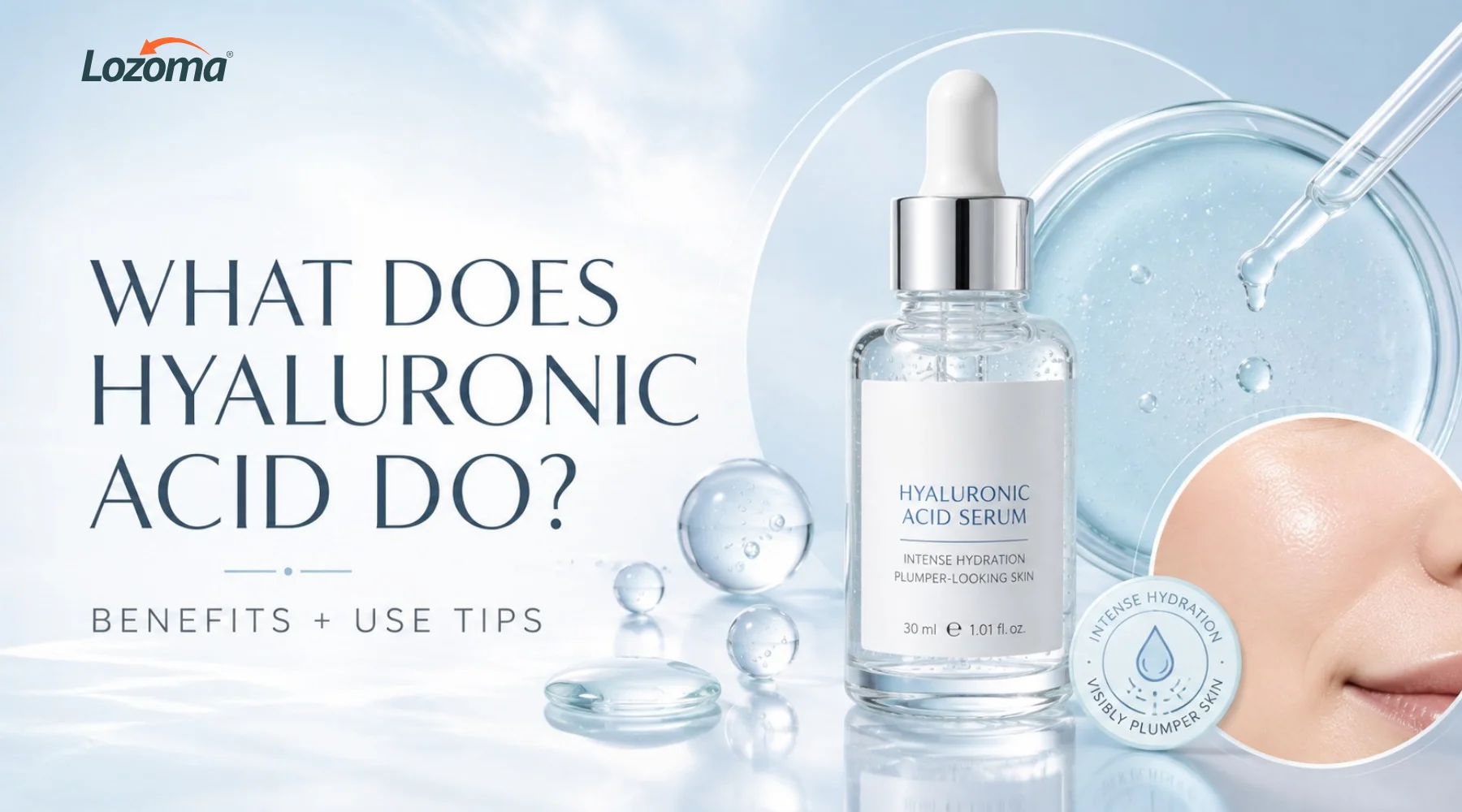
Hyaluronic acid is popular in skincare for dryness, sensitivity, and early ageing signs. Many people use it for weeks but are unsure of its effects or why their skin sometimes feels tight.
So, what does hyaluronic acid do? It mainly acts as a humectant, attracting and holding water in the skin’s upper layers. This makes the skin feel softer and smoother and can reduce the look of fine lines.
However, hyaluronic acid doesn’t fill in wrinkles like injections. It also doesn’t exfoliate, rebuild the skin barrier alone, or provide a lasting water supply. Its effectiveness depends on the overall product, your skin’s condition, and what you pair it with.
If used correctly, hyaluronic acid is easy to include in your skincare routine. It helps with dry skin, soothes irritation from retinoids and exfoliants, and hydrates without feeling heavy like oils.
What Does Hyaluronic Acid Do for Skin at the Surface?
Hyaluronic acid adds water to the outer layer of your skin, called the stratum corneum. When this layer is hydrated, your skin feels flexible and looks smoother.
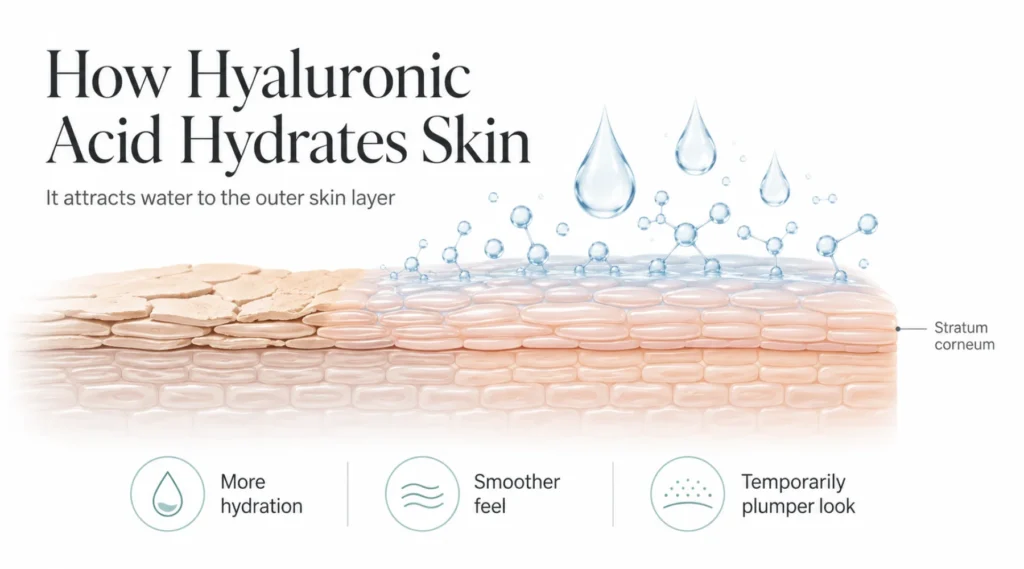
The main benefits of hyaluronic acid for your skin are:
- Boosting surface hydration
- Softening rough or tight skin
- Making dry skin look plumper
- Reducing the appearance of fine lines
- Helping moisturisers and makeup go on smoother
- Easing discomfort from stronger products that cause dryness
- Providing light hydration for oily or acne-prone skin
Research on topical hyaluronic acid shows improvements in skin hydration, elasticity, smoothness, and fine lines. However, many studies use complete formulations, so the results may also come from other ingredients.
| What hyaluronic acid can do | What it cannot reliably do |
| Increase hydration in the upper skin layers | Permanently erase wrinkles |
| Make dehydrated skin look temporarily plumper | Replace sunscreen or prevent UV damage |
| Improve softness and surface smoothness | Exfoliate dead skin cells |
| Help reduce tightness when used in a balanced formula | Treat moderate or severe acne |
| Complement retinol, vitamin C and exfoliating acids | Repair a damaged barrier without lipids and moisturiser |
| Support a comfortable, flexible skin surface | Produce the volume created by injectable fillers |
The difference is important. Hyaluronic acid is a good moisturiser, but it doesn’t solve all issues related to dry or ageing skin.
Why Hyaluronic Acid Is Already Present in Your Skin
Hyaluronic acid isn’t a synthetic ingredient; it naturally occurs in the body. It can be found in the skin, connective tissue, eyes, and joints.
In the skin, hyaluronic acid helps keep it hydrated and lubricated and supports the structure around cells, collagen, and elastin. It exists in both the outer and inner skin layers, but its role and amount differ in each.
As we age or with exposure to the environment, the amount and arrangement of hyaluronic acid in our skin can change. Factors like UV rays and ageing affect the skin’s ability to hold water, leading to dryness and more visible lines in mature or sun-damaged skin.
Applying hyaluronic acid on the skin doesn’t fully replace what’s lost from deeper layers. Most types mainly work on the surface because the skin barrier prevents larger molecules from penetrating deeply.
However, this surface effect is beneficial. Well-hydrated outer skin cells lie smoother, reflect light better, and remain flexible, giving a fresher look even if the product doesn’t change the deeper skin structure.
How Hyaluronic Acid Holds Water Without Acting Like an Oil
Moisturising ingredients fall into three main groups: humectants, emollients, and occlusives.
Humectants attract and hold water. Examples include hyaluronic acid, glycerin, urea, sorbitol, and panthenol.
Emollients fill in spaces between rough skin cells, making the skin smoother. Squalane, fatty alcohols, plant oils, and certain esters are common emollients.
Occlusives create a barrier that reduces water loss from the skin. Examples are petrolatum, mineral oil, dimethicone, and some waxes.
Hyaluronic acid is mainly a humectant. It helps the outer skin retain water but doesn’t provide the rich lipid layer that creams or balms do. Experts recommend using humectants with emollients or occlusives to improve hydration and limit water loss.
This is why a thin hyaluronic acid serum might feel nice for a short time but not fix ongoing dryness alone. The serum adds water to the surface, but a moisturiser is usually needed to keep it from escaping.
For oily skin, a light gel-cream may work best. For dry skin, look for ingredients like ceramides, fatty acids, cholesterol, shea butter, dimethicone, or petrolatum. The right top layer depends on your skin’s oil and protection needs, not just on how much hyaluronic acid you use.
Molecular Weight Changes How Hyaluronic Acid Behaves
“Hyaluronic acid” on a bottle doesn’t refer to just one ingredient. It can come in different molecular sizes and can be changed to work differently in cosmetics.
High-Molecular-Weight Hyaluronic Acid
Larger molecules stay mostly on the skin’s surface. They create a flexible, hydrating layer that makes the skin feel smoother and helps retain moisture. These are great for instant comfort. While they don’t penetrate deep into the skin, they are still useful. A good moisturiser should have ingredients that work on the surface and in the upper skin layers.
Low-Molecular-Weight and Hydrolysed Forms
Smaller molecules can travel deeper into the upper skin layers than larger ones. Studies show that smaller molecules tend to penetrate better. However, be cautious of claims that a cosmetic serum reaches every layer of the skin. Very low-molecular-weight hyaluronic acid behaves differently than larger forms. In healing and cell studies, smaller fragments can promote inflammation, while larger ones usually help reduce it. This doesn’t mean all smaller molecules are bad, but “smaller” isn’t always “better.”
Sodium Hyaluronate
Sodium hyaluronate is a stable, water-soluble form of hyaluronic acid. It’s easy to use in cosmetics. For shoppers, the difference between “hyaluronic acid” and “sodium hyaluronate” usually matters less than the overall product. Factors like texture, additional humectants, preservatives, fragrance, alcohol content, and the moisturiser used afterwards can greatly influence comfort.
Multi-weight hyaluronic acid
Some products combine several forms, such as:
- Hyaluronic acid
- Sodium hyaluronate
- Hydrolysed hyaluronic acid
- Sodium acetylated hyaluronate
- Crosslinked hyaluronic acid
- Potassium hyaluronate
A multi-weight formula can hydrate different layers of the skin while leaving a protective film on top. This is a smart approach, but just having many types of hyaluronic acid on the label doesn’t mean it will work better.
Hyaluronic Acid Benefits for Skin Beyond a Temporary Glow
The main benefit is hydration. Better surface hydration can improve how the skin looks and feels.

It softens dehydration lines.
Dehydration can make fine lines more noticeable. When the skin gets more moisture, it swells and becomes flexible, making these lines look softer. This change can happen quickly but does not replace the need for treatments for deeper wrinkles or sun damage. For long-term skin care, use sunscreen, retinoids, antioxidants, and professional treatments.
It supports a smoother makeup base.
Foundation can cling to dry patches and rough areas. A good hyaluronic acid product with a moisturiser can help create a smoother surface. Let each layer dry before applying makeup to avoid a sticky feel or product clumping.
It can improve comfort during active treatments.
Treatments like retinoids and benzoyl peroxide can cause dryness or irritation. While hyaluronic acid won’t stop all reactions, it can provide light hydration to help keep the skin comfortable. The American Academy of Dermatology suggests using it during isotretinoin treatment, but follow your dermatologist’s specific advice.
It suits people who dislike rich textures.
Some people need more hydration but prefer lighter products over oily creams. A hydrating serum can help as a base before a gel moisturiser or fluid sunscreen. Even oily skin needs moisture; trying to dry it out can lead to more irritation.
It may make mature skin feel more flexible.
As skin ages, it often becomes drier due to lower natural oil production. Hyaluronic acid can help, but dry mature skin usually needs more than just a water-based serum. Creams or ointments with both humectants and protective oils often provide better long-lasting comfort.
What Hyaluronic Acid Is Good For and Where It Falls Short
Hyaluronic acid is particularly useful for:
- Dehydrated skin
- Tightness after cleansing
- Dry surface texture
- Temporary plumping
- Supporting retinol routines
- Lightweight hydration beneath sunscreen
- Improving makeup application
- Skin exposed to air conditioning, central heating or cold weather
- Oily skin that feels dehydrated
- Sensitive skin that tolerates the full formula
It is less useful as a stand-alone treatment for:
- Persistent inflammatory acne
- Blackheads and closed comedones
- Melasma or post-inflammatory pigmentation
- Significant barrier disruption
- Rosacea flares
- Eczema
- Deep wrinkles
- Sagging skin
- Sun damage
- Scarring
Hyaluronic acid can be part of routines for skin concerns, but it mainly supports rather than treats the main issue.
For instance, it can make acne treatment easier, but it doesn’t clear pores like salicylic acid or retinoids. It may help reduce the appearance of fine lines, but it doesn’t create the big changes that prescription retinoids or resurfacing treatments do.
Is Hyaluronic Acid Good for Sensitive Skin?
Hyaluronic acid is good for sensitive skin because it adds moisture without peeling. Unlike other acids, it doesn’t remove dead skin cells or change the skin’s pH.
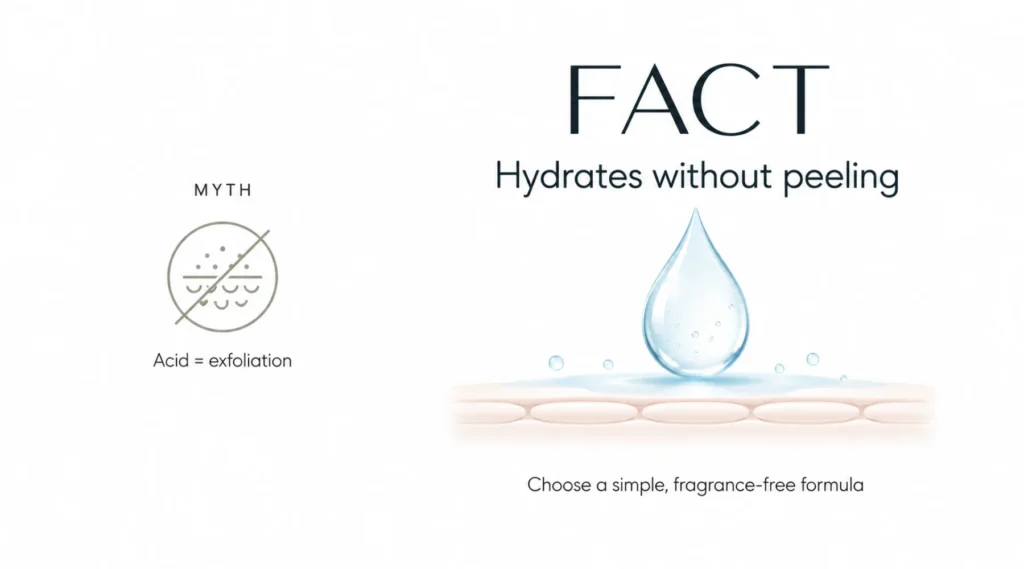
Many people worry about the word “acid,” but hyaluronic acid is different from other acids used in skincare. It has a unique function.
However, not all serums are safe for sensitive skin. A serum may contain:
- Fragrance
- Essential oils
- Drying alcohols
- Plant extracts
- Strong preservatives
- Exfoliating acids
- Vitamin C
- Retinoids
- High niacinamide
- Colourants
If a hyaluronic acid serum stings, the acid might not be the issue. Irritated skin can sting with almost any water-based product because it allows more contact with nerve endings.
For sensitive skin, choose a fragrance-free formula with few ingredients. Patch test new products on a small area for several days to spot any irritation or allergic reactions before applying it to your whole face.
People with eczema, rosacea, or contact dermatitis should focus on diagnosis and caring for their skin barrier instead of just using hydrating serums. A dermatologist can help determine if dryness is normal or if there’s an underlying skin condition.
How to Use Hyaluronic Acid in Skincare
The simplest method is to apply a small amount after cleansing and follow it with moisturiser.

A basic morning order is:
- Gentle cleanser or water rinse
- Hyaluronic acid serum
- Moisturiser, when needed
- Broad-spectrum sunscreen
- Makeup
A basic evening order is:
- Makeup remover, when needed
- Gentle cleanser
- Treatment product
- Hyaluronic acid product
- Moisturiser
Follow treatment instructions first. Apply prescription medication directly to clean, dry skin. Some cosmetic serums work better when used before heavier creams. Dermatologists usually recommend applying treatment products after cleansing, followed by moisturiser and sunscreen.
Use a Small Amount
You don’t need a lot of serum. Just two or three drops are usually enough for your face, depending on the type and texture of the serum. Using too much can make your skin sticky, interfere with sunscreen, or make makeup clump. Aim for a thin, even layer, not a wet one.
Apply on Damp Skin When It Fits Your Routine
Applying moisturisers on damp skin can help hold in moisture. Dermatologists often recommend this after washing or bathing. “Damp” means slightly wet, not dripping. Pat your skin dry, apply the serum gently, then follow with moisturiser before your skin feels tight. If you’re using retinoids or certain prescription treatments, it’s better to apply them on dry skin to avoid irritation.
Seal It With Moisturiser
Many people skip this step. A hyaluronic acid serum alone isn’t always enough. Follow with a cream, lotion, or gel-cream that suits your skin type. This helps keep moisture in. For a lighter option, consider an Aloe Vera Moisturising Gel if it matches your skin. If your skin is very dry or sensitive, a thicker product like COSRX Advanced Snail 92 All in One Cream may work better. Just make sure to patch test if you have sensitivities.
Gently Apply
Gently press or smooth the product onto your skin. Rubbing too hard won’t push the serum deeper and might irritate sensitive skin.
Give Layers Time to Absorb
You don’t need to wait ten minutes between each product. Just give the serum a moment to spread evenly and lose its wet feeling before applying the next product. If pilling happens, try using less product instead of waiting longer. Using a hyaluronic acid serum can be easier when multiple treatments and moisturisers are involved.
When to Use Hyaluronic Acid: Morning, Night or Both?
Hyaluronic acid can be used in the morning, at night, or twice daily.

Morning Use
Use your skincare in the morning if your skin feels tight after washing or if makeup settles into dry lines. A simple morning routine is:
Cleanser → vitamin C or treatment serum → hyaluronic acid → moisturiser → sunscreen.
Apply sunscreen last, before makeup. The American Academy of Dermatology recommends a broad-spectrum, water-resistant sunscreen with at least SPF 30, applied after other skincare products.
Night-Time Use
At night, hyaluronic acid helps keep skin comfortable after cleansing and works well with retinol or exfoliating acids. A basic hydration routine is:
Cleanser → hyaluronic acid → moisturiser.
A treatment-focused routine can be:
Cleanser → treatment → hyaluronic acid or hydrating moisturiser → moisturiser.
Adjust the order based on your treatment and product texture. Always follow prescription directions first, then use hyaluronic acid where it helps comfort.
Twice-Daily Use
Many people can use hyaluronic acid twice a day, but twice a day isn’t always better than once. If your morning routine works well, using it only at night may be enough. If the serum causes pilling under sunscreen, switch to using it in the evening instead of stopping altogether.
A Hyaluronic Acid Skincare Routine for Different Skin Types

Dry skin
Dry skin lacks sufficient oil as well as water, so a thin serum alone is rarely enough.
Try:
- Morning: Gentle cleanser → hyaluronic acid → ceramide-rich cream → sunscreen
- Night: Gentle cleanser → treatment, when used → hyaluronic acid → rich moisturiser
Check for ingredients like glycerin, ceramides, cholesterol, fatty acids, squalane, dimethicone, shea butter, or petrolatum.
Oily or acne-prone skin
Choose a water-based serum and a light moisturiser that won’t clog your pores. Don’t assume all gel formulae are safe for acne; ingredients like plant oils, esters, and fragrances can still cause issues.
Try:
- Morning: Gentle cleanser → hyaluronic acid → light moisturiser → sunscreen
- Night: Cleanser → acne treatment → hydrating moisturiser
Hyaluronic acid can help ease dryness from acne treatments, but it shouldn’t replace proven treatments for clogged pores or inflammatory acne.
Combination skin
Spread a thin layer over your entire face. Then, use different amounts in different areas. Use a light lotion on your T-zone and a cream on your cheeks. You don’t need to apply the same amount of each product everywhere.
Sensitive skin
Keep the routine short:
Gentle cleanser → fragrance-free hyaluronic acid product → bland moisturiser → sunscreen
Introduce one new product at a time. If you launch multiple products at once, it’s hard to pinpoint what’s causing any problems.
Mature skin
Use hyaluronic acid for surface hydration, but pair it with ingredients that address other aspects of ageing.
A balanced routine may include:
- Daily broad-spectrum sunscreen
- A retinoid when suitable
- Vitamin C or another antioxidant
- Hyaluronic acid
- A moisturiser rich in emollients
- Gentle cleansing
Hydration can make your skin look fuller, but using sunscreen and effective treatments is more important for long-term skin health.
Dehydrated skin in an oily complexion
Dehydration means not having enough water, while dryness means not having enough oil. So, someone can have an oily forehead but tight, dry cheeks.
Use a gentle cleanser, limit exfoliating, and add a light humectant followed by a non-greasy moisturiser. Avoid using strong exfoliants to address tightness.
Can You Use Hyaluronic Acid With Retinol?
Yes, you can use hyaluronic acid and retinol together because they serve different purposes.
Retinol helps your skin renew itself and can reduce acne, dark spots, rough texture, and fine lines over time. However, it may cause dryness, peeling, and irritation, especially at first.
Hyaluronic acid adds moisture and makes your routine nicer, but it doesn’t fully eliminate the side effects of retinol.
Should I use retinol or hyaluronic acid first?
The answer depends on the product format.
When hyaluronic acid is a thin serum:
Apply it first, allow the skin to dry completely, then apply retinol. Finish with moisturiser.
When hyaluronic acid is inside your moisturiser:
Apply retinol to clean, dry skin, followed by the moisturiser.
When your skin is sensitive to retinol:
Use the moisturiser sandwich method. First, put on a thin layer of moisturiser. Then, apply retinol. Finally, add another layer of moisturiser. Look for moisturisers with hyaluronic acid.
A straightforward same-night routine is:
- Cleanse gently.
- Apply a small amount of hyaluronic acid serum to lightly damp skin.
- Wait until the skin is fully dry.
- Apply a pea-sized amount of retinol to the whole face.
- Follow with moisturiser.
If this creates irritation or pilling, separate the ingredients:
- Morning: Hyaluronic acid
- Night: Retinol and moisturiser
Using retinol on wet skin can irritate some people. Dermatologists often suggest using retinoids at night after washing your face and letting your skin dry first.
Retinol users should also use sunscreen every day. Retinoids don’t replace sun protection, and irritated skin can react badly to too much sun.
Can You Use Hyaluronic Acid With Vitamin C?
Yes, you can use hyaluronic acid with vitamin C.
Vitamin C helps protect against damage, uneven skin tone, and signs of ageing. Hyaluronic acid hydrates the skin. There’s no reason to use them on different days.
In the morning, after cleansing, apply your vitamin C serum first, then use hyaluronic acid, followed by moisturiser and sunscreen.
Cleanser → vitamin C → hyaluronic acid → moisturiser → sunscreen
This order ensures the treatment serum directly touches clean skin while hyaluronic acid helps keep it hydrated. The AAD advises applying vitamin C after washing your face in the morning and using sunscreen afterwards.
For the under-eye area, try a targeted serum like Dr Rashel Vitamin C Brightening and Anti-Ageing Eye Serum before your facial moisturiser. Apply a small amount, and avoid getting it too close to your lashes.
If vitamin C makes your skin sting, adding more hyaluronic acid might not help. The vitamin C’s strength, pH, ingredients, or scent might not suit your skin. Instead of layering, reduce how often you use it or find a gentler formula to avoid irritation.
How Hyaluronic Acid Fits With Other Popular Ingredients
Niacinamide
Niacinamide and hyaluronic acid work well together. Niacinamide helps strengthen the skin barrier, manage oil production, and improve skin tone, while hyaluronic acid keeps the skin hydrated. Apply the thinner product first. If they’re in one serum, you don’t need to layer them separately.
Salicylic Acid
Salicylic acid penetrates oily pores to help clear blackheads and acne. It might cause dryness, so follow it with hyaluronic acid. Hyaluronic acid won’t lessen salicylic acid’s effectiveness, but it can’t fix damage from too much exfoliation. If you notice peeling, burning, or redness, use salicylic acid less often.
Glycolic and Lactic Acids
Use exfoliants as recommended, then hydrate and moisturise. Beginners don’t usually need both a glycolic cleanser and toner, plus leave-on acid serum in the same routine.
Benzoyl Peroxide
Pair hyaluronic acid with benzoyl peroxide for added hydration. Follow the instructions for the acne treatment and use a non-comedogenic moisturiser.
Peptides
Most peptide products can be used with hyaluronic acid. Layer them based on their texture unless the manufacturer says otherwise.
Ceramides
This combination is great for dry or damaged skin. Hyaluronic acid increases moisture, while ceramide-containing moisturisers help maintain the skin barrier to prevent water loss.
Snail Mucin
Snail secretion is often found in hydrating essences and creams. You can use it with hyaluronic acid, but having two sticky products might be too much. Choose one hydrating product first, and add another only if it improves comfort.
Face Masks
Occasional hydrating masks can boost moisture temporarily before an event or during dry times. For instance, the Bio-Collagen Real Deep Mask can be used as a treat, but it’s not a daily necessity. Masks won’t replace a regular routine of gentle cleansing, moisturiser, and sunscreen, which have a more significant long-term effect. Check mask ingredients for irritants and avoid overusing them.
Can Hyaluronic Acid Dry Out Skin?
Hyaluronic acid itself isn’t a drying exfoliant, but some people may feel tighter when using a product that contains it.
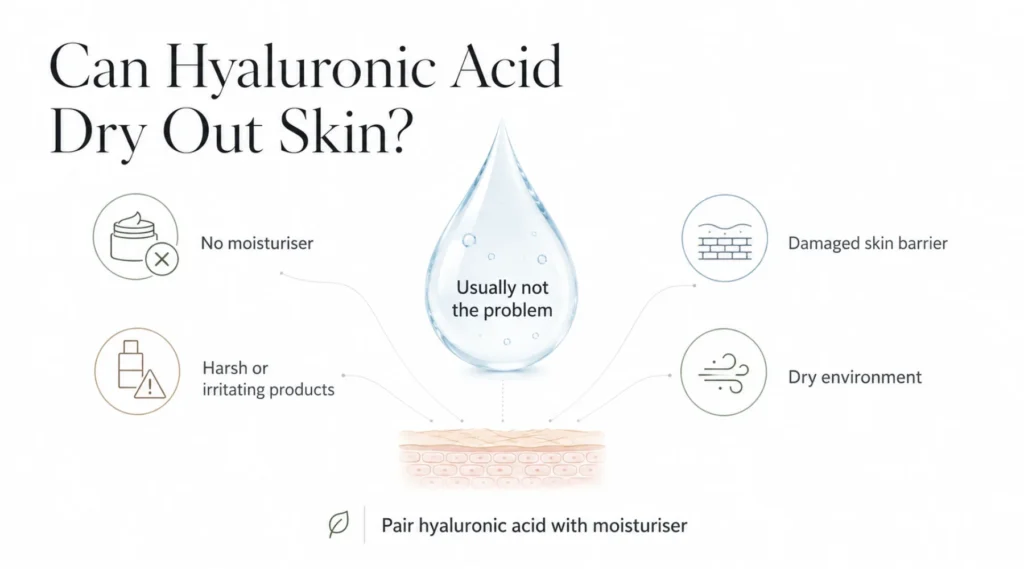
Several situations may explain this:
Serum Use Without Moisturiser
A serum with many humectants can add moisture to the skin temporarily, but it doesn’t stop evaporation effectively, especially in dry, cold, or air-conditioned places. Adding a moisturiser over the serum usually improves results.
Skin Barrier Issues
Things like over-cleansing, too much exfoliation, retinoid irritation, sunburn, eczema, and cold weather can lead to water loss. A light serum alone might not ease discomfort.
Irritating Ingredients
Ingredients like alcohol, fragrance, essential oils, strong plant extracts, or other active substances can cause tightness or burning.
Using Too Much Product
Applying several layers of a quick-drying gel can create a sticky or hard surface, making it feel dry even if the moisture level is higher.
Harsh Cleanser
A foaming cleanser that removes natural oils can cause tightness before you apply the serum. The serum might then be wrongly blamed for the issue created by the cleanser.
Very Dry Environment
Central heating, air conditioning, cold weather, and long flights can increase moisture loss from the skin. Use hyaluronic acid with a thicker moisturiser to help retain moisture.
Understanding Hyaluronic Acid
Whether hyaluronic acid dries out skin depends on your full skincare routine. Humectants work best when paired with a good moisturiser.
Hyaluronic Acid Side Effects and Signs a Formula Is Not Working
Topical hyaluronic acid is usually well tolerated, but the finished product can still cause problems.
Possible reactions include:
- Stinging
- Burning
- Redness
- Itching
- Small bumps
- Contact dermatitis
- Increased tightness
- Pilling
- A sticky film
- Breakouts caused by other ingredients in the formula
Stop using the product if it causes burning, swelling, hives, blisters, or worsening redness. See a doctor if symptoms are severe, affect your eyes or breathing, or don’t improve after stopping the product.
Having a few small spots after starting a hyaluronic acid serum is not necessarily “purging.” Hyaluronic acid usually doesn’t speed up skin cell turnover as retinoids or exfoliating acids do. New breakouts may be due to other ingredients, an unsuitable texture, irritation, or chance.
Patch testing can’t predict all delayed breakouts, but it can show immediate reactions. Apply the product to a small area twice a day for several days before using it on your whole face.
How to Choose a Hyaluronic Acid Product That Fits Your Routine
A good product doesn’t always have the longest ingredient list or the highest percentages advertised.

Look at the product format.
Serums offer light hydration and can be used under any moisturiser.
Essences and toners are for those who like very thin products, but they’re not necessary.
Gel moisturisers mix humectants with a light base.
Creams are better for skin that needs both water and oils.
Masks can provide hydration occasionally but shouldn’t replace daily moisturising.
Many serums contain hyaluronic acid, either as the main ingredient or in smaller amounts. Check the full ingredient list, as some “vitamin C serums” or “niacinamide serums” might already have enough hyaluronic acid.
The overall skin care routine matters too. A hydrating cleanser, cream, and sunscreen can sometimes prevent dryness better than just adding another serum.
Do not judge by percentage alone.
Hyaluronic acid works well even in low amounts. A product claiming to have a high percentage may contain diluted ingredients instead of pure hyaluronic acid.
High percentages can make the product sticky. It’s better to focus on the quality of the formula rather than just the number on the label.
Check the supporting ingredients.
Useful companions include:
- Glycerine
- Panthenol
- Betaine
- Urea at suitable facial concentrations
- Ceramides
- Squalane
- Dimethicone
- Fatty alcohols
- Cholesterol
- Allantoin
Sensitive skin may benefit from avoiding fragrance, essential oils and long lists of plant extracts.
Consider the packaging
Pump bottles and tubes help prevent touching the formula too often. Dropper bottles are handy but need to stay clean and closed tightly.
Hyaluronic acid is less sensitive to oxidation than pure vitamin C, but other ingredients in the formula might still need protection from heat, light, and air.
Choose for climate as well as skin type.
A light gel feels great in humid summer but may not be enough in winter. Adjust your skincare routine based on the weather.
Those in dry climates usually benefit from:
Hyaluronic acid serum → cream moisturiser → sunscreen
Those in humid climates may prefer:
Hyaluronic acid serum or gel moisturiser → sunscreen
Common Hyaluronic Acid Mistakes That Limit Hydration
Treating it as a complete moisturiser
Some hyaluronic acid products work as full moisturisers, but many serums don’t. Check the label for emollients and occlusives instead of assuming all hydrating products lock in water.
Applying it repeatedly throughout the day
Adding serum multiple times without moisturiser can make your skin sticky and interfere with sunscreen or makeup. If your skin feels dry during the day, consider using a richer moisturiser in the morning.
Layering several humectant-heavy products
Using a hydrating toner, essence, hyaluronic acid serum, snail essence, gel mask, and gel cream might do the same job. More layers can cause pilling without improving hydration. Keep what works and remove duplicates.
Using too much
A thin layer of serum is enough. If your face stays wet or slippery for a long time, you’re probably using too much.
Expecting it to treat wrinkles permanently
Hyaluronic acid can help soften dehydration lines, but it can’t replace retinoids, sunscreen, or professional treatments for advanced skin ageing.
Blaming hyaluronic acid for every reaction
Check the full ingredient list. A product focusing on hyaluronic acid may also contain fragrances, exfoliating acids, vitamin C, or botanical extracts.
Continuing through burning
Hydrating products shouldn’t cause burning. Ongoing discomfort means you should stop using the product, not that it’s working.
Forgetting sunscreen
Hydrated skin looks smooth, but it still needs protection from UV rays. Sunscreen is crucial for preventing photoaging and keeping skin tone even.
Topical Hyaluronic Acid Is Not the Same as Injectable Filler
Topical hyaluronic acid and injectable hyaluronic acid fillers are made from similar materials, but they work differently.
A serum mainly moisturises the skin’s surface, while a filler is injected under the skin to add volume, change shape, or smooth out wrinkles.
Topical products cannot achieve the same results as fillers. They can’t lift sagging skin, restore lost volume, or reshape lips and cheeks.
Injectable fillers come with medical risks not found in serums. These include swelling, bruising, infection, and rare complications related to blood vessels. Only trained medical professionals should administer them to ensure safety and manage any issues.
Be careful with products that promise a “filler effect”. They may temporarily plump the skin with hydration, but they won’t provide the lasting volume of an injection.
How Long Does Hyaluronic Acid Take to Work?
You can feel hydration effects right after applying the product. Your skin may feel softer and look smoother within minutes or hours because the outer layer is holding more water.
To see more consistent results in roughness, flexibility, and dryness, you need to use the product regularly. Clinical studies have shown improvements over a few weeks to about three months with complete hyaluronic acid formulations.
Results depend on:
- How dehydrated the skin was initially
- The quality of the complete formula
- The moisturiser used afterwards
- Cleansing habits
- Climate
- Use of retinoids or exfoliants
- Skin conditions such as eczema or rosacea
- Consistency
If a serum hasn’t helped after a few weeks, check your routine. The issue might be a harsh cleanser, not enough moisturiser, or an untreated skin problem, not the need for a stronger hyaluronic acid.
Questions People Often Ask Before Adding Hyaluronic Acid
Can I use hyaluronic acid every day?
Yes, most people can safely use hyaluronic acid daily. You can apply it once or twice a day. Daily use is optional; a moisturiser with hyaluronic acid may be enough on its own.
Can I use hyaluronic acid twice a day?
Yes, using it morning and night is usually fine if it doesn’t cause irritation or stickiness. If your skin feels good, once a day might be enough.
Can you use hyaluronic acid with retinol?
Yes, hyaluronic acid can help keep your skin hydrated when using retinol. Apply a thin layer of hyaluronic acid first and let it dry, then use retinol. Alternatively, apply retinol first and follow with a moisturiser that contains hyaluronic acid. If you have sensitive skin, consider using a moisturiser to buffer retinol.
Should I use retinol or hyaluronic acid first?
Use hyaluronic acid first if it’s a thin, water-based serum, letting it dry before applying retinol. If hyaluronic acid is in a moisturiser, apply retinol first. Always follow prescription advice over general rules.
Can you use hyaluronic acid with vitamin C?
Yes. Apply vitamin C after cleansing, then use hyaluronic acid, followed by moisturiser and sunscreen. Separate the products if they cause irritation or pilling, not because they’re chemically incompatible.
Is hyaluronic acid good for sensitive skin?
It often is, as long as the formula is gentle. Choose fragrance-free products and avoid mixing strong active ingredients. Always patch test before using a new serum on sensitive skin.
Does hyaluronic acid help acne?
It hydrates acne-prone skin but doesn’t directly clear clogged pores or kill acne bacteria. It helps keep skin comfortable while other ingredients like salicylic acid or retinoids target acne.
Does hyaluronic acid clog pores?
Pure hyaluronic acid usually doesn’t clog pores. However, some serums or creams may contain oils or other ingredients that could irritate acne-prone skin. Opt for non-comedogenic products and pay attention to your skin’s reaction.
Does hyaluronic acid exfoliate skin?
No, hyaluronic acid does not exfoliate. It hydrates, while acids like glycolic, lactic, and salicylic exfoliate through different processes.
Can hyaluronic acid cause purging?
Hyaluronic acid usually does not cause purging because it doesn’t speed up cell turnover. Breakouts after starting a product are more likely due to other ingredients, skin blockage, irritation, or unrelated acne changes.
Is hyaluronic acid better than moisturiser?
They serve different purposes. A hyaluronic acid serum adds hydration, while a moisturiser often contains additional ingredients for moisture and protection. Many people see better results when they use the serum under a moisturiser.
Can I apply hyaluronic acid to dry skin?
Yes, but damp skin often absorbs it better. If you’re using retinoids or irritants, it’s sometimes best to let your skin dry completely and follow the treatment instructions.
Can hyaluronic acid make wrinkles disappear?
It can temporarily reduce the look of fine lines by adding moisture but won’t remove deep wrinkles or restore lost volume. Regular sun protection and proven anti-ageing treatments are more important for lasting results.
Is hyaluronic acid safe during pregnancy?
Topical hyaluronic acid is commonly used for moisture and is safe since it’s not a retinoid or exfoliating acid. Keep your skincare routine simple, and consult a doctor or dermatologist if you have concerns. The AAD suggests a basic routine with gentle cleansing, regular moisturising, and sun protection.
Why does hyaluronic acid feel sticky?
Stickiness often results from using too much, high concentrations, or how different products interact. Use fewer drops, avoid layering multiple humectant serums, and let each layer settle before applying moisturiser.
What Does Hyaluronic Acid Do Well and Is It Worth Using?
What does hyaluronic acid do? When used correctly, it boosts hydration in the top layers of skin, softens rough spots, improves flexibility, and reduces the appearance of fine lines. It can make heavier skincare routines easier to handle without adding a thick oil-based serum.
What are its limits? Hyaluronic acid is not an exfoliant, acne treatment, sunscreen, collagen replacement, or filler. A light serum can’t fix every cause of dryness, especially if the skin barrier is damaged or if there’s no good moisturiser in the routine.
How to use it effectively: Apply a small amount on slightly damp skin, then follow up with a moisturiser that suits your skin type and environment. You can combine it with retinol or vitamin C based on how your skin reacts, rather than worrying about ingredient conflicts.
When to use it: If your skincare routine feels balanced, hyaluronic acid is optional. However, if your skin often feels tight, dry, or rough, it can be a helpful addition. Remember, the effectiveness of the routine still depends on the cleanser, moisturiser, and sunscreen you use.