




Blog
Ceramides for Skin Barrier: Benefits, Risks, and Use Tips

When your skin feels tight after washing, stings when you apply products, or shows both flakes and shine, the issue might not be a need for stronger skincare. Often, your skin barrier needs more support.
This is where ceramides come in. Ceramides are natural fats found in the outer layers of your skin. They help bind skin cells together, reduce water loss, and maintain the balance that keeps irritants out and moisture in.
Ceramides aren’t exfoliants or brightening agents, so you might not see quick changes. Their benefits are more subtle: they help your skin function better.
If you struggle with dryness, sensitivity, or irritation, ceramides may be more helpful than another active treatment.
Why Your Skin Barrier Depends on More Than Moisture
People often say that dry or irritated skin needs “more moisture,” but the issue isn’t just about how much water is there. Healthy skin must attract water and keep it from escaping too much.
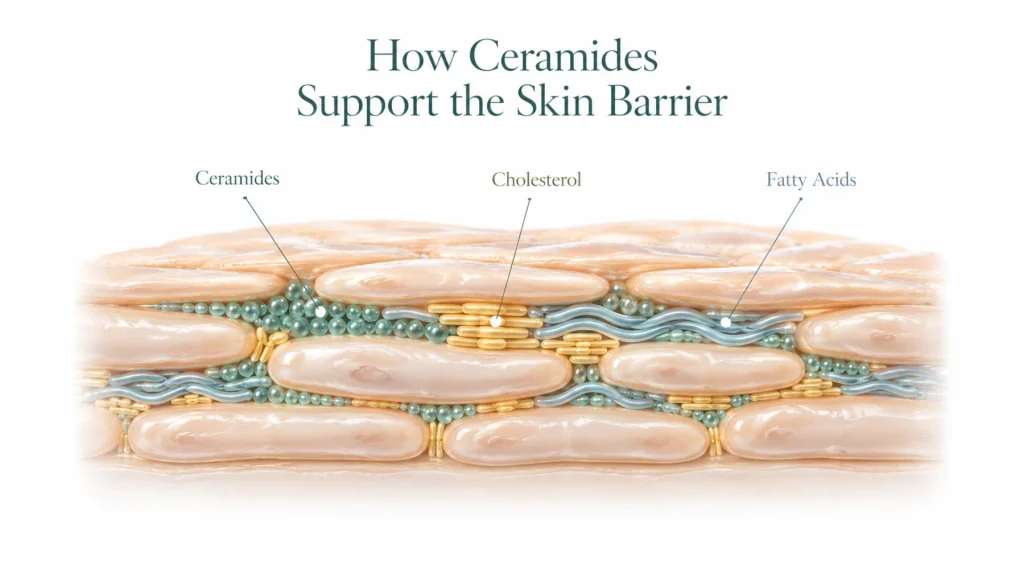
The outer layer of skin, called the stratum corneum, acts like a brick wall. The flat skin cells are like bricks, and the lipids around them serve as mortar. Ceramides, cholesterol, and free fatty acids make up this lipid system.
When this lipid barrier works well, it helps keep water in the skin and blocks irritating substances from getting in. When the barrier is damaged, several problems can occur:
- Water escapes more easily.
- Skin becomes more sensitive.
- Cleansing can feel uncomfortable.
- Normally fine products may sting.
- Rough patches and flakes can appear.
- Inflammation can happen more easily.
- The skin may produce extra oil but still feel dry.
This is why just adding more watery products often doesn’t help. A humectant can attract water, but without a strong lipid barrier, the skin can’t hold it. Understanding the role of hyaluronic acid makes this clearer: humectants and barrier lipids tackle different parts of the hydration issue. Ceramides are especially important because they focus on the lipid aspect.
What Are Ceramides in Skincare?
Ceramides are types of fats found naturally in the skin. Unlike single ingredients like salicylic acid or niacinamide, there are various kinds of ceramides in human skin. Each type helps with the structure of the outer skin layer.
In skincare products, you might find ingredients named Ceramide NP, Ceramide AP, Ceramide EOP, Ceramide NS, and Ceramide NG. Older names used numbers like Ceramide 1, Ceramide 3, and Ceramide 6-II.
You don’t have to remember all the different types to pick a good product. Instead, focus on whether the product has a good mix of moisturising and barrier-supporting ingredients that suit your skin type.
Ceramides often work well with cholesterol, fatty acids, glycerin, squalane, hyaluronic acid, panthenol, and other moisturising agents. This combination is effective because the skin barrier is not made of ceramides alone.
Ceramides Are Structural Lipids, Not Active Exfoliants
Ceramides are often good for sensitive skin because they don’t speed up cell shedding.
Acids break apart surface cells, retinoids affect cell turnover, and benzoyl peroxide targets acne. But ceramides work differently.
Their main job in skincare is to support the skin’s outer layer. This is important when your skin is irritated. If irritation is due to too much treatment, adding more strong ingredients can worsen the situation.
A ceramide moisturiser focuses on restoring comfort and preventing moisture loss, rather than forcing your skin to go through another process.
What Do Ceramides Do for Skin?
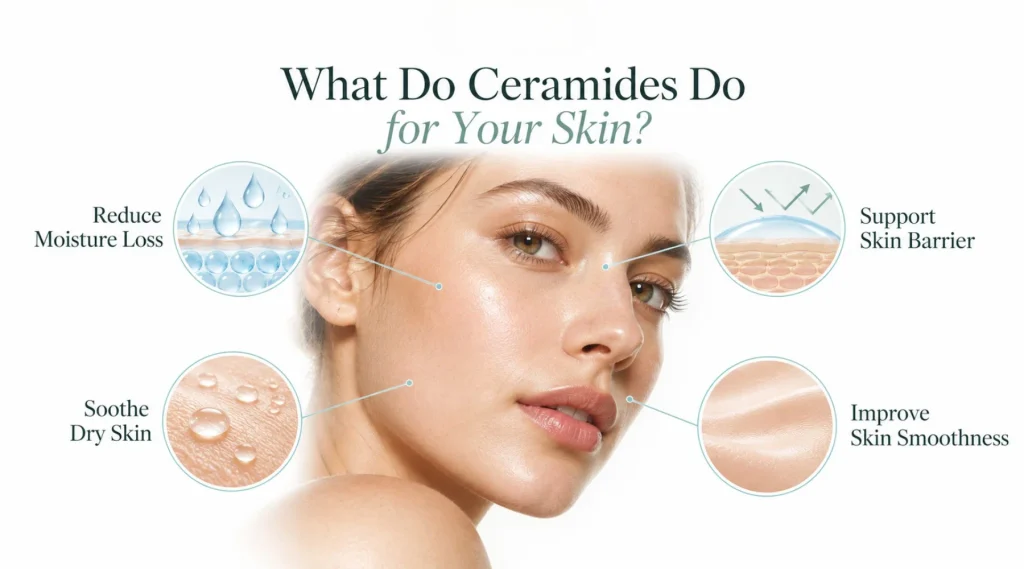
Ceramides strengthen the skin’s outer protective layer. This important role affects things you can see in your daily life.
They Help Reduce Excessive Water Loss
Water naturally evaporates from the skin throughout the day. A healthy skin barrier slows this process. When the lipid layer is disrupted, water escapes faster, leading to a feeling of tightness even after applying moisturiser.
Products with ceramides can support the lipid layer and reduce water loss. However, ceramides aren’t the most hydrating on their own. Ingredients like glycerin, hyaluronic acid, and urea may offer better moisture. Ceramides help create the right conditions for lasting hydration.
They Can Make Dry Skin Feel More Comfortable
Dry skin needs both water and oils. A light hydrating serum can make your skin feel fuller for a short time. However, long-lasting dryness often gets better with a moisturiser that has both emollients and ingredients that support the skin barrier.
Ceramides are particularly helpful for skin that feels:
- Rough
- Tight
- Flaky
- Easily irritated
- Uncomfortable after washing
- Dehydrated even with hydrating products
While ceramides can’t fix all dryness issues, they help with an important part of keeping your skin barrier healthy.
They Support Skin That Has Been Over-Treated
A common skincare problem today is not neglect but over-treatment.
Many people use an exfoliating cleanser in the morning, vitamin C afterwards, another acid in the evening, retinol several nights a week, and a peeling mask on weekends.
While some of these products can be good on their own, using them all together can stress the skin.
When irritation occurs, adding more exfoliating or corrective products usually doesn’t help. It’s smarter to cut down on active ingredients and go back to a simple skincare routine.
Ceramides are useful in this simpler routine because they help support the skin’s barrier instead of exfoliating it.
They May Improve Tolerance of Stronger Ingredients
Ceramides do not cancel out retinoids or acids. Keeping your skin well-moisturised can help you handle strong skincare routines better. For someone new to retinol, it’s often better to use a simple ceramide-rich moisturiser instead of one with extra exfoliating ingredients. This won’t necessarily stop all irritation. Retinoids can still cause dryness and peeling, especially if used too fast. Think of ceramides as supportive helpers. They enhance the effects of your active ingredients but can’t make excessive use safe.
They Help Skin Feel Smoother
When the outer skin cells dry out and lose their structure, the skin feels rough. Better moisturisation can help smooth this roughness. This isn’t the same as exfoliation, as ceramides don’t remove dead skin cells. Instead, they help the skin feel softer and more flexible by keeping moisture in and supporting the gaps between skin cells.
They Can Be Useful Even When Your Skin Is Not Obviously Damaged
You don’t have to wait for your skin to get red and peel before you use ceramides. People with normal skin can use them every day for moisturising.
Things like pollution, washing your face, dry heat, cold weather, low humidity, and strong skincare products can stress your skin barrier.
A ceramide moisturiser can be part of your daily routine instead of just for emergencies.
How to Recognise When Your Skin Barrier May Need More Support
The term “damaged skin barrier” is widely used online. Not every breakout, dryness, or redness means your barrier is broken. However, some signs can show that your skin is more irritated or sensitive than usual.
Common signs include:
- Stinging when water touches your skin
- moisturiser burning even if it felt fine before
- Tightness after cleansing
- New flaky patches
- Rough or papery texture
- Easy redness
- Increased sensitivity to products
- Skin feeling both oily and tight
- More discomfort after exfoliating
- Products feeling harsher
- Makeup sticking to dry patches
- Itching or irritation
Context is important. If these symptoms began after using more retinol, mixing acids, or using a harsh cleanser, a damaged barrier is likely. If symptoms are severe, last long, spread, or come with swelling, cracking, pain, or weeping skin, don’t just rely on skincare products. Conditions like eczema, dermatitis, psoriasis, rosacea, and infections need proper medical attention.
Ceramides can help support weakened skin, but they should not replace medical treatment.
How to Use Ceramides for Skin Barrier Support
You don’t need a complicated routine to use ceramides. When your skin is irritated, keeping it simple is better.
Cleanse Without Stripping
Start with a gentle cleanser that keeps your skin comfortable, not squeaky clean. The “deep clean” feeling some people like can mean the cleanser removes too many natural oils. If your skin is irritated, you don’t need a strong foaming cleanser twice a day. In the morning, those with dry or sensitive skin can rinse with lukewarm water before applying moisturiser and sunscreen. At night, cleansing is still important to remove sunscreen, makeup, and dirt. The aim is not to skip cleansing but to avoid making it too harsh.
Apply Hydrating Products If You Need Them
Ceramides work well with humectants.
Using a glycerin or hyaluronic acid serum can help bind water before you apply moisturiser.
When using hyaluronic acid, how you apply it matters less than some social media claims. Applying it to slightly damp skin can help with many products.
If your routine relies on hydration products, it may be helpful to learn more about using hyaluronic acid serum.
Some advice says always to apply hyaluronic acid on wet skin, but that’s too strict.
Whether it’s better to use it on wet or dry skin depends on the formula, your climate, and what products you use after.
The key is to follow up with something that prevents moisture loss, which is why a ceramide moisturiser is useful.
Apply a Ceramide Moisturiser Before Skin Dries Out Completely
You don’t need to have wet skin.
However, putting on moisturiser right after washing your face can lessen the tight feeling that comes from clean skin.
Use enough moisturiser to cover your skin without making it too thick.
Dry areas might need more product, while oily areas need less.
The right amount is what keeps your skin feeling comfortable without being greasy or clogged.
Use It Once or Twice Daily
Ceramides don’t usually need to be cycled. Most people can use them in the morning and evening. If you already have a moisturiser you like, you probably don’t need a separate ceramide serum. One good product is often enough.
You can find ceramides in:
- moisturisers
- Creams
- Lotions
- Barrier balms
- Some serums
- Cleansers
- Sometimes face masks
For barrier support, leave-on moisturisers are best since they stay on the skin for hours.
Follow With Sunscreen During the Day
Sunscreen is crucial if your skin issues came up while using exfoliating acids or retinoids.
There’s no point in caring for irritated skin at night if you’re exposing it to harmful UV rays during the day.
Pick a sunscreen you can use regularly.
For sensitive skin, comfort is more important than finding the ideal texture you don’t enjoy.
The Best Routine Using Ceramides for Skin Barrier Recovery
When your skin is irritated, a simple routine is best. This helps create a stable environment for your skin.
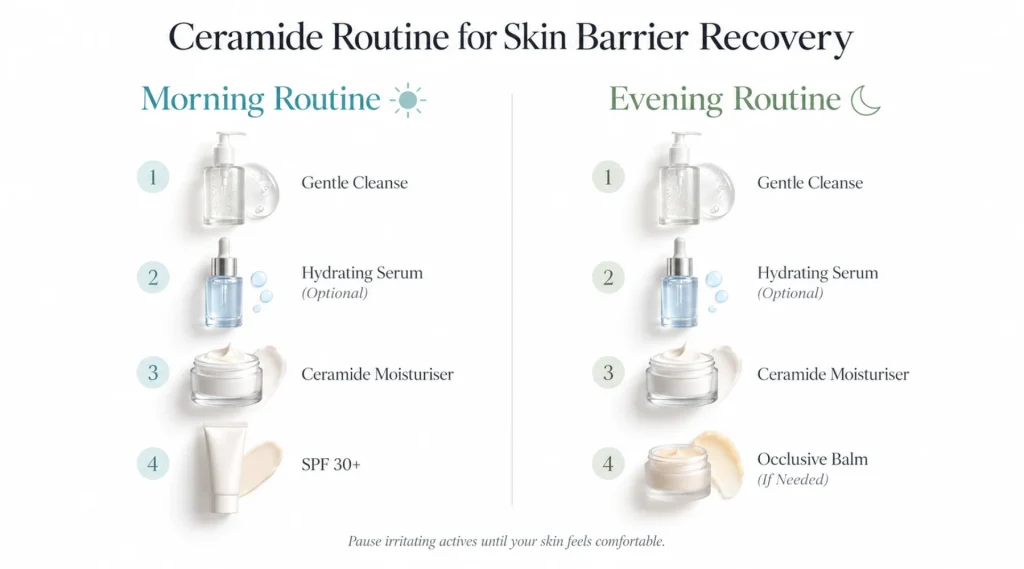
Morning Routine
- Rinse your face with lukewarm water or use a gentle cleanser.
- If needed, apply a hydrating serum.
- Use a moisturiser with ceramides.
- Finish with broad-spectrum sunscreen.
You don’t need toner, essence, facial oil, vitamin C, or multiple serums unless your skin handles them well. If your skin is uncomfortable, remove non-essential products for now.
Evening Routine
- Gently remove makeup and sunscreen.
- Cleanse with a mild cleanser.
- Apply a basic hydrating serum if you want.
- Use a ceramide moisturiser.
- If you have very dry areas, add a thin layer of an occlusive product if needed.
Petrolatum-based ointments can help very dry patches by locking in moisture. You don’t need to cover your entire face; a small amount on irritated areas can be enough.
What About Retinol and Exfoliating Acids?
If your skin is burning, peeling, or stinging, stop using irritating products for now.
This includes:
- Glycolic acid
- Lactic acid
- Salicylic acid
- Strong PHA formulae
- Retinoids
- Abrasive scrubs
- At-home peels
- Strong astringent toners
When your skin feels comfortable again, slowly reintroduce one product at a time.
Do not restart everything at once. This slow return helps you see what your skin can handle.
Repairing your skin should focus on both removing irritation and adding helpful ingredients.
How Long Do Ceramides Take to Help the Skin Barrier?
People often ask how long it takes for ceramides to repair the skin barrier. The time varies based on the cause and severity of the issue.
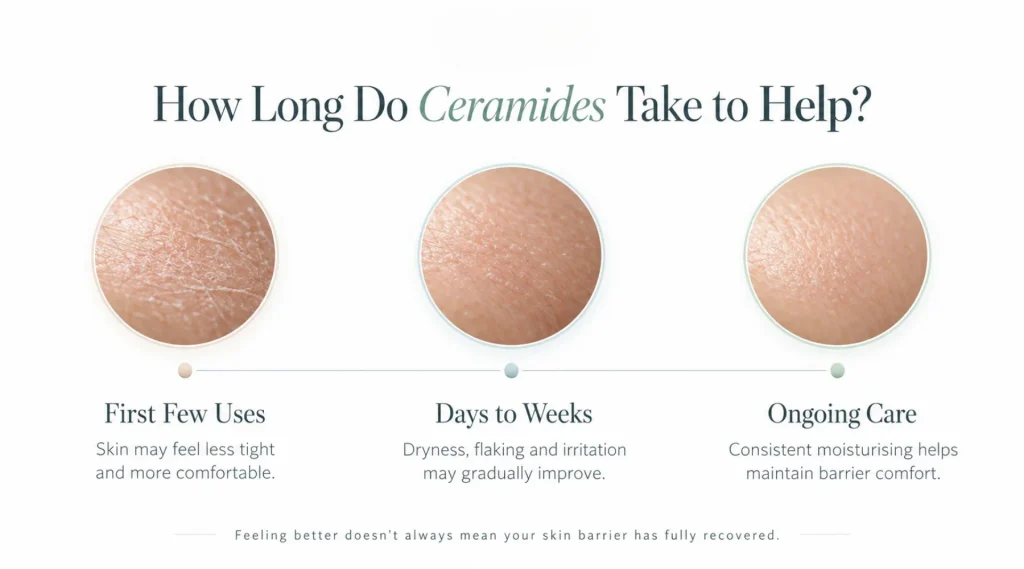
For mild dryness from weather or cleansing, your skin might feel better after just a few uses. However, that doesn’t mean the barrier is fully repaired. Feeling comfortable doesn’t equal complete healing.
With more serious irritation, improvement can take days to weeks. Recovery depends on:
- How serious the barrier damage is
- If you keep using irritating products
- Your cleansing routine
- Environmental factors
- Any existing skin conditions
- The type of moisturiser you use
- How often you apply it
- If you use sunscreen
- Your unique skin type
If someone stops over-exfoliating and uses a gentle ceramide moisturiser, they’ll typically heal faster than someone who uses strong acids nightly while applying ceramides. This difference matters.
Ceramides support recovery but can’t make up for ongoing harmful habits.
Do Not Judge Progress Only by Appearance
Barrier recovery is often felt before it’s seen.
Look for these signs:
- Cleansing stops stinging.
- moisturiser feels good again.
- Skin stays comfortable longer.
- Flaking lessens.
- Warm water doesn’t cause redness.
- Makeup goes on smoothly.
- Tightness lessens.
- You can use active products again with care.
Don’t hurry back to strong treatments just because your skin looks better.
If moisturiser still stings, your skin needs more time.
Can Ceramides Help the Skin Barrier Safely?
Most people find topical ceramides gentle and good for daily moisturising.
However, just because an ingredient is usually well-tolerated doesn’t mean every product with it will work for everyone.
A finished moisturiser includes more than just its main ingredient. You might react to:
- Fragrance
- Essential oils
- Preservatives
- Plant extracts
- Certain fatty alcohols or emollients
- Other active ingredients
- The product’s texture
If a ceramide product irritates your skin, it doesn’t mean you’re allergic to ceramides. Another ingredient might be causing the issue.
Patch Testing Can Be Useful
If your skin is sensitive, try a new moisturiser on a small patch first. This is important if your skin barrier is damaged. Skin in this state might react to products that usually work for you.
Introduce only one new product at a time. If you change your cleanser, serum, moisturiser, and sunscreen all at once and then have irritation, it will be hard to find the cause.
Can Ceramides Cause Breakouts?
Ceramides usually don’t cause acne.
Many ceramide products come as creams, which may be too heavy for some people with acne-prone skin.
However, those with oily or acne-prone skin don’t need to avoid ceramides.
Acne treatments like retinoids, salicylic acid, and benzoyl peroxide can cause dryness and irritation. A good moisturiser can help make these treatments more comfortable.
Choosing the right texture is essential. People with dry, acne-prone skin might like a rich cream. Those with very oily skin might prefer:
- A lotion
- A gel-cream
- A lightweight emulsion
- A non-greasy ceramide moisturiser
If a product causes new breakouts in areas you don’t usually have issues, stop using it and evaluate the entire formula. Just because a product has ceramides doesn’t mean it’s suitable for your skin type.
Why a Ceramide Product Can Still Sting Damaged Skin
Many people are surprised by this.
When you use a moisturiser meant for barrier repair on irritated skin, you might feel a brief sting. Does this mean it’s hurting your skin barrier? Not always.
When the skin barrier is weakened, even gentle products can cause discomfort because nerve endings are more exposed to irritants that usually stay on the surface.
It’s important to distinguish between:
- A mild, brief sting that goes away quickly
- Ongoing burning
- Increased redness
- Swelling
- Itching
- A worsening rash
If you feel ongoing burning, don’t ignore it. Rinse the product off and use something that your skin can handle. If almost everything starts to sting, focus on simplifying your routine instead of trying new ingredients.
Ceramides and Hyaluronic Acid Work Better as Partners Than Rivals
Ceramides and hyaluronic acid have different roles, so you don’t have to choose just one.
Hyaluronic acid acts as a humectant, attracting and holding water in the skin’s surface. Ceramides are lipids that help lock in that moisture by strengthening the skin’s barrier.
Think of hydration like filling a reservoir, while barrier support helps keep that water from escaping. You can easily use both in your routine, like this:
- Cleanse your skin.
- Apply a hyaluronic acid serum.
- Use a ceramide moisturiser.
- Put on sunscreen during the day.
These ingredients work well together, especially for dry or dehydrated skin. Using both may be more effective than relying on just one.
Ceramides and Niacinamide Can Complement Each Other
Niacinamide is a great ingredient for skin care routines that focus on strengthening the skin barrier. At moderate levels, it helps with normal skin functions and is usually gentle on the skin. You can use ceramides alongside niacinamide in your routine, and many moisturisers already combine both.
However, if your skin is very irritated, even mild ingredients can sometimes cause stinging. Don’t assume that a well-known gentle ingredient is always safe to use during a skin reaction. When your skin feels uncomfortable, it’s best to use fewer ingredients. Once your skin calms down, niacinamide and ceramides can work well together.
Ceramides With Retinol: A Particularly Useful Combination
Retinol and other retinoids can help with acne, dark spots, skin texture, and signs of ageing, but they can also cause irritation. A ceramide moisturiser can support your skin when using retinoids. Here are some ways to combine them:
moisturiser After Retinol
Apply retinol to dry skin, let it absorb, then use a ceramide moisturiser. This works well if your skin already tolerates retinol.
moisturiser Before Retinol
Using moisturiser first can lessen the impact of retinol on your skin. This is good for beginners or those with sensitive skin.
The Sandwich Method
Start with moisturiser, then apply retinol, and finish with another layer of moisturiser. This method may help reduce irritation, but it doesn’t mean you can use retinol more often. If you experience burning or peeling, cut back on how often you use retinol instead of just adding more moisturiser.
Ceramides With Vitamin C, Acids and Other Stronger Actives
Ceramides easily mix with active ingredients. The key question is whether your skin needs these ingredients while healing.
Vitamin C
You can use ceramides with vitamin C. A typical morning routine includes vitamin C, moisturiser, and sunscreen. However, low-pH ascorbic acid serums can irritate sensitive skin. If your skin is reactive, take a break from vitamin C instead of thinking a ceramide moisturiser will solve the irritation.
Glycolic and Lactic Acid
Ceramides work well with AHAs, but these acids exfoliate the skin. If your skin barrier is weak, aggressive exfoliation can slow healing. Use ceramides while your skin heals, then slowly reintroduce acids when your skin feels normal.
Salicylic Acid
Salicylic acid helps with clogged pores and acne but can dry out your skin if used too much. A ceramide moisturiser can help if salicylic acid makes your skin feel tight, but be careful not to overuse the acid.
Benzoyl Peroxide
Benzoyl peroxide often causes dryness, especially when you start using it. Ceramides can help keep your skin moisturised. If the irritation is severe, consider reducing how often you use the treatment instead of just applying more moisturiser.
Ceramides vs PHA: Barrier Support and Exfoliation Serve Different Purposes
The search for the “best ingredient” can lead to confusing comparisons. One example is comparing ceramides to PHAs.
PHAs, or polyhydroxy acids, are acids that help with exfoliation. Some common types are gluconolactone and lactobionic acid. PHAs have larger molecules than many AHAs, making them gentler for the skin. They also help keep moisture in.
On the other hand, ceramides are lipids that help protect the skin barrier.
| Ceramides | PHA |
| Support the lipid barrier | Exfoliate the skin surface |
| Help reduce moisture loss | Help remove accumulated surface cells |
| Usually used daily | Frequency depends on product strength and skin tolerance |
| Useful during barrier-focused routines | Better introduced when skin is comfortable |
| Not designed to brighten through exfoliation | Can improve dullness and uneven surface texture |
If your skin is flaky due to dead skin buildup, a gentle exfoliant can help. If your skin is flaky because you’ve exfoliated too much, adding more PHA won’t help. During recovery, it’s better to use ceramides.
Ceramides vs Urea: Two Excellent Ingredients With Different Strengths
Ceramides and urea are both found in dry-skin products, making them useful for comparison.
Urea is a natural part of the skin’s moisture system. At low levels, it hydrates the skin. At higher levels, it softens and loosens thick skin.
Ceramides are fats that help strengthen the skin barrier and prevent water loss.
For very dry skin, using both can be effective. A product with urea for hydration and ceramides for support works well on rough areas.
However, urea can sting on cracked or irritated skin. If your face burns from regular products, a simple ceramide moisturiser might be better than a strong urea formula.
Ceramides vs PDRN: Established Barrier Biology Meets an Emerging Skincare Trend
PDRN, or polydeoxyribonucleotide, is becoming popular in skincare and aesthetic medicine. People are mainly interested in its ability to help with healing and skin repair. However, there is less evidence for the effectiveness of PDRN in topical products compared to the well-known benefits of ceramides.
Ceramides play a key role in maintaining a healthy skin barrier. This makes them the better choice if you want to support your skin’s barrier function.
While a topical PDRN product may have some cosmetic benefits, it should not replace essential skincare like moisturisers, sunscreen, and barrier lipids. When dealing with irritated skin, it’s best to prioritise proven ingredients over trendy ones.
Ceramides vs Honey: One Is a Skin Lipid, the Other Is a Complex Natural Substance
Ceramides and honey have different roles in skincare. Honey has sugars and other elements that help hydrate and soothe the skin, depending on how it’s made. Medical-grade honey is used for special wound care, which is different from using regular kitchen honey on your face.
Ceramides are natural fats in the skin that help maintain its barrier. For dry or sensitive facial skin, a professional ceramide moisturiser usually works better than homemade honey treatments.
If you like a good skincare product with honey and your skin reacts well, you can use both. However, honey shouldn’t replace the skin’s natural fats.
Ceramides vs CoQ10: Barrier Support Versus Antioxidant Care
Coenzyme Q10, or CoQ10, is popular in skincare for its antioxidant benefits. Antioxidants help reduce damage from harmful molecules produced by our bodies and from the environment.
Ceramides serve a different purpose. They help maintain the skin barrier. This means you don’t have to choose between ceramides and CoQ10.
If you are dealing with tightness, dryness, stinging, or irritation from over-exfoliation, ceramides are more important.
If your skincare routine feels good and you want antioxidant support, adding a CoQ10 product can be a nice option.
But remember, caring for your skin barrier is the priority. Having a complex antioxidant routine won’t help if your products are causing pain.
Ceramides vs Sulphur: Moisturisation and Acne Treatment Are Not Interchangeable
Sulphur has been used in skincare for a long time, especially for oily and acne-prone skin. It can help reduce oiliness and treat some blemishes, but it can also be drying.
Ceramides provide moisture and support the skin barrier, but they don’t directly treat acne.
Your choice between ceramides and Sulphur depends on what you need. If your skin barrier is dry and irritated, go for ceramides. If you have oily skin or specific blemishes, Sulphur might be useful. Some people use both: they apply a Sulphur product followed by a lightweight ceramide moisturiser to prevent dryness.
If Sulphur causes ongoing peeling or burning, don’t assume this irritation is a sign that it’s working. Stop using it.
Ceramides vs Common Skincare Ingredients at a Glance
| Ingredient | Main Role | Particularly Useful For | Watch For |
| Ceramides | Barrier lipid support | Dryness, sensitivity, barrier care | Product texture may be too rich for some skin |
| Hyaluronic acid | Humectant hydration | Dehydrated skin | Needs a complete routine to retain hydration |
| Urea | Hydration and, at higher strengths, keratolysis | Rough, very dry skin | Can sting compromised skin |
| PHA | Gentle exfoliation | Dullness, uneven texture | Still potentially irritating when overused |
| PDRN | Emerging regenerative cosmetic ingredient | Cosmetic recovery-focused routines | Topical evidence varies by formulation |
| Honey | Humectant/soothing potential | Dryness in suitable formulations | Avoid DIY assumptions |
| CoQ10 | Antioxidant support | Environmental/ageing-focused routines | Not a substitute for moisturiser |
| Sulphur | Oil/acne-focused treatment | Certain blemish-prone routines | Can be drying |
Ranking skincare ingredients from “best” to “worst” isn’t the right approach.
Skincare ingredients are tools.
The best ingredient is the one that solves your specific skin problem.
Common Mistakes That Make Ceramide Routines Less Effective
Ceramides are easy to use, but people often overlook them in their skincare routines.
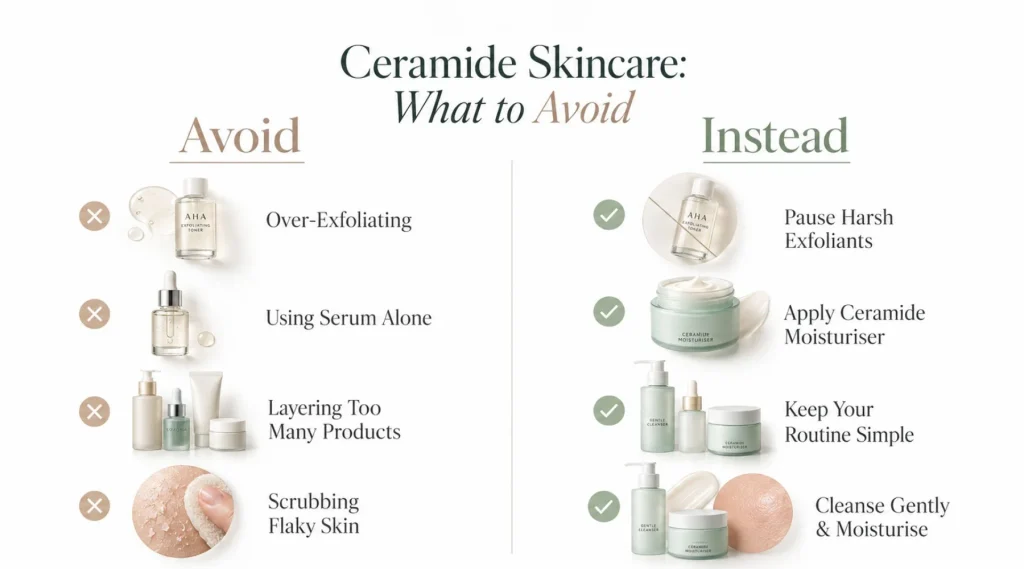
Exfoliating Too Much
One big mistake is continuing to use exfoliating products even when your skin is irritated. You might apply a barrier cream at night but still use acids, fearing clogged pores. The next night, your skin may sting again. Ceramides can’t fix your skin faster than you irritate it. If your skin is very irritated, stop non-essential exfoliation for a while. You can always resume it later.
Using a Ceramide Serum Without moisturiser
Serums can be helpful, but they aren’t always better just because they are concentrated. If your skin is very dry, a serum alone might not keep it moisturised enough. A moisturiser usually makes more sense for protecting your skin barrier. If you like using a ceramide serum, follow it up with a suitable moisturiser instead of thinking the serum can replace it.
Choosing the Thickest Cream
Heavy creams can be great for dry skin, but they may not work for oily skin. Caring for your skin doesn’t mean slathering on the thickest product available. The texture of the product is important. Choose a lotion, cream, or balm based on what feels comfortable for your skin.
Introducing Five “Repair” Products at Once
- Products: Panthenol serum, ceramide ampoule, Centella toner, peptide essence, sleeping mask, and Cica balm.
- Note: While these products seem soothing, using them all at once can be risky. If irritation occurs, you won’t know which product caused it.
- Advice: Start with a cleanser and moisturiser you trust. Add new products only if there’s a clear benefit.
Assuming Natural Means Gentler
- Caution: Essential oils and fragrant extracts can irritate sensitive skin.
- Fact: A product can appear “clean” or natural and still harm a weak barrier.
- Suggestion: During recovery, stick to simple formulations.
Washing With Hot Water
- Warning: Hot water can increase dryness and discomfort for irritated skin.
- Tip: Use lukewarm water. This also applies to long, hot showers if your skin is dry or prone to eczema.
Scrubbing Flakes Away
- Advice: When your skin peels, resist the urge to scrub. Eliminating flakes can damage your skin further.
- Reminder: Let moisturisation and natural shedding do the work instead of using scrubs or rough materials.
Ceramide Myths That Can Make Barrier Care More Confusing
Skincare myths often start with some truth but get blown out of proportion. Ceramides are a good example.
Myth: Ceramides Repair Your Barrier Overnight
A moisturiser can quickly improve comfort, but full recovery takes time. The skin needs to rebuild its structure and function, so don’t confuse temporary softness with complete healing.
Myth: More Ceramides Always Mean a Better Product
The amount of ceramides isn’t the only factor. The type of ceramide, how it’s made, and other ingredients all matter. A product boasting a “ceramide complex” isn’t necessarily better than a simpler one.
Myth: Oily Skin Does Not Need Ceramides
Oily skin makes more oil, but this doesn’t mean the skin barrier is strong. You can have oily skin that is also dry and irritated. In this case, a lightweight ceramide lotion can be helpful.
Myth: Ceramides Replace Sunscreen
Ceramides help the skin barrier, but they can’t protect against UV rays. You need both ceramides and sunscreen for different purposes.
Myth: Ceramides Make Every Active Gentle
No moisturiser can make harsh treatments safe. If you use too much retinol, acid, or benzoyl peroxide, your skin can still get irritated. Ceramides help support the skin but don’t change how these ingredients work.
Myth: Skin Becomes Dependant on Ceramide moisturiser
Using a moisturiser doesn’t make your skin lose its ability to produce its own oils. If your skin feels dry after stopping, the same underlying issues like cold weather or age are likely still there.
Weather and Daily Habits Matter More Than Most People Realise
Barrier problems aren’t just about skincare products; your environment plays a big role.

Cold Weather
Cold air usually has less moisture. Indoor heating makes it worse. A moisturiser that worked well in summer might feel too light in winter. Switching from a gel to a cream can help.
Air Conditioning
Air conditioning can cause dryness too. If you’re in an air-conditioned office all day, your skin might lose moisture quickly. Using a humectant under a ceramide moisturiser can be helpful.
Very Hot Showers
Hot showers feel good but can leave your skin tight and dry. Use warm water instead, especially if you have eczema or dry skin.
Frequent Handwashing
Frequent handwashing makes hands vulnerable because it removes oils. Applying a ceramide hand cream after washing can help with dryness.
Shaving
Shaving can stress the skin and remove surface cells. Using strong acids right after can increase irritation. A simple moisturiser is often a better choice after shaving.
Lack of Sleep and Stress
While stress doesn’t immediately ruin your skin barrier, ongoing stress and lack of sleep can lead to inflammation. You don’t need a perfect lifestyle to have healthy skin, but skincare can’t fix every issue caused by your environment or habits.
When Ceramides Are Not Enough
A ceramide moisturiser is helpful, but it is not a one-size-fits-all solution.
If you have ongoing skin issues, it’s important to look at the bigger picture. Consult a professional if you have:
- Recurring eczema-like patches
- Severe itching
- Cracks or bleeding
- Burning on your face
- Swelling
- Weeping or crusting
- Rapidly spreading redness
- Painful skin
- Symptoms near your eyes
- A rash that doesn’t get better after simplifying your routine
- Reactions to several different products
- Severe acne that needs medical care
A dermatologist can tell the difference between minor irritation and conditions that need treatment. This is crucial because many skin issues may appear similar online. Conditions like perioral dermatitis, contact dermatitis, rosacea, and acne can all show redness and bumps, but they require different management approaches.
Avoid trying to “repair your barrier” for months if the root problem hasn’t been identified.
How to Choose a Ceramide Product Without Getting Distracted by Marketing
You don’t need fancy packageing or long ingredient lists. Start with what works.
Check the Texture
If you have oily skin, try:
- Lotion
- Fluid moisturiser
- Gel-cream
- Lightweight emulsion
If you have dry skin, try:
- Cream
- Rich lotion
- Barrier balm
- Ointment for very dry spots
Look for Key Ingredients
A good moisturiser can have ingredients like:
- Ceramides
- Glycerin
- Cholesterol
- Fatty acids
- Squalane
- Hyaluronic acid
- Panthenol
- Betaine
- Dimethicone
- Petrolatum
- Shea butter
- Niacinamide
You don’t need all of these. The overall formula is more important than having every trendy ingredient.
Be Careful With Fragrance If You Are Sensitive
Fragrance isn’t always bad for products. Many people use scented skincare without any issues. However, if your skin is sensitive, a fragrance-free product can help avoid irritation.
Do Not Automatically Choose the Product With the Highest Price
You don’t need to buy expensive ceramide skincare for it to work well. Good quality moisturisers from the pharmacy can be just as effective. Price is often influenced by packageing and branding, but expensive doesn’t mean it’s better for your skin.
How to Know When Your Barrier Is Ready for Actives Again
Restarting strong skincare too soon can lead to irritation.
Focus on finding comfort for your skin. Your skin should not:
- Sting when you wash it
- Burn when you apply moisturiser
- Have unexplained flaky patches
- Feel tight during the day
- Turn red right after cleansing
Once your skin feels normal for several days, you can think about adding one active ingredient back in. Start using it less often than before. If you used retinol every night, try it once or twice a week instead. If you were using multiple acids, start with just one.
Don’t use recovery as a reason to go back to an overloaded routine. A healthy skin barrier needs both good ingredients and restraint.
Ceramides for Sensitive Skin: Simple Usually Wins
Sensitive skin doesn’t always need special ingredients. It often benefits from fewer irritating ones. A good routine for sensitive skin can include:
- Gentle cleanser
- Hydrating product, if needed
- Ceramide moisturiser
- Sunscreen
This basic routine works for many people. You can add treatment products later for specific issues like acne, dark spots, or fine lines. Starting with a gentle routine helps build tolerance, making treatments more effective. A routine that claims to work well but causes burning is not effective.
Can You Use Ceramides Every Day?
Yes, most people can use products with ceramides daily. Unlike exfoliating acids or retinoids, ceramides don’t usually need rest days. You can apply them every morning and evening. If you have very dry areas, feel free to use a ceramide moisturiser more often.
However, check the entire product, not just the ceramide. If your moisturiser has exfoliating acids, retinoids, or other active ingredients, follow their specific usage guidelines. Don’t assume that any product with ceramides can be used as much as you want.
Do You Need a Ceramide Cleanser and Ceramide Moisturiser?
Probably Not.
Using several ceramide products isn’t harmful, but it’s not necessary to base your entire routine on the same marketing message.
A cleanser only stays on your skin for a short time before you rinse it off. Its main job is to remove dirt, sunscreen, and makeup without making your skin feel uncomfortable.
A leave-on moisturiser stays on your skin longer, so it’s better to focus on barrier-supporting ingredients there.
If you like your ceramide cleanser, keep using it. Just don’t think your routine is incomplete without it.
Can Ceramides Be Used Around the Eyes?
A gentle ceramide moisturiser can be used around the eyes if the label says it’s safe and your skin reacts well.
The skin around the eyes is thin and can get irritated easily, so simple products are best.
Don’t apply products directly in your eyes.
If you feel stinging, swelling, or watering from an eye cream or facial moisturiser, stop using it.
You don’t need a special eye cream just because your facial moisturiser has ceramides.
Many basic facial moisturisers are fine to use around the eye area.
Are Ceramides Good for Mature Skin?
As we age, ceramide levels and skin barrier function can decrease, making mature skin drier. This is why lipids that support the barrier are helpful. However, ceramides can’t replace other important ingredients. They won’t work like:
- Retinoids for collagen issues
- Sunscreen for UV protection
- Pigment-targeting ingredients for uneven skin tone
- Antioxidants for oxidative stress
Ceramides help create a well-moisturised base. This is important for mature skin because it makes stronger active treatments easier to apply when the skin feels comfortable.
Can Ceramides Help After Over-Exfoliation?
Yes, ceramide moisturisers can help after too much exfoliation, but first, stop the excessive exfoliation.
If your skin burns, feels tight, is shiny, flaky, or very sensitive after using acids, scrubs, or peels, take action right away.
Use:
- A gentle cleanser
- A simple moisturiser
- Sunscreen
Don’t be tempted to add several “repair serums.” You won’t fix an overloaded routine by complicating it.
Once your skin feels better, you can slowly reintroduce exfoliation if needed.
Can Ceramides Help With Eczema?
Moisturisers with ceramides are often used for dry skin and eczema because they help repair the skin barrier.
Eczema is an inflammatory medical condition.
Moisturisers can help protect the skin and reduce dryness. However, if eczema is serious or active, you might need a prescription or over-the-counter treatment.
If you think you have eczema, especially if the symptoms are severe or last a long time, see a doctor instead of just using cosmetic products.
Are Ceramides Better in a Cream or Serum?
Neither format is automatically better. The best choice depends on your skin type.
Creams are thicker and provide more moisture, making them ideal for dry skin.
Serums are lighter and are better for oily skin or those who like to layer products. However, even a ceramide serum often needs a moisturiser on top.
If your main goal is to repair or support a damaged skin barrier, a full moisturising formula is usually more effective than just using a serum.
Do Ceramides Clog Pores?
Ceramides usually do not clog pores. The overall formula is what matters most. Rich creams can feel heavy on acne-prone skin, but they might be perfect for very dry skin. Focus on how your skin reacts to products, not just if an ingredient is on a popular “pore-clogging” list. These lists often simplify the science behind formulations.
Should You Apply Ceramides Before or After Hyaluronic Acid?
If your moisturiser has ceramides, put on hyaluronic acid first, then the moisturiser.
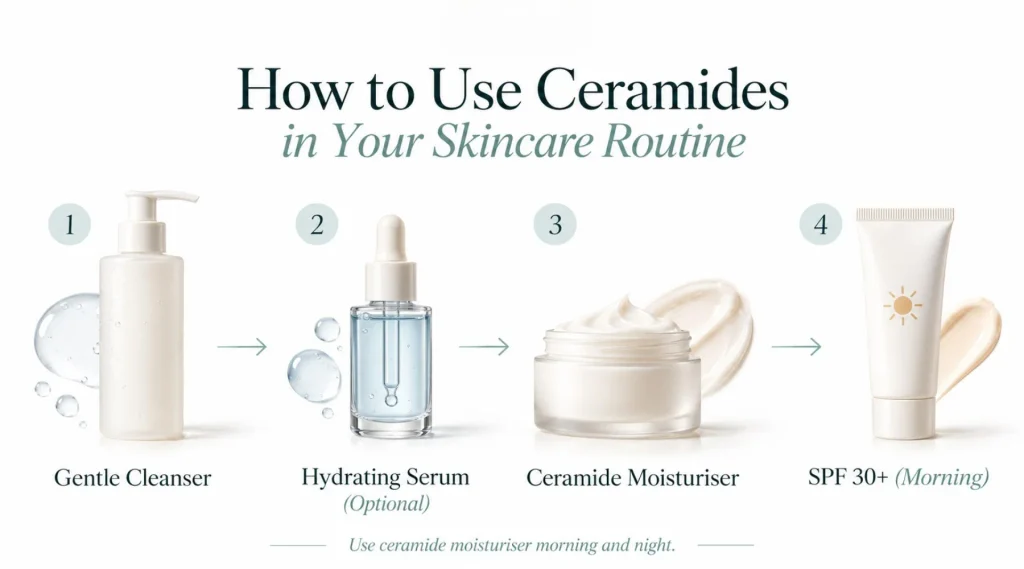
A common routine is:
- Cleanser
- Hydrating serum
- Ceramide moisturiser
- Sunscreen in the morning
This way, the lighter serum can go under the thicker moisturiser, which helps keep moisture in. If both ingredients are in one product, you can skip the separate steps.
Can Ceramides Repair a Damaged Skin Barrier Permanently?
Ceramides help your skin recover, but thinking of skin repair as “permanent” isn’t accurate. The skin barrier is always changing.
It constantly renews itself in response to your environment, skincare routine, age, and health.
Even a repaired barrier can get irritated again if you use too much exfoliation, harsh cleansers, or treatments that irritate your skin.
So, long-term success depends on maintaining good habits instead of just doing a one-time repair.
How Long Does It Take Ceramides to Work?
Some people feel softer and more comfortable in just a few days. Full barrier recovery may take weeks, depending on how irritated the skin is and whether the cause is gone. Don’t only measure effectiveness by softness. Reduced stinging, less tightness, and better tolerance for regular cleaning are better signs of recovery.
Can Ceramides Help With Redness?
Ceramides can help lessen redness, especially if it’s due to dryness or irritation. However, they are not specific treatments for redness. Ongoing redness can have various causes, such as rosacea, dermatitis, or reactions to certain ingredients. If redness persists after using a gentle routine, consider getting a professional assessment.
Are Ceramides Suitable for Oily Skin?
Yes.
Oily skin can still have a damaged barrier.
Choose a lightweight ceramide lotion or gel-cream instead of a heavy balm.
moisturising properly can help make your acne treatment easier to handle.
Can Ceramides Be Used With Salicylic Acid?
Yes.
You can use ceramides and salicylic acid together.
A common method is to use salicylic acid first, then apply a ceramide moisturiser.
If your skin becomes dry, use the acid less often.
Don’t use the moisturiser as a reason to exfoliate every day if your skin feels irritated.
Is It Better to Use Ceramides in the Morning or at Night?
Both.
Using it in the morning keeps your skin comfortable and hydrated under sunscreen.
Using it in the evening moisturises your skin when it’s not covered by makeup or exposed to pollution.
If you prefer to use a rich cream just once a day, the evening might be more pleasant.
What matters most is using it regularly, not the specific time.
Are Ceramides Worth Using if Your Skin Barrier Is Already Healthy?
Yes, if you like the product.
Ceramides are natural parts of skin, so you don’t need to save them for emergencies.
Using a ceramide moisturiser on healthy skin can be part of your daily routine.
You don’t have to wait for skin irritation to protect its barrier.
Can Ceramides Replace Facial Oils?
Not exactly.
Facial oils mainly help by keeping moisture in and softening the skin, depending on their ingredients.
Ceramides are special lipids that help form a barrier on the skin.
A good moisturiser may already have both ceramides and emollient oils.
If your current ceramide cream makes your skin feel good, you might not need a separate facial oil.
Are Ceramides for Skin Barrier Support Worth Using Long Term?
Ceramides are great for skin care because they help keep a healthy moisture barrier. They lock in moisture and keep out irritants.
The key to their effectiveness is consistency, not quick fixes. When used in a good moisturiser, ceramides help dry skin hold moisture, recover from irritation, and make skincare routines easier to manage.
In the ingredient-focused skincare world, it’s important to remember that not every product needs to exfoliate or brighten the skin. Sometimes the best approach is to stop irritating the skin and provide it with what it needs to work well.
If your skin feels tight, sensitive, or irritated, start by simplifying your routine. Use a gentle cleanser, a soothing ceramide moisturiser, and wear sunscreen daily. Give your skin time to adjust before adding new ingredients.
A strong skincare routine isn’t about having many steps. It’s about being consistent with what works for your skin.