




Blog
Can Hyaluronic Acid Dry Out Skin? What to Know and Avoid

Hyaluronic acid is known for its hydrating properties. It is found in serums, moisturisers, masks, eye products, and cleansers, often promising softer and more comfortable skin. This makes it confusing if a hyaluronic acid product leaves your skin feeling tight instead of hydrated.
So, can hyaluronic acid dry out your skin? Hyaluronic acid is a humectant, which means it attracts and holds water, not removes moisture. In a good skincare routine, it usually helps with hydration. However, it can feel drying if you don’t use enough moisturiser, if your skin barrier is already damaged, if you mix it with irritating ingredients, if you use too much, or if it contains ingredients that your skin doesn’t like.
There’s a common belief online that hyaluronic acid “pulls water out of your skin” when the air is dry. Hydration is more complex. Humectants affect water in the outer skin layers, but the overall result depends on the entire product, your moisturiser, your skin barrier condition, and how fast water evaporates from your skin.
Instead of just asking if hyaluronic acid is drying, it’s better to ask why your skin feels dry after using it.
Can Hyaluronic Acid Dry Out Skin?
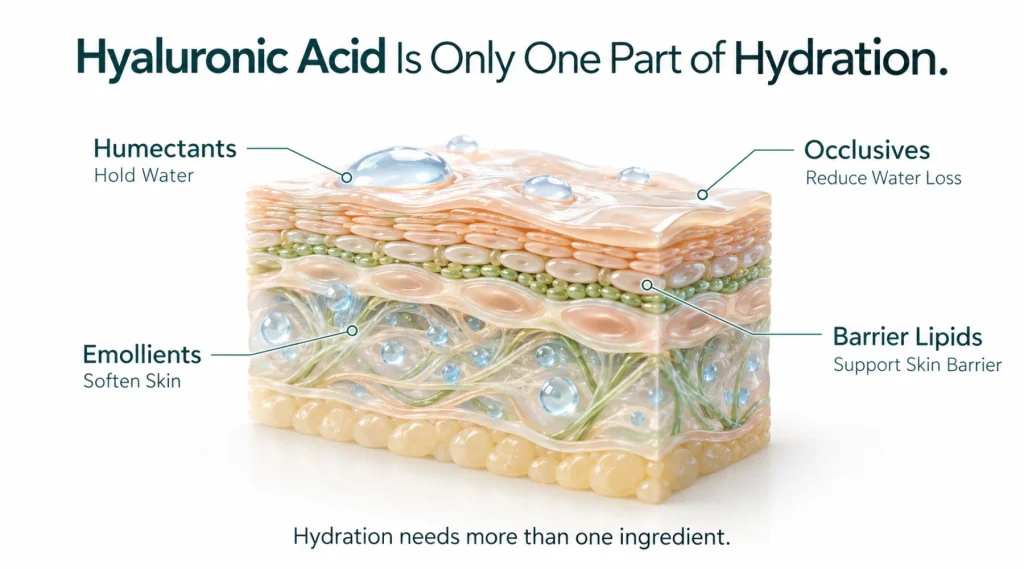
Hyaluronic acid usually doesn’t dry out the skin. It’s commonly used as a humectant, which helps the outer layer of skin hold onto water. Humectants draw in moisture, while occlusive ingredients prevent moisture loss.
This difference explains why people can be disappointed with hyaluronic acid. A light serum might make your skin feel plump for a short time, but it isn’t a full moisturiser. If your skin is dry, damaged, or losing water quickly, just using a humectant might not be enough.
Think of hyaluronic acid as one part of a moisturising system, not a complete water source. A balanced skincare routine might include:
- Humectants like hyaluronic acid, glycerin, or urea to hold water.
- Emollients that soften rough skin.
- Occlusives such as petrolatum, mineral oil, or dimethicone to reduce water loss.
- Barrier-supporting lipids like ceramides, cholesterol, and fatty acids.
Someone with oily yet dehydrated skin might need less occlusion, while someone with dry, flaky skin might need more. This is why two people can use the same hyaluronic acid serum and feel very different results.
Why an Ingredient Designed to Hydrate Can Leave Skin Feeling Tight
Hyaluronic acid binds water well, but skincare products don’t work alone. A serum might seem to cause dryness, but the issue could be something happening before or after you use it.
Hyaluronic acid is not the same thing as a moisturiser
Understanding this distinction is very important.
A typical hyaluronic acid serum mainly adds hydration. It often has humectants and some soothing ingredients but usually contains little oil or other barrier ingredients.
Dry skin needs both water and oils.
Applying just a watery serum to very dry skin may not be enough to prevent water loss. Your face might feel fresh at first but can become tight again after a while.
This doesn’t mean hyaluronic acid pulls water from your skin. It just means the serum didn’t provide all your skin needed.
Knowing what hyaluronic acid does helps clarify this. Its main strength is supporting hydration, but it doesn’t replace a moisturiser or repair the skin barrier on its own.
Water can still evaporate from hydrated skin
Your skin is always exchanging water with the environment. Water rises to the skin’s surface and evaporates, which is called transepidermal water loss. A healthy skin barrier helps manage this loss.
When the barrier is damaged, evaporation increases; the skin then has trouble staying comfortable, no matter how many hydrating products you use.
This is why someone with a damaged barrier might say, “My skin absorbs hyaluronic acid, but it feels dry again in ten minutes.” The issue might not be the serum; the skin may struggle to hold onto water.
A damaged barrier changes how almost everything feels
Healthy skin can handle products that irritated skin cannot. When the skin barrier is weak, regular moisturisers may sting, water can hurt, and sunscreen might feel uncomfortable. Products that were once fine can suddenly irritate.
Common triggers include:
- Too much exfoliation
- Using retinoids too often
- Harsh cleansing
- Scrubbing too hard
- Overusing acne treatments
- Cold weather
- Very dry indoor heating
- Long-lasting irritation
- Dermatitis
- Sunburn
- Adding too many active ingredients at once
If your skin reacts poorly, adding another serum won’t fix the problem. It’s better to focus on repairing your skin barrier with gentle cleansing, moisturising, sunscreen, and temporarily cutting back on irritating treatments, instead of just piling on more products.
Does Hyaluronic Acid Pull Moisture Out of Your Skin in Dry Weather?
Many people say you should use hyaluronic acid in dry climates. They think it will pull water from your skin and release it into the air. But that’s not entirely true.
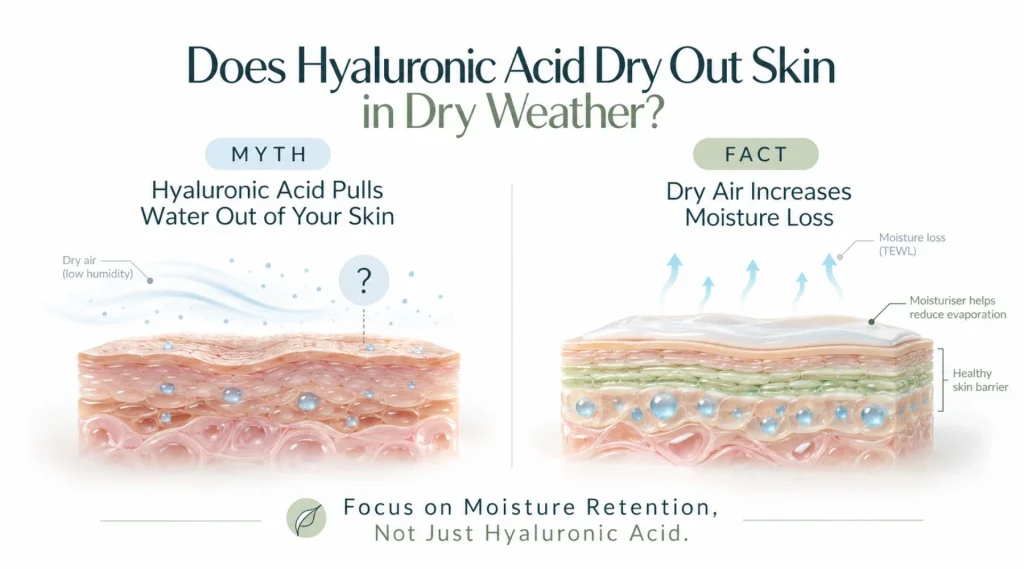
Hyaluronic acid loves water, but skincare is more complicated. It combines water, natural moisturisers, oils, other ingredients, and your skin barrier. Products made with hyaluronic acid are different from just using it alone.
Dry air can make your skin lose moisture, especially in winter, during travel, or in rooms with strong heating or air conditioning. Blaming hyaluronic acid alone misses the bigger picture.
What matters more is whether your skincare routine prevents too much water loss. If you’re in a dry place, try:
- Putting hydrating products on skin that’s already hydrated.
- Using a good moisturiser afterwards.
- Choosing a thicker cream if your skin is really dry.
- Reducing harsh cleansers and scrubbing.
- Avoiding very hot water.
- Changing your routine with the seasons.
Don’t worry too much about hyaluronic acid. Instead, focus on creating a better moisturising routine.
Hyaluronic Acid on Wet or Dry Skin: Does It Matter?
You don’t need to apply hyaluronic acid to dripping wet skin. Many people find that using it on slightly damp skin works well. After washing your face, gently pat away extra water, then apply a thin layer of serum and follow with moisturiser.
It’s also fine to use hyaluronic acid on completely dry skin. A good product contains its own water and works effectively on its own.
The main difference is comfort. If applying serum on damp skin makes your face feel softer and helps you use less, keep doing that. If the directions say to apply it on dry skin, stick to those instructions.
You can use hyaluronic acid on both wet and dry skin. The key takeaway is that your skin doesn’t have to be very wet for it to be effective.
In short, your skin doesn’t need to be completely wet for hyaluronic acid to be effective. However, if you plan to use retinoids or other irritating treatments after, let your skin dry fully first. This can help reduce irritation.
Dry Skin, Dehydrated Skin, Irritation and Purging Are Not the Same Thing
Many people get confused about hyaluronic acid because the word “dry” is used for different skin issues.
| What you notice | What may be happening | Typical clues |
| Tightness and fine dehydration lines | Dehydration | Skin may still be oily |
| Flaking and rough patches | Dry skin or barrier disruption | Often improves with richer moisturiser |
| Burning, redness and stinging | Irritation | Products or even water may feel uncomfortable |
| Small clogged bumps | Possible product-related breakouts | Often develop where you usually clog |
| New pimples after starting hyaluronic acid | Not typical “purging” | Consider the complete formula |
| Serum rolls into flakes | Pilling | Product interaction, not skin peeling |
These distinctions matter because each problem needs a different response.
Dry skin lacks more than water
Dry skin usually makes less oil and needs richer creams and oils.
A person with dry skin might find hyaluronic acid helpful, but just using a watery serum probably won’t be enough.
Dehydrated skin is short on water
Dehydration can happen to any skin type.
Oily, acne-prone, and combination skin can all be dehydrated.
Signs of dehydration include:
- tightness
- more visible fine lines
- rough texture
- creased makeup
- skin feeling both oily and tight
Humectants are helpful, especially when used with a good moisturiser.
Irritated skin behaves differently
Burning, stinging, redness, and swelling don’t mean hyaluronic acid is effective. Instead, they indicate irritation or sensitivity to something in the product or routine.
Hyaluronic acid does not normally cause purging
This question needs a straightforward answer: Does hyaluronic acid dry out skin, or is it purging?
Hyaluronic acid is not an exfoliant. It doesn’t speed up skin renewal like retinoids or other exfoliating acids. So, if you notice breakouts after starting a hyaluronic acid product, don’t just think it’s “purging.”
If you get spots, check:
- The full ingredient list.
- If you started using another active ingredient.
- If your moisturiser is now heavier.
- If you’re using too many products.
- Any changes in hormones, stress, or daily routine.
- If the bumps are even acne.
Sticking with a product that irritates your skin, thinking it’s just “purging,” can make things worse.
Signs of Irritation From Hyaluronic Acid or the Product Containing It
True intolerance to hyaluronic acid is rare as a cause of bad reactions. Cosmetic products have preservatives, fragrances, plant extracts, solvents, active ingredients, and texture enhancers, any of which can irritate sensitive skin.
Watch for:
- Persistent burning
- Itching
- Red patches
- Swelling
- Repeated stinging
- Increasing flaking
- Unusual warmth
- Tiny irritated bumps
- Worsening roughness
- Discomfort with gentle moisturisers
- Sensitivity to water
A brief reaction to a product is different from ongoing inflammation. If your face feels more uncomfortable, stop using the product. Rinse it off if needed, simplify your routine, and let your skin recover.
If you experience severe swelling, blistering, widespread rash, trouble breathing, or reactions around your eyes and mouth, seek medical help immediately instead of experimenting with skincare.
Why Your Hyaluronic Acid Serum May Be Making Skin Feel Drier
Several common mistakes can make a hydrating product seem ineffective.
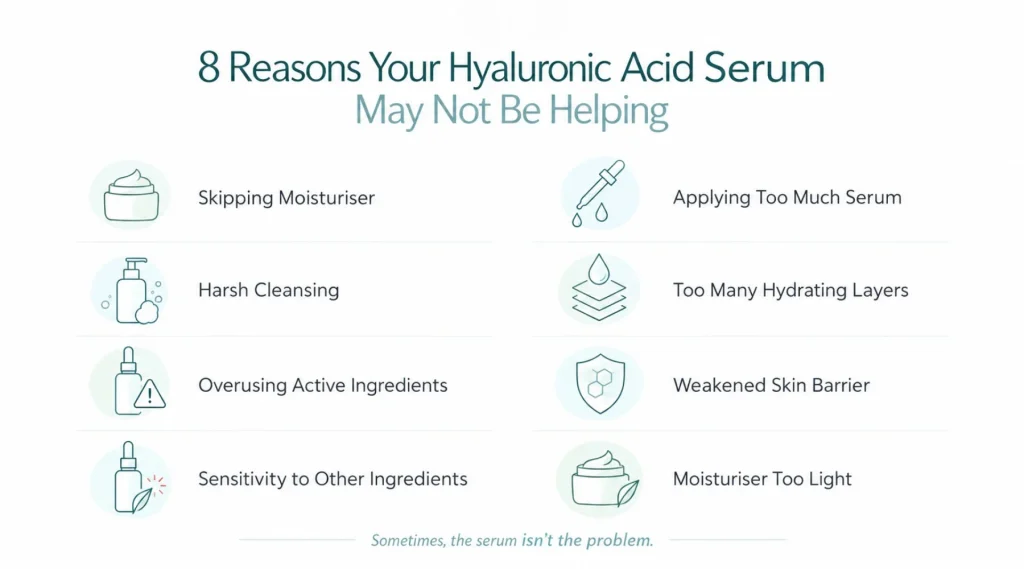
1. Using Hyaluronic Acid Instead of moisturiser
This mistake is easy to fix. A serum can’t replace a moisturiser. If your skin feels good right after applying the serum but tight later, add a moisturiser while your skin is still comfortable. For example, try a gel-cream or cream like COSRX Advanced Snail 92 All-in-One Cream. The specific product isn’t as important as finding a moisturiser your skin likes and using enough of it.
2. Applying Too Much Serum
Using more product doesn’t mean more hydration. Applying several droppers of thick hyaluronic acid serum can create a sticky layer that feels uncomfortable as it dries. Too much product can also cause pilling when you apply moisturiser, sunscreen, or makeup afterwards. A thin, even layer is usually enough.
3. Your Cleanser May Be Hurting Your Skin More Than Your Serum Can Help
If your skin feels tight or uncomfortable right after washing, check your cleansing routine. A hydrating serum can’t fix the damage from harsh cleansers.
Here are some common issues:
- Cleansing too often
- Using very hot water
- Choosing harsh foaming cleansers
- Double-cleansing when it’s not needed
- Scrubbing with cloths or brushes
- Leaving cleanser on too long
If your skin feels dry before you apply hyaluronic acid, the serum probably isn’t the problem.
4. Too Many Humectants
Your skincare routine might include:
- Hydrating toner
- Essence
- Hyaluronic acid serum
- Snail essence
- Gel moisturiser
- Hydrating sleeping mask
This seems very moisturising, but more layers can be counterproductive. If each product creates a layer on your skin without enough moisturising support, it can feel sticky on the surface but uncomfortable underneath. Keeping it simple often works better.
5. Active Ingredients Causing Dryness
Your hyaluronic acid might not be the main issue. Retinol, prescription retinoids, benzoyl peroxide, salicylic acid, and alpha-hydroxy acids can all lead to dryness or irritation if used too often. Adding hyaluronic acid can help your comfort, but it won’t fix an aggressive routine. If your skin is burning or peeling, check your active treatments first.
6. Your skin barrier is weak
A weak barrier loses water quickly and is more sensitive. Focus on repairing the barrier instead of trying to absorb more serum.
7. You might be sensitive to another ingredient
The term “hyaluronic acid serum” only tells part of the story. The product may also include:
- Fragrance
- Essential oils
- Alcohol
- Botanical extracts
- Exfoliating ingredients
- Vitamin C
- Preservatives
- Peptides
- Niacinamide
- Colourants
A reaction to the serum doesn’t mean hyaluronic acid is the cause.
8. Your moisturiser is too light for the season.
A gel that feels great in July might not be enough in cold January. Your skin’s needs can change based on:
- Temperature
- Humidity
- Central heating
- Air conditioning
- Travel
- Medication
- Age
- Changes in skincare routine
Think of your moisturiser as something you can change, not set in stone.
How to Use Hyaluronic Acid Without Drying Out Your Skin
The best skincare routine is usually simpler than you think.
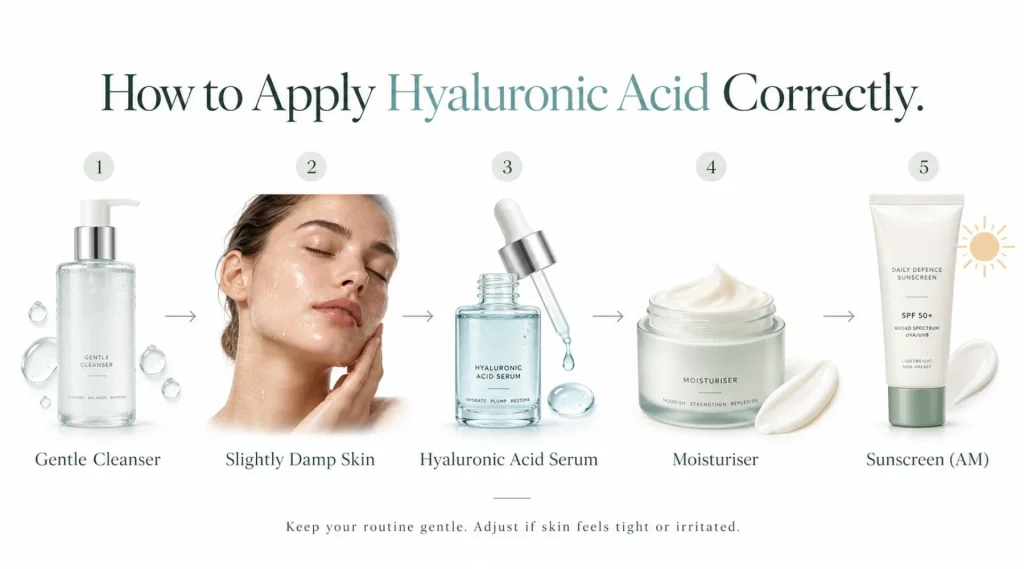
Step 1: Cleanse Gently
Use a mild cleanser to remove sunscreen, makeup, and dirt without drying out your skin. If you have dry or sensitive skin, you might rinse with lukewarm water in the morning and do a full cleanse at night.
Step 2: Keep Skin Damp
After cleansing, gently pat your face to remove excess water but don’t dry it completely. It can stay slightly damp. If you use a treatment that needs dry skin, change the order of your steps.
Step 3: Apply Hyaluronic Acid
Put a small amount on your face in a thin layer. You don’t need to soak your skin. Following a detailed guide can help, but sticking to a simple routine you enjoy is more important.
Step 4: Use Moisturiser
Apply moisturiser before your skin feels tight. Choose one that matches your skin type. Oily skin might like a light gel-cream, while dry skin might need a thicker cream. For gel lovers, Aloe Vera Moisturising Gel is a good choice, while very dry skin might require something richer.
Step 5: Wear Sunscreen
Even hydrated skin needs sun protection. Sunscreen’s job is different from hyaluronic acid, and they should both be used.
Step 6: Balance Your Routine
If you use a lot of active ingredients, don’t add extra hydrating layers just for dryness. It’s often better to reduce what irritates your skin.
Step 7: Listen to Your Skin
Your routine should keep your skin comfortable for hours without needing constant reapplication. If your skin frequently feels tight, adjust your steps.
When to Use Hyaluronic Acid: Morning, Night, or Both?
Hyaluronic acid is flexible.
You can use hydrating serums:
- in the morning
- at night
- or twice a day.
There’s no specific time when hyaluronic acid works better. Instead, think about when you really need it.
Use it in the morning for extra hydration under your moisturiser and sunscreen.
Use it at night if your skin feels dry after cleansing or if you’re using treatments that may irritate your skin.
Use it twice daily if your skin likes it and doesn’t feel sticky, clogged, or irritated.
If your moisturiser has enough humectants, you can skip the separate serum now and then. More of the same ingredient doesn’t mean better hydration.
What Does Hyaluronic Acid Do for Skin When It Is Working Properly?
Topical hyaluronic acid helps keep the skin’s upper layers hydrated when used properly.
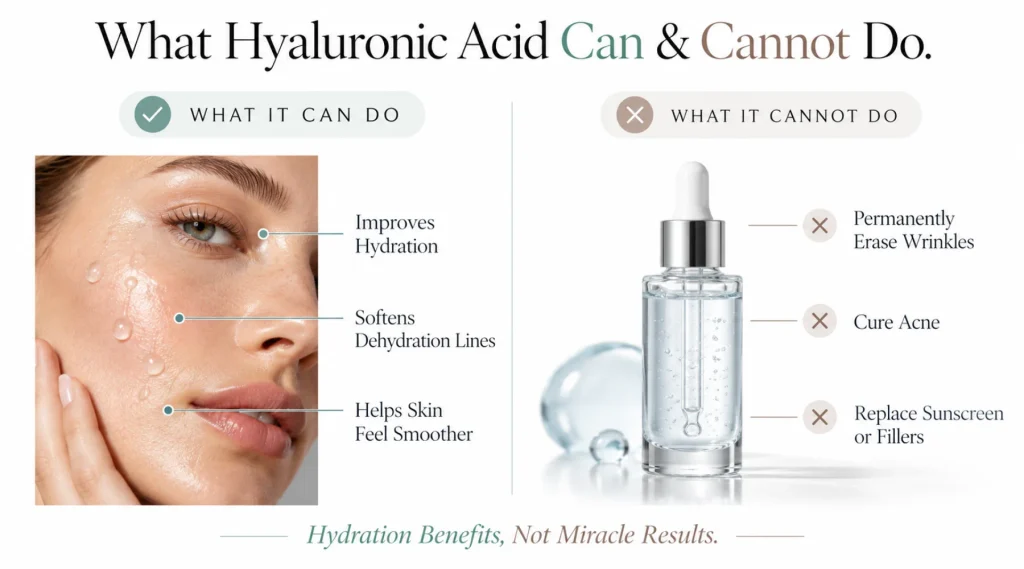
Different types of hyaluronic acid act differently in products, and research is ongoing about how they penetrate and work in our skin. The overall effectiveness of a product depends on the entire formula, not just on hyaluronic acid. However, reviews show that it can improve hydration and skin appearance.
A good hydrating product can help:
- Reduce tightness
- Smooth rough skin
- Soften dehydration lines
- Improve skin flexibility
- Make makeup apply better
- Provide comfort with drying treatments
- Offer lightweight hydration for oily skin.
It cannot reliably:
- Erase wrinkles permanently
- Replace moisturisers for all skin types
- Cure acne
- Fix severe skin barrier damage alone
- Replace sunscreen
- Reverse sun damage
- Match the volume from injectable hyaluronic acid fillers.
Topical hyaluronic acid and injectable fillers share a name, but their cosmetic effects are different.
Can You Use Hyaluronic Acid With Retinol?
Yes, you can often use hyaluronic acid and retinol together. They serve different purposes.
Retinol affects cell processes and is often used for uneven skin, acne, and signs of ageing. Hyaluronic acid helps with hydration. This hydration is important because retinol can cause dryness and irritation, especially for beginners.
The main concern is how to apply them correctly.
Should I use retinol or hyaluronic acid first?
There isn’t a one-size-fits-all order for skincare formulae.
If your hyaluronic acid is a light serum and your retinol is a cream or oil, a common routine would be:
- Cleanse
- Apply hyaluronic acid
- Let your skin dry completely
- Apply retinol
- Use moisturiser.
Letting your skin dry is important because putting retinol on damp skin can increase irritation.
People with sensitive skin might choose:
- Cleanse
- Use moisturiser
- Apply retinol
- Use moisturiser again.
This method is called buffering or the “moisturiser sandwich.”
Don’t feel like you need to fit hyaluronic acid into the same routine if it complicates things. You can use it in the morning and retinol at night.
For prescription retinoids, always follow the clinician’s instructions instead of relying on general skincare advice.
Can You Use Hyaluronic Acid With Vitamin C?
Most people can use hyaluronic acid and vitamin C together. A common morning routine is:
- Cleanser
- Vitamin C
- Hyaluronic acid
- moisturiser
- Sunscreen
However, vitamin C products differ a lot. Pure L-ascorbic acid serums are often low in pH, which can sting sensitive skin, while some vitamin C derivatives are gentler.
If vitamin C irritates your skin, adding more hyaluronic acid might not help. Instead, try using vitamin C less often, choosing a gentler version, or using it at a different time than hyaluronic acid.
For the eye area, consider products like Dr. Rashel Vitamin C Brightening and Anti-Aging Eye Serum, which combine vitamin C with hydrating ingredients. Comfort is more important here than using many active products.
Can You Use Hyaluronic Acid With Niacinamide?
Yes.
Niacinamide and hyaluronic acid are often used together because they help skin in different ways. Hyaluronic acid mainly provides hydration, while niacinamide supports the skin barrier, reduces oiliness, evens out tone, and lessens redness, depending on the product.
You don’t need separate serums if one product has both ingredients.
People with sensitive skin should know that higher concentrations aren’t always better. A simple, gentle formula often works better than a strong serum that can irritate the skin.
What About Salicylic Acid, Glycolic Acid and Other Exfoliants?
Hyaluronic acid can be safely used with exfoliating acids. Here’s a typical order:
Cleanser → exfoliant → hyaluronic acid → moisturiser.
However, remember to be cautious. Hyaluronic acid won’t fix problems caused by too much exfoliation.
If exfoliating acids like glycolic, lactic, or salicylic acid leave your skin feeling:
- shiny but tight,
- unusually red,
- peeling,
- painful,
- sensitive to water,
- irritated,
then stop trying to add more hydrating ingredients and cut back on exfoliation. A moisturising serum can help comfort your skin, but it won’t make an intensive routine safe.
Hyaluronic Acid for Acne-Prone Skin: Can It Cause Breakouts?
Hyaluronic acid isn’t an acne treatment, but its light hydration can help those with acne-prone skin. This matters because many acne treatments can dry out the skin. If you’re using benzoyl peroxide, salicylic acid, adapalene, or another retinoid, you might need extra hydration without a heavy serum.
People often worry that hyaluronic acid can dry out acne-prone skin, and breakouts can happen too. If you start a new serum and get spots, don’t just think you’re purging. Check the whole product.
Things that might cause breakouts include:
- Heavy moisturisers
- Ingredients that don’t suit your skin
- Fragrances
- Extra active ingredients
- Using too many products at once
- Not properly removing sunscreen and makeup
- Unrelated hormonal acne
Sometimes, breakouts can also be a coincidence. Acne can form before you see it, so if you notice a spot two days after starting a product, it doesn’t mean the product caused it. If you see the same pattern with the serum and improve when you stop using it, that information is helpful.
How to Avoid Breakouts When Hyaluronic Acid Seems to Dry Out or Congest Your Skin
Adding thicker layers to treat tightness can complicate acne-prone routines. A simpler approach works better.
Keep your routine basic: use a gentle cleanser, one hydrating serum if needed, one suitable moisturiser, acne treatment as directed, and sunscreen in the morning.
Don’t introduce three new products at once. If your skin breaks out, identify what changed.
Those who like lightweight textures can try different serum formulae, but the goal is not to have many serums. Choose products for their specific purpose.
The same goes for other skincare products: prioritise cleanser, moisturiser, and sunscreen over extra treatments.
Should You Stop Using Hyaluronic Acid If Your Skin Feels Dry?
Not necessarily.
Start by checking the pattern. If your skin feels tight after using serum without moisturiser, adjust your routine and see if that helps. If the serum feels sticky, you might be using too much; try using less. If dryness began when you switched from using retinol twice a week to every night, focus on your retinol schedule instead of hyaluronic acid.
Should you stop using hyaluronic acid if it dries out your skin? Yes, for now, if it consistently causes discomfort and you can’t find a clear reason. Stop using it if you experience:
- Strong burning
- Ongoing itching
- Increased redness
- Swelling
- Recurring rash
- Flaking skin despite moisturising
- More sensitivity with each use
You don’t need to identify the exact cause before stopping a product. Your comfort is enough reason. Once your skin improves, you can decide to try the product again or try something different.
Is Molecular Weight the Reason Some Hyaluronic Acid Products Feel Different?
Hyaluronic acid isn’t just one ingredient; it has different names like:
- Hyaluronic acid
- Sodium hyaluronate
- Hydrolysed hyaluronic acid
- Sodium acetylated hyaluronate
- Cross-linked forms and other types
Products can also mix different molecular sizes. The size can change how well the product forms a film and penetrates the skin. Research shows that smaller molecules act differently than larger ones, but it’s hard to say if a serum will irritate your skin based on lab results.
Skincare marketing can sometimes exaggerate. Just because a product claims to have “eight molecular weights of hyaluronic acid” doesn’t mean it hydrates eight times better.
What really matters to consumers is simple:
- Does your skin feel comfortable?
- Does the hydration last?
- Does the serum layer well?
- Does it work with your moisturiser?
- Does it irritate?
- Is it suitable for your skin?
The overall product is more important than any catchy claim.
Higher Hyaluronic Acid Percentages Are Not Automatically Better
Percentage marketing can be confusing.
Hyaluronic acid attracts water and can create thick textures, so cosmetic products don’t need a lot of it to work well.
When a product says it has “2% hyaluronic complex,” it may not mean 2% pure hyaluronic acid.
Consumers shouldn’t pick a serum just because it has a higher percentage.
A larger number doesn’t ensure better hydration, absorption, lasting moisture, lower irritation, or better value.
Other factors like texture, supporting ingredients, preservatives, and pH also play important roles in the formulation.
How Hyaluronic Acid Fits Into a Skin-Barrier Routine
A healthy outer skin layer acts as a barrier between your body and the outside world.
You can think of skin cells like bricks, with lipids acting as mortar. However, keeping moisture isn’t just about adding water-loving ingredients.
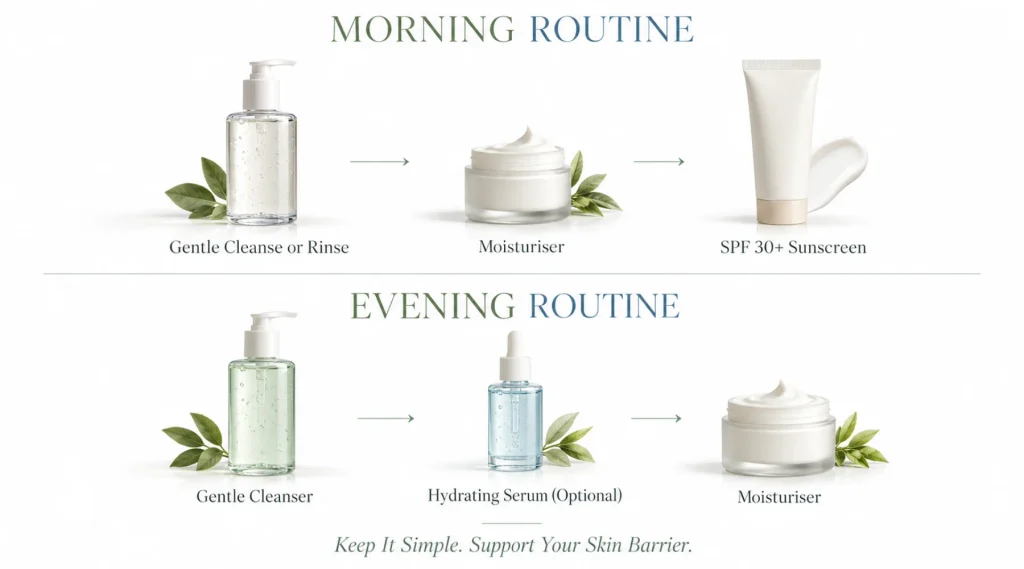
When your skin barrier is weak, try this simple routine:
Morning:
- Gentle cleanse or rinse
- moisturiser
- Sunscreen
Evening:
- Gentle cleanser
- Optional hydrating serum
- moisturiser
This routine may seem too simple if you’re used to complicated ones, but simplicity can help irritated skin.
A thick moisturising cream can be helpful after a hydrating serum. For example, COSRX Advanced Snail 92 All in One Cream is a moisturiser that doesn’t replace other steps.
Once your skin feels normal, slowly add back in other treatments instead of doing it all at once.
Is a Hydrating Face Mask Better Than Hyaluronic Acid Serum?
Neither option is better; they have different purposes.
A serum is easy to use daily and stays on your skin under moisturiser. A hydrating mask is an occasional treatment that provides temporary moisture.
For example, the Bio-Collagen Real Deep Mask can be great if you like masks and it suits your skin, but it should be optional in your routine.
Masks won’t fix problems caused by harsh cleansers, too much exfoliation, not moisturising enough, skipping sunscreen, or ongoing skin issues.
If your skin is truly irritated, adding more products may not help. Sometimes, it’s best to skip masks until your skin calms down.
Can Aloe Vera and Hyaluronic Acid Be Used Together?
Yes, if you are okay with the full formula.
Aloe gels are popular for their light, cool feel, and hyaluronic acid helps retain moisture.
This mix feels nice in warm weather or on oily skin.
But lightweight gels might not be enough for very dry skin. If your skin feels tight after the gel dries, use a good moisturising cream instead of putting on more gel.
It’s important to remember that being refreshing doesn’t always mean it provides enough moisture.
Common Hyaluronic Acid Mistakes That Matter More Than Humidity
Treating every tight feeling as proof the serum is “drawing moisture out”
Tightness has many causes. Check your cleanser, active ingredients, moisturiser, and skin barrier before blaming a single ingredient.
Using Three Separate Hyaluronic Acid Products
Your cleanser, toner, serum, or moisturiser may already have hyaluronic acid. Using too much isn’t always better.
Don’t use a full dropper just because the serum feels light. Too much can make skin feel sticky and heavy, causing it to clump. Apply enough to spread easily, but not so much that it leaves a layer on top.
Skipping moisturiser Because Your Skin is Oily
Oily skin can still lack hydration. A light moisturiser may be better than skipping it entirely.
Adding Hyaluronic Acid to Counter Excessive Retinol
Hydration won’t fix irritation from retinol. First, address the source of irritation.
Constantly Misting the Face
Misting your face throughout the day won’t fix dryness by itself. It can complicate your routine.
Assuming Every Breakout is Purging
Hyaluronic acid doesn’t usually cause purging. Look closely at your entire skincare routine for new breakouts.
Applying Retinol on Damp Skin
Damp skin can help some treatments absorb better. If you often experience irritation from retinol, let your skin dry first or follow the treatment instructions.
Hyaluronic Acid Dry-Out-Skin Side Effects: What Is Normal and What Is Not?
There is no specific condition known as “hyaluronic acid dry-out-skin side effects.”
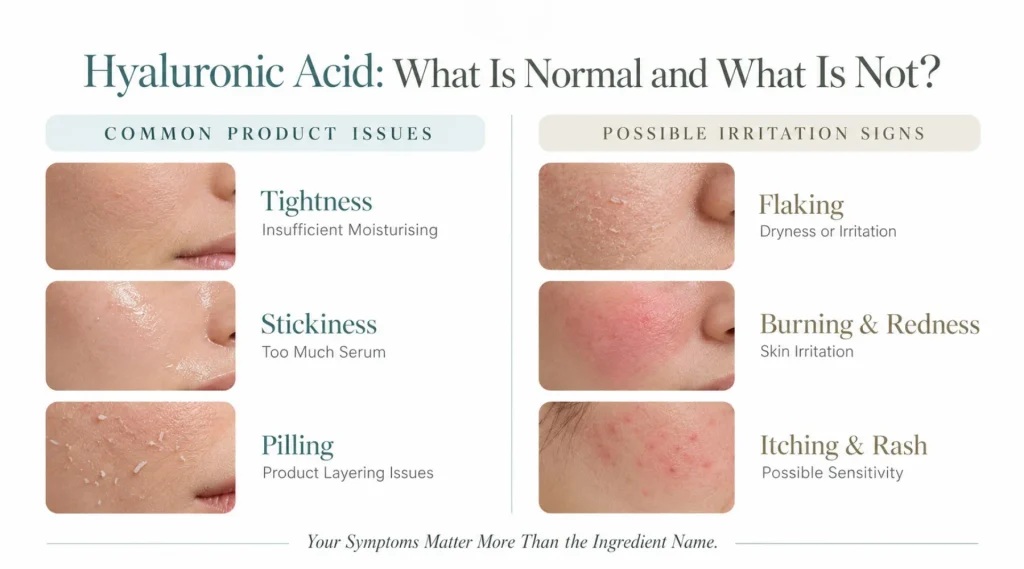
Instead, people usually report different issues:
- Tightness may mean not enough moisturiser is used.
- Sticky skin might indicate too much serum was applied.
- Pilling can result from product texture incompatibility.
- Flaking might be due to dryness, strong ingredients, or a damaged skin barrier.
- Burning and redness indicate irritation.
- Itching and rashes suggest sensitivity or contact dermatitis.
- Breakouts may be linked to the overall product formula, not just the hyaluronic acid.
Being clear about your symptoms is more helpful than assuming one cause explains all issues.
When a Dermatologist Should Look at Persistent Dryness
Most mild skin dryness gets better when you simplify your skincare routine.
However, not all dry, flaky, or red skin is just “dehydrated skin.” Other conditions that may look like skin irritation include:
- Eczema
- Seborrhoeic dermatitis
- Rosacea
- Allergic contact dermatitis
- Irritant contact dermatitis
- Psoriasis
- Perioral dermatitis
- Acne with irritation
See a professional if your dryness is severe, painful, widespread, keeps coming back, affects your eyelids, causes cracking or oozing, or doesn’t improve with a gentle routine.
Also, seek medical advice if a skincare reaction causes significant swelling or continues after stopping the product.
Adding more serums to an unknown inflammatory skin issue is usually not a good idea.
Questions People Commonly Ask About Hyaluronic Acid and Dryness
Can hyaluronic acid actually make dry skin worse?
Using a serum without a good moisturiser can actually make dry skin worse. If another ingredient irritates your skin or if your skin barrier is damaged, this can happen too. Hyaluronic acid attracts moisture, so it shouldn’t dry your skin out. If your skin still feels tight after using a proper moisturiser, stop using the serum and review your entire skincare routine.
Can hyaluronic acid dry out skin or is it purging?
Dryness after using hyaluronic acid is not usually purging. Hyaluronic acid doesn’t speed up skin-cell turnover like retinoids or exfoliating acids do. New pimples might be breakouts, irritation, or just coincidence, not purging.
What are the signs of irritation from hyaluronic acid?
Signs of irritation include burning, itching, redness, swelling, rash, and increased flaking. This may be caused by another ingredient, not just hyaluronic acid.
Should I apply hyaluronic acid to wet or dry skin?
Slightly damp skin is often best for many people, but it doesn’t have to be dripping wet. You can apply it to dry skin too. Follow the product instructions and choose what feels best for you.
Do I need a moisturiser after hyaluronic acid?
Most people should use a moisturiser after, especially if their skin is dry or sensitive. Hyaluronic acid hydrates, while moisturisers help keep the skin comfortable.
Can I use hyaluronic acid every day?
Yes, most people can use it daily. Once or twice a day is common, but if your moisturiser provides enough hydration, you don’t need to use it more often.
What does hyaluronic acid do for skin?
Hyaluronic acid helps hydrate the skin’s outer layers. It can make dry skin feel softer and smoother, reducing the appearance of fine dehydration lines.
Can you use hyaluronic acid with retinol?
Yes, they work well together. Using hyaluronic acid can help keep your skin comfortable while using retinol. If you apply hyaluronic acid first, let your skin dry before applying retinol to avoid irritation.
Should I use retinol or hyaluronic acid first?
If you’re using a thin, water-based hyaluronic serum and a cream-based retinol, apply hyaluronic acid first. People with sensitive skin might do better applying a moisturiser before retinol. Follow specific guidelines if using prescription retinoids.
Can you use hyaluronic acid with vitamin C?
Yes, they are often used together. Apply vitamin C first, followed by hyaluronic acid and moisturiser. If your vitamin C serum irritates your skin, try using the products separately for better comfort.
Why does my face feel tight after using hyaluronic acid?
Your face might feel tight for several reasons. These include not using moisturiser with the serum, applying too much product, using a harsh cleanser, having a damaged skin barrier, mixing it with drying treatments, or reacting to another ingredient in the serum.
How do I avoid breakouts when using hyaluronic acid?
To avoid breakouts, introduce one new product at a time. Use a thin layer, avoid heavy applications, and choose a moisturiser that suits your skin. If you notice spots after using a specific serum, stop using it and see if your skin improves.
Is hyaluronic acid good for acne-prone skin?
Yes, it can be helpful. Hyaluronic acid hydrates the skin without treating acne directly, which is useful since acne treatments can be drying. Whether it works for your skin depends on the full formula, not just the hyaluronic acid.
Can hyaluronic acid repair a damaged skin barrier?
Hyaluronic acid helps hydrate the skin while your barrier heals, but it doesn’t rebuild the barrier on its own. An effective routine usually includes gentle cleansing, proper moisturising, fewer irritants, and sun protection during the day.
How long should I stop using hyaluronic acid if my skin is irritated?
There’s no set time frame. Stop using the product and keep your routine simple until your skin feels better. If issues like burning, rash, swelling, or dryness persist, seek professional advice instead of continuing to test the product.
Can Hyaluronic Acid Dry Out Skin, or Does the Routine Need Changing?
Hyaluronic acid usually doesn’t dry out your skin. Instead, it helps keep skin hydrated. If your skin feels dry, it might be due to not using enough moisturiser, washing your face too much, using irritating products, or having a weak skin barrier. It could also be because your skincare routine lacks barrier-supporting products.
Adding more serum isn’t always the answer. Use a small amount of hyaluronic acid with a suitable moisturiser. Be careful with exfoliation and retinoids, and check how your skin feels a few hours after applying products, rather than right away.
If your skin stays soft and comfortable, hyaluronic acid is likely working well. But if you often feel tight, red, or itchy, you don’t have to keep using it just because it’s popular. Good skincare is about finding what works for your skin, not just using trendy ingredients.