





Blog
Salicylic Acid for Acne: Benefits and How to Use It Safely

Acne often starts before you see a spot. Inside the pore, extra oil combines with dead skin cells, creating a blockage. This blockage can turn into a blackhead, whitehead, or pimple. Treating just the visible spot may help it look better, but it doesn’t fix the buildup underneath.
Salicylic acid is useful for acne because it goes deep into oily pores and helps break up the clog. If you use it regularly, it can reduce blackheads, whiteheads, small breakouts, and rough skin.
Although salicylic acid seems easy to use, it is still a powerful ingredient. A strong leave-on treatment every night isn’t always better than a gentle cleanser used a few times a week. The right amount and method depend on your acne type, skin health, and other treatments you are using.
Salicylic acid can help with acne, but it isn’t a complete solution for every type. It works best for congestion but may not be as effective for deep, painful, or scarring acne.
Is Salicylic Acid Good for Acne?
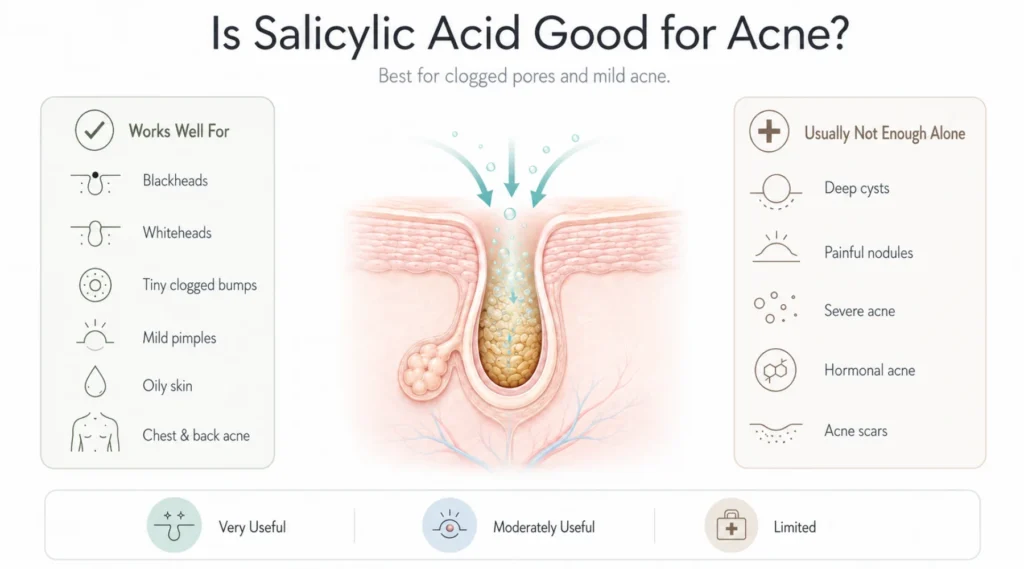
Salicylic acid is helpful for mild acne, especially for oily skin or skin with blackheads and whiteheads. It exfoliates inside the pores, preventing dead skin and oil from blocking them.
The American Academy of Dermatology says salicylic acid helps unclog pores and exfoliate the skin. Their 2024 acne guidelines suggest using topical salicylic acid, but they recommend stronger treatments like benzoyl peroxide and topical retinoids more. This is important because, while salicylic acid is backed by research, it may not be the strongest choice for all acne types.
It is usually most helpful for:
- Blackheads
- Whiteheads
- Small clogged bumps
- Mild inflammatory spots
- Oily or combination skin
- Congestion around the nose, chin, and forehead
- Breakouts caused or worsened by pore-clogging products
- Mild acne on the chest, shoulders, or back
It is less likely to be enough on its own for:
- Deep nodules
- Painful cysts
- Rapidly worsening inflammatory acne
- Acne that is leaving indented or raised scars
- Strongly hormonal breakouts
- Widespread moderate or severe acne
| Type of acne concern | How useful salicylic acid may be | What to consider |
| Blackheads | Very useful | Regular, gentle use is usually more effective than aggressive scrubbing |
| Whiteheads | Useful | Apply across the acne-prone area rather than only to visible bumps |
| Tiny clogged bumps | Often useful | Rule out irritation, folliculitis and heavy product build-up |
| Occasional red pimples | Moderately useful | Benzoyl peroxide may act more directly on inflammatory lesions |
| Deep cystic acne | Limited | Medical treatment is often needed |
| Post-acne dark marks | Indirectly useful | Preventing new spots helps, but pigment-targeting ingredients may work better on existing marks |
| Acne scars | Not a primary treatment | Professional procedures may be required for textural scarring |
What Is Salicylic Acid and What Does It Do to Skin?
Salicylic acid, or BHA, is a type of beta-hydroxy acid used in skincare. It is known for its ability to exfoliate skin, help clear pores, and reduce inflammation.
The term comedolytic means it helps prevent or remove plugs that cause blackheads and whiteheads. Salicylic acid breaks down the bonds between dead skin cells, allowing them to shed more easily instead of getting stuck in pores.
It also acts as a keratolytic, which means it softens and removes excess skin buildup. Specifically, it is desmolytic, meaning it disrupts the bonds that hold dead skin cells together.
Understanding salicylic acid and its effects on the skin explains why it is a popular ingredient in cleansers, toners, gels, serums, body washes, and professional peels.
Acne begins inside the follicle.
A pore is the visible opening of a hair follicle. Each follicle has a sebaceous gland that makes sebum, an oil that protects the skin from dryness.
Acne forms when several things happen at once:
- Skin cells in the follicle don’t shed properly.
- Sebum and dead cells build up inside the pore.
- The follicle gets blocked.
- Cutibacterium acnes causes inflammation due to the blockage.
The follicle can stay closed, open at the surface, or become inflamed. A closed plug forms a whitehead. An open plug turns into a blackhead when it is exposed to air and changes colour. A blackhead isn’t dark because the pore is dirty, and scrubbing more won’t fix the problem of congestion. Acne is a long-term inflammation of the hair follicle and sebaceous gland, not a sign of poor hygiene.
Why Oil Solubility Matters
Salicylic acid loves oil, which helps it work better in oily areas than many water-based exfoliants. Glycolic and lactic acids improve surface texture, but salicylic acid is often better for issues in congested pores.
It doesn’t “dissolve” oil or clean pores like soap. Instead, it loosens the packed cells that cause blockages.
What Salicylic Acid Does Not Do
Salicylic acid cannot permanently shrink pores, stop oil production, or fix the hormonal causes of acne. It also can’t remove deep plugs right away. While a product may smooth skin after a few uses, preventing new breakouts needs ongoing application.
Think of it as a maintenance ingredient, not a quick fix for spots.
Why Salicylic Acid Works Particularly Well for Clogged Pores
Most acne treatments influence more than one acne pathway, but each tends to have a particular strength. Salicylic acid’s strength is for congestion.
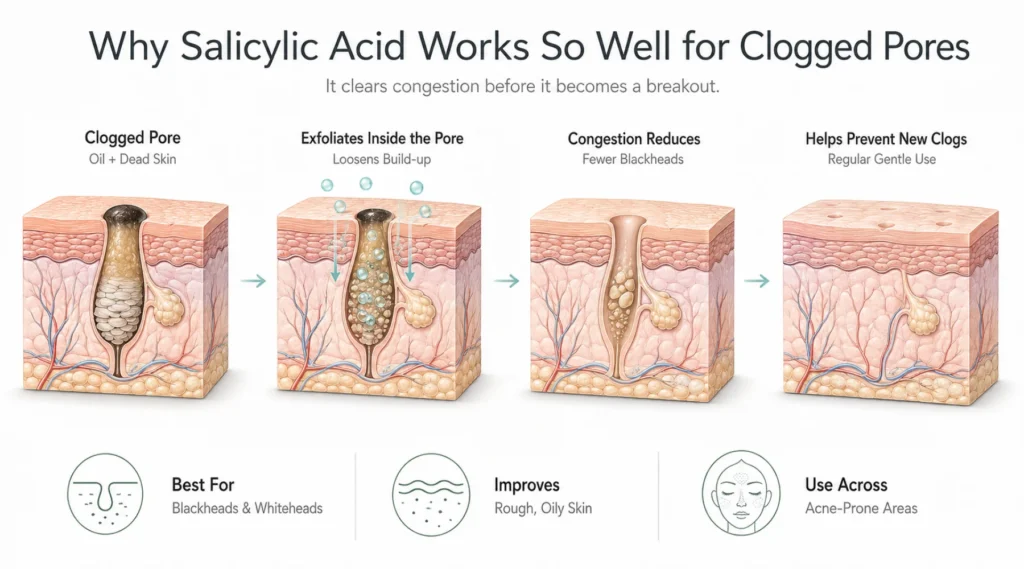
It helps clear blackheads and whiteheads.
Dead skin cells and oil can clog pores, forming hard plugs. Salicylic acid helps these cells shed, making it easier to clear the plugs. This is why it’s better to use it on larger areas prone to congestion, rather than just on visible blackheads. Treating only visible spots leaves some early blockages untreated. Frequent congestion on the nose and chin may need a different approach than occasional acne. Using salicylic acid at the right times can help reduce recurring blackheads. Some spots around the nose might actually be normal oil glands, not blackheads.
It can make rough, oily skin smoother.
Congested skin can feel uneven, even with a few red spots. Gently exfoliating with salicylic acid can smooth the skin’s surface and lessen the roughness from dead cells. Improvement takes time. If your skin suddenly feels shiny, tight, or stings with water, you may be over-exfoliating.
It may reduce minor redness.
Salicylic acid can help reduce mild redness around small blemishes due to its anti-inflammatory properties. However, it is usually less effective for inflammatory acne compared to benzoyl peroxide or prescription treatments. A salicylic acid cleanser can still be helpful for small red bumps, along with blackheads and oiliness. For severe red or painful spots, a more detailed treatment plan is often necessary.
It helps prevent breakouts, not just fix them.
One key benefit of salicylic acid is its ability to prevent clogged pores before they become visible. When used regularly on acne-prone areas, it can reduce the factors that lead to new blackheads. This preventive approach makes using a thin layer more effective than applying large amounts to individual pimples.
Who Is Most Likely to Benefit?
Salicylic acid is often suggested for “acne-prone skin,” but this term includes various skin issues. It works best for people whose breakouts are closely linked to oil and clogged pores.
Oily Skin with Blackheads or Whiteheads
For oily skin with blackheads or whiteheads, a facial product with 0.5% to 2% salicylic acid can help clear pores, depending on local laws. In the UK, products usually contain no more than 2% salicylic acid. Oily skin might handle leave-on treatments more often, but introduce them slowly to avoid irritation.
Combination Skin
Combination skin usually has clogged areas in the centre of the face and dryness on the cheeks or mouth. You don’t need to apply salicylic acid everywhere. Focus it on the forehead, nose, and chin to clear congestion without drying out other areas. This targeted approach is often more comfortable than using a strong cleanser on the entire face.
Mild Comedonal Acne
Mild comedonal acne includes blackheads, whiteheads, and small bumps. Since clogged pores are the main issue, starting with salicylic acid is a good idea. If the bumps don’t improve, you may need to reassess the diagnosis, as closed comedones can look like milia, folliculitis, irritation bumps, or certain skin conditions.
Mild Body Acne
Salicylic acid washes work well for treating body acne on the back, chest, and shoulders since they cover larger areas. Leave the cleanser on for a short time before rinsing, as directed. Wash after sweating, change out of damp clothes, and avoid harsh scrubs, which can worsen inflammation.
People Who Cannot Tolerate Strong Treatments
Some skin types can’t handle strong treatments like benzoyl peroxide or topical retinoids at first. A gentle salicylic acid cleanser can be a good starting point. However, “gentle” doesn’t mean it won’t irritate; a mild cleanser may still cause issues if it’s heavily fragranced or contains a lot of alcohol.
When Salicylic Acid May Be the Wrong Starting Point
An ingredient can be appropriate for acne in general, but inappropriate for the condition of your skin today.
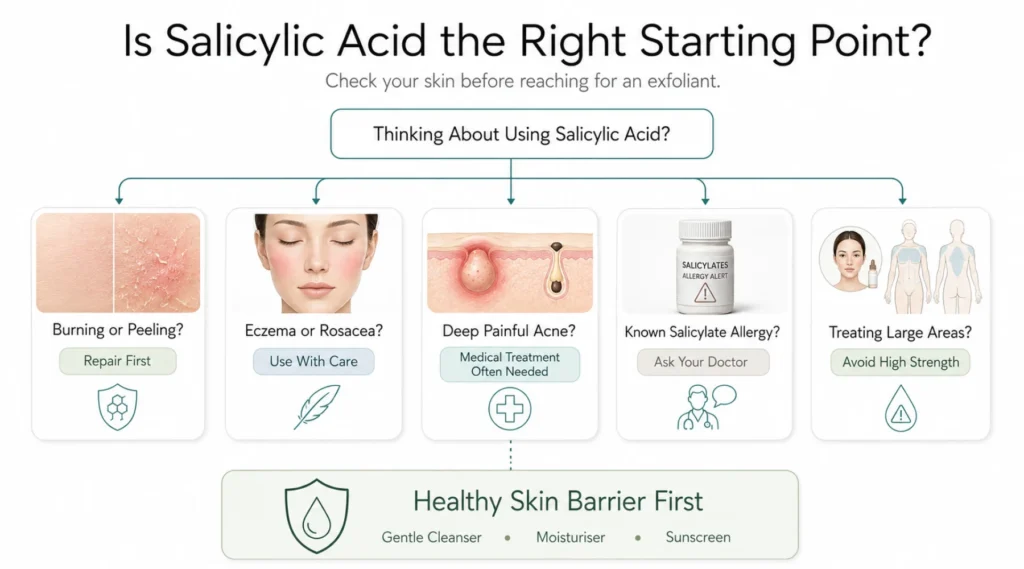
Your skin barrier is already irritated.
Stop using salicylic acid if your skin feels burning, cracking, peeling, or stinging when you wash it. Applying it to damaged skin can make inflammation worse instead of clearing up acne.
Here are signs your skin barrier is disrupted:
- Tightness even after moisturising
- Shiny but dry-looking skin
- New sensitivity to products you usually use
- Flaking all over
- Burning when applying water or a gentle moisturiser
- Small, itchy, or red bumps
Using gentle cleansing, moisturising, and sunscreen is usually more effective than trying to exfoliate through irritation.
You Have Eczema or Sensitive Skin
If you have eczema, rosacea, or sensitive skin, you can use salicylic acid, but it’s best to choose a low-strength wash and use it for short periods. Avoid it on active eczema, broken skin, or inflamed rosacea. MedlinePlus and DermNet recommend not applying salicylic acid to swollen, infected, or irritated skin.
Your Acne Is Deep, Painful, or Scarring
Deep acne, like nodules and cysts, is harder to treat with salicylic acid alone. Using it may delay better medical help and lead to more scars. NICE advises getting structured treatment based on the severity of acne, often combining a topical retinoid with benzoyl peroxide or other prescribed treatments. A dermatologist or GP should evaluate painful or widespread acne.
You Are Allergic to Salicylates
If you are allergic to salicylic acid or other salicylates, talk to a doctor before using it. An aspirin allergy doesn’t guarantee a reaction to topical salicylic acid, but it’s important to discuss with a healthcare professional.
You Are Treating a Large Area
Applying high concentrations of salicylic acid to large areas, especially on damaged skin, can increase absorption. Don’t use facial acne products as full-body treatments. Wart or corn treatments are too strong for facial use.
Choosing the Right Type of Salicylic Acid Product
The percentage on the label is important, but the way the product is used is just as important. A 2% wash that only stays on for one minute works differently from a 2% leave-on liquid that stays on overnight.
Salicylic acid cleanser
A cleanser gently removes dead skin and is a good choice for beginners, those with sensitive skin, and people using other acne treatments.
Consider using a cleanser if:
- You want something that irritates you less.
- You’re already using a retinoid.
- Your skin gets dry from leave-on acids.
- You have slight oiliness and congestion.
- You need a product for body acne.
Some salicylic acid cleansers are mild enough for regular use, but you don’t need to use them every day. If you notice dryness, switch to a gentle, non-comedogenic cleanser. The American Academy of Dermatology recommends a similar approach for those using salicylic acid to clear pores.
Leave-on Liquid, Gel, or Serum
Leave-on products stay on the skin longer and may work better for stubborn blackheads and closed comedones. However, they can also cause dryness and irritation.
Start with a small amount two nights a week instead of using a 2% product daily. When looking for facial serums, check if salicylic acid is mixed with other exfoliants, retinoids, fragrances, or essential oils, as these affect how well you can tolerate it.
Salicylic Acid Toner or Pad
Toners and pads are handy, but the term “toner” says little about what’s in them. Some have soothing ingredients, while others mix acids with alcohol, fragrances, or multiple exfoliants.
Avoid rubbing a pad on your skin repeatedly. One gentle swipe is enough. Excess friction won’t help the ingredients penetrate and may irritate inflamed areas.
Spot Treatment
A salicylic acid spot gel can help with small blemishes, but using it only misses nearby pores where acne might form. It’s better for occasional breakouts than for widespread acne. Deep cysts usually won’t improve with repeated layers of salicylic acid.
Body Wash or Spray
A salicylic acid wash can clear clogged pores on the chest, back, shoulders, and buttocks. A spray is useful for hard-to-reach areas, as long as it’s made for leave-on use.
Be cautious when using it with rough exfoliating gloves, scented body sprays, or tight synthetic clothing, as they can irritate the skin and worsen acne.
Professional Salicylic Acid Peel
Clinical peels use stronger concentrations than home products and should only be done by a qualified professional. They may improve comedonal acne, oiliness, and superficial discolouration, but can also cause burns or irritation if not done properly.
Do not try to replicate a professional peel at home by layering multiple acid products or leaving rinse-off products on overnight.
How to Use Salicylic Acid on the Face Without Over-Exfoliating
To use salicylic acid for acne, it depends on whether the product is rinsed off or left on. The best way is to start slow.
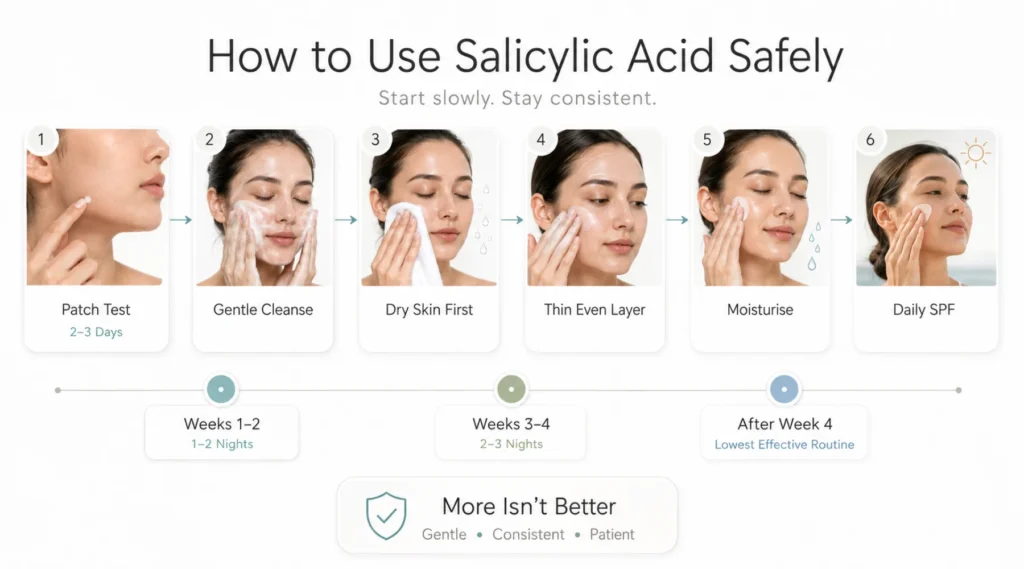
Step 1: Patch Test the Formula
Test the product on one or two small areas for a few days before using it widely. This won’t catch every possible reaction, but it can show if you experience burning, swelling, or a rash. MedlinePlus recommends testing salicylic acid on a small area for three days when you first start treatment.
Step 2: Cleanse Gently
Use a mild cleanser to remove sunscreen, makeup, sweat, and dirt. Avoid scrubbing brushes, rough scrubs, and very hot water. If your salicylic acid is also a cleanser, gently massage it into wet skin and follow the timing instructions. Leaving it on longer won’t give better results.
Step 3: Let Your Skin Dry
Applying leave-on acid to damp skin can make it feel stronger. If you’re new to the product or have sensitive skin, apply it to completely dry skin.
Step 4: Use a Thin, Even Layer
Using more product won’t clear your pores faster. Spread a small amount over the area with acne, avoiding your eyelids, lips, nostrils, and damaged skin. For forehead acne, treat the affected area instead of each individual bump.
Step 5: Follow with Moisturiser
Moisturiser does not cancel out salicylic acid. It helps keep your skin hydrated and supports its barrier, making it easier to stick to your treatment. Choose a non-comedogenic moisturiser with ingredients like glycerin, ceramides, squalane, panthenol, or hyaluronic acid.
Step 6: Wear Sunscreen During the Day
Using broad-spectrum sunscreen every day is essential for acne-prone skin, especially if you have irritation or post-acne marks. While salicylic acid isn’t as sensitive to the sun as all alpha-hydroxy acids, over-exfoliated or inflamed skin can be more vulnerable to discomfort and uneven colour. Opt for a sunscreen you can apply generously and reapply often, rather than a fancy product that you use sparingly.
A Sensible Starter Schedule
The most common beginner mistake is going from no exfoliation to daily leave-on salicylic acid.
A slower schedule gives the skin time to adapt:
| Period | Suggested frequency for a leave-on product | What to monitor |
| Weeks 1–2 | One or two evenings a week | Burning, persistent redness, flaking or tightness |
| Weeks 3–4 | Two or three evenings a week if comfortable | Whether congestion is improving without increasing sensitivity |
| After week 4 | Maintain the lowest effective frequency | Do not increase simply because the skin tolerates more |
You can use a cleanser more often since it stays on your skin for a shorter time. Follow the product directions and pay attention to how your skin reacts.
Some people get the best results by using it two or three times a week. There’s no need to use it daily if using it less often keeps your pores clear.
Morning or Night: When Should You Use Salicylic Acid?
Salicylic acid can be used in the morning or evening. Evening use is often easier because fewer products compete for space on your skin.
Use it in the evening if:
- You use antioxidant products in the morning.
- Your sunscreen has multiple layers.
- You want to monitor irritation overnight.
- You apply a leave-on treatment.
- You prefer a simple morning routine.
Morning use can work if:
- It’s a cleanser.
- Your skin tolerates it well.
- You use moisturiser and sunscreen after.
- Your evening routine has a retinoid or another separate treatment.
Choose the time that lets you use it regularly without overloading your skin.
The Best Routine Using Salicylic Acid for Acne
You don’t need a lot of steps for a good acne routine. Salicylic acid works better in a simple routine than with multiple exfoliants.
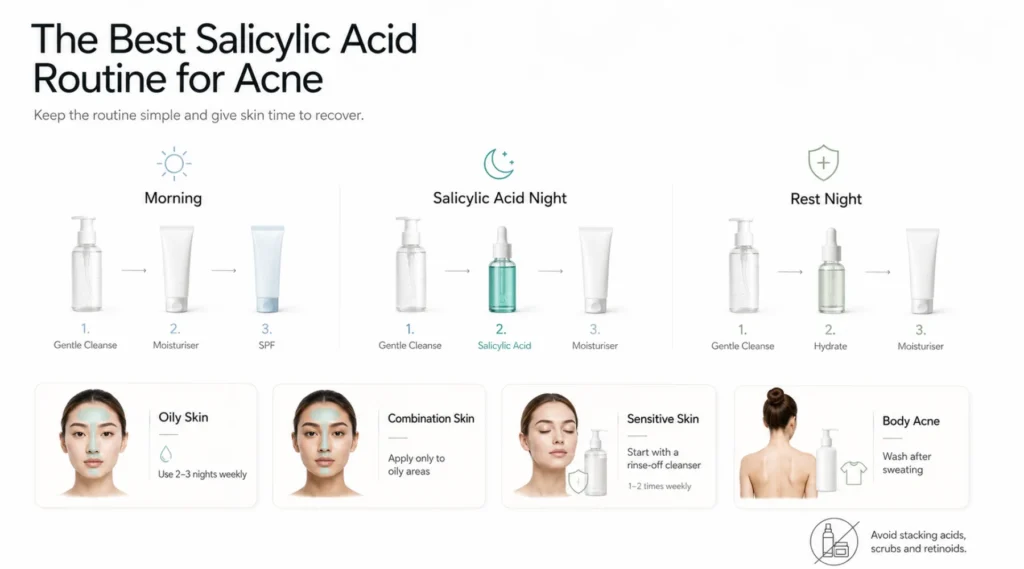
Beginner routine for mildly clogged pores
Morning
- Gentle cleanser or water rinse
- Light moisturiser
- Broad-spectrum sunscreen
Evening on salicylic acid nights
- Gentle cleanser
- Salicylic acid
- Moisturiser
Evening on rest nights
- Gentle cleanser
- Hydrating or barrier-supporting serum
- Moisturiser
This routine makes it easier to identify whether salicylic acid is helping or irritating the skin.
Routine for oily, congested skin
Morning
- Gentle or salicylic acid cleanser
- Niacinamide serum, if tolerated
- Light, non-comedogenic moisturiser
- Sunscreen
Evening
- Cleanser
- Leave-on salicylic acid two or three nights a week
- Moisturiser
On nights without acid, only use hydrating products or a separate acne treatment.
Avoid removing all facial oil. Strong cleansers and toners with alcohol can dry out the skin while keeping the pores clogged.
Routine for combination skin
Apply salicylic acid only to oily areas like your forehead, nose, and chin. Use moisturiser on your entire face, adding more to drier spots if necessary. This method keeps the cheeks and mouth from getting exfoliation they don’t need.
Routine for sensitive, acne-prone skin
Start with a salicylic acid cleanser once or twice a week.
Right after, apply a gentle moisturiser. Avoid using other acids, scrubs, retinoids, or strong vitamin C until your skin is comfortable. If your skin stays calm for a few weeks, you can gradually increase how often you use the cleanser.
Routine for back or chest acne
- Wash the affected area after sweating.
- Apply a salicylic acid body wash according to its directions.
- Rinse thoroughly.
- Pat rather than rub the skin dry.
- Use a light body moisturiser if dryness develops.
- Wear breathable clothing and change out of sweaty garments promptly.
If the acne is very inflamed, using a benzoyl peroxide wash might be better. However, it can bleach towels and clothes.
Can Salicylic Acid Be Used with Other Skincare Ingredients?
Most ingredients can be used with salicylic acid. The main issue is irritation from using too many products.
Two products might work well together, but they can still irritate one person’s skin when used at the same time.
Niacinamide
Niacinamide and salicylic acid can be used together effectively. Salicylic acid helps clear congestion, while niacinamide supports the skin barrier and reduces oiliness. Apply salicylic acid first, then use a niacinamide serum and moisturiser. If either product stings, use them at different times, one in the morning and the other in the evening.
Hyaluronic Acid and Other Humectants
Hyaluronic acid, glycerin, beta-glucan, and panthenol can be applied after salicylic acid. They add moisture but shouldn’t replace your moisturiser, especially in dry conditions or if your skin barrier is weak.
Azelaic Acid
Azelaic acid helps with mild acne, redness, and dark spots. It has properties that reduce inflammation, but it is not as effective in exfoliating oil from pores as salicylic acid. Beginners should not use both at the same time. Try salicylic acid on certain evenings and use azelaic acid at different times. A 12% azelaic acid cream can help with stubborn blemish marks, but always patch test first, as it can cause tingling, dryness, or irritation. Azelaic acid is effective for both types of acne and is especially good for acne with dark spots.
Benzoyl peroxide
Benzoyl peroxide is helpful for inflamed pimples because it kills acne bacteria and is well-recommended.
You can use it with salicylic acid, but starting both at the same time can lead to dryness. A better approach is:
- Salicylic acid cleanser in the morning and benzoyl peroxide in the evening
- Benzoyl peroxide on selected mornings and salicylic acid on selected nights
- Salicylic acid for oily zones and benzoyl peroxide only where directed
Stop or reduce frequency if the skin becomes sore, cracked, or persistently red.
Topical Retinoids
Adapalene and other topical retinoids help skin cells turn over, clear clogged pores, and reduce swelling. They are well-known treatments for acne, but they can irritate the skin at first. Beginners usually don’t need to use a retinoid and salicylic acid together at night. Instead, try them on alternate nights or use a salicylic acid cleanser in the morning when your skin feels good. If a doctor has prescribed a retinoid, follow their guidelines instead of adding other exfoliants.
Glycolic, Lactic, and Mandelic Acid
These alpha-hydroxy acids mostly exfoliate the skin’s top layer. Mixing them with salicylic acid can make your skin smoother, but can also cause over-exfoliation. For acne-prone skin, one well-chosen acid is often more effective than using a mix. After your skin shows it can handle them, you can use them on alternate nights.
Vitamin C
Vitamin C and salicylic acid can be used together, but low-pH vitamin C may sting when layered with an exfoliating acid. Use vitamin C in the morning and salicylic acid at night, or alternate their use. You don’t need to use both at the same time.
Tea Tree Oil
Tea tree oil has antimicrobial and anti-inflammatory properties, but it can irritate the skin when concentrated. Never apply undiluted tea tree oil directly to acne. A tea tree facial serum might be easier to use than a homemade mix, but check the ingredients for salicylic acid and fragrance. If the serum already has salicylic acid, adding another treatment might lead to over-exfoliation.
Hydrocolloid Acne Patches
Hydrocolloid patches work best on raised pimples that have visible fluid. They absorb moisture, protect the pimple, and reduce the urge to pick. However, they don’t unclog pores or treat deep cysts. Apply a patch to clean, dry skin, and avoid placing it over wet salicylic acid, as this can cause irritation and prevent the patch from sticking. Use thicker patches for surfaced spots and larger patches for broader areas. Their main benefit is preventing touching and picking, not replacing leave-on acne treatments. While patches can help with occasional spots, they won’t prevent blackheads or treat widespread acne.
How Long Does Salicylic Acid Take to Work for Acne?
Salicylic acid can make your skin feel smoother after a few uses, but you’ll usually see acne improvement in several weeks. Here’s a more realistic timeline:
During the First Week
Your skin may feel less oily and a bit smoother. Some people might feel slight dryness or a tingling sensation. Don’t expect any big changes in acne yet.
After Two to Four Weeks
Small clogged areas may start to look clearer. New blackheads or whiteheads may appear less often if you use the product regularly and it doesn’t irritate your skin.
After Six to Eight Weeks
You should see a clearer pattern of breakouts. Mild comedonal acne may improve if salicylic acid works well for you.
After Eight to Twelve Weeks
This is a good time to see if your routine is effective. Acne treatments usually take several weeks or longer to show full results, and guidelines often evaluate them over a 12-week period. If you don’t see improvement and the treatment isn’t irritating, using it more often may not help. You might need a different treatment, like a retinoid, benzoyl peroxide, azelaic acid, hormonal therapy, or a doctor’s evaluation.
Can Salicylic Acid Cause Purging?
Salicylic acid can temporarily increase visible blemishes by affecting how cells are shed in clogged pores. This is often referred to as purging.
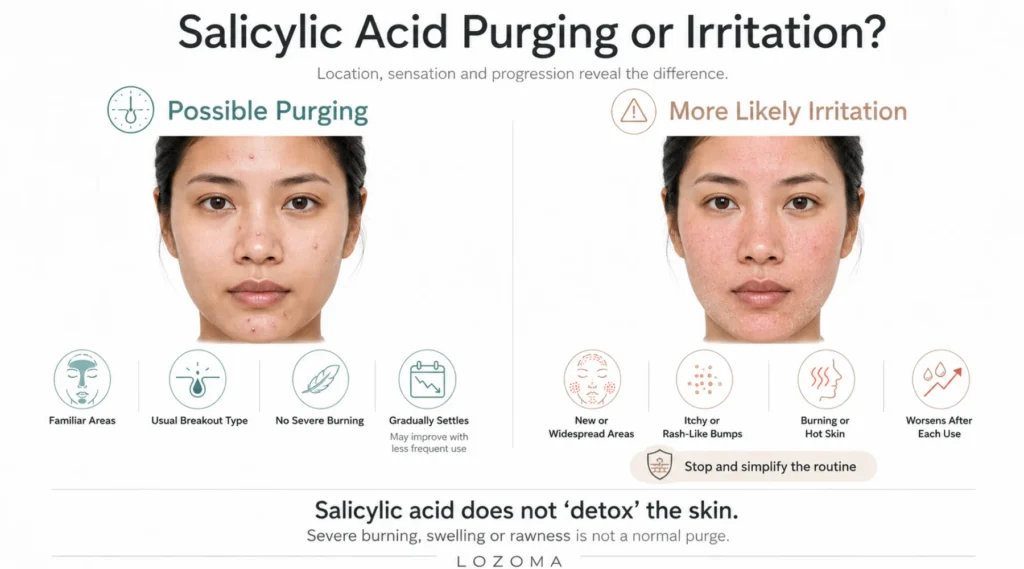
However, many reactions labelled as purging are really due to irritation, too much exfoliation, or a reaction to another ingredient in the product.
A temporary adjustment is more plausible when:
- The breakouts occur in areas where you usually develop acne
- They resemble your normal blackheads, whiteheads, or small pimples
- The skin is not severely itchy, swollen, or burning
- The reaction starts soon after beginning a leave-on exfoliant
- The overall pattern starts settling within several weeks
Irritation is more likely when:
- Bumps appear in unusual areas
- The rash is itchy or widespread
- The skin burns or feels hot
- There is marked redness, cracking, or peeling
- Every product suddenly stings
- Symptoms worsen each time salicylic acid is applied
| Possible purging | More likely irritation |
| Occurs in familiar acne-prone areas | Appears anywhere, including normally clear areas |
| Looks similar to usual breakouts | May look like a rash or clusters of tiny uniform bumps |
| Mild dryness may occur | Burning, itching, swelling or raw skin is common |
| Gradually settles | Continues worsening with repeated use |
| Can improve with reduced frequency | Usually requires stopping the irritating product |
Don’t keep applying acid if it’s causing severe burning, thinking it will clear up the skin. Salicylic acid does not detoxify the skin.
Knowing the difference between salicylic acid purging and an irritated breakout can help avoid weeks of damage to your skin barrier.
Common Mistakes That Make Salicylic Acid Less Effective
Daily Use
Use products daily only if you have experience. Start with two or three times a week to gauge normal reactions versus irritation.
Multiple Salicylic Acid Products
Avoid using several products with salicylic acid, like cleansers, toners, and treatments; this leads to excessive exposure. Check all labels, including masks and patches.
Mixing Exfoliants
Using salicylic acid with other exfoliants can make skin feel smooth, but may weaken its barrier. Stick to one main exfoliant and use it consistently for a few weeks.
Misinterpreting Dryness
Dryness is a side effect, not a sign that treatment is working. The aim is to improve skin shedding without causing irritation. Persistent dryness can cause people to stop treatment, making it less effective.
Spot Application
Apply a thin layer of treatment over the affected area instead of just on one spot. The problem often starts deeper in the follicle.
Scrubbing After Acid
Avoid scrubs or extraction tools after applying salicylic acid, as they can harm the skin and worsen inflammation. Salicylic acid works through gentle chemical exfoliation.
Skipping Moisturiser
Always use a moisturiser to enhance comfort and help with treatment. Even oily skin can be dehydrated. Choose a lightweight moisturiser instead of skipping it entirely.
Frequent Routine Changes
Avoid changing cleansers and treatments too often, as acne can vary. Stick with a simple routine for enough time to see its effects, unless a product causes a clear reaction.
Using Wart Treatments
Do not use wart treatments on facial acne; they have higher concentrations of salicylic acid and can cause serious burns.
Covering with Dressings
Don’t cover salicylic acid with bandages or thick layers unless it’s recommended. This can increase irritation. Apply it uncovered unless advised otherwise.
Salicylic Acid Compared with Other Acne Ingredients
There is no single best ingredient for everyone. The right choice depends on the type of acne, the skin’s sensitivity, and whether there is more inflammation or congestion.
| Ingredient | Main strength | Often best suited to | Main limitation |
| Salicylic acid | Exfoliates within clogged, oily pores | Blackheads, whiteheads, mild congestion | May not control deep or severe inflammatory acne |
| Benzoyl peroxide | Reduces acne-associated bacteria and inflammation | Red pimples and pustules | Can dry skin and bleach fabric |
| Adapalene | Normalises cell turnover and prevents comedones | Comedonal and inflammatory acne | Adjustment dryness and irritation are common |
| Azelaic acid | Helps acne, redness and post-acne pigmentation | Sensitive or pigment-prone acne | Results can be gradual |
| Niacinamide | Supports the barrier and may help oiliness | Supportive care for oily, irritated skin | Usually not strong enough as a sole acne treatment |
| Glycolic acid | Surface exfoliation and texture improvement | Dullness, rough texture and superficial marks | Can be too irritating for inflamed acne |
| Hydrocolloid patch | Absorbs fluid and protects a lesion | Surfaced pimples and picking prevention | Does not prevent pore blockages |
Salicylic Acid or Benzoyl Peroxide?
Choose salicylic acid for blackheads, whiteheads, and oily skin. Opt for benzoyl peroxide for red, inflamed pimples. Some people use both at different times, but introduce them one at a time.
Salicylic Acid or Adapalene?
Salicylic acid is easy to find and gentle, especially in rinse-off products. Adapalene is often stronger and can treat visible acne as well as developing spots. For stubborn acne, a topical retinoid might be better, but get professional advice, especially during pregnancy or if irritation is a concern.
Salicylic Acid or Azelaic Acid?
Salicylic acid is best for oily skin and blackheads. Azelaic acid is better for acne with redness, sensitivity, or brown marks. Some routines alternate between the two.
Salicylic Acid or Glycolic Acid?
Salicylic acid works well for oily, clogged pores. Glycolic acid is better for rough texture, dull skin, and post-acne discolouration. It’s not always better to use both; choose the one that fits your main concern.
Does Salicylic Acid Help Acne Marks or Scars?
Salicylic acid can help reduce post-acne marks by preventing new breakouts and keeping pores clear. It also smooths out rough skin, making it look more even. However, it is not a main treatment for existing acne scars.
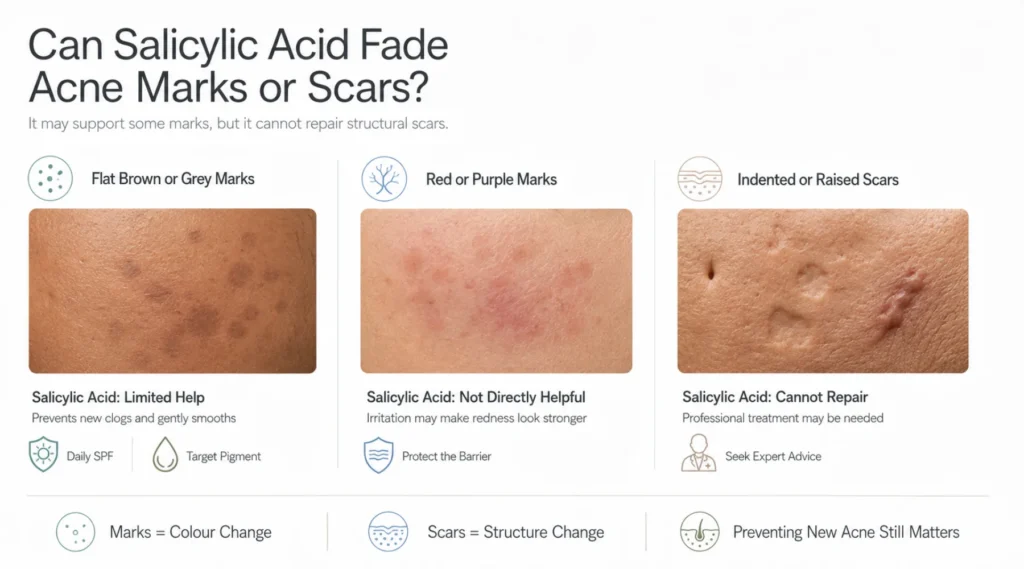
Flat brown or grey marks
These are usually areas of darkened skin from inflammation, not scars. Salicylic acid can help slightly by exfoliating, but using sunscreen and ingredients like azelaic acid is often more effective. Avoid irritation, as it can worsen pigmentation, especially in medium to darker skin tones.
Persistent red or purple marks
Post-inflammatory erythema happens due to ongoing blood vessel changes. Salicylic acid doesn’t directly eliminate these marks and may even make them more visible if it irritates the skin.
Indented or raised scars
Ice-pick, rolling, boxcar, and hypertrophic scars are caused by changes in skin structure. Salicylic acid cannot repair this tissue. Treatments may include microneedling, subcision, laser procedures, professional chemical peels, corticosteroid injections, or other procedures recommended by a dermatologist.
What About Professional Salicylic Acid Peels?
Professional salicylic acid peels use stronger formulae for deeper exfoliation than at-home products. They may be suitable for:
- Ongoing comedonal acne
- Oily skin
- Light post-acne marks
- Rough skin texture
- Acne that hasn’t improved with regular products
Before treatment, a practitioner should evaluate the skin type, current medications, risk for dark spots, past reactions, and any existing skin issues.
Professional peels aren’t suitable for open wounds, active dermatitis, severe skin damage, or specific infections. Timing is also crucial when scheduling them around retinoids, waxing, laser treatments, and other procedures.
For deeper skin tones, it’s vital to have experience with pigment-prone skin. While salicylic acid peels have been tested on many skin types, aggressive treatments can still cause dark spots.
Lifestyle Factors That Can Support an Acne Routine
Skincare ingredients are important, but friction, blocked pores, and product buildup can make it tougher to manage congestion.

Cleanse Gently
Wash your face gently up to twice a day, and after sweating. Too much washing can irritate skin without helping the follicles. Choose a gentle, non-comedogenic cleanser instead of harsh soaps or scrubs.
Keep Hair Products Away from Acne
Hair products like oils and waxes can transfer to your forehead and temples. Rinse your hair products well and keep your hair away from breakout-prone areas.
Change Sweaty Clothes
Tight and damp clothes can irritate your skin. Change out of sweaty clothes after exercising and wash sportswear and hats regularly.
Avoid Picking
Picking at your skin can lead to more inflammation and scarring. Use a clean hydrocolloid patch to remind yourself not to touch any blemishes.
Review Makeup and Sunscreens
Use non-comedogenic makeup to reduce the risk of clogged pores. Always remove makeup thoroughly at night without scrubbing too hard.
Be Careful with Diets
Acne isn’t caused by one greasy meal, so don’t blame food. Some people notice their acne reacts to certain foods, but this varies. Keep a record of your diet before making big changes, and seek nutritional advice if needed.
Manage Hormones and Stress
Salicylic acid can’t fix hormonal issues like PCOS or menstrual changes, but it may help keep pores clear. Stress affects inflammation, sleep, and skin picking, so aim for a simple and manageable routine instead of a complicated one.
When Acne Needs Professional Assessment
Seek advice from a GP, pharmacist, or dermatologist when:
- Acne is painful, deep, or widespread
- Nodules or cysts are developing
- Scars are appearing
- Over-the-counter treatment has not helped after around 12 weeks
- Breakouts are affecting confidence, mood, or daily activities
- Acne began suddenly or is accompanied by other hormonal symptoms
- There is severe burning, swelling, or blistering after a product
- You are unsure whether the bumps are acne
- You are pregnant, breastfeeding, or planning pregnancy and need treatment guidance
- Acne is occurring in a young child
- You are using prescribed acne medicine and want to add salicylic acid
Acne can hurt a person’s feelings, even if it looks minor to others. When deciding on treatment, it’s important to think about mental health along with the number of acne spots. NICE’s acne guideline highlights the impact of acne on mental health and suggests referrals or extra support when needed.
Common Questions About Salicylic Acid and Acne
Can salicylic acid help acne safely?
Yes, salicylic acid can safely help mild acne if you use the right product for your face, apply it as directed, and start slowly. Avoid using it on broken or very irritated skin. Don’t use too much, cover it with tight dressings, or mix it with other salicylic acid products without asking a professional.
How often should I use salicylic acid for acne?
Start with a leave-on product once or twice a week. If your skin feels good, you can increase to two or three times a week. You can use a rinse-off cleanser more often, but reduce use if your skin gets dry. MedlinePlus suggests starting slowly and increasing as your skin gets used to it.
Can I use salicylic acid every day?
Some people can use it daily, especially with a gentle cleanser. However, daily use isn’t necessary for everyone. Find the lowest frequency that keeps your skin clear without causing tightness, burning, or peeling.
Should salicylic acid be applied before or after moisturiser?
Apply it after cleansing and before your moisturiser. If your skin is very sensitive, it might help to put a thin layer of moisturiser on first, though this may lessen its effectiveness. It’s better to stick with a routine that feels comfortable and protects your skin.
Do I apply salicylic acid to the whole face?
Apply it only to the acne-prone areas, not your entire face. For example, if you have an oily forehead and dry cheeks, use it only on your forehead. Avoid your eyelids, lips, nostrils, and any irritated areas.
Is salicylic acid good for face acne and body acne?
Yes, facial products work for mild acne, while washes and sprays are good for areas like the chest, shoulders, and back. Don’t use strong products meant for feet, warts, or scalp on your face.
How long should I leave salicylic acid on my face?
Follow the instructions on the product. Rinse off cleansers after the recommended time. Leave-on products like serums or gels can stay on the skin unless the label says otherwise. Don’t use a rinse-off product as an overnight treatment.
Does salicylic acid remove blackheads permanently?
No, salicylic acid can loosen blackheads and reduce new blockages, but pores keep producing oil and shedding skin cells. Regular use may be necessary. Some dots on the nose are sebaceous filaments, which will refill even after they seem less visible.
Can salicylic acid make acne worse?
Yes, it can bring existing clogs to the surface and may irritate the skin. Stop using it if you experience burning, severe redness, swelling, an itchy rash, or bumps in unusual areas.
Can I use salicylic acid with pimple patches?
Yes, but don’t apply it directly under the patch. Use salicylic acid on the acne-prone area at a different time. Apply the pimple patch to clean, dry skin without any serums, moisturisers, or oils underneath.
Is salicylic acid suitable for sensitive skin?
It can be suitable, especially in a gentle cleanser used once or twice a week. Avoid fragranced or alcohol-heavy products, and don’t mix them with scrubs or other exfoliants. Stop using it if your skin feels uncomfortable.
Can teenagers use salicylic acid for acne?
Many teenagers use over-the-counter salicylic acid products, but they should follow the age guidelines. A simple routine with cleanser, moisturiser, and sunscreen is usually better than using multiple active products. Severe acne should be treated by a doctor instead of only with over-the-counter options.
Can salicylic acid be used during pregnancy?
Yes, but consult with a doctor first. The American College of Obstetricians and Gynaecologists deems topical salicylic acid safe, but strength and treatment area matter. Avoid professional peels or extensive applications without medical advice.
Can salicylic acid be used with prescription acne medicine?
Sometimes, but your doctor should guide this. Mixing it with topical retinoids, benzoyl peroxide, or other treatments can increase dryness. Without adjusting the schedule, it may irritate the skin and make it harder to continue prescribed treatment.
Is 2% salicylic acid too strong for me?
Maybe. Two percent is common in acne products you leave on, but a lower-strength product or rinse-off cleanser might work for mild issues or sensitive skin. The effectiveness depends more on the complete formula, how long it stays on, how often you use it, and your consistency than just the percentage.
Why is my skin still oily after using salicylic acid?
Salicylic acid can clear oily pores, but it doesn’t stop oil production forever. Oily skin may be due to your skin type, hormones, climate, or products that are too drying. Trying to remove all oil usually makes your skin uncomfortable without improving acne.
Making Salicylic Acid for Acne Work Without Damaging Your Skin
Salicylic acid helps with acne caused by clogged, oily pores. It can unblock blackheads, reduce whiteheads, and prevent early breakouts.
To be effective, matching the right product to your acne is key, rather than just using a strong routine. A salicylic acid cleanser may work for mild issues, while a leave-on formula is better for stubborn blackheads. Severe acne needs a different treatment.
Start slowly, keep your skin moisturised, and avoid mixing irritating ingredients until you know how your skin reacts. Give your routine a few weeks before increasing the dosage.
Clearer skin shouldn’t involve constant burning, rawness, or peeling. With the right salicylic acid treatment, you should notice fewer blocked pores, smoother skin, and a routine your skin can handle long enough to make a difference.