





Blog
Will Glycolic Acid Cause Breakouts? What to Do and Avoid

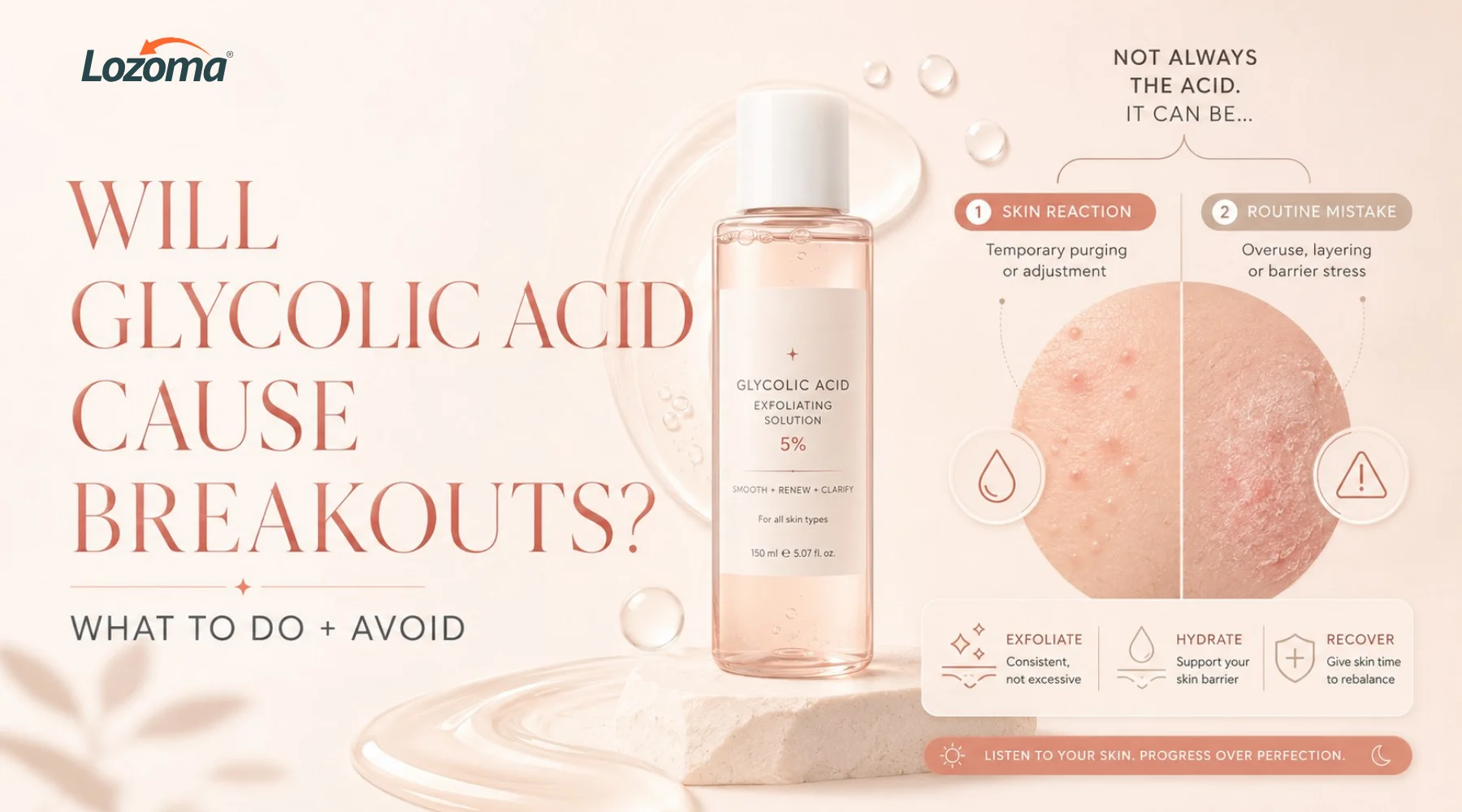
Getting new spots after starting an exfoliating acid can make you feel like your skincare routine is wrong. You wanted smoother skin, clearer pores, and fewer acne marks, but now your face feels bumpier, more sensitive, or is breaking out in new areas.
Can glycolic acid cause breakouts? Sometimes it can lead to more blemishes temporarily, but not all reactions are the same. New spots might come from irritation, damage to the skin barrier, too much exfoliation, using the wrong product, or unrelated acne triggers appearing at the same time.
It’s important to tell the difference. A mild adjustment may go away if you use glycolic acid less often. However, if you keep exfoliating while irritated, the breakout might worsen.
Look for clues about your spots: where they appear, how the skin around them feels, how quickly they develop, and if they improve when you reduce or stop using the product.
Can Glycolic Acid Really Make Your Skin Break Out?
Glycolic acid doesn’t cause acne directly like excess oil or blocked pores. However, it affects how dead skin cells act on the surface, which can sometimes show existing congestion or irritate sensitive skin not ready for exfoliation.
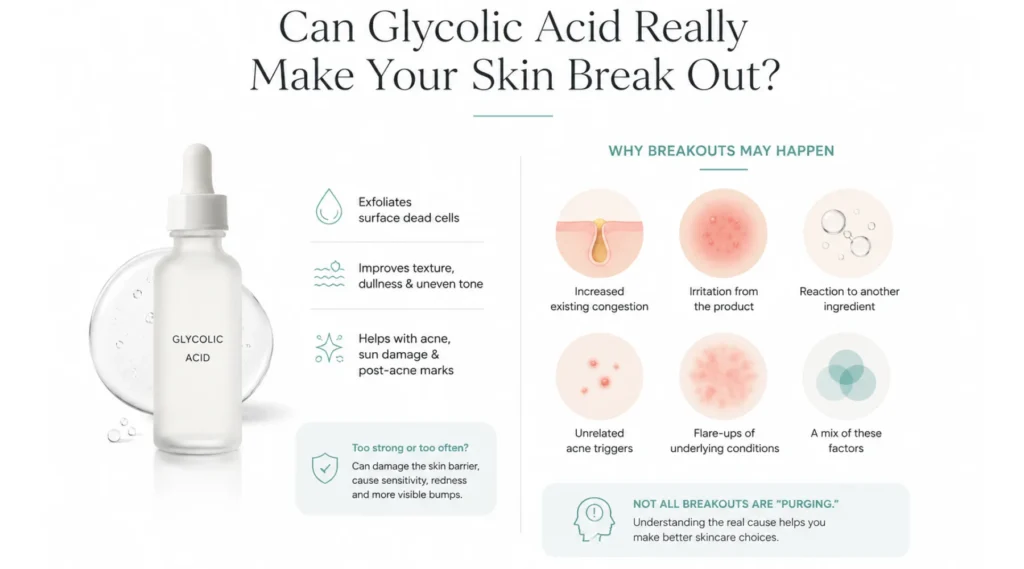
Glycolic acid, an alpha-hydroxy acid (AHA), is water-soluble and works mainly on the skin’s surface. It weakens the bonds between dead cells, helping them shed more evenly.
This exfoliating effect can improve rough texture, dullness, uneven tone, and post-acne marks when used correctly. AHAs are also used in dermatology for acne and sun-damaged skin, but results can vary based on formulation, strength, and application.
However, if the product is too strong or used too often, it can cause problems. Over-exfoliating can damage the skin’s barrier, leading to more water loss and increased sensitivity. This can make ordinary products sting and cause redness and bumps to become more visible.
When a breakout happens after using glycolic acid, it can be due to:
- Increased existing congestion
- Irritation from the product
- Reaction to another ingredient
- Unrelated acne triggers
- Flare-ups of underlying skin conditions
- A mix of these factors
Many people mistakenly think all these reactions are just “purging,” which is a common reason they keep using a product that worsens their skin.
What Glycolic Acid Does Beneath the Surface
Understanding glycolic acid and its effects on skin helps explain why some people have smooth skin while others get redness and bumps.
The stratum corneum, the outer layer of the skin, has flattened cells in a fatty matrix. It’s often compared to bricks and mortar: the cells are the bricks, and lipids are the mortar that hold them together.
Glycolic acid helps loosen the bonds between surface cells. This allows compacted cells to shed, resulting in a smoother surface over time. With regular use, skin may appear brighter and feel smoother as light reflects off it more evenly.
At the right concentrations, alpha hydroxy acids (AHAs) can help renew the epidermis and remodel skin over the long term. Research shows glycolic acid can improve hydration, texture, and reduce signs of aging. However, stronger concentrations may cause more irritation.
For acne-prone skin, this exfoliation can help when dead cells make the skin rough and cause mild clogging. Glycolic acid is one option for treating non-inflammatory acne, but it works differently from salicylic acid. Salicylic acid targets oily clogging better, while glycolic acid is great for improving surface texture and addressing dullness and uneven pigmentation.
This distinction is important. A person with some closed comedones and rough skin from acne may benefit from glycolic acid. However, someone with inflamed, painful acne and damaged skin might experience more irritation without solving the underlying issues.
Glycolic Acid Purging or a True Breakout?
Purging means you might see more blemishes temporarily after using a product that changes how your skin sheds cells or helps clear clogged pores. Spots that were already forming under the skin may show up faster.
This doesn’t mean glycolic acid is “pulling out toxins.” Skin doesn’t store impurities that acids bring to the surface. Instead, exfoliation changes how existing clogged pores develop.
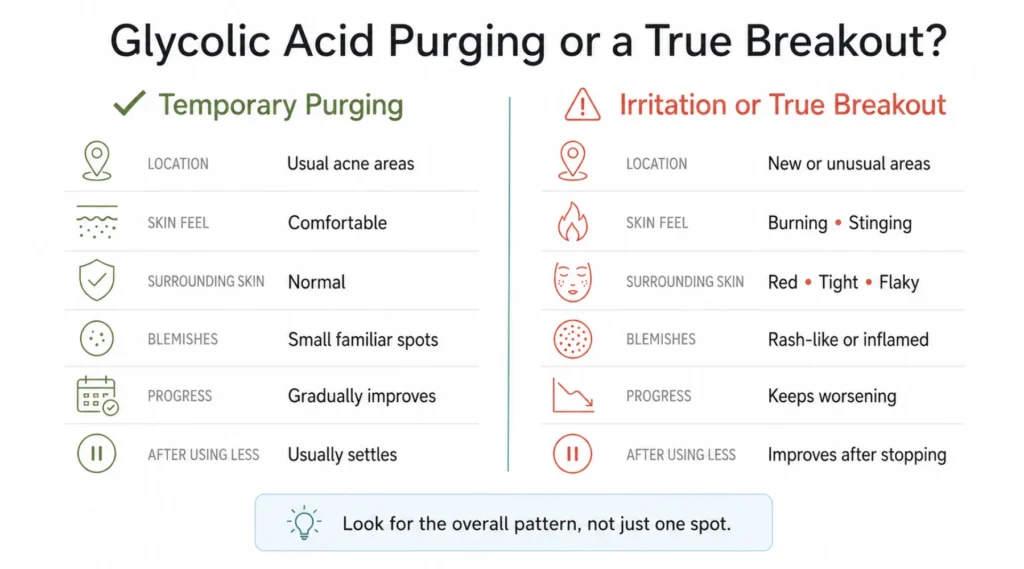
Purging and irritation can look alike at first, causing small bumps, whiteheads, or redness. You can tell the difference by looking at where they appear, how they feel, when they happen, and how they progress.
| Sign | More consistent with temporary purging | More consistent with irritation or a true breakout |
| Location | Areas where you commonly develop congestion | New or unusual areas |
| Skin sensation | Little or no persistent burning | Stinging, burning, tenderness or heat |
| Surrounding skin | Mostly comfortable | Red, tight, shiny, flaky or sore |
| Type of blemish | Familiar whiteheads or small spots | Rash-like bumps, widespread pustules or inflamed patches |
| Progression | Gradually becomes less frequent | Continues spreading or intensifying |
| Response to reduced use | May settle with a gentler schedule | Often improves when the acid is stopped |
| Duration | Usually limited rather than indefinite | May persist until the irritation is addressed |
It’s not always easy to tell the difference between glycolic acid purging and irritation just by looking at one spot. Instead, focus on the overall pattern.
One whitehead on your chin doesn’t mean the product is helping your skin. Similarly, a quick tingle doesn’t always indicate barrier damage. Consistent patterns give you better information than a single symptom.
Where the Breakouts Appear Matters
A temporary breakout is likely if you see spots in areas where you often get clogged pores, like the forehead, nose, chin, or along your jaw.
Be careful if bumps show up around your eyes, on previously clear cheeks, near the hairline, or in a rash-like pattern. New spots in these areas may mean irritation, folliculitis, contact dermatitis, or an issue with another product you’re using.
The location of the spots can give clues, but it isn’t a definite diagnosis. Hormonal changes, hair products, shaving, masks, sweat, and friction can also affect where breakouts occur.
How the Skin Feels Is Often More Revealing Than How It Looks
Purging shouldn’t make your whole face feel raw.
If you feel burning, sharp stinging, itching, tightness, tenderness, or excessive warmth when using water, these are stronger signs of irritation. Your skin may also look shiny due to dehydration and inflammation.
If your moisturiser and sunscreen start to sting when they didn’t before, your skin’s barrier might be weak. Continuing to use glycolic acid as usual probably won’t help.
How Long Does the Reaction Last
There is no exact timeline for glycolic acid purging. Your skin type, the product’s strength, how often you use it, and any existing skin issues all influence how your skin reacts.
A mild flare-up is normal and should begin to settle down. You should notice fewer spots, and they should heal properly, staying in your usual acne-prone areas.
If your reaction gets worse, spreads to new areas, or keeps coming back after each use, it’s probably not a good sign. You don’t have to wait months for worsening skin for a product to show results.
Signs of Irritation When Glycolic Acid Appears to Cause Breakouts
Irritation isn’t always obvious. It can start as tightness after washing your face or a slight sting when applying moisturiser. If you keep using the same products, the irritation may turn into redness, flaky patches, and inflamed bumps.
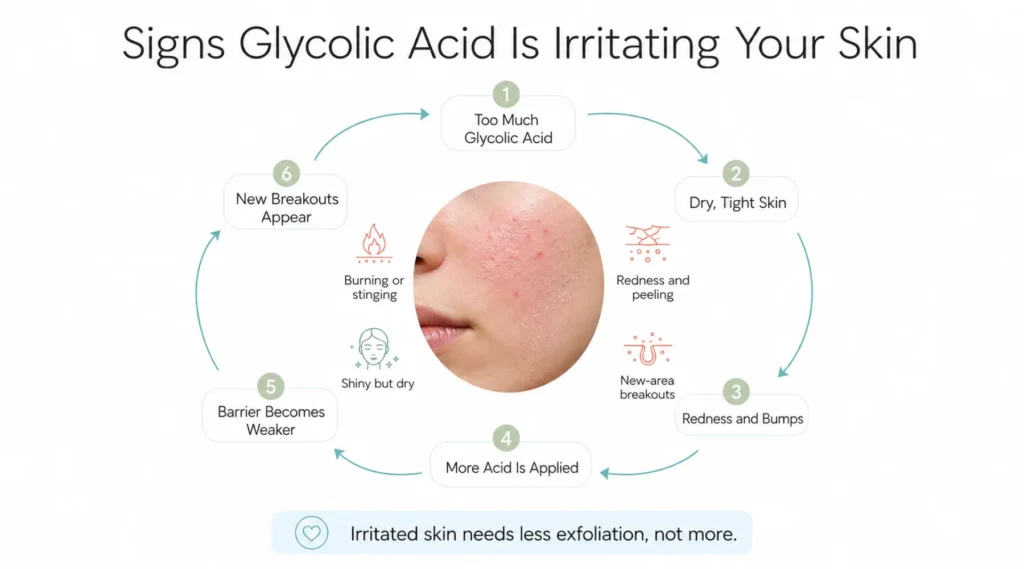
Look out for these common signs:
- Burning that lasts after the product dries
- Redness that lasts into the next day
- Tightness when moving your face
- Peeling around the nose or mouth
- Shiny skin that feels dry
- Sudden sensitivity to cleansers, moisturisers, or sunscreen
- Itchy, uniform bumps
- Increased oiliness, but still feeling dry
- Breakouts in areas you usually don’t see
- Dark marks after irritated areas heal
Glycolic acid can irritate, especially for sensitive skin. Dermatologists suggest stopping keratolytic products if they cause rawness or dryness, instead of using more to try to get quicker results.
Bumps due to irritation are not a sign that your pores are being “deep cleaned.” They show that you need to change your routine.
Why Barrier Damage Can Look Like Acne
The skin barrier keeps moisture in and blocks irritants. When it’s damaged, the skin loses water easily and becomes sensitive to active ingredients.
Inflamed skin can develop small red bumps that look like acne. Dehydration can also create a rough, uneven surface that makes existing blemishes more visible. Some people try to fix this by using heavy creams or oils, which can worsen congestion.
This creates a frustrating cycle:
- Glycolic acid dries out the skin.
- The skin becomes red and bumpy.
- More acid is used to clear the bumps.
- The barrier gets more irritating.
- Heavier products are applied to help.
- New blemishes appear.
Breaking this cycle usually means using less exfoliation, not more.
Why Glycolic Acid Causes Problems for Some Skin Types
A product might be well-made but could still be unsuitable for a specific person, their routine, or their skin’s condition.
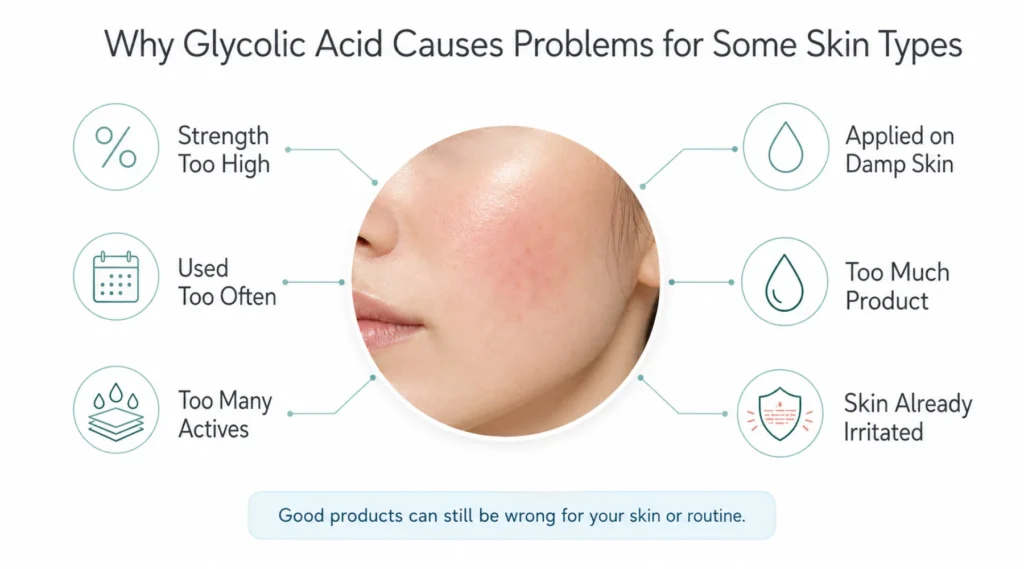
The Concentration Is Too High
Higher percentages usually mean stronger exfoliation, but the percentage alone doesn’t determine how intense a product is. A 10% glycolic acid product isn’t necessarily twice as irritating as a 5% one. Factors like pH, buffering system, application time, and the amount of free acid affect how the product works on your skin.
This is why copying someone else’s routine just based on percentage can be misleading. Two products with the same glycolic acid concentration might feel very different on your skin.
For beginners, it’s often better to start with a lower-strength leave-on product and use it occasionally rather than jumping into strong peels or daily toners.
The Product Is Being Used Too Frequently
Glycolic acid can work even if the skin doesn’t visibly peel. Daily use may work for some experienced skin, but it’s not needed for results. Many people find that using it one or two times a week offers good exfoliation without stressing the skin.
A reasonable glycolic acid routine should match the product’s strength and the rest of your skin care. If you’re using retinoids, benzoyl peroxide, or salicylic acid, your skin can handle less exfoliation compared to someone using just a gentle cleanser and moisturiser.
Too Many Active Ingredients Are Being Layered Together
Glycolic acid often gets blamed for breakouts, but the real problem may be your entire skincare routine.
A typical risky evening routine could include:
- An exfoliating cleanser
- A glycolic acid toner
- A salicylic acid serum
- A retinol treatment
- A strong vitamin C product
- A clay mask
- A fragranced moisturiser
Each product can be okay on its own, but using them all at once can irritate the skin too much. Your skin doesn’t benefit from using many active ingredients together. Better results come from a few suitable products used regularly.
Glycolic Acid on Damp Skin
Applying glycolic acid to damp skin can help it spread better, but it can also make it feel stronger. After washing your face, let it dry completely before using glycolic acid. This change can reduce stinging, especially around sensitive areas like the nose and eyes.
Using Too Much Product
Using too much glycolic acid, like soaking a cotton pad or pouring on several droppers, doesn’t give better results. Just apply a thin, even layer. Avoid going over the same spot repeatedly, as this can irritate dry skin.
Other Ingredients May Cause Reactions
The active ingredient isn’t the only factor in how a product works. Fragrances, essential oils, and certain preservatives can also lead to irritation. Breakouts may happen because of the whole product, not just glycolic acid. Other cleansers and skincare items might also cause irritation or reactions based on their ingredients. That’s why you might react to one glycolic acid product but not another.
The Skin Was Already Irritated
Glycolic acid is far more likely to cause trouble when applied to skin that is:
- Sunburnt
- Wind-chapped
- Recently waxed or shaved
- Scratched or picked
- Recovering from a peel
- Flaking from retinoids
- Inflamed by eczema
- Reacting to another product
- Dry from cold weather or indoor heating
An acid cannot repair a damaged barrier simply by removing more surface cells. Calm the skin first.
Is Glycolic Acid Good for Acne-Prone Skin?
Glycolic acid can help some acne-prone skin, but it isn’t a one-size-fits-all solution. Small studies show that low-concentration glycolic acid cleansers, gels, and emulsions can improve mild acne. Professional glycolic acid peels have also been researched as a supplement for acne treatment. However, there’s less strong evidence for over-the-counter AHAs compared to standard treatments like retinoids and benzoyl peroxide.
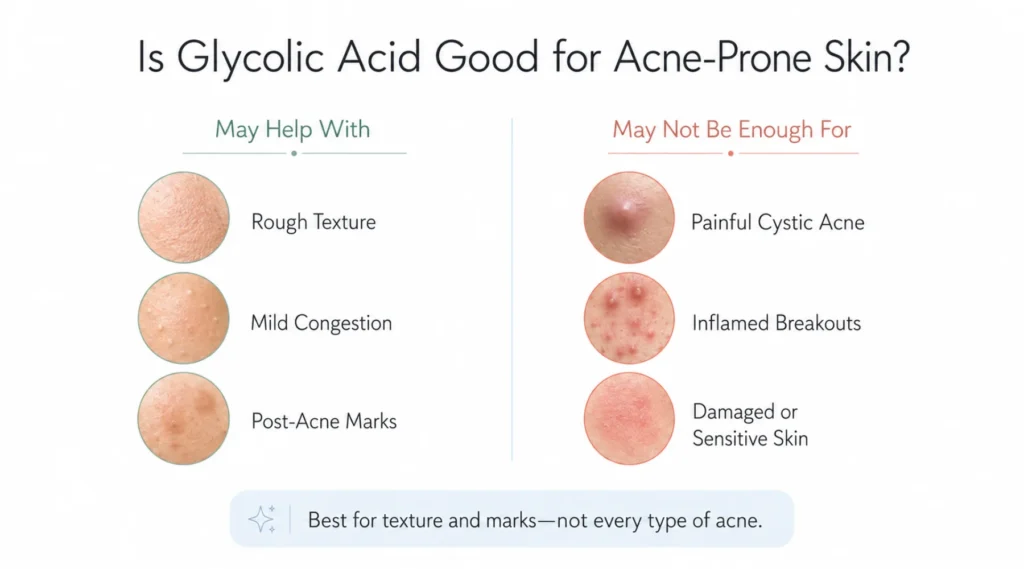
Glycolic acid might be helpful for:
- Rough texture after breakouts
- Mild closed comedones
- Dull, uneven skin
- Superficial congestion
- Dark marks after inflammation
- Flaky surface cells
It may not be the best choice if you have:
- Painful nodules or cysts
- Widespread inflammatory acne
- Very oily, congested pores
- Active eczema or dermatitis
- Rosacea-prone sensitivity
- A severely damaged skin barrier
- Acne that causes scars
- Breakouts due to hormonal changes
Glycolic acid is not an antibacterial acne treatment and doesn’t address all the causes of acne. While it may help with mild congestion, it can’t replace medical treatment for persistent, painful, or scarring acne.
Does Glycolic Acid Help with Blackheads?
Glycolic acid can improve the rough skin around blackheads and reduce dead skin cells. However, salicylic acid works better for blackheads since it dissolves oil and targets clogged pores. Some people use salicylic acid for clogged pores and glycolic acid for skin texture and marks from acne. It’s usually best to use them on different nights instead of layering them.
Does Glycolic Acid Help with Inflamed Pimples?
Glycolic acid can support an acne routine, but it’s not the best choice for red, sore pimples. Other options like benzoyl peroxide, azelaic acid, and retinoids are more effective for treating inflammatory acne. Glycolic acid can be helpful later on for improving texture and discoloration after inflammation is under control.
Can Glycolic Acid Make Hormonal Acne Worse?
Glycolic acid doesn’t cause hormonal acne, but it can irritate already inflamed skin. If painful spots appear around your chin or jaw during your menstrual cycle, simply changing your exfoliator may not fix the problem. While glycolic acid can help with marks left behind, it won’t prevent every hormonal breakout.
How to Avoid Breakouts When Starting Glycolic Acid
The safest introduction is deliberately uneventful. Skin should not need to become raw before it becomes smooth.
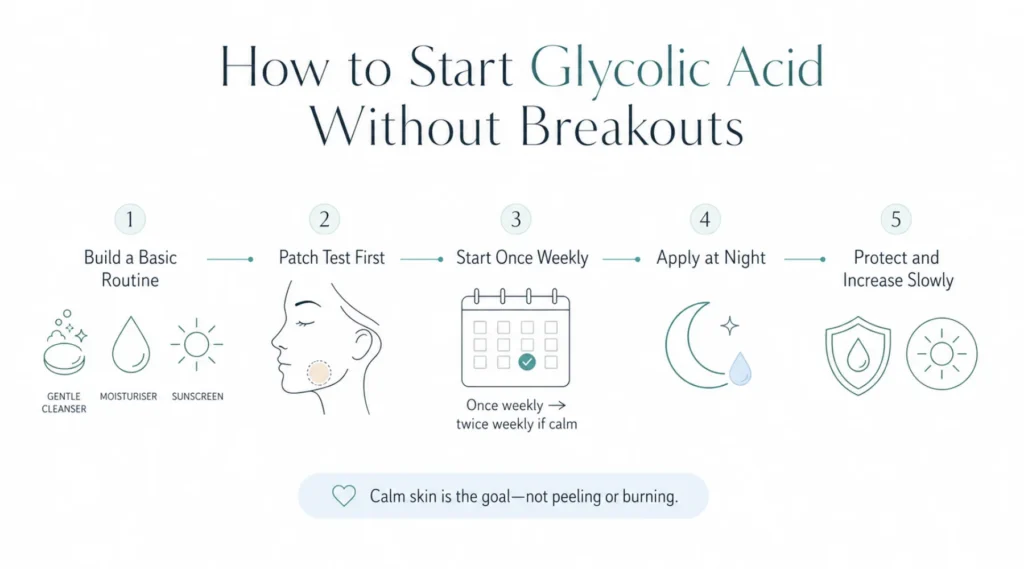
Begin with a Stable Basic Routine
Before adding glycolic acid, make sure you can use the following without discomfort:
- A gentle cleanser
- A straightforward moisturiser
- A broad-spectrum sunscreen
- A reliable method of removing makeup and sunscreen
If the skin already stings during cleansing or flakes after moisturiser, postpone exfoliation.
Patch Test Before Applying It Everywhere
A patch test may not predict every reaction, but it can show immediate irritation or sensitivity.
Apply a small amount of the product to your jaw or behind your ear, following the instructions. Test it for several days instead of just once. Look out for lasting redness, itching, swelling, or a rash.
Dermatologists suggest testing new skincare products on a small area first, especially those with ingredients like glycolic acid that can irritate sensitive skin.
Start Once a Week
Apply the product once a week for the first few weeks. This allows you to see any delayed dryness, congestion, or sensitivity. If your skin stays calm, you can increase it to twice a week. You don’t need to rush from occasional use to daily exfoliation.
A cautious progression might look like this:
| Period | Suggested frequency |
| Weeks 1–2 | Once weekly |
| Weeks 3–4 | Once or twice weekly |
| Weeks 5–8 | Up to two or three times weekly if fully tolerated |
| Long term | Lowest frequency that maintains the result |
This is not a rule that everyone must follow. Highly sensitive skin may stay once a week, while some people may decide that glycolic acid is not suitable at all.
Apply It at Night
Using glycolic acid at night is often easier because you don’t have to layer it under makeup and other daytime products.
A straightforward glycolic acid night routine can include:
- Gentle cleanser
- Glycolic acid on dry skin
- Moisturiser
Avoid overwhelming your skin by adding retinol, a peeling mask, and a strong spot treatment all at once.
Protect Sensitive Areas
The corners of your nose, lips, and eyes are more likely to get irritated. Do not apply glycolic acid on your eyelids, lips, broken areas, or the creases next to your nose. Use a little regular moisturiser or petrolatum around these sensitive spots for protection.
Use Sunscreen Daily
Exfoliating can make your skin more vulnerable to sun damage. Daily broad-spectrum sunscreen is essential when using glycolic acid, especially if you’re treating dark spots. Sun exposure can also worsen post-inflammatory marks, so skipping sunscreen while using strong acids can lead to more issues.
Change One Product at a Time
Introducing many new products at once makes it hard to find the cause of a breakout. Use glycolic acid along with your current routine for a few weeks. This helps you assess how the product affects your skin without changing everything at once.
Should You Stop Using Glycolic Acid When Breakouts Appear?
Stop using the product if your skin feels:
- Burning
- Itchy
- Swollen
- Raw
- Red for a long time
- Peeling
Also pause if:
- Spots spread quickly
- Bumps show up in odd places
- Your usual products start to sting
- Skin hurts to touch
- You notice crusting, weeping, or blisters
- Dark marks form after irritation
- Each use causes a stronger reaction
- You’re unsure if it’s acne or dermatitis
- Remember, stopping is not a failure; it’s a test.
If your skin improves after a few days without glycolic acid, irritation or product issues are likely. If acne stays the same, another cause may be at play.
For mild dryness without redness, use the product less often. If there’s a widespread or painful rash, stop using it completely.
When Continuing Cautiously May Be Reasonable
You may choose to continue at a reduced frequency when:
- The spots are small and familiar
- They appear only in your usual congested areas
- There is no burning or itching
- The surrounding skin remains comfortable
- The breakout is already beginning to settle
- You are using a mild formula once weekly
Even then, do not increase the frequency until the skin has stabilised.
How to Calm Skin After Glycolic Acid Irritation
When your skin is irritated, simplify your routine instead of looking for a new ingredient to fix the problem.
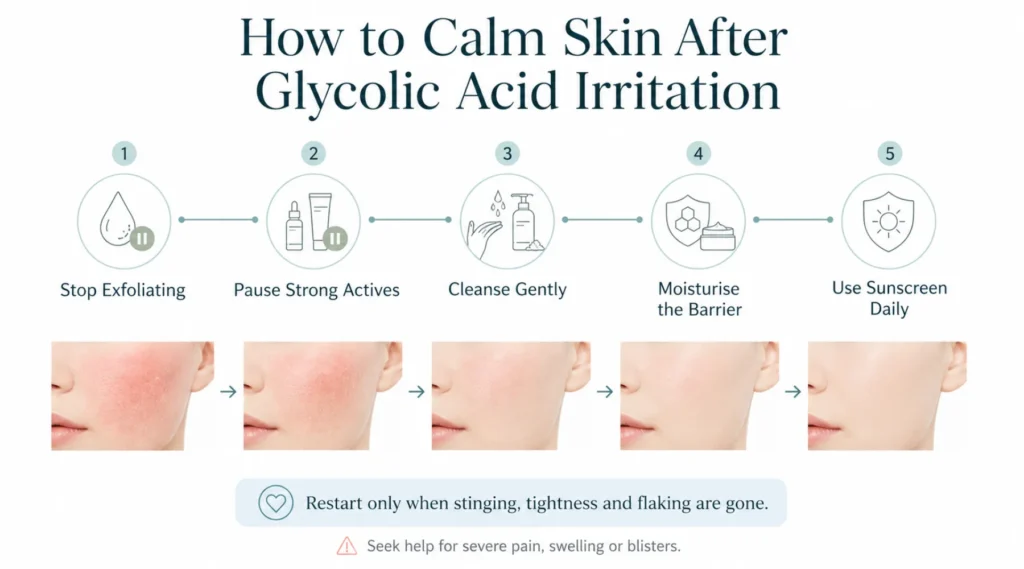
Stop Exfoliating
Avoid using glycolic acid, salicylic acid, exfoliating cleansers, scrubs, peeling masks, and rough tools. Let peeling skin fall off naturally, without using brushes or rough washcloths.
Pause Retinoids and Strong Acne Treatments
Take a break from retinol, retinal, adapalene, and prescription retinoids unless your doctor says otherwise. Avoid benzoyl peroxide and strong vitamin C products, as they can irritate sensitive skin. If you are taking isotretinoin, skip AHAs and other exfoliants since they can increase dryness and sensitivity.
Use a Gentle Cleanser
Pick a low-foam, fragrance-free cleanser that removes sunscreen without drying your skin. Use lukewarm water, and cleanse with your fingertips, not a cloth or brush.
Apply a Barrier-Supporting Moisturiser
Look for a simple moisturiser containing ingredients such as:
- Ceramides
- Glycerine
- Squalane
- Panthenol
- Beta-glucan
- Colloidal oatmeal
- Hyaluronic acid
- Fatty acids
The aim is comfort and water retention, not instant resurfacing.
Wear Sunscreen Every Morning
Irritated skin can show redness and dark spots. A good sunscreen protects your skin from further damage.
Give the Skin Enough Time
Don’t start using glycolic acid again just because the redness looks better for a day. Wait until your skin feels normal when you cleanse, moisturise, and apply sunscreen. Make sure tightness, flaking, and stinging are gone. This can take several days or longer.
If your skin is very painful, swollen, blistered, or looks infected, seek professional help.
How to Reintroduce Glycolic Acid After a Breakout
Reintroduction should have one focus: Can your skin handle this product gently?
Start only after your skin has fully healed.
In the first week, use the product once. Apply a smaller amount to completely dry skin and follow with moisturiser. Avoid all other exfoliants and retinoids that night.
Watch your skin for a few days. If you see the same reaction, the product may not be right for you. Stopping and starting an irritating product usually doesn’t help your skin adjust.
If your skin feels fine, keep using the product once a week for a few weeks. Then you can think about using it twice a week.
Try Short-Contact Use
Using a strong acid for a long time can be too harsh, even if it’s used rarely. Some people do better with short-contact use. Apply the product for a short time, rinse it off well, and follow with moisturiser. Only do this if the instructions allow rinsing; don’t guess a different time for products meant for longer use. A glycolic acid cleanser offers a shorter exposure than a leave-on toner or serum.
Buffer with Moisturiser
Putting moisturiser on before glycolic acid can lessen its strength, but it may also reduce its effectiveness in exfoliating. For sensitive skin, this may be a good trade-off. You could also apply moisturiser to sensitive areas and use glycolic acid only on the forehead, cheeks, or chin where needed.
Treat Selected Areas Rather Than the Whole Face
Your entire face doesn’t need the same treatment. Apply glycolic acid to rough or discolored spots while avoiding sensitive areas like the cheeks, eyes, and inflamed spots. This targeted approach minimises unnecessary exposure.
Glycolic Acid and Other Active Ingredients
Ingredient combinations are not automatically dangerous, but compatibility on paper does not guarantee tolerance on real skin.
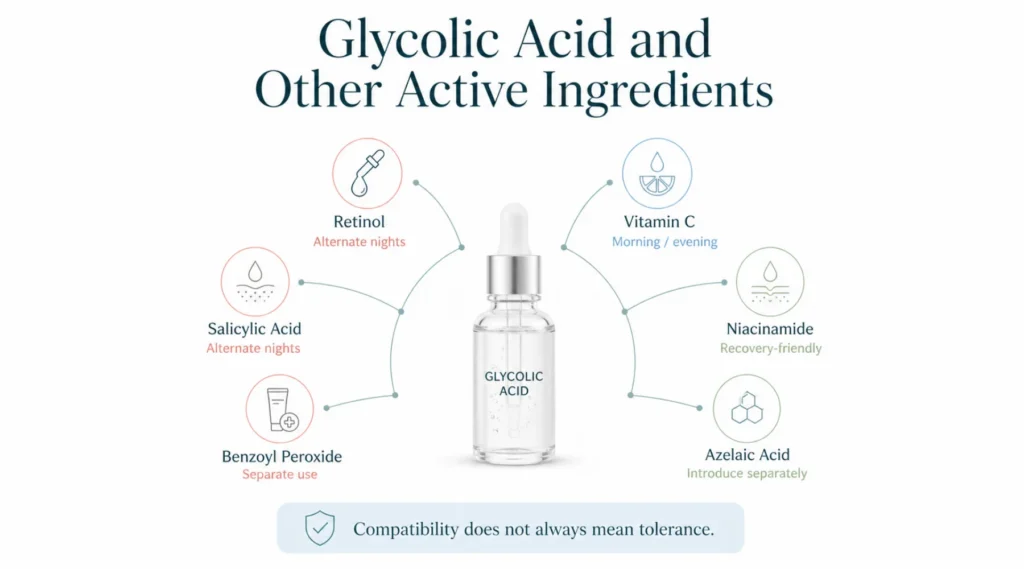
Glycolic Acid and Retinol
Both can help with skin texture, uneven tone, and signs of aging, but using them together can cause more dryness.
Beginners should apply them on different nights. For example:
- Monday: glycolic acid
- Wednesday: retinol
- Saturday: retinol
Make sure to have recovery nights in between. If you already use a prescription retinoid, you might not need glycolic acid unless a dermatologist says so.
Glycolic Acid and Salicylic Acid
Glycolic acid improves surface texture, while salicylic acid is better for oily skin with clogged pores. Alternating between them works well for combination or acne-prone skin. Using both at the same time can cause burning and peeling, especially if both products are leave-on.
Glycolic Acid and Benzoyl Peroxide
Benzoyl peroxide treats inflammatory acne but can dry out the skin. Use it on different nights or at different times. When acne flares up, prioritise benzoyl peroxide and use glycolic acid occasionally for texture and marks.
Glycolic Acid and Vitamin C
You can safely use glycolic acid with vitamin C, but irritation might occur, especially with low-pH vitamin C serums. Using vitamin C in the morning and glycolic acid on chosen evenings is usually more comfortable than mixing them together.
Glycolic Acid and Niacinamide
Niacinamide combines well with glycolic acid because it helps the skin barrier and doesn’t exfoliate. Use niacinamide in the morning or on recovery nights, or after glycolic acid if it feels good on your skin. Don’t assume niacinamide cancels out too much acid.
Glycolic Acid and Azelaic Acid
Azelaic acid helps with acne, redness, and dark spots without exfoliating like glycolic acid. It can still cause tingling or dryness, so don’t start both at the same time. If you’re sensitive to AHAs, azelaic acid might fit better in your routine. Introduce it slowly and assess each product, as not all azelaic acids suit sensitive skin.
Choosing a Glycolic Acid Product That Is Less Likely to Cause Breakouts
Product type matters as much as the name of the active ingredient.
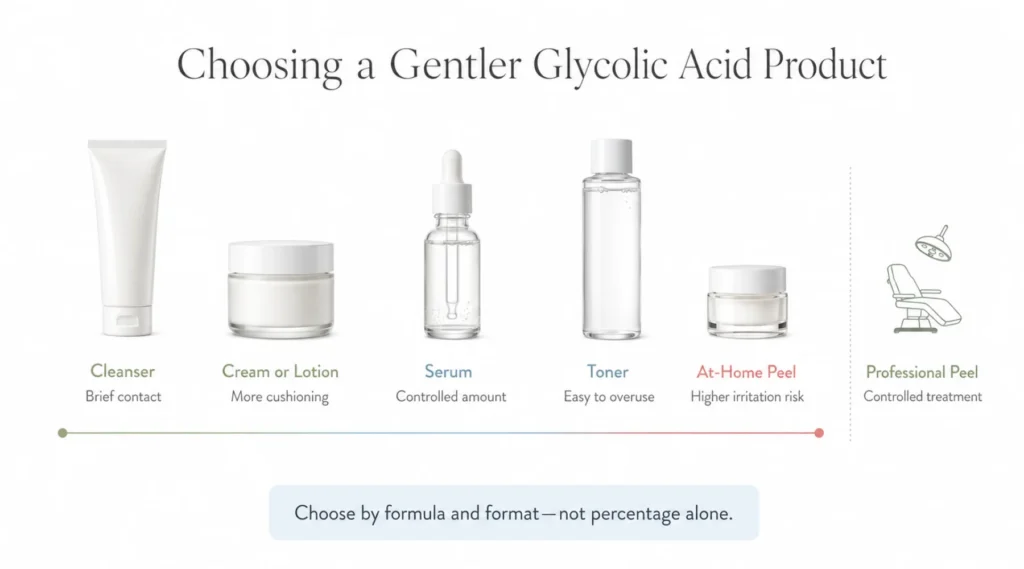
Cleanser
A glycolic acid cleanser has brief contact with the skin, making it beginner-friendly. However, its effects may be milder than leave-on products. It’s good for gentle exfoliation without needing extra serums or toners.
Toner
Toners can spread easily and may encourage using too much. Avoid soaking your skin or over-wiping with cotton pads. Choose a toner without strong scents, drying alcohol, or multiple acids if you have sensitive skin.
Serum
A serum allows for controlled application and often includes hydrating or soothing ingredients. However, strong serums can still be intense. When choosing a serum, look at the entire ingredient list and instructions, not just the strength percentage.
Cream or Lotion
Cream-based glycolic acid products may feel less drying due to emollients. They’re helpful for dry, rough skin, but rich textures may not work for everyone, especially those with congestion.
At-Home Peel
At-home peels have stronger exfoliating ingredients and carry a higher risk of irritation, burns, and pigmentation issues. If you’ve had irritation from a toner, don’t switch to a stronger peel to try to clear things up.
Professional Peel
Professional glycolic acid peels use higher concentrations in controlled settings. They can help with acne, pigmentation, and skin texture, but require careful assessment and aftercare. Research shows both professional glycolic and salicylic acid peels can treat acne, though salicylic acid may cause fewer side effects. Professional treatments are not just stronger versions of home products; they involve controlled concentration, contact time, and treatment intervals.
When Glycolic Acid Is Not the Best Exfoliant
A popular ingredient is not automatically the right ingredient.
Very Sensitive or Rosacea-Prone Skin
Glycolic acid can irritate sensitive skin, especially if it easily burns or flushes. Instead, try gentler options like lactic acid, mandelic acid, or polyhydroxy acid. However, any exfoliant might still cause irritation.
Oily Skin with Blackheads
Salicylic acid is a better choice for oily skin since it targets pores. Start with just one type of acid instead of mixing it with glycolic acid right away.
Inflamed Acne
For active acne, consider azelaic acid, benzoyl peroxide, or a retinoid. Consult a healthcare professional to choose the best option.
Dry, Flaky Skin
Flaking doesn’t always mean you need to exfoliate; it might be a sign of dehydration, eczema, or damaged skin. If flaking comes with burning or tightness, moisturizing is better than using another acid.
Skin Prone to Post-Inflammatory Hyperpigmentation
Glycolic acid can help lighten dark marks, but it may also cause new irritation and pigmentation. This is especially crucial for medium to deep skin tones, as inflammation can lead to lasting discoloration. Use it carefully, prioritise sunscreen, and stop if irritation worsens.
Other Reasons Breakouts May Appear After Starting Glycolic Acid
Timing can be tricky. A rise in sales after a new product doesn’t always mean the product caused it. Look at other changes that happened at the same time.
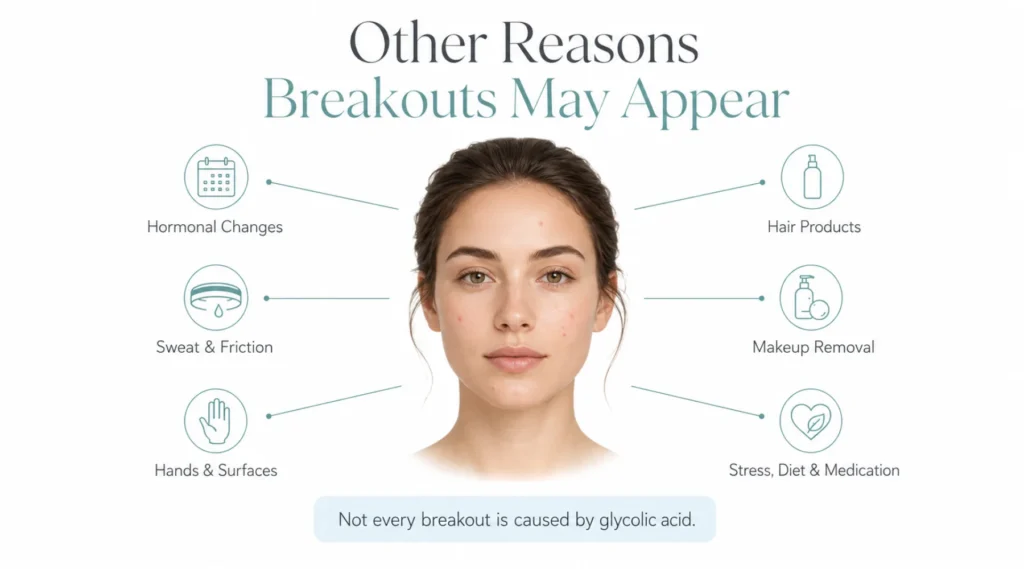
Menstrual or Hormonal Changes
Breakouts on the chin and jaw can follow hormonal patterns, no matter your skincare routine. Track your cycles before blaming glycolic acid for every flare-up.
Hair Products
Conditioners, oils, gels, and styling creams can cause spots on the forehead, temples, and hairline. Rinse your hairline well and keep heavy products away from your face.
Sweat and Friction
Helmets, hats, tight collars, masks, and workout clothes can trap heat and create friction. Using glycolic acid may make irritated skin less able to handle this.
Makeup and Sunscreen Removal
Ongoing breakouts may happen if you don’t completely remove long-wear makeup or water-resistant sunscreen. Use a gentle first cleanse, followed by a mild cleanser. Avoid harsh exfoliation.
Pillowcases, Phones, and Hands
While these aren’t the main causes of acne, they can worsen inflammation in breakout-prone areas. Clean frequently touched surfaces and don’t pick at spots.
Diet, Medication, and Stress
Acne can be affected by various internal and external factors. New medications, stress, sleep disruptions, or diet changes might coincide with skincare changes. Don’t rely on exfoliating acids for persistent acne; it may need a broader approach.
When a Dermatologist Should Assess the Breakouts
Professional advice is appropriate when:
- Acne is painful or cystic
- Spots are leaving scars
- Breakouts cover large areas
- A rash is itchy, swollen, or blistering
- The skin appears infected
- Pigmentation is becoming significantly worse
- The reaction continues after stopping the product
- You are taking isotretinoin
- You have eczema, rosacea, or another diagnosed skin condition
- Over-the-counter remedies have not helped after consistent use
- Acne is affecting your confidence or well-being
A dermatologist can tell the difference between acne and other skin conditions like folliculitis, perioral dermatitis, rosacea, and contact dermatitis. These issues might be confused with a “purge,” but they need different treatments.
Questions People Ask When Glycolic Acid Triggers Spots
Will glycolic acid cause breakouts every time I use it?
No, many people use glycolic acid without getting acne. Breakouts are more likely if the product is too strong, used too often, combined with other irritating products, or not suitable for your skin. If you have a reaction after every use, it means the product or how often you use it may not work for you.
Will glycolic acid cause breakouts, or is it purging?
Check where the spots appear and the state of your skin around them. Small spots in usual congested areas may mean temporary purging. Bumps in new areas, along with redness, itching, or peeling, suggest irritation. If unsure, stop using the product and let your skin calm down.
How long does glycolic acid purging last?
There isn’t a set time for everyone. A temporary flare should start getting better, not worse. If breakouts keep spreading, are severe, or come back each time you use it, don’t wait for the purge to end.
What are the signs that glycolic acid is irritating my skin?
Signs of irritation include stinging, redness, itching, tightness, excessive dryness, flaking, and sensitivity to products that normally feel fine. A rash with uniform bumps in unusual areas indicates irritation, not helpful exfoliation.
Should you stop using glycolic acid when it causes breakouts?
Stop using it if your skin feels painful, burning, itchy, swollen, or unusually flaky. A few mild spots may mean you should reduce how often you use it, but significant irritation means you should stop.
Can glycolic acid cause cystic acne?
Glycolic acid isn’t known to directly cause hormonal cystic acne. However, it can make existing acne look worse. Avoid using stronger acids on painful nodules and seek professional advice, especially if scarring is happening.
Can glycolic acid cause tiny bumps?
Yes, tiny bumps can come from irritation, contact dermatitis, follicular congestion, or reacting to another ingredient. Itchy, uniform bumps are less like ordinary acne and shouldn’t just be called purging.
Is glycolic acid good for acne if my skin is sensitive?
It might be too irritating for very sensitive skin, especially as a strong leave-on treatment. Try a low-strength cleanser, lactic acid, mandelic acid, polyhydroxy acid, or azelaic acid instead. Start with a basic routine and add only one treatment at a time.
Does glycolic acid help with acne scars?
Glycolic acid can help improve mild skin discoloration and roughness, but won’t eliminate deep scars like ice-pick or boxcar scars. For these types, treatments like microneedling, subcision, laser therapy, or chemical peels are better options.
Can I use glycolic acid on active pimples?
Don’t apply glycolic acid to broken or inflamed pimples. You can use it on other areas of acne-prone skin if it feels okay, but benzoyl peroxide, azelaic acid, or a retinoid might be more effective for active acne.
Why does my skin look oilier after using glycolic acid?
Exfoliating too much can dry out your skin, while it still makes oil. This can make the skin look shiny but feel tight. Cut back on exfoliation and use a light moisturiser instead of trying to strip away the oil.
Can moisturiser prevent glycolic acid breakouts?
Moisturiser can help with dryness and protect your skin, but it won’t stop every breakout. A bad glycolic acid product or using it too often might still cause issues. Moisturiser should support a careful routine, not fix an aggressive one.
Can I use glycolic acid again after irritation?
You might be able to use it again after your skin heals. Start with once a week and a small amount, avoiding other strong ingredients that night. Don’t go back to the same product if it caused a strong reaction.
Is daily glycolic acid use safe for acne-prone skin?
Daily use isn’t necessary for beginners and can lead to more irritation. Some resilient skin can handle a mild daily formula, but acne-prone skin often does better with a mix of targeted treatments and recovery nights in between.
What should replace glycolic acid if it keeps causing breakouts?
The best alternative depends on your skin’s needs. Salicylic acid works well for oily blackheads, azelaic acid is good for redness or pigmentation, and retinoids help with clogged pores. Sensitive skin may need a gentle routine for a while before trying any replacements.
Deciding Whether Glycolic Acid Will Cause Breakouts in Your Routine
Will glycolic acid cause breakouts? It might temporarily reveal existing skin issues, but ongoing breakouts usually mean you need to adjust the product, how often you use it, or your overall skincare routine.
Use glycolic acid carefully, not as a daily test of your skin’s limits. Start slowly, apply it to dry skin, keep your routine simple, and track improvements over a few weeks instead of reacting to every blemish.
Don’t push through burning sensations, widespread bumps, or ongoing irritation just because someone says it’s normal. Healthy exfoliation should make your skin feel smoother and look more even, not sore or tight.
Having many skincare products may seem fancy, but clearer skin often comes from a simple routine: one active ingredient, a good moisturiser, daily sunscreen, and enough time for your skin to recover.
When glycolic acid works for you, it can help smooth your skin texture and fade acne marks. But if it keeps irritating your skin, stopping its use is not a failure. It’s about finding a treatment that your skin can handle.