





Blog
What Is Glycolic Acid? Benefits, Uses, and Skin Tips Safely

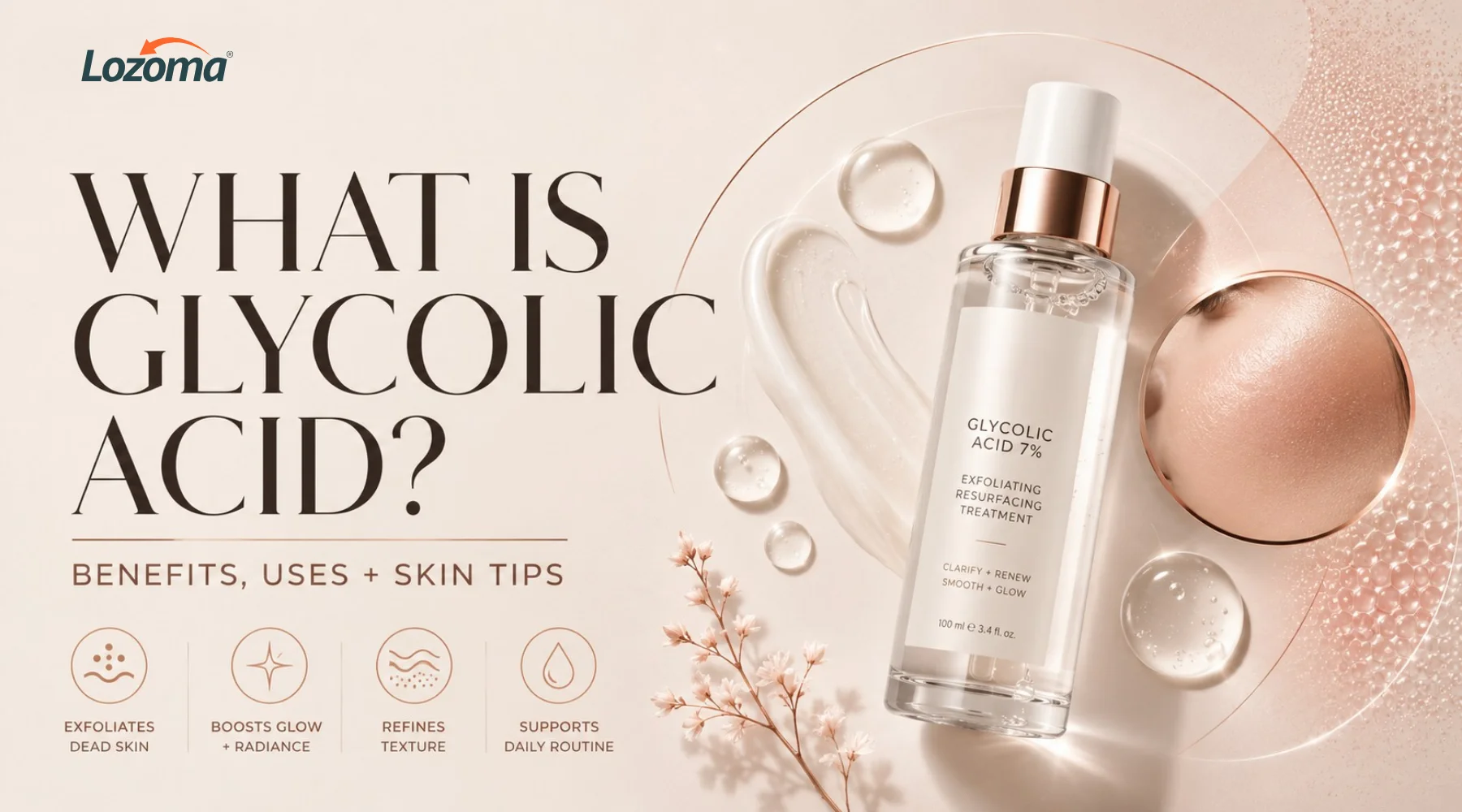
Glycolic acid is a key ingredient in skincare because it can transform rough, dull, or uneven skin. You’ll find it in gentle cleansers, exfoliating toners, and strong chemical peels at dermatology clinics.
However, its variety can be confusing. A gentle cleanser and a professional peel may both have glycolic acid, but they work differently. Factors like concentration, acidity, contact time, and your skin’s condition affect the results.
So, what is glycolic acid, and what can you expect from it?
Glycolic acid is an alpha-hydroxy acid (AHA). It helps loosen bonds between old skin cells, allowing them to shed more evenly. When used correctly, it can improve dullness, rough texture, dark spots, clogged pores, and some early sun damage.
But it’s not a one-size-fits-all solution. Glycolic acid can irritate sensitive skin, and too much use can make your skin red, dry, and uneven. Consistent use of the right strength usually gives the best results, rather than just using the strongest product available.
What Is Glycolic Acid, Exactly?
Glycolic acid is a water-soluble alpha-hydroxy acid. While it comes from sugar cane and some fruits, the glycolic acid used in cosmetics is usually made in labs. This ensures a consistent and pure ingredient.
AHAs are a group of acids that includes glycolic, lactic, mandelic, malic, and citric acids. They all exfoliate, but they work differently. Each acid has its own structure, how it penetrates the skin, and its potential for irritation.
Glycolic acid has a small and simple structure, which helps it work well on the skin’s outer layer. This can make it feel stronger than larger acids like mandelic acid.
The term “acid” might sound scary, but cosmetic acids aren’t always harmful. Their effects depend on how they are mixed. A good product for home use is very different from raw acid or a strong professional treatment.
The percentage of glycolic acid on the label shows how much is in the product, but it doesn’t indicate overall strength. Other factors like pH, free acid content, delivery system, and application time also matter.
For example, a 7% leave-on toner might feel stronger than a 10% cleanser because the toner stays on the skin longer. Similarly, two products with the same percentage can have different exfoliating effects if their pH levels differ.
What Does Glycolic Acid Do for Skin?
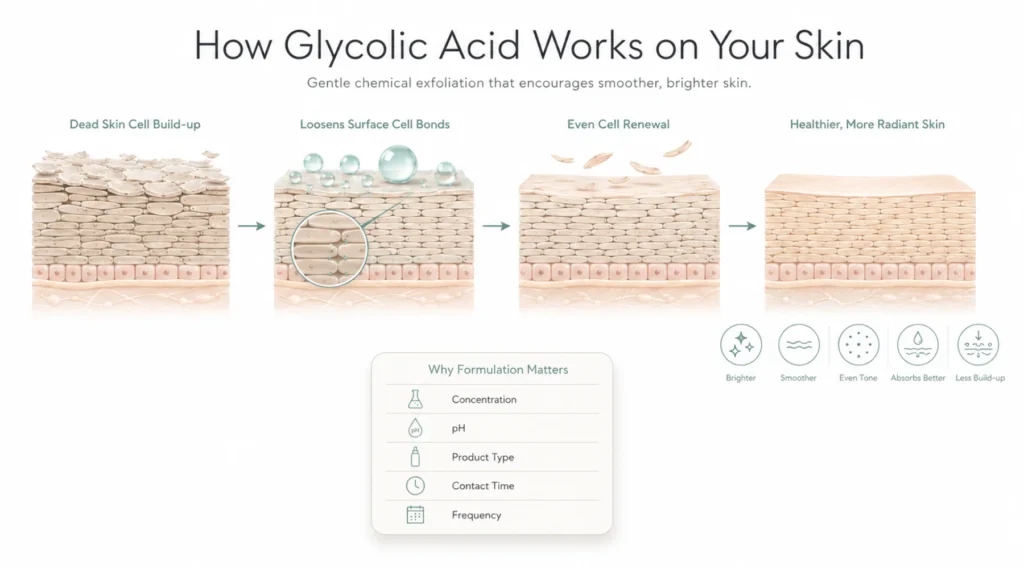
The outer layer of skin is called the stratum corneum. It’s made up of flat cells, known as corneocytes, which are surrounded by fats and connected in a way that keeps the skin protected.
Skin cells move to the surface as they mature and eventually fall off in a process called desquamation. This doesn’t always happen evenly. Factors like age, sun exposure, dryness, acne, and some skin conditions can cause uneven cell build-up.
Glycolic acid helps loosen the connection between old cells so they can be shed more evenly. Studies show that low amounts of glycolic acid can weaken the bond between surface cells without damaging the skin.
The effects of glycolic acid include:
- Brighter skin that reflects light more evenly.
- Smoother texture in rough or flaky areas.
- Gradual shedding of pigmented cells.
- Reduced debris around hair follicles.
- Better spread of other skincare products.
Glycolic acid is a chemical exfoliant. It removes dead skin through a chemical reaction, not through scrubbing with brushes or cloths.
Glycolic acid does more than remove surface cells.
Glycolic acid, at the right levels and pH, can affect layers of skin beneath the surface. Studies on human skin show that glycolic acid at pH 4 helps renew the outer layer and encourages collagen production without raising inflammation markers like TNF-alpha.
However, a glycolic acid toner cannot repair deeply damaged skin or replace medical treatments. It shows that regular use can lead to more lasting improvements than just surface smoothness.
Visible changes in fine lines come from several factors: smoother texture, better hydration, more even cell turnover, and support for the skin’s structure.
Why formulation matters as much as percentage
The effectiveness of glycolic acid is influenced by:
| Formulation factor | Why it matters |
| Concentration | Higher percentages generally provide stronger exfoliation, but also increase irritation risk. |
| pH | A lower pH usually means more glycolic acid is available in its active form. |
| Contact time | Leave-on products work longer than cleansers and rinse-off masks. |
| Product base | Creams, gels, liquids and cleansers deliver the ingredient differently. |
| Frequency | Repeated application can produce cumulative exfoliation. |
| Skin condition | Damaged, dry or inflamed skin allows irritants to penetrate more easily. |
Choosing glycolic acid based only on the percentage can be confusing. A lower-strength product that is well-made and used regularly may give better results than a strong peel that irritates the skin often.
Where Glycolic Acid Makes the Clearest Difference
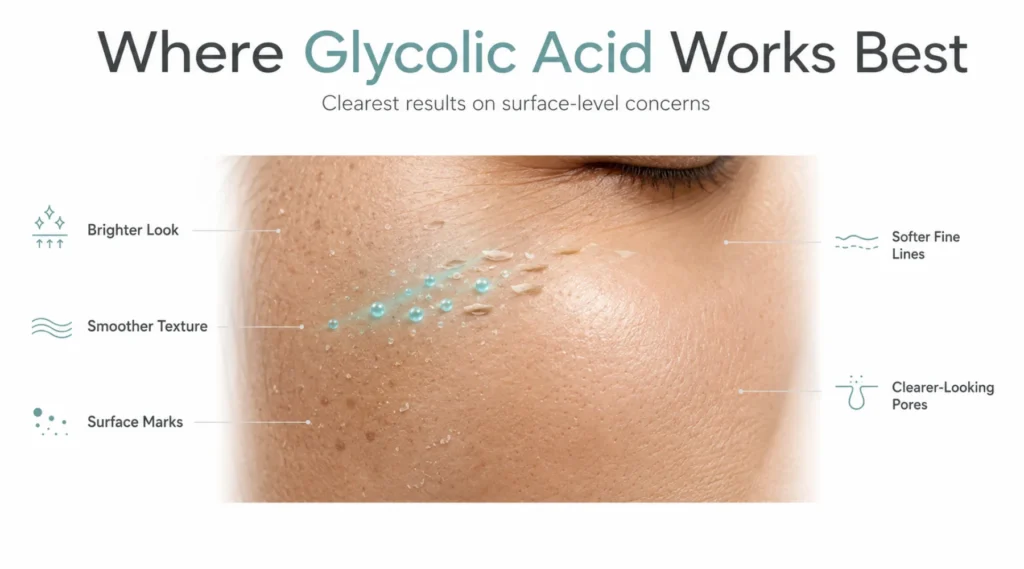
Glycolic acid helps many people by improving skin texture, brightness, and uneven tone. Its effectiveness depends on the specific skin issue and how deep it is.
It can restore brightness to dull-looking skin.
Dullness happens when the skin’s surface is rough and uneven. This uneven surface scatters light, making the skin look tyred, even if it’s well-moisturised.
Glycolic acid helps the skin shed dead cells more evenly, creating a smoother surface that reflects light better. This can make the skin look fresher without changing its natural colour.
“Brightening” isn’t the same as bleaching. Glycolic acid won’t make healthy skin look unnaturally pale. Instead, it can lessen dark spots and remove dull buildup, allowing the person’s natural skin tone to look clearer.
It smooths rough and uneven texture.
Glycolic acid helps when the skin feels thick, grainy, or bumpy. It can improve:
- Rough surface texture
- Flaky patches from uneven skin shedding
- Mild congestion on the forehead or chin
- Coarse skin from sun damage
- Rough skin on the upper arms, legs, elbows, or knees
Texture issues are not always due to dead skin. Enlarged oil glands, deep acne scars, inflammation, and loss of tissue can’t be removed through exfoliation. Glycolic acid may help make them look less noticeable, but it won’t fix them completely.
It can gradually fade superficial dark marks.
Glycolic acid can help with some types of dark spots by speeding up the removal of pigmented surface cells. It is often used for:
- Dark marks from acne
- Mild sun spots
- Uneven skin tone from sun exposure
- Superficial post-inflammatory marks
- Some cases of melasma with professional help
Research shows that glycolic acid peels can improve post-inflammatory pigmentation, but results can differ, and over-treatment may irritate the skin and worsen pigmentation.
Pigment deeper in the skin won’t disappear just from exfoliating the surface. Conditions like melasma, persistent sun spots, and mixed pigmentation require a broader approach. This includes daily sun protection, pigment-regulating ingredients, and, when needed, professional treatment.
It may soften the appearance of early fine lines.
Fine lines show up more when skin is dry, rough, or has been damaged by the sun. Glycolic acid can help smooth the skin and support its renewal, making shallow lines less noticeable.
Research suggests that AHAs can boost collagen and other important skin components. However, these benefits take time and should not be misleadingly advertised as instant fixes.
Glycolic acid works best for minor surface issues. It won’t erase deep lines, restore lost facial volume, or significantly tighten sagging skin.
It can make pores look less congested.
Pore size is affected by genes, oil production, age, and skin elasticity. Glycolic acid cannot permanently close pores because they are natural openings. It can make pores look cleaner and smaller by reducing buildup around them. This is especially helpful when dead skin, makeup, and oil make pores appear larger.
For very oily skin and stubborn blackheads, salicylic acid might be more effective since it can easily penetrate oil. Glycolic acid mainly works on the surface, but its exfoliating effect can still help improve the appearance of pores.
It may help with keratosis pilaris and rough body skin.
Keratosis pilaris happens when keratin builds up around hair follicles, creating rough bumps on the upper arms, thighs, and buttocks.
A glycolic acid body lotion can help smooth this buildup and may reduce the dry, scaly texture that makes the bumps more noticeable.
Body skin can usually handle stronger products than facial skin, but this isn’t always true. Freshly shaved, waxed, scratched, or inflamed areas may sting or irritate more easily.
Is Glycolic Acid Good for Acne?
Glycolic acid can help with acne, but it isn’t the best choice for all types. It removes dead skin cells around pores, which can improve mild acne, like small bumps and some blackheads. Professional glycolic acid peels have shown better results for moderate acne in studies, unlike home use.
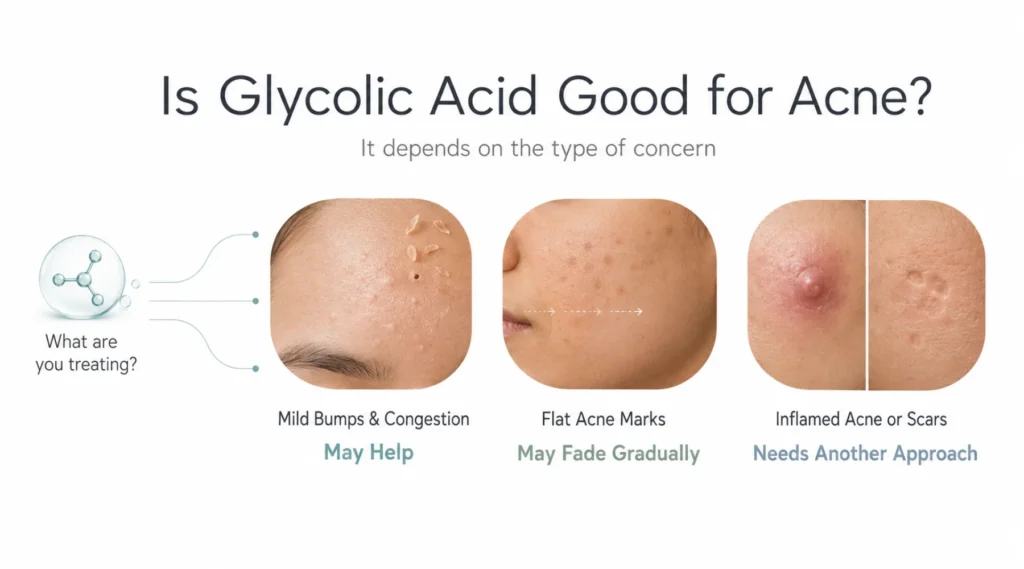
Glycolic acid works best for acne-prone skin with:
- Rough texture
- Dark marks from past acne
- Small, non-inflamed bumps
- Dullness
- Mild congestion
- Uneven makeup application
However, it may not be effective for severe acne, painful cysts, deep nodules, or hormonal breakouts. These types often need other treatments like benzoyl peroxide, adapalene, salicylic acid, or azelaic acid, based on individual skin needs.
Does glycolic acid help with acne scars?
The term “acne scars” refers to various skin marks. Flat brown, grey, or reddish marks left after a pimple are not real scars. Glycolic acid can slowly improve brown marks and help the skin look more even.
Indented scars happen when inflammation harms collagen, creating a depression in the skin. Raised scars occur when the skin makes too much scar tissue. Over-the-counter glycolic acid products cannot remove either type.
Professional peels may slightly improve very shallow scars, especially when used with treatments like microneedling. Deeper scars like ice-pick, boxcar, and rolling scars need specific treatments based on their type.
Can glycolic acid make acne worse at first?
Some people see new spots after starting glycolic acid. This might be temporary, but not every early breakout is “purging.”
A true adjustment-related flare is likely if:
- The breakouts happen in areas where you usually get acne.
- The product increases exfoliation significantly.
- The spots look like your usual breakouts.
- The flare starts after using the product and fades as your skin adjusts.
- There are no strong signs of irritation.
Breakouts in unusual areas, persistent itching, tiny bumps, burning, or worsening redness may mean irritation or incompatibility, not purging. Knowing the difference can help avoid weeks of irritation.
A new glycolic acid product can cause breakouts if the formula is too rich, if you’ve layered too many actives, or if your skin barrier is inflamed. The acid isn’t the only reason for breakouts.
How to Use Glycolic Acid Without Over-Exfoliating
The safest way to use glycolic acid is to choose a product that fits your skin type. Don’t push your skin to accept a product that isn’t right for you.
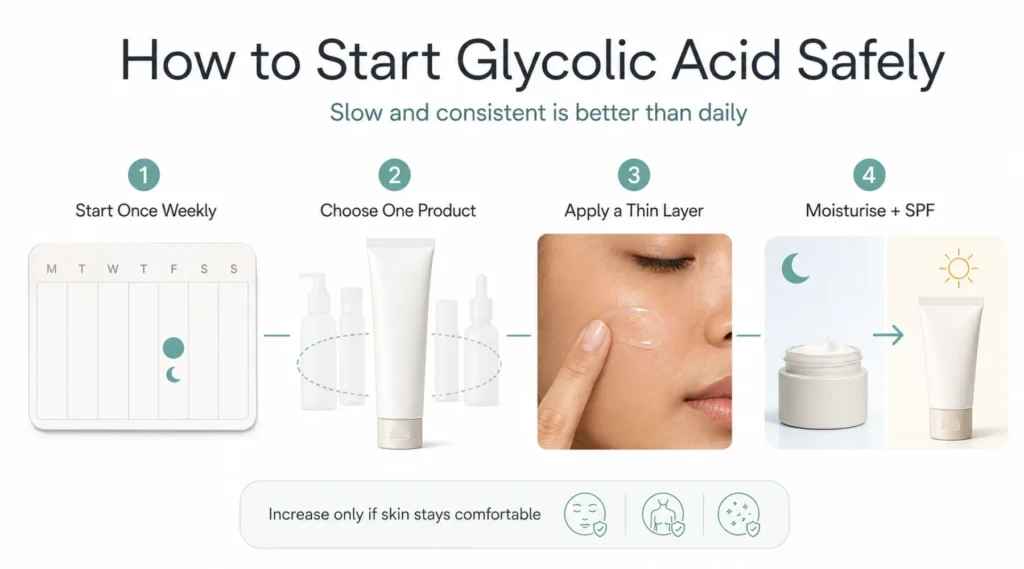
If you’re new to exfoliation, you probably don’t need to do it every day. Start with once a week to see how your skin reacts. If you don’t have ongoing redness, tightness, or flaking, you can slowly increase the frequency.
Start with one glycolic acid product.
Using a glycolic cleanser, toner, serum, and mask together doesn’t speed up results. It can create an unpredictable mix of ingredients.
Stick to one product type for several weeks. This way, you can better tell if it helps or causes irritation.
Although a full set of serums may have many beneficial ingredients, using them all at once makes it hard to know what your skin really needs. A simple routine usually leads to better results.
Choose the right format.
Glycolic acid cleanser
A cleanser touches the skin for a short time before being washed off. It’s good for people who want mild exfoliation but can’t handle strong leave-on products.
A cleanser is also useful for areas like the chest or back, where using a toner is hard. Don’t leave it on for long unless the instructions say to do so.
Glycolic acid toner or liquid exfoliant
These products go on easily and stay on your skin. They can exfoliate the surface well, but their watery feel might lead you to use too much.
Just one light layer is enough. Applying too much or using a soaked pad repeatedly can irritate your skin.
Glycolic acid serum
A serum can mix glycolic acid with ingredients that soothe, hydrate, or support skin colour. Its effectiveness relies on the entire formula, not just the term “serum.”
Don’t assume a serum is milder than a toner. Always check the percentage, usage instructions, and suggested frequency.
Glycolic acid cream
Cream formulae are often more comfortable for normal or dry skin because they mix exfoliating and moisturising ingredients. They also help apply just the right amount.
However, a thick cream might not be good for very oily or acne-prone skin, so the texture and other ingredients are important.
Glycolic acid mask or home peel
These are used less often and may have stronger acids. Follow the exact contact time. Leaving a peel on longer doesn’t make it work better; it raises the risk of a bad reaction.
Don’t use a home peel on damaged skin, active eczema, sunburn, open wounds, or freshly waxed areas.
A sensible beginner schedule
| Stage | Suggested frequency | What to monitor |
| Weeks 1–2 | Once weekly | Burning, persistent redness, tightness or unusual bumps |
| Weeks 3–4 | Once or twice weekly | Whether texture improves without increasing sensitivity |
| After one month | Up to two or three times weekly if needed | Cumulative dryness, flaking and interaction with other actives |
| Long-term | Lowest effective frequency | Stable comfort, smoother texture and consistent sun protection |
This is a general guide, not a strict rule. Some people can use glycolic acid every seven to ten days, while others may handle a gentle formula three times a week.
Using it daily isn’t always better. The best frequency for using glycolic acid depends on its strength, the other products you use, and how quickly your skin gets dry or irritated.
Where glycolic acid belongs in the routine
A leave-on glycolic acid product should be used after cleansing and before moisturising.
Here’s a simple evening routine:
- Cleanse your face with a mild, non-exfoliating cleanser.
- Pat your skin dry.
- Apply a thin, even layer of glycolic acid.
- Follow up with a moisturiser.
- Use sunscreen the next morning.
Applying glycolic acid to fully dry skin may help reduce stinging. Using it on damp skin can increase absorption, which might not be good for beginners.
Unless the label says otherwise, don’t rinse off a leave-on toner, serum, or cream.
Use a small amount
Using more product doesn’t lead to better exfoliation. Just apply a thin layer that covers the area.
Steer clear of the eyelids, nose corners, and mouth corners, as products can build up there and irritate the skin. Be careful around recently picked spots, cuts, and areas with dermatitis.
Patch test before full application
Use a small amount of the product on a small area as directed. Do the test on different days, since irritation can build up over time.
A patch test doesn’t ensure your face will handle a product well, but it can show any immediate reactions before applying it to a larger area. The American Academy of Dermatology warns that glycolic acid might irritate sensitive skin and suggests testing new skincare items before using them regularly.
Glycolic Acid Skincare Routines for Different Skin Types
There isn’t one skincare routine with glycolic acid that works for everyone. The exfoliant should match your skin’s tolerance and main issues.
A balanced routine for normal or combination skin
Morning
- Gentle cleanser or water rinse
- Hydrating or antioxidant serum
- Lightweight moisturiser
- Broad-spectrum sunscreen
Glycolic acid evening
- Gentle cleanser
- Glycolic acid leave-on product
- Moisturiser
Other evenings
- Gentle cleanser
- Hydrating serum
- Moisturiser
This routine keeps glycolic acid away from other active ingredients. If the skin feels good, you can add another treatment later.
A routine for oily, congested, or acne-prone skin
Morning
- Gentle foaming cleanser
- Niacinamide or azelaic acid
- Lightweight moisturiser if needed
- Broad-spectrum sunscreen
Glycolic acid evening
- Mild cleanser
- Glycolic acid
- Non-comedogenic moisturiser
Treatment evenings
- Cleanser
- Acne treatment is recommended for your concern
- Moisturiser
Glycolic acid helps improve skin texture and reduce marks from acne, while an acne treatment targets the causes of breakouts.
You can use a 12% azelaic acid cream in your acne routine to help with redness and uneven skin tone. It’s a good idea to start with it on its own. Using both products on different evenings can be easier than using them together right away.
A routine for dry skin
Morning
- Creamy cleanser or water rinse
- Hydrating serum
- Ceramide-rich moisturiser
- Broad-spectrum sunscreen
Glycolic acid evening, once weekly
- Gentle cleanser
- Low-strength glycolic cream or mild leave-on exfoliant
- Nourishing moisturiser
Recovery evenings
- Gentle cleanser
- Hydrating essence or serum
- Barrier-supporting moisturiser
Dry skin isn’t always too sensitive for glycolic acid, but it’s important to be careful. If your skin is flaking from dryness, don’t keep using strong exfoliants. This can make the problem worse.
A cautious routine for sensitive skin
Morning
- Fragrance-free gentle cleanser
- Simple moisturiser
- Broad-spectrum sunscreen
Test evening, every seven to ten days
- Gentle cleanser
- Low-strength glycolic product
- Moisturiser
All other evenings
- Gentle cleanser
- Barrier-supporting moisturiser
Don’t ignore discomfort if you have sensitive skin. A mild, short tingling may happen with some acidic products, but stop using them if you feel burning, swelling, long-lasting redness, or increased sensitivity.
A routine for dark marks and uneven tone
Morning
- Gentle cleanser
- Vitamin C, niacinamide, or azelaic acid as tolerated
- Moisturiser
- Broad-spectrum sunscreen
Glycolic acid evening
- Gentle cleanser
- Glycolic acid
- Moisturiser
Non-exfoliating evening
- Gentle cleanser
- Pigment-supporting serum or cream
- Moisturiser
Pigmentation routines are most effective when they lower pigment production, promote even cell turnover, and block extra UV exposure. Glycolic acid helps with only some of these tasks.
A good skin care routine should include daily protection and barrier support, not just exfoliation.
Which Ingredients Can Be Used with Glycolic Acid?
Glycolic acid doesn’t cancel out most popular skincare ingredients. The main issue is irritation.
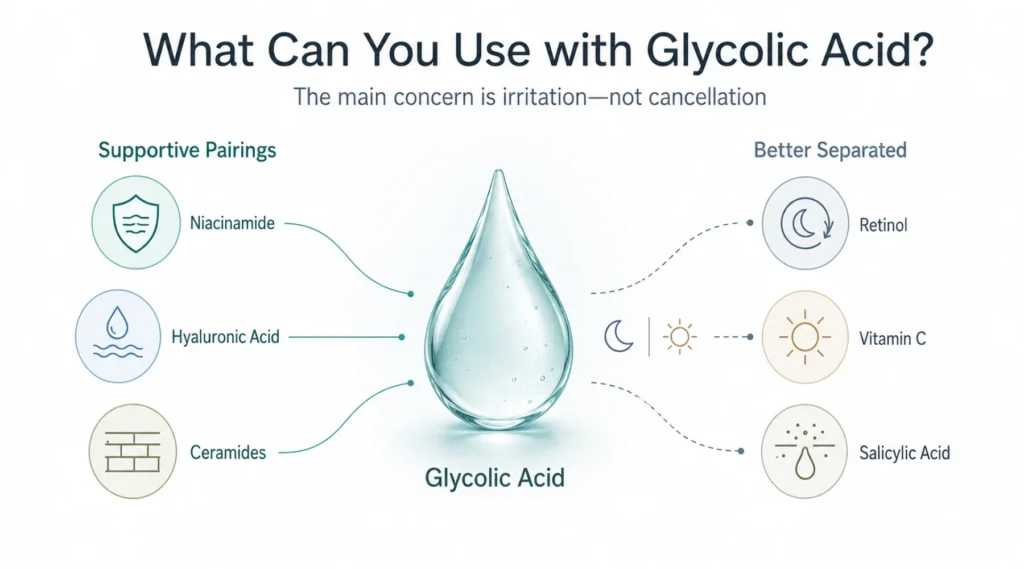
Two products might work well together in a lab, but can cause discomfort on your skin. Focus on how your skin feels rather than what an online chart says about mixing them.
Glycolic acid and niacinamide
Niacinamide can usually be used alongside glycolic acid. It helps strengthen the skin barrier, keeps the skin hydrated, and improves skin tone.
Some people apply niacinamide serum after glycolic acid without any issues, while others may feel a sting. A straightforward approach is to use them at different times: niacinamide in the morning and glycolic acid on certain evenings.
Old claims that these ingredients cancel each other out are based on outdated chemistry and do not apply to how today’s cosmetic products are made.
Glycolic acid and hyaluronic acid
Hyaluronic acid is a hydrating ingredient, not an exfoliant, so you can use it with glycolic acid.
Apply the glycolic acid first, unless the instructions say otherwise. Then, use a hydrating serum and moisturiser.
Hyaluronic acid won’t fix serious over-exfoliation on its own. If your skin barrier is weak, you also need to reduce irritating ingredients and use a moisturiser with good emollients and lipids to support your barrier.
Glycolic acid and ceramides
Ceramides help glycolic acid by supporting the skin barrier. You can use a ceramide moisturiser after applying the acid or on recovery nights. It won’t weaken the effects of glycolic acid.
Glycolic acid and azelaic acid
Both ingredients can fight acne and improve skin tone, but using them together might irritate beginners. Start with one product to see how your skin reacts. You can use them:
- At different times of day
- On alternating evenings
- Together, only if your skin is already used to both, and if they are gentle
If you have sensitive skin, azelaic acid might be easier to use regularly, while glycolic acid may help smooth your skin more visibly.
Glycolic acid and retinol
Glycolic acid and retinoids both help skin cells turn over, but can cause dryness, peeling, and irritation. Most people don’t need to use them together.
A good schedule could be:
- Use retinoid on Monday and Thursday
- Use glycolic acid on Saturday
- Focus on recovery skincare on the other evenings
If you’re using prescription tretinoin, adapalene, or another medical retinoid, talk to your doctor before adding more exfoliation, especially if you already have irritation.
Glycolic acid and vitamin C
You can include vitamin C in your skincare routine, but using a low-pH vitamin C serum with glycolic acid might be too harsh.
It’s usually simple to use vitamin C in the morning and glycolic acid on some evenings. Don’t forget to apply sunscreen, as both ingredients help with sun-related skin issues.
Glycolic acid and salicylic acid
Glycolic acid dissolves in water and helps remove dead skin cells from the surface. Salicylic acid dissolves in oil and works well for oily skin, blackheads, and acne.
These acids can work together, but using strong products at the same time can lead to dryness.
Combination products made by experts may be balanced better than using two separate acids. Always follow the instructions for your product instead of thinking more acid will clear your skin faster.
Glycolic acid and benzoyl peroxide
Benzoyl peroxide is a good treatment for acne, but it can be drying and irritating. Using it with glycolic acid at the same time can be uncomfortable, especially in the first few weeks.
Use them at different times or on alternate days unless your doctor says otherwise.
Is Glycolic Acid Good for Sensitive Skin?
Sensitive skin is not just one condition. Some people feel occasional stinging but have healthy skin. Others may have eczema, rosacea, allergic reactions, or inflamed skin.
Mildly sensitive skin can sometimes handle low-strength glycolic acid used infrequently. However, it’s not suitable during an active flare.
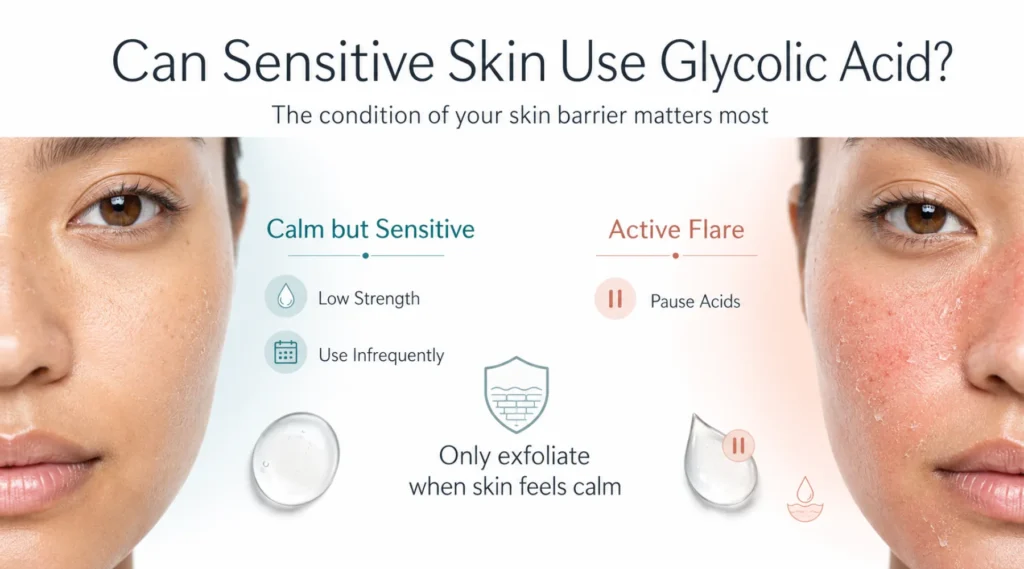
People with rosacea often have skin that easily gets irritated. The American Academy of Dermatology recommends avoiding products that cause burning, stinging, or increased redness. Glycolic acid can be a common irritant for them.
Gentler options like lactic or mandelic acid may be easier on the skin, but “gentler” doesn’t mean irritation-free. Polyhydroxy acids can also help with gentle exfoliation.
Avoid using glycolic acid when the skin is:
- Burning during normal cleaning
- Red and inflamed
- Cracked or peeling
- Having an eczema or rosacea flare
- Recovering from sunburn
- Healing after waxing, laser treatment, or a professional peel
- Reacting to a new retinoid
- Extremely dry from isotretinoin or other treatments
For sensitive skin, the goal is not maximum exfoliation but finding the smallest amount that improves texture without causing discomfort or damage.
Glycolic Acid Side Effects and Signs You Are Using Too Much
Common side effects of glycolic acid relate to irritation and can include:
- Stinging
- Burning
- Redness
- Tightness
- Dryness
- Flaking
- Itching
- Increased sensitivity
- Swelling
- Worsened pigmentation
A short, mild tingling sensation isn’t harmful. Strong or ongoing burning doesn’t mean the product is effective.
The skin barrier protects against water loss and irritants. Too much exfoliation can damage this barrier, making even gentle products feel uncomfortable.
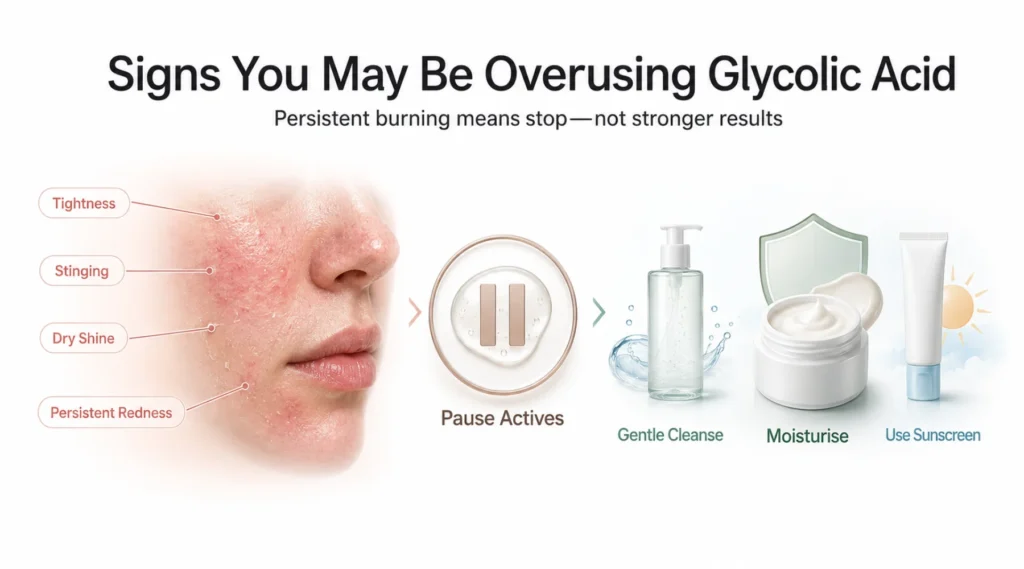
Early signs of over-exfoliation
Over-exfoliated skin may not always peel a lot. Look for these early signs:
- A shiny but dry surface
- Unusual tightness after washing your face
- Moisturiser that stings
- Redness around the nose or mouth
- More oiliness despite dryness
- Small, red bumps
- Makeup that separates on rough spots
- Increased sensitivity to heat, wind, or sunlight
Using glycolic acid while experiencing these symptoms can slow recovery and raise the risk of dark spots.
What to do after a reaction
Stop using glycolic acid and other irritating products. Instead, use a simple routine with:
- A gentle cleanser
- A fragrance-free moisturiser
- Broad-spectrum sunscreen
- A plain ointment on any small cracked areas, if needed
Avoid scrubs, cleansing brushes, retinoids, other acids, and harsh acne treatments until your skin feels normal again.
Get medical help if you have severe swelling, blisters, intense pain, eye exposure, infection signs, or if your reaction doesn’t improve.
Purging, Irritation, and Product-Related Breakouts Are Not the Same
Purging is often used to explain negative reactions to an active ingredient. This can make it harder to spot real damage to the skin barrier.
A possible purge
A temporary rise in acne is called purging. This happens when skin cells turn over faster, bringing clogs to the surface. It usually occurs in areas prone to acne and should improve over time, not get worse.
An irritation breakout
Inflammation can damage the skin barrier and cause small red bumps that look like acne. These bumps may sting or itch and often come with tightness, dryness, or redness.
The best way to help is to reduce or stop using the irritating products, not use them more often.
A formula-related breakout
The base formula might have an ingredient that isn’t good for a person’s skin. For instance, a thick glycolic cream can cause breakouts even if glycolic acid itself isn’t the issue.
An unrelated acne flare
Hormones, stress, medicine, heavy hair products, and natural acne cycles can all happen when you start using a new exfoliant.
When figuring out if glycolic acid is causing breakouts, look at where the spots are, what kind they are, when they appear, and if there is any irritation.
Glycolic Acid and Sun Sensitivity
Glycolic acid can help improve sun damage, but it may also make your skin more sensitive to the sun.
The US Food and Drug Administration (FDA) warns that products with alpha hydroxy acids (AHA) can increase sun sensitivity and the risk of sunburn. They recommend using sunscreen, wearing protective clothing, and limiting sun exposure while using AHA and for some time after stopping.
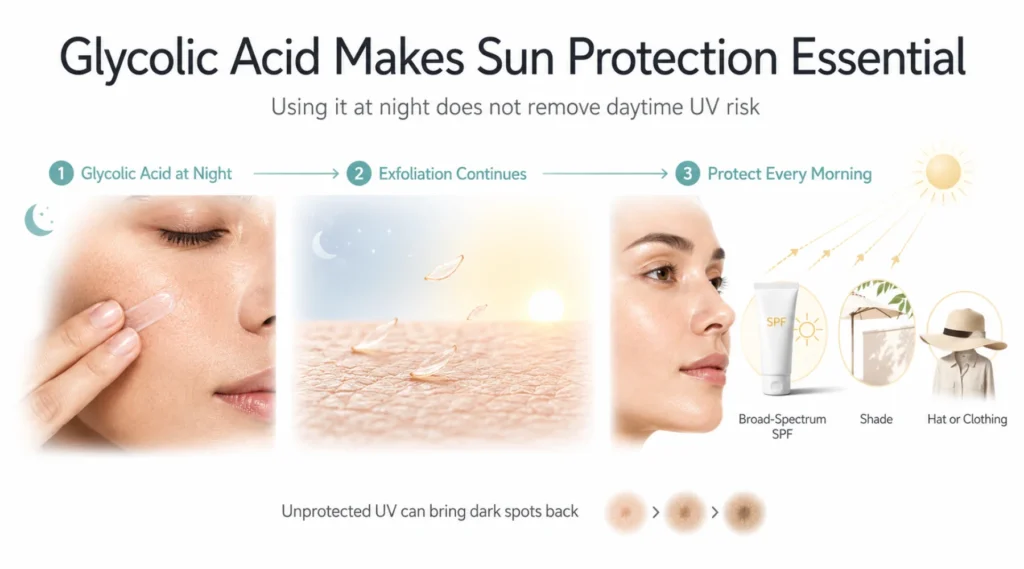
FDA tests showed that repeated AHA use can lead to more sensitivity to UV redness and skin damage, but individual reactions vary.
This does not mean you should only use glycolic acid in the winter or that using it at night means you don’t need sunscreen. The effects of exfoliation last even after you apply it.
Use a broad-spectrum sunscreen every morning. Apply enough and reapply when needed. Staying in the shade, wearing hats, and protective clothing also help.
Without proper sun protection, dark spots may form just as fast as glycolic acid can remove surface pigmentation.
At-Home Glycolic Acid and Professional Peels Are Different Treatments
At-home glycolic acid products are made for regular use. Professional peels use stronger formulae and controlled timing for deeper exfoliation.
A dermatologist or qualified professional considers:
- Skin type
- Tendency for pigmentation
- Current medications
- Scarring history
- Active skin issues
- Past reactions
- Peel strength and pH
- Application method
- Contact time
- Neutralisation
- Aftercare
Clinical glycolic acid peels have been studied for acne, melasma, pigmentation, ageing, and some superficial scars. Their success depends on careful patient selection and multiple treatments, not just one session.
A higher percentage does not tell the whole storey.
A professional peel with a 30% concentration is not just three times stronger than a 10% home product. The pH and free acid levels influence how much acid works on the skin.
Professionals can control how long a strong peel stays on the skin before neutralising it. Using a powerful peel without proper training can lead to burns, long-lasting redness, scarring, and dark spots.
Who should seek professional advice first?
Professional guidance is crucial for people with:
- Melasma
- Medium to deep skin tones that get dark spots
- Active eczema, dermatitis, or rosacea
- A history of keloids or unusual scarring
- Severe acne
- Ongoing use of prescription retinoids
- Recent treatments like lasers, microneedling, or peels
- Frequent cold sores near the treatment area
- Unexplained facial darkening
- Skin changes during pregnancy that need a diagnosis
A professional can also check if glycolic acid will help with the issue.
Using Glycolic Acid on Deeper Skin Tones
Glycolic acid can work well on darker skin, but care is needed to avoid irritation. Inflammation can cause more melanin production, which might lead to pigmentation issues after aggressive peels.
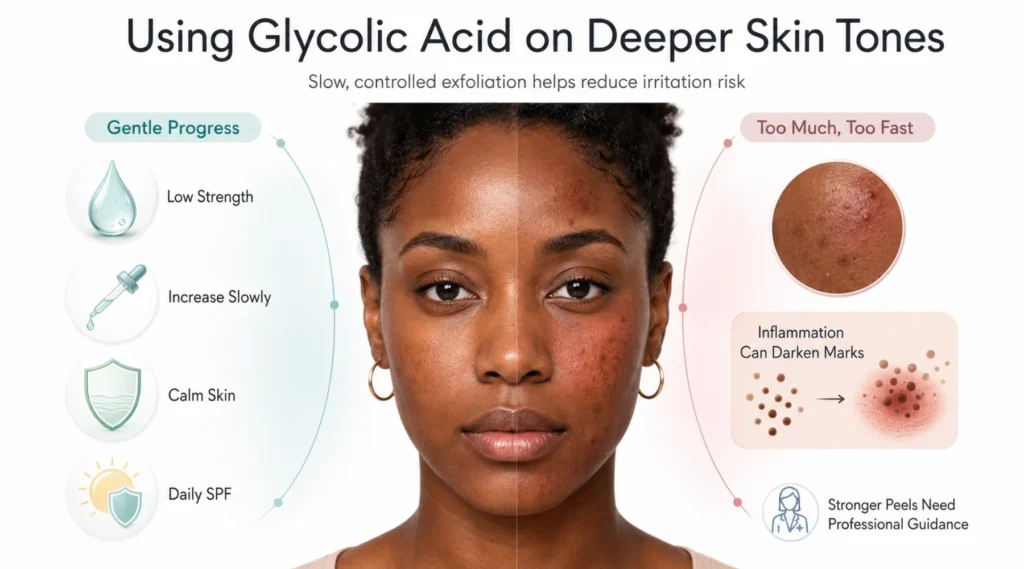
To use glycolic acid safely:
- Start with a low strength.
- Gradually increase how often you use it.
- Stop if your skin stays inflamed.
- Don’t mix it with other harsh products.
- Always use broad-spectrum sunscreen.
- Treat any active acne instead of over-exfoliating the area.
- Get professional advice for stronger peels.
Studies show that glycolic acid peels can help pigmented skin, but the right concentration and aftercare are crucial. Treat pigmentation slowly and consistently, as a gentle routine is safer than intense peeling, which can worsen dark spots.
Can Glycolic Acid Be Used on the Body?
Glycolic acid is not just for the face; it can also help with rough spots and uneven skin on the body.
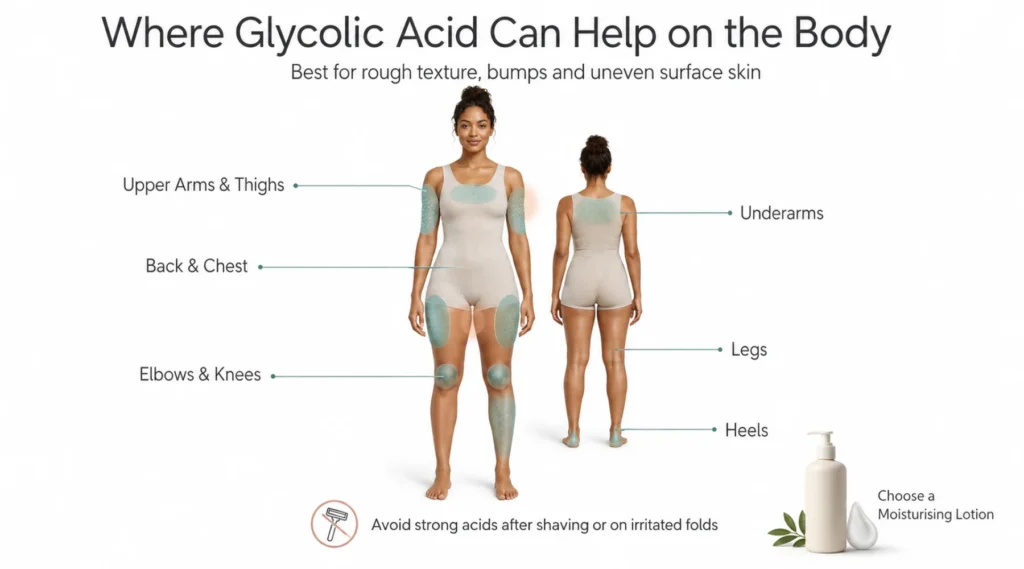
Common areas that benefit include:
- Upper arms and thighs are often affected by keratosis pilaris
- Back and chest, where mild bumps can form
- Elbows and knees, which tend to get rough
- Legs, where ingrown hairs can occur
- Underarms, which may have an uneven texture
- Heels, which can feel rough
Be careful when using it on folds or recently shaved areas. Places like the underarms, bikini line, and inner thighs can get irritated easily due to friction.
Avoid using facial peels as deodorants or applying strong acids right after shaving, as broken skin can absorb these irritants more easily.
For keratosis pilaris, a moisturising body lotion with glycolic acid like AHA White Body Lotion may work better than using a strong facial toner repeatedly. Hydration and exfoliation together are often more effective than just using acid.
Common Glycolic Acid Mistakes That Slow Progress
Choosing the highest percentage first
A stronger formula might peel skin faster, but peeling isn’t the goal. Instead, we aim for gradual improvement.
Starting with a high strength can cause inflammation, making it harder to manage acne marks, sensitivity, and uneven skin tone.
Using it every night immediately
Tolerance builds from watching how things react, not just deciding to tolerate something. A product might feel good after one use, but it can cause irritation if used repeatedly.
Give your skin time to recover after the first few uses.
Layering it with every active ingredient
You usually don’t need to use glycolic acid toner with salicylic acid, retinol, and benzoyl peroxide together. Adding more ingredients can lead to dryness and irritation.
Start your skincare routine with one ingredient at a time.
Scrubbing before applying it
Physical exfoliation takes off surface cells and can irritate the skin a little. Using glycolic acid right after may cause a lot of stinging.
Choose either physical or chemical exfoliation. Most facial skin doesn’t need a scrub if you’re already using an effective acid.
Applying it after shaving or waxing
Hair removal can briefly disrupt the skin’s barrier. Glycolic acid may cause strong stinging, redness, or dark spots. Wait until the skin settles down completely.
Treating dehydration as dead skin
Dehydrated skin feels rough and looks flaky. Using more glycolic acid can make it worse. The skin actually needs gentler cleaning and more moisturising.
Skipping moisturiser because the skin is oily
Oily skin can still get dry. A light moisturiser can soothe irritation and help the skin handle acne treatments better.
Ignoring sunscreen
Exfoliating pigmentation without stopping new UV-triggered pigmentation is not effective. Sunscreen is essential for treatment, not just an optional last step.
Continuing despite persistent burning
Burning means something is wrong; it doesn’t show how well a product works. Wash off the product and check your routine again.
Expecting it to remove deep scars
Glycolic acid can help with skin colour and roughness, but it can’t rebuild lost tissue. Knowing what the product can do will help avoid disappointment and overuse.
Glycolic Acid Myths That Need Retiring
“You must feel tingling for glycolic acid to work”
A product can exfoliate without creating a noticeable feeling. Tingling varies based on the formula, skin condition, and nerve sensitivity.
No sensation doesn’t mean it’s ineffective, and strong stinging doesn’t mean it works better.
“Peeling proves the dead skin is coming off”
Visible flaking usually shows irritation and water loss, not good exfoliation. Healthy exfoliation can happen without large pieces of skin coming off.
“Glycolic acid permanently shrinks pores”
It can remove surface buildup and make pores appear smaller. It does not permanently change the pore’s structure.
“It thins the skin”
Glycolic acid helps clear excess buildup on the skin’s surface. Studies also look at how it can support skin renewal and collagen production. The real issue is damage to the skin barrier from improper use, not that glycolic acid always thins the skin.
“Natural glycolic acid is safer than synthetic glycolic acid”
The skin reacts to the chemical makeup and formulation, not to fancy descriptions. Lab-made glycolic acid offers better consistency and purity.
“Glycolic acid removes all dark spots”
It works well for minor uneven skin. More serious pigmentation might need several treatments and careful examination.
“Everyone should use an exfoliating acid”
Some people have smooth, comfortable skin without using glycolic acid. Skincare can be effective even without a specific ingredient.
How Long Does Glycolic Acid Take to Work?
The timeline varies based on concerns, products, and how often they occur.
| Concern | When improvement may become noticeable |
| Temporary surface smoothness | After one or several uses |
| Dullness | Within two to four weeks |
| Mild rough texture | Around four to eight weeks |
| Small clogged bumps | Several weeks to a few months |
| Post-acne dark marks | Often eight to twelve weeks or longer |
| Fine surface lines | Usually several months of consistent use |
| Deep scars or deep pigmentation | Unlikely to resolve with home glycolic acid alone |
These timelines are not guaranteed. Factors like skin turnover, sun exposure, inflammation, hormones, and consistency all influence progress.
Take photos in the same lighting every four weeks instead of checking your skin multiple times a day. It’s easier to notice gradual changes in texture and tone over a longer period.
Questions People Commonly Ask About Glycolic Acid
What is glycolic acid used for in skincare?
Glycolic acid helps exfoliate the skin. It brightens dull skin, smooths rough areas, evens out skin tone, and reduces blockages. Professionals use glycolic acid peels to treat acne, sun damage, melasma, and some light scars.
How well it works depends on its strength and how it’s formulated. A gentle cleanser has different effects compared to a professional peel.
What does glycolic acid do to dead skin?
Glycolic acid weakens the bonds between old skin cells, helping them come off more easily during natural skin shedding. It works well without causing visible peeling.
Can I use glycolic acid every day?
Some mild products are made for daily use, but most people don’t need to use them every day. Using a leave-on acid two or three times a week can be enough.
Beginners and those using retinoids or acne treatments should start slowly. Once you see the results you want, stop increasing how often you use it.
Should glycolic acid be used in the morning or at night?
You can use leave-on glycolic acid at any time, but many people like to use it at night. It simplifies their routine and reduces sun exposure.
Using it at night doesn’t mean you can skip sunscreen the next day. Your skin might still be more sensitive to the sun afterwards.
Do I apply moisturiser after glycolic acid?
Yes, a moisturiser can reduce dryness and help the skin barrier without stopping glycolic acid from working. Follow the product instructions for timing. You usually don’t need to leave your skin bare for long before applying moisturiser.
Can glycolic acid lighten skin?
Glycolic acid won’t bleach healthy skin or change your natural skin colour. It can help reduce excess pigmentation and make dull skin look brighter and more even.
Using too much can cause inflammation and worsen pigmentation, especially in skin that is prone to dark marks.
Is glycolic acid good for blackheads?
Salicylic acid may help clear build-up around pores and is better for blackheads because it dissolves in oil. Some people use glycolic acid for skin texture and salicylic acid on different days for oily skin. However, using both too often can harm the skin barrier.
Does glycolic acid help with hormonal acne?
Glycolic acid can help with clogged pores, skin texture, and post-acne marks, but it doesn’t address the hormonal issues causing hormonal acne.
If you have ongoing breakouts on your jawline or chin, painful cysts, or acne that changes with your menstrual cycle, you might need a specific medical treatment plan.
Can glycolic acid be used during pregnancy?
Low-strength cosmetic AHAs are often considered for skincare during pregnancy, but products can differ, and pregnancy can make skin more sensitive.
Talk to a doctor, midwife, or dermatologist before using exfoliating treatments, especially strong peels or those for large areas. Don’t assume all over-the-counter products are safe.
Can teenagers use glycolic acid?
Teenagers can use mild glycolic acid products, but they shouldn’t use harsh scrubs for acne. Salicylic acid, benzoyl peroxide, or adapalene may work better depending on the type of acne and local medical advice.
A simple routine with a cleanser, treatment, moisturiser, and sunscreen is better than using multiple acids.
Can I use glycolic acid around my eyes?
The skin around the eyelids is thin and can get irritated easily. Most facial glycolic acid products should not be used near the eyes unless they’re specially designed for that area. Avoid putting it right under the lash line or on irritated eyelids.
What should I do if glycolic acid burns?
Rinse the product off with cool or lukewarm water. Stop using glycolic acid, retinoids, scrubs, and other exfoliants until your skin heals.
Use a gentle cleanser, simple moisturiser, and sunscreen. Get medical help if you have severe pain, blisters, swelling, or ongoing issues.
Can glycolic acid be used with a vitamin C serum?
Yes, using both in one session can be annoying. Use Vitamin C in the morning and glycolic acid on some evenings.
Start with each product separately so you can see how your skin reacts.
Is glycolic acid or lactic acid better?
Glycolic acid usually gives stronger exfoliation, while lactic acid feels gentler and helps keep skin moisturised.
Glycolic acid works well for normal, oily, or sun-damaged skin. Lactic acid is better for dry or sensitive skin, but the overall product is more important than just the ingredient.
Is glycolic acid or salicylic acid better for acne?
Salicylic acid works well for oily skin, blackheads, and inflamed acne because it mixes with oil. Glycolic acid helps improve skin texture, dullness, and marks left from acne.
Neither ingredient is better for everyone. Your choice should depend on whether you’re dealing with clogged pores, redness, dark spots, or rough skin.
Understanding Whether Glycolic Acid Is Right for Your Skin
What is glycolic acid useful for? It is an ingredient that gently removes dead skin cells, making skin smoother, clearer, and more even, as long as it’s used in a way that matches your skin’s tolerance.
It helps with dull skin, rough texture, light spots, and mild breakouts. It can also fit into routines for acne or anti-ageing, but it won’t cure severe acne, remove deep scars, or replace daily sun protection.
A good glycolic acid routine is simple. Start with one product, use it sparingly, keep your skin moisturised, and watch for irritation. Only increase use if your skin stays comfortable.
Healthy skin shouldn’t sting, burn, or peel to show improvement. With glycolic acid, being consistent and caring for your skin is more important than using it intensely.