





Blog
Azelaic Acid for Redness: Benefits and How to Use It Safely

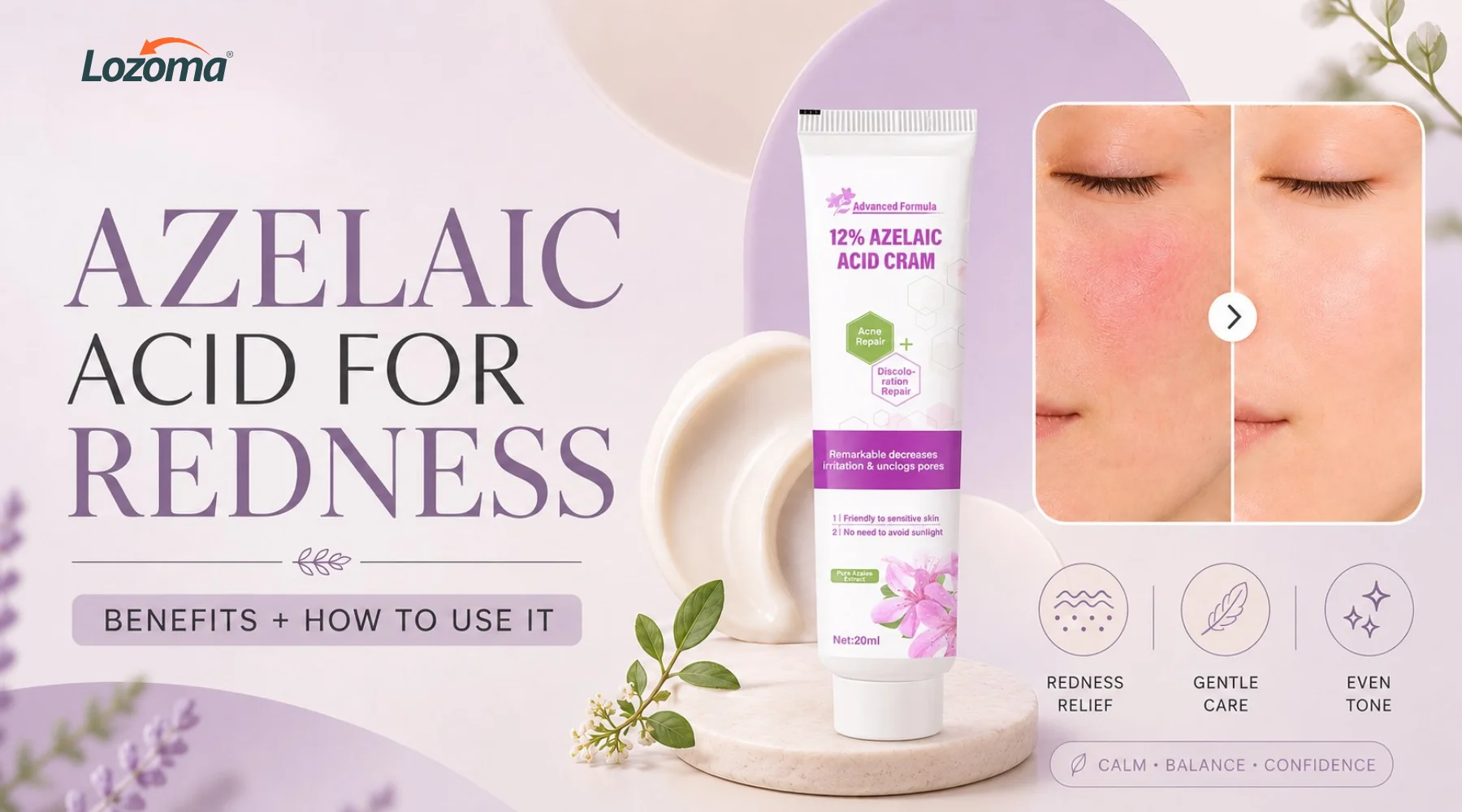
Facial redness can be hard to treat because it has different causes. For one person, it might show up as pink marks from acne that last for weeks. For someone else, it could mean constant flushing, bumps like those in rosacea, visible blood vessels, or a sensitive skin barrier that reacts to new products.
Using azelaic acid for redness needs more than just adding another ingredient. It helps reduce some inflammation, clear pores, and even out skin tone, but it can’t fix every cause of redness.
Azelaic acid works best for redness related to inflammatory acne, rosacea with bumps, or marks from breakouts. Studies of a 15% azelaic acid gel show improvements in inflammatory rosacea and redness after about 12 to 15 weeks. However, it mainly targets rosacea with bumps, not just redness.
Azelaic acid can be a helpful part of a routine for redness, but it’s important to figure out the cause first, introduce the ingredient slowly, and keep the rest of the skincare gentle.
Dermatologist Warning: If you have persistent, painful, or worsening redness, consult a GP or dermatologist. Seek help if redness affects your eyes, causes swelling, turns into a rash, or doesn’t improve with gentle skincare. This information is for education and not a substitute for a personal diagnosis or treatment.
Is Azelaic Acid Good for Redness?
Azelaic acid can help reduce redness, especially when inflammation is the main issue. It has anti-inflammatory and antioxidant properties and is often used to treat papulopustular rosacea, which causes redness and acne-like bumps. It is also effective for inflammatory acne, helping to lessen blemishes and the leftover discolouration after they heal.
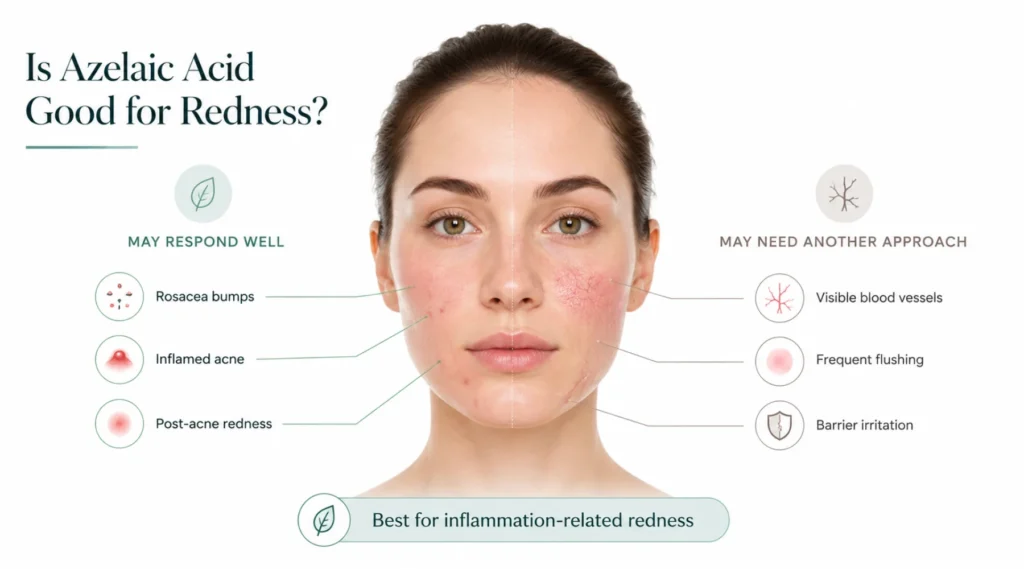
Azelaic acid may be particularly helpful for:
- Red bumps and pustules from rosacea
- Inflamed acne and related redness
- Red or pink marks after acne
- Redness with uneven skin tone
- Sensitive, acne-prone skin that can’t handle stronger treatments
- Mild roughness and congestion with inflammation
However, azelaic acid may not completely reduce redness from permanently enlarged blood vessels, frequent flushing, allergic reactions, eczema, seborrhoeic dermatitis, or a damaged skin barrier. It can be part of a broader treatment plan for these conditions, but shouldn’t be seen as the main solution.
In conclusion, azelaic acid is effective for inflammatory redness, but its success depends on the underlying cause.
Redness Is a Symptom, Not a Single Skin Condition
Redness happens when more blood flows close to the skin’s surface, inflammatory chemicals are released, or the skin barrier weakens. These processes can happen at the same time.
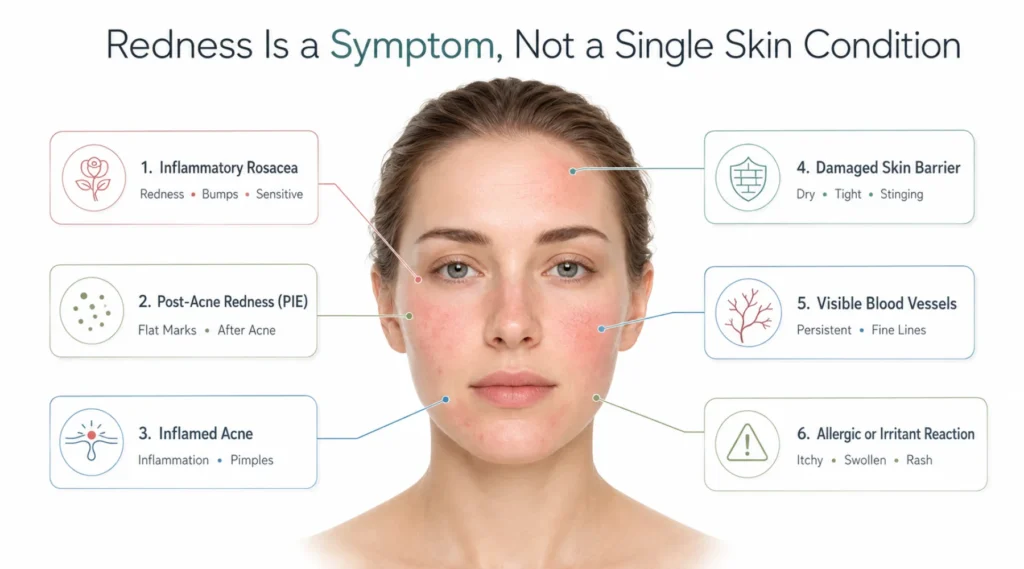
A red cheek may look the same in pictures, whether it’s from rosacea, wind, or too much exfoliation. However, each condition needs a different treatment. Using strong ingredients without understanding the cause can make the skin more sensitive.
Inflammatory Rosacea
Papulopustular rosacea causes redness on the face with small red bumps or pus-filled spots, especially on the cheeks, nose, chin, and forehead. It may also cause burning, stinging, and sensitivity. Azelaic acid is a proven treatment for this type of rosacea. In studies, a 15% gel reduced both bumps and redness more effectively than without it, with improvements lasting about 12 to 15 weeks. However, don’t assume all red spots are rosacea. Other conditions, like acne and dermatitis, can look similar.
Post-Acne Redness
After a spot heals, it can leave a flat pink, red, or purplish mark, known as post-inflammatory erythema (PIE). This is different from post-inflammatory hyperpigmentation, which creates darker marks due to extra pigment. People can have both types at the same time. Studies on azelaic acid for PIE are limited, but a 2024 study showed that a 15% gel improved both PIE and hyperpigmentation with few side effects. Azelaic acid may help by reducing inflammation and promoting an even skin tone. It won’t erase every red mark quickly, and older marks might take months to fade.
Inflamed Acne
Inflammatory acne causes redness around pimples and deeper spots. Azelaic acid helps keep pores clear, reduces inflammation, and targets acne-related bacteria. The NHS recommends it as an alternative when other acne treatments cause irritation. The American Academy of Dermatology recognises its ability to unclog pores, reduce inflammation, and improve dark spots after acne. For skin with both blemishes and irritation, it may be easier to use azelaic acid than a strong exfoliant.
Damaged or Over-Exfoliated Skin Barrier
Redness from barrier damage feels different. The skin may feel tight, shiny, flaky, itchy, or overly sensitive to products. Azelaic acid is usually easier on the skin than stronger acids, but it can still sting if the skin is compromised. Using it more often won’t fix an already damaged barrier. If the skin burns during cleansing or reacts to previous products, stop using azelaic acid. Focus on a gentle cleanser, a basic moisturiser, and sunscreen until the skin feels better.
Visible Facial Blood Vessels
Small red or purple lines on the nose and cheeks are called telangiectasia. Skincare can help calm the skin, but it usually won’t permanently close these vessels. For persistent redness, dermatologist treatments like laser therapy may work better. Azelaic acid can help with bumps and inflammation near the vessels, but results should be realistic.
Allergic or Irritant Reactions
If you experience sudden redness with itching, swelling, blistering, or a rash, you may have an irritation or allergy. Do not apply azelaic acid in this case. Stop using any new products, rinse your skin gently, and seek medical help if symptoms are severe or worsen, especially around the eyes or lips.
What Azelaic Acid Actually Is
Azelaic acid is a type of dicarboxylic acid found naturally in some grains. It can also be made through biological processes, but skin care products use specially made forms to ensure they have the right amounts.
Benefits: Azelaic acid helps treat acne, rosacea, and pigmentation issues. It works by reducing inflammation, affecting skin cells, fighting bacteria, and controlling pigment production.
Usage in routines: Knowing how azelaic acid works in skincare helps explain its role in reducing redness, even though it isn’t a typical exfoliating acid.
Is azelaic acid an exfoliant?
Azelaic acid is not like alpha, beta, or polyhydroxy acids. It isn’t just a weaker version of glycolic or salicylic acid. It helps normal cells in the follicle, reducing the build-up that clogs pores. This can create a mild smoothing effect, and some products label it as exfoliating. However, its benefits go beyond just exfoliation. Describing it only as an exfoliant ignores its anti-inflammatory, antimicrobial, antioxidant, and pigment-regulating properties.
Is azelaic acid a retinoid?
Azelaic acid is not a retinoid and does not come from vitamin A. Retinoids work by attaching to retinoid receptors, changing how genes are expressed related to cell turnover, acne, and collagen. Azelaic acid works in different ways. Both ingredients may help with acne, uneven texture, and post-acne marks, but they are not the same. Retinoids are more likely to cause noticeable peeling and irritation when you start using them.
What is azelaic acid good for?
Depending on the formulation and concentration, azelaic acid may be used for:
- Inflammatory and comedonal acne
- Papulopustular rosacea
- Redness associated with inflammatory lesions
- Post-inflammatory hyperpigmentation
- Acne-related red marks
- Melasma under professional guidance
- Uneven tone
- Mild congestion and roughness
It is especially appealing when several concerns overlap. Someone may have acne, redness, and brown marks simultaneously, making a multi-purpose active easier to manage than three separate strong treatments.
How Azelaic Acid Helps Calm Inflammatory Redness
Azelaic acid does not simply cover redness. Its effect depends on changing some of the biological processes that help create it.
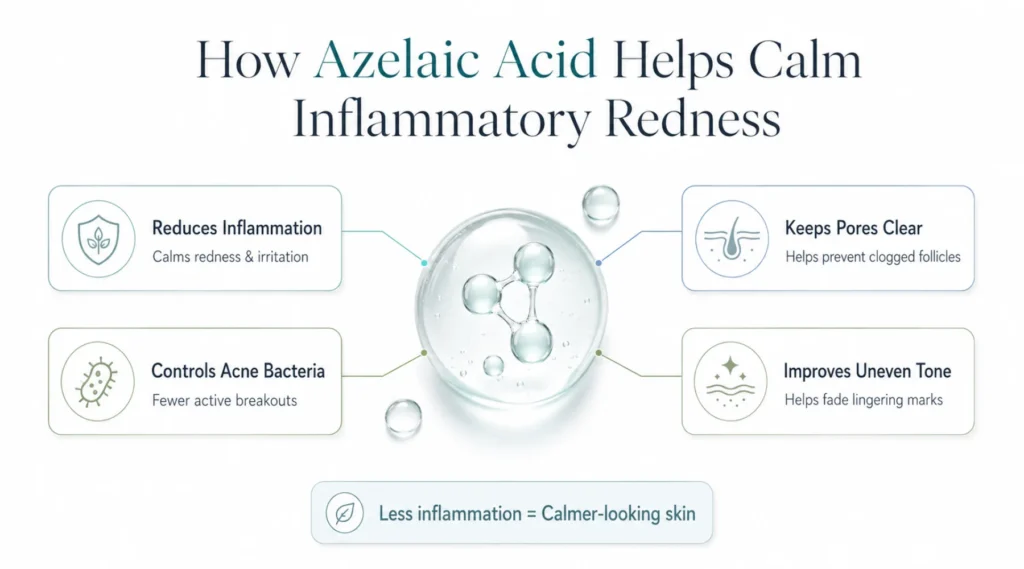
It moderates inflammatory activity.
Inflamed skin releases signals and reactive substances that cause swelling, pain, and colour changes. Azelaic acid can reduce this inflammation and has antioxidant properties. Studies show that a 15% azelaic acid gel can lower markers linked to inflammation in rosacea. However, it doesn’t suppress all types of inflammation; it’s most effective for papulopustular rosacea and acne.
It reduces acne-related bacterial activity.
Azelaic acid can fight bacteria related to acne. Unlike topical antibiotics, it works differently and is used for long-term acne care. By reducing active breakouts, it also helps lessen red and dark marks afterwards.
It helps prevent follicular blockage.
Dead skin cells sometimes don’t shed properly in acne-prone areas. When these cells mix with oil (sebum), they can clog pores and cause inflammation. Azelaic acid helps regulate this process, making it good for mild comedonal acne and inflamed spots. If clogged pores are a bigger problem, a BHA like salicylic acid may be more effective for treating blackheads.
It helps regulate uneven pigment production.
Azelaic acid can block an enzyme called tyrosinase, which is involved in making melanin. This is why it’s effective for post-inflammatory hyperpigmentation and melasma. While red marks aren’t only caused by too much melanin, many blemishes lead to a mix of colours like red, brown, or grey. Azelaic acid can help when the discolouration isn’t just vascular.
The Main Benefits of Using Azelaic Acid for Redness
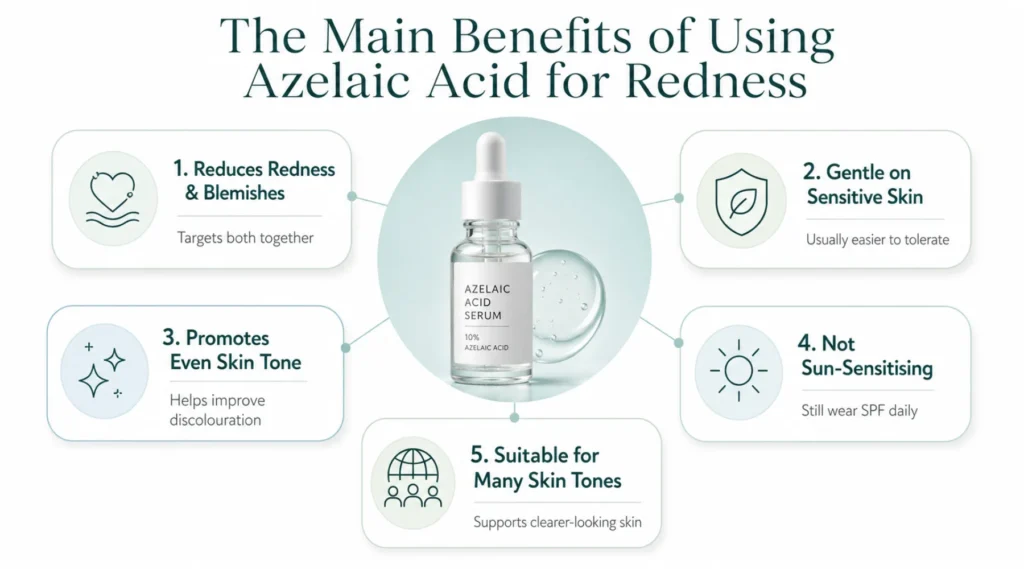
Addressing Redness and Blemishes
Azelaic acid can reduce redness and blemishes at the same time. Treating redness alone often doesn’t work well if acne or rosacea is still active. Azelaic acid helps lessen inflammation and improve skin colour, making it a good choice for sensitive skin that can’t handle stronger treatments.
Easier to Tolerate
Although azelaic acid can cause tingling, dryness, and irritation — especially at first — it is usually easier to tolerate than stronger acne treatments like benzoyl peroxide or retinoids. How well you tolerate it can vary between different forms, such as creams versus gels, even if the strength is the same.
Promoting Even Skin Tone
Redness often happens alongside other skin issues like brown marks, dull spots, and uneven texture. Azelaic acid helps manage these problems by addressing inflammation, skin cell turnover, and pigment issues in one step.
Not Sun-Sensitive
Unlike some exfoliating treatments, azelaic acid does not make skin more sensitive to the sun. However, wearing sunscreen is still essential, as sun exposure can worsen redness and prolong marks from acne. Daily broad-spectrum sunscreen is crucial for managing redness.
Suitable for Various Skin Tones
Inflammatory acne can leave dark spots, especially on deeper skin tones. Azelaic acid effectively treats active blemishes without strong peeling, while also evening out skin tone. Some rare cases of lighter patches have been reported, so anyone noticing unusually pale areas should stop using the product and consult a doctor.
How Long Does Azelaic Acid Take for Redness?
Azelaic acid works slowly. It’s better to evaluate its effects over weeks or months rather than days.
Studies on rosacea show that symptoms like redness and bumps improve over 12 to 15 weeks of treatment. Similarly, acne advice states that topical treatments can take weeks before you see noticeable results.
A practical timeline may look like this:
| Time using azelaic acid | What may happen |
| First few applications | Mild tingling, warmth or temporary dryness may occur |
| Weeks 1–2 | The skin is mainly adjusting; major colour changes are unlikely |
| Weeks 3–6 | Some people notice fewer inflamed bumps and slightly calmer skin |
| Weeks 6–12 | Redness associated with active inflammation may become less noticeable |
| Months 3–6 | Continued improvement may occur in persistent marks, tone and recurring inflammation |
These deadlines are not guaranteed. Results depend on what causes the redness, the strength and type of product used, how often you use it, your overall routine, and whether you keep encountering triggers like heat, sun, or over-exfoliation.
Instead of checking the mirror each day, take photos in the same light every two to four weeks. Redness can change with temperature, exercise, stress, and blood flow, so daily comparisons can be confusing.
How to Use Azelaic Acid for Redness Without Causing More Irritation
The best routine isn’t always about using the strongest products or applying them the most often. For sensitive skin, sticking to a regular routine that feels comfortable is more important than using harsh products that cause burning or peeling.
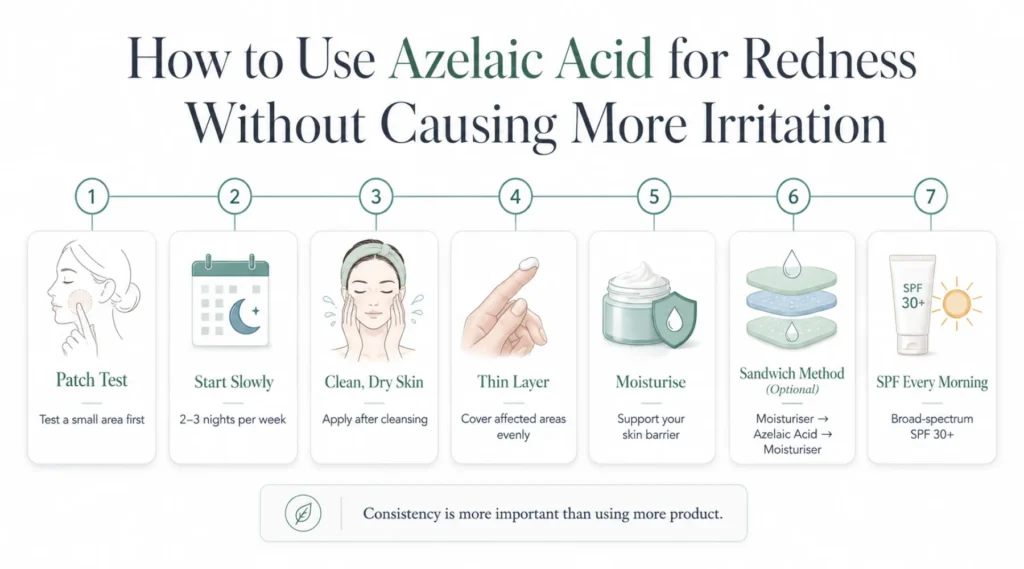
Start with a patch test.
First, apply a small amount of the product to a small area near your jaw or face. Do this for a few days as directed. A patch test won’t predict all reactions, but can show immediate issues like burning, itching, swelling, or a rash. Don’t test on broken, freshly exfoliated, or recently shaved skin.
Introduce it two or three times a week.
Start using the product on alternate evenings or two to three times a week. If your skin feels good after about two weeks, you can increase it to daily use. Some prescription products are meant for twice-daily use, but beginners should not start with that. Always follow the specific instructions for your product and any advice from your prescriber. The FDA-approved 15% gel is usually studied with twice-daily use, but those with sensitive skin may need to introduce it more slowly.
Apply it to clean, dry skin.
After washing your face, gently pat your skin dry and let any leftover moisture evaporate. Applying azelaic acid to damp skin can increase absorption and make tingling more intense. While resilient skin may not feel the difference, dry application is safer for those concerned about redness.
Use a thin, even layer.
Using more products won’t give you faster results. A thin layer over the affected area works better than piling it on individual spots. For widespread acne or rosacea-like inflammation, treating larger areas is more effective than spot-treating. Avoid applying it to your eyelids, the corners of your nose, lips, and broken skin.
Follow with moisturiser
A fragrance-free moisturiser can reduce dryness and support tolerance.
Useful supporting ingredients may include:
- Ceramides
- Glycerin
- Squalane
- Panthenol
- Beta-glucan
- Colloidal oatmeal
- Hyaluronic acid
- Niacinamide at a well-tolerated concentration
Moisturiser should feel comfortable, not heavy or hot. Thick layers can trap heat, which may irritate people with sensitive skin.
Use the moisturiser sandwich for highly reactive skin.
The sandwich method involves applying:
- A light layer of moisturiser
- Azelaic acid
- Another layer of moisturiser if needed
This may reduce penetration a bit, but it often makes it more comfortable, which helps with regular use.
Another choice is to apply moisturiser first and then add azelaic acid. The best order is the one that lets you use them regularly without irritation.
Wear sunscreen every morning.
Choose broad-spectrum SPF 30 or higher. If you have sensitive skin that gets red easily, pick a fragrance-free sunscreen that feels nice on your skin.
Tinted mineral or hybrid sunscreens can instantly improve your skin’s colour. Green-tinted options can help make redness less noticeable, but they don’t address the underlying problem.
Choosing the Right Strength and Texture
Azelaic acid comes in different strengths and forms, like creams, gels, foams, suspensions, and serums.
Around 10%
Ten percent is common in cosmetic products. It’s a good starting point for beginners and for treating mild post-acne marks and sensitive skin. However, the whole formula is important. A 10% product with a strong fragrance may irritate some people more than a simple 15% prescription gel.
Around 12%
A 12% option is good for people who need more than a low concentration but aren’t ready for a prescription. This concentration works well for redness, uneven skin tone, and occasional blemishes. For active breakouts, a 12% Azelaic Acid Acne Cream may be more suitable. Always check the entire ingredient list, as botanical extracts, fragrance, and drying alcohols can affect how the product works on sensitive skin.
Around 15%
Fifteen percent azelaic acid is commonly found in prescription gels for treating papulopustular rosacea. There is strong clinical support for using this concentration to reduce inflammation and redness. Availability of prescriptions varies by country, and a doctor may suggest a specific product based on skin type and symptoms.
Around 20%
Twenty percent azelaic acid cream is used for acne and has been studied for rosacea. A higher concentration doesn’t always mean better results or less irritation. Some people may find a 20% cream more soothing than a lower-strength gel because creams can be more moisturising, while others might find them too heavy. How the product feels, how often it’s used, and personal skin reactions are all important factors.
Cream, gel, foam, or serum?
| Format | Often suits | Possible drawback |
| Cream | Normal, dry or easily irritated skin | May feel rich on very oily skin |
| Gel | Oily or combination skin | Can sting or feel drying |
| Foam | Larger areas or those who dislike heavy textures | Availability may be limited |
| Suspension | Users wanting a matte cosmetic finish | Can pill under other products |
| Serum | Layered routines and lightweight preferences | May contain several additional actives |
If you have redness, focus on gentle, soothing products instead of trendy ones. You can find many skin care options with helpful textures, and lightweight serums can be useful if your cream already has enough moisture.
A Simple Morning Routine Using Azelaic Acid for Redness
You can use azelaic acid in the morning if it works well under moisturiser and sunscreen.
- Cleansing: Gently cleanse your face or rinse with water. Don’t use hot water or harsh scrubs.
- Hydrating Serum (if needed): Keep it simple. Use glycerin, panthenol, or hyaluronic acid.
- Azelaic Acid: Apply a thin layer on dry skin.
- Moisturiser: Pick a fragrance-free product that won’t trap heat.
- Sunscreen: Apply plenty and reapply as needed.
Using azelaic acid in the morning is helpful for those who use retinoids at night. It keeps treatments separate and reduces the number of strong products applied at once. If azelaic acid doesn’t layer well under sunscreen, switch to using it in the evening.
A Simple Evening Routine for Sensitive or Rosacea-Prone Skin
- Remove makeup and sunscreen gently: Use a gentle cleansing oil, balm, or micellar water if needed.
- Cleanse with lukewarm water: Avoid using brushes, scrubs, or rough cloths.
- Allow the skin to dry: Wait a few minutes to help reduce stinging.
- Apply moisturiser first if you’re very sensitive: This acts as a light barrier.
- Apply azelaic acid: Use a thin layer without rubbing hard.
- Add more moisturiser if needed: Focus on dry spots instead of applying it thickly all over your face.
On non-azelaic nights, use only cleanser and moisturiser. A routine does not need an active treatment every evening to be effective.
Routines for Different Redness Patterns
Redness with oily, congested skin
Morning:
- Gentle gel cleanser
- Niacinamide serum, if tolerated
- Lightweight moisturiser
- Sunscreen
Evening:
- Cleanser
- Azelaic acid
- Gel-cream moisturiser
You can use a salicylic acid product once or twice a week if blackheads are still an issue. Don’t use it on the same night as azelaic acid.
Knowing how salicylic acid works helps you tell the difference between treating pores and reducing inflammation.
Redness with inflammatory acne
Morning:
- Gentle cleanser
- Azelaic acid
- Moisturiser
- Sunscreen
Evening:
- Cleanser
- Acne treatment prescribed or selected for the specific acne type
- Moisturiser
Use salicylic acid wisely. Apply it to treat congestion, not on sore or inflamed skin. It works best for acne when there’s a lot of oil and blocked pores.
Redness with dry or sensitive skin
Morning:
- Water rinse or creamy cleanser
- Barrier-supporting moisturiser
- Sunscreen
Evening on treatment nights:
- Cream cleanser
- Moisturiser
- Azelaic acid
- Additional moisturiser if needed
Begin with two evenings per week. Increase only when the skin feels normal between applications.
Redness with suspected rosacea
Keep the routine deliberately minimal:
- Gentle cleanser
- Azelaic acid as directed
- Fragrance-free moisturiser
- Daily sunscreen
Don’t use multiple exfoliants, essential oils, or strong vitamin C products while you check how your skin reacts.
A dermatologist can confirm if you have rosacea and suggest the best treatment, like prescription azelaic acid, ivermectin, metronidazole, brimonidine, or oxymetazoline.
Can You Use Azelaic Acid With Niacinamide?
Azelaic acid and niacinamide can usually be used together in your skincare routine.
Niacinamide helps strengthen the skin barrier and reduce water loss. Studies show it can improve redness and help those with rosacea when used in moisturisers.
This combination is great for addressing redness, acne, and uneven skin tone.
A simple routine could be:
- Cleanser
- Lightweight niacinamide serum
- Azelaic acid
- Moisturiser
You don’t have to apply them in separate layers. A moisturiser with niacinamide might be better for sensitive skin.
Keep in mind that high levels of niacinamide can cause warmth or irritation for some people. It’s often better to use a moderate formula regularly instead of a strong serum that feels too hot.
Can You Use Azelaic Acid With Vitamin C?
You can use azelaic acid and vitamin C in the same skincare routine, but if you have sensitive skin, it’s best to use them at different times. They don’t cancel each other out, but irritation can occur, especially with strong vitamin C serums.
A safe way to use them is:
- Apply vitamin C in the morning.
- Use azelaic acid in the evening.
Alternatively, you can use vitamin C two or three times a week and azelaic acid on the other days.
If you’re using a gentler vitamin C in a hydrating formula, you might layer both without problems. Start with one product, and wait until your skin feels good before adding the other.
If you experience ongoing burning, flaking, or redness, stop using them together.
Can Azelaic Acid Be Used With Salicylic Acid?
Azelaic acid and salicylic acid work well together for acne that has both inflammation and clogged pores.
Salicylic acid penetrates oil and targets sebaceous follicles, while azelaic acid reduces inflammation, fights bacteria, and evens skin tone.
Most people don’t need to use both every day. A good routine might include:
- Azelaic acid most evenings
- Salicylic acid, one or two evenings a week
- Moisturiser-only nights when the skin feels dry
When starting, don’t use them on the same night. It’s best to combine treatments only if your skin feels comfortable.
Can Azelaic Acid Be Used With Retinol or Prescription Retinoids?
Azelaic acid and retinoids can be used together to treat acne and pigmentation, but they may cause irritation.
A good starter plan is:
- Use azelaic acid in the morning.
- Use a retinoid at night.
You can also use them on different nights. Don’t start both treatments in the same week. Let your skin get used to one treatment before adding the other.
If you have a lot of redness, focus on the treatment that best matches your skin issue instead of trying to use everything that might help.
Azelaic Acid vs PHA for Redness-Prone Skin
Azelaic acid and polyhydroxy acids (PHAs) are often considered similar because they can both work for sensitive skin. However, they have different main functions.
PHAs like gluconolactone and lactobionic acid help remove dead skin cells. Their larger size means they don’t penetrate the skin as quickly, making them gentler than some alpha hydroxy acids (AHAs). Studies show that PHAs are safe for sensitive skin conditions like rosacea and atopic dermatitis, but some products may still cause irritation.
| Feature | Azelaic acid | PHA |
| Main purpose | Inflammation, acne, rosacea and uneven pigment | Gentle surface exfoliation and hydration |
| Ingredient family | Dicarboxylic acid | Polyhydroxy acid |
| Helps inflammatory bumps | Yes, with stronger evidence | Not a primary treatment |
| Helps clogged pores | Can help normalise keratinisation | Mild surface effect |
| Helps redness | Most useful when redness is inflammatory | May improve dull, rough skin but does not directly treat rosacea |
| Helps pigmentation | Yes | May gradually improve surface unevenness |
| Irritation potential | Tingling and dryness are possible | Usually gentle, but still capable of irritation |
For rough, flaky skin that can’t handle glycolic acid, a PHA might be a better option. For redness linked to acne or rosacea, azelaic acid is usually a better choice. Some people may use both eventually, but it’s not necessary to start them at the same time.
Azelaic Acid vs Salicylic Acid for Red, Acne-Prone Skin
Neither ingredient is universally better.
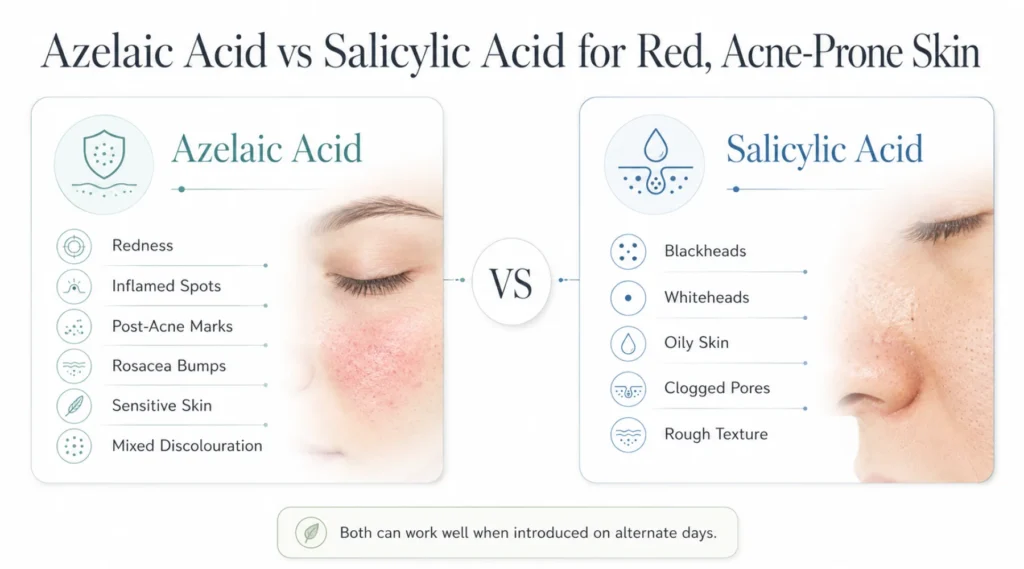
Choose azelaic acid when the main concerns are:
- Inflamed spots
- Widespread redness
- Post-acne marks
- Rosacea-like bumps
- Sensitivity to stronger acne treatments
- A mixture of red and brown discolouration
Choose salicylic acid when the main concerns are:
- Blackheads
- Whiteheads
- Oily congestion
- Enlarged-looking clogged pores
- Rough texture caused by follicular build-up
Use both carefully when congestion and inflammation are both important. A staggered routine is usually easier to handle than using them together.
Mistakes That Can Make Redness Worse
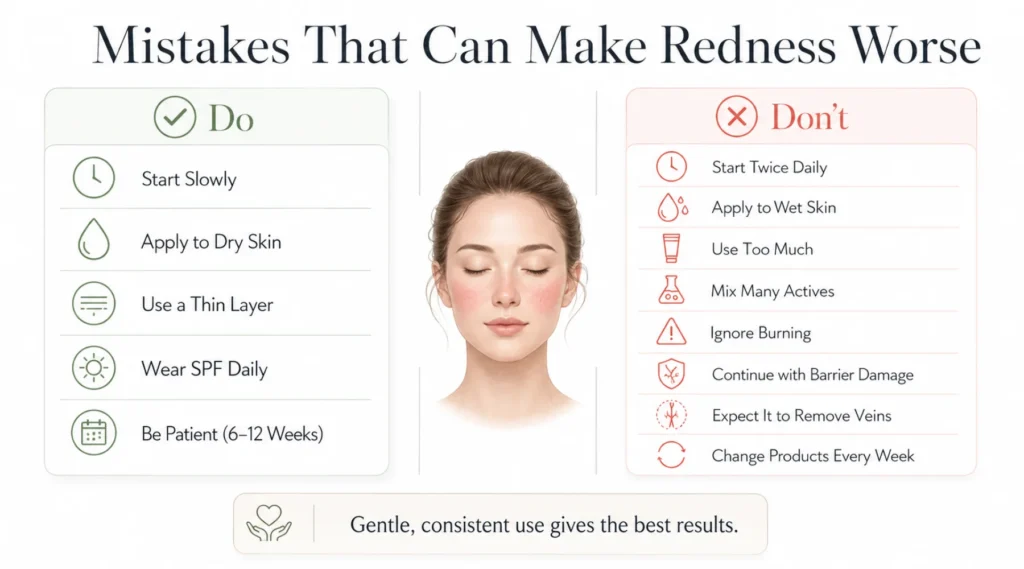
Starting with twice-daily application
Using azelaic acid both morning and night from the first day can irritate sensitive skin. Start slowly, even if the label suggests more frequent use. You can increase the frequency later.
Applying it to wet skin
Applying to wet skin can make the product sting more. Let your face dry before applying.
Using too much
You don’t need a thick layer of the product. Using too much can cause pilling, dryness, and irritation without improving results.
Adding several activities at once
Using azelaic acid, retinol, vitamin C, and salicylic acid together can make it hard to know which product causes irritation. Introduce one product at a time and assess it over several weeks.
Treating temporary stinging as proof that it is working
Mild tingling is common, especially with the first few uses. Persistent burning is not a sign of better results. If your skin becomes very painful, swollen, blistered, or increasingly red, wash it off and stop using it.
Continuing through barrier damage
If your skin feels raw, shiny, cracked, or painful, it needs to recover, not more treatments. Pause active ingredients until cleansing and moisturising no longer sting.
Skipping sunscreen
Sun exposure can worsen rosacea, prolong post-inflammatory marks, and make facial colour more noticeable. Azelaic acid does not replace sunscreen.
Expecting it to remove visible veins
Topical products cannot reliably remove visible veins. Seek professional advice if visible vessels are your main concern.
Changing products every week
Azelaic acid often takes six to twelve weeks to show meaningful changes. Switching after several days makes it hard to fairly assess its effectiveness.
Side Effects and Warning Signs
Common early side effects can include:
- Tingling
- Mild burning
- Itching
- Dryness
- Flaking
- Temporary redness
These effects usually get better as the skin gets used to it, but they should stay mild. If you experience discomfort, use it less often or apply moisturiser before using it.
Stop using the product and seek advice if you experience:
- Severe or persistent burning
- Facial swelling
- Hives
- Blistering
- A rapidly spreading rash
- Difficulty breathing
- Eye irritation that does not resolve after rinsing
- New pale or depigmented patches
- Worsening asthma symptoms
Don’t use azelaic acid on open wounds, eczema flare-ups, sunburn, or recently treated skin from peels, laser, or microneedling unless a doctor says it’s okay.
Daily Habits That Help Redness Treatments Work Better
Skincare alone won’t fix constant irritation. Use lukewarm water instead of hot. Hot showers, saunas, and steam can widen blood vessels and make redness worse.
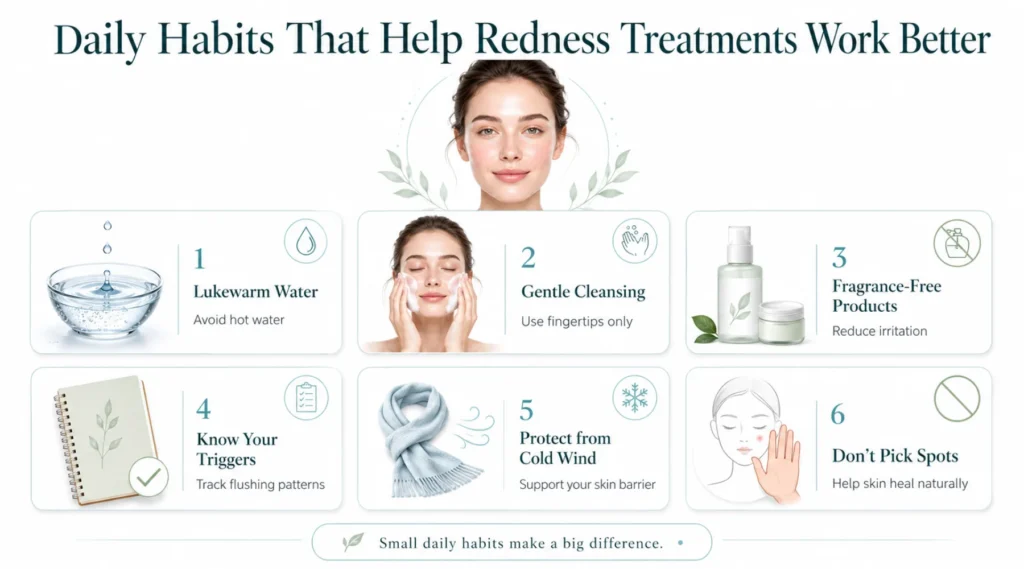
Clean your face with your fingertips, not brushes or rough clothes. Pat your face dry instead of rubbing it.
Choose fragrance-free products when you can. Fragrances can irritate some people, so avoiding them makes it easier to manage redness.
Be mindful of your triggers. Factors like heat, sunlight, alcohol, spicy food, stress, hard exercise, and quick temperature changes can cause flushing. Keep a simple diary to track what affects you, rather than cutting out everything at once.
Protect your face from the cold wind. Use a gentle moisturiser and cover your skin to reduce irritation.
Don’t pick at spots. Squeezing can lead to more inflammation and can leave lasting red or dark marks. The AAD suggests leaving acne alone to help it heal faster and reduce the risk of discolouration and scarring.
When Skincare Alone Is Not Enough
When to Seek Medical Help for Redness
Get a medical check-up if redness lasts a long time, hurts, or doesn’t have an obvious cause. See a professional if:
- Redness is around the eyes or eyelids.
- Your eyes feel gritty, dry, painful, or sensitive to light.
- Your facial skin thickens, especially near the nose.
- Bumps keep coming back despite treatment.
- You notice more visible blood vessels.
- Redness affects your daily activities.
- Your skin has crusting, weeping, or severe scaling.
- Redness started after you began a new medication.
- You’re unsure if it’s acne, rosacea, eczema, or dermatitis.
A dermatologist may suggest prescription azelaic acid or another topical treatment. Ongoing redness can be treated with medications that temporarily tighten blood vessels, while visible ones may improve with laser or light treatments. For inflammatory rosacea, you might need ivermectin, metronidazole, oral antibiotics, or other targeted treatments based on severity.
Seeing a professional doesn’t mean your skincare has failed. It helps you avoid treating the wrong condition for months.
Questions People Often Ask About Azelaic Acid and Redness
Can azelaic acid help with redness safely?
Yes, azelaic acid can safely reduce redness caused by conditions like rosacea and acne if used correctly. Start with a thin layer a few times a week, moisturise well, and stop if you experience severe irritation.
How long does it take to reduce redness?
Some people see calmer skin in four to six weeks, but noticeable improvement can take eight to twelve weeks. Studies show continued benefits over 12 to 15 weeks. Post-acne marks might take several months, especially if they’re reddish or brown.
Can azelaic acid make redness worse at first?
It can temporarily increase redness due to irritation. Mild tingling may happen at first, but lasting burning or worsening redness means you should reduce use or stop until your skin heals.
Does azelaic acid cause purging?
Azelaic acid may affect cell shedding, but dramatic “purging” is not typical. A few blemishes might appear at first, but widespread painful acne or rashes could signal irritation or an unsuitable formula. Don’t assume every reaction is just purging.
Can I use azelaic acid every day?
Many can use it daily, with some prescriptions allowing twice a day. If you have redness-prone skin, start slowly. Daily use is helpful only if your skin feels comfortable and healthy.
Should it be used in the morning or at night?
It can be used at any time. Morning use works well under moisturiser and sunscreen, while evening use may be easier if you wear makeup. Consistency and how your skin tolerates it are more important than the time of day.
Can I use azelaic acid with niacinamide?
Yes, you can. Niacinamide helps with skin barrier, hydration, and even skin tone, making it a great match for azelaic acid. Use a moderate amount and stop if niacinamide causes warmth or redness.
Can I use azelaic acid with vitamin C?
Yes, but if you have sensitive skin, use vitamin C in the morning and azelaic acid at night. Strong vitamin C can sting, so try each product separately first. There’s no benefit in layering them if it leads to redness.
Is azelaic acid good for acne as well as redness?
Yes, it helps clear pores, reduces inflammation, and kills bacteria. It can also improve dark marks left after spots heal. It’s especially useful if other treatments like benzoyl peroxide irritate your skin.
Will azelaic acid remove broken capillaries?
No, it can’t remove broken capillaries or telangiectasia. Azelaic acid may reduce inflammation nearby, making skin look less red, but laser or light treatments are usually needed to target the capillaries.
Can azelaic acid treat redness without acne?
Maybe, but it depends on the cause. Azelaic acid may help with inflammatory rosacea, even if you don’t have acne. However, its effectiveness for redness without bumps hasn’t been fully tested. Continuous redness without bumps might need a different treatment.
Is azelaic acid suitable for sensitive skin?
It can be suitable for sensitive skin, but irritation is still possible. Use a simple formula, apply it to dry skin, start 2-3 times a week, and use moisturiser. Stop if your skin feels worse.
Is a higher percentage better for redness?
Not always. A 15% azelaic acid product has strong support for papulopustular rosacea, but a lower-strength option used consistently may work better than a stronger one that irritates the skin. The formulation, diagnosis, and how often you use it matter too.
Can I use azelaic acid around my nose?
You can apply it to the outer nose if you have redness or blemishes. Avoid the nostrils and creases if they are cracked or irritated. The corners of the nose may sting more, so apply moisturiser there first or leave a small area untreated.
Should I stop using azelaic acid when my redness improves?
Not necessarily. Acne and rosacea can come back, so continued treatment may help maintain results. Once your skin is stable, you can reduce how often you use it, but should not stop completely. Follow your clinician’s maintenance plan if you are on a prescription.
Making Azelaic Acid Effective for Redness Without Overdoing It
Azelaic acid works best when matched to your specific issues. It can reduce bumps, clear pores, and improve red and pigmented marks left by acne. It also helps with papulopustular rosacea.
However, azelaic acid has limits. It won’t remove facial vessels, stop flushing quickly, or fix a severely damaged skin barrier if irritation continues. Start with a thin layer a few times a week. Use gentle cleansers, a good moisturiser, and sunscreen every day. Introduce other active ingredients like vitamin C or retinoids only after your skin can handle azelaic acid.
You should see fewer bumps, less reactive skin, and a more even complexion; not burning, peeling, or increasing redness. If your symptoms don’t match acne or rosacea, consult a dermatologist for further help.