





Blog
What Is Azelaic Acid? How It Works and When to Use It Safely

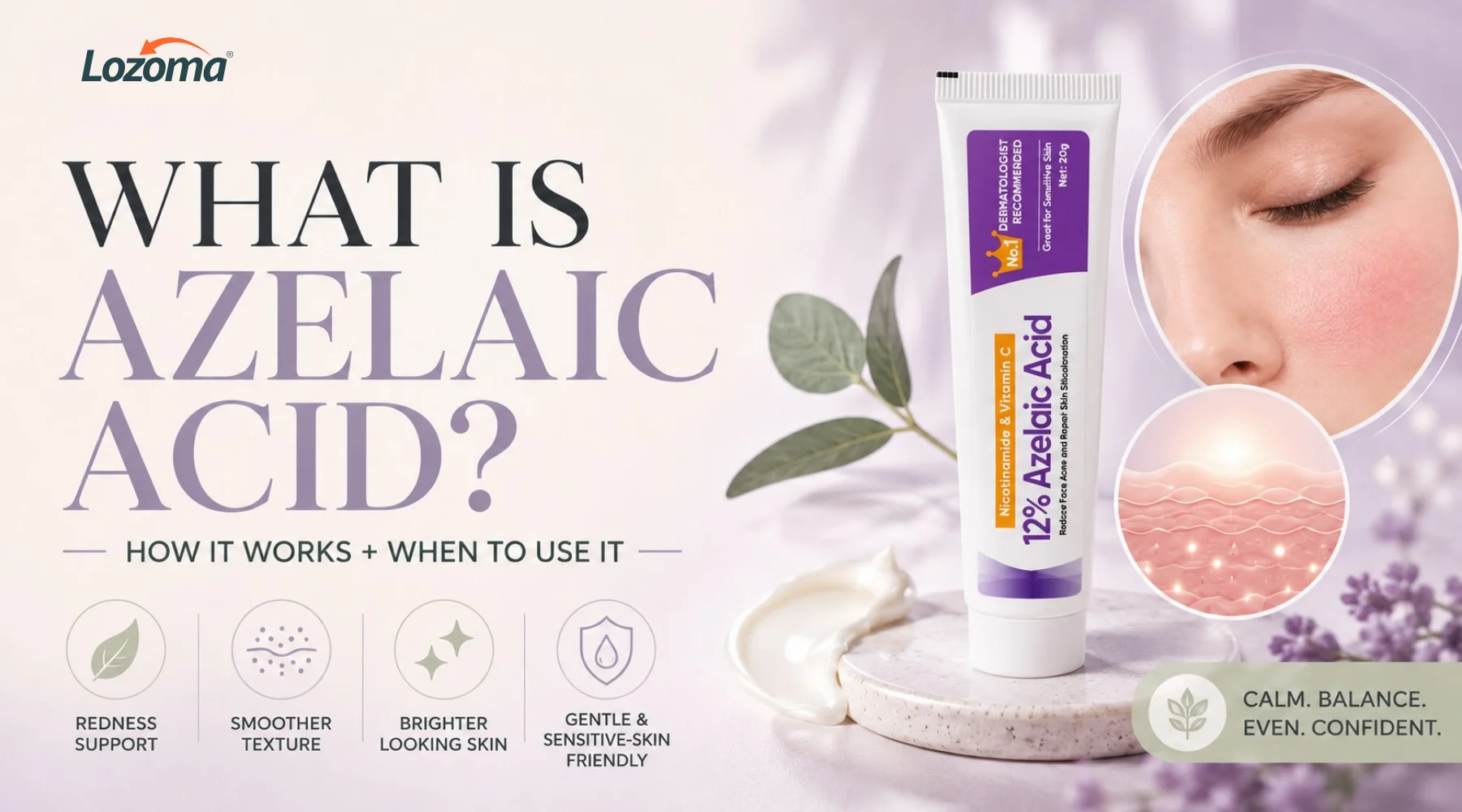
Azelaic acid is popular for people with mixed skin issues. If you have breakouts but can’t use strong treatments, or if you deal with redness and marks left by blemishes, azelaic acid can help without the harsh effects of typical exfoliants or retinoids.
So, what is azelaic acid? It’s a natural acid applied to the skin to treat acne, redness, and uneven skin tone. It works by calming inflammation, reducing acne bacteria, normalising how skin cells gather in pores, and slowing down excess pigment production.
This broad action makes it very versatile. Azelaic acid can benefit oily, dry, sensitive, and acne-prone skin, but the right formula and strength must fit the individual.
It’s not a quick fix for blemishes and doesn’t peel the skin like some products. Instead, it provides gradual support: fewer inflamed blemishes, reduced congestion, calmer redness, and more even skin over time. Studies back its use for acne, rosacea, melasma, and dark spots, but results can vary depending on the product and skin type.
What Is Azelaic Acid Made From?
Azelaic acid is a nine-carbon dicarboxylic acid. Small amounts can be found naturally, and skin microorganisms can produce it. While it’s often linked to grains like wheat, rye, and barley, the azelaic acid used in skincare products is mostly made in controlled settings, not from grain extracts.
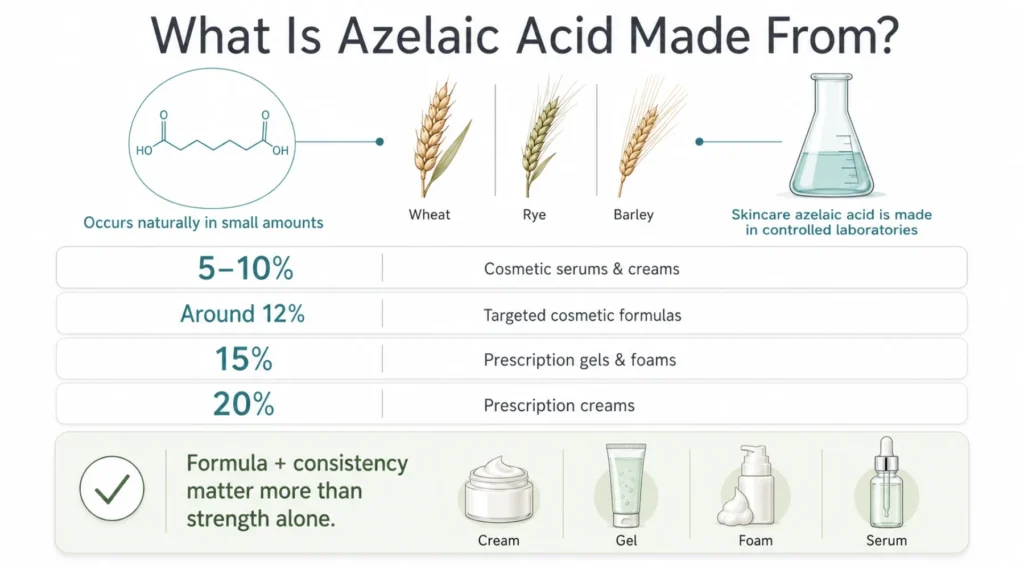
This difference is important for those with gluten intolerance or coeliac disease. Azelaic acid is a specific chemical, not a grain protein. So, having a gluten-related condition doesn’t mean azelaic acid is unsuitable for your skin. However, it’s still wise to check the full ingredient list for any known allergies.
Azelaic acid has been used in dermatology for a long time, even though it has gained attention on social media recently. Prescription creams and gels for acne and rosacea have been around for decades. Now, cosmetic products offer lower and mid-strength options to more people.
Depending on your location and product regulations, you may find:
| Concentration | Where it is commonly found | Typical role |
| Around 5–10% | Cosmetic creams, suspensions and serums | Uneven tone, mild congestion, redness-prone skin |
| Around 12% | Higher-strength cosmetic or targeted treatment formulae | Blemishes, post-acne marks and uneven tone |
| 15% | Commonly found in prescription gels or foams | Papulopustular rosacea and acne |
| 20% | Commonly found in prescription creams | Acne and pigmentation-related concerns |
A higher percentage isn’t always better. The way the product is delivered — like cream, gel, foam, or emulsion — affects how well the active ingredient works and how comfortable it feels on the skin.
A well-made 10% product used regularly may be better for someone than a stronger version that causes burning and gets left unused after just five days.
How Azelaic Acid Works Beneath the Skin’s Surface
Azelaic acid works through multiple actions, not just one. Its effectiveness comes from several processes happening together.
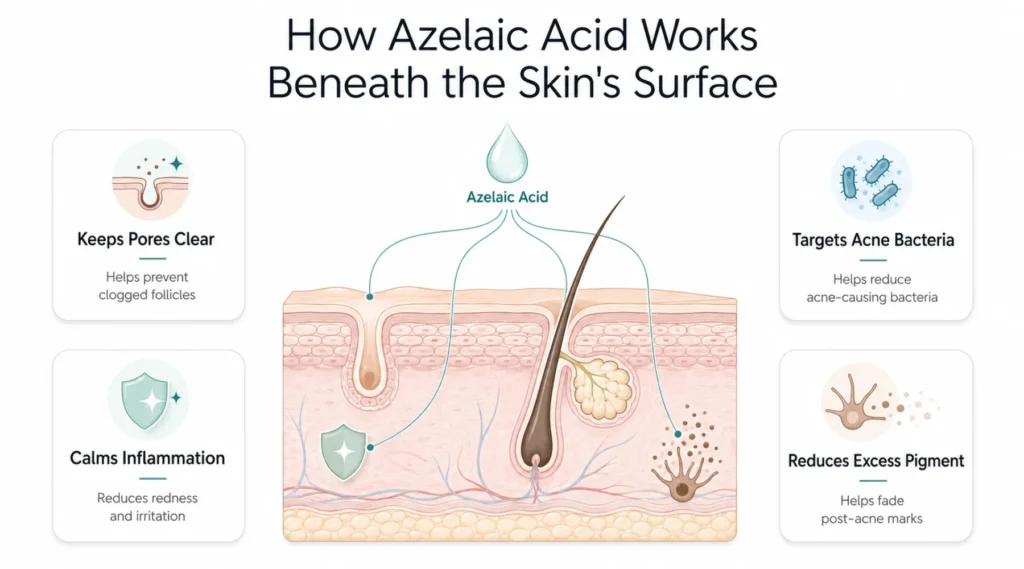
It helps normalise the build-up of skin cells inside pores.
Healthy skin constantly sheds old cells. In acne-prone skin, these cells can stick together and stay in the follicle instead of sloughing off. When mixed with oil, they can form tiny plugs, leading to whiteheads and blackheads.
Azelaic acid helps manage the behaviour of keratin-producing cells, making them less likely to clog follicles.
This is one reason azelaic acid can reduce small bumps and mild acne, even if it doesn’t dissolve oil as well as salicylic acid.
It acts against bacteria involved in acne.
Acne isn’t just a bacterial infection. The bacteria Cutibacterium acnes can cause inflammation in blocked pores.
Azelaic acid fights bacteria and helps create a less friendly environment for acne-causing germs. Unlike topical antibiotics, it doesn’t usually lead to bacterial resistance, making it a good choice for long-term acne treatment.
It won’t sterilise the skin, nor should it. The skin has many helpful organisms that protect it. The goal is to reduce inflammation, not to get rid of all bacteria on the face.
It calms inflammatory activity.
Redness, swelling, and tenderness around a blemish happen due to inflammation. Azelaic acid can lower the effects of reactive oxygen species and inflammatory cells.
This anti-inflammatory effect makes azelaic acid useful for treating red papules, pustules, and papulopustular rosacea. It also sets azelaic acid apart from other ingredients that mainly exfoliate without directly reducing inflammation.
It interferes with excess pigment production.
When skin is inflamed or hurt, pigment cells may produce extra melanin, leaving flat brown, grey, or purple marks, especially on medium to darker skin tones.
Azelaic acid blocks tyrosinase, an enzyme that helps make melanin. It mainly affects overactive pigment cells instead of lighting all skin equally.
This makes azelaic acid helpful for treating dark spots after inflammation and as part of a melasma treatment plan. The American Academy of Dermatology lists it as an ingredient that can help reduce dark spots, and clinical studies support its benefits for melasma and post-inflammatory pigmentation.
What Is Azelaic Acid Good For?
Azelaic acid is helpful for skin problems that involve inflammation, clogged pores, and uneven colour.
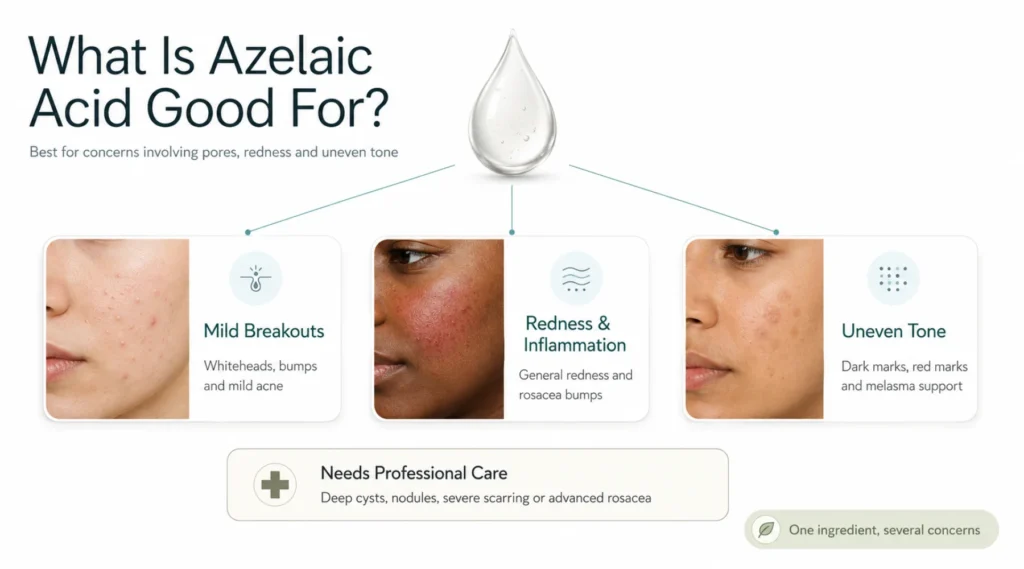
It may be suitable for:
- Mild to moderate acne
- Whiteheads and small bumps
- Red marks after blemishes
- Dark spots from acne
- Rosacea with bumps
- General redness
- Uneven skin tone
- Melasma in a complete treatment plan
- Sensitive acne-prone skin that has trouble with stronger treatments
However, it is usually not enough for deep cysts, nodules, severe scars, or advanced rosacea, which often need a doctor’s diagnosis and prescription.
Azelaic acid cannot remove indented acne scars. It may help with the colour around a scar, but it doesn’t rebuild enough collagen to lift deep scars.
Its strength lies in treating multiple concerns at once. For someone with breakouts, redness, and lingering pigmentation, one azelaic acid product may be easier and better than a complicated routine with strong exfoliants, antibacterial treatments, and separate brightening serums.
Is Azelaic Acid an Exfoliant?
Azelaic acid helps dead skin cells shed and is sometimes called a mild exfoliant. However, it acts differently from glycolic, lactic, salicylic, or polyhydroxy acids. Classic exfoliating acids mainly loosen bonds between surface cells. Salicylic acid clears oil from pores. Azelaic acid works by normalising skin cell turnover, while also offering anti-inflammatory, antimicrobial, and pigment-regulating benefits.
It may gradually smooth the skin, but it doesn’t give the immediate polished feel of a strong peel. This makes it suitable for sensitive skin. Azelaic acid can improve roughness and congestion without harsh exfoliation. It may cause some dryness or stinging, especially if used too quickly, but it doesn’t need visible peeling to be effective.
Thinking of it as “just another exfoliant” can lead to mistakes. People might use it only once a week or mix it with other acids because it’s less intense. Azelaic acid is most effective when used regularly and moderately, not just occasionally.
Is Azelaic Acid Good for Acne?
Azelaic acid is a well-known treatment for acne because it targets key factors in acne growth: dead skin cells, bacteria, and inflammation.
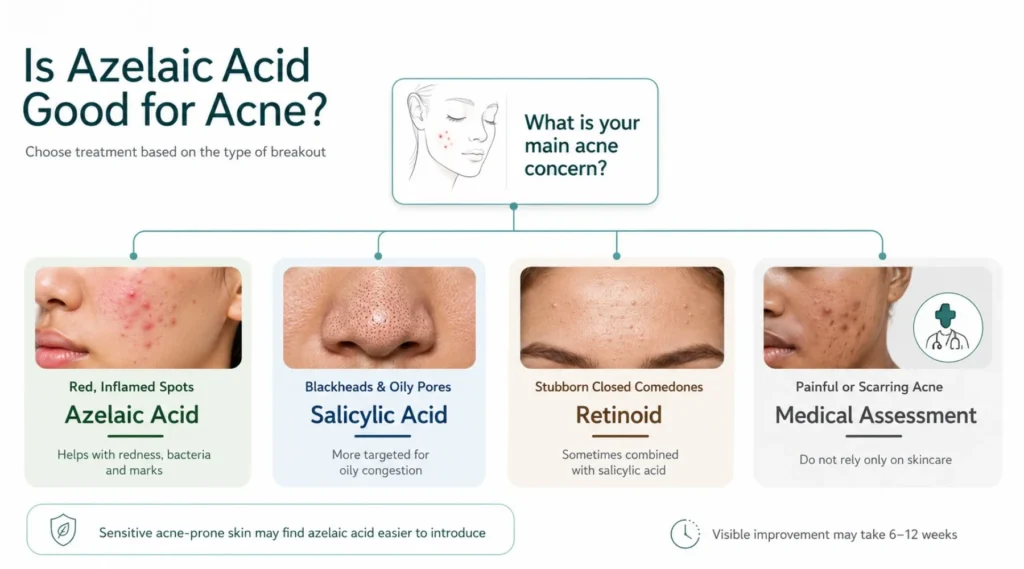
It is especially helpful for:
- Small inflamed spots
- Red bumps and sores
- Mild whiteheads
- Breakouts that cause lasting marks
- Sensitive, acne-prone skin
- Adult acne with uneven skin tone
- Skin that reacts poorly to benzoyl peroxide or topical retinoids
The NHS suggests azelaic acid as a good alternative when benzoyl peroxide or topical retinoids cause too much irritation. You can apply the cream or gel once or twice a day, following professional advice.
Azelaic acid may not work as well for deep blackheads or very oily skin compared to salicylic acid. Salicylic acid is oil-based, helping it penetrate oily pores and break down blockages.
Knowing how salicylic acid works in oily pores can help you decide between the two treatments rather than thinking they are the same.
As a practical distinction:
| Main concern | Often the more targeted option |
| Blackheads and oily congestion | Salicylic acid |
| Inflamed spots with redness | Azelaic acid |
| Acne with lingering dark marks | Azelaic acid |
| Stubborn closed comedones | A retinoid, sometimes with salicylic acid |
| Sensitive acne-prone skin | Azelaic acid may be easier to introduce |
| Severe or scarring acne | Medical assessment |
For an oily nose with blackheads, using salicylic acid carefully can help clear the pores. However, it’s important to be gentle, as overusing it can cause redness without actually shrinking pores.
For mixed inflammatory and comedonal acne, you can use different ingredients in your routine without layering them. It’s often better to use azelaic acid most days and save salicylic acid for one or two nights a week. This reduces irritation compared to using both every night.
What can azelaic acid not do for acne?
Azelaic acid cannot fix all hormonal causes of jawline or chin acne. It won’t stop breakouts from polycystic ovary syndrome, certain medications, heavy hair products, or workplace factors.
It works slowly. NICE says you might start to see positive effects from acne treatment in about six to eight weeks, but significant improvement may take up to 12 weeks.
If your acne is painful, widespread, causes scarring, or affects your well-being, depending solely on skincare products may delay the care you really need.
Why Azelaic Acid Is Frequently Used for Redness and Rosacea
Rosacea causes ongoing facial redness, sensitivity, and bumps that look like acne. It’s different from regular acne.
Topical azelaic acid is a known treatment for papulopustular rosacea. It helps reduce acne-like bumps and may improve some colour changes. Dermatologists often recommend a 15% gel or foam, but the best treatment depends on the type and severity of rosacea.
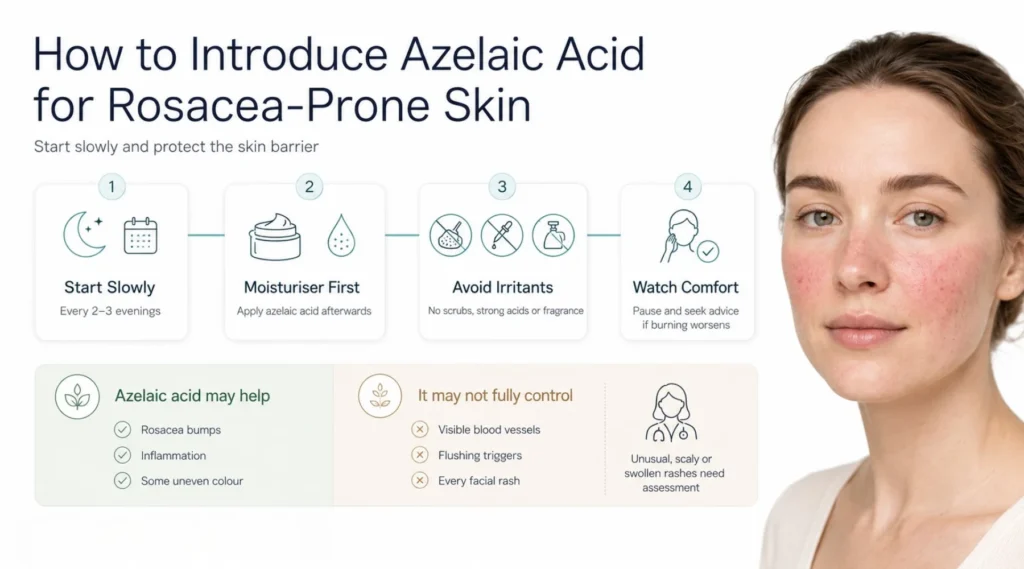
Azelaic acid does not reliably remove visible blood vessels on the face. It may not control flushing from heat, alcohol, spicy foods, stress, or temperature changes unless the underlying rosacea is treated more broadly.
Skin affected by rosacea can sting even with suitable treatment. This doesn’t always mean you should stop using the product, but you may need to adjust your routine.
A good way to start might include:
- Use it once every two or three evenings.
- Apply it after moisturiser instead of on bare skin.
- Avoiding scrubs, strong acids, and fragrant products.
- Use only if the skin feels comfortable.
- Seeking advice if burning or redness gets worse.
Don’t assume every red rash on your face is rosacea. Other skin conditions like perioral dermatitis, seborrhoeic dermatitis, eczema, and allergies can look similar. Rashes around the eyes or mouth, persistent scaling, swelling, or unexplained changes should be evaluated carefully.
How Azelaic Acid Helps Post-Acne Marks and Uneven Tone
The word “scar” often refers to any mark left after a spot, but colour changes and textural scars are different.
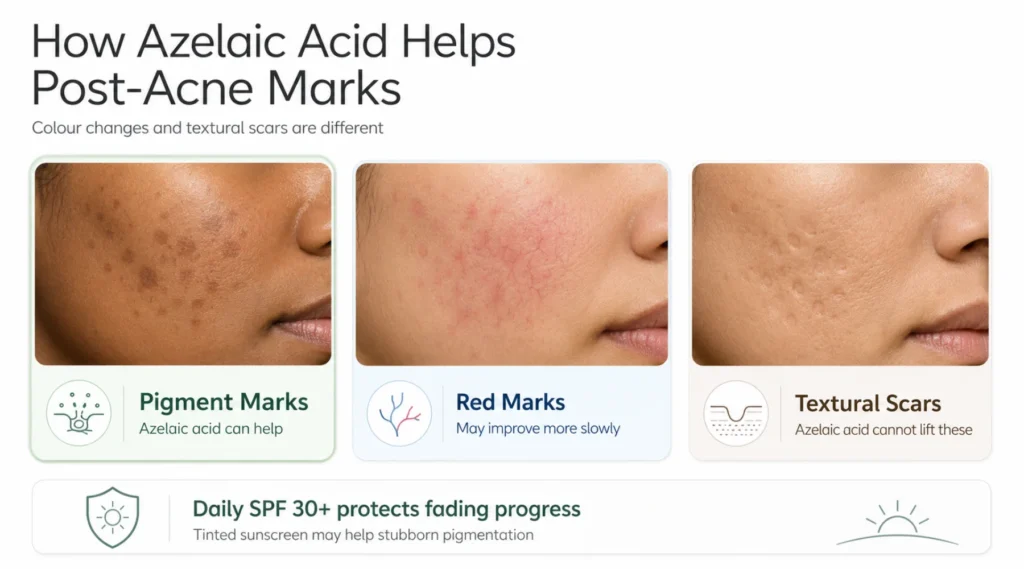
Post-inflammatory hyperpigmentation shows up as flat brown, grey, or purple marks caused by extra melanin after inflammation.
Post-inflammatory erythema appears pink, red, or purplish and involves changes in small blood vessels and ongoing inflammation.
Azelaic acid is important for post-inflammatory hyperpigmentation because it helps lessen excess pigment production. Its anti-inflammatory effects may also prevent new blemishes from forming.
Research from 2024 showed that a 15% azelaic acid gel improved acne-related post-inflammatory erythema and hyperpigmentation with few side effects. While results may vary with different over-the-counter products, this supports azelaic acid’s usefulness for active acne and leftover marks.
Red marks tend to improve more slowly and might not respond as well as brown marks. Ongoing redness related to enlarged or damaged vessels may require treatments like vascular laser or intense pulsed light from a qualified provider.
Sunscreen remains essential
Azelaic acid helps control extra pigmentation, but daily sun exposure can still trigger it. If you don’t use sun protection, you may treat discolouration at night, but it could return during the day.
Apply a broad-spectrum sunscreen with at least SPF 30 every morning. For melasma and stubborn pigmentation, a tinted sunscreen with iron oxides can offer extra protection from visible light.
Sunscreen doesn’t change how azelaic acid works. Instead, it removes a major obstacle to your success.
Is Azelaic Acid Good for Sensitive Skin?
Azelaic acid is often seen as friendly for sensitive skin, but “gentle” can mean different things. It may be easier to use than strong glycolic acid, high-strength benzoyl peroxide, or prescription retinoids. However, it can still cause tingling, itching, dryness, redness, and burning, especially in the first few weeks.
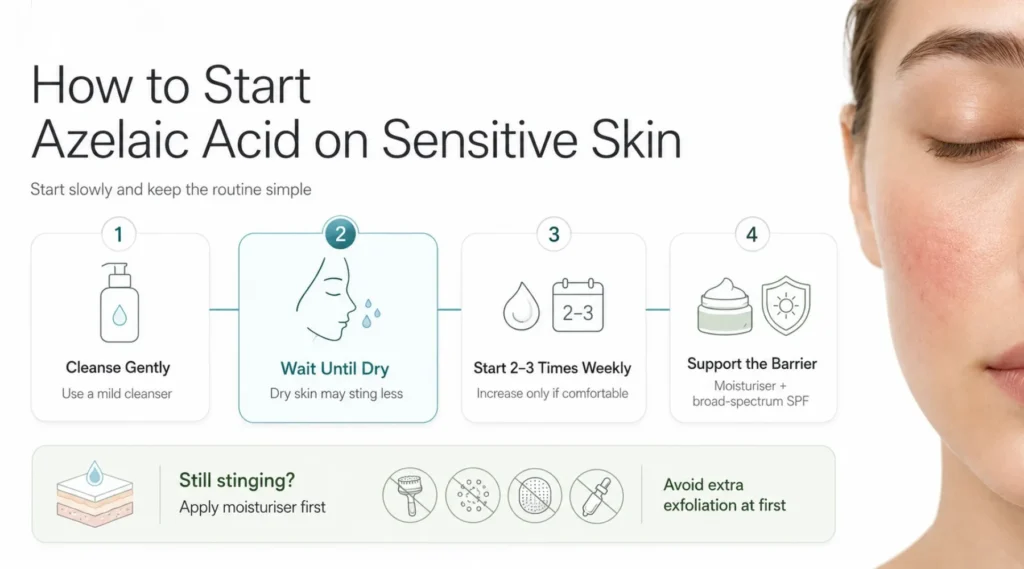
Sensitive skin does best with a simple routine when using azelaic acid. Avoid facial brushes, peeling pads, gritty scrubs, and many treatment serums. Start with:
- A mild, non-alkaline cleanser
- A fragrance-free moisturiser
- Azelaic acid two or three times a week
- A comfortable broad-spectrum sunscreen
- No extra exfoliants until your skin gets used to it
Apply azelaic acid to dry skin to reduce stinging. Wet skin can make it feel more irritated. If it still stings, put a thin layer of moisturiser underneath. This may slow penetration slightly, but a routine you can keep up with is better than quick results followed by irritation.
Choosing Between Azelaic Acid Creams, Gels, and Serums
The term “serum” doesn’t make a product better, and “cream” doesn’t always mean it will block pores. How a product is made is more important than its label.
Creams
Creams are good for normal, dry, or sensitive skin because they are moisturising and help lessen the dryness that azelaic acid can cause. Some prescriptions with 20% azelaic acid come in cream form.
A 12% azelaic acid cream is a middle option between the beginner 10% products and stronger prescription treatments. Start using it slowly, no matter the strength, especially if it has other active ingredients.
Gels
Gels usually feel lighter and are good for oily or combination skin. However, they can sometimes sting more than creams, even if they have a lower percentage of azelaic acid. Prescription 15% gels are often used for rosacea and can also be given for acne.
Foams
Foams spread easily on large or hairy areas. They are available in different countries, but they are usually sold as medicines rather than just cosmetic products.
Suspensions
Azelaic acid doesn’t dissolve easily in water. Some beauty products mix tiny particles in a silicone or creamy base. These products may feel smooth initially, but can ball up when you add other serums or sunscreen.
Serums and emulsions
Modern serums often use azelaic acid derivatives or lower amounts for brightening and reducing redness. Check the label for azelaic acid or a derivative like potassium azeloyl diglycinate. These ingredients are different and shouldn’t be judged just by their percentages.
In skin care, consider more than just concentration. Fragrance, alcohol, moisturisers, and overall texture can all affect how well a product works for your skin.
When to Use Azelaic Acid: Morning, Night, or Both?
You can use azelaic acid in the morning, at night, or twice a day, depending on the instructions and how your skin responds. It is safe to use during the day and does not make your skin sensitive to the sun like some other treatments do. The NHS states that you don’t need to avoid sunlight when using azelaic acid for acne treatment. However, you should still wear sunscreen daily, as sun exposure can worsen acne marks, rosacea, and melasma. The best time to use it is when it fits your routine without causing irritation or product build-up on your skin.
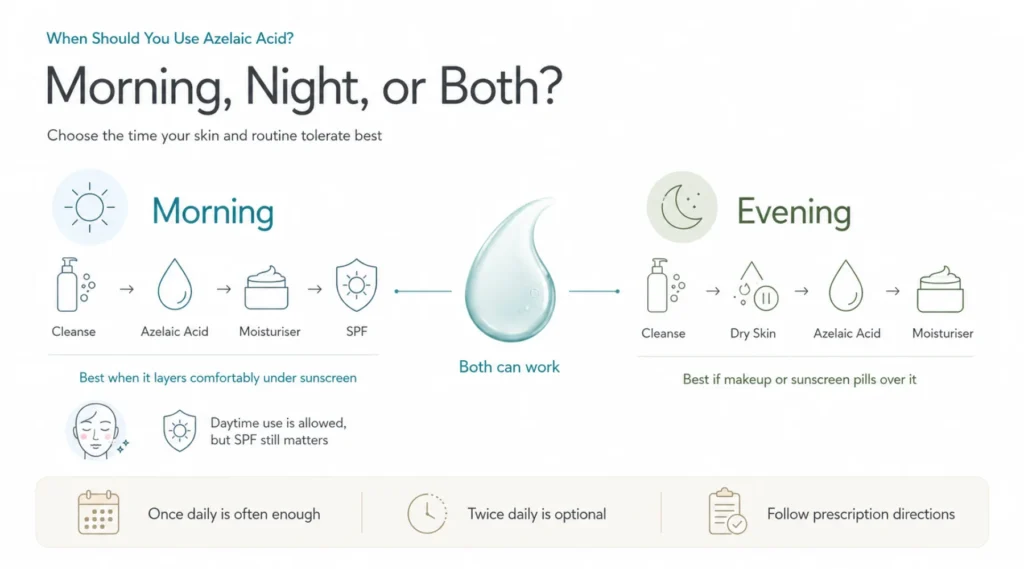
Morning use may suit you when:
- Your evening routine includes a retinoid.
- The azelaic acid works well under sunscreen.
- Redness is a big concern for you during the day.
- You like to use vitamin C at night.
- You are better at remembering your morning products.
A simple morning routine:
- Gentle cleanser or water rinse
- Hydrating serum, if used
- Azelaic acid
- Moisturiser
- Broad-spectrum sunscreen
Let each layer settle if the product rolls or pills. Using too much product is a more common cause of pilling than applying it in the wrong order.
Evening use may suit you when:
- Your sunscreen or makeup doesn’t go on well over it.
- The formula leaves a noticeable white cast.
- You feel a mild tingling for a short time.
- You use vitamin C in the morning.
- Your routine is otherwise straightforward.
A simple evening routine:
- Take off your makeup and sunscreen.
- Clean your face gently.
- Let your skin dry.
- Apply azelaic acid.
- Use a moisturiser.
Twice-daily use is not a requirement.
Some prescription instructions say to apply the medicine twice a day. If you have sensitive skin, start with once a day or even less. Always follow the specific directions that come with the medicine instead of using a general skincare routine.
For cosmetic products, applying them once a day is usually enough. You can apply them more often if your skin can handle it.
How to Use Azelaic Acid in a Skincare Routine
Azelaic acid is best applied in a thin layer over the entire area, not just on visible spots. Acne and pigmentation affect a larger area, so treating the whole area may give better results.
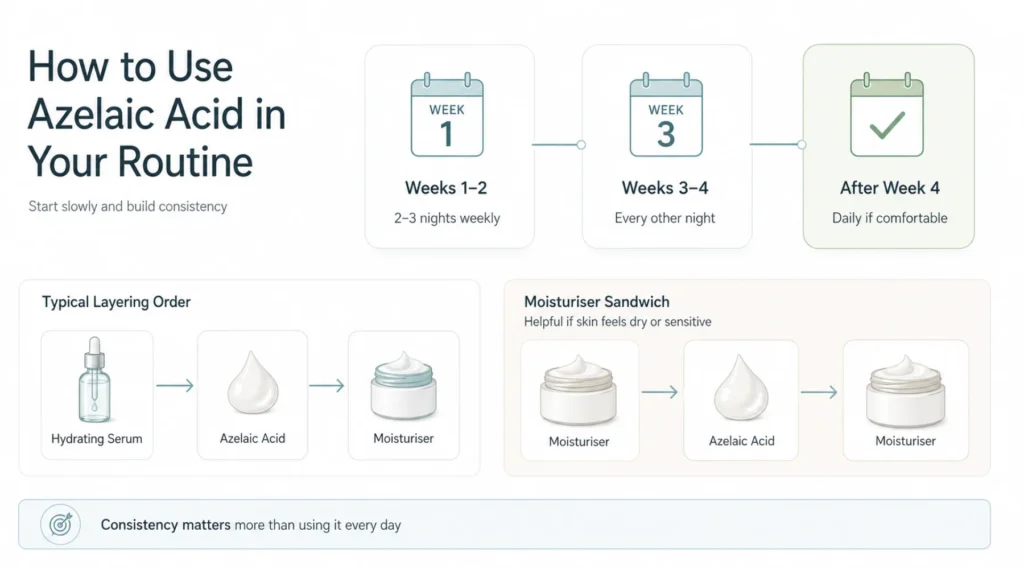
A pea-sized amount is typically enough for the face, but follow the specific instructions for your product.
A beginner-friendly introduction
- Weeks 1 and 2: Use the product two or three nights a week.
- Weeks 3 and 4: Switch to every other night if your skin feels fine.
- After 4 weeks: Think about using it daily if your skin stays comfortable and the instructions allow it.
There’s no reward for getting to daily use too fast. Many people see good results using it every other day, especially if they are already using other treatments.
Apply it before or after moisturiser?
Both methods can be effective.
Apply azelaic acid before moisturiser when:
- Your skin is used to active ingredients.
- The formula doesn’t sting.
- You want to apply it directly to clean, dry skin.
Apply it after moisturiser when:
- Your skin is sensitive or prone to rosacea.
- You are dealing with dryness.
- The product stings on bare skin.
- You’re adjusting to another treatment.
You can also try the “moisturiser sandwich” method: use a light moisturiser, then apply azelaic acid, and finish with a second moisturising layer on dry areas.
Should it go before or after a serum?
Use texture as a guide. Start with thin hydrating serums, then use azelaic acid, and finish with moisturiser. If you have a watery serum, apply it before a thicker azelaic cream.
Don’t overthink the order of products. Focus on whether the products mix well, spread easily, and feel nice on your skin.
Can You Use Azelaic Acid With Niacinamide?
You can use azelaic acid and niacinamide together in your skincare routine. They work well and don’t interfere with each other.
Niacinamide helps strengthen the skin barrier, reduce water loss, and may improve uneven skin tone and excess oil. Azelaic acid directly targets blemishes, abnormal skin growth, and excessive pigmentation. Together, they are good for oily, sensitive, or acne-prone skin with marks.
Here’s a simple order to use them:
- Cleanser
- Niacinamide serum or essence
- Azelaic acid
- Moisturiser
- Sunscreen in the morning
Some people may experience flushing, itching, or tightness with high-percentage niacinamide. This reaction can be mistaken for a problem with azelaic acid, but it’s usually due to using too many active ingredients at once.
Introduce new products one at a time. Wait one to two weeks after your skin gets used to the first product before adding the second.
Can You Use Azelaic Acid With Vitamin C?
Azelaic acid and vitamin C can be used together. They can help create a more even skin tone, but irritation is a bigger concern than how they work together.
Pure L-ascorbic acid is often acidic and can irritate sensitive skin. Using an acidic vitamin C serum and azelaic acid at the same time might be uncomfortable, even if they are safe to mix.
Here are three options you can try:
Vitamin C in the morning and azelaic acid at night.
This is a simple approach for beginners.
Take azelaic acid in the morning and vitamin C at night.
This works well if azelaic acid layers better under sunscreen.
Both are in the same routine.
This is for experienced users whose skin can handle both. Apply the thinner product first, and stop if you feel stinging.
Using a combined product.
A product that has both ingredients is tested to be stable together. This is different from layering two strong treatments and expecting the same gentle results.
Can You Use Azelaic Acid With Retinol or Prescription Retinoids?
Azelaic acid is not a retinoid. It doesn’t come from vitamin A and doesn’t work on retinoid receptors like retinol, retinal, adapalene, or tretinoin.
These two groups of ingredients can work well together. Retinoids help with cell turnover and prevent clogged pores, while azelaic acid reduces inflammation, acne-causing bacteria, and excess pigmentation.
A downside is that it can cause irritation.
A careful schedule could be:
| Evening | Treatment |
| Monday | Retinoid |
| Tuesday | Azelaic acid |
| Wednesday | Moisturiser only |
| Thursday | Retinoid |
| Friday | Azelaic acid |
| Saturday | Moisturiser only |
| Sunday | Azelaic acid if comfortable |
Once the treatments are tolerated, they can be used together on the same day or in the same routine with professional advice. Beginners don’t need to layer products like this.
Topical retinoids should not be used during pregnancy or while trying to conceive unless a healthcare professional says it’s okay. Azelaic acid may be an alternative, but NICE advises caution when using it during pregnancy or breastfeeding. Talk to your doctor, pharmacist, or midwife about treatment options instead of assuming that over-the-counter products are safe.
Can You Use Azelaic Acid With Salicylic Acid?
Yes, but they have different purposes.
Salicylic acid targets oily pores, blackheads, and clogged skin. Azelaic acid helps with redness, inflammation, and dark spots after acne.
Using both daily can dry out your skin, especially if your cleanser, toner, or spot treatment already has acids.
A better routine might be:
- Use azelaic acid most evenings.
- Use salicylic acid one or two nights a week.
- Avoid azelaic acid on nights when using salicylic acid at first.
- Apply moisturiser after either treatment.
- Use sunscreen every morning.
Once your skin adjusts, some people use a salicylic cleanser followed by azelaic acid. Since a cleanser stays on the skin for a shorter time than a leave-on treatment, it might be easier on your skin, but it can still cause dryness.
Can You Use Azelaic Acid With Benzoyl Peroxide?
Azelaic acid and benzoyl peroxide can both be used in an acne treatment routine. There’s no strict rule against using them together, but using them at the same time can cause dryness and stinging.
A good plan is to apply benzoyl peroxide in the morning and azelaic acid in the evening. Alternatively, try using benzoyl peroxide as a short treatment on certain days while regularly using azelaic acid.
Benzoyl peroxide quickly reduces inflamed acne, while azelaic acid is often gentler and can help with post-acne marks.
When starting, don’t use both on the same day. Introduce one treatment first, let your skin adjust, and then decide if you need the second one.
Can You Use Azelaic Acid With Glycolic Acid, Lactic Acid, or PHA?
Some combinations are possible, but more exfoliation isn’t always helpful.
Glycolic and lactic acids mainly improve dull skin and texture. PHAs gently exfoliate and also hydrate the skin. Azelaic acid helps reduce inflammation, fight bacteria, and regulate pigmentation.
If azelaic acid is already helping your skin, adding another acid just because your routine feels too mild can irritate your skin without speeding up results.
Only use an extra exfoliant if you have a specific problem, like rough skin. Start with once a week and don’t use it on the same night as azelaic acid until you know how your skin reacts.
Azelaic Acid vs PHA: Which One Fits Your Skin Better?
Azelaic acid and polyhydroxy acids are often grouped together because both can suit sensitive skin, but they are not substitutes.
| Feature | Azelaic acid | PHA |
| Main role | Treatment for acne, inflammation and uneven pigment | Gentle surface exfoliation and hydration |
| Effect on acne bacteria | Yes, clinically relevant antimicrobial activity | Not a primary action |
| Effect on pigment | Helps regulate excess melanin production | May brighten by improving surface shedding |
| Effect on redness | Anti-inflammatory | May improve texture without strongly treating inflammation |
| Best suited to | Acne, post-acne marks, papulopustular rosacea | Dry, dull or mildly rough sensitive skin |
| Typical irritation risk | Stinging, itching or dryness | Usually mild, but still possible |
Choose azelaic acid for blemishes, redness, or marks left from previous breakouts. Pick PHA if you need gentle exfoliation for dry, sensitive skin.
You don’t need to use both products every day. If you combine them, use PHA only sometimes instead of daily.
Azelaic Acid Side Effects: What Is Normal and What Is Not?
Mild side effects are common during the adjustment period.
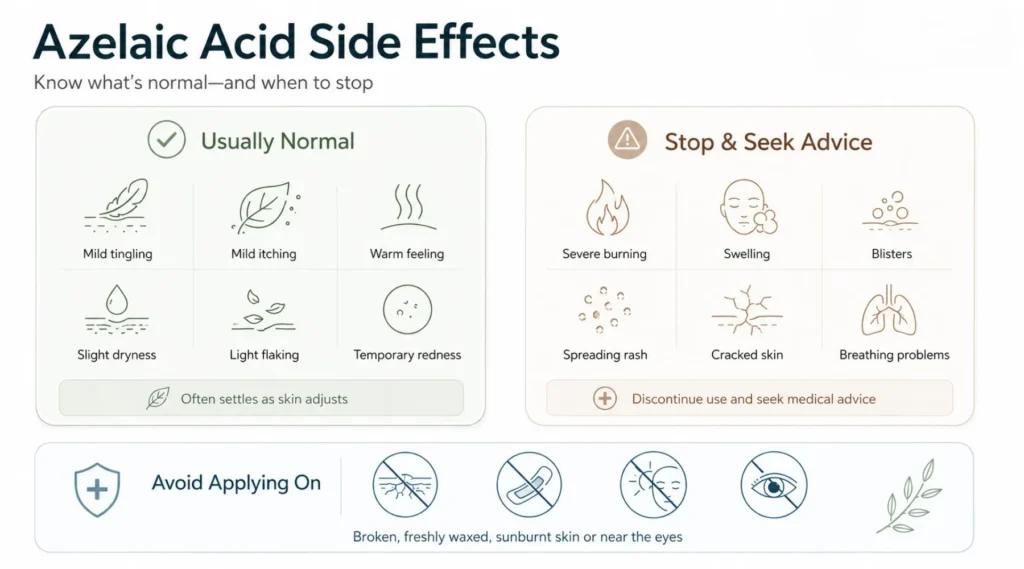
These may include:
- Brief tingling
- Mild itching
- Temporary warmth
- Slight dryness
- Fine flaking
- Mild redness after application
These effects are usually manageable and should improve as your skin adjusts. If your skin feels uncomfortable, reduce how often you use the product or mix it with a moisturiser. Remember, a treatment does not need to sting to work.
Stop using the product and seek advice if you experience:
- Intense or lasting burning
- Swelling
- Blisters
- Hives
- A spreading rash
- Cracking or weeping skin
- Unexpected light patches
- Eye irritation that doesn’t go away with rinsing
- Breathing difficulty or signs of a serious allergic reaction
Avoid applying azelaic acid to broken, recently waxed, sunburnt, or very irritated skin. Keep it away from your eyes, inner nostrils, and lips unless directed by a clinician.
Prescription information includes burning, itching, stinging, and redness as possible side effects of topical azelaic acid.
Does Azelaic Acid Cause Purging?
Azelaic acid doesn’t typically cause a classic purge. It can affect how skin cells grow, so you might see a temporary increase in small blemishes. However, some people use “purging” to justify irritation or products that don’t suit their skin.
A real adjustment flare should:
- Happen in areas where you usually break out
- Be relatively mild
- Start to settle within a few weeks
- Not cause severe itching, burning, or rash-like bumps
It’s likely irritation or a bad match for your skin if:
- Breakouts appear in unusual areas
- Your skin feels tight, shiny, and sore
- Bumps are tiny, uniform, and itchy
- Redness spreads outside of acne-prone areas
- Symptoms keep getting worse after six to eight weeks
- The product causes immediate burning every time
Don’t keep using a product just because someone online said purging means it’s working. Ongoing irritation can make post-acne marks worse, especially in deeper skin tones.
Common Azelaic Acid Mistakes That Slow Progress
Applying Too Much Product
Using a thick layer of cream doesn’t deliver more active ingredients to your skin. It can create extra residue, cause pilling, and lead to irritation. Instead, apply a thin, even layer. Using more product rarely speeds up results.
Starting with Twice Daily Use
Prescription labels might suggest using a product twice a day, but if you’re new to cosmetics, start slowly. This helps your skin adjust better.
Combining Many Treatments
Ingredients like azelaic acid, retinol, salicylic acid, glycolic acid, vitamin C, and benzoyl peroxide can be helpful, but using them all in one day makes it hard to determine which one is effective and which one irritates your skin.
Using as a Spot Treatment
Azelaic acid can target specific marks, but it works best when applied regularly to areas prone to acne or pigmentation.
Expecting Quick Results
Skin shows pigment changes gradually. You might see early improvements in six to eight weeks, but full results may take several months.
Skipping Moisturiser for Oily Skin
Even oily skin can be dehydrated and irritated. A light moisturiser can help your skin tolerate treatments without clogging pores.
Ignoring Sunscreen
Without sunscreen, acne marks and dark spots can worsen. Sunscreen is essential when treating uneven pigmentation.
Treating All Bumps as Acne
Not all bumps are acne. Conditions like dermatitis and rosacea need different treatments. Azelaic acid can help with some inflammation, but it shouldn’t replace a proper diagnosis if the cause is unclear.
Azelaic Acid Routines for Different Skin Types
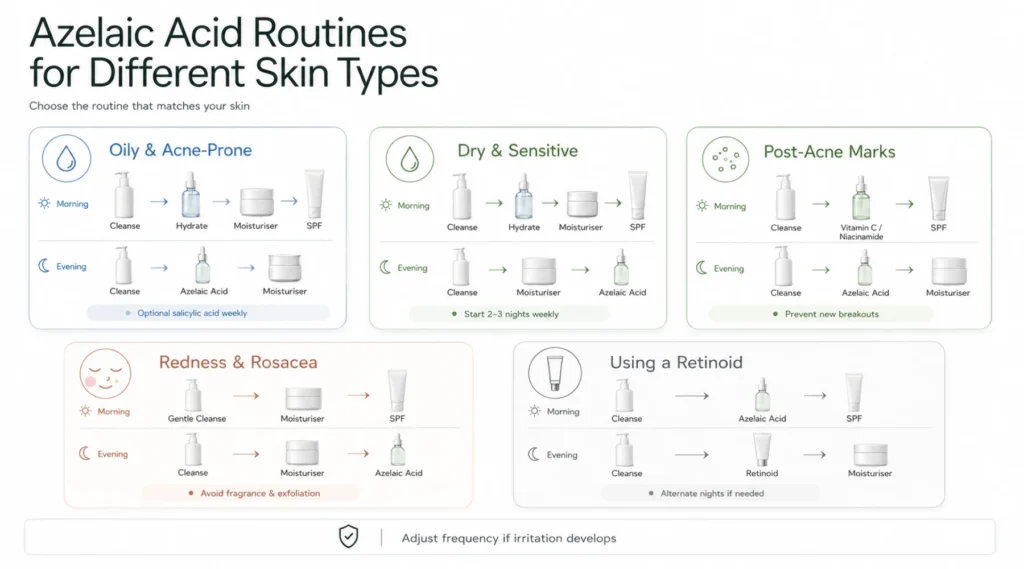
For oily, acne-prone skin
Morning
- Gentle gel cleanser
- Lightweight niacinamide or hydrating serum
- Oil-free moisturiser
- Broad-spectrum sunscreen
Evening
- Cleanser
- Azelaic acid
- Lightweight moisturiser
Salicylic acid may be added one evening a week if blackheads remain a problem.
For dry, sensitive skin
Morning
- Water rinse or creamy cleanser
- Hydrating serum
- Ceramide-rich moisturiser
- Sunscreen
Evening
- Gentle cleanser
- Moisturiser
- Azelaic acid two or three times weekly
- Additional moisturiser over dry areas
Avoid applying it immediately after washing while the skin is still damp.
For post-acne marks
Morning
- Gentle cleanser
- Vitamin C or niacinamide, if tolerated
- Moisturiser
- Broad-spectrum sunscreen
Evening
- Cleanser
- Azelaic acid
- Moisturiser
Keep the routine focused on preventing new inflammation as well as fading existing colour.
For redness-prone or rosacea-prone skin
Morning
- Very mild cleanser
- Simple moisturiser
- Sunscreen formulated for sensitive skin
Evening
- Gentle cleanser
- Moisturiser
- Azelaic acid at the frequency advised
- Additional soothing cream if needed
Avoid fragranced mists, strong foaming cleansers, and frequent exfoliation.
For skin already using a retinoid
Morning
- Cleanser
- Azelaic acid, if tolerated
- Moisturiser
- Sunscreen
Evening
- Cleanser
- Retinoid
- Moisturiser
Alternatively, alternate the treatments on separate evenings. Reduce frequency at the first sign of persistent irritation.
When Skincare Is No Longer Enough
Seek help from a GP, pharmacist, or dermatologist when:
- Acne is painful, nodular, or cystic
- Breakouts are leaving indented scars
- Symptoms are affecting confidence or mental well-being
- Redness involves the eyes
- Facial flushing is persistent or worsening
- Pigmentation changes shape, colour, or texture
- A rash appears suddenly
- Over-the-counter treatment has not helped after a consistent 12-week trial
- You are pregnant, breastfeeding, or trying to conceive, and need acne treatment
- You cannot determine whether the problem is acne, rosacea, or dermatitis
Professional care can include prescription-strength azelaic acid, combined acne treatments, oral medications, hormonal treatments, rosacea therapy, chemical peels, and treatments for blood vessels or pigmentation.
The best option depends on the diagnosis, not just on the most popular ingredient online.
The Azelaic Acid Questions That Usually Come Up After the First Week
How long does azelaic acid take to work?
You might notice some improvement in inflammation or breakouts in six to eight weeks. More significant improvement often takes about 12 weeks. Dark spots and melasma can take several months. Progress isn’t always steady; hormonal changes, stress, and menstruation can affect your skin. Take photos in the same lighting every four weeks instead of checking your skin multiple times a day.
Can I use azelaic acid every day?
Yes, many azelaic acid products are safe for daily use, and some prescriptions can be used twice a day. Start with two or three times a week if your skin is sensitive and increase use gradually if you don’t experience burning, peeling, or redness.
Should azelaic acid be used in the morning or at night?
You can use it either in the morning or at night. Morning use is good if it layers well under sunscreen. Evening might be better if it doesn’t work well with makeup or makes your skin feel tingly. If you use vitamin C in the morning or a retinoid at night, try using azelaic acid in the opposite routine.
Can I use azelaic acid twice a day?
For some prescription products and skin issues, twice-daily use may be recommended. However, many people only need to use it once a day, especially if their skin is sensitive or if they are using other treatments. Follow your prescription instructions.
Can azelaic acid lighten my natural skin colour?
Azelaic acid helps manage uneven pigment but doesn’t bleach your skin. It works best for areas with excessive pigment, like melasma. If you notice lighter patches, stop using it on those areas and seek professional advice.
Is azelaic acid good for blackheads?
It can help prevent the buildup of cells that cause blackheads, but salicylic acid or retinoids often work better for stubborn ones. Azelaic acid is good if you have blackheads with redness or inflamed spots.
Can azelaic acid remove acne scars?
It can fade flat post-acne marks and may reduce inflammation that causes new marks, but it won’t remove deep scars. For textured scars, you might need procedures like microneedling or laser treatments.
Is azelaic acid safe during pregnancy?
Azelaic acid is often safe to use during pregnancy, especially when other treatments aren’t suitable. However, check with a doctor, pharmacist, or midwife to review the product, as formulations can vary.
Can azelaic acid be used around the eyes?
Avoid applying it to your eyelids or near the eyes, as this skin is thin and sensitive. If it gets in your eyes, rinse thoroughly with water and seek medical help if there’s persistent pain or redness.
Can I apply moisturiser immediately after azelaic acid?
Yes, you can apply moisturiser immediately after spreading azelaic acid evenly. If you experience stinging, applying moisturiser first might help.
Does azelaic acid make skin sensitive to sunlight?
Azelaic acid is not known to increase sun sensitivity, but you should still wear sunscreen. UV exposure can worsen inflammation and pigmentation conditions.
Can azelaic acid damage the skin barrier?
It can irritate the skin barrier if used too much or with drying treatments. Signs of irritation include burning, tightness, and unusual flaking. If this occurs, stop using it, switch to gentle care, and restart slowly once your skin feels normal.
Is azelaic acid a retinoid?
No, azelaic acid is a different compound and does not have the same restrictions during pregnancy as retinoids.
Can azelaic acid be used on the body?
Yes, it can be used on areas like the chest and back if the product allows it. It may help with body acne and scarring. Always patch-test first and follow usage directions carefully.
What should I do if azelaic acid stings?
A mild stinging feeling may occur, especially initially. Try using less product, applying it less frequently, or waiting until your skin is completely dry. If the sensation becomes intense or lasts a long time, wash it off and stop using it.
Understanding Whether Azelaic Acid Is Right for Your Skin
Azelaic acid helps with various skin issues, including clear pores, reduced inflammation, and controlled pigment production.
It’s especially useful for treating marks from acne, calming redness that makes stronger treatments hard to use, and simplifying routines that use too many products.
Azelaic acid cannot fix deep acne scars, remove visible blood vessels, prevent all hormonal breakouts, or replace medical treatment for serious skin conditions. It also takes time to work; consistent use over several months is better than a strong start followed by irritation.
To use it effectively, choose a comfortable formula, introduce it slowly, and keep your routine simple. A gentle cleanser, a good moisturiser, and daily sunscreen create the best environment for azelaic acid to work.