




Blog
How Often Should You Use Glycolic Acid? Safe Routine Tips


Glycolic acid can make your skin feel smoother, brighter, and more refined. However, using too much can lead to problems. A routine that works well twice a week may become drying and irritating if you use it every night.
So, how often should you use glycolic acid? For most people with at-home products, starting with once or twice a week is best. Beginners and those with sensitive skin may only need to apply it every seven to fourteen days. People with oily or tougher skin might handle two or three times a week later on. Daily use isn’t necessary or right for everyone.
The key is to find what your skin can tolerate. The right frequency depends on your skin type, the product’s strength, other products in your routine, and how your skin reacts.
Glycolic acid should gradually improve your skin, not keep it stuck in a cycle of burning and peeling.
How Often to Use Glycolic Acid at a Glance
There isn’t a one-size-fits-all schedule, but this provides a helpful starting point for typical skin types using a regular at-home glycolic acid product.
| Skin type or situation | Sensible starting frequency | Possible frequency once tolerated |
| Complete beginner | Once weekly | 1–2 times weekly |
| Sensitive skin | Once every 7–14 days | Around once weekly if comfortable |
| Dry skin | Once weekly | 1–2 times weekly |
| Normal skin | Once weekly | 1–3 times weekly |
| Combination skin | Once weekly | 1–3 times weekly |
| Oily, resilient skin | 1–2 times weekly | 2–3 times weekly |
| Acne-prone skin | Once weekly | 1–2 times weekly depending on other acne treatments |
| Skin using retinol or retinal | Usually alternate nights | Often once weekly to begin |
| Skin using prescription retinoids | Ask the prescribing clinician | Individualised |
| Irritated or damaged skin barrier | Do not use | Restart only after recovery |
| After shaving, waxing or strong facial treatments | Skip temporarily | Resume when skin is comfortable |
These are not strict medical guidelines. A 5% toner, 10% serum, rinse-off cleanser, and professional glycolic peel do not work the same, even if they have the same ingredient on the label.
Always follow the product directions instead of a general weekly routine.
What Is Glycolic Acid and Why Does Frequency Matter?
Glycolic acid is an alpha-hydroxy acid (AHA) that dissolves in water. It is often used to exfoliate the skin’s surface.
Dead skin cells at the top layer of the skin stick together, forming a protective barrier. Glycolic acid helps these cells shed by breaking down their connections. This can make the skin smoother and more even.
Glycolic acid has a small structure, which makes it effective, but it can also be stronger than gentler acids for some skin types. Understanding how glycolic acid works shows why concentration, pH, and formulation are important, not just the percentage on the label.
What else can glycolic acid do for the skin besides smoothing it out? Depending on how it’s used, it may help with:
- Dull or rough skin
- Uneven skin tone
- Superficial pigmentation
- Post-acne marks
- Flaky skin
- Some clogged pores
- Fine lines
- Rough skin and bumps
Glycolic acid is also used in professional chemical peels for acne, pigmentation, and aging. These procedures use different concentrations than regular skincare products and should not be confused with at-home toners or serums.
How often you use glycolic acid is important because exfoliation can stress the skin. When used properly, it can improve your skin’s appearance. But using it too much can damage the surface you want to enhance.
How Often to Use Glycolic Acid for Beginners
For beginners, using glycolic acid once a week is usually enough.
Some brands may recommend daily use, but starting slowly helps prevent irritation, which is easier to avoid than fix.
Try using glycolic acid once during your first week. Spend the next few days focusing on gentle cleansing, moisturising, and sun protection.
If your skin feels good, continue using it once a week for another two to three weeks before deciding to use it more frequently.
This observation period is important. Don’t increase use just because you didn’t see a strong reaction after the first time. Irritation can build up over time. Your skin might handle the first few uses well but could become tighter or more sensitive with repeated exposure.
A simple beginner schedule
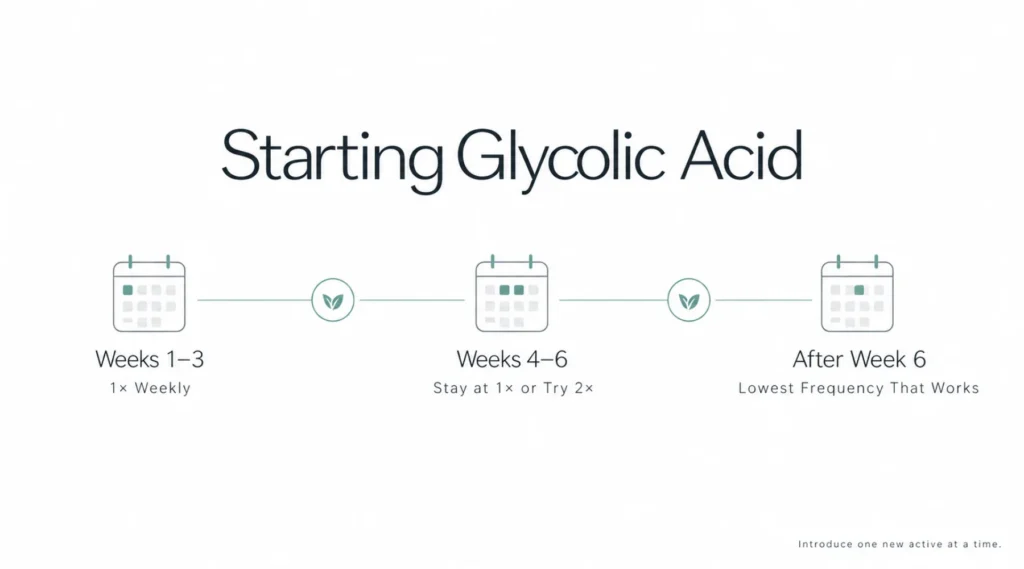
Weeks 1–3: Use the product once a week.
Weeks 4–6: Keep using it once a week if you see results. You can increase to twice a week if your skin feels good and the product allows it.
After week 6: Use the lowest frequency that still gives you results. Daily use is not necessary.
If one or two applications a week keep your skin clear and smooth, that can be your long-term plan.
Do not introduce three new active ingredients at the same time
Many people make the mistake of starting glycolic acid at the same time as retinol, vitamin C, salicylic acid, or a new acne treatment.
When your skin gets irritated, it’s hard to tell which product caused it.
Keep the rest of your skincare routine mostly the same when trying glycolic acid. Once you see how your skin reacts, you can better decide about adding other products.
How Often to Use Glycolic Acid for Sensitive Skin
Sensitive skin needs more care.
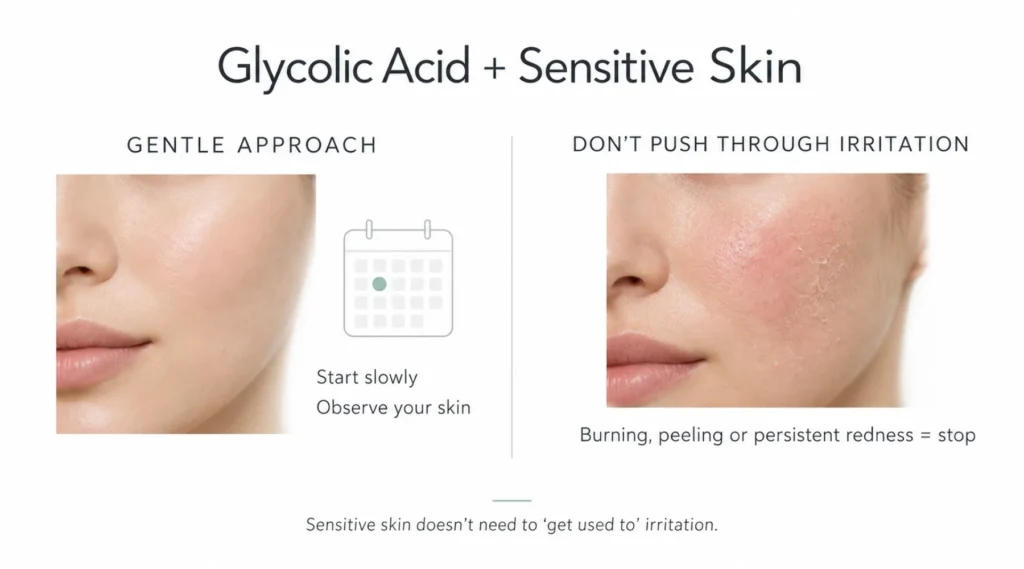
If your skin often reacts to fragrances, retinoids, exfoliating acids, or changes in the weather, start with glycolic acid once every one to two weeks. Some people may be able to use it weekly later on, while others may not.
You don’t have to use glycolic acid just because it’s popular. Lactic acid, mandelic acid, or polyhydroxy acids might be better for some sensitive skin types.
Most importantly, “sensitive skin” can mean different things. Some people have skin that reacts easily but is otherwise healthy. Others might have temporary sensitivity from using too much retinol. Some might have skin conditions like eczema, rosacea, or contact dermatitis. Each situation needs its own approach.
Sensitive skin should not be trained through repeated irritation
Forcing your skin to “get used to” an acid by making it burn and peel is bad for your skin.
Some acidic products may cause a slight tingling, but ongoing burning, increased sensitivity, or pain is a problem.
If you notice any of these signs, stop and evaluate your routine:
- Burning that lasts after use
- Significant redness or swelling
- Worsening dark spots
- Ongoing dryness
- Skin that feels shiny and tight
- Cracks around the nose or mouth
- Sudden sensitivity to moisturiser
- Itching or bumps that resemble a rash
- Peeling that keeps coming back
Dermatologists recommend cutting back or stopping exfoliation if it leads to excessive dryness or irritation instead of just continuing the same routine.
How Often to Use Glycolic Acid for Dry Skin
Dry skin can benefit from glycolic acid, especially when it’s dull and flaky. However, dry skin is more sensitive and can get irritated easily.
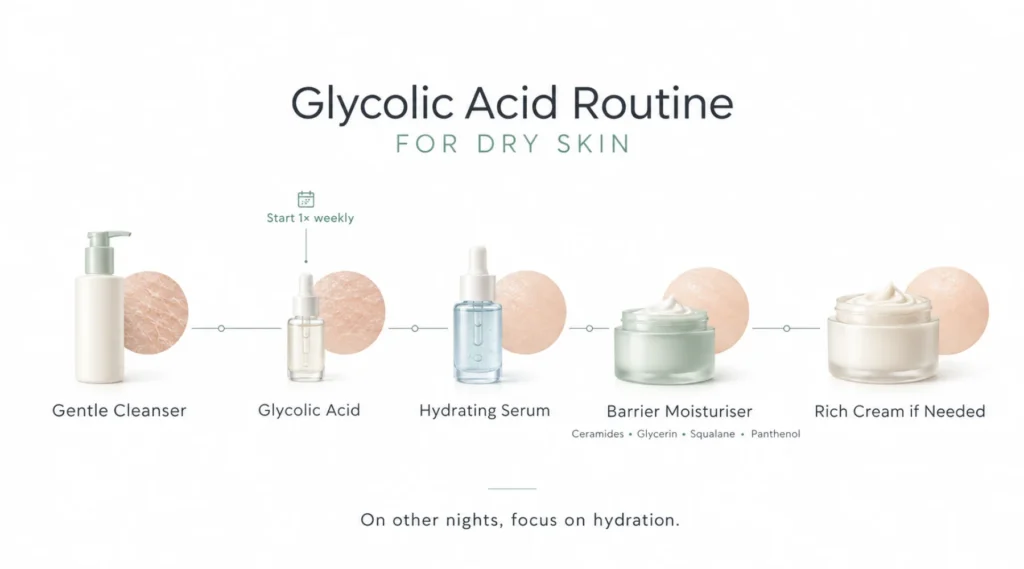
Start using a gentle glycolic acid product once a week. If your skin stays hydrated and comfortable, you can try using it twice a week later.
Avoid using glycolic acid every night to tackle dryness. Flaking doesn’t always mean your skin needs more exfoliation.
Dryness can come from not moisturising enough, cold weather, low humidity, harsh cleansers, retinoids, eczema, or a weakened skin barrier. Using more glycolic acid on already dry skin can lead to more flaking.
Pair exfoliation with deliberate moisturisation
A simple routine for dry skin could include:
- A gentle cleanser.
- Glycolic acid on dry skin.
- A hydrating serum, if you use one.
- A moisturiser that supports your skin barrier.
- A thicker cream on very dry spots, if needed.
On nights without glycolic acid, focus on hydration instead of adding more exfoliants.
Ingredients like ceramides, glycerin, squalane, and panthenol help your skin tolerate active products better. A good set of basic skin care products can be more effective than adding another acid to your routine.
How Often to Use Glycolic Acid for Oily Skin
Oily skin can handle more exfoliation, but it can still get irritated.
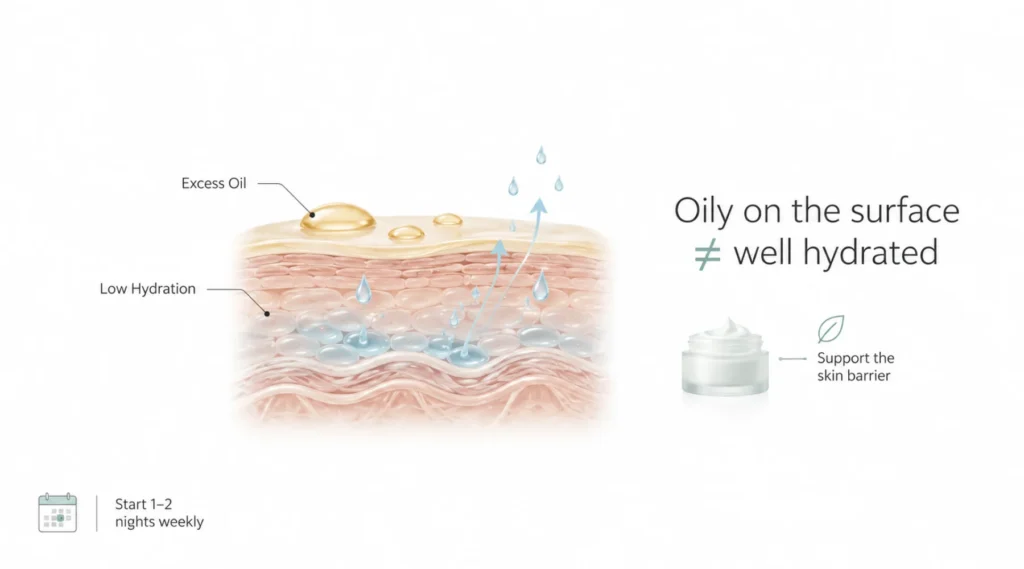
Start by exfoliating one or two nights a week. If your skin feels good after a few weeks, you might try using glycolic acid two or three times a week.
Some strong skin can take more frequent use, especially with gentler formulas. However, it’s essential to base how often you exfoliate on how your skin reacts, not just to dry out oily skin.
The American Academy of Dermatology says that glycolic and other exfoliating acids can help reduce oiliness, but they may be too harsh for some. If you experience irritation, use them less often.
Oil and dehydration can exist together
An oily face that feels tight after washing is misleading.
This can lead people to:
- Cleanse too hard
- Skip moisturiser
- Use glycolic acid every night
- Add salicylic acid
- Use clay masks often
This can cause an oily surface and uncomfortable skin underneath. Always use a lightweight moisturiser, even if your skin is oily. Exfoliation works better when your skin’s barrier isn’t constantly stripped away.
How Often to Use Glycolic Acid for Combination Skin
Combination skin usually starts with exfoliation once a week. You can increase to two or three times a week if needed.
You don’t have to treat your whole face the same way. If your forehead and nose handle exfoliation well but your cheeks are dry, use glycolic acid on the areas that need it.
It’s often smarter to focus on specific spots rather than treating your entire face like the oiliest area. The corners of your nose, mouth, and eyes can be more sensitive. Avoid putting exfoliating acid too close to those areas.
Is Glycolic Acid Good for Acne?
Glycolic acid can help some people with acne, especially if they have clogged pores, rough skin, or marks from past acne. However, it isn’t a complete solution for everyone.
Glycolic acid helps loosen skin cells at the surface and promotes better shedding around hair follicles, which can reduce congestion caused by excess skin cells. Research has studied glycolic acid in acne treatments, but the strength of evidence varies for different non-prescription acne ingredients.
So, does glycolic acid help with acne? Sometimes.
It may be especially helpful for:
- Closed comedones
- Rough skin
- Dullness from congestion
- Uneven texture after breakouts
- Light post-acne marks
However, it might not be enough for:
- Deep cystic acne
- Painful nodules
- Widespread inflammatory acne
- Hormonal acne
- Acne that is scarring
For oily skin with blackheads, salicylic acid is often a better option. Other treatments like retinoids, benzoyl peroxide, and azelaic acid also have different roles.
If you have blemish-prone skin that doesn’t handle frequent AHA exfoliation well, consider using a 12% azelaic acid cream instead of opting for a stronger glycolic product.
Avoid using multiple acne treatments at the same time just because they each work well on their own.
Can Glycolic Acid Cause Breakouts If You Use It Too Often?
Yes, indirectly.
Glycolic acid doesn’t just “clog pores.” However, using it too much can irritate skin, cause dryness and inflammation, and make acne harder to control.
Sometimes, new blemishes appear soon after starting exfoliation. People call this purging, but not every breakout after using glycolic acid means that.
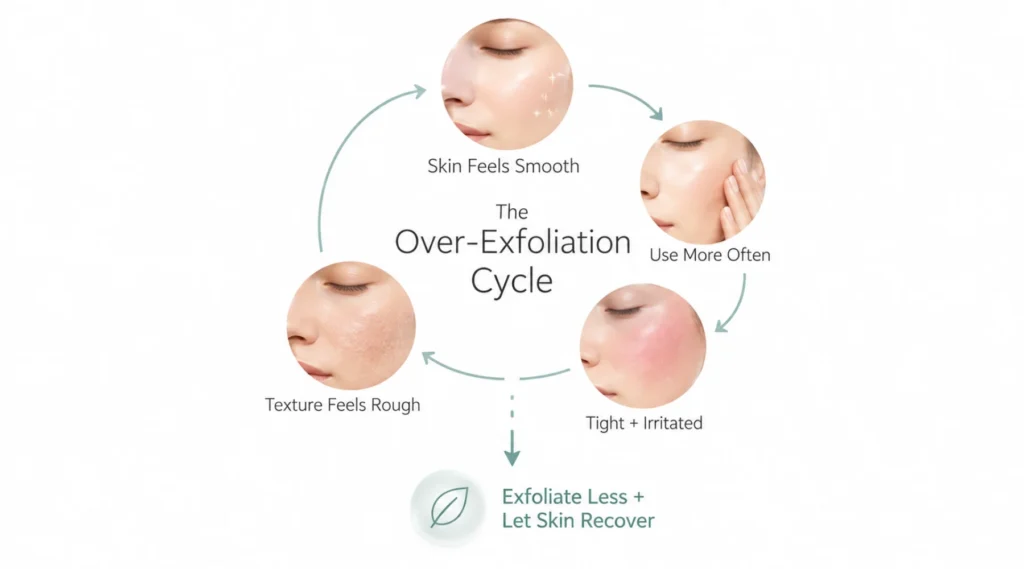
You can tell the difference between glycolic acid purging and regular breakouts by looking at where the spots are, how much irritation there is, and whether your skin is getting better or worse over time.
A temporary increase in breakouts can happen when an exfoliating ingredient changes how skin sheds cells. But serious issues like burning, itching, spreading bumps, and ongoing worsening are not just part of a purge.
It’s also helpful to know if glycolic acid can cause breakouts when your skin looks worse after using it more often.
Over-exfoliation creates a typical cycle:
- Skin feels smooth at first.
- You use it more often.
- Skin starts to feel tight.
- Small dry patches or stinging appear.
- Texture becomes rough again.
- More acid is applied to fix the roughness.
- Irritation worsens.
When this happens, the solution is usually to exfoliate less, not more.
The Product Type Changes How Often You Should Use Glycolic Acid
“Glycolic acid” can refer to very different products. A cleanser that stays on your face for less than a minute is not the same as a leave-on serum. Professional peels are in a completely different category.
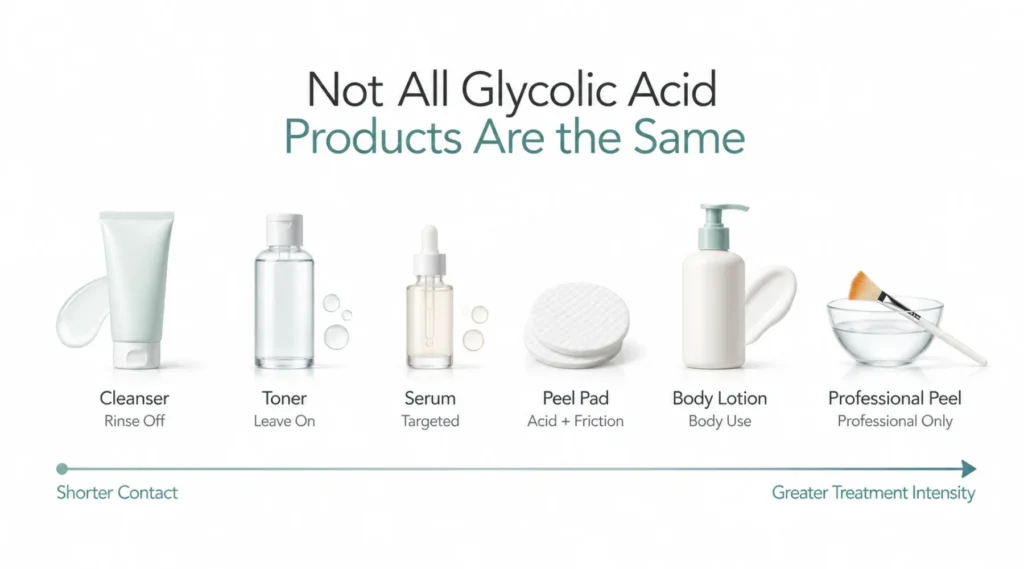
Glycolic Acid Cleansers
A rinse-off cleanser has less contact time with the skin. Some cleansers are made for frequent use, such as several times a week or even daily. However, you shouldn’t automatically combine this cleanser with a leave-on glycolic serum every night. Consider your whole routine. Using an exfoliating cleanser in the morning, a glycolic toner in the evening, and peel pads twice a week adds up to more than just three mild treatments; it increases the total exfoliation.
Glycolic Acid Toners
Leave-on glycolic toners work well one to three nights a week. A thin and watery toner doesn’t mean it’s weak. “Toner” describes the product type, not its strength. Check the glycolic percentage and follow the instructions. Pay attention to other ingredients like alcohol or additional exfoliating acids.
Glycolic Acid Serums
Leave-on glycolic serums can be stronger and more targeted. Many people only need to use them once or twice a week. When choosing a serum, consider the complete formula, not just the glycolic percentage.
Glycolic Acid Peel Pads
Using pads can lead to over-application because rubbing can create extra friction with chemical exfoliation. Apply gentle pressure instead of repeatedly rubbing the skin. Stick to the recommended usage instead of assuming the pads are safe for daily use.
Glycolic Acid Body Lotions
Body skin can handle different products than facial skin. Areas like the upper arms, legs, back, knees, and elbows can tolerate stronger formulations. A body lotion with AHAs can help with rough skin or uneven tone. For example, LanSYade AHA White Body Lotion is meant for body care, not as a facial treatment. Always follow product instructions and be extra cautious after shaving, waxing, or using other exfoliating products.
Professional Glycolic Acid Peels
Professional peels are not just stronger versions of your nightly toner. Glycolic peels usually contain 20% to 70% concentration and are done under professional supervision. The strength chosen depends on your skin type and treatment goals. Don’t assume that a high-concentration acid is safe for home use without guidance. Concentration, contact time, neutralisation, and professional assessment are very important.
Why Percentage Alone Does Not Tell You How Strong Glycolic Acid Will Feel
A 7% glycolic product isn’t always gentler than a 10% product. Many factors affect how much active acid reaches your skin.
Concentration
Concentration shows how much glycolic acid is in a product, but that’s just one part of the whole picture. Higher concentrations can exfoliate more but may also cause more irritation.
pH
Glycolic acid is a weak acid. Its effects change based on the pH of the formula. A lower pH can mean more active acid and increased irritation. That’s why two products with the same percentage can feel very different.
The US FDA states that products with 10% or less glycolic or lactic acid and a final pH of at least 3.5 are safe if they include sun protection instructions. However, this doesn’t mean you should aim for the lowest pH possible. Good skincare doesn’t need to be irritating.
Vehicle and delivery system
Different types of products serums, creams, gels, and toners distribute glycolic acid differently. Ingredients that trap moisture can affect how well the acid penetrates. Other acids might boost exfoliation, while soothing ingredients can help reduce irritation.
Contact time
Rinse-off products and leave-on products work differently. A product that stays on overnight has a different effect than a cleanser removed in thirty seconds.
Amount applied
Using three soaked cotton pads doesn’t always give three times the benefit. Apply enough to create a thin, even layer. Excessive product can waste it and increase irritation.
How to Use Glycolic Acid in an Evening Routine
For most glycolic products, using them at night makes your routine simpler.
Here’s an easy routine:
- Clean your skin gently.
- Let your skin dry.
- Apply glycolic acid as directed.
- Add a hydrating product if needed.
- Finish with moisturiser.
That’s all you need. You don’t need a long routine for exfoliation night.
Why apply it to dry skin?
Acidic products can sting more on wet skin. Water changes how the product spreads and can help some ingredients soak in deeper.
Unless told otherwise by the manufacturer, use these products on completely dry skin for better control.
This is different from the typical advice to apply humectants like hyaluronic acid on damp skin.
Should glycolic acid go before or after serum?
A leave-on glycolic toner or serum should be used after cleansing and before thicker serums, moisturisers, and oils.
However, follow the specific instructions for each product instead of relying on general rules for layering.
If you’re using another treatment serum, check if it’s necessary to use it that same night.
Using different active treatments on separate nights can often be easier.
How to Use Glycolic Acid With Other Skincare Products
The toughest challenge with glycolic acid isn’t the acid itself, but fitting it into a skincare routine that already has other treatments.
Here’s a helpful tip:
Only mix ingredients if they benefit your skin, even if they can work together technically.
Just because two ingredients can mix doesn’t mean they won’t irritate your skin.
Glycolic Acid and Retinol
Glycolic acid and retinol both help skin cells renew. However, they can cause dryness or irritation. You don’t need to use them on the same night. Many people find it easier to use them on alternate nights.
For example:
| Day | Evening active |
| Monday | Retinol |
| Tuesday | Recovery routine |
| Wednesday | Glycolic acid |
| Thursday | Recovery routine |
| Friday | Retinol |
| Saturday | Recovery routine |
| Sunday | Recovery or glycolic acid if well tolerated |
Beginners should follow a simpler routine.
If you comfortably use retinol three or four nights a week, you don’t need to add glycolic acid on all remaining nights. One night with glycolic acid might be enough.
If you’re using prescription tretinoin, adapalene, or another retinoid, talk to your doctor about exfoliating. Don’t try to create a strong acid routine on your own.
The AAD warns that combining exfoliation with products that make skin sensitive, like retinoids, can lead to more dryness and irritation.
Glycolic Acid and Salicylic Acid
Glycolic acid is an AHA that exfoliates the skin’s surface. Salicylic acid dissolves in oil, making it great for blackheads and clogged pores. You don’t need to use both acids.
If you choose to, using them on different days is easier than mixing them in one routine.
For example:
Use glycolic acid on Monday, salicylic acid on Thursday, and no exfoliating acids on other nights.
A product that combines both ingredients is different because the manufacturer sets the right concentrations and pH levels.
Glycolic Acid and Vitamin C
Using glycolic acid and vitamin C together depends on their types and how they are made.
Pure L-ascorbic acid vitamin C serums can be strong and may irritate sensitive skin. Using a strong glycolic product right before can be excessive.
A simpler routine is:
- Morning: vitamin C, moisturiser, sunscreen.
- Evening: glycolic acid on certain nights.
This way, you can enjoy both ingredients without irritation.
Glycolic Acid and Niacinamide
Niacinamide works well with glycolic acid. There’s no rule that says you must separate them because of their pH levels.
The key question is whether they feel good on your skin together. If your skin can handle both, you can use a niacinamide serum after glycolic acid. Alternatively, you can apply niacinamide in the morning and glycolic acid at night.
Glycolic Acid and Hyaluronic Acid
Hyaluronic acid is a humectant, not an exfoliant. It works well in a glycolic routine if you use a good hydrating product.
After using your glycolic treatment, apply the hydrating serum and then the moisturiser.
Don’t think of a hydrating serum as a replacement for moisturiser if your skin feels dry.
Glycolic Acid and Azelaic Acid
Azelaic acid treats acne, redness, and uneven skin tone. It may cause dryness or a tingling feeling when you start using it.
Some skin types can handle azelaic acid and glycolic acid together, but beginners usually don’t need to mix them right away.
Using them on different days can help you see how your skin reacts.
For example:
- Monday: glycolic acid
- Tuesday: azelaic acid
- Wednesday: simple routine
- Thursday: azelaic acid
- Friday: simple routine
- Saturday: glycolic acid if well tolerated
- Sunday: simple routine
This gives each ingredient a clear purpose without overloading the skin.
Glycolic Acid and Benzoyl Peroxide
Benzoyl peroxide is a good acne treatment but can dry out the skin.
Mixing it with glycolic acid can irritate, especially if you are already using a retinoid.
If benzoyl peroxide is crucial for your acne, focus on that treatment and don’t feel you must include glycolic acid.
Sometimes, simplifying your skincare routine means dropping a product.
Why Sunscreen Matters More When You Use Glycolic Acid
Sun protection is essential when using AHAs.
Research shows that alpha-hydroxy acids (AHAs) can make your skin more sensitive to UV rays. This sensitivity decreases after you stop using them. Therefore, the FDA recommends using sun protection while using AHAs and for some time after.
For daily use in the UK, the NHS suggests using sunscreen with at least SPF 30 and four-star UVA protection, or the UVA symbol in a circle.
Apply sunscreen every morning, even if you used glycolic acid the night before. This is especially important if you are using glycolic acid to treat pigmentation. Frequent UV exposure can interfere with your efforts to even out your skin tone and may darken any marks left by inflammation.
Signs You Are Using Glycolic Acid Too Often
Your skin often shows warning signs before irritation gets serious. Notice how it feels, not just how it looks.

Moisturiser suddenly stings
If a moisturiser that usually feels soothing starts to burn, your skin might be more irritated than it appears. This is an important warning sign.
Your face feels tight after washing
Skin should not feel tight or uncomfortable when water hits it. If your skin feels tighter as you use more glycolic acid, use less of it.
Flaking keeps returning
Small amounts of temporary dryness may occur when starting new active ingredients.
Continuous peeling is not the same.
Visible peeling should not be the aim of a leave-on exfoliant.
Your skin looks strangely shiny
Over-exfoliated skin may look shiny and tight instead of just oily. If the shine also comes with tightness, sensitivity, and stinging, using more exfoliation won’t help.
You are developing more redness or pigmentation
Inflammation doesn’t always look bright red.
On darker skin tones, irritation can show up as brown, purple-grey, or darker spots.
This is especially important if you’re using glycolic acid to improve pigmentation. A harsh skincare routine can create new marks while trying to fade old ones.
Your usual products begin causing reactions
When your cleanser, sunscreen, and moisturiser start to feel uncomfortable, don’t focus on finding a “better” active ingredient. Your skin barrier might need time to heal.
What to Do If You Have Overused Glycolic Acid
Stop exfoliating for now.
Don’t switch from glycolic acid to salicylic acid, retinol, or an exfoliating scrub right away.
Make it easier for your skin by reducing the number of products you use.
Morning
- Rinse or cleanse gently.
- Apply moisturiser.
- Use broad-spectrum sunscreen.
Evening
- Cleanse gently.
- Apply a bland moisturiser.
- Only apply an occlusive product to very dry spots if needed.
Take a break from acids, scrubs, peel pads, and strong retinoids until your basic skincare routine feels comfortable again.
Recovery from mild irritation may take a few days, but serious over-exfoliation can take much longer.
If you experience severe swelling, blistering, intense pain, oozing, or a lasting rash, see a doctor.
When Can You Start Glycolic Acid Again After Irritation?
Wait until your skin is back to normal.
This means:
- The cleanser doesn’t sting.
- The moisturiser feels comfortable.
- Tightness is gone.
- Peeling has stopped.
- Redness or irritation has settled.
- Your skin doesn’t feel hot or raw.
When you start again, don’t go back to the same routine that caused the issue. If you used glycolic acid four times a week before, try it just once a week now. If one use causes the same reaction, the formula might not be right for your skin. There’s no need to include a specific acid in your routine if it doesn’t work for you.
How Long Does Glycolic Acid Take to Work?
Some effects show up faster than others. You may notice smoother skin after a few uses of glycolic acid because it helps dead cells shed more effectively.
More significant changes in uneven texture, clogged pores, or pigmentation take longer. Usually, expect to see results over several weeks, not just a few days.
Here’s a rough timeline:
- After the first few uses: your skin may feel smoother.
- After four to eight weeks: texture and some surface issues may look more even.
- Over several months: improvements in uneven tone and post-acne marks may become clearer.
These timelines are not guaranteed. Results depend on the product strength, formulation, sun exposure, other treatments, and the cause of your skin issue.
Don’t increase how often you use the product because a dark mark hasn’t faded yet. Pigmentation takes time to improve.
Does Glycolic Acid Need to Make Your Skin Peel?
No, Visible peeling doesn’t mean glycolic acid is effective. Exfoliation can happen at a microscopic level without visible skin shedding.
This misunderstanding may stem from professional chemical peels, which can cause noticeable flaking. An everyday glycolic serum is not designed to mimic a clinic peel. If your skin is always peeling, cracking, or burning, it’s a sign of irritation, not extra benefits.
Should You Use Glycolic Acid Every Day?
Some products are made for daily use, especially low-strength or rinse-off kinds. However, daily use of glycolic acid isn’t right for everyone. Many people do well with one to three applications a week for good exfoliation.
Think about what you want to achieve. If your skin feels smooth and is improving with twice-weekly use, what would using it every night change? It might just cause more irritation. The goal is to fix skin issues, not to achieve daily use.
Should You Use Glycolic Acid in the Morning or at Night?
Night is the best time to use a leave-on glycolic product.
Using it in the evening:
- Makes it easier to add to your routine
- Keeps it away from morning antioxidants
- Helps avoid too many product layers
- Creates a steady routine
Evening use does not mean you can skip sunscreen the next morning. Glycolic acid can make your skin sensitive to sunlight long after you apply it.
Should You Use Glycolic Acid Before an Event?
Avoid sudden changes before big events.
The week before a wedding, holiday, photoshoot, or important event is not the time to try new things like stronger acids, professional peels, daily exfoliation, or multiple new active products.
Keep your routine if your skin tolerates glycolic acid.
If you’re new to it, wait until you have time to see how your skin reacts. Temporary irritation is harder to hide than regular skin texture.
Should You Use Glycolic Acid After Shaving?
Not right away.
Shaving removes hair but can irritate the skin. Using an acid right after shaving can cause strong stinging.
Give the skin time to calm down, especially after facial shaving or dermaplaning.
You should be careful with:
- Waxing
- Threading on irritated skin
- Epilation
- Scrubs that are too rough
- At-home dermaplaning
- Microneedling
- Laser treatments
Follow your clinician’s instructions about waiting times for acids before and after professional treatments.
How Often Can You Use Glycolic Acid on the Body?
Body skin reacts differently to exfoliation than facial skin.
For rough areas like upper arms and legs, you can use an AHA body product several times a week, depending on the formula. Start with two or three times a week unless the instructions say otherwise.
Some daily body lotions have mild AHA blends that are safe for everyday use.
Be cautious: if glycolic acid stings after shaving, avoid using it. Always remember to apply sunscreen on exposed areas like your shoulders, chest, arms, and legs.
Does Your Skin Eventually Become Immune to Glycolic Acid?
No. If the smoothness you felt in your first week isn’t as strong, it doesn’t mean the product isn’t working. The difference may just be less noticeable after the rough buildup has improved.
Don’t start using it daily just because the tingling has stopped. Tingling doesn’t mean the product is effective, and your skin doesn’t need to feel irritated for exfoliation to happen.
When Glycolic Acid May Not Be the Right Exfoliant
Glycolic acid is helpful, but it isn’t the best choice for every problem.
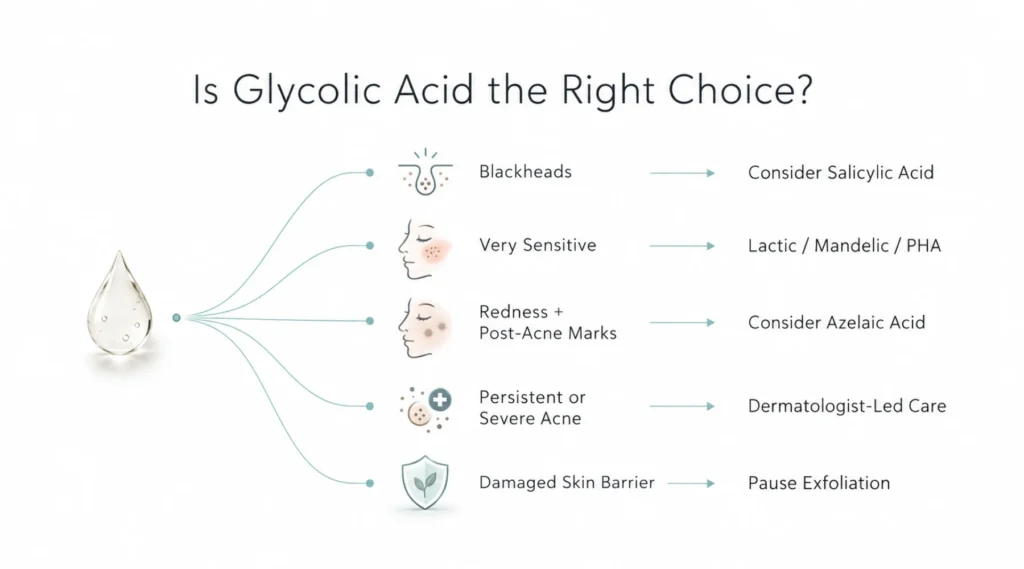
If blackheads are your main problem
Salicylic acid is better for oily skin because it dissolves in oil.
If your skin is very sensitive
Lactic acid, mandelic acid, and PHAs can provide a milder way to exfoliate.
If redness and post-acne marks are the main concern
Azelaic acid might be a better choice, especially if using AHAs often irritates.
If acne is persistent or severe
A treatment plan for acne led by a dermatologist is more important than using stronger exfoliants.
If your skin barrier is already damaged
Skip exfoliating if your skin is damaged. First, let your skin heal.
Common Glycolic Acid Frequency Mistakes
Using it more often because the skin feels rough
Rough skin can mean dead skin cells are building up, or it might show dehydration or irritation.
If your skin got rough after you used more glycolic acid, using more acid probably won’t help.
Thinking oily skin needs daily acid
Oil does not shield the skin from chemical irritation. A face with oil can still be over-exfoliated.
Using multiple products without counting the total acid exposure
A glycolic cleanser, AHA toner, exfoliating serum, and acid mask all help. Check the ingredient lists for the whole routine.
Increasing strength and frequency at the same time
If you change from 5% to 10%, use it less often as you evaluate the new formula. Changing both factors at the same time makes it harder to know your tolerance.
Using an acid immediately after hair removal
Freshly shaved or waxed skin can sting and irritate more easily.
Treating burning as a sign of effectiveness
It’s not okay. If you have a constant burning feeling, you should stop.
Skipping moisturiser because the skin is acne-prone
Acne-prone skin still needs enough moisture, especially when using exfoliating treatments.
Ignoring sunscreen because glycolic acid is used at night
Using it at night doesn’t solve the photosensitivity problem.
Copying someone else’s weekly routine exactly
Your favourite skincare creator’s tolerance doesn’t say much about yours. Many factors, like products, skin type, climate, and medication, can make a big difference.
A Practical Weekly Glycolic Acid Routine by Skin Type
Beginner with normal skin
Monday: Glycolic acid
Tuesday: Simple routine
Wednesday: Simple routine
Thursday: Simple routine
Friday: Simple routine
Saturday: Simple routine
Sunday: Simple routine
After a few weeks of comfort, you can add a second glycolic evening.
Dry skin
Monday: Glycolic acid + moisturiser
Tuesday: Hydration-focused routine
Wednesday: Hydration-focused routine
Thursday: Simple routine
Friday: Optional second glycolic application if tolerated
Weekend: Barrier-supporting routine
If dryness increases, return to once weekly.
Oily skin
Monday: Glycolic acid
Tuesday: Simple routine
Wednesday: Other acne treatment if used
Thursday: Glycolic acid
Friday: Simple routine
Saturday: Simple routine
Sunday: Optional third use only if genuinely needed and well tolerated
Two applications may be entirely sufficient.
Sensitive skin
Week 1: One glycolic application.
Week 2: No glycolic acid if any sensitivity remains.
Week 3: One application if the first was comfortable.
Don’t increase the frequency until you are sure the formula works well.
Retinol user
Monday: Retinol
Tuesday: Recovery
Wednesday: Glycolic acid
Thursday: Recovery
Friday: Retinol
Saturday: Recovery
Sunday: Recovery
This is just an example. A person using retinol with a doctor’s advice might need a different routine.
When a Dermatologist Should Be Involved
Skincare acids can help with mild skin issues, but they are not a replacement for medical advice.
Talk to a doctor or dermatologist if you have:
- Persistent, painful acne
- Nodules or cysts
- Acne scars
- Unexplained rash-like bumps
- Recurrent eczema
- Rosacea with strong sensitivity to acids
- Noticeable pigmentation changes
- Swelling or blisters after using products
- Darkening skin after exfoliating
- Ongoing irritation despite a simpler routine
Professional chemical peels should be done under supervision, especially for those at risk of skin color changes. The goal is to find a treatment that improves your skin safely, not just to test how much glycolic acid your skin can handle.
Questions People Commonly Ask About Glycolic Acid Frequency
How Often Should a Beginner Use Glycolic Acid?
A beginner should start with glycolic acid once a week. Keep this schedule for several weeks before adding a second application. This slow increase helps you notice any dryness, irritation, or breakouts early.
How Often Can I Use Glycolic Acid Safely?
Most people can safely use a leave-on product one to three times a week. The right frequency depends on the product’s strength, skin type, and other ingredients. Always follow product instructions. If your skin feels tight, sore, or unusually sensitive, reduce how often you use it.
How Often Should I Use Glycolic Acid for Sensitive Skin?
Start using glycolic acid every 7 to 14 days. If your skin does not react negatively, you can move to weekly use. If your skin is very reactive, consider using a gentler exfoliant.
How Often Should I Use Glycolic Acid for Oily Skin?
If you have oily skin, start with glycolic acid once or twice a week. You can increase to two or three times a week. However, daily use is not necessary, as oily skin can still become dehydrated and over-exfoliated.
Can I Use Glycolic Acid Every Night?
Some low-strength glycolic products are safe for nightly use, but many people do not need to use it every night. Using it one to three times a week usually provides enough exfoliation. If nightly use irritates, reduce the frequency.
Can I Use Glycolic Acid Every Day If It Does Not Sting?
You may be able to use it daily if the product is designed for that and your skin is healthy. However, just because it doesn’t sting doesn’t mean it’s necessary. If you see good results with two or three applications per week, stick with that.
How Long Should I Wait Between Glycolic Acid Applications?
Beginners should wait six to seven days between uses. As you get used to it, you can space applications two to four days apart. Recovery days are especially important if you use other active ingredients.
What Happens If I Use Glycolic Acid Too Often?
Using glycolic acid too much can cause dryness, irritation, and increased sensitivity. It can also make breakouts harder to manage and increase the risk of dark marks.
Is Glycolic Acid Good for Acne if I Use It Twice a Week?
Yes, it can help with roughness and post-acne marks. However, severe acne may need different targeted treatments.
Should I Moisturise After Glycolic Acid?
Yes, using a moisturiser after glycolic acid helps reduce dryness and supports the skin. If you have oily or acne-prone skin, choose a lighter lotion instead of skipping moisturiser.
Can I Use Glycolic Acid and Retinol on Alternate Nights?
Yes, alternating nights is a good option if your skin tolerates both. Beginners might need more recovery time. If you use a prescription retinoid, consult your doctor before adding glycolic acid.
Can I Use Glycolic Acid and Salicylic Acid in the Same Week?
Yes, but not on the same day. For example, use glycolic acid on Monday and salicylic acid on Thursday. This helps reduce irritation and allows you to see how each product affects your skin.
Should I Stop Glycolic Acid if My Skin Starts Peeling?
If your skin peels constantly or feels sore or sensitive, reduce or stop using it. Peeling is not necessary for it to work. Restart only after your skin feels comfortable, and use it less frequently.
How Long Should I Use Glycolic Acid Before Deciding If It Works?
Give it several weeks with a tolerable routine. You may notice smoother skin quickly, but changes in pigmentation or texture can take longer. Assess progress over weeks or months instead of increasing use after just a few days.
Can I Use Glycolic Acid Forever?
Many people can use glycolic acid long-term if their skin tolerates it, but you don’t have to use it at the same frequency forever. Your routine can change based on your skin, age, environment, and specific skin concerns. It’s fine to reduce use if you no longer need frequent exfoliation.
Finding the Right Answer to How Often to Use Glycolic Acid
The best answer to how often to use glycolic acid is not “as often as your skin can handle it.” Instead, use it as much as needed for steady improvement without irritation.
Most beginners should start with once a week. If you have sensitive or dry skin, stick to once a week or every other week. Normal and combination skin can usually handle one to three times a week. Oily skin might tolerate two to three uses, but it still needs recovery time.
Consider other factors in your routine, like retinoids, acne treatments, shaving, weather, professional procedures, moisturising, and sun exposure.
If using glycolic acid twice a week leaves your skin smooth and comfortable, there’s no need to use it every night just because you can. The best exfoliation routine keeps your skin healthy enough to continue using it.