




Blog
Can Salicylic Acid Cause Purging? What to Know and Do Next

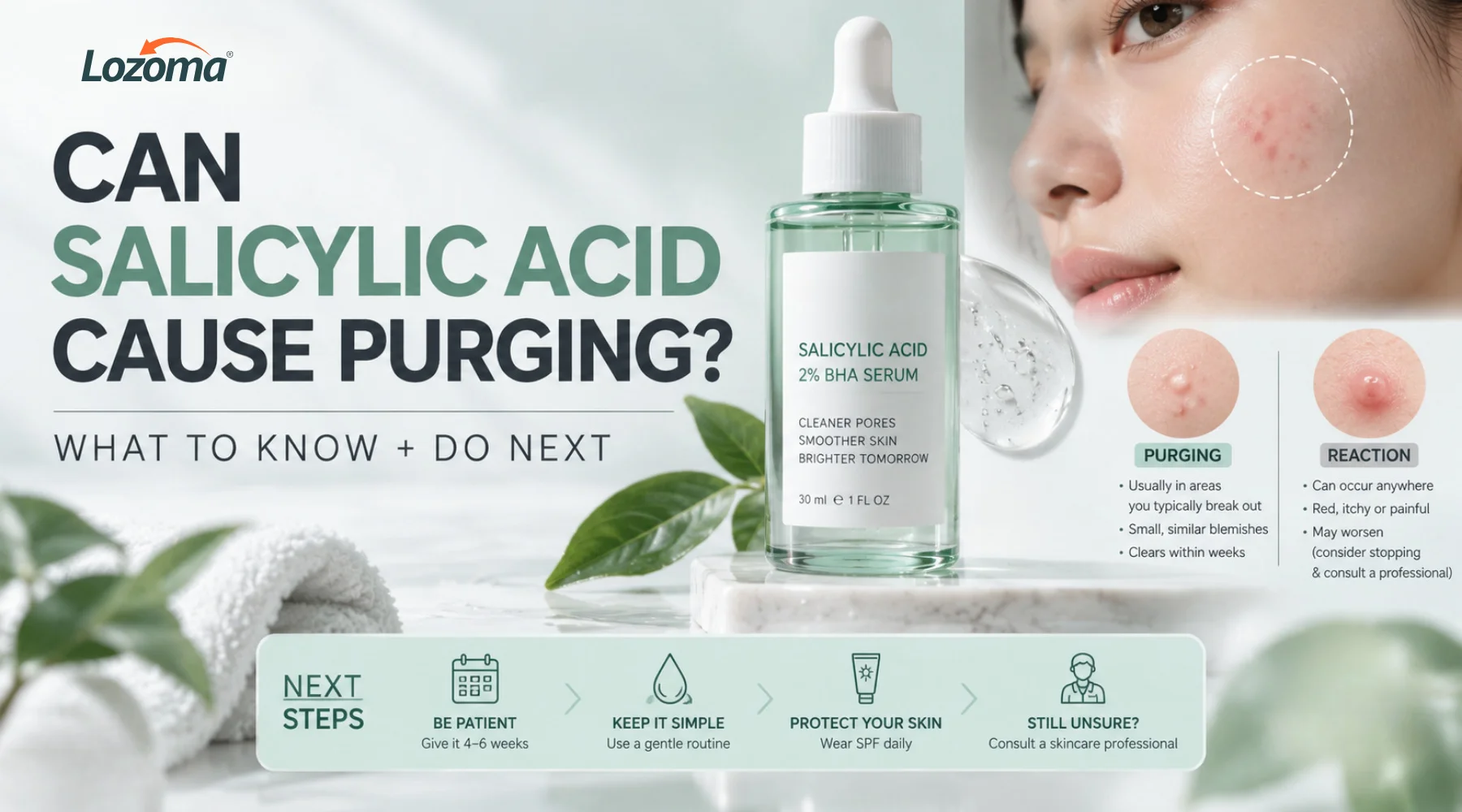
Starting salicylic acid to clear congested skin can be confusing, especially if you notice new spots shortly after. The key question is whether the acid is working or if you should stop using it.
Can salicylic acid cause purging? Sometimes, when you first use it, you might see more breakouts, especially if you have clogged pores. This is known as skin purging. However, not every new breakout means you are purging.
Salicylic acid can also lead to dryness, stinging, redness, and irritation, especially if used too often or mixed with other active ingredients. Sometimes, a new product might not suit your skin or have another ingredient that causes more congestion.
It’s important to look at the pattern of breakouts. A few extra blemishes in your usual spots might mean purging is happening. Widespread redness, constant burning, itching, or new spots in unusual areas should be worrisome.
MedlinePlus states that your skin might get dry or irritated when you start using salicylic acid, and acne may seem worse in the first few days as your skin adjusts. Dermatologists also stress that acne treatments need time to work. Changing products too often can lead to more irritation and worsen acne.
Why Salicylic Acid Can Make Skin Look Worse Before It Looks Better
To see why a purge can happen, let’s look at what salicylic acid does for the skin.
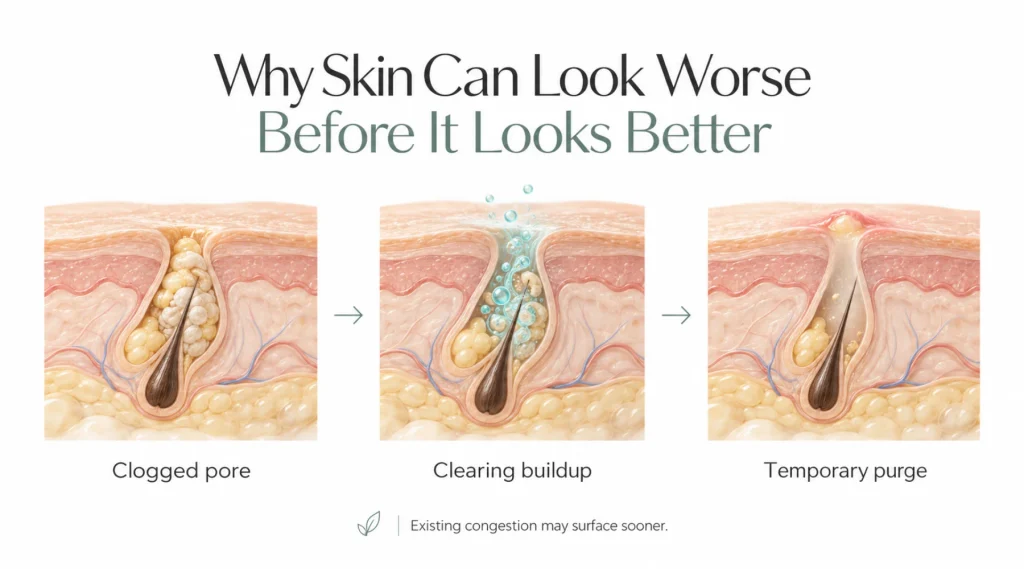
Salicylic acid is a type of beta hydroxy acid. It’s great for oily skin because it targets oil. Instead of just smoothing the skin’s surface, it helps remove dead cells from blocked pores.
Acne forms in the pilosebaceous unit, which includes the pore and hair follicle. Dead skin and sebum can build up and create a plug, leading to blackheads, whiteheads, or pimples.
Salicylic acid reduces this buildup by promoting the natural shedding of skin cells and unclogging pores. It helps break down blackheads and whiteheads and keeps follicles clear.
So, what does salicylic acid do? It can:
- Loosen dead skin cells
- Prevent clogged pores
- Reduce blackheads and whiteheads
- Manage oily skin
- Improve roughness from excess skin buildup
- Work well with other acne treatments
The American Academy of Dermatology recommends salicylic acid as an option for treating acne alongside other treatments like benzoyl peroxide and retinoids.
When salicylic acid clears clogged pores that are not yet visible, some blemishes may appear sooner. This temporary reaction is often called purging.
Purging doesn’t mean salicylic acid is causing new acne to form or pulling out toxins. It’s simply a change in how existing congestion shows itself as your skin adjusts to a new routine.
What is Salicylic Acid, and Why Is It Used for Acne-Prone Skin?
Salicylic acid is a skincare ingredient used for conditions like thick skin and clogged pores. Its strength and form change depending on whether it’s in a facial cleanser, acne treatment, scalp product, wart treatment, or professional peel.
For daily skin care, the concentrations are much lower than those used for thick skin removal or professional peels.
At these lower strengths, salicylic acid is effective at breaking down oily material. This makes it useful for treating blackheads, whiteheads, and other oily issues.
Understanding how salicylic acid works and how to use it properly can improve its effectiveness. Its success depends on how it’s formulated and how often it’s applied, not just the ingredient itself.
Salicylic acid doesn’t need to make your skin visibly peel to be effective.
It’s sometimes called a keratolytic, but a more detailed term is desmolytic. This means it helps loosen the bonds between skin cells, promoting their release. Research shows that salicylic acid helps remove dead skin cells and reduces clogged pores.
For daily use, what matters most is that well-formulated salicylic acid helps prevent clogged pores from developing.
Is salicylic acid good for skin?
When your skin problem matches what an ingredient does, it can be very helpful.
Salicylic acid is best for people with:
- blackheads
- whiteheads
- oily or combination skin
- frequent clogged pores
- mild acne
- rough or bumpy skin
However, it’s not the best choice for everyone with acne. For issues like inflammatory acne, adult acne, nodules, cysts, or acne that leaves scars, a more comprehensive treatment may be needed. Salicylic acid can help but should not replace professional advice for severe acne.
It might also not work well if your skin barrier is damaged, very dry, or irritated.
So instead of just asking if salicylic acid is good for your face, you should consider if your skin issue, the product’s strength, how often you use it, and your overall routine work well together.
Salicylic Acid Purging Versus a Normal Acne Flare
Acne can change week by week.
Hormones, stress, menstrual cycles, heavy makeup, hair products, sweating, and other factors can cause breakouts. If you start using salicylic acid on Monday and get three pimples by Thursday, it doesn’t mean the product caused them.
This makes skin purging hard to identify.
There’s no home test that says, “This spot is a purge.” Instead, look for several signs together.
| What you notice | More compatible with temporary purging | More concerning for irritation or another breakout trigger |
| Location | Areas where you regularly develop congestion | Areas where you rarely or never break out |
| Type of blemish | Familiar blackheads, whiteheads or small pimples | Unusual rash-like bumps, marked swelling or widespread tiny bumps |
| Skin comfort | Little or mild temporary dryness | Burning, significant stinging, itching or painful tightness |
| Redness | Minimal and limited around blemishes | Diffuse or persistent redness |
| Peeling | Mild dryness may occur | Heavy flaking, cracking or raw skin |
| Progress | Begins to settle as the routine becomes established | Continues worsening or spreads despite reducing use |
| Other symptoms | Mostly acne-related | Hives, swelling or breathing difficulty require urgent medical attention |
MedlinePlus says that irritation and stinging can occur with topical salicylic acid. If there are stronger reactions, stop using the product and see a doctor.
Location is one of the most useful clues
Imagine you often get closed comedones on your forehead.
You start using a salicylic acid treatment. After a few weeks, some of those spots become more noticeable, but your forehead feels fine, and the blemishes begin to improve. This is likely a normal purge.
Now, picture your forehead is usually clear, but after starting the product, it becomes red, itchy, and covered in bumps. Your cheeks also sting after washing. In this case, calling it a purge and continuing for another month wouldn’t make much sense.
The condition of the surrounding skin matters
Purging shouldn’t mean you have to deal with a damaged skin barrier.
If you have a breakout with extreme dryness, heat, redness, or burning, it’s different from just a few new bumps on otherwise fine skin.
It’s possible to have acne and irritation at the same time. This often happens when someone tries to treat new spots by using more acid, scrubbing harder, or adding extra treatments.
This irritation can make it harder to understand what’s happening with your skin.
Signs of Irritation From Salicylic Acid That Can Be Mistaken for Purging
The phrase “trust the purge” makes people stick with routines that irritate their skin. This isn’t the right way to use exfoliating acids.
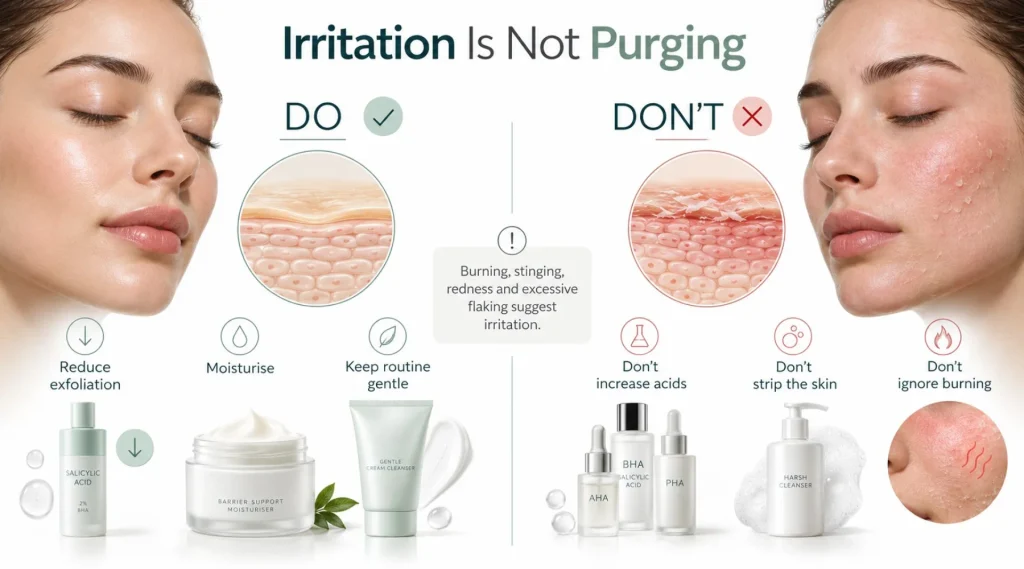
Some mild dryness with salicylic acid is normal, but you don’t have to suffer increased irritation to get clear skin. MedlinePlus advises cutting back if dryness or irritation occurs.
Signs of irritation from salicylic acid include:
- Burning that lasts instead of fading quickly
- Ongoing stinging
- Increased redness
- Sensitivity when using gentle products
- Tightness that doesn’t improve with moisturiser
- Excessive flaking
- Rough, shiny, or overly sensitive skin
- Discomfort from water or cleanser
- Itching
- Increased sensitivity to other products
A good test is how your skin reacts to products you usually use. If your regular moisturiser starts to sting after using salicylic acid for a few nights, your skin barrier could be stressed.
At that point, it’s better to reduce exfoliation than to add more acne treatments.
Irritation itself can make acne look worse
This causes a lot of confusion.
Someone begins using salicylic acid twice a day.
Their skin becomes dry.
They see spots and think they are purging.
Then, they add a stronger cleanser, skip moisturiser, and use salicylic acid more often.
Within a week, their face turns red, feels tight, and has inflamed blemishes.
At this point, the problem often comes from an irritating routine, not a helpful purge.
Dermatologists always recommend gentle cleansing and warn that drying out the skin or constantly changing acne treatments can lead to more irritation.
More treatment doesn’t always mean better results.
Can Salicylic Acid Cause Purging or Is It Just Breaking You Out?
It can be hard to know for sure. A simple way to assess the situation is to ask five questions.
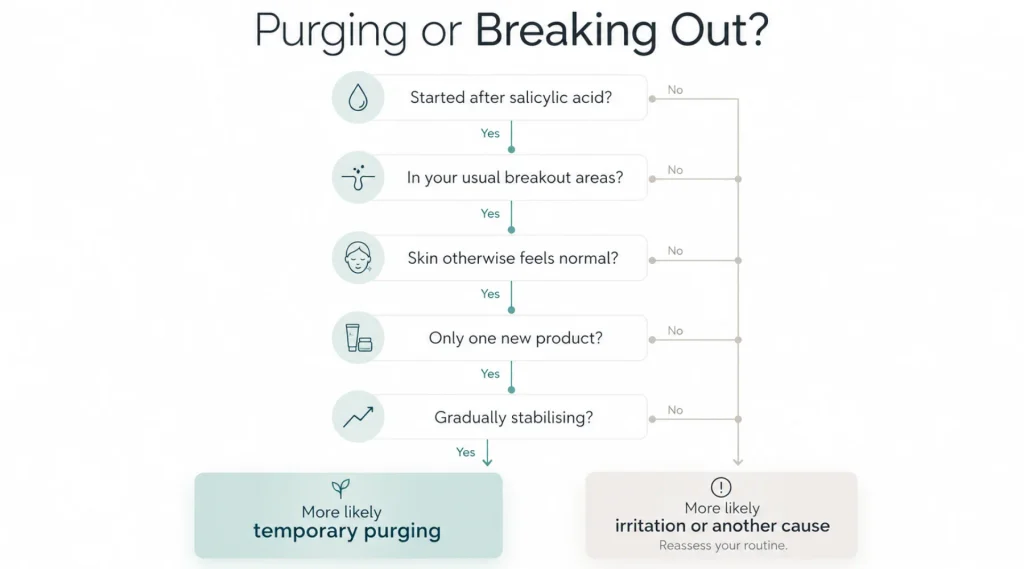
1. Did the breakout begin after you introduced salicylic acid?
Timing is important, but it’s just the beginning.
If nothing else changed and the flare-up happened right after starting an exfoliating acid, the new routine is worth looking at.
But remember, just because two things happen together doesn’t mean one causes the other. Hormonal acne, period changes, stress, and old blemishes can show up at the same time.
2. Are the spots appearing where you normally break out?
Purging is likely to happen when activity increases in areas already prone to clogged pores. A new distribution of products can raise questions about irritation, blockage, other ingredients, or unrelated skin issues.
3. Does the rest of your skin feel reasonably normal?
Some areas may have mild dryness, which is different from breakouts that cause a lot of burning and redness.
If the skin feels more uncomfortable, it’s not helpful to keep treating it as regular purging.
4. Did you introduce several products together?
This makes understanding much harder.
Imagine you start using a salicylic acid cleanser, retinol serum, a heavy moisturiser, and a new sunscreen all in the same week. A breakout happens ten days later.
Even though salicylic acid might cause temporary skin changes, you can’t be sure which product or mix is to blame.
Changing only one product at a time isn’t exciting, but it’s a helpful habit for skincare.
5. Is the situation gradually stabilising?
Temporary changes should lead to improvements. If your acne is getting more swollen, painful, or spreading, waiting for “purging” isn’t wise.
The American Academy of Dermatology suggests allowing acne treatments several weeks to work. However, frequently changing treatments can irritate your skin and make breakouts worse.
How Long Can Salicylic Acid Purging Last?
There isn’t a set purging period that works for everyone.
Cleveland Clinic says purging after using facial acids can last a few weeks. MedlinePlus adds that salicylic acid might make things appear worse at first and can take several weeks to show its full benefits.
In general, a purge should stabilise instead of getting worse. Don’t focus too much on specific timeframes like “28 days” or “six weeks.” Factors like skin type, acne severity, and treatment routine differ too much to have a one-size-fits-all timeline.
Here’s a more helpful timeline:
- Early phase: Some people may notice mild dryness or a few familiar blemishes after starting the treatment.
- Adjustment phase: The routine should become easier instead of more painful.
- Treatment phase: Existing spots should settle, and you’ll see fewer new clogged pores if the treatment is working.
Acne takes time to improve. The AAD says a good treatment might start showing results in four to six weeks, but complete clearing can take longer.
The main point is progress.
Better tolerance and fewer breakouts are good signs. Increased inflammation, more bumps, or worsening pain are not.
Should You Stop Using Salicylic Acid During Purging?
Not necessarily. If the breakout is mild, happens in your usual acne-prone areas, and your skin feels fine, you can keep using the product occasionally while watching how it progresses.
However, “continue” doesn’t mean to use more. If your skin gets drier, more irritated, or red, cut back on how often you use the product or stop using it until your skin feels normal again.
Continue cautiously when:
- Blemishes are mild.
- They happen in normal congestion areas.
- Your skin is not burning or itching all the time.
- There’s no major redness.
- Peeling is slight.
- The situation seems stable, not getting worse quickly.
Pause or reduce use when:
- The moisturiser starts to sting.
- Your face feels tight for hours.
- Redness doesn’t go away between uses.
- You notice significant flaking.
- The breakout gets more inflamed.
- Your routine has many exfoliants or acne treatments.
Stop and seek medical advice when:
- If you have swelling or hives.
- If there is serious blistering or skin damage.
- If you think you might have an allergic reaction.
- If your acne is severe, painful, or leaves scars.
- If you’re not sure whether you have acne, dermatitis, folliculitis, or another skin problem.
Trouble breathing, a tight throat, a swollen face, or feeling faint can signal a serious allergic reaction. Seek medical help right away.
How to Use Salicylic Acid on the Face Without Overwhelming Your Skin
Starting slowly usually works better than jumping right into daily maximum use.
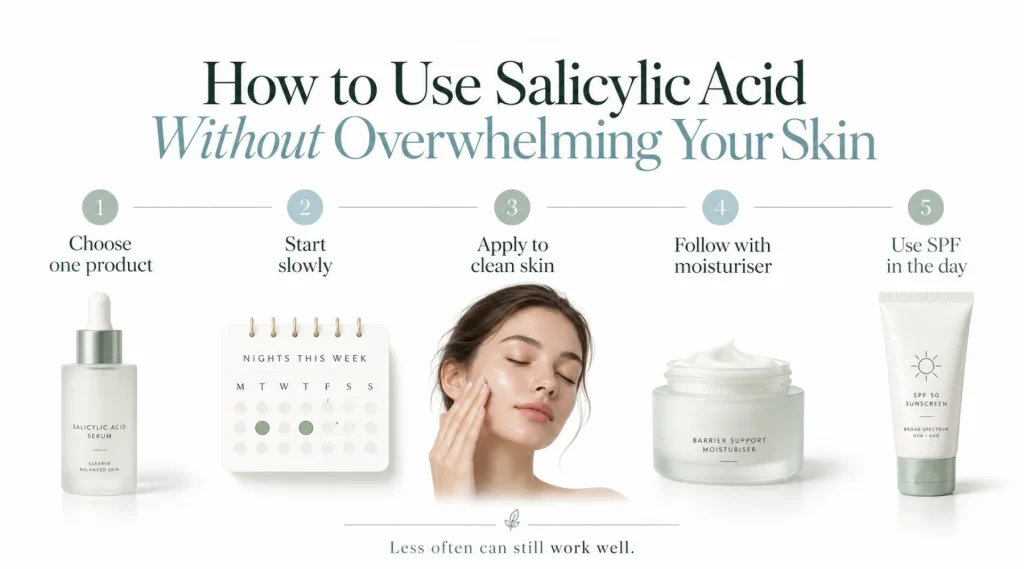
The aim is not to find the highest level of salicylic acid your skin can handle.
Instead, the goal is to discover the lowest frequency that helps with congestion while keeping your skin comfortable.
Start with one salicylic acid product
Pick a cleanser or leave-on product instead of trying to use a whole salicylic acid routine all at once.
Using an acid cleanser, toner, serum, and exfoliating mask can increase irritation without significantly improving acne control.
It’s easier to evaluate results with one good formula.
Introduce it gradually
If you use a leave-on product and have sensitive skin, start with a few nights a week instead of using it every morning and night.
Follow the product instructions and your own comfort level for how often to use it.
MedlinePlus recommends using salicylic acid as directed and suggests using it less often at first if you’re worried about irritation.
Apply it to clean skin
For a leave-on treatment, wash your face gently, let it rest, and then apply the recommended amount.
Don’t scrub your face beforehand.
You usually don’t need to use both mechanical and chemical exfoliation if you have acne-prone skin.
Follow with moisturiser
Oily skin needs protection. A light, non-comedogenic moisturiser can add moisture without interfering with salicylic acid.
Harshly drying your face won’t cure acne. It doesn’t address the real causes of acne effectively.
Protect your skin during the day
Using a broad-spectrum SPF 30 or higher daily is a smart choice, especially for those with acne, as it helps with inflammation and marks left by acne. The American Academy of Dermatology (AAD) recommends broad-spectrum, water-resistant SPF 30 or higher. They also suggest that people with acne-prone skin choose non-comedogenic options.
A Simple Routine When Salicylic Acid Is Causing a Mild Purge
Complicated routines make it hard to figure out why your skin is breaking out. A simple routine helps you see changes more clearly.
Morning
- Use a gentle cleanser or rinse if it works for your skin.
- Apply a lightweight moisturiser.
- Use broad-spectrum sunscreen.
Evening on salicylic acid days
- Gentle cleanser.
- Salicylic acid treatment as directed.
- Moisturiser.
Evening on rest days
- Gentle cleanser.
- Hydrating or barrier-supporting serum if desired.
- Moisturiser.
You don’t need to fill every rest night with another activity. Rest nights are important because they help reduce irritation.
The same goes for choosing serums. During the adjustment period, hydration and support for your skin barrier may be more helpful than adding another exfoliant or strong formula.
Salicylic Acid Purging for Acne-Prone Skin
People with acne-prone skin often use salicylic acid and may worry if they don’t see results in the first week. It’s easy to judge a treatment based on single pimples, but it’s better to look at the overall pattern. Taking a photo of your skin once a week in the same lighting can give you a clearer view than checking it daily in a magnifying mirror. Acne changes naturally, so focusing on daily differences can mislead you about whether a treatment is working.
Look for:
- Fewer clogged pores.
- Blackheads are less noticeable.
- Existing blemishes are healing.
- Breakouts happen less often.
- Overall skin congestion is reduced.
- Skin feels comfortable.
Salicylic acid is useful for acne caused by clogged pores, especially for blackheads and whiteheads.
If you have deep, painful acne, you might need stronger treatments than just exfoliating acids.
Current acne guidelines suggest using topical retinoids and benzoyl peroxide as primary treatments. Salicylic acid and azelaic acid are recommended in some cases. For severe or hard-to-treat acne, see a doctor.
Why Blackheads Can Seem More Noticeable at First
Blackheads are open comedones formed when material in hair follicles reaches the skin surface and meets air. The dark colour doesn’t mean the pore is full of dirt.
Salicylic acid helps to clear clogged pores. When using salicylic acid for blackheads, you might notice more about your pores before your skin looks clearer overall. However, this isn’t a reason to squeeze them.
Picking at blackheads can push debris deeper, increase redness, and raise the risk of scarring. The AAD advises against squeezing pimples and blackheads at home, as this can worsen inflammation and slow healing.
Constantly inspecting and trying to remove every visible blackhead can cause unnecessary irritation. Salicylic acid is more effective when used regularly for pore care, rather than as a reason to attack every visible dot you see.
How to Avoid Breakouts When Starting Salicylic Acid
You can’t promise that new acne spots won’t show up since acne is complicated. However, you can reduce irritation and better understand your skin’s behaviour.
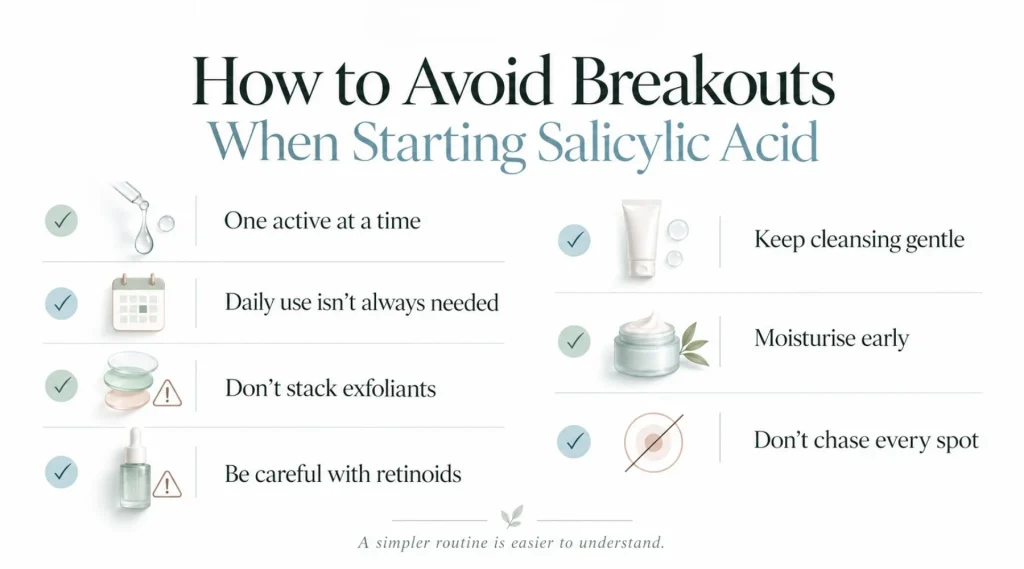
Change one active at a time
This is a key skincare habit.
Start using salicylic acid while keeping your usual routine.
If anything changes, you’ll have a clear hint about what worked.
Do not assume daily use is mandatory
The best frequency isn’t always the highest one allowed on the label.
Some people benefit from using the product regularly, while others keep their pores clear with a few applications each week.
How your skin adjusts is important.
Avoid stacking exfoliants immediately
Using salicylic acid, glycolic acid, lactic acid, exfoliating pads, and a peeling mask in the same few days can irritate your skin.
Chemical exfoliation builds up over time.
Your skin doesn’t benefit from using too many acids at once.
Be careful when introducing retinoids at the same time
Retinoids and salicylic acid can both be useful for acne treatment. However, starting both at the same time can lead to dryness and make it hard to see how your skin reacts. In some routines, people use them together or on different nights. It’s better for beginners to start with one and get used to it before adding the other.
Keep cleansing gentle
Acne-prone skin is not dirty.
Harsh cleansers, facial brushes, scrubs, and washing too much do not stop comedones from forming.
MedlinePlus recommends gentle cleansing and cautions against aggressive washing. AAD also suggests using non-irritating skincare.
Moisturise before you think you need to
Waiting until your skin is peeling makes healing harder. Using a good moisturiser early can help your skin feel better.
Avoid chasing every new spot
A single pimple doesn’t need a whole new treatment.
Changing your routine too often stops you from understanding how it works.
Salicylic Acid Purging Side Effects: What Is Normal and What Is Not?
The term “salicylic acid purging side effects” can be confusing because purging isn’t officially recognised as a side effect in medicine.
It’s better to distinguish between three things:
- Temporary acne worsening: This is a brief increase in familiar pimples after starting an acne product.
- Expected tolerability effects: These include mild dryness or short stinging that is manageable.
- True adverse reactions: This involves serious irritation, dermatitis, allergic reactions, or toxicity.
Topical salicylic acid can irritate and sting the skin. Using too much, applying it on large areas, using it on damaged skin, or using high-strength products can increase the risk, as salicylic acid can be absorbed through the skin. So, use facial products only as directed.
Professional salicylic acid peels are different from everyday serums or cleansers and should not be used in the same way.
Stronger products behave differently.
What Happens When the Skin Barrier Becomes Part of the Problem?
Your skin’s outer layer helps keep moisture in and protects against irritants.
If your skin care routine is too harsh, this protection can weaken.
You might notice:
- Dehydration
- Tightness
- Redness
- Flaking
- Increased sensitivity
- Burning from products that used to be fine
This can make acne treatments less effective. A damaged barrier doesn’t mean your pores are cleaner; it often means you need to simplify your routine.
For a few days, focus on using a gentle cleanser, moisturiser, and sunscreen. Cut back on or stop exfoliating products.
Once your skin feels better, you can slowly reintroduce salicylic acid.
If your skin has a strong reaction, keeps reacting, or looks like eczema or contact dermatitis, consult a dermatologist or qualified healthcare professional before starting again.
When Azelaic Acid May Make More Sense Than Pushing Through Salicylic Acid
Not everyone with acne needs salicylic acid. Azelaic acid offers a different approach, especially for inflammatory blemishes and post-acne marks. It’s useful when stronger treatments are too harsh.
The NHS says azelaic acid works well for acne, especially when other treatments irritate. The AAD recommends both azelaic and salicylic acid for acne care.
Knowing about azelaic acid and how to use it safely can help avoid the belief that every acne routine needs exfoliation. For example, a 12% azelaic acid cream may suit routines dealing with clogged pores, redness, or leftover discolouration.
However, don’t use it on irritated skin right away. If salicylic acid bothered your skin, let it settle first. Introduce one treatment at a time so you can monitor how your skin reacts.
Where Tea Tree Fits and Where It Does Not
Tea tree oil has a long history in skincare for blemishes, but “natural” doesn’t mean it won’t irritate your skin. The evidence for tea tree oil’s effectiveness in treating acne is not as strong as for many proven treatments. DermNet states that the support for tea tree oil and other acne ingredients is limited.
So, treat a Tea Tree Facial Serum as just another product, not a guaranteed solution, especially if salicylic acid has caused a flare-up. If your skin is already red, stinging, or peeling, using fragrant oils or multiple plant extracts might make it harder to figure out the problem.
The best approach is simple: remove anything that might be irritating your skin, restore comfort, and then determine what your skin actually needs.
Salicylic Acid and Retinol: Do They Make Purging Worse?
Introducing either ingredient too quickly can make new routines harder to handle.
Retinoids help with cell turnover and are common acne treatments. Salicylic acid works differently to clear clogged pores. Some people successfully use both, but starting with both at full strength can lead to dryness, flaking, and irritation.
That irritation might be mistaken for a severe breakout.
If you’re new to active skincare, start with one product first. Once your skin adjusts and you understand each product’s effects, you can use them on alternate nights or at different rates.
If you’re using prescription retinoids, stick to your prescriber’s instructions instead of following complex routines from social media.
Salicylic Acid and Benzoyl Peroxide: Useful Combination or Too Much?
Benzoyl peroxide and salicylic acid fight acne in different ways. Benzoyl peroxide kills bacteria and reduces inflammation, while salicylic acid helps clear clogged pores. Both can help treat acne but may also cause dryness.
The American Academy of Dermatology (AAD) strongly recommends benzoyl peroxide and conditionally recommends salicylic acid. However, not everyone needs to use both twice a day.
For sensitive skin, it might be better to use one in the morning and the other on certain evenings or to start with just one. If your skin is already peeling, adding benzoyl peroxide may not help you decide if your skin is overly irritated or just purging.
Does Purging Mean Salicylic Acid Is Definitely Working?
No, Many people mistakenly believe that a “purge” shows that a skincare product is working.
Some users of salicylic acid see improvements right away, while others may get new breakouts and find the product irritating or unsuitable for their skin.
Clearer skin is a sign that your routine is effective. You don’t need a dramatic adjustment period.
If you start using salicylic acid and notice fewer blackheads without any new breakouts, that’s a good sign. You don’t have to increase the strength of the product to see peeling.
Good skincare can be simple and calm.
More Peeling Does Not Mean Better Exfoliation
Visible flaking can be satisfying because it shows that a product is working. However, therapeutic effects are different from irritation.
Salicylic acid can help shed skin cells without causing noticeable peeling. In some cases, too much flaking may lead to using the product less often.
The same goes for tingling. A strong sting doesn’t mean the product is penetrating deeper into pores. Pain isn’t a sign of effectiveness.
Purging Is Not Detoxification
A common misconception is that acids remove impurities or toxins from deep inside the body and push them out through the skin.
That’s not how salicylic acid works for acne. It acts locally by affecting how skin cells shed and how clogged pores form.
The breakouts you see during a supposed purge are due to acne biology and clogged pores, not toxins leaving your body.
Using detox terms can downplay real irritation as if it’s a healthy response. If your face is very inflamed, you shouldn’t try to detox harder.
Is a Salicylic Acid Cleanser Less Likely to Cause Purging Than a Serum?
Cleansers are often gentler because they rinse off quickly, so the ingredients stay on your skin for a shorter time compared to leave-on products. However, not all cleansers are mild, and not all serums are strong. Factors like formula pH, ingredient concentration, cleansing agents, and contact time affect how your skin tolerates them.
A salicylic acid cleanser is a good choice for oily or congested skin, as it provides a milder way to introduce this ingredient. Leave-on treatments offer longer contact with the skin, which can help with ongoing congestion, but they need careful use.
Neither option is automatically better. The best choice is the one you can use regularly without harming your skin barrier.
Can You Use Salicylic Acid Every Day After the Purge Stops?
Daily use isn’t necessary for everyone.
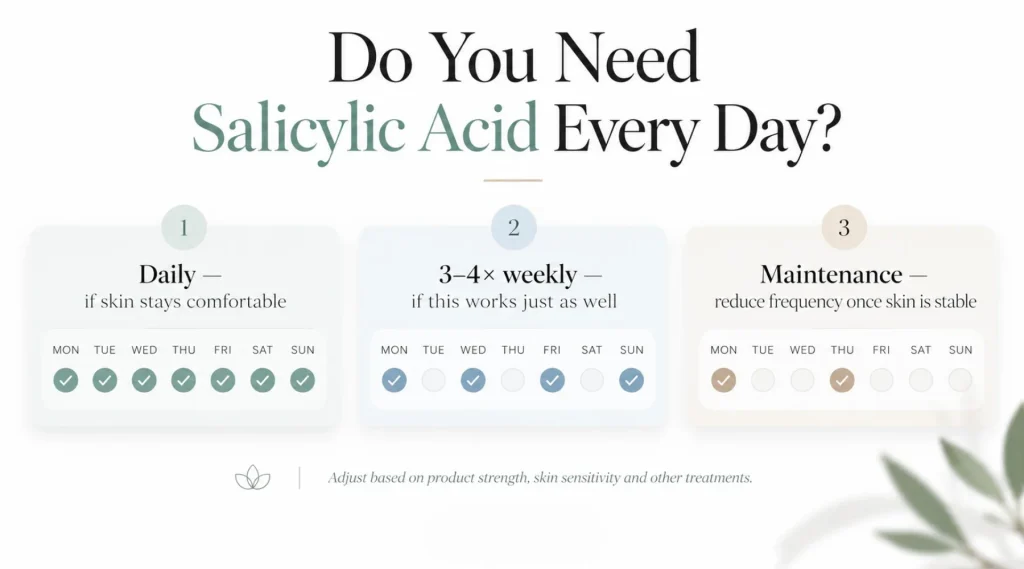
Follow the product instructions. If using it daily keeps your skin clear and comfortable, that’s fine.
If using it three to four times a week works just as well and keeps your skin less dry, there’s no need to use it more often.
The best routine depends on:
- how strong the product is
- whether it’s a cleanser or leave-on
- how oily or sensitive your skin is
- the weather
- any other treatments you’re using
- how severe your acne is.
Your usage can change over time. For example, you might start using salicylic acid often to clear up your skin, then use it less frequently once your skin is stable.
When a “Purge” Is Actually the Wrong Product
Salicylic acid is an important ingredient, but it isn’t the only one in your skincare product.
Other ingredients can include:
- Fragrance
- Essential oils
- Thick moisturisers
- Alcohol
- Cleansing agents
- Plant extracts
- Other exfoliating acids
Your skin reacts to the whole formula. This means you might handle salicylic acid well in one product but get irritation from another. Don’t jump to the conclusion that your skin can’t use BHA.
The problem could be the amount of salicylic acid, how often you use it, the type of product, or the ingredient itself.
Patch testing can help you spot clear reactions to a new product, but it can’t predict every possible breakout or irritation. MedlinePlus recommends testing salicylic acid on a small area of skin when you start using it and following the instructions carefully.
What to Do If You Have Already Overused Salicylic Acid
When your face is over-exfoliated, you might want to use many soothing products.
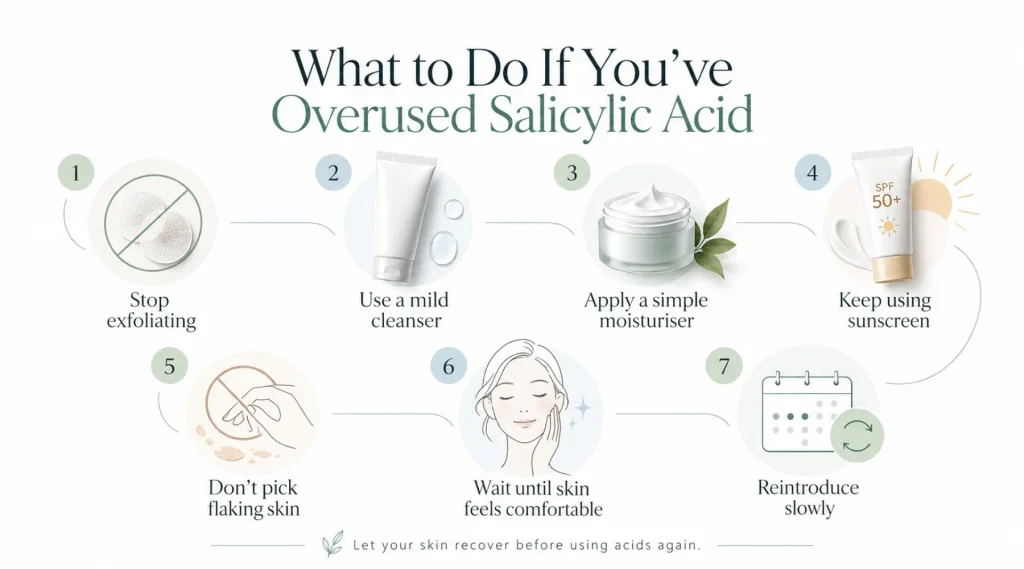
Instead, try these steps:
Stop Exfoliating
Take a break from exfoliating and stop using salicylic acid, scrubs, peels, and strong toners.
Use a Mild Cleanser
Pick a gentle cleanser that washes your face without making it feel tight.
Choose a Simple Moisturiser
Find a moisturiser that hydrates and protects your skin without adding too many new ingredients.
Keep Using Sunscreen
Protect irritated skin from the sun’s rays.
Don’t Pick at Flaking Skin
Avoid pulling off peeling skin, as it can cause more irritation.
Wait for Comfort
Your skin can look better before it feels normal again. If water or moisturiser stings, wait longer before using acids again.
Reintroduce Carefully
When you restart acids, use them less often than before. If the irritation comes back, the product may not be right for you.
When Acne Needs More Than Salicylic Acid
Salicylic acid is effective and easy to find, but it’s not the best solution for all types of acne.
Consult a professional if you have:
- Painful nodules or cysts
- Acne that leaves permanent scars
- Rapidly worsening inflammatory acne
- Notable post-inflammatory pigmentation
- Acne that affects your well-being or confidence
- Ongoing breakouts despite proper treatment
- Suspected hormonal acne needing medical help
- Doubts about whether your skin issue is acne
Modern acne treatment often includes a mix of topical treatments, oral medications, hormonal therapies, and isotretinoin when needed. The AAD recommends isotretinoin for severe acne, scarring acne, significant emotional distress from acne, and cases that don’t improve with standard treatments.
Waiting for months for a “purge” while painful cysts develop can lead to scarring. It’s better to seek help early than to stick with one ingredient.
Questions People Commonly Ask When Salicylic Acid Starts Causing Breakouts
Can salicylic acid cause purging?
Yes, some people may see a temporary increase in acne after starting salicylic acid, known as purging. This happens because the acid helps clear clogged pores. However, not every new breakout means purging. Look at the pattern, location, and comfort of your skin to understand what’s happening.
How do I know whether salicylic acid is purging my skin or breaking me out?
Check where the breakouts occur and how your skin feels. If familiar acne appears in places where you usually have issues, it’s likely purging. If new spots show up in unusual places with itching, redness, or peeling, it may be a sign of irritation from the product.
How quickly can salicylic acid purging start?
There’s no specific timeline. Some people notice changes soon after starting treatment. Initially, acne might look worse as your skin adjusts. Instead of counting days, focus on how your skin’s condition stabilises and your comfort level.
How long should I tolerate salicylic acid purging?
Don’t tolerate serious irritation for a set time. A mild flare can settle down in weeks, but ongoing or worsening acne needs reevaluation. Treatments often take four to six weeks for improvement. If your skin becomes red, painful, or itchy, stop using the product.
Should I stop using salicylic acid if I start breaking out?
Not right away. If you have a slight increase in familiar spots without irritation, try using it less often and monitor the situation. If your skin burns, itches, or worsens, stop using it and let your skin recover.
Can salicylic acid cause tiny bumps?
Tiny bumps can have various causes. They might be closed comedones, but if you suddenly get a lot of bumps with itching or redness, it could be something other than purging. Conditions like irritant dermatitis and folliculitis can look like acne.
Does everyone purge from salicylic acid?
No, many people start using salicylic acid without increasing their acne. Not purging doesn’t mean the product isn’t working; a clear reduction in congestion is often a better indicator of success.
Can salicylic acid cause cystic acne during purging?
A sudden appearance of deep, painful cysts should not be ignored, especially if this is not typical for you. Cystic acne can cause scarring and usually requires medical treatment. Consult a doctor instead of just increasing salicylic acid.
Can using too much salicylic acid cause more acne?
Yes, overuse can lead to irritation, making your acne look worse. It can cause dryness, redness, and peeling. Applying more product won’t clear pores faster and can make it hard to tell what’s causing the issues.
Does salicylic acid make blackheads worse before they get better?
Some people notice existing blackheads more after starting treatment, but they shouldn’t worsen for salicylic acid to work. The acid helps clear blocked pores, so avoid squeezing them to reduce inflammation and scarring.
Can I use moisturiser while my skin is purging?
Yes, and you should. A good moisturiser can help with dryness and keep your skin comfortable. Choose non-comedogenic products to avoid worsening breakouts.
Can I use salicylic acid with azelaic acid?
Yes, they can be used together, but it’s better to introduce them one at a time if your skin is sensitive or you’re experiencing purging. Once your skin adapts to one, you can gradually add the other.
Can I use salicylic acid morning and night?
Only if the product instructions allow it and your skin tolerates it. Many people only need to use it once a day or a few times a week, and increasing frequency isn’t necessary if it’s effective.
Is salicylic acid suitable for sensitive skin?
Some sensitive skin types can handle salicylic acid, while others may find it irritating. Start slow and avoid using multiple exfoliants together. If you have certain skin conditions, consult a doctor before using it.
Why does my moisturiser suddenly burn after using salicylic acid?
If your moisturiser stings, it may mean your skin is irritated. A product that was fine before might cause discomfort after frequent exfoliation or using strong ingredients. Stop using irritating products and simplify your routine. If burning continues or you notice significant redness, seek professional advice.
Can Salicylic Acid Cause Purging Without Damaging Your Skin?
Yes, when you start using salicylic acid for acne, you might see more breakouts at first. However, this shouldn’t be the reason for every negative reaction you experience.
A slight increase in breakouts where you usually get them, along with minor discomfort and gradual improvement, can be part of your skin adjusting. But if you have burning, redness, itching, peeling, unusual bumps, or worsening acne, you should reconsider your routine.
Think of salicylic acid as a helpful tool, not a challenge. Choose the right formulation, introduce it slowly, and remember to moisturise. Keep your routine simple and don’t confuse irritation with improvement. Clear pores don’t always need to show visible peeling first.
Salicylic acid can be effective for managing blackheads, whiteheads, and ongoing congestion. However, some people may benefit more from gentler use, a different formula, or ingredients like azelaic acid.
Instead of wondering if your skin can handle the initial breakouts, focus on whether your routine leads to fewer breakouts while keeping your skin healthy enough to benefit from treatment.