




Blog
Can I Use Glycolic Acid Every Day? What to Know and Avoid


Glycolic acid is known for making dull and uneven skin look smoother and brighter. While this is true, some people may use it too often for their skin’s needs.
So, can you use glycolic acid every day? Some people can use a low-strength product daily. However, for many, using it a few times a week is just as effective and may prevent issues like dryness, stinging, and redness.
How often you use it matters as much as the strength. A 4% glycolic acid cleanser rinsed off is different from a 10% leave-on product, even though both have glycolic acid.
Your skin type is also important. Oily skin may handle glycolic acid more often, while sensitive or irritated skin can react poorly, even at low concentrations.
The key question is not just whether you can use it daily, but whether your product, skin condition, and routine make daily use beneficial.
What Is Glycolic Acid and Why Does Frequency Matter?
Glycolic acid, or AHA, is an ingredient in skincare products that helps exfoliate the skin’s top layer.
It works by breaking down the bonds between old skin cells, helping them shed more easily. This can make rough or dull skin appear smoother and more even.
Glycolic acid is effective because its smaller molecules penetrate the skin better. However, this can also make it feel irritating for sensitive skin compared to gentler acids.
When used properly, glycolic acid can improve:
- Rough or uneven skin texture
- Dullness
- Bumps on the skin
- Some post-acne marks
- Uneven pigmentation
- Fine lines
- Keratosis pilaris (rough, bumpy skin)
- Certain types of acne
However, more exfoliation isn’t always better. The outer layer of your skin, called the stratum corneum, is not just dead cells; it is a crucial barrier that prevents water loss and protects against irritants.
If you use glycolic acid too much, you might strip away these protective cells faster than your skin can heal. This could lead to more skin problems instead of solutions.
Can I Use Glycolic Acid Every Day?
You can use glycolic acid daily if the product is gentle, your skin is used to it, and you notice no irritation. However, most people don’t need daily use for good results.
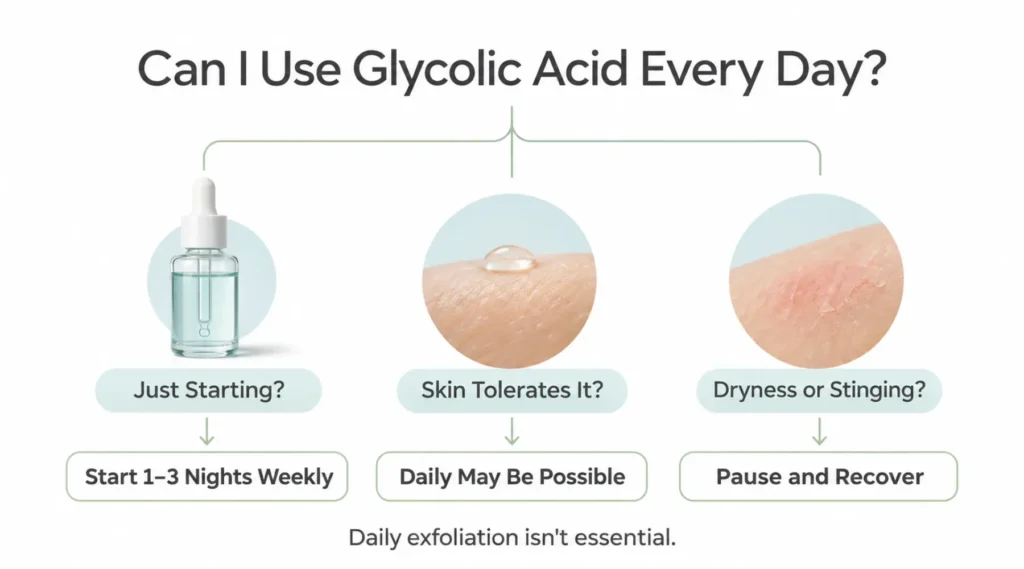
If you’ve used a 3–5% glycolic acid product for months without dryness, you can use it more often. If you’re starting with an 8–10% toner, it’s best to use it two or three nights a week.
High-strength peels and strong home products are different. They should not be used daily.
A simple way to think about how often to use it is:
| Glycolic acid product | Typical starting frequency | Could daily use be appropriate? |
| Low-strength rinse-off cleanser | 2–4 times weekly | Sometimes |
| Mild 3–5% leave-on product | 2–3 times weekly | Possibly after adaptation |
| 5–8% leave-on toner or serum | 1–3 times weekly | Not necessary for most skin |
| Around 10% leave-on exfoliant | 1–2 times weekly initially | Often too much for daily use |
| Strong home peel | According to manufacturer directions only | No |
| Professional chemical peel | Clinician-directed | No |
These ranges are not strict rules. Factors like product pH, formulation, contact time, other ingredients, and individual skin sensitivity affect how glycolic acid works.
Sometimes, a moisturising 5% formulation is easier to tolerate than a poorly balanced product with the same percentage. This is why concentration alone doesn’t determine how often a product should be used.
What Does Glycolic Acid Do for Skin When You Use It Regularly?
Understanding glycolic acid helps you decide if you should use it more often.
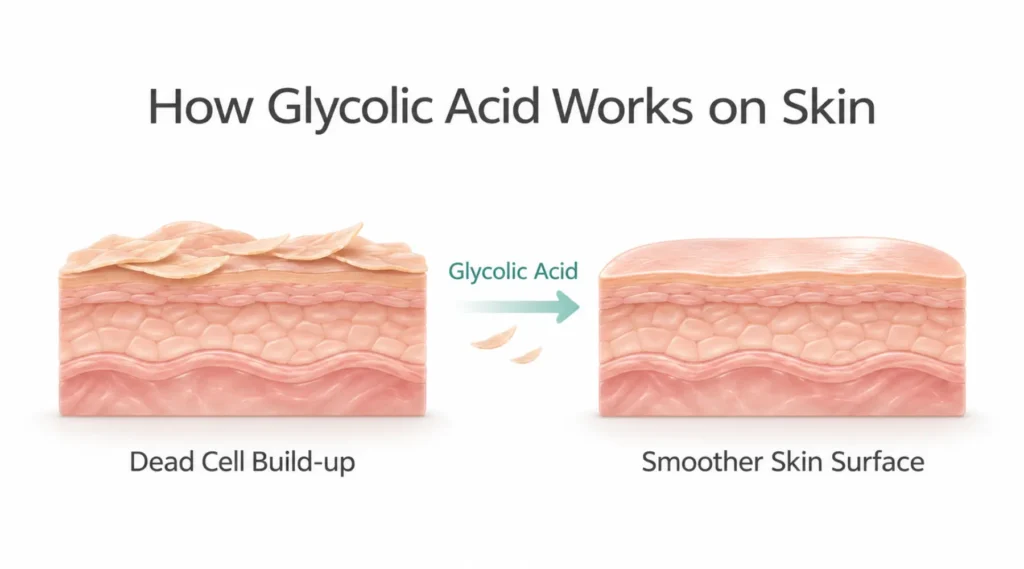
Its main effect is near the skin’s surface.
Skin cells naturally rise before they fall away. This process can slow down with age, sun exposure, certain skin issues, or personal differences. Older cells can pile up, making the skin rough and dull.
Glycolic acid helps shed these surface cells more effectively.
This can lead to noticeable improvements.
Skin can feel smoother
As uneven skin cells come off, skin feels smoother. Makeup goes on more evenly, and rough areas can feel softer.
Dullness may become less noticeable
Too much build-up on the skin can block light reflection. Regular exfoliation can create a fresher appearance.
Post-acne marks may fade more evenly
Glycolic acid speeds up the removal of pigmented skin cells, helping to reduce brown marks left by spots over time. It is not a bleaching treatment, and deeper pigmentation may need a different approach.
Congested pores may become easier to manage
Glycolic acid works mainly on the skin’s surface instead of breaking down sebum in pores like salicylic acid does. However, it can help remove dead skin around hair follicles, which may reduce build-up.
Longer-term skin quality may improve
Research shows that using alpha hydroxy acids correctly can help with more than just exfoliation; they also support skin renewal and the function of the skin’s deeper layers.
This is why being consistent with use is more important than aggressive daily exfoliation. Skin takes time to respond, often needing weeks or months to show results, not just overnight.
How Often Should You Actually Use Glycolic Acid?
Many people find that applying products two or three times a week is enough. Starting below the maximum frequency lets you see how your skin reacts before using more.
A good plan might be:
- Weeks 1–2: Apply once or twice a week.
- Weeks 3–4: Increase to two or three times a week if it feels okay.
- After one month: Keep that frequency if you’re seeing good results.
- Later: Only consider increasing if there’s a real need.
There’s no reward for using products every night. If three applications keep your skin smooth and clear, using it daily might lead to irritation without better results. Let your skin decide the schedule, not the calendar.
Can I Use Glycolic Acid Every Day for Sensitive Skin?
If you often experience redness, stinging, dermatitis, eczema, symptoms similar to rosacea, or irritation from various skincare products, starting with daily glycolic acid may not be ideal.
Sensitivity doesn’t mean glycolic acid is off-limits.
Pay attention to the product’s strength, formulation, and how often you use it.
A routine for sensitive skin might include:
- Choosing a low-concentration product.
- Starting with once-a-week application.
- Applying it on dry skin.
- Following up with a simple moisturiser.
- Avoiding other exfoliants that evening.
- Monitoring for irritation over the next 24–48 hours.
If your skin feels good after several weeks, you can gradually increase how often you use it. However, sensitive skin doesn’t need to endure frequent irritation for you to get results. Over-irritating your skin won’t provide any benefits.
Seek advice from a dermatologist if you have active eczema, dermatitis, broken skin, or severe rosacea before using stronger exfoliating acids.
Can I Use Glycolic Acid Every Day for Oily Skin?
Oily skin can handle glycolic acid better than dry or sensitive skin, but it can still suffer from over-exfoliation.
Sebum and skin health are connected but different. Oily skin can still damage its outer layer, leading to a greasy and tight feeling. You may notice sensitivity around your nose or mouth while your forehead stays shiny.
For oily skin, glycolic acid can help with rough texture, acne marks, or clogged pores. Start using it two or three times a week instead of thinking you need it daily.
If you also use salicylic acid, retinoids, benzoyl peroxide, or acne prescriptions, consider the total irritation from all products. Using four effective ingredients together can cause more irritation than expected.
Is Glycolic Acid Good for Acne?
Glycolic acid can help with some types of acne by reducing clogged pores and abnormal skin shedding. However, it isn’t always the best choice for everyone. Whether glycolic acid is good for acne depends on the specific type of acne.
It can be helpful for:
- Closed comedones
- Mild congestion on the skin
- Rough patches near acne-prone areas
- Dark marks from previous acne
- Uneven skin texture after spots have healed
However, it may not be effective on its own for:
- Moderate or severe acne
- Deep nodules
- Cysts
- Hormonal acne
- Acne that causes scars
Salicylic acid is better for oily, clogged pores because it can penetrate the follicle. Azelaic acid can also help, especially for those with redness or dark marks. A 12% azelaic acid cream might fit better into some routines than just using more glycolic acid.
For ongoing, painful, or scarring acne, it’s best to seek medical advice instead of relying solely on exfoliation.
Does Glycolic Acid Help With Acne or Can It Make Breakouts Worse?
Both experiences can happen. Glycolic acid might reduce congestion over time, but starting too quickly can cause irritation that looks like worsening acne. This irritation can include:
- Small red bumps
- Burning
- Tightness
- Rough patches
- Widespread sensitivity
- Increased redness
- Spots in areas that don’t usually break out
“Purging” often refers to existing issues showing up sooner due to faster skin turnover. However, people sometimes use this term to excuse irritation.
If you notice uncomfortable, inflamed, or unusual spots after starting glycolic acid, consider whether the glycolic acid is causing the breakout instead of just increasing how often you use it.
Understanding the difference between glycolic acid purging and a real breakout is important because they require different responses. Potential purging might improve as your skin adjusts, whereas irritant dermatitis usually worsens with continued use.
What Are the Benefits and Risks If I Use Glycolic Acid Every Day?
Using glycolic acid every day can help exfoliate your skin, but the benefits may level off over time.
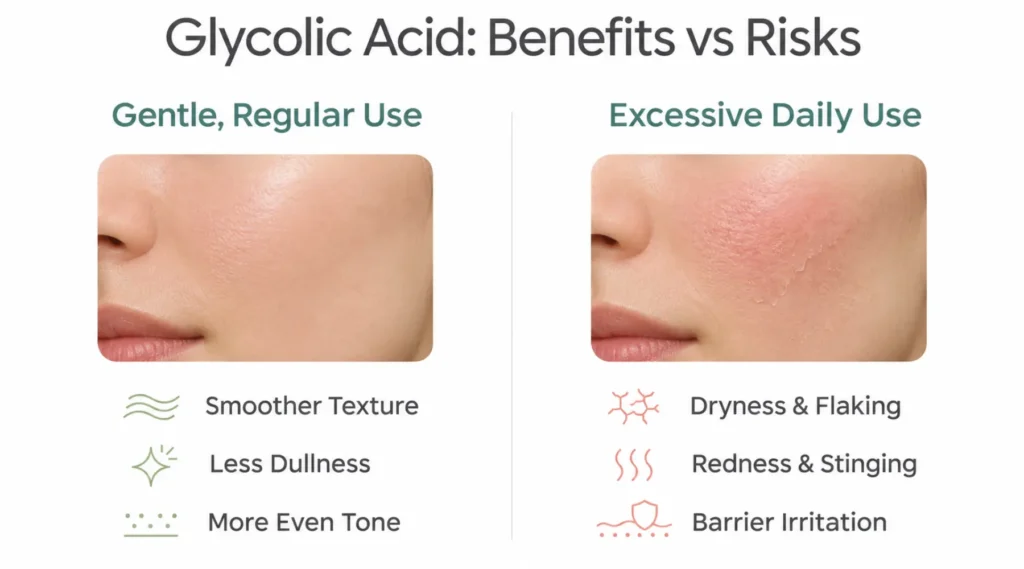
Once your skin is shedding well, using more acid won’t necessarily make it smoother faster.
Benefits of Regular Use
With a gentle formula, using glycolic acid regularly can:
- Keep your skin smooth
- Reduce dullness
- Prevent build-up on the surface
- Improve uneven pigmentation
- Create a more even skin tone
- Help with rough skin on the body
Risks of Daily Use
If you use glycolic acid too often, it may cause:
- Dryness
- Tightness
- Burning
- Stinging
- Redness
- Flaking
- Increased sensitivity
- Skin barrier issues
- Contact dermatitis
- Greater sensitivity to other products
- Higher chance of sun irritation
- Dark marks on pigmentation-prone skin
Once irritation occurs, the benefits may not outweigh the risks. Continuing to exfoliate can slow down recovery instead of speeding it up.
How to Tell When You Are Over-Exfoliating
Over-exfoliation doesn’t always show obvious symptoms. The first signs can be subtle. You might notice your moisturiser stinging, water feeling uncomfortable on your face, or skin appearing shiny but feeling tight. These signs can be more telling than visible peeling.
Common Signs:
- Persistent Tightness: Your skin feels stretched even after moisturising. Products that used to feel fine may now sting. Basic moisturisers or hydrating serums shouldn’t burn.
- Unexpected Redness: You might see redness around your nose, mouth, cheeks, or forehead.
- Shiny Appearance: Extremely smooth skin can sometimes look overly shiny, indicating problems.
- Fine Flaking: Small flakes may appear around your mouth, nose, or eyebrows.
- Sudden Sensitivity: Wind, heat, cleansing, or removing makeup may start to hurt.
- More Breakouts: Inflamed skin can react more and result in more spots.
If you notice several of these symptoms after increasing glycolic acid, cut back or take a break instead of trying to keep using it.
What to Know Before Trying to Use Glycolic Acid Every Day
Before using products more often, check your entire skincare routine. Many people make the mistake of looking at each ingredient alone.
You might say things like:
- “My glycolic acid is just 5%.”
- “My retinol is gentle.”
- “My cleanser has only a little salicylic acid.”
- “Vitamin C has never bothered me.”
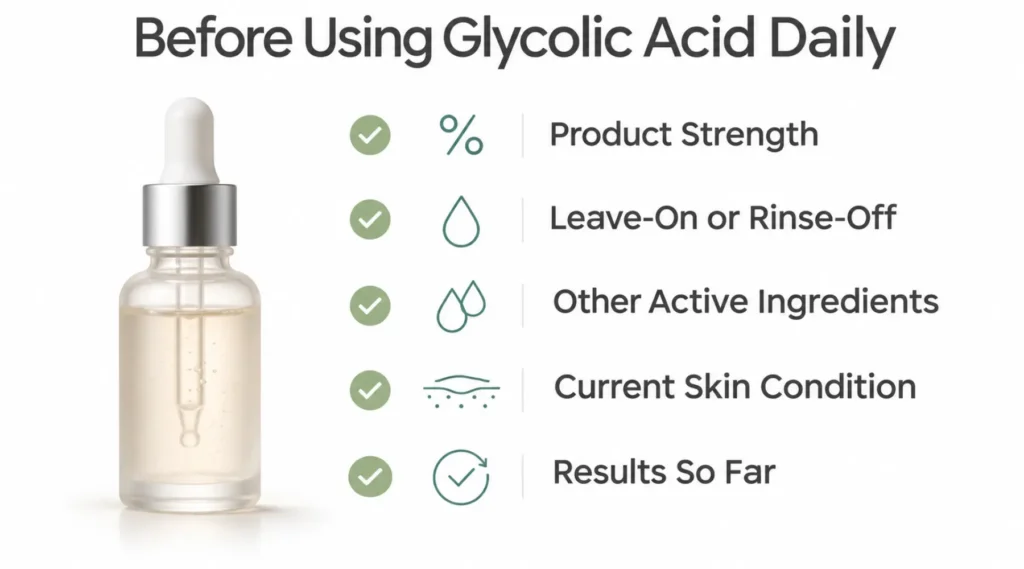
While these statements might be true, combining these products every day can cause more irritation than you expect. Ask yourself five questions before using glycolic acid daily.
1. What concentration are you using?
Lower percentages are easier to use often.
2. Is the product leave-on or rinse-off?
How long it stays on matters. A cleanser for 30 seconds is different from a toner left on overnight.
3. What other active ingredients are in your routine?
Retinoids, extra AHAs, BHAs, scrubs, and acne treatments can cause extra irritation.
4. Is your skin currently healthy?
Avoid increasing exfoliation if your skin is dry, sunburned, peeling, or irritated.
5. Are you already seeing results?
If yes, you might not need to change anything. Changing a routine that works can make it worse.
How to Use Glycolic Acid Without Damaging Your Skin Barrier
If you’re learning to use glycolic acid, keep it simple.
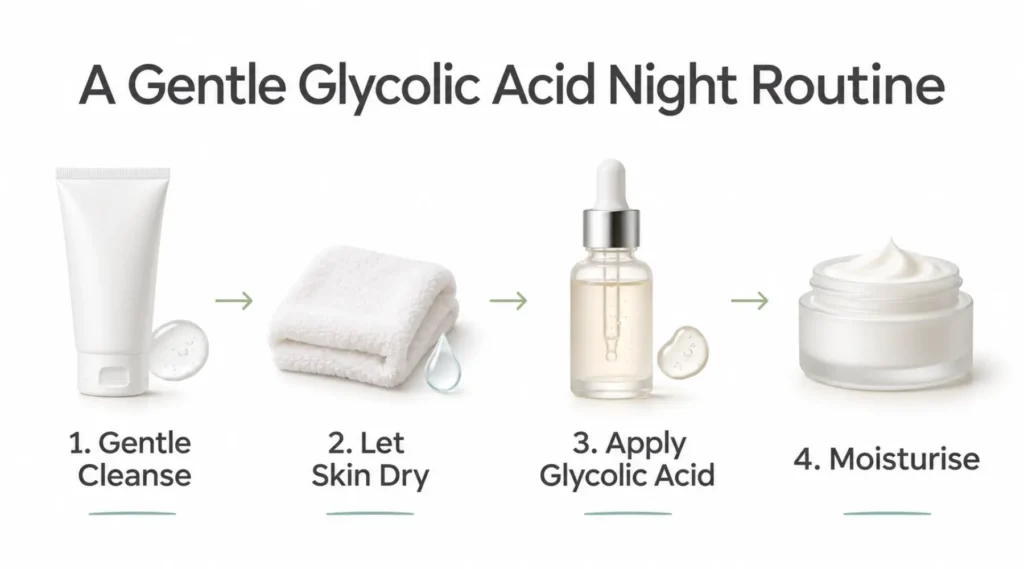
For leave-on products, applying it in the evening is often easiest.
Here’s a simple routine:
- Cleanse your skin gently.
- Let your skin dry.
- Apply the glycolic acid as directed.
- Finish with a moisturiser.
At first, avoid stronger active ingredients.
You don’t need to wait a specific number of minutes between steps unless the instructions say so.
The main goal is to reduce irritation.
Applying glycolic acid to dry skin may be easier to tolerate
Wet skin can help some ingredients soak in better. If you have sensitive skin, using an acid right after washing might feel too intense. Letting your face dry first can make it easier to control how it feels.
Keep the rest of the routine gentle
Avoid using an exfoliating scrub, strong retinoid, another peel, or a harsh foaming cleanser on a glycolic acid night.
Instead, use ingredients that support your skin barrier. Ceramides, glycerin, panthenol, hyaluronic acid, and other moisturising ingredients can help keep your skin comfortable.
Morning or Night: When Should Glycolic Acid Be Used?
Glycolic acid can be used in the morning or evening, but it’s usually better for evening use. It’s not unsafe in sunlight, but it can make your skin more sensitive to UV rays, especially when it exfoliates.
Using glycolic acid at night makes your morning routine easier. A typical morning routine might look like this:
- Gentle cleanse or rinse
- Hydrating or antioxidant serum
- moisturiser
- Broad-spectrum sunscreen
You can use glycolic acid on certain nights in the evening. Remember, you still need to wear sunscreen every day, even if you use glycolic acid at night. Exfoliating in the evening doesn’t eliminate the need for sun protection the next morning.
Sunscreen Becomes Even More Important When You Use Glycolic Acid
If you use AHAs regularly, wear sunscreen. This is especially important when using glycolic acid to reduce pigmentation. Exfoliating to even out skin tone won’t help if UV rays keep causing dark spots.
Pick a daily broad-spectrum sunscreen and apply a good amount to all exposed skin. It’s crucial to reapply when you’re outdoors for a long time, sweating, or wiping your face.
Sunscreen is essential, not just an add-on to your exfoliating routine. It’s a key part of effective skin care.
Can You Use Glycolic Acid With Retinol?
Experienced users can use glycolic acid and retinoids in their skincare routine, but they don’t have to apply them at the same time. Both can irritate, especially when first using them. A good way to use them is to apply one on one night and the other on the next night.
For example:
| Evening | Active |
| Monday | Glycolic acid |
| Tuesday | Recovery routine |
| Wednesday | Retinoid |
| Thursday | Recovery routine |
| Friday | Glycolic acid |
| Saturday | Retinoid or recovery |
| Sunday | Recovery routine |
A “recovery routine” doesn’t need to be complicated. Gentle cleansing and a moisturiser might be all you need.
If you have a prescription retinoid, follow your clinician’s advice instead of adding exfoliation on your own.
Can You Use Glycolic Acid With Salicylic Acid?
You can combine these products, but it doesn’t guarantee better results.
Salicylic acid, a beta hydroxy acid, helps oily and acne-prone skin. Glycolic acid works mainly as a surface exfoliant.
This difference can make the two ingredients work well together, but using too much can lead to irritation.
If your cleanser has salicylic acid, using a glycolic acid toner every night might be too much.
People with oily skin may handle both acids well, while those with sensitive skin might get irritated quickly.
Start by using them separately instead of layering.
Can You Use Glycolic Acid With Vitamin C?
It depends on the type of vitamin C and how your skin reacts.
A common myth is that glycolic acid and vitamin C cancel each other out. This is not true for modern skincare products.
The real concern is irritation. Low-pH L-ascorbic acid serums can tingle or sting, and using glycolic acid at the same time may make it worse.
A simple plan is to use vitamin C in the morning and glycolic acid a few nights a week in the evening. There’s usually no need to use both products together.
Can You Use Glycolic Acid With Niacinamide?
Most people can use niacinamide and glycolic acid together.
These ingredients don’t need to be kept apart; the idea of them neutralising each other on the skin is a myth.
Niacinamide helps support the skin barrier, reduce excess oil, and improve uneven skin tone.
If your niacinamide product is gentle, it’s usually fine to include it in a glycolic acid routine.
Pay more attention to how your skin reacts than to theoretical compatibility.
Using too many serums at once can irritate, even if the ingredients are technically okay together.
Can Glycolic Acid and Azelaic Acid Be Used Together?
You can use both acids in your skincare routine, but using them every night isn’t needed for most people. Azelaic acid is great for acne, redness, and dark spots. Glycolic acid helps exfoliate the skin.
When you use both, it’s easier to alternate them. For example:
- Night one: glycolic acid
- Night two: azelaic acid
- Night three: simple moisturising routine
As your skin gets used to these acids, you can adjust the schedule. The goal is not to layer many active ingredients but to use the fewest products needed for good results.
What About Glycolic Acid for the Body?
Body skin usually handles AHAs better than facial skin, but sensitive spots can still get irritated.
Glycolic acid and other AHAs are often used for:
- Rough upper arms
- Keratosis pilaris
- Dry legs
- Uneven body texture
- Areas with ingrown hairs
- Post-inflammatory marks
- Rough elbows and knees
Using an AHA body lotion is often better for regular exfoliation than using a strong facial peel on large areas.
Body products are usually designed for easier application and frequent use.
However, don’t apply exfoliating acids right after shaving if your skin stings, and avoid using them on broken or irritated skin.
Also, make sure to protect sun-exposed areas with sunscreen.
Can Glycolic Acid Help Keratosis Pilaris?
Keratosis pilaris happens when keratin and dead skin build up around hair follicles, creating rough bumps on the upper arms, thighs, or buttocks.
AHAs can help smooth the skin by promoting better exfoliation.
Common treatments include urea, lactic acid, and salicylic acid.
The best treatment improves skin texture without causing redness, soreness, or itching.
Sticking to a consistent routine is more important than using harsh exfoliants.
The Best Routine If You Want to Use Glycolic Acid Frequently
A Simple Routine for Using Glycolic Acid
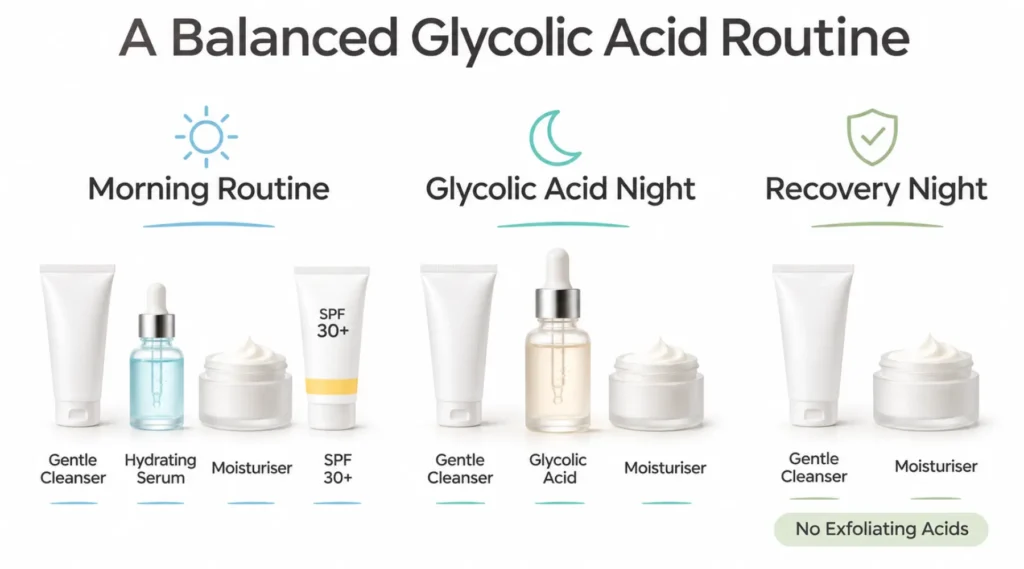
Morning:
- Gentle Cleanser: You might not need a strong cleanser unless your skin gets oily overnight.
- Hydrating Serum: A basic hydrating serum can soothe your skin without adding extra exfoliation. Look for serums that address your skin’s specific needs.
- moisturiser: Pick one that suits your skin type.
- Sunscreen: Apply broad-spectrum sunscreen every morning, focusing on areas that are exposed.
Evenings with Glycolic Acid:
- Gentle Cleanser: Clean off makeup and sunscreen without scrubbing harshly.
- Glycolic Acid: Use the product exactly as instructed.
- moisturiser: Apply enough to keep your skin feeling comfortable.
Evenings for Recovery:
- Skip the exfoliating acids.
- Focus on hydration and supporting your skin’s barrier with a simple routine.
- These nights are important for your skin to recover and maintain its natural barrier.
Common Mistakes When Using Glycolic Acid Every Day
Most glycolic acid issues come from how you use it, not because the ingredient is “bad.”
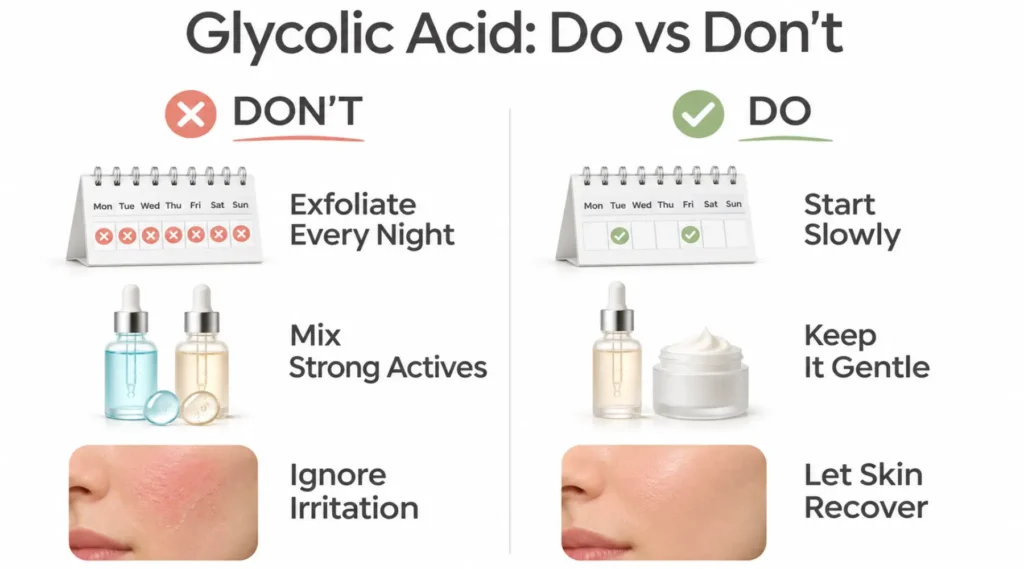
Increasing Use Too Quickly
Just using the product once without irritation doesn’t mean you can use it every night. Irritation can build up over time.
Choosing the Strongest Percentage
Higher strength doesn’t always mean better results. The best strength is one you can use regularly without harming your skin.
Using Glycolic Acid for All Acne Types
Deep, painful acne needs more than surface exfoliation.
Combining Several Exfoliants
Mixing a glycolic toner, salicylic cleanser, exfoliating mask, and scrub can be too harsh.
Ignoring Mild Stinging
A slight sting from an acid can happen, but ongoing burning doesn’t mean the product is working.
Scrubbing Peeling Skin
If your skin is already peeling, scrubbing will likely make it worse.
Using Acid on Damaged Skin
Areas like sunburn, dermatitis, or freshly shaved skin need healing, not more exfoliation.
Forgetting Sunscreen
Neglecting sunscreen can hurt your efforts to improve skin tone and pigmentation.
Misunderstanding Purging
If your skin burns, itches, or reacts badly and doesn’t improve, don’t just call it purging.
Is Tingling Normal When Using Glycolic Acid?
Some glycolic acid products may cause a slight, brief tingling.
Strong or long-lasting burning is not the same. Skincare should work without causing pain.
If your face burns for several minutes after applying the product, turns very red, or swells, rinse it off.
If you keep feeling discomfort, use the product less often, try a different one, or stop using it altogether.
Don’t think that you need to tolerate more irritation to build up a tolerance.
What Happens If You Use Too Much Glycolic Acid?
The main problem is barrier disruption.
Excessive exfoliation can make the skin lose water and become less protective against irritants.
This can create a cycle:
- Glycolic acid irritates the skin.
- The skin dries out and feels rough.
- This roughness is often seen as needing more exfoliation.
- More acid is applied.
- The barrier gets more damaged.
This cycle is common because over-exfoliated skin looks uneven and congested, which is often why someone started treating it in the first place. When this occurs, the solution is usually to use less acid, not more.
What to Do If Glycolic Acid Has Irritated Your Skin
You should also stop using other irritating products, like retinoids, scrubs, and strong acne treatments.
- Keep your routine simple:
- Use a gentle cleanser
- Apply a plain moisturiser
Wear broad-spectrum sunscreen
Avoid hot water and harsh cleansing.
Recovery time varies. Mild tightness may go away quickly, but more severe damage can take longer.
Restart glycolic acid only when your skin feels normal.
When you do, use it less often than before.
If you have ongoing redness, swelling, crusting, severe pain, or dermatitis, see a doctor.
Does Daily Glycolic Acid Produce Faster Results?
Not always.
You need to repeat biological processes, not just apply glycolic acid often, to see real improvement. Surface smoothness may get better quickly, but changes in pigmentation and texture take time.
If you’re already using the product three times a week and seeing steady results, using it seven times won’t help much more.
One key rule in skincare is that the most frequent use isn’t always the best for your skin.
An effective routine is one you can stick with.
How Long Does Glycolic Acid Take to Work?
Some changes show up faster than others. Your skin might feel smoother after a few uses. Dull skin can improve as rough cells are removed. Changes in colour from pigmentation and acne scars take longer because they involve deeper skin layers and melanin production. Texture issues may also need regular use over several weeks or months.
If you’re treating sun spots, acne scars, or uneven skin tone, glycolic acid is just one part of the solution. Don’t increase the strength just because you don’t see results in a week.
Can You Use Glycolic Acid on Dry Skin?
Yes, dry skin needs moisture more often and with more focus. Glycolic acid can help with rough skin, but dry skin tends to lose water easily. If an exfoliant makes dry skin feel tighter or flakier, it’s not the right fit. People with dry skin can use glycolic acid once or twice a week and should focus on moisturising the rest of the time. The goal is to have smooth and comfortable skin.
Can Teenagers Use Glycolic Acid?
Teenagers can use glycolic acid products to help with minor skin issues like clogged pores or marks from acne, but they usually don’t need a complex acid routine.
Acne in teens can be caused by inflammation or hormones.
If breakouts are frequent, painful, or lead to scars, it’s better to seek proven acne treatments and medical advice instead of using many cosmetic exfoliants.
Younger skin doesn’t need strong anti-ageing exfoliation.
Can Glycolic Acid Be Used Around the Eyes?
Avoid using glycolic acid face exfoliants near your eyes unless they are made for that area. The skin on your eyelids is thinner and more sensitive than the skin on the rest of your face. Putting a strong acid too close to your lashes can cause burning, watering, and irritation. Always follow the product’s instructions instead of assuming that all ingredients are safe for every part of your face.
Can You Apply Glycolic Acid to Broken or Freshly Shaved Skin?
Avoid It
Freshly shaved skin can be sensitive and may cause tiny areas of irritation. Applying glycolic acid right after shaving can sting a lot.
Also, don’t use acids on cuts, scrapes, or any irritated skin. Let your skin heal first.
Should You Use Glycolic Acid Before or After Moisturiser?
Most glycolic acid products should be used after cleansing and before moisturising.
People with sensitive skin may use other soothing ingredients alongside glycolic acid.
Whether this is suitable depends on the specific product, so always check the manufacturer’s instructions first.
If you keep feeling discomfort, it’s better to switch to a gentler formula instead of trying to make a harsh product work.
Do You Need Glycolic Acid If You Already Use a Retinoid?
Not necessarily.
Retinoids and glycolic acid work differently, but both can help with issues like skin texture and tone.
If you have a gentle retinoid routine, it might already be meeting your skin’s needs.
Adding glycolic acid can help exfoliate the surface, but it might also irritate.
Skincare is more effective when each ingredient has a specific role.
Don’t add glycolic acid just because it’s trendy.
Frequently Asked Questions About Daily Glycolic Acid Use
Can I use glycolic acid every day if my skin does not sting?
Using a low-strength, well-made product might work for you. However, not feeling immediate stinging isn’t the only way to test if your skin is okay with it. Keep an eye out for dryness, tightness, flaking, or sensitivity over a few weeks.
If your skin looks and feels good with glycolic acid a few times a week, using it daily may not give you better results.
Is it safe to use glycolic acid every day on sensitive skin?
Usually, it’s better to start with using it once a week with a gentle product and only increase if your skin feels fine.
People with eczema, dermatitis, or very sensitive skin should be extra cautious.
Can I use glycolic acid daily on oily skin?
Some with oily skin can handle it more often, but oil doesn’t protect against skin damage. Using it two to four times a week should be enough, especially if you’re also using salicylic acid, retinoids, or acne treatments.
What if I use glycolic acid every day?
If it’s a mild formula and your skin handles it well, you might see smoother skin and a glowing look. But if you use it too often, you could end up with dryness, redness, burning, peeling, sensitivity, or worse breakouts. Your results depend on the product and how your skin reacts.
Is glycolic acid safe for long-term use?
Glycolic acid can be used safely in long-term skincare routines if it is formulated correctly. You should not experience chronic redness, burning, or peeling for effective results. Always use sunscreen when using exfoliating acids.
Does glycolic acid help with acne?
Glycolic acid can help with mild acne, clogged pores, and some post-acne marks. For more severe acne, you may need treatments that target inflammation, oil production, and acne bacteria.
Should I use glycolic acid every night?
Only use glycolic acid every night if your product is made for that and your skin can handle it. Many people find that using it one to three times a week is enough.
How do I know if glycolic acid is harming my skin barrier?
Signs of damage include persistent tightness, burning when using moisturiser, increased redness, flaking, and sudden sensitivity to products that were previously fine. If you notice these, stop or reduce glycolic acid and simplify your skincare routine.
Can I moisturise after using glycolic acid?
Yes, applying moisturiser after a glycolic acid product is a good way to add hydration and comfort. Choose a moisturiser that doesn’t have extra exfoliating ingredients if your skin is sensitive.
Can glycolic acid remove dark spots?
Glycolic acid can slowly improve some superficial dark spots by promoting skin cell turnover. However, it may not remove all dark spots, especially if they are deeper or caused by sun exposure, inflammation, or hormones. Always use sun protection.
Can I use glycolic acid and salicylic acid on alternate days?
Yes, using them on alternate days can help reduce irritation. However, you may not need both. Choose products based on your skin’s needs, rather than thinking a complicated routine is better.
Is glycolic acid stronger than lactic acid?
Glycolic acid often feels stronger because it penetrates the skin more effectively due to its smaller size. Lactic acid is usually gentler and better for dry or sensitive skin, but formulation and strength are important.
How long should I wait before increasing glycolic acid use?
Wait at least a couple of weeks at a certain frequency before increasing use. Dryness and irritation may not appear right away. Gradual changes help you understand your skin’s tolerance.
Should I stop using glycolic acid if my skin starts peeling?
If you notice peeling, it’s time to reevaluate your routine. Reduce or temporarily stop exfoliating. Focus on supporting your skin barrier and avoid scrubbing off flakes or applying more acid.
Can glycolic acid make pigmentation worse?
Yes, indirectly. If it causes inflammation, some people, especially those prone to dark spots, may develop hyperpigmentation. Too much sun can also worsen pigmentation issues. Gentle exfoliation and regular sun protection are more effective than aggressive peeling.
So, Can I Use Glycolic Acid Every Day or Is Less Better?
Whether daily use is right for you depends on whether it helps your skin without harming it.
A gentle glycolic acid product might be fine for daily use on resilient skin. A stronger treatment could work best just twice a week. Sensitive skin may need even less.
No routine is better than another; the ideal frequency is the least that gives you results while keeping your skin calm and hydrated.
Focus on your skin’s response instead of sticking to a strict schedule. If using more glycolic acid causes burning, redness, tightness, or peeling, this means you need to use less.
When used carefully, along with moisturisation and consistent sun protection, glycolic acid can help improve skin texture, brightness, and tone. However, using too much can cause irritation.
In exfoliation, it’s usually better to be consistent than to overdo it.