




Blog
Azelaic Acid vs Niacinamide: Benefits, Risks and Use Tips

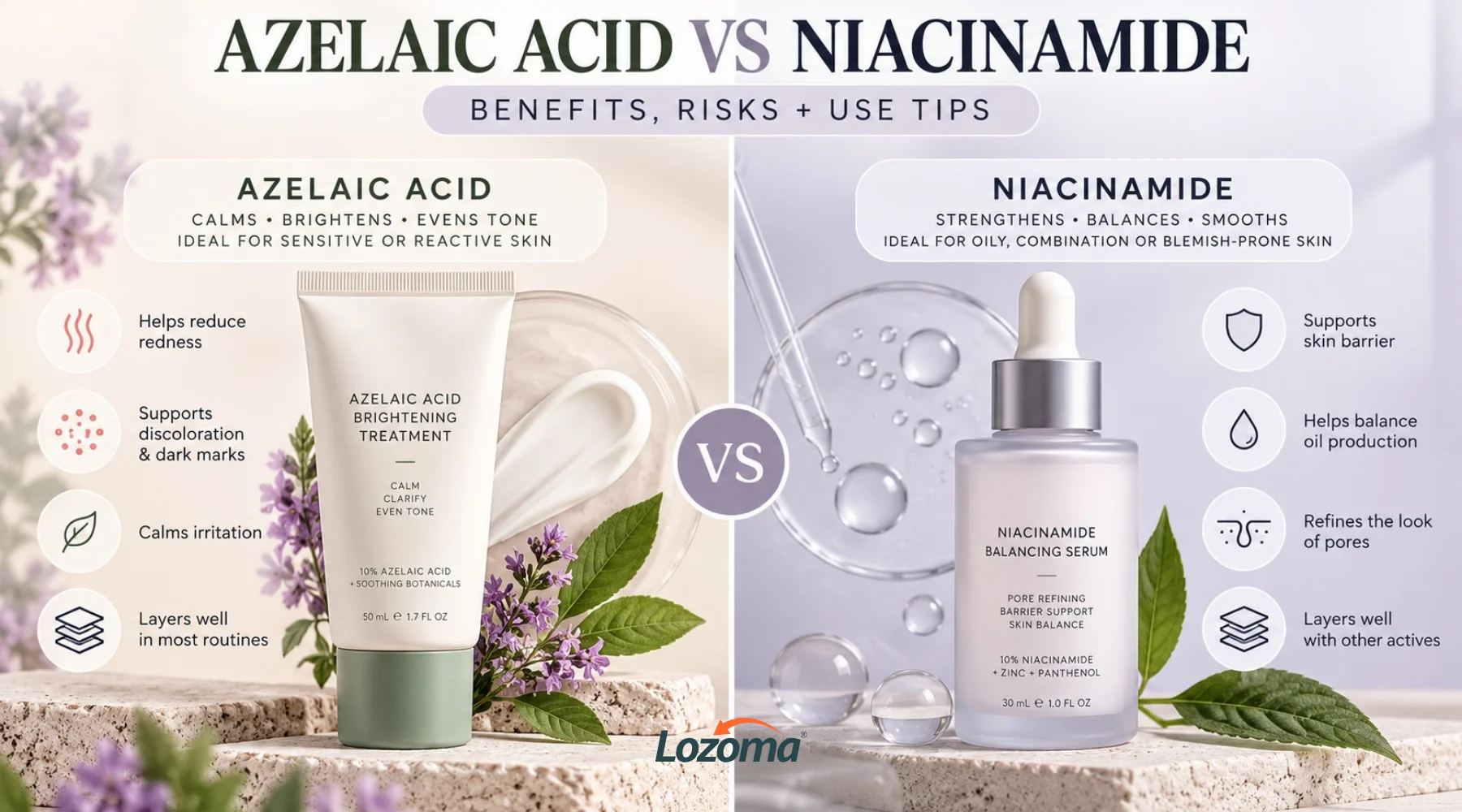
Azelaic acid and niacinamide often come up together in skincare discussions because they help with similar issues like breakouts, uneven skin tone, redness, and post-acne marks. However, they work differently. Choosing between them is about understanding your skin’s needs rather than finding a “better” ingredient.
This choice is important for skin that is prone to blemishes and sensitivity. Strong acids or harsh treatments can make sensitive skin feel tight or red. Azelaic acid and niacinamide provide gentler options, but each has its own benefits and potential irritation.
Azelaic acid is great for treating acne, inflammation, redness, and pigmentation. Niacinamide has a wider range of benefits. It supports the skin barrier, controls excess oil, improves uneven skin tone, and helps sensitive skin become stronger.
For some people, one ingredient may be sufficient. Others may benefit from using both for a more balanced routine.
Azelaic Acid vs Niacinamide at a Glance
Azelaic acid and niacinamide both offer benefits, but they work in different ways.
Azelaic acid is a natural acid that fights bacteria, reduces inflammation, and helps the skin renew itself. It’s often used for acne, dark spots, rosacea, and rough skin texture.
Niacinamide, a type of vitamin B3, improves skin barrier function, controls oil, reduces inflammation, and helps with pigmentation. It doesn’t exfoliate like other ingredients and is usually simple to add to skincare routines.
| Skin concern | Azelaic acid | Niacinamide |
| Inflamed acne | Very useful | Helpful |
| Clogged pores | Helpful | Moderately helpful |
| Post-acne marks | Very useful | Helpful |
| Redness | Very useful | Helpful |
| Excess oil | Helpful | Very useful |
| Weak skin barrier | Indirect support | Very useful |
| Uneven tone | Very useful | Very useful |
| Sensitive skin | Often suitable when introduced slowly | Usually well tolerated |
| Rosacea-prone skin | Frequently used | Can support barrier comfort |
| Dryness | May occasionally feel drying | Often beneficial |
| Beginner-friendly | Yes, with gradual introduction | Usually very beginner-friendly |
Azelaic acid and niacinamide are not interchangeable.
If acne and pigmentation are your main concerns, azelaic acid is usually the better choice. If you struggle with oiliness, sensitivity, dryness, or a weak skin barrier, niacinamide might be a better starting point.
What Is the Difference Between Azelaic Acid and Niacinamide?
Azelaic acid and niacinamide are different types of ingredients. Azelaic acid is a dicarboxylic acid. It acts differently from exfoliating acids like glycolic and salicylic acid. It can help with irregular skin, reduce acne bacteria, soothe inflammation, and control excess pigment.
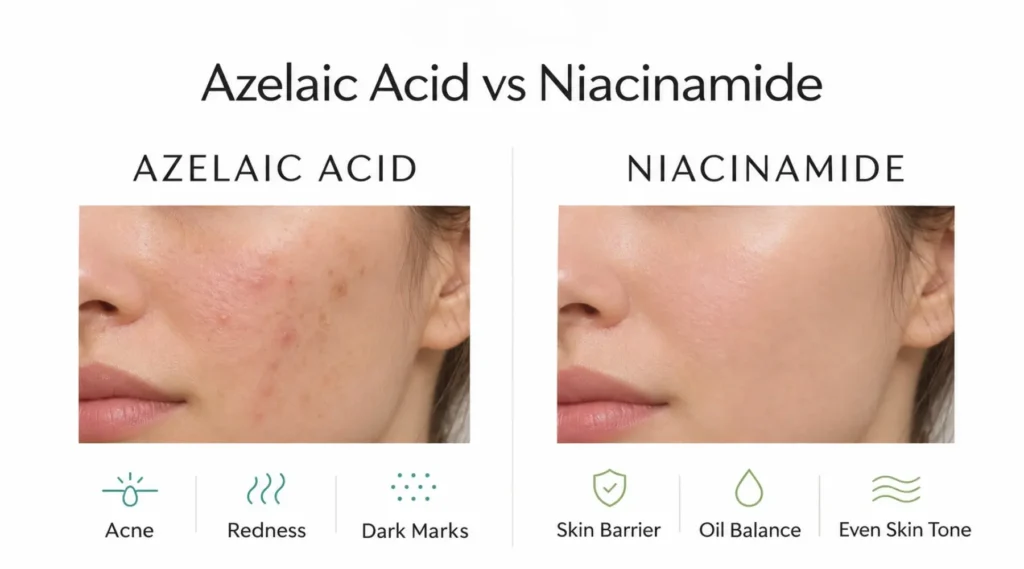
This makes azelaic acid very versatile. It can help with active breakouts and the brown or red marks they leave behind.
Niacinamide works differently. It is a form of vitamin B3. It helps with cellular energy and skin health. When applied to the skin, it can boost ceramide production, strengthen the skin barrier, manage oil levels, and limit pigment transfer to other skin cells.
That’s why you’ll find niacinamide in many products, from acne serums to moisturisers for sensitive or dry skin.
In simple terms, azelaic acid focuses on treating acne, redness, and pigmentation, while niacinamide supports the skin barrier and helps with oil, skin tone, and irritation. This difference is important when choosing which ingredient to prioritise in your routine.
How Azelaic Acid Works on Acne, Redness and Uneven Tone
Azelaic acid is effective because it has several small benefits rather than one big effect.
It fights bacteria that cause acne, like Cutibacterium acnes, and helps remove dead skin cells from pores. This can help clear up both pimples and clogged pores.
Azelaic acid also reduces inflammation, which causes redness and swelling in acne. By lowering inflammation signals, it calms acne-prone skin without harsh scrubs.
This calming effect makes azelaic acid useful for redness and rosacea too.
It also helps with pigmentation. Azelaic acid blocks tyrosinase, an enzyme that makes melanin, which is important for reducing dark spots from acne or skin injuries.
Think of azelaic acid as a multi-action treatment rather than a typical exfoliant.
Results take time. Azelaic acid usually doesn’t change skin quickly; improvements in breakouts, redness, and pigmentation develop with regular use.
What Does Niacinamide Do for Skin?
People often wonder what niacinamide does for the skin because it is part of many products. It is versatile, but not all niacinamide products will create big changes.
One important benefit of niacinamide is that it helps support the skin barrier. The outer skin layer relies on lipids, like ceramides, to keep moisture in and protect against irritants. Niacinamide can boost the production of these components, helping the skin stay hydrated. This is especially helpful for people using retinoids, exfoliating acids, or acne treatments, which can cause dryness.
Niacinamide may also affect oil production. While it’s not a treatment for oily skin, using it regularly can help some people manage excess shine. Its anti-inflammatory properties are beneficial for blemish-prone skin.
Additionally, niacinamide can reduce the transfer of pigment from melanocytes to keratinocytes, which can help improve uneven skin tone over time.
In simple terms, niacinamide is good for managing oiliness, mild redness, barrier weakness, uneven tone, post-acne marks, and overall skin strength. However, it is not an exfoliant and does not clear pores like salicylic acid, so it may not help much with blackheads or clogged pores.
Is Azelaic Acid Better Than Niacinamide for Acne?
Azelaic acid is generally better for inflammatory acne and post-acne marks. This doesn’t mean niacinamide is useless; it just means azelaic acid is more effective for acne directly.
Azelaic acid can kill acne-causing bacteria, control skin cell growth, and reduce inflammation. These actions tackle many issues that lead to blemishes.
Niacinamide plays a supportive role. It helps control oil, reduces redness, and strengthens the skin barrier, making it easier to manage acne-prone skin. However, it doesn’t directly kill bacteria or control skin cell growth like azelaic acid.
So, does niacinamide help with acne? Yes, especially if oily skin, irritation, or a weak barrier is involved. But it might not suffice as the only treatment for moderate or stubborn breakouts.
Someone with occasional blemishes and oiliness might find niacinamide effective. But those with inflamed spots and redness may benefit more from azelaic acid.
For skin with persistent blockages, salicylic acid might also help. It works deep in pores and is particularly good for blackheads and whiteheads. It’s important to know what salicylic acid does to avoid the mistake of thinking azelaic acid or niacinamide can solve all types of breakouts.
Azelaic Acid vs Niacinamide for Redness
Azelaic acid is often the best choice for reducing visible redness. Its anti-inflammatory properties are crucial for treating rosacea-prone skin, helping to lessen redness and inflammatory lesions.
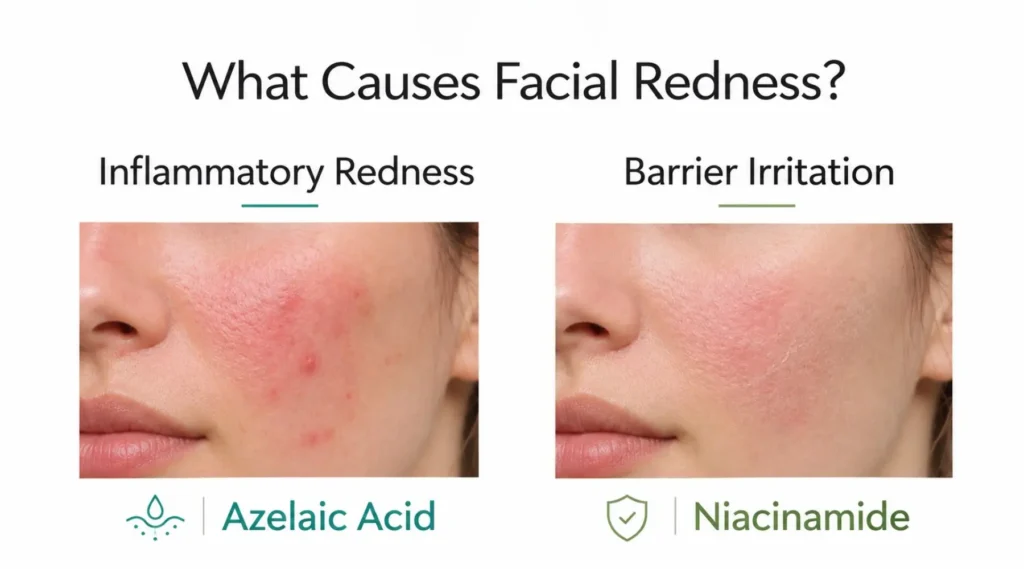
Niacinamide can also help with redness, but in a different way. It strengthens the skin barrier and reduces irritation, making sensitive skin less reactive over time. This is useful if redness comes from dryness, over-exfoliation, or a weakened barrier.
The cause of redness is important. If skin is red due to harsh cleansers or acids, adding more treatments might not help. A simple moisturising routine with a gentle niacinamide product could be better.
If redness is present with inflammatory blemishes or rosacea symptoms, azelaic acid might be a better option. Ongoing facial redness shouldn’t be assumed to be “sensitive skin.” Conditions like rosacea, dermatitis, and allergies can look similar. If redness persists, causes pain, shows visible blood vessels, or is associated with burning or swelling, it’s best to see a professional.
Which Ingredient Is Better for Post-Acne Marks?
Both ingredients help but in different ways.
Azelaic acid reduces excess tyrosinase activity, which plays a role in melanin production. This is especially useful for dark spots after acne.
Niacinamide works later in the process by decreasing melanosome transfer to nearby skin cells. This means they can work together instead of against each other.
For brown marks from acne, azelaic acid is usually the better choice. Niacinamide supports the treatment and helps keep the skin barrier healthy.
Red marks after acne are more complex. These involve blood vessel changes, not just excess melanin, so treating pigmentation doesn’t work the same way. Azelaic acid’s anti-inflammatory benefits may still help, but these marks usually fade slowly over time with good sun protection.
Using daily broad-spectrum sunscreen is crucial. Without it, dark spots may become darker or take longer to fade.
Azelaic Acid vs Niacinamide for Uneven Skin Tone
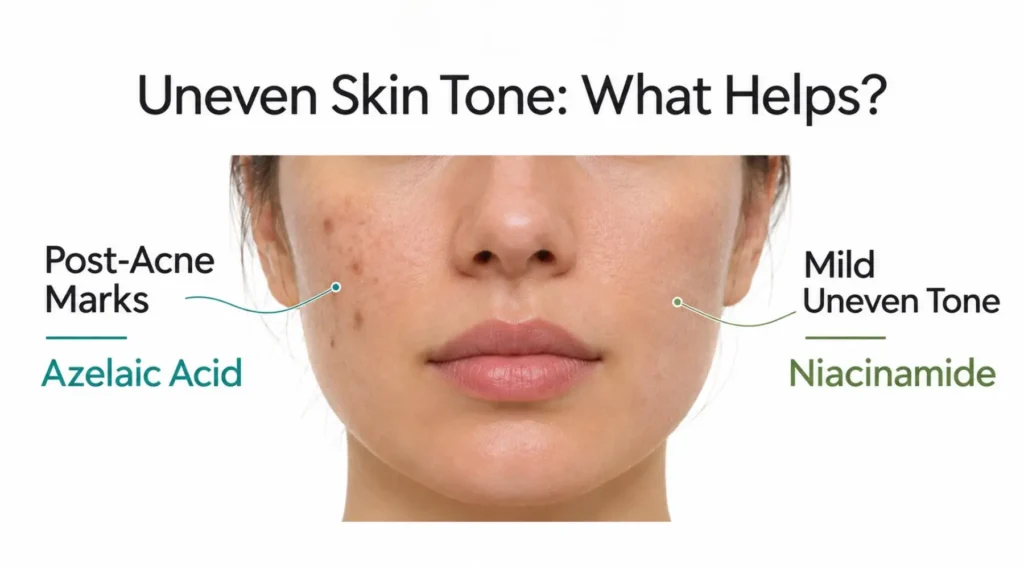
When dealing with post-acne marks and inflammation, azelaic acid is often a better choice. If the uneven skin tone is mild and your skin is dry, sensitive, or weak, niacinamide may be gentler to start with. Many skincare products mix niacinamide with brightening and moisturising ingredients for this reason. A hydrating product like a 24k Gold Niacinamide Essence Moisturiser can be easier on dry or sensitive skin compared to a more intense serum.
Stronger formulae aren’t always better. Products that irritate may slow down progress, as inflammation can lead to more pigmentation issues. For uneven pigmentation on the body, use products designed for thicker skin, like a Dark Knees And Elbows Strong Whitening Cream. Body treatments are different from facial ones, so don’t use a body product on your face unless it’s made for that.
Which Is Better for Oily Skin?
Niacinamide is a great first choice for oily skin. It can help reduce shine by managing oil production without overly drying the skin.
Oily skin is often treated poorly. Removing all oil doesn’t stop oil glands from working. Using harsh cleansers and frequent exfoliation can damage the skin barrier, making it feel oily and tight.
Niacinamide works well in a light hydrating routine.
Azelaic acid is also good for oily skin, especially if there’s acne and clogged pores, but it’s not mainly for controlling oil.
For blackheads, salicylic acid is a better choice since it can penetrate the pores. Using high amounts of niacinamide may not be as effective for blackheads.
Oily skin still needs moisturiser. A light gel, lotion, or essence can keep the skin hydrated without feeling heavy.
Is Niacinamide Good for Dry Skin?
Yes, niacinamide is good for dry skin because it helps protect the skin’s barrier.
Dry skin not only lacks water but also struggles to keep moisture due to low lipid levels and a damaged barrier.
Niacinamide helps the skin retain moisture, especially when used in a complete moisturiser with humectants, emollients, and occlusive ingredients. However, a high-percentage niacinamide serum shouldn’t replace moisturiser.
For dry skin, the formula is just as important as the active ingredient. A 4–5% niacinamide moisturiser might feel much better than a 10–20% watery serum, especially in winter or when using retinoids.
Azelaic acid can also be used for dry skin, but it may cause tingling, itching, or extra dryness at first. Using moisturiser before or after can help minimise these side effects.
Azelaic Acid or Niacinamide for Sensitive Skin?
Choosing between azelaic acid and niacinamide for sensitive skin depends on the specific sensitivity issue.
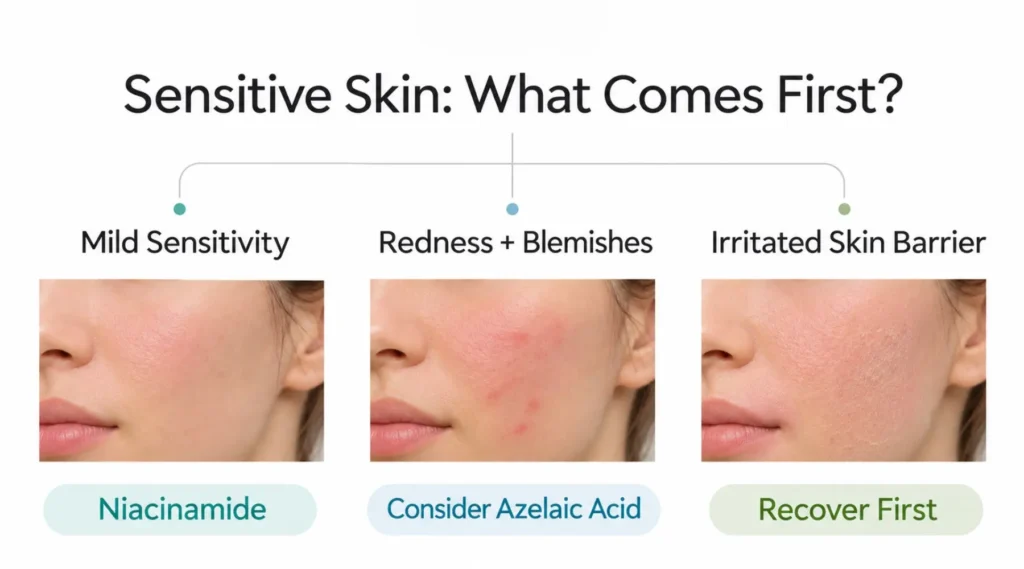
Niacinamide is gentle and often safe for sensitive skin, especially at moderate levels. It helps strengthen the skin barrier and may reduce irritation over time.
Azelaic acid can also work well for sensitive or red skin, but it may cause a temporary sensation of stinging or itching when you first start using it. This feeling doesn’t always mean it’s harming the skin. However, if you experience ongoing burning, swelling, or intense redness, don’t ignore it. These aren’t just signs of the skin adjusting.
If sensitivity comes from using too much retinol, glycolic acid, salicylic acid, or exfoliating toners, it’s best to wait before introducing either ingredient. Let the skin barrier heal first.
Focusing on gentle cleansing, moisturising, and using sunscreen can often be more effective than adding more active ingredients to already irritated skin.
Azelaic Acid vs Niacinamide for Beginners
For beginners, using niacinamide is usually simpler. A moderate-strength niacinamide serum or moisturiser can be applied once a day without much irritation and works well with most skincare products.
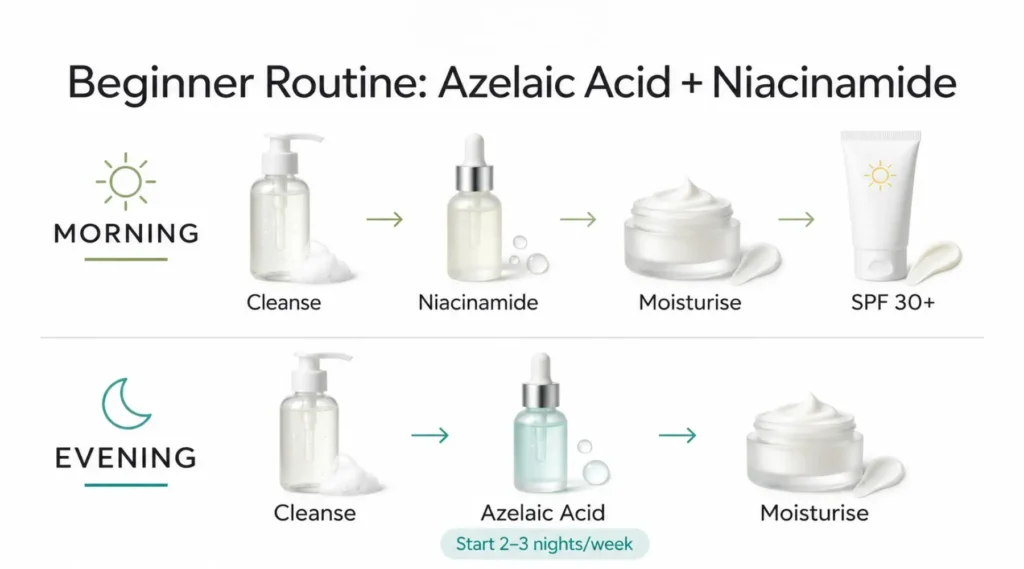
Azelaic acid is also good for beginners, but it’s better to start slowly. If you’ve never used active skincare, try azelaic acid every second or third night to see how your skin reacts.
A simple beginner routine could be:
Morning:
- Gentle cleanser or just water
- Niacinamide serum or moisturiser
- Moisturiser if needed
- Broad-spectrum sunscreen
Evening:
- Gentle cleanser
- Azelaic acid two or three nights a week
- Moisturiser
You can increase the frequency gradually if your skin stays comfortable.
If blemishes are your main concern, a 12% Azelaic Acid Acne Cream might help. For redness and uneven skin tone, a 12% Azelaic Acid Cream can be more suitable, depending on the product instructions.
Remember, the percentage on the packaging is just one part of the story. Other factors like the product’s base, pH, supporting ingredients, and overall formulation also affect how it works on your skin.
Can You Use Azelaic Acid and Niacinamide Together?
Yes, you can use azelaic acid and niacinamide together. Many people find this mix helpful.
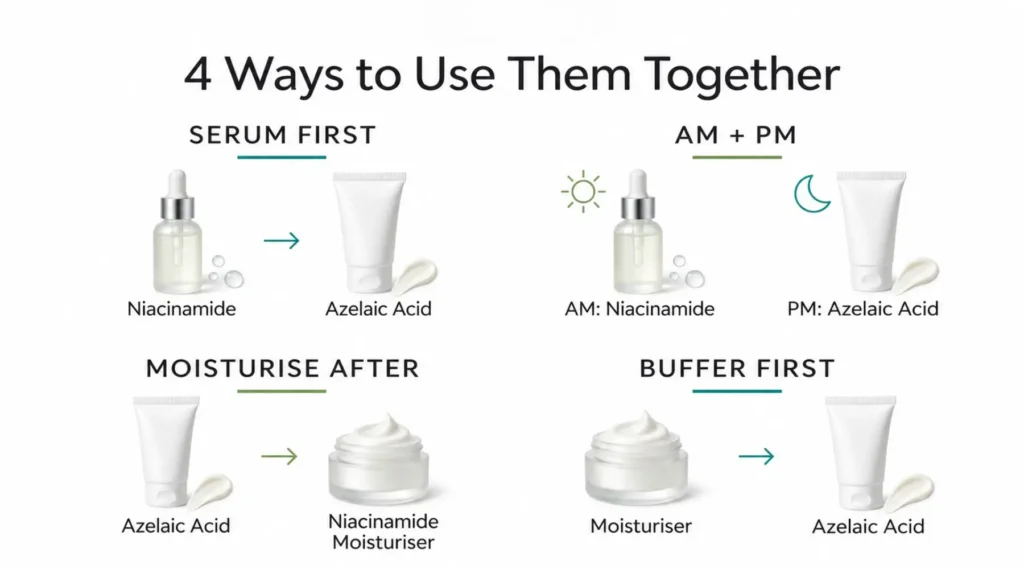
There is no reason to use them separately. Niacinamide helps strengthen the skin’s barrier, while azelaic acid fights acne, reduces inflammation, and evens skin tone. You can apply them in different ways.
Use Niacinamide First, Then Azelaic Acid
If you have niacinamide in a lightweight serum and azelaic acid in a cream, use the serum first. Apply niacinamide to clean, dry skin. Let it absorb briefly before applying azelaic acid. You don’t need to wait long.
Use Niacinamide in the Morning and Azelaic Acid at Night
This is usually the best choice for sensitive skin.
Keeping active ingredients separate helps you find out what irritates if there is a problem.
Use a Niacinamide Moisturiser After Azelaic Acid
This is great for dry or sensitive skin.
First, apply azelaic acid, then use a moisturiser with niacinamide.
Apply Moisturiser Before Azelaic Acid if Your Skin Stings
Using moisturiser can soften the treatment without complicating your routine. This method is especially helpful when starting azelaic acid or in colder, drier weather.
How to Use Niacinamide Serum Correctly
Using niacinamide serum is simple.
Apply it after cleansing and before thicker creams. If you use a hydrating toner or essence, the order isn’t critical as long as you apply lighter products first.
You only need one or two applications a day; more isn’t better. Concentrations of 2–5% are effective. Many products have 10%, but stronger concentrations don’t always work better and may cause redness, itching, or irritation, especially for sensitive skin.
If a new niacinamide serum causes ongoing redness or small bumps, stop using it. Don’t rely on the label that says it’s “soothing.”
Can Niacinamide Cause Acne?
The question of whether niacinamide can cause acne comes up often. Some people notice breakouts after starting a new serum.
Niacinamide is not generally known to clog pores, and it doesn’t cause a “purge” like other ingredients that speed up skin cell turnover.
If acne shows up soon after using niacinamide, several reasons are more likely. The product might have another ingredient that irritates the skin, or a high concentration of niacinamide could be too strong. You might have started multiple new products at once, or the breakouts could be linked to hormonal, environmental, or lifestyle changes.
This is why it’s helpful to introduce products one at a time. If you get ten new spots just a few days after starting a serum, it’s not wise to think your skin is “purging.” Stop using the product, let your skin calm down, and then carefully try it again if needed.
Does Azelaic Acid Cause Purging?
Azelaic acid may make congestion more visible when you first use it, but the idea of “purging” is often exaggerated online. You might notice a few temporary breakouts where you usually have acne as your skin gets used to it. A widespread rash, severe burning, constant itching, or new acne in different areas should not be ignored as purging. Focus on your symptoms rather than social media advice. If irritation becomes severe, use the product less often or stop using it altogether. You don’t have to endure ongoing irritation for the treatment to be effective.
How Often Should You Use Azelaic Acid?
Frequency depends on the strength of the product, its formula, and how your skin reacts.
Most over-the-counter azelaic acid products can be used once or twice a day, but it’s better to start slowly for comfort.
If you’re a beginner:
- Use it two or three nights a week.
- If your skin feels fine, move to every other night.
- Only use it daily if your skin stays comfortable.
Using more product won’t speed up results. A thin, even layer is sufficient. Applying too much can lead to dryness and stinging without better results.
Remember: Azelaic acid is a long-term treatment. Consistency is more important than using it frequently.
Morning or Night: When Should You Use Each Ingredient?
Azelaic acid and niacinamide can be used anytime, day or night. There’s no rule about when to use them.
Niacinamide is great in the morning because it layers well under sunscreen and helps protect your skin during the day. You can use azelaic acid in the morning too, but some prefer it at night since it can cause makeup to clump.
A simple routine is to use niacinamide in the morning and azelaic acid in the evening. This works well not because they clash, but because it lowers the number of layers and is easier on your skin.
What Happens When You Add Retinol?
Retinol can irritate. You can use azelaic acid and niacinamide with retinol, but it’s not always best to use all three at the same time.
Niacinamide and Retinol
Yes, you can use niacinamide with retinol. Niacinamide helps strengthen the skin barrier and can reduce dryness from retinol. You can apply niacinamide serum before using retinol or use a niacinamide moisturiser afterwards.
Using Niacinamide and Retinol Every Night
Many people can use both nightly, as long as their skin tolerates it. If retinol is already causing peeling or irritation, it’s better to stick with a simple moisturiser until your skin adjusts.
Azelaic Acid and Retinol Together
Azelaic acid and retinol can be used together, but those with sensitive skin should space them out. For instance, use azelaic acid in the morning and retinol at night, or use azelaic acid on nights when you don’t use retinol. This approach keeps your routine effective and gentle on your skin.
What About Salicylic Acid?
It’s a beta hydroxy acid that targets oil, letting it penetrate pores. This makes it great for blackheads, clogged pores, and oily acne.
Niacinamide is good for oily skin but doesn’t clear out pores. If you mainly struggle with blackheads, using salicylic acid might be more effective than using more niacinamide.
You don’t need to use salicylic acid, azelaic acid, retinol, vitamin C, and exfoliating toners all at once. A few carefully selected products will usually give better, longer-lasting results.
Using Azelaic Acid With Vitamin C
Azelaic acid and vitamin C can generally be used together. They both help improve skin tone, but they work in different ways. Vitamin C fights free radicals and can block pigments that cause dark spots. Azelaic acid also reduces excess pigmentation and has anti-inflammatory and acne-fighting properties.
If you have sensitive skin, using both at the same time might irritate, especially if your vitamin C has a high concentration of L-ascorbic acid. In that case, use vitamin C in the morning and azelaic acid at night.
When choosing a serum, like a 24K Gold Serum, look at the full ingredient list and the active ingredients, not just the name. Soothing and hydrating ingredients can make stronger treatments more comfortable to use.
Can You Use Azelaic Acid Around the Eyes?
Azelaic acid should not be used near the eyes unless the product says it’s safe. The skin around the eyes is thin and can get irritated easily. There’s usually no good reason to apply acne or pigmentation treatments directly on the eyelids or close to the lashes.
Niacinamide is often used in eye products, but how much and how it’s made are important. If you’re worried about dark circles, remember they can be caused by different factors like genetics, blood vessel visibility, shadows, allergies, and pigmentation. No single brightening ingredient can fix all these issues.
Should You Apply Azelaic Acid to Wet or Dry Skin?
Dry skin is often better.
Applying treatments to damp skin can help them absorb better, but it might also cause more irritation.
After you cleanse, gently pat your face dry and let any noticeable moisture evaporate before using azelaic acid.
Niacinamide is easier to use and can usually go on slightly damp skin without issues.
The most important thing is how the whole product works. If the manufacturer has instructions, be sure to follow them.
Common Mistakes That Make Either Ingredient Harder to Tolerate
Neither azelaic acid nor niacinamide is hard to use, but routines often become needlessly complex.
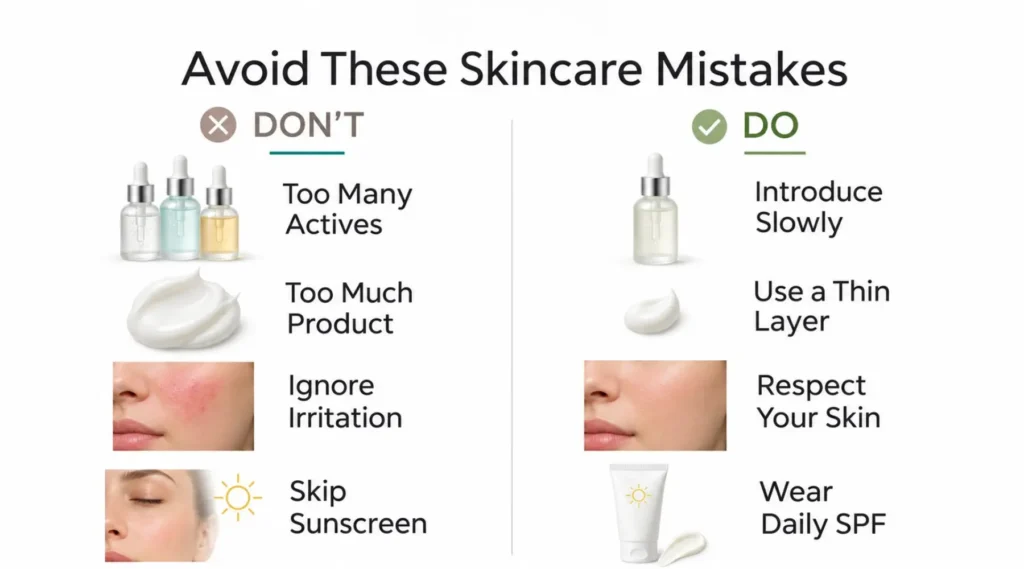
Starting with the Highest Concentration
A higher percentage may look stronger on labels, but skin care isn’t a race. High concentrations of niacinamide can irritate skin, and strong azelaic acid products might sting. Starting with lower concentrations usually leads to better long-term results.
Adding Several Actives at Once
If you experience irritation, it’s important to know what caused it. Introduce one treatment at a time to identify any issues.
Ignoring Moisturiser Because Your Skin Is Oily
Even oily, acne-prone skin needs moisture. Dehydrated or irritated skin is harder to treat.
Using Too Much Product
A thicker layer of azelaic acid won’t make it work faster. Serums don’t have to run down your face to be effective.
Confusing Irritation with Purging
Burning, constant itching, and widespread redness aren’t signs that the treatment is “working.”
Skipping Sunscreen
Pigmentation treatments are less effective if UV exposure keeps triggering melanin production.
Expecting a Product to Fix Every Type of Acne
Different types of acne like hormonal or inflammatory, don’t all respond the same way to treatments. Topical skincare has its limits.
How Long Does Azelaic Acid Take to Work?
Some people see calmer skin in a few weeks, but significant changes in acne and pigmentation usually take longer. Give it six to twelve weeks to see if the treatment is working. Pigmentation can take even longer to fade. The deeper and more stubborn a mark is, the slower it will fade. Stick to your routine, use sunscreen, manage irritation, and prevent new breakouts to get the best results. If new acne keeps appearing, you might notice some marks fading, but the overall skin tone may still look uneven due to new spots forming. So, treating acne is important for reducing post-acne pigmentation.
How Long Does Niacinamide Take to Work?
Adding niacinamide to a good moisturiser can quickly improve skin barrier comfort and hydration.
However, changes in excess oil, uneven skin tone, and pigmentation take more time.
You can expect to see visible changes in about four to twelve weeks of consistent use.
Remember, niacinamide works best as part of a full skincare routine.
A niacinamide serum won’t fix problems caused by over-exfoliating, not using enough sunscreen, or using a cleanser that makes your skin feel tight.
Is Azelaic Acid Better Than Niacinamide for Hormonal Acne?
Not necessarily.
Hormonal acne is affected by hormones in the body, and topical skincare cannot fully control it.
Azelaic acid can help reduce inflammation and acne marks, while niacinamide can help with oiliness and irritation. However, neither directly targets the hormonal causes.
If you have deep, painful, cystic acne, especially around the jawline, or if you have scarring, it’s better to see a dermatologist instead of repeatedly buying stronger skincare products.
Prescription treatments may work much better.
Where Does a Hydrating Mask Fit Into the Routine?
Hydrating products can help when other ingredients cause dryness.
For example, a Bio-collagen Real Deep Mask is better for hydration than for treating acne.
You don’t have to use it on the same night as other treatments.
It can be helpful to give your skin some rest days with fewer products.
Just cleanse, hydrate, and moisturise.
Using many treatments doesn’t automatically make your skin healthier.
A Simple Routine for Acne and Post-Acne Marks
If you have blemishes, mild oiliness, and leftover dark spots, you don’t need a complicated routine.
Morning:
- Use a gentle cleanser.
- Apply niacinamide serum or moisturiser.
- Add a lightweight moisturiser if needed.
- Finish with broad-spectrum SPF 30 or higher.
Evening:
- Use a gentle cleanser.
- Apply azelaic acid.
- Follow with a moisturiser.
If blackheads are a big issue, you can use a salicylic acid product a few times a week instead of every night.
The goal is not to overload on acne treatments but to create a simple routine that your skin can handle consistently.
A Routine for Sensitive, Redness-Prone Skin
Sensitive skin needs fewer products.
Morning Routine:
- Use a gentle cleanser or rinse with water.
- Apply a low-strength niacinamide moisturiser.
- Use broad-spectrum sunscreen.
Evening Routine:
- Cleanse gently.
- Apply a moisturiser.
- Use azelaic acid two or three nights a week, before or after your moisturiser, based on how your skin feels.
If your skin becomes red, simplify your routine even more. Burning or inflamed skin doesn’t require a complicated regimen.
A Routine for Oily, Congestion-Prone Skin
When dealing with oily skin and clogged pores, you don’t need to rely solely on azelaic acid or niacinamide.
Morning Routine:
- Gentle foaming cleanser
- Niacinamide serum
- Lightweight moisturiser
- Sunscreen
Evening Routine:
- Cleanser
- Salicylic acid on certain evenings
- Azelaic acid on alternate evenings
- Moisturiser
Using strong treatments on different days is often easier than using them together.
When Neither Ingredient Is Enough
Cosmetic skincare has its limits.
If you have persistent acne, painful cysts, nodules, or scarring, seek medical help. Sudden facial redness, severe itching, crusting, swelling, or rashes around the mouth and nose should not be treated as acne or sensitivity. Conditions like rosacea, perioral dermatitis, eczema, and allergic reactions need different treatments.
A dermatologist or healthcare professional can advise on the right treatments, like prescription-strength azelaic acid, topical retinoids, benzoyl peroxide, or antibiotics.
Getting professional care is crucial when acne starts to scar. Waiting months to try complex skincare routines can lead to permanent scars.
Myths About Azelaic Acid and Niacinamide That Deserve Retiring
“Azelaic Acid Is Just Another Exfoliating Acid”
Not really. Azelaic acid affects skin cell turnover but works differently than typical exfoliating acids. Its anti-inflammatory, antimicrobial, and pigment-regulating properties make it valuable.
“Niacinamide Shrinks Pores”
Pores don’t open and close like doors. Niacinamide can reduce excess oil and improve skin appearance, which may make pores look smaller, but it doesn’t actually shrink them.
“Higher Niacinamide Percentages Work Better”
There’s no straightforward link between concentration and effectiveness. A well-made medium-strength product can be more effective than a high-strength serum that irritates the skin.
“Azelaic Acid Must Burn to Be Effective”
No. Some mild tingling is normal, especially at first, but pain does not mean the product is working.
“Niacinamide Cannot Be Used With Vitamin C”
This is an old myth. You can usually use niacinamide and vitamin C together in your skincare routine.
“You Need to Choose Either Azelaic Acid or Niacinamide”
Not true. You can use them together, separately, or at different times based on what your skin needs.
Frequently Asked Questions About Azelaic Acid vs Niacinamide
Is azelaic acid better than niacinamide?
Azelaic acid is good for treating inflammatory acne, redness, and marks left by acne. Niacinamide works well for supporting the skin barrier, controlling oil, and easing sensitivity. Neither is better overall; the best choice depends on your specific skin issue.
Can You Use Them Together?
Yes, you can use azelaic acid and niacinamide together. They can be applied in the same routine or at different times of the day. A simple way is to apply niacinamide first, then azelaic acid, followed by moisturiser.
Which One to Apply First?
The texture of the products should guide the order. Use a lightweight niacinamide serum before a thicker azelaic acid cream. If your moisturiser contains niacinamide, apply azelaic acid first, then the moisturiser.
Which Is Better for Sensitive Skin?
Niacinamide is often gentler for very sensitive skin because it helps the skin barrier and usually causes less irritation. Azelaic acid can also work for sensitive, red-prone skin but should be introduced slowly.
Which Is Better for Beginners?
Niacinamide is often the easier choice for beginners. It mixes well with other products and is generally well-received. Azelaic acid can also be beginner-friendly if used two to three times a week and gradually increased.
Does niacinamide help with acne?
Yes, niacinamide can help reduce inflamed blemishes, control excess oil, and support a healthier skin barrier. However, if you have more severe or ongoing acne, you may need stronger treatments like azelaic acid, salicylic acid, benzoyl peroxide, or prescription medications.
Can niacinamide cause acne?
Niacinamide itself is unlikely to cause acne or purging. If you break out after using niacinamide, it may be due to another ingredient, too high a concentration, or other acne triggers.
Can I use niacinamide with retinol?
Yes, niacinamide and retinol usually work well together. Niacinamide can help your skin adjust to retinol. If you have sensitive skin, introduce both carefully.
Can you use niacinamide with retinol every day?
Many people can use both daily, but it depends on how your skin reacts to retinol. If your skin is peeling, burning, or becoming more sensitive, cut back on retinol instead of adding more products.
Can I use azelaic acid with retinol?
Yes, but if you have sensitive skin, it’s better to use them at different times. You can try azelaic acid in the morning and retinol in the evening or alternate them on different nights.
Is azelaic acid better than niacinamide for dark spots?
Azelaic acid is better for treating dark spots because it reduces excess tyrosinase activity. Niacinamide also helps by reducing melanosome transfer, so using both together can be effective.
Which is better for acne scars, azelaic acid or niacinamide?
Neither can fully remove real acne scars, whether they’re indented or raised. However, they can improve post-acne discolouration, which people often confuse with scars. For textured scars, professional treatments like microneedling or laser therapy may be needed.
Can I use azelaic acid every day?
Most people can use it daily after starting with a few times a week. If your skin feels fine, you can increase how often you use it. Always follow specific product instructions.
Should I use azelaic acid or niacinamide in the morning?
Both can be used in the morning. Niacinamide works well under moisturisers and sunscreen, while azelaic acid is fine for daytime if it layers well under SPF.
How long should I wait between niacinamide and azelaic acid?
You don’t need to wait a specific time. Just let the first product absorb enough so that they don’t pill, then apply the next one.
Azelaic Acid vs Niacinamide: Which One Makes More Sense for Your Skin?
Think of azelaic acid and niacinamide not as competitors but as options based on your needs.
Use azelaic acid for active acne, redness, and dark spots. Its anti-inflammatory, antimicrobial, and pigment-regulating properties make it effective for these issues together.
Turn to niacinamide for excess oil, mild blemishes, dryness, sensitivity, and a weak skin barrier. It supports skin health and fits easily into your routine without acting like a strong exfoliant.
Combining both can help when you need focused treatment and an improved skin barrier.
The best skincare routine isn’t about using the most ingredients; it’s about finding what your skin can handle consistently for effective results. Both azelaic acid and niacinamide reward this patience.