





Blog
What SPF Should I Use Every Day? Best SPF for Your Skin

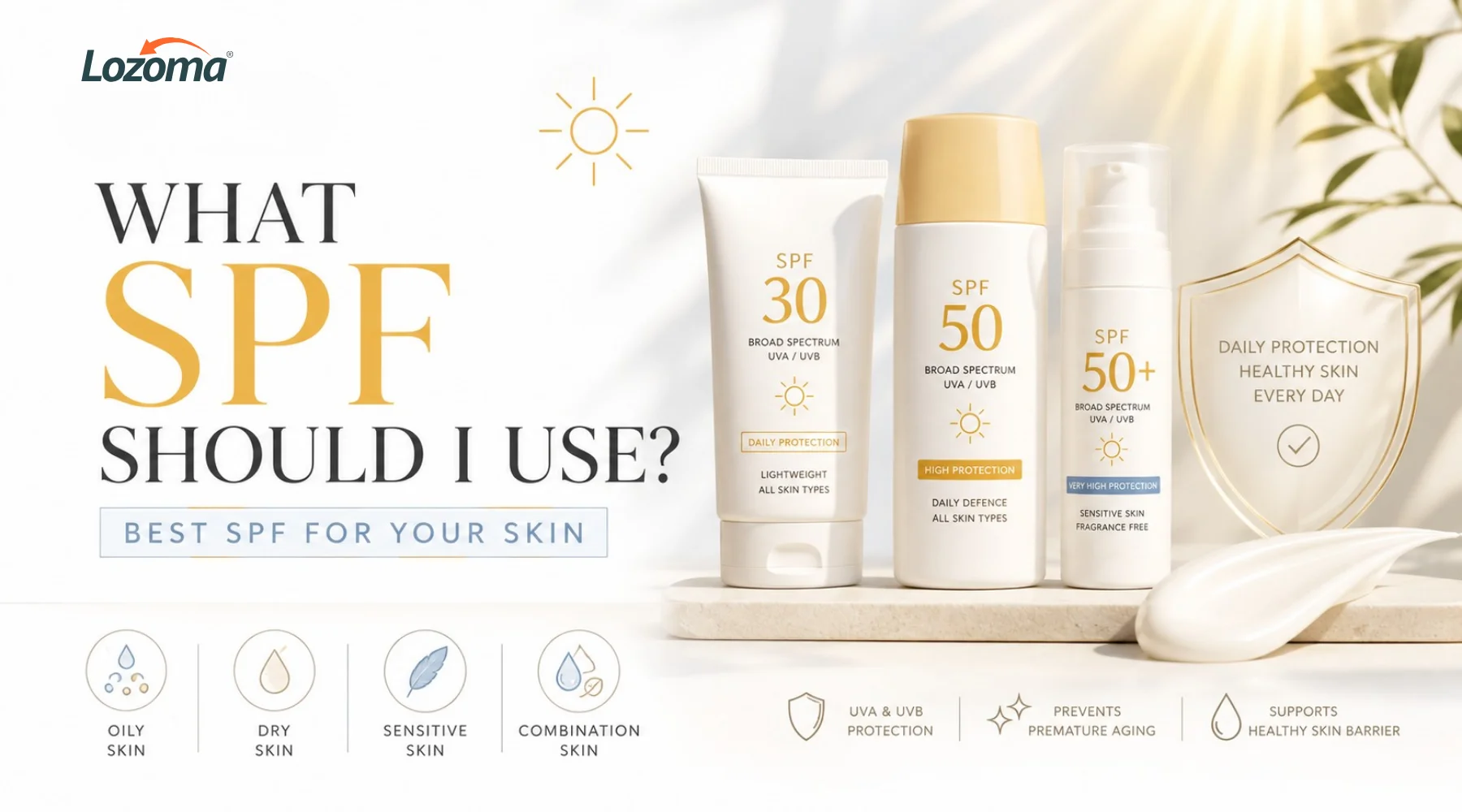
Choosing a sunscreen should be easy, but the options can be confusing. You see SPF numbers like 15, 30, 50, and 50+, along with different types like mineral fluids, chemical gels, tinted creams, and water-resistant lotions. You might wonder which SPF is best for your skin type, the weather, or your daily activities.
For most adults, a broad-spectrum SPF 30 is the minimum recommended for daily use on exposed skin. Look for at least four-star UVA protection in the UK, or the UVA symbol inside a circle. If you spend a lot of time outdoors, burn easily, have skin pigmentation issues, are on certain medications, or want extra protection, SPF 50 or 50+ is a better choice.
Remember, the SPF number is just one factor. A well-made SPF 50 will not work if you apply it too lightly, avoid using it near your eyes, or stop using it because it feels uncomfortable. The way the sunscreen feels, how much you apply, and how often you reapply are also important.
The NHS advises using at least SPF 30 with a minimum four-star UVA rating. Sunscreen should be used alongside shade and protective clothing, not as a substitute. Sun protection is crucial when the UV Index is 3 or higher.
The Practical Daily Standard: SPF 30 with Strong UVA Protection
For a typical day with commuting, errands, school runs, or time near windows, use a broad-spectrum SPF 30 or higher on your face, neck, ears, and any exposed skin.
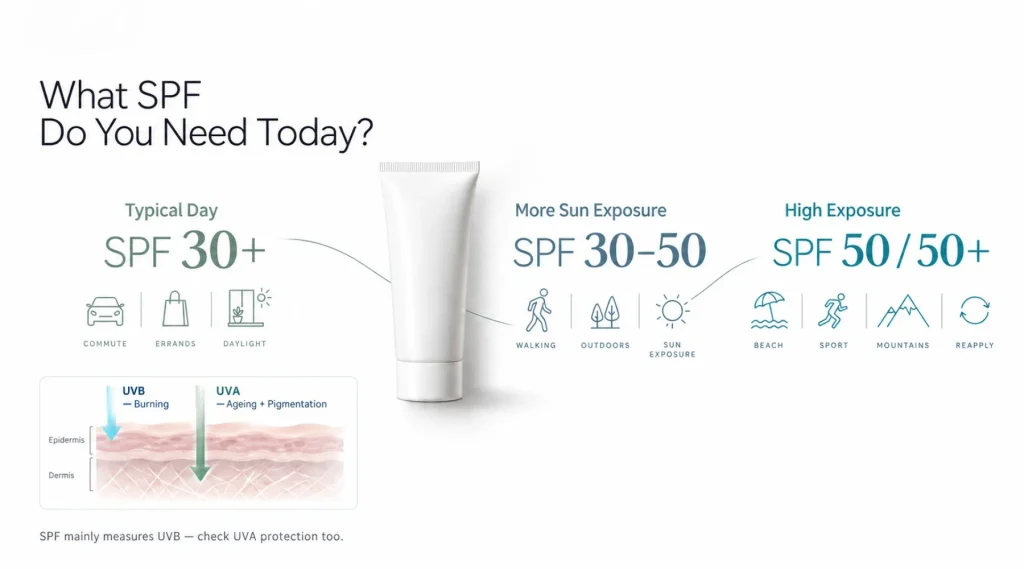
“Broad spectrum” is important because sunlight has two main types of ultraviolet (UV) rays that affect the skin:
- UVB causes sunburn and is linked to skin cancer.
- UVA goes deeper, causes early skin ageing and dark spots, and can go through windows.
SPF mainly measures UVB protection, so a high SPF doesn’t always mean good UVA protection. In the UK, check for four or five UVA stars alongside the SPF number. A UVA symbol inside a circle shows that a product meets European standards for UVA protection, which must be at least one-third of the labelled SPF.
Here’s a simple way to choose:
| Daily situation | Sensible sunscreen choice |
| Mostly indoors, brief outdoor exposure, UV Index below 3 | Broad-spectrum SPF 30 on regularly exposed areas is a reliable routine choice |
| Commuting, walking, shopping or sitting near bright windows | Broad-spectrum SPF 30–50 with strong UVA protection |
| Pigmentation, melasma or persistent post-acne marks | SPF 50 or 50+, high UVA protection and preferably a tinted formula with iron oxides |
| Fair skin that burns quickly | SPF 50 or 50+ alongside shade, clothing and a hat |
| Sensitive or reactive skin | Fragrance-free SPF 30–50 in a texture and filter system your skin tolerates |
| Outdoor work, gardening, hiking or sightseeing | Water-resistant SPF 50 or 50+, reapplied regularly |
| Beach, swimming or outdoor sport | Broad-spectrum, water-resistant SPF 50 or 50+, reapplied after water, sweating and towel drying |
| Snow, mountains or high-altitude travel | SPF 50 or 50+ with excellent UVA protection, plus protective clothing and eyewear |
| Previous skin cancer, organ transplant or a medical photosensitivity condition | Personal advice from a dermatologist, commonly involving very high broad-spectrum protection |
SPF 30 doesn’t stop working outside. Instead, stronger sunlight, longer time in the sun, and improper application can lower your actual protection compared to what’s on the bottle.
What the SPF Number Does and Does Not Tell You
SPF stands for sun protection factor. It shows how much UV exposure can cause sunburn on skin protected by sunscreen compared to unprotected skin.
Not a Timer
SPF 30 does not mean you can stay outside 30 times longer without burning. The risk of sunburn changes based on factors like UV Index, time of day, altitude, cloud cover, skin type, and how much sunscreen you apply.
SPF Effectiveness
SPF numbers are not just percentages. When applied correctly:
- SPF 30 blocks about 96.7% of sunburn-causing UV.
- SPF 50 blocks about 98%.
- SPF 50+ offers very high protection, but no sunscreen blocks 100% of UV.
While the difference may seem small, there is less UV reaching the skin with SPF 50 than with SPF 30. This difference is important for those who burn easily or want to control pigmentation.
Sunscreen Application
Tests assume users apply about 2 milligrammes of sunscreen per square centimetre of skin. Most people apply much less. If the layer is too thin, protection drops sharply. This is why SPF 50 can offer better protection, but it doesn’t fully make up for applying too little.
Avoiding Mistakes
Knowing what SPF means helps prevent the common mistake of using the number as a timer instead of as a guide for sunburn protection.
What SPF Should Beginners Use?
For beginners, the best sunscreen is simple and not too expensive.
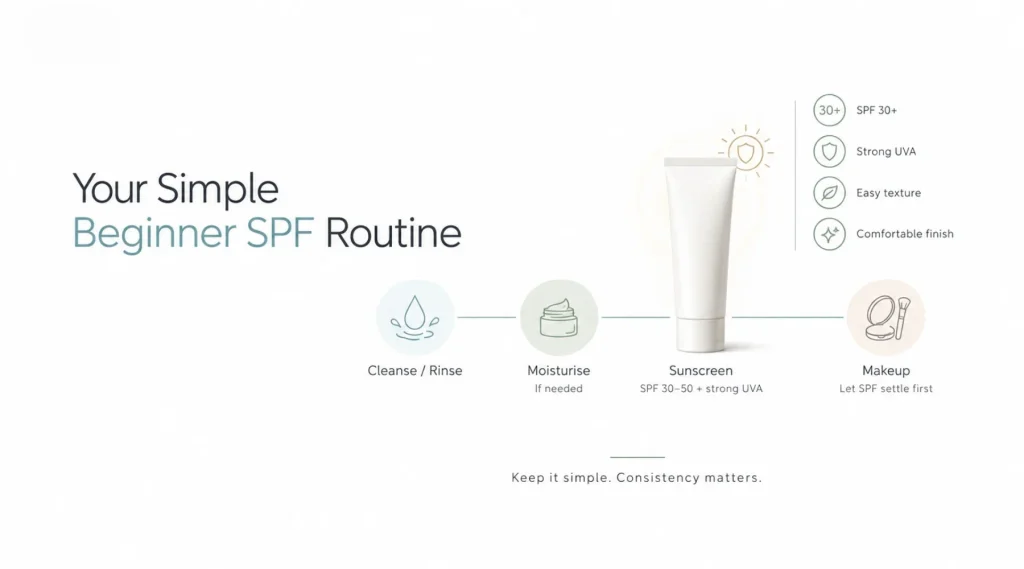
Look for these four key features:
- SPF 30 or higher
- Strong UVA protection
- A texture that you can apply easily
- A finish you don’t mind wearing daily
Start with one sunscreen instead of buying different ones for every situation. A comfortable SPF 30–50 sunscreen for your face can handle most everyday use, while a larger water-resistant SPF 50 lotion is good for the body, vacations, and outdoor activities.
A beginner-friendly morning routine can be quick:
- Cleanse or rinse your face, based on what works for you.
- Apply moisturiser if needed.
- Apply sunscreen generously on your face, neck, and ears.
- Let it settle before putting on makeup.
Serums and toners are optional, but sunscreen is essential.
Don’t feel pressured to choose products with trendy ingredients like antioxidants or peptides. While these may feel nice, the basics are a tested SPF, UVA protection, and enough application.
Beginners often prefer SPF 50 because it simplifies choices. You won’t have to change between SPF 30 and SPF 50 when the weather changes. A good SPF 50 can work year-round if it fits your skin and routine.
Choose Your SPF According to Exposure, Not Skin Type Alone
Your skin type affects what sunscreen feels best, but how much sun you expect should dictate the SPF you need. Oily skin doesn’t require a lower SPF, and dry skin doesn’t always need a higher one. Just because a sunscreen feels gentle doesn’t mean SPF 15 is enough for sensitive skin.
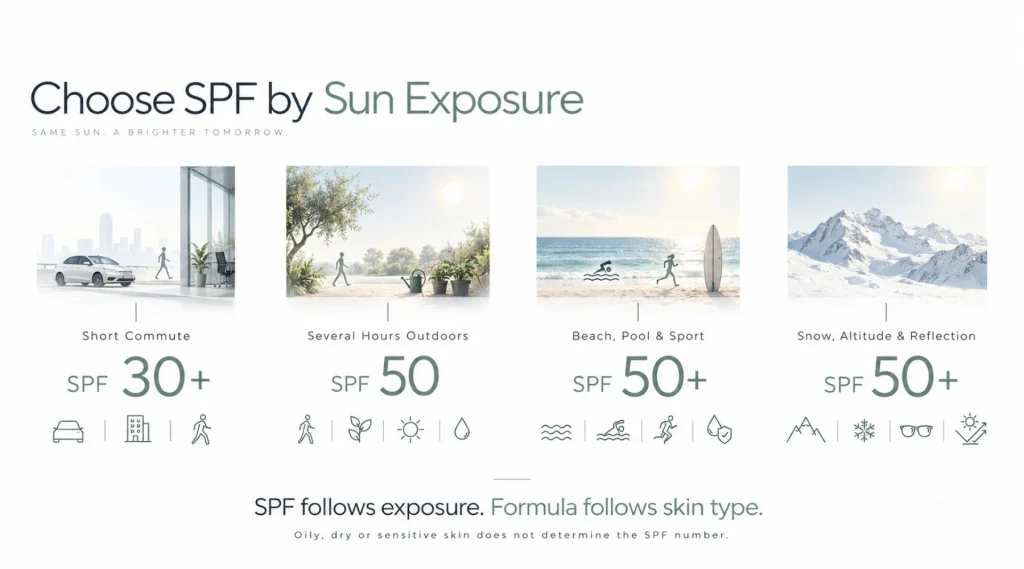
Choose SPF based on your sun exposure and adjust the formula to what your skin likes.
Short Commutes and Daily Tasks
If you mostly work indoors with a short commute, SPF 30 is usually fine if applied correctly. Strong UVA coverage is important, especially if you drive a lot or sit by a sunny window. Apply sunscreen to all exposed areas, including your ears, neck, chest, and the backs of your hands, as they can get sun exposure over time.
Several Hours Outdoors
For activities like walking, gardening, or supervising kids outside, opt for SPF 50. Water resistance is helpful even if you’re not swimming, as heat and sweat can reduce sunscreen effectiveness. Touching your face or wiping away sweat can also remove it.
Beach, Pool, and Sports
Use a broad-spectrum, water-resistant SPF 50 or higher. Apply sunscreen before going out and reapply right after swimming, sweating, or towel drying. “Water resistant” means it retains some protection for a limited time, but it doesn’t hold up against rubbing, towels, sand, or missed spots.
High Altitude, Snow, and Reflective Surfaces
Snow, water, light concrete, and sand can reflect UV rays, increasing your exposure. At higher altitudes, UV filtering is less effective. In these conditions, use SPF 50+, good UVA protection, sunglasses, a hat, and protective clothing, and reapply regularly. Remember, sunscreen is an extra layer of protection. The World Health Organisation says shade and clothing are more reliable than sunscreen alone, especially in strong sunlight.
When SPF 50 Is the Better Everyday Choice
SPF 30 is a good minimum, but SPF 50 is often better for everyday use because people don’t apply sunscreen as they do in labs.
You might want SPF 50 or higher if:
- You have light skin, freckles, or often get sunburned.
- You live or work in areas with high UV levels.
- Your job is outdoors or driving a lot.
- You have skin issues like melasma, sun spots, or dark marks.
- You use products that make your skin sensitive, like retinoids or exfoliating acids.
- You take medication that makes your skin sensitive to sunlight.
- You have many moles or a history of skin cancer.
- You are visiting a sunny place.
- You usually don’t apply enough sunscreen.
- You want to use the same sunscreen all year without changing SPF.
SPF 50 is safe for daily use. The SPF number shows the level of protection, not how thick the product is. Many SPF 50 products are lightweight, gel-like, creamy, matte, shiny, tinted, or nearly invisible.
Also, SPF 50 doesn’t mean you can spend more time in the sun. The NHS warns against staying in the sun longer just because you’ve put on sunscreen.
What SPF Should I Use for Sensitive Skin?
Sensitive skin usually does well with fragrance-free sunscreens that have a broad-spectrum SPF of 30 to 50. The best type of sunscreen varies for each person.
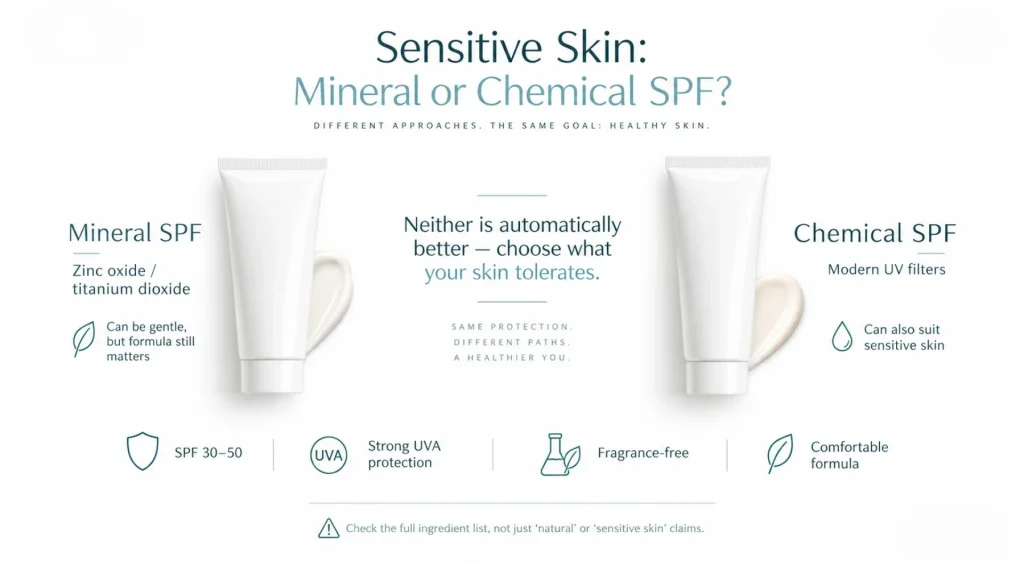
Mineral sunscreens contain zinc oxide, titanium dioxide, or both. Chemical sunscreens absorb UV rays and release them differently. Both can protect your skin effectively if they are made and tested properly.
Mineral sunscreens are often recommended for sensitive skin because zinc oxide and titanium dioxide are generally gentle. However, just because a sunscreen is labelled “mineral” doesn’t mean it won’t irritate. Ingredients like botanical extracts, essential oils, and preservatives can still cause redness or stinging.
On the other hand, chemical sunscreens aren’t always harsh either. Many use new filters and lightweight bases that sensitive skin can often handle well. The main differences between mineral and chemical sunscreens lie in their filters, textures, appearance, and how each person reacts, rather than one type being always safer than the other.
Look Beyond the Front Label
When sensitive skin reacts to sunscreen, the SPF is usually not the cause. Here are some possible triggers:
- Added fragrance or essential oils
- Denatured alcohol, especially on damaged skin
- A specific UV filter
- Preservatives
- Plant extracts
- Applying sunscreen on already irritated skin
- Rubbing a fast-absorbing product too hard
- Using exfoliating acids or retinoids too often
- Applying sunscreen near the eyes
Even products labelled “natural,” “clean,” or “for sensitive skin” can still cause reactions. These labels don’t guarantee compatibility.
Patch Testing Can Reduce Surprises
Put a small amount of the product near your jaw or behind your ear once a day for a few days before applying it to your whole face. This won’t guarantee you won’t have a reaction, but it may show if you feel burning, itching, or redness.
If your skin is already irritated, even mild sunscreen can hurt. Use fewer irritating treatments, apply a simple moisturiser, and let your skin calm down instead of trying new products often.
When Sunscreen Stings Around the Eyes
Eye stinging can occur when sunscreen mixes with sweat or facial oils. Here are some tips to prevent it:
- Use a fragrance-free mineral sunscreen around your eyes.
- Choose a water-resistant formula that stays put.
- Keep sunscreen away from your eyelids and lash line.
- Use a sunscreen stick carefully around your eyes.
- Wear UV-protective sunglasses and a hat.
- Avoid using too much moisturiser under your sunscreen in that area.
Make sure to protect the eye area, as the skin is thin and gets a lot of sun.
Choosing a Richer Zinc-Oxide Formula
Dry or sensitive skin may benefit from a richer sunscreen with zinc. For example, Beef Tallow Sunscreen with Zinc Oxide is a good option for those who like a creamy texture.
Zinc oxide in a sunscreen doesn’t guarantee protection. Always check that the product has a tested SPF, sufficient UVA protection, clear usage instructions, and proper labels. Don’t use plant oils or butters instead of a tested SPF.
Matching the Texture to Your Skin
The right SPF level is similar for oily, dry, and combination skin, but skin texture can affect how much you actually use.
Oily and Acne-Prone Skin
Choose lightweight fluids, gels, or milks that say “non-comedogenic.” A soft-matte finish is often more comfortable than a heavy balm.
Don’t pick a low SPF out of concern that SPF 50 will clog your pores. Breakouts depend on the whole product and your skin, not just the SPF number.
If your sunscreen feels greasy, you might have too many products on your skin. Simplify your morning routine:
- Gentle cleanse
- Lightweight hydrating serum, if needed
- Sunscreen
- Makeup after the sunscreen has settled
Some with oily skin can skip a separate moisturiser because the sunscreen offers enough hydration. Others may still need a light moisturiser for dry spots.
At night, remove sunscreen thoroughly, but don’t scrub hard. A regular cleanser is usually enough for lighter sunscreens. For water-resistant products or makeup, try an oil cleanser or micellar water followed by a gentle cleanse.
Dry or Dehydrated Skin
Creamy sunscreen with moisturising ingredients can ease tightness and spread smoothly. Ingredients like glycerin, hyaluronic acid, squalane, and ceramides can make it feel more comfortable.
Apply moisturiser first if sunscreen sticks to dry patches. Let it absorb before putting on sunscreen to avoid unevenness.
Very dry skin might benefit from richer products in a skincare routine, but don’t assume that thicker means better protection. The sunscreen still needs clear SPF and UVA labels.
Combination Skin
A light cream is usually the easiest choice. Use a thinner moisturiser on your T-zone and a richer one on dry areas.
You can use two different sunscreens, but it can be hard to know how much to apply. It’s simpler to stick with one product that works for you.
Deeper Skin Tones
Brown and black skin has more melanin, which gives some natural protection, but it doesn’t stop UV damage, skin ageing, or skin cancer. Everyone, no matter their skin tone, should avoid sunburn and use sunscreen during sun exposure.
White cast makes it hard for many people to use sunscreen regularly. Clear organic-filter formulae, hybrid products, and tinted mineral sunscreens blend in better.
For melasma, post-acne marks, or pigmentation that darkens in sunlight, use a tinted SPF 30–50 with iron oxides. Iron oxides can protect against visible light that may worsen pigmentation, especially in darker skin tones.
Rosacea-Prone Skin
Sunlight, heat, and irritating products can make rosacea worse. Use a fragrance-free SPF 30-50 sunscreen, but remember that everyone’s preferred texture is different.
Some people find zinc oxide soothing, while others like lightweight chemical formulae that are easier to apply. Tinted versions can help reduce the look of redness.
Apply sunscreen gently with broad strokes instead of rubbing it in hard. A hat and shade are important too, as sunscreen doesn’t stop heat-related flushing.
Melasma and Persistent Hyperpigmentation
For melasma, it’s better to use SPF 50 with strong UVA protection every day instead of just the minimum. A tinted sunscreen with iron oxides can protect against both visible light and UV rays.
Using sunscreen daily is more important than using it perfectly sometimes. Many pigmentation treatments don’t work well because sunlight keeps making pigment. Sunscreen won’t remove existing melasma on its own, but it helps treatment by reducing a key trigger.
How Much You Apply Can Matter More Than Moving from SPF 30 to SPF 50
Sunscreens are usually tested at about 2 milligrammes per square centimetre. However, many people apply much less, especially on areas like the hairline, eyes, and ears.
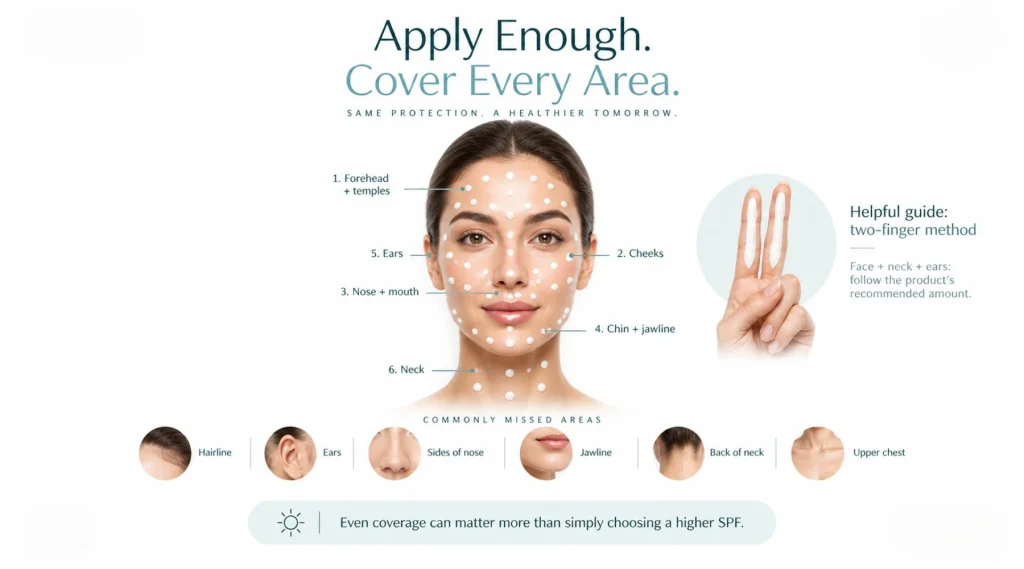
The NHS recommends using six to eight teaspoons of sunscreen for the entire body of an average adult. A breakdown suggests about half a teaspoon for each arm, half a teaspoon for the face and neck, and a bit over one teaspoon for each leg and for the front and back of the torso.
For the face, neck, and ears, many people use the “two-finger” method: a line of sunscreen along the index and middle fingers. This method is a helpful guide but not a precise measurement, as sizes vary by product and person.
A quarter to half teaspoon for the face, neck, and ears may be more accurate, depending on the area covered. It’s best to follow the manufacturer’s instructions for the correct amount.
Apply in Sections to Avoid Missing Areas
Divide the Face into Zones:
- Forehead and temples.
- Each cheek.
- Nose and mouth area.
- Chin and jawline.
- Ears.
- Front, sides, and back of the neck.
Applying Sunscreen:
Dot sunscreen on each area and spread it evenly. Two lighter coats feel better than one thick layer, as long as you use enough.
Commonly Missed Areas:
- Hairline
- Parting and scalp
- Eyelids and under-eye area
- Sides of the nose
- Upper lip
- Ears and behind ears
- Jawline
- Back and sides of the neck
- Upper chest
- Backs of the hands
- Tops of the feet
Apply Before Meaningful Exposure
Many sunscreen instructions say to apply it 15–30 minutes before going outside. This allows the sunscreen to settle. The NHS suggests applying it twice if you’ll be outside for a long time: first about 30 minutes before, then again just before going out. This helps cover any missed spots and ensures a good layer.
The waiting time can vary based on the formula, but all sunscreens should dry before you put on clothes, swim, sweat, or apply makeup.
Reapplication Should Reflect What Your Day Is Actually Like
Reapply sunscreen generously every two hours when you’re outside for a long time. Reapply sooner if you:
- Swim
- Sweat heavily
- Dry off with a towel
- Wipe your face
- Come into contact with sand
- Remove a hat or helmet
- Change clothes that disturb the sunscreen
- Do anything that visibly removes it
Even water-resistant sunscreen needs reapplication after swimming. Towelling off can remove a lot of the sunscreen, even if it still works.
Different Rules for Indoor Days
If you put on sunscreen at 8 am8 am, commute for 20 minutes, and work away from windows all day, you don’t need to reapply every two hours.
You should reapply if you:
- Sit by a bright window
- Drive for a long time
- Go outside for lunch
- Walk home on sunny days
- Touch or wipe your face a lot
- Sweat during the day
- Need even skin tone
A quick touch-up around midday before going outside is a good idea.
Reapplying Over Makeup
The best way to protect your skin is to use another layer of lotion, cream, or liquid sunscreen. Apply it in small sections with clean fingers, a sponge, or a cushion puff by pressing down, not dragging.
Sunscreen sprays, powders, and mists are easy for quick touch-ups, but you can easily apply too little. Don’t use them as a reason to skip a good layer of sunscreen in the morning.
SPF makeup offers less protection than many think because we usually don’t apply enough foundation.
Can Sunscreen Prevent a Tan?
Sunscreen can lower UV exposure that causes tanning, but it might not stop all colour changes. No sunscreen blocks 100% of UV rays, and many people apply less than recommended or miss some spots.
A tan forms when UV rays trigger melanocytes to make more melanin. This is a protective response, not a sign of healthier skin. The NHS says there is no safe way to get a tan from UV exposure.
Does Sunscreen Keep You from Tanning Completely?
Using SPF 50 or 50+ sunscreen with strong UVA protection can greatly reduce tanning. However, you might still tan for several reasons:
- Some UV rays can get through the sunscreen.
- The sunscreen layer was too thin.
- You missed some areas.
- The product rubbed or washed off.
- It wasn’t reapplied.
- You were exposed for a long time.
- The UVA protection was weak, even with a high SPF.
The main purpose of sunscreen is to limit harmful UV exposure, not to give you a “safe” tan.
Can You Tan Using Sunscreen?
You can still get a tan while using sunscreen, especially if it has a low SPF, you don’t use enough, or you stay in the sun too long. This doesn’t mean that tanning is safe.
Don’t use sunscreen to spend more time in the sun. Just because you don’t see a burn doesn’t mean you’re not getting damage from UVA rays.
For colour without sun exposure, try a self-tanning product with dihydroxyacetone. A fake tan usually doesn’t provide good sun protection unless it has tested SPF, so you still need regular sunscreen.
Does Sunscreen Stop You from Tanning if You Reapply It?
Using a lot of high-SPF and high-UVA sunscreen regularly can greatly reduce tanning. Staying in the shade, wearing protective clothing, and avoiding the sun at peak times also increase protection.
Some slight colour changes might still happen with repeated sun exposure. The key goal is to lower overall UV damage, not to keep the skin looking exactly the same shade.
Can You Still Tan with Sunscreen SPF 50?
You can still tan with SPF 50, but this doesn’t mean SPF 50 doesn’t work.
When applied correctly, SPF 50 blocks most harmful UV rays that cause sunburn, but some can still get through. In real life, application isn’t always perfect.
If you’re tanning even with SPF 50, check if you’re using enough, reapplying it, looking at the UVA rating, and using sunscreen along with clothing and shade for extra protection.
Which Is the Best SPF Sunscreen If You Do Not Want to Tan?
Choose:
- SPF 50 or 50+.
- Broad-spectrum protection.
- Four or five UVA stars, or a high-UVA rating.
- Water resistance for heat, sports, or swimming.
- A texture you can apply easily.
- A tinted formula with iron oxides if you’re worried about pigmentation.
No sunscreen can guarantee you won’t tan. It’s still important to limit direct sun exposure.
Cloud, Winter and Windows Do Not Make UV Disappear
Choose sunscreen based on UV exposure, not temperature. It can be cool and still have high UV levels, while a hot evening may not.
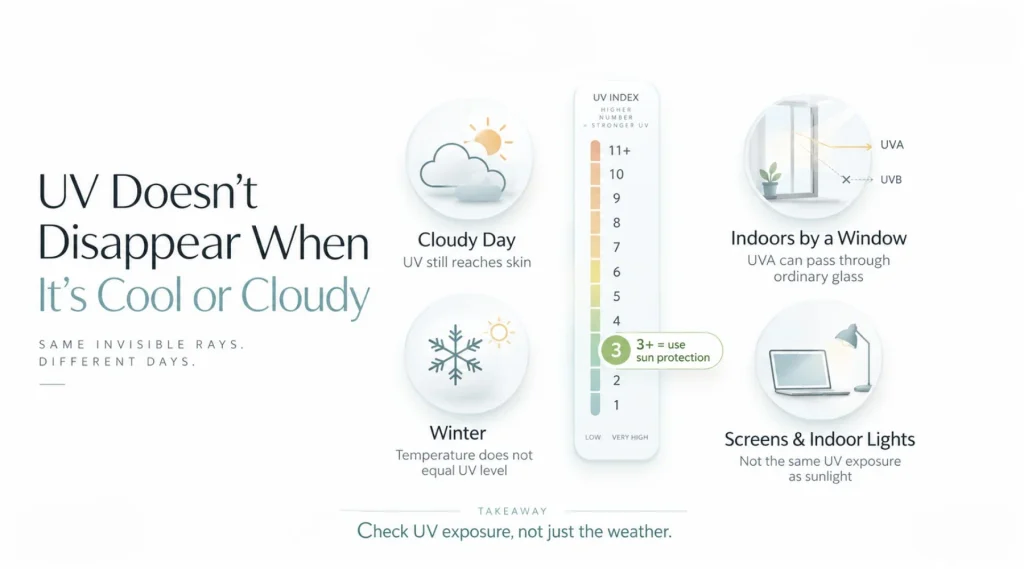
Clouds Don’t Block All UV
Clouds lower UV levels but don’t block them completely. The NHS warns that you can still get sunburn in the UK on cloudy days.
Use the UV Index Every Day
The UV Index shows how strong UV rays can damage skin and eyes. A higher number means less time before harm happens.
In the UK, use sun protection when the UV Index is 3 or higher. In summer, it can reach 8 or more, especially abroad.
The UV Index is helpful, but it’s not the only factor. People with melasma, on certain medications, or receiving skin treatments may need sun protection even when the Index is low.
Should You Wear SPF in Winter?
Wear daily SPF in winter when:
- The UV Index is 3 or higher
- You’re outdoors a lot
- You’re at high altitudes or near snow
- You’re treating pigmentation
- You use photosensitising treatments
- Your dermatologist says to use it all year
On dark winter days with a UV Index of 1 and minimal outdoor time, sunscreen isn’t as urgent. However, many people prefer to stick to their routine year-round instead of deciding each day.
Should You Wear Sunscreen Indoors?
You don’t need sunscreen just because you’re near lights or screens; they don’t give UV as the sun does.
Sunscreen is more important indoors if you sit by a bright window for long times. Ordinary glass filters most UVB rays but lets UVA through. This is important for drivers, people working near windows, and anyone treating pigmentation.
Your exposure depends on how close you are to the window, the window’s direction, the time of day, and any blinds or coatings.
Where Sunscreen Fits in a Skincare Routine
Sunscreen is usually the last step in your morning skincare routine, right before makeup.
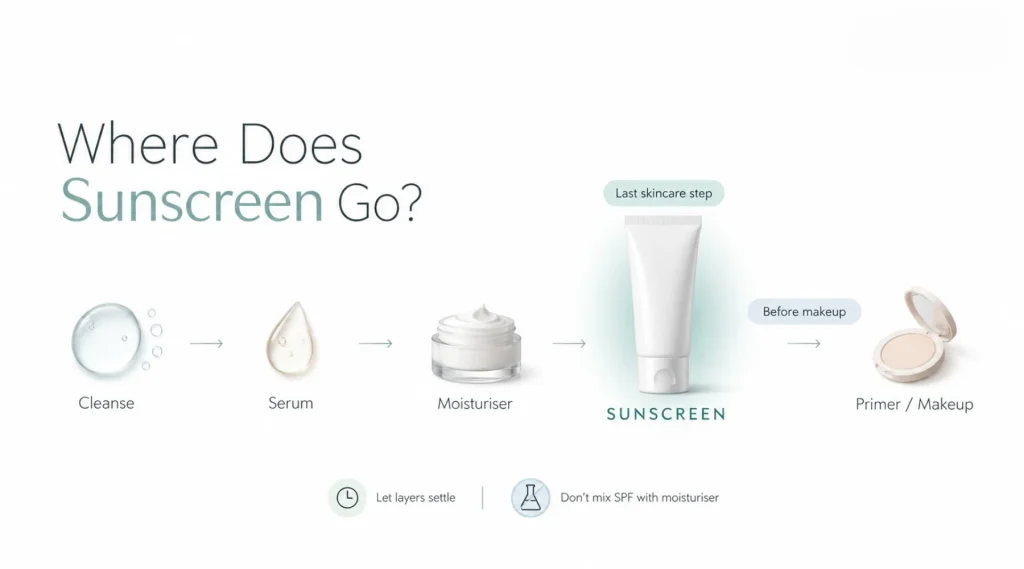
A simple routine might include:
- Gentle cleanser or water rinse.
- Hydrating toner or essence, if you use it.
- Treatment serum.
- Moisturiser, if needed.
- Sunscreen.
- Makeup.
Let each layer absorb before adding the next one. Using too much product under sunscreen can lead to pilling, streaks, or uneven coverage.
Should Moisturiser Go Before Sunscreen?
Apply moisturiser first and let it soak in. Then, apply sunscreen evenly on top.
Some sunscreens are moisturising enough to replace a separate cream, especially for oily or combination skin. This makes your routine simpler and helps avoid product buildup.
Don’t mix moisturiser and sunscreen in your hand. Mixing can weaken the sunscreen and affect its protective layer.
Can Vitamin C Be Used Under SPF?
You can use a gentle antioxidant serum under sunscreen. Vitamin C can help protect your skin from damage but should not replace sunscreen.
If you have sensitive skin, start with a small amount. A stinging vitamin C serum under sunscreen can make your routine uncomfortable and may increase irritation.
What About Retinol and Exfoliating Acids?
Retinoids, glycolic acid, lactic acid, and resurfacing treatments can increase irritation and sun sensitivity, especially if used too much.
Use these products at night as directed, help your skin barrier, and apply SPF 30–50 during the day. Sunscreen alone won’t make a harsh routine safe. If your skin is peeling, burning, or red, cut back on the irritating treatments.
Should Sunscreen Go Before or After Makeup Primer?
Sunscreen should be applied before primer. Wait for the sunscreen to dry, then gently apply primer and makeup on top.
Don’t buff too hard, as it can disturb the sunscreen. If your primer causes pilling, you might not need it. Many modern sunscreens already provide a smooth base for makeup.
Why Your SPF May Seem to Fail and How to Fix It
When you burn or tan while wearing sunscreen, it might not be the sunscreen’s fault. Often, how you apply it is the problem.
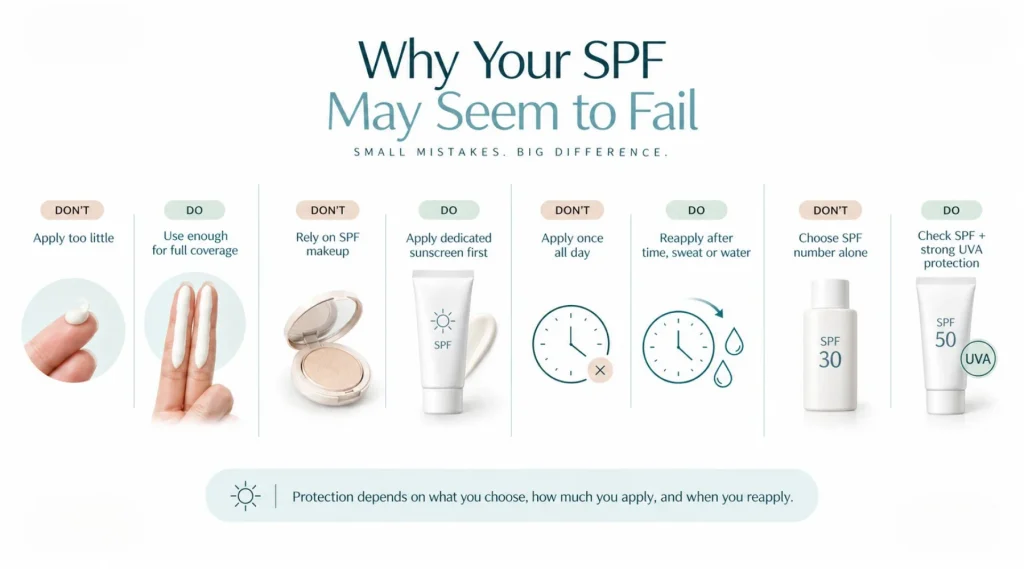
Mistake: Choosing SPF Without UVA Protection
A high SPF number usually shows UVB protection. If a product has weak UVA coverage, it may prevent burning but not help with ageing or pigmentation.
Fix: Pick SPF 30-50 along with four or five UVA stars, a UVA circle, or another trusted high-UVA rating.
Mistake: Applying Too Little Sunscreen
A pea-sized amount is often not enough for your face, neck, and ears.
Fix: Measure your sunscreen for the first few times. Use two full finger lengths or follow the manufacturer’s directions, applying in two layers if that’s easier.
Mistake: Depending on SPF Makeup
Foundation and powder are usually not thick enough to provide their labelled SPF across all exposed areas.
Fix: Always apply a dedicated sunscreen first. Consider SPF makeup as an extra layer, not your main protection.
Mistake: Using SPF 15 for Long Outdoor Exposure
SPF 15 can protect your skin, but it’s not as effective as SPF 30 or 50.
Fix: Use at least SPF 30 for daily sun exposure and SPF 50 for long periods outdoors.
Mistake: Applying Only Once on a Beach Day
Sunscreen can wash off or wear away due to sweat, water, sand, and movement.
Fix: Reapply every two hours, and right after swimming, sweating, or towel drying.
Mistake: Forgetting the UVA Rating
A high star rating alone doesn’t mean much if the SPF is low; it shows the balance of UVA and UVB protection.
Fix: Look for both a high SPF and a high UVA rating.
Mistake: Treating “Once Daily” as a Guarantee
No sunscreen can guarantee full coverage, as it may wear off or get missed in some areas.
Fix: Reapply during long exposures, even if the label says it lasts all day.
Mistake: Using an Expired Product
Heat and repeated opening can spoil sunscreen. Bottles can also collect dirt and bacteria.
Fix: Check the expiry date and replace products that smell or look different or have been overheated.
Mistake: Depending on Natural Oils for SPF
While some oils claim to provide sun protection, they are not reliable enough to replace tested sunscreen.
Fix: Use products with a clear SPF and UVA rating, and consider oils as extras, not replacements.
Mistake: Using Sunscreen Instead of Shade and Clothing
Sunscreen can rub off, be applied unevenly, or forgotten.
Fix: Use sunscreen alongside hats, sunglasses, tightly woven clothes, and stay in the shade, especially from 11 am11 am to 3 pm3 pm in the UK from March to October.
What SPF Should Children Use?
Children need sunscreen with at least SPF 30 that protects against UVA rays. Parents often prefer SPF 50 because it offers extra safety during playtime.
Focus on these sun protection methods for kids:
- Shade
- Hats
- Protective clothing
- Sunglasses
- Generous sunscreen
- Reapplying after water activities and play
Avoid direct sunlight for babies under six months instead of relying only on sunscreen.
Sunscreens labelled for children are not the only option. What matters is proper labelling, effective broad-spectrum protection, and gentle formulae. Fragrance-free options are better for young or sensitive skin.
Pregnancy, Medication and Medical Skin Conditions
Most people can safely use sunscreen during pregnancy. Those who prefer mineral options can choose zinc oxide or titanium dioxide, while regulated chemical sunscreens are also safe.
It’s crucial to keep skin protected because pregnancy can worsen melasma. Some medications, like certain antibiotics and acne treatments, can make skin more sensitive to the sun. Sensitivity varies by medication and person.
Check the medication leaflet and ask a pharmacist or doctor if you’re unsure. Don’t stop taking prescribed medication without consulting a healthcare professional.
People with conditions like lupus, albinism, or previous skin cancer may need more protection than general advice offers. A dermatologist can suggest the right SPF, UVA level, clothing, and sun exposure limits.
Seek medical help if sunscreen causes severe reactions like swelling, blistering, hives, or a spreading rash.
Is SPF in Moisturiser Enough?
An SPF moisturiser is tested like sunscreen if it has a real SPF label. An SPF 30 moisturiser should offer SPF 30 protection.
However, people often use less moisturiser than sunscreen and might forget to apply it to areas like the ears, neck, or hairline. Some SPF moisturisers also don’t have good water resistance or clear UVA protection.
An SPF moisturiser is okay for short, casual exposure if:
- It has SPF 30 or higher.
- It offers good UVA protection.
- You apply a full amount like sunscreen.
- You aren’t sweating or swimming.
- You plan to be outside for a short time.
For longer outings, it’s better to use a dedicated broad-spectrum sunscreen. The British Association of Dermatologists warns that SPF moisturisers might not work as well as sunscreen in the sun for extended periods.
Which is the Best SPF Sunscreen?
There is no one best sunscreen for everyone. The best one for you is the one that offers good protection and feels nice on your skin.
A good everyday sunscreen should have:
- SPF 30–50+.
- Broad-spectrum protection.
- High UVA protection.
- A comfortable feel.
- No irritating ingredients.
- Easy-to-use packaging.
- Water resistance if needed.
When choosing sunscreen, look at the protection labels first, then check for extras like ceramides, peptides, antioxidants, and plant ingredients. These can be helpful, but they can’t make up for weak UVA protection or an untested SPF.
The terms sunscreen and suncream are just different names. What’s important is the label that tells you if the product works.
Questions People Commonly Ask About Daily SPF
Is SPF 30 or SPF 50 better for everyday use?
Both can be appropriate. SPF 30 is the recommended minimum for general daily protection, while SPF 50 provides greater protection and more margin for imperfect application. SPF 50 is particularly useful for strong exposure, fair skin, pigmentation, photosensitivity and prolonged outdoor activity.
Is SPF 15 enough for everyday use?
SPF 15 gives some sun protection if used correctly, but it’s below the UK’s current recommendations. SPF 30 or higher is a better choice for effective protection.
What SPF should I use for sensitive skin?
Use a fragrance-free, broad-spectrum SPF of 30–50 with strong UVA protection. Mineral sunscreens with zinc oxide or titanium dioxide may work well for some sensitive skin types, while others may prefer modern organic filters. Always patch-test the full product instead of just focusing on the type of filter.
What SPF should I use for oily or acne-prone skin?
Choose SPF 30 to 50 in a light fluid, gel, or milk. Look for “non-comedogenic” on the label, but keep in mind that no product works for everyone with acne.
What SPF should I use for dry skin?
Use SPF 30–50 in a cream or lotion with humectants and emollients. Apply moisturiser underneath if needed, but don’t mix it with the sunscreen.
What SPF should I use for dark skin?
SPF 30 is a good choice for daily use on skin that gets sun. Use SPF 50 for strong sun or when dealing with dark spots. Pick clear or tinted sunscreens to avoid a white cast. For melasma or stubborn marks, tinted sunscreen with iron oxides can offer extra protection against visible light.
Should I use SPF 50 every day?
You can use SPF 50 every day, even if it’s cool outside or if your skin is oily. The key questions are if it provides good UVA protection, fits your skin type, and can be applied generously.
Can I use the same sunscreen on my face and body?
Yes, as long as it feels good and doesn’t irritate your skin. Face sunscreens are usually made to look nice, while body sunscreens come in larger containers and often cost less.
Do I need sunscreen when the UV Index is 1 or 2?
Use protection when the UV Index is 3 or higher. The risk is lower at 1 or 2 for most people. Year-round sunscreen can still help with skin pigmentation, photosensitivity, long times by windows, or keeping a consistent routine.
Do I need to reapply sunscreen every two hours indoors?
Not always. You should reapply every two hours when you’re outside for a long time. If you’re indoors, apply more when sitting near a bright window, going outside, sweating, wiping your face, or if you need to control pigmentation closely.
Can you still tan with sunscreen SPF 50?
Yes, SPF 50 does not block all UV rays. If you don’t apply enough or forget to reapply it, more rays can reach your skin. Tanning is still a sign of skin reacting to UV rays, not a safe result.
Does sunscreen prevent vitamin D production?
Most people still produce vitamin D while using sunscreen because they don’t apply it perfectly and some skin is left exposed. You can also get vitamin D from food and supplements. Don’t try to get more vitamin D by risking sunburn.
Is mineral sunscreen better than chemical sunscreen?
Neither type of sunscreen is always better. Mineral sunscreens work well for those who like zinc oxide or titanium dioxide. Organic sunscreens usually feel lighter and blend in more easily. Choose based on protection level, UVA coverage, and how comfortable it feels on your skin.
Does higher SPF cause more breakouts?
No, the SPF number does not clog pores. Breakouts depend on the entire formula, your skin type, and how well you remove the product at night.
How long does sunscreen last after opening?
Look for the open-jar symbol, which shows a number and “M” to indicate how many months the formula will stay good after opening. Also, check the expiry date. Replace the sunscreen if its colour, smell, or texture changes.
So, What SPF Should I Use Every Day?
Most people should use broad-spectrum SPF 30 or higher with good UVA protection. Choose SPF 50 or higher if you’ll be outside for a long time, the UV Index is high, your skin burns easily, you worry about pigmentation, or if applying sunscreen perfectly is tough.
Don’t judge sunscreen by the SPF number alone. Check its UVA rating, apply a thick, even layer, and cover often-missed spots. Reapply if you stay outdoors. Opt for water-resistant formulae if you’re swimming, playing sports, or working in humid weather.
Sensitive skin doesn’t always need a lower SPF; it needs a formula that works well for you. Oily skin should choose lighter textures, not weaker protection. Darker skin tones may benefit from transparent or tinted formulae, especially if pigmentation is a concern. Dry skin might prefer creamier products, but they must still have tested SPF and UVA protection.
The best daily SPF is one that offers strong protection and encourages regular use. Apply it as the last step of your morning skincare routine and complement it with shade, clothing, sunglasses, and smart sun habits. Regular use protects your skin better than searching for the perfect sunscreen that you don’t use.