





Blog
What is SPF in Sunscreen? Meaning, Benefits, and Daily Use

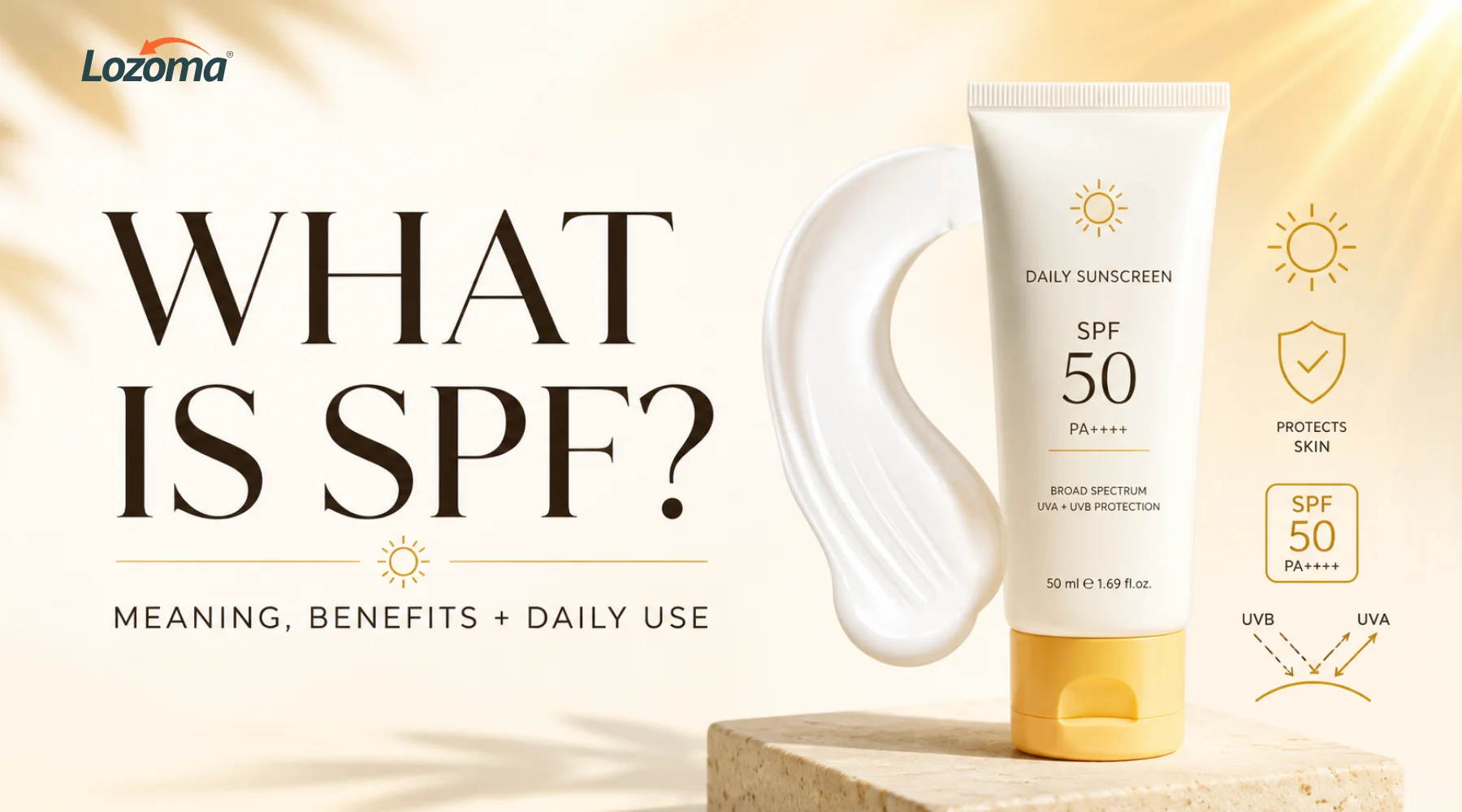
SPF is a common term in skincare, but it’s often misunderstood. You see it on sunscreens, moisturisers, foundations, lip balms, and setting sprays, but just looking at the number doesn’t tell you how well a product protects your skin.
So, what is SPF? SPF stands for sun protection factor. It shows how well a sunscreen protects against UV rays, which cause sunburn. A higher number means better protection, but that only counts if you use enough of the product correctly.
While that sounds straightforward, real-life protection is more complex. Sunscreen effectiveness depends on factors like UVA protection, how much you apply, if you miss spots, how long you’re outside, the sun’s strength, and if sweat, water, clothing, or touching disrupt the sunscreen layer. SPF 50 applied too thinly might offer less protection than SPF 30 applied generously.
Understanding SPF isn’t just about picking the highest number. It’s about choosing a broad-spectrum sunscreen that fits your skin type, applying enough, and including it in a complete sun-protection routine.
What is SPF and What Does the Number Actually Measure?
SPF measures how much UV exposure causes sunburn on skin with sunscreen compared to skin without. It shows how well sunscreen protects against sunburn, not how long you can stay outside.

In SPF testing, a standard amount of sunscreen is spread evenly on the skin. They then compare the protected area to an unprotected area to see how much UV exposure causes redness.
An SPF 30 sunscreen lets about one-thirtieth of the UV rays that cause sunburn reach the skin during tests. SPF 50 allows about one-fiftieth.
This is commonly translated into percentages:
| SPF value | Approximate UVB filtered under test conditions | Approximate UVB reaching the skin |
| SPF 15 | 93% | 6.7% |
| SPF 30 | 96.7% | 3.3% |
| SPF 50 | 98% | 2% |
The difference between 96.7% and 98% may seem small, but there’s more to consider than just the percentage blocked. SPF 50 lets in about 2% of UVB rays that cause sunburn, while SPF 30 lets in around 3.3%. This means SPF 50 reduces UVB exposure by about 40% compared to SPF 30.
This extra protection can be important for people with very sensitive skin, a history of skin cancer, conditions that worsen with sunlight, or those spending a lot of time outside.
However, no sunscreen can block 100% of UV rays. A high SPF does not mean you can stay in strong sunlight for longer.
SPF is Not a Countdown Clock
Many people believe that SPF 30 allows you to stay outside 30 times longer without burning. This is not true.
Sun intensity varies during the day. It’s usually stronger around noon than in the morning. Other factors like location, altitude, weather, skin type, and how much you sweat also affect how quickly you get sun exposure.
Just 15 minutes around noon can expose your skin to as much or more UV radiation than spending a long time outside in the morning. This means the SPF number doesn’t tell you how long you can safely stay in the sun.
Reapplying sunscreen doesn’t erase the UV radiation your skin has already absorbed. It simply helps restore coverage that can wear off due to sweating, swimming, or touching.
Applying the Right Amount
The SPF label is based on applying a sufficient amount of sunscreen. In reality, most people don’t apply enough, especially if the sunscreen feels heavy or greasy.
Using less than the recommended amount doesn’t cut SPF in a straightforward way. For example, using half of SPF 50 won’t just give you SPF 25; it can offer much less protection.
This is why the feel of the sunscreen matters. The best sunscreen is one you can apply easily in a full, even layer and is comfortable enough to reapply when you are still in the sun.
SPF Primarily Describes UVB Protection, Not the Whole Sunlight Storey
Sunlight has different wavelengths. The two most important for sunscreen are UVA and UVB. Both can harm the skin, but they act in different ways.
| Type of radiation | What it tends to do | Practical concern |
| UVB | Produces much of the redness associated with sunburn and directly damages cellular DNA | Sunburn, skin cancer and inflammation |
| UVA | Penetrates more deeply and passes through ordinary window glass more readily | Premature ageing, pigmentation and skin cancer |
| Visible light | Can worsen certain pigmentary conditions, particularly in deeper skin tones | Melasma and persistent hyperpigmentation |
UVB levels change significantly with the season, time of day, and location. UVA can be present all day, even when it’s cool or cloudy.
An SPF value mainly shows how well a product protects against UVB rays that cause sunburn. It doesn’t measure UVA protection on its own. That’s why it’s important to check both the SPF number and the UVA or broad-spectrum rating of a product.
Why broad-spectrum protection matters
A broad-spectrum sunscreen protects against UVA and UVB radiation. If it lacks proper UVA protection, a high SPF might prevent redness but still leave skin vulnerable to pigmentation and ageing.
In the UK, the NHS recommends using sunscreen with at least SPF 30 and a minimum four-star UVA rating. A UVA symbol inside a circle shows that the product meets European UVA protection standards.
Depending on where a product is sold, you may also see:
- Broad spectrum, commonly used on products that meet specified UVA and UVB testing criteria.
- UVA stars, usually rated from one to five.
- UVA in a circle, indicating that UVA protection reaches a required proportion of the labelled SPF.
- PA ratings, ranging from PA+ to PA++++ and based on persistent pigment darkening caused by UVA.
These systems are not fully the same. A high PA rating doesn’t replace SPF, and a high SPF doesn’t eliminate the need to check for UVA protection.
Visible light can matter when pigmentation is the main concern.
Standard sunscreen tests mainly focus on ultraviolet (UV) radiation. However, visible light, especially high-energy wavelengths, can also cause skin pigmentation, especially in people with melasma or persistent dark marks.
Tinted sunscreens with iron oxides can help protect against pigmentation from visible light. Studies show these formulae offer better protection from this type of pigmentation than regular untinted UV sunscreen for certain skin types.
Not everyone needs tinted sunscreen. It’s especially useful for people who struggle with melasma, post-inflammatory hyperpigmentation, or recurring dark spots, even when using broad-spectrum SPF regularly.
Why SPF Benefits the Skin Beyond Preventing a Painful Burn
Sunburn is the most obvious sign of too much UV exposure, but it’s not the only type of damage. Skin can get hurt before it turns red. People with darker skin may feel burning through tenderness, heat, swelling, or darkening instead of obvious redness.

Regularly protecting your skin helps with both immediate comfort and long-term health.
SPF Reduces Sunburn and Inflammation
SPF helps prevent sunburn and skin irritation. UVB rays can cause warmth, redness, swelling, and even blisters. Sunscreen lowers the amount of UV light that reaches your skin, reducing the chance and severity of sunburn when applied correctly. However, it doesn’t make tanning or long sun exposure safe. Repeated sunburn, especially during childhood, increases the risk of skin cancer later in life. So, avoiding burns is important for health, not just appearance.
Daily Sunscreen Slows ageing
Daily sunscreen helps slow visible signs of ageing, like fine lines, uneven skin tone, and roughness. UV exposure speeds up damage to collagen and elastin, which support the skin. In a study, participants who used sunscreen daily showed slower skin ageing compared to those who applied it less consistently. While sunscreen doesn’t fix existing wrinkles, it prevents further UV damage. Other products like retinol and vitamin C may help with specific issues, but they can’t replace sun protection. Without adequate SPF, treatments for uneven tone or ageing can be undermined by new UV exposure.
SPF Prevents Darkening of Pigmentation
UV rays can activate melanocytes, which produce melanin, leading to darker freckles, post-acne marks, and sunspots. Sunscreen doesn’t remove existing pigmentation but helps create a stable environment for treatments to work without extra UV exposure. For persistent pigmentation, a broad-spectrum SPF 50 or higher is often more effective since we don’t always apply sunscreen perfectly. Tinted formulae with iron oxides can also help reduce darkening from visible light.
Regular Sunscreen Supports Skin Cancer Prevention
UV rays from the sun and tanning devices can cause skin cancer by damaging DNA. Regular sunscreen use is linked to fewer cases of skin cancers, including squamous cell carcinoma and melanoma. However, sunscreen isn’t a foolproof protection against skin cancer. Factors like genetics, previous burns, skin tone, and overall sun exposure also affect risk. It’s best to use sunscreen alongside shade, protective clothing, and regular checks for changing moles or skin lesions.
SPF protects the progress made by the rest of your skincare routine
Many skin care routines aim to brighten, smooth, and reduce marks on the skin. However, daily sun exposure can hinder these goals.
Sunscreen helps protect improvements achieved with:
- Retinoids used for acne or signs of ageing
- Vitamin C and other antioxidants
- Azelaic acid for acne and pigmentation
- Glycolic, lactic or salicylic acid
- Pigment-targeting ingredients such as niacinamide
- Professional peels, laser treatments or microneedling
- Barrier-repair routines following irritation
Some treatments can make your skin more sensitive to irritation or require you to avoid the sun carefully. Always follow the instructions that come with prescription medicines and professional procedures instead of just relying on regular sunscreen.
Which is the Best SPF Sunscreen for Everyday Protection?
Most adults should use a broad-spectrum SPF 30 every day. SPF 50 or higher provides better protection and is better for strong or unpredictable UV exposure.

The NHS suggests at least SPF 30 with four-star UVA protection, while dermatologists often recommend broad-spectrum SPF 30 or higher for skin that is exposed.
The best factor still depends on how and where you will use it.
| Situation | Practical starting point |
| Short commute with limited outdoor exposure | Broad-spectrum SPF 30 or higher |
| Daily walking, driving or sitting near bright windows | Broad-spectrum SPF 30–50 |
| Pigmentation, melasma or post-acne marks | Broad-spectrum SPF 50+, often tinted |
| Beach, hiking, gardening or outdoor sport | Water-resistant broad-spectrum SPF 50+ |
| Very fair or sun-sensitive skin | Broad-spectrum SPF 50+ |
| High altitude, snow or strong reflective surroundings | Broad-spectrum, water-resistant SPF 50+ |
| Photosensitising medicine or medical condition | Follow medical advice, usually with high broad-spectrum protection |
| Skin cancer history | Personalised advice from a dermatologist or treating clinician |
It’s easier to understand the differences between factors by comparing lab numbers to real-life use. When choosing an SPF for daily use, consider exposure, skin sensitivity, pigmentation, climate, and product texture, not just age or skin type.
SPF 15
SPF 15 offers some UVB protection when used properly, but it can miss spots if not applied well. You can find it in moisturisers, foundations, and lip products. For daily facial use, it’s not as reliable as SPF 30 or 50, especially in spring and summer or if you spend a lot of time outside.
SPF 30
SPF 30 blocks about 96.7% of UVB rays under test conditions. It’s a good daily minimum if it includes proper UVA protection. Applying SPF 30 generously is often better than using SPF 50 sparingly because it feels uncomfortable.
SPF 50 and 50+
SPF 50 blocks around 98% of UVB rays in tests. It provides extra protection for outdoor use, sensitive skin, pigmentation issues, and people who might not apply enough. SPF 50+ means it has passed certain tests but doesn’t guarantee total protection. You still need to apply it properly and reapply it.
SPF 100 Does Not Mean Complete Protection
High-SPF sunscreens can offer more UVB protection, but they won’t make your skin completely safe. They don’t last longer than lower SPFs once applied. People often use high-SPF sunscreen less generously or stay outside longer because they feel safe. This can reduce the benefits. The best high-SPF sunscreen encourages proper application instead of giving a false sense of security.
Can Sunscreen Prevent a Tan Completely?
Sunscreen can help reduce tanning, but it won’t stop all colour changes. You can still tan with sunscreen because no product blocks all UV rays, and people often apply it unevenly.
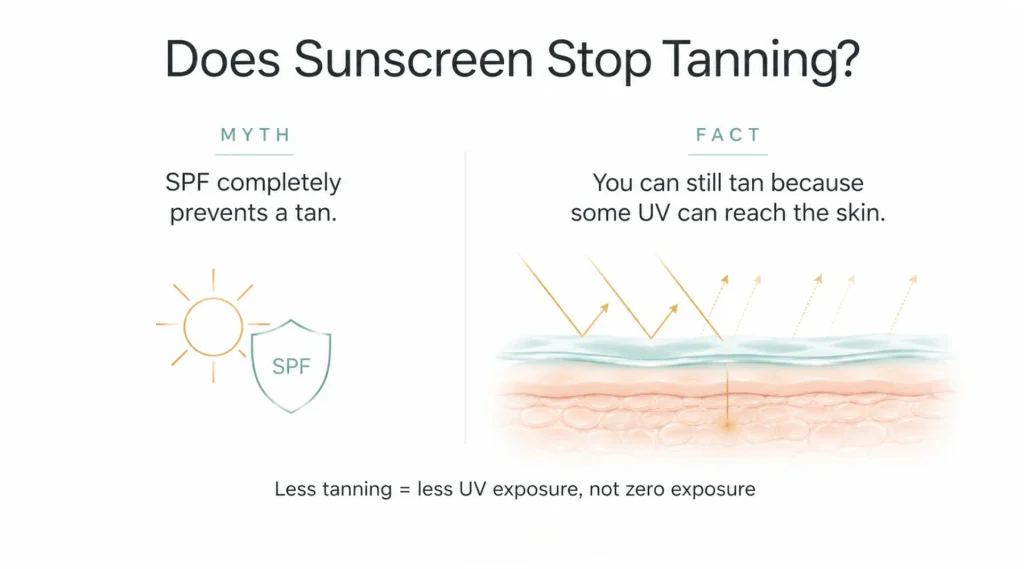
Tanning happens when skin gets hurt by UV rays. The body produces more melanin to protect cells from further damage. While a tan might make sunburns less noticeable, it only offers limited protection and won’t fully guard the skin against long-term harm.
Does sunscreen keep you from tanning?
A good broad-spectrum sunscreen reduces UV rays that cause tanning. The better the protection and the more carefully you apply it, the less you will tan.
However, several factors allow pigmentation to develop:
- Applying less than the tested amount
- Missing the hairline, ears, or sides of the face
- Failing to reapply during prolonged exposure
- Rubbing sunscreen off with clothing or towels
- Sweating or swimming
- Using a product with inadequate UVA protection
- Remaining in direct sunlight for long periods
- Relying on SPF without clothing or shade
A change in colour does not mean sunscreen didn’t work. It might still have lowered the UV exposure and prevented a burn. However, it does indicate that some radiation reached the skin.
Can you tan using sunscreen?
Yes, you can tan while wearing sunscreen, but tanning intentionally is still not safe. Many people choose a low SPF to tan slowly without burning. This is a misunderstanding; avoiding sunburn doesn’t mean the skin is safe from damage. Sunscreen should reduce harmful exposure, not simply speed up tanning.
Can you still tan with sunscreen SPF 50?
Yes, you can still tan with SPF 50, especially if you spend a long time outside, don’t apply enough, or forget to reapply. When used correctly, SPF 50 blocks more UVB rays than lower SPFs, which helps reduce tanning. However, its effect on UVA-related tanning depends on the sunscreen’s formula, so check for broad-spectrum labelling.
Does sunscreen stop you from tanning through a window?
Regular window glass blocks most UVB but lets in more UVA. Spending long hours near windows or driving during the day can lead to skin exposure, especially on your face and hands. Using broad-spectrum sunscreen helps if you’re near windows for a long time. Curtains and UV-blocking window films can also be useful.
For cosmetic colour without UV damage, a self-tanning product is safer.
Self-tanners usually don’t provide real sun protection unless they have a tested SPF listed. Therefore, regular sunscreen is still necessary.
How Sunscreen Filters Protect the Skin
Sunscreen creates a thin layer with UV filters. These filters absorb UV energy and some also scatter or reflect it to protect the skin.
Sunscreens are often labelled as mineral, chemical, or hybrid, but these terms can make the science seem more complicated than it is.
Mineral Sunscreen
Mineral sunscreens use zinc oxide, titanium dioxide, or both to block UV rays. They absorb ultraviolet light and can also reflect some wavelengths. Modern mineral sunscreens don’t just sit on the skin like a mirror. Zinc oxide covers a wide range of UVA and UVB rays, while titanium dioxide is better for UVB and shorter UVA. Sometimes, formulae mix these with other filters for better protection. Mineral sunscreens are good for those who have issues with some chemical filters. However, they may feel thicker, cause dryness, or leave a white or grey cast, especially on darker skin.
Chemical Sunscreen
Chemical sunscreens contain organic UV filters like avobenzone and octocrylene. They mainly absorb UV light and release it as a lower-energy form. These sunscreens can come in lightweight fluids and gels, which makes applying them easier. The term “chemical” doesn’t mean harmful, and “mineral” doesn’t always mean gentle. Both types can irritate the skin depending on the full formula, which includes fragrance, alcohol, and other additives.
Hybrid Sunscreen
Hybrid sunscreens mix mineral and chemical filters. This combination aims to improve UVA coverage, reduce the white cast, create a lighter feel, or stabilise the protective layer. The key comparison isn’t which type seems more natural, but which tested formula offers good protection, feels comfortable, and is easy to apply correctly.
Importance of the Full Formula
A sunscreen’s effectiveness relies on its entire formulation. Just knowing the UV-filter concentration doesn’t reveal the final SPF or water resistance. Ingredients that help form the product, stabilise it, and disperse the filters influence how well it spreads and stays on the skin. When choosing a product, focus on its labelled SPF and water resistance, not just on key ingredients like zinc oxide. Homemade sunscreens and untested oils aren’t reliable. You can’t determine SPF from a recipe or the supposed natural SPF of individual ingredients.
Sunscreen, Suncream and Sunblock Describe the Same Basic Job
Sunscreen and suncream are different names for the same product that protects against the sun. “Suncream” is used more in Britain, while “sunscreen” is popular worldwide.
“Sunblock” is an older term that suggests full protection. However, no product completely blocks all UV rays, so sunscreen or suncream is a better term.
The difference between sunscreen and suncream is in the formula, not the name. A product called suncream can have the same ingredients and testing standards as one labelled sunscreen.
Focus on:
- SPF value
- UVA or broad-spectrum protection
- Water resistance
- Texture and finish
- Suitability for the application area
- Instructions and expiration date
Marketing terms such as natural, clean, sport, baby, facial or anti-ageing do not replace those essentials.
How to Use SPF in a Skincare Routine
Sunscreen should be the last step in your morning skincare routine, applied after moisturiser and before makeup.

A basic SPF routine could be:
Cleanser → treatment serum → moisturiser → sunscreen → makeup.
You don’t need all these steps in every routine. If you have oily skin, a moisturising sunscreen might be enough. If you have dry skin, you might need both.
Apply Treatment Products First
Start with water-based serums, antioxidants, and topical treatments before sunscreen, unless your clinician or the product says otherwise. Let each layer dry instead of applying wet products on top of each other. Too many layers can make sunscreen clump or create an uneven finish. Morning exfoliation can be safe, but if your skin is irritated, it’s harder to protect. If acids or retinoids cause irritation, reduce their use instead of applying more sunscreen.
Moisturiser Comes Before SPF
Moisturiser usually goes on first, under sunscreen. If you apply a heavy moisturiser or oil on top, it may disrupt the sunscreen. Some sunscreens are moisturising enough to replace day cream, which is helpful in warm weather or for oily skin. If your skin is dry, use a light moisturiser first and let it settle. Sunscreen will go on more smoothly over comfortable skin.
Use Enough for the Face and Neck
A good rule is to use about two finger lengths of sunscreen for your face, ears, and neck. The exact amount varies based on your finger size, product type, and how much skin you’re covering. The American Academy of Dermatology suggests about one teaspoon for the face and roughly one ounce — about a shot glass — for all exposed skin. The goal is to create a generous, even layer over all exposed areas.
Frequently missed places include:
- Hairline
- Eyelids and around the eyes
- Ears
- Sides of the neck
- Back of the neck
- Upper chest
- Lips
- Backs of the hands
- Tops of the feet
- Scalp where hair is thin
Apply in two thin layers if one full layer is hard to manage. The first layer provides coverage, and the second fills in any missed spots. Don’t rub too much once the formula begins to dry.
Apply before meaningful exposure.
Many products recommend applying sunscreen about 15 minutes before going out in the sun. Always check the label for instructions.
This waiting time helps the sunscreen spread evenly and create a better barrier. It doesn’t just depend on whether the sunscreen uses mineral or chemical filters.
Putting on sunscreen only after you get to the beach, start gardening, or sit in direct sunlight means you are at risk of getting sunburned during that time.
Reapply when protection may have been disturbed.
Reapply sunscreen every two hours when you’re outside. Do it sooner if you swim, sweat heavily, or towel dry.
If you’re sitting indoors, away from windows and not getting much sun, you don’t need to reapply every two hours. Reapplication is important when you’re outside, near bright light, sweating, swimming, or touching your face often.
Reapply immediately after:
- Swimming
- Towelling the skin
- Heavy sweating
- Removing clothing that rubbed against sunscreen
- Washing or wiping the face
- Blowing or repeatedly wiping the nose
- Contact sport or equipment friction
Water-resistant sunscreen is best for sports and swimming, but it’s not waterproof. Check the label for 40 or 80 minutes of water resistance and reapply as needed.
Reapplying over makeup
Reapplying sunscreen over makeup can be tricky, but it can be done.
You can use a sponge to gently press a liquid sunscreen onto your skin instead of rubbing it in. For small areas, a sunscreen stick works well, but you may need to apply it multiple times for full coverage. SPF powders and mists can add extra protection, but they are hard to apply in the same amounts used for regular SPF tests.
When spending a full day outside, focus more on coverage than on appearance. Wearing hats, staying in the shade, and taking breaks indoors can help minimise the need to touch up your makeup.
Building an SPF Skincare Routine for Different Skin Types
The protective target is consistent for all skin types: use broad-spectrum coverage, enough SPF, and a sufficient amount. The formula to achieve this can differ a lot.

Oily skin
Oily skin works best with lightweight liquids, gels, or lotions. Choose non-comedogenic products if you often get blocked pores, but remember that this label doesn’t guarantee they’ll work for everyone.
Matte sunscreens can reduce shine, but some very dry formulae may cause tightness or flaking. A natural or satin finish is often easier to use daily.
You can apply sunscreen over a light serum or use it alone if it’s hydrating enough.
Acne-prone skin
Sunscreen does not directly cause acne. Breakouts can happen if the formula is too thick for your skin, due to irritation from fragrances or filters, not cleaning your skin well, or using too many heavy products.
Acne-prone skin may prefer:
- Lightweight fluids or gels
- Fragrance-free formulae
- Products labelled non-comedogenic
- Oil-control finishes
- Tinted formulae that reduce reliance on heavy foundation
- A simple evening cleanse that removes sunscreen without harsh scrubbing
Don’t skip sunscreen just because you’re using acne treatment. Protecting your skin from sun damage can help acne marks fade better.
If a new sunscreen seems to cause spots, switch one product at a time. Small, itchy bumps may signal irritation or folliculitis instead of regular acne.
Dry Skin
Dry skin does well with cream or lotion sunscreens that have humectants and emollients. Apply a moisturiser first if needed, but make sure it’s not too thick or the sunscreen will slide off. Ingredients like glycerine, ceramides, and hyaluronic acid can help your skin feel better without affecting UV protection. Some mineral sunscreens might feel dry because of their powdery texture, but that doesn’t mean all mineral formulae are bad for dry skin.
Combination Skin
Combination skin needs a balanced lotion instead of an overly matte or rich one. Use a light moisturiser on the drier areas before putting on sunscreen all over your face. Don’t mix different sunscreens together, as this can disrupt how well they protect your skin.
Deeper Skin Tones
Brown and black skin has more melanin and tends to burn less than very fair skin, but it can still get sunburned, age prematurely, develop pigmentation, and face skin cancer. The NHS recommends that everyone avoid sunburn and use sun protection. It’s essential that sunscreen looks good on the skin. A visible white or purple tint may make people apply less. Clear organic-filter sunscreens, well-made mineral products, and tinted formulae in the right shades might be easier to use. Tinted iron-oxide products can help with concerns like melasma or dark spots.
Is SPF Good for Sensitive Skin?
SPF is essential for sensitive skin because UV rays can increase redness and inflammation. However, sensitive skin can react to certain sunscreens or ingredients.
There isn’t one sunscreen that works for everyone with sensitive skin. Mineral sunscreens with zinc oxide or titanium dioxide are often a good choice because they may be less irritating for some people.
But these products are not guaranteed to be irritation-free. A mineral sunscreen might still have fragrances, essential oils, drying alcohols, preservatives, or botanical extracts that can cause a reaction.
Choosing sunscreen when your skin stings easily
Look for:
- Fragrance-free rather than merely unscented
- Broad-spectrum SPF 30–50+
- A short, clearly presented ingredient list
- Minimal essential oils
- A cream or lotion texture for dry sensitivity
- A water-resistant product only when needed, as these can require more thorough removal
- Mineral filters if organic filters repeatedly sting
- A formula designed for the eye area if watering is a problem
Patch testing helps find immediate irritation or allergic reactions, but it can’t promise that a product won’t clog pores or sting when you sweat.
To patch test, apply a small amount near your jaw or behind your ear for a few days. When that feels fine, try it on a small area of your face before using it all over.
Sensitive skin still needs a complete protection strategy.
When sunscreens feel uncomfortable, use shade, hats, sunglasses, and tightly woven clothes while you find one that works for you.
If you have ongoing reactions, see a doctor. Contact dermatitis can result from a UV filter, fragrance, preservative, or another ingredient. Patch testing may help find the cause.
Possible SPF Side Effects and How to Interpret Them
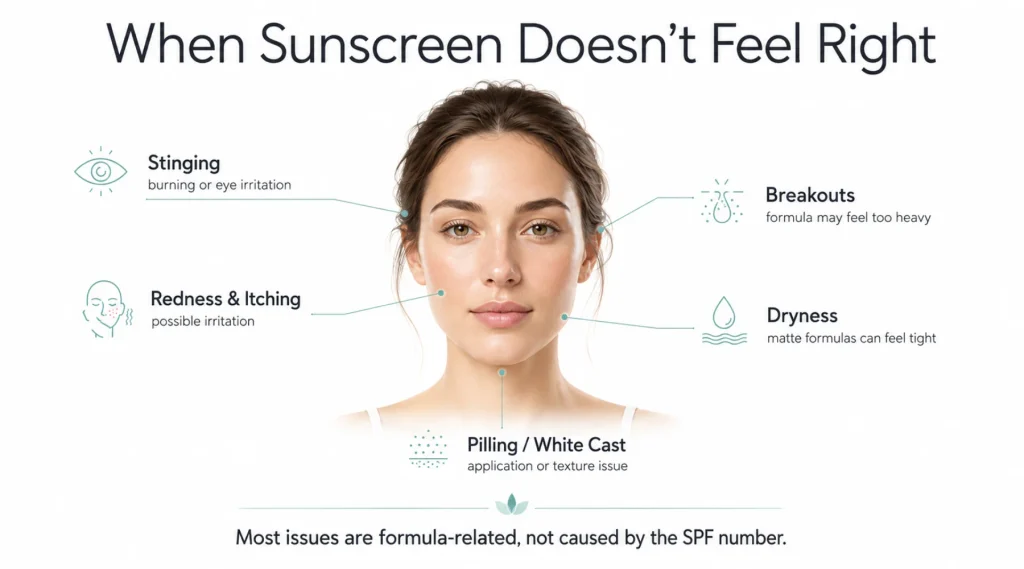
Most people can use sunscreen without issues, but some may experience side effects. These effects usually depend on the specific formula, not on the SPF itself.
Stinging and Burning
When you put on sunscreen over freshly shaved or irritated skin, you might feel a mild stinging or burning. If it hurts a lot, wash it off right away. Simplify your skincare routine and let your skin heal before trying a gentler sunscreen.
Sunscreen can sting your eyes if it mixes with sweat. A waxy stick or a mineral formula may work better around the eye area. Avoid getting the product in your eyes.
Redness, Itching, or Swelling
Redness and itching might mean you have an irritant or allergic reaction. Stop using the product and see a doctor if swelling is severe, the rash spreads, or blisters develop. Seek urgent help if you have trouble breathing or if your lips, tongue, or throat swell.
Spots and congestion
A rich sunscreen may feel too occlusive for acne-prone skin, but not every breakout is proof of pore clogging.
Consider:
- Did another new product start at the same time?
- Is the skin being cleansed effectively but gently?
- Are the bumps itchy and uniform?
- Is heavy makeup being layered over sunscreen?
- Is the product being removed with harsh scrubbing?
- Is the skin irritated from acne treatments?
Switch to a lighter texture and keep the rest of the routine stable while assessing the change.
Dryness or Tightness
Some matte sunscreens can make dry skin feel tight. To avoid this, apply a moisturiser before using sunscreen or choose a creamier option. Don’t mix moisturiser directly into sunscreen; it can affect how evenly the sunscreen spreads and reduce its protective qualities.
White Cast
A white cast from sunscreen is mostly a cosmetic issue, but it can lead you to use less sunscreen than needed, reducing protection. Tinted mineral formulae or organic filters can look more transparent. Look for products that let you apply enough without making your skin look grey or uncomfortable.
Pilling
Pilling happens when layers of products form flakes or small balls. This can result from using too many products, applying them too quickly, or mixing incompatible textures. To avoid pilling, use fewer morning products, let each layer settle, and gently press instead of rubbing. Pilling can leave your skin with uneven sunscreen coverage.
Common SPF Mistakes That Leave Skin Less Protected
Most sunscreen failure happens through application rather than the SPF number itself.
Applying Too Little
Using a pea-sized amount of sunscreen for your face and neck is usually not enough. Applying too little reduces protection. Choose a sunscreen you can use in the right amount. Saving an expensive sunscreen by applying tiny amounts defeats its purpose.
Missing Exposed Areas
People often cover the centre of their face but forget their ears, hairline, neck, chest, and hands. These areas get a lot of sun exposure. Sunscreen should also cover areas that are under clothing edges, as necklines and sleeves shift throughout the day.
Relying on SPF in Makeup
Makeup with SPF can help protect your skin, but most people don’t use enough makeup. Always apply a dedicated sunscreen underneath unless you apply the makeup thickly enough to serve as your main sun protection.
Mixing Sunscreen with Other Products
Mixing sunscreen with moisturiser or foundation makes it easier to apply but can weaken its effectiveness. Layer your products: apply skincare first, followed by sunscreen, and then makeup.
Assuming Darker Skin Doesn’t Need Protection
Darker skin has some natural protection from UV damage, but it’s not enough. Skin cancer can affect anyone, and assumptions can delay diagnosis. Daily broad-spectrum sunscreen helps prevent darker skin marks from worsening.
Depending on Sunscreen Alone
Sunscreen is just one part of sun protection. The World Health Organisation suggests using shade and protective clothing along with sunscreen, not relying solely on it to stay in the sun longer.
Using Last Year’s Damaged Bottle
Check the expiry date and store sunscreen properly. Sunscreen can break down if exposed to heat, like in a hot car. Throw it away if it changes colour, smell, or texture, or if it separates and doesn’t mix back.
Applying Once Before an All-Day Event
Applying sunscreen in the morning isn’t enough for a full day of activities like swimming or sweating. Always take sunscreen with you so you can reapply.
Treating High SPF as Permission to Stay Outside Longer
Higher SPF numbers don’t mean longer protection. SPF 50 or 100 doesn’t last longer than SPF 30. The protective layer can still be affected by time, sweat, water, and friction. High SPF offers stronger protection, not unlimited sun time.
Do You Need SPF Indoors, in Winter or on Cloudy Days?
Daily sunscreen advice should reflect actual exposure rather than fear of every ray of daylight.
Indoors
You usually don’t need to apply full-body sunscreen if you stay indoors, away from windows, all day. However, if you sit by a bright window for hours, drive often, or go in and out, consider using facial sunscreen. UVA rays can get through regular window glass more easily than UVB rays.
Distance matters, too. Sitting a few metres from a shaded window is different from being right next to large glass windows in strong sunlight.
Cloudy Weather
Clouds reduce some UV rays but don’t block them completely. On bright overcast days, UV levels can still be high, and conditions can change quickly. Check the UV index rather than just relying on temperature or visible sunshine. You need protection when the UV index is 3 or higher.
A cool, windy day can still cause sunburn since heat doesn’t indicate UV strength.
Winter
In winter, UVB rays are often weaker in the UK than in summer, but UVA rays are still present. Outdoor workers, people on photosensitising treatments, and those with pigmentation issues should consider daily facial sunscreen. Snow can reflect UV rays and increase exposure, especially at higher altitudes. Skiing requires strong sunscreen, even when it’s cold outside.
Early Morning and Evening
UV exposure is usually lower in the early morning and late evening compared to midday, but it can vary based on the season and location. Checking the UV index gives a clearer picture than just looking at the clock.
Sunscreen Works Best as Part of a Wider Sun-Safety Routine
Sunscreen covers areas that clothing cannot, but physical barriers often provide more consistent protection.
A practical routine combines:
- Shade during the strongest part of the day
- A wide-brimmed hat
- Sunglasses with appropriate UV protection
- Long sleeves or tightly woven clothing
- Broad-spectrum sunscreen on exposed skin
- Sensible reapplication
- Avoidance of sunbeds and deliberate tanning
Shade doesn’t fully protect you. UV rays can scatter in the air and bounce off water, sand, snow, and light surfaces. Keep protecting your skin even under a beach umbrella or canopy.
Clothing offers different levels of protection. Dark colours, tightly woven fabrics, and those with a UPF rating usually give better coverage than loose, thin, or wet materials.
Sunbeds Are Not Safe for Tanning
Sunbeds give off strong ultraviolet rays that can lead to skin cancer and early ageing. In the UK, people under 18 cannot legally use sunbeds.
A “base tan” from a sunbed does not provide real protection for your skin on vacation. It actually causes UV damage before you even go outside.
Vitamin D Doesn’t Need Sunburn
Sunlight helps our bodies make vitamin D, but you don’t need to get sunburned to do so. Everyone’s needs for vitamin D differ based on skin type, location, season, diet, clothing, and health.
If you are at risk for vitamin D deficiency, talk to a healthcare professional about your diet or supplements instead of spending too much time in the sun without protection.
How to Choose a Sunscreen You Will Use Properly
Finding the best SPF sunscreen often turns into a quest for one perfect product. In reality, sunscreen is very personal.
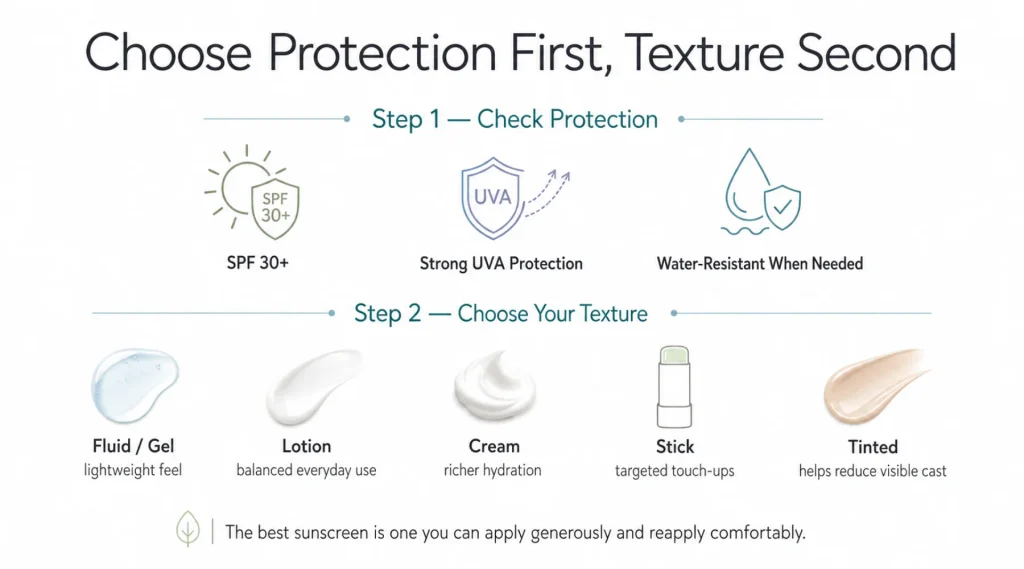
Focus on protection first, then pick a texture you like.
Check the protection information first.
For routine UK use, look for:
- SPF 30 or higher
- At least four-star UVA protection or a UVA symbol inside a circle
- Broad-spectrum labelling where applicable
- Water resistance for sport, swimming or heavy sweating
- Clear reapplication instructions
- An intact package and valid expiry date
The sunscreen category includes different textures and filter systems, but the same standards should be applied to every option.
Match the texture to your skin and routine.
- Choose a fluid or gel when: you have oily skin, dislike heaviness, or wear makeup.
- Choose a lotion when: you want balanced hydration for daily face and body use.
- Choose a cream when: your skin is dry, sensitive or exposed to cold weather.
- Choose a stick when: you need portability or targeted application around the eyes, ears and lips.
- Choose a spray when: you need to cover large or hairy areas, but spray generously and rub it in to create even coverage. Avoid inhalation and do not use aerosol products near flames.
- Choose a tinted sunscreen when: white cast, visible-light pigmentation, or the desire for light complexion coverage affects compliance.
Consider Reapplication Before Buying
Sunscreen may feel nice when first applied but can become uncomfortable when reapplied. Check if it layers well, blends under makeup, and stays comfortable in warm weather. For outdoor days, using a facial sunscreen and a larger, budget-friendly body sunscreen can be practical. The body sunscreen should still have good SPF and UVA protection but doesn’t need fancy packaging.
Don’t Judge Protection by Texture
A thick sunscreen isn’t always stronger, and an invisible one isn’t always weaker. Actual protection depends on testing the final product. Also, seeing white residue doesn’t mean a mineral sunscreen covers evenly.
When Sunscreen Advice Needs to Be More Individual
General SPF guidance suits most people, but some circumstances require more specific care.
Babies and Young Children
Keep babies under six months in the shade and dress them in protective clothing and hats. If shade and clothing aren’t enough, you can use a small amount of safe sunscreen on exposed skin, after checking with a professional. For children over six months, use broad-spectrum sunscreen with SPF 30 or higher on any exposed skin and reapply regularly during outdoor play. Keep kids out of strong sunlight whenever possible. Don’t assume “family” or “baby” products are safe; always check age labels, ingredients, and warnings.
Pregnancy
Pregnancy can make skin darkening, like melasma, more noticeable. Using broad-spectrum sunscreen, wearing hats, and seeking shade can help prevent this. If you prefer mineral sunscreens, look for zinc oxide or titanium dioxide. However, it’s more important to choose products that are safe and effective, not just those with appealing labels. Talk to a healthcare professional if you have rashes, severe melasma, or questions about medication.
Photosensitising Medicines
Some medicines, like certain antibiotics and anti-inflammatory drugs, can make skin more sensitive to sunlight. The level of risk varies by the medicine and the person. Always read the patient information and ask a pharmacist or doctor if you need extra sun protection. Sunscreen might not be enough; wearing protective clothing and avoiding strong sunlight is crucial.
Recent Cosmetic Procedures
Treatments like laser therapy and chemical peels can increase skin sensitivity and the risk of darkening. Follow your practitioner’s aftercare instructions, which may include using high SPF sunscreen, staying in the shade, gentle cleansing, and avoiding strong active ingredients.
Previous Skin Cancer or Sun Damage
People with a history of skin cancer, many unusual moles, weakened immune systems, or significant sun damage should get personalised guidance on sun protection.
Questions People Commonly Ask About SPF
What does SPF stand for?
SPF means sun protection factor. It measures how well sunscreen protects against sunburn, mainly from UVB rays. It doesn’t tell you how long you can be outside or how well it protects against UVA rays.
What is SPF 30?
SPF 30 means that under normal testing, about one-thirtieth of the UV rays that cause sunburn reach your skin. This means it blocks about 96.7% of UVB rays. In real life, protection might be less if the sunscreen is applied too thinly or unevenly.
Is SPF 50 better than SPF 30?
Yes, SPF 50 gives more protection than SPF 30. It lets about 2% of UV rays through, while SPF 30 lets about 3.3% through. The key is to apply it generously; a poorly applied SPF 50 won’t be better than a well-applied SPF 30.
Is SPF 100 twice as protective as SPF 50?
No. SPF numbers aren’t a simple percentage. SPF 50 blocks about 98% of UVB rays under test conditions, while higher SPFs block just a bit more. SPF 100 doesn’t last twice as long and still needs reapplication.
Can sunscreen prevent a tan?
Sunscreen can help limit tanning by reducing UV exposure, but it may not stop all tanning. No sunscreen blocks every ray, and missed areas can still get UV radiation. Any tan indicates skin damage.
Does sunscreen stop you from tanning if you use SPF 50?
SPF 50 can reduce tanning if applied correctly, but you might still tan with prolonged exposure. Strong UVA protection is important because UVA rays cause tanning. For issues like melasma or stubborn pigmentation, consider a tinted broad-spectrum sunscreen with iron oxides.
Will you tan with sunscreen on a cloudy day?
Yes, you can still tan on a cloudy day. Clouds don’t stop UV rays, so you might get enough exposure to tan or burn. Check the UV index instead of assuming cloudy weather is safe.
Can you tan with sunscreen without damaging your skin?
There’s no safe way to tan without harming your skin. Tanning happens as a reaction to UV exposure. You can use a self-tanner to change your skin colour without UV exposure, but it doesn’t replace sunscreen.
Should I wear SPF every day in the UK?
Wearing facial SPF daily is good if you spend time outdoors, drive often, sit near bright windows, use certain treatments, or have pigmentation issues. Inside, under thick clothing, your body usually doesn’t need sunscreen, but adjust based on the UV index.
Do I need SPF when the UV index is low?
When the UV index is below 3, the risk of sunburn is low for most people. However, those with certain medical conditions or very sensitive skin may still need protection. Using daily facial sunscreen helps if plans change.
Can I use moisturiser with SPF instead of sunscreen?
A tested moisturiser with SPF can protect your skin, but you need to apply it generously, like sunscreen. People often use too little moisturiser. Make sure it offers good UVA protection and reapply it if you’re outside for a long time.
Is SPF good for sensitive skin?
Yes, sun protection is important for sensitive skin, but choose formulae that work for you. Fragrance-free mineral sunscreens are a good start, but ingredients matter. Some sensitive skin types may respond better to lightweight organic or hybrid products.
Can sunscreen cause acne?
Sunscreen can sometimes clog pores or irritate skin, but it doesn’t cause acne overall. Use a lighter, non-comedogenic sunscreen, simplify your skincare routine, and remove sunscreen gently at night. If you have persistent or severe acne, seek professional advice instead of frequently changing your SPF.
Should sunscreen go before or after moisturiser?
Sunscreen typically goes on after moisturiser and before makeup. It’s okay to apply oils, creams, or foundation underneath, as long as you let each layer settle. Don’t mix sunscreen with other products or apply heavy skincare on top of it.
How often should I reapply SPF?
Reapply sunscreen every two hours when outdoors, and sooner if you swim, sweat heavily, or towel dry. You don’t need to reapply every two hours if you’re indoors and away from windows. Just reapply based on your sun exposure and any disruption to the sunscreen layer.
Understanding What SPF Can and Cannot Do for Your Skin
What does SPF mean? SPF indicates how well a sunscreen can protect against sunburn when applied as directed. It doesn’t guarantee total UVA protection, prevent all tanning, or allow endless time in the sun.
What makes a good sunscreen routine? A reliable sunscreen routine includes four key elements: proper SPF, strong UVA protection, generous application, and regular reapplication.
What SPF should you use? For most adults, a broad-spectrum SPF 30 is a good daily minimum. SPF 50 or higher offers extra protection for long outdoor outings, those with sensitive skin, or in high UV situations. However, it won’t be effective if applied lightly.
Why is SPF important? The benefits of SPF build up over time. Stopping one sunburn is helpful, but the real value comes from reducing repeated exposure that can lead to uneven skin tone, roughness, premature ageing, and skin cancer over the years.
How to choose and use sunscreen? Pick a sunscreen that feels comfortable so you use it correctly. Apply it to all exposed skin. Wear clothing and seek shade during strong sunlight. Remember, just because you don’t burn doesn’t mean you haven’t damaged your skin.
How should sun protection feel? Good sun protection should feel like part of your routine, not a big deal. It’s a consistent step that helps care for your skin.