





Blog
Signs of a Damaged Skin Barrier: What to Know and Avoid

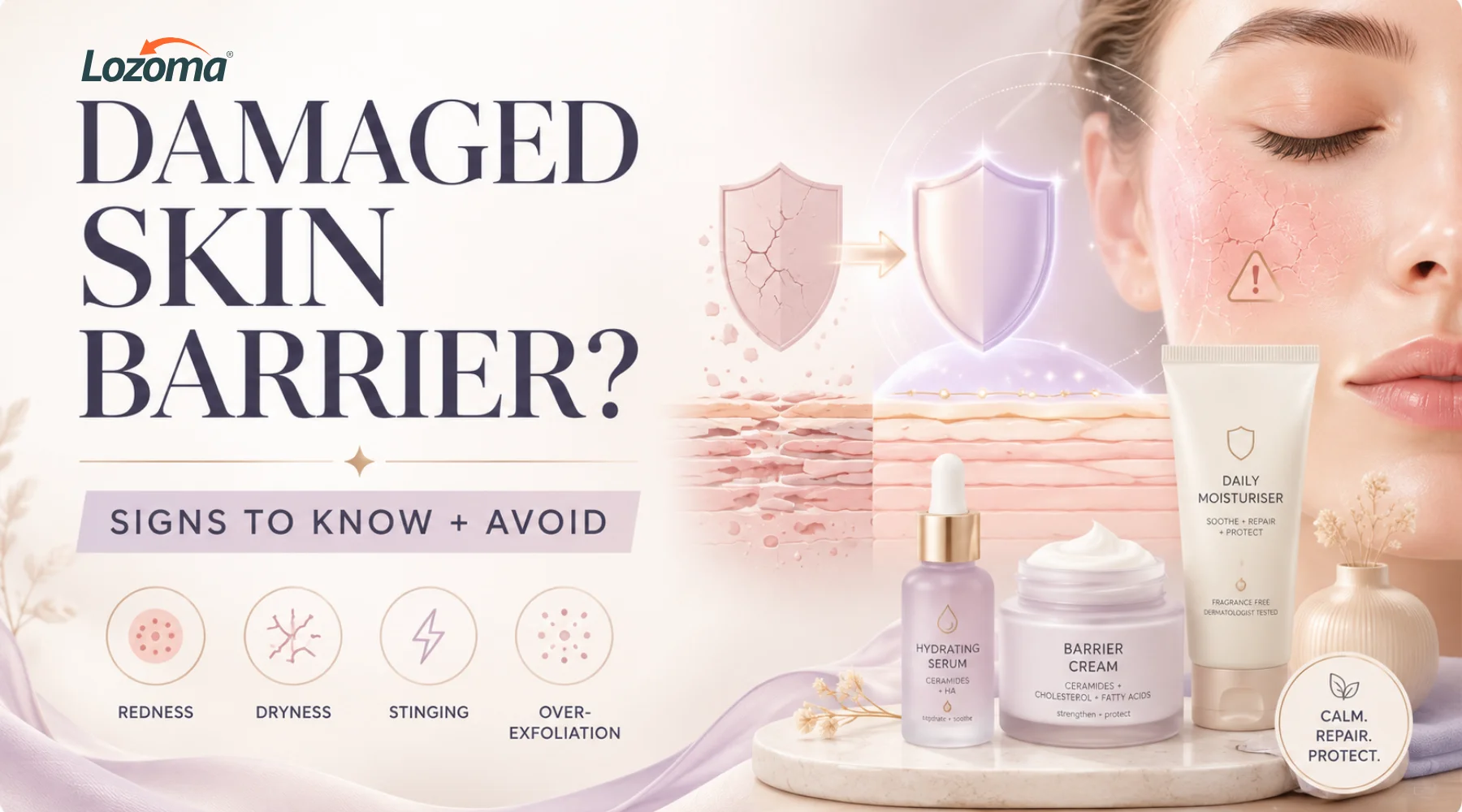
When skin feels tight, rough, shiny, or reactive, people often think it needs more exfoliation, stronger acne treatment, or another hydrating serum. But often, the opposite is true. The skin might be trying to protect itself from losing water, irritants, and products it used to tolerate.
Signs of a damaged skin barrier include tightness, stinging with skincare, flaky texture, itching, redness, sensitivity, and breakouts with dryness. These issues can arise from over-exfoliation, harsh cleansers, frequent use of active ingredients, bad weather, or skin conditions.
There’s no single look for barrier damage. Some people get dry and scaly skin, while others have an oily surface with tightness underneath. Darker skin tones may show ashiness, grey-brown discolouration, or unevenness instead of redness.
“Damaged skin barrier” is a general skincare term, not a specific medical diagnosis. Similar symptoms can occur with eczema, rosacea, contact dermatitis, acne, allergies, and infections. The pattern, timing, and severity of symptoms are just as important as the symptoms themselves.
The Most Telling Signs of a Damaged Skin Barrier
A weakened barrier often leads to several symptoms instead of just one. Tightness might just be caused by a drying cleanser. A single blemish could be regular acne. However, if you experience tightness, stinging, roughness, and irritation all at once, it likely means your barrier is disrupted.

| What you notice | What it may indicate | When to be more cautious |
| Tightness after cleansing | Excessive removal of surface lipids or dehydration | Tightness lasts for hours or occurs even without cleansing |
| Moisturiser suddenly stings | Increased penetration of ingredients into irritated skin | Burning is intense, prolonged or accompanied by swelling |
| Rough, flaky texture | Poor water retention and disrupted shedding of surface cells | Skin cracks, bleeds, weeps or becomes painful |
| Redness, warmth or flushing | Inflammation and increased reactivity | Redness spreads rapidly or is accompanied by swelling |
| Itching | Dryness, irritation or dermatitis | Itching disrupts sleep or causes broken skin |
| Sudden product sensitivity | Irritant exposure, allergy or weakened tolerance | The reaction worsens each time the product is used |
| Oily but tight skin | Dehydration with continued sebum production | Breakouts become widespread, painful or persistent |
| Small bumps or inflamed spots | Irritation, occlusion or an acne flare | Spots are blister-like, crusted or filled with fluid |
| Makeup looks patchy | Surface dehydration and uneven texture | Scaling remains despite a simplified routine |
| Skin takes longer to calm | Ongoing exposure to a trigger or underlying condition | Symptoms do not improve after removing suspected irritants |
The stratum corneum is the outer layer of the skin. It controls the loss of water from the skin and protects against chemicals, allergens, and irritants. If this layer is damaged, water loss increases, making the skin more sensitive and reactive.
Tightness After Cleansing
Healthy skin shouldn’t feel tight after washing. A clean feeling is normal, but tightness that makes you want to stretch your face or apply lots of cream is not. This tightness often happens when cleansing strips away too much of the skin’s natural oils. Hot water, long washes, strong soaps, cleansing brushes, and frequent washing can make this worse.
Notice how long the tight feeling lasts. If it goes away quickly after moisturising, your cleanser might just be a little too drying. If it comes back during the day, happens without washing, or is paired with burning or flaking, there may be a bigger problem. Dermatologists suggest short washing times, warm water instead of hot, gentle cleansers, and moisturising right after for very dry or sensitive skin.
Products That Start to Sting
If a product you used before suddenly causes stinging or burning, your skin’s barrier may be damaged. This damage can let ingredients irritate your skin more easily, even if the product hasn’t changed.
Gentle ingredients like hyaluronic acid, niacinamide, preservatives, and sunscreens can sting if your skin is inflamed. This doesn’t mean you’re allergic to every product that bothers you.
Pay attention to how it feels. A small tingle from a treatment is different from burning that lasts or causes redness. If a product causes a lot of discomfort, wash it off instead of trying to endure the reaction.
Dryness That Persists Despite Moisturiser
Barrier-related dryness feels different from naturally dry skin. It can appear suddenly, change after using products, or stay uncomfortable even after several layers of moisturiser.
The skin may soak up a light lotion quickly but feel dry again within an hour. This doesn’t always mean you need a more water-based serum. Your routine might include humectants that attract water but not enough emollients and occlusives to stop moisture loss.
Emollients soften dry spots between skin cells, while occlusives create a barrier that slows water loss. Humectants like glycerin and hyaluronic acid help hydrate the skin, but they work best with a full moisturising formula or under a suitable cream. Emollients are often used to soothe dry, itchy, and flaky skin since they trap moisture on the surface.
Understanding how hyaluronic acid functions at the skin’s surface can clarify why hydration and barrier repair are linked but not the same.
Roughness, Flaking, and an Uneven Surface
When the barrier works well, skin cells shed in an organised way. With irritation and dehydration, this process becomes messy. The skin can feel grainy or papery, even if it doesn’t look very dry.
Flakes may collect around the mouth, nose, and eyebrows, particularly where retinoids and exfoliating acids are used. Makeup may cling to these patches, making them more visible.
This situation is often mistaken for needing exfoliation. Scrubbing loose flakes can make the skin look smoother for a short time, but it can also strip away protective cells and worsen the issue. Avoid exfoliation when the skin is sore, sunburned, cracked, or peeling.
Redness, Heat, or Darker Irritated Areas
Inflamed skin often looks red on light skin, but that’s not the only sign. On brown and black skin, irritation can appear purple, grey, dark brown, or just darker than the surrounding skin. The area may feel hot, tender, or swollen, even if the colour change isn’t obvious.
Some people notice flushing all over, while others have clear patches around their mouth, eyes, or nose. Where the irritation occurs can provide clues: reactions from products usually show where they were applied, while irritation from shampoo or fragrances often appears near the hairline, eyelids, ears, or neck. Don’t just rely on colour; warmth, tenderness, swelling, and changes in texture can also indicate inflammation.
Itching That Was Not Previously Part of Your Routine
Itching often comes with dry skin, eczema, and contact dermatitis. It can range from mild to intense, sometimes disrupting sleep.
Scratching may offer short-term relief but can cause more damage. If the skin breaks, products may sting more, inflammation can increase, and the risk of infection rises. A cool compress and a simple moisturiser can help mild irritation, but persistent or severe itching should be checked by a doctor. Itching without a clear rash can also have unrelated causes.
Sudden Sensitivity to Water, Sweat, or Weather
When the skin barrier is damaged, common exposures can become uncomfortable. Tap water might sting, sweat can burn around the nose or upper lip, wind can feel harsh, and moving into a warm room may cause flushing.
Cold air and indoor heating reduce humidity, which can make dry skin worse. Heat, steam, and long hot showers can also increase discomfort and harm the skin’s surface. This issue often occurs when strong active ingredients are added during seasonal changes. A product that feels fine in humid summer may become too harsh in winter, even if you use it the same way.
An Oily Surface With Tightness Beneath
Oily skin can still have a damaged barrier. Oil and water are different parts of the skin’s surface. A person may produce a lot of oil while their skin lacks water and becomes irritated. This can make the skin look shiny by midday but feel tight after washing. Foundation may separate on oily areas while sticking to dry patches.
Using stronger cleansers, alcohol-based toners, or daily exfoliation can often make the problem worse. A lighter moisturiser may work for acne-prone skin, but skipping moisturiser entirely can leave irritation untreated.
Breakouts That Appear Alongside Burning and Flaking
Barrier disruption doesn’t cause all types of acne, but it can make managing acne harder. When skin is irritated, it may show inflamed bumps, small spots, or clogged areas after using a new product.
Several processes can be involved:
- The triggering product may be too occlusive for your skin.
- Repeated irritation may be increasing inflammation around existing acne.
- Heavy repair creams may be aggravating congestion.
- A reaction may resemble acne without being acne.
- Stopping effective acne treatments may allow ordinary acne to return.
- Folliculitis, perioral dermatitis, or rosacea may be mistaken for breakouts.
The timing provides helpful information. Spots that show up right away with itching or burning are less likely to be due to “purging.” Purging is linked to specific ingredients that speed up skin cell turnover, not every new moisturiser, cleanser, or face mask.
Makeup Behaving Oddly on the Skin
Makeup can show changes in your skin before it looks irritated. Foundation might cling to tiny flakes, separate near the nose, or appear heavy on dry spots. Concealer may crease more if the skin isn’t smooth or flexible.
Pilling can happen due to mixing products that don’t work well together or using too much makeup. However, if you notice tightness, stinging, and roughness, the skin may be the real problem, not the makeup.
Skin Reacting More with Each Use
Irritations can worsen if you continue using a product without giving your skin a chance to heal. A product might feel okay the first night but sting by the third night and cause peeling by the end of the week.
Allergic reactions can also get worse with repeated use. Ingredients like fragrances, preservatives, botanical extracts, hair dyes, and cleansers can trigger these reactions. A dermatologist may perform formal patch testing for allergic contact dermatitis, which is different from testing products at home.
If your skin continues to react negatively, take a break and reevaluate the product. It doesn’t mean the product is “working harder.”
Cracking, Weeping, Crusting or Blistering
These problems are serious, not just cosmetic.
Cracks and open areas show that the skin’s protective layer is damaged. Signs of infection or a severe flare-up include weeping, pus, yellow or crusty areas, increasing pain, swelling, and worsening inflammation.
Blisters can form with strong irritants or allergies. If you see clusters of painful blisters, fever, or feel unwell, seek medical help right away. The NHS warns that fluid-filled blisters, crusting, and leaking fluid are signs that eczema or dermatitis may be infected and need urgent attention.
What the Skin Barrier Actually Does
The skin barrier is often explained using the “bricks and mortar” model. The bricks are flat skin cells, and the lipid matrix acts as the mortar. This lipid mix has ceramides, cholesterol, and fatty acids that help keep water in and block outside substances.
However, the barrier isn’t a solid wall. It is selective, letting the skin interact with its surroundings while preventing too much water loss, harmful chemicals, physical damage, and germs from entering.
Its main functions include:
- Retaining water within the stratum corneum
- Limiting the penetration of irritants and allergens
- Supporting an acidic surface environment
- Protecting against friction and minor trauma
- Contributing to antimicrobial defence
- Allowing controlled shedding of surface cells
- Helping the skin remain flexible rather than brittle
Barrier function can be studied by measuring transepidermal water loss. More water loss usually means higher permeability, but consumers can’t judge this just by looking.
Why Barrier Damage Creates Several Symptoms at Once
Barrier disruption causes a chain reaction.
First, water escapes more easily. The outer layer of skin becomes dry and stiff, leading to tightness, flaking, and roughness.
Second, irritants can get in more easily. Products that used to feel fine may start to sting.
Third, the immune system reacts to the disturbance. This can cause itching, heat, swelling, and colour changes.
Finally, washing, scratching, or using strong ingredients makes the problem worse. This cycle shows why skin can worsen quickly when multiple harsh actions are combined.
A good recovery routine breaks this cycle instead of trying to fix each symptom with different treatments.
Is It Barrier Damage, Dry Skin, or Something Else?
Many skin issues are similar. The term “damaged barrier” is helpful but shouldn’t be used to explain every rash, spot, or feeling.
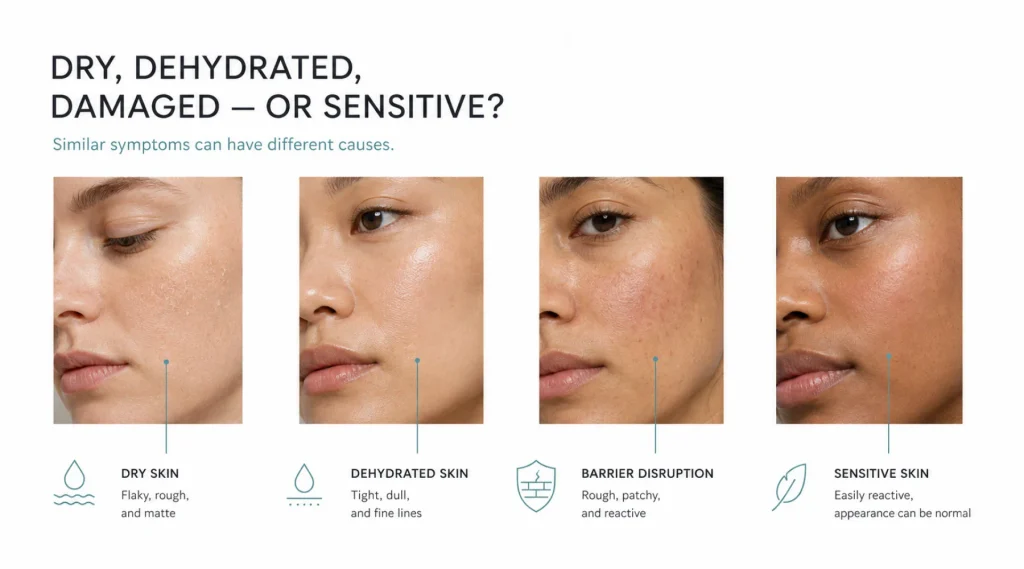
| Concern | Typical pattern | Useful distinction |
| Naturally dry skin | Long-term lack of oil, fine pores, recurrent flaking | Usually a stable skin type rather than a sudden reaction |
| Dehydrated skin | Tightness, dullness and fine surface lines | Refers to low water content and can affect oily skin |
| Barrier disruption | Sudden stinging, roughness, sensitivity and water loss | Often follows product overuse or irritation |
| Sensitive skin | Recurrent tendency to react | May exist even when the barrier looks normal |
| Irritant contact dermatitis | Burning, dryness and inflammation after direct irritation | Can affect anyone if exposure is strong or frequent enough |
| Allergic contact dermatitis | Itchy rash caused by an immune response to an allergen | May require dermatologist-led patch testing |
| Atopic eczema | Recurrent itchy, dry, inflamed patches | Often linked with a personal or family history of atopy |
| Rosacea | Persistent central facial redness, flushing or inflammatory bumps | Heat, sun, alcohol and spicy food may trigger flares |
| Acne | Blackheads, whiteheads, papules, pustules or deeper lesions | Can coexist with barrier damage but needs its own treatment |
| Perioral dermatitis | Small bumps around the mouth, nose or eyes | Often requires medical assessment rather than heavier creams |
| Skin infection | Pain, warmth, spreading swelling, pus or crusting | Needs prompt professional care |
Dry Skin Is a Skin Type; Dehydration Is a Condition
Dry skin produces less oil and often needs thicker moisturisers year-round. Dehydration means there isn’t enough water in the outer skin layer and can happen to any skin type.
A person with naturally dry skin can have a healthy barrier if their skincare routine is good. An oily-skinned person might damage their barrier by over-cleansing.
While dehydration can lead to barrier damage, dry skin and dehydration are not the same.
Sensitive Skin Is Not Always Damaged Skin
Sensitive skin reacts with stinging, burning, itching, or redness to things that don’t bother others. Some people are naturally sensitive, while others become sensitive if their skin barrier is damaged. Conditions like rosacea, eczema, or certain medications can increase sensitivity.
It’s important to see if sensitivity is new. A sudden reaction after using more retinol or cleansers often means a recent issue. Lifelong sensitivity may need a long-term strategy and, in severe cases, medical advice.
Irritant and Allergic Contact Dermatitis Are Different
Irritant contact dermatitis happens when a substance directly harms the skin. Common causes include strong acids, detergents, and repeated handwashing.
Allergic contact dermatitis is an immune reaction to a specific substance after sensitisation. Even a tiny amount can cause a rash once a person is allergic.
Irritant reactions usually burn or sting, while allergic reactions tend to be very itchy. However, both can cause redness, swelling, scaling, and blisters. The NHS explains that irritants damage the skin directly, while allergens trigger an immune response.
Eczema and Rosacea Need More Than a “Barrier Reset”
Barrier care is important for eczema and rosacea, but it can’t replace proper diagnosis and specific treatments.
Atopic eczema happens when the skin barrier isn’t working well, and the immune system is out of balance. Rosacea can cause flushing, a lasting redness on the face, a burning sensation, visible blood vessels, or acne-like bumps. Using the wrong products can make both conditions worse.
A simple skincare routine can ease symptoms, but severe or recurring flare-ups may need prescription treatments. moisturising can help with comfort and improve treatment results for rosacea, but it won’t cure the condition.
What Commonly Damages the Skin Barrier?
Barrier disruption builds up over time. One use of a gentle exfoliant usually causes no issues. However, using an exfoliating cleanser, acid toner, retinoid, and spot treatment all in one evening can overwhelm the skin’s ability to recover.
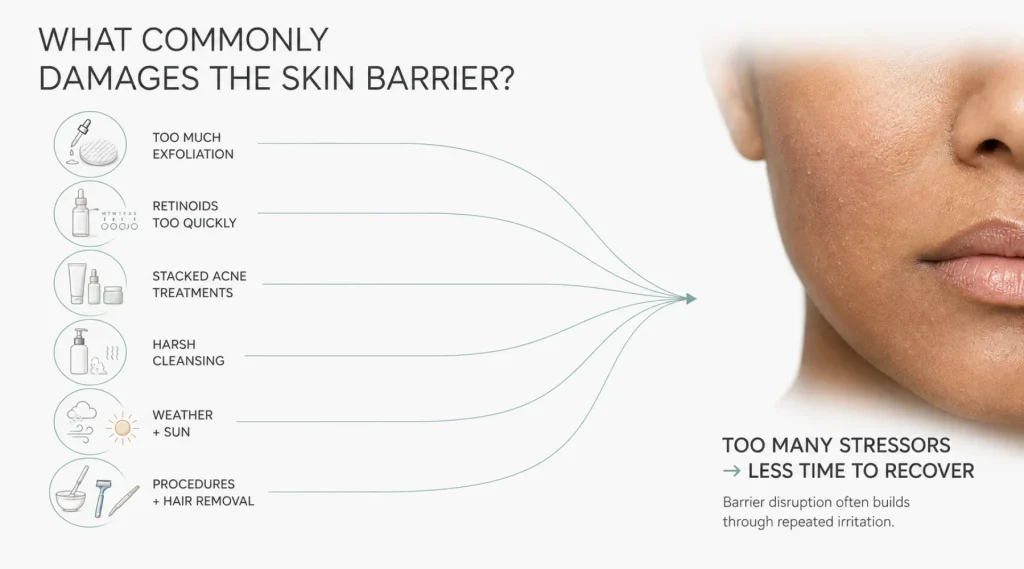
Exfoliating Too Often
Alpha-hydroxy acids, beta-hydroxy acids, enzyme exfoliants, scrubs, cleansing brushes, and textured pads help remove surface buildup.
When used carefully, exfoliation can smooth rough skin and reduce congestion. However, using it too often can lead to ongoing inflammation and loss of moisture.
Common patterns include:
- Using an exfoliating cleanser every morning and night
- Applying a leave-on acid every day from the first week
- Combining glycolic acid, salicylic acid and retinol
- Scrubbing visible flakes off irritated skin
- Increasing the percentage whenever results slow
- Treating tingling as proof that an acid is effective
- Applying acids immediately after shaving or dermaplaning
Skin doesn’t heal faster by putting up with more irritation. Once you start burning and peeling, exfoliating more often usually slows down improvement.
Introducing Retinoids Too Quickly
Retinoids are great for acne, uneven skin, and signs of ageing, but they can cause irritation at first. Problems often happen when people use too much, start using them every night right away, mix them with other exfoliants, or put them on irritated skin. A pea-sized amount usually works better than a thick layer. Adjust how often you use it based on your skin’s reaction, not your goals. You can use moisturiser before or after applying retinoids to make your skin more comfortable. Ongoing burning, swelling, or severe peeling is not normal and should not be ignored.
Stacking Acne Treatments
Salicylic acid, benzoyl peroxide, retinoids, and azelaic acid each work differently on acne. You don’t need to use them all at once. Benzoyl peroxide can dry out the skin, while retinoids can cause irritation. Salicylic acid helps exfoliate oily pores, and azelaic acid is often gentler but may still cause tingling. It’s usually easier to evaluate one main treatment rather than several at the same time. After your skin settles, you can gradually mix in other treatments.
Cleansing Too Aggressively
Cleansing should get rid of sunscreen, makeup, sweat, extra oil, and dirt from the environment without irritating the skin.
Potential problems include:
- Very hot water
- Washing more than necessary
- Strong soap-based cleansers
- Prolonged massage with a cleansing balm
- Repeated double cleansing when little needs removing
- Face brushes, scrubbers or rough cloths
- Rubbing with a towel
- Using micellar water without rinsing when the formula irritates your skin
A cleanser doesn’t need to make your face squeaky clean to be effective. That squeaky feeling usually means it has stripped away oils that keep your skin comfortable.
Fragrance, Essential Oils, and Botanical Extracts
“Natural” doesn’t mean it’s gentle. Fragrance can be synthetic, natural, or made from essential oils. Botanical ingredients have complex chemicals that might irritate sensitive skin. This doesn’t mean everyone should avoid all scented products. Fragrance-free options can help those with reactive skin. “Unscented” may still have a masking scent, so it’s not always the same as fragrance-free. The AAD advises fragrance-free products for people with eczema or reactions.
Harsh Weather and Indoor Environments
Cold winds, low humidity, and indoor heat can dry out the skin. Heat, humidity, and sweating can make irritation worse. Sun exposure is another stressor. Sunburn directly harms the skin and shouldn’t be treated with acids, retinoids, or scrubs. Daily sun protection can reduce inflammation and dark spots while the skin heals. A broad-spectrum, water-resistant SPF 30 or higher is recommended for daily use.
Cosmetic Procedures and Hair Removal
Chemical peels, microneedling, lasers, waxing, threading, dermaplaning, and shaving can make your skin more sensitive for a short time. The recovery time depends on the procedure’s intensity. Always follow professional aftercare instructions instead of relying on a general skincare routine.
A strong serum won’t necessarily speed up healing. Using exfoliating acids, retinoids, fragrant products, or other unapproved ingredients too early can cause more irritation and increase the risk of skin discolouration.
Skin Conditions and Medicines
Conditions like eczema, rosacea, psoriasis, and contact dermatitis can weaken your skin’s barrier. Additionally, some prescription and over-the-counter medicines may affect your skin’s tolerance. Isotretinoin, topical retinoids, and certain acne medications can make your skin drier. If you’re using isotretinoin, avoid additional retinol, harsh exfoliants, and irritating products unless your dermatologist advises otherwise.
Never stop taking prescribed medications without consulting your doctor. Adjusting the treatment schedule, adding supportive skincare, or changing the treatment plan can be better options than stopping on your own.
A Practical At-Home Check for Suspected Barrier Damage
No home test can diagnose the condition of the skin barrier with certainty. You can, however, look for patterns.
Ask yourself:
- Did the symptoms begin after a routine change?
Think about new products, higher percentages, more regular use, facial treatments, or changes with the seasons.
- Does plain moisturiser sting?
The presence of various unrelated formulae indicates a strong reaction instead of just one main ingredient causing the issue.
- Are dryness and breakouts occurring together?
This might show that your acne routine is too harsh or that you have a reaction that looks like acne.
- Is the discomfort widespread or sharply localised?
Over-cleansing can cause tightness. A distinct patch may indicate contact exposure.
- Does the skin improve when actives are paused?
Improvement with a bland routine supports an irritation-based explanation, although it does not rule out dermatitis.
- Are there warning signs?
Blistering, crusting, pus, severe swelling, spreading redness, eye involvement, or fever require professional advice.
Simplify your routine for a few days. Stop any activities that aren’t necessary. Use a gentle cleanser, a comfortable moisturiser, and a sunscreen that works for you. Don’t add a new “repair” product every night, as this makes it harder to find the cause of any issues.
The Best Routine for Signs of a Damaged Skin Barrier
A recovery routine should feel calm and steady. The goal isn’t to make dramatic changes overnight. Instead, it aims to minimise irritation and provide a stable environment for your skin to heal.
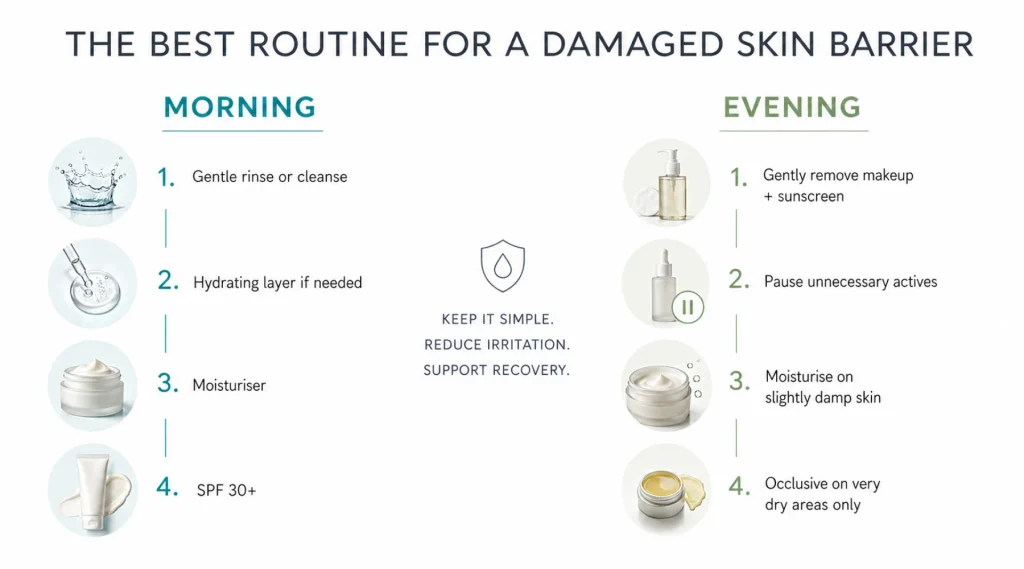
You can adjust a step-by-step barrier repair routine to fit your skin type, but the basic structure is simple.
Morning Routine
1. Rinse or Cleanse Gently
If you have very dry or non-oily skin, a lukewarm water rinse in the morning may be enough. Oily skin or sweat from the night may need a gentle cleanser. Use your fingertips to apply it, and pat dry instead of rubbing.
2. Apply a Hydrating Layer When Necessary
A simple, fragrance-free serum can increase comfort but isn’t always needed. If a serum stings, don’t feel you must keep using it just because it’s labelled hydrating. When using hyaluronic acid, apply a small amount and follow with moisturiser. It’s more effective to use it as part of your complete routine rather than on its own.
3. Use the Right Moisturiser for Your Skin
If you have oily or acne-prone skin, a fragrance-free lotion or gel-cream may be best. For dry and flaky skin, a richer cream works better. Very dry spots may need a little ointment. Choose a moisturiser that feels comfortable rather than one with fancy ingredients that may irritate your skin.
4. Finish with Sunscreen
Use a broad-spectrum SPF 30 or higher. Sensitive skin may do better with certain mineral or fragrance-free sunscreens. The best sunscreen is one that protects you without causing irritation. If all sunscreens cause a sting, get advice from a professional instead of giving up on sun protection.
Evening Routine
1. Remove makeup and sunscreen without prolonged rubbing
Use one gentle cleanser when you can. If you have heavy or waterproof makeup, you might need a separate remover. Cleansing repeatedly until the cotton pad is completely white can irritate your skin.
2. Pause unnecessary active ingredients
Temporarily stop:
- Retinol and retinal
- Glycolic, lactic and mandelic acid
- Salicylic acid
- Strong vitamin C formulae
- Benzoyl peroxide unless medically necessary
- Scrubs and cleansing brushes
- Peel pads
- High-strength brightening blends
- Strong astringent toners
Prescription medicines are different. Talk to your doctor about how to handle irritation instead of stopping the medicine without advice.
3. Apply moisturiser while the skin retains slight surface moisture
Putting on moisturiser right after washing your face helps keep moisture in. Your skin should be damp, not wet.
It’s important to discuss whether to use hyaluronic acid on wet or dry skin. Applying a humectant is different from applying a full moisturiser.
4. Add a thin occlusive layer to severely dry areas
Petrolatum and dimethicone help keep moisture in by creating a barrier on the skin. They are great for dry spots like the corners of the nose and chapped lips.
Using a thick ointment on acne-prone skin can feel heavy or cause breakouts for some. Apply a small amount only to the areas that need it.
Which Ingredients Support Barrier Recovery?
A product doesn’t need to say “barrier repair” on the label to be effective. The quality, texture, and how your skin reacts are more important than advertising terms.
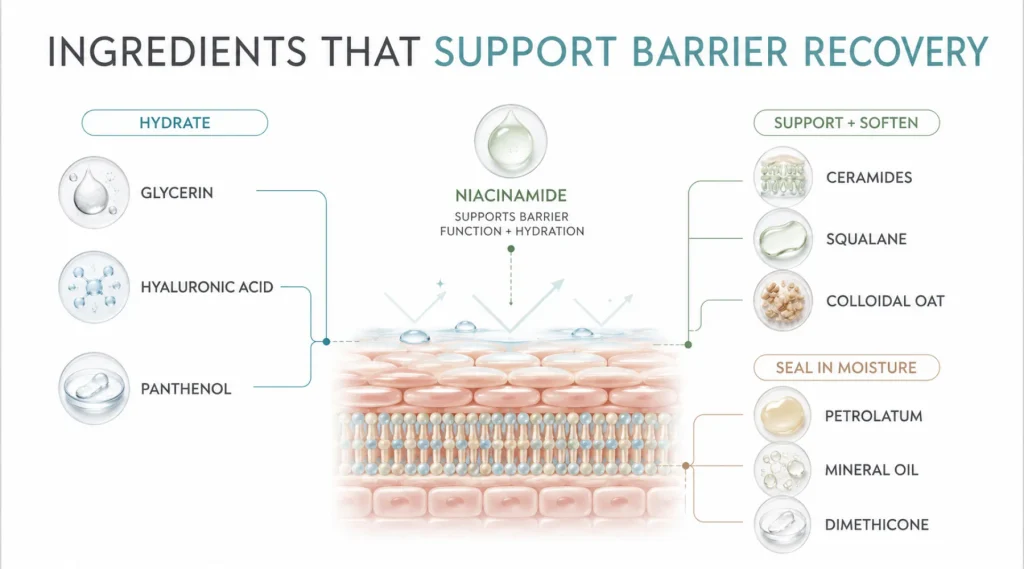
Ceramides
Ceramides are fats found in the outer layer of the skin. Moisturisers with ceramides can help reduce dryness and improve skin barriers, especially for people with atopic dermatitis. However, not all ceramide products work the same way. Check the entire product formula; ceramides need to work with other fats and moisture-retaining ingredients. A product that lists one ceramide at the end is not necessarily better.
Glycerin
Glycerin is a well-known ingredient that helps keep skin hydrated by attracting water. It is found in cleansers, serums, and moisturisers, and most people can use it safely. Despite its usefulness, glycerin doesn’t get as much attention as trendier ingredients.
Hyaluronic Acid and Sodium Hyaluronate
Hyaluronic acid is a humectant that helps keep the skin’s surface hydrated and makes it look plump. However, it doesn’t replace the skin’s natural fats and shouldn’t be relied on to fix all irritation. It works best underneath a moisturiser, especially in dry conditions or on very dry skin. When the skin is calmer, using hydrating serums can be beneficial. During flare-ups, it’s simpler to use fewer products.
Petrolatum, Mineral Oil, and Dimethicone
These ingredients create a water-resistant layer on the skin, reducing evaporation. Petrolatum is very effective for very dry areas. Dimethicone is lighter and often found in barrier creams and facial moisturisers. These ingredients help keep the moisture already in the skin but don’t add water on their own.
Panthenol
Panthenol, or provitamin B5, hydrates and soothes the skin. You’ll find it in creams, serums, and post-treatment products. Tolerance to panthenol depends on the full product formula. If a panthenol product has fragrances or many active extracts, it might still irritate sensitive skin.
Niacinamide
Niacinamide helps with skin barrier function, hydration, uneven skin tone, and oil control. Moderate amounts are usually easier on the skin than high concentrations. It can sting when the skin is very inflamed, and some people may experience flushing or irritation from stronger formulations. It’s best to introduce multi-active products, like the No. 5+ Vitamin Concentrated Serum, only after the basic routine works well to pinpoint any reactions.
Oat, Squalane, and Simple Emollients
Colloidal oatmeal, squalane, and gentle emollient oils can make some skin types feel better. However, botanical ingredients don’t always soothe everyone. Oat allergies are rare but possible, and plant oils differ widely. It’s wise to patch test if your skin has had reactions before.
Where Hydrating Masks and Treatment Products Fit
A face mask can add temporary hydration, but it should be an optional comfort step, not the main part of your skincare routine.
Once your skin feels comfortable after cleansing and moisturising, you can use a hydrating mask like the Bio-Collagen Real Deep Mask occasionally, as long as it suits your skin. Stop using it if you feel warmth, itching, or burning.
The AAD mentions that some facial masks can help with hydration and skin comfort. However, they recommend checking the ingredients and avoiding combinations that might irritate sensitive skin.
Do not leave a new mask on overnight unless the instructions say it’s okay. Leaving it on too long can increase the effects of both good and irritating ingredients.
Ingredients and Products to Avoid During an Active Flare
The most useful product is sometimes the one you temporarily remove.

Exfoliating Acids
Stop using glycolic, lactic, mandelic, and salicylic acids if your skin is burning, cracking, or peeling. Only start using them again when your skin feels comfortable for a while. Begin with one product and use it less often instead of going back to your old routine right away.
Retinoids
Pause retinoids if your skin is irritated. If you use prescription retinoids, ask your doctor for advice. When you restart, use a pea-sized amount for your whole face and don’t use it on the same nights as exfoliants. Applying moisturiser before or after can help your skin adjust.
Strong Vitamin C formulae
Low-pH vitamin C serums can sting sensitive skin, but that doesn’t mean they are bad. Wait until your skin can handle cleanser, moisturiser, and sunscreen without pain. Then, slowly reintroduce vitamin C.
Benzoyl Peroxide
Benzoyl peroxide helps with acne but can make your skin dry and irritated. Using smaller amounts or applying it on alternate days may work better than heavy applications. Tailor acne treatments to your skin’s needs, as ongoing acne requires a careful plan.
Fragrance and Essential Oils
Avoid scented skincare and undiluted essential oils if your skin is reactive. A “fragrance-free” label is more reliable than terms like clean, natural, or hypoallergenic, which don’t guarantee a product is safe.
Physical Scrubs and Facial Tools
Don’t use rough scrubs, cleansing brushes, or harsh tools on irritated skin. Loose flakes are a sign of irritation, not something that needs to be scrubbed away.
Signs of a Damaged Skin Barrier for Sensitive Skin
Sensitive skin needs a stricter approach: use fewer products, make changes slowly, and pay more attention to ingredient details.

Choose Fragrance-Free Instead of Unscented
Unscented products might still have ingredients that cover up their smell. Fragrance-free products do not include added scents, but no label guarantees everyone will tolerate them.
Check Rinse-Off Products Carefully
Be as careful with rinse-off products like cleansers and shampoos as you are with leave-on ones. These can affect sensitive areas like your eyelids, hairline, neck, and face.
Patch Test New Products
The AAD recommends testing a new product on a small area, like your inner arm or elbow, for seven to ten days before using it more widely. Rinse-off products should only stay on for their usual time. This test can show clear irritation but won’t catch every possible reaction. It’s not the same as medical patch testing for allergies.
Introduce One Product at a Time
Use a new cleanser or moisturiser consistently before trying another. Waiting a few days between new products makes it easier to spot delayed reactions. Taking photos in the same lighting can help you notice subtle changes.
Be Careful With “Soothing” Botanicals
Ingredients like lavender, citrus oils, peppermint, eucalyptus, witch hazel, and extracts might be labelled as calming. They aren’t always good for sensitive skin. A shorter ingredient list isn’t always safer, but it can help you troubleshoot issues more easily.
Signs of Damaged Skin Barrier Skincare Tips for Acne-Prone Skin
Acne is tricky to manage. Stopping all treatments can make acne worse, but using harsh methods can cause irritation.
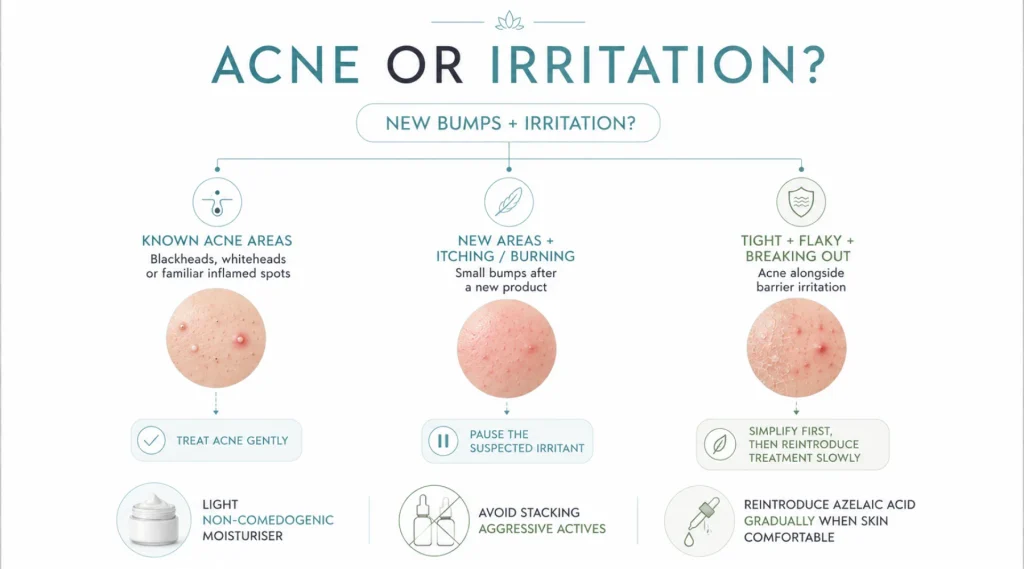
Separate Acne From Irritation
Blackheads and whiteheads are signs of comedonal acne. Painful red spots indicate inflammatory acne. Small itchy bumps after using a new product may mean irritation, folliculitis, or an allergy.
Check the location and timing of breakouts. Regular acne usually appears in known problem areas. A reaction to a product may spread to places that don’t usually break out.
Use a Non-Comedogenic Moisturiser
Pick a light lotion or gel-cream if rich creams feel heavy. Apply just enough to ease tightness without piling on thick layers.
“Non-comedogenic” helps, but it’s not a sure thing. Some products can still cause breakouts for some users.
Do Not Replace One Aggressive Treatment With Another
Switching from irritated skin due to retinol to daily acids may not fix the issue.
Let your skin settle first. Then select a treatment suited for your acne type. Salicylic acid can clear clogged pores, benzoyl peroxide helps with inflammation, and retinoids target multiple acne causes.
Reintroduce Azelaic Acid Carefully
Azelaic acid can treat acne and redness but may cause tingling.
Start with a product like 12% Azelaic Acid Acne Cream only after your basic routine feels comfortable. Use a small amount a few nights a week instead of applying it twice a day right away.
If your skin feels worse, stop using it. Being gentle doesn’t mean irritation isn’t possible.
How Long Does a Damaged Skin Barrier Take to Recover?
There is no universal repair deadline.
Mild over-cleansing usually improves within a few days after stopping the cause. More severe irritation can take weeks to heal. Contact dermatitis can last until you identify and avoid the allergen or irritant. Eczema and rosacea often return because they stem from ongoing inflammation.
A realistic pattern may look like this:
The First Three Days
Stop using irritating products to reduce stinging and heat. The skin may still look rough because flakes take time to disappear. Avoid testing if your skin is “ready” by applying acids.
The First One to Two Weeks
Tightness should go down, and moisturisers will feel better. The surface may look smoother. Keep in mind that improvement can vary. Wind, poor sunscreen use, or irritants might cause temporary setbacks.
Weeks Three to Six
Roughness and sensitivity may continue to improve. People often get impatient and try to reintroduce all active products too soon. A calm complexion doesn’t mean your skin is fully healthy. Stick to a basic routine and slowly add treatments back.
Beyond Six Weeks
If symptoms continue, there may still be triggers, or your routine might not be right. Seek professional help if your skin isn’t improving, especially with itching, rashes, pain, or swelling.
How to Restart Active Ingredients Without Repeating the Damage
The restart should be slower than the original routine.
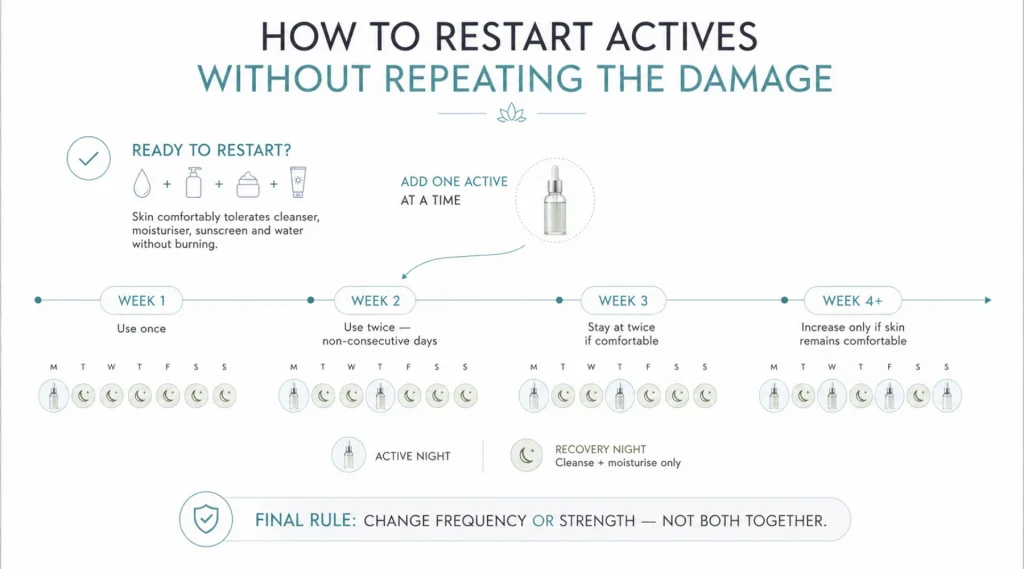
Wait for Comfort, Not Just a Better Appearance
Before restarting, the skin should tolerate:
- Lukewarm water
- Gentle cleansing
- Moisturiser
- Sunscreen
- Light facial movement
- Mild temperature changes
A face that looks less red but still burns when moisturiser is applied is not ready.
Add Only One Active
Choose the treatment for your most important issue.
For acne, use a retinoid, benzoyl peroxide, salicylic acid, or azelaic acid. For pigmentation, choose vitamin C, niacinamide, or another specific ingredient.
Don’t start a new acid, retinoid, or brightening serum all in one week.
Start Below Your Previous Frequency
A practical schedule may be:
- Week one: once
- Week two: twice, on non-consecutive days
- Week three: remain at twice if the skin is comfortable
- Week four onward: increase only when there is a clear reason
Not every product needs to be used daily. Maintenance frequency can still be effective.
Do Not Increase Strength and Frequency Together
Changing from 5% to 10% and switching from using it twice a week to every night creates two changes. Change one thing at a time. This helps you find the cause of any irritation more easily.
Keep Recovery Nights
A recovery night includes cleansing and moisturising without scrubs or treatment serums.
Even those with experience can gain from these easy nights, especially when using retinoids or acne treatments.
Common Mistakes That Delay Barrier Recovery
Buying Too Many Products
Launching a new cleanser, toner, essence, serum, cream, and sleeping mask at once can cause reactions. Use only the necessary products to stay clean, moisturised, and protected.
Too Many Humectants
Multiple watery layers might feel hydrating but can become sticky, create pills under sunscreen, or fail to keep your skin hydrated. Usually, one humectant under a good moisturiser is enough.
Slugging Over Strong Actives
An occlusive layer can boost the effectiveness of products beneath it. Avoid applying petrolatum over strong acids or retinoids unless a professional advises it.
Hot Water for Flaky Skin
Hot water may soften flakes momentarily but often leads to increased dryness. Use lukewarm water and let your skin shed naturally.
Burning Doesn’t Mean Healing
Burning signals irritation, not effectiveness. Some treatments may cause mild tingling, but ongoing or severe pain is not normal.
Switching Products Daily
It’s hard to assess skin barrier recovery with frequent changes. Allow a simple routine time to work, unless a product clearly causes a reaction.
Skipping Moisturiser for Acne
Acne-prone skin still needs protection. Use a lighter moisturiser instead of skipping it altogether.
DIY Acids and Strong Essential Oils
Lemon juice, vinegar, baking soda, and undiluted essential oils can have unpredictable strength and pH for facial skin. Kitchen ingredients aren’t safer just because you know them.
Misinterpreting Rashes as Purging
Purging doesn’t explain itching, swelling, blistering, or rashes in unusual areas. Stop using the suspected product and seek advice if symptoms are severe.
Lifestyle Factors That Influence Recovery
Skincare is the main controllable factor, but daily habits can either reduce or prolong irritation.
Keep Showers Short and Warm
Long, hot showers can make dryness worse. The AAD advises keeping baths short and applying moisturiser right after for very dry skin.
Protect the Face From Wind
Before going outside in cold weather, use moisturiser and cover your lower face loosely. Wash scarves frequently with fragrance-free detergent if they touch sensitive skin.
Manage Sweat Without Over-Cleansing
After heavy sweating, rinse off and pat your skin dry. Sweat can irritate sensitive skin, but washing too often can also be harmful.
Change Pillowcases and Clean Makeup Tools
Using clean fabrics and tools helps reduce exposure to oils, makeup, and hair products. When dealing with facial dermatitis, avoid harsh detergents and strongly scented fabric softeners.
Avoid Picking and Scratching
Keep your nails short and use cool compresses if itching gets bad. Broken skin heals slower and is more prone to infection.
Protect the Skin From UV Exposure
Always use sunscreen, hats, and protective clothing. This is especially important if irritation has caused skin discolouration.
When the Problem Needs a Dermatologist
Arrange professional assessment when:
- Symptoms persist despite a simplified routine
- The rash keeps returning in the same area
- Eyelids or lips repeatedly swell
- Itching is severe or disrupts sleep
- The skin is painful rather than merely uncomfortable
- There are blisters, open sores or extensive cracking
- Redness or swelling spreads
- Pus, weeping or yellow crusting appears
- You develop fever or feel unwell
- Acne is deep, painful or leaving scars
- You suspect rosacea, eczema or perioral dermatitis
- Several unrelated products cause the same reaction
- A prescribed treatment is causing significant irritation
A dermatologist can identify different skin issues like irritant dermatitis, allergic contact dermatitis, eczema, rosacea, acne, and infections. They may use formal patch testing to check for allergic contact dermatitis, but this test does not diagnose normal irritant reactions.
Get immediate help if you experience quick facial swelling, trouble breathing, large blisters, severe pain, eye problems, or signs of a serious infection.
Questions People Ask When Their Skin Suddenly Becomes Reactive
What are the first signs of a damaged skin barrier?
The first signs include tightness after washing, mild stinging from familiar products, increased sensitivity to water or weather, and a rough skin texture. These symptoms can appear before any redness or peeling. Pay attention to your skin’s changes rather than waiting for severe reactions.
Can a damaged skin barrier cause acne?
A damaged barrier can increase inflammation and make it harder to use acne treatments, but it isn’t the main cause of acne. Heavy repair products can also clog pores in acne-prone skin. Treat your barrier and acne as separate but related issues.
Can a damaged barrier make skin oily?
Yes, even with a dehydrated outer layer, your skin can produce excess oil. This creates a tight but oily feel. Use a gentle cleanser and lightweight moisturiser instead of trying to strip away all oil.
Does moisturiser stinging mean my barrier is damaged?
It might indicate damage, especially if familiar products suddenly sting. However, a single moisturiser might have an irritant. If burning is severe, stop using it and try a simple, fragrance-free option.
Should I stop washing my face?
Usually, no. Proper cleansing is important, especially if you wear makeup or sunscreen. Instead, reduce how often and how intensely you wash. Use lukewarm water, your fingertips, and a mild cleanser without rubbing too hard.
Should I apply hyaluronic acid to wet or dry skin?
Most people find it works best on slightly damp skin, followed by a moisturiser — but the face shouldn’t be dripping wet. Follow the product’s instructions, and those with sensitive skin might prefer a complete moisturiser instead of a separate serum.
Is niacinamide good for a damaged skin barrier?
Niacinamide can help your skin barrier, but it might sting during flare-ups, especially in strong formulae. Wait until your basic moisturiser feels comfortable before gradually trying a moderate-strength product.
Can I use vitamin C while repairing my barrier?
Stop using strong or acidic vitamin C serums if your skin is burning, peeling, or very sensitive. You can use vitamin C again only after your skin feels comfortable with cleanser, moisturiser, and sunscreen.
Can I use retinol with a damaged skin barrier?
Avoid using over-the-counter retinol on irritated, cracked, or burning skin. Once your skin heals, start using it again slowly with a small amount. Talk to your clinician before changing any prescribed retinoid routine.
Is slugging good for barrier repair?
A thin layer of petrolatum can help prevent water loss from very dry areas. However, it might not work for everyone. Applying it over irritating ingredients can cause more discomfort. If you have acne-prone skin, focus on specific areas instead of your whole face.
How can beginners recognise signs of a damaged skin barrier?
Beginners should watch for changes instead of trying to follow a perfect checklist. If your routine that once felt fine starts to cause tightness, stinging, roughness, or more sensitivity, it could be a sign of damage. These symptoms often appear after using several active products or increasing their use.
What is the best routine for signs of a damaged skin barrier?
Use a gentle cleanser, fragrance-free moisturiser, and broad-spectrum sunscreen. Only add a simple hydrating step if it makes your skin feel better. Avoid scrubs, exfoliating acids, strong retinoids, and extra treatment serums until your skin calms down.
Can sensitive skin fully repair its barrier?
Sensitive skin can heal its barrier, but it may still react easily. Long-term success relies on avoiding known triggers, introducing products slowly, and properly treating conditions like eczema or rosacea.
Why does my skin look darker after irritation?
Inflammation can cause excess pigment production, especially in medium to deep skin tones. This is called post-inflammatory hyperpigmentation. First, treat the inflammation. Trying to lighten the dark spot too quickly may cause more irritation and make it worse.
How do I know whether a product caused an allergy?
Allergic reactions are often itchy and can appear in the same spots. However, looking at the appearance alone cannot confirm an allergy. Stop using the suspected product and keep its packaging. A dermatologist can perform patch testing if allergic contact dermatitis is suspected.
Recognising Signs of a Damaged Skin Barrier Before They Escalate
To address suspected skin barrier damage, focus on identifying the problem early instead of finding the strongest repair product. Look for signs like tightness, stinging, flaking, itching, redness, or sensitivity to simplify your routine. A gentle cleanser, a moisturiser that works for you, and daily sun protection often work better than a complicated routine with many treatments.
Recovery should be calm: water shouldn’t sting, moisturisers should feel good, skin texture should improve, and skin should be able to handle normal weather and cleansing again. You can then reintroduce active treatments one at a time, at a pace your skin can handle.
If you notice severe itching, swelling, blisters, crusting, spreading redness, or ongoing pain, stop trying new products. These may indicate dermatitis, infection, or another condition that needs a professional diagnosis.