





Blog
Azelaic Acid vs Salicylic Acid: Key Differences and Uses

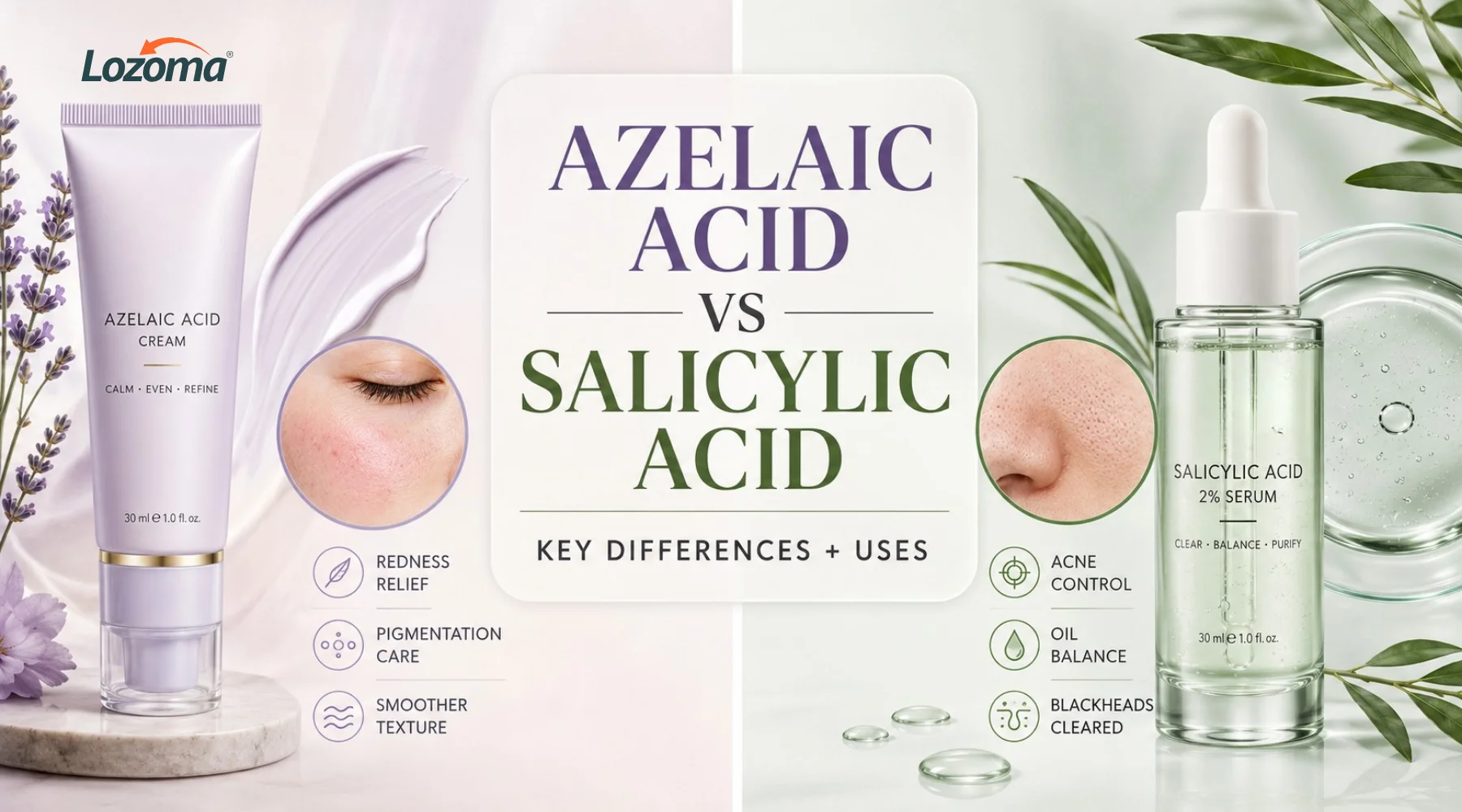
Choosing between azelaic acid and salicylic acid can be tricky since both help with breakouts, clogged pores, and uneven skin. They have similar benefits but work differently when used.
The main difference is the skin issues each ingredient tackles best. Salicylic acid works well for oil and dead skin trapped in pores, which causes blackheads, whiteheads, and a rough texture. Azelaic acid is better for reducing inflammation, making it helpful for breakouts with redness, sensitivity, or post-acne marks.
Neither acid is better than the other; one may just suit your skin’s needs at the moment. If you have an oily T-zone with blackheads, salicylic acid may improve your skin more. If you’re dealing with red spots and dark marks after acne, azelaic acid might be more effective. For skin that has both issues, you can benefit from both acids, but introduce them slowly instead of using them aggressively from the start.
The Difference Between Azelaic Acid and Salicylic Acid
Azelaic acid is a type of acid that fights inflammation, bacteria, regulates skin cell growth, and manages skin colour. Doctors use it to treat acne, rosacea, and some skin discolouration issues. Salicylic acid is another type of acid that helps remove dead skin cells and unclogs oily pores.

Their strongest uses can be compared as follows:
| Skin concern | Azelaic acid | Salicylic acid |
| Blackheads | May help gradually by normalising cell turnover | Usually the stronger choice |
| Whiteheads and closed congestion | Helpful, particularly alongside inflammation | Usually more directly effective |
| Red, inflamed spots | Strong option because of its anti-inflammatory activity | Can help, but may be less complete on its own |
| Post-acne dark marks | One of its most useful advantages | May indirectly help by reducing congestion and encouraging exfoliation |
| Facial redness | Often the more appropriate choice | May aggravate reactive or very dry skin |
| Oily skin | Can support acne management without directly degreasing the skin | Particularly useful for oil-prone, congested areas |
| Sensitive skin | Often tolerated well when introduced gradually | More likely to cause dryness if overused |
| Rough texture | Can improve uneven texture over time | Often produces a faster smoothing effect |
| Papulopustular rosacea | Established dermatological use | Usually not a first choice for rosacea-prone skin |
| Preventing new blocked pores | Helpful | Particularly effective |
| Early acne treatment for beginners | Good when redness and marks are major concerns | Good when blackheads and excess oil dominate |
Azelaic acid is a versatile ingredient that helps with inflammation and discolouration. Salicylic acid specifically targets clogged pores.
It’s more helpful to distinguish between their uses than to compare their strength. A strong treatment might not be right for a particular issue.
What Azelaic Acid Actually Does to the Skin
Azelaic acid is found naturally in small amounts and can also be made in labs for skincare products. Unlike exfoliating acids that mainly remove surface skin, azelaic acid works in multiple ways.
It helps control abnormal keratinisation, which is how skin cells grow and shed around hair follicles. When this process is disorganised, skin cells can build up in pores, leading to clogged pores. By promoting regular cell turnover, azelaic acid can help prevent this blockage.
Azelaic acid also fights bacteria related to acne and reduces skin inflammation. This makes it helpful for treating both clogged and inflamed acne types. Studies show it has anti-inflammatory, antimicrobial, and anti-keratinising effects, with the importance of each depending on the condition being treated.
Its pigment-related effect is especially useful after acne heals. Inflammation can cause skin cells to produce too much pigment, creating flat brown or purple marks. Azelaic acid helps reduce this excess pigment, allowing marks to fade more evenly over time.
It does not bleach healthy skin or change someone’s natural skin colour. Instead, it helps manage excess pigment without affecting normal melanin.
Azelaic acid is also effective for redness and managing inflammation from rosacea, a medical condition. Its anti-inflammatory properties play a key role in this treatment, but rosacea should not be self-diagnosed based only on facial redness.
Understanding how azelaic acid works can help you choose between cosmetic and prescription-strength products.
What azelaic acid is best at
Azelaic acid is particularly useful when several of the following appear together:
- Red or inflamed spots
- Mild-to-moderate acne
- Post-acne brown or grey marks
- Persistent uneven skin tone
- Redness-prone skin
- Acne in skin that does not tolerate stronger exfoliants
- Breakouts that leave discolouration, even when they are not picked
- A mixture of comedonal and inflammatory acne
It may not be the quickest ingredient for removing a lot of blackheads. While it can help balance pores, salicylic acid usually targets oily blockages more effectively.
What Is Salicylic Acid and Why Is It Used on the Face?
Salicylic acid is a beta-hydroxy acid found in many skin products like cleansers, toners, gels, and treatments. It’s often used for oily skin, blackheads, whiteheads, and acne.
So, what does salicylic acid do? It helps break the bonds between dead skin cells, making it easier for them to shed. This prevents a buildup of cells and helps unclog blocked pores. Dermatologists call salicylic acid “desmolytic” because it disrupts cell connections instead of just dissolving keratin.
Salicylic acid dissolves in oil, making it effective in the oily environment of hair follicles. This is why it’s preferred over water-based exfoliants for treating blackheads or oily skin.
When a pore gets filled with oil and dead skin but stays open, it can oxidise and form a blackhead. If the pore is closed, it may create a flesh-coloured bump. Salicylic acid helps reduce both by improving how skin cells shed around and inside the follicle.
Dermatologists often recommend salicylic acid for blackheads and whiteheads due to its ability to unclog pores. Concentrations between 0.5% and 2% are commonly used in over-the-counter acne products, but effectiveness also depends on how the product is made and used, not just its concentration.
A more detailed explanation of salicylic acid, how it works, and common mistakes can help you understand why some products work better than others.
What does salicylic acid do to the skin?
Used appropriately, salicylic acid can:
- Help clear excess dead cells from the skin’s surface
- Reduce the formation of blackheads and whiteheads
- Improve rough, uneven texture
- Keep acne-prone pores clearer
- Reduce the greasy feel of oil-prone areas
- Support treatment of mild comedonal acne
- Improve the penetration and even application of other non-irritating skincare products
Using it too often can strip away more skin than it can replace, leading to tightness, flaking, stinging, and a shiny but dry look.
When asking, “Is salicylic acid good for skin?” it’s important to consider the context. It works well for oily, congested, and acne-prone skin. However, it can irritate already dry or inflamed skin, especially if people use it just because it’s trendy.
Azelaic Acid vs Salicylic Acid: How Their Mechanisms Differ
The two ingredients help with acne but work in different ways.
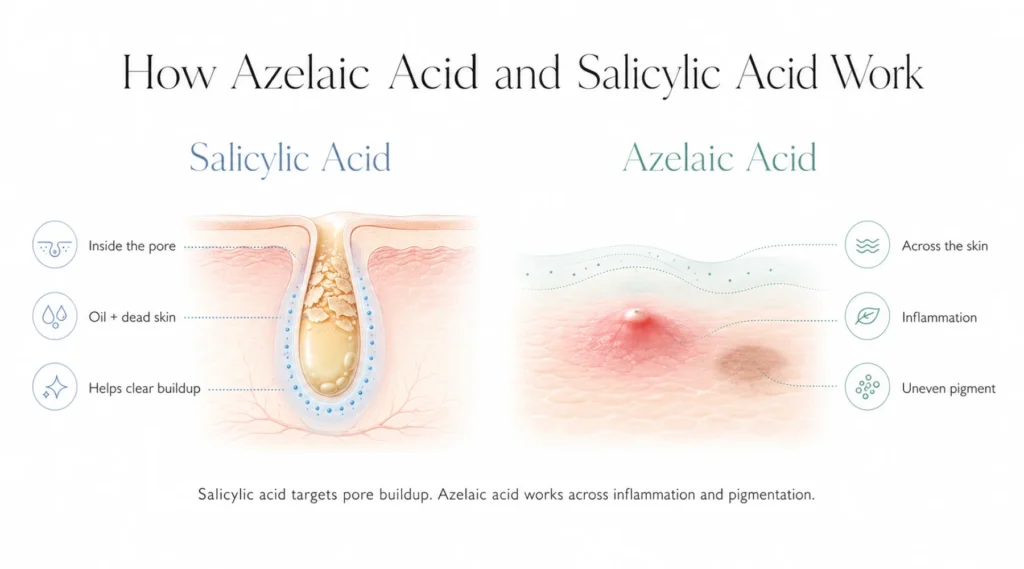
Salicylic acid clears pores and exfoliates, reducing buildup that leads to blackheads. Azelaic acid has a gentler effect, helping with skin cell turnover, inflammation, acne germs, and extra pigment.
These differences lead to different initial results. With salicylic acid, you might notice smoother skin and fewer bumps around the nose. With azelaic acid, you may see calmer spots and reduced redness, followed by improvements in post-acne marks.
Results aren’t immediate. Salicylic acid can smooth skin after a few uses, but to prevent new blackheads, you need to keep using it. Azelaic acid may take several weeks to show improvement. NHS guidelines suggest it can take around a month to see results from azelaic acid, and overall, acne treatments often need consistent use for weeks or months to work effectively.
Salicylic acid works more directly on pore contents.
Salicylic acid is a great choice for treating issues inside the pores. It helps with:
- Big sebaceous filaments
- Blackheads on the nose, chin, or forehead
- Small closed bumps
- Oily buildup
- Rough skin from dead cells
- Recurring blemishes in the same blocked spots
Salicylic acid does not permanently shrink pores. Although pores may look smaller when they’re less filled with oil and debris, their size is mainly determined by genetics, oil production, age, and skin structure.
Azelaic acid works across inflammation, keratinisation, and pigment.
Azelaic acid is more useful when the concern extends beyond the pore:
- Redness surrounding spots
- Papules and pustules
- Brown marks that remain after acne
- Skin that becomes easily inflamed
- Acne occurring alongside rosacea-like sensitivity
- A need for a treatment that can be used consistently without frequent exfoliation
Its ability to target multiple acne causes is why many choose it for active breakouts and uneven skin tone. The American Academy of Dermatology recognises salicylic acid and azelaic acid as effective topical acne treatments. Azelaic acid also helps fade dark marks left by acne.
Is Azelaic Acid Better Than Salicylic Acid for Acne?
Azelaic acid isn’t always better than salicylic acid for acne. The best option depends on whether the acne is mostly comedonal, inflammatory, or a mix of both.
Blackheads and whiteheads
Salicylic acid is a good option for treating blackheads and whiteheads. These problems start when pores get clogged, so an ingredient that helps clear blocked cells is important.
A leave-on product can stay on the skin longer than a cleanser, but it may also cause dryness. A salicylic acid cleanser is a sensible choice for those with oily but sensitive skin since it rinses off easily.
For specific dark blackheads, a targeted use of salicylic acid can help, especially if the nose and chin need different treatments than the rest of the face.
Azelaic acid may help reduce comedones over time, but it’s not usually my first choice for stubborn blackheads that aren’t inflamed.
Red papules and pustules
Azelaic acid is great for red, tender, and inflamed acne. It reduces inflammation and helps keep pores clear.
Salicylic acid can help, especially if the spots start from clogged pores. But using a strong exfoliant on sore skin can cause more irritation, making redness worse, even if it’s helping with the congestion.
For mild inflammatory acne, you can use a gentle azelaic acid on its own. For moderate or widespread acne, or if scars are forming, a dermatologist may suggest a complete treatment plan. This might include retinoids, benzoyl peroxide, antibiotics, hormonal treatments, or other prescriptions.
Mixed acne
Many people experience different types of acne. For example, they might have closed comedones on their forehead, blackheads on their nose, and inflamed spots on their jawline that can leave dark marks.
In this case, you can choose one acid based on your main concern or use both acids separately in your routine. Use salicylic acid on congested areas and azelaic acid on inflamed or discoloured areas. Use salicylic acid a few times a week and azelaic acid on the other days. Start with one ingredient in the morning and the other at night once your skin gets used to them.
The best acne routine doesn’t need many active ingredients. It should focus on treating different types of acne without causing irritation. It’s also important to use salicylic acid carefully, especially if you’re already using other products like retinoids or benzoyl peroxide.
Deep, painful, or cyst-like acne
Over-the-counter salicylic acid and cosmetic azelaic acid don’t reliably treat deep nodules or cysts on their own. These bumps develop deep in the skin and can scar more easily. While topical products can help as part of a treatment plan, it’s important to get professional advice for painful or widespread deep acne.
Putting more acid on a painful lump won’t make it go away quickly. It might irritate the surface, but the deeper inflammation will stay the same.
Which Acid Is Better for Post-Acne Marks?
Azelaic acid is the better choice for fading post-acne marks. When a spot heals, the flat mark left behind is not acne. It’s a reaction to inflammation. Salicylic acid can brighten the surface by promoting exfoliation, but azelaic acid specifically targets abnormal pigment.
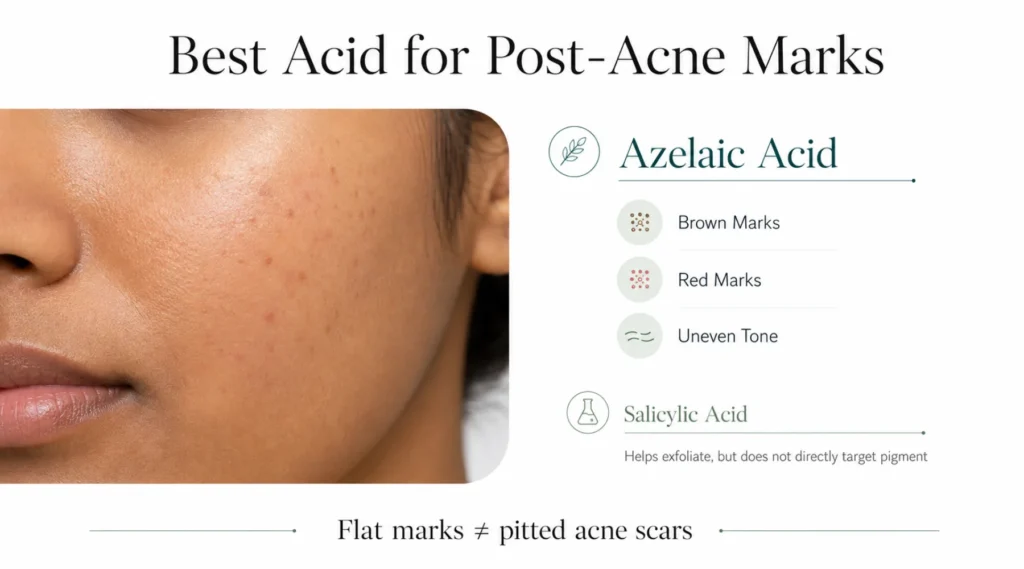
This is especially helpful for medium-to-deep skin tones, where blemishes can leave lasting brown, grey-brown, or purple marks. The American Academy of Dermatology recognises azelaic acid as a good option for reducing dark spots, and studies highlight its ability to reduce pigmentation.
Azelaic acid cannot remove pitted acne scars. Indented or raised scars involve changes in collagen and usually require treatments like microneedling, laser therapy, chemical reconstruction, subcision, or injectables from a qualified professional.
It’s also important to differentiate between post-inflammatory hyperpigmentation and post-inflammatory erythema. Brown or grey marks are pigment-related, while pink or red marks are due to ongoing inflammation. Azelaic acid can help with both, but results and timing will vary.
Daily sunscreen is crucial. Without good UV protection, post-acne pigmentation can worsen or take longer to fade, regardless of the treatment used.
Azelaic Acid or Salicylic Acid for Sensitive Skin?
Azelaic acid is often a good choice for sensitive skin, but it can still cause irritation. You might feel tingling, itching, or prickling when you first use it. Some people may also experience dryness, redness, or mild burning. You can usually manage these effects by using it less often, applying it over moisturiser, or using a smaller amount. The NHS notes that burning, stinging, itching, dryness, and redness are possible side effects of azelaic acid.

Salicylic acid can also work for sensitive skin if used correctly. A gentle rinse-off cleanser used two or three times a week may be easier to tolerate than a stronger leave-on product used daily.
“Sensitive skin” can mean different things, including:
- Naturally reactive skin
- Skin prone to rosacea
- Dry skin with little oil
- A temporarily damaged barrier
- Skin irritated by retinoids or benzoyl peroxide
- Eczema or dermatitis
- Skin recovering from treatments like peels, lasers, or waxing
- These types of sensitive skin need different treatments.
For instance, someone with oily but sensitive skin might handle salicylic acid well when used carefully. However, someone with dermatitis and burning around the mouth may need to avoid both acids until their skin improves.
Why sensitive skin often prefers azelaic acid
Azelaic acid works effectively without needing constant exfoliation. It helps treat acne and uneven skin tone without harshly removing surface cells.
It is also common for conditions with inflammation and redness. Many reviews say it’s good for sensitive skin, but individual reactions can differ.
A 12% azelaic acid cream is a good choice for those seeking more than a basic formula but not ready for a prescription treatment. The entire product matters: its texture, supporting ingredients, pH, and how much you use can affect comfort just as much as the percentage on the label.
When sensitive skin may still benefit from salicylic acid
Salicylic acid works well for skin that is sensitive and has blackheads or oily spots. If this is your skin type:
Pick a rinse-off product or use it less often. Apply it only where your skin feels congested.
Don’t use it on skin that is peeling visibly. After applying, use a plain moisturiser.
Don’t mix salicylic acid with retinoids or other exfoliants at first. Increase use only when your skin feels comfortable.
Sensitive skin doesn’t always need gentler ingredients. It often just needs a better routine.
Which Is Better for Oily Skin?
Salicylic acid is great for oily skin because it clears out pores and reduces buildup from excess oil.
It doesn’t stop oil production permanently, as that is affected by hormones, genetics, and other factors.
Azelaic acid is also helpful for oily skin, especially when dealing with inflammatory acne or marks left by acne. It treats these issues without needing daily exfoliation.
A good routine for oily skin is:
- Use salicylic acid two to three times a week for congestion.
- Use azelaic acid on other days for inflammation and marks.
- Apply a lightweight moisturiser daily.
- Use non-comedogenic sunscreen every morning.
Skipping moisturiser because skin feels oily can be a mistake. Acne treatments may dry out the skin, making it feel tight and irritated, even while oil is still being produced. A light gel-cream or lotion can help support the skin barrier without feeling heavy.
Can You Use Azelaic Acid and Salicylic Acid Together?
Yes, you can use azelaic acid and salicylic acid together in your skincare routine, but you don’t have to apply them at the same time. There’s no major chemical issue preventing their use together. However, using both at once can lead to skin irritation. Salicylic acid exfoliates, while azelaic acid may cause tingling and dryness when you first start using it. If you use both together, it’s hard to tell which one is causing any discomfort. It’s safer to get used to one ingredient before adding the other.
Option one: Alternate days
This is often the simplest pattern for beginners.
Monday: Salicylic acid
Tuesday: Azelaic acid
Wednesday: Recovery routine
Thursday: Salicylic acid
Friday: Azelaic acid
Weekend: Azelaic acid once, with one recovery day
A recovery routine includes a gentle cleanser, moisturiser, and sunscreen in the morning. This time is valuable. Taking care of your skin helps make an active routine easier to maintain.
Option two: Use them at different times of day
Once each ingredient is tolerated individually:
Morning
- Gentle cleanser or water rinse
- Azelaic acid
- Moisturiser
- Broad-spectrum sunscreen
Evening
- Gentle cleanser
- Salicylic acid on selected nights
- Moisturiser
This setup works well for people who use azelaic acid regularly to treat redness or acne marks, but only need salicylic acid occasionally for congestion.
Option three: Apply them to different areas
Combination skin does not always need identical treatment across the face.
Salicylic acid can be applied to:
- Nose
- Chin
- Centre of the forehead
- Other blackhead-prone areas
Azelaic acid can be applied to:
- Cheeks with post-acne marks
- Red areas
- Inflamed breakout zones
- Jawline pigmentation
This focused method limits extra exposure and might work better than using both products on every part of the skin.
Option four: Layer them in one routine
Some experienced users can use salicylic acid and azelaic acid together, but this is optional, not a requirement.
If using both:
- Cleanse your skin gently.
- Apply the thinner product first.
- Let it absorb.
- Apply a small amount of the second product.
- Finish with moisturiser.
Avoid adding other exfoliants or retinoids that night. There’s no reward for handling a harsh routine. If switching between the two ingredients works just as well with less irritation, it’s the better choice.
How to Use Salicylic Acid on the Face Without Damaging the Barrier
People often overuse salicylic acid because they think tingling, dryness, and peeling mean it is working. However, these feelings don’t guarantee that the product is actually clearing pores.

A more controlled method produces better long-term results.
Start with the right format.
Salicylic acid cleansers are useful for:
- Beginners
- Sensitive but oily skin
- Widespread congestion
- People are already using another leave-on acne treatment
Leave-on salicylic acid products are useful for:
- Persistent blackheads
- Localised congestion
- Skin that has already tolerated salicylic acid
- People who want more sustained contact
Spot treatments aren’t great for preventing blackheads because you usually use them after a blemish appears. Salicylic acid works best when applied regularly to areas where pores frequently clog.
Introduce it gradually
For a leave-on product, start using it once or twice a week. Apply a thin, even layer instead of focusing on individual pores.
If your skin feels fine after two to three weeks, you can use it more often. Most people do well with two to four applications a week and don’t need to use it daily.
You can use a cleanser more often, but its strength and how long it stays on your skin still matter. Leaving the cleanser on your skin for a moment before rinsing can be more effective, as long as the instructions allow it.
Avoid vulnerable areas
Keep salicylic acid away from:
- Eyelids
- Corners of the nose when cracked
- Lips
- Broken skin
- Freshly waxed areas
- Sunburn
- Active eczema patches
- Skin recently treated with a strong peel or laser
Keep the rest of the routine gentle. Using a foaming cleanser, a strong alcohol toner, salicylic acid, a clay mask, and a retinoid at the same time can overwhelm even oily skin.
Moisturise after use
A moisturiser does not counteract salicylic acid. Instead, it helps the skin handle treatment by reducing water loss and supporting its barrier.
Helpful ingredients include glycerine, ceramides, panthenol, squalane, and hyaluronic acid. The moisturiser does not have to be thick; it just needs to be comfortable for your skin type.
How to Use Azelaic Acid for Better Results
Apply azelaic acid in a thin layer over the affected area rather than just on spots. This helps it address blockages and pigment changes that might not be fully visible yet.
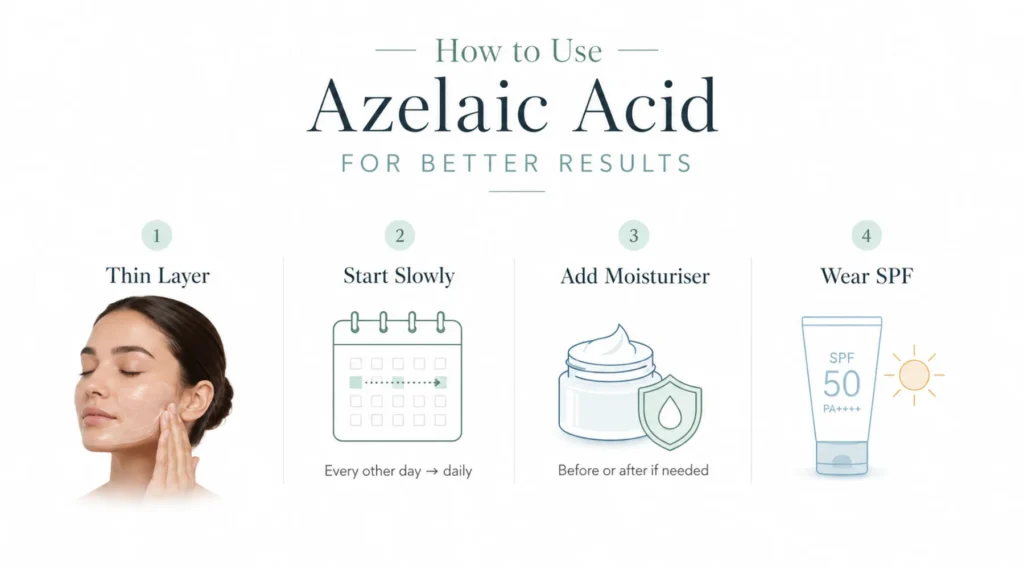
Begin once daily or every other day.
Some medicinal products are meant to be used twice a day, but a cosmetic product doesn’t have to start at that level. A safe way to begin is:
- Every other evening for the first week
- Once a day if it feels comfortable
- Twice a day, only if you can handle it, and it follows the product’s guidelines or a doctor’s advice
If you have sensitive skin, stick to using it once a day or a few times a week. Using it more often isn’t necessary if it causes lasting burning.
Apply it before or after moisturiser.
Azelaic acid can be applied:
- Directly to clean, dry skin
- After a hydrating serum
- Over-moisturiser to reduce stinging
- Between two thin layers of moisturiser when the skin is highly reactive
Using moisturiser first may lessen the treatment’s effects a bit, but sticking to a comfortable routine is usually more beneficial than a stronger method that you have to stop.
Use the correct amount.
More product does not create faster pigment fading. A thin layer is enough.
Excess azelaic acid can:
- Increase pilling
- Create a chalky texture
- Intensify itching
- Make sunscreen or make-up sit unevenly
- Increase dryness without improving effectiveness
Creams are better for dry skin, while gels or lighter lotions are more comfortable for oily skin. Some azelaic acid products can pill due to their silicone or powder content, not because they are reacting poorly with other products.
Continue using sunscreen
Azelaic acid is not seen as a major cause of skin sensitivity to sunlight. The NHS says that you don’t need to avoid the sun when using medicinal azelaic acid, unlike some other acne treatments. However, sunscreen is still important for reducing redness, acne marks, and uneven skin tone.
Without UV protection, dark spots may persist, and inflammation may take longer to heal.
Azelaic Acid vs Salicylic Acid for Beginners
Beginners should pick the ingredient that addresses their main skin issue instead of buying both right away.
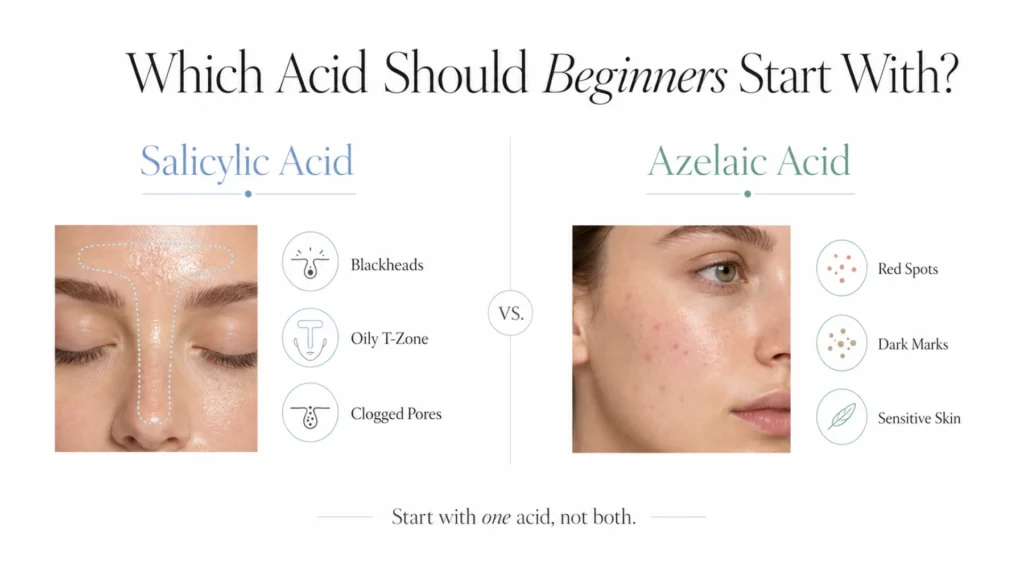
Choose salicylic acid first if:
- You mainly have blackheads.
- Your T-zone feels oily and congested.
- You have small, flesh-coloured bumps.
- Your skin is not dry or irritated.
- Breakouts often start from blocked pores.
Choose azelaic acid first if:
- Your spots are red and inflamed.
- Breakouts leave dark marks.
- Redness is a big concern.
- Your skin doesn’t tolerate frequent exfoliation well.
- You need to treat acne and uneven skin tone together.
If it’s unclear what to choose, azelaic acid is usually better for sensitive skin, while salicylic acid works well for oily skin with comedones.
A beginner routine with salicylic acid
Morning
- Gentle cleanser
- Light moisturiser
- Broad-spectrum SPF 30 or higher
Evening on salicylic acid nights
- Gentle cleanser
- Salicylic acid
- Moisturiser
Evening on other nights
- Gentle cleanser
- Moisturiser
Begin with two salicylic acid nights each week.
A beginner routine with azelaic acid
Morning
- Gentle cleanser
- Moisturiser
- Broad-spectrum SPF 30 or higher
Evening
- Gentle cleanser
- Azelaic acid every other night
- Moisturiser
Once the skin adapts, azelaic acid may be used more regularly.
A beginner routine using both
Use this only after each product has been tested separately.
Monday and Thursday: Salicylic acid at night
Tuesday, Friday, and Sunday: Azelaic acid at night
Wednesday and Saturday: Cleanser and moisturiser only
This schedule is flexible. Factors like dryness, climate, hormones, and other treatments may lead to fewer active nights.
Good serums can help with hydration and support during these treatments. A simple skincare routine should focus on cleansing, moisturising, and sun protection instead of adding more acids.
Concentration Matters, but Formulation Matters More
Ingredient percentages are helpful, but they don’t tell the entire storey. Two products with 2% salicylic acid can feel very different due to:
- pH
- Solvent system
- Contact time
- Alcohol content
- Supporting humectants
- Delivery system
- Whether the product is rinsed off or left on
The same is true for azelaic acid. A 10% suspension might feel drier or more powdery than a 15% gel. A well-made cream with moderate strength may be easier to use regularly.
Common Salicylic Acid Strengths
Facial products typically contain 0.5% to 2% salicylic acid. Lower amounts work well for daily use or sensitive skin, while 2% is common in leave-on products for acne and blackheads.
Professional peels use higher concentrations of salicylic acid in safe conditions. Do not try to recreate these at home by layering products or buying unregulated peels, as they can cause burns or skin issues if misused.
Common Azelaic Acid Strengths
Most cosmetic azelaic acid products have about 10%, with some at 12%. Prescription products can have 15% or 20%, depending on the country and what’s being treated.
A higher percentage isn’t always the best choice. Azelaic acid doesn’t dissolve well, so the way it’s delivered and the quality of the formula affect its effectiveness. Prescription treatments for acne or rosacea should always be chosen with professional advice when needed.
Common Mistakes That Make Either Acid Harder to Tolerate
Many disappointing results come from the routine surrounding the acid rather than the acid itself.

Starting both ingredients at once
Introducing azelaic acid and salicylic acid on the same day can make it hard to understand any reactions. A rash, burning, or dryness could be caused by either acid, their combined effects, or another product. Start with one product and watch your skin for at least two weeks. Only add the second product when your skin clearly responds well to the first.
Applying acids to damp skin
Damp skin can help some leave-on products work better and feel stronger. If you’re sensitive to stinging, you might find it easier to use acids on completely dry skin. This doesn’t apply to cleansers meant for wet skin.
Treating irritation as purging
Not every breakout after starting an acid is purging.
Possible irritation signs include:
- Burning that lasts
- Red patches in areas that do not usually break out
- Itchy bumps
- Cracking
- Widespread flaking
- Unusual sensitivity to water or moisturiser
- Shiny, tight skin
- Breakouts spreading beyond usual acne-prone areas
Salicylic acid can make some existing microcomedones appear faster, but the term “purging” is often misused to defend overly harsh routines. Azelaic acid is less likely to cause this type of purge, but some temporary changes may happen when starting treatment for acne.
You shouldn’t put up with the ongoing worsening of your skin.
Combining too many exfoliants
A routine may contain salicylic acid in several unnoticed places:
- Cleanser
- Toner
- Serum
- Spot treatment
- Weekly mask
- Scalp or hairline product
Using glycolic acid, lactic acid, peeling solutions, and scrubs together can cause extra irritation, even if each one feels gentle on its own.
Azelaic acid is not an AHA or BHA, but it can still lead to dryness when mixed with other strong treatments.
Using Acids Instead of Moisturiser
Acne-prone skin still needs protection. Inflammation and dryness can make the skin more sensitive, affecting how well treatments work. Choose a moisturiser labelled as non-comedogenic if you worry about clogged pores, but know that not all oil-free products are necessary. Some dry, acne-prone skin can handle light moisturisers well.
Applying More Product to Speed Up Results
Acne and post-acne marks take time to develop and fade. Layering on more treatments won’t speed up these processes. In fact, it might cause dermatitis, delaying your routine.
Ignoring Sunscreen
Skipping sunscreen while treating marks is a common reason for slow progress. Use a broad-spectrum sunscreen with SPF 30 or higher every morning. For skin that tends to discolour, applying enough sunscreen and reapplying it often outdoors is more important than using the most potent acid.
Can Salicylic Acid or Azelaic Acid Make Acne Worse?
Sometimes, an ingredient can make acne worse if it irritates the skin, clogs pores, or if the skincare routine is too harsh.
Salicylic acid can cause too much exfoliation if used too often. Azelaic acid may lead to prickling, itching, or dryness when you first start using it.
You might see a few more small blemishes in areas where you usually have acne, but this may improve as treatment continues. However, widespread redness, painful burning, or breakouts in new areas are concerning.
Instead of ignoring severe discomfort, try this approach:
- Stop using the new product.
- Use a gentle cleanser and moisturiser.
- Don’t exfoliate until your skin feels normal.
- If appropriate, reintroduce the product less often.
- Stop using it if the same reaction occurs.
- Get medical help for swelling, blisters, severe pain, or signs of an allergy.
Topical acne treatments are usually safe, but local irritation is a common side effect.
How Long Does Each Ingredient Take to Work?
Salicylic acid can make your skin smoother in just a few days, but noticeable reductions in blackheads and blemishes usually take weeks of regular use.
Azelaic acid might also take several weeks to show improvement in acne. Changes in pigmentation take longer, especially if the marks are deep or exposed to sunlight often.
A good time to assess progress is between eight and twelve weeks, as long as you use the product consistently and avoid skin irritation. Different treatment plans may have varying timelines, and severe acne should not go untreated for months to prevent scarring.
When tracking progress, look for more than just the absence of blemishes. Helpful signs include:
- Fewer new spots each week
- Blackheads are becoming less noticeable
- Spots healing faster
- Less tenderness
- Reduced redness
- Marks are fading instead of increasing
- Better skin tolerance to your routine
Taking photos in similar lighting every four weeks can help you notice gradual improvements that might be missed day to day.
Where Retinol, Benzoyl Peroxide, and Niacinamide Fit
Azelaic acid and salicylic acid are often used with other treatments. However, adding more active ingredients can increase irritation.

Retinoids
Topical retinoids help regulate skin cell turnover and are well-known treatments for comedonal acne. Using a retinoid with salicylic acid can be effective, but it may dry out the skin.
A careful routine could include:
- Retinoid on two or three nights
- Salicylic acid on a different night
- Recovery products on the other nights
You can use azelaic acid in the morning or on nights without retinoids. If you’re new to retinoids, make sure your skin adjusts before adding other strong treatments.
Benzoyl Peroxide
Benzoyl peroxide is great for treating inflammatory acne because it fights bacteria. It can be used with other acids in a broader acne treatment plan, but it often causes dryness. Using salicylic acid with benzoyl peroxide can benefit oily skin with both blackheads and inflamed spots. Azelaic acid with benzoyl peroxide works well for inflammatory acne that leaves marks. Spacing out these treatments in the morning and evening, or using them on alternate days, can help reduce irritation.
Niacinamide
Niacinamide doesn’t replace the acids, but it helps the skin barrier and reduces inflammation and oiliness. You can layer niacinamide serum with azelaic acid or salicylic acid since they generally mix well. You don’t need to wait long between applying them. The main issue is using too many products at once, which can cause pilling.
Vitamin C
Vitamin C and azelaic acid can help even out skin tone. If you have sensitive skin, try using vitamin C in the morning and azelaic acid at night. You can also combine salicylic acid with vitamin C, but using both together might sting. If that happens, apply them separately.
Pregnancy, Breastfeeding, and Medical Considerations
Azelaic acid is a popular acne treatment for pregnant women. The American Academy of Dermatology says it is safe, and the American College of Obstetricians and Gynaecologists lists it and topical salicylic acid as acceptable over-the-counter options for pregnancy.
During pregnancy, do not rely solely on skincare labels. Check the product’s strength, how often you use it, where you apply it, and any other active ingredients with your doctor, pharmacist, or dermatologist.
Use salicylic acid carefully, especially on large areas, under wraps, or for long periods. Applying a small amount to the face is different from using a strong salicylic product over a large area of the body.
Seek personalised advice when:
- Pregnant or breastfeeding
- Treating a child
- Allergic to aspirin or salicylates
- Using prescription acne medication
- Managing rosacea, eczema, or dermatitis
- Applying treatment over a large body area
- The skin is broken or infected
- Preparing for or recovering from a dermatological procedure
When an Acid Is Not Enough
Skincare acids can help with mild acne, spots, and marks, but they won’t fix all acne issues.
You should see a professional if:
- Your acne is painful or deep.
- Scars are forming.
- Breakouts cover your face, chest, or back.
- Acne appears suddenly and severely.
- You have menstrual issues, excess facial hair, or other hormonal symptoms.
- Redness and spots may be rosacea instead of acne.
- Over-the-counter products haven’t worked after consistent use.
- Breakouts are hurting your confidence or mental health.
- Dark marks are getting worse, even with sun protection.
- Your skin burns even with a basic moisturiser.
A dermatologist can tell the difference between acne, rosacea, folliculitis, perioral dermatitis, and other similar conditions that need different treatments.
Clinical treatments may include prescription azelaic acid, topical retinoids, benzoyl peroxide, oral antibiotics, hormonal treatments, isotretinoin, or procedures for pigmentation and scars. Treatment should focus on the type and severity of the condition, not just on using the strongest product available.
Questions That Usually Come Up Before Choosing Either Acid
Can azelaic acid remove blackheads?
Azelaic acid can gradually reduce blackheads by normalising how skin cells shed. However, it works more slowly than salicylic acid, which is better for oily pores. Azelaic acid is ideal if you also have red spots or post-acne marks.
Is salicylic acid good for daily use?
Daily salicylic acid can benefit some oily skin types, especially when used in a mild cleanser, but it’s not necessary for everyone. A 2% leave-on product may dry out sensitive skin. Adjust how often you use it based on how your skin reacts.
Is azelaic acid better for sensitive skin?
Azelaic acid is usually a better option for sensitive or red-prone skin. It calms inflammation without heavy exfoliation. It may cause some stinging, especially at first. Try using it every other day or over moisturiser to reduce irritation.
Can you use azelaic and salicylic acid together daily?
Some experienced users can combine them daily, but most don’t need to. Using azelaic acid regularly and salicylic acid a few times a week often works best. Those with dry or sensitive skin may need even less salicylic acid.
Which acid is better for hormonal acne?
Hormonal acne is influenced by hormones and usually appears on the chin and jawline. Neither acid changes hormone levels. Azelaic acid may help reduce inflammation and dark spots. Salicylic acid can help with clogged pores during breakouts. Persistent cases may require prescription treatments.
Should salicylic acid be applied before azelaic acid?
When using both, apply the thinner product first. However, alternating between them can be easier and reduce irritation. The order is less important than preventing irritation.
Can azelaic acid or salicylic acid cause purging?
Salicylic acid can bring existing blemishes to the surface faster due to its exfoliation properties. Azelaic acid is less likely to cause classic purging, though acne might temporarily worsen. Symptoms like burning or unusual breakouts suggest irritation, not purging.
Which acid is better for acne scars?
Azelaic acid is usually better for flat brown or grey spots. Salicylic acid can help with rough skin texture. Neither can fix indented or raised scars; these usually need professional treatments.
Can salicylic acid fade dark spots?
Salicylic acid can help fade surface discolouration by aiding exfoliation and preventing new acne, but it’s less effective at regulating pigment than azelaic acid. For dark marks, azelaic acid is generally the better choice.
Can azelaic acid reduce oily skin?
Azelaic acid improves acne in oily skin but isn’t primarily for oil control. Your skin may appear more balanced as inflammation decreases, but oil production may still continue. Salicylic acid is often more effective for oily, clogged areas.
Can either acid be used around the eyes?
Neither acid should be applied near the eyes unless specifically designed for that area. The skin is thin and sensitive. If there’s accidental contact, rinse thoroughly.
Do you need moisturiser after using these acids?
Yes, moisturiser helps comfort and supports treatment. It doesn’t neutralise the acids. Choose a suitable texture: a light lotion for oily skin, gel-cream for combination skin, or a richer cream for dry skin.
Should either acid be used on active spots?
Avoid strong acids on raw or popped skin. Damaged areas are more sensitive and likely to sting. Keep the area clean, use a gentle moisturiser, and wait until it heals before resuming treatment.
Which acid gives faster results?
Salicylic acid may quickly make your skin feel smoother due to exfoliation. Azelaic acid works more slowly, especially for redness and discolouration. Fast results don’t guarantee long-term acne control; judge effectiveness after consistent use.
Can I use either acid without sunscreen?
Using sunscreen is essential, especially for treating acne marks or uneven tone. Even mild ingredients can increase sensitivity to sunlight, worsening pigmentation. Use broad-spectrum SPF 30 or higher every morning.
Azelaic Acid vs Salicylic Acid: Choosing the Ingredient Your Skin Actually Needs
Don’t treat azelaic acid and salicylic acid as the same.
Salicylic acid is better for blackheads, whiteheads, oily skin, and rough pores. It targets dead skin and oil inside the pores directly.
Azelaic acid is better for red, inflamed acne, post-acne marks, uneven skin tone, and sensitive skin that can’t handle frequent exfoliation. It works on inflammation, skin cell turnover, bacteria, and excess pigment.
Some people only need one acid. Others may use salicylic acid during breakouts and azelaic acid for long-term care. Some apply azelaic acid on their entire face and only use salicylic acid on an oily nose or chin.
Choose your treatment based on your skin type, not trends. Start using the acid slowly, keep your routine simple, and track your progress over weeks, not days. Clearer skin comes from matching the treatment to your skin’s needs, not from using both acids all the time.